It’s been another wild year for paddlesports manufacturing. After the bust-boom-bust of the pandemic and its over-stocked under-sold aftermath, the industry has embarked on a new round of reorganization and consolidation.
Industry behemoth Pelican/Confluence emerged from insolvency protection with much of the old leadership team still at the helm—minus most of its debt and former owners Antoine and Christian Élie. This follows the bank takeover of fishing powerhouse Hobie from the investment group that purchased the company just three and a half years ago. The storied pedal kayak brand had been courting suitors since early 2025, receiving plenty of interest until it was confirmed Bass Pro Shops bought the brand in September. Meanwhile Jackson Kayak is filling its Tennessee headquarters with new brands, adding thermoforming pioneer Eddyline to a lineup that also includes Werner paddles.
What’s going on? In a macro sense, the industry is on its heels. The floor dropped out of the paddlesports market in the last 18 months just as the boomtime cash ran out. Exuberance and profit-taking brought Pelican to the end of the line, while Hobie and Eddyline made what looked at the time like a safe bet in Mexico, and lost big.

Chaos & Consolidation
Pelican: Insolvency and reset
When Pelican International acquired Confluence Outdoors in 2019, it looked as if the paddlesports industry had finally attained critical mass. The new conglomerate controlled a massive slice of nearly every paddling segment, from $300 rec boats to $5,000 fishing kayaks. The company embraced big-box retailers, and a strategic shift to direct-to-consumer sales positioned it well for the contactless sales boom of the COVID era. Meanwhile Pelican kept expanding, acquiring inflatable kayak maker Advanced Elements in 2021 and camping cookware brand GSI in 2022.
Flush with pandemic dollars, Pelican leadership decided a round of profit-taking was in order. According to insolvency filings in Québec’s Superior Court, Pelican used $44 million in borrowed cash for a stock buyback benefiting shareholders (currency figures are in U.S. dollars). For brothers Antoine and Christian Élie, whose father Gérard had purchased the company in 1970, the take was about $36 million. The last payout landed in February 2022, just as the bottom dropped out of the paddlesports market.
Three years later, on February 28, 2025, Pelican filed a Notice of Intention to Make Proposal (NOI) under Canada’s Bankruptcy and Insolvency Act (BIA). Pelican released a statement at the time emphasizing that the NOI did not signal bankruptcy or closure, but rather a “proactive decision to seek protection under the BIA.” The company cited challenges in the post-COVID economy for its inability to pay creditors, including new U.S. tariffs, significant shifts in market demand, supply chain disruptions and rising costs.
The statement did not mention the stock buyback. That came to light later, when the insolvency filing was released.
According to Julian Arsenault of La Presse, Pelican borrowed a substantial sum to acquire GSI Outdoors. However, that wasn’t the only thing the money was used for. Some $44 million was disbursed to shareholders as “special dividends” in three installments between February 2021 and February 2022. Antoine and Christian Élie, who controlled more than 80 percent of company stock, pocketed about $36 million between them.
This information is contained in Pelican’s filings with the Québec Superior Court. The documents show the company enjoying two gangbuster years, registering profits of $25.6 million in 2021 and $7.3 million in 2022. Then, in 2023, Pelican’s revenues fell about 35 percent to $113 million. La Presse reports that the dividends Pelican paid to shareholders in 2021 and 2022 were substantially more than the $25 million in losses accumulated over the past two years.
Canada’s Companies’ Creditors Arrangement Act (CCAA) protected Pelican from creditors, who were left holding more than $132 million in receivables. At the time of the CCAA filing in March, Pelican owed more than $91 million to its secured lenders, a banking syndicate led by the National Bank of Canada.

That set the stage for a new ownership group full of familiar faces from Pelican International, Inc. The new entity dropped the Élie brothers, GSI cookware, and a handful of vowels, reemerging in April as Pelican Intl, Inc.
The transaction was spearheaded by former Pelican International President and CEO Danick Lavoie, who was let go from the company February 16, and fellow executives Frederic Guay and Guy Prenevost, who resigned shortly after. The trio assembled a group of 15 investors and, according to the filings, scooped up the company’s assets for $32 million. The transaction involved a court-approved Sale and Investment Solicitation Process (SISP) under the CCAA in Canada and Chapter 15 in the United States.
The acquisition includes the manufacturing and distribution operations in Québec, plus a stable of storied paddlesports brands under the Confluence umbrella, including Wilderness Systems, Dagger, Perception, Advanced Elements, Boardworks and Mad River Canoe. Confluence Outdoor Inc. will now operate as Pelican Intl USA Inc. The Confluence name will live on as Pelican Intl’s online marketplace and consumer storefront. According to a company statement, the Confluence site will serve as “the exclusive platform to streamline how we do business with our large retailers and independent dealer network for years to come.”
Also involved was Vincent Chiara, President and founder of Groupe Mach, the real estate investment firm that in 2024 acquired Pelican’s manufacturing plant in Laval, Québec, and logistics center in Varennes, Québec. Pelican had raised more than $99 million in the sale-leaseback arrangement with Groupe Mach, leaving the real estate firm strongly motivated to ensure Pelican keeps molding kayaks and paying rent.
“We didn’t buy the business to shut down factories,” says Guay, Chief Commercial Officer in the old and new Pelican. “Our goal is to keep those three factories running, and they have to run at a lot higher pace than they are running right now.”
Guay says he, Lavoie and Prenevost pitched investors on a vision of continued paddlesports consolidation and manufacturing diversification. “A lot of reshoring is happening, certainly in the U.S., and we have a best-in-class rotomolding facility with more than 500,000 square feet of distribution and manufacturing in Greenville,” Guay says. “We’re looking at bringing some diversification into the plant. That could certainly be outdoor products, or it could be other products.” Pelican 2.0, as Guay calls it, also is looking for acquisition opportunities within the paddlesports industry.
About 20 people were let go from the Canadian side of the business before the insolvency filing, and the new ownership has brought about half of them back, Guay says. “Unfortunately, there were employees who were impacted,” he says. “But let’s be frank: We have a clean sheet of paper. We have a clean P&L and no debt, and we have a group of investors who are extremely excited about the future.” While the paddlesports market is unlikely to return to pre-pandemic levels, the new Pelican leadership sees a bright future for Pelican 2.0.
“Today marks a pivotal moment for the paddlesport industry, ensuring the continued legacy and innovation of a world-leading portfolio of brands,” the reconstituted Pelican Intl said in a press announcement. “The core of the company remains strong, as over 400 passionate and dedicated employees will pave the way for the future.”
Sources outside the company say it’s not so simple. “The worst thing for the industry in general is that $150 million debt is real—it wasn’t pumped up,” says an executive at a competing brand. “That’s now written off. It’s gone. None of these vendors, these plastic producers, these accessories producers, are ever going to see that money again.”
Match Made For Hobie
The Hobie Cat Company entertained inquiries from 21 suitors before it was announced the company was purchased by Bass Pro Shops this fall. Hobie is one of the largest enterprises in paddling and related industries, with about $180 million in annual sales and operations spanning three continents.
The company has production facilities in California, France, Norway and Mexico, as well as a sales and warehousing hub in Australia. “It’s a complicated business,” says a company source who spoke on the condition of anonymity because they are not authorized to speak publicly.
The rumor mill churned out acquisition possibilities for months. The sale to Bass Pro Shops was made public on September 24, 2025. The mega-retailer already owns a number of boat brands including Ranger, Stratos and Triton, and has kept the specialty sales channel for those brands open.
The company will shift Hobie production from Mexico to the Missouri facility, a move Bass Pro Shops founder Johnny Morris framed as a strategic investment in American manufacturing. “We are proud to bring Hobie home to America’s Heartland,” he said in a press release announcing the deal.
Prior to Bass Pro, the Hobie Cat Company was most recently acquired in January 2021 by an investment group with ties to the industrial auction industry. Headed by Taso Sofikitis, the group brought in Mike Suzuki as CEO and Aaron Stewardson as CFO. Sofikitis became Hobie’s chairman. The new owners pledged to continue the tradition of innovation that has animated the company since founder Hobart “Hobie” Alter carved his first surfboard in the family garage more than 70 years ago, but product development lagged as leadership focused on shifting production from Oceanside, California, to a new plant in northern Mexico. That operation faced a volatile U.S. import tariff environment which has increased costs. Hobie’s substantial warranty liability was another hurdle.
The company, legendary for such innovations as the Mirage Drive pedal system and, on the sailing side of the ledger, the revolutionary Hobie Cat catamaran, had experienced problems with rotomolded kayak hulls and the latest generation Mirage Drive 360. Introduced in 2019, the swiveling drive system brought unprecedented maneuverability to the pedal-kayak market, at the cost of increased complexity. Users praised its performance but questioned reliability.
As warranty claims mounted during and after the COVID-19 pandemic, bottlenecks in the supply chain slowed the supply of critical components, and Hobie’s footing atop the pinnacle of kayak fishing began to slip.
perfect match. | Photo: Aaron Black-Schmidt
Hobie had steadily been moving parts manufacturing from Asia to its factories in California and Mexico. A redesign of the Mirage Drive 360 has answered many of the warranty questions. Like any mechanism that spends much of its life in wet and gritty environments—think mountain bikes or ATVs—the Mirage Drive requires regular cleaning and adjustment to perform at its best.
While Hobie has taken steps in the right direction it faces a long road back in a difficult business environment. Hobie’s last three owners have been venture capital firms. Under that leadership the legendary brand strayed from its roots, on both the kayaking and sailing sides of the business. Hobie has taken steps to correct that trajectory, signing industry veterans Joel McBride as V.P. of Sales and James McBeath as Marketing Director in May 2024. Hobie was founded by a legendary waterman, and it will take a genuine connection to paddling, fishing and sailing to bring it back to the top.
Jackson Kayak Acquires Eddyline
As Pelican and Hobie work to regain their footing in the paddlesports market, Jackson Kayak has been expanding. The Sparta, Tennessee-based firm snapped up iconic paddle brand Werner in May 2024 and in February 2025 added thermoforming leader Eddyline to its portfolio.
Eddyline kayaks will be produced in Jackson’s Tennessee manufacturing plant, alongside Jackson kayaks, Werner paddles and Orion coolers. Eddyline’s molds and tooling arrived in Tennessee this spring after a dramatic exit from Mexico, and new Eddyline kayaks already are shipping from the Sparta facility.
Tom Derrer and his wife, Lisa, sold Eddyline in 2017 to an investment group headed by Scott Holley, who took over as CEO and, in 2021, opened a second factory in the central Mexican state of Queretaro. Jackson announced the Eddyline acquisition on February 12, 2025. Less than two weeks later President Trump announced 25 percent tariffs on products from Canada and Mexico.
The president would later roll back those tariffs, but in the days and weeks after the announcement, trucks loaded with industrial equipment queued at the border as U.S. companies raced to repatriate. Among them were rigs loaded with Eddyline products and machinery, bound for Tennessee. “There were multiday long waits for trucks to get across the border,” says Jackson Sales Director Colin Kemp. Though the tariffs added impetus and a bit of drama to Eddyline’s exit, they didn’t prompt Jackson’s purchase of the thermoforming company. That, Kemp says, came down to synergy.
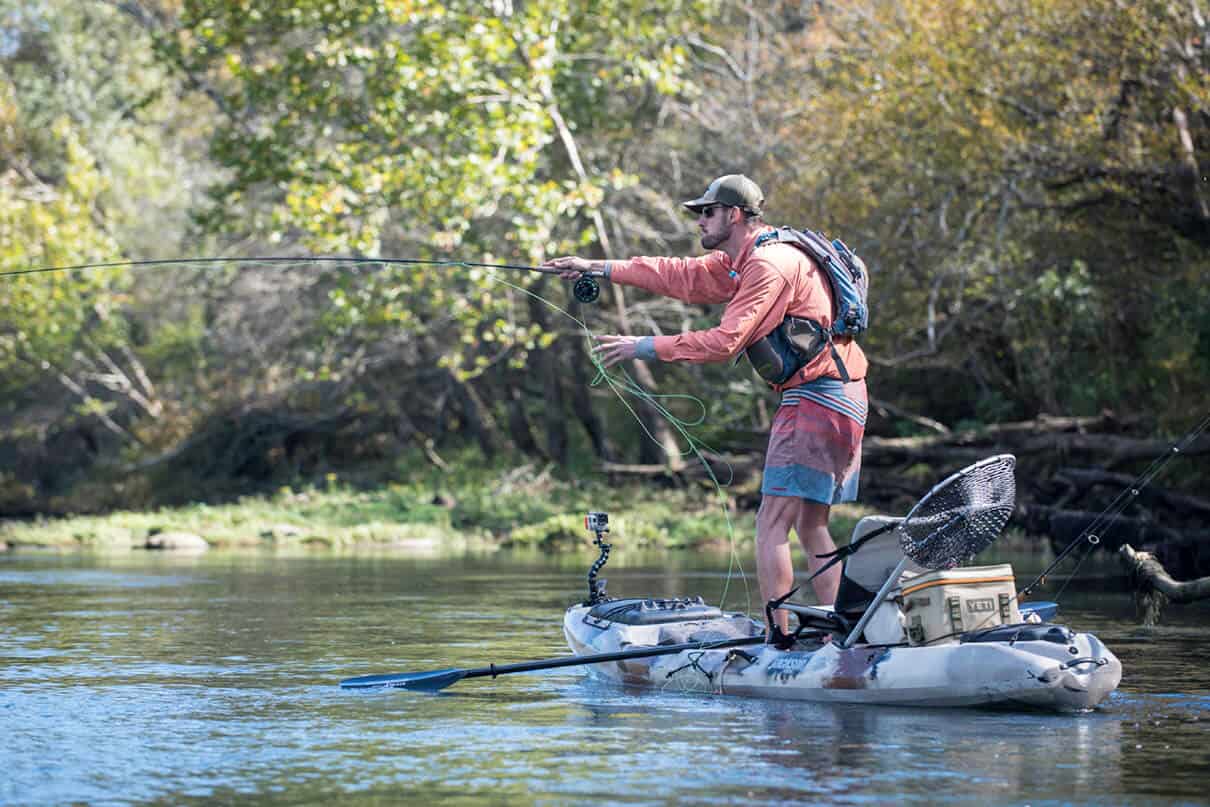
Leaders at Jackson see Eddyline as a good fit with their existing portfolio of rotomolded whitewater and fishing kayaks and premium Werner paddles. The acquisition will add lightweight thermoformed touring and recreational kayaks to Jackson’s product line.
“A thermoformed lineup was total synergy with what we’ve got going on the roto end of the house,” Kemp says. “Eddyline is high-end rec, and that market is not trashed like roto-rec has become due to direct-to-consumer sales and box store dumping.”
Werner paddles is a natural complement to Jackson’s expanded kayak line, Kemp says. “Even if you buy one of my competitor’s boats there’s a good chance that Werner is your paddle company.” All three brands trace their heritage to legendary founders, a point Jackson’s CEO Peter Hausin made when the Eddyline acquisition was announced.
“This is what’s been missing for us here at Jackson. It’s a fabulous product and it’s exciting to see how all of this is coming together, especially seeing Werner and Eddyline getting back to their shared origins,” Hausin says. The Eddyline-Werner connection dates to 1973, when Eddyline founder Tom Derrer began building touring kayaks designed by Werner Furrer Sr., the patriarch of Werner Paddles. Derrer’s pursuit of better sea kayaks led him to experiment with advanced laminating techniques such as vacuum bagging and, starting in 1994, thermoformed plastic. Eddyline has been a leader in thermoformed kayaks ever since.
Some in the industry caution that rotomolding and thermoforming are two very different processes, and Jackson’s mastery of the former doesn’t guarantee success in the latter. The transition will be eased by the arrival of key production leads at Eddyline’s shuttered Washington factory, who have resumed the same roles in Tennessee. Jackson also has some homegrown experience with thermoforming, including components and complete boats. The bigger challenge so far has been the accelerated transition. Still, Jackson is confident enough in the product to make a clear demarcation between the Mexican-made boats and the new Eddylines produced in Tennessee.
“We’ve always built kayaks for the love of the water and the adventure it brings,” says Hausin. “Eddyline shares that same passion, and together, we’re creating opportunities for paddlers of all kinds to get on the water and make memories.”
Eddyline’s former CEO Scott Holley engineered the move to Mexico and left the company shortly after Jackson Kayak purchased the company and moved operations to Tennessee. “I think really the synergies are kind of endless,” Holley said when news of the acquisition broke in February. “We really don’t compete against each other in the marketplace. It’s very different customers and very different paddlers that end up buying a Jackson versus an Eddyline.”
After leaving the company and the paddlesports industry—he now serves as Executive Director of the Lassonde Entrepreneur Institute at the University of Utah’s Eccles School of Business—Holley stands by that assessment and adds a caveat for everyone riding the latest wave of industry chaos and consolidation. “Having sat in the driver’s seat of a paddlesport brand, I have nothing but respect for everyone trying to work their way through these challenges.”
 This article was first published in the 2025 issue of Kayak Angler Business, released in September 2025.
 Uncertain waters. | Feature photo: Aaron Black-Schmidt