When Hurricane Helene struck the Southeastern United States last October, it left a trail of death and destruction in its wake. It also hit the region’s rafting outfitters in the gut, with area rivers swelling to record levels and outposts left in shambles. The commercially run rivers affected include the Pigeon, French Broad and Nolichucky, where outfitters, as river runners everywhere are prone to do, are putting their heads down and charging into the tumultuous aftermath of Hurricane Helene.
Rafting outfitters still rebuilding and reopening after Hurricane Helene
Three of the five most popular rafting rivers in the U.S.—the Ocoee, the Pigeon and the Nantahala—lie in the path of destruction Helene carved through Western North Carolina and East Tennessee. The Pigeon and Ocoee each see about 170,000 commercial rafting guests per year, and the French Broad consistently tallies more than 100,000, according to the America Outdoors’ 2022 River Use Report (the most recent data available). Southeast outfitters say those numbers are down precipitously this season.
“It’s slower than usual,” says Steven Foy of the Nantahala Outdoor Center, which runs regular trips on both the French Broad and Pigeon. “The impact of the hurricane is definitely influencing tourism.” Foy adds that NOC usually has a combined volume of about 110,000 guest days across the Nantahala, Ocoee, Chattooga, French Broad, Pigeon and Chattahoochee, and that the Pisgah National Forest in which they operate is the most heavily permitted USFS district for outdoor recreation in the country.
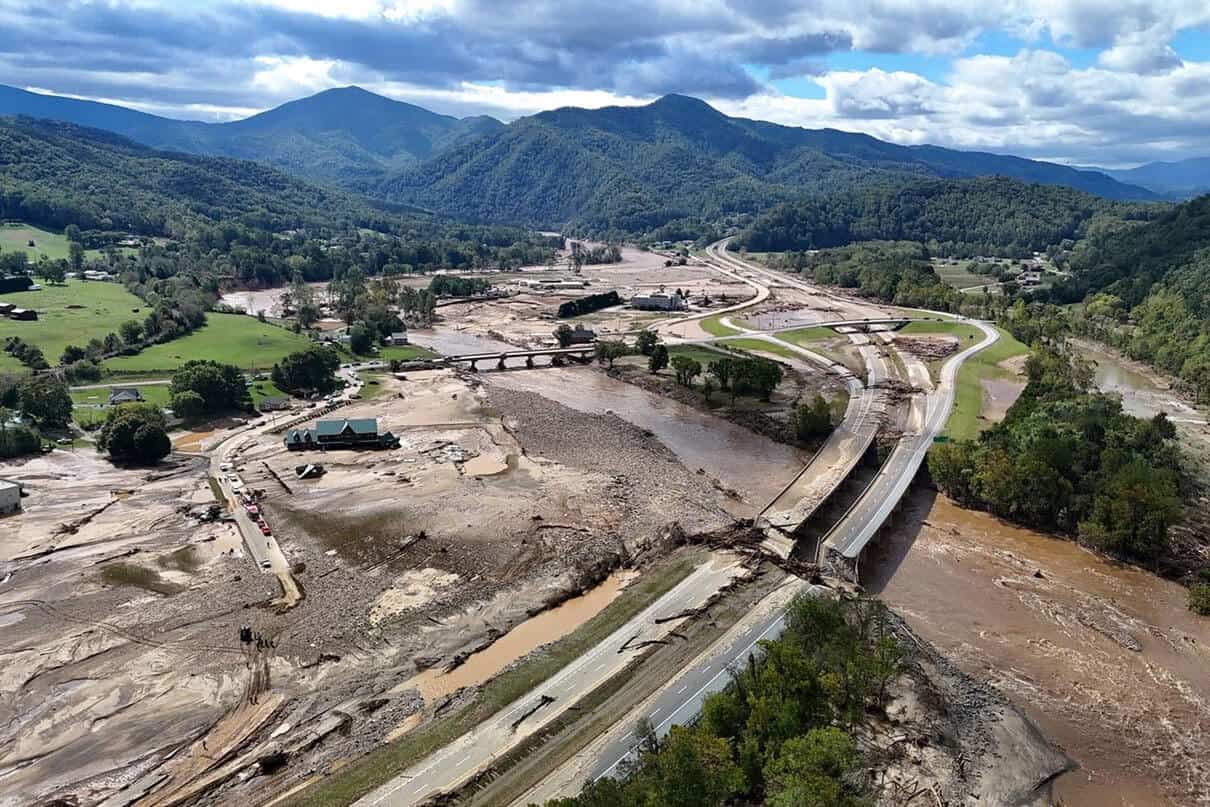
On the Pigeon, the storm wiped out road and bridge access to the customary put-in. The North Carolina Department of Tourism, Duke Energy and the county worked with outfitters to establish a temporary launch site about a mile downstream. While three outfitters have suspended operations on the Pigeon this year, NOC and some other companies are running trips from the new put-in. Although the abbreviated run skips three crowd-pleasing rapids, Foy says the river is currently great for rafting.
“I went the other day and it’s awesome,” he says, adding that while you can see damage from the hurricane, the river itself is largely unchanged. “We continue to work hard for the area rafting businesses and the long-term recovery of the river,” he says. Outfitters are also working with the state legislature to secure funding for a feasibility study to redevelop the river’s first mile.
The Nolichucky didn’t fare as well. No commercial outfitters are running trips on the East Tennessee classic this season. “We haven’t been allowed to operate yet,” says Mason Schmidt, who owns Blue Ridge Paddling with his brother, Brannon. “We all rely on federal permits from the Forest Service, which hasn’t given their authorization yet.” Blue Ridge and the other outfitter headquartered on the Nolichucky, USA Raft, bore the most physical damage from the hurricane.
“We were pretty much completely obliterated by the hurricane,” Schmidt says, adding it will take another six months to rebuild. Schmidt and his brother hope to reopen their Blue Ridge taphouse brewery by the new year, and resume river operations by spring 2026.
While some of the Nolichucky’s six outfitters have tried to cobble together trips on other, more distant rivers such as the French Broad, that’s not an option for Blue Ridge. “As well as not having an outpost to work out of, we also lost a lot of gear,” Schmidt says. “And insurance completely denied us since we weren’t in the floodplain.” The brothers are staying busy writing grants and working with engineers and architects to rebuild their operation.
The close-knit Southeast outfitter community has rallied around the hardest-hit operators. “We’re helping out as best we can by running shuttles for some of them and letting them use our private take-out on the French Broad,” says NOC’s Foy. “We’re all in this together.”
While most outfitters keep their guest cards close to their chests, Foy estimates that rafting outfitters on the Pigeon and French Broad are collectively down about 20 percent year-to-year. “The data hasn’t been released yet, but that’s about where we all are,” he says. “We’re all down.” While earlier group-focused trips weren’t bad, he says, they hit a soft spot in June’s shorter-term bookings. That isn’t out of the ordinary, but it’s more pronounced in this first post-storm season.
The slowdown is largely owing to people’s perception of the area after Helene. “There’s definitely a perspective that Western North Carolina got flooded off the map,” Foy says. “So, we have to instill the message that we’re open for business.”
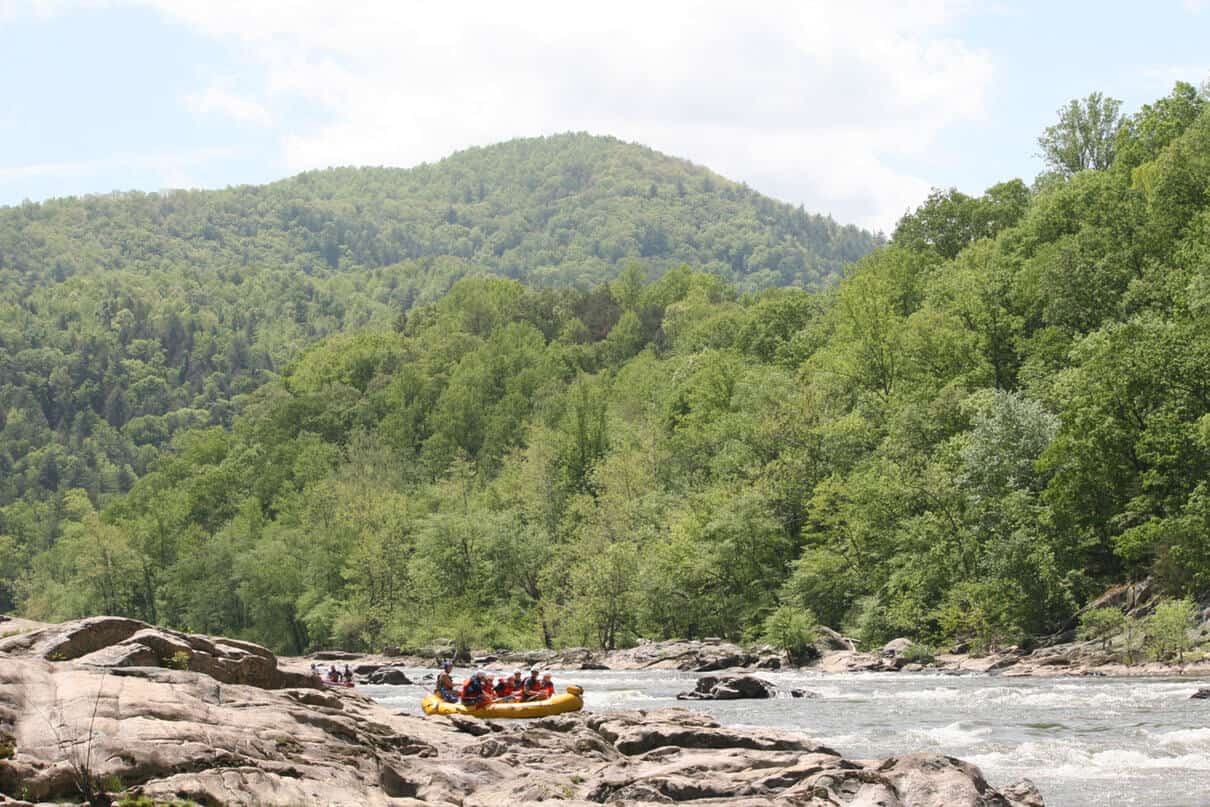
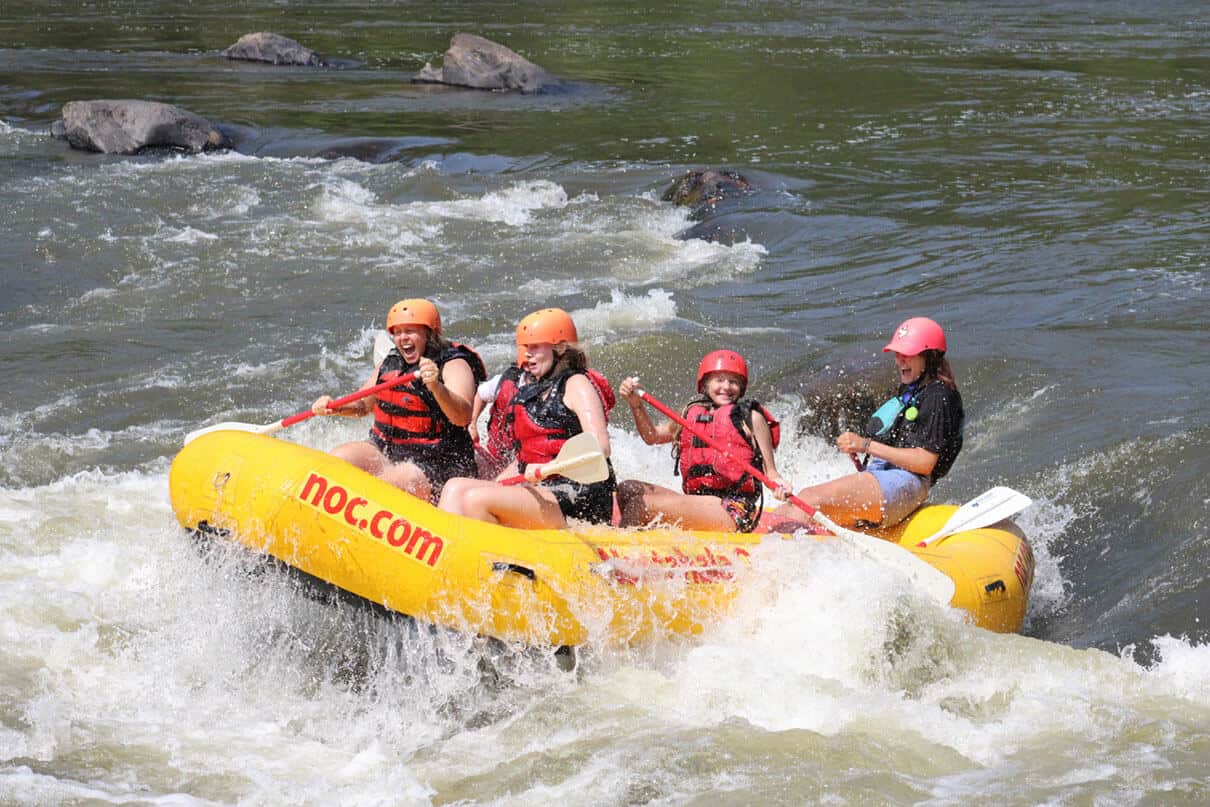
Nowhere is that more true than on the French Broad, which was hit hard but all of whose outfitters are operating again. Constituents have banded together to rebuild the county-owned put-in at Barnard, N.C., with the Forest Service doing the same at the Stackhouse take-out. Both were operable by mid-March. Those efforts also reopened the five-mile Section 9 commercial stretch, with many outfitters running another three miles down to private take-outs in Hot Springs, N.C. The rapids are the same as they were before the storm, says Foy, and hurricane debris is being removed every day. Many French Broad outfitters are seeing an influx of guides from the Nolichucky.
One outfitter notable for its relief efforts is Outdoor Adventure Rafting/Ocoee Outdoors on the Ocoee River in East Tennessee. “The storm diverted at the last second, so it didn’t impact the Ocoee too much,” says owner Sarah Beth Neal. “But our resources were stretched pretty thin with all our recovery efforts, including building and operating a shelter to house people displaced from their homes.
“Rafting has a pretty thin profit margin to begin with, so those efforts definitely tapped us,” she adds, saying her companies donated more than $30,000 to operate the shelter, which has housed over 80 people since the hurricane. “We’re still trying to find places for some of these people to live.”
While her companies lost the month of October last year, they stayed busy helping others. “We have an amazing staff and the whitewater industry is uniquely qualified to help with disaster relief,” she says. “We’re all certified medically and are rough-and-tumble dirtbag folks.”
She says that this year her numbers are actually up on the Ocoee so far, while most others in the region are down. However, group bookings, such as church outings, have fallen off, as has business from storm-affected areas nearby. The Ocoee region’s destination marketing organization has helped fill the gap with a top-of-the-funnel marketing campaign promoting tourism in the region.

The post-storm dip has caused ripple effects in the guide community. “A lot of guides are showing up looking for work so we often have too many vying for our trips,” Neal says. “It’s kind of brutal. Some outfitters lost their entire outposts.” As the Schmidts learned on the Nolichucky, navigating insurance waters has also been tough. “They don’t replace what you lost, just the value,” she says. That means an outfitter that lost 30 serviceable old boats might receive a payout that is only enough to buy six new rafts. That makes it hard to run an operation.
She adds that most of this year’s customers are caring and truly interested in the aftermath. “It’s a pretty common question we get—people asking how the storm impacted us,” Neal says. “And some people recognize us from all the press we got from helping out.”
The take-home? River running is very much alive and well in the Southeast, with the region’s outfitters helping each other to put guests on their waterways. “We’re open and running strong,” says NOC’s Foy. “Come see us.”
 This article was first published in the 2025 issue of Paddling Business.
 After the floodwaters receded on the Nolichucky, Blue Ridge Paddling’s riverside headquarters were a shambles. | Feature photo: Courtesy Blue Ridge Paddling