We’d love you to join us online, Monday, June 28, 2021 for Yoga and Beers with Benny Marr.
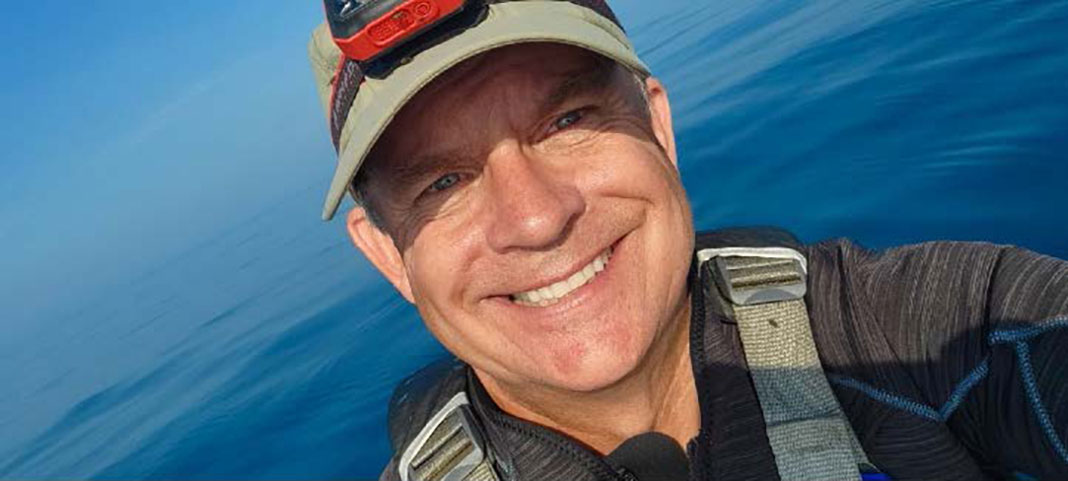
In this free online event, we will host one of the world’s best kayakers—Benny Marr—in a virtual 30-minute yoga class, tailored specifically to paddlers’ needs.
No experience is required, but do come prepared with a yoga mat, a good attitude and a cold beverage of your choice—we recommend the frothy kind.
What to expect
* 30-minute yoga flow session
* Beers and an attendee Q&A with Benny
Event Details
Yoga with Benny Marr (FREE)
An online, live Zoom event
Monday, June 28, 2021
7:30 p.m. EST / 4:30 p.m. PST
Ellen “Magellan” Falterman has her sights next set on a 40,000-mile, round-the-world rowing journey that will span six years. | Photo: Cindy Falterman
In September, Ellen Falterman paddled, or rather rowed, her 18-foot Grumman canoe to her family home on the Trinity River in East Texas, completing a full descent of the Mississippi River, and then some. The journey was the latest in a trio of expeditions on the Missouri and Mississippi rivers for the 25-year-old flight instructor turned river-runner, who has designs on much bigger adventures.
More about that in a moment, but first we go to Brazil, where Ellen’s love of adventure, if not of rivers, was sparked on a three-month trek with her older brother Patrick. When he was 19 and Ellen 12, Patrick stuck out his thumb and started south. By the time she visited him in Brazil six years later, he was exploring the Amazon basin in a 400-pound wooden boat she rather generously describes as a canoe. Starting on the Amazon’s biggest tributary, the Rio Negro, they paddled upstream for weeks, living on cassava flour, fish and monkeys they shot and salted.
Wait, monkeys?
[ Find your epic adventure in the Paddling Trip Guide ]
“It’s not like I grew up in Houston,” she explains. “I grew up in rural east Texas in the piney woods, and I was with my older brother. I trusted him completely.”
Their objective was a jungle Shangri-La called the Serra do Aracá, a mythic plateau veiled in waterfalls, dense foliage, and tales of hidden treasure. To get there, they worked their way up progressively smaller tributaries until, near the foot of the Serra, the stream was barely wider than their boat was long.
“I asked him, ‘Does it float?’and he said, ‘Well, it’s got water in it.’”
That morning the river rose from knee-deep to chest-high in the time it took to wash the breakfast dishes. They put on anyway and the canoe went sideways, then under a log. Patrick was pulled under, and the bowline wrapped so tightly around his middle that he carried a scar for the rest of his life. Ellen came ashore with little more than her passport and a deck of cards, and the siblings played Gin Rummy for hours until the water receded enough to free the canoe. Their paddles and supplies gone, they cut poles and floated four hungry days to the nearest outpost.
Home in Texas two years later, Patrick crashed his small plane into the Trinity River. The Faltermans are a family of aviators. Ellen makes her living as a flight instructor, which meant that she had to get back in an airplane and fly after Patrick’s death. Rivers took a bit longer.
Ellen “Magellan” Falterman has her sights NEXT set on a 40,000-mile, round-the-world rowing journey that will span six years. | Photo: Cindy Falterman
She’d avoided water ever since their Brazilian misadventure, but Ellen couldn’t bear the thought of being at home on the anniversary of Patrick’s death. So in 2017 she paddled the Missouri River in his memory, 2,300 miles in a borrowed sea kayak. When she reached the confluence with the Mississippi in St. Louis, she knew she’d paddle that river too. Just not yet.
“I’d been talking to the Missouri for so long that the Mississippi was like a brand new person,” she says. “It didn’t feel right continuing down to the Gulf because there was all this water upstream that didn’t know me.”
She came back to the Mississippi in 2019, trading the kayak for an old aluminum canoe, also borrowed, this time from her uncle’s chicken coop. “I asked him, ‘Does it float?’ and he said, ‘Well, it’s got water in it,’” she recalls. Figuring that if the water couldn’t get out, it couldn’t get in either, she dragged the canoe out of the henhouse and mounted a sliding-seat rowing station amidships. She named it Edna, after the grandmother who brought it into the family decades ago, and started down the Mississippi.
Ellen planned to run Big Muddy all in one go, but when her other grandmother, Eve, was diagnosed with an aggressive form of cancer, Ellen left the river to be with her before she passed. She picked up the thread again in 2020, rowing from St. Louis to the Gulf of Mexico, then west along the Intracoastal Waterway, and up the Trinity River to the place her brother Patrick’s plane came to rest in 2016. There she placed a cross on an oak tree, though the journey was the true memorial: a 2,700-mile moving celebration of her brother’s life and way of seeing the world.
“What is the point of doing anything,” she says, “if you can’t find the joie de vivre?”
She did it the way he would have, eschewing high-tech navigational aids and recording her progress on paper maps. “My whole journal is on the maps,” she says. “Any time I had a thought, I’d just write it down on the map where I was.” She marked each campsite with a tiny Maltese cross.
Once, when darkness overtook Ellen in a marsh, she spread her sleeping bag on the tall wet grass and dozed. The tide came in at about 2 a.m. and she broke her flooded camp in the dark, spending the rest of the night tied up to a channel marker. Curiously, she says, there were no mosquitoes. The observation gets to the core of her adventuring philosophy, to shrug off the hardships and embrace the moment. “What is the point of doing anything,” she says, “if you can’t find the joie de vivre?”
She kept no strict itinerary, camping free on islands and cow pastures and half-sunken barges, and resupplying at grocery stores along the way. She spent about $300 a month on the river but still managed to end up broke, having poured her life savings into a down payment on an ocean-going rowboat. She named it Eve, after her grandmother, and plans to row it around the world.
This article was first published in Paddling Magazine Issue 63. Subscribe to Paddling Magazine’s print and digital editions here, or browse the digital archives here.
Ellen “Magellan” Falterman has her sights next set on a 40,000-mile, round-the-world rowing journey that will span six years. | Photo: Cindy Falterman
TORONTO, June 24, 2021 /CNW/ – VerticalScope Holdings Inc. (“VerticalScope“) (TSX: FORA) announced today that it completed the acquisition of Paddling.com. Paddling.com is a leading paddlesports enthusiast community which provides comprehensive resources for all types of paddling information used each month by hundreds of thousands of kayakers, canoeists, and paddle boarders.
Founder and CEO of Paddling.com Brian Van Drie said: “We have spent the past 20 years building Paddling.com to be one of the best destinations for paddlesport enthusiasts with the goal of providing fun and useful information for all types of paddlers. We are excited for the next phase of Paddling.com‘s growth as part of VerticalScope.”
“We are thrilled to add Paddling.com to our growing platform of enthusiast communities. Paddling.com is a highly engaged and passionate community and is a great fit with our outdoors-focused enthusiast sites,” said Chris Goodridge, President and COO of VerticalScope.
About VerticalScope
Founded in 1999 and headquartered in Toronto, Ontario, VerticalScope is a technology company that has built and operates a cloud-based digital platform for online enthusiast communities in high-consumer spending categories. VerticalScope’s mission is to enable people with common interests to connect, explore their passions and share knowledge about the things they love. Through targeted acquisitions and development, VerticalScope has built a portfolio of over 1,200 online communities and more than 100 million monthly active users. VerticalScope is listed on the Toronto Stock Exchange (TSX: FORA).
Forward-Looking Statements
This news release may contain forward-looking information within the meaning of applicable securities legislation that reflects the Company’s current expectations regarding future events. Forward-looking information is based on a number of assumptions and is subject to a number of risks and uncertainties, many of which are beyond the Company’s control. Such risks and uncertainties include, but are not limited to, the factors discussed under “Risk Factors” in the supplemented PREP prospectus dated June 14, 2021. Actual results could differ materially from those projected herein. VerticalScope does not undertake any obligation to update such forward-looking information, whether as a result of new information, future events or otherwise, except as expressly required under applicable securities laws.
Your life is to a large extent the sum of all your habits—good or bad. You have chosen at least one wisely. And you’re not alone. | Photo: Len Wagg
When I replaced the smoke detectors in the Paddling Magazine office last fall, I noticed the batteries will last 10 years. There’s even a little sticker on the device to write the year I installed them.
As I wrote the date on the line with a Sharpie, I wondered what the person (probably me) who changes the batteries a decade from now will think about when he sees “2020” written on the side.
Whatever happens over the next 10 years, if history is any guide at all, the year we just finished will be a mostly faded memory.
A little more than 10 years ago, supply outpaced demand in the housing market. Falling prices meant mortgage holders couldn’t sell their homes to cover the outstanding loans. The U.S. government had increased the federal borrowing rate. Thousands of questionable creditworthy homeowners who’d jumped on sub-prime interest rates were up for renewal. The defaulting loans were tied to hedge funds, derivatives and sketchy backdoor credit swaps. The burst of the housing bubble brought the U.S. banking industry to its knees, almost collapsing the world’s financial systems. Meanwhile, Black Eyed Peas’ “Boom Boom Pow” topped Billboard’s Year-End 100 singles chart. But I bet you don’t remember that little detail either.
On March 11, 2020, the World Health Organization declared a global pandemic because of a new coronavirus. Three months later, demand for paddlesports equipment outpaced supply.
The details of the pandemic will very likely fade from memory. We will probably forget how infected bats, or maybe pangolins, from a street market in Wuhan, China, led to social distancing regulations and the largest boom in paddlesports history. What will matter more than what just happened and how, is what we decide to do with all these new paddlers.
In this article, we asked 20 industry leaders the questions paddlers everywhere would be asking each other in bars over beers, if we could gather in bars for beers. How long will this boom last? How do we keep all these new paddlers safe? How do we keep their new boats and gear off Craigslist once Carnival’s cruise ships sail again?
For more than 20 years, I’ve been having serious conversations with marketing and sales teams, national paddling organizations, clubs, instructors, high school teachers and friends. How do we get more people into paddlesports?
Your life is to a large extent the sum of all your habits—good or bad. You have chosen at least one wisely. And you’re not alone. | Photo: Len Wagg
I’ve always been uncomfortable with the term, but an overwhelmingly optimistic growth strategy in the trade is commonly referred to as “Butts in Boats.” As in, if we can just get more people to just try paddling, they’ll love it and do it.
Will they though, really?
I went skydiving a few years ago. Maybe that industry has a similar “Newbs in Chutes” theory. Except, I only jumped once. I didn’t buy any gear. And will probably never do it again.
Never would anyone in paddlesports ever come up with a strategy to infect millions worldwide with a deadly virus. But here we are. COVID-19 put butts in boats and on boards. Lots and lots of them. More than our wildest dreams.
So, if getting more butts in boats was the answer to growing paddlesports all along, why not massive celebration among our industry professionals?
Where we will be in 3,650 days when someone (probably me) changes the batteries in the Paddling Magazine smoke detectors depends on the next 21 days. Because 21 days is the minimum amount of time it takes for someone to form a new habit. Like, say, paddling.
Thanks to the pandemic and social distancing driving thousands of new butts into boats—and some old butts back into boats, too—all we need to do now is make paddling a behavior repeated regularly. Habit research suggests 21 days of tying boats and boards to roof racks, donning PFDs and pushing off from shore is all that’s needed to create a subconscious routine, one these new pandemic paddlers will soon do automatically.
[ Paddling Buyer’s Guide: Find all your paddling gear here ]
Canoeing, kayaking or paddleboarding moves them closer to what they want—adventure, relaxation, fun or fitness. It will eventually feel strange to them not to paddle. It will be such a natural thing to do, they won’t know how to explain the reasons why they love it so much. Like us.
We can help get them there.
Here’s to possibility. To better world health. To good habits. And to meeting more friends on the water than ever before. It’s going to be great.
This article was first published in Paddling Magazine Issue 63. Subscribe to Paddling Magazine’s print and digital editions here, or browse the digital archives here.
Scott MacGregor is the founder and publisher of Rapid Media.
Your life is to a large extent the sum of all your habits—good or bad. You have chosen at least one wisely. And you’re not alone. | Photo: Len Wagg
Onlookers watched in awe as a previously-dry rock bed in East Maui, Hawaii rapidly began to fill with rushing water.
Waioko Pond (also known as Venus Pool) is one of the country’s most spectacular natural pools. Surrounded by rugged mountains and a scenic coastline backdrop, it’s no surprise that the pools are fast becoming a visitor hot spot.
Due to being situated at the bottom of a vast mountain range with varying climates, East Maui can collect an unfathomable amount of rain. A Maui guidebook warns potential visitors that it could be raining hundreds of square miles upstream, even if it’s sunny and clear down at the pools.
The Dangers Of Flash Floods
Every year, sightseers and river users alike lose their lives in rapid flash flooding events all over the world. Earlier in 2021, KHON2 News reported the death of a 26-year-old Californian woman who drowned after swimming in the pools of Waioko Pond. She was caught in a sudden flash flood and swept out to the ocean within minutes. She scrambled to cling onto riverside rocks, but the force of the water proved too powerful.
[ Start planning your next kayaking adventure with the Paddling Trip Guide ]
Plan Ahead To Mitigate Risk
The best way of surviving a flash flood is by avoiding it in the first place. Avoid paddling in areas that are prone to flash flooding events, be sure to check the weather in advance of your trip, and always have an escape plan in mind. Additionally, make sure to check flood warnings for the area and park or camp well away from the watershed in question (if in a high-risk flood zone).
Welcome to the pandemic era. We’re all solo expedition paddlers now. | Photo: Kevin Light
What do we do when a storm might be coming through? I ask rhetorically. “Get off the water. Find a strong position and hunker down.”
February 2020
We’re sitting in the operations hub of a Baja sea kayak company. The topic is a group that wants to reschedule their trip because they’re worried about something called coronavirus. It’s easy for me to talk. My trip leaves tomorrow, six days of photography in the Sea of Cortez. The stress of running a kayak business isn’t mine. But it’s etched on the face of my old friend, the owner. Of course, the strong position is to do trips as long as it’s safe, so the outfit and its employees can weather the financial drain in a seasonal business already prone to strong flood and ebb cycles.
The storm, of course, is far bigger than we imagine.
For the next six days, we paddle with leaping dolphins, flocks of pelicans and boobies, and brilliant sunrises. I celebrate my birthday with the best seafood tacos I’ve ever had and a paddle with tropical fish. Then I fly home.
March 2020
Three weeks later, half the world’s 7.8 billion people are under lockdown. The storm’s hitting different places at different times, but it’s rolling in big. While I’m “social distancing,” life is still normal in Baja. Then the same patterns appear. My friend tells me cancellations are rising like the tide on a narrow beach, threatening to swamp everything. Some visitors make the last flight out. Two days later, I see videos of the Policia Municipal enforcing the lockdown at the fish taco place, the estuary where I launched, and the beach where we surfed amidst diving pelicans.
The storm is a hurricane
As the news builds, lockdowns strengthen and boat ramps close, I limit my paddling to short exercise paddles, reading a book on an island in the middle of the river. I know I could find water access, avoid other people until I’m afloat, and feel the water under my hull. But driving around with a boat on my car sends the wrong message about essential trips. So, I kill time with charts of Haida Gwaii, making plans for… someday.
Sea kayakers who paddle challenging waters always manage uncertain risks. We go where information is sketchy. Baja has no VHF forecasts; my haunts on the British Columbia coast have no current tables. Rounding an exposed headland requires anticipating what might happen somewhere else hours later when the tide changes and the wind shifts. Mistakes put you and your co-paddlers at risk. Welcome to the pandemic era. We’re all expedition paddlers now.
The grocery store becomes an exposed crossing. We hedge our bets: go early before the wind rises, paddle quickly to limit exposure, go when crowds are smaller, get in and get out, wash our hands. Or skip the crossing and have groceries delivered—the lockdown equivalent of hiring a water taxi to take you somewhere you’d rather not paddle.
Expedition behavior applies: Commit to shared goals. Take care of yourself so you can help the group. Help others but don’t do their job for them. Minimize unnecessary risks. Conserve energy. Be calm. But now my group is a city of 2.2 million, not a few trusted friends.
Welcome to the pandemic era. We’re all solo expedition paddlers now. | Photo: Kevin Light
June 2020
A wave fills my cockpit with cold seawater before I can seal my skirt. It’s my first beach launch in months, and I timed it poorly. The virus is clearly here for a while. Lockdowns are easing, not due to vaccines but human nature—we just can’t stay inside anymore. My paddling range has extended to camping on uninhabited islands, small groups, no shuttles, avoiding crowded put-ins. No meals and beer afterward. A friend who’s watched too many spy thrillers calls it Moscow Rules Kayaking: lay low, watch for opportunities, then move decisively. But we’re going rock gardening, not sneaking over the Berlin Wall.
August 2020
The lady from the next campsite asks where to put the garbage she kindly cleaned up after some jerk left an ugly trash pile. But there’s nowhere to put it. The overflowing dumpsters have been taken away. The bathrooms are BYO toilet paper. In a summer without little league or concerts, kayaks on cars are everywhere. The outdoors is swamped. And it’s getting, well, trashed.
Now we launch early in the morning when few people are around. But coming off the water later means navigating seas of people, many maskless, who flock to the water. Many friends bail for fear of outdoor-starved mobs at the take-out. The calculus between exposure risk and the benefits of fresh air, exercise and camaraderie are still a known unknown. It’s Yogi Berra paddling: “Nobody goes there anymore because it’s too crowded.”
Having spent my career encouraging people to love and protect nature, this new enthusiasm is great but overwhelming. A park manager says they’ve gone from emptying garbage cans once a week to four times a day. The pandemic’s economic hit has pummeled agency funding, so fewer staff now manage more visitors. This could create a groundswell of demand for more campgrounds, trails and parks. But it may come with agency budgets bleeding red ink. This double whammy is like a tough rock-garden rescue: the need is greatest when it’s most risky for the rescuer.
October 2020
A cold wind whips sea fog from the south. In Rosario Strait, I hear foghorns from ferries or tankers. I grimace and turn around: no crossing this afternoon. The end of my solo trip through the San Juans will be a day later. I’m pushing season’s end hard, and I know why: I dread the rainy, dark winter that’s knocking. With virus cases up and the mercury down, it will be winter without warm gatherings with friends. The annual rough water symposium has been canceled.
I’m pushing season’s end hard, and I know why: I dread the rainy, dark winter that’s knocking.
To brace for a five-month “weather day,” hunkered down with the news instead of the VHF, I make lists of quasi-paddling projects. Relearn knots, revive stalled photo projects, organize the gear room. Sure, there will be some rainy, cold paddles, too.
By the time you read this in spring, the storm will have eased. And that’s another thing we all learned from sea kayaking: the weather is king, and plans are always subject to change. The Haida Gwaii charts will come back out, and I’ll plan a trip for… someday.
This article was first published in Paddling Magazine Issue 63. Subscribe to Paddling Magazine’s print and digital editions here, or browse the digital archives here.
Neil Schulman paddles and writes from Portland, Oregon.
Welcome to the pandemic era. We’re all solo expedition paddlers now. | Photo: Kevin Light
A wildlife encounter on a paddling trip is a bucket list item for many. But when said wildlife crosses personal space boundaries, well, the experience becomes less desirable. We’ve rounded the top 6 scariest paddling animal encounters on the internet for you to enjoy—from a safe distance, of course.
Did we miss any great videos? Leave a comment below or send us a message on Instagram or Facebook.
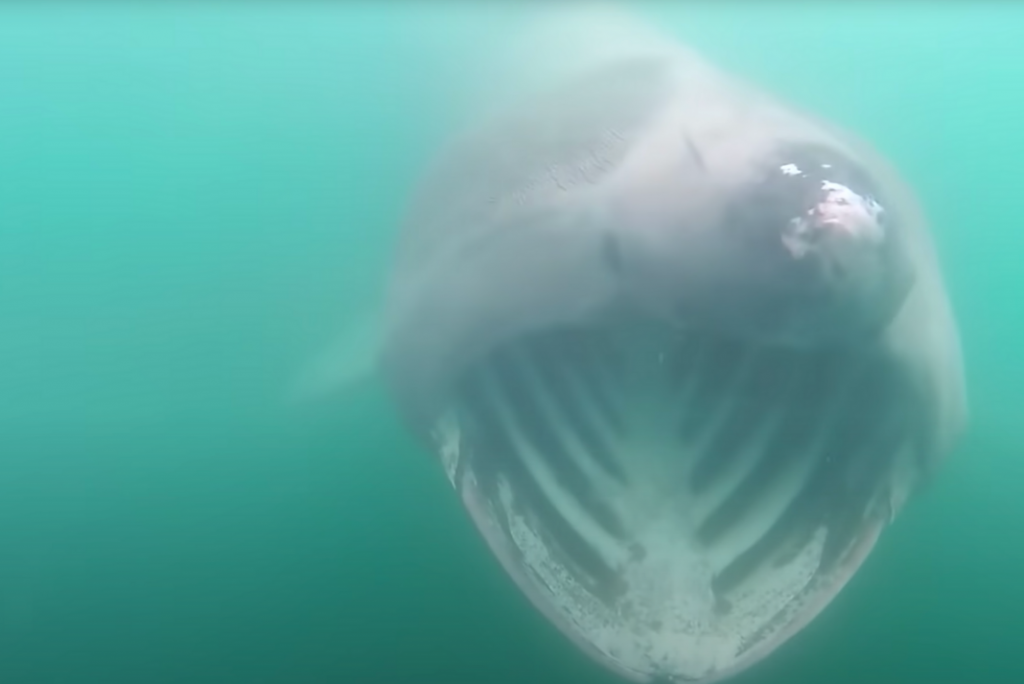
6. A Kayaker’s Intimate Encounter With Basking Sharks This kayaker was paddling through the waters of Ireland’s west coast when over half a dozen Basking Sharks surrounded his kayak. Basking Sharks’ jaws can expand up to 3 feet wide and, although they rarely attack humans, we can clearly see that it’s feeding o’clock for these fellas. Watch the video »
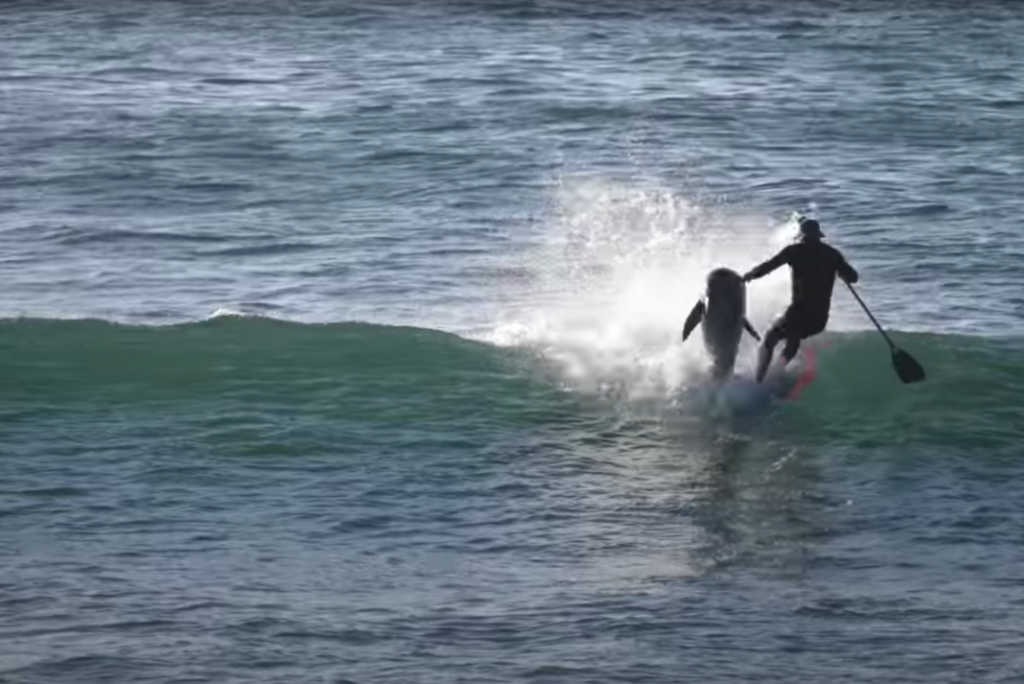
5. Dolphin Wipes Out Standup Paddle Boarder This Australian paddleboarder is no stranger to sharing the wave with dolphins. So, when he noticed the pod of dolphins surrounding him, he simply assumed they were herding fish. Turns out, one dolphin had its sights set on something bigger. Watch the video »
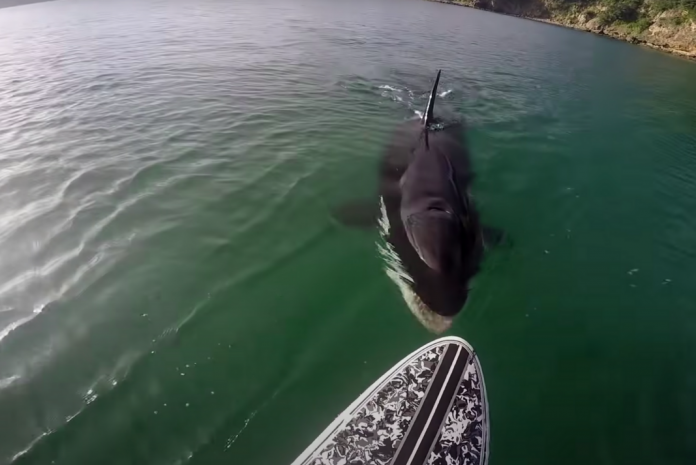
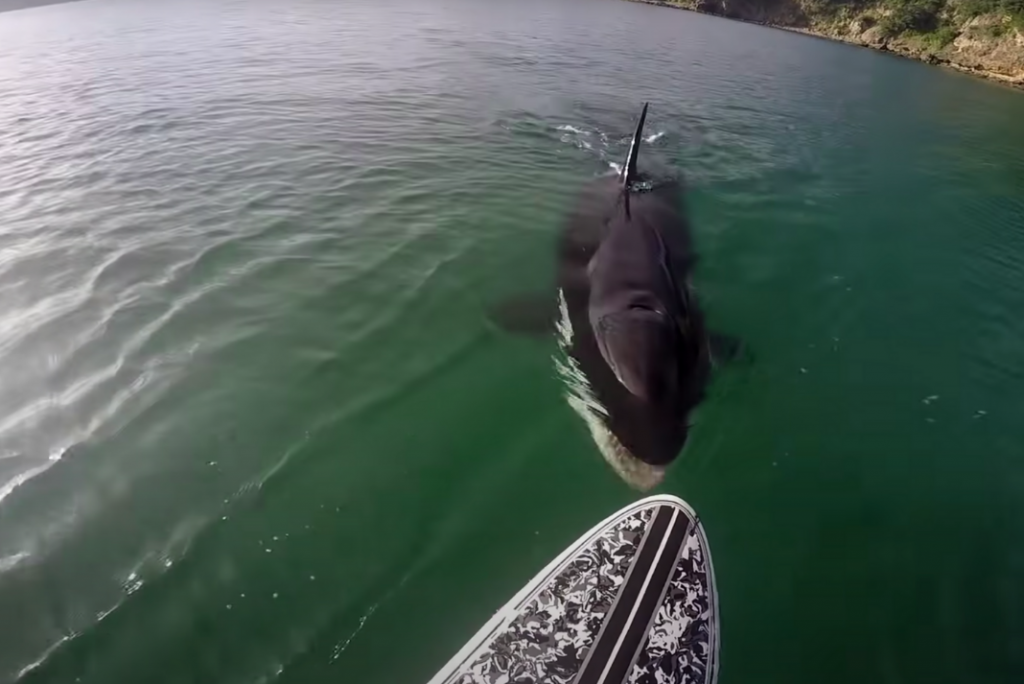
4. Way-Too-Close Encounter With Orca This ocean SUPer was paddling off Kuaotunu Beach in New Zealand when a pod of orcas began diving for stingrays underneath his board. Things began to get a little tense when one orca swam up to take a bite on his board. Watch the video »
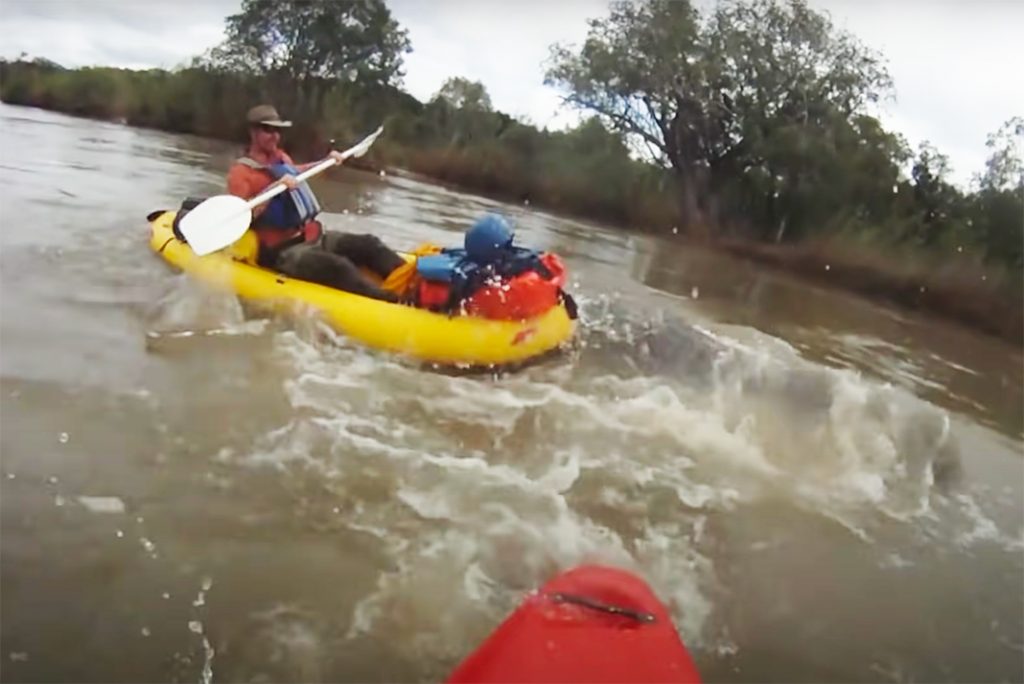
3. Scary Hippo Encounter On The Lugenda River The group was paddling on the Lugenda River in North Mozambique. The trip goes from placid to pulse-pounding when an unexpected hippo suddenly surfaces, threatening to swamp their boats. Watch the video »
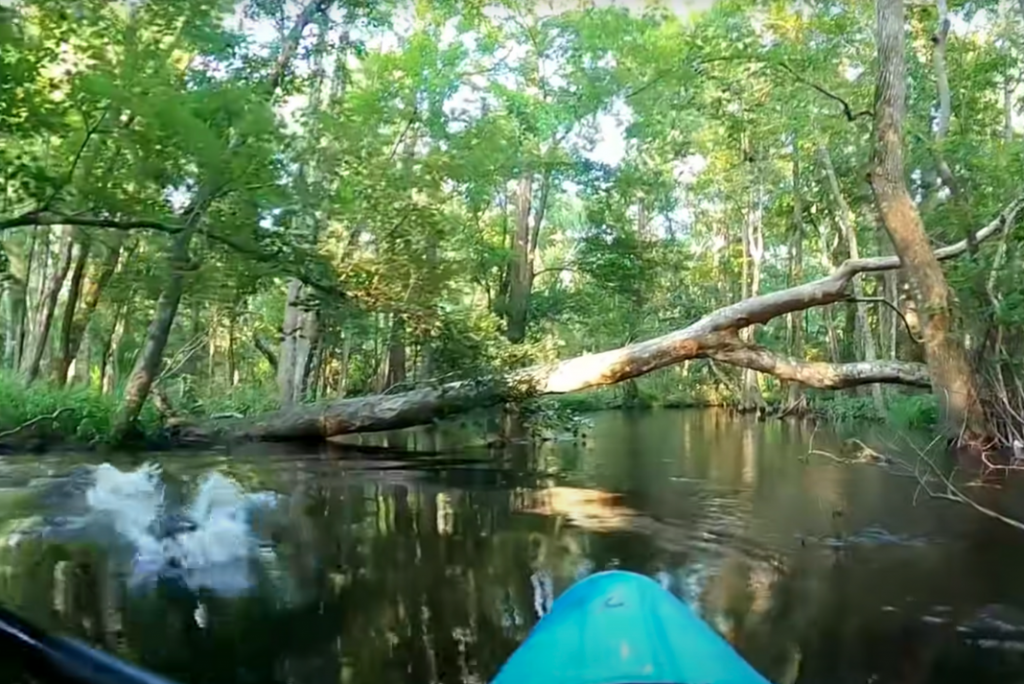
2. Alligator Charges Kayak A kayaker exploring a section of a North Carolina river found more than he expected when an alligator slammed into his boat. The nail-biting encounter goes from bad to worse when kayak capsizes. Watch the video »
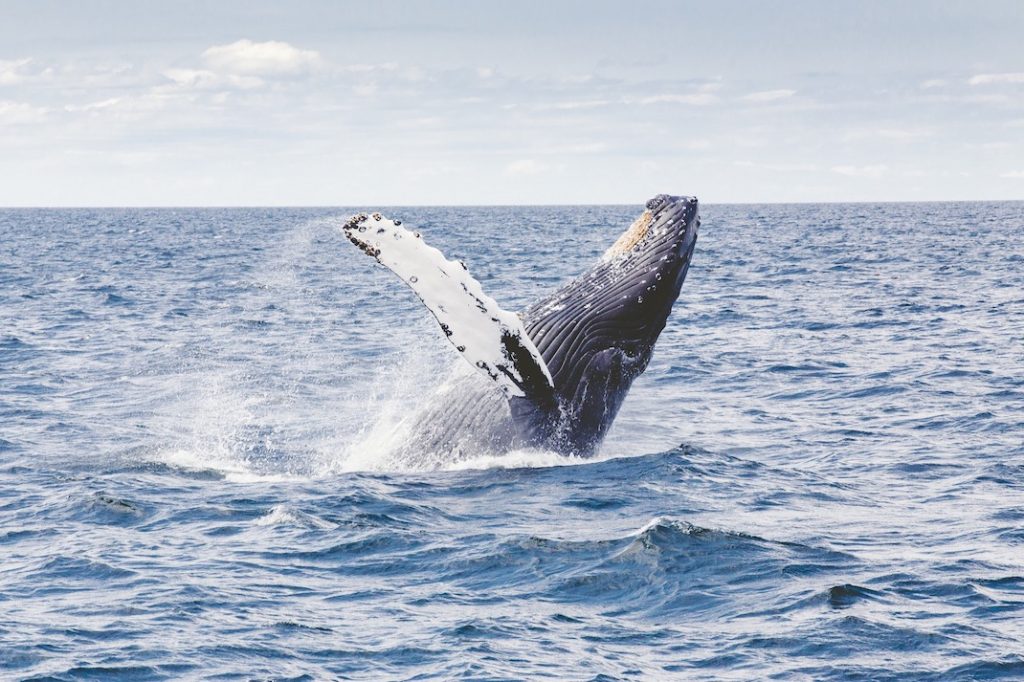
1. Kayakers Nearly Swallowed By Humpback Whale Two whale-watchers off Avila Beach in California had a terrifying experience when a humpback overturned their kayak and appeared to nearly swallow them.
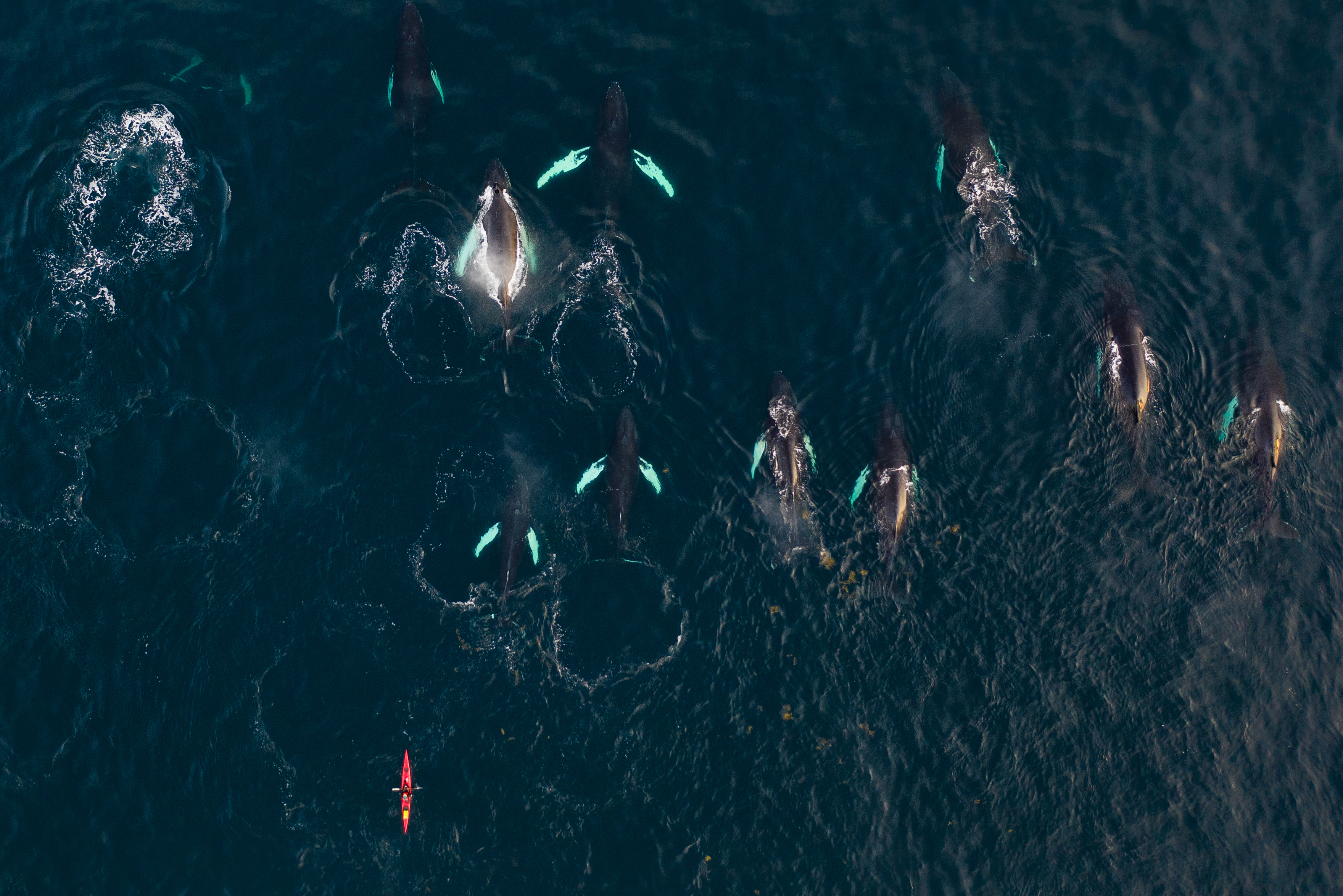
Warning: Close encounters like these may be over-whale-ming. | Photo: Zach Baranowski
As winter closes in on the Arctic, it becomes a dreamland. The short days are an endless transition from sunrise to sunset, with soft light illuminating the sky before the landscape plunges into complete darkness for a long winter.
Each year, winter’s arrival brings billions of Atlantic herring following the Gulf Stream, seeking shelter in Norway’s northern fjords. Hungry orcas and humpback whales follow, ready to feed. Frigid waters well up from the continental shelf here, carrying nutrients that support the planet’s largest cold water reef.
Warning: Close encounters like these may be over-whale-ming. | Photo: Zach Baranowski
I set out with fellow photographers to experience the Arctic Ocean firsthand. During the first couple days on the ocean, we spent more time roaming on the boat than in the water, as the humpbacks and orcas were on the move, chasing the herring into the fjords. International guidelines recommend keeping a distance of at least 300 feet from whales. We were careful, allowing the cetaceans to approach us and cutting the engine to avoid disturbing them when they neared.
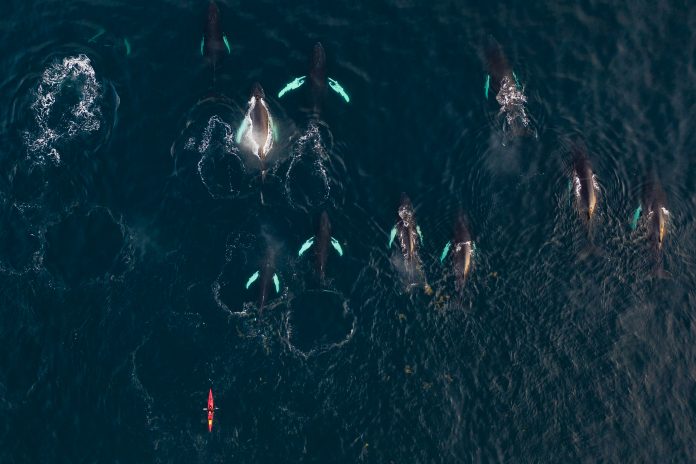
When we crossed paths with this lone kayaker, I got my first real sense of the enormity of these humpbacks as I photographed them from above with a drone. The sea kayak was dwarfed in comparison to even the smallest whale in the pod. It can be hard to grasp the size of these whales when all you can see is a fluke or dorsal fin. Their bodies reach lengths of up to 54 feet—the size of a school bus—and weigh up to 40 tons. An adult humpback can swallow 220 pounds of herring in a single gulp.
Someone on our boat remarked on how brave this kayaker must be to paddle amongst the pod. While humpbacks are considered gentle giants, people have been injured and even killed when too close to a breaching whale or tail slap.
It is a privilege to witness one of the richest marine ecosystems in the world, which exists thanks to a delicate balance. Increased tourism, shipping traffic, oil exploration and other anthropogenic activities can affect the populations of orcas, humpbacks and other marine life in the Arctic.
As winter closes in on the Arctic, it becomes a dreamland. The short days are an endless transition from sunrise to sunset, with soft light illuminating the sky before the landscape plunges into complete darkness for a long winter.
Norway is western Europe’s largest oil and gas producer, and with a December 2020 Supreme Court verdict further opening up its Arctic to more oil drilling, the country is on track to operate more oil wells than ever. Disturbances can mean trouble for cetaceans, especially during the crucial months while they feed on the herring before journeying 3,000 miles back to the Caribbean, one of the longest migratory journeys of any mammal on Earth.
On my final day in the fjords and with just a few hours of daylight to work with, we spotted a pod of orcas and humpback whales feeding on a ball of herring. I spent two hours photographing them in the frigid Arctic waters, watching the feeding frenzy and the graceful giants glide effortlessly through the water.
As Arctic water rushed into my wetsuit, I wished for the dry warmth of a kayak. But, the longer I observed the humpback passing in and out of a ball of herring, disappearing into the shadowy distance then reappearing, the more I forgot about the creeping chill. As it circled back, I saw the ominous glow of the white markings on its vast pectoral fins gliding in the darkness as it approached within meters of me. A moment and feeling I won’t ever forget.
This article was first published in Paddling Magazine Issue 63. Subscribe to Paddling Magazine’s print and digital editions here, or browse the digital archives here.
Zach Baranowski is an award-winning freelance photographer specializing in outdoor adventure and wildlife connections.
Warning: Close encounters like these may be over-whale-ming. | Photo: Zach Baranowski
“Of all my Great Lake adventures this one ranks among my most favorite.” tells Mike Stout, a long time Twin Cities resident. He adds, “The conditions were perfect, views spectacular, and with every journey there is the need to overcome.”
Photo: Mike Stout
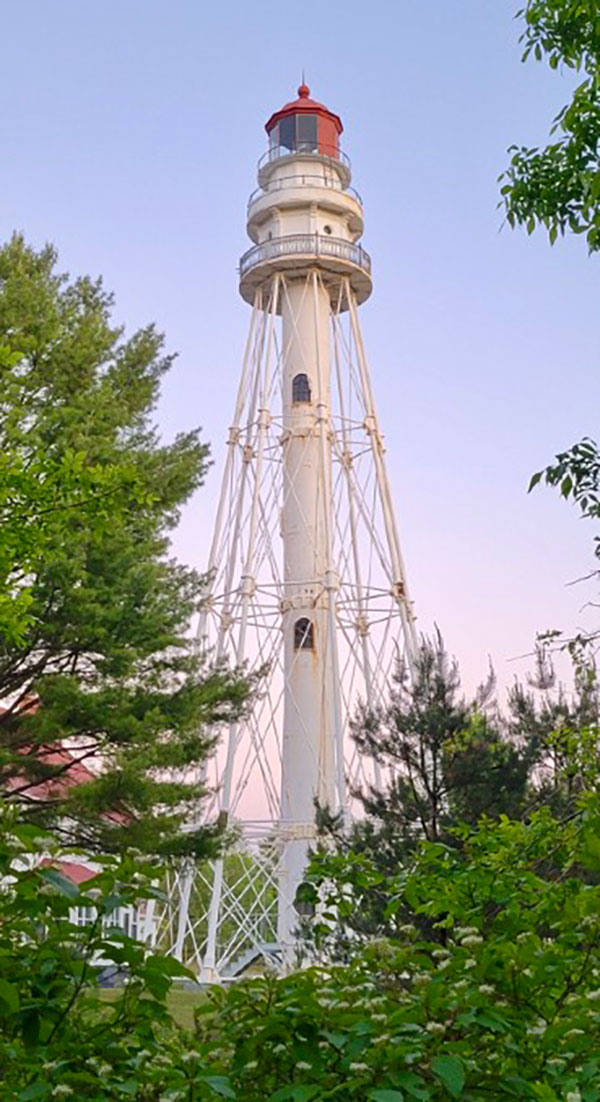
The day’s journey begins under the shadows of Wisconsin’s Rawley Point Lighthouse to Michigan’s Big Sable Lighthouse.
The biggest challenge on this trip is the unseasonably hot temperature reaching into the mid 80s and cold water in the low 50s. Because he dresses to the temperature of the water, in the unlikely event of a spill, he wore 1.5 ml neoprene pants and long sleeve top, and 3.0 ml booties. The combination of the beating sun, calm winds, and bright reflection coming off the lake, and wearing his thick wet suit, he must pause every hour to generously hydrate to avoid the onset of heat exhaustion.
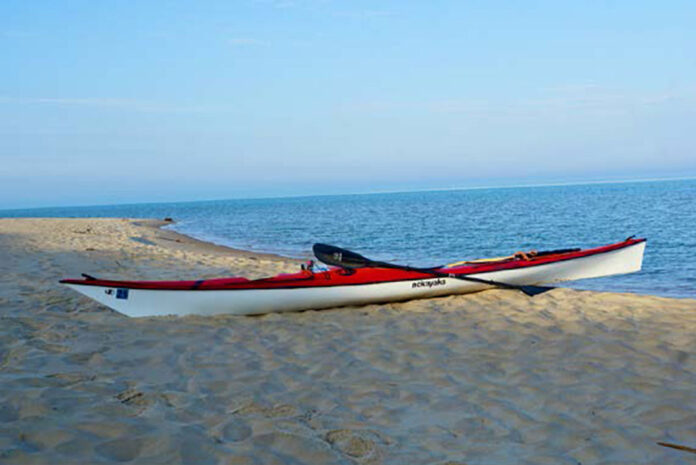
After watching the brilliant red and orange sunrise, eating a hearty breakfast, and staging his 17’2” open sea NC Kayak, at about 7:30AM he is ready to launch. He looks over Lake Michigan and takes in the beauty of this incredible blue sea with its gentle waves and thinks to himself, “I am truly blessed.”
His goal is to complete the crossing in 16 hours (+/- 1 hour). With excellent lake conditions he thinks it may possible to finish as quickly as 14 hours. He doesn’t give the though of a record pace too much time as he fears it may jinx the opportunity.
As he slips his protective skirt over his neoprene pants and long sleeve top, then secures his PFD, Stout takes one last look over the horizon and takes in the view of Lake Michigan view and takes a deep breath. “Of all the Great Lakes this is my favorite and today it feels as if she is welcoming me on.”
With his kayak halfway in the water he slips into the cockpit and get comfortably positioned. Everything is feeling good and so right. He then launches onto the beautiful calm of Lake Michigan. The clear sky and rising sun present ideal conditions for a wondrous journey.
Photo: Mike Stout
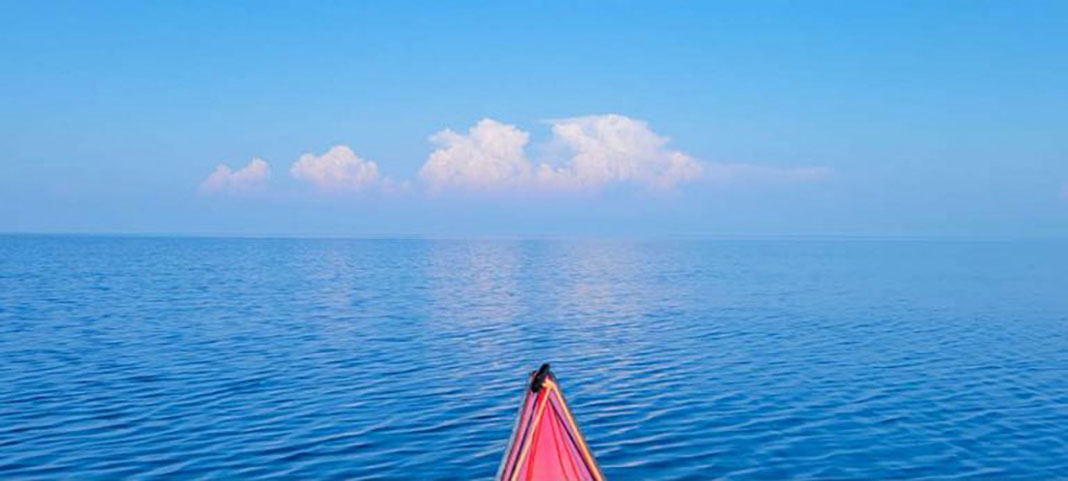
In the middle of Lake Michigan surrounded by hundreds of square miles of brilliant shades of blue, stunning pastels beaming through the distant soft white clouds, incredible lake reflections of even greater color, Stout shares, “I can’t help but be in awe. Plus, to hear no sound other than my paddle breaking the surface of the calm lake or drops of water falling from the paddle when I pause, it’s hard to express how blessed I feel. I wish others could be with me to enjoy this wondrous experience.”
In the early evening Stout spots the soft cast of land miles away, then notices a discernible white shape. He is certain it is Ludington’s Big Sable Lighthouse, his Michigan destination and home for the evening. Confident that it is, all he must do is keep my kayak pointed in that direction and enjoy the remains journey and its remarkable views, calm, and serenity.
On this trip he is not alone. There are two fresh water freighters hugging Michigan’s west coast. When he crosses the trailing wake of the first it is no more than a subtle lake roll.
About 12 miles out there is a gaggle of geese of maybe 30 or more. Pooled together they have no worries until he approaches them from the middle of the lake. They’re spooked and take off. So near he can feel the breeze generated from the collection of their powerful large wings.
As the sun sets and the sky turns dark the final guiding point comes from the beacon from atop Michigan’s Big Sable Lighthouse.
Stout shares, “I enjoy paddling the Great Lakes under the cover of darkness the most. It is then when I look above and achieve a special closeness to God and where the phrase that I often here, “There are a thousand angels looking over you,” comes to mind. It is here where I achieve an incredible sense of peace while feeling the weight of what feels like many around me. At times the likeness of my parents, brother, and grandparents so vivid, it feels so real. At times I can see their expressions of worry, disbelief, and pride on their faces. It is for this reason I am eager to return for another Great Lake nighttime adventure, to experience something so surreal and otherwise not possible.”
Feature photo: Mike Stout
With Big Sable Lighthouse straight ahead and not far, he looks down to make sure everything is properly packed away. He then picks up my speed to prepare for a soft landing on Michigan’s gradual and pristine sandy beach. He looks up and to his surprise, the combination of his headlight and the lighthouse’s backlight reveals the large impenetrable steel wall protecting Big Sable. Just as quickly, he reverse paddles to slow his momentum and escape a certain head-on collision.
Having zig zagged across Lake Michigan, following the sun and chasing distant clouds he finishes his 56 mile course in 15.4 hours.
Before he crawls into his sleeping bag for the night, he stands alone on shore and takes in the beauty of Big Sable Point Lighthouse, then looks over the lake, glances to the stars, and gives thanks for yet another grand adventure.
I can’t help but think, “How blessed am I?.”
Thank you for your interest is sharing the story about my most recent Great Lakes crossing.
Since picking up the sport six seasons ago I have paddled over 5,300 miles. Highlights include having paddled across Great Lakes Michigan (3), Superior (1), and Lake Huron (1). I made the round trip across the Straits of Mackinac and tapped the massive columns of the Mackinac Bridge. I have competed in races from across the country: Seventy48 in Washington, 150 mile Campus to Coast race in Michigan, as well as Wisconsin and Minnesota.
Again, thank you for your consideration. I trust your readers will find this record setting Great Lakes crossing and plans for an in season three-peat of interest. If I can provide additional insights or answer any questions, don’t hesitate to ask.
With 891,163 square kilometers of freshwater covering the country, Canadians have many options when it comes to deciding where to kayak. Yet despite the sizeable number of paddling destinations, not everyone has the same ability to participate in kayaking. Shoulder injuries, disabilities and the aches and pains of getting older prevent many from realizing the physical and mental health benefits of paddling.
Two organizations are working together to change all that by making specialized kayak paddles and equipment available to Canadians who might not normally be able to kayak. Angle Oar LLC, a US-based company that manufactures adaptive kayaking equipment, and Abilities in Motion, a Canadian-based non-profit organization that promotes inclusive paddling, have joined together to bring the equipment to Canada.
Photo: Hope Foundation
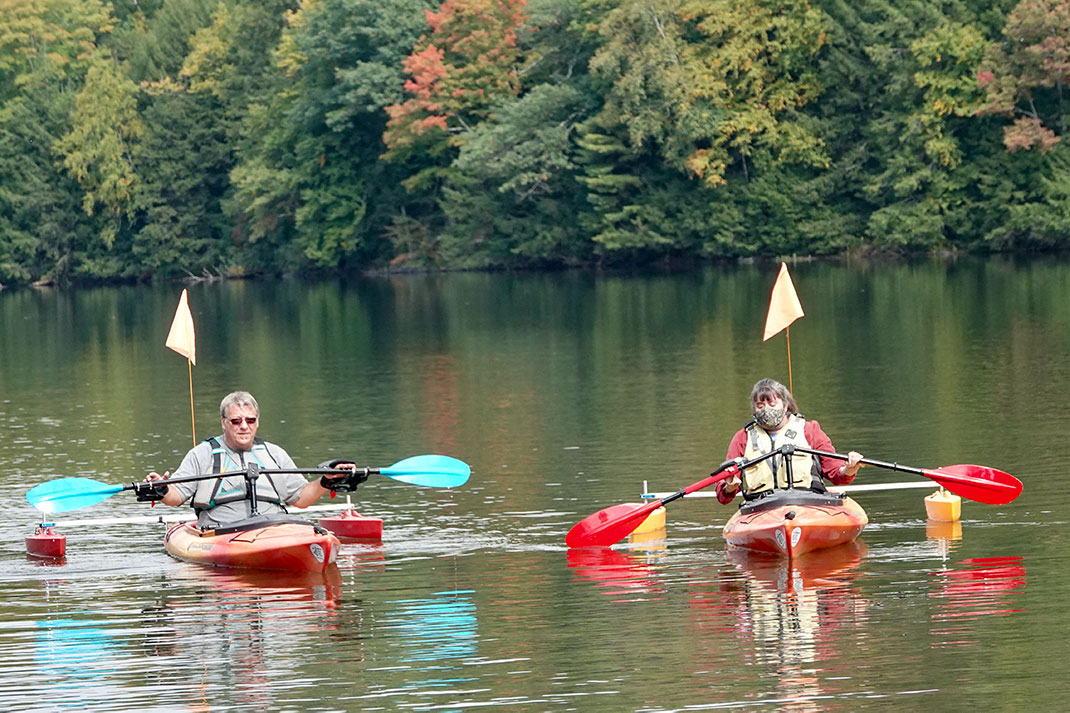
The availability of adaptive kayaking, or universal kayaking as it is sometimes called, has been steadily growing in both Canada and the US. By making small adjustments to the kayak, the paddle and/or the related accessories, many people with strength or mobility limitations can kayak independently.
“We’ve had countless customers with significant paralysis due to a stroke or spinal cord injury find that they could kayak with our mount-supported paddling systems,” notes Meg McCall, Founder & CEO of Angle Oar. “For many, it was their first time out of a wheelchair and moving independently in years. It’s been life changing.”
Adaptations range from extra paddling to support someone’s torso, outriggers for added stability, wrist grips for people unable to grasp the blade, and mounted kayak paddles which require less strength to paddle.
Angle Oar’s paddling systems use mounts that attach to the kayak and support the weight of the paddle, reducing stress on the shoulders, back and joints. The company has a patented paddle, Versa, that angles downwards on each side, requiring a smaller range of motion from the paddler. It can also be used straight, like a traditional paddle. The company’s customers include people with disabilities, experienced paddlers who’ve had rotator cuff surgery, adaptive paddling programs, and kayak retail and rental shops.
Photo: Hope Foundation
“We’ve been offering adaptations and making kayaking accessible in Ontario and beyond for more than a decade. We were aware of Angle Oar’s innovative paddling products for some time, but we didn’t have a good solution for overcoming the significant shipping costs,” says Pauline Halstead, Executive Director of Abilities in Motion (AIM). “After a lot of research and some creative brainstorming, Meg and I figured out a way to bring them into Canada in a way that was more affordable to consumers.”
Halstead, who has been a pioneer in Canada’s adaptive paddling movement, was recently appointed as chairperson of the newly created Adaptive Paddling Committee at Paddle Canada.
The need for adaptive paddling resources in Canada is clear. More than 5.3 million Canadians live with some form of disability that affects their level of freedom, independence or quality of life, according to Statistics Canada. An estimated 2.7 million of them have a mobility disability that limits their daily activities. In addition, roughly 6 million Canadians have arthritis, and shoulder pain is on of the most common musculoskeletal complaints among Canadian adults, according to one study.
Canadians interested in purchasing adaptive kayaking equipment can visit the Abilities in Motion website at abilitiesinmotion.ca for details on how to take advantage of the discounted pricing available through this new collaboration. They can also visit the AIM site to learn more about the upcoming paddling event in August, Hands Across the Water, which raises funds to support people with disabilities.
——-
Meg McCall, Founder & CEO Angle Oar LLC meg@angleoar.com
(805) 439-3056


 This article was first published in Paddling Magazine Issue 63. Subscribe to Paddling Magazine’s print and digital editions