What do General Electric engineer James Wright, 3M Laboratories researcher Spencer Silver, and Dagger Kayaks designer Mark “Snowy” Robertson all have in common? Need a hint? Three of these guys created something awesome by mistake. They didn’t set out to create Silly Putty, Post-it sticky notes and a quiver-killing whitewater kayak. But the world is a better place nonetheless.
Whitewater Kayak Review: Dagger Indra
The Dagger Indra was intended to be a sport creeker. “Our team of Dagger athletes were asking for a boat capable of running creeks, but with more playability,” says Robertson. “Something between the Rewind and the Code, with some speed of the Phantom.”
Before I tell you how awesome this boat is, let’s look at all the little bits that make it so.
Dagger Indra MD/LG Specs
Length: 9’0”
Width: 27.5”
Weight: 53.5 lbs
Capacity: 250 lbs
MSRP: $1,649 USD | $2,149 CAD
confluenceoutdoor.com
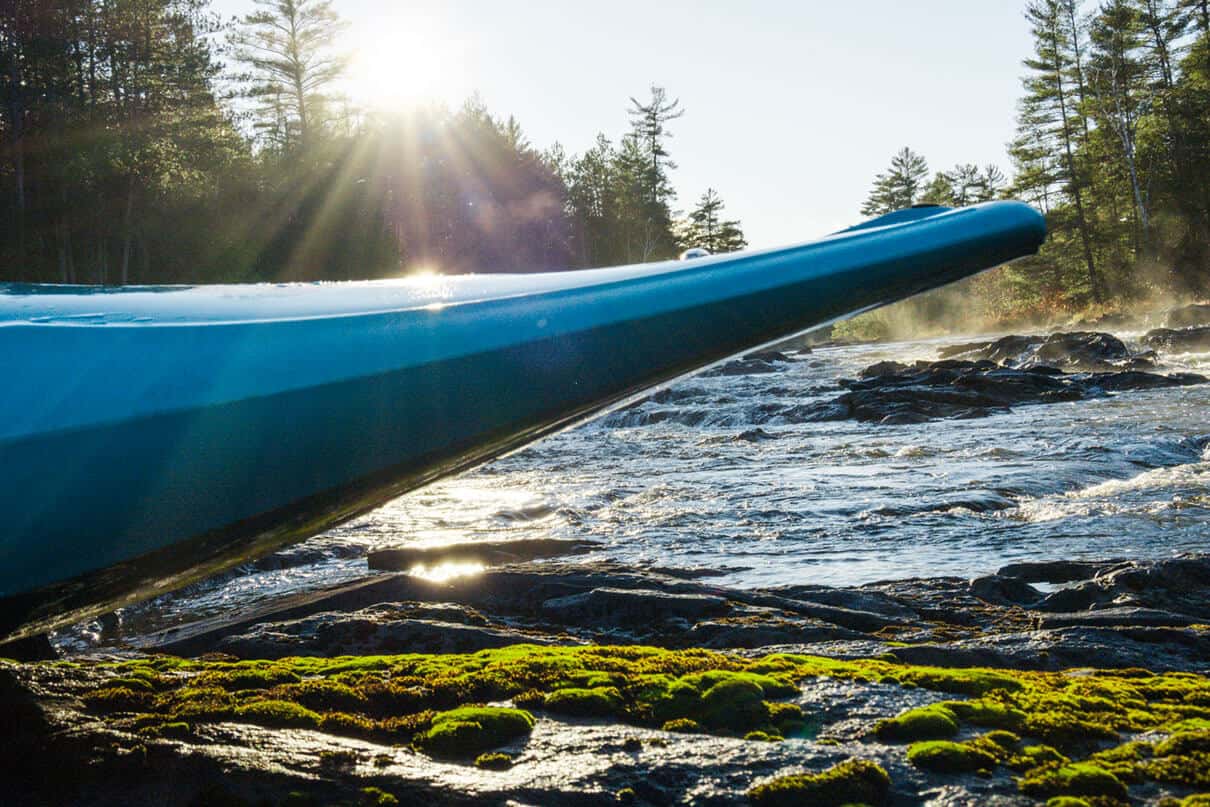
If you’re still paddling a Dagger Mamba or Axiom, or any other kayak from way back before the pandemic, you’re going to love the bow of new Dagger boats. With each new boat, beginning with the Phantom, Robertson and his team have added more rocker. So far, more rocker has always been better.
They’ve also played with width, volume and deck shape ahead of the cockpit. If you’re a mountain biker, it’s a bit like riding a 29er for the first time—the front wheel seems huge. They roll over everything. Same with the bow of the Indra. Stop looking at the bow and let it ride up and over pretty much everything in its path.
“In the Indra, we added even more rocker and more width to the bow,” says Robertson. “It stays on the surface and feels floatier. It’s easier to maintain speed when the bow is dry. And, water isn’t hitting you in the chest.”
Watching the bow of the Indra skip over holes and reactionary waves is impressive. If I were in the marketing department at Dagger, I’d create side-by-side video comparisons of the Mamba and the Indra running the same drops and punching through the same holes. I’d show team athletes doing it, and I’d film club boaters, too. Or bring back paddling demo days and let naysayers try it for themselves. We’ve truly come a long way. It’s shocking how much easier and more fun the Indras are to paddle.
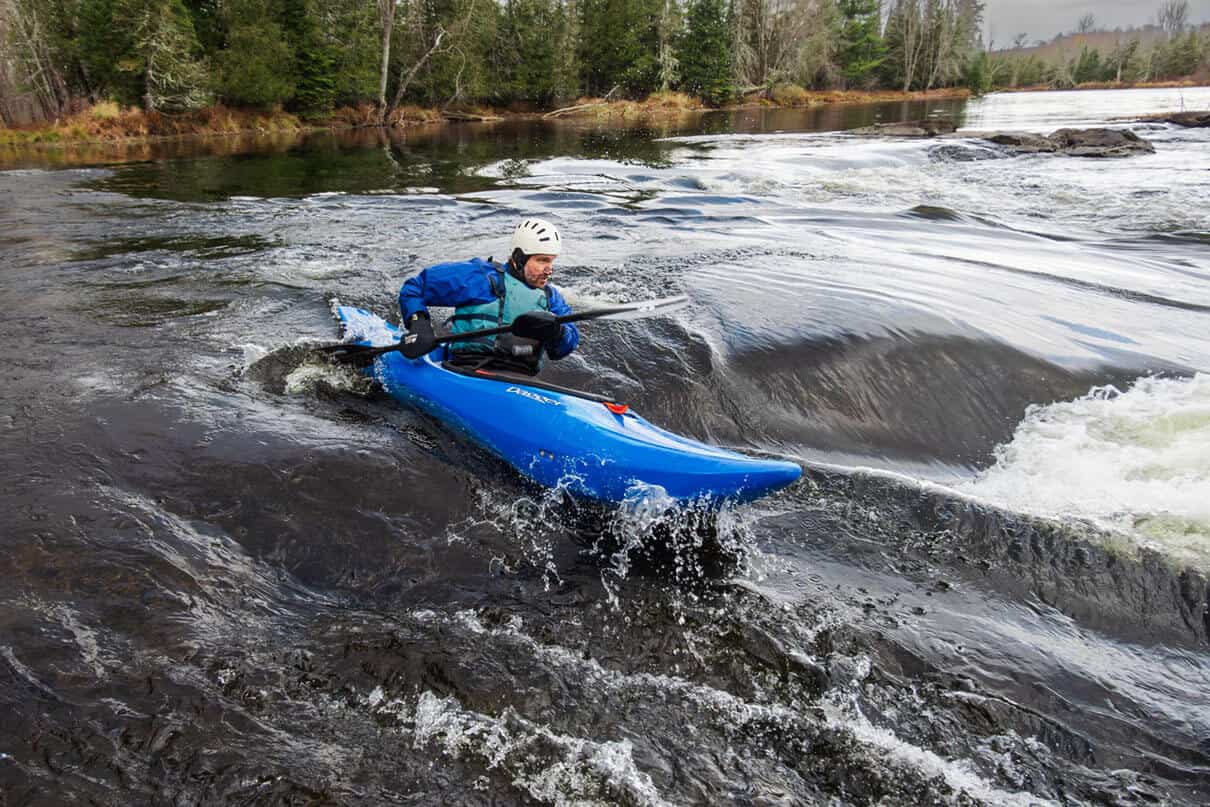
Okay, the bow rocker evolution is cool. But it’s not the real news story here. We need also to be excited about the stern of the Indra.
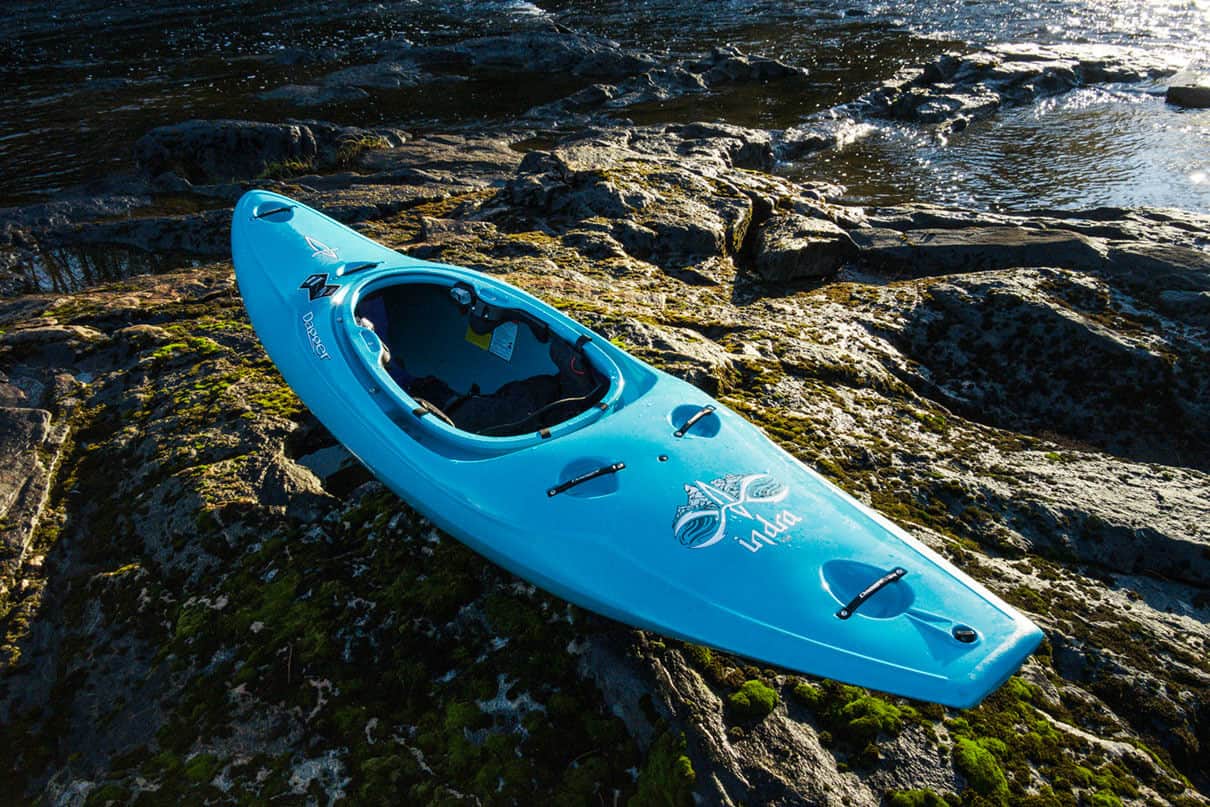
First, Robertson and the team removed volume from the stern of the Indra. Not too much, though; it’s still a long, long way from a Rewind. To me the stern looks like an overstuffed sunflower seed. The goal was a sportier stern to match the creek boat bow, not slicey.
“The thinner nature of the stern is to pivot but not go vertical,” says Robertson. “With a bow you can sweep across and over things, we could design the stern so you can dip and load the last two feet and steer from the tail.”
The Indra is roughly the same width as the Code. The planing hull is, however, flatter and wider, with longer and sharper rails. It feels floatier. By floatier I mean more on the surface and looser. The Indra also planes up more when charging across eddylines. The modified rails make the Indra a little closer to feeling like a slalom boat. I know, sounds funny to say about a creek boat. But it’s racier. Dynamic. More precise. All in a really fun way, without it feeling edgy or uncomfortable.
Highly bow-rockered boats, like the Indra, kick up into a wheelie position as they punch over waves and holes and land drops. The more vertical they go and the longer the bow stays elevated in a wheelie position, the harder it is to see where you’re going. And the longer the stern drags, the more forward speed is inhibited. I don’t know about you, but I like seeing where I’m going and I like to carry speed past the scary stuff.
We know from surfing a kayak is faster flat than rocked back on its stern.
“We designed the Indra with camber in the last 12 to 15 inches of the stern. Camber is like a reverse rocker that we’ve used to get the bow down,” says Robertson. “Coming off a drop the Indra will rear up, but then we want the bow to drop back down as quickly as possible to glide across the pool.” Think of camber like a wheelie bar on a dragster.
You’re probably thinking, this all seems fantastic if you’re a pro athlete paddling eight months a year and eating ramen on the tailgate of your Tacoma. Sorta by mistake, all the things that make the Indra great as a sport creeker inadvertently, and accidentally perhaps, also make it the perfect working man’s one boat to do it all.
“At first we sold Indras to early adopters. These were the younger, charging paddlers who wanted a boat to run harder whitewater but still be playful. That’s who the marketing grabbed and they loved it,” says Simon Coward, instructor and owner at AQ Outdoors in Calgary. “As more people jump in the Indra on courses and demos, the more Indras we are selling to class III paddlers.”
Coward says, “The Indra looks after people while running the river.” I like that.

Class III paddlers don’t need a beefy creek boat like the Code. They don’t need to stern squirt, but they still want to surf waves all the way down the river. The Indra is a nice middle ground, like how we used to feel about the Mamba. We loved the Mamba, didn’t we? The Indra performs better, in every way. You’ll see.
You know what else is better about the Indra? Dagger’s Contour Ergo Outfitting with angle-adjust thigh braces and two different fits for more or less aggressive thigh hook and increased comfort.
Sometimes scientists, inventors and designers get lucky. The Dagger Indra will have much greater appeal than just its intended audience. Fun like Silly Putty. Handy for everyday use, like sticky notes.
 This article was published in Issue 74 of Paddling Magazine.
 James Campbell wasn’t at all the sporty creeker guy Dagger designer Snowy Robertson spent two years building a boat for. But Campbell is going to buy one anyway. | Feature photo: Scott MacGregor