Somewhere in the first few minutes, before the cold water began to dim his thoughts, it occurred to Jeff Johnson that if he did have to capsize two miles from shore along a remote stretch of Lake Superior that had been under ice barely a month before, he couldn’t have chosen three better guys to bail him out.
Superior lessons: How a dream kayak trip turned into a scary cold-water rescue
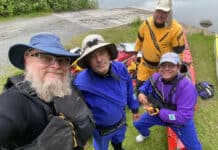
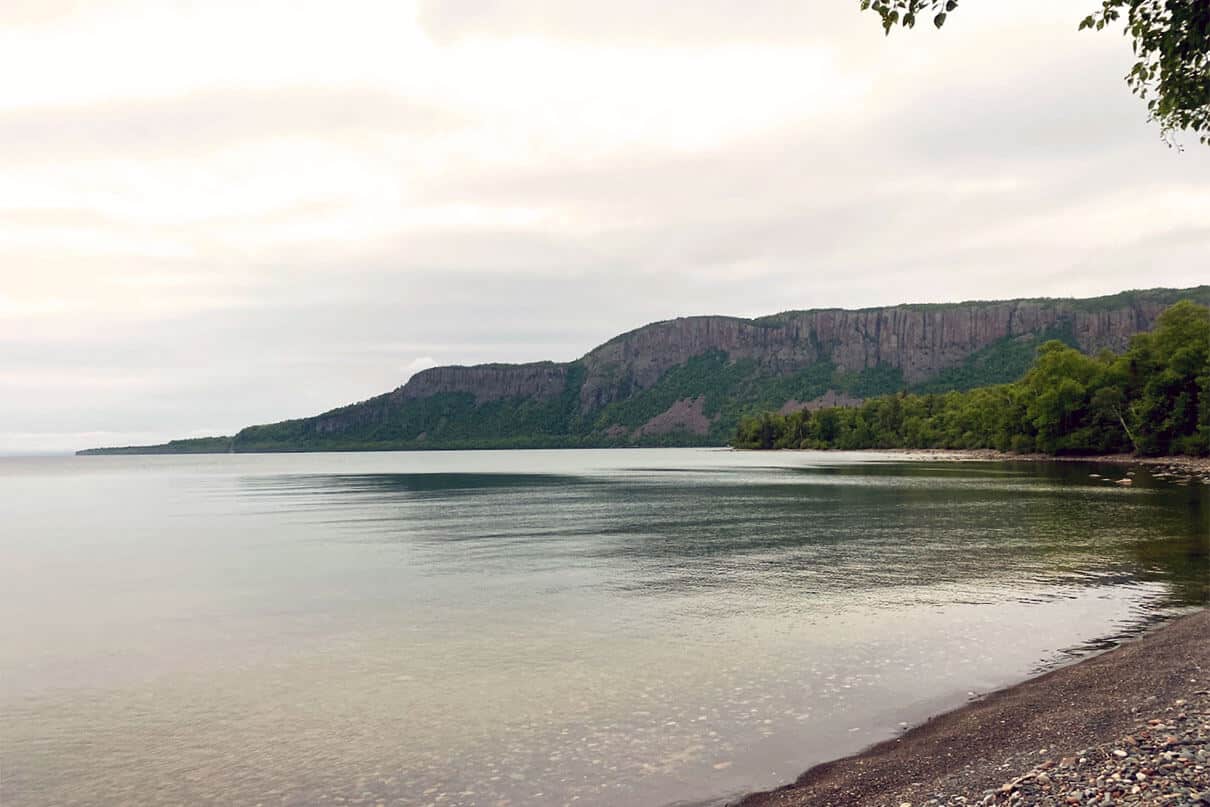
Johnson and his friends Bill Newman, Patrick Maun and David Wick were four days into a planned 10-day, 150-mile sea kayak trip along the northwest shore of Lake Superior, from Sturgeon Bay to Rossport. They have been paddling together for decades.
Maun and Wick are seasoned expedition paddlers and climbers, while Newman is an undercover legend among Great Lakes sea kayakers—co-author of three guidebooks and protagonist of several extraordinary open-water crossings, including a traverse of Lake Superior with Don Dimond in 1998. Johnson is a longtime sea kayaker as well, but by his own admission, is the least skilled of the four.
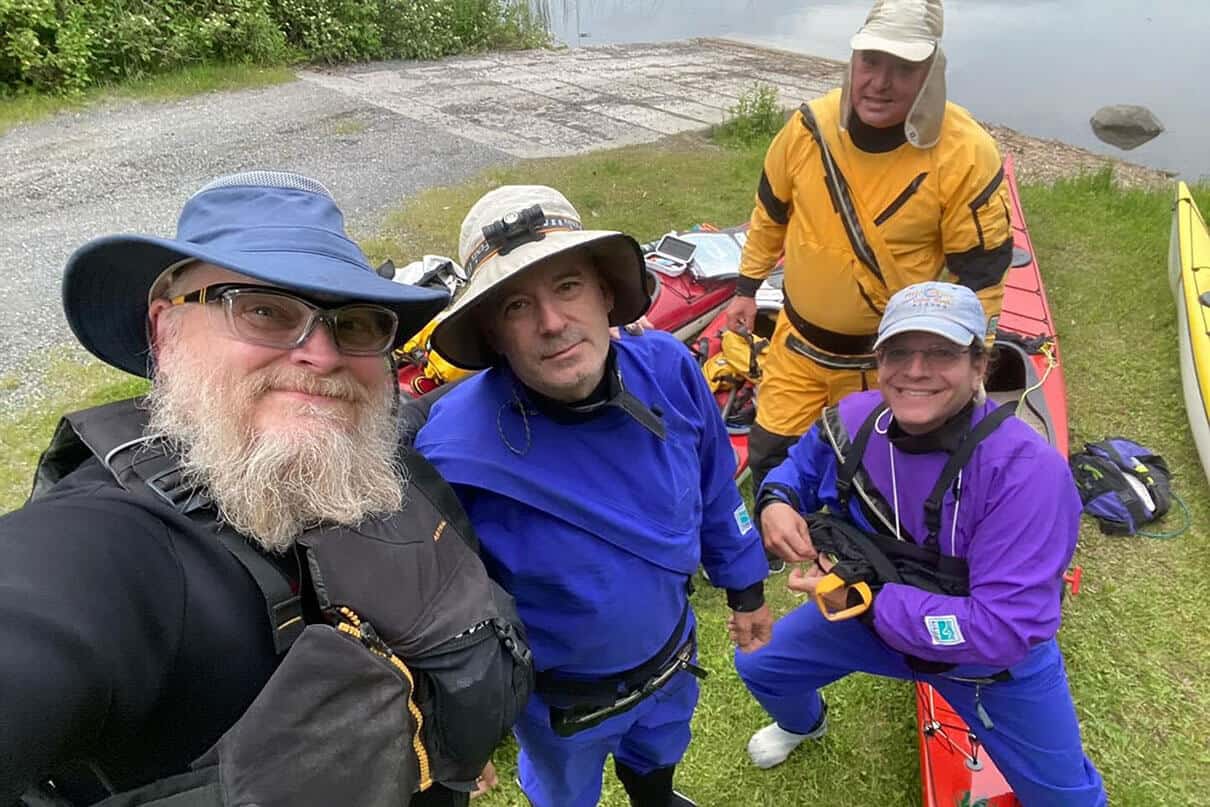
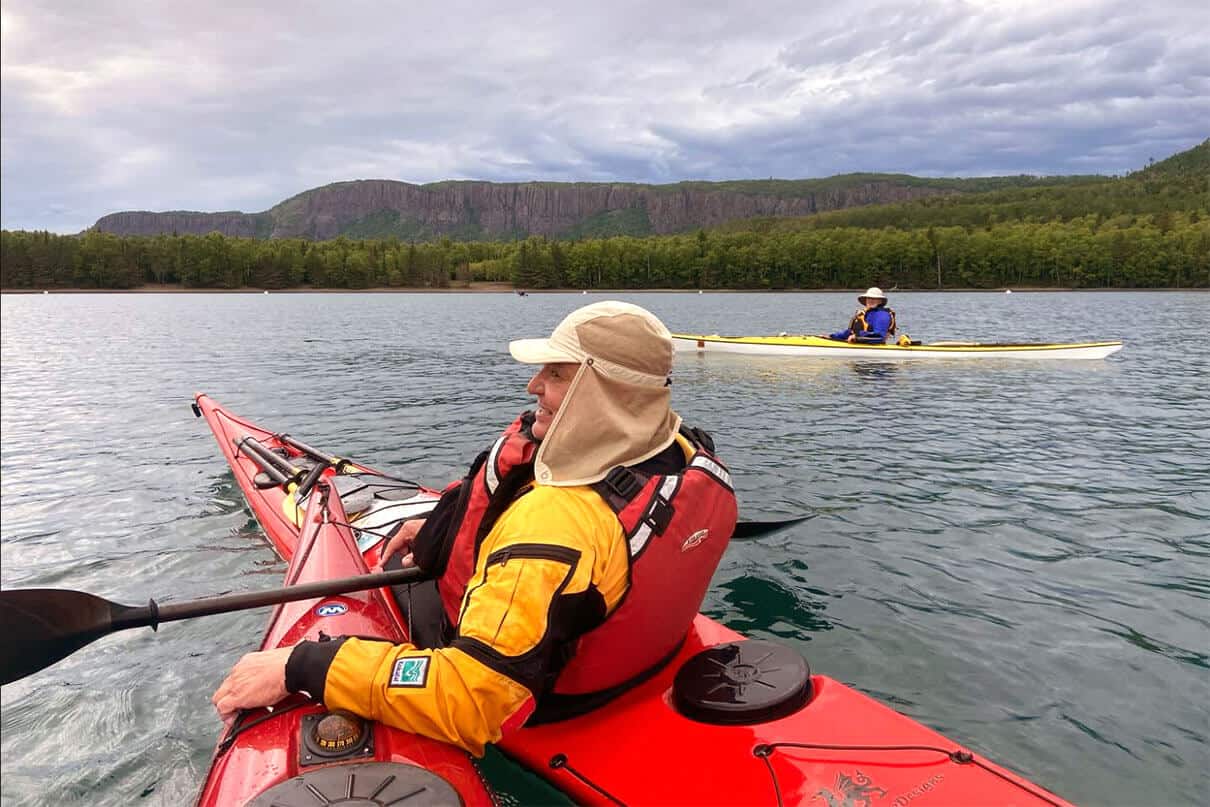
The men paddled British-style sea kayaks, Wick and Newman in NDK Explorers, Maun in a Millennial Artisan and Johnson in an overloaded Wilderness Tempest. Maun, Wick and Newman all had drysuits; Johnson wore a wetsuit jacket over a farmer John. They carried tow kits, spare paddles and three marine band radios—although in mid-June on that part of Lake Superior, there’s rarely someone in range of a handheld VHF. You can’t even get reliable weather broadcasts. The water temperature was in the mid-40s Fahrenheit.
On top of Johnson’s substantial size—he’s six-two and about 250 pounds—his 18-foot sea kayak carried a full complement of camping gear, filling the hatches and overflowing onto the deck. The arrangement had already drawn good-natured ribbing from the other paddlers. Soon, it would complicate a very serious situation.
Capsized on Superior
Day four took the group from Thompson Island to Pie Island, and from there across six miles of open water to Tee Harbour on the Sibley Peninsula. The weather was breezy with three-foot following seas. Not big by Superior standards, but the swell was refracting around the island and doubling back in unpredictable ways. Johnson felt himself growing tense.
Newman was about 30 feet behind and to one side, waiting for the inevitable. “I’ve taught enough to know when someone’s nervous,” he says. “His strokes got shorter, and he was stiff at the waist. I remember thinking, ‘He’s going to go over.’”
Johnson capsized about two miles into the crossing.
The group paddles in tight formation during crossings precisely for situations like this. Newman first attempted a T-rescue, which required him to pull Johnson’s kayak over his own front deck to drain the cockpit. No dice.
“His boat was overloaded,” Newman says bluntly. “Too much shit on the deck, too much gear in the boat.” More than just gear: Unbeknownst to the paddlers, Johnson’s rear hatch had come unsealed, and the kayak had been shipping water all day. It was time to switch tactics.
“I went right to a raft and pump,” Newman explains. “You get the boats facing in opposite directions and get both hands in the cockpit with your thumbs toward the bow, and you pull out with your hands and elbows flat. You’re just locked down, super solid.”
With his boat upright and secure, Johnson scrambled back into the cockpit, and Maun started pumping. Moments later, Wick joined in, but even with two pumps going full tilt, they weren’t gaining. Between the water in the cockpit, the flooded rear compartment and Newman’s own weight, the Tempest’s cockpit rim stood about three-quarters of an inch above the lake surface. Every golf-clap wave dumped another gallon or two of freezing lake water into Johnson’s lap.
“The next hour, I wasn’t cold anymore. That’s real scary. I could feel my thoughts slowing down.”
Wick helped Johnson get his sprayskirt fastened—leaving just enough space for the pumps to keep working—and the pumps finally began to make some progress. It was time to get moving.
When someone is as nervous and cold as Johnson was in those conditions, it’s only a matter of time until they capsize again, so the team agreed to raft in tow, with one paddler stabilizing Johnson’s kayak and the other two pulling. Newman reached for the tow kit behind his seat and began buckling it around his waist. Something was wrong.
“That was my hero to zero moment,” says Newman, who had packed on a few pounds since the last time he had to tow in earnest. “I couldn’t make it buckle and still freaking breathe.”
A long tow to shore
Newman handed the tow belt to Wick, and with minimal discussion the team got into formation. Wick and Maun set up a tandem tow, while Newman remained rafted to Johnson’s kayak. They were four miles from Tee Harbour and two miles from Pie Island, but with the wind at their backs, the farther shore was the better option. It took them about two hours to reach the lee of the peninsula.
Along the way, another crisis surfaced. Wick is diabetic, and the tow belt began to dig into the blood sugar monitoring device implanted in his hip. “He was actually putting blood on the tracks,” says Johnson. “His blood sugar was crashing.”
Johnson offered the Clif bar in his life jacket pocket, happy to have something to contribute to the rescue, but his hands were clumsy with cold and he dropped the bar. It went to the bottom of the lake. Fortunately, Wick found some nuts and was able to get his blood sugar up and continue towing.
Johnson could feel himself becoming more hypothermic. Though he’d been in the water for less than five minutes, the team wasn’t able to get all the water out of his cockpit. He’d effectively been sitting in a cold bath for two hours.
“The first hour was shiver, shiver, shiver,” he says. “Then the next hour, I wasn’t cold anymore. That’s real scary. I could feel my thoughts slowing down.”
When they reached the peninsula, they faced another choice: Land on the nearest rocky beach and try to get warm, or continue for another hour to their planned campsite at Tee Harbour.
Johnson wanted to paddle. “Once we got into a place with some wind protection, we could get more water out of the back hatch and make the whole boat more buoyant,” he says. “I told the other guys I’ve just got to move. If I can move, I can get myself warm.”
After about 15 minutes of paddling, Johnson began to feel his fingers again, and as the quartet finally rounded the point into Tee Harbour, the wind disappeared and the sun came out. The paddlers hauled Johnson ashore, stripped off wet layers, got him into dry clothes and sleeping bags, and gave him food and hot soup. By morning, his body temperature had recovered, but something still didn’t feel right.
When the team reached the tiny hamlet of Silver Islet later that day—the only town along their route—Johnson told the others he was going to drop out for the safety of the group. “I had to tell the guys I’m a liability,” he says. “I’m just too janky in this boat.”
Making fast friends
The decision left Johnson in a new quandary. The town’s lone business, the Silver Islet General Store, was closed. The only street was empty. Johnson watched his friends paddle away, then took a seat on a bench in front of the store.
Soon the magic started. A woman in her 70s approached and Johnson, in his gregarious way, told her his story. She went away and returned with a chocolate bar, a can of tinned chicken and a Diet Coke. After a while, the store’s door opened, and the proprietors, Jeff and Sandy Korkola, invited him inside. Johnson asked about a room for the night. The store isn’t a hotel, but the Korkolas said they could make up the guest room and give him a meal.
“He said, ‘How about $100,’ and I said, ‘How about $300,’” Johnson recalls.
“They find an old bed from the 30s and put it together in this empty attic room, find me a mattress, find me linens. They sit me next to a fire and they gave me the most delicious blueberry tea,” he says. The Korkolas later named it “Tee Harbour Tea” in honor of Johnson’s adventure, but we’re getting ahead of the story.
The store owners grilled a rack of ribs and set up a computer so Johnson could watch the Stanley Cup finals. That night, a powerful storm rolled in and, as the rain pounded the attic window, Johnson snuggled into a feather comforter and thought of his friends in their leaky tents.
Stopping had been the right decision for Johnson, and not only because the boys encountered much more challenging conditions the next day, with exploding waves popping in every direction.
“Would Jeff have capsized there? Absolutely. Could he have made the rest of the trip? Sure. But we all respected his decision not to continue,” Newman says.
The assessment drills down to the most important aspect of paddling safety, whether it be scouting a rapid, watching the weather or contemplating an open-water crossing: an honest appraisal of the challenge and your ability, including your mental state.
The Mayor of Thunder Bay
Johnson and the others made several mistakes on the trip, mostly related to gear. Johnson’s boat was over-packed and his wetsuit wasn’t up to the challenge of Superior’s chill waters. Newman hadn’t used his tow rig in years, and he and Wick both experienced drysuit gasket failures on the trip, the result of using older gear they hadn’t thoroughly checked. But all these mistakes are also symptoms of their long experience.
Though they hadn’t practiced rescues in years, both Newman and Wick have taught those techniques in the past. When it was time to act, muscle memory took over and they executed a clean rescue in challenging conditions. At the time, they thought little of it.
For his part, Johnson believes the situation was life-threatening, principally due to the hypothermia that took hold in the hours after the capsize. That could have been mitigated if he’d been wearing a drysuit.
The most important lesson, though, is to paddle in a group and look after one another.
“Kayakers have a saying, ‘When at sea, never less than three,’” Newman says. “If you’re out there on your own, you may be able to self-rescue. But then what?”
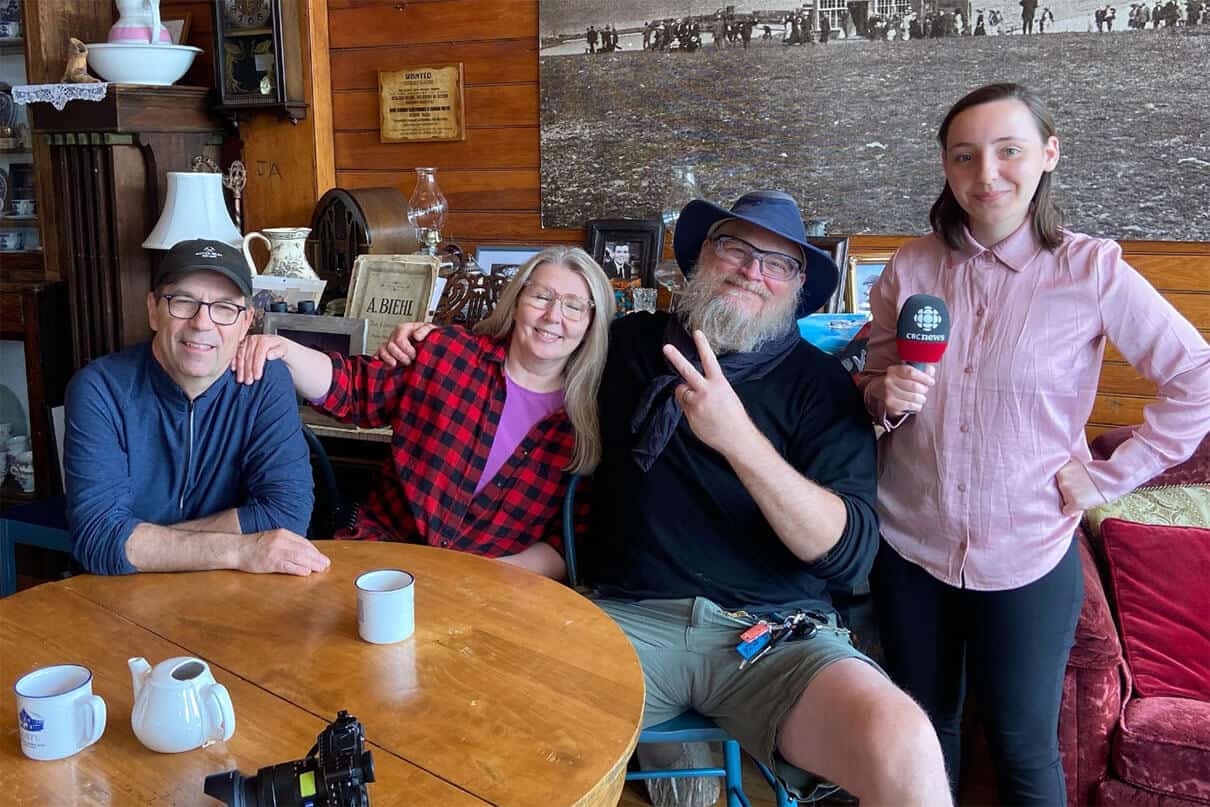
After his night in the General Store, Johnson caught a ride to Thunder Bay, where he checked into the Prince Arthur Waterfront Hotel. By then, the CBC (Canadian Broadcasting Corporation) had caught wind of the rescue and wholesome tale of his welcome at the General Store. The story went out across the airwaves and Johnson became a minor celebrity in Thunder Bay, where he attended a First Nations powwow, visited the local kayak shop and paddled every day.
“It was the best vacation I’d had in 20 years. Just me, no kids, no spouse, no responsibilities. I just got to hang out and paddle in Thunder Bay for three days,” he says.
When he reunited with the boys and related the story, they dubbed him the Mayor of Thunder Bay. They’re already preparing for their next sea kayak trip, this time to the San Juan Islands. Johnson will be there, in a new drysuit. They’ve been practicing rescues, and will make sure Johnson doesn’t overload his kayak.
Jeff Moag is the former editor of Canoe & Kayak magazine and editor of Rapid Media’s trade publication, Paddling Business.
 This article was published in Issue 76 of Paddling Magazine.
 We get by with a little help from our friends. | Feature photo: Jeff Johnson