Home Blog Page 338

Canoes: The Perfect Craft for SUP

Photo: Jon "Shaggy" McLaughlin
Canoes: The Perfect Craft for SUP

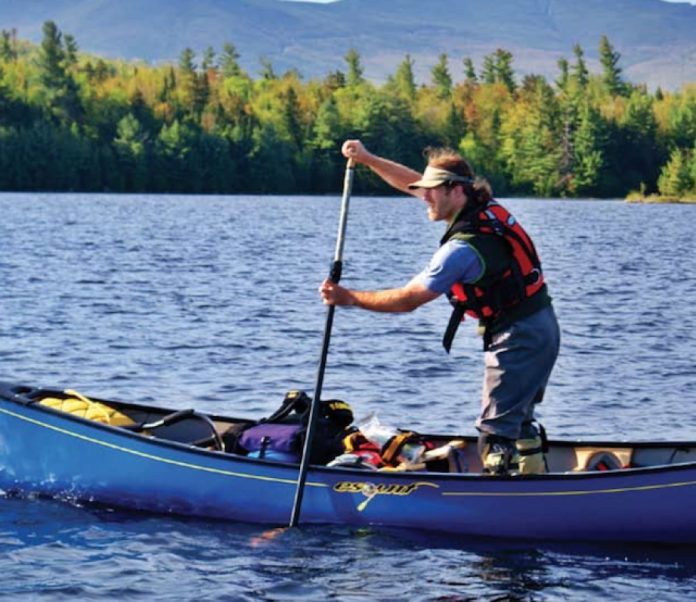
Never stand up in a canoe. It’s one of the golden rules of canoeing, right? The explosive growth of stand up paddling (SUP) has many canoeists thinking that this myth couldn’t be further from the truth, as single- bladers from across North America are discovering that canoes are a perfect—and often overlooked—craft for SUP.

SUP is not just a surfing sport. It’s especially popular among flatwater enthusiasts from weekend warriors to fitness racers. SUP strokes involve the whole body, making it a great core workout, while also building balance by working smaller muscles in the feet and legs. “I was amazed the first time I stood up and paddled my canoe with a SUP paddle,” says Bruce Bergstrom, owner of Sawyer Paddles & Oars. “The ease, power, length of stroke and stability one gains by standing is remarkable.”

Standing lets you see both deeper into the water and further downstream. The strokes for stand up canoeing are essentially the same as for solo canoeing—Js, pries, draws and cross strokes all can be done standing, and with a far greater range of motion and power than when sitting or kneeling.

STAND UP CANOEING IS NOTHING NEW

Top open canoeist Mark Scriver takes a SUP paddle on trips and paddles half the time standing up. “On big, wide and sometimes shallow rivers where you’re looking for the best channel, it’s easier to use a SUP paddle and remain standing than to stand up, look, sit down and paddle.”

In 2009, founder of Stride SUP, Luke Hopkins, and his brother Ty competed against 48 other canoes in a three-mile race down Virginia’s New River. Luke and Ty tandem paddled standing up, negotiating class II–III rapids and winning the race…by a long shot! Even Luke was surprised: “I was shocked by the performance and power using a long paddle. Our strokes were eight feet long and had so much power behind them.”

Standing up in a canoe is actually nothing new…ever heard of canoe poling? Anglers and hunters have long been standing up to pole and paddle through southern bayous. When it comes to canoe fishing, Guillaume Chassé of Esquif Canoes thinks standing up is the only way to go, “Stand up canoeing is the best way for an angler to cast his line, and it’s easier to haul in your catch.”

As the sport of SUP on boards continues to gain popularity worldwide, stand up canoeing has nowhere to go but, well…UP! The biggest hurdle is getting people to try it. As Clay Feeter, publisher of Stand Up Journal, says, “Standing up and flexing your legs and back becomes so easy and understandable once the newcomer gives it a try. But you don’t get it until you try it. Getting people to feel it is the next step.”

Jon “Shaggy” McLaughlin paddled 148 miles of the Northern Forest Canoe Trail across the Adirondacks from Old Forge to Plattsburgh, New York. He paddled the entire route standing up in his canoe. 
This article on stand up canoeing was published in the Summer 2010 issue of Canoeroots magazine.This article first appeared in the Summer 2010 issue of Canoeroots Magazine. For more great content, subscribe to Canoeroots’ print and digital editions here.
Why Dogs Make Great Canoe Partners

Photo: James Raffan
Photo: James Raffan

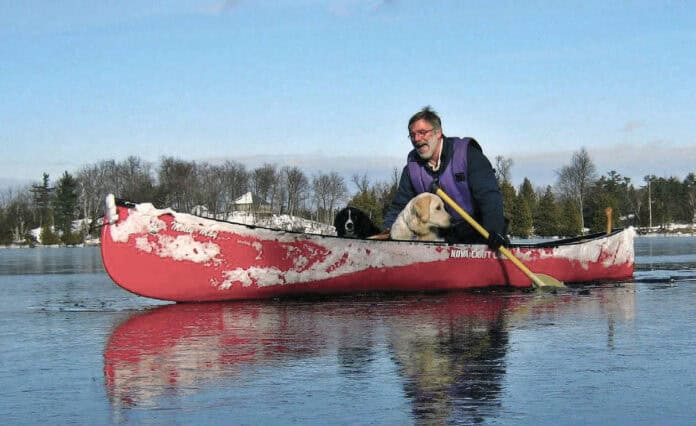
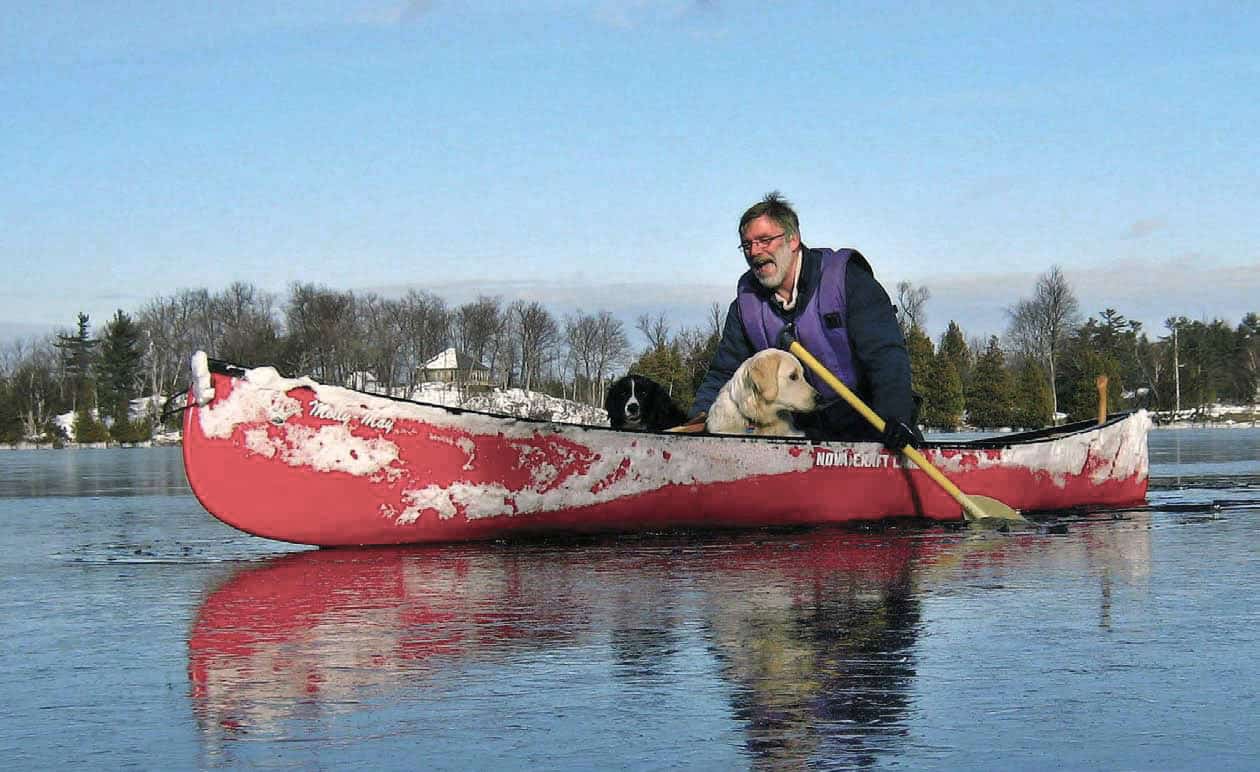
It’s not that I’ve completely run out of people to paddle with, or that getting old necessarily means becoming unsociable, but I have to admit that lately my canoeing has, more often than not, gone to the dogs. When I’ve asked around the house over the last few years if there’s anybody who’d like to go for a paddle at, say, six o’clock on a frosty morning or perhaps around threeish, when a totally word-processed body needs a bit of a stretch, it’s my dogs who have most enthusiastically answered the call.

Our kids have flown the coop and my wife has a life beyond our empty nest. But the dogs are there and always keen. They make excellent ballast, they’ve learned how to sit still, enjoy the camaraderie of the canoe and never disagree with my route. Over the years, they’ve also come up with some damn good editorial suggestions as we’ve dipped along Cranberry Lake.

The Original Bear Alarm

Turns out that there’s something of a Canadian tradition for dogs as trail companions. Ask any aboriginal person, especially Inuit, whether they’d rather have a $250 electric bear fence alarm system or a dog in their canoe when paddling through bear country. They’ll go with the dog every time.

As long as there have been cameras and ethnologists present to press the shutter, if you look carefully in black and white archival imagery—and it doesn’t seem to matter if you’re east, west or in the middle of the country— you’ll find a dog tucked in amongst the family and the load in bark canoe photos. Sometimes you’ll even spot dogs with panniers or drawing a little travois on the portages.

Sir George Simpson, who eventually became the governor of the Hudson’s Bay Company, followed that tradition in his first canoe journey into Athabasca country with a little canine he called Boxer. The great explorer, Alexander Mackenzie took a prodigal dog (prodigal because he lost it on the way out to the Pacific and found it on the way back) in his canoe.

Photo: James Raffan
Photo: James Raffan

CANOE CALAMITY

But stop the presses. There’s a genuine canoe calamity in progress—I fear that Canada itself is going to the dogs. Commenting in the Globe and Mail on the results of a nation-wide survey about all things Canadian, Roy MacGregor, one of this country’s great canoe champions, observed that more Canadians have sucked back an order of poutine than have been in a canoe. No wonder obesity is reaching epidemic proportions.

It’s not that Quebec’s greasy-spoon treat is dog food—although my four-legged paddling partners would be the first to agree that there’s nothing quite so delicious. But I believe our national identity should be held together by our shared love of the canoe, not a plate of french fries and sticky cheese curds slathered in thick, dark brown gravy.

This June 26 put down your plastic forks, grab your paddles and join fellow paddlers across the country in celebrating National Canoe Day.

Can’t find a paddling partner? Find someone new to take canoeing or take your dog. Let’s turn the tide on the next nationwide survey before a grey-bearded academic at the Prince Edward Island Potato Museum creates National Poutine Day.

James Raffan is the executive director of the Canadian Canoe Museum. Some of his best friends are dogs. 

This article on paddling with your dog was published in the Summer 2010 issue of Canoeroots magazine.This article first appeared in the Summer 2010 issue of Canoeroots Magazine. 

This is Canoeing

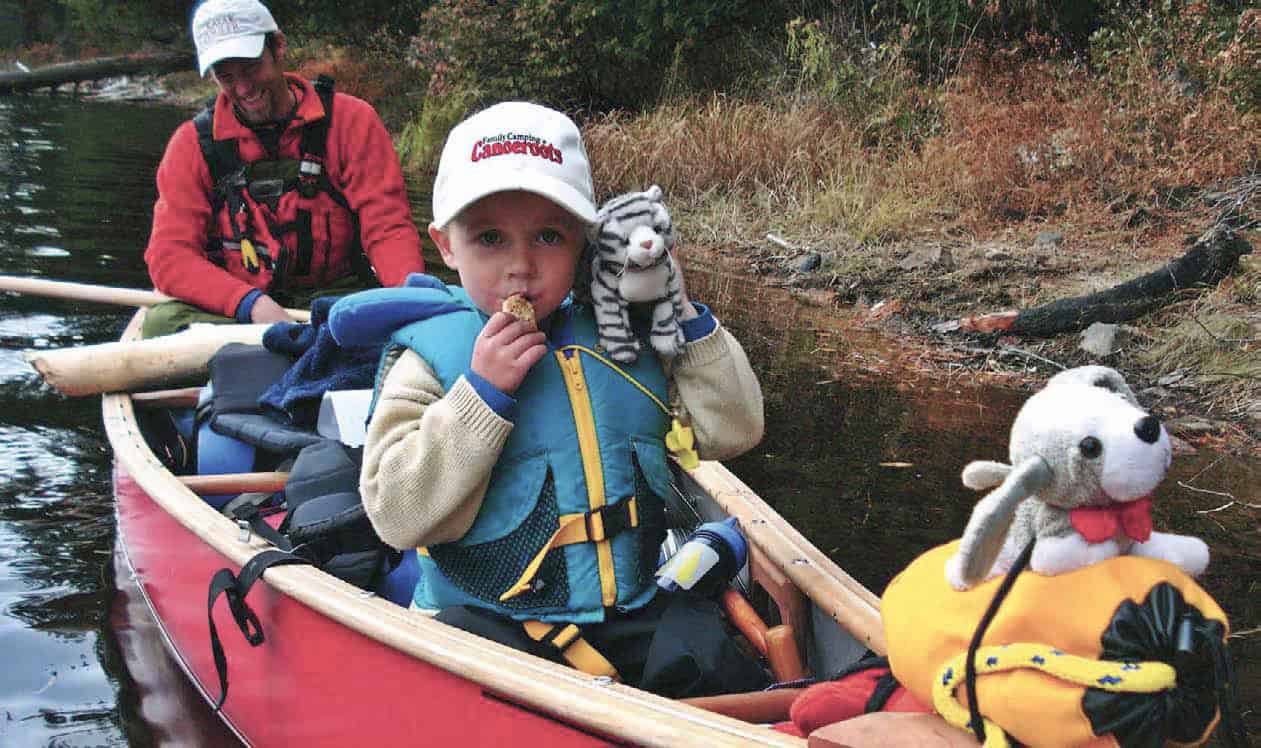
This photo of me and my son Doug was taken on the Petawawa River in Algonquin Park last October by British filmmaker Justine Curgenven. She had called me six months before asking if Canoeroots and Family Camping would like to be involved in her latest project—an unnamed canoeing DVD featuring the who’s who of modern canoeing.

She’d filmed the Mountain river in the Northwest Territories with Wendy Grater; waterfalls on the Moose river in New york State; Becky Mason at home in Gatineau Park; on trip with Birchbark Man, Erik Simula (on this issue’s cover); and in Wausau, Wisconsin, for the Open Canoe Slalom Nationals with John Kazimierczyk, who won his 100th gold medal.

The list was an award-winning cross-section of canoeing, a cross-section Paul Mason later called, This is Canoeing—which soon became the title of the two-DVD box set.

Family Camping: This is Canoeing | Photo: Justine Curgenven

Is this really canoeing?

I’ve spent half of my life paddling through these niche communities of expeditions, instruction, whitewater slalom, waterfalls freestyle canoeing. It wasn’t until Doug was born that I truly understood what really is canoeing, or at least where it begins.

And so I presented an awkward pitch that went something like this. “Justine, you’re sort of missing the biggest piece of canoeing; you’re missing the family canoe trip. Why don’t you make a film about me?” Not exactly humble. Not exactly about me either.

Canoe sales have been flat for almost a decade. Some blame the popularity of kayaks. Other reports indicate that as a society we are spending more time connecting with WiFi than we are with the outdoors.

I believe canoe sales have fallen simply because guys like me waited 10 years until our thirties to have children. Until you walk out of the delivery room you can mountain bike, climb and kayak. But only a canoe will carry into the backcountry a eureka Bonavista family tent, a Graco Pack’N Play and a safari of stuffed animals.

Curgenven’s Dougie Down the Pet has since won Best Professional Documentary at the National Paddling Film Festival and Best Canoeing Film at our Paddling Film Festival.

“Seeing the journey though a young boy’s eyes reminds us all of the simple joys of adventure and the thrill of spending time in the natural world,” says Curgenven. “I am convinced that if all parents introduced their kids to the great outdoors at such a young age the world would be a better place in 20 years time.”

The Outdoor Industry Association reports that 75 per cent of the time parents are the number one influence—they introduce children age six to 12 to outdoor activities. That’s great, but what influences parents?

For some it may be Curgenven’s award-winning film. For me it’s the dream of someday paddling northern rivers, waterfalls and birch-bark canoes with my adult children. I know for that dream to come true I need to invest in the future today.

Scott MacGregor is the publisher of Canoeroots magazine. 

This article on canoeing with kids was published in the Summer 2010 issue of Canoeroots magazine.This article first appeared in the Summer 2010 issue of Canoeroots Magazine. For more great content, subscribe to Canoeroots’ print and digital editions here.
Betcha Didn’t Know About Monarch Butterflies

Photo: Jonathan Pratt
Betcha Didn't Know About Monarch Butterflies
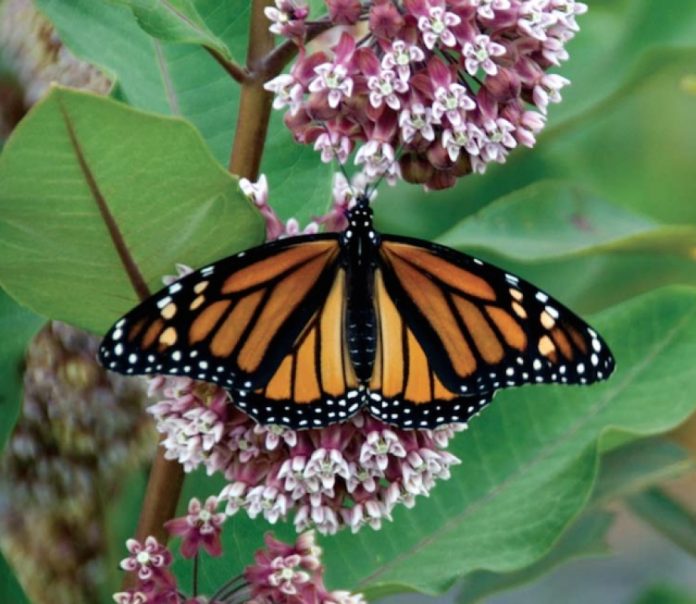
  • The monarch butterflies’ greatest feat is their migration ritual, flying south like flocks of birds. Starting in late summer, some individuals endure a 3,200-kilometre (2,000-mile) voyage from their extreme northern range in Canada to overwintering grounds in Mexico.
  • Fossil records reveal that butterflies once lived with the dinosaurs— roughly 150 million years ago.
  • Although the Butterfly Effect is best known as a 2004 Ashton Kutcher cult movie classic, the concept of the butterfly effect first originated from MIT meterologist Edward Lorenz, who in his 1972 paper wondered if a tiny event, such as the flap of a butterfly’s wings in Brazil, could create widespread consequences elsewhere, such as a tornado in Texas.
  • Butterflies generally have thin bodies, brightly coloured wings and knobs at the end of their antennae, whereas moths have fatter bodies, camouflaged wing colours and pointed or hairy antennae.
  • One female monarch can lay up to 500 eggs—ouch!
  • Two very different monarchs appear on the sold-out, full-colour, 2005 Canadian 50-cent silver coin produced by the royal Canadian Mint—the orange monarch butterfly on the obverse and the monarch Queen elizabeth II of england on the reverse.
  • Milkweed, the monarchs’ main source of food, contains toxins that accumulate in their bodies overtime—making the butterflies emetically poisonous to predators.
  • A tasty alternative, the viceroy butterfly, protects itself from predators by mimicking the colours of its poisonous doppelgänger.
  • The most-performed opera in North America is Giacomo Puccini’s famous tragedy, Madame Butterfly. Tickets to the performance at the Winspear Opera House in Dallas, Texas, range from $64 US for back- seat bleeders to $425 US for premium orchestra. 

This article on monarch butterflies was published in the Summer 2010 issue of Canoeroots magazine.This article first appeared in the Summer 2010 issue of Canoeroots Magazine. For more great content, subscribe to Canoeroots’ print and digital editions here.
The Top 10 Family To-Do List

Photo: Virginia Marshall
The Top 10 Family To-Do List

There are some timeless or just irresistibly fun outdoor experiences that every family should have together. As a child, our fridge door always bore a to-do list of adventures pinned beneath a patriotic Oh, Canada! travel magnet. The list changed with the calendar and seemed to grow rather than shrink as each season wore on. inspiration can come from many places— library books, magazines, recommendations from friends, and especially your own daydreams—but we’ve taken the legwork out and come-up with this summer’s top 10 list. Every one of these experiences will become a treasured family memory and plant the seed for many more adventures. 

With Kids Aged 3-5

Make a Sandcastle
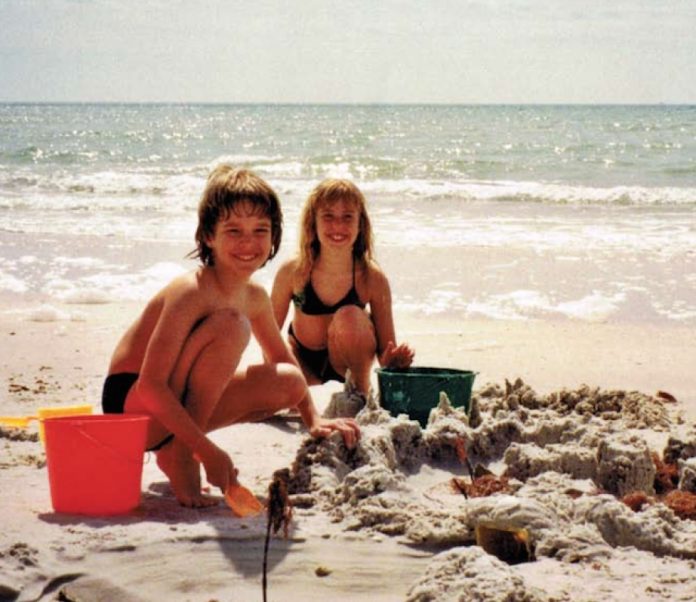
Only a few simple tools and a little encouragement are needed to construct one of these ephemeral architectural masterpieces. In- structions: Find a good building site near the water’s edge where the sand is moist for easy packing, but be wary of destructive rogue waves. Start packing molds—you’ll need a couple small plastic shovels and rampart, tur- ret and all-purpose pails. Scrounge the beach for realistic finishing touches—bark draw- bridges, pinecone trees, twig portcullis and seashell walkways. Sandcastles are wonderful to build anywhere, but for a truly inspiring setting, nothing beats the endless red sand beaches of Prince edward Island. 

With Kids Aged 6-8

Hug a Really Big Tree
The West Coast’s moist and mild climate create the ultimate natural nursery for arboreal giants. No child is immune to the awe-inspiring grandeur of a grove of 270-foot-tall California redwoods in redwoods National Park or the 800-year-old Douglas fir in vancouver Island’s Cathedral Grove. redwoods can grow to girths of 25 metres (81 feet)—better bring the cousins, aunts, uncles and grandparents for this group hug!

Make Wild Berry Campfire Crisp (and Eat it)

This is a fun activity for the campsite or backyard that finishes with a delicious reward. To make campfire crisp, you just need a pot set, oats, brown sugar, margarine and, of course, berries. Blueberries, blackberries, raspberries, huckleberries, strawberries, cloudberries, cranberries, salmonberries—Canada is well endowed when it comes to these tiny fruits. latitude, elevation and month will determine what flavour of crisp you make; just pick whatever is plentiful. In the pot, heat berries with a bit of water and sugar until soft. Fry oats and sugar with margarine until golden brown and serve over the berries. Dig in. 

With Kids Aged 9-11

Stargaze
Learning the constellations isn’t just memorizing geometric patterns in the night sky; it’s discovering tales of love, loyalty, avarice and revenge—important parables that have been passed down from the ancient Greeks. Get a kid-friendly guide like the Peterson First Guide to Astronomy (Houghton Mifflin, 2006) and find the easy constellations: Ursa Major and Minor—the long-tailed bears, Orion—the great hunter, Cassiopeia—the boastful and punished queen and Pegasus—the winged horse. Pick a moonless night to stargaze from your own backyard. Or head to the north shore of Lake Superior for some of the darkest skies in Ontario.

Plant a Vegetable Garden
This summer-long project can transform a 6-foot by 12-foot backyard plot into a fresh eats buffet. Before you start planting, research what veggies grow well in your climate and soil type, and then let every family member choose a crop. Pumpkins, carrots, peas, corn and potatoes are hardy choices that your kids will actually want to eat.

Talk to Birds
Learning to identify birds by their songs is actually much easier than it sounds. Pick up a good field guide that describes the birds’ voices with helpful mnemonics that make calls easy to remember. For example, a red-winged blackbird’s call resembles “eat my CHEEEzies”, a barred owl asks “who cooks for you, who cooks for y’all?” and the lovely white-throated sparrow sings “dear sweet Canada-Canada-Canada.” Actually talking back to birds is a little more difficult than merely listening. For practicing at home, you can’t beat the hardcover Bird Songs (Chronicle Books, 2006), which plays audio recordings of 250 North American birds through an integrated speaker. 

With Teens Aged 12-14

Bicycle in a National Park
Riding on park roads and pathways is encouraged and some parks, like Tennessee’s Great Smoky Mountains, even have scheduled road closures so cyclists can peddle traffic-free. Iconic American parks like yosemite and Grand Canyon are especially bike-friendly as park officials try to manage summertime traffic jams. A ride on the paved, 19-kilometre Valley Trail beneath Yosemite’s granite sentinels, or snaking along the narrow, 13-kilometre South rim Trail above the Grand Canyon are two-wheeled adventures not soon forgotten.

Go on a Coast-to-Coast Roadtrip
A family roadtrip doesn’t have to mimic Chevy Chase’s Clark Griswold dragging rusty, Audrey and patient wife ellen across thousands of miles of dusty backroads in a sagging, wood-paneled station wagon. rather than this ill-advised approach, letting your family in on the planning helps create enthusiasm and valuable knowledge of geography, map reading, prioritizing and creating an agenda. For the full roadtrip experience, go without backseat entertainment systems or handheld gaming devices. And remember, you don’t have to do it all in one go. 

Summit a Mountain
Find the highest peak in your area that can be safely climbed in a day with a pair of short legs and size six Merrells. When planning your hike, keep in mind that every 250 metres of elevation gain adds an hour to your hiking time. Whether it’s a real mountain or just a molehill, there’s a great sense of achievement in reaching the summit. Straightforward scrambles across Canada include Newfoundland’s 806-metre Gros Morne Mountain; Montreal, Quebec’s 414-metre Mont St. Hilaire and Jasper, Alberta’s 2,766-metre Pyramid Mountain.

For Kids of All Ages

Take a Weekend (or Longer) Canoe Trip
Sure, a daytrip is less work, but you’ll need to spend at least a full night out together to experience the true wild soul of canoe tripping. Choose a trip with conservative daily distances so you have plenty of time to swim, fish, hike and explore. Give each child his or her own small barrel or canoe pack to bring along can’t-live-without toys, companions, games and clothes. In the heart of Canada’s canoe country, Algonquin and Killarney provincial parks are famous, but less popular areas like Temagami and Quebec’s la vérendrye and Papineau labelle reserves are every bit as beautiful and less crowded midsummer. 

This article on family trips was published in the Summer 2010 issue of Canoeroots magazine.This article first appeared in the Summer 2010 issue of Canoeroots Magazine. For more great content, subscribe to Canoeroots’ print and digital editions here.
Butt End: Talkin’ About My Generation

Photo: Kevin Callan
Butt End: Talkin' About My Generation

Born in 1963, I’m a Baby Boomer on the graying edge of Generation X. Generation Y, people born between the mid-1970s and early 2000s, can sometimes really get on my nerves. At the college where I teach part-time, students answer cellphones in class, text message during exams and Tweet on their iPod Touches while we’re having what I thought was a meaningful discussion, like why I shouldn’t give them a big fat zero for not handing in a paper.

These kids don’t know the smell of a bottle of Wite-Out, think money is made in ATM machines and have never heard a phone actually ring. Gen Yers’ love affair with GPS and Gore-Tex is as overwhelming as their inability to use an axe or read a map. While keeping in contact with other paddlers through Facebook and chatter forums is at an all-time high, their attendance at local canoe club meetings is low.

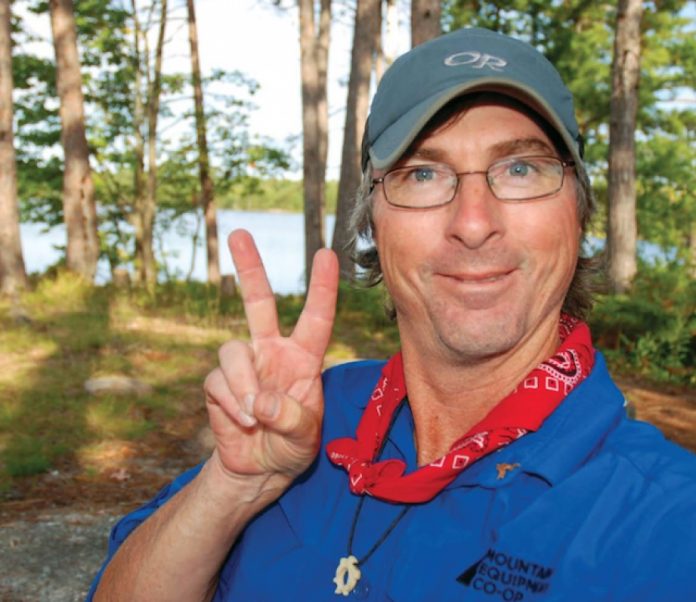
Gen Yers claim we’re just as weird (note the bandana and peace sign in the above photo). In their eyes, Baby Boom paddlers have been cursed with Tilley hats, fixate on canvas packs, wool socks, plaid shirts and camo pants and think it’s cool to make camp stoves out of beer cans. We also seem to go on about how young people don’t paddle anymore—which couldn’t be further from the truth. 

CANOE TRIPS ARE MORE POPULAR, BUT SHORTER

According to such groups as Paddle Ontario and Paddle Canada, canoe trips have increased in popularity with people in their mid-twenties by almost 40 per cent across North America in the last few years. Great news. However not many canoeists today are tripping for any length of time, not like the good old days. 

Baby Boomers once averaged a minimum of 12 days out, Gen Xers trips in the ‘80s were seven to ten days and now Gen Yers don’t go for longer then a weekend. Don’t believe me? Try finding a two-week rental rate in an outfitter’s brochure… Oops, I mean website.

So why are we paddling less? Provincial and federal tourism studies suggest two reasons why we don’t go out for longer periods—no time and less money.

I blame technology. It was designed to make our lives easier, at home and at the workplace, but it has done the opposite. Now we’re addicted to it—they call them CrackBerries for good reason. like an addict detoxing, only after day 10 of a trip do you come to the conclusion that Tweeting is best left to the birds. Too bad the majority of us will never know (or remember) that feeling.

And the Gen Yers texting in my classroom, I just hope they are planning their day-11 breakfast menu. If that were the case, I’d give them an extension on their papers.

Kevin Callan’s favourite pastime is making beer can stoves. 

This article on generational divide was published in the Summer 2010 issue of Canoeroots magazine.This article first appeared in the Summer 2010 issue of Canoeroots Magazine. For more great content, subscribe to Canoeroots’ print and digital editions here.
Traditional Paddling with a Punch

All photos this page: Reid McLachlan
Traditional Paddling with a Punch

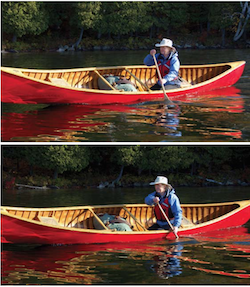
“Keep your stroke short, it’s more efficient and relaxing,” Dad suggested as we paddled the flatwater stretches of the trip. It was 1983, and we were on the Nahanni River preparing me for a summer of guiding. I fondly remember my dad’s voice as I paddled in the stern of the canoe. Being a teenager, I rolled my eyes at his instructions and was determined to prove him wrong. With stubborn resolve, I pulled with both arms and lengthened my stroke. Dad’s stroke was smooth and relaxed even as he took two strokes to one of mine. I watched him more closely just as he had learned by studying a First Nations paddler. This short stroke, which I now call the traditional stroke, has become an important forward stroke in my flatwater repetoire. 

Becky Mason demonstrates the traditional forward strokeMaster the Traditional Stroke

  • Start with the blade in the water at your knee and your grip hand at your chin.
  • Punch your grip hand forward and down towards the onside gunwale creating a lever with your lower shaft hand as a travelling fulcrum. Rotate your torso to put some bodyweight behind the punch. 
  • As your grip hand gets closer to the gunwale start to roll your thumb down setting up the blade for the correction stroke. Having your grip hand over the gunwale ensures that the blade is close and parallel to the hull throughout the stroke.
  • After the grip hand punch is accomplished relax your arms, let your bottom hand trail smoothly behind you and do your correction stroke.
  • Return to an upright position and feather your blade out on the recovery knife the paddle in toward your knee to start the next stroke minding that your grip hand doesn’t creep up over your head. 

To get the feel of the punch with power, try this learning technique. Hook your shaft hand thumb onto the gunnel to force yourself to create a fulcrum, punch your grip hand from your chin all the way to the gunnel until your knuckles touch. Repeat this a few times and you’ll be well on your way to mastering this relaxing traditional stroke.

Becky Mason is a canoeing instructor based in Chelsea, Quebec. She has contributed to several books, produced an award-winning video, Classic Solo Canoeing, and presents workshops throughout North America. Find her at redcanoes.ca

This article on canoe technique was published in the Spring 2010 issue of Canoeroots magazine.This article first appeared in the Spring 2010 issue of Canoeroots Magazine. For more great content, subscribe to Canoeroots’ print and digital editions here.
Risk Management: Squeezing the Lemons

Photo: Scott MacGregor
Risk Management: Squeezing the Lemons

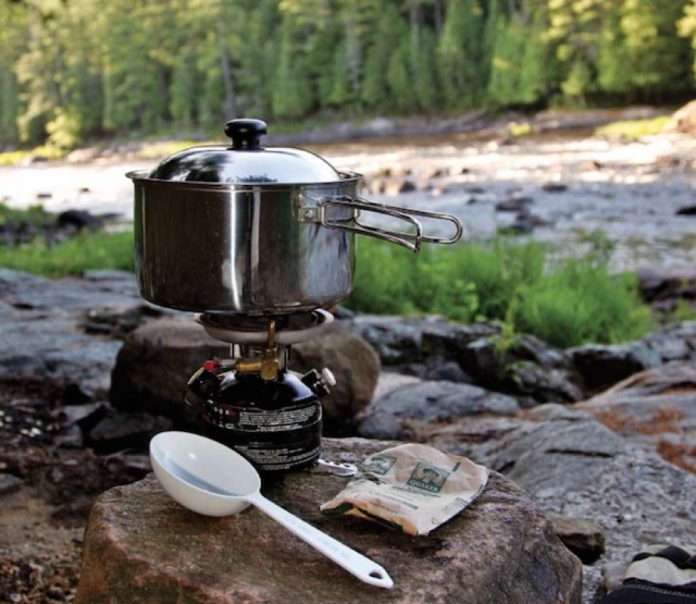
As I quickly approached the accident scene, I could see that my paddling partner was in considerable pain. I gathered that the overturned canoe, spilt pot of steaming spaghetti noodles and the string of choice expletives pouring out of his mouth added up to a cooking burn.

“How bad is it?” I asked. “The pot caught me on the back of my leg,” he responded, with a painful twinge in his voice. An examination revealed that the second-degree burn was severe, ending the trip and requiring an evacuation over the next two days.

I frequently use this story as my introduction for risk management seminars. What I’ve found interesting is how the discussions that follow have changed, over the years, from one paradigm to another—from lemons to systems.

In 1987, James Raffan introduced a risk management theory referred to as the Lemon Theory. The Lemon Theory’s premise is that during the course of an outdoor trip a sequence of events occurs, that if left unchecked, can lead to a crisis. Raffan uses the analogy of the slot machine that if too many lemons line up—jackpot, an incident occurs.

Counting Lemons

The genius of lemons is that they serve as an easy symbol to incorporate into day-to-day tripping activities. Canoeists, kayakers, mountaineers and skiers across North America spend their trips counting lemons—literally.

In our scenario above, it was late in the day, lighting was poor, equipment was new and unfamiliar and dehydration put pressure on my partner’s judgment. All these lemons would have been manageable, if the proper routines of setting up camp and creating the conditions to safely operate the stove had been established.

Today’s risk management paradigm recognizes that we no longer have to identify and pre-empt all those lemons and instead, we should work to establish a series of systems.

By focusing on systems, we don’t need to account for every interaction that could lead to a jackpot. Once implemented, these routines create the conditions to have safe and fun adventures.

Matt Cruchet is an educator, consultant and co-author of the new book Managing Risk, which is an exploration of systems planning, applied to outdoor adventure activities. 

Betcha Didn’t Know About Pitcher Plants

Photo: Virginia Marshall
Betcha Didn't Know About Pitcher Plants
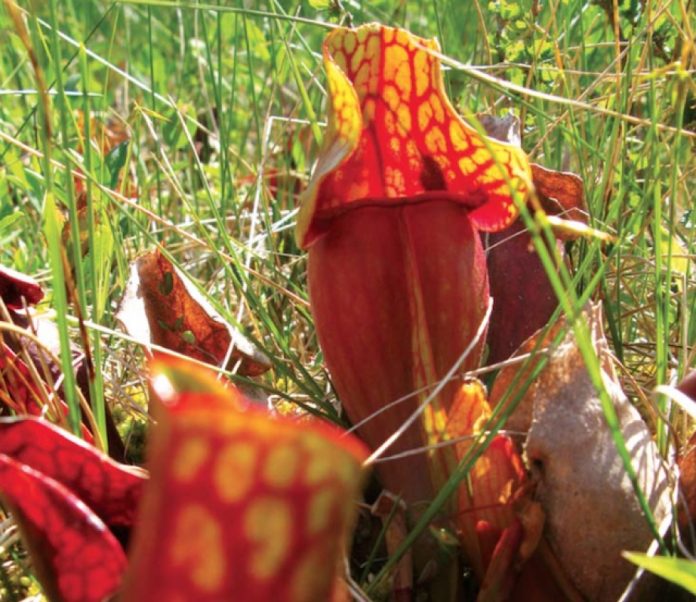
  • Pitcher plants are carnivorous. Although they may not feast on drive-thru Big Macs, they trap insects, spiders, newts and even small frogs for their protein-rich meals.
  • Colourful deep red and purple veined pitchers attract prey and entice them to rest on the slippery leaves at the top of the plant. The prey falls into the pitcher and becomes trapped in the digestive juices below. Escape is futile—little downward-pointing hairs block any retreat.
  • Gigantic man-eating plants exist only in Hollywood thrillers, like Journey to the Center of the Earth—the box office hit in which actress Anita Briem plays a tasty snack.
  • The pitcher plant is the official flower of Newfoundland and Labrador, symbolizing the inner strength and willful determination of Newfoundlanders.
  • The pitcher was historically used as a drinking cup (perhaps another reason why it’s Newfoundland’s official flower).
  • For a one-time, low price of $2,149.95 you can purchase one of the world’s purest 99.999 per cent gold coins from the Royal Canadian Mint. The 12th coin in this series is pressed with the symbol of the pitcher plant.
  • Pitcher plants grow in wet, acidic soils that are deficient in nutrients such as nitrogen and phosphorous. They are found in marshes and bogs throughout Canada and the eastern United States.
  • The largest pitcher plant, Nepenthes attenboroughii, was discovered in the Philippines in 2007. Named after the famous BBC Planet Earth broadcaster, David Attenborough, this plant has large enough traps to consume a rat—hey, a mousetrap that empties itself!  

This article on pitcher plants was published in the Spring 2010 issue of Canoeroots magazine.This article first appeared in the Spring 2010 issue of Canoeroots Magazine. For more great content, subscribe to Canoeroots’ print and digital editions here.
My Love-Hate Relationship with Portaging

Photo: Christopher Pratt
My Love-Hate Relationship with Portaging

Portage.

That’s what lakewater trippers do—we portage. From lake to lake, into remote wilderness, we heft mounds of stuff, all intricately organized into wannigans, canvas packs and polyethylene barrels. Yokes dig into our tired muscles as 60-pound canoes balance precariously on our shoulders. We are like oxen plowing the last furrow of the day, ready to unburden our load.

Many sport enthusiasts willingly subject themselves to torturous masochistic prac- tices—boxers accept head punches, cyclists wear tight spandex and canoeists…well, we portage.

It’s no wonder the word portage is often synonymous with gruelling pain and agony. As renowned canoeist Bill Mason once reminded us, “…portaging is like hitting your- self on the head with a hammer: it feels so good when you stop.”

So, when it came to planning a 200-day ca- noeing expedition, my husband and I found a way to paddle days on end, enjoying wide-open views, endless scenery, crystal clear wa- ter and the full gamut of weather conditions with no portages. Well…except for one. I will get to that later.

If you are a serious lakewater tripper, you must travel some of the coastline of the five immense lakes that shape the heart of North America—the Great Lakes. Vast and diverse, they are the largest chain of freshwater lakes on the planet, holding 20 per cent of the world’s freshwater.

Over the last three summers, we paddled this ancient waterway, travelling the entire 4,000-kilometre coastline of the Canadian Great Lakes from the Pigeon River, west of Thunder Bay, to Kingston on Lake Ontario, where the Great Lakes flow out the St. Lawrence River.

Along the way, we paddled the shores of Lake Superior, Lake Huron, Lake St. Clair, Lake Erie and Lake Ontario.

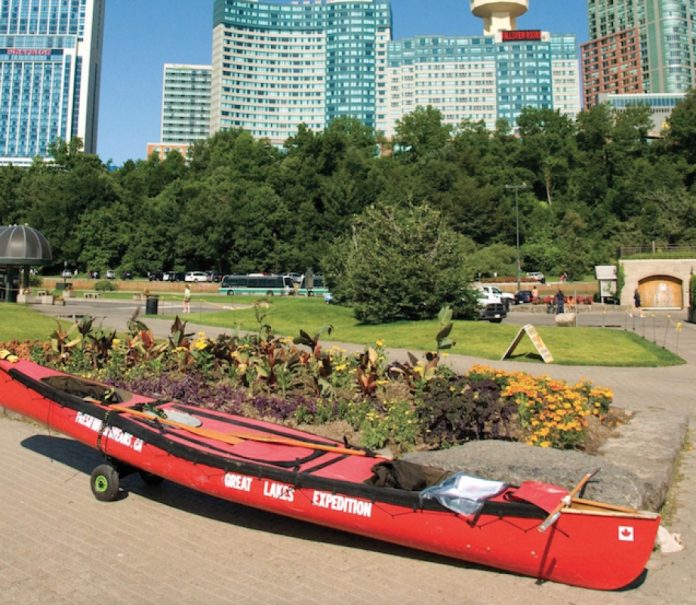
Each lake lives up to its great reputation. Lake Superior is the deepest, its greatest depth at 406 metres. Lake Huron is home to Manitoulin, the largest freshwater island in the world. Lake Erie boasts endless sand beaches around Long Point, Rondeau and Point Pelee and supports the richest aquatic life of all the lakes, a total of 46 million fish. And Lake Ontario offers its own challenges when your route takes you right through the busy city waterway of Toronto harbour. Oh, and there is only one portage. It happens to be 25 kilometres long, around a pretty major waterfall—Niagara.

THE COUNTDOWN TO P-DAY

After two blissfully portage-free summers, preparations for our third summer had begun and we were inadequately prepared for the 25-kilometre hike ahead. The longest portage in our combined portfolios was a mere three kilometres, but we felt confident in the helping hands of friends and family eager to lend their support in what was soon coined, P-Day.

As P-Day drew closer, however, our helpers dropped faster than the 100,000 cubic feet of water that flows over Niagara’s brink every second. We heard the full range of excuses, from dentist appointments to busy work schedules. Instead of a brigade, we were reduced to three helpful saints, who made the one-day carry possible. Portage technology had also advanced since the fur trade and we were well equipped with a modern canoe trolley that proved invaluable. Some call it cheating, but after a few kilometres, I call it smart. I’ll bet not one voyageur would rather carry a barrel of whiskey than roll it.

The Niagara Falls Review, the oldest newspaper in Ontario, reported that no one had portaged the route in recent history. It’s estimated that the last portage taken was over a hundred years ago. The ancient trail, however, is still intact—now paved and suitably bearing the name Portage Road.

As we approached the brink of Niagara Falls on foot, with our canoe in tow, citizens and vacationers sent worried glances in our direction. It was understandable considering that, in their lifetimes, more people have paddled over the falls than portaged around them. Within minutes a police cruiser pulled up and out stepped two straight-faced uniforms.

“I hope there’s no law against portaging, officer,” my husband said with a smirk. After telling our story, the police were delighted to help us out, making routine visits throughout the day. “I’m happy we weren’t the first portagers to be arrested,” I said as they sped away to another call.

The busloads of tourists filling the sidewalks proved no more difficult to navigate than overgrown balsam on a seldom-used trail. The crowds also made for an interesting portage, as we were an attraction ourselves, posing next to our canoe for hundreds of snapshots.

Stops at places like the Hershey’s Chocolate Factory and Candy Planet fuelled the journey. The 25 kilometres rolled on and by the end of the day we rested and dined lavishly at Peller Estates Winery. With a fine glass of private reserve, barrel-aged golden Chardonnay, we toasted our fun-filled day, a bit sad that it was all over. Because as Bill Mason also wrote, “It’s the portage that makes travelling by canoe unique.”

Stephanie Park is the new editor of Canoeroots magazine and has rekindled her love of portaging.

This article on portaging Niagara Falls was published in the Spring 2010 issue of Canoeroots magazine.This article first appeared in the Spring 2010 issue of Canoeroots Magazine. For more great content, subscribe to Canoeroots’ print and digital editions here.