 The Crooked River is a small, relatively unknown river in western Maine. Adventure photographer Andy Gagne had lived near the Crooked River for 10 years, paddling and fishing its waters regularly. But one day he learned a surprising fact: the forest surrounding the Crooked River acts as a filtration system for the water, which is part of the Sebago Lake Watershed and provides drinking water to one in six Mainers. And this natural filtration system means the water doesn’t have to be mechanically filtered in a facility—one of only 50 places in the U.S. where this is the case.He got curious and started to learn more about the watershed he’d lived and played in for 10 years, without knowing about the important role it played in providing water for his community—but also for his neighbors far downstream. The more he learned, the more he felt compelled to share.Gagne reached out to Jenny O’Connell, an adventure and environmental writer he’s worked with for years.“Thinking big as we usually do,” says Gagne, “we were like, let’s see if we can paddle this thing.”
The idea of a source to sea adventure was born: the pair, with others, would attempt to paddle from Bethel to the Atlantic Ocean in Portland, Maine, and literally follow the water as it traveled through the Sebago Lake Watershed.
The adventure is documented in the film Follow the Water, which is touring in the 2026 Paddling Film Festival and won the Best Kayaking Film category, sponsored by Matterhorn Protects.
The story Gagne and O’Connell uncovered along their journey was one that revealed how deeply interconnected everything in the watershed is.
“I live in this community in western Maine,” explains Gagne. “I don’t live in Portland. I have nothing to do with Portland or the coast or the ocean. But so much of what I do affects that community.”
And vice versa, he says. What happens in the ocean, affects his community upstream.
“It’s one thing for me to know in my head what a watershed is and how everything is connected and how what happens upstream really matters to what happens downstream,” says O’Connell. “It’s another thing to feel that in my whole body. To have traveled that and to understand how everything just spills over and connects to the next thing.”
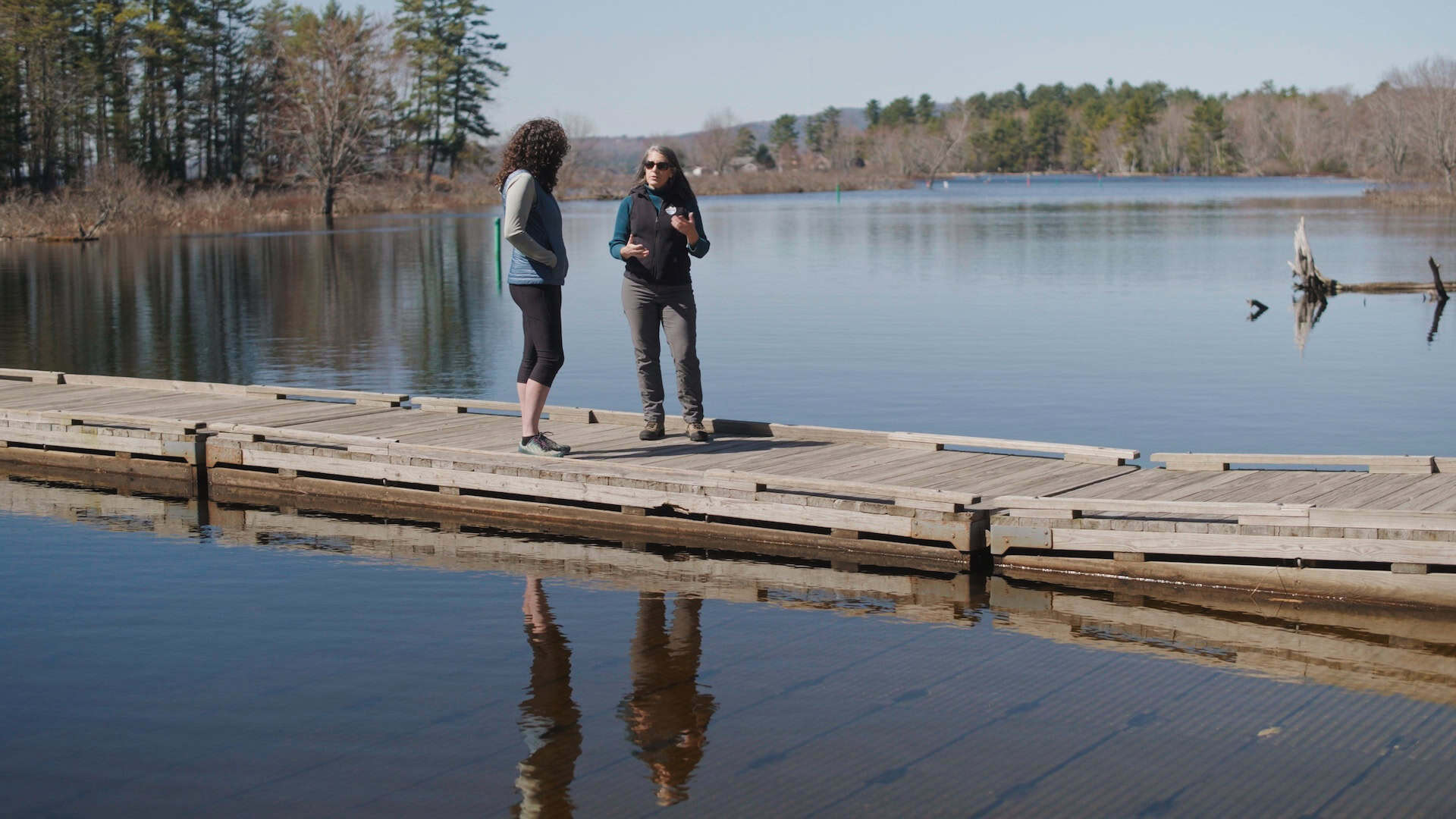
Along the way, Gagne and O’Connell talked to folks who are connected to the watershed in various ways, from conservation advocates and a wildlife biologist, to water monitoring scientists, an environmental activist and a brewery sustainability coordinator.
Sebago Clean Waters—a collaborative of conservation organizations and a regional water utility working to conserve forest in the Sebago Lake Watershed—became a partner on the film early on, providing essential knowledge to Gagne and O’Connell.
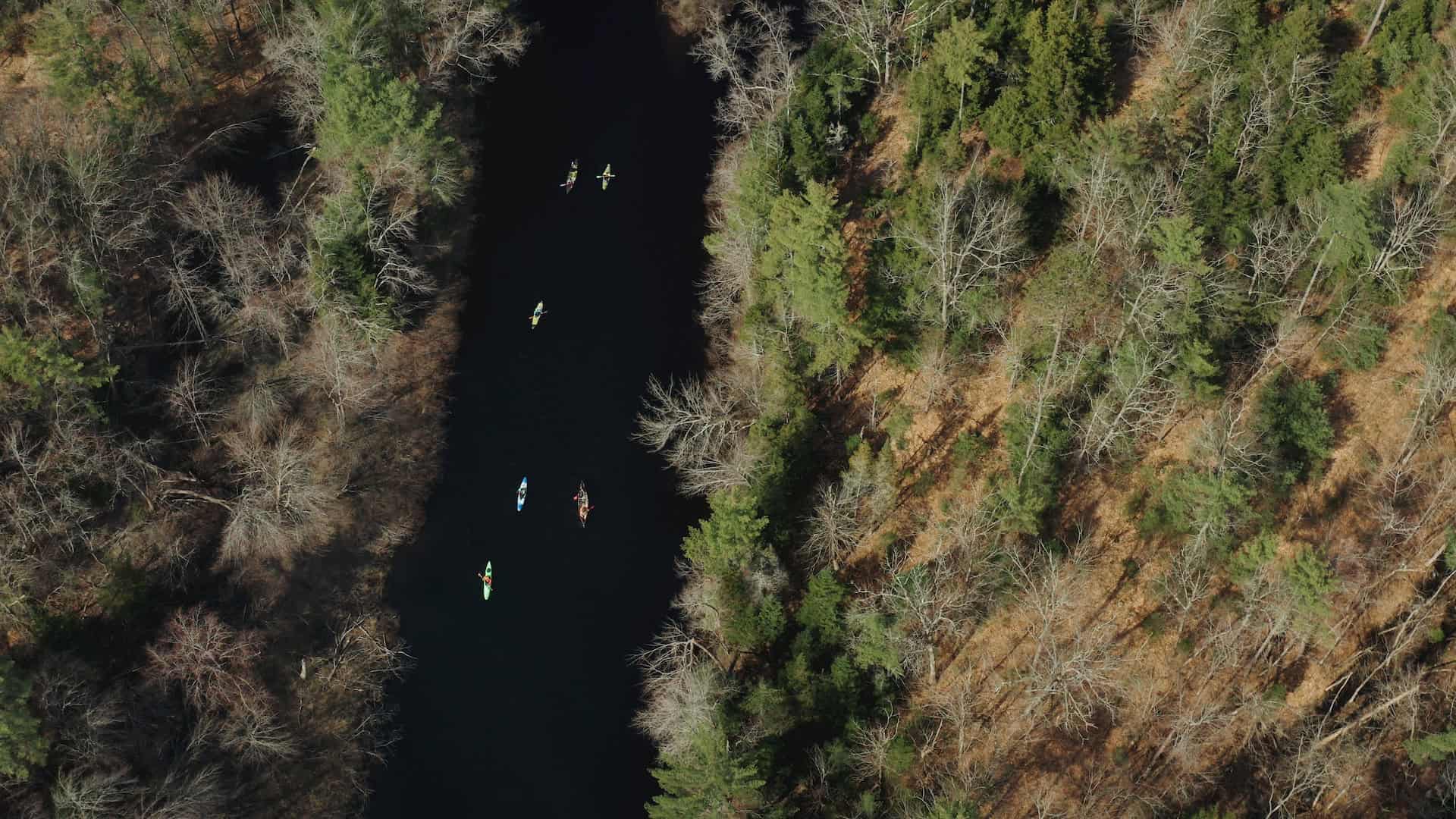
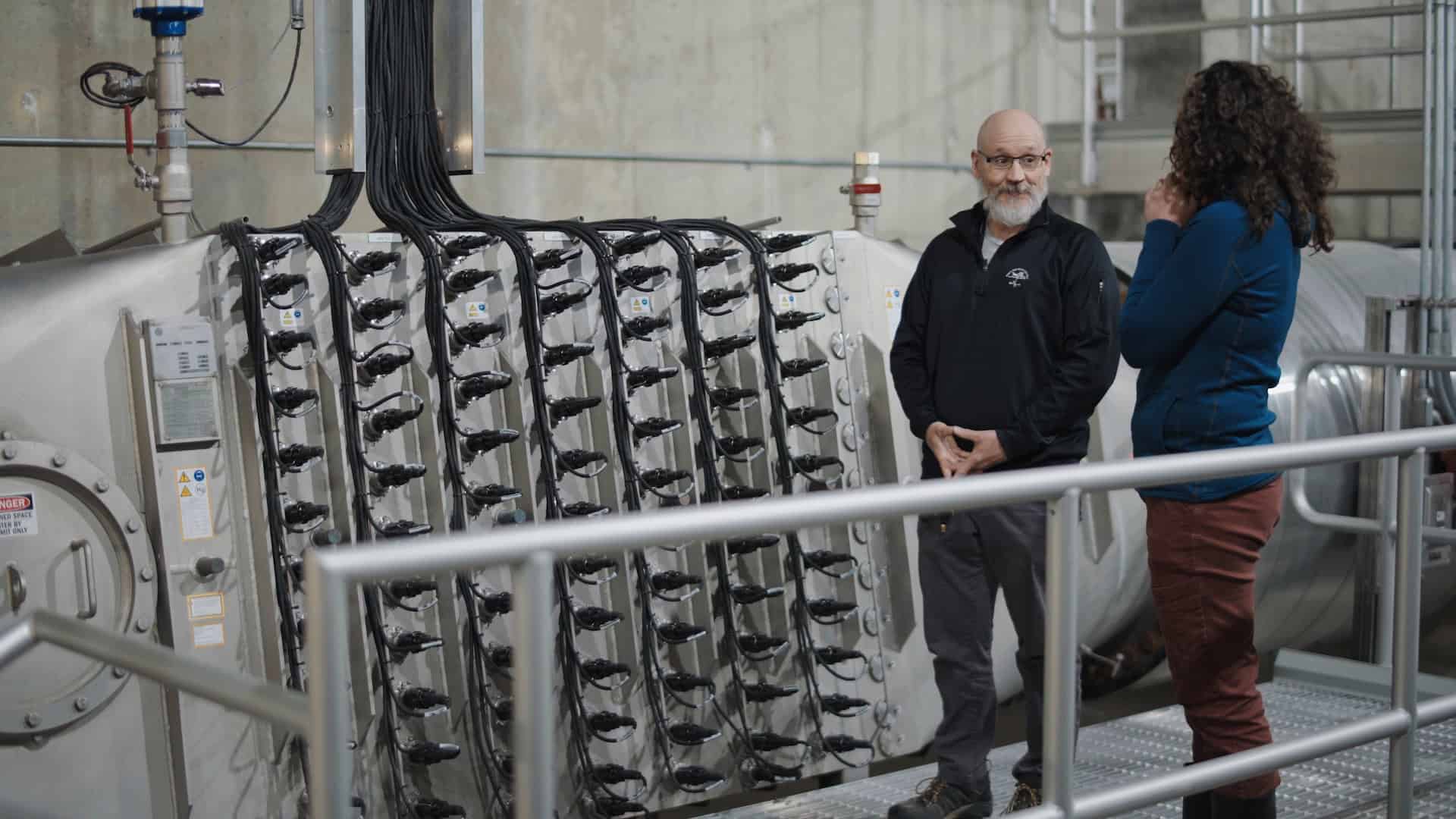
Currently, 84% of the watershed is forested and 76% needs to remain forested to maintain water quality. Through the efforts of Sebago Clean Waters and other organizations, 17% of the watershed is conserved, but the collaborative has a goal of protecting 25%.
“We’re also working on complementary measures, like doing a lot of outreach to land owners in the watershed to help them figure out how to maintain their forest sustainably,” explains Karen Young, partnership director at Sebago Clean Waters. “Help them with tax incentives to make it more affordable. And then we’re also working with municipalities on good planning in the watershed.”
Young says there isn’t necessarily an imminent threat to the watershed, like a Walmart or data centre being built on the edge of a river or on top of a wetland.
“It’s more this slow, sprawling development,” she continues. “Unfortunately a lot of the zoning that we have currently encourages large-lot subdivisions. So maybe one house on five or 10 acres. It’s a very inefficient way to build a community.”
There is also a lot of second home development in the area. Both eat up a lot of land.
“We’re certainly not anti-development,” says Young. “But we’d like to see the highest priority land conserved and then a thoughtful, intentional approach to how we continue to expand our communities.”
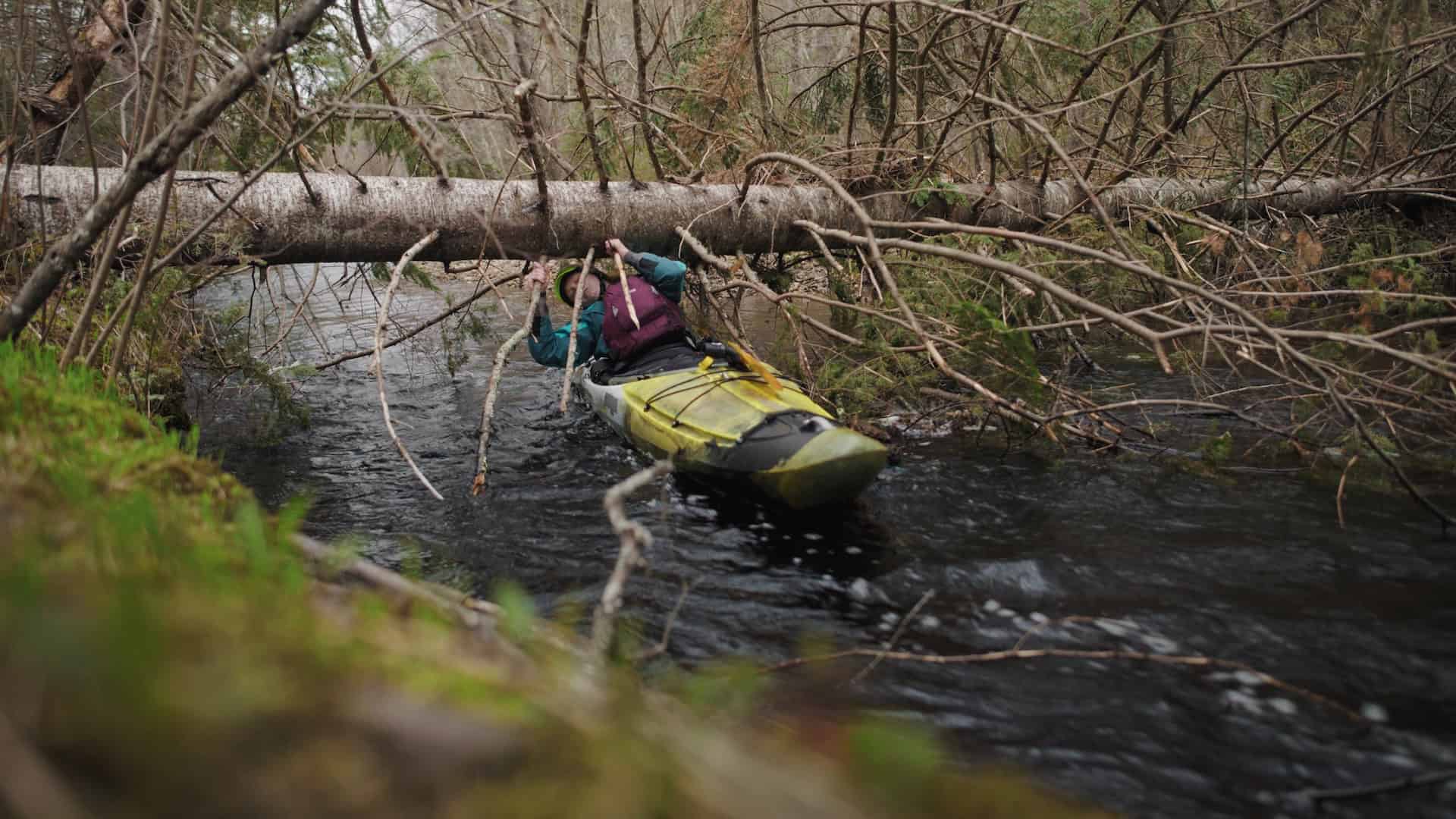
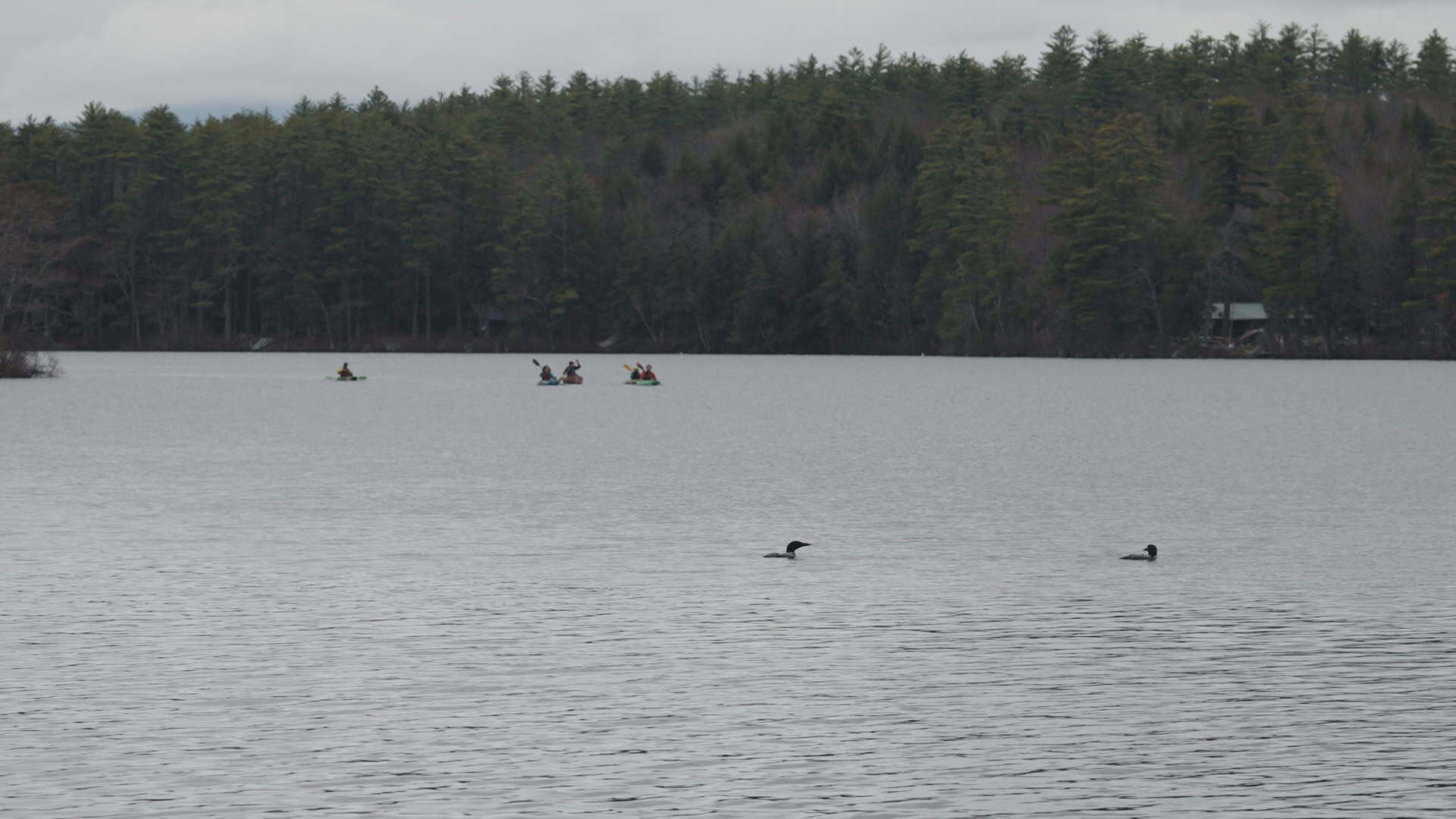
Since O’Connell and Gagne made the trip through the watershed in May 2024, Sebago Clean Waters has permanently conserved an additional 2,129 acres of forest, including 1,200 acres along the Crooked River.
They’ve also opened up 42 additional miles of critical river and stream habitat to free flow and fish passage by removing barriers and reconnecting waterways—including the removal of the historic Edes Falls Dam.
In the film, Gagne and other paddlers in their party are seen paddling over this crumbling dam.
“They were there within a week or two of the dam coming out. So they were the last ones probably to paddle over the dam before it came out,” says Young. “Now it’s been fully removed and endangered landlocked salmon can swim upstream to access 27 miles more of critical spawning habitats.”
Five more river and stream connectivity projects are underway in 2026.
Young believes the film has had a part in these recent conservation wins.
“It’s been huge visibility for our efforts,” she says. “As a coalition of nonprofits, we rely primarily on donations and fundraising to do this work. So the more visibility we have, the more people are invested and helping to protect the watershed and the water supply.”
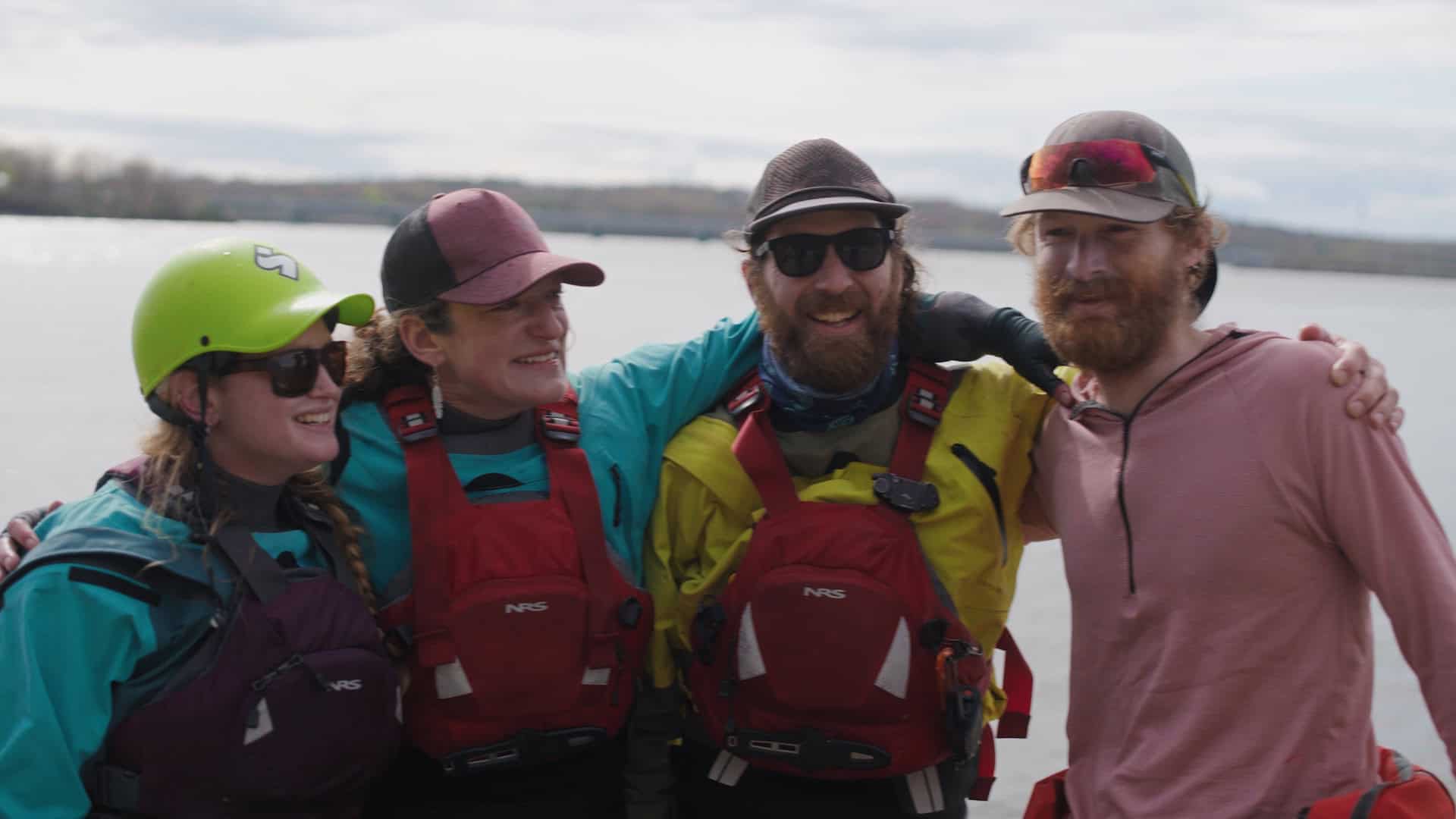
Of the impact they’ve seen the film have since its release, Gagne says locally he’s had many people approach him to say they drove past the Crooked River and thought of the film and of the water.
“I think it’s gotten people to start thinking about stuff they see every day,” he continues.
Personally, the film and the trip they took has helped him to look at the forest differently.
“In a lot of other places, to tour the filtration system you’re in a big fluorescent building with machinery,” Gagne explains. “Here you get to walk in the woods and view the filtration system and have a totally different understanding. Every time I’m on the river I think about that.”
O’Connell’s view of the impact has been more far-reaching. She spoke of the questions they’ve received from audience members at various screenings of the film.
“It was a lot of people being like, I didn’t know where my water came from. This is really exciting, what can we do? People were feeling galvanized to act, which is awesome,” she says.
They even had an audience member from Texas who inquired about how to do something similar where he lives.
O’Connell says she hopes people realize they can use their own passions, whatever those may be, to get involved and help protect forestland and waterways.
“We were all just showing up with what we had and doing what we could with it,” she says. “I’m hoping for connection and that people can feel in themselves that no matter what they’re passionate about, or where they want to plug in, there is a place for them and we need it.”
Follow the Water is winner of Best Kayaking Film, sponsored by Matterhorn Protects. You can watch Follow the Water in person at a Paddling Film Festival World Tour event or watch at home with a subscription to Paddling Magazine TV.
Jenny O’Connell was struck by how meaningful it was to experience how water flows through the Sebago Lake Watershed. | Feature photo: Courtesy Follow the Water