

Megan is a bartender at The Den, the newest restaurant in the mountain town of Revelstoke. Sometimes I wander down with my laptop and write at her bar while she brings me hazy IPAs. She’s a rad snowboarder, I’ve seen her on the mountain. And so, I asked her if she also paddles whitewater.
“Too scary,” she said.
I closed my laptop and did to Megan what whitewater paddlers have been doing since around 2001. I tried to convince her whitewater wasn’t scary. It’s not all 30-foot waterfalls. You can learn to roll in the pool. It’s all in the hips.
“Yeah, my boyfriend said the same things,” Megan said as she removed my empty glass from the bar. “Want another beer?”
She wasn’t biting. They seldom do.
Is making whitewater more accessible killing its appeal?
Whitewater participation peaked nearly 25 years ago, around the time the Baby Boomers were aging out of their whitewater years. Ever since, we’ve been watering down our sales pitch to make whitewater paddling more appealing to more people. Instead of telling Megan how awesome it is, we go straight to trying to overcome her apprehensions.
Paddling schools have done their part. They’re using photographs of smiling students shoulder to shoulder in calm eddies. The whitewater is gentle. There are lots of paddle high fives. The food looks delicious. Why do the brochures for rafting look exciting, but marketing for whitewater kayak courses looks more like yoga retreats?
We’ve felt pressure as editors of this magazine to tone down the photography we choose to print.
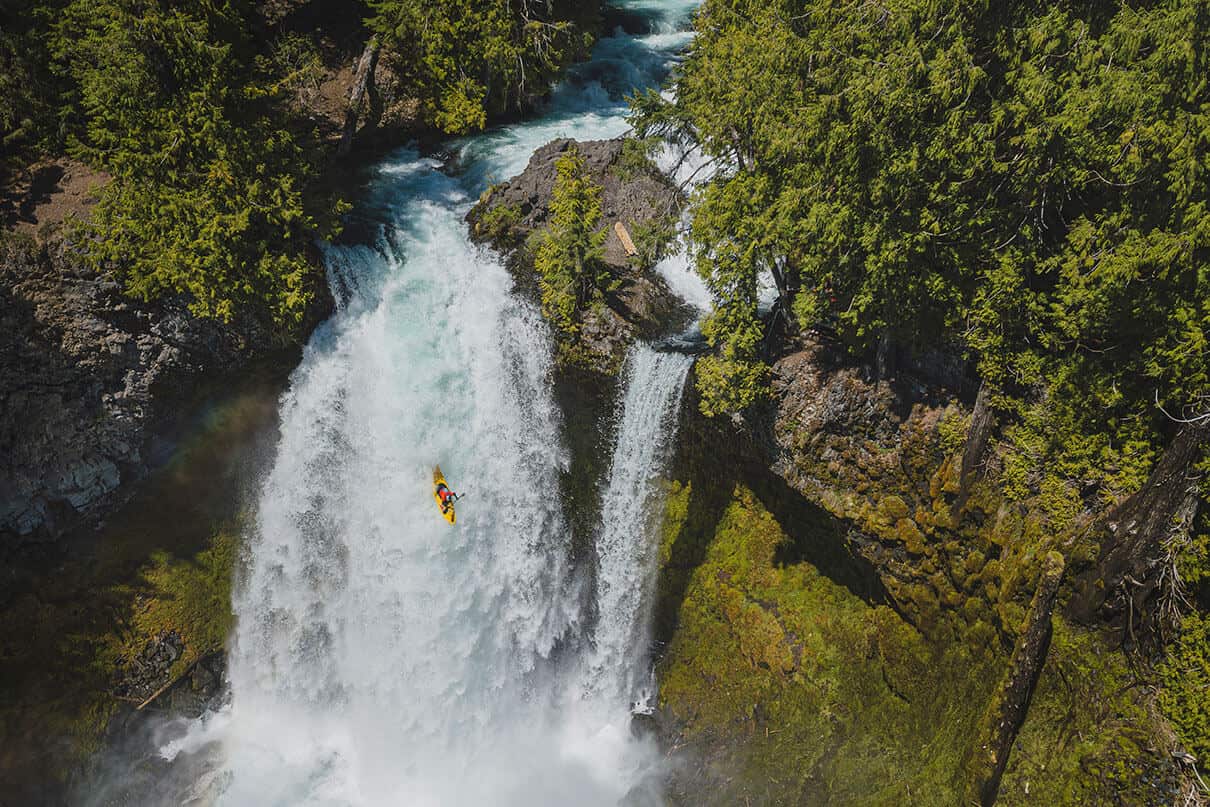
Whitewater Olympian, instructor and author Kent Ford traveled the country campaigning to make class II cool again.
I get it. I’ve spent most of my paddling days on the Madawaska and Illecillewaet rivers; most of the sections are class II. Neither would look cool on the big TVs above Megan’s bar at The Den.
Imagine if ski magazines didn’t run aspirational photos of athletes like Glen Plake, Scot Schmidt and Ingrid Backstrom. Imagine attending a Warren Miller movie premiere filmed only on green groomers. Imagine if that industry used a skier’s awkward snowplowing turns beside a magic carpet to sell me skiing. Anybody can do it, sure. But who would?
What if all these years we had it wrong? What’s our conversion rate with the watering-down whitewater strategy anyway? Have we turned risk-averse naysayers into enthusiasts? What if by trying to make whitewater more palatable to more people, we’ve inadvertently been turning off those who would have been drawn to its badassness?
Maybe let’s stop trying to address all the reasons people shy away from whitewater. Instead, let’s find out who is naturally drawn to it, and why.
In all the years I taught paddling, the schools never asked students what attracted them to whitewater in the first place. Knowing why we love it is different than understanding what it is about whitewater that attracts someone new. Do you remember?
Of all the different types of people taking their introductory whitewater courses, it would be great to understand what appeals to them most. Do they use clichés like adrenaline, adventure and challenge? I bet they do.
We should also be asking about their goals and dreams. Are people drawn to whitewater today because they want to explore wilderness rivers, surf waves, run waterfalls or paddle through gates faster than the Europeans? Or is it still about just shooting rapids, because they don’t know about all the rest? I don’t know. But whatever it is, that’s what we should be putting out there.
We won’t need to change the introductory courses. We know they are going to happen on class II sections of whitewater. We know students will wobble and flip on their first eddylines, like we did. And we know it’s all going to feel extreme and challenging and adventurous. There will be big, splashy smiles and paddle high fives. Just way more of them.
Scott MacGregor spends his winters in Revelstoke, B.C., where he teaches snowplows on green groomers to tomorrow’s extreme skiers.
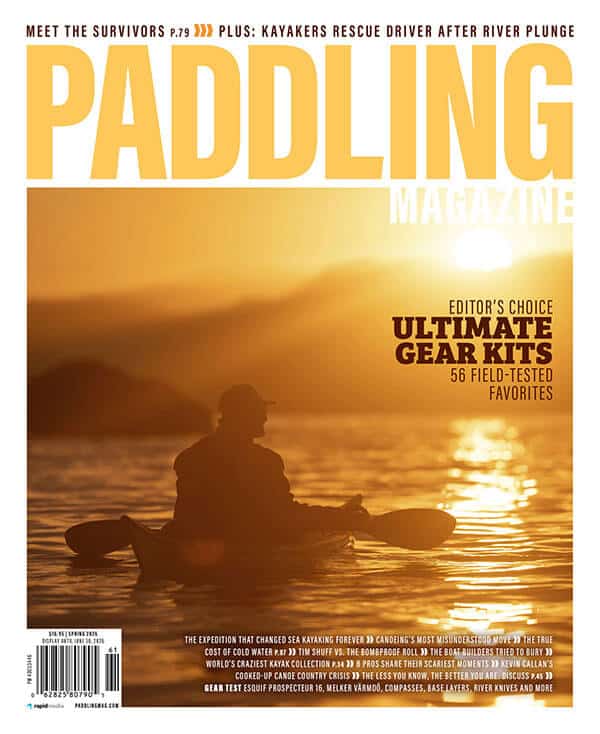 This article was published in Issue 75 of Paddling Magazine.
 Big. Fun. Scary. That’s the pitch. | Feature photo: John Webster









Cool story, and you touch on several possible ways to make the activity more appealing.
I don’t think extreme photos are really hurting things, however. Your point about skiing even helps discredit the whitewater photo concerns: We’re constantly seeing extreme video and photos of skiing. Heck, throw mountain biking into the mix. Yet skiing and mountain biking are seeing record growth.
I think the fall from peak for whitewater likely has to do with competition from other outdoor activities–biking in particular. Things like Boy Scouts might matter too (around 5 million participants around the time whitewater peaked, yet down to 1 million today), and just a general access to many different options on outdoor recreation and exercise.
The apprehension laid out in your story’s example is one that has always existed with some folks, for certain activities. Whether it’s surfing, roller coasters, skiing, snowboarding, mountain biking or sky diving. That’s sort of a separate conversation/topic, in my mind, as I don’t see any strong evidence that a sudden uptick in apprehension is the reason for a decline in things like whitewater paddling. But exploring different ways to make entry into the activity as easy as possible and to attract new users is always a good thing to explore.
I’m also curious about the data for the “it peaked 25 years” ago point. Commercial rafting in Colorado (where I live) has been at an all time high the last handful of years, for example. Not that it’s 1:1, but I couldn’t find any good data (on an admittedly short search).
Cheers!