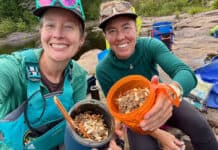
For many backcountry paddlers, lunch is little more than fast fuel. Midday meals provide vital calories between breakfast and dinner, but they’re rarely the culinary highlight of the day. Another salami-and-cheese wrap, anyone?
Lunch planning can be especially challenging on longer adventures or portage-intensive trips where minimizing weight and bulk is imperative. The quest for a lightweight, satisfying and easy-to-prepare tripping lunch led me to a surprising (and surprisingly tasty) discovery—the trail salad.
Trail salads are the best tripping lunch you don’t know about
If the thought of salad as a hearty paddling meal has you reaching for a pack of Slim Jims, think again. Combining generous portions of your favorite grains or pasta with calorie-dense crowd-pleasers like peanut butter and coconut milk, these trail salads hit well above their weight. Toss in an endlessly customizable selection of dried fruits, dehydrated veggies and seasonings, and you have the makings of gustatory gold.
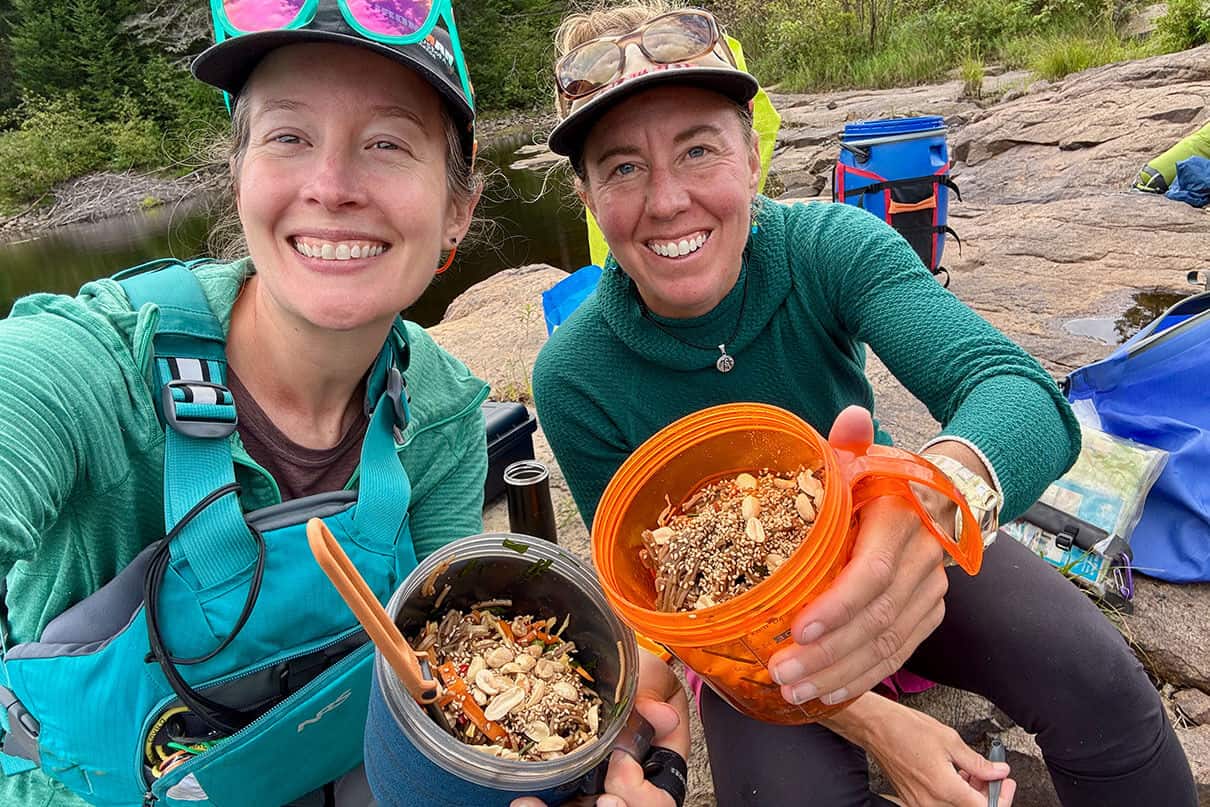
Because you can use just about any combination of grains, vegetables, fruit, seeds, nuts and flavors, trail salads let you build a deliciously varied lunchtime menu for longer trips. Even better, they require near-zero prep in the field, so they’re perfect when you’re hungry, pressed for time or hunkering down in bad weather.
The secret to mouthwatering, fresh salad when you are days, or even weeks, away from your crisper is dehydration. A compact and inexpensive home dehydrator is the most convenient option for avid campers, but you can also dehydrate in your oven at low heat. Dehydration removes all the moisture from foods, drastically reducing their size and weight, and allowing them to travel shelf-stable in a kayak hatch or canoe pack for weeks without spoiling.
Before your trip
Cook the rice, orzo, farro, quinoa, bulgur or other grains as directed, then spread them thinly on trays or baking sheets to dehydrate. Veggies dehydrate best when finely diced or thinly sliced. Cook or blanch starchy or hard vegetables, such as potatoes, beans and carrots, before dehydrating. Use frozen or canned veggies for hassle-free dehydration straight out of the freezer or can.
Chickpeas, broccoli, peppers, onion, cabbage, kale, peas, corn, carrots, bamboo shoots, sweet potatoes, beans, tomatoes, zucchini, celery and beets are all tasty, nutritious additions to dehydrated salads. Try store-bought dried berries, cherries, apricots, coconut, dates, raisins, apples, mangoes and more in your recipe for a deliciously fruity twist.
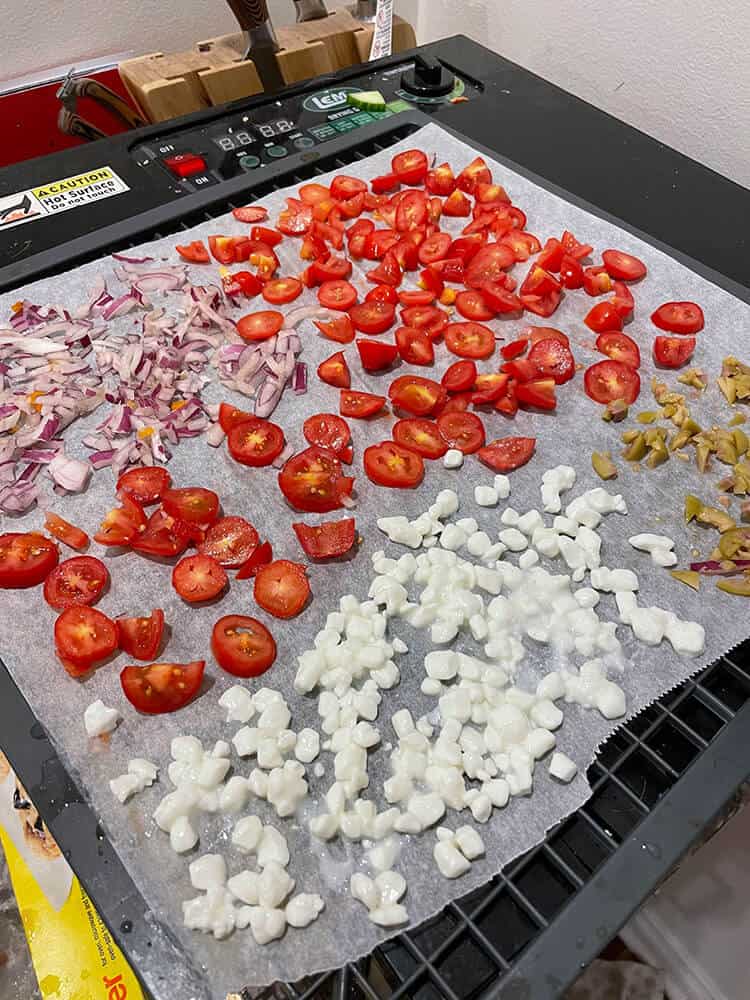
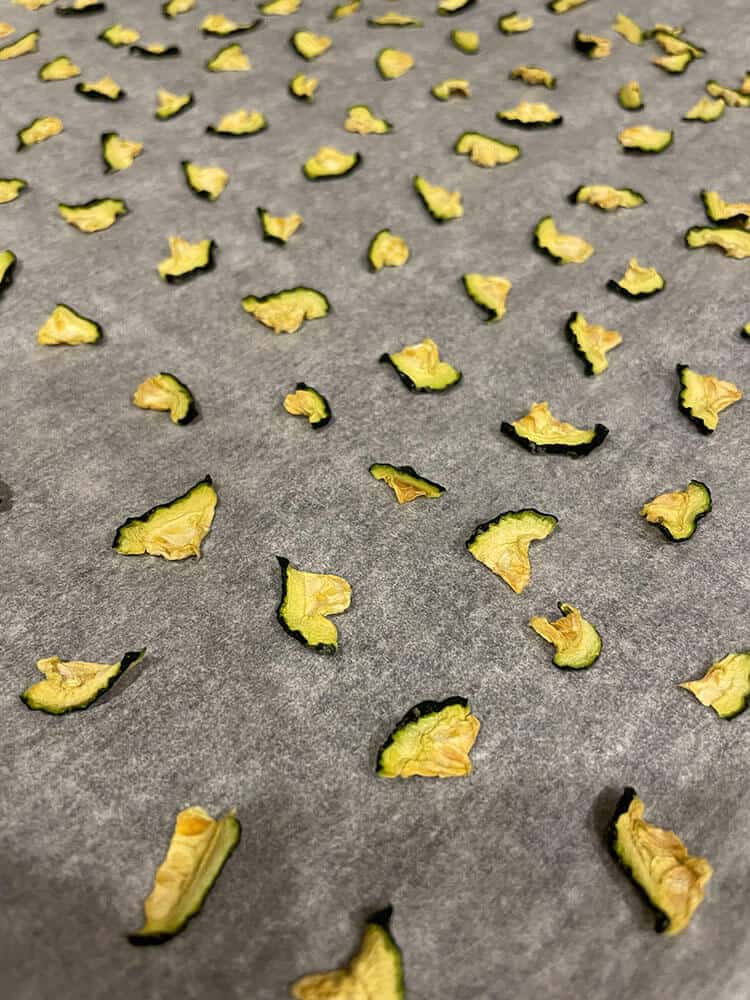
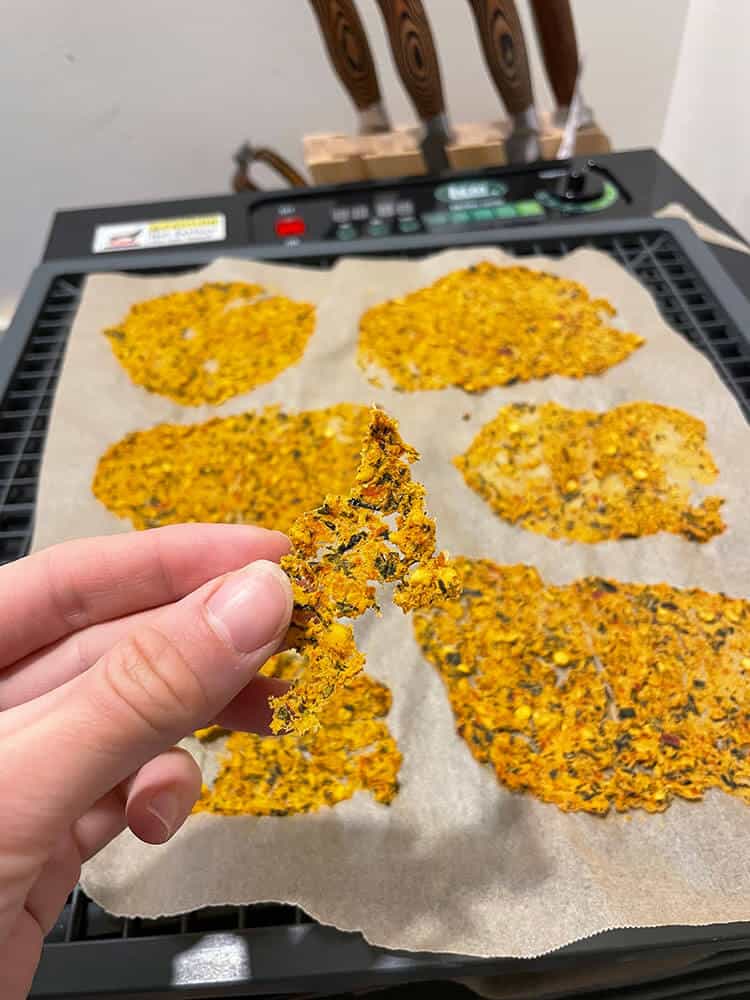
Combine dry ingredients in portion-sized Ziploc bags for foolproof rehydration on trip. Cover with filtered water (cold is fine) at breakfast or the night before to enjoy ready-to-eat salad at lunch. I like my GSI Fairshare mug for easy measuring and rehydrate-and-eat convenience, but any leakproof three- to four-cup container will work.
From Asian-inspired noodle bowls to Mediterranean and tropical flavors, midday trail salad is my go-to backcountry lunch. On your next paddling trip with friends or family, serve something unexpected and watch the carnivores convert.
Szechuan Peanut Salad Recipe
Ingredients
- 1 cup soy sauce
- 1 tsp. Szechuan chili oil
- 2 tsp. Dijon mustard
- 1 lbs somen noodles
- 6 green onions, thinly sliced
- 1 red pepper, julienned
- 1 green pepper, julienned
- 2 carrots, thinly sliced and blanched
- 1 can (8 oz) sliced bamboo shoots
- 1 can (15 oz) mini corn, thinly sliced
- 1 cup small frozen peas
- 1 tbsp. dried cilantro
- 2 tbsp. toasted sesame seeds
- 1 cup roasted peanuts
- Natural peanut butter, to taste (optional)
Prepare at home
- Whisk together soy sauce, chili oil and mustard in a large bowl.
- Cook the Japanese noodles in boiling water until al dente. Drain and toss cooked noodles in the soy sauce mix, coating thoroughly.
- Spread a thin layer of noodles on dehydrator trays or baking sheets. Dehydrate until noodles are dry and snap easily.
- Dehydrate the peppers, carrot, bamboo shoots, corn and peas. Since different vegetables will dry at different rates (125°F for about six hours is a good starting point), I recommend dehydrating on separate trays.
- Break dry noodles into shorter lengths and combine with dehydrated veggies, cilantro and seeds. Divide the mixture into six equal portions.
On trip
- To rehydrate, add ¾ cup of water to each serving the night before. At lunchtime, garnish with peanuts. For an extra peanut punch, stir a generous spoonful of peanut butter into each serving.
This recipe makes six servings.

 This article was published in Issue 75 of Paddling Magazine.
 Eat fresh on Day 30. | Feature photo: Kaydi Pyette