A journey of a thousand miles begins with a single step—or, in this case, a single paddle stroke. Niki Choo and Jared Gentz took the first paddle stroke of their 1,000-mile journey on the Pacific Ocean near Haines, Alaska. Three months later, they dipped their paddles in the Arctic Ocean and pulled their canoe ashore in Tuktoyaktuk, Northwest Territories. Along the way they were met with logjams, upstream travel, a two-day portage, stormy weather, and more challenges that tested their relationship and themselves, and at many points had them wondering whether they’d complete their mission.
The story of this incredible feat is told in the film 1,000 Miles to Tuk, directed by Whitney Hassett, which is touring in the 2026 Paddling Film Festival. The Paddling Film Festival review panel selected the film in the fall of 2025, and were impressed by the couple’s tenacity, honesty and skillfulness in threading together waterways that accomplished their goal of traveling from the Pacific to the Arctic Ocean—so much so that the panel awarded the film Best Canoeing Film, sponsored by Esquif.
In February 2026, Niki Choo was killed in an avalanche while backcountry ski guiding in California’s Sierra Nevada. She was 42. The tragedy turns a remarkable story into a tribute to Choo’s adventurous spirit and love for wild places. The Paddling Film Festival extends condolences to her family and loved ones.
In hindsight, the conversations around measuring risk, which is a major theme in the film, feel especially poignant. Risk was something Choo and Gentz thought about constantly. Their main fear heading into the trip was something happening to the other.
“I worry about something happening to Niki and having to manage that on my own if she were sick or injured,” says Gentz in the film.
Choo was a highly accomplished adventurer, dabbling in everything from ski touring and climbing to mountain biking and whitewater paddling. She began whitewater kayaking at age 14, on the Ottawa River in Canada.
“Whitewater has a different smell and being out there with the trees and the birds, the water just drew me in like nothing else I had done before,” she told PackitGourmet in an interview. “I had loved canoe tripping at summer camp and being on the Ottawa River where I learned most of the whitewater skills reminded me of tripping… and I think during those first few summers guiding is when I began to think of doing a trip like this.”
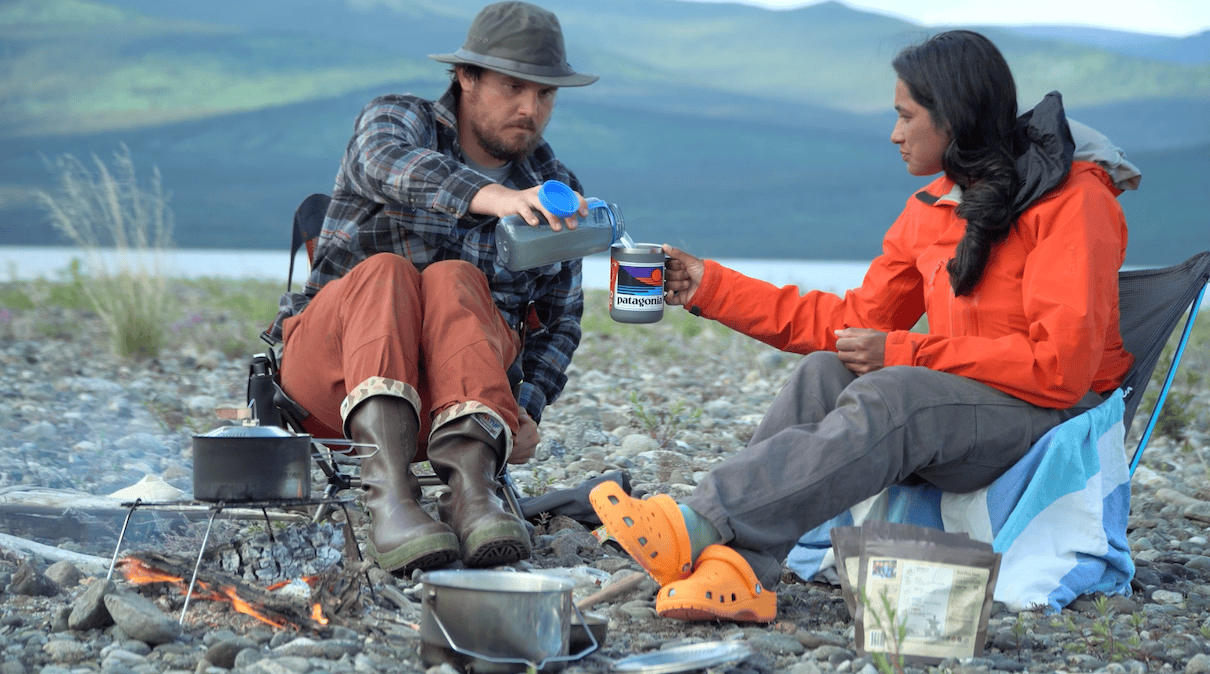
But Gentz was the first person she’d met who she could envision herself doing a big trip with. Before meeting Choo, he’d never done any whitewater paddling.
Planning for the trip took two years. Their boat of choice for the expedition was an Esquif Prospecteur 17. The trip began by paddling on the Pacific Ocean and up the Chilkat River to Haines, Alaska. They originally planned to ski from Haines to Kluane Lake, Yukon, where they’d begin paddling again. However a delayed start meant there wasn’t enough snow, so they pivoted to cycling the 200 miles.
“I know you have all the grit in the world to do this, but be cautious, right?” says Choo’s father in a phone call to Choo in the film. “And then you see it through to the end.”
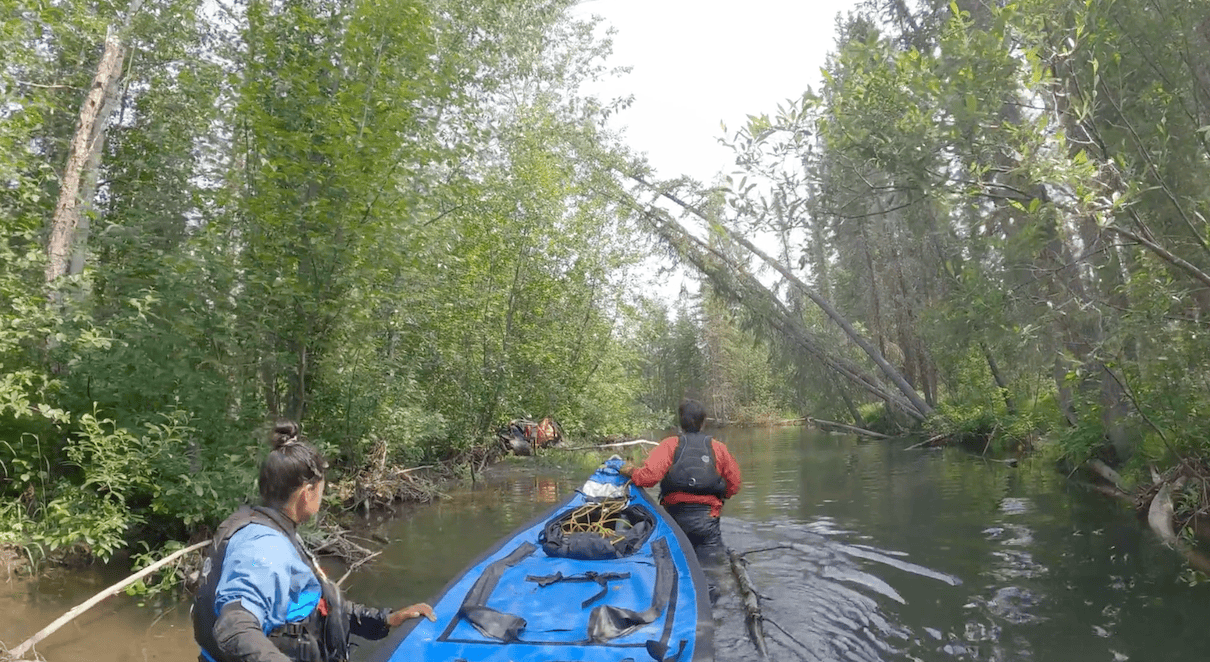
They were met with challenges almost right away, with high volumes of water pushing into strainers and logjams on the Donjek, and then on the White and Yukon rivers as well.
“I felt like we had to be on our game the entire time,” Choo told Caltopo’s Blog. “Those first few rivers were fast and furious, cold and rainy. Most days we were pulled off the river for a few hours because of thunder and lightning.”
The biggest struggle of the trip happened while upstreaming on the Chandindu River. The river was moving faster than they expected, and they were met with hazards that also made progress slow. Choo and Gentz grappled for days about whether they should turn around due to the dangers and potential for running out of food. Gentz thought they should turn around.
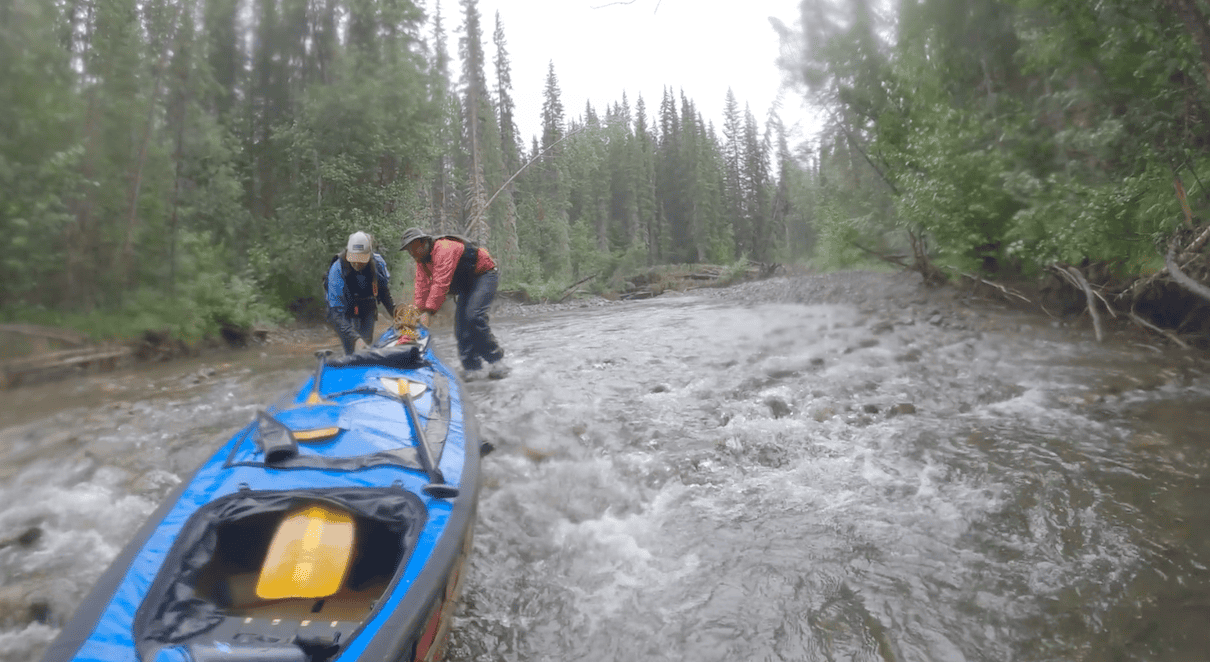
“I wanted to keep going,” says Choo in the film. “And we had difficult conversations and argued about it. And then I kind of realized, if he’s really not doing well, it puts us both at risk.”
They backtracked and made a new plan to upstream the Blackstone River instead.This proved to be much more feasible and they were able to continue on, reaching Seela Pass and then heading downstream on the Blackstone and onto the Peel and Mackenzie rivers.
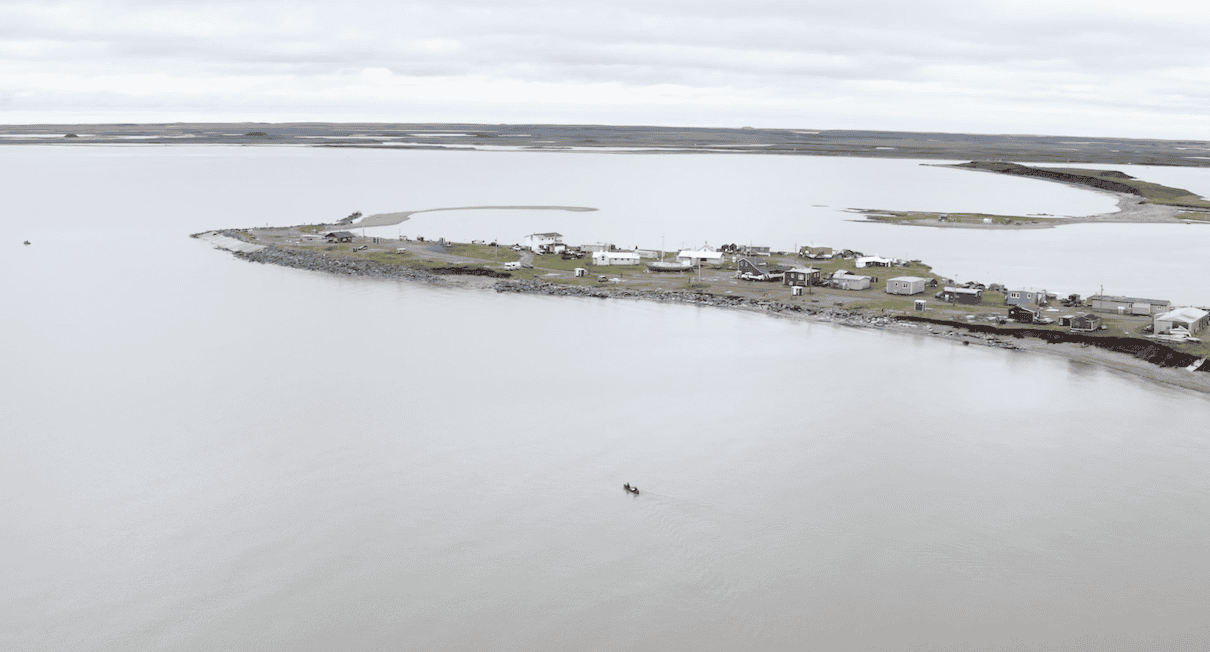
The going still wasn’t easy. They had to line class IV rapids, complete a two-day portage around Aberdeen Canyon and sleep in wet gear after their campsite almost flooded. But after three months of travel, they finally reached Tuktoyaktuk, Northwest Territories, on the Arctic Ocean.
Choo and Gentz had navigated the risks of the journey and come out the other side.
“It’s nice to know that the person you’re with shares a little bit of the same passions you do, even if you want to experience them slightly differently,” says Choo in the film. “I think that will always bind us together. All the things that build good relationships are a little bit amplified now in terms of the trust that we have with each other, the humor, the playfulness, the willingness to go through hard things together. All of those things are a little bit more full.”
Those who watch the film are sure to be inspired by the determination of Choo and Gentz, and will be touched by the way in which it acts as a fitting tribute to Choo’s adventurous approach to life and its challenges.
1,000 Miles to Tuk is winner of Best Canoeing Film, sponsored by Esquif. You can watch 1,000 Miles to Tuk in person at a Paddling Film Festival World Tour event or watch at home with a subscription to Paddling Magazine TV.
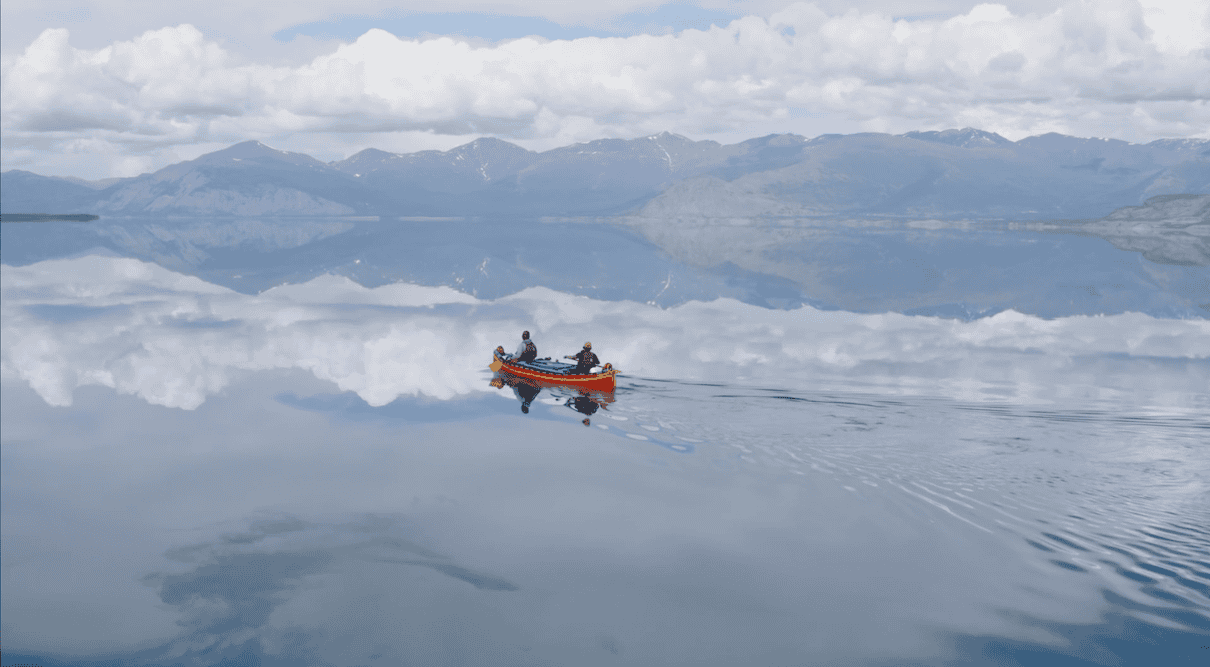
The pair lucked out with glass-like conditions when crossing Lake Kluane. | Feature photo: Courtesy 1,000 Miles to Tuk