Extreme kayaker Nouria Newman says the Indus had been on her mind ever since she saw Aniol Serrasolses paddle it in the film Inside the Indus – A Pakistani Odyssey, which was released in 2017. Known as one of the most challenging whitewater rivers in the world, the Indus has been taken on by various elite kayakers over the years, including Dane Jackson and Ben Stookesberry, in addition to Serrasolses. However, despite Newman being invited to paddle the Indus with different teams, she didn’t make it to the river until 2023.
“I was waiting for the right time for me to feel ready, but also for the right crew,” she explains. “I think I wanted to do it with a group that we all commit to go together as a team. And then I think it was really fun to go with just French people and childhood friends.”
Her tripmates were Jules Domine and Maël Nguyen, two accomplished whitewater paddlers who own Expedition Colombia, a rafting and kayaking tour company.
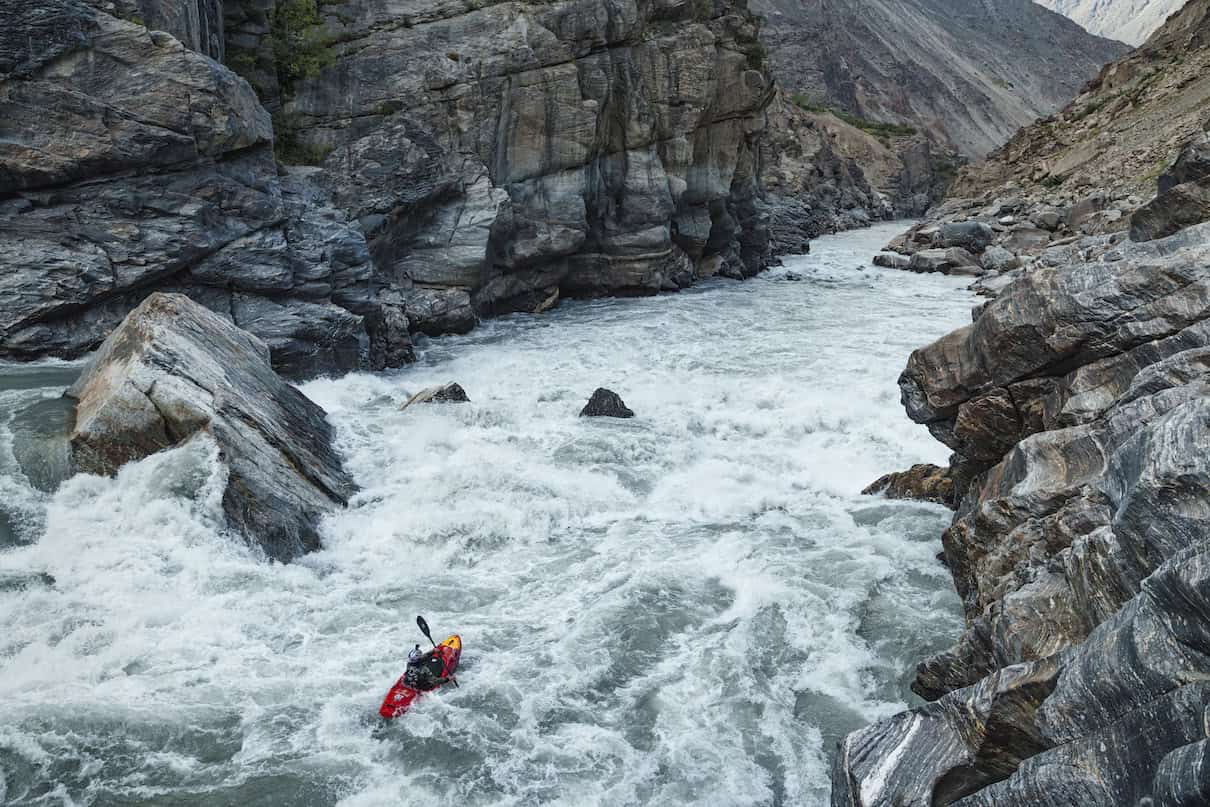
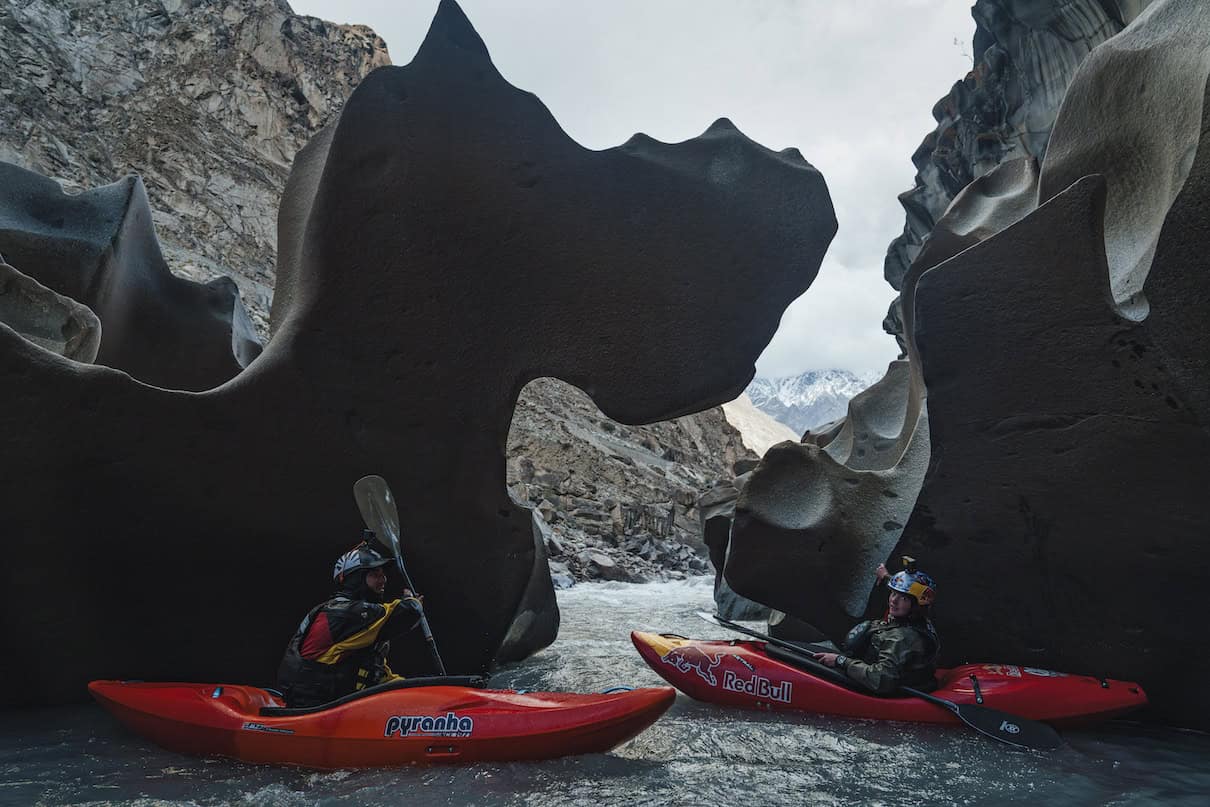
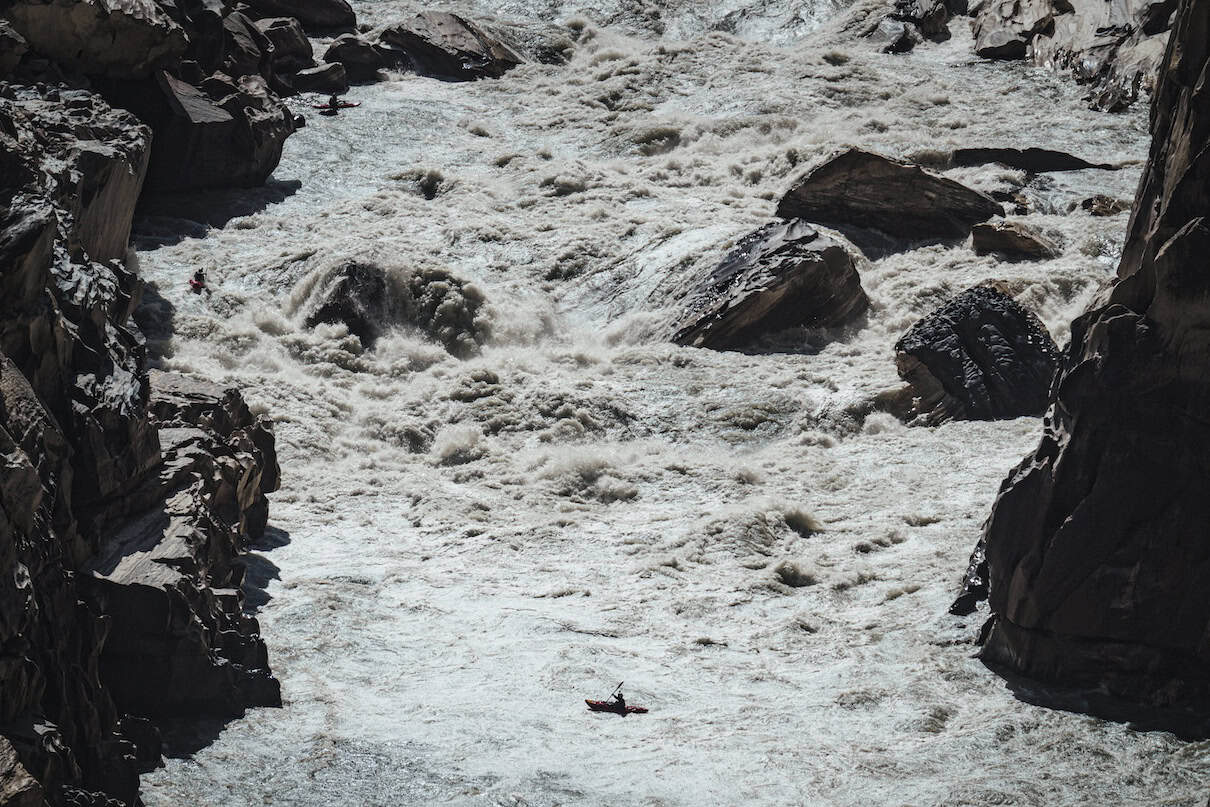
The section of the Indus they ran is called the Rondu Gorge, a 150-kilometer stretch of river in northern Pakistan with particularly high flow, frequently changing rapids and high walls that make it difficult to get on and off of.
Newman says she felt confident she could run the river, even if they ended up portaging all the hardest rapids.
“The thing is, you can’t know until you get there,” she continues. “And it’s like that for every single river. You can’t fully be prepared for something that you don’t really know what to expect. That’s whitewater. If you want to be sure then you go do some freestyle in a hole or some slalom on an artificial course and do something in a more controlled environment.”
You can watch the three paddlers take on the Indus in the film Big Water Theory, which is touring in the 2026 Paddling Film Festival and won Best Whitewater Film, sponsored by the Ottawa Valley Tourist Association.
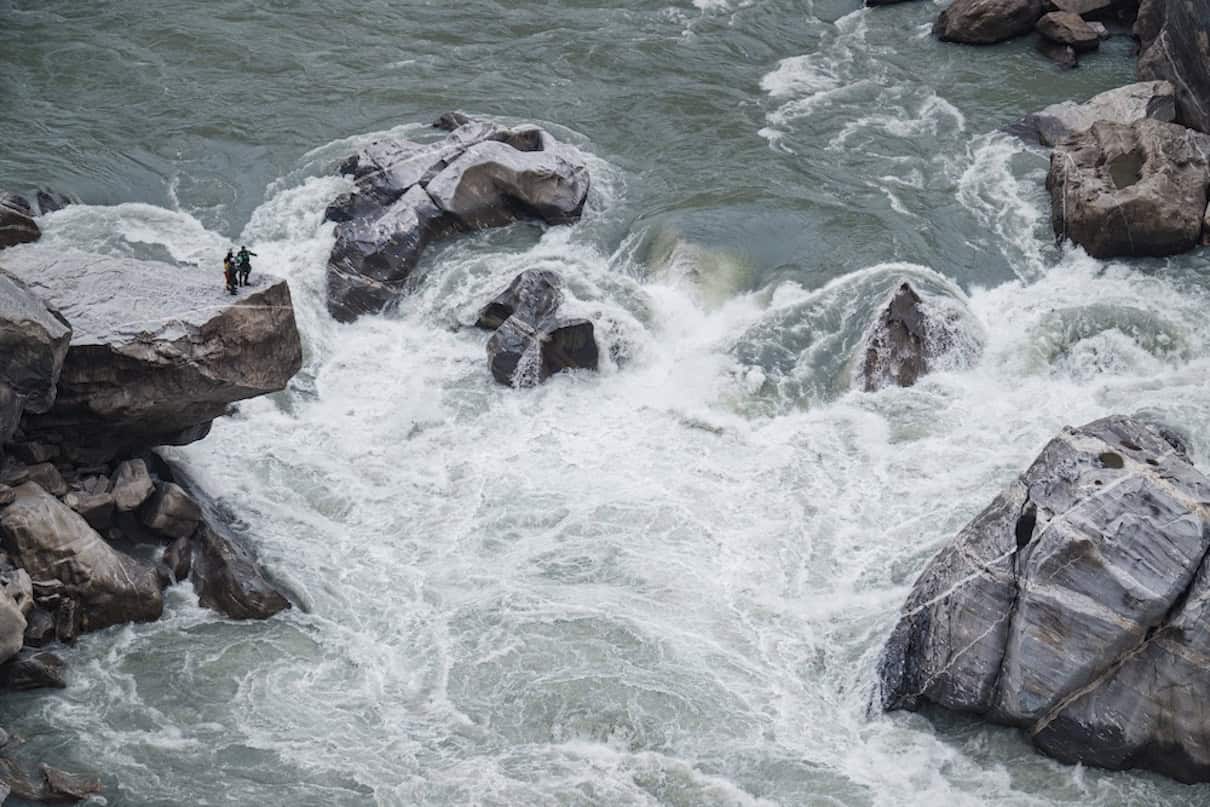
In the film, Newman, Domine and Nguyen spend a lot of time scouting rapids and deciding whether they want to run them. Sometimes all three run the rapid; other times only one or two feel confident enough in hitting the line to go for it. Other times, they all portage.
Only Newman and Domine decide to run Malupa Rapid, which prior to their descent had only been run once—by Dane Jackson. In the footage, Newman and Domine are notably nervous before making their attempts, because missing the line could have high consequences.
But Newman says she doesn’t view fear the same way others seem to.
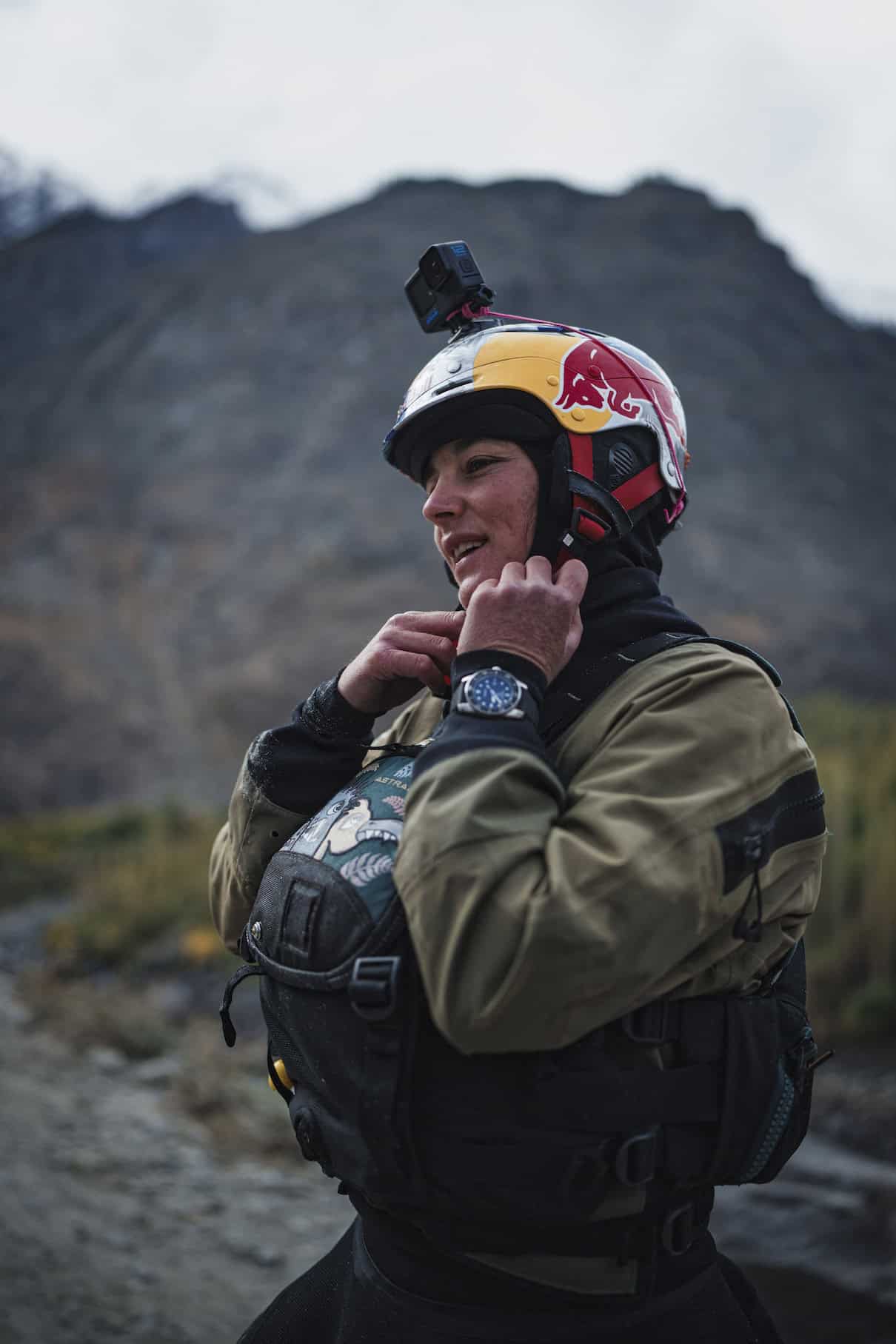
“Fear is always seen as something really bad,” she explains. “But I’m always scared, and I think it’s a really good thing. Because when you’re not scared, you’re not aware of the consequences. You’re not focused. You’re disrespecting the river and you become both dumb and numb as a paddler.”
She sees fear more as a tool, something that helps her understand herself.
In the film, she misses the line and flips her kayak, but is still able to successfully run Malupa. Domine hits the line and also makes it through.
Days on the Indus were taxing, both physically and mentally. When they paddled rapids, they had to go hard to make it through. When they portaged, it involved climbing over massive boulders and up and down steep embankments. Through it all, they had to be focused on every step and paddle stroke.
“It’s hard to compare what’s more exhausting—the hike or the scout or climbing boulders or the actual paddling that’s shorter but high intensity,” Newman says. “I think that’s why the river we were running was so exciting, because it takes a lot of different skill sets.”
It took them seven days to run the Rondu Gorge. Then they did a second lap, this time with a fourth paddler, friend Thomas Neime.
Since the Indus, Newman has paddled big rapids and done expeditions all over the world, including in the Pacific Northwest of the U.S.; Brazil; Norway; British Columbia, Canada; Arunachal, India; Portugal; Madagascar; and Mexico. At the time of publication, she was back home in France after many months of travel, and said she doesn’t have any major expeditions planned for the rest of this year.
She doesn’t keep a bucket list of places to paddle next, either.
“I try not to because I think it’s kind of dangerous to do things that way,” she says.
She points out that doing so has the potential to make you desperate to paddle a river or rapid, even when the situation isn’t ideal—like the water is too high or low, your team isn’t ready or you aren’t ready.
“I think people see kayaking as the act of paddling, but I think more than half of it happens in your brain and in your decision making and whether or not you’re making the right decisions.”
That’s why these days she prefers paddling with friends, who share the same fundamental values she does.
“I think it’s easier to be on the river with people who are likeminded and perceive danger in a similar way. And see the risks and accept it and take responsibility,” Newman continues. “It’s easier to be on the river with people that you align with on safety, for example. And I think for me people that have a list and have too many goals, sometimes they forget the main point.”
Big Water Theory is winner of Best Whitewater Film, sponsored by the Ottawa Valley Tourist Association. You can watch Big Water Theory in person at a Paddling Film Festival World Tour event or watch at home with a subscription to Paddling Magazine TV.
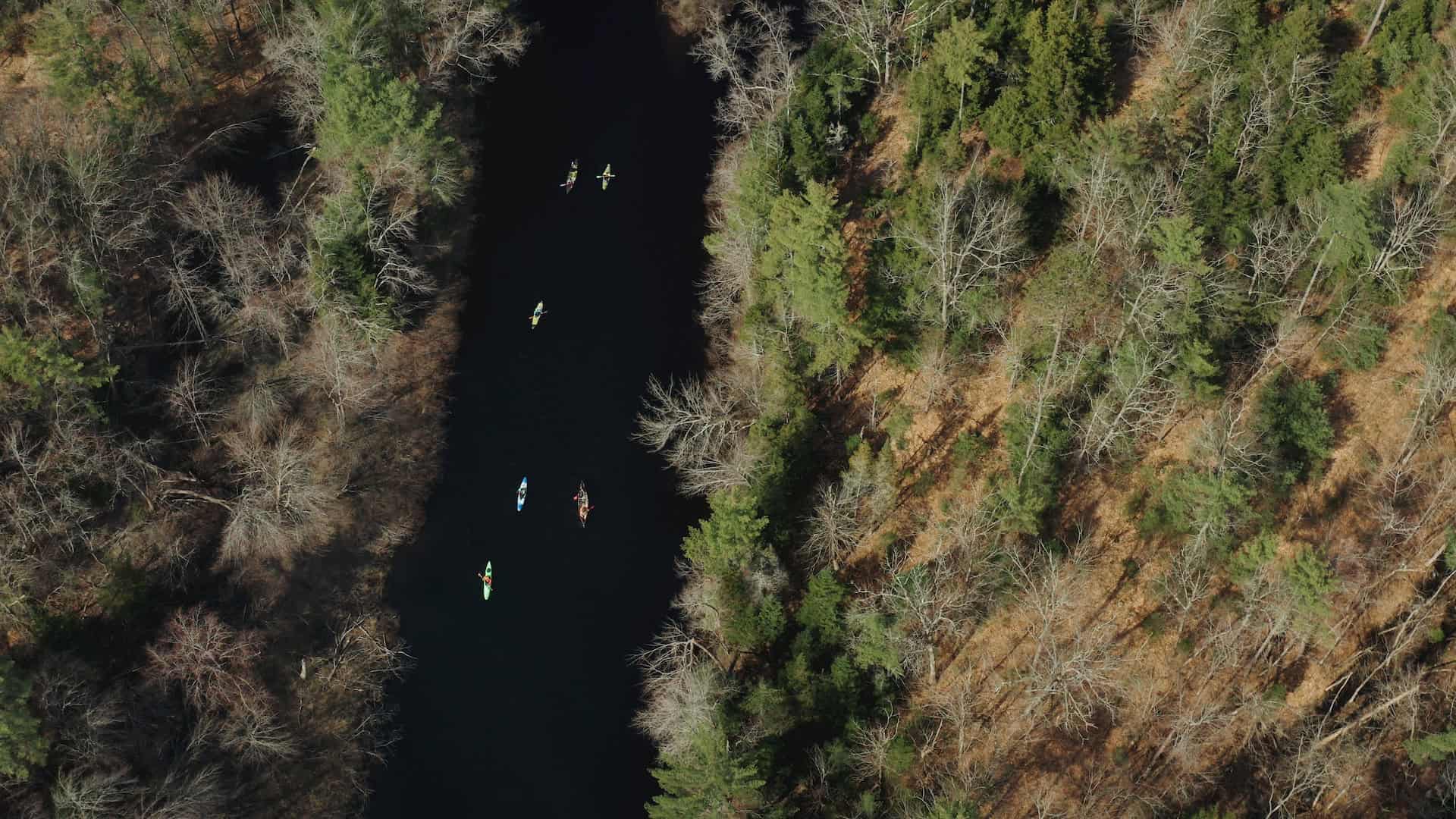
The Rondu Gorge is infamous for its high volume, steep walls and massive, ever-changing rapids. | Feature photo: Jules Domine