My first VHF marine radio was a hand-me-down clunker, nearly the size of a shoebox and powered by a feeble alkaline battery that didn’t allow for any casual listening to the weather forecast. It wasn’t waterproof, so I kept it stowed in my best dry bag in the day hatch of my sea kayak. I wondered how I would ever employ it in a distress situation involving wind, spray and big seas. Yet in the days before ubiquitous cell phones and satellite communicators, that old radio was the best safety margin I could afford as a rookie sea kayak guide and aspiring expedition paddler. Within a few years I purchased a sleeker, waterproof model that slipped into a pocket on my PFD.
Even today, when most new cell phones allow satellite text messaging, a waterproof handheld marine radio is the most practical means of communication on the water. The coast guard, larger vessels and marinas all monitor certain channels, so it’s possible to issue calls to “all stations” in times of need. There’s a long maritime tradition and strict hierarchy of calls, from general communications to safety warnings, semi-urgent requests for assistance and Mayday broadcasts for the most serious emergencies—all aimed to harness the strength of many to ensure safety at sea. You cannot get this type of broad security net with any other means of communication. This makes a VHF marine radio an essential for anyone journeying in busy harbors or big water.
Best handheld VHF radios: our top picks
- Best all-around VHF radio: Standard Horizon HX210
- Most waterproof VHF radio: Icom M73
- Most user-friendly: Uniden Atlantis 275
- Most compact VHF radio: Cobra BlueBound 150
Best All-Around VHF Radio
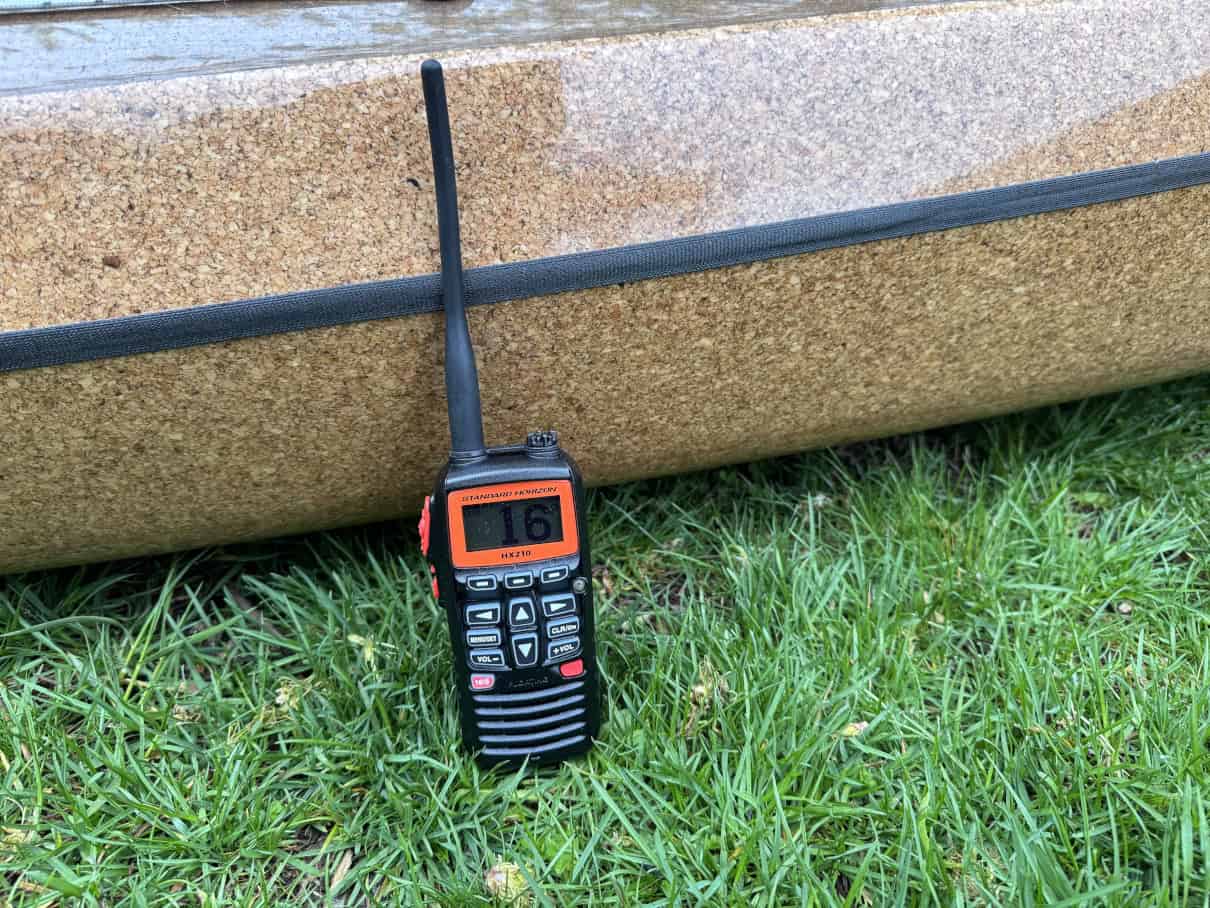
Standard Horizon HX210
$139.99 USD
Buy from:
Why I love it
The Standard Horizon HX210 VHF radio offers a plethora of features, including the option of tuning in to local FM radio stations for music, news and weather. It’s a solid, well-made unit that’s powered by a lithium-polymer battery with the most endurance in our test (up to 20 hours). It’s waterproof to IPX7 standards (submersed to a depth of 1 m for up to 30 minutes) and designed to float face-up. Best of all, immersion in water triggers a flashing strobe, whether or not the unit is turned on when you drop it in the drink.
Standard Horizon has managed to squeeze a lot of functions into a small number of buttons. As a result, it takes some time to learn the various keys, toggles and sequences. The high-power 6W setting affords an extended call range for a handheld unit. The price is right, especially for such a full-function marine radio.
Reasons to buy
- Professional-grade construction that floats
- FM-band radio adds versatility (and entertainment)
- Three-year waterproof warranty
Consider another if
- Looking for a smaller-body radio
- Seeking more buttons for intuitive functionality
Bottom line
The HX210 is a high-quality, reliable marine radio for guides and other professional users.
Most Waterproof VHF Radio
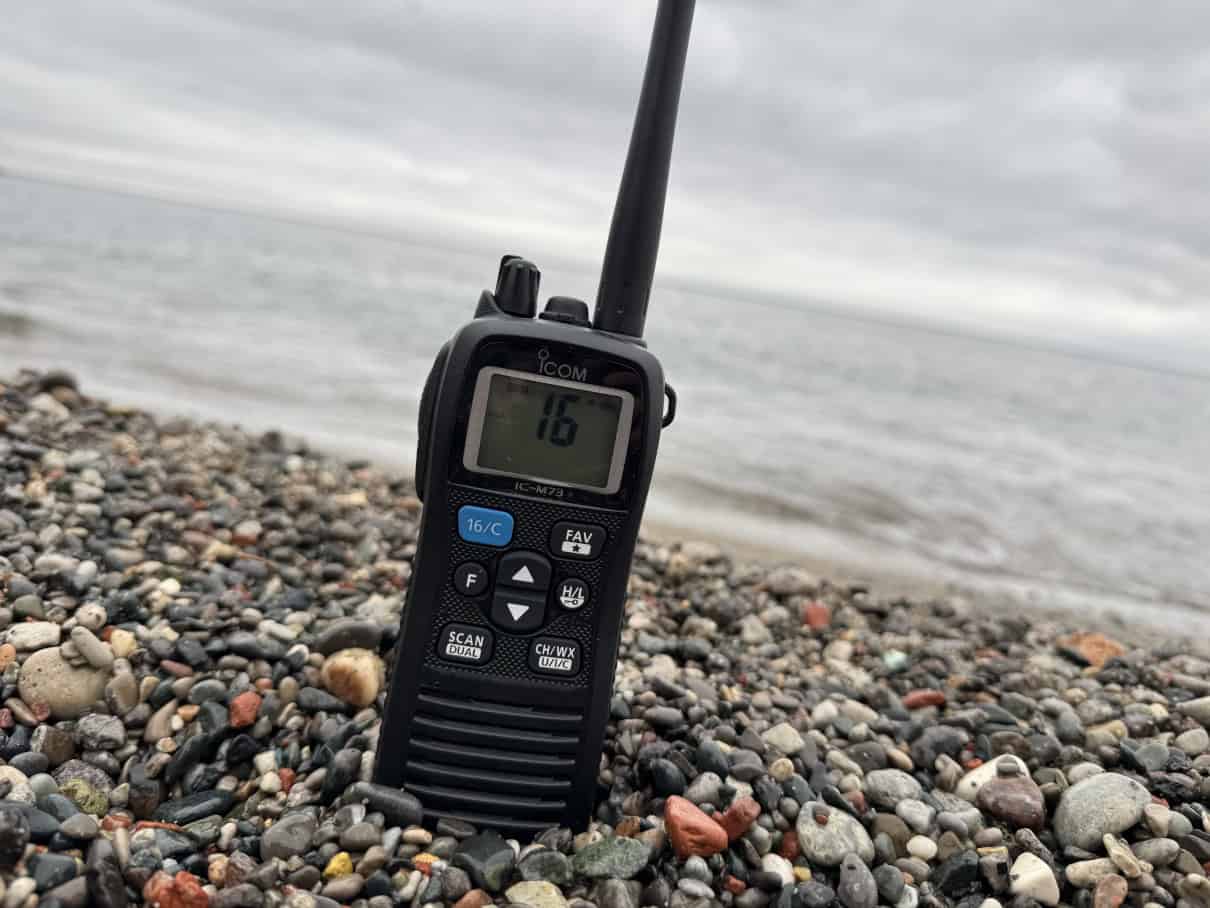
Icom M73
$249.95 USD
Buy from:
Why I love it
The Icom M73 is rated IPX8, meaning it’s been tested to function after being submersed to a depth of 1.5 m for up to 30 minutes. What’s more, it features “AquaQuake” — aptly named technology that drains moisture from the speaker grill, so you can get the most out of the unit’s powerful 700 milliwatt audio. If that’s not enough reassurance, the Icom M73 boasts a solid three-year warranty.
From a performance standpoint, the M73 (known as the M73E in Europe) is also the most comfortable to hold, with keys that respond to gloved fingers and instant access to Channel 16— the general hailing and distress frequency. The push buttons are easier to understand and more logical to use than some of the other radios we tested. The slim and sturdy unit fits in the pockets of most PFDs. The power on/off function is a simple twist knob that doubles as the volume adjustment, and the battery lasts about 18 hours on a charge.
Reasons to buy
- Easy to use right out of the box
- Solid construction and reliable waterproofing
- Slim and compact
Consider another if
- You want a floating radio
- Need a budget-friendly option
Bottom line
The Icom M73 is a well-made and reliably waterproof marine radio.
Most User-Friendly VHF Radio
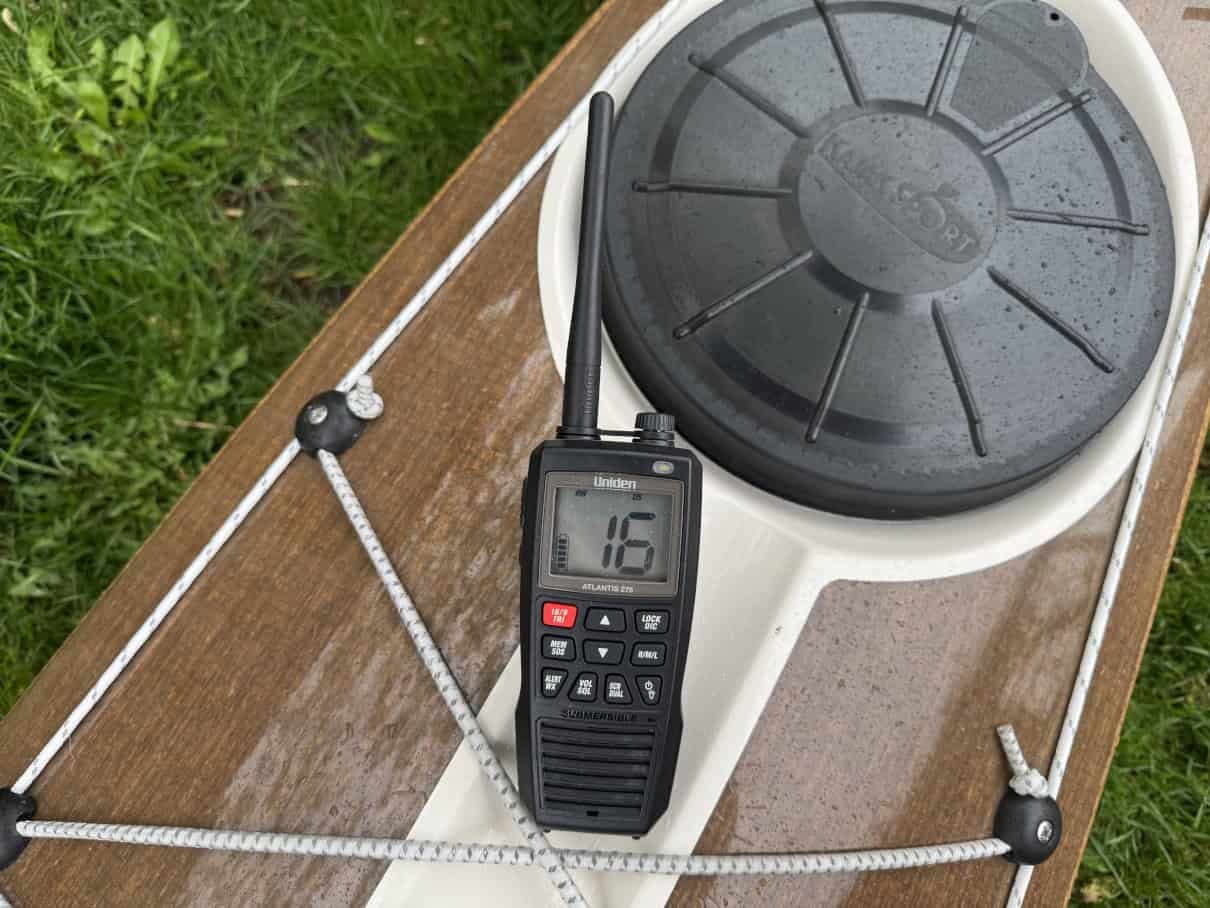
Uniden Atlantis 275
$139.99 USD
Buy from:
Why I love it
The Uniden Atlantis 275 is a practical, easy-to-use marine radio with the largest, backlit LCD screen of the models we tested. It also has solid, waterproof performance. It floats and was one of the most waterproof of all the VHF radios we tested. Tri-channel mode allows you to , simultaneously monitor the typical hailing channels (9 and 16), as well as one other working channel.
While some other VHF radios offer low and high settings only, the Atlantis 275 includes 1-, 2.5- and 6W transmission modes. Selecting medium power allows you to save battery in certain situations. Other convenient features include a built-in flashlight that doubles as a strobe in emergency situations.
Reasons to buy
- Floating, with enhanced IPX8 waterproof rating (submersed to a depth of 1.5 m for up to 30 minutes)
- 6W maximum power offers extended calling range
- Powerful lithium-ion battery
Consider another if
- You need larger buttons
Bottom line
The Uniden Atlantis 275 has plenty of features and reliable performance in a user-friendly package.
Most Compact VHF Radio
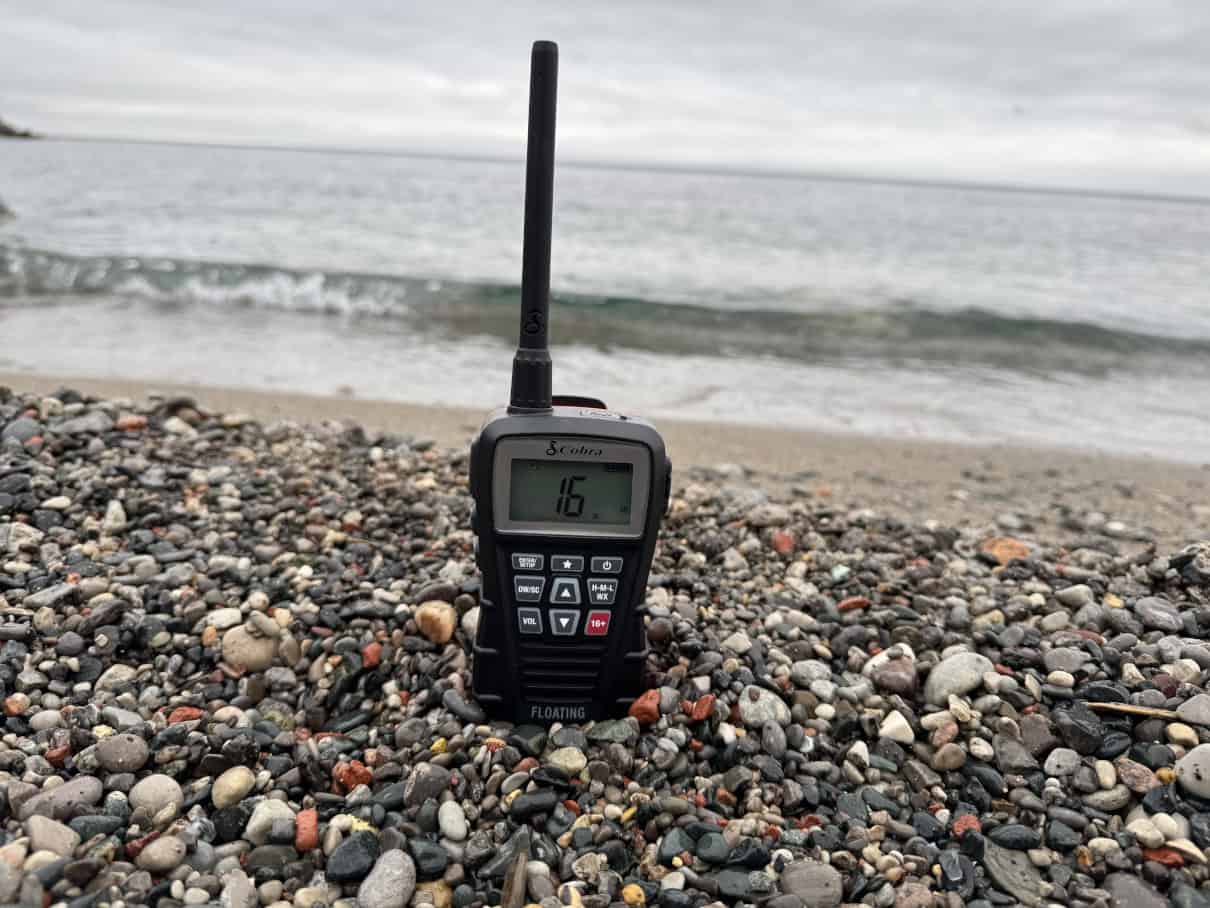
Cobra BlueBound 150
$99.95 USD
Buy from:
ACADEMY SPORTS AMAZON BASS PRO COBRA
Why I love it
The compact, waterproof and floating Cobra BlueBound 150 slips easily into most PFD pockets, so it’s easy to carry without investing in a new guide-grade life vest. The unit is powered by five rechargeable NiMH batteries, and It’s the only radio in our test that’s rechargeable via USB. However, battery life is only around 11 hours. The BlueBound 150 has the cheapest price tag in our test, and as you’d expect it feels more plasticky compared to higher-end models. However, it’s still IPX6 waterproof (submersed to 1 m for up to 30 minutes) and it floats. The BlueBound 150 is also simple to use, with an intuitive array of push buttons that are easy to learn.
Reasons to buy
- The only radio in our test that’s rechargeable by USB
- Great price
Consider another if
- Seeking higher watt power for longer range
- Battery life is one of your top priorities
Bottom line
Cobra’s Bluebound 150 is a great choice for casual users looking for a compact, waterproof VHF radio that’s easy to charge.
What to consider when buying a VHF radio
As with anything tech-related, you get what you pay for with a VHF, which stands for very high frequency radio. It’s worth spending a little extra to buy from a reputable marine manufacturer, including all the brands listed here, rather than ordering a discount knock-off.
Look for a unit with a lithium (ion or polymer) battery as well as a robust Ingress Protection Standard (IP) waterproof rating. It’s also important to understand the technical specifications—and limitations—of VHF radios for kayakers. There’s a tradeoff between the portability of a handheld marine radio and the more powerful units, also known as “fixed-mount” marine radios, designed for larger pleasure craft and commercial vessels, with much larger antennas.
Compact, handheld radios are restricted to line-of-sight communication, which can be substantial across open water. When using a radio on land, you can get far more transmission range by climbing to an elevated location to make a call. Most handheld units have dual power: 1-watt and 5- or 6-watt. Some feature a medium-power setting. When making a call, use the low power setting for communication at close range (typically within a few miles) and high power if you’re trying to communicate with a vessel (or the Coast Guard) farther away. Repeater towers in marine areas broaden the calling range considerably, even when using a handheld unit.
Finally, licenses are not required to operate a handheld VHF in the United States. The circumstances are different in Canada. Though it’s rarely enforced, VHF marine radio users in Canada are obligated to have a Restricted Operator’s Certification (Maritime). It’s well worth studying the material and taking the test to obtain a license to ensure you understand communication protocol and the legal ramifications of using a VHF marine radio. You do not need a VHF marine radio address license (that is, a permit for your vessel) for recreational boats.
Best VHF radio brands
How we tested
I’ve worked as a sea kayak and canoe guide, outdoor educator and environmental journalist for over 20 years. Understanding how to use a VHF radio effectively and which available models are worth the investment are essential to what I do. The models included in this article were tested side-by-side with the conditions and needs I’ve experienced over the years in mind.
 This article was published in Issue 76 of Paddling Magazine.
 VHF (Very High Frequency) radios allow paddlers to communicate directly with nearby vessels, marinas and the Coast Guard. | Feature photo: Kaydi Pyette