Contrary to any fantasies of paddling being a tropical experience on a daily basis, the reality for most of us is that for the majority of the year, canoeing, kayaking, standup paddleboarding and rafting take place on cold water.
If you’re wondering if this includes you, consider the fact the National Center for Cold Water Safety defines cold water as below 70 degrees Fahrenheit (21 Celsius). This means keeping the board shorts and sun shirts folded away most seasons in exchange for donning thermal protective apparel. In what is described as very cold water below 60 degrees, we are most certainly talking drysuits and wetsuits.
Knowing you should wear a wetsuit or drysuit in cold water is perhaps the easy part. Deciding which to invest in is trickier. Here are a few fundamentals paddlers should know before choosing between the two.
What wetsuits and drysuits accomplish
In paddling, we don’t dress for the air temperature alone, but for the very real possibility of immersion. While you may be able to stand outside in a T-shirt on a sunny 60-degree day for hours with little more than the occasional chill, being immersed in cold water is not the same. Cold water transfers heat away from your body 26 times faster than air, creating accelerated conditions for medical emergencies, including hypothermia.
In water around 60 degrees Fahrenheit (15.5 Celsius) or less, you may experience cold shock immediately, including rapid, uncontrolled breathing. Within minutes, the cold can also impair your ability to think clearly and start to lose muscle control in your arms and legs, making it difficult to self-rescue—all well before hypothermia sets in.
Wetsuits and drysuits help prevent these issues by providing a barrier that keeps heat from transferring away from your body to the surrounding cold water. Just how each does so, though, is different.

How wetsuits work
Wetsuits are made of closed-cell materials, mostly neoprene, which is a thick rubber with tiny sealed gas bubbles throughout. The tiny air bubbles resist the transfer of heat between your body and the cold water. The thicker the wetsuit, the more gas bubbles and the greater its ability to do so. A five-millimeter wetsuit is more effective than a three-millimeter wetsuit, and manufacturers have guides to which products they recommend for what water temperatures.
It’s often said that a wetsuit keeps you warm by allowing water inside, but I like to think of it more that a wetsuit keeps you warm in spite of the fact it may get water inside. On a mellow day of SUP surfing or kayaking in a modern surf wetsuit that is tight-fitting and has welded seams, you could get little to no water in your suit and be rather toasty. At the end of many days of winter surfing calm conditions in a well-fitted suit, I’ve remarked just how dry I remained. What happens more often though, is that some water seeps in through the openings for your hands, feet and neck, and this small amount of water is trapped against you, warmed by your body with some effort, then trapped and insulated by the thick neoprene, and the film of warm water serves as an additional layer between you and the cold water outside the suit. If a wetsuit were in fact continually allowing cold water in, then it would be as if you were wearing no wetsuit at all, with cold water sapping your heat.
Pros of a wetsuit
One of the biggest advantages to a wetsuit is that you can buy a capable fullsuit (meaning full-length arms and legs) at around a quarter or third of the cost of a similar-tier drysuit. Though you can find annual deals on drysuits that bring them closer in cost.
Modern wetsuits are also made of reasonably flexible material compared to older iterations, allowing you to paddle and swim. During spring river guide training, we would spend days in rapids teaching our students how to swim whitewater, and I always appreciated the ability my surfing wetsuit allowed me to wield freestyle strokes in order to make ferries and catch eddies without a boat.
Most wetsuits these days also feature construction like welded seams (meaning the stitching is sealed over) and, with a tight fit, allow little water in them outside of the occasional wave flushing your neck. The other nice thing about wetsuits is the fact that if you do get a little water inside, it is designed just for this and can warm the water. If the wetsuit gets a small tear while you are out, you still stand a chance at staying warm and, depending on the damage, keeping most water out. They are also generally repairable with patches and adhesives, and can last you a few years.
You could also say wetsuits are simple. With a fullsuit, it’s just one layer you need to pull yourself into.
Wetsuits are also available in more options than fullsuits. There are shorties and springsuits, which will have varying degrees of shorter legs and arms for warmer water conditions and to provide less coverage for freedom of movement. Similarly, “Farmer John” wetsuits have been a popular option for paddlers for years. They provide coverage to your legs and core, but are sleeveless. The big advantage here is comfort and freedom of movement, while still having a snug fit, and thermal protection to the areas most often facing splashing and immersion when paddling, portaging, wading, etc. If you are paddling in dangerously cold water however, these both leave large areas of skin without thermal protection and so don’t provide the same value as discussing a fullsuit or drysuit.
Lastly, the thick rubber also acts as padding, so if you fall off a paddleboard or out of a raft, and find yourself swimming over a small rapid, you have a little cushion between yourself and a river-rock massage.

Downsides to a wetsuit
One of the biggest downsides to a wetsuit is the fact that water can get inside. Since water transfers heat away from your body 26 times faster than air, getting any cold water contact creates a more uphill battle to remain warm.
With a wetsuit, evaporative cooling also tends to be more noticeable than with a drysuit. On a windy day, water held on the outside of the suit evaporates, and this transfer pulls heat away, cooling you down. There are two ways to prevent this. One is the construction of the wetsuit, and the use of smooth-skin neoprene as an outer shell on the core. Another way is what has always appeared like questionable fashion choices by paddlers but is actually rather helpful—wearing wind-resistant splash tops or bottoms.
Another downside to wetsuits are the need to replace them every few years. Seams, glues and stitches wear with use, and UV exposure breaks down neoprene. Then there is the biggest culprit that goes visually unnoticed—over time with use, those tiny air bubbles built into the material collapse, and the wetsuit loses its insulating value. If you’ve ever jumped into a rental wetsuit that is more than a couple of years old, it probably didn’t feel like it was providing much warmth, and this, along with fit or thickness, was likely why.
So even though a wetsuit has a lower upfront cost, you have to keep in mind you will need to cycle through them perhaps more often than a drysuit.
Lastly, climbing in and out of a wetsuit can feel like an endeavor. Even with experience, taking off a wetsuit can be a struggle.
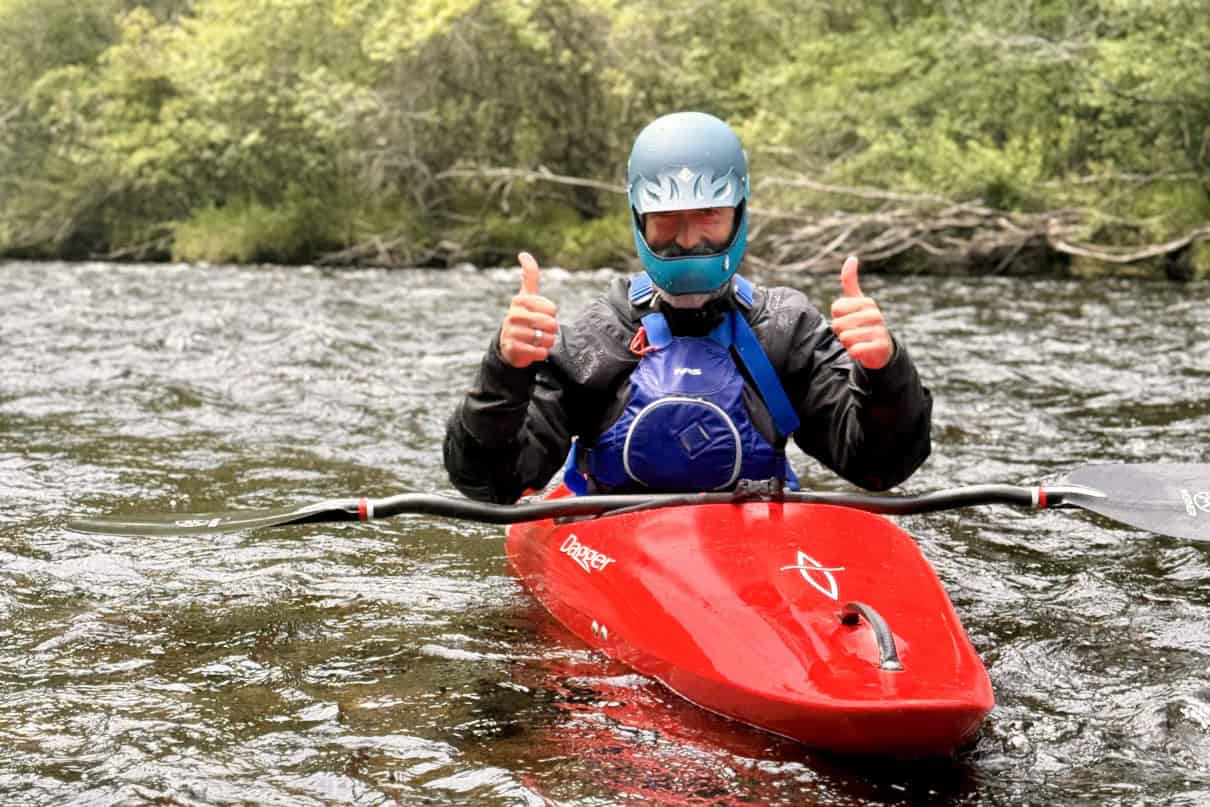
How drysuits work
Drysuits keep you warm by trapping air against your body and keeping the water outside of the suit. It’s much easier for your body to heat air surrounding it than water. Drysuits are constructed of multiple layers of technical materials in order to do so. This often looks like the lamination of three major components: an outer shell, a membrane material, and an inner liner against the paddler. The goal of a drysuit is to prevent any water at all from entering the suit. Outside of the main materials, this is also accomplished with the use of tight gaskets around any exit points—the neck, wrists, and feet. Similar to dressing for a winter hike or skiing, you layer within your drysuit based on how cold the conditions are. Each of these layers traps a small amount of air your body is able to warm, and the drysuit keeps from being transferred away from you.
Pros of a drysuit
The biggest advantage to a drysuit is that, as the name implies, it remains dry and traps air inside. This is much more efficient than a wetsuit at staying warm. If you are in truly cold conditions and layer properly, a drysuit will be most effective at keeping your body heat.
Dry is always better than any wetness when it comes to heat transfer, and there is also something to be said for being able to step out of your drysuit anytime and walk around camp in some dry, cozy base layers.
Another big plus to drysuits are that many come with relief zippers to use the restroom without taking it off completely, and even if they don’t, the entry zipper makes it reasonably accessible to climb out if needed.
One last big plus to drysuits is that they feel relatively mobile and natural while paddling or handling tasks around the launch or at camp. While it may feel bulky and cumbersome compared to wearing a sunshirt, there is little resistance for regular paddling tasks compared to a wetsuit that can feel like you are constantly using a resistance band.

Downsides to a drysuit
The biggest disadvantage to a drysuit is the fact that if a gasket is damaged or the drysuit is torn, it allows water to pour in and loses its value in keeping you warm. Proper care helps avoid this, but damage can happen in a moment. The flipside is that most issues can be repaired, including the water resistance of the outer shell, and a well-cared-for drysuit can last you years and years.
Drysuits can also be difficult to swim in. When you hit the water, the air inside rises, and it can feel like you’ve morphed into the Michelin Man as you swing your arms to make an eddy. This is fixable by “burping” the drysuit, which means letting a little air out of the neck gasket. But also take note that you are now letting the warm air out of your suit, and if you’ve ever let all of the air out of your drysuit while in the water, you’ve likely felt the cold sensation from the outer water hit you like a piece of vacuum-packed chicken thrown in the freezer.
Like a wetsuit, it’s not much fun climbing into a drysuit and pulling your head through the neck gasket, or back out. It’s hard to say which is more of a pain, but neither is ever described as a favorite experience.
Cost is of course the other factor that creates a hurdle in buying a drysuit. Most are currently around $1,000 USD and more. But if you plan to paddle often in cold water conditions, it is an investment that will pay itself off quickly and for years of paddling.

Choosing between a wetsuit vs drysuit?
Drysuits are generally the right choice for most paddling in cold water. The engineering of how they keep you warm with air inside the suit is far easier for your body and more comfortable. In an outdoor survival mindset, remaining dry will always beat being wet in cold conditions. If you are out for long outings, are on waters far from help, tackling multi-day trips, etc. a drysuit is generally the best way to go.
With that said, a wetsuit can be a reasonable and budget-friendly option for paddlers. Some even prefer wetsuits for certain types of paddling activities where you need to actively swim often (see Whitewater SUPing).
You can also pair a wetsuit around other gear to further increase its ability to keep you warm, and the cost can remain low compared to a drysuit. If you are on shorter day outings, close to help, and/or water temperatures are above 6o degrees, a wetsuit works well, and they’ve been used for paddlers for decades, especially at outfitters in need of options for folks at a reasonable cost.
Ultimately, whether you decide between a drysuit or wetsuit depends on the conditions you are paddling in and what you will have to endure in the worst-case scenario. Either is a better choice than neither once water temperatures are below 70 degrees Fahrenheit, and especially in waters 60 degrees and below.
Feature Image: Justine Albright