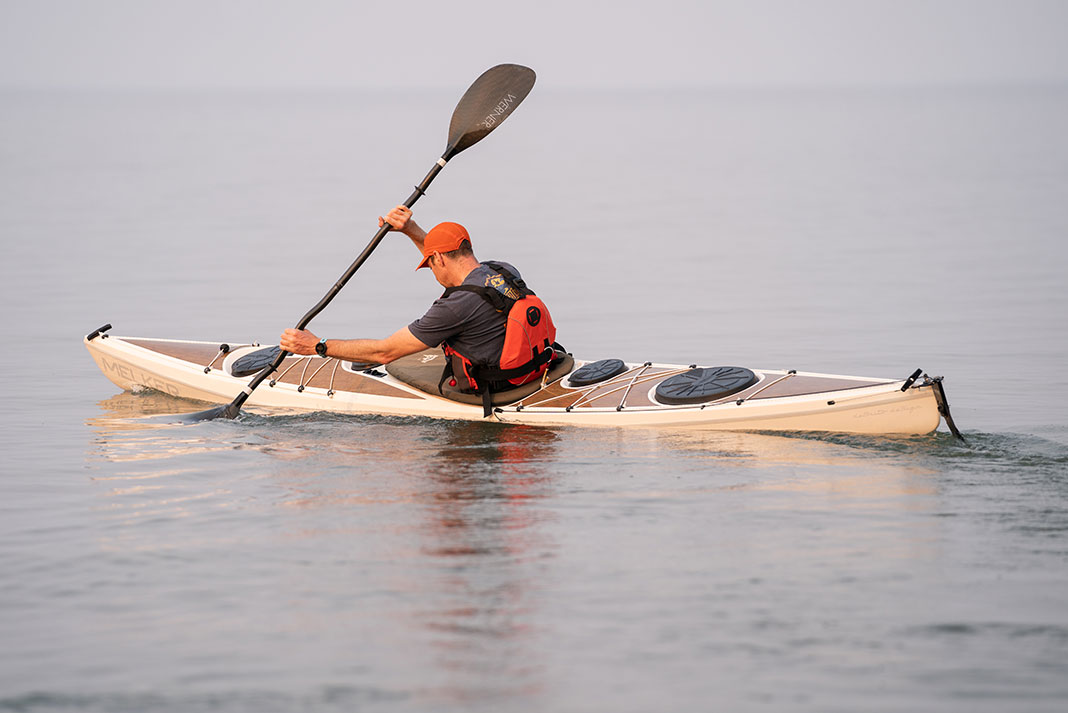
Fair warning: This Melker kayak may not be for you if your preference is to get to the launch and slip into the water without a word. This kayak turns heads. Every passerby has a compliment, then a question—or two, or three.
Simply standing beside this Swedish beauty elevates your status from mere paddler to something between brand ambassador and fine art curator. You’ll find yourself discussing the sustainability of bio-based composites and the aesthetics of Scandinavian design before taking your first stroke.
Intrigued? Consider this review your CliffsNotes.
Kayak Review: Melker Värmdö
Melker Värmdö HV Cork-Core Specs
Length: 14’6”
Width: 24.5”
Weight: 42 lbs
Optimal Paddler Weight: 165-265 lbs
MSRP: $6,999 CAD
melkerofsweden.se
Founded in 2015, Melker of Sweden draws inspiration from the country’s Stockholm Archipelago, where world-class kayak touring—and an appetite for handcrafted, performance-driven touring kayaks—is alive and well.
The Värmdö is Melker’s entry into the light touring and recreational market. Debuting the company’s latest innovations in plant-based construction, the Värmdö earned Paddling Magazine’s Industry Award for best touring kayak in 2024, as voted on by more than 26,000 paddlers. It also took home the sea kayaking Product of the Year Award at the 2025 Paddle Sports Show in France. It’s available in two sizes—a 13.5-foot LV for smaller paddlers, and a 14.5-foot HV for midsized and larger paddlers.
Eco-conscious materials
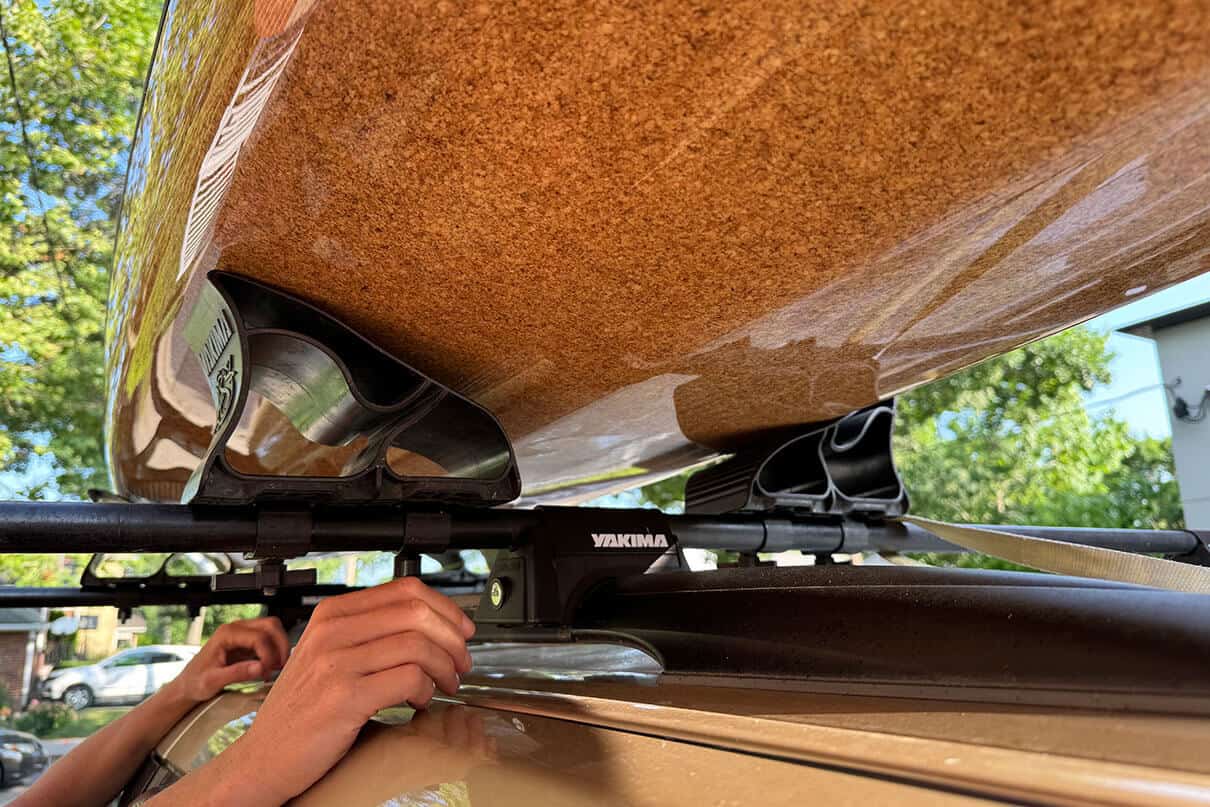
Melker offers the Värmdö in two layup options. Trad-Core sandwiches recycled PET plastic bottles and a flax-fiber deck that resembles teak between traditional epoxy and gelcoat. Cork-Core is a premium ultralight layup produced with sustainably harvested bark of cork oak trees, a flax deck, and plant-based resins and clear coat. Both layups are infusion-molded at Melker’s partner facility in Sri Lanka (the same factory where Norse Kayaks are built), producing kayaks that are lightweight yet stiff and durable.
When I unwrap Paddling Magazine’s demo Värmdö HV Cork-Core kayak, I’m entranced by the deep lustre and warm woodiness of the natural fibers. There’s no doubt it’s an exquisitely beautiful kayak. For many, that reason alone will be enough to justify the price (Cork-Core commands a $1,200 premium compared to Trad-Core).
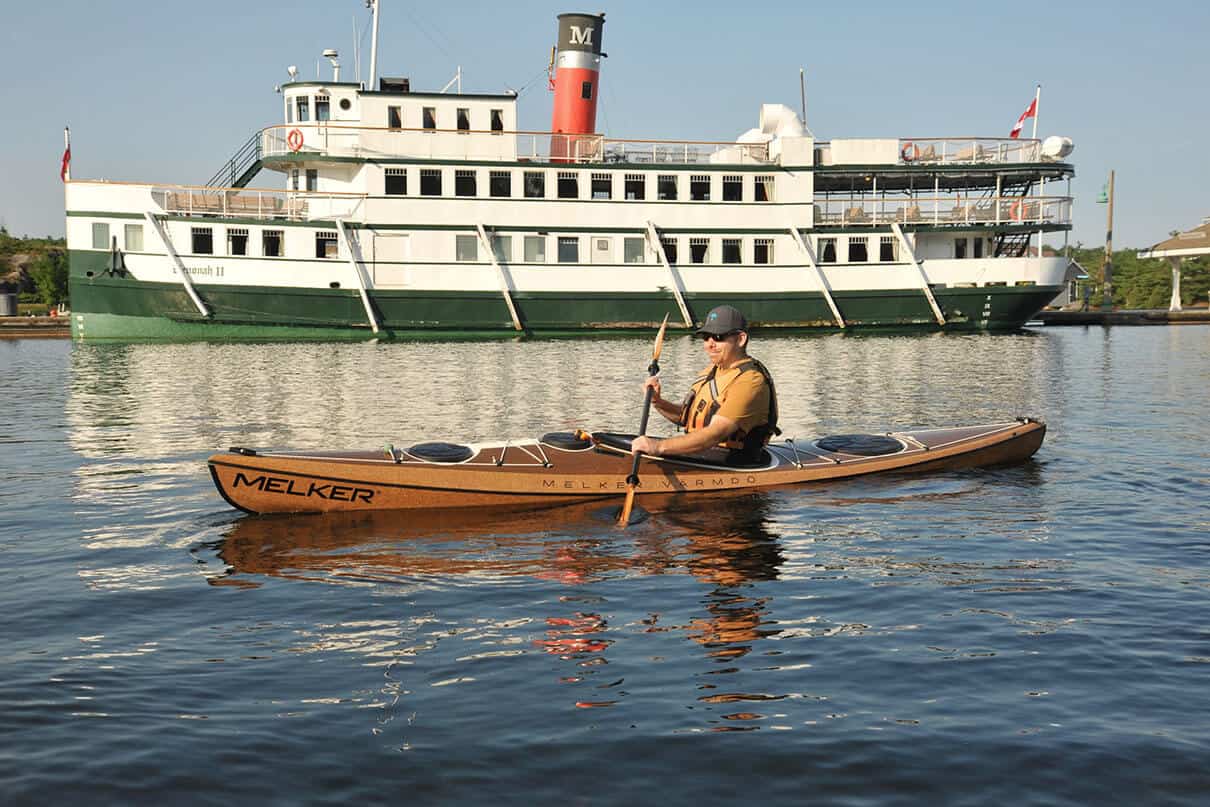
But there’s also the satisfaction that comes from spending your money on a kayak that aligns with your values. As paddlers, we care about the environment—healthy waters, wetlands and forests are vital to our collective future. Developing sustainable materials and environmentally conscious production practices are at the core of Melker’s mission.
Sustainable design considers the product’s lifecycle. According to Melker, the Cork-Core construction is as durable as traditional composites and readily repairable if an impact causes damage. At the end of its useful life, the kayak can be converted into biofuel or compost.
On the water
When Paddling Magazine editor-at-large Tim Shuff reviewed Melker’s sister kayaks—the performance touring Ulvön and expedition-ready Rödlöga—he was surprised by their playful versatility. At 17’4” and 16’7”, respectively, these svelte boats are built for speed and distance.
“I learned Northern Europe has become a hotbed of kayak innovation,” writes Shuff, “where the stubby recreational kayak trend never blitzed the market like it did here and 80 percent of kayaks sold for exploring those brisk boreal coastlines are still serious, full-size touring boats.”
Enter the Värmdö. Recognizing the demand from international paddlers for a scaled-down, featherweight performance kayak for day touring, Melker positions the Värmdö as “a really comfy and playful light touring and recreational kayak.” It’s an apt description for a compact yet spacious kayak that welcomes newer paddlers with inviting initial stability and rewards more experienced pilots with playful agility on edge.
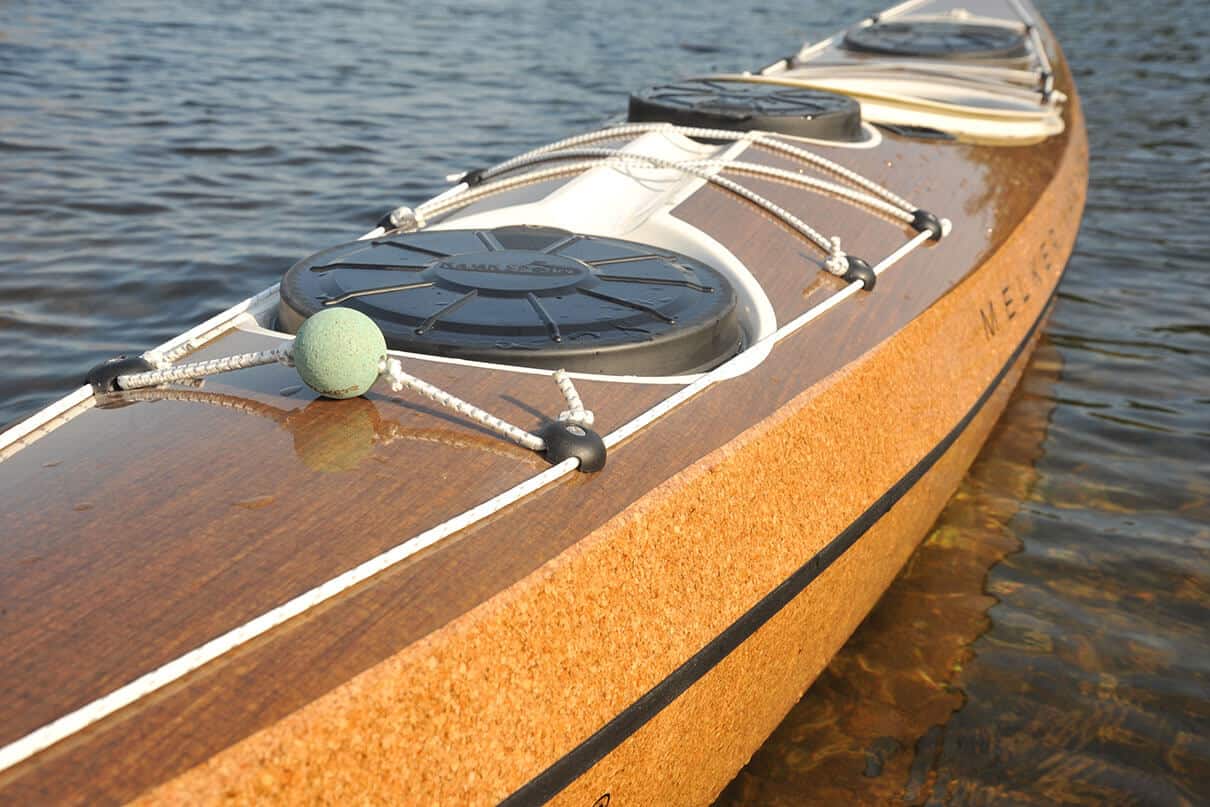
After reading that the Värmdö was “sleek, forgiving and stable for new paddlers to learn,” with “endless play time for surf, rolling, carving and rock gardening,” I’ll admit to being skeptical. On paper, the specifications align with a comfortable beginner boat, not something you’d expect to find zipping between rocks and bongo-sliding beach breaks. But after excusing myself from the aforementioned admirers and pulling away into open water, I quickly discovered the well-mannered Värmdö is more than it seems. It takes some coaxing to get there, but edging the Värmdö onto its moderately hard chine unlocks playful pivots, carved turns and predictable bracing and rolling.
Flatwater paddling is a pleasure, with quick acceleration and glide for all-day touring. The adjustable skeg makes it easy to fine-tune tracking, and the Värmdö comes rudder-ready, although it handles waves and wind just fine without one.
Tripping capacity
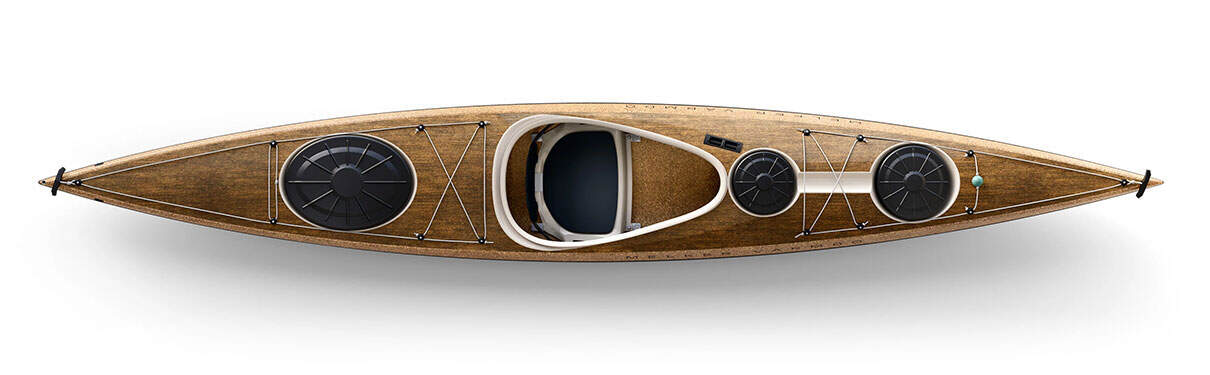
When it comes to trip-worthiness, Melker says the Värmdö “packs well enough for your light overnight adventures.” With 200 liters of dry storage, I have to echo Shuff, who wrote of the Rödlöga, “The Swedes must be more into glamping, because I packed for an overnight and had loads of room to spare… you could easily check out of civilization for a week.”
For any paddler looking for a composite light touring kayak that is easy to maneuver on and off the water, the Värmdö is a playful all-arounder that’s capable in all conditions. It’s also one of the most beautiful and eco-friendly kayaks ever built. As you’ll become accustomed to explaining to your many admirers, should you make one yours.
Watch Melker Värmdö first look:
 This article was published in Issue 75 of Paddling Magazine.
 Melker’s Värmdö combines head-turning design with confidence-inspiring handling. | Feature photo: Virginia Marshall