Whether you’re a canoeist, kayaker or paddleboarder, headed out for a multi-day trip or an afternoon jaunt, keeping your belongings dry matters. It’s not just about having dry socks to change into or keeping your car FOB from getting fried; it’s also a matter of safety. Having a dry change of clothes, sleeping bag or even just an extra layer can make all the difference if things go awry.
Dry bags come in all shapes and sizes, from 3 liters to 117 liters and larger, and with different levels of water protection—from water-resistant to totally submersible. Then there are differences in price, durability and features. The trick is matching the right dry bag to the adventure you have planned.
The Paddling Mag team has spent years field-testing dry bags on canoeing, kayaking, paddleboarding and even bikepacking adventures, from the coast of British Columbia to Baja and Patagonia. Many dry bags featured here have been pulled from our editors’ kits. We have used them for years, beaten them up, bought multiples, and even purchased second and third generations of the same bag. Above all, the dry bags on this list had to be reliable.
The dry bag market has grown into a crowded field, and our favorites selected here represent just a portion of worthwhile bags available today. See below for our picks for the best dry bags, along with advice for choosing the right one for how and where you paddle.
Best dry bags: Our top picks
- Best dry bag overall: Sea to Summit Big River Bag 20L
- Best value for kayakers: SealLine Discovery 10L
- Best duffel-style dry bag: NRS Expedition DriDuffel 35L
- Best dry bag backpack: Yeti Panga 28L
Best overall
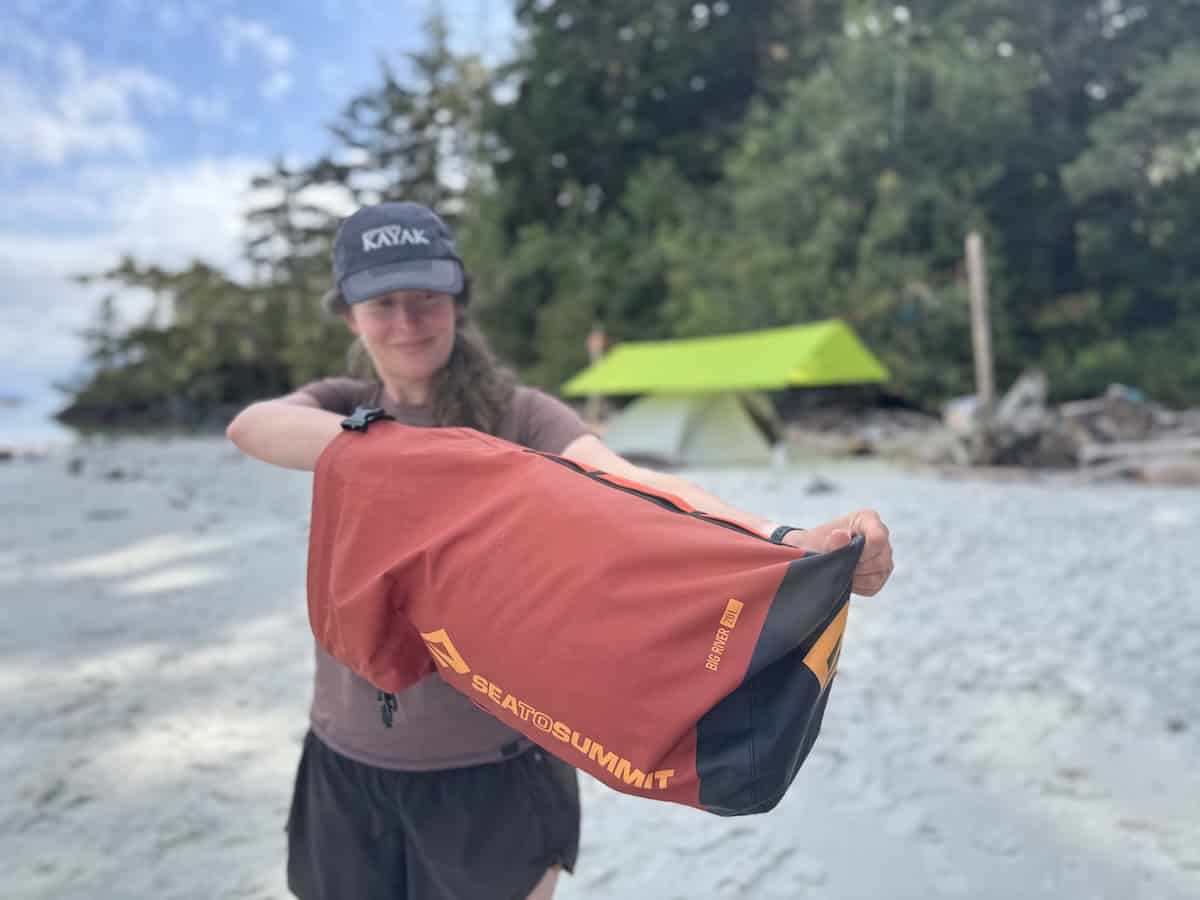
Sea to Summit Big River Bag 20L
$54.95 USD | seatosummit.com
Buy from:
SEA TO SUMMIT AMAZON REI DICK’S
Why we love it
A super tough dry bag but with fabric flexible enough to easily stuff into kayak hatches, the Sea to Summit Big River Dry Bag is a top performer and offers trusted protection for gear that can’t get wet. In my most recent field test, I used a squashed-down 20-liter model for my zero-degree synthetic sleeping bag and a 10-liter version for clothes in a leaky kayak hatch for two weeks during a wet coastal sea kayaking route. Everything stayed bone dry.
Unique to the Big River, I love that the mouth of the bag is slightly wider than the base, which makes stuffing easier. I also appreciate the white interior of the bag, which brightens the inside making it easier to find items inside. The Big River has beefy lash loops for mounting to kayaks, rafts, bikes and motorcycles. Sea to Summit advises against prolonged submersion since water can seep through the roll-top closure, but this caveat applies to all waterproof roll-top bags.
Available in 5, 8, 13, 20, 35 and 65 liters, the Big River is too heavy-duty for the average backpacker, but perfect for paddlers. An attachable sling is sold separately, which we did not test.
Reasons to buy
- 420D ripstop nylon and double-stitched, tape-sealed seams
- Roll-top closure does not wick moisture
- White interior makes it easy to find gear
- Excellent waterproof protection for wet trips
- Multiple rigging options thanks to beefy lash loops
Consider another if
- You are looking for lightweight protection
- You plan on placing your dry bag inside another waterproof bag, like the MEC Slogg or NRS Expedition Driduffle
- For easy carrying on the trail, try the Sea to Summit Big River Backpack
Bottom line
Top-notch, heavy-duty protection for wet conditions, but it comes at a bit of a higher price than budget bags.
Best value for kayakers
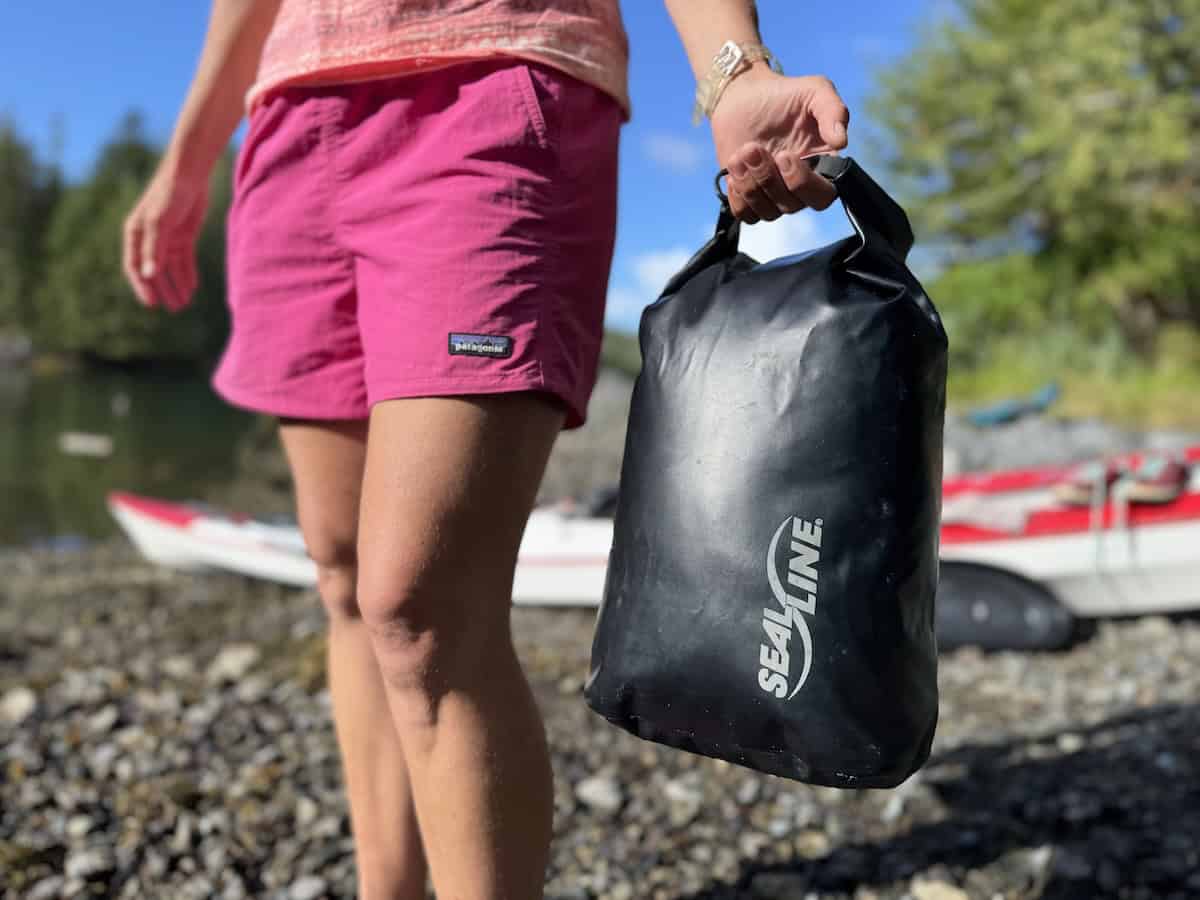
SealLine Discovery Dry Bag 10L
$39.95 USD | cascadedesigns.com
Buy from:
Why we love it
Coming in at under $40 for a 10-liter dry bag, the roll-top SealLine Discovery offers reliable waterproof protection with fully welded seams at an excellent price. There have been several iterations of the model over the years, but the Discovery has remained a staple in the kits of our long-term testers, with bags lasting years and editors buying multiple sizes and colors. SealLine is known for making some of the highest-quality dry bags on the market, and it’s not uncommon to hear kayakers claim these are the best dry bags they’ve ever owned.
The polyurethane-coated polyester construction is available in 5-, 10-, 20- and 30-liter sizes. The 5- and 10-liter sizes are easily stuffed into even round kayak hatches. The Discovery is minimalist, so expect no extra features or frills, just solid construction and protection.
Reasons to buy
- Great value for proven performance
- Ultra-durable
- Made in Reno, Nevada
Consider another if
- You need lash points (see the Sea to Summit Big River Dry Bag)
- You need a bag designed for prolonged submersion
- You want backpack straps or other carrying options
Bottom line
There are lighter and cheaper options, but the Discovery delivers reliable performance and durability at an intersection with excellent value.
Best ultralight dry sack
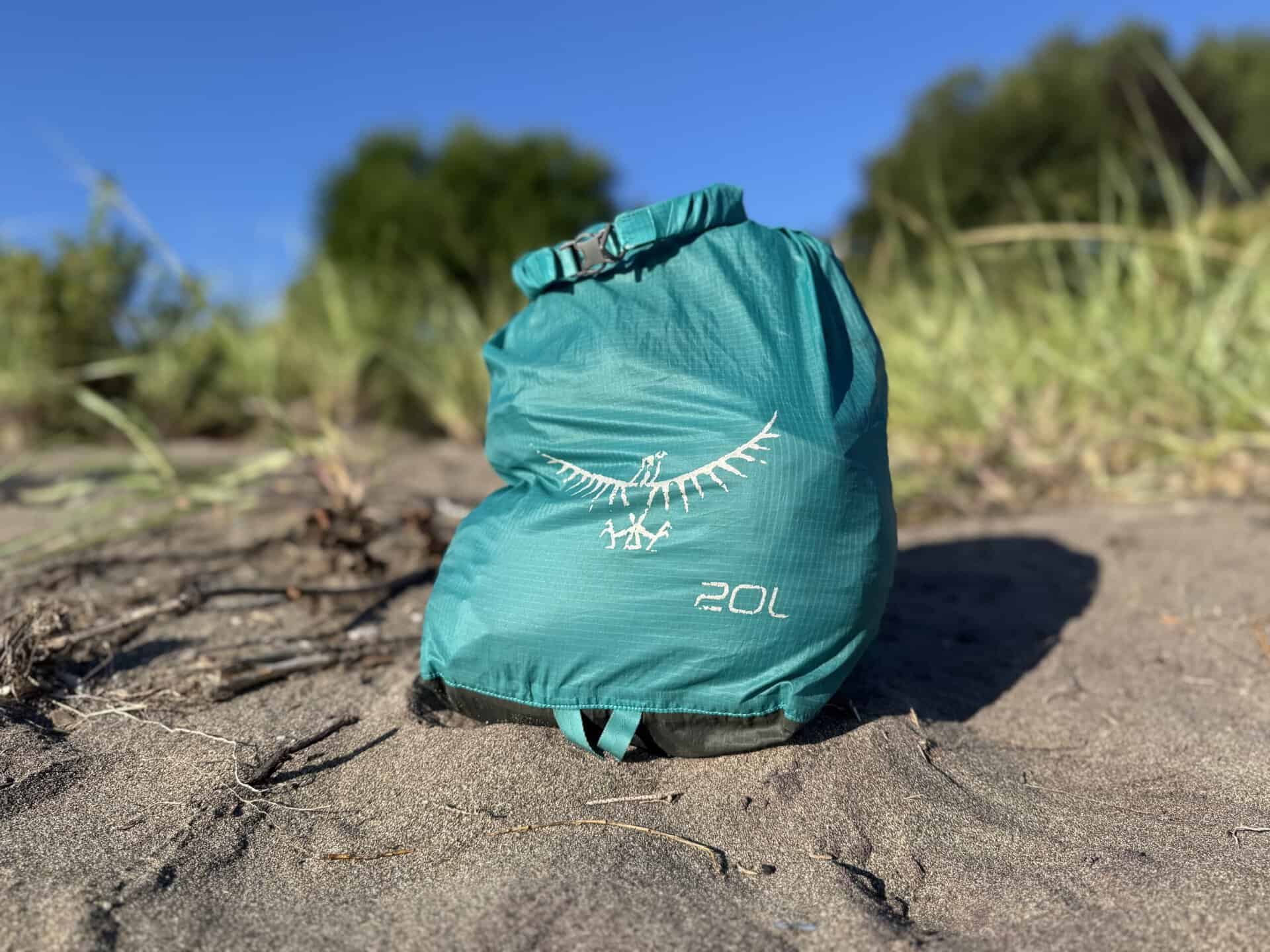
Osprey Ultralight Dry Sack 20L
$30.00 USD | osprey.com
Buy from:
Why we love it
This roll-top stuff sack lives up to its name and weighs an impressively airy 1.6 ounces. The thin sil-nylon material of the Osprey Ultralight is water-resistant rather than waterproof, and it’s meant to be used as part of a system. Designed to be kept inside another bag, like the MEC Slogg (reviewed below), the NRS Bill’s Bag or a hiking backpack or bike pannier, it provides secondary water protection as well as keeps gear organized.
Its IPX5 water-resistance rating makes it best suited to protecting against showers and spray, rather than a dunking. But don’t make the mistake of assuming this bag is delicate—it’s been my go-to for organizing clothes and other gear on canoeing trips and bikepacking adventures for years. It’s available in five volumes (3, 6, 12, 20 and 35 liters) and different colors for easy color coding, plus the flat-bottomed rectangular design makes packing it within a larger waterproof backpack easy.
Reasons to buy
- Lightweight and crushes down to stow away when empty
- Protection from light rain and spray
- Most useful as part of an organizational system and secondary protection
Consider another if
- Your gear could get soaked or submerged
- You need a waterproof dry bag
- You plan to lash your dry bag directly to a kayak or raft or board
Bottom line
The water-repelling fabric and roll-top design offers some protection from the elements, but where the Osprey Ultralight Dry Bag really shines is as part of a waterproof system on trip.
Best duffel dry bag
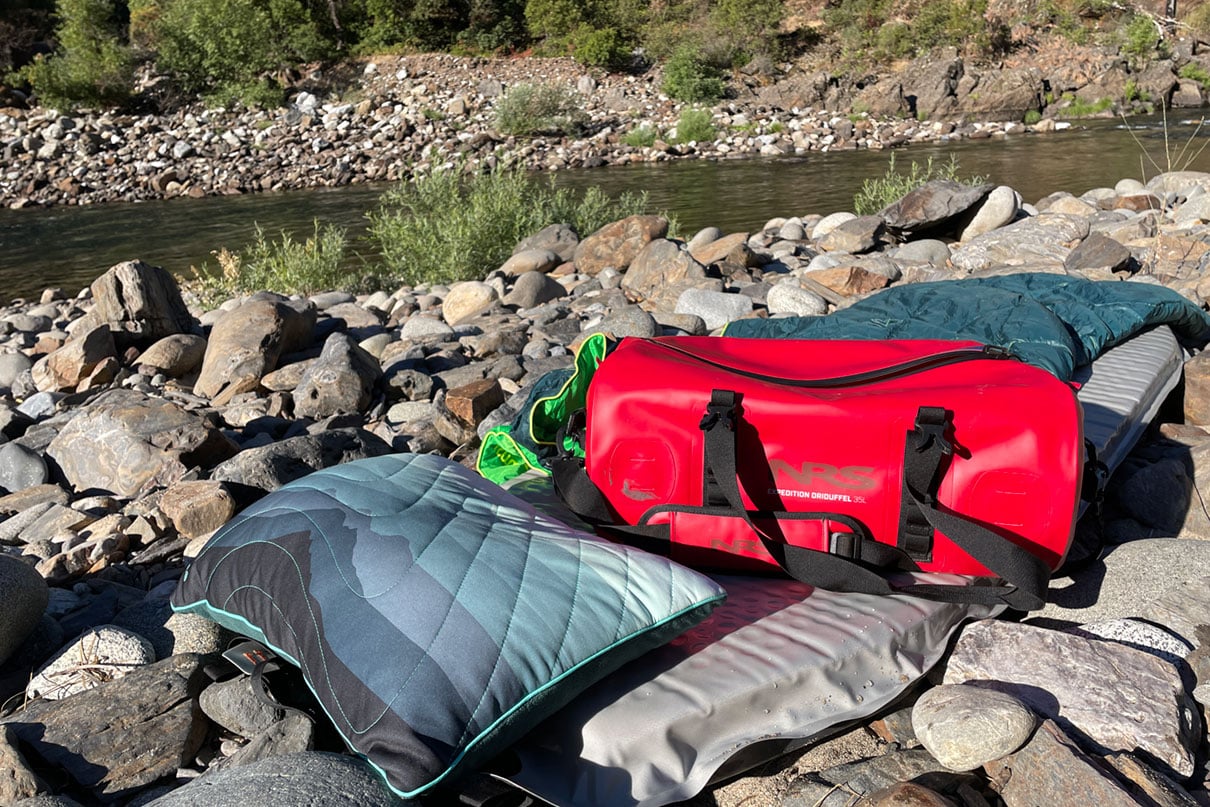
NRS Expedition DriDuffel 35L
$299.95 USD | nrs.com
Buy from:
Why we love it
The Expedition DriDuffel is a 12- by 20-inch fully submersible duffel-style dry bag from NRS built for multiday river trips. Editor Joe Potoczak loves this burly bag’s easy-access wide mouth, and its waterproof TRU Zip zipper and heavy-duty TPU-coated nylon keep gear bone dry. “The DriDuffel can fit enough personal gear to be close to the only bag I need on a single-night summer trip,” he says. “The elongated shape is perfect for stuffing into a kayak, and I’ve carried it in my Cetus for local trips on the Willamette River as well as packed it into my Stinger to self-support on the lower Deschutes.”
Integrated webbing chains offer multiple attachment points, and the shoulder strap and dual haul handles offer easy-carry options. Also available in 12-, 70- and 105-liter options.
Reasons to buy
- Toothless zipper provides a submersible seal
- TPU-coated nylon offers heavy-duty PVC alternative
- Wide opening makes gear easier to find than a roll-top
- Shape and exterior webbing allow for secure storage on river trips
Consider another if
- You prefer a roll-top or seam seal style opening
- Need a backpack-style dry bag for portages or travel
- Budget-friendly outweighs performance in priorities
Bottom line
The easy to access duffel-style of the Expedition DriDuffel will quickly make it your go-to bag on river trips.
Best for paddling photographers
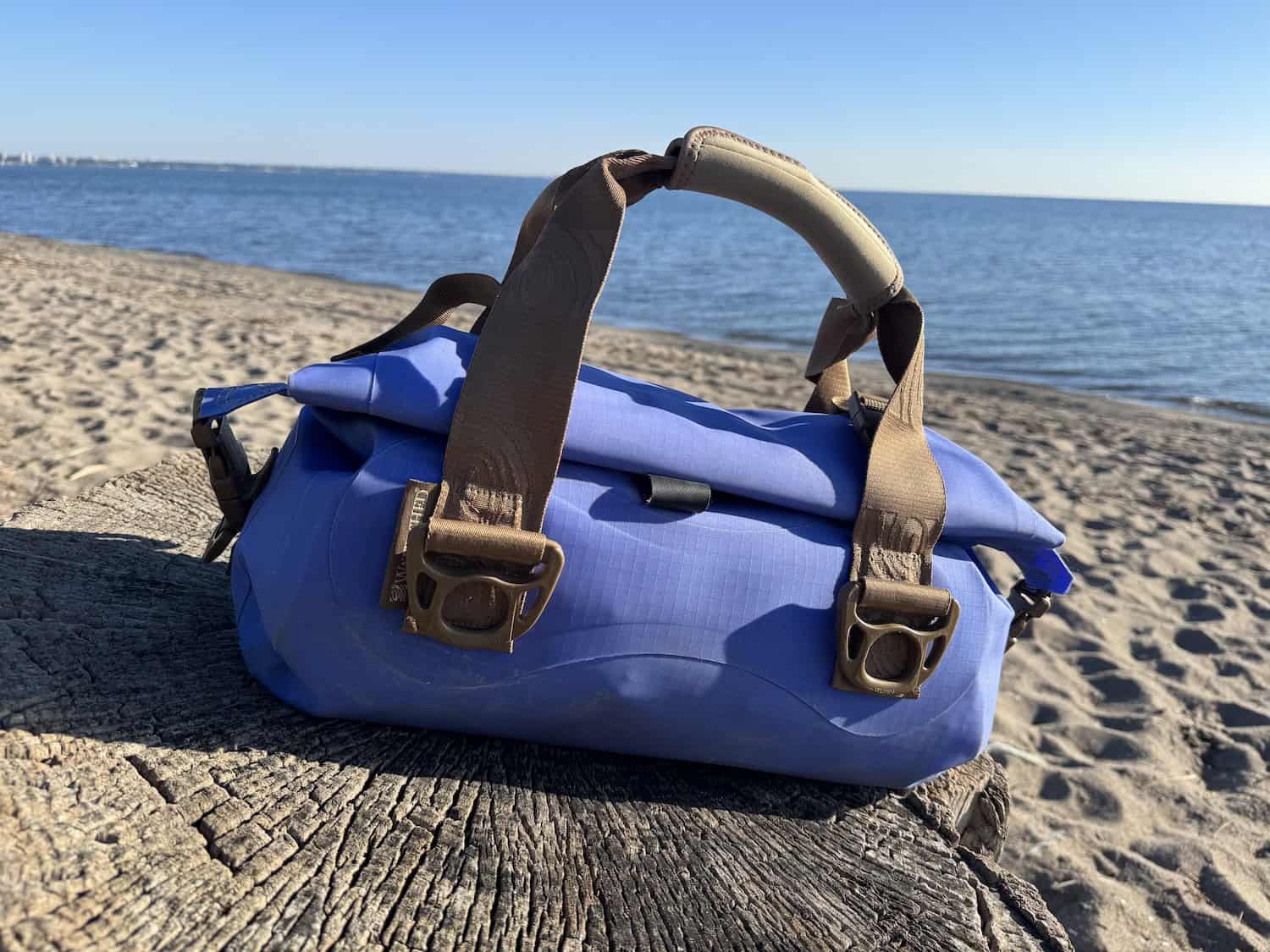
Watershed Ocoee
$167.00 USD | drybags.com
Buy from:
Why we love it
The stout 10.5-liter Ocoee has long been the dry bag of choice for camera gear on Paddling Magazine editorial trips. It fits tidily inside a hatch, in the cockpit, or under the seat of an oar rig or canoe seat. This impenetrable design lives up to its claim of being a 100-percent waterproof and submersible bag thanks to its ZipDry seal, which looks like a giant Ziploc seam running across its top. The big mouth on this bag makes accessing contents easy, though it takes two hands to open. The Ocoee has the added option of a purge valve (add $35), and bag specific padded liner and internal dividers to protect your gear further. This bomber construction is surprisingly lightweight at just over a pound. It also features burly lash-down points and a comfortable handle for toting around. Worth the investment for avid paddlers. And if the Ocoee is not large enough? Watershed makes similar dry bags in 22-, 54-, 70- and 111-liter volumes.
Reasons to buy
- Small size fits well in kayaks or as a personal dry bag on river trips
- Carry handle and multiple lash points
- Combination of ZipDry seam and roll-top
- Options for padded liner and internal dividers
Consider another if
- You prefer a zipper-style closure or roll-top alone
- You want a backpack-style dry bag for portages and travel
- Budget-friendly outweighs performance in your priorities
Bottom line
Watershed’s duffels have long been the dry bags kayakers have trusted to keep expensive camera gear safe.
Best dry bag backpack
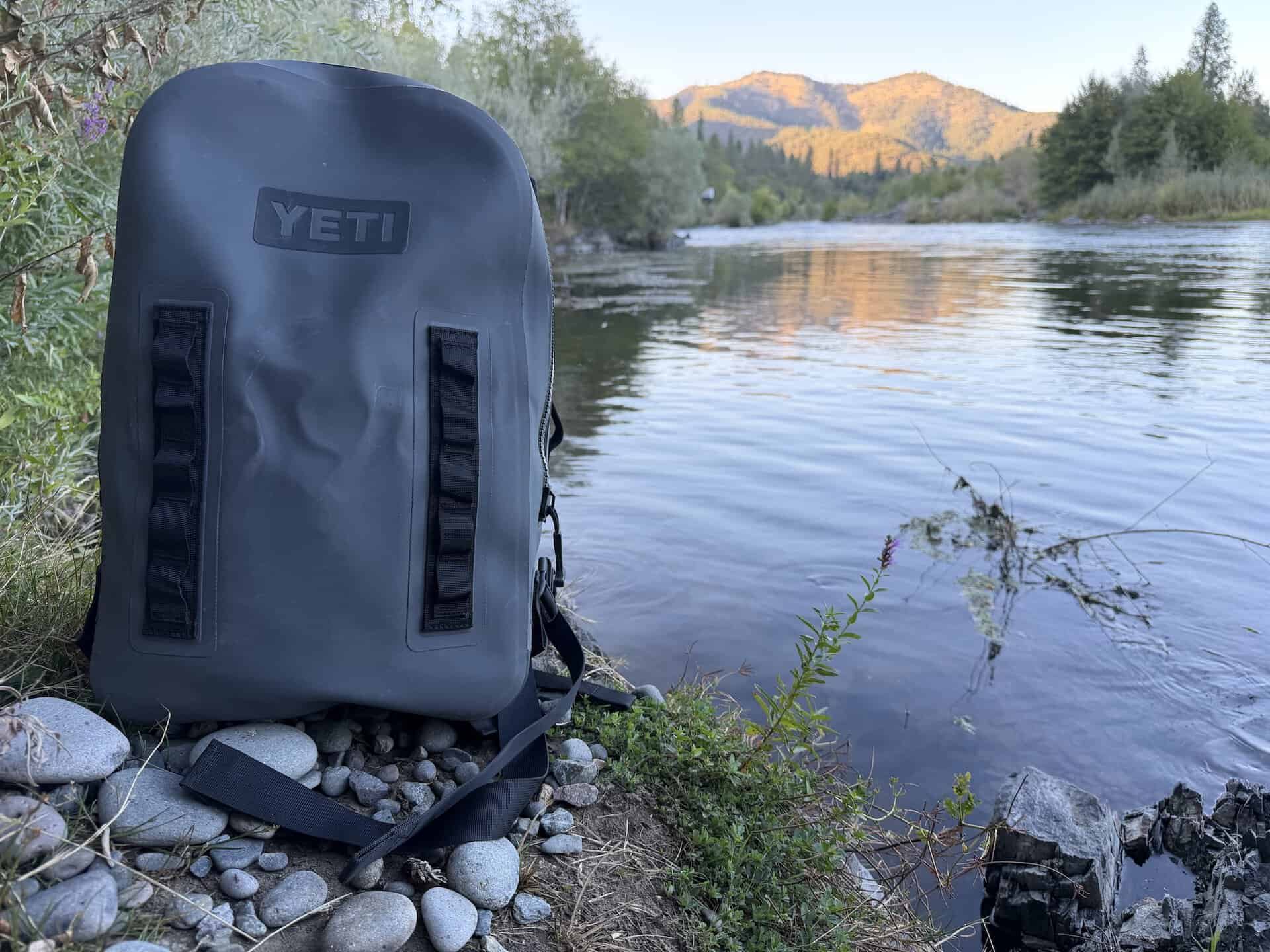
Yeti Panga 28L
$325.00 USD | yeti.com
Buy from:
Why we love it
Bombproof durability meets designer backpack. The submersible Panga 28 is a backpack-style of dry bag and our top pick for the best waterproof backpack. This watertight fortress from Yeti is as suited for wet and rough adventures as it is for a travel carry-on. Put my camera equipment or a laptop in the Panga and set off in a monsoon, and I would have no worries. It boasts a huge interior, internal laptop sleeve and mesh pocket to keep small items organized, and plenty of attachment points on the exterior, as well as three grab handles. The waist belt and chest strap are a nice touch. All that waterproof protection weighs four pounds empty, so lightweight adventurers should look elsewhere. The Panga is not a cooler, but for the price it would be cooler if it was.
Reasons to buy
- Submersible IPX7 waterproof backpack
- Waterproof toothed zipper
- Padded backrest and shoulder straps
- Super rugged puncture- and abrasion-resistant nylon and TPU-laminated construction
Consider another if
- You need your bag moldable to storage spaces
- You need a more budget-minded bag
Bottom line
The Yeti Panga backpack doesn’t mess around. If you need a bag tough enough to handle going from carry-on to thrown on a paddleboard or boat, then hiked up a trail, the Panga is the tool for the job.
Best dry bag for canoe tripping
MEC Slogg
$299.95 CAD | mec.ca
Buy from:
Why we love it
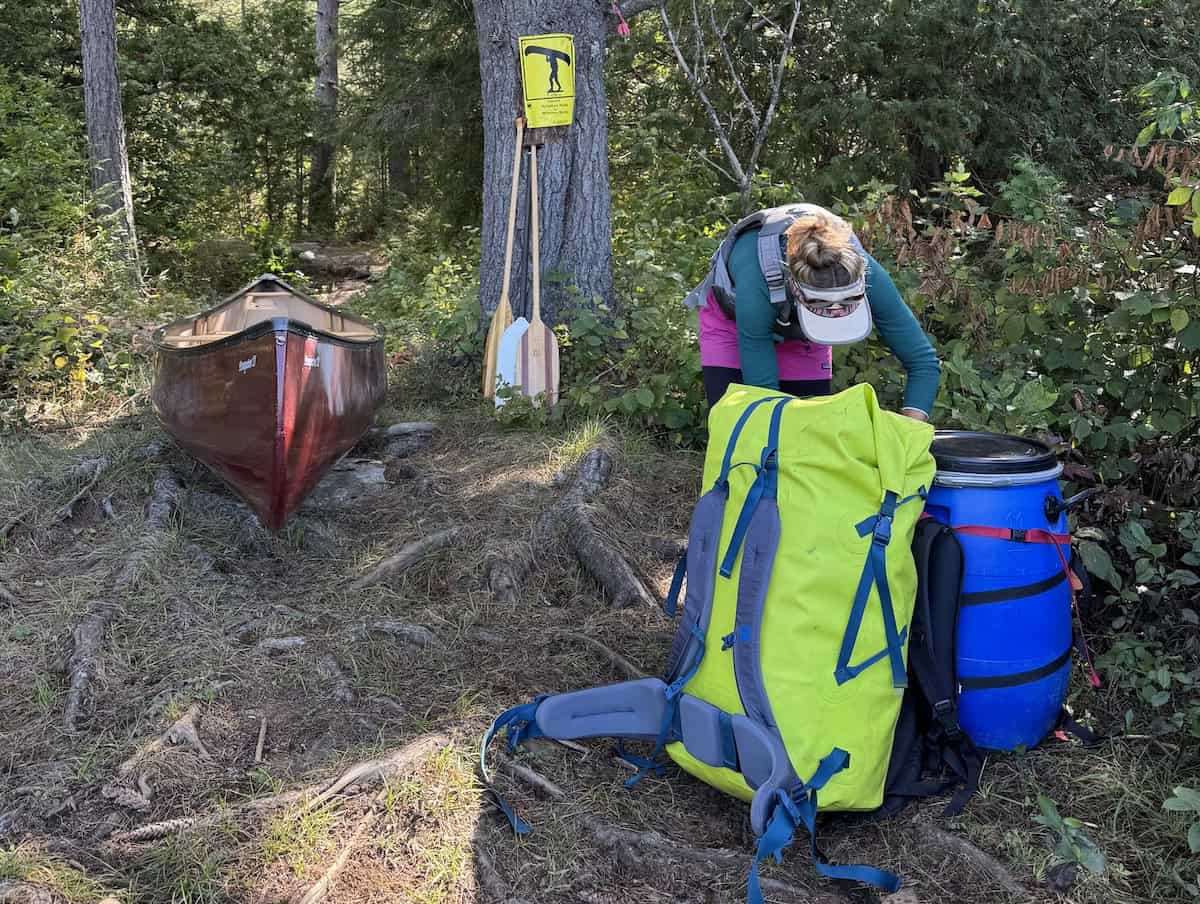
The pack-it-all Slog from MEC offers a single chasm for packing all your gear, then hauling the whole load across tough portages. Rugged and weatherproof, it’s a reliable favorite among canoe trippers. The cushioned shoulders and hipbelt transfer the weight well and, despite its name, the Slogg carries comfortably even on long portages.
My first Slog lasted a decade before a shoulder seam gave out. I repaired it, but when the bottom seam eventually failed, I knew I needed to retire it. You can extend your Slogg’s life by avoiding lifting a fully loaded pack by a single handle or shoulder strap. The Slogg’s angled side handles make loading and unloading this bag into your canoe much easier. They can also act as anchor points, so the bag can be lashed securely if that’s your style.
The Slogg comes in three sizes, a 35-liter, 70-liter and 115-liter option. The stiff material means the bag stands upright by itself, making for easy packing. Now on my second generation Slogg, I think this is a strong contender for the ultimate portage pack, that it’s waterproof makes it preferrable to the traditional canvas pack, in my opinion. For American readers, the NRS Bill’s Bag and SealLine’s Pro Dry Packs offer similar gear-hauling capacity and quality at a slightly higher price.
Reasons to buy
- Rugged waterproof protection for canoe trippers at a great price
- Huge capacity, can carry a mountain of gear on multiday trips
- Padded straps and hip belt make heavy loads feel reasonable
Consider another if
- If you are kayaking or paddleboarding — due to size, the big Slogg is most appropriate for canoeists
- You want internal pockets and interior organization
Bottom line
A favorite for many years, I recommend the Slogg to any canoe trippers seeking easy waterproof protection for their camp kit.
Best dry fanny pack
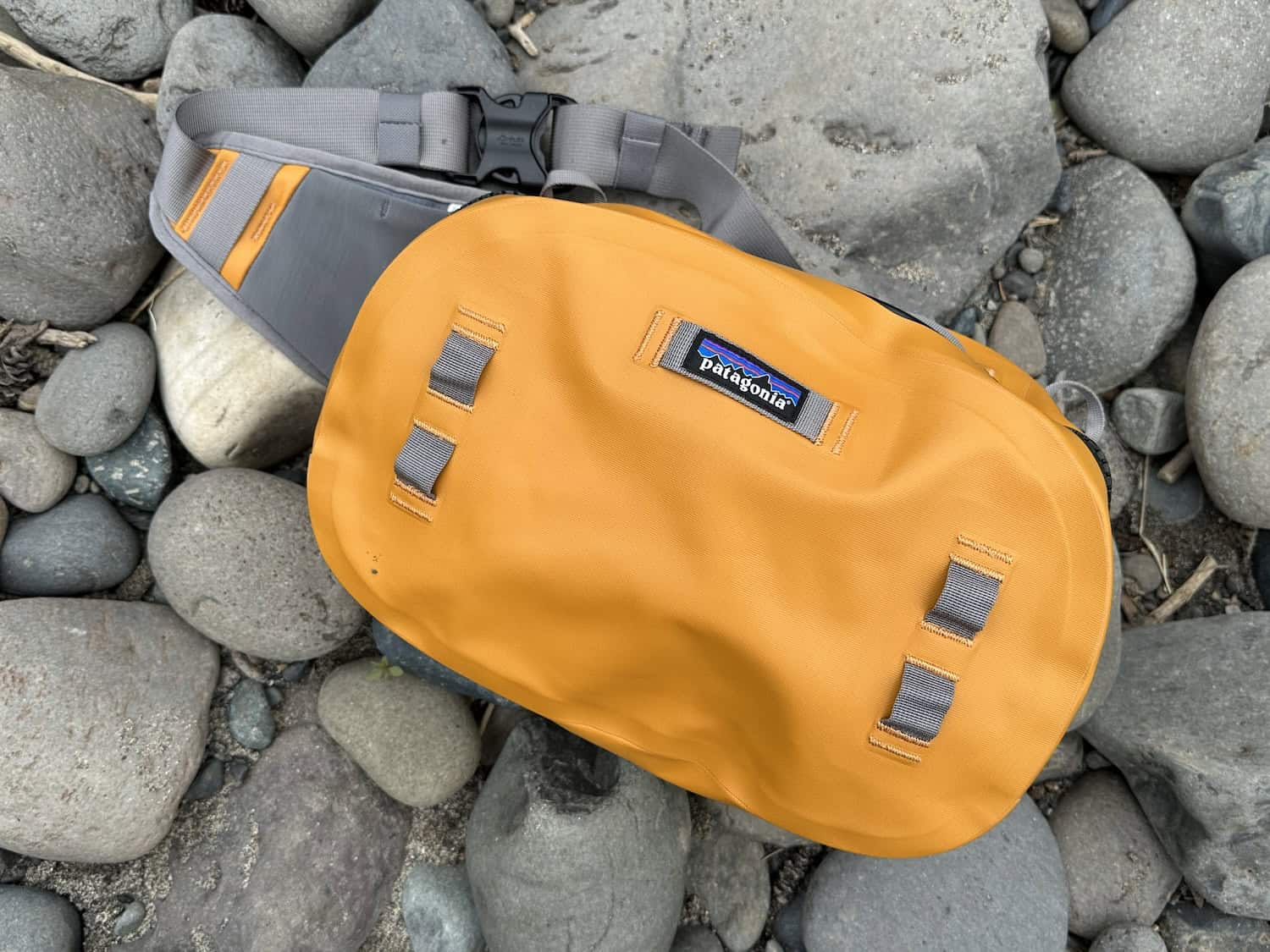
Patagonia Guidewater Hip Pack 9L
$249.99 USD | patagonia.com
Buy from:
Why we love it
The fully submersible Guidewater hip pack from Patagonia was intended for anglers, but many paddlers have fallen in love with its bone-dry functionality. Whether wading in rivers or paddling in heavy rain, the Guidewater takes it all in stride. This is our top pick for the best waterproof fanny pack for paddlers. Our tester used this fanny pack while guiding on the Grande Ronde in Oregon. At nine liters of carrying capacity, it was perfect for her map, chapstick, wag-bag, phone, Garmin inReach, backup battery and associated cords, with still room to spare.
The Guidewater uses a zipper identical to those manufactured for industry-leading drysuits to keep water out. It also has an optional shoulder strap to distribute weight and two external, adjustable loops at the bottom of the pack designed to hold a breakdown fishing rod. These loops double as external storage for your rain jacket or outerwear as you swap layers throughout the day.
Reasons to buy
- You want on-body waterproof protection
- Totally submersible
- Ironclad guarantee on repairs and replacements
Consider another if
- Budget is a concern
- You want a more streamlined bag, as the Guidewater is a chunky unit
Bottom line
The Patagonia Guidewater Hip Pack keeps your gear dry and in reach.
Dry bag buying advice
There is no one ultimate dry bag. To determine the best dry bag for your next paddling adventure, consider the type of boat you’re paddling, where the bag will be stored while on the water, what you’re carrying inside, how much water the bag will be exposed to, and how bad things would be if your dry bag failed.
Are dry bags actually waterproof?
Dry bags are not created equal. In fact, the term dry bag is really more of a category of gear rather than a promise of being waterproof. Dry bags can range from splash-resistant to fully submersible. Manufacturers use IPX ratings to communicate how well the dry bag will keep out water.
In choosing the waterproofedness of your dry bag, consider the expected water exposure for the bag as well as the consequence of getting the items inside wet. Sleeping bags, emergency layers, cameras and communications all have a high consequence if they get wet and so those should be prioritized to have waterproof or submersible protection. A bag strapped externally to a SUP or a raft has a much greater chance of water exposure and therefore needs that much more protection.
Dry bag styles
Dry bags roughly fall into three styles of construction: stuff sack, backpack and duffel. And they generally use three styles of closures: the roll top, the zipper and the Ziploc-style closure. All are available in a vast size range.
The roll top is the most common and generally the most affordable style of dry bag. To be effective, align the top closure and roll the top of the bag over itself a specified number of times—usually three or four. Roll-top dry bags often aren’t rated as submersible even when the material they’re made of is bombproof because the closure can be the weak point if underwater.
Waterproof zippers and Ziploc-style closures can provide a true submersible dry bag depending on the zipper and construction. They offer fast and convenient access, though often they take two hands to open.
Dry bag construction
In addition to how waterproof the dry bag is, consider durability, weight and packability. At one end of the spectrum, you can have lightweight, nylon dry bags that are supple and easy to stuff into tight spots. Heavier fabrics are more abrasion- and puncture-resistant but bulkier. Seams are another consideration: welded seams have a longer lifespan than taped seams, as overtime that tape may lift, but you’ll typically pay extra. External lash points, used to mount the dry bag to your kayak, paddleboard or raft, also range from lightweight to ultra burly.
A dry bag living inside of a canoe pack or kayak hatch is going to have different durability needs than the canoe pack itself or a duffel bag that’s getting strapped down onto a raft and tossed around in rapids.
How to choose the size of dry bag
Dry bags come in a variety of sizes. I find bags in the 3- to 10-liter category are great for electronics, toiletries, first aid kit and other small essentials. I use 10- to 20-liter bags for clothes and my sleep system. Larger bags, 70 liters and up, tend to be backpacks or duffels that can carry a whole multiday trip load.
Bigger isn’t always better. For kayaking, I use a handful of 5 to 10 L bags that are easy to fit into hatches. For canoe tripping, my preference is to store gear in a bunch of small nylon dry bags inside my cavernous portage pack to help keep gear organized, rather than use a single large dry bag to line the pack. Over time, experiment and discover what works best for you.
Best dry bag brands
- Sealline
- Sea to Summit
- Osprey
- Patagonia
- MEC
- Exped
- Fishpond
- Mustang Survival
- Advanced Elements
- NRS
- Watershed
- Yeti
How we tested the best dry bags on this list
The dry bags featured here have been tested over decades, from the coast of British Columbia to the beaches of Baja to the mountains of Patagonia, and many places in between. Over the course of river expeditions, long-distance tours and reporting trips, we’ve packed a wide variety of dry bags to see which hold up to the rigors and abuse of paddling.
Many of the bags featured here are time-honored pieces pulled straight from our editors’ kits. We haven’t just used them once—we’ve used them for years, beat them up, bought multiples and, in some cases, are on our second or even third generation of the same bag.
On expeditions and extended trips, a dry bag failure can be catastrophic. To make our best-of list, these dry bags had to be, above all else, reliable. Beyond that, it’s the little details—like how much easier a bag makes life when you’re exhausted or in the middle of a storm—that make our picks stand out.

Kaydi is the editor-in-chief of Paddling Magazine. She has a Bachelor in Journalism from Toronto Metropolitan University. If she’s not traversing Lake Superior by sea kayak or cold-plunging in Lake Ontario she’s poring over a map dreaming up her next paddling adventure.
Field testing dry bags in the Great Bear Rainforest, British Columbia. | Feature photo: Kaydi Pyette