

This summer I bought two kayaks and two paddleboards for a vacation rental property. I bought them from a box store. I’ll probably never paddle these boats and boards. You probably wouldn’t either. Nor would I now paddle the tri-keel fiberglass canoe that lived under the porch of the shabby cottage my parents rented each summer. However, if not for the confidence I gained from that junker canoe, I wouldn’t be writing this today.
Growing Paddlesports: The Truth Behind the “Butt In Boats” Theory
If I could go back, knowing what I know now, to the beginning of the recreational kayak boom, I’d tell brands and retailers to stop believing recreational kayak sales from box stores would lead to any significant short-term industry growth. I’d shut down the idea that simply putting butts in these boats would generate more paddling enthusiasts. I’d argue box store kayak buyers will not magically become paddling enthusiasts, and they will not soon wander into specialty retail shops to upgrade.
Because they didn’t.
Sure, every specialty shop owner tells their story of the one or two Pelican customers who upgraded to Pungos. But if you play the numbers game, of the millions of units sold at Costco, Walmart, Dick’s and Canadian Tire, one or two new consumers each year in the 200 paddling shops across North America is not a viable growth strategy. The few who did find their way to specialty stores probably would have done so anyway.
I believe however we did miss an opportunity to educate years of box store kayak consumers. Why didn’t we include information, like a catalog or a magazine, in all those boats? Something, anything, that could have enlightened Walmart shoppers about the bigger, better paddlesports world.
Pelican, which owns the Confluence Outdoor banner along with Dagger, Wilderness Systems, Perception and Advanced Elements, is in a fantastic position to test this theory. They could be cross-marketing their specialty kayak brands to box store kayak buyers. If nothing else, wouldn’t it feel good? Message: “Hey, thanks for buying this kayak… please check out all the other kayaks we sell, available at these fine paddling shops.”
Good idea, right? What would this cost? Almost nothing.
If you had asked me when I was running Rapid Media to create a special issue of Paddling Magazine to include with every new box store kayak sold, I would have jumped at the chance. Would any of this drive immediate sales? Maybe, maybe not. Either way I’m sure this type of marketing would have been helpful for long-term brand equity and industry growth. Hard to argue it wouldn’t have.
What we do know is box-store sales haven’t led to immediate gains for specialty paddlesports. But like that old canoe at my summer cottage, putting butts in boats has done one very important thing for us. We just need to look at the bigger picture and longer term to see it.
Those millions of inexpensive box store kayaks, canoes, and, more recently, paddleboards, have become household items, almost like bicycles.
Whether or not a butt in a $299 boat drove anyone into a specialty store doesn’t matter now. What matters now is we have a cohort of 20- and 30-year-olds who grew up with their butts in boats and paddles in their hands. They messed around in them at camps, cottages, beaches and trailer parks.
When I launched Rapid magazine in the late 90s, people at outdoor adventure shows told me canoes and kayaks were tippy and they were scared of getting caught inside if they flipped. We’ve all heard the same thing, a thousand times.
Young adults today know better. Because they grew up playing in kayaks. Kids make it look easy. So easy their parents, grandparents, aunts, uncles and neighbors also give them a try.
Imagine for a minute we all worked in the cycling industry selling only specialty shop bikes and equipment. And, imagine a world where generations of children, basically every kid in North America, never learned to ride a bike.
Now imagine trying to sell any enthusiast segment of cycling. Try pitching the idea of screaming down hills over roots, rocks and jumps to adults who didn’t grow up knowing the basics of how to ride a bicycle. It would be the same for gravel, bikepacking and road cycling.
“Hell no. Those things are tippy and scary,” they’d say to you about your fancy bikes in the aisle of a consumer outdoor show. Not to mention getting them to open their wallets to pay thousands of dollars for the horrifying experience.
Luckily for the cycling industry, department store bikes are household items and, as such, almost everyone knows how to ride.
Consumers are aware the Kmart 10-speeds they grew up on are not what Tadej Pogačar is racing in the Tour de France. They know the Huffy mountain bikes at Walmart are not what Brandon Semenuk is riding on Red Bull TV. But at least they know they could pedal any of those bikes to the corner store for a jug of milk.
In the early years of paddlesports, before the box store boom—canoeing maybe being the exception in certain regions where popularity dates back to the 1950s—we were asking adults who didn’t grow up knowing the very basics of kayaking to jump into whitewater. We were asking them to sea kayak in ocean swells. It’s amazing anyone ever did.
The whole butts in boats idea of box store kayaks magically creating paddling enthusiasts didn’t pan out as we hoped it would. However, 25 years later it has created a world where millions of people are now more paddlesports positive. There’s a whole lot less, “Hell no, they’re tippy” in the world today.
We now have a base of consumers who are more likely than ever before to buy into what we are selling. We can stop pitching paddlesports, as a concept. It’s out there. Almost like riding a bike. We can now do what most of us would rather do—grow paddling segments. Create paddling enthusiasts. And then, sell them the good stuff they’ll need to enjoy it.
Scott MacGregor is the founder of Rapid Media.

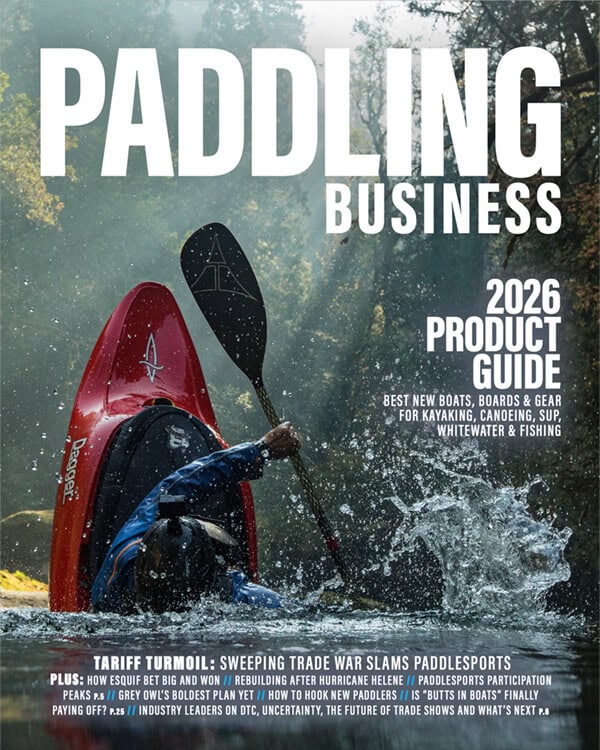 This article was first published in the 2025 issue of Paddling Business.
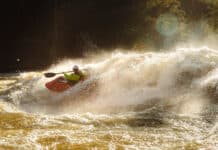
 From “hell no” to all-in. | Feature photo: John Webster







Friends don’t let friends paddle Pelican or Coleman canoes or kayaks!