Home Blog Page 25

Paddleboard Guide Imprisoned After Leading Four On Tour To Their Deaths (Video)

Nerys Bethan Lloyd was sentenced to ten years and six months in prison for manslaughter after leading four people to their deaths in a paddleboarding incident involving a weir on the River Cleddau in Pembrokeshire, Wales.

Lloyd pleaded guilty on four counts of gross negligence manslaughter and failure to discharge her duty.

Paddleboard tragedy on the River Cleddau

The tragedy occurred on October 30, 2021 when Lloyd, as both a paddleboard guide and owner of Salty Dog paddleboard outfitter, led a group towards the weir without any instruction of how to avoid the churning waters and recirculating currents below, nor any warning of potential hazards.

Conditions on the River Cleddau the day of the incident included higher flow rates and near-flood conditions after heavy rains. Over the three days preceding the incident over 50 millimeters (nearly two inches) of rain had fallen and weather warnings had been in place, including a high risk flooding alert issued by National Resources Wales two days before the incident — a warning that remained in place the day of the incident according to the sentencing remarks read on Tuesday April 25, 2025.

Andrea Powell, Morgan Rogers, and Nicola Wheatley, all beginner paddleboarders and customers, drowned as well as Paul O’Dwyer, Lloyd’s co-guide. Paul died jumping back into the water in an attempt to save others.

Surviving the incident were Gemma Cox, Melody Johns, Ceri O’Dwyer and Jemma Dugdale.

Paddleboarders in tragic accident expected a beginner-friendly trip

The paddleboard trip was meant to last four hours and be a scenic, beginner-friendly paddle down the River Cleddau. In a group chat before the trip, Lloyd and Paul assuaged the fears of concerned participants, assuring them how easy and manageable the trip would be.

Paddleboard guide Nerys Bethan Lloyd imprisoned after leading four to their deaths on River Cleddau in Wales.
Paddleboard guide Nerys Bethan Lloyd imprisoned after leading four to their deaths on River Cleddau in Wales. Feature Image: ITV News | YouTube

Four of the paddlers were not wearing wetsuits and one decided not to wear a life jacket. There was no safety briefing before the trip began; no emergency or next of kin details were collected. Additionally, there was no discussion of the existence or hazards of the weir before the paddle, nor was the tidal nature of the river mentioned. Both Lloyd and Paul knew about the weir and its potential hazard, but had not checked on conditions or water levels in several days.

The incident occurred one hour after low tide, making for a 1.3 meter (over four foot) drop over the weir. Moreover, the weir was not visible to the beginner paddlers from the angle of approach taken; only Lloyd and Paul O’Dwyer knew it laid immediately ahead.

Paddleboard guide made little attempt to warn beginners of dangerous weir

The CCTV footage of the incident was ruled too distressing to be shown in court, but court readings state that upon approach to the weir Lloyd made no visible attempt to investigate the portage steps around the dangerous feature, which were partially obscured by high water levels. Survivor Ceri O’Dwyer’s statement records that Lloyd did shout for the others to hang back while Lloyd went down a narrow fish ramp in the middle of the weir.

There was no instruction given to the new paddlers to head for the fish ramp themselves, and the fish ramp was invisible to them. Only Ceri had heard Lloyd’s instructions and tried to repeat them. According to the sentencing statements, “without knowing about the fish ramp and how to deal with it your instructions were vague and meaningless and could not have been acted upon because of the flow and strength of the current.”

Lloyd did try to paddle back towards the others as they came off the weir but could not make progress against the current.

The group went over the weir and was sucked into its hydraulic—a recirculating current that will hold paddlers, boats, or debris in a washing-machine-like cycle underwater—created by the low head dam character. Dams and weirs often have currents like this beneath them and are nicknamed “drowning machines”.

Also notable was the use of ankle leashes attached to the paddleboards instead of quick-release waist leashes. Ankle leashes are more difficult to reach to free yourself of the board, which is also being recirculated by the hydraulic.

Paddleboard guide responsible for the death of four told police she “saw stars in the sky” that day

Neither Lloyd nor Paul had taken courses to qualify them to instruct standup paddleboard activities on rivers with current; courses they had taken however covered risk management, health and safety duties, and the need for attention to the water.

In a conversation with her wife shortly after the incident, Lloyd admitted that the incident was her fault and that she should not have gone on the water that day. Meanwhile, Lloyd’s initial account to police suggested she attempted to lead the beginner paddleboarders on her tour down the fish slide in the middle, and blamed Paul for the incident.

Lloyd also told police that health and safety talks and checks had been conducted before the trip, participants were at an intermediate level, and Lloyd and Paul had checked on river conditions that morning and were happy with conditions on the river and the capabilities of the paddlers.

Lloyd was arrested a week later upon not providing answers to police questions; instead only providing a prepared statement in which Lloyd stated she “saw the stars in the sky and that there was no wind in the early morning of 30 October.”

Lloyd later went on to claim that she was suddenly sucked into the weir system herself while attempting to investigate the portage steps as an option; the account was rejected as inconsistent with CCTV evidence and survivor accounts.

Paddleboard guide takes full blame for the death of four on tour

In an August 2022 statement, Lloyd went on to place blame on Paul, who Lloyd claimed was meant to undertake all the risk assessments and safety briefings. In the same interview, Lloyd also denied instructing Ceri to follow her down the middle of the weir.

Additionally, it was found that Paul researched alternate routes to avoid the weir. Paul cited concerns, including the increased drop over the weir at low tide—concerns which were rejected by Lloyd. As Lloyd was the owner of the company, Paul deferred to her.

Lloyd pleaded guilty at the first available opportunity.

“Being sorry for what happened is different from remorse,” Justice Mary Stacey said upon the sentencing, citing Lloyd’s disproportionate blame placed upon Paul, her employee who raised concerns about the route initially then lost his life trying to rescue others.

At the trial’s conclusion Lloyd took full blame for the incident according to a statement read by her defense lawyer.

The Ultimate Guide To Buying A Used Paddleboard

Two women paddling paddleboards on a lake
Final sales only. | Feature photo: James Ingram

Buying a used paddleboard can save you a bundle of cash on retail markup and taxes. For the price of a new, entry-level plastic paddleboard, you can buy a pre-owned top-quality composite or inflatable board that will be a pleasure to paddle for years. Costly accessories are often thrown in. But all sales are final and there are no guarantees, so consider these tips before you buy.

The Ultimate Guide To Buying A Used Paddleboard

Where to find used paddleboards

When it comes to where to buy a used paddleboard, you’ll want to find a reputable shop or online source specializing in paddling. Some shops and clubs host gear swaps or maintain their own online classifieds. Shops may have previous season’s clearance boards and demos for sale at used prices.

Ask local SUP outfitters and schools if they ever renew their rental fleet. Visit Paddle Monster for the most extensive listing of used boards from across North America.

How to choose a paddleboard

Research what kind of paddleboard is right for you. To novices, a board is a board. But there are a lot of different types of paddleboards and differences between recreation, touring and surfing designs, with dimensions for different sizes of paddlers.

Unless you’re planning to do at least some actual surfing, the ubiquitous all-arounders you see in SUV and tourism ads are not ideal, according to expert Steve Martin, who sells a lot of used boards in monthly gear swaps at his Boardsports shop in Toronto, Ontario.

Most generalists are better off on a pointy-nosed recreational touring board or even a race board if you’re athletic, which are lightweight, fast and often steeply discounted because racers are compulsive upgraders. If you’re a small paddler, now’s a good time to get a deal on a 12.5-foot race board, because a lot of racers are switching to 14-footers.

Best materials for paddleboards

Use the savings of buying used to upgrade to a lightweight, higher-performance board, such as one made of fiberglass or carbon with a foam core. It’ll cost about the same price as a new plastic board from a big box retailer.

Best paddleboard brands

Top-brand boards are built to last and worth a premium; they’ll have durable composite construction to endure abuse and contain closed-cell foam that absorbs less water when damaged.

Boards from Thai and Vietnamese factories have good reputations; some from China, not so much. Notably, Cobra International in Chonburi, Thailand, is known for crafting high-quality boards for the brands Starboard, Naish and Fanatic, among others.

Two women paddling paddleboards on a lake
Final sales only. | Feature photo: James Ingram

Try before you buy

Test paddle as many boards as you can from friends, outfitters or demo events. It’s smart but logistically challenging to test the board you’re actually buying since you’ll most likely be looking at it in the seller’s front yard. If you already know how the board performs, you’ll be ready to commit before another buyer beats you to it.

Questions to ask when buying a used paddleboard

Don’t make the mistake of driving two hours to pick up a used standup paddleboard that’s not the length you wanted. Look for online ads including photos and complete specs for length, width and volume—or ask for them. Ask how old the board is, if there’s any damage, how and where it’s been stored, and what accessories are included.

“You want to deal with someone who paddles,” says John Beausang, who has been listing used boards for a decade as the publisher of The Mullet (now Paddle Monster). “Ask them if they paddle, where they paddle, why they want to sell. That will knock out a ton of people who you wouldn’t want to have a transaction with. The better educated the buyer and seller are, the better exchange of value and the less likely they are a scammer.”

Meet in person

“Dealing face-to-face will avoid 99 percent of scam attempts,” says Beausang. “Unless you know them, don’t go to meet sellers or buyers alone. Meet in a public place, preferably one with grass and not in a parking lot where they can drop the board. Do not pay anyone who can’t meet you in person. Beware of offers involving shipping. Anyone who wants to wire funds is sketchy. Run away.”

Always check for damage

The first thing you should do, according to Martin, is lift a board up. “If it’s heavy and waterlogged, then it’s not worth it.” Dings on a composite board are easily repaired with fiberglass and epoxy at home or by a shop, as long as the board hasn’t absorbed water. Damage can actually be your best friend.

Not only will it lower the resale value of the board—without necessarily harming performance—but it can also reveal a lot about the board’s durability. Some boards easily crack and chip and develop mushy spots while others endure wear and tear. Focus on the forward rails where the paddle rubs as well as any sharp ends or corners. You can tell if a ding has breached the shell by “kissing” and blowing air into it.

Example of a damaged used paddleboard with holes in it
Note the holes in this foam paddleboard? If the SUP you’re looking at looks like this, you might want to pass! Image: Maddy Marquardt

Look for a deck pad that’s in good shape and not coming unglued; these are hard to repair because the old one has to be removed first. Check that the fin is straight. A crooked fin can reveal internal damage to the fin box, which is tough to fix. Check out how the board has been stored—indoors? On a rack? In a bag?—as an indication of how it’s been cared for.

Observe any stickers or tape slapped on as hasty repairs or to conceal damage. Make sure drain screws and fin screws are present and secure. If it’s an inflatable board, inspect the seams and welds. Fully inflate the board and take it to the water or wait a couple of hours to check for pinhole leaks.

Don’t forget accessories

Remember to budget for accessories, which can add a lot of value. A savvy seller will keep their accessories, but if they’re getting out of the sport they may throw in a PFD, paddle and leash. Always ask if any of these can be included in the deal. Ditto for a storage bag, which can run $150 to $300 or more new.

Never skimp on the paddle, which is at least as important as the board. “If you’re saving money on the board, get a better paddle, a carbon paddle,” says Martin. “I’d rather be on a crappy board with a good paddle than be on the best board with a crappy paddle.”

How much do used paddleboards cost

You’ve done your research, so you should know the market value going in. Less experienced sellers are more likely to overvalue their boards. So, how much are used paddleboards? The markdown on a used board should be significant. Martin suggests 50 percent of MSRP as a guideline for a board that’s being sold final sale without a warranty, even if it’s brand new, “like a car as soon as you drive it off the lot.”

Used prices should drop from there. $600 or more is typical for a composite recreational board, or $1,500–$2,000 for a great deal on a lightly used carbon race board. Don’t be afraid to haggle for a fair price, but be nice. You’re probably saving enough that you don’t need to scrabble for an extra $50.

Maintain good vibes

Remember the paddling community is small. Both sides should feel it’s a fair deal, not least because you may run into each other on the water.

“Use the transaction as a way to connect to other paddlers,” advises Beausang. “You’d be surprised how many friends I have that started from selling or loaning them a board. Also, many boards are like family members to the owners. They will want to sell them, but also knowing they are going to a good home makes a difference. Knowing the boards will get on the water, where they belong, makes a difference.”


Final sales only. | Feature photo: James Ingram


This 190-Mile Water Trail In Florida Passes Through Mangrove Tunnels, Pristine Beaches, And Historic Rivers

two people paddle out of a mangrove tunnel in Southwest Florida
Feature photo: Lee County Visitor & Convention Bureau

Whether you’re seeking solitude in Southwest Florida’s wild landscapes or craving a lively day on the water, the Great Calusa Blueway paddling trail offers the best of both worlds. This 190-mile trail winds through mangrove tunnels, past pristine beaches, and down historic rivers, and even allows for stops at resorts and restaurants along the way.

The Great Calusa Blueway explores Estero Bay, Pine Island Sound, the Caloosahatchee River and each of the connecting bodies of water in between. Most paddlers simply enjoy a day trip or even a few hours on one of these stunning sections of the water trail. And while the weaving and looping blueway isn’t specifically designed as a thru-paddle, the abundant boat launches, marinas, town centers and campgrounds provide the possibility of planning multi-day trips to cover as much of the Southwest Florida region as you can handle. If this bird’s-eye-view hasn’t convinced you yet, let me share a few unique reasons why your next trip should be to this subtropical paddling trail.

Why every paddler should visit the Calusa Blueway

Rich history

The Great Calusa Blueway honors the legacy of the Calusa, a seafaring Native American tribe that thrived in Southwest Florida for centuries. Although the Calusa civilization ended around 1750, their presence is still felt today.

young woman stands on paddleboard beside a large mangrove tree in Southwest Florida
Photo: Mike Hammond / Lee County Parks

“The real reason to paddle the Calusa Blueway is the immediate connection you feel to history and nature,” says Mike Hammond, Calusa Blueway Coordinator for Lee County Parks & Recreation.

One of the three sections of the blueway follows the Caloosahatchee River, named after the Calusa, while another passes by Mound Key, believed to be their cultural hub. Along the way, visitors can collect shells, just like the Calusa, who were known as the “Shell Indians” and are considered Florida’s first shell collectors.

Diverse waterways

Established in 2002, the Great Calusa Blueway spans over 190 miles and has three distinct sections: Estero Bay, Pine Island Sound, and the Caloosahatchee River. Each section immerses paddlers in Florida’s natural beauty, history, and culture.

The Estero Bay section includes Koreshan State Park, where paddlers can stop to explore historic pioneer buildings and a preserved bamboo forest. You can also bury your feet in the sugar-sand beaches of Lovers Key State Park and land within the hustle and bustle of Fort Myers Beach—with easy access to waterfront dining.

For those seeking more remote adventures, the Pine Island Sound section offers seclusion amidst mangrove islands and tunnels teeming with wildlife. “You’re literally in a tunnel where little mangrove crabs are above you, fish are swimming underneath, and birds are squawking,” Hammond divulges.

The Caloosahatchee River is the latest addition to the blueway. Here you’ll float beneath moss-draped oak trees and leather ferns lining the shoreline, with side quest opportunities to wander back quiet offshoots and creeks.

two paddleboarders walk along a scenic Florida beach at sunset while carrying their SUPs and paddles
Photo: Mike Hammond / Lee County Parks

Stunning beaches

From the lively shores of Fort Myers Beach to the remote beauty of Cayo Costa State Park, paddlers along the blueway have their pick of beaches, even during peak tourist season. “There are some islands and beaches so isolated, you can have them all to yourself, even during the busiest times,” shares Hammond.

One of Hammond’s personal favorites is Bunche Beach Preserve. With over 700 acres of unspoiled land, visitors can enjoy a peaceful paddle through dense mangrove forests and spot wildlife while gliding through salt flats.

Bunche Beach also offers a perfect spot to witness stunning sunsets over San Carlos Bay and nearby Sanibel Island—an unforgettable experience accessible to paddlers of all skill levels.

Up-close wildlife encounters

There is no shortage of wildlife to observe along the Great Calusa Blueway. You may see dolphins splashing while hunting for fish, alligators basking on riverbanks, or manatees gliding through the waters of Estero Bay. For birdwatchers, J.N. “Ding” Darling National Wildlife Refuge on Sanibel Island is home to a diverse range of species, including white pelicans in the winter months, whose wingspans reaching up to nine feet are captivating.

Hammond recommends guided tours for paddlers unfamiliar with Florida’s wildlife etiquette. That way, you’ll have a chance to learn from locals about how to safely navigate encounters with manatees, alligators, and other wildlife before exploring on your own. Information on guided tours is easily available through the blueway’s website.

man with bandana paddles a sea kayak across water in Florida
Photo: Lee County Visitor & Convention Bureau

Challenging advanced stretches

For experienced paddlers seeking a more advanced adventure, the five-mile crossing from the Pine Island canoe and kayak launch to the historic Cabbage Key Inn & Restaurant offers a challenging trip with a worthy reward. Some say Jimmy Buffet’s song “Cheeseburger in Paradise” was inspired by the burgers there. The restaurant, known for its laid-back atmosphere, serves fresh seasonal seafood and, of course, cheeseburgers to salivating paddlers year-round.

Another rewarding trip for experienced kayakers is the journey from Pine Island to Cayo Costa State Park. Cayo Costa offers miles of undeveloped shorelines perfect for snorkeling, shelling, fishing and camping at the edge of the Gulf of Mexico. Despite Hurricane Ian’s impact in 2022, the park remains a must-visit destination for those with a sense of adventure.

Extensive resources available

The Calusa Blueway has maps, trips ideas and answers to frequently asked questions online. For example, understanding the lightning storms that can move in fast for an unsuspecting visitor. “Our main focus is watching the weather,” says Hammond. “While some worry about wildlife, weather changes quickly in Florida.”

The blueway even has its own app.

Hammond also encourages checking the tide charts that are linked on blueway’s website before hitting the water. Tidal changes can create strong currents, particularly in passes, so it’s important to be prepared.

man kayaks through mangrove swamps in Florida
Photo: Mike Hammond / Lee County Parks

Recovery and resilience after Hurricane Ian

In September of 2022, Hurricane Ian made landfall as a Category 4 storm near Cayo Costa. The storm caused $112.9 billion in total damages, with Southwest Florida being one of the hardest-hit regions. The road to recovery has been long, but the paddling community came together to rebuild and help restore the area’s waterways. In fact, cleanups began soon after the storm, and efforts continue to this day.

Hammond has witnessed remarkable progress over the past two years and is excited to welcome paddlers from across the country—and the world—to experience the magic of the blueway.

“It’s such an adventure, but anyone can have it. You can hop in just a few miles from your hotel or resort and feel like you’re in an episode of National Geographic.”

To find more paddling opportunities in Southwest Florida, visit The Great Calusa Blueway.


Feature photo: Lee County Visitor & Convention Bureau


How This Family Paddling School Navigated An Existential Transition

Stefi and Claudia van Wijk outside Madawaska Kanu Centre, based in Ontario’s Ottawa Valley
Stefi and Claudia van Wijk outside Madawaska Kanu Centre, based in Ontario’s Ottawa Valley. | Feature photo: Courtesy Madawaska Kanu Centre

At 20, a chronic shoulder injury and some disillusionment with guiding culture brought Stefi van Wijk back to her family’s kayak school, the Madawaska Kanu Centre. The injury kept her from teaching, so she found other ways to help. Soon she was assisting her mom ​​Claudia Kerckhoff van Wijk with the business side of the iconic kayak school in Ontario’s Ottawa Valley.

“I learned a lot that winter,” Stefi recalls, adding that administration in the outdoor industry should be no one’s idea of a backup plan. Still, she says, “It’s a very powerful role, and we are sort of plagued in the outdoors with weak admin.”

A few years later, Stefi decided to approach her mom about a lasting role at MKC. Claudia remembers the conversation vividly. “She came to me one day and said, ‘This is my future. I’m going to run MKC,’” Claudia recalls. Her daughter was adamant her values aligned perfectly with the kayak school, and that she could make a difference.

How this family paddling school navigated an existential transition

Claudia Kerckhoff van Wijk is a legendary figure in modern kayak instruction. She was 10 years old in 1972, when her father and mother Hermann and Christa Kerckhoff opened the family’s Kanu Centre on the Madawaska River in Ontario, one of the first schools of its kind in the world. Claudia grew up at MKC and took over ownership of the business with her husband Dirk van Wijk in 1988, when she was 26. Claudia directed the school for decades, building its reputation as one of the most renowned paddling institutions in the world. By 2016 she had begun to think about her exit strategy. She just didn’t expect it would come in the person of her youngest daughter.

Stefi and Claudia van Wijk outside Madawaska Kanu Centre, based in Ontario’s Ottawa Valley
Stefi and Claudia van Wijk outside Madawaska Kanu Centre, based in Ontario’s Ottawa Valley. | Feature photo: Courtesy Madawaska Kanu Centre

Stefi grew up paddling and teaching at MKC, just as her mother had. By 13 she was already teaching youth classes, and as she grew older she developed her own vision of what kayak instruction could be. After largely stepping away to guide wilderness expeditions for companies including Black Feather, Stefi was home at MKC full-time, preparing to become the next director. There was just one issue as she took the reins of the storied school—the dynamic with the boss, her mom.

“There were so many places where she was really open to my contribution and my efforts and my ideas, and a few things where she was not,” Stefi says. “We’re very similar. We’re both very stubborn and would come up against each other.”

Adds Claudia, “She was scared I wouldn’t let go, and I told her, ‘You’re right. I don’t know how. I’ve never done this before.’”

For the sake of their mother-daughter relationship and the future of the business, the next step they took was one you would expect at a Fortune 500 company, not an outdoor school. They brought in outside help to assist in the transition. Through a friend, Claudia found executive coach Katie Baker.

An outside perspective

Executive coaches develop business leaders’ abilities and often consult about structural changes, including transition plans. These services aren’t exclusive to the C-suites of big city towers, but they are big business—according to a 2023 Economist article, executive coaching is a $2 billion industry in the U.S.

The van Wijks were taken by Baker’s background and expertise. The consultant grew up in a small town, spent a lot of time outdoors, and worked with small businesses such as family farms.

“In a family-run business, these are relationships we can’t just walk away from. So the dynamic really changes, and I think what people find is it can be a very lonely place,” Baker says. “Having someone who is a neutral third party, not in the weeds emotionally with all the things that are going on, can be incredibly helpful.”

Baker says transition planning involves plenty of work with bankers and lawyers, but it’s important not to overlook the human side of the coin. “It’s being willing to sit down and have sometimes very difficult conversations,” Baker says. “That takes a certain amount of bravery.”

Early on, the work with the mother-daughter team included learning to work together, setting boundaries, and communicating under tension. Claudia referred to these sessions as coaching. Stefi called them therapy.

During this process, the two made a list of management responsibilities and a transition plan. Over time, responsibilities would be removed from the director of three decades’ list and placed on the incoming director’s list, until the only designated responsibility left for Claudia would be MKC’s treasured garden.

The process allowed Claudia to gradually step back and see the unique abilities her daughter brings to the business.

“Stefi empowers her team. She puts effort into her team and hears their feedback,” says Claudia, who also credits her daughter with bringing a next-generation perspective to the school. “She turned our slogan around from ‘Rapid education’ to ‘Learn from the river with the river.’ It’s a different approach but similar. Nature and water are amazing in helping people find confidence within themselves, and she sees that.”

Change and continuity

Two years ago, during MKC’s 50th anniversary, Claudia and Dirk decided the time had arrived to sell the business to Stefi and their older daughter Katrina Van Wijk, who leads the school’s instructor training program. The sisters are now the third-generation owners of the Madawaska Kanu Centre. (The Kerckhoff van Wijk family is still seeking a suitable buyer for their other Ottawa Valley business, Owl Rafting.)

The family structured the sale on a 15-year timeline to avoid unduly burdening the business. Claudia maintains a presence at MKC, gently easing away from her life’s work, knowing she’s leaving it in capable hands. For her part, Stefi strives to keep the values that brought her home to MKC front and center.

“Everyone who loves MKC loves it for different reasons, so I’m not changing it,” she says. “I’m letting it be what it is. We are a school that was created to support people in their goals to be more in love with paddling.”

cover of Paddling Business 2024This article was first published in the 2024 issue of Paddling Business. Subscribe to Paddling Magazine’s print and digital editions, or browse the archives.

Stefi and Claudia van Wijk outside Madawaska Kanu Centre, based in Ontario’s Ottawa Valley. | Feature photo: Courtesy Madawaska Kanu Centre


Best Beginner Paddleboards For 2026

man stands and paddles a beginner paddleboard
Feature photo: Soulaymane Benchekroun/Pexels

The best paddleboard for beginners depends a lot on personal preferences and what you hope to do with your paddleboard. Are you looking for a good beginner paddleboard for casual use with family and friends? Or do you want a higher performance SUP that will allow you to develop your paddleboarding skills without requiring investment in another board as you progress?

Are you looking for a good beginner paddleboard to share with a child or pet? Will you paddle longer distances, or do you aspire to dip your toes in mellow surf waves? If you have limited storage space or plan to travel a lot with your board, the best inflatable paddleboard for beginners could also be the best fit for your needs. You may ask, What is the best paddleboard for beginners? The short answer is: It depends.

Happily, we’re here to help! Our Paddling Buyer’s Guide lists every beginner paddleboard on the market, including specs, prices, reviews and where to buy. This beginner paddleboard buying guide offers an overview of what’s available and where to find it—as well as providing answers to all your most pressing questions about finding a good beginner paddleboard.

Wear The Appropriate Leash When Stand Up Paddleboarding
  • Always wear a leash on open bodies of water like lakes, bays, and oceans. Due to the risk of snags and entrapment, leashes should only be worn on rivers if they include a quick release attached to your life jacket.

Top picks: Best beginner paddleboards

Sea Gods Diatom Ten6

Board Specs
Length: 10′ 6″
Width: 34″
Board Thickness: 6″
Volume: 89.7 gal
Weight: 21 lb
MSRP: $1,340 USD
seagods.com

Sea Gods Diatom

Buy from:

SEA GODS

The Diatom Ten6 Inflatable Paddle board gives you everything you want in a Paddleboard- stability, maneuverability, total accessory package, and great looks. Inspired by beauty that radiates from the inside out- because you only live this life once, why not do it beautifully? Meticulously Hand crafted for stability with premium materials and stocked with the highest grade accessories, this complete package is ready for adventure when you are.


Sea Gods Elemental Wave CX

Board Specs
Length: 10′ 6″
Width: 32″
Board Thickness: 6″
Volume: 82.8 gal
Weight: 18 lb
MSRP: $1,270 USD
seagods.com

Sea Gods Elemental

Buy from:

SEA GODS

The Elemental Wave Ten6 inflatable paddle board made with new cross weave technology is the perfect Supremely Light Weight All Around Adventure Board. Inspired by the natural flow and pull of the energy from the spirits in the water, creating a desire to be one with the waves. This is also our editor’s pick for one of the best kids paddleboards. 


Rove Board Co. The Essence 10’6″

Board Specs
Length: 10′ 6″
Width: 32″
Board Thickness: 4.5″
Volume: 50.3 gal
Weight: 23.5 lb
MSRP: $1,251 USD
roveboards.com

Rove Board Co. Essence

Buy from:

ROVE BOARD CO

The Essence is handcrafted with authentic bamboo inlay which makes the board lighter and stronger than a full fibreglass construction. Aside from carbon fibre, bamboo offers one of the best weight-to-strength ratios in the game. Because bamboo is an organic & more environmentally friendly material, it diminishes the need for other materials that may be less environmentally friendly, therefore reducing board’s ecological footprint.


Pelican Boracay NXT 10.4 ISUP

Board Specs
Length: 10′ 3″
Width: 32″
Weight: 18 lb
MSRP: $449 USD
confluenceoutdoor.com

Pelican Boracay

Buy from:

PELICAN AMAZON

The Boracay NXT 10.4 inflatable paddle board is ideal for beginners who want to discover the sport this summer. The Drop Stitch construction ensures great rigidity, durability and stability. The removable 9in. fin will provide better tracking and enhance the performance of the board on the water. Comes complete with a carry bag, pump, leash, a phone dry pouch and a paddle, you’re ready to hit the water and make a few people jealous along the way.


Boardworks SHUBU Riptide

Board Specs
Length: 10′ 6″
Width: 33″
Volume: 73 gal
Weight: 19 lb
MSRP: $499 USD
confluenceoutdoor.com

Boardworks SHUBU Riptide

Buy from:

BOARDWORKS AMAZON

The SHUBU Riptide is our brand new entry-level inflatable recreational board designed for the budget minded paddler. A light, versatile board that loves to travel. The board comes with our ultra-comfortable honey foam heat embossed deck pad and two neoprene carry handles for easy transport to and from the water. A single 9” standard SUP fin installs with an easy to use thumb screw – so no tools are needed.


ISLE 10’6″ Pioneer 3

Board Specs
Length: 10′ 6″
Width: 34″
Board Thickness: 6″
Volume: 86 gal
Weight: 19 lb
MSRP: $695 USD
islesurfandsup.com

ISLE Pioneer 3

Buy from:

ISLE AMAZON DICK’S

ISLE’s iconic, all-time best-seller maintains its user-friendly, super-stable design and adds innovative new features that elevate the experience. Featuring ISLE’s AirTech Construction and welded rails, the Pioneer 3 is only 19 lbs with improved rigidity, durability, and longevity. With the ISLE-Link™ connect system, paddlers can conveniently transition this model from SUP to a good beginner kayak in seconds. The full-length EVA foam deck pad is great for kids, pets, and lounging.


Jimmy Styks Quantum

Board Specs
Length: 11′ 0″”
Width: 34″
Board Thickness: 6″
Weight: 22 lb
MSRP: $399 USD
jimmystyks.com

Jimmy Styks Quantum

Buy from:

JIMMY STYKS

The Quantum is an excellent choice for recreational paddling looking for a staple all-around board. The wide nose and tail create easy turn radius and smooth glide. Ideal for any age and experience range.

Dress For Immersion, Not Air Temperature
  • Your body loses heat much faster when immersed in cold water than it does when dry.
  • Avoid cotton clothing like t-shirts and jeans; they retain water and accelerate cooling when wet. Synthetic fabrics, or wool, are generally a better choice. If the water is very cold (60° fahrenheit or less), you should wear a wetsuit or drysuit.

Beginner paddleboard buying advice

Wondering what is the best paddleboard for beginners? That simple question is often a starting point for so many more. Try before you buy is the best advice to help find the perfect paddleboard for you. Borrow friends’ beginner paddleboards to get a sense of what’s available and how different materials and designs perform on the water.

Shop at paddling and outdoor specialty stores, which offer far more expertise (and a better selection of quality paddleboards) than generic big box outlets. Lastly, favor retailers that provide the option of test paddling good beginner paddleboards before you buy.

Here are expert answers to some of the most common questions from beginner paddleboard buyers.

  • What is the best style paddleboard for beginners?

    The best style of paddleboard for beginners is perhaps the greatest variable to consider in buying a good beginner paddleboard. But the answer is simple: It all depends on how you plan to use your board, now and in the future.

    Consider your aspirations: Do you want a cheap paddleboard that’s fun for the entire family? Do you want to get a kids paddleboard, specifically for the younger ones? Or do you dream of developing your skills to progress to more advanced paddleboarding on waves or longer tours? It’s easy to pick up a cheap board, but you’ll want to search more carefully—and spend considerably more money—if you want a higher performance paddleboard.

    Good paddleboards for beginners fall into two main styles: all-around boards and touring boards. If you are more of a casual paddler, or hope to progress to SUP yoga or surfing small waves, an all-around board with a round nose and flat—or “planing”—bottom is likely the best fit. If you are looking for the best inflatable paddleboard for beginners, most of the boards you find will have an all-around shape.

    If you enjoy paddling quickly and aspire to longer tours on choppier waters, you’ll probably enjoy a touring paddleboard with a more V-shaped nose and bottom. Touring boards also tend to be longer and have higher capacity, making them a good choice for those who want to paddle with a large breed dog.

    Finally, it’s very important to consider the type of places you wish to paddle. Do you plan on paddling in shallow or rocky waters? If so, an all-around inflatable paddleboard will probably offer the greatest comfort, durability and stability. If deeper, open waters are your destination, a touring board that cuts through any light chop will feel faster and more stable.

a young man paddles a paddleboard in front of desert mesas
Photo: Gavin van Wagoner/Unsplash
  • What is the easiest paddleboard to use?

    The easiest paddleboard for beginners to use will be one that is sized appropriately for their weight range. Paddleboard weight capacity depends on the volume (buoyancy) of the board, with smaller boards suitable for lighter paddlers and larger boards accommodating paddlers from 200 to 350 pounds.

    Look at the thickness of the board, as well as length and width, to determine how stable the board will feel on the water. A thicker board will feel less tippy than a thin board, with inflatable paddleboards generally being thicker than hard boards.

    This is one reason why many beginner paddleboarders prefer inflatable boards; inflatables often have a uniform thickness from side to side and nose to tail, making them considerably more stable than similarly sized hardboards. Hardboards are sculpted to reduce weight and optimize race or surfing performance, but they typically provide less stability and buoyancy for the beginner paddler.

    Another reason many new paddlers prefer inflatable boards is the soft top, which is more forgiving if (when!) you fall on the board. If you have your sights set on a beginner hardboard, look for models with a full foam deck, also known as “soft-top” boards.

  • What size paddleboard for beginners?

    Beginner paddleboards range from as short as eight feet to over 14 feet, but most SUPs are between 10 and 12 feet long and 30 to 34 inches wide. Wider boards offer more stability, but narrower boards are faster on the water. Shorter length boards are primarily used for surfing, or for kids, and are more easily maneuverable.

    In addition to length and width, the board thickness is also a consideration. Thinner boards will have less volume, or buoyancy, and therefore have lower weight capacities. Thicker boards, such as inflatable paddleboards, have high buoyancy and higher weight capacity. Thicker boards are great for beginners, general paddling, touring and racing, while thinner boards are usually preferred for SUP surfing.

  • Best paddleboard length for beginners

    Length is a key element in the performance and intended use of a paddleboard. Factors affecting the best length for beginners include paddler height, the range of water and wind conditions you expect to encounter, who else might be using your board, and your likelihood of having passengers on board, such as small children or pets.

    The most popular all-around paddleboard length for beginners is 10 to 12 feet. If portability and maneuverability are priorities, or if you weigh less than 150 pounds, you may want to go shorter than average and opt for a board in the 9’6” to 10-foot length range.

    If speed and straight tracking are priorities, consider a 12’6” touring board. Given the popularity of SUP touring, 12’6” should be a very popular length, but some buyers shy away from this length due to storage concerns. However, if you go with an inflatable model, the extra length does not pose a storage issue, and you can expect solid performance from a quality inflatable touring paddleboard.

  • Best paddleboard width for beginners

    Most all-round paddleboards for beginners fall between 32 and 34 inches in width. However, heavier paddlers and those looking for extra stability should look for an all-around board that is 33 to 34 inches wide. While you can go even wider, you may end up with a board that feels sluggish and less fun to paddle. Touring boards typically run a bit narrower—30 to 32 inches—since their longer waterline also provides additional stability.

  • Best paddleboard brands for beginners

    You’ll find countless manufacturers of beginner paddleboards. Just like any type of consumer product, some manufacturers are better than others and each will have its own characteristics. In general, you get what you pay for.

    There are now hundreds of inflatable SUPs available to purchase in stores and online. As the market grows and becomes saturated with mass-produced, single-layer and fusion inflatable boards, it becomes difficult to know which inflatable paddleboard is right for you at a price you can trust. Avoid the cheapest box store or Amazon inflatable boards; a poorly manufactured product equals a poor or unsafe time on the water—and a quick trip to the landfill.

  • Are inflatable paddleboards good for beginners?

    Inflatable paddleboards are a great option for beginners. In addition to superior durability and impact resistance, inflatable boards often have a uniform thickness from side to side and nose to tail, making them considerably more stable than similarly sized hardboards. Hardboards are sculpted to reduce weight and optimize race and surfing performance, but they provide less stability and buoyancy for the beginner paddler.

    Another reason many new paddlers prefer inflatable boards is the soft top, which is more forgiving for unexpected tumbles—and more comfortable for passengers like kids and pets.


Feature photo: Soulaymane Benchekroun/Pexels


Ice Cold Innovation: How The World’s Leading Cold Water Safety Gear Reaches The Water

Woman in Mustang Helix drysuit.
Feature Photo: Mustang Survival

Mustang Survival had no intentions of reinventing the wheel last year when it took on the challenge of updating its Hudson and Helix drysuits. The men’s- and women’s- specific models had already pioneered game-changing features when they hit the market in 2021, including the praised Closed Comfort System—a non-latex adjustable gasket. The drysuit line was also already fulfilling its number-one priority, keeping paddlers dry and warm. Yet, even with the successes of the original Hudson and Helix, another element was left to be desired.

“As industry leaders in floater jackets, we already knew a lot about keeping people safe on the water,” explains Gaby Hébert, Mustang’s product designer and manager of product development. “But we recognized that paddlers and other cold-water adventurers needed a drysuit that offered not just protection, but comfort and durability, too.”

The need for improvement was a challenge Mustang took seriously. The Helix and Hudson are drysuits for recreational paddlers following in the lineage of Mustang’s Sentinel professional rescuer series, drawing on the experience of a decades-long tenure as the preeminent brand in water safety gear for military, coast guard and search-and-rescue. With such an ardent following, Mustang acknowledged the risks of messing with a good thing when it came to doing a redesign. The main objective of Hudson and Helix 2.0 models was “elevating our existing expertise in cold-water safety,” Hébert says. “The initial designs laid a solid foundation with their overall design, but we wanted to push the envelope further with a focus on enhancing fit, durability, comfort and gender parity.”

But just how would the brand known for utilitarian applications improve upon their drysuit and accomplish these luxurious changes without sacrificing a proven drysuit worthy of its iconic seahorse logo? They needed to bring the Hudson and Helix back to the lab.

Man climbing on snow-covered paddleboard.
Taking a dip with the Hudson drysuit. | Photo: @nicoleleclairphotography

Mustang R&D at Waterlife Studio

Based just outside of Vancouver, B.C., Mustang’s Waterlife Studio has been the backdrop for the company’s recent innovations, including the dual-flotation Khimera life vest, which introduced both foam and air chambers to the inflatable PFD. Inside the corporate-looking exterior just a block from the Fraser River, the Waterlife Studio houses Mustang’s prototyping facilities, research labs to study human physiology, and real-world test pools.

In conceiving the original Hudson and Helix models, product designers spent long hours determining the right fabric options through rigorous in-water testing. Research and development focused on diverse, uncompromising users who “need something that allows them to stay warm and dry for extended periods in harsh conditions, while still offering the mobility required for their activity,” notes Hébert. “Protecting against sweat buildup, along with water intrusion, is key to preventing discomfort and helping users avoid dangerous temperature drops that can lead to hypothermia. Developing these suits meant pushing our innovation forward, staying true to our history of engineering reliable, high-performance safety gear.”

Engineers landed on three-layer, Marine-Spec BP waterproof-breathable fabric, which competes closely with Mustang’s Mil-Spec 6.5 GORE-TEX found on their professional-user gear such as the Sentinel Series Aviation Rescue Swimmer drysuit. It features Cordura reinforcements in high-wear areas, bombproof Aquaseal zippers and supreme breathability. Of course, the best fabric is nothing without quality control—a top priority in all Mustang products. “Each suit is individually tested for waterproof integrity and durability to make sure it meets the highest standards before it reaches the hands of our customers,” says Hébert.

The redesign focused on making subtle tweaks to the Hudson and Helix. These include refining the fit with a more ergonomic cut “that better contours the body, offering a more natural range of motion and reducing bulk,” explains Hébert. Original seamlines were analyzed and updated, including moving the side seams forward to eliminate rubbing while sitting in a kayak cockpit. The removable kneepads, a favorite for canoeists, are now conveniently accessible from the outside of the drysuit.

Woman sitting next to sled and kayak in Nunavut.
Amber Aglukark preparing for a paddle in the invigorating conditions of Nunavut. | Photo: Mustang Survival

Put to the test

Mustang designers Hébert and Savannah Sami-Bacon quickly moved from the concepts drawn up in the Waterlife Studio to testing in the real world. “We had paddleboarders, kayakers, kite surfers, and sailors testing the suits, many of whom already owned the original versions,” says Sami-Bacon, a Mustang product designer. “Their excitement to contribute to the new design was infectious. Some users put over 400 wear hours on their suits in just a couple of months.”

Of course that meant a cadré of professional paddlers getting out on the water, sea kayaking and paddleboarding the Salish Sea and Howe Sound on the Pacific Ocean adjacent to Vancouver, and whitewater boating the wild rivers of British Columbia’s Coast Range. But it also included some unconventional applications. “One ambassador’s excitement was so palpable they were actually out shoveling their driveway during a heavy snowstorm in Squamish — wearing the drysuit — and showing how versatile and comfortable these suits are,” Hébert adds of handing off the redesign concept to their athletes.

The enthusiasm of the athletes provided the push the Mustang team needed to reach a finalized design, and perhaps more integral, the approach helped Hébert and Sami-Bacon avoid the risk of making the wrong changes. “Finding that perfect balance was crucial,” explains Sami-Bacon. “We didn’t want anyone to notice that we’d changed anything, but we did want to improve the overall product.”

The results of the process from the time at Waterlife Studios to time in hands were “minor refinements,” according to Sami-Bacon, that were critically analyzed in on-water testing by a focus group of professional users, with standards that match those of every paddling enthusiast. “Our target audience is pretty straightforward: cold-water paddlers who need gear that won’t let them down,” says Sami-Bacon. “The original Hudson and Helix responded to these needs by designing a suit that balances warmth, breathability, and durability. Features like adjustable seals, trimmable wrist cuffs, and the added convenience of thigh pockets all came from understanding exactly what these users needed and wanted.”

Man and woman sitting on paddleboards looking at a map.
The improved Hudson and Helix drysuit line. | Photo: @nicoleleclairphotography

Hudson and Helix 2.0 are born

The updates that made the cut for the 2025 Hudson and Helix include more ergonomic fit, with a refined cut that contours the body and offers a more natural range of motion—in part by reducing excess bulk in key areas. Shifting the side seams forward eliminates rubbing and improves a paddler’s mobility while seated in confined places, such as the tight-fitting cockpit of a high-performance sea- or whitewater kayak. The original Hudson and Helix offered unique removable knee pads, which are perfect for whitewater canoeists and trippers. These pads are now removable from the outside, making them far easier to remove or reposition without opening the drysuit. Besides streamlining the cut, a thigh pocket was also added to the women’s specific Helix (which already features a distinct rear-entry zipper), for gender parity between the models.

Drysuits are standard issue for serious paddlers who tackle cold water—often described as the most important (and most expensive) item you’ll buy after purchasing a boat. They allow sea kayakers cross rough seas; protect standup paddleboarders from the elements in extreme environments; provide margins of safety for expedition canoeists on Arctic waters; and inspire confidence in whitewater boaters to trust their skills in first descents of wild rivers.

“Choosing a drysuit is a big decision,” says Chris Christie, a Squamish, B.C.-based photographer and Mustang ambassador who has paddleboarded amongst icebergs in the Canadian high Arctic. “This single piece of gear is a thin line of safety while operating around cold waters. I’ve used Mustang products for years and have developed trust in their designs and testing, to allow me to move efficiently over the water and give me a safety margin I can deal with.”

In improving an already superlative drysuit line, Christie says, cold-water paddlers’ “big decision” just got a whole lot easier.


Feature Photo: @nicoleleclairphotography

Student Team To Canoe 1,200 Miles To Inspire Girls In Paddlesports

Hudson Bay Girls to canoe from Lake Superior to York Factory on the Hudson Bay in summer 2025
From left to right Emma Brackett, Abby Cichocki, Helena Karlstrom, and Olivia Bledsoe at Canoecopia 2025. Feature image courtesy Hudson Bay Girls.

The historic route from Minnesota to the Hudson Bay has long captured the attention of canoeists. In summer 2025, four student paddlers and Girl Scout Alumni plan to tackle the over one thousand-mile route through large lakes, rivers, rapids and polar bear country to inspire young girls and women in paddlesports.

Abby Cichocki, Emma Brackett, Helena Karlstrom and Olivia Bledsoe met through their various roles in the Girl Scouts and Scouting America programs, all four with experience in professional guiding programs. This summer, the all-female team plans to tackle the historic expedition canoe route from the waters of Lake Superior at Grand Portage to York Factory on the Hudson Bay, calling themselves and their expedition the Hudson Bay Girls.

Hudson Bay Girls prepare to canoe from Lake Superior to the Hudson Bay

While prepping for this several-month long canoe expedition, the four have also been attending college. Cichocki is a junior at UW Madison, Brackett a senior at Clark University, Beldsoe a sophomore at Virginia Tech, and Karlstrom a senior at Ohio University. Planning for the trip as students has been like another full-time job.

Preparing for portanging on a canoe trip.
Preparing for portanging on a canoe trip. Image courtesy Hudson Bay Girls | Abby Cichocki

“We meet every week, typically for a few hours. We text every single day. We are in constant communication and we’re all constantly doing work on top of our schoolwork,” explained Karlstrom.

The team will begin their journey with the 8.5-mile portage from Lake Superior to the Pigeon River. From there, the Hudson Bay Girls will travel along the Border Route through the Boundary Waters Canoe Area Wilderness toward International Falls, where they’ll then turn north and begin the trek through Lake of the Woods. From here, the team will head up the Winnipeg River then spend an estimated three to four weeks working their way up Lake Winnipeg’s eastern shore.

The final leg of the trip will include three and a half weeks on the Hayes River and conclude at York Factory on the Hudson Bay– a route popularized in Eric Sevareid’s 1935 Canoeing With The Cree.

The route includes the traditional and cultural homelands of the Anishinabee and Cree First Nations.

Hudson Bay Girls aim to inspire more young women in paddlesports

The team was inspired to tackle this particular route by Natalie Warren’s Hudson Bay Bound, which followed the expedition of Warren and Ann Raiho as the first-documented female duo to complete the route.

“Just hearing about Natalie and Anne’s story as the first two women to publicly paddle that route was just so inspiring,” shared Bledsoe. “I don’t think it had ever occurred to me that I could be on an all-female expedition.”

Hudson Bay Girls to canoe from Lake Superior to York Factory on the Hudson Bay in summer 2025
From left to right Emma Brackett, Abby Cichocki, Helena Karlstrom, and Olivia Bledsoe at Canoecopia 2025. Feature image courtesy Hudson Bay Girls.

Just as the Hudson Bay Girls were inspired by Warren and Raiho, the Hudson Bay Girls hope to use their trip to encourage other young women to participate in paddlespots. On their expedition website, the Hudson Bay Girls write that “is that a girl under there?” is one of the most common things they hear on the portage trail as female canoe guides and trippers.

A 2019 report from the American Canoe Association found that the percentage of female canoeists fell by six percent from 2013-2018. For the Hudson Bay Girls, Girl Scouts and youth programming acted as a gateway into the outdoors and canoe trips.

“Girl Scouts was one of the most impactful experiences I had throughout my entire life,” shared Cichocki. “I moved around as a kid, but Girl Scouts was one thing that was always constant and it was always supportive. Whenever I do something hard, I say to myself, ‘it’s not as hard as carrying an Alumacraft canoe over a two mile portage.’”

Hudson Bay Girls on what makes a successful expedition

When asked about what challenges they expect to face on their 1,200-mile paddle, the Hudson Bay Girls agreed that they expected the biggest challenges to be mental rather than physical.

“I feel like when people think about challenges, we tend to really gravitate towards the material,” shared Bledsoe. “Expeditions fall apart based on what happens in your head first.”

While the Hudson Bay Girls’ expedition has a concrete end at York Factory, the paddlers agreed that for the team the intangible markers of a successful expedition were more important than a finish line.

Emma Brackett of the Hudson Bay Girls canoe expedition team in a canoe in the winter.
Emma Brackett of the Hudson Bay Girls above rapids in a canoe. Image courtesy Hudson Bay Girls | Emma Brackett

“I would say a successful trip is one where we come out the other side, all of us together and we’re still talking to each other, we are still friends and we’ve grown and we’ve become better, more interesting people because of it,” explained Cichocki.

“If we can change one person’s life and have one young girl look up at us and think maybe I can do that too, I think that would be a success for us,” added Karlstrom.

With an estimated 85-days of canoe tripping to look forward to, the Hudson Bay Girls are excited for everything from traveling north and watching the terrain change to laying on rocks in the sun like lizards.

“I’m so excited for the food because it’s going to be so good,” shared Brackett. “Abby’s parents have been making so much food and helping us dehydrate and freeze dry.”

Follow the expedition on the Hudson Bay Girls Website or on social media.

Level Six’s New Class 6 Sprayskirt Includes A Breakthrough Feature (Video)

The team at Level Six were sitting around the office, mulling over an infamous issue for an essential piece of whitewater kayaking gear when CEO Stig Larsson found inspiration in his morning coffee.

In whitewater kayaking, it’s not uncommon for athletes pushing the boundaries of the sport, running towering drops, to have the sprayskirt detach from the cockpit on impact. After years of roundtable talks and reviewing footage with team athletes, Level Six made an interesting discovery. These skirts were not necessarily imploding inward on drops due to the force of water hitting the exterior, but instead pushing outward from inside.

“We noticed some of their skirts were actually exploding off the boats when they would land—displaced by the air in their cockpit,” Alex Lowman, marketing manager at Level Six explained in an interview introducing the Class 6 skirt.

The exploding sprayskirt problem

Imagine for a moment you have an empty milk jug lying on its side, closed at the top with one of those snap-on plastic caps. Now, take your fist or a large mallet and slam it into the milk jug. The snap-on cap likely flew across the room. When a paddler plummets off a 100-foot waterfall and their kayak makes impact with the frothing, boiling base of the drop, the same force can occur. Your boat is the milk jug, the river a sledging mallet.

A sprayskirt blowing off like a bottle cap is, to understate it, not ideal in the middle of a river gorge. Level Six believes though, after years of R&D discourse and the morning coffee moment of enlightenment, they’ve finally found the solution.

A eureka moment for the Class 6

Stig Larsson was brewing up a pot of coffee in one of their design meetings on the topic when he took note of the bag in front of him. On it’s outside was a one-way degassing valve which allows carbon dioxide emitting from the roasted beans out without letting oxygen in. According to Alex Lowman, Larsson pointed it out to the team and said, “Why don’t we put a relief valve on there similar to a coffee bag?”

The coffee bag idea led to a more advanced built-out relief valve inserted on the deck of the Class 6 Sprayskirt. The valve is a medical-grade surgical valve screwed on to a silicone patch and reinforced with additional neoprene. According to Lowman, it is also serviceable. If you get sand in the valve you can take it out and clean it.

Additional features from Level Six

The innovative sturdiness of the Class 6 sprayskirt doesn’t stop with the relief valve to prevent skirt explosions. Level Six also included a memory rand made with a stiff rubber compound, which once broken-in takes the shape of a kayak’s cockpit rim. The skirt is also made with a limestone-based neoprene and includes markings to trim the tunnel to your desired length.

The Class 6 is built for the highest demands of whitewater kayaking. However, as with most gear innovations, Lowman and the team at Level Six see the Class 6 as just the beginning of where the new relief valve can be implemented on sprayskirt designs.

The Class 6 is available in two cockpit sizes and five tunnel sizes. The Class 6 can be found now at Backcountry and other Level Six retailers.


Feature Photo: Brenna Kelly

Two Kayakers Rescued From Dock Street Dam In Harrisburg (Video)

Two kayakers are considered “lucky to be alive” after they went over the Dock Street Dam in Harrisburg, Pennsylvania on Sunday, April 20, 2025.

A WGAL8 news report shared that the pair were thrown from their kayaks and struggling in turbulent water when good samaritan fishermen helped the kayakers until a water rescue craft arrived.

Low-head dams: a drowning machine

Both kayakers sustained minor injuries. While an inflatable kayak was pulled from the river, a hard-bodied kayak remains to be recovered, still circulating in the dam.

Dock Street Dam is a low-head dam, or a dam with strong recirculating currents that can push victims under water. Often called a “drowning machine,” low-head dams are nearly impossible to escape.

To avoid low-head dams while paddling, research your route beforehand. Lowhead dams are manmade structures generally featured on maps and guides to water trails. Kayakers should always steer clear of low head dams and portage around them when traveling downstream. Check water levels and wind before you head out as both water levels and wind can make finding a take-out challenging. Be sure to both wear a PFD and bring a throw bag. When in doubt, choose a different route.

Hidden danger on the Susquehanna River’s Dock Street Dam

According to a recent report by PennLive, the rescue comes after a federal lawsuit was filed against the city of Harrisburg by Elizabeth Hibble, wife of Michael Brook. Brook died in a boating accident at the Dock Street Dam in 2023 when his fishing boat stalled and drifted downriver, and unbeknownst to Brook, toward the dangerous dam. Brook, his friend Elijah Rothell, and the boat went over the dam.

Both Brook and Rothell’s life jackets were ripped off by the force of the dam. Rothell was rescued while Brook died from hypothermia and freshwater drowning.

The lawsuit claims that the city violated the Dam Safety Act by not having required warning buoys in place and that the city knew how dangerous the dam was and did not do enough to protect boaters.

Additionally, a PennLive investigation found that 31 people have died at the Dock Street Dam since 1913.

After being swept over the Dock Street Dam in Harrisburg, Pennsylvania, two kayakers are safe and one of the two boats has been recovered. Feature Image: ABC27 News | YouTube


Best Cheap Kayaks Under $500 For 2026

cheap yellow kayak and paddle sit on a beach at the water's edge
Feature photo: Kev Beron/Pixabay

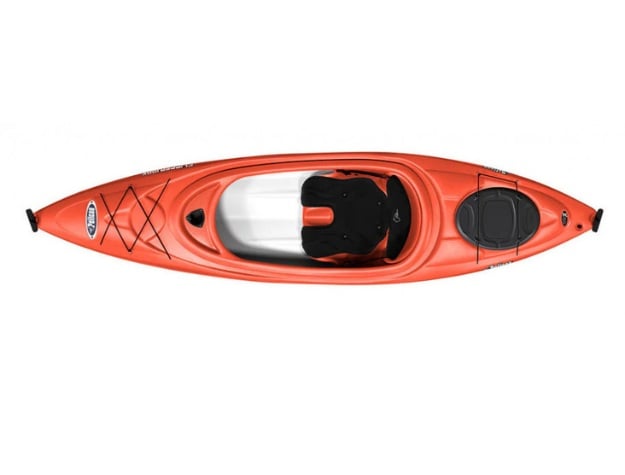
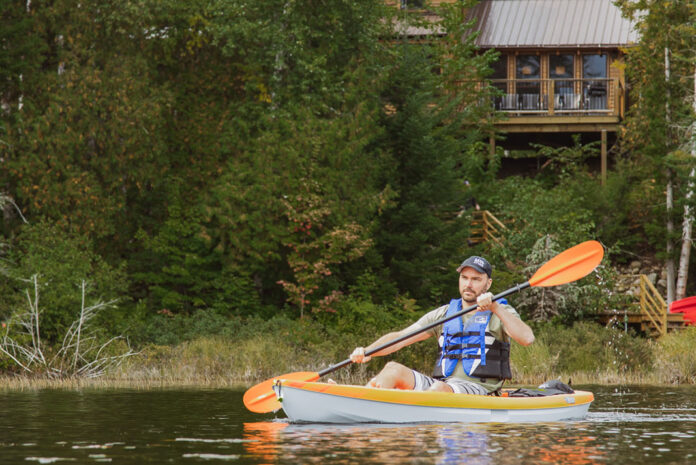
You don’t have to break the bank to get into kayaking. There are plenty of cheap kayaks on the market that will grant you painless entry into the paddling world. Recreational kayaks best suit the needs of both entry-level paddlers and those working within a conservative budget. For that reason, the focus of this article will largely be on recreational kayaks that fall under the $500 mark.

Keep in mind the prices of kayaks vary, with higher performance boats having higher price tags on average, and so even their cheapest models will be priced above $500. That being said, the points below can be applied generally to all boats that fall on the cheaper end of the spectrum for a given type of kayak.

So, are you wondering what to look for in an affordable kayak? We’ve polled experts to help answer all your questions about what to look for in a good budget-friendly kayak, including their strengths, weaknesses, typical user and where to find the best kayak selection and prices.

Wear A Life Jacket
  • Everyone, even strong swimmers, needs to wear a life jacket at all times when on the water. It is extremely difficult to put a life jacket on once you fall into the water. Even a light wind can blow any paddlecraft away from you, faster than you can swim.
  • Always wear a USCG-approved Level 70 or Type III life jacket designed for paddling.

Top picks: Best cheap kayaks

Ozark Trail Angler 10

Ozark Trail Angler 10 Specs
Length: 10’0”
Width: 30”
Weight: 41 lbs
Capacity: 250 lbs
MSRP: $279 USD
walmart.com

Ozark Trail Angler 10

Great for lakes and rivers and to get to those excluded fishing spots The Ozark Trail Angler 10 Sit-In Fishing Kayak is perfect for your next adventure. It is ideal for lakes and rivers and to get to those excluded fishing spots. Weighing only 41 pounds, it is lightweight enough for most adults to carry with ease. The Ozark Trail Angler 10 Sit-In Kayak features a large, comfortable seating area with protective thigh pads and adjustable foot braces. You have plenty of room for your gear with the covered storage compartment with bungee cords in the front and back. It is constructed from rugged UV-stabilized High Density Polyethylene. The Ozark Trail Angler 1010 Sit-In Kayak tracks and paddles with ease providing you with maximum stability while in the water.


Pelican Argo 100XP Angler

Pelican Argo 100XP Angler Specs
Length: 10’0”
Width: 29”
Weight: 41 lbs
Capacity: 300 lbs
MSRP: $469 USD | $649 CAD
confluenceoutdoor.com

Pelican Argo 100XP Angler

The ARGO 100XP ANGLER is specifically tailored to the paddler looking to regularly use their kayak fishing or on recreational expeditions. It is also great for a family of kayaking enthusiasts, each with their own preference on how to spend their time on the water. With ergonomic carrying handles and at only 41 lb., you will be able to easily carry the ARGO 100XP Angler to wherever you decide to go!


Sevylor Quikpak K1

Sevylor Quikpak K1 Specs
Length: 8’7”
Width: 36”
Weight: 18 lbs
Capacity: 400 lbs
MSRP: $174 USD
coleman.com

Sevylor Quikpak K1

Buy from:

COLEMAN AMAZON

Explore alpine lakes or remote waters with the Sevylor K1 QuikPak Kayak. This compact one-person boat inflates in minutes with the included hand pump and packs down into the included backpack for travel. As you paddle along the shore, the cargo net on top of the kayak keeps your gear close at hand and a drink holder can hold a water bottle to keep you hydrated. A durable, tarpaulin bottom is built for durability, while a clever design with multiple air chambers means that the boat will not fully deflate if it gets a single puncture. A backrest and multiposition footrest makes for comfortable paddling or floating.


Perception Kayaks Sound 10.5

Perception Kayaks Sound 10.5 Specs
Length: 10’6”
Width: 29.5”
Weight: 46 lbs
Capacity: 335 lbs
MSRP: $469 USD | $649 CAD
confluenceoutdoor.com

Perception Kayaks Sound 10.5

Buy from:

PERCEPTION AMAZON

The Sound kayak makes paddling and fishing easy with the perfect combo of comfort, features, and light weight portability. Built to explore quiet, slow-moving waters, the Sound’s tri-keel hull creates ultimate stability and smooth steering to track straight and stay on course with minimal effort. Value-packed and feature-rich, the Sound includes a dashboard with mounting points for accessories, two molded-in rod holders, and a spacious rear storage zone with bungee.


Sun Dolphin Aruba 12 ss

Sun Dolphin Aruba 12 ss Specs
Length: 12’0”
Width: 30”
Weight: 47 lbs
Capacity: 395 lbs
MSRP: $399 USD | $534 CAD
sundolphin.com

Sun Dolphin Aruba 12 ss

Buy from:

SUN DOLPHIN

The dynamic styling along with the many convenience features will make your paddling experience comfortable and enjoyable. The feature packed Aruba 12 ss includes a unique and removable P.A.C. (Portable Accessory Carrier) that can be used as extra storage. Other features include large comfortable seating, covered console, protective thigh pads, adjustable foot braces, storage compartment, shock cord deck rigging, retractable carrying handles, paddle holder and two flush mount fishing rod holders all at an affordable price. Made from extremely durable dent-resistant High Density Polyethylene.


Pelican Pulse 100X

Pelican Pulse 100X Specs
Length: 10’0”
Width: 30”
Weight: 50 lbs
Capacity: 300 lbs
MSRP: $319 USD | $509 CAD
pelicansport.confluenceoutdoor.com

Pelican Pulse 100X

Buy from:

PELICAN

The Pulse 100X is a self-bailing recreational kayak built on a twin tunnel multi-chine hull providing superior stability and maneuvrability. This sit-on-top kayak includes molded footrests, an adjustable ERGOFORM G2™ seat, a tank well with bungee cords to store your personal items and a bottle holder.


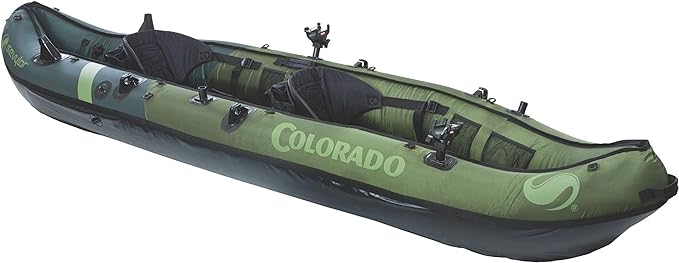
Sevylor Colorado

Sevylor Colorado Specs
Length: 10’8”
Width: 36.5”
Weight: 32.9 lbs
Capacity: 200 lbs
MSRP: $447 USD
coleman.com

Sevylor Colorado

Buy from:

COLEMAN AMAZON

Take home your catch limit with a buddy after a day in the Sevylor Colorado 2-Person inflatable kayak. With 18-Gauge Pvc, a thick tarpaulin bottom and a tough nylon cover, this kayak is durable enough to get you to your favorite out-Of-The-Way fishing hole. Just in case, though, the multiple air chambers will help you get back to shore. The adjustable seats will keep you paddling comfortably the whole trip. But if you want to move more easily, you can always add the Sevylor trolling motor and store your paddles in the convenient holders. The Berkley quick set rod holders let you adjust your pole angle for the ultimate hands-Free fishing experience. With your hands free, it’s easier to take care of your gear, which stores nicely in the Sevylor Colorado 2-Person inflatable kayak mesh pockets or attached to d-rings.

Paddle Sober And Smart
  • Never mix alcohol and paddling. Coast Guard and state BUI (boating under the influence) laws apply to all vessels. This includes canoes, kayaks, SUPs and rafts.

Shopping for cheap used kayaks

There are lots of good cheap kayaks on the new and used market. The considerations of what is a good cheap kayak are the same whether you’re buying used from a paddling shop or privately. Of course, your first step is to do a bit of homework on the specific attributes of the make and model of kayak you’re considering.

Once you’ve narrowed down your selection to a few cheap used kayaks, heed the following advice to get the best boat for your buck.

Overall condition

Don’t buy a piece of junk, unless the price is too good to pass up! Examine the deck and hull of the kayak for deep gouges more than 1/8th of an inch or 3 mm deep; obvious abrasion (especially if the worn areas are a different color from the rest of the kayak); deformities (which will make the kayak paddle less efficiently); and fading (indicating prolonged exposure to the elements).

Remember, plastic kayaks are extremely durable and able to withstand plenty of abuse; some damage is fine, especially if the shape of the kayak remains intact.

Outfitting

Outfitting elements are found at the places where the paddler’s body touches the kayak—think seat, back support, thigh rests and footrests. Is everything included with the cheap used kayak? Sit in the boat before you buy it and make sure you feel comfortable. A supportive and padded seat is obvious; make sure you also check the adjustability of the kayak’s footrests and back support, both of which are essential for more efficient and ergonomic paddling.

One of the drawbacks of many cheap kayaks is substandard outfitting. Take a close look and consider investing in a more expensive kayak if you plan on more serious paddling. Outfitting is easily modified with some glue, foam and DIY time so, if you’re handy, consider any upgrades you could make.

On the water

It’s always best to try before you buy to make sure the kayak fits and performs as you expect. Arrange a meeting place with the seller that allows you to take a few moments on the water. Bring your usual paddle and dress in what you plan to wear while paddling.

Make a deal

In general (that is, before Covid-19) the typical starting point for a used kayak in moderate condition was about half its retail price. Boat shortages brought on by the pandemic have changed that, but you can use it as a starting point in haggling for an acceptable price.

Add some accessories

Ask the seller if they’re willing to throw in a paddle, sprayskirt or PFD (make sure it fits and is Coast Guard-approved for the location you’ll be paddling). Or, maybe you can save a few dollars if you have your own paddling gear.

For more tips on what to look for when selecting a used kayak, read our article on How To Buy A Used Kayak.

How to get a cheap kayak

Wondering what you need to know when looking for a cheap kayak? That simple question is often a starting point for so many more. Here are expert answers to the most common questions for those looking to buy a cheap kayak.

  • Where to buy cheap kayaks

    Look no further than big box stores if you’re wondering where to get cheap kayaks. Outlets like Walmart, Dunham’s, Dick’s Sporting Goods, Canadian Tire and Academy Sports all sell cheap kayaks. With so many prospective buyers searching “Where can I get a cheap kayak” these large distributors are sure to turn up first on Google.

    At the same time, big box stores sell a lot of junky kayaks and the sales staff often lack expertise. Take a look at paddling specialty stores if you’re more serious about paddling and want expert advice on buying a cheap kayak that best meets your needs.

  • Cheap kayaks online

    It’s also possible to find cheap kayaks online. Check out Amazon if you’re looking for a new kayak, especially if you have a specific model in mind. Of course, online is also the best spot to find cheap used kayaks; search buy-and-sell platforms like Craigslist, Kijiji and Facebook Marketplace.

  • How much is a cheap kayak?

    For the purpose of this article, a “cheap kayak” is under $500, since it’s specific to entry-level kayaks. However, cheap is a relative term and prices go up along with performance and quality (often related to considerations like length, construction and materials)—a bargain price light touring kayak will sell for $1,000 or less and a cheap sea kayak is under $1,500.

  • Are kayaks cheaper in winter?

    In general, you’ll find better deals on last year’s stock and used kayaks if you’re shopping in the winter months—however, selection will be limited. Supply shortages brought on by the Covid-19 pandemic have upended this trend; kayaking is popular right now and it’s a seller’s market regardless of the time of year.

  • Best cheap kayak brands

    The easiest way to find the best cheap kayak brands is to look to the manufacturers of higher-end, light-touring and sea kayaks and scan their price lists for the cheapest models. Browse paddling specialty shops and talk to experts to find what’s right for you.

    In general, manufacturers of high-end kayaks like Wilderness Systems, Perception, Dagger and Delta will incorporate better performance features, design and outfitting in their cheaper models—however the price will be somewhat higher than the mass-produced kayaks available at big box stores.

    If you’re on a tight budget and must shop at a big box store, it’s best to choose a kayak that’s made in North America. Our Paddling Buyer’s Guide will set you on the right course.

  • Cheap vs expensive kayaks

    There are big differences between cheap and expensive kayaks. Performance is the obvious place to begin. Cheap kayaks are often mass-produced, sometimes even shaped for the most economical transportation or display options in big box stores (rather than for paddling efficiency).

    Expensive kayaks, on the other hand, are carefully designed and tested before going to market to achieve certain performance goals. Similarly, cheap kayaks often feature bare-bones or cheaply made seats, back supports, thigh braces and footrests—key pieces of outfitting that connect the paddler and boat. The old adage, “buy the best you can afford” is a good tenet to live by when shopping for a kayak. There are some exceptions, but most often you get what you pay for.

Education: Get Some!
  • Take a paddling safety course from the American Canoe Association (ACA), your local paddling shop or outfitter, or other reputable source.
  • Take a boating safety course from the U.S. Coast Guard Auxiliary, U.S. Power Squadrons® or your own state’s boating agency.
  • Take on-the-water skills training.

Cheap kayak reviews

Maybe your cursory online searching has yielded a short list of kayak results? Or perhaps you’re standing in the aisle of a big box store, facing a wall of choices and turning to your phone and Googling, “What is a good cheap kayak” to buy.

Our cheap kayak reviews are your best online resource for complete specifications, design features and impartial criticism of the strengths and weaknesses of dozens of cheap recreational kayaks, including head-to-head comparisons and lists of the best kayaks depending on your paddling aspirations.