Home Blog Page 311

Sjoa Valley Trip Guide: Norway’s Whitewater Paddling Paradise

Photo: Graham Genge
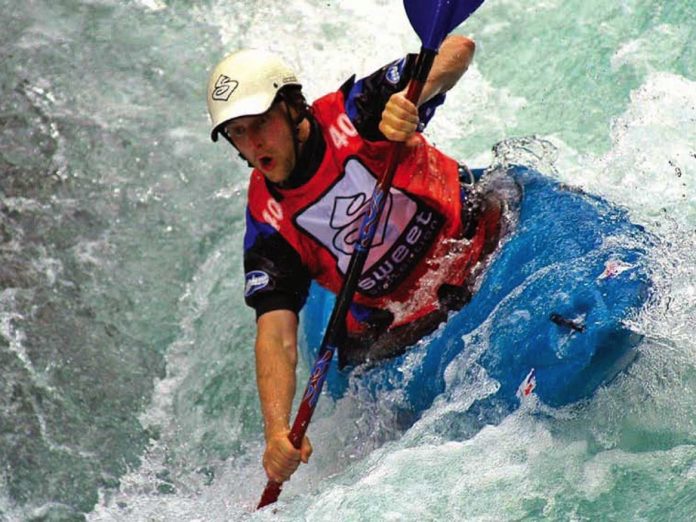
Sjoa Valley Whitewater

The world’s best paddlers migrate to the Sjoa Valley in the spring and summer to seek out the towering falls, endless slides and amazing Fresca-colored rivers that have made Norway a premier international paddling destination.

Situated 1.5 hours north of Lillehammer and 4.5 hours north of the capital, Oslo, Sjoa is central to nearly all of the country’s most outstanding whitewater. The valley itself is home to centuries-old wooden churches, bridge trolls and historic farms, as well as Norway’s largest commercial rafting operations and a seemingly inexhaustible supply of rivers, waves and steep creeks.

[ Paddling Trip Guide: View all paddling trips in Norway ]

Whitewater lowdown

Warm up on the middle Sjoa, a 6-km, mid- to high-volume Class II-III+ play section with safe, eddy-serviced holes and a world-class wave that boasts epic playboating status in flood. Upstream, the Aseng Juvet canyon is 14 km of read-and-run Class III-IV that makes for a thrilling backyard run. Downstream, Amot Gorge provides 2 km of big-volume Class IV+ falls that can be run in a playboat or creeker.

Over a dozen more runs—including the renowned Ulla Falls, Lower Otta and Lagan— are accessible within an hour’s drive from Sjoa.

Factoids
Population: 311
Average rent: $685
Number of gear shops/guide outfitters: 6+
Number of rafting companies: 4+
McDonalds: No

Cross-training

Mountain biking

Get dirty on Lilehammer’s world-class, lift-accessed bike parks and cross-country trails.

Hiking

Reach treeline in a matter of minutes on 400 km of marked trails in the adjacent Jotunheimen National Park. Tackle the classic, six-hour Besseggen circle route, which includes a stunning ferry ride on glacial Lake Gjende, and top out under the midnight sun among Norway’s highest mountains.

Grub, pub and hubbub

Sjoa Kayak Camp is the place to meet other boaters and settle in for cheap camping. Gear up and get river beta at Strie Strømmer—Norway’s largest kayak shop. Sjoa itself doesn’t offer much in the way of food or drink, but with the high price of grub in Norway, the local Statoil gas station’s sausage and endless free coffee (with the purchase of a mug) start to look pretty good.

Fifteen minutes down the road, Otta is the regional service center and the place to stock up on supplies. Don’t miss the annual Sjoa Kayak Festival, held in July when the water levels and weather are perfect, and there’s no shortage of paddling partners.

This article originally appeared in Rapid‘s Spring 2010 issue. Subscribe to Paddling Magazine’s print and digital editions here, or browse the archives here.


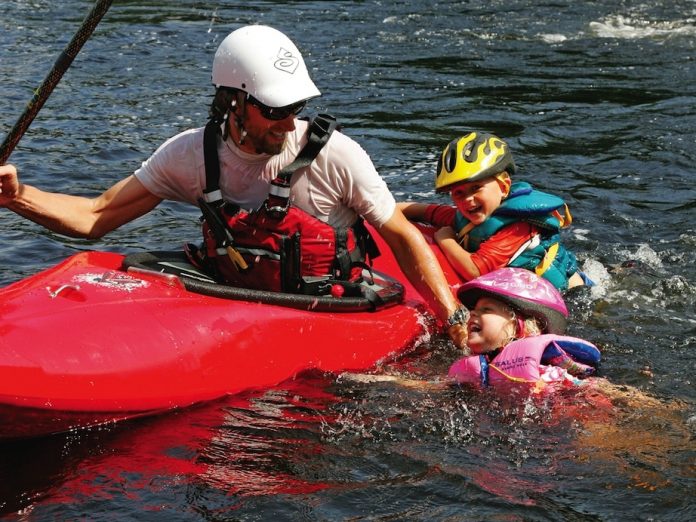
That’s brisk, baby: Sjoa’s glacial whitewater. | Photo: Graham Genge
Paramount H2O Canoe Review

Photo: Dan Caldwell
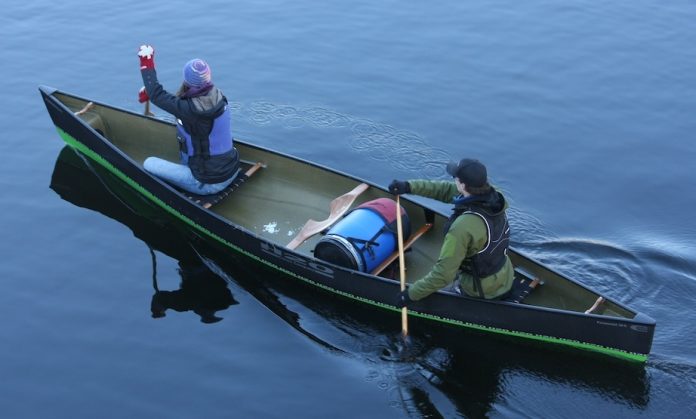
Paramount 16-6 by H20 Canoe Company

This review of H2O Canoe Company’s Paramount 16-6 was originally published in Canoeroots and Family Camping magazine.

When looking at sleek lakewater boats like the Paramount 16-6 from H2O Canoe Company, speed comes to mind. This is a fast canoe, but when was the last time you were in a rush in the back country? Marathon paddling aside, canoeing is rarely about speed at all. It’s about efficiency and the Paramount’s lay-up and hull design offer exactly that.

The H2O line of canoes consists of resin-infused composite boats. This molding process uses minimal liquid resin, producing boats that are both stiff and ultra-lightweight. The Paramount we tested is at the premium end of the line-up, in H2O’s carbon-Kevlar lay-up. Ours came in at a svelte 42 pounds—impressive, considering the use of gelcoat. H2O has managed to shave off pounds by using a clear-coat epoxy from the gunwales down to the waterline. While lightweight, hulls finished entirely in clear coat are less abrasion resistant so H2O applied gelcoat where durability is most important—the underside. The result is a signature eye-catching two-toned look.

As another means of weight savings, designers reduced the Paramount’s surface area. There is little volume at its extremities and sheer lines are low, requiring less build material.

“We started the company concentrating on classic canoes,” says H2O founder and designer, Jeff Hill. “We wanted to make sure the modern boats we do make perform well across all fronts.”

By modern, Hill means asymmetrical. Unlike the Prospector or Bob’s Special found in H2O’s Heritage Series canoes, the Paramount’s widest point is aft of center, a design attribute that improves acceleration and glide.

The first thing I noticed about the Paramount was how effortlessly it travels across the water, exceeding expectations based on its weight and hull shape.

At 16 feet six inches and with little rocker, it has a long waterline eliminating any need for a keel. Few stern finesse strokes are needed, leaving both paddlers free to maintain momentum and take full advantage of the boat’s top speed and glide. Despite the straight-tracking nature of the canoe, the two and a half inches of bow rocker left me pleasantly surprised by the boat’s maneuverability.

Confident paddlers will appreciate the secondary stability afforded by the Paramount’s gently rounded hull. Limited initial stability could leave novice paddlers a little wary when paddling it empty.

With the refined hull, low freeboard and trim placement, this canoe is better suited to weeklong trips than expeditions.

All H2O canoes come with classy cherry seats, yoke, aft kneeling thwart and carry handles complete with finger grooves. Rounding out the beautiful trim package and true to clever weight-saving design principles, the carbon-Kevlar lay-up comes with H2O’s Integral Composite Gunwales—inwales integrated into the canoe during the molding process. On the outside, aluminum outwales are bonded to the hull to maintain strength.

Paddlers looking for a premium canoe can expect to pay a higher price for H2O boats, especially the carbon-Kevlar lay-up. Given that the Paramount’s hull shape is designed for intermediate to advanced paddlers, cost should be less of an issue. These are canoeists who are never in a rush but always have a discerning taste for efficiency.

H2O Canoe Company Paramount 16-6 specs

  • Length: 16’6”
  • Width at waterline: 32.5”
  • Width at gunwales: 35.5”
  • Depth at bow: 22”
  • Depth at center: 14”
  • Depth at stern: 20”
  • Weight: 42 lbs (in carbon-Kevlar)
  • MSRP: $3,295 CAD
  • www.h2ocanoe.com

This article originally appeared in Canoeroots & Family Camping, Spring 2013. Download our free iPad/iPhone/iPod Touch App or Android App or read it here.

Base Camp: Algonquin’s Logging Museum

Courtesy of Scott MacGregor
Algonquin alligator

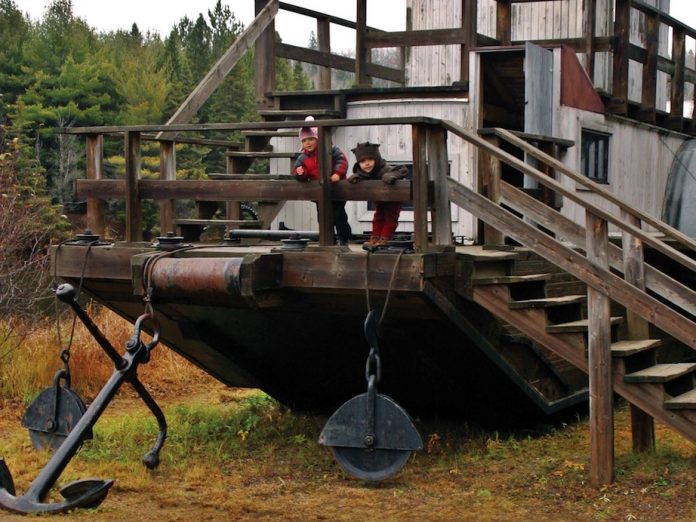
The amphibious tugboat pictured here was invented in 1889. Called an “alligator,” it is a wood-fed paddlewheel steamer capable of warping 60,000 boom logs in a day, then winching itself on a temporary railway of logs overland to the next lake. Built in 1905 and taken out of service in 1946, the William M. is one of only three alligators remaining in existence. For the last 49 years, it has rested on the shore of a small creek 600 metres down a wheelchair accessible, stone dust path at the Algonquin Logging Museum.

Located on Highway 60 just inside Algonquin Park’s east gate, the Logging Museum has a bookstore, theatre and souvenir shop, but it’s outside—in the bush, above a log chute, behind the wheel of the William M. and aboard a locomotive—where Algonquin’s logging history really comes alive. The Logging Museum, like hundreds of others across the country, didn’t make this issue’s list of North America’s top six interpretive centres. Nevertheless, it is outdoors, interesting for kids and within an hour’s drive of my house, putting it at the top of my family’s favorites list.

By comparison, a 10-minute drive deeper into Algonquin Park is the Visitors Centre—a state-of-the-art interpretive facility opened in 1993 and heralded as a must-visit on any trip through the park. We do visit. However, all of the exhibits are indoors—like a museum, complete with a cafeteria. My four-year-old son refers to the Visitors Centre as, “you know Dad, that place where we eat pie.”

Stuffed wolves hide safely behind Plexiglas well protected from curious little fingers. The French lumberjack’s story of the log drive is interesting to small children for all of 10 seconds. After an hour inside the Visitors Centre, both kids and parents go crazy like moose with brainworm (see the exhibit if you have time). Quick kids, back outside to the wheelhouse of the William M.

In a hurried, blackberry-driven, concrete world so focused on higher marks and organized sports, it’s alluring to blow into these visitor centres for a canned, one-hour educational tour. However, study after study from education and health organizations like the American Academy of Pediatrics says free and unstructured child-centred play is healthy and even essential to the development of children. Free play is even more beneficial when it’s outdoors in nature. This means that if we want our children to learn more, be more active and be socially and emotionally well balanced, we need to turn off our ringers, get them outside and let their imaginations lead the way.

Dan Strickland, author of the Logging Museum’s interpretive guidebook, writes that the twice-rebuilt alligator will never again belch out smoke and sparks as it struggles across Algonquin’s lakes. Perhaps, but in the imaginations of my children, the log drive has just begun and there are plenty of trees to be floated downstream. “Stoke up that fire Katie, we need more steam.”

—Scott MacGregor

This article appeared in Canoeroots & Family Camping, Early Summer 2009. Download our free iPad/iPhone/iPod Touch App or Android App or read it here.

Freestyle Move: Loop Lunar Orbit

Photos: Emily Jackson
Nick Troutman freestyle tips

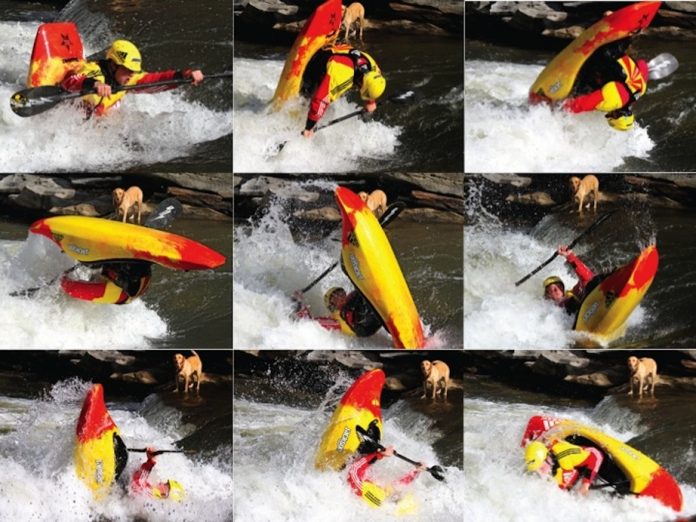
The loop lunar orbit is an awesome aerial hole combo that is sure to get you more chicks than a Nickelback concert. The beauty of it is that once you have it dialed, you can cartwheel into a mcnasty, and then keep adding more moves to infinity.

1. Start by plugging your bow for the loop.

2. Stand up tall and jump forward. The higher you go and farther upstream you jump, the better because the lunar orbit will pull you downstream.

3. Throw your body forward and pull back on your paddle blade. This launches your bow around over your head. Using only one blade to pull the loop stroke is key; this will set you up for the combo.

4. From here, you actually want to land on your stern, rather than finishing all the way flat on your hull.

5. When you are vertical on your stern with your paddle behind you from pulling the loop stroke, quickly use that same paddle blade for a reverse stroke. This is the stern pry that initiates the lunar orbit.

6. The farther back your paddle blade when you push, the more vertical your boat will go. Keep your paddle blade in the water the entire time or you will fall over on your head.

7. Finish the reverse stroke and turn it into a forward draw to pull yourself around vertically.

8. Lean forward as you turn your forward draw back into a reverse stroke for your bow smash.


This article originally appeared in Rapid, Early Summer 2011. Download our free iPad/iPhone/iPod Touch App or Android App or read it here.

Flushed: Doin’ It Duckie Style

Photo: Steve Thomsen
Duckie style

My partner Steve Thomsen and I work together on field projects as a photojournalist team. Our gigs are often crossover affairs: mountain biking and fly-fishing on rafting trips, disc golf on a sea kayak expedition. Invariably, our diverse pursuits require a lot of gear.

For our latest trip—a scenic downriver journey with fly-fishing, fowl hunting and some canyoneering on the side—we pack all the typical necessities plus such eclectic luxuries as a Dutch oven, camp chairs, cooler, fly-fishing gear, SLR camera setup, espresso brewer, shotgun and shells, fresh veggies and down pillows. We are set up in the tradition of a classic safari and that’s how we like it.

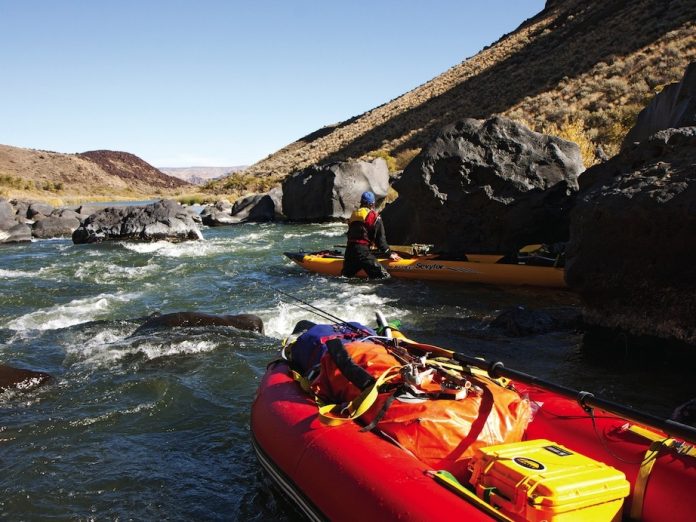
Our cargo, stuffed into Rubbermaids stacked three deep, fills the bed of Steve’s Tundra truck as we roll past Boise toward the put-in for the Owyhee. Most groups run southeast Oregon’s mighty O during spring runoff, when 7,000–10,000 cfs create a three-day, class III run from Rome to Birch Creek and raft support, or a lean tripping style, is de rigueur.

We’ve chosen to run this 45-mile stretch of river in early October at a niggling 100 cfs, taking a leisurely week to do it. Because our payload is lean only in comparison to a fully loaded 18-foot Aire Cat, we’re paddling inflatable kayaks (IKs)—no raft support required, or possible given the extreme low water.

Canoes are out of the question. The first time we took open boats down the late season Owyhee, the canoes emerged so thrashed that the rental guy refused to take them back. We paid for that mistake in no small amount of change.

Without all our planned side ventures we’d probably be paddling the new crop of crossover kayaks: Liquidlogic XP10s or Pyranha Fusions, hard shell kayaks with hatches and space for a little extra—but just a little.

Steve and I know we’ll be leaving cool at the corner running the Owyhee in duckies, but so what? We’re the only ones on the river and we stopped worrying about cool a couple decades ago. Our goal is to get our butts and our swag through the canyon, and if IKs are the ticket, so be it.

Putting on the river in stellar weather, we bump inelegantly down the rapids dodging as many rocks as possible and bouncing off or sliding over the rest. Sometimes we get hung up—the beamy IK hulls refuse to go over—and have to wade out to haul the damned things free.

We drag ass in the riffles, line the boats down the messiest stuff and struggle over one truly miserable portage. We nail every lava nugget that more nimble river runners would easily slip past. More than a few times I think how fun it would be to slalom gracefully down a rapid that we’ve just pinballed through.

Still, we have no regrets. We are a different breed of boater.

We dig what meager performance we can squeeze from our rubber ducks, but our sights are set on the bigger picture: Eating Cajun-blackened quail from the Dutchie. Catching smallies on flies from stacked pools. Hiking up the canyon flanks to photograph the grandeur of the Little Grand. Exploring crumbling rock wall wind breaks built by Basque shepherds on the dry grass plateaus. Hunting for petroglyphs, partridge and bighorns. Playing a game of call-shot disc golf up the arroyo behind camp with a cold beer in hand.

When we roll up the IKs at week’s end, Steve and I agree we’ve found the perfect match to our tripping ethos. Next time we run the Owyhee, you can bet it will be duckie-style. Sure, the cool crowd would probably heckle us, but they won’t be there.

50 Of The Best Whitewater Towns To Visit Before You Die

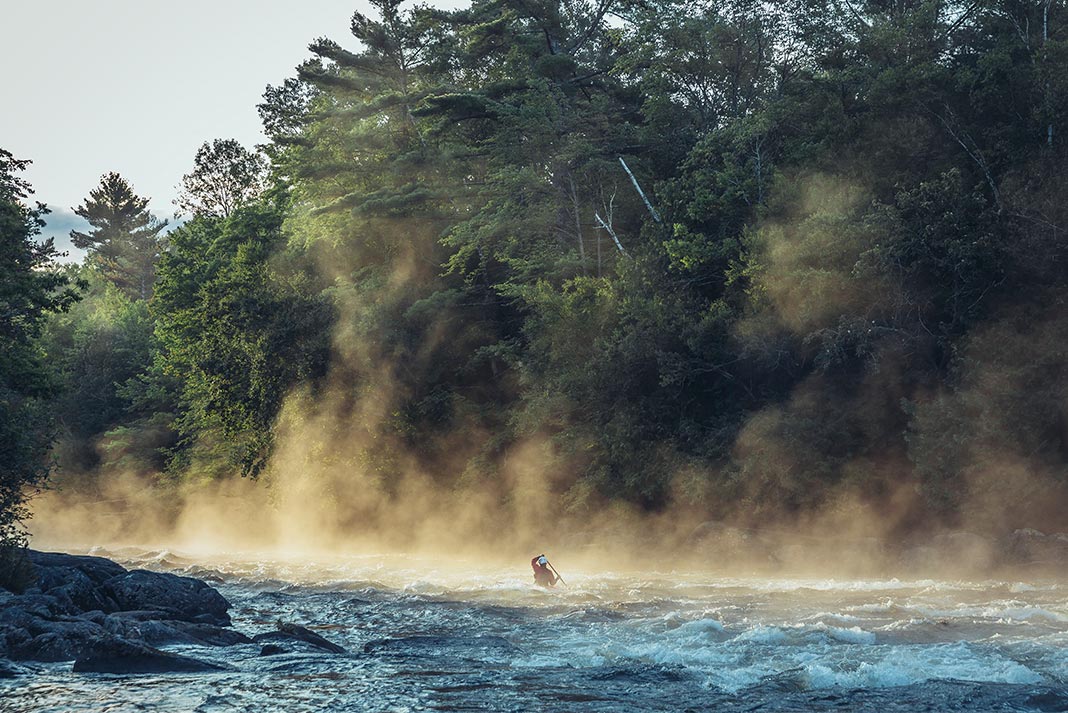
Person paddling on river with mist rising up
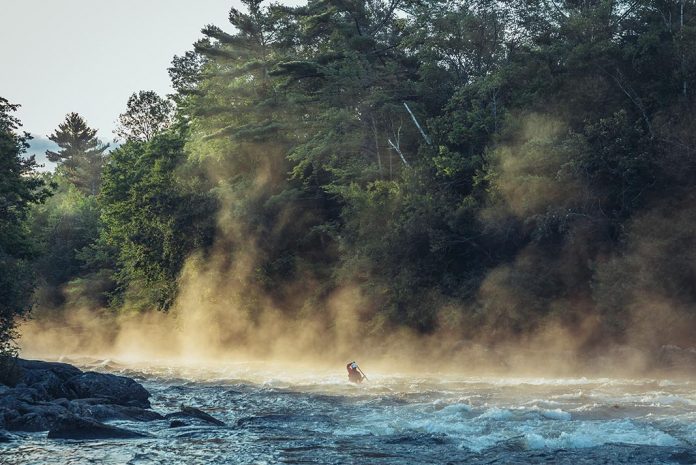
Madawaska River runs through Palmer Rapids and is only a two-hour drive from Ottawa. | Photo by: Image Ontario

Between all our editorial, design and sales staff, we have a combined total of 103 years of whitewater experience. That’s a lot of cycles on the calendar spent traveling bumpy put-in roads, tracing sinuous blue lines on topo maps, sharing accommodations with wintering rodent populations and generally chasing the whitewater dream.

We’re also based in the blink-and-you-miss-it timber town of Palmer Rapids. Sure there’s no nightlife (aside from community center bingo), a box of Corn Flakes costs six bucks, the general store rents only VHS and fine dining is a seasonal chip stand. But if you triangulate between the Ottawa Valley’s world-class whitewater, Algonquin Park’s thousands of wilderness lakes, and the spring creeks that tumble off the southerly edge of the Canadian Shield, you’ll find Palmer Rapids at the center.

Hopefully that provides you with some confidence that we when it comes to river towns, we know what we’re talking about. Here—in no particular order—are Paddling Magazine‘s picks for the best whitewater towns.

Best creeking towns

1. Terrace, British Columbia

2. Hood River, Oregon

3. Thunder Bay, Ontario

4. Asheville, North Carolina

5. Jasper, Alberta

6. Lake Placid, New York

7. Revelstoke, British Columbia

8. Nevada City, California

Best all-river towns

1. Fayetteville, West Virginia

2. Copperhill, Tennessee

3. Clearwater, British Columbia

4. Confluence, Pennsylvania

5. Petawawa, Ontario

6. Crested Butte, Colorado

7. Kernville, California

8. Maniwaki, Quebec

Person paddling on river with mist rising up
Madawaska River runs through Palmer Rapids and is only a two-hour drive from Ottawa. | Photo by: Image Ontario

Best newbie-friendly towns

1. Beachburg, Ontario

2. Franklin, North Carolina

3. Charlemont, Massachusetts

4. Palmer Rapids, Ontario

5. Forks of Salmon, California

6. Bingham, Maine

7. Canmore, Alberta

8. White Lake, Wisconsin

Best urban whitewater

1. Saint John, New Brunswick

2. Montreal, Quebec

3. Pueblo, Colorado

4. Ottawa, Ontario

5. Watertown, New York

6. Reno, Nevada

7. Cambridge, Ontario

8. Missoula, Montana

Best international towns

1. Sjoa, Norway

2. Pucón, Chile

3. Turrialba, Costa Rica

4. Hokitika, New Zealand

5. Thun, Switzerland

6. Jalcomulco, Mexico

7. Briançon, France

8. Oetz, Austria

9. Rotorua, New Zealand

10. Pokhara, Nepal

11. Tolmin, Soča, Slovenia

Best park ‘n’ play towns

1. Salida, Colorado

2. Trail, British Columbia

3. Fort Smith, Northwest Territories

4. San Marcos, Texas

5. Jackson, Wyoming

6. Enderby, British Columbia

7. Glenwood Springs, Colorado

Is It Better To Sit Or Kneel In A Canoe?

Photo of woman in bow of a canoe paddling
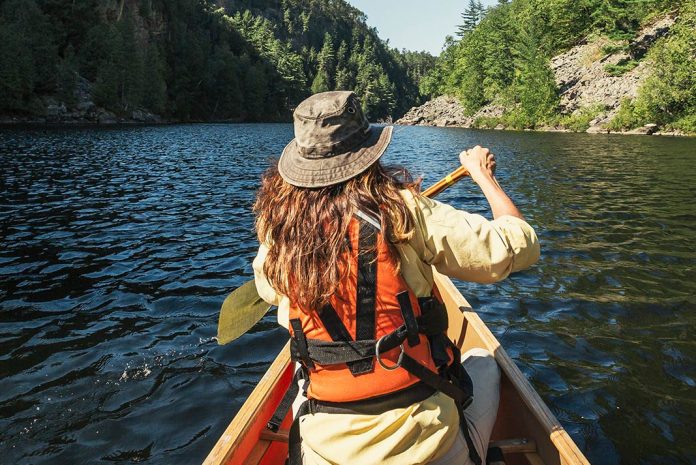
Kneeling is no longer the superior way to enjoy maximum power and stability. | Photo by: Image Ontario

When it comes to the question of whether to sit or kneel in a canoe, times are changing. Tradition always dictated that kneeling demonstrated proper technique—sitting was sloppy.

Innovation, on the other hand, has resulted in technique that has canoeists actually paddling stronger while seated. It’s not quite as easy as just changing positions, though. You’ll need to modify your paddling style to match your seated stance for added power, efficiency and comfort.

Which is more stable?

Proponents of kneeling usually argue that it’s more stable than sitting. This isn’t always true. Lower the seat and there’s no need to kneel. Properly mounted tractor seats are installed with this in mind. Tractor seats also force paddlers to keep their center of gravity over the center of buoyancy of the boat, eliminating balance issues related to sliding to one side on a bench seat.

Which provides more power?

Kneelers who claim they get more power likely do so by leaning forward and planting their paddles further ahead—reach afforded by their kneeling position. However, when paddling most canoes, this is less efficient since it causes the bow of the canoe to porpoise in the water.

[ Paddling Buyer’s Guide: View all canoes ]

Using the right paddle

The shorter, faster stroke cadence of the seated paddler lends itself to bent shaft paddles. Because tractor seats are lower than bench seats, a shorter paddle is required. Bent shaft paddles also demand less reach because of the angle the blade enters the water.

Those quick to criticize bent shaft paddles for their clumsiness when it comes to steering strokes will find that switching sides is actually easier seated than while kneeling because of the stability factors mentioned above. Replace a pry, which is ineffective with bent shaft paddles, by changing sides (hut!) and doing a draw—generally more ideal than a pry anyways because it’s more powerful. Pries can also destabilize the canoe, which can be an issue with the lower freeboard boats commonly designed for this style of paddling.

Engaging your lower body

The shortened overall height of this more modern style of boat not only reduces wind sheer, it also allows seated paddlers to comfortably reach over the sides as well as brace thighs and knees beneath the gunwales.

Bow paddlers should rest their thighs against the sides of the canoe and feet against the air chamber in front of them. Boats with tractor seats often have an optional foot brace for stern paddlers. Engaging your lower body creates the feeling of pulling the boat forward across the water rather than pushing the water backwards, behind the canoe, as is the case with straight shaft paddling common to the traditional kneeling style.

Greater comfort

Perhaps one of the greatest benefits to paddling from a seated position is the added comfort. No more sore knees, no more pins and needles. Marathon canoeists paddle almost exclusively seated with their lower bodies braced to maintain comfort over long distances while still generating maximum power.

Kneeling remains the best choice for classic soloists and paddling most technical whitewater, but if you don’t want to kneel, learn to paddle properly when seated. Just like kneeling paddlers, in order to maintain an efficient stroke, seated paddlers must sit up straight and generate power by rotating the torso rather than relying entirely on arms. They key here is not to slouch in your seat.

Why Your Canoe is 16-feet, 6-inches

Photo: James Smedley
Canoes

This article originally appeared in Canoeroots and Family Camping magazine.

If there’s one thing that most people think they know about canoe design, it’s this: A longer canoe is always faster than a shorter one.

Well over a century ago, British engineer and hydrodynamicist William Froude came up with a simple formula that, to a certain extent, proves this theory. Froude determined that the top sustain- able speed in knots of a watercraft is equal to the square root of its waterline length multiplied by a constant value of 1.34.

This means that a 16-foot canoe would have a hull speed of 5.36 knots, or roughly 10 kilometers per hour. Of course, it’s possible to propel a 16-foot canoe faster than 10 kilometers per hour, but according to Froude, beyond this speed frictional resistance increases rapidly.

However, it’s clear that Froude wasn’t thinking about paddlers. There is a threshold where a canoe becomes excessively long and in- efficient. Naval architect John Winters, whose designs are built by Swift and Hand Crafted Canoes, recalls a man who entered a “very long canoe” in a marathon race. “Despite a superhuman effort, he lost,” writes Winters in The Shape of the Canoe, a comprehensive book on canoe design. “Excessive wetted surface…did him in.”

A pair of paddlers can move a 16-foot prospector faster than two paddlers in a 26-foot voyageur canoe because of the greater surface area (and corresponding resistance) of the larger hull.

So where does this fit into canoe design? According to Winters, length is only one element juggled in the conception of a canoe.

First off, Winters outlines the canoe’s desired usage—flatwater, whitewater, sporting or tripping, solo or tandem. Then he sets an ideal cruising speed for the hull and works backwards to determine a possible length range.

Beam, draft, displacement and dozens of other measurements are compared as a ratio to length to yield values to estimate how easily the canoe will move through the water and how well it will suit a given application. This is why “boats of widely different lengths can have similar performance characteristics,” says Winters.

The reason tandem recreational canoes typically measure 15–17 feet while solos are traditionally a foot or so shorter is simply a matter of stability and space. These lengths essentially yield the most user-friendly ratios when compared to the appropriate widths to make a canoe sufficiently comfortable and voluminous.

Did the generations of Aboriginal builders who designed canoes have their own mathematical formulas? Not very likely, says Winters. “Thousands of years of trial and error are bound to get close, even if it doesn’t explain why it works.” —Conor Mihell

This article appeared in Canoeroots & Family Camping, Spring 2012. Download our free iPad/iPhone/iPod Touch App or Android App or read it here.

Zegul 520 Kayak Review

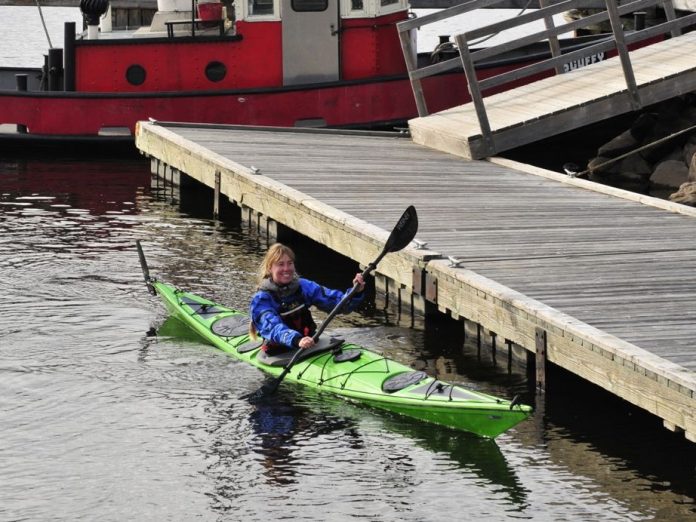
Photo: Vince Paquot
Zegul 520 Kayak Review

A review of the Zegul 520 sea kayak by Adventure Kayak magazine.

Designed in Scandinavia, built in Northern Europe and shipped to U.S. and Canadian retailers from warehouses in California, Vancouver and Montreal, Zegul Marine continues sea kayaking’s long tradition of international cross-pollination.

Founded in Sweden in 2004 by designer Johan Wirsén, Zegul kayaks are now manufactured by Tahe Marine—one of Europe’s largest and longest established composite kayak builders—on the north coast of Estonia. In 2012, a merger with new, Quebec-based paddlesport powerhouse, Kayak Distribution, brought Zegul boats to North American shores for the first time.

Zegul lists the 520 in their play boating line, but as Kayak Distribution sales and marketing director Mark Hall notes, it’s really an all-purpose kayak for touring and play.

The 520 is available in two lay-ups: a glass/carbon/aramid “A-core” infusion weighing around 50 pounds, and an even stiffer, lighter vacuum-infused carbon “C-core” construction. Our lime green A-core test boat has the flawless finish of an exotic sports car, and features stylish black accents that also provide protection in high wear areas.

Zegul 520 Specs

Length: 17 ft
Width: 21 in
Weight: 42–53 lbs
Price: $3,500–$4,200

This article originally appeared in Adventure Kayak, Early Summer 2013. To continue reading the full review and watch an exclusive video review, download our free iPad/iPhone/iPod Touch App or Android App or read it here.


Editorial: A Paddler Looks At 40

Photo: Tanya MacGregor
A paddler looks at 40

I have a lot of Jimmy Buffet on my iPod. I can sing along to more than Margaritaville and I’ve read all his books. In 1998, when Jimmy turned 50 and I was toying with the idea of starting a whitewater magazine, he wrote his autobiography, A Pirate Looks at Fifty.

On the jacket of my hardcover copy Buffet summed up his life in 400 words and I thought I’d try to do the same someday. Looking down the losing end of 39, here are my 400 words, in case I don’t make it to 50.

I survived my small-town youth of motocross, snowmobiles and four wheelers. I drove an 18-wheeler hauling gasoline for awhile, graduated high school not being able to spell, and went off to university to become an engineer.

I did my first canoe trip, wrecked my grandfather’s cedarstrip, sold all my things with motors, dropped out of school and protested the first Gulf War. I got a job at an outdoor center, learned to paddle whitewater, grew my hair and got back into school in an outdoor program. I became an open boat instructor, got a job as a raft guide, swam a lot and drank too much warm beer.

I re-met the right girl (she was in my kindergarten class and I kissed her in grade two), went on to teachers’ college, graduated and sea kayaked 1,600 miles through the Great Lakes. We learned to snowboard, blew off to the mountains, slept in my truck, ran out of money, missed warm rivers and drove home.

I helped start the Paddler Co-op, a non-profit paddling school, and got the idea to start a magazine. I left the paddling school, broke up with the right girl and moved to a rented shack by the river in Palmer Rapids.

I got lonely, proposed to the right girl, bought my first computer, racked up every credit card that arrived in the mail, and launched a 16-page trial issue of Rapid. I paddled every day, learned to use spell check, ate too many frozen pizzas, married the right girl and started a sea kayak magazine and, a year later, Canoeroots.

I hired an editor, started a paddling film festival, built a house in the Valley, moved out of the shack, drove a Corvette, had a little boy, cut my hair, took over a paddling festival and bought another magazine, for a dollar—Family Camping.

I bought a good camera, took a photo of a friend running a dam, ran the photo in Rapid, almost got arrested and nearly lost my business to the hydro power company—the owner of the dam.

I launched a kayak fishing magazine, had a baby girl, lost the fight to save national river navigation rights, bought property on the river and started a web-based paddling television show. We became the magazines of the American Canoe Association, I cancelled a family paddling trip, realized it was time to slow down a little and gave up the paddling festival. I took my kids paddling.

When I realized I’d be 40 this year, I stopped drinking coffee, found my running shoes, ordered another boat and booked my first northern river trip.

Now I’m trying to figure out what comes next. 


This article originally appeared in Rapid, Early Summer 2011. Download our free iPad/iPhone/iPod Touch App or Android App or read it here.