Home Blog Page 315

Behind the Scenes at the Canadian Canoe Museum

All Photos: Virginia Marshall
Behind the Scenes at the Canadian Canoe Museum

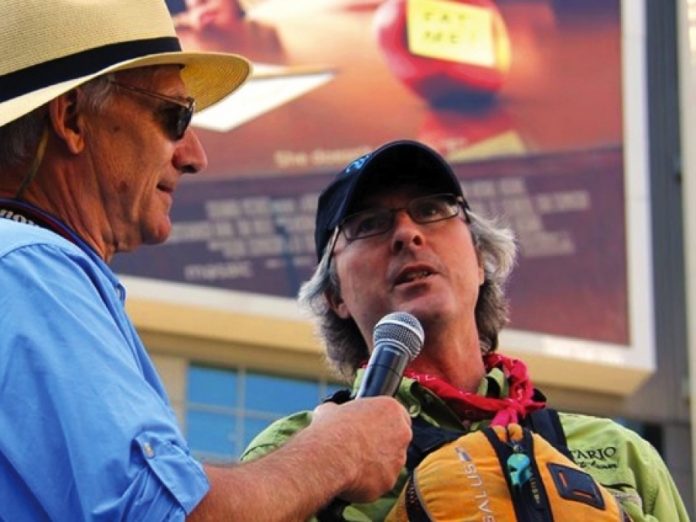
“We like to do a bit of a test whenever we bring guests out here,” said Jeremy Ward, Curator for the Canadian Canoe Museum and one of our three hosts for the day. “We get a pretty good idea of how much fun we’ll have judging by how wide-eyed you are when you first walk through the door.”

He was only half joking. Apparently some of the people they take through the museum’s archives don’t even bat an eye as they cross the threshold. They go right on talking as if they have just strolled into a Walmart, and walk out barely noticing the significance of the collection.

Wondering how one could be anything less than floored I asked, “How’d we fare?”

“You guys looked pretty amazed.”

From the exterior, the 30,000-square-foot warehouse is nondescript. It used to serve as a factory for Outboard Marine, a motor manufacturer and part of Peterborough’s long boat building history. After the industry faltered in the ‘60s, the company eventually went under and the building and all the equipment inside were essentially left to collect dust.

“When we first moved in, all the boats were stored wrapped in plastic and sealed off to preserve them from exposure to the dust and decay of the rest of the building,” said John Summers, the museum’s General Manager. “It was quite a process to get it to where it is today.”

After the remaining forgotten factory equipment was removed, the local fire department came in and literally hosed the building’s interior down, floor to ceiling. A small army of volunteers made up mostly of university students on their summer holidays whitewashed the walls and resealed and painted the sprawling concrete floor.

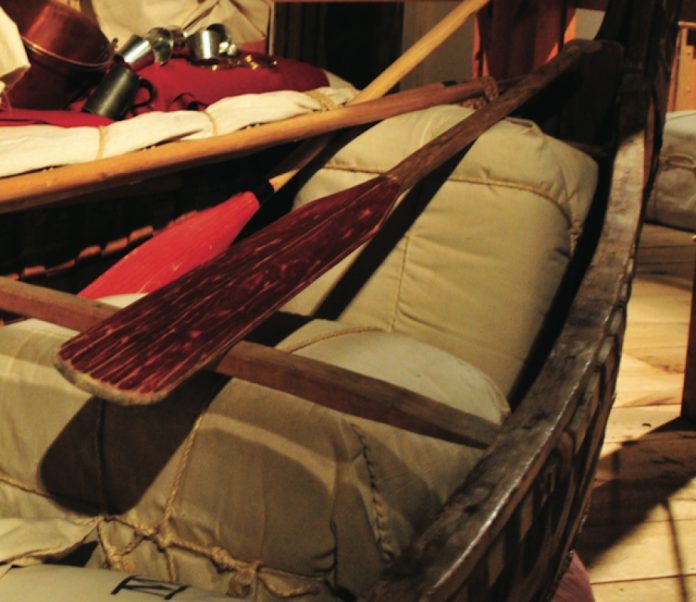
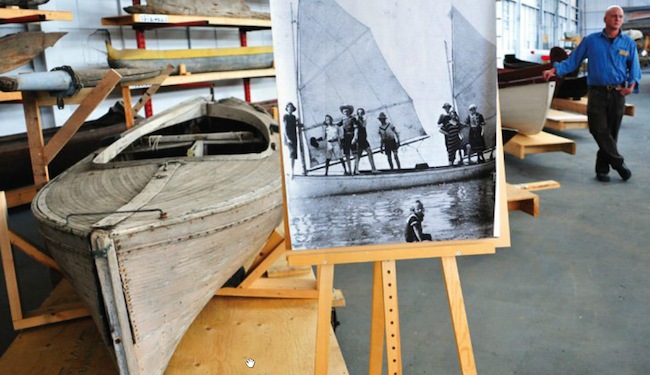
Today, natural light washes in from the rooftop windows, bathing the hundreds of boats in soft sunlight. Ancient-looking dugouts line one outside wall on shelves rising up 20 feet. Racks loaded with some of the museum’s 500 curious paddles of all shapes, sizes, materials and ages sit near the warehouse’s entrance. Along another wall is a drop sheet, hung to create a makeshift photo studio for the cataloging of each piece in the collection. Twenty-foot wood-plank boats and fragile birchbark war canoes on dollies crowd aisles lined by rows of stands on wheels. Each stand holds nine canoes in various stages of repair and preservation, each canoe with its own manilla tag stating a name and item number.
Screen_Shot_2015-08-20_at_10.58.52_AM.png

Ward pointed out the Starkell’s Orellana of Paddle to the Amazon fame; then, a canoe carved by First Nations to commemorate the Hudson Bay Company’s 300th anniversary that required painstaking attention to detail in fabrication but had apparently never actually seen water.

Ward shared the history of the gold medal-winning K1 from the 2004 Olympics in Athens; a miniature decked Fijian outrigger outfitted with a crab claw sail; and the Père Lallement—a 22-foot cedar canvas Chestnut canoe that capsized almost 35 years ago on a school trip in Timiskaming, resulting in the death of 12 boys and their master.

Each of the dozen-or-so canoes I recognized had such incredible stories behind them. And there were hundreds more boats with stories I could only guess at.

“In each story is a lesson of cooperation between people,” explained the museum’s Executive Director, James Raffan. “They’re all about people’s relationship to place, and about remembering.”

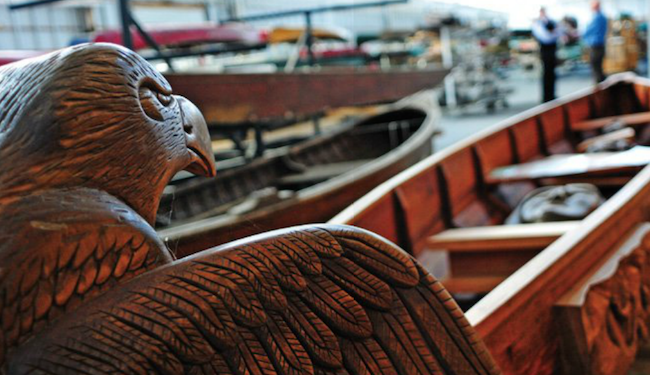
Like an inquisitive child, I jumped around from boat to boat, asking about their origins, the most peculiar looking ones really catching my attention. There is a definite international flavor in the materials, shapes, designs and techniques used to build many of the boats.
Screen_Shot_2015-08-20_at_9.55.03_AM.png

“What I find very exciting as we look at canoes from California or from Samoa, from Polynesia, Papua New Guinea, Solomon Islands or South America, is that only a certain portion of each canoe is functional,” explained Ward. “Of course it needs to perform, it needs to paddle, it needs to be maneuverable or strong-tracking, but so much of each boat is just the artistic, the cultural art form of the community it came from and it’s so distinct.”

“There are some strange looking watercraft in here,” he added, “but they all have a family resemblance. Each one has its own individual story but, as an aggregate, they all link together.”

He and his team use these links to create the imaginative exhibits in the museum’s main display area. “This is an idea factory,” Ward beamed. 

Like his colleagues showing us around, he could happily go on all day, revealing details of workmanship, design and history. We would happily follow.

At the risk of sounding ignorant, I had to ask about the many racks holding dozens of what appeared to me to be run-of-the-mill cedar canvas canoes. Ward smiled, knowing what was coming before I could even get the question out. It’s clear he’s passionate about the eccentricities of every piece, but all three of our tour guides acknowledged that there is some replication in the artifacts. 

“There are some strange looking watercraft in here but they all have a family resemblance. Each one has its own individual story but, as an aggregate, they all link together.” —Jeremy Ward 

“The collection is filled with the idiosyncrasies of its founder, Kirk Wipper,” said Summers. “Because it started as a private collection, it was really just his collection of boats. He didn’t necessarily have the same bigger-picture outlook that we need today to run the museum.” 

In 1957, at a summer camp north of Minden, Ontario, a friend presented camp owner, Kirk Wipper, with a dugout canoe from the 1890s. Ten years later, his collection had grown to over 150 boats housed in log buildings and dubbed the Kanawa Museum.

As Summers suggested, Wipper’s collecting habits were very organic. Friends would keep him informed of interesting watercraft as they became available. He would scoop up a freighter or a cedarstrip as they would cross his path. He would take on debt to invest in truly unique artifacts.

Through it all, he was guided by a feeling of responsibility to continue collecting in order to share the whole story of canoeing and kayaking, and their relationship to the environment and the history of North America. 

His dedication was tireless. No Haida dugout canoe had been carved within living memory until Wipper commissioned one in 1968. He negotiated the $150,000 purchase of 44 canoes from New York’s Museum of the American Indian. He transported a 53-foot dugout canoe from British Columbia to Ontario on the roof of his pick-up truck.
Screen_Shot_2015-08-20_at_11.00.06_AM.png

By the ‘80s, the Kanawa Museum had outgrown its home. After hearing that Wipper was looking for a new home for his 600 boats, a group from Trent University set out to bring the collection to Peterborough, home of the famous Peterborough Canoe Company.

In 1989, a board of directors was formed and by 1994, after several summers spent transferring the collection, the artifacts were in the hands of the newly established Canadian Canoe Muesum. The doors to the current location opened to the public July 1, 1997.

As our hosts sealed up the archives and we made our way back to the museum’s main building—the one with all the exhib- its—conversation turned to the present.

While this museum is truly one of a kind, its inception really isn’t that out of the ordinary. “A crazy collector is behind the founding of a lot of museums,” said Raffan, 

“A crazy collector is behind the founding of a lot of museums, look at the Smithsonian. What’s not so well known is the fact that this is a living, breathing organization.” —James Raffan 

“Look at the Smithsonian. What’s not so well known is the fact that this is a living, breathing organization.”

Raffan, Ward and Summers manage the collection with a clearer mandate as far as accepting artifacts goes, but they also continue to reflect Wipper’s goal of telling the entire canoeing story.

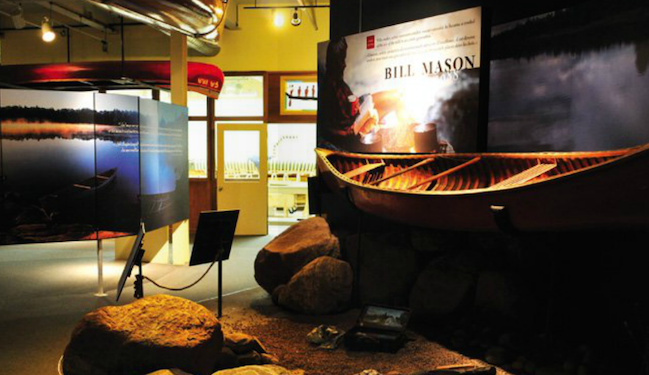
Over 100 boats are on display in the main exhibit area, along with hundreds more artifacts. In the warmth of muted museum lighting, visitors explore a salon dedicated to cedar Chestnut and Peterborough Canoe Company boats from the heyday of recreational canoeing in the early 20th century. Around the corner, behind glass, sits Pierre Trudeau’s iconic deerskin coat across from a screen playing Bill Mason films.

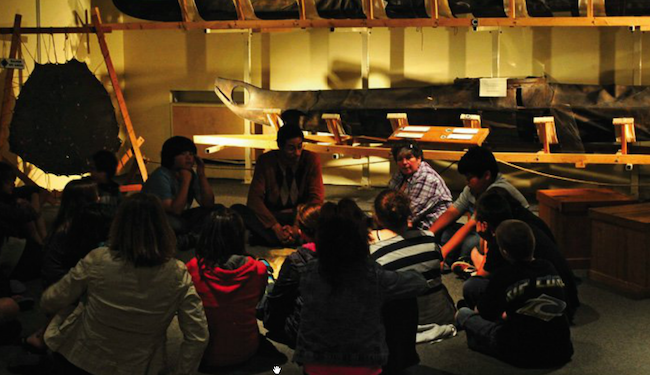
Upstairs, Hudson’s Bay blankets, casks and muskets are arranged in a birchbark canoe; plaques describe life as a voyageur during fur trade times. A group of middle school students sit in a circle on the floor nearby amidst skin-on-frame kayaks, learning about the primitive materials and craftsmanship from a volunteer. “The museum isn’t just about the past,” explained Summers. “It’s about what people do with their families today.”
Screen_Shot_2015-08-20_at_10.59.49_AM.png

“The canoes are physically old, but the things that make them what they are, are as fresh and new today as they were when the boats were first made,” he continued. “One of the things we like our visitors to come away with is how connected this all is.”

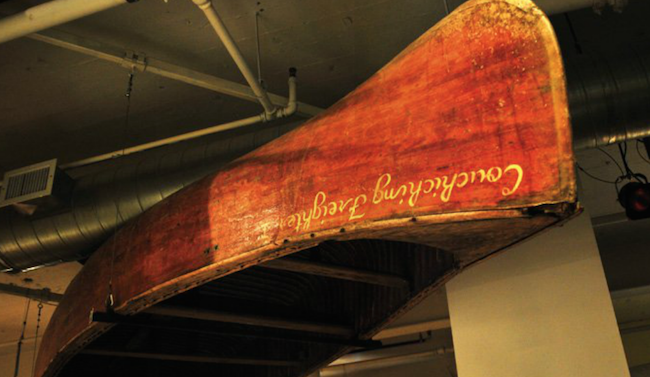
In contrast to the birchbark and cedar is a polyethylene Dagger freestyle boat hanging from the ceiling—a prototype from the days when whitewater paddlers were parking cars on the bows and sterns of their boats to flatten them out to improve performance in a hole.

In another corner, there is a fully operational workshop where Ward and a crew of volunteer artisans build and repair boats, paddles and other paddling paraphernalia while visitors watch, ask questions and even participate. 

“It really is amazing that we’ve created all of this from next to nothing,” said Raffan, referring to the fact that the museum continues to run exclusively on funding from private sources and membership. “We truly are a world-class museum destination and there continues to be no funding from the federal government.”

This has caused some instability over the years. In 2003, they were forced to close their doors due to financial problems. The following year, an anonymous donor stepped up and paid off two-thirds of the museum’s debt. Under this momentum, they were able to bolster membership and reopen the world’s largest collection of canoes and kayaks. 

Financial hardship may seem like an economic reality inevitable in the world of special interest collections. But if you put the museum into context, it becomes clear that someone has dropped the ball when it comes to public funding. 

The canoe is inextricably linked to North American history.

The Canadian Canoe Museum chronicles the evolution of a civilization as much as it does boats and paddles. In 2007, the canoe was votes as one of the Seven Wonders of Canada as part of a reality TV series. In commemoration, the museum has established National Canoe Day, celebrated every year by thousands of people across Canada and around the world. 
Screen_Shot_2015-08-20_at_9.51.36_AM.png

Today, the museum has a staff of nine, and a crew of 120 active volunteers who Raffan credits as being at the heart of a lot of the day-to-day operations. The artifacts, facility and events have been established as world-class without the help of any significant government backing. Working under this reality has forced raffan, Summers and Ward to be creative. 

“Take five zeros off the budget of a big museum,” said Raffan, “then take 10 percent of that and it would make a huge difference to what we do.”

Still, members get some wonderful perks beyond the usual gift shop discounts and unlimited admission. Among other benefits, Raffan recently announced a members-only online exhibit—a unique, exclusive web museum filled with content visitors to the bricks and mortar museum can’t access.

They are also optimistic looking into the future. Raffan and Summers share medium-term plans of moving the museum from its current location just off the highway, bookended by plazas and industrial parks, to Peterborough’s picturesque waterfront, giving them the opportunity to offer an on-water component to the museum in a purpose-built facility. 

As we wrapped up our behind the scenes tour, we shook hands and promised to return soon. Exiting through the foyer, we were thanked by the retiree volunteers manning the museum’s front desk and gift shop.

We all know that canoeing is about more than just boats and paddles and this museum reflects that.

Raffan’s words summed it up perfectly. “These are lessons that I think go forward—lessons about paddling together, about working together so that we can make sense of what’s happening today and chart a course for tomorrow.”

For more information on events, exhibits and how to become a member of the Canadian Canoe Museum, visit canoemuseum.ca. 
 

This article on the Canadian Canoe Museum was published in the Fall 2012 issue of Canoeroots magazine.

This article first appeared in the Fall 2012 issue of Canoeroots Magazine.
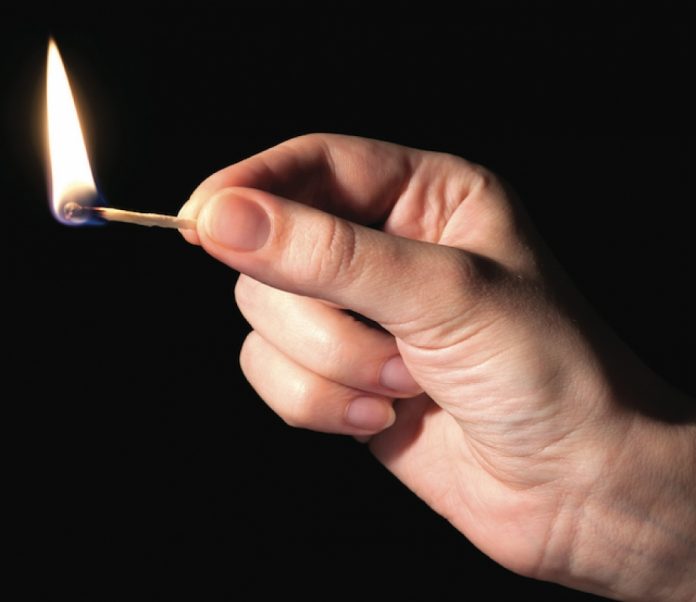
 

Betcha Didn’t Know About… Matches

Photo: iStockPhoto.com
Betcha Didn't Know About... Matches
  • Sweden is the world’s leading exporter of matches, manufacturing around five million boxes daily—the equivalent of about 250 million matchsticks.

  • The original matches—small sticks of pine impregnated with sulphur—were first used in china in the sixth century.

  • Matchbox collectors are called phillumenists.

  • “Third on a match” means bad luck. The superstition dates back to WWI when it was believed that if three soldiers lit their cigarettes using the same match, a sniper would see the match strike, take aim at the second soldier lighting up and pick off the ill-fated third.

  • Five hundred billion matches are used each year. 

  • A lawsuit was filed against Match.com in 2005, claiming that the dating website secretly employs people as bait to send fake messages and go on as many as three dates per day to keep paying clients returning. Both the suit and the plaintiff’s love life failed to ignite. 

  • Up until the early 1900s, matches were made using toxic amounts of white phosphorous, causing an epidemic of a deadly bone disease known as phossy jaw.
  • The safety match separates reactive materials, with red phosphorus on the matchbook’s outer striking strip and potassium chlorate on the match head, making undesired ignition virtually impossible.

  • Most wooden matchsticks are made from aspen or white pine with a single tree yielding anywhere from 400,000 to one million sticks.

  • If all of the three-inch Matchbox toy cars ever built were parked bumper to bumper, they would stretch around the equator more than six times. 

This article on matches was published in the Fall 2012 issue of Canoeroots magazine.

This article first appeared in the Fall 2012 issue of Canoeroots Magazine.
 

An Ode To Shuttle Rigs

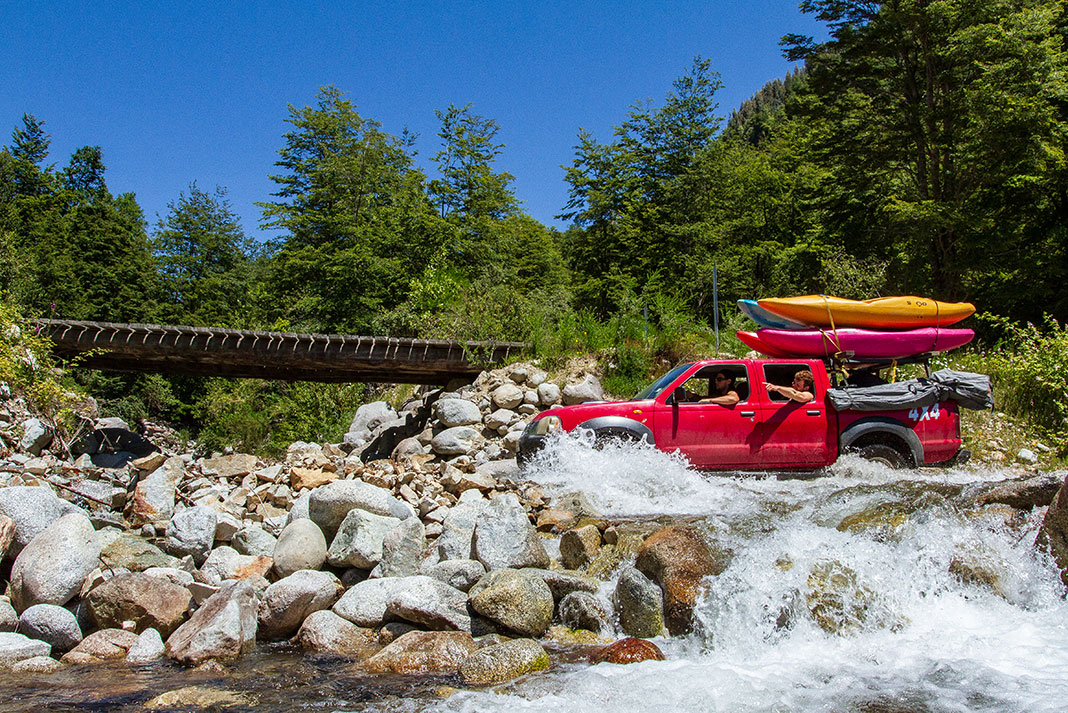
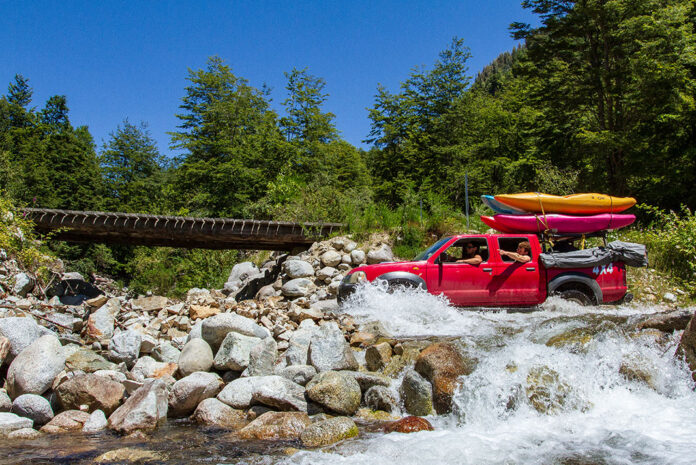
paddlers in a shuttle rig drive across a rocky stream bed with a small wooden bridge in the background
Wing and a prayer down 65 / Five best friends on four bald tires / I can still see Billy smiling / When we finally made it —“Talladega,” Eric Church | Feature photo: Kalob Grady

Without one, your brand-new, auto boof, never-flips-but-easy-to-roll kayak is useless. That $375 paddling jacket—so dry the only way water gets into your boat is through your nose—means nothing. Your hydrokryptonite, triple torque, modified crank, guaranteed-to-make-you-bounce-higher-on-a-wave paddle, just a lifeless stick. As paddlers we all use them, need them, hate them and love them.

That’s right, I’m talking about our beleaguered, beloved shuttle rigs.

An ode to shuttle rigs

It’s a strange relationship we have with our river rides. When they are doing their job (getting us to the river) and not breaking down (costing us money), we rarely think twice about them. We drive too fast down logging roads, push the suspension well beyond the manufacturer’s recommendation and assume the liter of oil burnt every month counts as regular oil changes. We watch impotently as scaly rust advances like leprosy and tell ourselves grinding Doritos into the carpet adds character.

Some of us, though, understand what an important role the shuttle rig plays in our dirtbag boater lives.

paddlers in a shuttle rig drive across a rocky stream bed with a small wooden bridge in the background
Wing and a prayer down 65 / Five best friends on four bald tires / I can still see Billy smiling / When we finally made it —“Talladega,” Eric Church | Feature photo: Kalob Grady

You never forget your first love

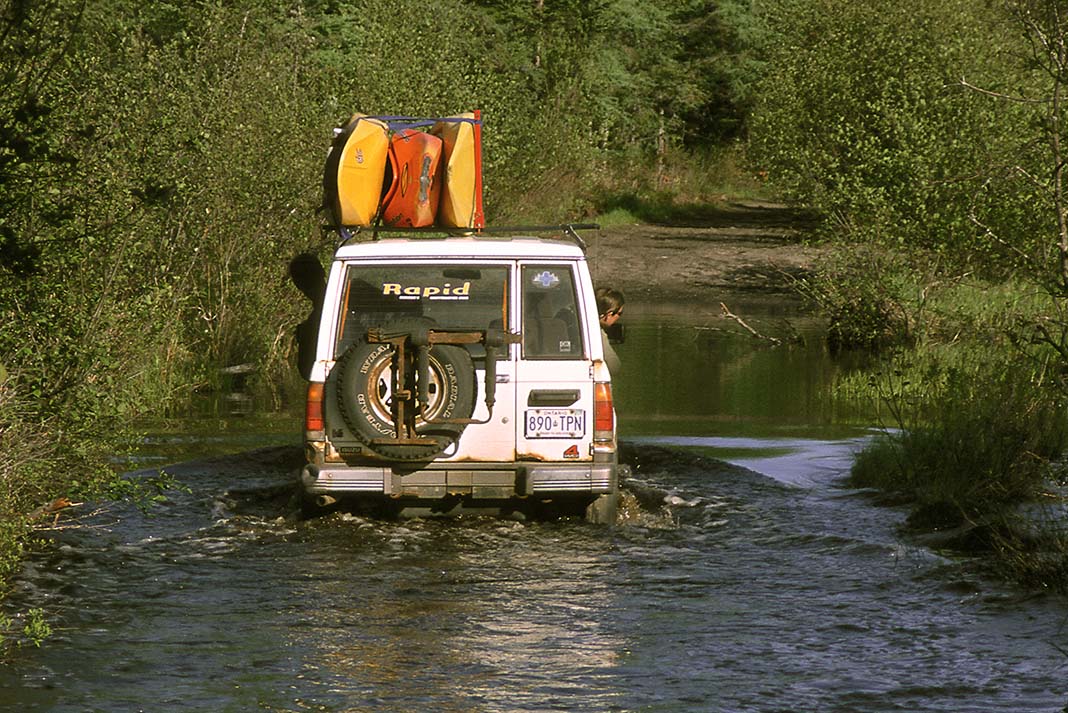
Touring river to river in New Zealand, our 1988 Isuzu Bighorn was more than just a shuttle vehicle. It was our living room, bedroom, dining room and, unfortunately, once or twice our bathroom. Even after splitting it four ways, the Bighorn was the only thing I owned of any real monetary value. For the first time, I truly appreciated and, well, loved a shuttle vehicle.

[ Browse the widest selection of boats and gear in the Paddling Buyer’s Guide ]

Most folks don’t ever develop such a strong bond with their metal steeds—such a close relationship, the self-help authors tell us, requires months of intimate contact. When the inevitable happens and something goes wrong, the blame for the breakdown falls unjustly on our poor, boat-burdened beasts. “Why is this P.O.S. pulling to the right? I was only going 60 when I hit that stump. Stupid car!”

Spirits of shuttle rigs past

Thinking back on all the shuttle rigs I’ve owned and the rivers they’ve delivered me to makes me a little nostalgic. Breaking down on the way back from Mexico and sleeping in the Automobill’s parking lot in Arkadelphia, Arkansas while awaiting repairs. Driving at night with no lights, dodging unseen sheep when the Isuzu’s alternator fried. Changing two flat tires at the same time in a torrential downpour on a Vancouver Island logging road.

At the time, it seemed like the world was against us and vehicles were the worst contraptions ever invented. Thinking back, though, it was probably just our rides reminding us to show them a little love now and then. Air out the trunk, change that sludgy oil, Bondo the rust holes. Heck, maybe even run a tank of high-test through her system. Because without your trusty shuttle rig, you’d just be another hiker.

Dan Caldwell has been writing for Rapid since the Summer 2007 issue. Starting in 2012, he took on multiple roles at Rapid Media, including media sales and Paddling Film Festival coordinator.

Cover of the 2023 Paddling Buyer’s GuideThis article was first published in the Summer/Fall 2012 issue of Rapid Magazine and was republished in the 2023 Paddling Buyer’s Guide. Subscribe to Paddling Magazine’s print and digital editions, or browse the archives.

Wing and a prayer down 65 / Five best friends on four bald tires / I can still see Billy smiling / When we finally made it —“Talladega,” Eric Church | Feature photo: Kalob Grady


Scouting Niagara Falls

Photo: Jens Klatt
Scouting Niagara Falls

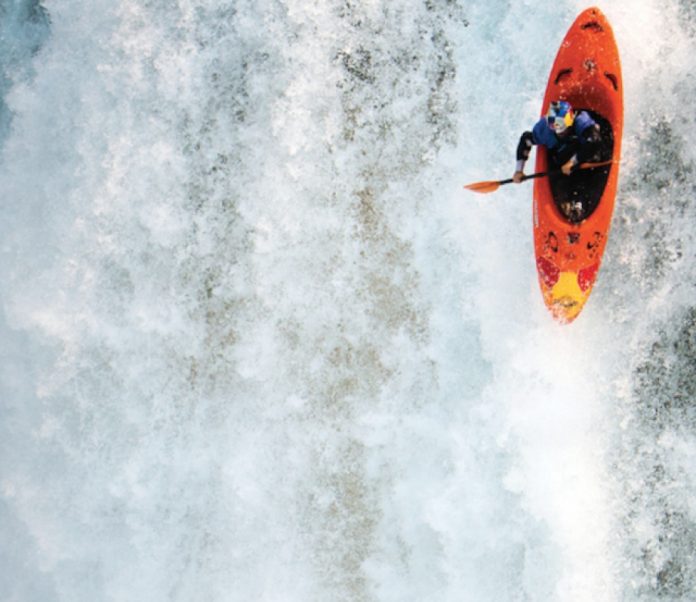
When Rafael Ortiz became the second person to kayak over Washington’s 186-foot Palouse Falls last spring, extreme whitewater boating was reinjected into mainstream headlines. “You get some attention after doing something like this,” says Ortiz, who received both praise for pushing the envelope and scorn for being careless and stupid. Then, after the hype died down, people asked, “What’ll they try next?” That’s when talk of an attempt at Niagara Falls started to recirculate.

“If someone were to run Niagara Falls safely and successfully, it would indeed be an amazing feat and the publicity would be insane,” says Tyler Bradt, who set the record for highest vertical drop when he ran Palouse in 2009. “It would be quite a fine line,” he cautions, “because the difference between a successful and an unsuccessful descent would reflect the sport either very positively or very negatively.”

Running Niagara Falls has always been somewhere between a heroic feat and cliché publicity stunt. Since the original pickle barrel hucksters of the 1920s, just 16 people have survived the drop, none in a kayak.

In 1991, 28-year-old Jesse Coombs died attempting to run the Canadian falls in a converted Perception C1. Many say ego got in the way of better judgment—Coombs refused to wear a helmet so his face would be visible in photographs. Those close to him point to his stellar paddling record and suggested that if anyone could have run Niagara at the time, it was him.

JAILTIME AND A FINE FOR THOSE WHO ATTEMPT NIAGARA FALLS WITHOUT PERMISSION

Even if a paddler was to manage the combination of skill and sheer luck needed to survive the plummet, there’s still the law to contend with. Nik Wallenda spent years planning and negotiating with authorities on both sides of the U.S.-Canadian border to complete his tightrope walk across the brink of Niagara this past June. Despite his success, officials have clearly stated that such pro- posals will only be considered once every 20 years.

While a handful of crews have poached an illegal kayak run down the class V+ gorge below the falls, anyone caught initiating a stunt that may draw a crowd to Niagara Falls without first getting permission faces a fine of $10,000 and up to six months in jail.

Despite the safety and legal risks, hucking huge is an expanding part of the sport and it’s garnering a lot of outsider attention for whitewater kayaking. This might make the timing for a Niagara descent more opportune than ever. If they’ll sponsor someone to skydive from 120,000 feet or drive Formula One on an ice circuit, why shouldn’t Red Bull—who just happens to be one of Ortiz’s sponsors—send a kayaker off of Niagara Falls?

Ortiz admits he’s scouted Niagara, which measures up a VW microbus shorter than Palouse. “There is a line, no doubt,” he concedes, but says the famous falls are far from ideal for a first decent. “The main difference with Palouse is that you can’t run Niagara dirty,” Ortiz explains. “Your life relies on a couple of strokes you take looking 170 feet down.” Still, he admits, “It’s there—the Holy Grail of waterfall hucking.” 

This article on Niagara Falls was published in the Spring 2013 issue of Rapid magazine.This article first appeared in the Summer/Fall 2012 issue of Rapid Magazine. For more great content, subscribe to Rapid’s print and digital editions here.
Editorial: Great Lines We Can’t Run

Photo: Robin Carleton

Off the Tongue is a column that appears reguarily in Rapid magazine.

In 2009, Gawker.com called out the editor of Men’s Health, David Zinczenko, for copying and pasting old cover lines onto new magazine covers. Turns out Zinczenko has been recycling cover lines since 2004. To be fair, editors are always looking for what readers want and trying to deliver it to them. Men, if we are to believe Zinczenko, here’s what we really want: “Six Pack Abs” has been used on five Men’s Health covers, “Lose Your Gut” on five, and “Get Back in Shape” has run on 10 covers in five years. You get the idea.

Publishers track newsstand sales and editors run cover lines to entice readers into picking up a copy. A few magazine cover power words are: free, easy, shocking, secret, new, ultimate and sex. Virtually any magazine at the checkout counter of a grocery story uses these. Cosmo works all of them into a single cover story: “Shocking New Free and Easy Secrets to Ultimate Sex.”
Good cover lines are an essential part of selling magazines and, dare I say, are a lot like good pickup lines. You only have a few seconds to ignite a certain emotion and intrigue a person into buying the publication or letting you buy her a drink.
Magazine experts say editors should not be too clever on the cover. Satisfy a need and give readers the short answer fast. But sometimes it’s fun to break the rules. One of my favorite cover lines was a small print, bottom of the page story that ran on Outside magazine—”My Girlfriend Rappels Me: Inside the Crazy World of Adventure Dating.” Being happily married, I didn’t give them my five bucks, but the editors did get my respect for being clever.
A few years back on the cover of Rapid’s sister publication Adventure Kayak—I should note, a magazine with an older, more mature readership— we had a little too much fun when we ran these two cover lines: “Kayak Porn—Behind the Scenes with Bryan Smith” and “Derek Hutchinson: Why we Suck.” It was our editor’s mother who first noticed and expressed her disappointment at seeing the words porn and suck on the same cover. A dozen subscribers cancelled their subscriptions.
Over the years, I’ve learned that not-so-interesting stories don’t produce great cover lines. If we can’t make it sound intriguing in five words, it’s probably not all that interesting inside at 1,500.
The opposite is also true. A well-crafted, seductive headline usually makes for an interesting story.
This spring we were following tweets from @wwheadlines who has taken this idea one step further. Not burdened with having to publish or even write the accompanying stories, @wwheadlines tweets great headlines that would certainly intrigue readers and sell magazines. Here are some of my favorite whitewater headlines we can’t run, at least not yet:
Professional Kayaker Sets New World Record for Uses of the Word “Epic”
Upon Closer Inspection Steve Fisher Appears to be a Robot
Young Guns Celebrate 15th Anniversary of “The Future of the Sport”
Groundbreaking Kayaking Film to Feature Paddling Set to Rap Music
Following Breakup, Attractive Female Paddler Single for 3.4 Seconds
Eskimo Kayaks Announces Plans to Update 1989 Outfitting with 1994 Outfitting
River Karma Being Revamped to Include Competitive Scoring System
Poll Shows 63 Percent of Americans Still Oppose SUP Marriage
Aging EJ Forgets which Boat he is Supposed to be Hyping
In a Shocking Turn of Events, Sponsored Kayaker Recommends Sponsor’s Product
Grumman to Release All Aluminum Playboat.
Scott MacGregor is the founder and publisher of Rapid.

 This article originally appeared in Rapid, Fall 2012. Download our free iPad/iPhone/iPod Touch App or Android App or read it here.

Butt End: Kevin Callan on Stage Frights

Photo: Scott Adams

Butt End by Kevin Callan is a column that regularly appears in Canoeroots and Family Camping magazine.

I love presenting to a crowd of paddlers. I always have. I’ve been standing in front of canoeists for over 25 years, ranging from quaint evenings at small-town libraries to Madison, Wisconsin’s Canoecopia, a show I once described to a U.S. border guard as a Star Trek convention for canoeists.

I used to prepare some sort of script to keep me organized, but gave that up a number of years ago. I’m just too hyper to stick to a script. Besides, a set dialogue doesn’t necessarily work, especially during Q&A period. You just never know what’s going to come up.

Quirky questions are de rigueur: Where do I purchase bear-proof fencing for my canoe trip? How do I convince my canoe partner to carry more gear? Are you the same Kevin Callan that’s a murderer? Is your wife single? And, just recently while presenting inThunder Bay for the Friends of Quetico, How did your schoolteachers deal with your attention deficit disorder?

I’ve been abused by landowners who hated me for promoting a canoe route neighboring their cottage or camp. I’ve been belittled by part-time historians who beg to differ on a point of historic fact. And there was the time I was embarrassed in a packed university auditorium by an outdoor professor and her lawyer friend who threatened to have me sued for writing about her wilderness exploits (even though they were good and honorable exploits).

On another occasion, a government official disrupted a presentation I was giving on dealing with bears and took over the lecture with her counter points because she thought I was telling too many jokes. True story. That was the only time I lost my temper during a show and actually kicked her off the stage.

The embarrassments aren’t limited to cross-examination, either. I’ve mispronounced place names, both forgivable— Chiniguchi and Tatachikapika—and unforgivable—vagina instead of Regina is one of the more humiliating examples. Once, my tongue slipped when I tried to say Reese’s Pieces and the words came out Reese’s penis.

I’ve had my fly down for a 90-minute presentation, and sat on a chocolate bar just prior to the show while wearing beige pants. I’ve even done the classic, pre-show water-splash-on-my-groin-while-washing-up-in-the-bathroom and got caught trying (in vain) to dry my pants with the wall-mounted air-dryer.

Being mistaken for another writer who was wrongly convicted of murder or being accused of suffering from ADD is well worth it though. Why? Over the years, I’ve actually witnessed a few paddlers out on canoe trips that I originally met during a presentation. More than once, they’ve claimed that it was my inspirational talk that convinced them to head out on their adventure in the first place.

The most memorable of these moments occurred after a presentation I gave in Restoule Provincial Park in which I told everyone about a magazine cover story I had just written titled How To Make Love in a Canoe. After the show I wandered back to my campsite beside the water’s edge and spotted a canoe floating in the moonlight. Two heads suddenly popped up and the couple inside yelled out, “Thanks, Kevin.”

Despite mounting evidence to the contrary, Kevin Callan believes there’s no such thing as a stupid question.

This article originally appeared in Canoeroots & Family Camping, Fall 2012. Download our freeiPad/iPhone/iPod Touch App or Android App or read it here.

Make a Solar Oven

Photo: Michael Mechan

This Campcraft article originally appeared in Canoeroots and Family Camping magazine.

The surface of the sun is about 10,000°F. Why not put some of that energy to use and make yourself a snack? A solar oven works by redirecting and concentrating the sun’s rays, trapping their heat inside the collector box. You’ll be amazed at how simple and fun it is to cook treats using only the power of sunlight!

WHAT YOU’LL NEED:

1 large pizza box

Aluminum foil

Box cutter, scissors

Heavy-duty plastic wrap

Black construction paper

Tape

Aluminum pie plate

INSTRUCTIONS:

Cut a flap out of the lid of your pizza box as shown in the picture. Cut along three sides, leaving about an inch and a half between the flap and the edges of the lid. Use the box’s hinge as the flap’s folding edge.

Line the entire interior of your pizza box— top, bottom and sides, including the flap— with aluminum foil. Tape it into place with the shiny side showing.

Cut two pieces of heavy-duty plastic wrap slightly larger than the flap to cover the opening—this will seal in the heat created by the sun’s rays. Tape them into place in a double layer.

Line the bottom of the box with black construction paper, taping it down on top of the aluminum foil. The black paper will absorb the warmth.

Tape over any holes where heat may escape your oven while making sure it is still able to open and close. Decorate the exterior.

You’re ready to cook! Put your food on the aluminum pie plate, aim the flap so that it reflects the sunlight into the box and prop it in place with a stick.

You’ll get the best results on a hot, sunny day between 11 a.m. and 3 p.m. This solar oven will reach temperatures up to 200°F. Keep an eye on it as you cook and use oven mitts. Expect cooking times to be about double that of a conventional oven. You can preheat the oven in the sun to speed things up.


SOLAR OVEN RECIPES

Stellar Mini Pizzas

Spread tomato sauce, shredded mozzarella, chopped veggies and sliced pepperoni sticks onto an open-faced English muffin. Cook until the cheese melts and the muffin is toasted.

Solar S’mores

Place some chocolate and a marshmallow on a graham cracker and allow them to melt. Place a second graham cracker on top and enjoy.

Quesadillas del Sol

Spread shredded cheese, chopped onions, peppers, mushrooms and salsa onto one half of an open tortilla flat. Fold it over and cook until the cheese melts and the tortilla is crispy.

This article originally appeared in Canoeroots & Family Camping, Fall 2012. Download our freeiPad/iPhone/iPod Touch App or Android App or read it here.

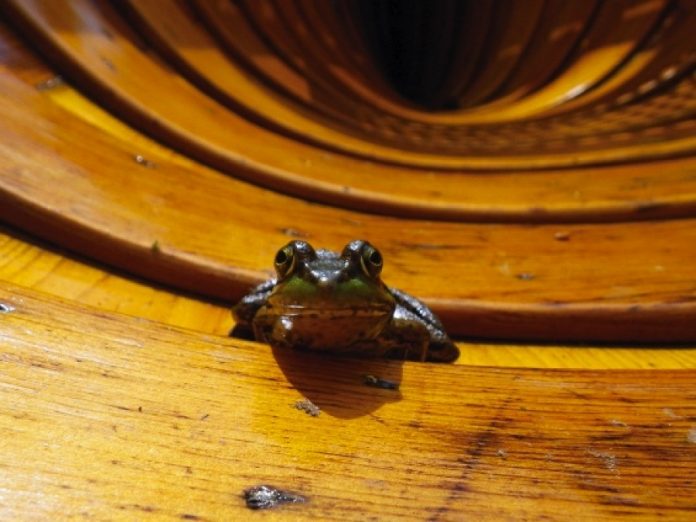
Base Camp: Catching Frogs

Photo: Conor Mihell

Base Camp is a regular column in Canoeroots and Family Camping magazine.

Every summer my parents rented a small cottage on a small lake. We swam in the lake, hiked a little and fished a lot. We fished mostly for smallmouth bass. Smallmouth bass, if you don’t know, love frogs. And so, frogs were bait.

At the time, you could buy frogs. But since we had more time than money, we spent hours stalking around the squishy edges of frog ponds. Catching frogs was even more fun than fishing.

We started every trip to our secret frog pond in rubber boots and came home in goo-caked bare feet. Some kids used nets to catch them, but if you were quick, it was better to use your hands. Slowly, slowly, slowly we‘d crouch into position. Fingers together, hand open, we’d hover above our little green prey waiting for just the right moment. SPLASH! Like lightning you snapped down on it so that your palm was on top of the frog and your fingers clamped around it, plucking it from the weeds before it could duck out of sight. If you were good, you’d get one for every five attempts.

After a few trips around the pond, the ones that got away on the earlier laps were even harder to catch because they were now a little… jumpy.

Frogs, scientists say, have reason to be jumpy. Frog populations have been declining worldwide with nearly one-third of the world’s amphibian species now threatened with extinction. Since 1980, when I was at the top of my frog catching game, 200 species of frogs have completely disappeared. Save the Frogs, a non-profit organization dedicated to, well, saving frogs, says that an onslaught of environmental problems, including pollution, infectious diseases, habitat loss, invasive species, climate change and over-harvesting for the food industry are to blame.

People say if you have a healthy frog population, you have a healthy environment.

Frogs spend some time on land and some time in the water and because they have sensitive skin that can easily absorb toxic chemicals, frogs are especially susceptible to environmental disturbances. Biologists around the world believe that the health of frogs is indicative of the health of the biosphere as a whole.

I’d like to put forth another theory. I believe that if we teach children the joys of catching frogs, some of those kids will grow up to rid the environment of hurtful toxins. In fact, I don’t think we need to teach them; I think we just need to point them toward a frog pond and turn them loose.

You see, we weren’t just gathering bait, we were learning about the environment. We were engaging with nature, playing in it, sink- ing in it barefoot up to our knees. Sure, putting frogs on hooks was a bit mean, but let’s not overreact and pull our kids from the swamps where they can study, understand and connect with nature. Kids, after all, weren’t identified by Save the Frogs as a contributing factor to declining numbers.

The regulations on fishing with frogs vary from region to region. Where I live, it is now illegal to use all but one species—the northern leopard frog—as bait. Instead, anglers use millions of petroleum-based, frog-like artificial baits that I’m not so sure are better for the environment, or the frogs. We’ll leave that one in the hands of the great biologists of tomorrow. But we’ll have to wait; right now they’re in swamps with their hands full of little green frogs.

Scott MacGregor is the founder and publisher of Canoeroots & Family Camping.

This article originally appeared in Canoeroots & Family Camping, Fall 2012. Download our freeiPad/iPhone/iPod Touch App or Android App or read it here.

6 Simple Steps For Properly Installing A Canoe Yoke

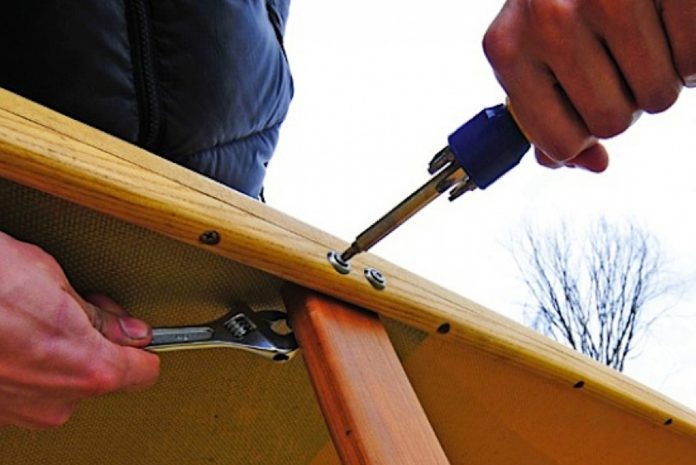
Two hands screwing in a yoke on a canoe
Six steps to a more comfortable portage. | Photo: Virginia Marshall

Maybe your canoe has seen one too many portages and the yoke has finally given out. Or maybe your shoulders have seen one too many bruises and it’s time to try a different yoke design. Either way, installing a new yoke on your canoe is simple business.

First, of course, you’ll need to pick out a canoe yoke. There is ongoing debate whether contoured and carved-out or padded yokes are most comfortable—choose the style that works for you. Ash is strongest, poplar is lightest, and walnut or cherry offers a unique look.

Once you have your choice in hand, it’s time to learn how to install a canoe yoke.

Step 1: Remove the old yoke

If the old hardware is corroded, bent or stripped, replace it with stainless steel or brass #10-24 machine bolts, cup washers, flat washers and lock nuts.

Step 2: Size the new yoke

New yokes come longer than you will need. Simply lay the old yoke over the new one with the centre points aligned. If you don’t have the old yoke, you’ll need to measure the distance between the gunwales at the canoe’s midpoint.

Keep in mind that the yoke’s length can spread or narrow the canoe’s beam. Pulling the gunwales together makes the hull rounder and increases tumblehome while spreading the gunwales increases flair and flattens the boat’s bottom.

Step 3: Balance the canoe

Don’t just screw the new yoke into the old holes—now is your opportunity to ensure your canoe is perfectly balanced on the yoke. To do so, take a tape measure and find the middle of the canoe from end to end and mark it on both gunwales using a wax pencil.

Next, place the yoke across the canoe at your markings, under both gunwales and then rotate it so its narrow edge is facing upwards. With one person on either side of the canoe, lift up on the yoke. The canoe may tip to one direction. Adjust the yoke until the canoe is balanced and mark its position.

Step 4: Decide which way to face the yoke

By installing the yoke’s opening facing the bow, you can just flip the canoe onto your shoulders and go when you land at a portage.

Alternatively, if you have a stern thwart within arm’s reach of the yoke, you can install the yoke facing the stern, allowing you to hold onto the thwart while portaging.

Step 5: Drill the holes

With the yoke across the canoe at your markings, hold it flat under the gunwales, and then pull the gunwales together so there’s no space between the yoke and the hull. Next, drill holes through both the gunwale and the yoke. Drill in the middle of the gunwale for optimum strength and ease of hardware installation.

[ Find all the parts and accessories for your DIY projects in the Paddling Buyer’s Guide ]

Step 6: Install the bolts

Install the bolts with the cup washer on top of the gunwale and the flat washer underneath and you’re ready to portage.

Johno Foster installed countless yokes as a canoe builder in a past life. He is now a northern river wilderness canoe guide and paddling instructor.

Best Camp Cookfire Technique

Photo: Dave Quinn
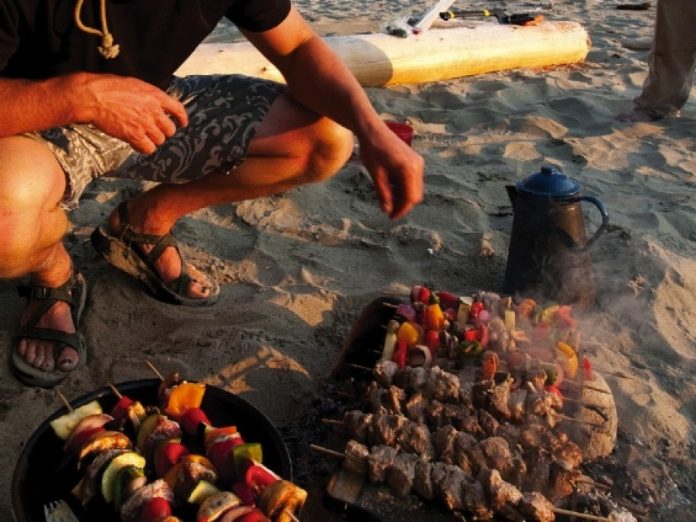
A large grill of kebabs cook over a bed of coals on a sandy beach.

Camp cooking is as simple or ornate as you make it out to be; it doesn’t take much more than an open flame or heap of glowing embers to put a crispy coat on a marshmallow or split open a hotdog, but more elaborate meals can be prepared over a campfire with the proper structure and a continuous source of hot coals. Most backcountry campsites offer fire rings to promote Leave No Trace camping. Building the right type of fire inside the ring should also assure you more sustainable cooking temperatures.

The most basic fire structure is the tipi. Its conical shape drives fire upwards for a fast and efficient way to quickly boil water or heat something small.

A platform fire is a variation on the log cabin fire. It is created by criss-crossing layers of kindling starting with a base of larger firewood and then working upward with increasingly smaller pieces, creating the shape of an Aztec pyramid. When ignited from the top, this mass of firewood burns downwards, creating layers of hot embers that eventually form a deep bed of cooking coals. Feeding the bed of embers with wood provides a sustained supply of hot cooking coals great for grilling steaks, baking with a Dutch oven or directing heat to a planked fish fillet alongside the fire.

A good cook knows that you need the right amount of heat to control the texture and taste of your meal. When maintaining a cooking fire, it’s important to have two or more areas of heat. A good bed of coals can be dragged or scooped from the main fire into a separate cooking area where less heat and more control are needed.

For an easy way to calculate approximately how hot your cooking fire is, hold your open palm about five inches over the fire. Count the seconds before you have to pull your hand away to get a general range of temperatures:

2–3 seconds: 450°–650°F

4–5 seconds: 375°–450°F

6–7 seconds: 325°–375°F

8–10 seconds: 250°–325°F

Not all types of wood produce a long-lasting, adequate heat. Hardwoods generally make the best firewood. Ash offers both a good flame and heat, while oak burns well but emits an acrid smoke. Yew, maple and hazelwood are other good options.

When burned, apple, cherry, hickory and alder expose foods to flavorful smoke, wonderful tastes for fire-grilled foods. Baking salmon or trout fillets that are staked to a moist cedar plank and propped up facing the heat combines the flavors of the fish with the essence of cedar for a mouth-watering delicacy.

Choose the right structure, the right type of wood and maintain good oxygen circulation and your options for frying, grilling, baking or planking are only restricted by your creativity.

A veteran paddler and freelance writer, Tom Watson has authored several books on the outdoors and is the camping editor for Sportsmansguide.com.


This article originally appeared in Canoeroots & Family Camping, Fall 2012. Download our freeiPad/iPhone/iPod Touch App or Android App or read it here.