Home Blog Page 323

Editorial: Dating Secrets for Sea Kayakers

Photo: Vince Paquot
Editorial: Dating Secrets for Sea Kayakers

My first kayaking mentor called them Dates from the Dock.

Paddling moves so eye-catching, so linger-and-watch-awhile eccentric that some didn’t even involve paddling. Skills that were strange, but in a good way, like Ellen Page’s deadpan quips in Juno or Reese Witherspoon’s legal methodology in Legally Blonde.

Preoccupied with the only relationship that mattered just then—between the kayak and myself—waterfront seduction was furthest from my mind. Still, I practiced diligently.

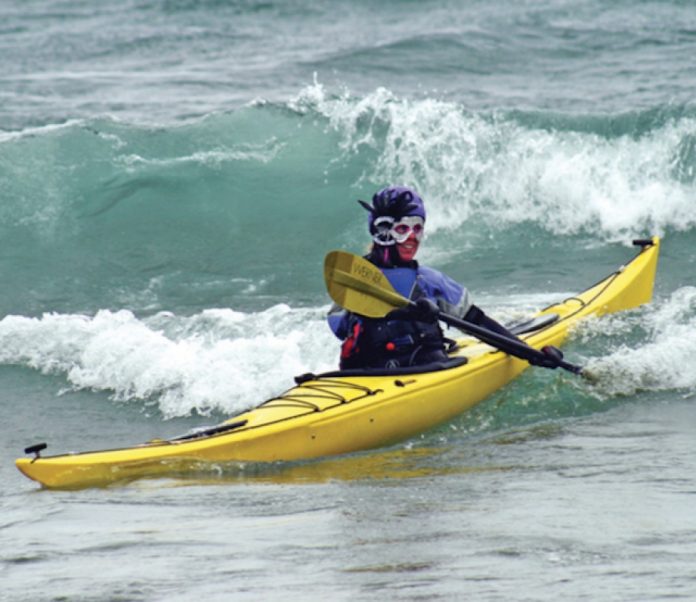
Awkward, one-armed high brace turns eventually transformed into gracefully edged parabolas while I waved coquettishly to imaginary suitors. I sculled ever closer to the water until I could dip all the way down for a drink and then, lips pursed and cheeks puffed, squirt it skyward like a Roman fountain. My angel roll approached something almost angelic. Venus de Milo riding a kayak instead of a seashell.

Since those early revelations, I’ve heard messing around like this in your kayak called many different things, and seen it taught and practiced by some of the best instructors and paddlers.

{loadposition PTG_AK_Midcontent}

“I realize now that Dates from the Dock was just a ploy to divert my attention.”

BCU Senior Coach Derek Hutchinson is a proponent of moves like the aforementioned, one-armed high brace turn (a.k.a. Hutchinson Turn) because, he says, they get paddlers “beyond the cockpit” and experimenting with greater boat lean and edging. The legendarily dogmatic Hutchinson should know—he penned the first book on sea kayak education (The Complete Book of Sea Kayaking, now in its 5th edition), has designed over a dozen kayaks (maybe even yours—paddle a Current Designs Gulfstream, Sirocco or Andromeda?) and is regarded by many as the Father of Modern Sea Kayaking.

Sea Kayak Baja Mexico and Columbia River Kayaking owner/operator Ginni Callahan advocates jousting with pool noodles whilst standing in cockpits.“Games are a great way to practice skills and get more comfortable with the water,” she says, “as well as good exercise for the paddling and laugh muscles.”

Case in point: For the better part of a decade, Michigan-based instructor, kayak impresario and occasional stand-up comedian Kelly Blades’ kayak play workshops have drawn euphoric crowds at symposiums across the country. Participants take a break from bracing drills, video analyses and stroke improvement clinics to clamber around on the decks of their kayaks, spin around in their cockpits and—a move too often shunned by serious sea kayakers—splash frequently and spectacularly into the water.

I realize now that Dates from the Dock was just a ploy to divert my attention while the practical skills underlying each party trick developed unbidden.

Perhaps the only thing such shows of panache haven’t succeeded at (in my experience, at least) is seducing an actual date off the dock.

Virginia Marshall is Adventure Kayak’s senior editor. 
This article on learning skills in unique ways was published in the Summer/Fall 2011 issue of Adventure Kayak magazine.This article first appeared in the Summer/Fall 2011 issue of Adventure Kayak Magazine. For more great content, subscribe to Adventure Kayak’s print and digital editions here.


Sculling Brace Kayak Technique

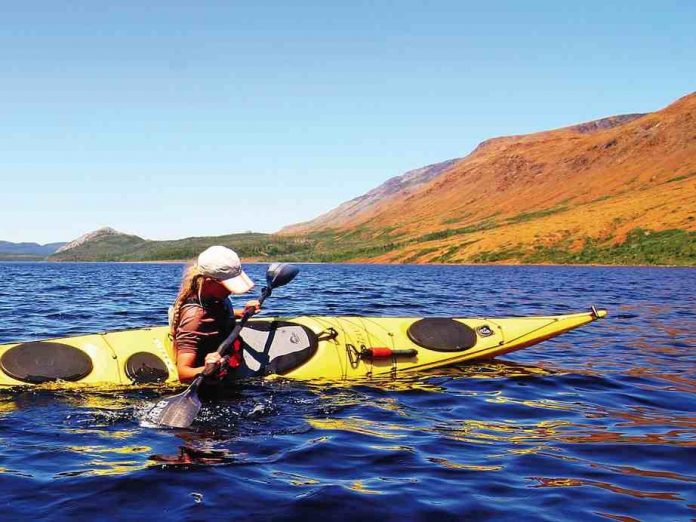
Photo: Virginia Marshall
Practising the sculling brace.

This article offers tips and techniques for performing a high sculling brace from a kayak and was originally published in Adventure Kayak magazine.

Two points of stability allow you to balance more effectively than one. Sculling braces help you stay upright in tippy situations by acting as a second point of stability to your kayak. Practice the sculling brace by breaking it down into these three elements: body, boat and paddle.


Peer review

The scull should be about as long as
your cockpit with the blade just under the surface. Done properly, there should be very little aeration of the water. Your inward hand is just an anchor; it is your outward hand that does all the work changing the angle of the blade. » Michael Pardy, Paddle Canada level 3 instructor trainer, Victoria, BC

The angle of the blade will give more turn propulsion if it is closer to vertical, like a sweep, and more support if it is flatter to the water. This is useful for learning how flat an angle you want for a graceful sculling brace, and also how to put some support in your sweep stroke for confident edged turns in lumpy water. Blade angle is controlled by raising or lowering the elbow relative to the wrist, keeping the wrist neutral to prevent injury. » Ginni Callahan, ACA level 5 instructor and BCU level 4 coach, Cathlamet, WA

To be biomechanically friendlier as you edge further into the water, rotate your chest to the sky and roll the boat off your body, lessening the load on the paddle. This is similar to a Greenland static brace position. » Shawna Franklin & Leon Sommé, BCU level 4 coaches, Orcas Island, WA

I tend not to look at sculling for support as a stand-alone skill, instead it is a way to en- hance or add confidence to other skills and maneuvers. For example, when performing sweep strokes on the move, finishing a roll, or to perform braces on the move and prevent the blade diving. » Doug Cooper, BCU level 5 coach, Aviemore, Scotland


Body

For a high sculling brace, your elbows should be low with the paddle held horizontally near your shoulders. For a low sculling brace, your elbows should be high, directly over the paddle shaft, which is held horizontal above the cock- pit of your kayak. Use torso rotation to move your blade through the stroke.

Your lower body controls the position of your kayak. use your hips and knees to either hold your boat on edge, or to right the boat as with other bracing strokes.


Boat

Transferring some of your weight onto your sculling paddle will allow you to hold your boat on edge or recover from a near capsize on the sculling side. With a high sculling brace, your kayak can be held on almost any degree of edge, including nearly upside down.


Paddle

Skim your paddle back and forth across the water beside your kayak, maintaining pressure on the power face (high sculling brace), or the non-power face (low sculling brace). Keep the paddle on the surface by slightly lifting the leading edge of your blade.

To get a feel for this, swish your hand back and forth across the water, feeling the water pressure on your palm. As your thumb leads the way through the water, angle it slightly towards the sky. As your pinky leads, angle it towards the sky.

The transition points of the stroke—the points where you change your paddle’s direction of movement—offer little stability. There- fore, move the paddle at a slow to moderate pace and use longer strokes to reduce the number of transitions.


Sculling for Support

Use a high or low sculling brace to salvage a sloppy roll, to stabilize yourself when working your legs back into your kayak during a rodeo re-entry, or in any other situation where you need consistent extra stability.

Practice your sculling technique by moving your kayak in multiple directions using a sculling draw (sculling with a vertical paddle). Then bring the paddle back to horizontal and begin adding a little weight to the paddle as you scull back and forth. Finally, work on holding your boat further and further on edge while sculling for support. This gradual progression will help develop both your muscle memory and your confidence.

Meaghan Hennessy is a Paddle Canada Level 2 instructor trainer and BCU Level 3 sea coach based in Vancouver, British Columbia. She currently teaches for SKILS.


This article originally appeared in Adventure Kayak, Summer/Fall 2011. Download our freeiPad/iPhone/iPod Touch App or Android App or read it here.

Canoe Poling Tips and Technique

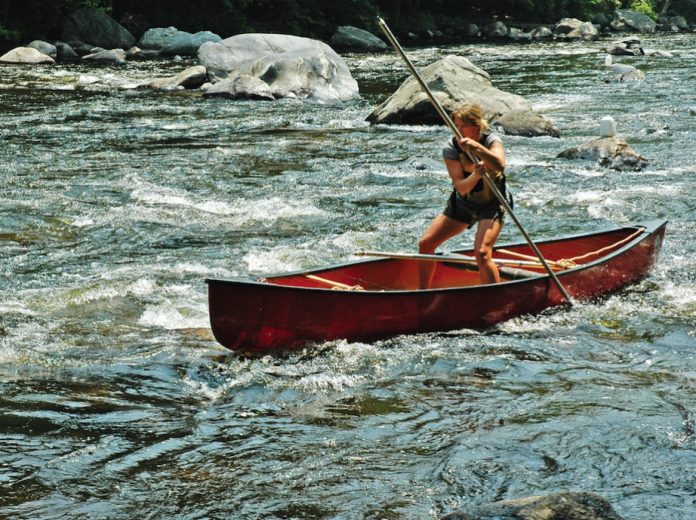
Different sort of pole dancing. Photo: Sean Carapella
Canoe poling technique.

If you have discovered the power of canoe poling, you know that streams can be two-way streets and a canoe can be pushed upstream far beyond what is possible with a paddle. Rivers can be enjoyed in a simple up-and-back trip from the put-in, eliminating the need for a car shuttle.

Poking upstream in calm water is a great place to start, but as you progress, you may wish to confront stronger current. This is where poling gets technical.


Get in Position

Facing upstream in the eddy, stand with your feet square, one or two feet behind the center thwart to lighten the bow. A good rule of thumb for all upstream work is to keep the bow sitting higher in the water than the stern. Position the canoe very close to the eddyline and almost parallel to it, with the bow pointed slightly into the current.


Plant the Pole

Plant the pole on the eddy side of the boat. That is, the side away from the current you’re entering.


Push and Tilt

As you push across the eddyline and enter the current, tilt the boat away from the side where your pole is planted. This will carve a turn and counteract the tendency to get flushed down- stream. Tilt the boat, don’t lean your body— stand up straight and tilt the hull by weighting one foot.


Recover and Plant the Pole
 behind you

As you muscle your way into the current, be sure to plant the pole well behind your body. In fast water, by the time you recover and plant again, your boat may have lost its forward momentum and begun drifting backward.

It’s typical to find that by the time you start pushing, the pole is now planted right beside your body and you’re just pushing yourself sideways. The common beginner scenario is a series of these sideways pushes on alternate sides of the boat, resulting in some flailing around and finally washing out the bottom of the rapid. Get in the habit of planting the pole well behind you to set up the proper angle, even if it means drifting back a little in order to find good purchase on the bottom.

These four basic tips apply in virtually all situations. Start poling in gentle current and work towards more advanced techniques for steeper drops.

Matt Swift is an American Canoe Association poling champion living in Blacksburg, VA. He discovered canoe poling in 1988 as a way to explore the shallow streams of Southwest Virginia without having to set up car shuttles.


This article originally appeared in Canoeroots & Family Camping, Fall 2011. Download our freeiPad/iPhone/iPod Touch App or Android App or read it here.

Emergency Communication Tips

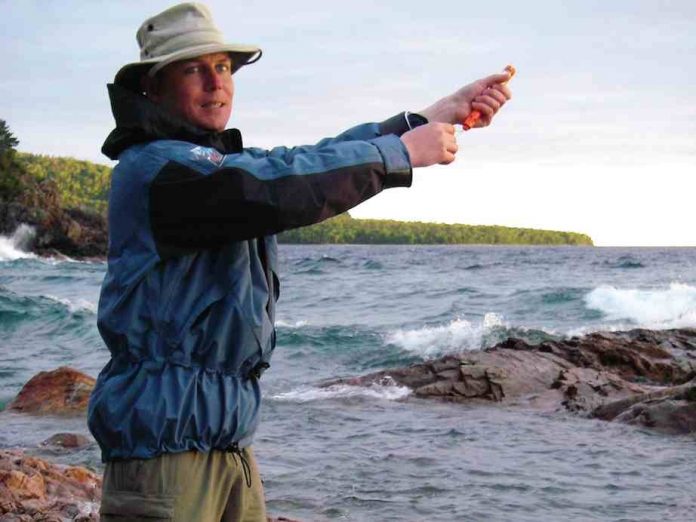
Flares are an option for wilderness communication. Photo: Virginia Marshall
Staying safe in the woods.

This article about emergency communication tips in the wilderness was originally published in Canoeroots and Family Camping magazine.

On a remote portage you come upon a group carrying a teenage girl on a stretcher. She has appendicitis and needs immediate evacuation. You spot a Forest Service floatplane overhead, whip out your Silva compass and aim the mirror at the airplane. Miraculously, the glint of reflected sunlight catches the pilot’s eye. He flies the girl to Grand Marais, Minnesota, where her appendix is removed.

You’re probably thinking, “Good story, Cliff,” but this actually happened to me in 1967 on my first trip to the Boundary Waters.

It’s smart to carry signal gear on any canoe trip, even one close to home. Here are some options.


Heliograph Mirror

The chance of reflecting sunlight onto a moving airplane with a standard mirror is almost zero. Much better is a genuine military heliograph mirror with a sighting hole in the center. With practice, a CD will also work.


Smoke

Floatplane pick-ups and search and rescue operations are usually daytime affairs so smoke creates better visible contrast than flares. Best bang is the Orion handheld orange smoke signal, available at any marina. It ignites like a rail- road flare and pours out thick orange smoke for 50 seconds.


VHF Aircraft radio

An airplane you can see is probably close enough to be reached on a handheld VHF air- craft transceiver. A VHF radio with a 15-mile range allows about five minutes of talk time at typical floatplane speeds. As a courtesy, most bush pilots will circle to keep you in range. But high-flying jets won’t change course, so you better talk fast.

In a life-threatening situation, you may broadcast on the restricted emergency frequency (121.5 megahertz) monitored by all pilots. For other concerns, you must stick with the frequencies that are assigned to the charter companies—ask your pilot and program it into your radio. Transmitting without an FCC license is technically illegal, but in the bush— and given the short range of handheld transceivers—everyone looks the other way. Note that a VHF marine-band radio cannot be used to contact airplanes.


Spot

SPOT Communicator is a palm-sized, one-way satellite communication device. Push a button to activate a global 911 network and initiate search and rescue. You can also send two pre- written messages to your contacts via email. Recently, the unit has been paired with the Delorme Earthmate PN-60 GPS, which provides a type-and-send keyboard and GPS fix. SPOT is sure to evolve considerably by the time you read this.


Satellite Phone

Globalstar and Iridium are the most popular brands. Iridium has worldwide coverage; Globalstar has some blackout areas. Be advised that rental units see considerable use and batteries may be old and not hold a full charge. It’s wise to bring a solar charger if you rent a satellite phone.


Whistle

You may not hear a whistle above the roar of rapids—that’s why you should know the inter- national safety hand/paddle signals. Whistles work well on land, if you wander off a bushwhacked portage trail and become con- fused, for example. Best are pea-less designs like the Fox 40 that still sound when flooded.


Color Counts

Brightly colored canoes, packs, tents and clothing make you easier to spot and can be arranged in threes to create the international signal for distress.


This article originally appeared in Canoeroots & Family Camping, Spring 2012. Download our freeiPad/iPhone/iPod Touch App or Android App or read it here.

Techniques for Sticky Hydraulics

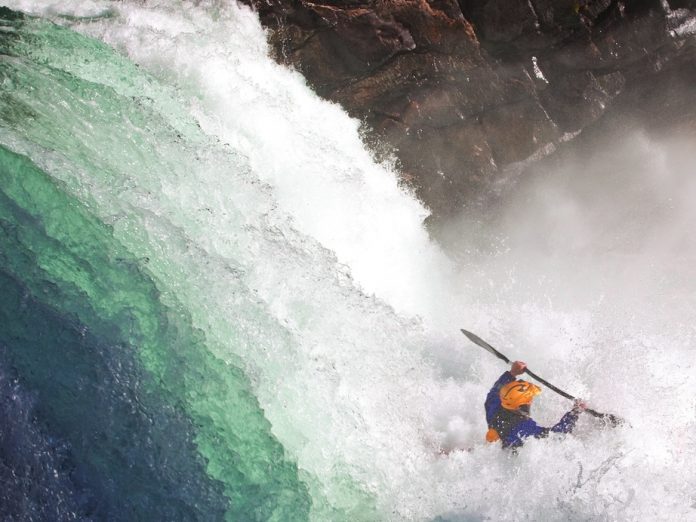
Photo: Ryan Creary
Tactics for sticky hydraulics

This techniques article featuring tips for escaping sticky hydraulics was originally published in Rapid magazine.

At some point in your paddling career you’ll find yourself stuck in a hole. Once there, you need to know how to get out, ideally while staying in your boat. If you’re upside down, start by using the re-circulating water to your advantage to roll upright. A small paddle motion and hip flick on your downstream side should be enough—a large and violent attempt is both unnecessary and undesirable.

Now that you can breathe, here’s how to escape the hole:

SURF IT SIDEWAYS

After rolling, tilt and brace downstream to keep the current from flipping you over again. Use a forward or reverse stroke with the brace and your body weight to move your boat forwards or backwards to the sides of the hole—often its weakest points. If you get to the side of the hole, reach for the water outside the hole with your paddle blade—this may help pull you out.

RODEO AWAY

If you can’t surf out the side of the hole, try using the subsurface water. Force one end of your boat underwater as deep as possible, ideally getting your boat into a vertical position. A vertical boat will often stick deep enough into the water to catch the downstream current and flush you out of the hole.

REACH FOR IT

If your boat doesn’t reach down deep enough, try to grab the downstream current with your paddle. Flip upside down in a tucked position and slowly reach a paddle blade towards the bottom of the river. Try to keep your elbows as close to your body as possible to protect yourself. The bigger the hole, the farther you’ll have to extend your arms. Once the downstream-flowing water grabs your blade, hang on and let it pull you and your boat out of the hole.

GET WET

Sometimes, the downstream current is too deep to reach. After all, your boat is designed to stay on the surface. If you’re still stuck, pull your skirt, allowing the boat to fill with water and sink below the surface. If you can, stay in your boat, catch the deep water flowing downstream and ride it out of the hole.

SWIM UNDER

If you do exit your boat and find yourself still in the hole, you’ll need to swim beneath the surface into the downstream-flowing current. As the hole pushes you underwater, tuck into a ball to go as deep as possible and let the water carry you out of the hole where you can resurface in relative safety.

Keep your wits about you and do your best to remain in your boat. Staying calm will help you think clearly and choose the right tactic to make your escape.

Bryant Burkhardt is an ACA Instructor Trainer in both whitewater and coastal kayaking for California Canoe & Kayak, based in Sacramento.


This article originally appeared in Rapid, Fall 2011. Download our free iPad/iPhone/iPod Touch App or Android App or read it here.

Wenonah Canak Canoe Review

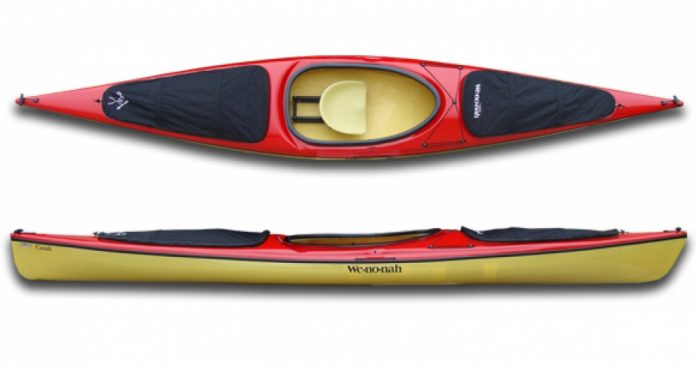
Photo: Wenonah Canoe
Wenonah Canak Canoe Review

A review of the Wenonah Canak from Canoeroots and Family Camping magazine.

The Canak is ideal for solo lake camping when the capacity and portability of a canoe are needed, and the touring ability of a kayak is desired. The unique bow and stern storage compartments are spacious and accessible for easy loading and unloading of canoe camping-sized packs. Slipover covers provide a dry ride no matter the weather conditions. Equipped with floor-mounted sliding seat and adjustable kayak-style foot braces.


Length: 16’6″
Width: 30″
Hull Material: Kevlar
Weight: 38 lbs
MSRP: $2,699
Optional removeable yoke: $125


This article originally appeared in Canoeroots & Family Camping, Early Summer 2011. Download our freeiPad/iPhone/iPod Touch App or Android App or read it here.

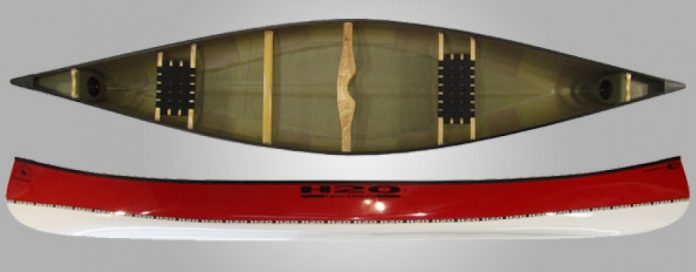
H20 Canoe Company Canadian 16/6 Canoe Review

Photo: H2O Composites
H20 Composites Canadian 16/6

A review of the H20 Canoe Company 16/6 from Canoeroots and Family Camping magazine.

The versatility of traditional canoes is captured with a symmetrical hull and recurved ends. To reduce wind resistance and maximize efficiency, a slightly longer length and narrower beam are combined with sharp entry and exit lines and a lower sheer. The Canadian’s shallow arch hull design provides a blend of performance and stability. An exceptional shoe keel design aids tracking and protects against grounding, while sacrificing little in the way of maneuverability.

H2O Canoe Company Canadian 16/6 specs

  • Length: 16’6″
  • Width: 35″
  • Material: Carbon/Kevlar Helium
  • Weight: 42 lbs
  • Max capacity: 800 lbs
  • MSRP: $3,095
  • www.h2ocanoe.com

This article originally appeared in Canoeroots & Family Camping, Summer/Fall 2011. Download our free iPad/iPhone/iPod Touch App or Android App or read it here.


Trolling for Lake Trout

Photo: James Smedley
Trolling for Lake Trout

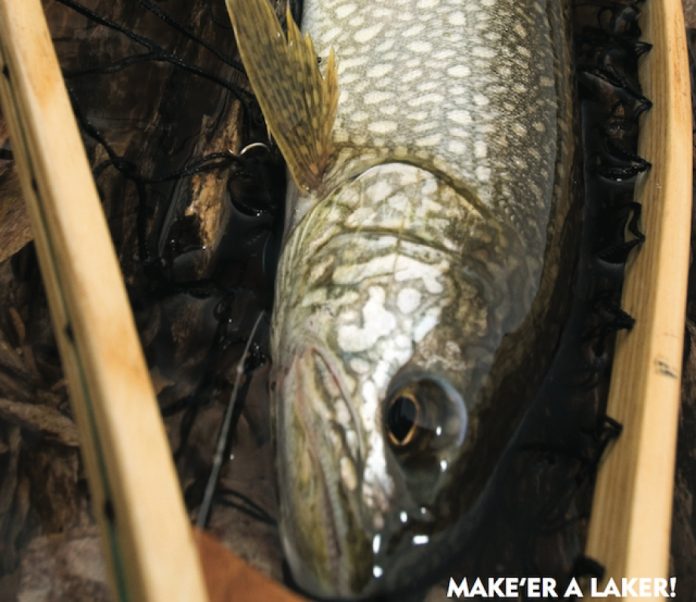
Whether you’re passing time on a rest day or scrounging for your next meal, fishing for lake trout is a fun activity on any canoe trip. The small, deep, remote lakes paddlers love are also home to some great wilderness fishing. Thirty-year veteran guide Gary Skrzek shares his canoe fishing methods. 

Trolling in a Canoe

Begin with the bow person sitting facing backwards. While the stern person paddles, the bow person drops a line to the desired depth. Next, the bow person puts the fishing rod down and paddles backwards while the stern person drops a second line. Once both lines are at the desired depth only the stern person needs to paddle. Keep the canoe moving or the two lines will get tangled with one another or snagged on the bottom.

Some tips for successful trolling from a canoe:


  • Move the canoe just fast enough for the lure to work. Any faster and it will be hard to keep your lure at the proper depth.
  • On most reels, reeling backwards 50 cycles lets out around 53 feet of line. When fishing for summer lake trout, you want to stay in the 40- to 55-foot range.
  • Try to troll along drop-offs or around shoals and islands that are next to deep holes.
  • When a trout bites your lure, you need to set the hook hard.
  • Trout like small lures. Expect to catch 20-pounders on lures smaller than your thumb. 

Tackle

The traditional method of trolling for lake trout uses steel wire and thick heavy rods, but these are best replaced with thin line and a light action rod for two reasons. First, this setup is much easier to bring on remote wilderness canoe trips. Second, it can be difficult to sense depth with steel wire so snags are common. When a snag can’t be freed, the line must be cut at the canoe leaving a 200-foot coil of steel wire in the lake. All too often loons, fish and mammals get caught in this tangled mess. 

What You Need

All you need to catch lake trout from your canoe is a light action fishing rod, six-pound-test fishing line, a three-way swivel, a two-ounce weight and a lightweight trout spoon. 

Building a three-way swivel rig:

  • Tie two lines to a three-way swivel, one about 20 inches long and the second 23 inches
  • Tie you sinker your to sinker to the 23-inch line. Feedin lake trout will stay in the 40- to 55-foot range during the summer so a two-ounce weight is adequate. The sinker line is a little longer so your lure stays off the bottom if you get a snag
  • Tie your lure to the shorter line. Small, feather-light sppons that are silver or silber mixed with blue, green or pink work best

This article on canoe fishing was published in the Spring 2011 issue of Canoeroots magazine.

This article first appeared in the Spring 2011 issue of Canoeroots Magazine.


Renaissance Man

Photo: Conor Mihell
Renaissance Man

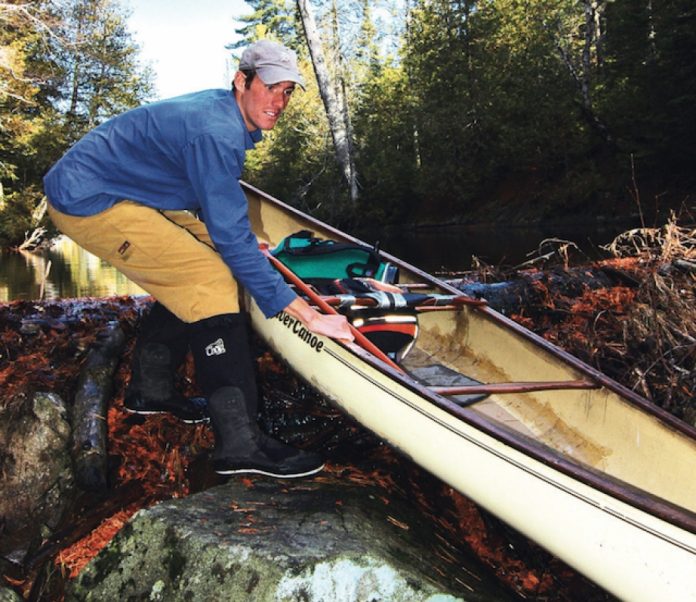
The online classified’s glorified details set my dreams in motion: a couple hundred bucks for a 15.5-foot, slender solo tripping canoe; 45 pounds of fiberglass adorned with ash trim. Just the ticket for independent trips on sprawling lakes and placid rivers. I mailed the seller a check sight-unseen and had a friend deliver the canoe to me a few weeks later.

“It’s a little rough,” my friend James reported, as we carefully lifted the canoe off the roof of his SUV. Only a skilled carpenter like James would so rashly understate the deplorable condition of my new canoe. Its weatherworn, desert tan hull was webbed with spidery cracks, the worst of which were coated in ugly, snot smears of epoxy. Rotted gunwales were spongy to the touch. After a few short outings where I observed steady streams of river water infiltrating the hull, the canoe—and my dreams—were shelved and almost forgotten.

But here’s the thing with a once-pretty canoe: It can’t help but catch your eye. A year later, when common sense still urged me to look the other way, the canoe spoke to me. Its sparsely upturned stem and stern screamed speed across open water, and its graceful tumblehome cried the promise of thousands of efficient, comfortable strokes. I caressed its fractured chines and conceived of a rehabilitation plan involving orbital sanders, fiberglass cloth, polyester resin and gelcoat. I would grind, glue and paint life into this aged spectre, and celebrate its rebirth with an autumn trip.

Putting my priorities in order, I thoroughly researched and planned a 70-kilometer lake circuit months before I set about rebuilding the canoe in which I would do it. When I finally chose a late-August heat wave to begin the restoration, it quickly became apparent that my old electric sander was no match for the canoe’s craggy skin, so I borrowed a friend’s stone-wheeled angle grinder. The grinder fervently tore into the job, creating clouds of caustic dust and ripping holes in the rotted fiberglass.

In 30 minutes of hot and dirty work I managed to obliterate most of the cracks. The result was a heinously holey, splotchy and morale- crushing canoe. I threatened to dump it in a landfill or, better yet, scuttle it with a final rock-bashing run down my local class III river. 

Here’s the thing with a once-pretty canoe: it can’t help but catch your eye

Unwilling to accept defeat, I summoned visions of gliding across steaming lakes rimmed with fiery forest and silent stone. Intent on the objective, I laid strips of resin-saturated fiberglass cloth along the inside of the canoe wherever I had gored the exterior. Then I sealed the hull with gobs of milky gelcoat, and chopped out and replaced the punkiest pieces of gunwale.

Figuring it would be wise to travel in the company of a capacious tandem on my solo’s maiden voyage, I recruited my wife Kim and friend Brad to come along. Kim, who’d been privy to all the peaks and valleys of the reclamation debacle, expressed her doubts when sunlight shone through the clear-coated hull as we affixed it to my truck’s racks. “But think of how fast we’ll travel three to a canoe,” she teased.

Shoving off from a sand beach on Lake Wanapitei, kneeling amidships, I gradually heeled the gunwale closer and closer to the water, growing accustomed to the tender stability. Bow pierced morning mist, trees burned with color and, amazingly, the canoe remained dry. For the next five days, canoe and I followed a J stroke course across the lakes, rivers and streams of my dreams. 

This article on a solo canoeist was published in the Spring 2011 issue of Canoeroot magazine.

This article first appeared in the Spring 2011 issue of Canoeroots Magazine.


Act Now To Save Gunwale Bobbing Before It’s Gone

Gunwale bobbing has been a staple for older generations playing on the water in canoes and is lamented by some as becoming a lost art with modern youth. This may sound a little melodramatic to those raised in a generation of careless, youthful pleasures (or those who question this generous assignment of the term “art”), but query a group of kids, teens or even outdoorsy 20-somethings about this classic canoe game and you’ll elicit a host of puzzled expressions.

“Is that, like, when you rock side-to-side and see how far you can dip the gunwales?” wondered one college outdoor adventure program student. “Is it like bobbing for apples?” guessed another.

Hey, at least give them credit for knowing what a gunwale is.

[ Paddling Buyer’s Guide: Find your perfect canoe for gunwale bobbing ]

It’s not the fault of the youth. In the late ‘90s, this cherished summertime tradition simply fell out of favor in camps and school programs across the country. “It’s not a written policy,” says YMCA Wanakita Camp Director Andy Gruppe. “Gunwale bobbing is one of many things camps are just not supposed to do anymore for insurance and liability reasons.”

Gruppe says no specific incident flagged gunwale bobbing’s demise. Rather, it was singled out for how dangerous it looks, not how dangerous it actually is. “More kids probably get hurt playing Capture the Flag in a given day than gunwale bobbing in an entire summer,” he says.

There’s still time to reverse this tragic loss.

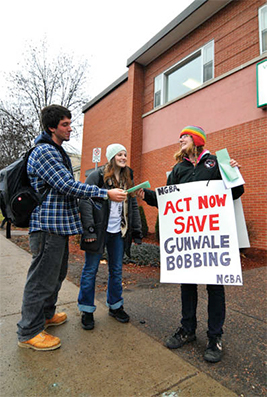
Woman standing with sign that says "Act Now Save Gunwale Bobbing"
Grassroots activism at work. Corynne McCathy educates fellow students Tom Coker and Elly Squires. | Photo: Virginia Marshall

Now a new organization wants to bring gunwale bobbing back into the toe grasp of hordes of hyperactive campers. The 62-member National Gunwale Bobbing Association (NGBA) is gradually spreading the gospel of gunwale bobbing at waterfront parks, community pools and even on street corners.

At a recent Save Gunwale Bobbing on-water event, NGBA ambassadors reported over a dozen eager kids perched astride bobbing canoes, even as protectivist parents protested from the solar-, water- and sand-shielded safety of their SUVs. “We received a score of disapproving text messages,” reported one NGBA instructor.

Hand-wringing parents aren’t the NGBA’s only worry, however. A secretive organization led by a shadowy figure known only as Gunwale Bob has been raising awareness of gunwale bobbing’s plight with less-than-legal gusto.

Infiltrating camps and posing as canoe instructors. Posting incendiary notes and photos on kids’ Facebook walls. Even demanding that hapless paddlers pass the “gunwale bob test” before leaving the dock at rental outlets in Boundary Waters, Algonquin, the Adirondacks and dozens of other popular canoeing destinations across the continent.

Canoeroots couldn’t find Gunwale Bob for comment, but an undisclosed whistleblower at his organization states, “The time for passive promotion is past.”

Meanwhile, a shrinking minority of recreational canoeists and families who never heard that gunwale bobbing is too dangerous continue to enjoy this graceful and precarious dance. Some of canoeing’s best known advocates are ardent bobbers.

“Gunwale bobbing is a canoe game we played as children—and one we still play,” write Joanie and Gary McGuffin in Paddle Your Own Canoe. In fact, the McGuffins encourage bobbing as an exercise to develop balance in a canoe.

So, what is the uncertain future of gunwale bobbing? Will the enthusiastic efforts—public or subversive—of the NGBA and Gunwale Bob resurrect this classic canoe game at children’s camps? Or will over-protective zealotry deliver it the same fate as wooden playground structures, cliff jumping, bare feet and the other regrettably forgotten but unforgettably fun pleasures of previous, more risk tolerant generations?

Act now to save gunwale bobbing. Grab a partner or go alone. Straddle bow or stern, grip the gunwales between bare toes, feel leg muscles flex and extend rhythmically. Stand up, bob and be counted.


Get gunwale bobbing

Keep the tradition alive with these fun-for-all-ages games.

Gunwale Bob Races

Two or more players

Players line up canoes side-by-side, about a canoe’s length apart. Race to the finish by standing on the stern gunwales, facing the bow, and bobbing the canoes forward.

Gunwale Bob-Off

Two players

Players stand on the gunwales at either end of the canoe, facing each other. Alternate deep-knee squats to set the canoe bobbing. See how high you can bob your opponent. The goal is to send your opponent for a swim while maintaining your own balance. For an extra challenge, wiggle the canoe side-to-side as you bob.

Volley Bob

Four or more players

Pairs of players stand on the gunwales as above. The goal is to be the canoe that bobs the longest. Make sure each canoe has plenty of space and use a moderator to see that every canoe bobs with equal vigor.

This article was first published in Canoeroots & Family Camping‘s Spring 2011 issue. Subscribe to Paddling Magazine’s print and digital editions here , or browse the archives here.


Up, down. Gunwale bobbing is an allegory for life. | Feature photo: Virginia Marshall