Home Blog Page 333

Act Now To Save Gunwale Bobbing Before It’s Gone

Gunwale bobbing has been a staple for older generations playing on the water in canoes and is lamented by some as becoming a lost art with modern youth. This may sound a little melodramatic to those raised in a generation of careless, youthful pleasures (or those who question this generous assignment of the term “art”), but query a group of kids, teens or even outdoorsy 20-somethings about this classic canoe game and you’ll elicit a host of puzzled expressions.

“Is that, like, when you rock side-to-side and see how far you can dip the gunwales?” wondered one college outdoor adventure program student. “Is it like bobbing for apples?” guessed another.

Hey, at least give them credit for knowing what a gunwale is.

[ Paddling Buyer’s Guide: Find your perfect canoe for gunwale bobbing ]

It’s not the fault of the youth. In the late ‘90s, this cherished summertime tradition simply fell out of favor in camps and school programs across the country. “It’s not a written policy,” says YMCA Wanakita Camp Director Andy Gruppe. “Gunwale bobbing is one of many things camps are just not supposed to do anymore for insurance and liability reasons.”

Gruppe says no specific incident flagged gunwale bobbing’s demise. Rather, it was singled out for how dangerous it looks, not how dangerous it actually is. “More kids probably get hurt playing Capture the Flag in a given day than gunwale bobbing in an entire summer,” he says.

There’s still time to reverse this tragic loss.
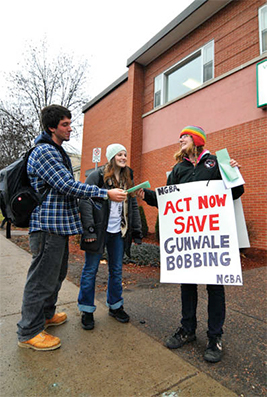
Woman standing with sign that says "Act Now Save Gunwale Bobbing"
Grassroots activism at work. Corynne McCathy educates fellow students Tom Coker and Elly Squires. | Photo: Virginia Marshall

Now a new organization wants to bring gunwale bobbing back into the toe grasp of hordes of hyperactive campers. The 62-member National Gunwale Bobbing Association (NGBA) is gradually spreading the gospel of gunwale bobbing at waterfront parks, community pools and even on street corners.

At a recent Save Gunwale Bobbing on-water event, NGBA ambassadors reported over a dozen eager kids perched astride bobbing canoes, even as protectivist parents protested from the solar-, water- and sand-shielded safety of their SUVs. “We received a score of disapproving text messages,” reported one NGBA instructor.

Hand-wringing parents aren’t the NGBA’s only worry, however. A secretive organization led by a shadowy figure known only as Gunwale Bob has been raising awareness of gunwale bobbing’s plight with less-than-legal gusto.

Infiltrating camps and posing as canoe instructors. Posting incendiary notes and photos on kids’ Facebook walls. Even demanding that hapless paddlers pass the “gunwale bob test” before leaving the dock at rental outlets in Boundary Waters, Algonquin, the Adirondacks and dozens of other popular canoeing destinations across the continent.

Canoeroots couldn’t find Gunwale Bob for comment, but an undisclosed whistleblower at his organization states, “The time for passive promotion is past.”

Meanwhile, a shrinking minority of recreational canoeists and families who never heard that gunwale bobbing is too dangerous continue to enjoy this graceful and precarious dance. Some of canoeing’s best known advocates are ardent bobbers.

“Gunwale bobbing is a canoe game we played as children—and one we still play,” write Joanie and Gary McGuffin in Paddle Your Own Canoe. In fact, the McGuffins encourage bobbing as an exercise to develop balance in a canoe.

So, what is the uncertain future of gunwale bobbing? Will the enthusiastic efforts—public or subversive—of the NGBA and Gunwale Bob resurrect this classic canoe game at children’s camps? Or will over-protective zealotry deliver it the same fate as wooden playground structures, cliff jumping, bare feet and the other regrettably forgotten but unforgettably fun pleasures of previous, more risk tolerant generations?

Act now to save gunwale bobbing. Grab a partner or go alone. Straddle bow or stern, grip the gunwales between bare toes, feel leg muscles flex and extend rhythmically. Stand up, bob and be counted.


Get gunwale bobbing

Keep the tradition alive with these fun-for-all-ages games.

Gunwale Bob Races

Two or more players

Players line up canoes side-by-side, about a canoe’s length apart. Race to the finish by standing on the stern gunwales, facing the bow, and bobbing the canoes forward.

Gunwale Bob-Off

Two players

Players stand on the gunwales at either end of the canoe, facing each other. Alternate deep-knee squats to set the canoe bobbing. See how high you can bob your opponent. The goal is to send your opponent for a swim while maintaining your own balance. For an extra challenge, wiggle the canoe side-to-side as you bob.

Volley Bob

Four or more players

Pairs of players stand on the gunwales as above. The goal is to be the canoe that bobs the longest. Make sure each canoe has plenty of space and use a moderator to see that every canoe bobs with equal vigor.

This article was first published in Canoeroots & Family Camping‘s Spring 2011 issue. Subscribe to Paddling Magazine’s print and digital editions here , or browse the archives here.


Up, down. Gunwale bobbing is an allegory for life. | Feature photo: Virginia Marshall
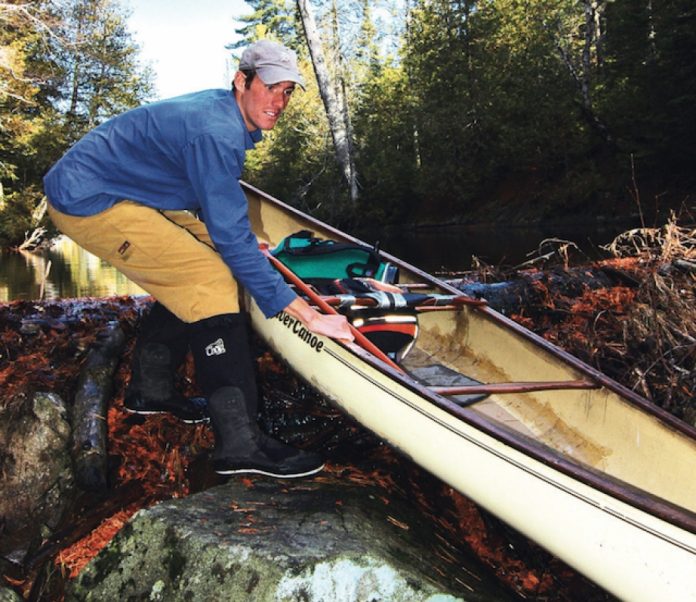
Renaissance Man

Photo: Conor Mihell
Renaissance Man

The online classified’s glorified details set my dreams in motion: a couple hundred bucks for a 15.5-foot, slender solo tripping canoe; 45 pounds of fiberglass adorned with ash trim. Just the ticket for independent trips on sprawling lakes and placid rivers. I mailed the seller a check sight-unseen and had a friend deliver the canoe to me a few weeks later.

“It’s a little rough,” my friend James reported, as we carefully lifted the canoe off the roof of his SUV. Only a skilled carpenter like James would so rashly understate the deplorable condition of my new canoe. Its weatherworn, desert tan hull was webbed with spidery cracks, the worst of which were coated in ugly, snot smears of epoxy. Rotted gunwales were spongy to the touch. After a few short outings where I observed steady streams of river water infiltrating the hull, the canoe—and my dreams—were shelved and almost forgotten.

But here’s the thing with a once-pretty canoe: It can’t help but catch your eye. A year later, when common sense still urged me to look the other way, the canoe spoke to me. Its sparsely upturned stem and stern screamed speed across open water, and its graceful tumblehome cried the promise of thousands of efficient, comfortable strokes. I caressed its fractured chines and conceived of a rehabilitation plan involving orbital sanders, fiberglass cloth, polyester resin and gelcoat. I would grind, glue and paint life into this aged spectre, and celebrate its rebirth with an autumn trip.

Putting my priorities in order, I thoroughly researched and planned a 70-kilometer lake circuit months before I set about rebuilding the canoe in which I would do it. When I finally chose a late-August heat wave to begin the restoration, it quickly became apparent that my old electric sander was no match for the canoe’s craggy skin, so I borrowed a friend’s stone-wheeled angle grinder. The grinder fervently tore into the job, creating clouds of caustic dust and ripping holes in the rotted fiberglass.

In 30 minutes of hot and dirty work I managed to obliterate most of the cracks. The result was a heinously holey, splotchy and morale- crushing canoe. I threatened to dump it in a landfill or, better yet, scuttle it with a final rock-bashing run down my local class III river. 

Here’s the thing with a once-pretty canoe: it can’t help but catch your eye

Unwilling to accept defeat, I summoned visions of gliding across steaming lakes rimmed with fiery forest and silent stone. Intent on the objective, I laid strips of resin-saturated fiberglass cloth along the inside of the canoe wherever I had gored the exterior. Then I sealed the hull with gobs of milky gelcoat, and chopped out and replaced the punkiest pieces of gunwale.

Figuring it would be wise to travel in the company of a capacious tandem on my solo’s maiden voyage, I recruited my wife Kim and friend Brad to come along. Kim, who’d been privy to all the peaks and valleys of the reclamation debacle, expressed her doubts when sunlight shone through the clear-coated hull as we affixed it to my truck’s racks. “But think of how fast we’ll travel three to a canoe,” she teased.

Shoving off from a sand beach on Lake Wanapitei, kneeling amidships, I gradually heeled the gunwale closer and closer to the water, growing accustomed to the tender stability. Bow pierced morning mist, trees burned with color and, amazingly, the canoe remained dry. For the next five days, canoe and I followed a J stroke course across the lakes, rivers and streams of my dreams. 

This article on a solo canoeist was published in the Spring 2011 issue of Canoeroot magazine.

This article first appeared in the Spring 2011 issue of Canoeroots Magazine.


Trolling for Lake Trout

Photo: James Smedley
Trolling for Lake Trout

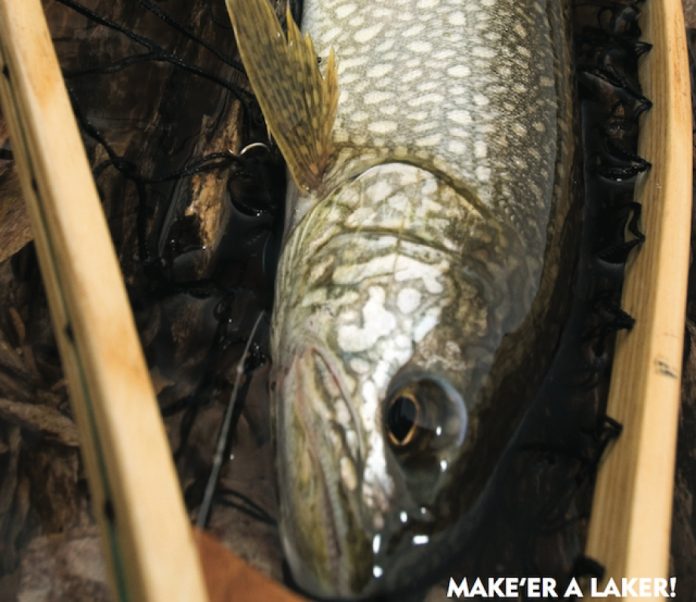
Whether you’re passing time on a rest day or scrounging for your next meal, fishing for lake trout is a fun activity on any canoe trip. The small, deep, remote lakes paddlers love are also home to some great wilderness fishing. Thirty-year veteran guide Gary Skrzek shares his canoe fishing methods. 

Trolling in a Canoe

Begin with the bow person sitting facing backwards. While the stern person paddles, the bow person drops a line to the desired depth. Next, the bow person puts the fishing rod down and paddles backwards while the stern person drops a second line. Once both lines are at the desired depth only the stern person needs to paddle. Keep the canoe moving or the two lines will get tangled with one another or snagged on the bottom.

Some tips for successful trolling from a canoe:


  • Move the canoe just fast enough for the lure to work. Any faster and it will be hard to keep your lure at the proper depth.
  • On most reels, reeling backwards 50 cycles lets out around 53 feet of line. When fishing for summer lake trout, you want to stay in the 40- to 55-foot range.
  • Try to troll along drop-offs or around shoals and islands that are next to deep holes.
  • When a trout bites your lure, you need to set the hook hard.
  • Trout like small lures. Expect to catch 20-pounders on lures smaller than your thumb. 

Tackle

The traditional method of trolling for lake trout uses steel wire and thick heavy rods, but these are best replaced with thin line and a light action rod for two reasons. First, this setup is much easier to bring on remote wilderness canoe trips. Second, it can be difficult to sense depth with steel wire so snags are common. When a snag can’t be freed, the line must be cut at the canoe leaving a 200-foot coil of steel wire in the lake. All too often loons, fish and mammals get caught in this tangled mess. 

What You Need

All you need to catch lake trout from your canoe is a light action fishing rod, six-pound-test fishing line, a three-way swivel, a two-ounce weight and a lightweight trout spoon. 

Building a three-way swivel rig:

  • Tie two lines to a three-way swivel, one about 20 inches long and the second 23 inches
  • Tie you sinker your to sinker to the 23-inch line. Feedin lake trout will stay in the 40- to 55-foot range during the summer so a two-ounce weight is adequate. The sinker line is a little longer so your lure stays off the bottom if you get a snag
  • Tie your lure to the shorter line. Small, feather-light sppons that are silver or silber mixed with blue, green or pink work best

This article on canoe fishing was published in the Spring 2011 issue of Canoeroots magazine.

This article first appeared in the Spring 2011 issue of Canoeroots Magazine.


Freeridin’ with Woody and the New Liquidlogic Kayak

Woody shows Rapid Media the ins and outs of the new LiquidLogic Kayak – The Freeride. This boat isn’t about getting the biggest air, running the steep creeks, it’s all about getting real paddlers out on the water and having fun.

Paddling at MACKfest

[iframe width=”560″ height=”315″ src=”http://www.youtube.com/embed/3nZvQ36XXJU” frameborder=”0″ allowfullscreen ]

The Marmora and Area Canoe and Kayak Festival (MACKfest) just kicked off the paddling season in Ontario for it’s 4th season. There was a freestyle competition, extreme down river race, raffles, gear swap, live band, vendors, camping, good food, and great rivers. Here is a short highlight vid of what it’s all about and look for Rapid Media TV to be there again next year.

Confusion Has Its Cost

Photo: Ryan Creary
Photo: Ryan Creary

Only a handful of times have I been to the edge—life threatening, soul searching, that-almost-killed-me events. The kind, to put it mildly, I never wish to experience again. What I remember about these brief, endless moments on the river is two things: first, the burning of water blasting through my sinus cavity and behind my eyeballs; and second, the confusion. 

The other half of my life is considerably more sedate. I’m an academic, which means I read a lot, teach some, think about ideas and go to conferences. While sometimes I still walk away saying, “That almost killed me,” for the most part it is a safer place. Within this reading, teaching, ideas and conference circuit, there are a couple of gurus. One of them, a round, grey-haired sociologist, specializes in confusion. 

Sensemaking, actually. The opposite of confusion. Sensemaking is “the process by which people give meaning to experience” he writes in his seminal work on risk management and error prevention. Karl Weick is fascinated with how individuals make sense of a situation. His specialty is how people deal with crisis. 

Back to the edge. 

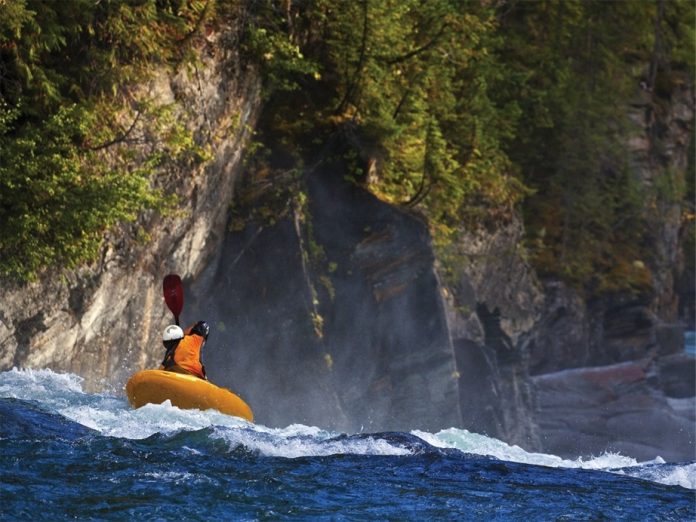
It was a medium drop on the Upper Yough with a way-left boof line. Lock the lip, boof…why am I not coming up? Where am I? How long did it take me to figure out I was getting surfed between the curtain and the rock wall? Minutes? A second? Hard to tell. My confusion was dark, loud and all consuming. 

The field of risk management and accident investigation commonly retraces the decision-making process preceding and during a critical event. In this case, the decisions preceding my slip (being 16 inches off line) were sound. What should occur next—the decisions in the moment of crisis—either minimizes or escapes the situation. This is where Weick and sensemaking comes in, or doesn’t. 

Confusion precludes decision-making. Weick explains that how one makes sense of a situation directly affects what gets decided. If sensemaking does not catch up with a situation that is desperate and life threatening, then other critical decisions are not made. 

“The less adequate the sensemaking process directed at a crisis, the more likely it is that the crisis will get out of control,” he concludes. 

The thing with theory is that it doesn’t help with the water blasting my eyeballs and the rock wall where I want to put my paddle. In this case I didn’t make sense of where I was until I had already minimized the problem to something I could deal with. I needed air. As I focused on solving my basic air problem, I eventually figured out what was going on. 

Weick can explain this, too. “There is a delicate trade-off between dangerous action which produces understanding, and safe inaction which produces confusion…people don’t know what the appropriate action is until they take some action and see what happens.” In effect, trial and error helps define what is going on, and brings sense to the confusion. Waiting to see what happens only makes things worse. 

Sensemaking grows with experience. A wider range of experience allows wider breadth of sensemaking. That doesn’t mean I’m going to volunteer to get pinned just to get a sense of it. I’d rather take my chances on the conference circuit. 

This article originally appeared in Rapid, Spring 2013. Download our free iPad/iPhone/iPod Touch App orAndroid App or read it here.

Boat Review: The Essence 17.0 by Airealite

Photo: Tory Bowman
Boat Review: The Essence 17.0 by Airealite

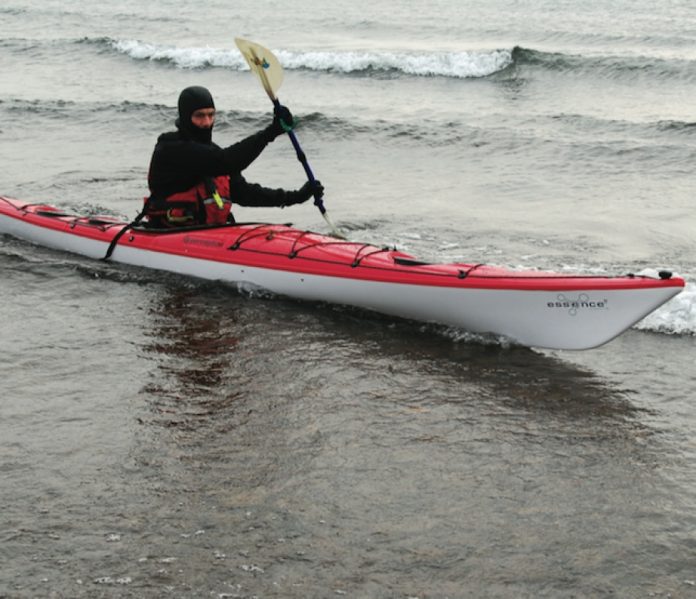
When people say the Perception Essence 17.0 Airalite is a “good looking boat”—as they inevitably do—they’re likely referring to the sexy lines of the long, slender bow. For it’s here that the Essence reveals its designers’ intentions to prolong the transition from bow to midsection to make for the finest possible entry lines.

The Essence is a sharp contrast to rough water designs that carry more volume in the ends for buoyancy in waves. Crafted by longtime Confluence Watersports boat designer Bob McDonough to be a friendly, high-performance tourer, it has a sporty feel and excellent capacity and speed for its length. This is achieved by the tapered bow and the Swede form shape, with the widest point rear of the midsection like a racing kayak.

The stern is stockier than the bow—a nod to packability. In McDonough’s words, “You’ve got to carry the volume somewhere.”

The result is capacity for long trips combined with excellent efficiency that is refreshing to find in a plastic boat. The Airalite we tested is the lighter, thermoformed version but the Essence also comes in more affordable poly, and both options are available in a 16.5 length for smaller paddlers.

A limited rocker plus the tapered bow’s emphasis on knifing the water equals strong tracking and minimal weathercocking. There’s perhaps less need for the skeg than for the optional rudder, which novices might appreciate for easier turning.

The hull under the cockpit is a shallower V than other popular British-style 17-footers like Confluence’s Wilderness Systems Tempest 170 and the NDK Explorer. It’s also about an inch wider and the chine is slightly softer, resulting in greater initial stability and more smooth, predictable edging.

For this new top-end touring boat, Perception has taken a winning British formula and expertly honed it to be a tad more welcoming to a wide range of paddlers and uses. And, dare we say, a little faster and more spacious.

With a distance swimmer’s heart for the straight and narrow, the Essence is perhaps not your first choice for a day in the surf. However, like the touring edition of a high-end sports sedan, this kayak is perfectly capable of dialing up the adrenaline and having some fun if opportunity booms. Which, in our books, is the definition of the perfect tripping kayak.

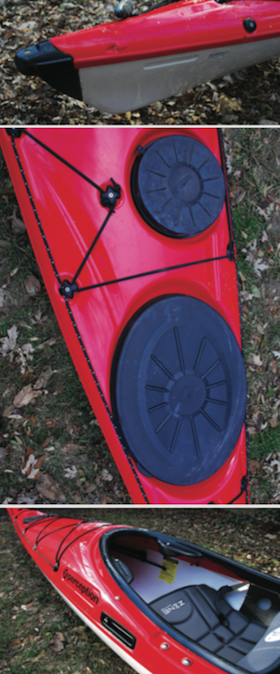
Screen_Shot_2015-06-26_at_1.26.39_PM.pngRudder ready

In addition to the standard hydrofoil- shaped skeg and easy adjusting SlideLock foot braces, the essence comes rudder-ready with a mounting bracket on the stern and routings for cables.

Handy hatches

The Essence includes a 10-inch bow hatch, 8-inch day hatch and an oversized stern hatch, all with tight- fitting kajak-Sport rubber lids.

Comfort outfitting

Perception touts its Zone eXp Seating System as “expedition grade.” It includes a long, padded seat bottom with adjustable height to promote circulation on extended outings, and adjustable padded thigh braces. a long, spacious cockpit accommodates tall paddlers.

Specs

  • Length: 17 ft
  • Width: 23 in
  • Weight: 50 lbs
  • Max. load rating: 350 lbs
  • Price: $2,299 USD / $2,409 CAD

1AKv11i1.jpgThis article first appeared in the Spring 2011 issue of Adventure Kayak magazine. For more boat reviews, subscribe to Adventure Kayak’s print and digital editions here.
 

Editorial: Born Again

Photo: Virginia Marshall
Editorial: Born Again

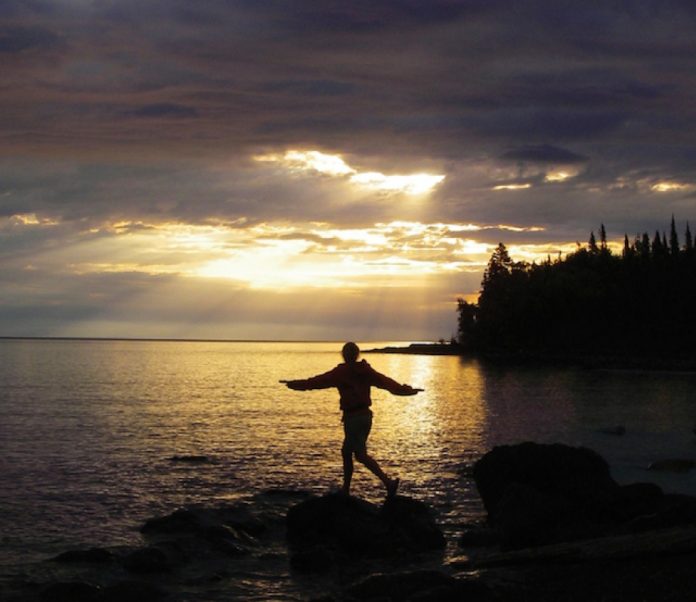
I was conceived in a tarpaper shack. It had a door handle of silver-polished driftwood scavenged from the neighboring beach, and a chicken wire window through which carried the sound of waves gently lapping or violently thrashing three-billion-year-old volcanic greenstone.

My parents never set foot in this rustic hut. I’m not referring to the conception of the large-lunged, platinum-haired infant they named Virginia and raised in a semi-rural colonial. Rather, it is my adult identity—a sea kayaker by passion and trade—that was born here.

Few people can pinpoint the protozoan moment they became the essence of who they really are. Identify the choices that defined the course the rest of their lives would take. I can.

For me, it was during one of those golden, bewitchingly long summer days just after solstice on Lake Superior, when shadows seem to stretch to the horizon and the lumpy hills turn softly purple.

I arrived on the lake eager and impressionable, a week out of college and sopping-wet-behind-the-ears—even more so after a first day initiation in the surf.

I had an extra large mesh duffle containing my worldly possessions, a Rubbermaid full of books and an invitation to work as an assistant kayak guide.

My Evolving Kayak Identity

For the next four months, I divided my time between the shack known to my co-workers as the Taudis des Souris (not without good reason, I soon discovered), my no-longer-new-smelling tent and the cockpit of a kayak. At season’s end, I was a sea kayaker.

Even more than the incredible tripping and surfing or adjective defying landscape, the other kayakers with whom I shared those blissfully isolated, uncomplicated months defined me. From them, I learned to be master of my craft, confident on open water and in avalanching waves. I discovered how to live simply and comfortably out of 130 liters of plastic for weeks at a stretch. I listened to remarkable stories that would eventually lead me to my own thrilling adventures. I fell in love and shared the shack with more than just mice.

Every raw experience further glazed the patina of my evolving identity. I couldn’t know the places kayaking would take me, but I was eager to discover. I’m still discovering. Settling in to helm this issue of Adventure Kayak, I’ve added another layer of identity: Sea kayak magazine editor.

Driftwood and paddles still decorate my home, but I’ve traded chicken wire acoustics and isolation for high-speed and a broad- reaching industry and community network. I look forward to the inspiring stories and people to which this job is an unrivalled portal. I’ve no doubt your tales will lead some fascinating places.  

This editorial on discovering your adult identity was published in the Spring 2011 issue of Adventure Kayak magazine.This article first appeared in the Spring 2011 issue of Adventure Kayak Magazine. For more great content, subscribe to Adventure Kayak’s print and digital editions here.
One Peace at a Time

Photo: flickr.com/rkramer62
One Peace at a Time

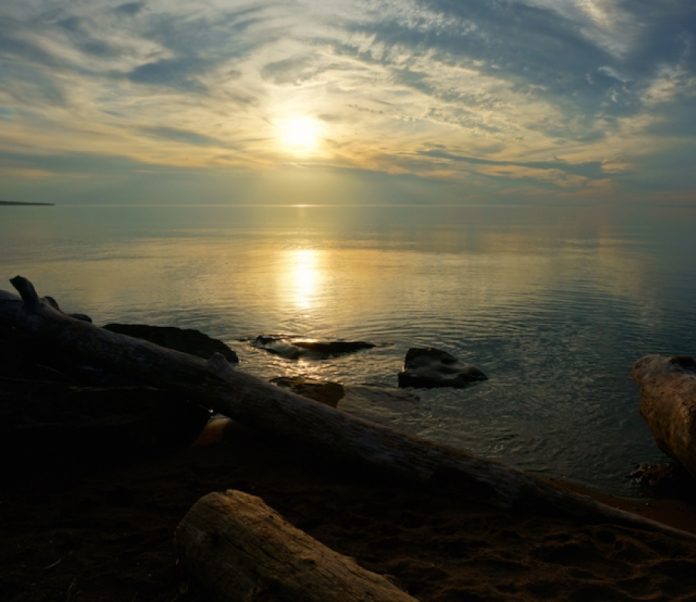
The view is every bit as unique and spectacular as the viewpoint.

I am standing 20 feet above Lake Superior with arms outstretched to steady myself. My form fills the dark, rectangular defile cut into the rock face of South McKellar Island.

Like me, the men who carved this mine adit—a horizontal tunnel burrowing roughly 450 feet into the heart of this tiny outcrop—were on a fervent search. Where they sought silver nearly 130 years ago, I am looking for a healing peace. To me, the true treasure here is the lake itself, as gentle this day as an outsized millpond.

Below my feet, our three kayaks are lashed to a giant iron staple driven into the rock. Looking landward toward Pie Island, the view is of stunning headlands, sheer cliff faces and rugged shores cloaked in spruce. In an exchange of roles, the lake seems to have switched with the land as a place of refuge. Sky and water ap- pear interchangeable. It is a peace-giving place, and that is precisely why I am here.

I slammed the door last summer on a 29-year career as a special education teacher serving deaf and hard-of-hearing students, terminally fed up with administrative bureaucracy.

A mutual passion for paddling has connected me with some amazing individuals over the years. On this two-week trip from Pigeon River to the tiny hamlet of Rossport, Ontario, I travel with a lifelong speleologist. We poke our bows and noses into every rock fissure, mineshaft and sea cave.

Stillness of the Paddle

Keep your senses open and your ego in a box and you have quite a lot to learn from the company you keep out here. What you see on the surface is rarely all there is. This is as true of the wilderness as it is of the people passing through it.

We are blessed with another ethereal calm on the morning we make the 10-kilometer crossing from Pie Island to Thunder Cape through the heart of a busy shipping channel. The huge lake freighters steaming in and out of Thunder Bay will not even see a kayak, much less adjust course for one.

No one speaks as we paddle. We are all keenly alert for ship traffic, but there is so much more to this stillness. Gulls, cormorants and calling loons are the only witnesses to our passage. I will remember this fine morning as one of the most peaceful I have ever experienced kayaking.

I am a bit past middle age right now. There are certainly many other waters to explore. However, in the time I have left to paddle, it is my choice to travel deep rather than travel broad. The peace I find kayaking on Lake Superior is a gift that can be shared only between intimates.

Tim McDonnell lives in Minneapolis, Minnesota, where he is busy savoring retirement and dreaming of his next Lake Superior kayak trip.

This article on finding your sense of place was published in the Spring 2011 issue of Adventure Kayak magazine.This article first appeared in the Spring 2011 issue of Adventure Kayak Magazine. For more great content, subscribe to Adventure Kayak’s print and digital editions here.
Lights Out for Canada’s Lighthouses

Photo: Virginia Marshall
Lights Out for Canada's Lighthouses

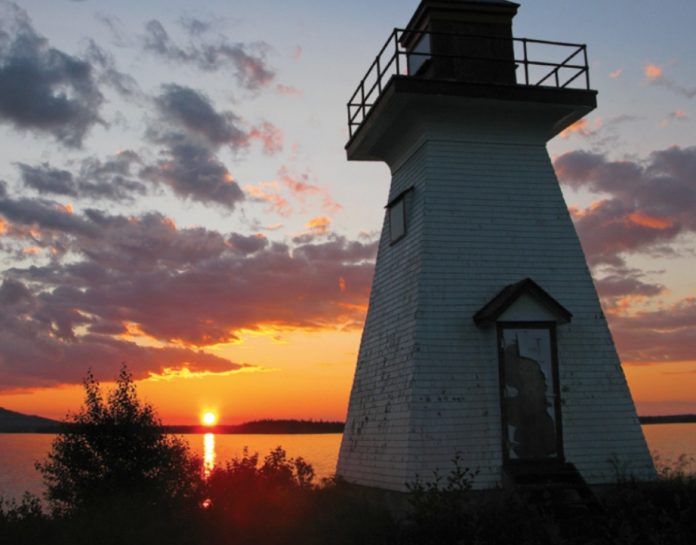
The once-cheery white paint on Michipicoten Island lighthouse’s flying buttresses is peeling. The doors and ceilings of the 80-year-old lightkeeper’s house sag.

Michipicoten Island’s compact cluster of eroding buildings isn’t alone. Late last May, the federal government of Canada quietly declared the still-active beacon “surplus” along with nearly 1,000 of its maritime brethren across the country.

The announcement came packaged with the new Heritage Lighthouse Protection Act—legislation “to conserve and protect heritage lighthouses” that elected officials, the Heritage Canada Foundation (HCF) and various other groups across Canada worked for over a decade to enact.

“This move undermines the intent of the Act, leaving the door open to the lighthouses’ abandonment and demolition by neglect,” says HCF spokesperson Carolyn Quinn.

The Act establishes a process to select and designate federally owned lighthouses for heritage status, requiring their maintenance by the Department of Fisheries and Oceans (DFO). However, it excludes surplus ones— which, not incidentally, now constitute 96 percent of all major light stations—from being designated. Unless, that is, community groups or private individuals commit to buy them and take responsibility for their upkeep.

Surplus lighthouses will be on the auction block for two years—until May 29, 2012. Interested parties must apply to Parks Canada for heritage designation and present a business plan to prove they can manage such a site. Ac- tual navigation aids would remain the property of, and continue to be maintained by, the Coast Guard. Preference is being shown to non-private buyers—community conservation groups, not-for-profits and municipalities—for whom the price is just $1.

“We’re trying to do good things,” says DFO Senior Divestiture Analyst Andrew Anderson.“We’re very sensitive to the fact that these [lights] are of enormous value for heritage purposes.” Anderson continues that the sale of lights isn’t new, “We’ve been doing this for 10 or 15 years.”

Only now the clock is ticking. After the divestiture period, those lights that remain unsold will face an uncertain future.

My Canada includes lighthouses

“It’s difficult to speculate what would happen to unsold surplus lighthouses,” says DFO spokesperson Nelson Kalil.

Kalil says that maintaining the 480 still-active—and 490 inactive—surplus lighthouses is beyond the budget and mandate of the Coast Guard. He emphasizes it is the lights, not the structures themselves, which are essential. “They can be replaced with simpler structures whose operation and maintenance would be more cost-effective.”

Many see this as government double-speak for an obvious outcome: Remote havens that have served mariners for two and a half centuries will disappear and be replaced by steel skeleton towers.

Former B.C. lighthouse keeper Jim Abram is among those who predict the replacement beacons will be “inferior” and of little use to mariners seeking shelter in storms.

If the DFO had hoped to pass the buck to another federal department, it doesn’t seem to be working. Parks Canada has been offered some of the lighthouses, including those within national parks like Pukaskwa Park’s Otter Island and Newfoundland’s iconic Cape Spear, but this “hasn’t fit into that department’s strategy” says Kalil.

For kayakers and other coastal recreationists, equally disquieting as the loss of safety and heritage is the thought of “No Trespassing” signs plastered on these sometimes-rare patches of public land. On some parts of the coast, the familiar red and white enclaves are the only guarantee of an unmolested campsite.

In a passionate letter to the Kingston Whig Standard, a Simcoe Island, Ontario, resident summed up Canadians’ sense of loss, and raised the call for action:

“If this is fiscal responsibility, it is, frankly, fiscal responsibility Canadians can ill afford. My Canada includes lighthouses. Does yours?” 

This article on saving Canada's lighthouses was published in the Spring 2011 issue of Adventure Kayak magazine.This article first appeared in the Spring 2011 issue of Adventure Kayak Magazine. For more great content, subscribe to Adventure Kayak’s print and digital editions here.