Home Blog Page 354

Editorial: A Drop in the Bucket

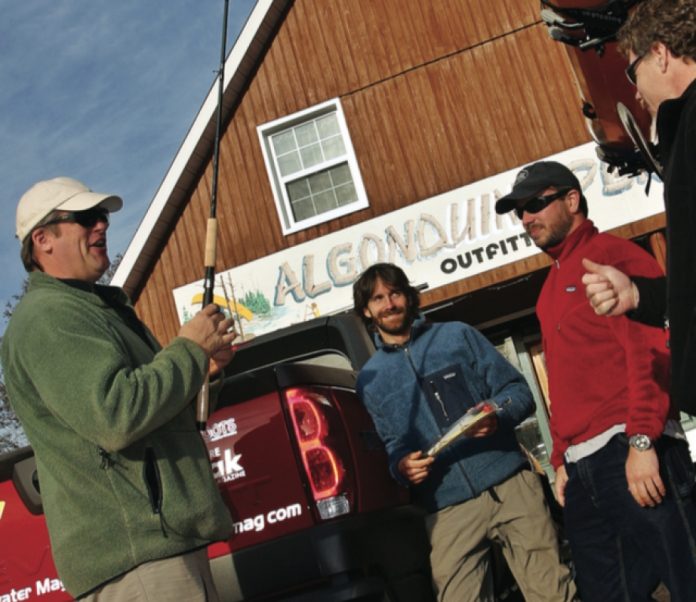
Photo: Scott MacGregor
Editorial: A Drop in the Bucket

Driving home from a kayak fishing trip last week I realized I had done what most whitewater paddlers do every weekend—I filled my gas tank and cooler before I left home.

The week before, back at the Rapid office, I had been preparing an economic impact survey to measure the amount of money spent in Palmer Rapids during our Canadian Whitewater Instructor Conference and sixth annual Palmer Rapids River Festival. I’ll use the data from this to present a case to my local municipality, county economic development office and tourism association arguing that whitewater paddling is good for the area.

Meanwhile, the only things I left behind after my weekend in the abandoned-mining-town-turned-tourism-based fishing community were a couple of snagged lures and a case of empties.

For my fishing trip, I easily dropped $250 on gas, groceries and bits of tackle. Buying it all locally would have only cost me $18 more than it did at the highway gas bar and box store supermarket. With eight of us in our group and eight other cabins at the place we stayed, for an extra six dollars a day each, these guys at this one fishing camp could have injected $10,000 into the local economy simply by buying supplies at the Gowganda general store. And that doesn’t take into account the beer!

We need to stop thinking about our rivers as being free.

With increasing pressure on rivers for hydro development, river protection groups have to slap a sticker price on whitewater. These groups are standing up in public meetings across the country convincing local politicians and governments that paddlers will generate more business and more revenue than turbines.

I respect the efforts of groups like Les Amis who are committed to protecting the Kipawa River from hydro development. Unfortunately, this year Les Amis is officially cancelling the 21st annual Kipawa River Rally due to what vice President Peter Karwacki calls the “unsafe, unpredictable situation created by the punitive actions of [the federal government].” Karwacki recommends paddlers send letters of apology to local businesses in the host town of Laniel. Maybe the loss of revenue will spur local businesses to stand up and take notice. Sometimes you don’t know what you’ve got ‘til it’s gone.

We know that economic impact studies sway government decisions when it comes to whitewater paddling.

Whitewater parks are being built all across North America on the basis of their economic returns. Cities like Reno, Nevada and Wausau, Wisconsin have invested millions to create whitewater tourism and are reaping rewards. More complacent communities are letting developers shut off their natural rivers.

We simply have to stop thinking of rivers as being free and be conscious and proactive with our spending. We can pay for a shuttle instead of driving two cars from the city. Stay the night at a local campground, motel or bed and breakfast. Rent our boats locally. Shop at the local grocery store. Fill our gas tanks for the ride home. Plan to meet your friends at the restaurant for breakfast. Buy an ice cream cone. And if there’s a box at the take-out or campground, dude, put your money in the box.

We need to pay where we play. And if it costs us more to do so, it’s not an added expense, it’s an investment.  
This article on shopping local was published in the Summer 2007 issue of Rapid magazine

This article first appeared in the Summer 2007 issue of Rapid Magazine.
 

River Alchemy: Random Beauty

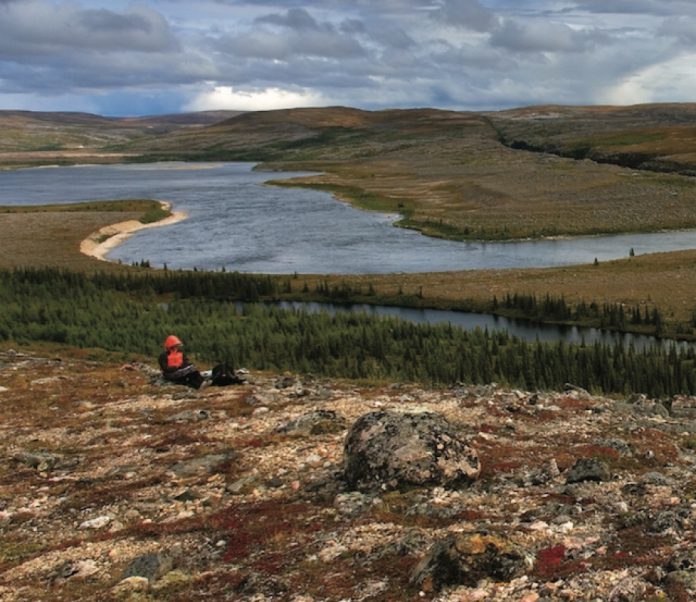
Photo: garyandjoaniemcguffin.com
River Alchemy: Random Beauty

I stumbled on it some years ago on a rambling hike down a dry streambed in Driggs, Idaho. I found a perfect bend in a river. A 180-degree change in direction, carved from the alluvial plain. The gravel bank was perhaps eight feet high; it was plumb vertical, and had a perfectly walled arc, perhaps 100 feet in diameter. From every angle it was astoundingly geometrically perfect. It grabbed my eye and carried it around its curve. I had never seen such mathematical perfection in nature before.

Luna Leopold felt that same sense of awe in nature. As the son of Aldo Leopold, the famous pioneer of wilderness ethics and land protection in the United States, Luna Leopold was the first to set out to study rivers in a manner unheard of—he measured them… in great detail. In fact he spent a lifetime creating formulas to explain just how rivers work, and how it was possible for them to carve the perfect bend.

By and large, he was successful. 

He was the creator of what is now called quantitative hydrology, and in doing so re-established much of the fundamental assumptions of modern engineering.

Starting in 1953 with his obscure (to most readers) text, The Hydraulic Geometry of Stream Channels and Some Physiographic Implications, Leopold pulled rivers apart, feature by feature, and scratched out the formulas that explain their behaviours. Some of his findings are uncanny. Consider these, if you haven’t before: the wavelength a river meanders is, on average, 12 times its width; the Sine coefficient for those meanders is the same coefficient for the compression waves that form on a stream’s surface; and the riffle-pool interval is one half the wavelength of the meanders.

Fascinating.

He created formulas to explain helical flow, wave creation, hydraulics, sediment load and watershed flood rates. The list goes on and on. In my search to explain the perfect bend all roads lead to Leopold’s work. He was incredibly prolific and clearly a genius. While mathematically dazzling, his formula for the perfect bend left me spiritually unfulfilled.

A year later I was handed Barry Lopez in a used bookstore in Smithers, B.C., Lopez lives on the other end of the Sine curve from Leopold; if Leopold is pure science, Lopez is pure poetry. River Notes is Lopez’s river dissection, via a series of short stories so descriptive the book drips with water. His swirling eddies suck you in, carry you into the current, then delicately and surprisingly drop you in the literary ocean of deep thought with his famous single-sentence endings.

Lopez explores the idea of how a river can so seamlessly and completely change direction, while looking for instruction that may be useful to his own life.

Mired in depression, he laboured to examine every aspect of the bend in the river behind his home. If he could figure out this bend, then maybe he could figure out how to turn his own life around. Bed-ridden and feeling no hope at all, he hauls himself down to the stream and dips his hand in the water. The essence of the turn, he realizes, is not in the details (nor in any of Leopold’s formulas), but in some bigger connection between himself and the river.

Lopez’s exploration of the fine details of rivers is in a way an exploration of the human soul, but his life-changing river bend metaphor did not speak to me any more than Leopold’s algebra.

I’ve since returned to the sharp and blocky Canadian Shield rivers, rivers with turns seemingly unaffected by water and time pushing against them. In my lifetime I’m unlikely to find another bend so geometrically perfect.

With every new river I paddle I realize it was not the bend that was so intriguing, it was how the perfectly bending arc grabbed my eye, smoothly railing it around the corner in a new direction. It was not the bend in the river, it was what lay beyond that was so intriguing and so important. The perfect bend is not a complex equation. For me now, the perfect bend is the one just downstream, the one luring me to explore what is just beyond. 

This article on science and poerty was published in the Summer 2007 issue of Rapid magazin

This article first appeared in the Summer 2007 issue of Rapid Magazine.
 

The Macho Move

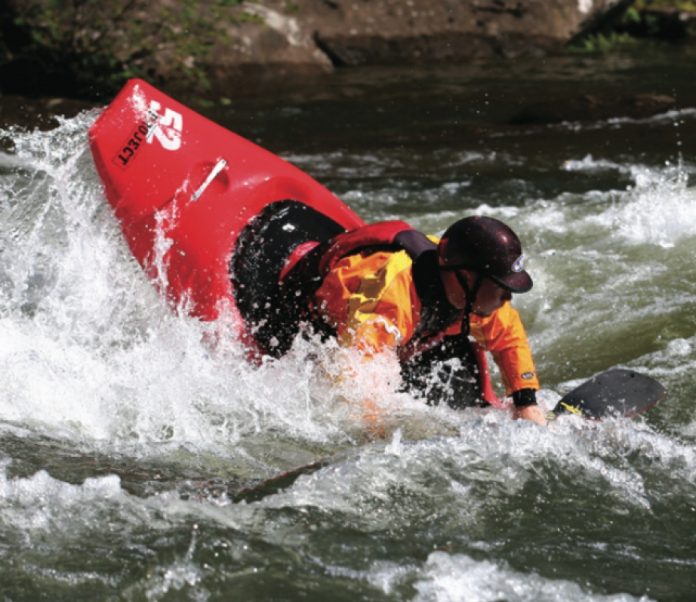
Photo: Tanya Shuman
The Macho Move

The macho move is one of the most impressive downstream freestyle moves known to mankind. Invented by Brad Ludden and named by Jay Kincaid, it became mainstream after Ludden and other pros displayed the new move at the 2002 IR Triple crown on the Nolichucky River in Tennessee.

The macho move is simply an air loop, which pops off the peak of a wave while moving downstream. Only two waves are required to get a nice aerial macho move. It is ideal to learn the move on high-volume rivers with medium-sized waves where you don’t have to worry about hitting bottom. The New and Gauley rivers in West Virginia are my favourites for doing macho moves since the potential spots to do this move are endless. Also endless are the potential variations of the macho move. One slight variation of the macho move was done for this particular photo sequence, with the boat popping off the peak with a twist to get more of a space Godzilla macho move. New ways are still being discovered.

The feeling of doing a massive air flip while travelling downriver at high speed is truly exhilarating. once you nail your first macho move the addiction will begin. You’ll never just float down a wave train again.  

How to macho move:

Step 1: Paddle at medium speed into a wave train with fairly consistent standing waves. The greater the spacing between the waves, the more downstream speed you’ll require. Proper timing is crucial for the macho move.

Step 2: The initiation is the classic double-pump technique, started at the peak of the first wave. The key is to lift your bow into the air while moving over the first wave peak, and to drive your bow as deep as possible into the trough between the two waves. This loading of your bow’s volume deep in the trough is where the pop of the macho move comes from.

Step 3: As you begin to travel up the face of the second wave, stand up on your foot blocks just as you would for an air loop. You should time this jumping action so that you are completely standing up just before the peak of the second wave.

Step 4: Snap your torso forwards as if you were flatwater looping off the peak of the wave. You will encounter much less resistance than a normal flatwater loop since the water is dropping away from you as you travel downstream off the peak of the wave. You know you’ve nailed your timing perfectly when you completely clear your stern of the water and you land flat on your hull in the next trough. 

Pro tips:

1. Practice both the flatwater loop and loops in holes, and concentrate on the timing of the jump to increase your pop into the air. 

2. The higher you pull yourself into the air off the initiation wave peak, the deeper your bow will go into the next trough. The deeper your bow goes in the trough, the higher you will be thrown into the air off the second wave peak. 

3. Approach the first wave at a slight angle from the side. This will help you face downstream while vertical on your bow, which will make your macho move loop finish straighter. 

This article on the macho move was published in the Summer 2007 issue of Rapid magazine.

This article first appeared in the Summer 2007 issue of Rapid Magazine.
 

Drag-and-Drop

Photo: Steve Arnold
Drag-and-Drop

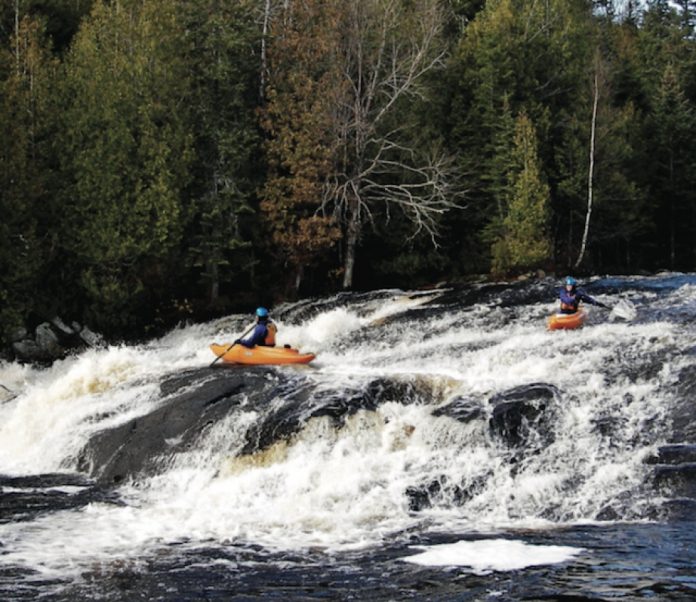
I set up for shallow slides much the same as I set up for any creek line. I start opposite the side I want to end up on and carry momentum into the rapid to cross the grain of the falling water. On shallow slides in an open boat carrying momewntum is even more important than in a kayak, since an onside forward stroke wants to spin the boat and any strokes in one inch of water don’t work very well.

On the Independence River in New York State I started down a narrow shallow slide that fanned out as it steepened, before dropping into a very tiny cauldron surrounded by sloping granite banks. With some surprise I found myself grinding down angled left as planned to cross the grain, but definitely not moving left. Matter of fact, as I was approaching the landmark rooster tail at the lip of the steeper bit, I was sliding even further to my right toward the cauldron—not at all where anyone would intend to go. Finishing the drop backwards seemed like the best of the worst, and even though there was so little water cascading over the rocks you could hardly call it a rapid, it was enough to drown out the laughter of everyone on shore.

It was several months before I came up with a plausible explanation of why I’d gotten so far off line.

On the Doncaster, a classic Quebec spring run, I watched the same thing happen. In this photo, the boater is trying to drive river left but the water pushes him out towards the middle of the rapid. He either didn’t come into the rapid with enough forward momentum to begin with, or the drag on the bottom of the boat in the shallow water caused the boat to slow down and move slower than the water. Either way, if you’re not moving faster than the water, crossing the grain turns into a scary back ferry.

Think back to the old days when we all used the back ferry to descend rapids slowly. A back ferry works because the canoe is moving slower downstream than the current, due in this case to your backpaddling. The water pushes on the exposed side of the canoe moving the craft laterally across the river.

On a shallow slide you get the same effect when your creek boat is slowed by the friction of the river bottom.

As soon as you lose forward momentum the current begins to take your boat with it. Aligned perfectly with the current, you’re going where the water is going. Any angle in either direction and presto, you are in back ferry mode, whether you like it or not!

So far, I’m not setting up to back ferry down slides. I still much prefer maintaining forward speed and driving toward the direction I want to go.

However, understanding how the friction in shallow-water slides slows my boat, I can always try to claim I was back ferrying when I end up beached on shore.

Who knows, maybe it won’t be too long before we’re all back ferrying off waterfalls… you go first. 

This article on back ferries was published in the Summer 2007 issue of Rapid magazine.

This article first appeared in the Summer 2007 issue of Rapid Magazine.
 

Canoe Fishing: Over the Hills and Far Away

Photo: Scott MacGregor
Canoe Fishing: Over the Hills and Far Away

Thirty kilometres as the crow flies from my front porch is a blue hardcover notebook on a worn pine kitchen table, in the middle of a mossy log cabin overlooking a small lake. On the first page of the notebook it reads: “Welcome to our fishing camp. You may use our camp and you are welcome here. Please leave the camp as it was and treat it like it’s yours. Please leave your name, the date and how your fishing went. Good luck fishing! P.S. The toilet paper is in the fridge.”

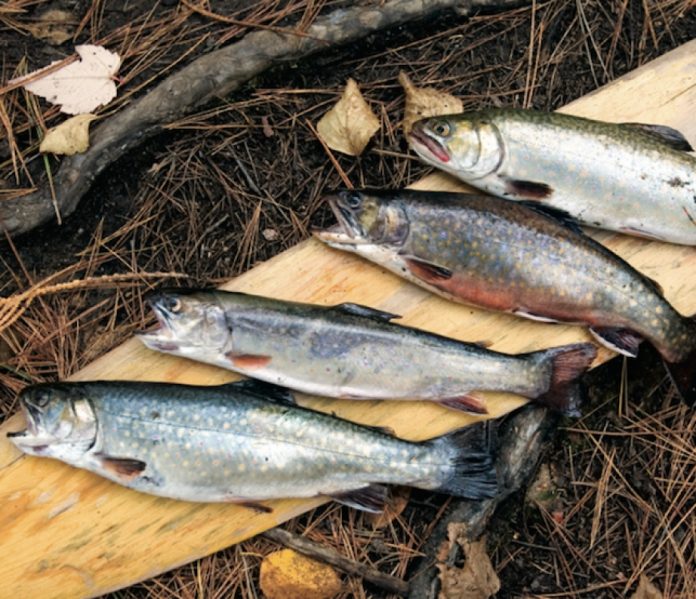
The lake is well known in my area for its speckled trout. For two summers my neighbour Bobby and I have been planning a trip in to try our luck.

I’m more of a hump-my-gear-through-the-woods canoe- ist and Bobby is more of a tow-his-motorboat-to-the-lake fisherman, but our sense of adventure and our craving for speckles (not to mention his beer fridge) brought us together in his workshop on winter nights to dream about our fishing trip.

Finally, on the last Saturday of trout season we loaded Jellybean—an old, heavy and stable fibreglass square- stern canoe—and a borrowed electric trolling motor onto Bobby’s Yamaha Rhino ATV. In a cloud of dust I’ve never before kicked up on a portage, we tore off in the direction of the lake. 

The ride to our trout lake is much further by logging road, snowmobile route and bouldery four-wheeler trail than it is for the straight-flying crow. A journal entry in the cabin’s notebook describes the trip quite well, “Broke one beer on the way. Shook the shit out of the rest.”

Finding our way back to the lake turned out to be as much fun as the fishing. With the help of a topographic map, GPS and directions sketched on the back of a Coors Light label we rolled up to the cabin around noon. Bobby bagged two partridge on the way (we had a shotgun along in case the fish weren’t biting). Once we found the lake, it wasn’t long before we had Jellybean in eight feet of water and we were marking trout on our sonar.

In our district, it is Darwin Rosien’s job to release 16- month-old trout in 123 lakes as part of the Ontario Min- istry of Natural Resources’ fish-stocking program. In early May, when the water temperature is just right, Darwin bajas into the lakes he can in a five-ton truck balancing a highly specialized fish bowl on the back. Some lakes, like ours, are just too remote to get to by truck so the lucky fingerlings are chauffeured by helicopter to their new homes.

Lakes that are too inaccessible to stock by truck are often too far away to portage a canoe or too remote to tow a fishing boat into. These are just the kind of fishing destinations perfect for old Jellybean, Bobby and me.

DECORATED BY THREE GENERATIONS OF MEN’S MEN

With enough speckles for dinner, Bobby loaded our gear back into the Rhino and I wandered up to explore the little log cabin. There are hundreds of these rustic fish and hunt camps on Crown land and many you’ll find—if you find them at all—are left unlocked and well-stocked, like the lakes they’re built on.

This cabin is a tidy two-room affair, furnished and decorated by no less than three generations of men’s men.

The liquor cabinet is a rusty and dented breadbox, stocked with an uncracked bottle of Crown Royal and a six-pack of Bud in cans with two empty rings.

Old fishing rods and broken cross-cut saws hang on the walls and a transistor radio on the windowsill is tuned to the local country music station. In the cupboards there are bags of potato chips, cans of coffee, whitener, sugar, decks of cards and two cribbage boards with toothpicks for pegs.

In the kitchen, 10 frying pans—yes 10—hang on the wall. And above the propane stove rests a box of Red Bird matches and the largest roll of aluminum foil I’ve ever seen. This is the type of kitchen where fresh fish is always on the menu.

There was a battery in the deer clock. Tick. Tick. Tick. It was 4:30. Meaghen, Miss June 2004, watched me sit down at the kitchen table and log our trip in the notebook:

September 23, 2006. Scott and Bobby were here. They were really biting well; we kept four nice ones. I write for a canoeing magazine and I’m going to write about our ATV trip into your camp. I’ll bring a couple of copies when we come back in the spring. It’s gracious of you to leave your camp open for others to enjoy.

P.S. Don’t worry. I won’t mention where it is. 

Scott MacGregor is the publisher of Canoeroots & Family Camping. Look for his latest project, Kayak Angler magazine, in fishing and paddling shops. and in case you’re wondering, the toilet paper is kept in the fridge so the mice can’t get at it. 

This article on fishing was published in the Early Summer 2007 issue of Canoeroots magazine.This article first appeared in the Early Summer 2007 issue of Canoeroots Magazine. For more great content, subscribe to Canoeroots’ print and digital editions here.

Canoe Racing: Tactical Attack

Photo: Ian Merringer
Canoe Racing: Tactical Attack

Halfway through a month-long, 1,300-kilometre canoe race from Chicago to New York, I was locked in a grim struggle with a father and son team I had dubbed the Fighting Fitzgeralds. Fitzy Senior had gone to the Olympic trials in sprint kayaking but his bullish 20-year-old son in the bow didn’t believe father always knew best. Deep into a gruelling stage on the Erie Canal, we eyed our final portage and the pace quickened. Junior wanted to hammer ahead and take out first. Pops told him they would chill on my wash and pass me on terra firma. While they bickered over what to do, I hustled out and start- ed running. I glanced over my shoulder to see Senior whack Junior upside the head with his carbon fibre bent-shaft.

That was 14 years ago, my first year as a marathon paddler. The Fitzgerald’s deliberations were my introduction to tactical thinking. Non-racers often figure the fittest, fastest teams finish first. Not so. The sport is so tactical, the strategy so subtle, that guts and guile often triumph over speed and strength.

Here are the key elements governing canoe racing’s tactical manoeuvres.

LINING UP: With amped, anxious paddlers going berserk off the line, you’re guaranteed large, confused waves. In races that begin against the current or into the wind, cagey squads jockey for position along the bank. Peter Heed, co-author of Canoe Racing: The Competitor’s Guide to Marathon and Downriver Canoe Racing says your position will depend on your strengths and weaknesses. “If you don’t have good acceleration or are unstable in big waves, don’t put yourself in the centre of the storm. If you have good speed and boat handling skills, line up near the fastest boat in the field.” That way, you can latch onto the wave of the speedier boat and be guaranteed a great start. 

WASH RIDING: Riding the wash—surfing the stern or side wave of the boat in front of you— may be the most essential skill in the sport; it’s nearly as important as drafting in a bicycle race. “Finding the sweet spot on a wave can save you an enormous amount of energy and pay huge dividends over the course of a race,” says heed. generally, your bow should be sniffing distance—as close as you can get without rear-ending your competitor—behind the canoe in front of you. But, heed warns, “You have to keep adjusting because the wave lengths change according to the water depth.”

UNEASY ALLIANCES: A marathon is far less a steady grind than a series of sprints linked by periods of recuperation. during these recuperative stages, race management is a large part of the game. This means you’ll need to work with your fellow racers. heed says: “You want to be aggressive without being a pain in the ass. if you’re an irritant they’ll try to get rid of you.” Preferred tactics for getting rid of unwanted canoes include sprinting ahead or forcing teams into the bank or a bridge abutment. “If you pull your weight by taking turns in pulling and letting others ride wash, then the stronger team will work with you. It’s a constantly changing and uneasy alliance.”

USING THE WATER: Reading the river means being able to seek out the fastest water and is a skill born of experience. heading around a tight downstream turn, you’ll find the fastest water on the outside of the turn. Carving a smooth turn is a skill that requires seamless teamwork, which is why bends are another spot where teams often try to break away. Expect the pace to quicken as you approach a tight turn on an upstream leg. Because you’ll be single file along the bank where the current is most favourable, it’s imperative to keep your bow glued to the stern of the boat ahead of you. Approaching a shallow section, savvy teams inevitably sprint just before the river changes depth so they can “pop”the boat, a skill which allows a team to ride their own wash as their canoe slows and their stern wave steepens in response to the shallow bottom. get caught off guard and you can get dropped faster than you can say Mark Twain.

THE END GAME: “Heading into the finish the question comes down to who sprints first and where,” says Heed. “If the other team has a faster sprint, you must try and drop them earlier, say in the shallows or on a corner. If you’re zippier, you should wait until the last minute.” 

At the end of the race, the team that stands highest on the podium is the team that can both suffer greatly and think clearly at the same time.

Joe Glickman is a two-time member of the U.S. Marathon Kayak Team and has competed in scores of pro canoe races. He is the author of The Kayak Companion and To The Top. 

This article on canoe racing was published in the Early Summer 2007 issue of Canoeroots magazine.This article first appeared in the Early Summer 2007 issue of Canoeroots Magazine. For more great content, subscribe to Canoeroots’ print and digital editions here.

Ready, Set, Trip! Why Real Canoe Tripping Can’t Be Rushed

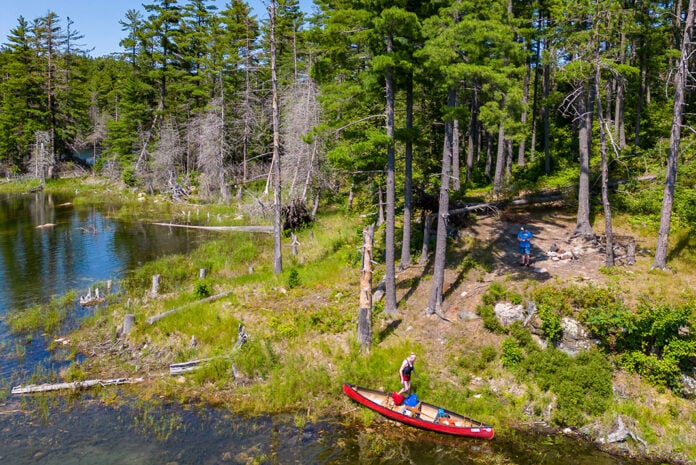
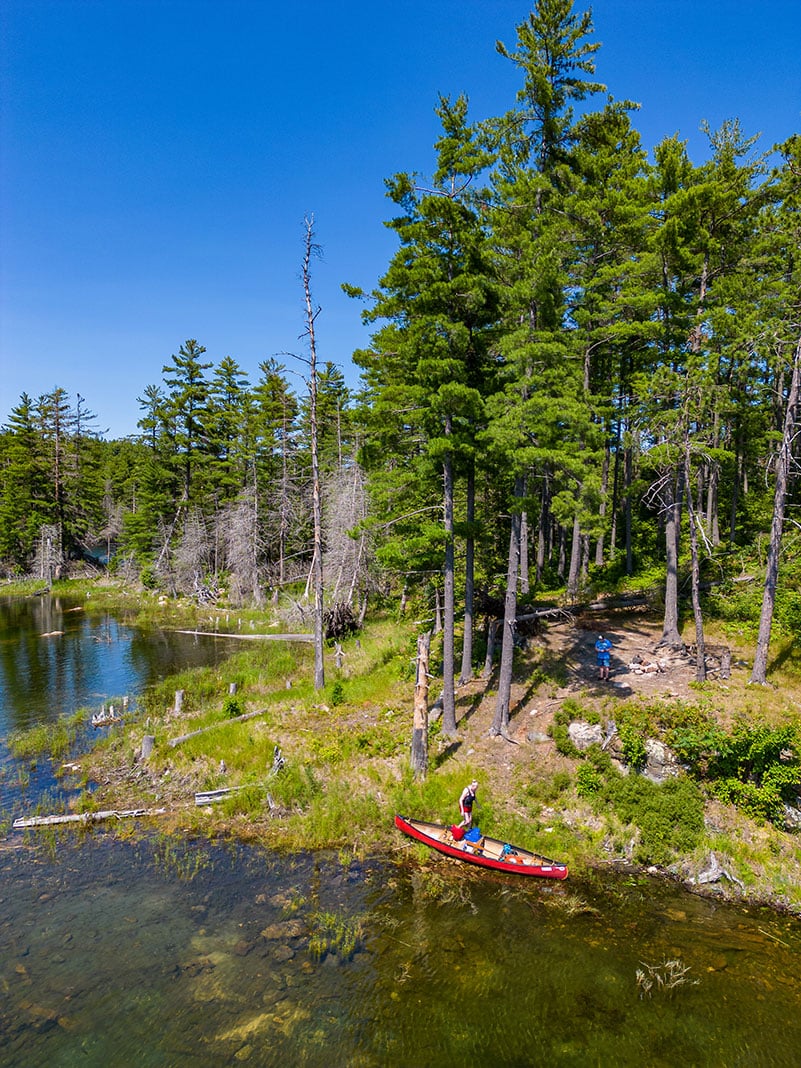
people at a lakeside campsite with a red canoe
First order of business upon arriving at camp: press play on the loon soundtrack and light the campfire scented candle. | Feature photo: Rob Faubert

Any tripping partner of mine has to understand that, no matter what schedule we are on, sometimes I like to take the time to have a quiet morning paddle before breaking camp.

Ready, set, trip! Why real canoe tripping can’t be rushed

people at a lakeside campsite with a red canoe
First order of business upon arriving at camp: press play on the loon soundtrack and light the campfire scented candle. | Feature photo: Rob Faubert

It was on one of these paddles one morning that my deep breathing was interrupted by the sound of a studio-recorded wilderness soundtrack. I rounded a point and saw the source: a middle-aged couple sitting on folding lawn chairs and listening to a cacophony of loon calls and orchestral melodies bellowing out of a waterproof boom box.

My curiosity got the better of me. Rather than pass their camp as quickly as possible, I paddled toward shore and called out the standard opener: “How long ya out for?”

“Seven hours, maybe eight if we’re lucky,” was the response.

Apparently it was a weekend outing. They had fled the city Saturday morning, got caught up in traffic and arrived at the launch just before dusk. They made camp at the first available site and had gotten up early, planning to get back on the highway before the traffic got bad.

I guess the boom box was just some insurance, in case they didn’t have time to hear a full complement of loons, wolves and white-throated sparrows during such a short trip.

I paddled away knowing canoe tripping had entered a new era.

The ever-shrinking average trip

In North America, we work too hard and too long, and it’s at the expense of time spent paddling. For proof, look at the history of paddling guidebooks. Editions in my collection from the 1930s have routes averaging a month in length. In the 1970s they featured seven- to 10-day trips. In the 1980s they were reduced to five. Now, the average trip promoted is two to three days.

[ Plan your next canoe trip of eight days or more in length with the Paddling Trip Guide ]

The problem, as any tripper knows, is that you’re not even into a good rhythm until the fourth day. Your urges for television and fast food fixes don’t begin to dissipate until day five. It’s not until the ninth day you’re actually at ease with your surroundings.

I say, cases of constipation aside, if the trip isn’t long enough to require the use of a toilet trowel, it’s not a real trip.

Later that afternoon I heard flute-like wailings come from down the lake. I couldn’t tell if it was a wood thrush, or the latest release in the Sounds of Nature oeuvre. I like to think it was the latter and that the couple had decided to wait until after the late-afternoon rush to get back to the city.

Fun fact: although Kevin Callan is known for his longtime Butt End column in Canoeroots, his debut article was published in the second issue of Rapid in the spring of 1999. His Butt End column kicked off in the Spring 2006 issue of Canoeroots.

Cover of the 2023 Paddling Trip GuideThis article was first published in the Early Summer 2007 issue of Canoeroots Magazine and was republished in the 2023 Paddling Trip Guide. Subscribe to Paddling Magazine’s print and digital editions, or browse the archives.


First order of business upon arriving at camp: press play on the loon soundtrack and light the campfire scented candle. | Feature photo: Rob Faubert


Editorial: The Olympic Dream

Photo: Tanya Shuman
Editorial: The Olympic Dream

Whitewater rodeo became freestyle about the same time paddlers starting calling themselves athletes. Which was about the same time paddlers like me stopped giving a shit about rodeo—we didn’t know we were supposed to call it freestyle—mostly because we didn’t have a snowball’s chance in hell of making our national team. There was a time when I and a hundred other average-Joe paddlers had a chance. We could spin, cartwheel, split, clean and blunt, and in 1999 if you could link a bunch of them together, it was all the tricks you needed to win at rodeo. for the record I can still spin, cartwheel, split, clean and blunt: too bad for me, I suppose, that my local river doesn’t have a behemoth wave to train on. The Worlds have passed me by.

The buzz coming out of the last World Freestyle Championships in Australia was the changes in the scoring system and the structure of the event made with an eye to freestyle becoming an olympic sport. Rules were changed to encourage more variety of moves and a World Cup series now replaces an off year Pre-Worlds event. According to the International freestyle committee, freestyle kayaking could be in the olympics as early as 2012 and they say, a large step in the right direction.

I just checked the website of London’s Olympic Delivery Authority. It is moving forward with plans for a new whitewater canoe slalom course at broxbourne, which will serve as the host venue for the london 2012 Olympic Games. There was, however, no mention of freestyle kayaking on the list of demonstration sports for 2012, nor was there mention of the slalom course including a monster-sized wave most North American athletes say is the real future of freestyle.

Even with whitewater freestyle now under the wing of the International paddling events—I doubt they have deep enough pockets in their train- ing shells to bribe the Ioc into accepting our fringe sport into their olympic Games. And even if the IFC was drop-shipping kayaks full of greenbacks, does anyone really think that host cities like London are going to build a Bus Eater wave? Not a chance.

If whitewater freestyle does make it to the Olympics, athletes would surely be competing in manmade pour-overs or flushy little waves at the bottom of concrete slalom courses, like main Wave at the Penrith Olympic Stadium, home to the poorly attended Worlds in 2005 and the target of much criticism.

So, you have freestyle athletes and boat designers driving the sport toward bigger, more awesome waves they say best showcases the sport. meanwhile, the competitive organizing committee is setting the groundwork for freestyle to qualify for the Olympics, something that would surely set the sport back in the hole by 10 years.

Either no one has noticed this crazy contradiction or the olympic dream is really about pro athletes accessing funds from national sport associations and government agencies, not about moving the sport forward at all. Which is fine with me, but with every other olympic athlete making public statements about their under-funded national sports programs, I can’t help but wonder if it’s worth it.

Personally, I’m all for whitewater freestyle in the Olympics. I’d buy back my Wave Sport XXX and practice my spins, cartwheels, splits, cleans and blunts on my local river. If I link them all together on the right day I may find myself on a plane to London to make my country proud. 

Screen Shot 2015 12 22 at 11.54.35 AMThis article first appeared in the Early Summer 2007 issue of Rapid Magazine. For more great content, subscribe to Rapid’s print and digital editions here
Succession Planning: Guides of the Future

Photo: Trailhead Archives
Succession Planning: Guides of the Future

The generation that created the river industry, and much of paddling as we know it today, is greying. After 30 some years and the switch from canvas packs to barrels, retirement is just around the next bend. As the paddling guide industry faces the end of an era, I thought we should look back—something we’re just too young to have done before.

Mountaineers can point to 1899 when the Canadian Pacific Railroad hired two Swiss mountain guides to operate out of its glacier house hotel, starting a long and distinguished tradition of recreational mountain travel. Rivers, on the other hand, have been travelled since the beginning.

For several hundred years first nation guides were the cornerstone of European exploration of the continent. Voyageur guides picked up where they left off by driving the fur trade up and down the waterways, to be replaced by logging’s river drive foremen. guides yes, but the purpose was cartography, furs and lumber, not recreation as we know commercial river guiding today.

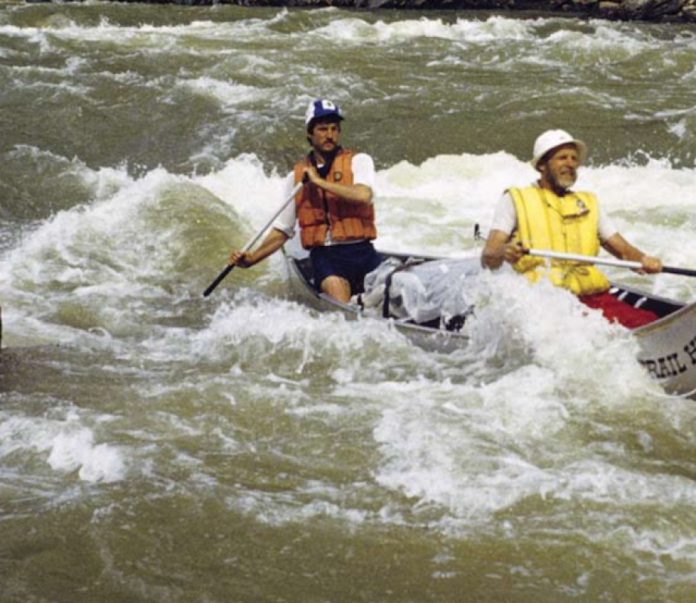
Rather than being born, recreational river guiding spawned and hatched slowly. sometime in the 1800s fishing guides, relying on the canoe, began tak- ing paying clients into the wilderness. At the same time, summer canoe camps came into existence, building their programs around canoe tripping and skilled trip leaders. simultaneously the opening of the west’s rivers, such as the colora- do, created an enamoured public and capable boatmen looking for post-exploration employment. Across the continent scruffily bearded, young adventurers started scratching out a living by guiding others down rivers.

By the late 1960s and early ’70s, buoyed by summer canoe camp graduates, advancing gear, huge numbers of then-young baby boomers and an emerging environmental awareness, canoe outfitters and whitewater rafting businesses sprang up everywhere. they grew from backyard sheds into what is now substantial business—adventure tourism.

Operating Black Feather out of his mother’s basement, in 1971 wally schaber was on the leading edge of river-based adventure tourism. Then, $700 would get you several weeks on the nahanni, where schaber was the first licensed canoe guide. “We were cheap and there were a lot of young boomers with some skills. we offered them adventure. At the time, running whitewater was considered pretty extreme,” remembers schaber with a chuckle. Now that same Nahanni trip costs $5,500.

In retrospect the baby boom makes everything sound easy. but really, the intervening 35 years—between basements and big business—the pioneer guide services had to literally create paddling in the minds of the public. The Nahanni and Colorado rivers, if heard of at all, sounded mysterious and dangerous. whitewater rafts and kayaks were unheard of. Spending good money on a river trip as a vacation was a new idea and not an easy sell. 

To survive, river guides were forced to become marketers and salesmen. It was an uncomfortable transition and many of them packed it in or went broke. Trip plans gathered dust while business plans were patched together. Trade shows replaced exploring new rivers. Getting down the rivers was the easy part, getting deposits for summer trips was the real challenge.

The business of guiding grew beyond its cottage industry roots, and with it came mainstream recognition, laws, permits, insurance and regulations. Now in their 50s and 60s the founders of the industry have seen it all develop before their very eyes—indeed driving this development, whether they liked it or not.

Although their tenure may nearly be over, many who created river guiding are still standing at trade shows signing up new clients. After all, the industry is quite literally their life’s work.

Every paddler I know is a paddler because of this history. The rivers we paddle, we can paddle because these greying pioneers and their thousands of paying clients lobbied for river conservation and preservation. The question we have to ask is, with the Baby Boomer heyday gone and the number of regulatory hoops, will anyone step up and guide us for the next 30 years?

I hope so.

Jeff Jackson is a professor of outdoor adventure at Algonquin College in Pembroke, Ontario. 

Screen Shot 2015 12 22 at 11.54.35 AMThis article first appeared in the Early Summer 2007 issue of Rapid Magazine. For more great content, subscribe to Rapid’s print and digital editions here
Open Canoe Technique: Take the Free Ride

Photo: Rick Matthews
Open Canoe Technique: Take the Free Ride

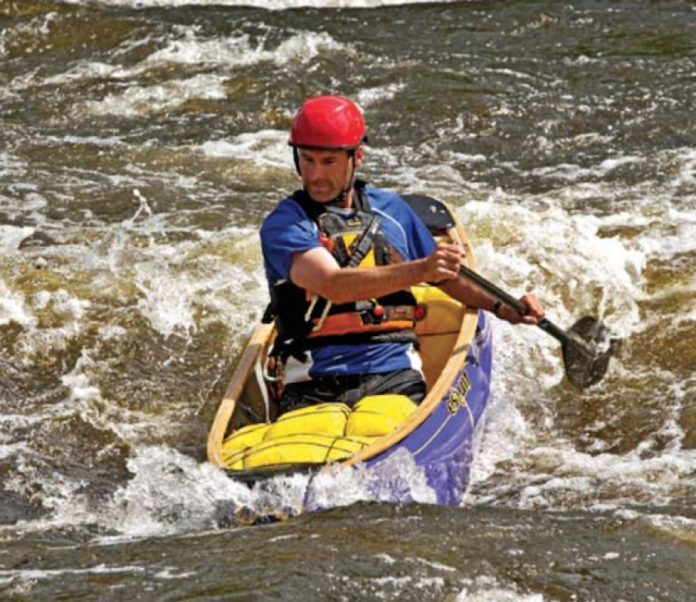
I think most canoeists would agree that what makes a day on the water a day to remember is an extended and controlled front surf with great side-to-side and back-and-forth movement. you can improve your odds of capturing these prized memorable moments of the big ride with a better understanding of the surf wave and how to control your movement up and down and side to side on its face. 

when sizing up the perfect wave from the shore or eddy pool, the physical features of the wave appear deceptively static and unchanging. the position of the trough does not move; the depth remains the same; even the crest—though perhaps break- ing—appears to change very little. the problem is that once you ferry onto the wave, the weight of the canoe changes its shape. the wave flattens out and the canoe leaves a deep crease trailing downstream weakening the wave’s grip on your canoe. 

For really good surfs you may need to keep actively moving the boat around to keep pace with the altering wave. Forget about finding a wave that lets you just sit passively in the current; it’s a rarity and besides, those snoozey surfs are not the ones memories are made of. 

holding your position on the face of the wave between crest and trough can be tricky. Often on large, steep waves, gravity combined with a fast canoe hull will rocket you down to the trough and pearl and pin your bow in the upstream water and cause your canoe to fill with water. If this happens, simply drag your paddle blade or use a braking backstroke to create enough friction to pull you up the wave and back onto the wave face. too much friction, however, may drag you over the crest and off the wave. 

If the wave is wide enough, you can avoid pearl- ing by surfing side to side across the wave face. by changing your angle to travel across the wave face instead of travelling straight down, you lessen the slope on which you are surfing, therefore slowing your descent down the face of the wave. Carving back and forth keeps your canoe on the best portion of the wave, avoids sinking the bow in the trough and makes your surfing more dynamic and fun. 

to carve left and right on the wave, try using a floating rudder stroke—keeping your paddle away from the gunwale. A floating rudder allows the canoe and paddle to work independently so you can tilt the boat to ferry one way while initiating a new turn with a pry or draw in the opposite direction to carve back across the wave. A floating rudder is a must to maintain the ideal boat tilt through the transition from carving to your onside and to your offside. 

the secret to great surfing is to work with the wave as it changes beneath you. by adjusting your position up and down, and side to side, you can stay on the wave face and out of the trough. the next time you come across the perfect surf wave, get on it, and stay on it for a ride to remember. 

Andrew Westwood is a frequent contributor to Rapid. He’s an open canoe instructor at the Madawaska Kanu Centre and member of Team Esquif. 

Screen Shot 2015 12 22 at 11.54.35 AMThis article first appeared in the Early Summer 2007 issue of Rapid Magazine. For more great content, subscribe to Rapid’s print and digital editions here