Home Blog Page 356

In Parting: The Upside of Rolling

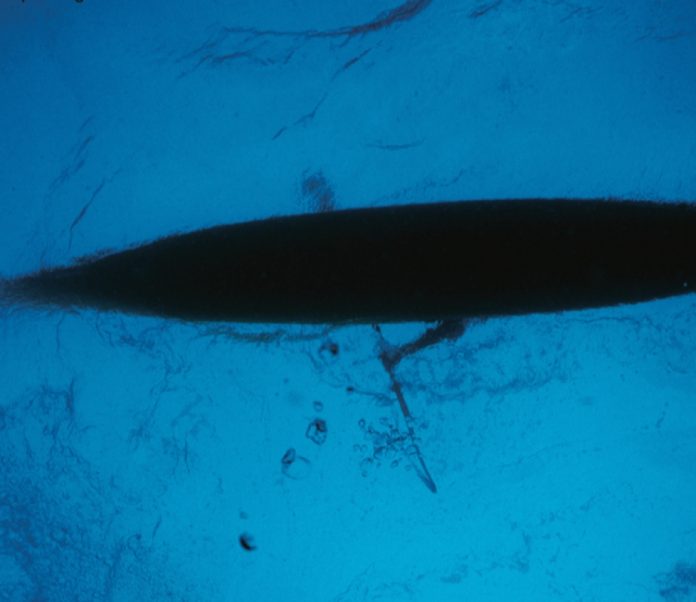
Photo: Peter McBridge/Aurora Photos
In Parting: The Upside of Rolling

When it comes to rolling, I think sea kayakers are like Steve Carrell’s character in the movie The 40-Year-Old Virgin—they can go a long way through life without ever doing it. Perched precariously on the surface as we are, there’s a feeling that eventually it’s going to happen—we’re going to flip and need to know how to roll—but the pressure to be ready for that day that may never arrive can become an obsession and a debilitating fear.

Learning to roll a sea kayak is hard. You’re doomed from the start because the very conditions most likely to flip you are also the ones in which you least want to be practicing. should a sea kayaker ever flip over on a trip—god forbid—that makes for a truly epic moment. Witness Southern Exposure, Chris Duff’s book about his expedition around New Zealand’s south island. It includes a map marking the location of every capsize.

We paddle through the worst stuff with our teeth clenched, hoping nothing goes wrong, and then practice our rolls on sunny afternoons in calm water by the beach where we can call a buddy over to perform a t-rescue when we blow our hip flick, bring our head up first and start carping for air. And thus we never really get it.

That was me a few years ago. To celebrate my 30th birthday I did a long expedition on the open coast, and at the time I had no roll. A strong brace and a “please don’t flip” mantra kept me alive, but the fear of capsizing took the fun out of some of the most spectacular parts of the trip.

ROUGH WATER PRACTICE

It takes rough water practice to really nail the roll. What finally taught me to roll after years of failure was moving from the ocean to the river. A whitewater paddler would never map out every spot he capsized; rolling on the river is like falling down while learning to snowboard—it’s just what you do. You flip again and again at the worst possible times, when the waves are big, the eddy lines are a mess and the water’s full of air and boils.

For a while I harboured sea kayaker fears—what if I flip over, what if I swim? I blew some rolls and pulled the skirt and swam through a few big rapids, but in time the roll became a reflex and my fears vanished. Then I went back to the ocean and found my entire outlook had changed. As competitive roller Cheri Perry says in the new movie This is the Sea 3—describing how it feels to be the master of 30 rolls—“I was afraid of capsizing. Now I’m not afraid of capsizing.”

Now every time I roll up I feel like celebrating. Celebrating that I’ve beaten the fear, that I’ve finally got the skill, and that I’m back up on the right side of that thin line we float on—the side where the air is. I feel like Steve Carrell at the end of the movie, doing his post-virginity Bollywood-style dance number to “this is the dawning of the Age of Aquarius.” rolling feels good, and I wonder why I waited so long. 
This article on rolling your kayak was published in the Early Summer 2007 issue of Adventure Kayak magazine.This article first appeared in the Early Summer 2007 issue of Adventure Kayak Magazine. For more great content, subscribe to Adventure Kayak’s print and digital editions here.
Editorial: A Not-So Clear-Cut Issue

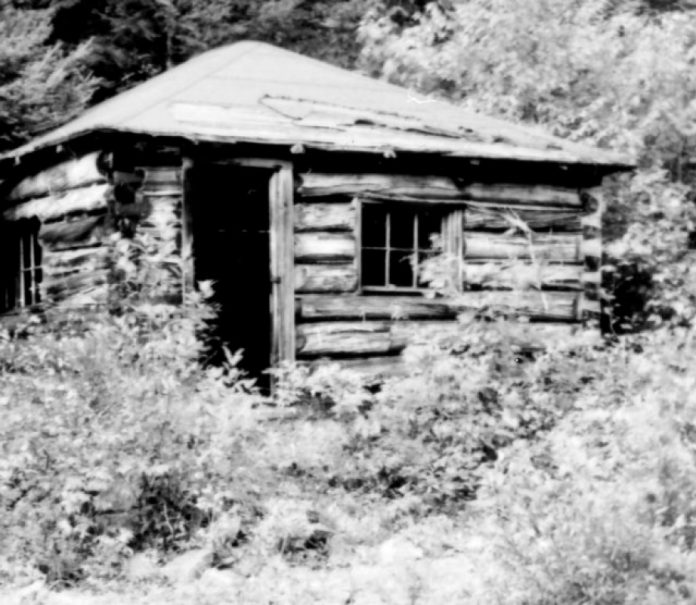
Photo: Algonquin archives a06025
Editorial: A Not-So Clear-Cut Issue

There were whispers around camp that there was something otherworldly about him. Some said he was a Wendigo, the semi-human cannibalistic beast from native legend. How else could a man so large—dressed in an orange jumpsuit no less—drift through the woods so quietly that he could appear behind you just as you were bundle planting or balling up a root system and cramming it into the ground?

The sins of bundle planting and root balling aren’t important outside the world of treeplanting, but they were important to Dane. He was the forester charged with making sure we were planting trees that would grow. Dane could make you replant a day’s worth of trees. On top of that he had a moustache all the guys admired and he knew his way around the bush. He was the guy you wanted to have around if the ATV got stuck in a sinkhole. Though probably not a cannibal, Dane commanded respect.

I suspect he can’t paint as well as Tom Thompson, and no doubt Esther Keyser knows better campsites, but Dane the logger is the Algonquin Park icon that springs to my mind when someone mentions the park.

I’ve spent far more time in Algonquin Park with a shovel in hand than a paddle. During three seasons treeplanting there I bounced along many of the park’s 8,000 kilometres of logging roads with a foreman at the wheel, testing the limits of our van’s suspension and stereo systems. I rode to work every morning with my face against the window, grabbing glimpses of lakes that would have been better viewed from a canoe. 

I proved skilled at hiding my planting gear where my foreman couldn’t see it so I could sneak through the buffer of trees between logged areas and lakes. Sitting on the shore I would feel the callouses on my hands and think of how easy it would be to put in a 40-kilometre day.

Once a week we passed the park gate on our way to Pembroke for a day off. I often imagined stopping and changing the name to Algonquin Tree Farm. I thought people should know that 78 per cent of the park is logged.

My dreams of criminal activism went unfulfilled and the sign remained unmolested. Ten years later there is an easier way to register my opinion. Ontario’s Minister of Natural Resources recently asked the Ontario Parks Board to propose ways to reduce logging in Algonquin Park. The board suggested an increase in the amount of park land that is actually given park-like protection from the current 22 per cent to 46 per cent. If approved, almost half of Algonquin could soon be off limits to logging. The MNR expects there will be public consultations when the minister proposes making the change official.

I think I know what sort of consultation Dane would offer the minister. Dane once gave me the impression that, to him, the trees of Algonquin didn’t just look good on a postcard, their pulp would look good in the postcard. 

Dane might tell the minister that Algonquin was initially created to keep homesteaders and settlements away from the valuable wood supply, not the canoe routes we’ve since scribed on a map. 

He might also tell the minister that good people in towns just like the one this magazine is based in rely on logging in the park for their livelihood. 

That’s a tougher one to answer, but the minister could point out that even with these changes more than half of the park will retain its tree farm function. 

The minister could also point out that these changes might save some money in maintenance costs if would-be vandals are less inspired to deface park signs to point out what goes on behind the gates of this supposed sanctuary of provincial wilderness. After all, it’s not just the park gates that have signs. There’s a sign on the road leaving the Toronto airport telling all the tourists that fly here for the wilderness we have left that they are only 252 kilometres from a park that is becoming less and less like a tree farm.

This article was originally published in the Summer 2007 issue of CanoerootsThis article first appeared in the Summer 2007 issue of Canoeroots Magazine.
 

Betcha Didn’t Know About Rainbows

Photo: Vasiliy Yakobchuk/istock.com
Betcha Didn't Know About Rainbows
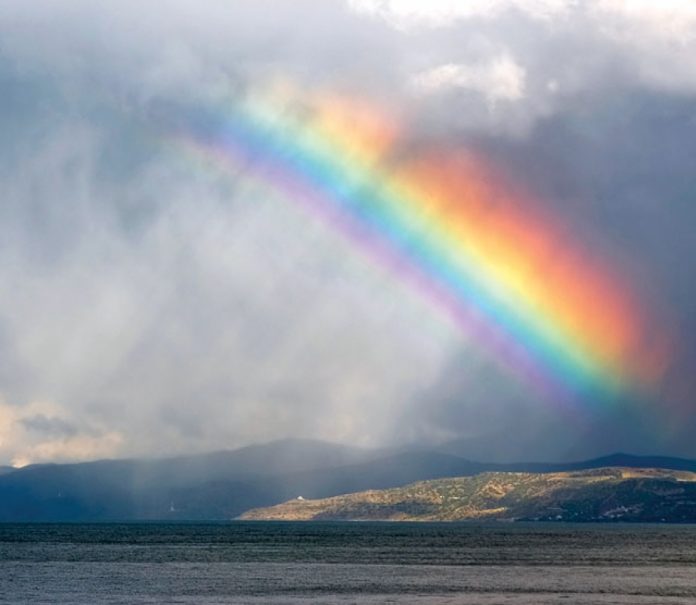
  • Rainbows form when sunlight bounces off airborne water droplets. When the light enters the droplet it is refracted—or deflected—slightly before reflecting off the back of the droplet. The refraction causes the light to disperse into groups of different wavelengths, which form the spectrum of colour you see.
  • If sunlight reflects three times inside the raindrops, a double rainbow forms. The second rainbow is dimmer than the first, and its colours are reversed.
  • Neil Diamond, Johnny Cash, Mariah Carey and Dolly Parton have all recorded albums entitled Rainbow.
  • Rainbows are only visible when  the sun is low in the sky and behind the viewer.
  • The Greenpeace ship Rainbow Warrior was named after the Cree prophecy “When the world is sick and dying, the people will rise up like warriors of the rainbow.”
  • The rainbow flag first flew in 16th century Germany as a symbol of hope and social change. The gay pride flag flew for the first time in 1978 at San Francisco’s Gay Freedom Celebration.
  • A rainbow can be seen best with polarized sunglasses.
  • René Descartes injected some empirical rigour into the study of rainbows in 1637. Previously, they had been explained by mythology. In Greece, they were a pathway from heaven to earth for Iris the messenger. In India, rainbows were the bow of Indra, the god of lightning and thunder.
  • The first ship of the Royal Canadian Navy was the HMCS Rainbow. 
  • According to Christianity and Judaism, the rainbow is a symbol of God’s promise to Noah that there would be no more floods on earth. Hydro-Québec considers this a non-binding agreement.

This article was originally published in the Summer 2007 issue of CanoerootsThis article first appeared in the Summer 2007 issue of Canoeroots Magazine.
 

Skills: Pulley Power

Photo: Matt Leidedker
Skills: Pulley Power

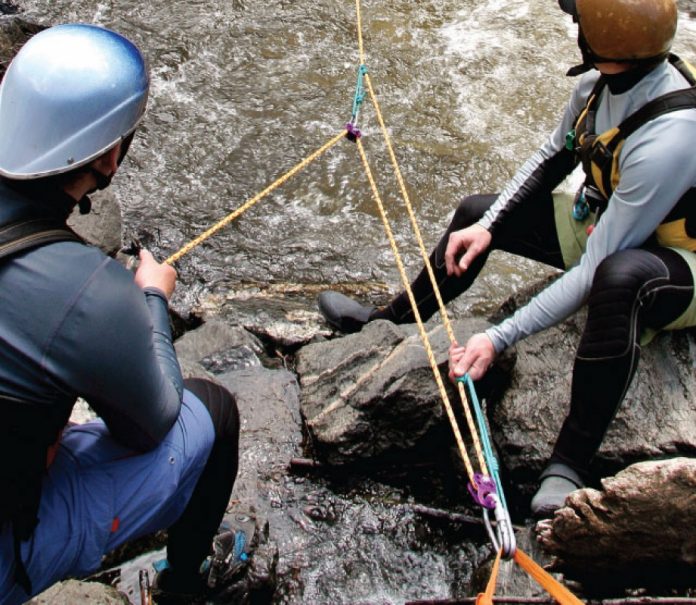
You’ll never feel more helpless on a remote river than when your canoe has flipped, filled with water and been pushed up against rock. Trying to free a wrapped canoe with your hands is only so much isometric exercise, and trying to lever it off with a paddle is a quick way to make kindling. Fortunately, with a handy kit of a throwbag, some webbing, two prussic loops, two carabiners and two pulleys you can set up a mechanically advantageous system to triple your pulling power.

• The line pulling on the canoe (the load line) will be under tremendous strain, so fasten it to a sturdy attachment point such as the junction of a thwart and gunwale. The line should wrap below the submerged gunwale, around the back and overtop of the canoe before heading to shore. This will cause the top gunwale to roll upstream when the line is tightened, spilling water and lightening the load.

• Angle of pull is important when choosing your anchor point on shore, usually a tree or boulder. Consider at what angle the current is flowing into the boat. With very few exceptions, the better angle will be achieved by pulling from as far upstream as your rope and available anchors allow. Invest some time in planning the extraction. Consider the forces at play, the possible angles of pull and how best to unbalance the forces that are pushing the canoe against the rock.

• Establish the anchor by looping the webbing around the tree or rock. Fix the pulley to the webbing with a carabiner and run the line coming from the canoe through the pulley. 

• Now comes the mechanical advantage. Attach a prussic to the load line between the anchor and the canoe as far away from the anchor as possible. (A prussic is a loop of smaller cord that is wrapped around the load line in such a way that it tightens on the line when pulled on.) The prussic will act as a fixed point on the line, allowing you to establish a second pulley midway between the canoe and the anchor. Run the rope through the pulley and back toward the anchor. 

• You may need to engage a brake on the load line in order to reposition the prussic or to take a rest. Loop a second prussic onto the line on the load side of the anchor pulley. You may need to have someone keeping the prussic from getting jammed as the load line enters the pulley. The prussic will tighten on the line if you slowly release the line and the prussic at the same time.

Tips

• Use static or low-stretch rope (not climbing rope). It doesn’t store energy and act like a slingshot when something breaks.

• When pulling, make sure your lines are as parallel as possible to maximize the system’s efficiency.

• Equip yourself with proper pulleys. Using carabiners as pulleys imparts too much friction on the system.

Mike Desrochers anchors load lines as a professional water and ice rescue instructor (watericerescue.com) and anchors a rhythm section as the drummer of the Rapid Palmers.

This article was originally published in the Summer 2007 issue of CanoerootsThis article first appeared in the Summer 2007 issue of Canoeroots Magazine.
 

Canoes Without Borders

Photo: Frederic Remington Art Museum, Ogdensburg, New York
Canoes Without Borders

No matter where you are reading this, you likely have a certain affection for the canoe. A recent trip to a U.S. event called Canoecopia helped me realize that the canoe is a much more populous and geographically-dispersed notion than some Canadians like to think. Unlikely as it might seem, there may be room in this realization for improvements in the social and political fortunes linking Canadians and Americans. 

Canoecopia, organized by an outdoor retailer in Madison, Wisconsin, bills itself as the world’s largest paddlesports exposition. Largest, in this instance, means that in an exhibit hall the size of a small township hundreds of equipment manufacturers, boat builders, conservation groups, park personnel, paddling clubs, food vendors, gizmo inventers, and publishers (yes, Canoeroots was there) gathered to hobnob and hock their wares. 

Add to that more than 7,000 canoeists (at least half of whom looked like Bill Mason, including a good proportion of the women) who sloshed in over three days in March. Besides the displays, these willing delegates could avail themselves of an Olympic-sized pool with dawn-to-dusk demonstrations and seven (count ‘em) theatres running simultaneous back-to-back programs every hour. 

While navigating my way across the exhibit floor for the first time, the ever-perky Kevin Callan hied up out of nowhere and said, “Think of it as a Star Trek convention for canoeists.” That’s exactly what it was… a paddler’s mind meld. 

I’d been invited to Canoecopia to speak about Bill Mason but by the time my presentations were done, I had attended programs about all aspects of the canoeing and kayaking world delivered by other people from near and far. And although I had crossed the border with a touch of trepidation (having been refused entry on a previous occasion), the sense of connection to these fellow paddlers, most of whom were American, highlighted a lesson and an opportunity.

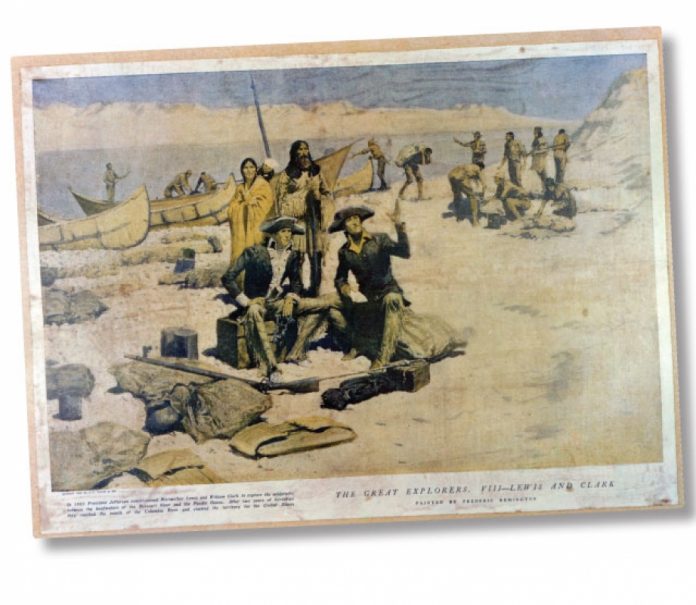
Although the canoe has a unique and special place in the hearts of Canadians, if one were to draw a line—let’s call it an isothwart—joining points of equal affection for the canoe, it would be clear that canoeophilia would not cease at the 49th parallel. You’ve got this enthusiastic rump of paddlers in Wisconsin and Minnesota. You’ve got Ralph Frese in Chicago (Uncle Sam’s Kirk Wipper…or is Kirk Wipper Canada’s Ralph Frese?) who argues that the American confederacy was not cast of horse shit and wagon grease, as so many believe, but of birchbark and pine pitch in the hands of French explorers Louis Jolliet and Jacques Marquette, who crossed from Lake Michigan through to the Illinois River and down the Mississppi 434 years ago. You’ve got Lewis and Clark. You’ve got the great canoe building companies of the Northeast states. You’ve got boatbuilder Henry Rushton. You’ve got the Adirondack Museum and the Antique Boat Museum in Clayton, New York. You’ve got the American Canoe Association and the Wooden Canoe Heritage Association.

At a point in history when crossing the border is getting increasingly difficult, canoeists on both sides might consider showing leadership by working to celebrate what we have in common rather than capitulating to circumstances that would keep us apart. Rivers, fortunately, know no such bounds—the St. Croix, St. John, St. Lawrence, Red, Milk, Columbia, Fraser, Yukon and many more between—maybe it’s time we used them to paddle to meet our neighbours. As Henry David Thoreau once famously said, “Wherever there is a channel for water, there is a road for the canoe.”

James Raffan has not yet disclosed why he was once refused entry into the United States.

This article was originally published in the Summer 2007 issue of CanoerootsThis article first appeared in the Summer 2007 issue of Canoeroots Magazine.
 

Editorial: Catch Fishing

Photo: Virginia MacGregor
Editorial: Catch Fishing

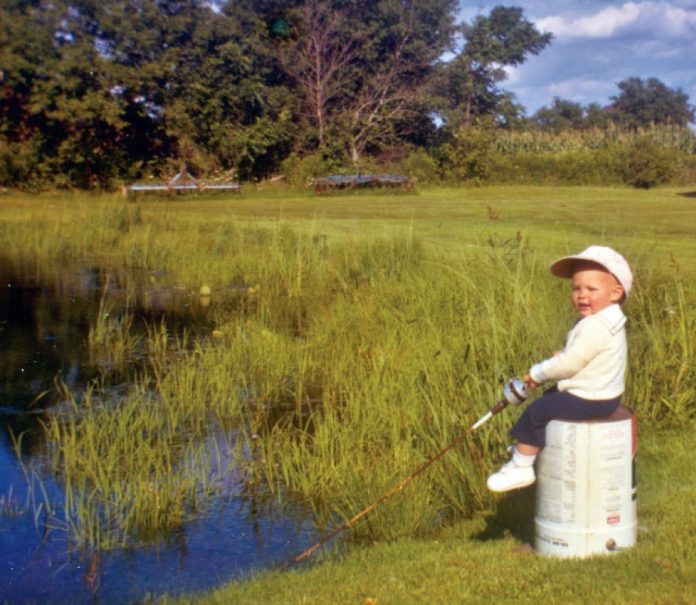
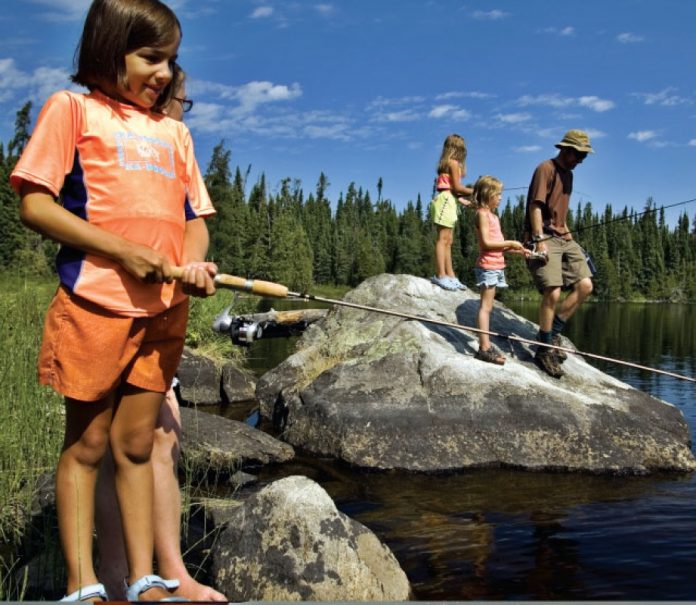
This is me, July, 1974. I’m fishing in the pond on my grandfather’s farm. Cute, isn’t it? My earliest memories are of fishing in this pond, but I can’t remember ever catching anything. After bombarding my parents with questions, they’ve finally admitted there weren’t any fish in the pond.

That didn’t stop me (although it may have, had I known) from sitting there for hours and even making up elaborate fish stories with all the determination and imagination of a three-year-old sitting on a cherry pail, worm on hook.

There is an allure to fishing that kids can’t explain and grownups shouldn’t ignore.

The fishing industry—a massive group of grownups who still pretend to be kids—has figured out that hooking real kids on fishing while they are young is the secret to the industry’s long-term survival and the long-term survival of fish populations as we know them. They know, for instance, that the likelihood of kids fishing, buying rods and giving cash to conservation groups as adults is far more likely if they are exposed to fishing at an early age.

This is why you’ll find Zebco Finding Nemo rod and reel combos at Wal-Mart. It should also be a statistical wake up call for us parents. Analyzing the data another way, if you are looking forward to going fishing with your sons and daughters when you retire, your chances are significantly greater if you take them fishing now.

My son just turned two years old. For his birthday I gave him his own Plano tackle box with a couple of Rapalas, spinners, spoons (all with the hooks removed, of course) and a dozen rubber worms. Instead of cheap, crappy toys from a dollar store that so many parents get sucked into buying, he and I go shopping for tackle. It is something he loves, it isn’t broken by the time we get home and it’s planting the seed for a lifetime of fishing together.

Planting seeds on a larger scale, the Canadian National Sportfishing Foundation’s awareness campaign, Catch Fishing, is all about getting youngsters into fishing. One of their posters hangs in my local general store. Staring at every parent buying 20 bucks’ worth of gas or lottery tickets is a six-year-old with a big toothy grin holding a beautiful walleye.

What’s the message?

Recreational fishing is an excellent outdoor activity that fosters family values and can assist children in their emotional and social development. What that really means is, if you really want to win big this summer take your sons and daughters fishing. Go during the official National Fishing Week, July 1 to 8, or go whenever you can.

And one more bit of advice from a guy who knows: take them somewhere there are fish.

This article was originally published in the Summer 2007 issue of CanoerootsThis article first appeared in the Summer 2007 issue of Canoeroots Magazine.
 

How To: The Compleat (Beginner) Angler

Photos: James Smedley
How To: The Compleat (Beginner) Angler

At first it’s a distant whine, but in the time it takes to raise your eyes, it’s upon you. 

Zoom! 

The metallic blue blur of a bass boat blasts by with two guys hunkered down behind the windshield, clutching their fishing hats. 

Then they’re gone.

Television fishing shows would have you believe that fishing requires heavy-duty horsepower and enough equipment to open a tackle shop. Not so. By keeping it simple you can get started on a shoestring (though I still recommend monofilament).

Let’s assume you’ll be fishing for freshwater panfish like bass or crappie. Allowing some room for additions from local experts, the following items make up a basic fishing kit for each fisher in your family:

• A spincasting reel and rod combo. This will come with line, usually 10-pound test, which is more than adequate. This type of reel is easy to use and gives little trouble. You can outfit yourself and two kids with rigs like this for under $50, much less if you shop at yard sales.

• A package of plain #6 hooks. Have the staff at a fishing store show you how to tie the hook onto the line. If you don’t want to use live bait you’ll need some lures and swivels or leaders.

• Bait and tackle. These will vary depending on your quarry. Ask some locals. When it comes to lures don’t assume more expensive is better.

• An assortment of split shot weights. Weights get the bait deep or keep the lure down while casting or trolling. 

• A bobber for each line. These let you keep your bait at a constant depth and let you keep your eye on things.

• A licence. Keep it legal by checking the rules for your area.

To rig up your outfits for fishing with bait, which is the simplest way to start with a family, tie a hook to each line using the knot you learned at the tackle store. About 6 to 12 inches above the hook, attach a split shot weight or two. About three feet further up, attach the bobber. 

Now look for someone at the campsite you can quiz. If you find yourself standing on shore without help or a clue where to begin, remember that fish are attracted to spots that are different than the surrounding areas. If most of the shoreline is beach, find a point, pier, boat launch, pile of rocks or a downed tree—anything that looks different. Fish at the edge of features; that is where the fish will be.

All set? Okay, cast out your bait and get comfortable; fishing is a waiting game. Every 15 minutes, slide the bobber one foot up the line until your bait is seven or eight feet deep. You can also have each member of your family start fishing at different depths. 

When a fish bites, raise the top of your rod briskly to set the hook and then keep the line tight. As you reel it in, grin widely, turn your head and yell, “Put the frying pan on, Hon! We’re having fish for supper!”

Fishing can be as simple or as complicated as you want to make it, but one thing’s for sure: it’s contagious. 

Ralph Yates wrote about buying a used camper in the April issue of Family Camping.

This article was originally published in the Summer 2007 issue of CanoerootsThis article first appeared in the Summer 2007 issue of Canoeroots Magazine.
 

Editorial: Make Music, Make Paddlers

Photo: Dunbar Hardy
Editorial: Make Music, Make Paddlers

Mrs. Mothballs was my piano teacher. Once a week for an hour I’d sit beside her on the bench stabbing at the keys, working on scales and butchering Hot Cross Buns. Every week before my lesson I’d cry to my mother, until finally, after two months, I was allowed to quit.

It was my idea to take piano lessons. I wanted to be Jerry Lee Lewis, Burton Cummings or even Billy Joel (keep in mind I was only 10 and it was the ‘80s). But that’s not the way old Mothballs and the Royal conservatory taught music. They were all about grades, progression, theory and proper technique. I didn’t sign up to peck at scales and trace treble clefs in a workbook every night after supper.

My inspiration for music was flattened and playing the piano, as it was presented to me, was stupid.

Thirty years later I’ve picked up the guitar. This time I’m approaching music much differently.

I’m picking songs that I want to play and figuring out the chords and enough of the rhythm to strum along. This time I’m just having fun playing music. I’ve even joined a band of like-minded, but much better, musicians known as the Rapid Palmers (a tribute to our paddling town, Palmer Rapids).

After six months at the guitar I’m now going back and diving into theory books, learning to read music and thinking about proper technique. I’m even planning on signing up for formal lessons. Now that I’m hooked on playing music, I want to learn to be a musician.

This spring, Rapid Media is putting together the Canadian Whitewater Instructor Conference. My objective is to bring together whitewater instructors from across the continent from different organizations, clubs, paddling schools, colleges and camps to share ideas and answer important questions like: why do more than 90 per cent of paddling school students never paddle whitewater again? And, what can we do to turn more of these would-be paddlers into lifelong enthusiasts?

“We need to inspire them to paddle,” a young instructor said to me when she heard about the conference.

A light bulb went off in my head, “no we don’t!”

The thousands of students taking paddling courses are already inspired. They’ve dreamed of paddling, found a school or club, booked a course, paid their money, and have driven into mosquito country for the weekend.

They’re inspired.
 Our job as paddling instructors is not to kill it. 
They are inspired like I was inspired to take piano lessons, before Mothballs killed it. She bogged me down in theory when I just wanted to play Great Balls of Fire.

Maybe the reason so few whitewater students don’t continue to paddle after their first course is because they come to us dreaming of adventure and shooting rapids and we bog them down with stroke progression, drills and complex river morphology lessons. Maybe we should just teach them a couple chords, the rhythm of the river and then let them play.

This is just one idea I hope is discussed at the Canadian Whitewater Instructor conference and on chairlifts, in bars and wherever you gather to talk about paddling and get ready for spring.

If you plan on attending the Canadian Whitewater Instructor Conference, stick around for Palmer Fest and catch the Rapid Palmers, they promise no Billy Joel. 

This article on paddling and music was published in the Spring 2007 issue of Rapid magazine.This article first appeared in the Spring 2007 issue of Rapid Magazine. For more great content, subscribe to Rapid’s print and digital editions here.
Fountain of Youths

Photo: Rick Matthews
Fountain of Youths

In his book Last Child in the Woods, Richard Louv evaluates the current state of kids and the outdoors. He presents the reader a long list of benefits for kids spending time in nature including improved health, more active imaginations, increased social confidence and better decision making skills. Add to that list reduced incidence of Attention Deficit hyperactivity Disorder and obesity, and reduced tendencies toward anti-social activity, such as crime, and you have a very compelling case for what we already know—being outdoors is good for kids.

However, Louv goes on to paint a pretty sad picture. Kids today are increasingly cut off from nature by urban development, societal fear and intolerance for risk, and the annihilation of outdoor education and natural science curriculums in schools. Not to mention helicopter parents hovering over their little ones, protecting them from what they feel is risky.

The real kicker, Louv argues, is if they don’t have a relationship with nature, kids today will have little value, use, or need for it as adults, adults who will eventually make decisions on behalf of the environment.

We river people are in the same boat. Look around your local put-in next spring; chances are you won’t find anyone under the age of 15. Who will look after our rivers when the current crop of paddlers gets too old and tired to continue the fight?

Other outdoor sports are doing a better job. Climbing gyms cater to kids’ birthday parties. The Jackrabbit cross-country ski program has been around for generations. All kids learn to ride bikes and the downhill ski industry has gone so far as to provide free ski passes to all kids in Grade 5. They know the likelihood of them skiing as adults hinges on skiing before the age of 11.

In 1997, when the first Wave Sport Stubbies appeared on my home river, I predicted kayaking would become a kids’ sport. The stubby proved an ideal boat for beginners and kids. It was stable and short, so they could turn it. It was fat, so water shed from the deck, eliminating the need for a potentially dangerous skirt. It was magic.

Despite that promising start, my predicted boom didn’t happen.

I later realized the barriers kids must overcome to get into whitewater.

Access to appropriate whitewater is a big one. And gear. But digging deeper, Louv argues that overall kids have less interaction with nature at home and school. Outdoor education is under attack across school boards, in some cases banning whitewater altogether.

All is not lost.

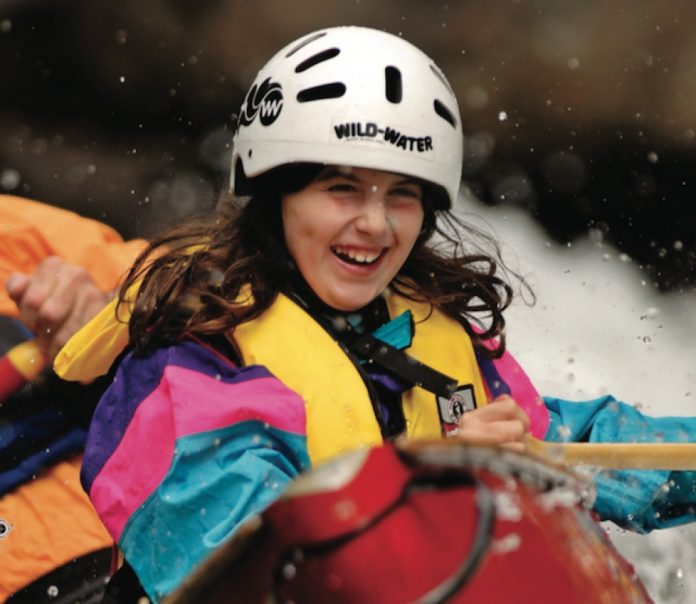
RPM dads, the first generation of the whitewater boom, are now returning to the rivers bringing their elementary and high school kids with them. Teen-oriented paddling programs, whitewater day camps and parent-child paddling programs are springing up across North America. Canoe tripping camps also continue their work introducing kids to wilderness camping and paddling.

The Jackson Kayak’s Fun kid’s kayak, Composite Creations’ Splash open canoe and Werner’s small-shaft paddles are breaking down the equipment barriers. Although they will never likely be considered commercial successes, they are valuable investments in the future of our rivers.

Louv has coined the term “nature deficit disorder” to label the current disconnect between kids and nature. But pint-sized gear, progressive programs and a new generation of parents may be leading the way toward a much-needed nature-child reunion.

“Environmentalists need the goodwill of children,” concludes Louv, “to [help with] the serious adult work of saving the world.”

How can we save our rivers?

Take a kid paddling.

Jeff Jackson is on parental leave from his position as Professor of Outdoor Adventure at Algonquin College in Pembroke, Ontario. 

This article on paddling with your kids was published in the Spring 2007 issue of Rapid magazine.This article first appeared in the Spring 2007 issue of Rapid Magazine. For more great content, subscribe to Rapid’s print and digital editions here.
Modern MITH-ology: Carving Eddylines

Photo: Carole Westwood
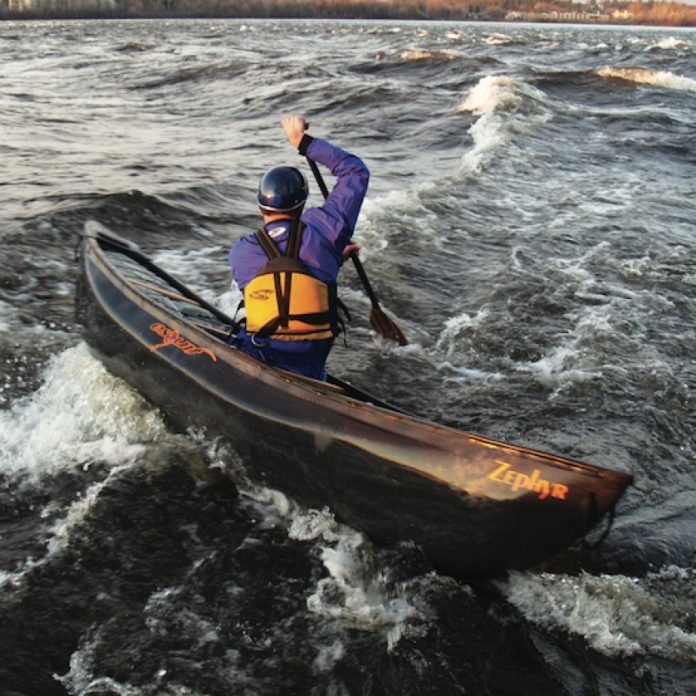
Andrew Westwood smoothly exits an eddy in his Esquif Zepher.

Entering and exiting eddies can trick even the seasoned paddler into complacency if they are not paying attention or rust has coated their skills over time spent away from the river. MITH is a simple way to remember the breakdown of skills needed to execute eddy turns regardless whether you are in a kayak, OC1 or tandem. Much of what we teach in introductory canoe courses is a product of stories passed down from generation to generation, spread by oral tradition. Sometimes these skills are eventually written down in manuals, but sadly some of the greater meaning can be lost in the process. Take P.A.T. for example; the process of using power, angle and tilt to get into eddy pools. PAT is an oversimplification of the turning skill needed to get beginner paddlers across eddylines.

The concept of carving the canoe is missing from PAT. Modern MITHology introduces momentum, initiation, tilt and hold as the tools needed to unlock the secret behind carving supernatural eddy turns. MITH addresses the shortcomings of PAT and better describes the technique used by advanced paddlers to carve their canoes smoothly into eddy turns, s-turns and peel outs.

MOMENTUM combines an object’s mass and velocity. The amount of momentum required to carve an eddy turn depends on the friction you need to overcome to cross the eddyline and how far up the eddy pool you need to travel.

It’s better to think about eddy turns in terms of momentum rather than power because, for example, a tandem boat with very little speed, or power, can still carry plenty of momentum into a carve be- cause of its mass. PAT implies you must be powering or paddling forward, but really it’s not about you paddling, it’s about the canoe having enough momentum, either by you moving it forward or by the current doing it for you, or simply by the sheer mass of an ABs canoe moving toward the eddyline. In many cases you don’t need to be powering at all, because the canoe will have enough momentum just from the speed of the current and its own mass. So to carve a great eddy turn your canoe will need just enough momentum to cross the friction of the eddyline and carry you through the carving turn and up the eddy pool.

Every turn you perform has to begin with a carve. INITIATING a carving turn can be as straightforward as performing a stern pry or stern draw stroke, or as subtle as crossing the eddyline paddling an inside circle either on your on or off side and allowing it to tighten into a carving arc as you cross an eddyline. The critical product of this step is that you need to initiate a carve and set the canoe travelling an arcing path toward the eddy pool.

Only canoes that are TILTED on edge will carve turns. Canoes that are paddled into turns flat will spin out, or worse, flip over. A tilted hull presents the bottom of the hull partially slanted on its side, or edge, so that the water pushes the hull around the arc. This pushing effect on the hull is what causes the boat to carve. Different amounts of tilt

will change the shape of the arc as will different hull lengths and shapes. Regardless, your goal in a carving eddy turn is to paddle along an arcing path from out in the river, across the eddyline, and into an eddy pool. Tilting your canoe will help to maintain the carve.

Travelling from any point A to point B takes time. During a carving eddy turn you must HOLD your tilt throughout the duration of the manoeuvre. The moment the hull is allowed to flatten out, your carve will be lost and your canoe will begin to spin—your carving momentum changes into spin momentum and your crisp eddy turn will stall. holding the tilt is the key to success. Practice gripping your canoe’s outfit- ting with your legs, not just for a moment, but for long periods of time. In whitewater, holding your boat is as vital as holding your paddle. Only when your canoe slows and the turn is complete should you relax your tilt and allow the canoe to completely level out.

If you are already familiar with PAT then moving up to MITH will come easily. Momentum, initiation, tilt and hold are the next steps to getting your canoe carving smoothly into eddy pools. With a little practice, carving supernatural eddy turns will become less fiction and more modern MIThology.

Andrew Westwood is a frequent contributor to Rapid. He’s an open canoe instructor at the Madawaska Kanu Centre and a member of Team Esquif.