Home Blog Page 364

The Search Continues: the Theme in Wilderness Tripping Journals

Photo: Toni Harting
The Search Continues: the Theme in Wilderness Tripping Journals

There was a logbook, covered in dust with the spine worn bare, that for years greeted expedition canoeists when they reached Fort Albany. The register was an end-of-trip ritual for canoeists who had finally made it to James bay. Sign your name, enter the date, and add a comment or two. The entries ranged from expressions of gratitude for being finished, to remorse for a trip that had ended.

But it’s what’s not written down, the story that isn’t told, that speaks louder than the pencil scratch on the page.

Bruce Hodgins—author, historian, retired professor and, with a personal canoe resume that reaches back to the 1950s, one of the architects of Canada’s canoe culture—is a man who knows about what is and isn’t found in canoeing logbooks and trip journals. Hodgins teamed up with fellow historian Gwyneth Hoyle to research the recent history of canoe travel and put it in one place. The result is the remarkable Canoeing North into the Unknown, A Record of River Travel: 1874 to 1974 (Natural Heritage, 1994), a seminal collection of the who, what, when and where of canoe tripping history.

You would not sit down and read hodgins’ and hoyle’s book from cover to cover. It’s a resource, a list of dates and names, with minimal description or qualification. entries receive equal billing and range from the famous:

“1789 Alexander Mackenzie, on his fifth crossing of the Methye Portage, travelled north, all the way down the Mackenzie River to the Arctic ocean.”

To the mundane:
“1974 Camp kandalore: John Fallis and guy Delaire led a boys group down the Missininaibi River to Moose Factory.”

To the epic:
“1930 Eric Sevareid, 17, and Walter Port, 19, canoed from their home in Minneapolis to York Factory—a total of 2,250 miles.”

I spoke with hodgins this spring. He was preparing to run the Irondale River in Ontario’s Kawartha region, even though at 75 years of age and with heart problems, his doctor no longer allows him to portage his own canoe.

I wanted to ask him about something that was missing in Canoeing North into the Unknown. It’s the same thing missing from the Fort Albany register, and that was why. Why did all those people take to the north at a time when access was difficult, trips were expensive and canoeing for pleasure was considered foolhardy? The names and dates share little of what the trip was about; the motivation, the experience as it unfolded, the stories, and the memories. What was it these people were seeking?

As Hodgins points out, in the early days of recreational tripping, canoers didn’t know much about the rivers they were travelling until they got on them. They were heading somewhere, unsure of what they would find. Hodgins thinks this is at once the reason they didn’t explain their motives, and also their motivation for going.

I prompted him with a line from the introduction to his book: “For some, the long northern river voyage is part of a quest pattern, a challenge, an exploration…a journey into the unknown.”

“Absolutely,” said Hodgins. “There is an emotional element to tripping on rivers, a re-experiencing of wonder as you discover something that was un- known to you. gwyneth was right to put “unknown” in the title. It’s the seeking out of something unknown that engages the individual.”

Hodgins’ book is intriguing because in it you don’t actually read about the quest for the unknown, but you know it is there. You can feel it from the lack of information that describes the simple trip details. For each entry there is a profound story left untold.

While the early explorers were charting vast wilderness, today’s paddlers are on their own search for something unknown to them. Pouring over a map, watching the weather, and nervously anticipating what’s around the next bend is part of the discovery on a canoe expedition. It is a personal quest, that can be discerned in trip journals, but only if you know what to look for. A camp’s map coordinates could be meticulously logged, followed by a scrawled, “The most beautiful place on earth.” Notes on an unplanned portage are followed by, “The hardest day of my life.” while short on detail, these simple lines speak volumes about the writer’s motivation; the why. The desire to challenge oneself by confronting the unknown is ultimately personal, and can only be hinted at in a few short sentences in a dusty register.

I asked Hodgins if the theme of a quest to explore the unknown persisted intact over the course of the last century and a half of canoe travel.

“Ah, yes, I still believe that the quest for the unknown is an element of why people do it,” hodgins replied, as he buckled the strap on his canoe pack and placed it by the door. It would be ready for him to pick up in the morn- ing as he went out again to experience something, something he wasn’t quite sure of yet. Those who wrote journals in the past, or will keep one in the future, likely would not admit to this emotional quest—it certainly isn’t written down anywhere in the Fort Albany journal— but it is there, between every line.

Jeff Jackson is a professor of outdoor adventure at Algonquin College in Pembroke, Ontario.
Screen_Shot_2016-01-13_at_12.32.57_PM.pngThis article first appeared in the Summer 2006 issue of Rapid Magazine. For more great content, subscribe to Rapid’s print and digital editions here

Anyone Who Wants to be a Open Boater…Raise Your Hand

Photo: Rick Matthews
Anyone Who Wants to be a Open Boater...Raise Your Hand

In his book Gestures, author Roger Axtell has catalogued body language from around the world. He found that similar gestures mean different things depend- ing on where you live. For example, raising your hand and extending your thumb and little finger is the sign for “cool” in hawaii, while in Mexico the same gesture will get you a drink, and in Japan it means the number six. Perhaps with increased globalization lifting your hand in this manner will get you six cold beers at bars around the world. In canoeing, the similar gesture of raising your grip hand shows that you respect the river enough to stay ready to react to anything it might throw at you.

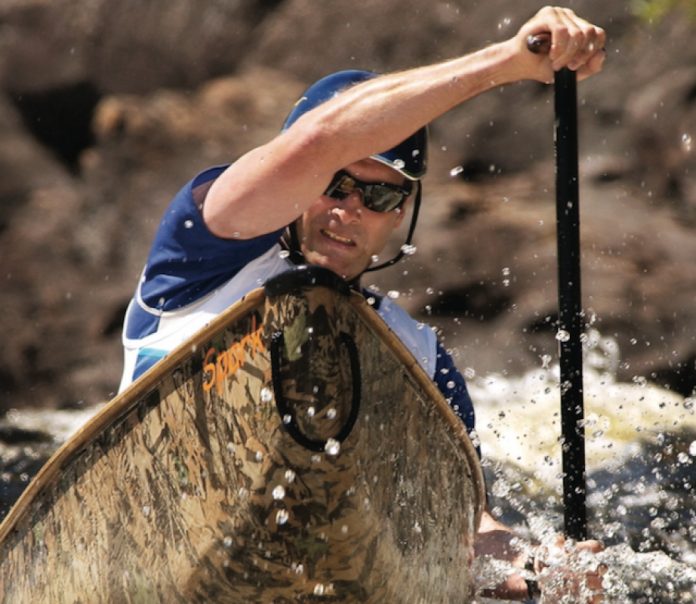
When your grip hand is high, your paddle shaft will be vertical, next to the canoe and close to your knee—right where you want it to be.

Correction strokes are a short reach back to your hip and you need only slice the blade forward to the catch position for a power stroke. If you need a quick righting pry, no problem, your paddle is already at your side and ready for action. With your grip hand held high you can instantly twist your paddle shaft and use the blade as a bow rudder for shifts left and right.

Since most strokes originate with a vertical paddle shaft, there is rarely a reason to drop your grip hand to link different strokes. 

A high grip hand will also improve your posture and balance by keeping the paddle shaft and your arms close to your body. With your paddle next to the canoe, you are positioned to rotate at the waist to perform paddle strokes without reaching or leaning. Less leaning means fewer braces and more time for power and correction strokes.

The next time you are on the river, look around at other canoeists who are moving smoothly and appear to be paddling with little effort. You’ll probably see that their grip hand rarely drops down toward the gunwale. Paddlers that do drop their hand often appear to be bobbing their bodies while their boats twitch and lurch awkwardly from one eddy to another. Dropping your grip hand leads to poor paddling posture, a lack of stability and rushed strokes that are executed too late to be effective.

So raise your grip hand to the river. Among canoeists, this gesture will be recognized as the key to linking effective strokes, smooth paddling, great posture and, ultimately, a deep respect for the river.

Andrew Westwood is a regular contributor to Rapid. He’s an open canoe instructor at the Madawaska Kanu Centre and member of team Esquif. 

Screen_Shot_2016-01-13_at_12.32.57_PM.pngThis article first appeared in the Summer 2006 issue of Rapid Magazine. For more great content, subscribe to Rapid’s print and digital editions here

Driven: Across the Plains to a Distant Watering Hole

Photo: Ryan Creary
Driven: Across the Plains to a Distant Watering Hole

The endless Rocky Mountain winter was showing signs of retreat: tawny tufts of grass hugged a ground that reeked of thawing dog shit; puffs of thermals enshrined the nearby peaks the way a ballerina’s tutu protects her from indecency; chunks of discarded ice ground languorously downstream from the tug of gravity. Sean, Spencer and I had long been incubating spring paddling plans. But in Alberta, seasons loiter like eighth-graders at a 7-11. Spring and winter were still deadlocked in their annual tug-of-war and the life-giving melt was still months away. It was not the place for hydrophiles.

That’s where Jessica, the belle of 1981, rolled into the picture. At 25 years, she was showing signs of her age. A full 497,458 kilometres into her life, the maroon Volvo wagon favoured one side, limping to the left like she had a degenerative hip. Shards of brittle frame crumbled like lepers’ sores with each slam of her steel doors. And she had bad gas.

Philosophers and biologists don’t always see eye to eye, but they’ll generally agree that humans separate themselves from the rest of the animal kingdom by letting rational thought guide their behaviour. But as I slung my gear into Jessica while the rest of the West slept, I wondered if the paddling sub-species might have more in common with some of our hydrophilic cousins in the animal kingdom than we do with Plato.

As the dry air ripped through my shaggy fleece, it was obvious that when it comes to paddling, measured judgment takes a back seat to the same compulsive forces that drive wildebeest on their annual 3,000-kilometre trek across the vast, arid Serengeti Plain. Unable to go more than a few days without fresh water, wildebeest are continually on the move, exposing themselves to constant attack from lions, cheetahs and packs of spotted hyenas. Sometimes it’s not even the predators that get them, but the rigours of al- ways needing to find a fresh wa- tering hole.

The hyenas were nipping at Jessica’s back bumper as she rumbled up to Sean’s place a bit late. Both Spencer and Sean were hunched over their gear bags, shivering beside the curb. We had three days, a ten-year-old’s weekly allowance between us, and our sights set on any old creek in B.C. that held enough water to float our boats.

The other cars that passed us on the road seemed so clean and business-oriented while Jessica chugged along like a circus rig moving to the next small town. As we roared over the Rockies, a late-winter emission from Sean’s poorly stored gear bag caught an airborne back-eddy and wafted forward. Spencer threatened to tie it to the roof, but the rack that held the boats was itself a dubious set-up. The 1981 factory rack was not designed for bulbous creek boats, and it didn’t help that the paint around one of the brackets was bulging with internal rust.

There was no music to drown out the sounds of the shifting boats on the three-legged rack, no backbeat for the distracting stench that was reminiscent of a Junior-A hockey team’s dressing room. Only the façade of my radio remained. It had crackled its last AM country radio station a year ago before sending itself out to pasture.

Three hours later, high from the booty hotbox, I down-shifted Jessica with savage satisfaction into B.C.’s Columbia Valley and stopped at a thin veneer of crystal-clear water rushing over a chaotic mangle of rocks in the bed of Toby Creek.

“This is ass low,” commented Sean tersely.

“I’ve paddled it with just a little more water than this,” Spencer countered, unstrapping the boats. Toby Creek’s classic Seven Canyons run wasn’t its char- acteristically explosive self today, but it fit one criteria – it had water. After the cold, early morning and the reeking ride, a few gulps of whitewater on Toby Creek would relieve some of our dehydration.

Like a heroin fix, Toby only evened us out. The next morning we wanted our high and the Bull River was our next chance at finding an intoxicating flow. But the Bull wasn’t in much of a bucking mood and it’s exclamation point ended up being not a class IV rapid but a desolate, frost-heaved logging road. With only one car we had to hoof it in tight booties for two hours to complete the shut- tle. Conversation gravitated toward paddling, but the sto- ries hid behind the veil of winter; memories were distant and hazy. Underneath it all lingered my thoughts of Jessica and the abusive terrain we pushed her over to get to another “too-damned-early” run.

The Bull left me tired, but not depleted like I am after full sphincter contractions on a wild piece of river. That drowsiness eluded us all as we camped for the second night without the benefit of a tent in the bramble bushes of a rest area. Our choice of bivouac suited our float through purga- tory. We were on the way to somewhere; we just weren’t there yet. I fell restlessly to sleep; vaguely aware that each time I shifted, a nearby thorn pulled a puff of feathers from my down bag and into the night. 

Drawn by water like a tree sinking its roots deep into the mois- ture of the earth, we woke unnaturally early and summoned ourselves to the curiously named Upper-Lower reach of the Elk. Hoping it would bring some satisfaction to our wanderings, Spencer and Sean jumped out of Jessica to check the flow. The deep-toned growl from below suggested a runnable reach. We could plainly see Leap of Faith, a robust 50-foot waterfall that tumbled off the lip like a pleated wedding dress. Early sea- son or not, Sean was an oak root boring through a lead pipe to get to water. He headed upstream to find a put-in above the falls. Spencer and I offered to run safety.

Avoiding Leap of Faith was a leap of faith in itself. The only other access into the gorge was a set of cart tracks used to lower workers to a small hydro plant. Most rail grades don’t exceed 2 per cent, pleasant for bicycling seniors. But even the gnarliest freeriders wouldn’t touch this grade; the tracks plunged to river’s edge at a 45-degree angle.

My foot slid around inside my half-dry booty as I kicked some of the loose rocks out of the way on the fourth creosote-oozing railway tie. My gut worried about Spencer behind me. A slip and he would turn into a helmeted bowling ball. My boat dug painfully into my shoulder nerves, my paddle hand tingled and my legs began to wobble. Even a fall near the bottom would have spelled disaster, but we just giggled. The trip—festering gear, greasy grub and camping an unknown distance from heaven or hell—had turned us into giddy fools. We wobbled unceremoniously to the edge. Sean made a much grander entrance than us, tossing himself over Leap of Faith and showing us his sea-legs were more stable than our land-legs.

My shaky thighs felt more comfortable jammed inside my mango boat as it carved into the current behind Spencer. I could feel the pull of the heavy water, it felt like a thick mid- summer glacial rapid on a hot day. The hours driving through an arid early spring in a boxy freight car didn’t seem so bad now. Our glass was filled to the brim and we were chugging it down.

Like most good drinks, it came in a short glass. After two kilometres we were done and had to climb out of the eroded masterpiece up a similarly steep incline, the climb made tough- er by the fact we were climbing away from water. It was like a wildebeest feeling the heat descending on another dry season after barely whetting its muzzle at the end of another Serengeti cycle. Like the wildebeests’, our journey was worth it, neces- sary. Without it, we risked withering away waiting for water to come to us.

From a distance, we could see that Jessica didn’t look as relieved as we felt. She was listing. That was normal; her shocks had absorbed their last bump long ago. But she was sagging more than that. She was flat on one side. Yesterday’s Bull must have done her harm.

“She’s got enough air to get us to Fernie,” declared Sean, a man with grease under his fingernails often enough you know you can trust him.

“You guys got five bucks?” Spencer asked as Jessica hobbled to a stop in front of Fernie’s 7-11. We pooled together some change and he came back in an instant with a bag of salt-and-vinegar chips and a can of Flat-Fix. We read the warning sign on the label, made sure we had the valve cap off, and unloaded the toxic gob into Jessica’s atrophied limb.

She drank it down like a can of Red Bull before the third period, and we slammed her heavy doors and sped away—as per the instructions—to make sure the foam spun evenly throughout the tire. The tire was now un-salvageable for the long term, but we would get home and complete the loop.

The icy air that had sent us away had lost some of its bite as we crossed back over the Rockies and into Alberta. Sean’s booties, the precarious rack and the mute radio were all a little less demoralizing. We had tasted water after the long winter’s drought. Jessica was another story. Her Flat-Fix high was wear- ing off and a faint squealing sound made me worry that one of her bearings was giving out. Either that or it was the yipping of an approaching hyena.

Raymond Schmidt wrote about re-discovering the Cascade River in the Summer, 2005, issue of Rapid. 

Screen_Shot_2016-01-13_at_12.32.57_PM.pngThis article first appeared in the Summer 2006 issue of Rapid Magazine. For more great content, subscribe to Rapid’s print and digital editions here

Safe Eating: Avoiding Food Poisoning in the Great Outdoors

Photo: Canoeroots Staff
Safe Eating: Avoiding Food Poisoning in the Great Outdoors

There are few things I enjoy more than a cookout over an open fire or barbecue. It’s a great way to relax and have a good time, but if it isn’t done right it can lead to serious illness. Food poisoning is one of the most common and widespread ailments in human history, not to mention a surefire way to ruin a camping weekend or picnic.

According to the United States Department of Agriculture, food-related illnesses increase 150 per cent during the summer months.

Many people are unaware of the symptoms of food poisoning and never consider their storage or preparation of foods or drinks to be the cause of an illness.

The symptoms of food poisoning can vary depending on the type of bacteria causing the illness and the amount of food eaten. They include severe diarrhea, nausea, chills, fever, gas pains and vomiting—pretty similar to the flu or heat stroke. The incubation period of food poisoning can range from hours to weeks.

Most food-related illnesses can be easily prevented. Foods should be kept in a cooler in sealed containers—plastic tubs with snap-on lids work fine— and not wrapped in plastic wrap or aluminum foil. As the temperature in your cooler goes up, frozen foods will start to thaw and possibly leak. You don’t want your sticky buns sponging up the blood from your steak. When packing your food learn to live by the motto: Separate, don’t contaminate.

KEEPING THINGS CLEAN

Another big concern is keeping everything clean. Wash your hands, utensils and any food preparation surfaces before cooking and after handling any raw foods. Have a pot of warm, soapy water on hand for quick washes during meal prep. Good hygiene while cooking can greatly reduce the risk of food poisoning.

Every campground chef has theories about what makes the perfect burger or steak, but no matter the seasonings or goofy aprons, the rule of thumb is to keep them cold and cook them hot.

When using a charcoal grill ensure that the charcoal is glowing red and has a gray powder on the surface—this is a good idea when cooking over a campfire as well. Electric grills or gas grills should be cleaned or pre-heated to kill any bacteria on the cooking surface. 

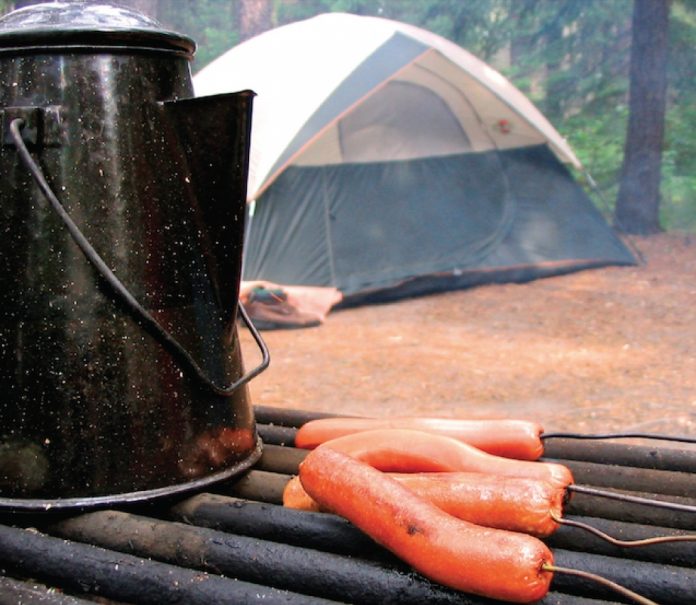
Some of you may laugh, but I use a meat thermometer to ensure my meats are cooked properly to kill all bacteria. Cook steak to 150 degrees, hamburger to 160 degrees, chicken to 180 degrees and fresh fish until you are certain it is cooked thoroughly. Hot dogs sold in stores are precooked but they should still be heated until they are piping hot throughout. Not all spots on your grill are as hot as others so move meat around so it cooks evenly.

Most cases of food poisoning from outdoor cooking can be prevented by proper storage, good hygiene and proper cooking. Food poisoning is a huge downer on any trip.

If you are staring into your icebox wondering whether you should eat it or not, I say: If in doubt, throw it out.

This article on keeping food safe was published in the Spring 2006 issue of Canoeroots.This article first appeared in the Spring 2006 issue of Canoeroots Magazine. For more great content, subscribe to Canoeroots’ print and digital editions here.
Tips for Family Tent Buyers

Photo by Kampus Production pexels.com

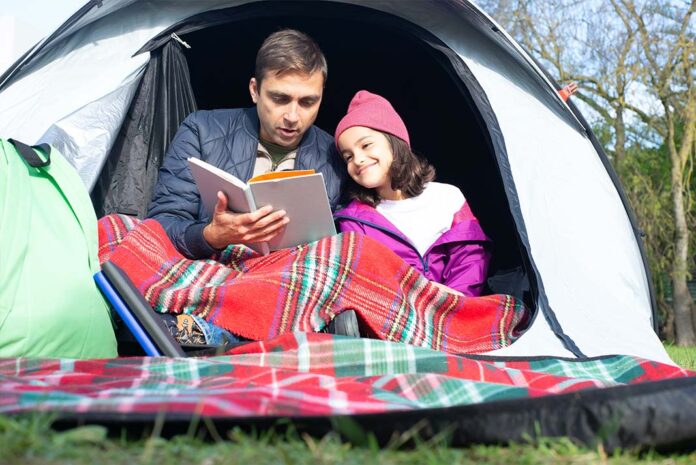
Buying a new tent is somewhat like buying your first house. It is a major investment that will shelter your family for a long time. To avoid costly mistakes it is important to consider your needs, do your research and check to see what’s on the local market. At the base of the pyramid-of-needs is shelter. First and foremost, your tent must protect you from elements like wind, rain, sun, snow, neighbours or bugs. Other features of modern family tents are more about lifestyle and convenience, frills you might say, but frills that will affect the happiness of everyone living inside.

Tent Size

Like a one-bedroom apartment, a low-profile two-person tent may have been adequate before the children arrived—but families need more space. Ensure that you have enough growing room and don’t forget about storage space. To live comfortably consider a tent designed for at least two more than the actual number of people sleeping inside—a family of four should look at six-person tents.

Floor plan

Just like a home, tents with the same amount of living area will feel larger or smaller depending on how the space is laid out. Young children may feel more secure sleeping near mom and dad while older ones may appreciate their own room. In- stead of having everyone under one roof, consider buying two smaller tents. This of- fers greater privacy, more set-up options at small campsites and a smaller tent for romantic weekends without the kids.

Photo by Kampus Production pexels.com

Shape and Season

If your family camping involves hiking to mountain summits, winter camping or camping in Kansas you’ll need a tent that can cope with a wide variety of temperatures and wind conditions. Low-profile dome tents and expedition-grade four-season tents can weather strong winds and snow loads and are warmer than traditional designs. For everyday summer camping look for good ventilation, higher ceilings and fine mesh coverings to keep insects on the outside looking in.

Materials

Traditional canvas tents are very robust and breathable, but also heavy and sus- ceptible to leaking in very wet weather. Most modern tents use man-made nylon fabrics that are very light and waterproof. These synthetic materials can be delicate and prone to condensation—look for plenty of vents if you’re headed for a hot climate. Inquire about what maintenance is required for the materials and if spraying, sealing seams or the use of a ground sheet are necessary.

Assembly

Some family tents are gigantic, others are complicated to set up and take down. Before you buy a castle think about how many skilled minions will be needed to erect your fortress. If you are base-camping and not breaking camp each morning you can get away with a more elaborate structure. A practice set-up at the store with experienced staff is good training for rainy arrivals and allows you to check the tent bag for all the parts.

Transport

Will you be backpacking with your tent or carrying it in your canoe? Will it fit in the trunk of your car or will you need a roof rack or trailer? How you will transport the tent to your campsite will affect the weight and size you are willing to carry. There are tents that try to be both big and light, but often you’re better off with two tents—one for the backpacking trips and one for car camping.

Storage

You will need a dry place to store your camping equipment. This may be in the van, under your canoe or in your tent. Where you store your stuff may determine the size and design of the tent you will choose. Storage options range from cute vestibules just big enough to hide a pair of boots to tents with separate rooms you can park a car inside.

Bells and Whistles

Take into account all of the extras. Tents can be very elaborate shelters with room dividers, canopies, windows, skylights, pockets and complicated zipper systems. Knowing what you really need before shopping will save you paying for and carrying things you won’t use.

Open House

Shop around and look at as many tents as you can. Check out the tents of your friends and ask them what they like or don’t like about them. Don’t rely on photos on the Internet; go to stores and ask questions. Good camping stores with trained staff will help you set up a number of models. Pile the entire family inside and listen to their opinions. If there is going to be complaining you want to hear it now. Remember, buying a tent is like buying a house. You wouldn’t buy a house without walking though it. The same should be true for your home away from home.

Putting in the Offer

All of the above considerations influence the price of a tent. Make a list of what you really need, then what you really want and then spend all the money in your purse. Camping is relatively inexpensive but there is an initial outlay and your shelter is never a place to scrimp. Remember to include in your budget essential items like ground sheets, sleeping bags and sleeping pads—all of which make sleeping in whatever tent you buy that much better.

This article on tents was published in the Spring 2006 issue of Canoeroots.This article first appeared in the Spring 2006 issue of Canoeroots Magazine. For more great content, subscribe to Canoeroots’ print and digital editions here.
Canadian Heritage Rivers System: Preserving A Nation Of Rivers

Photo: J. David Andrews
Feature photo: J. David Andrews

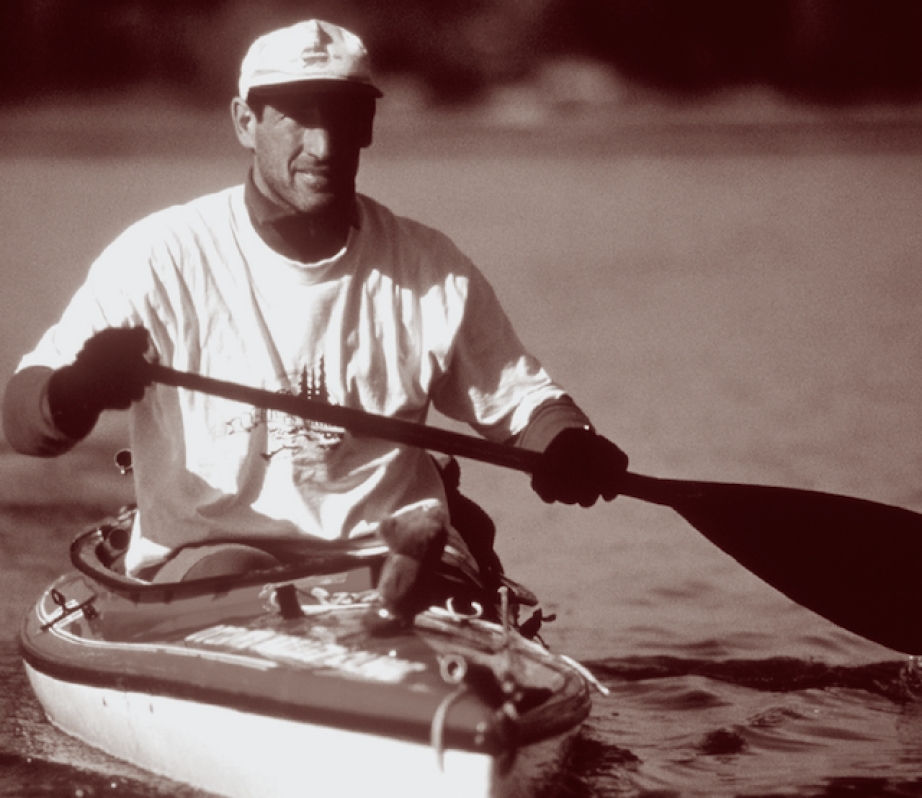
With more than 20,000 river-kilometres behind his paddle, Max Finkelstein is the perfect poster boy for the Canadian Heritage Rivers System. He’s travelled most of the 34 Heritage Rivers, explored hundreds of other waterways and written a book, Canoeing a Continent, about his trip retracing Alexander Mackenzie’s famous 18th century canoe route across Canada. He even paddles to work.

Work in this case is in the Gatineau, Quebec, offices of the Canadian Heritage Rivers System (CHRS), Canada’s federal program for river conservation. A six-kilometre paddle down the Ottawa River from his home lands him at his desk where, along with manager Don Gibson and planner Brian Grimsey, he promotes the Heritage Rivers System.

Canadian Heritage Rivers System: Preserving a nation of rivers

“I was a planner for Parks Canada in 1988 when I took my first northern trip to the Thelon River,” remembers the 52-year-old Finkelstein. “The Heritage Rivers guy in the office next to mine asked if I would submit a report on the ‘heritage resources’ I saw,” he recalls with a laugh. Finkelstein wasn’t really sure what he was supposed to report on, but he figured he had done a good job when he was offered a job.

Photo: J. David Andrews
Feature photo: J. David Andrews

Now the marketing and communications officer at CHRS, Finkelstein’s job is to make sure Canadians know about the program celebrating the river heritage of their country. Finkelstein’s 10-foot by 10-foot, standard-issue cubicle—overflowing with maps, books, photographs and files—is one place all significant rivers in this country pass through. He spends most of his time in the office on the web or the phone but he’s a frequent guest at conferences where he ambles up to the podium with his tanned, craggy face and ruffled hair, looking like he’s just pulled into a campsite.

Canoeing A Continent by Max Finkelstein

He also spends a lot of time fielding questions from canoeists looking for information on the rivers.

“Sometimes I feel like a travel agent,” Finkelstein laughs. He’s happy to steer people toward information on canoeing the rivers, but he never tells them his favourite campsites.

Finkelstein finds a pair of glasses he didn’t need in the 1980s and pulls his original report on the Thelon River off his shelf. He thumbs through the 65 pages he wrote about the river’s archaeological sights, more recent history, plentiful wildlife, recreational opportunities and pristine, unspoiled state.

The Thelon River, in what has since become Nunavut, was added to the list of Heritage Rivers in 1990, joining rivers that had also been recognized as important for some combination of their natural assets, cultural history and recreational value. Once designated, the rivers benefit from management plans designed to preserve that which makes them so special.

Origins of the CHRS

The origin of the CHRS is legendary among wilderness paddlers. It goes back to the fabled Canadian Wild River Surveys of 1971 to 1974 when the Trudeau government hired students for the summer—no doubt clad in cut-off jeans with their long hair kept back by blue bandanas—and sent them out across the country in 17-foot Grummans to survey significant rivers. Those surveys—part of a National Parks planning initiative submitted to a young cabinet minister named Jean Chrétien—were the basis for a 1978 conference in Jasper National Park. It was the first time a national river conservation program had been contemplated by the senior levels of government. Six years later the CHRS was born.

“The whole CHRS process is now driven by concerned citizens who nominate their local river,” Finkelstein explains. “They are idealists and visionaries who involve themselves when they see their river becoming threatened, whether by something obvious like a dam proposal or something incremental like pollution.”

Once a river has been nominated the CHRS Board assesses whether it will meet their criteria. If the board supports the nomination it still has to be approved by the relevant provincial ministry.

The final step toward designation is the creation of a river management plan that will “conserve the river’s outstanding natural, cultural or recreational values.” This plan can spend years wending through government office corridors given the number of different agencies, departments, citizen groups, businesses and land owners that have an interest in a river and therefore have to lend support to any plan before the board will accept it. Ontario’s Missinaibi River languished as a nominated river for 19 years before lumber companies operating in the area were brought on board, allowing the river to gain status last year.

[ Browse the widest selection of boats and gear in the Paddling Buyer’s Guide ]

Even when full Heritage River status is granted, it carries with it no actual legislative weight.

“Heritage status means what the communities make it mean,” Finkelstein explains. A CHRS management plan co-ordinates conservation efforts and encourages cooperation, but unless governments extend additional protected status to the river, the fate of the river ultimately rests on the community’s resolve to stay true to the plan.

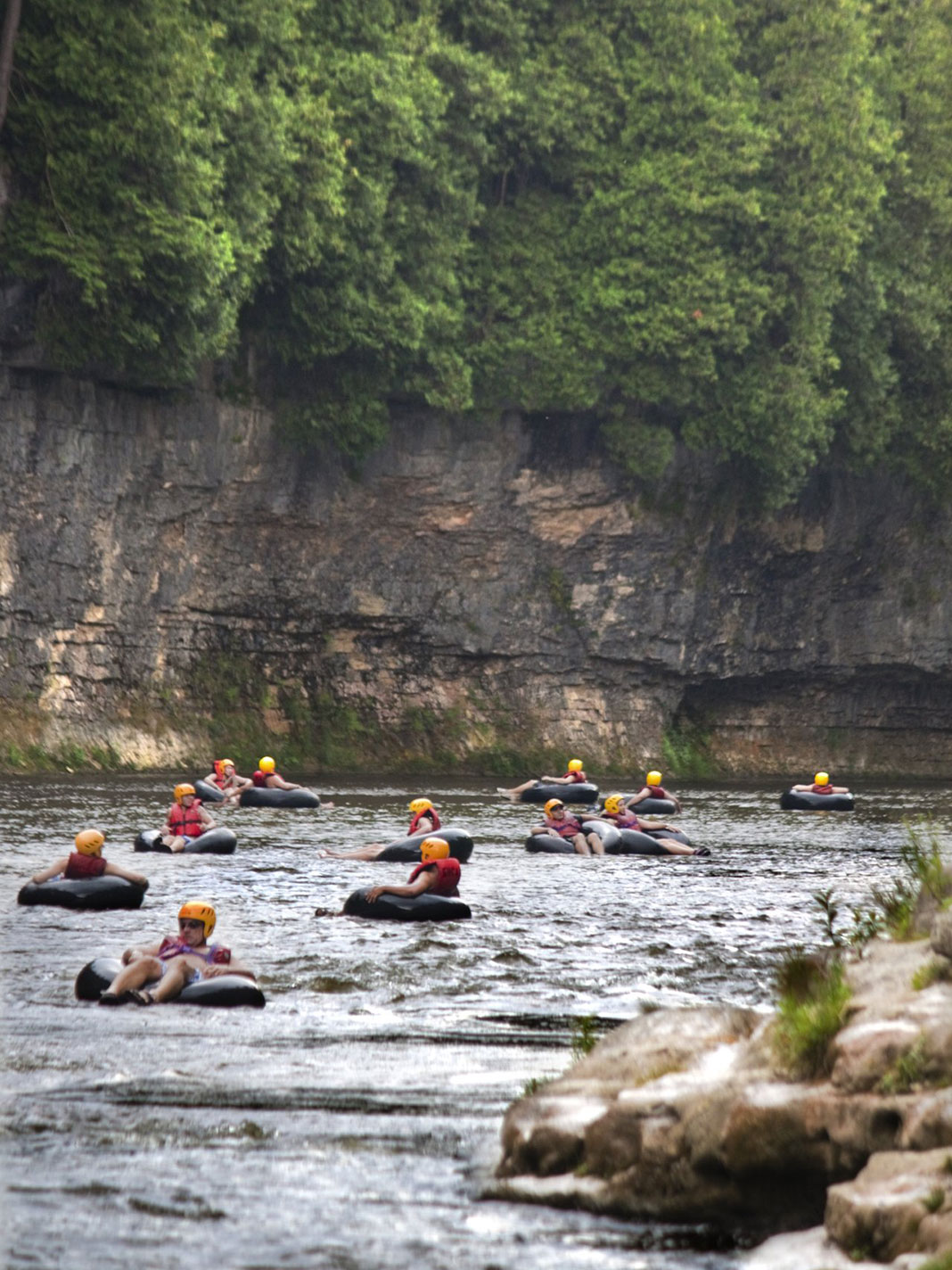
people tubing down Ontario's Grand River
After being designated in 1994, the area adopted the Grand River as the focal point of its tourism pitch. | Photo: Courtesy Destination Ontario

How heritage designation helped the Grand

Finkelstein points to southwestern Ontario’s Grand River. The Grand was so polluted in the 1970s that local communities did their best to ignore it. After being designated in 1994, the area adopted the river as the focal point of its tourism pitch. Different groups along the river cleaned the waterfront, reduced pollution, restored buildings and re-stocked fish populations, and in 2000 the Grand River won the Thiess International Riverprize for “excellence in river management.”

Finkelstein’s low, rumbling voice becomes livelier when talk turns to rivers now working their way through the nomination process.

“Some really important rivers are finally getting attention,” he explains. “The Mackenzie, the Ottawa, the St. John and the Red are all in the works—truly major river systems of national importance.”

What has Finkelstein excited is the “cross jurisdictional” nature of these rivers. Early CHRS rivers, such as the Yukon’s Alsek River or Alberta’s Athabasca River, were often located within a national or provincial park. Full government support allowed for easy management planning. It wasn’t until some more urbanized nominees—such as the Grand River and New Brunswick’s St. Croix River—were proposed that the more difficult community-driven process was tested. The newest nominees involve numerous communities, various stakeholders and multiple levels of government. That the CHRS can be successful in these confused waters indicates a real maturing of the program.

Now just two years away from retirement, Finkelstein looks back on two decades of the Heritage River System with satisfaction at seeing how general attitudes toward conservation have shifted.

“An economic impact study was done years ago on the benefits of a river receiving Heritage River status. It was based on tourism dollars. It is not of much use, really,” Finkelstein admits, shuffling through papers in a file trying to find the forgotten study. “Really, how do we value a functioning ecosystem? How do we value a good place to live?”

Just because there is no easy answer to the question doesn’t mean it is unimportant, and Finkelstein has seen more Canadians realize that every year. The study stays missing as he packs up and walks down to the river where he’ll launch his canoe and head home.

It’s an upstream paddle on the way home; in low water he has to pole his way up the shallow swifts. Some would think it’s a tough way to get through the daily commute, but Finkelstein doesn’t think there’s any better way to get around his nation of rivers.

Jeff Jackson met Max Finkelstein in 1997 on the Ottawa River during Finkelstein’s cross-Canada paddle.

Cover of the Spring 2006 issue of Canoeroots MagazineThis article was first published in the Spring 2006 issue of Canoeroots Magazine. Subscribe to Paddling Magazine’s print and digital editions, or browse the archives.


Feature photo: J. David Andrews


Butt End: Thanks, But No Thanks

Photo: Canoeroots Staff
Butt End: Thanks, But No Thanks

It had been just another great day on the French River until I decided to take my clothes off.

I had snuck down to the water for a skinny dip out of sight of my canoeing buddy Ashley and the group of women camped across the river. As far as I’m concerned, swimming in a bathing suit on a canoe trip is like wearing underwear in the shower. It’s invigorating to swim naked, and it’s hard to argue with the nudist belief that if we were meant to be clothed, we would have been born that way. Besides, it’s more practical. I swim naked to keep my clothes dry.

Ashley doesn’t share either rationale, and I wasn’t about to ask our neighbours what they thought. With Ashley suiting up on the point, I found a nearby spot to slip in under cover. I was almost to my waist when my foot slipped off a rock and a sharp pain made me scream like a…like a naked guy with a broken foot. Ashley looked over, and so did the women. I dropped into the water and waved—so much for my secret swim. Ashley switched into rescue mode, compelled by the duties of a canoe-buddy. I would have been glad for his help, but there was a little—shall I say skimpy?—problem: He was wearing a leopard-print Speedo.

I couldn’t stop laughing when Ashley first appeared in a Speedo earlier in the trip. He defended it, telling me that an Australian company came up with the infamous banana-hammock a century ago to minimize drag on a swimmer by mimicking a naked body. I told him that was why it was funny. But now I wasn’t laughing, I was caught naked and struggling waist-deep on slippery rocks with a broken foot and no help available but a hairy, middle-aged, wannabe Olympic swimmer.

I ran through my options. Ashley might grab me and toss my nude body over his shoulder fireman-style; he might hold me by the waist so I could put my arm around him—naked hip against spandex waist- band—and shimmy me up the slippery riverbank; or I could tough it out on my own. By now our female neighbours had gathered on the opposite shore.

My foot is approaching the size and colour of a football. I think I probably hurt it more trying to get out on my own. 

Skinny dipping is about the only topic not covered in Kevin Callan’s new book The Happy Camper, An Essential Guide to Life Outdoors. 

This article on skinny dipping was published in the Spring 2006 issue of Canoeroots.This article first appeared in the Spring 2006 issue of Canoeroots Magazine. For more great content, subscribe to Canoeroots’ print and digital editions here.
Editorial: Turning Students into Paddlers

Photo: Scott MacGregor
Editorial: Turning Students into Paddlers

By the time we got back to the highway it was dark and our drysuits were covered in dust. We’d taken out at dusk after a great run of the Opeongo River and discovered that Pablo had left his keys— the take-out keys—in the pocket of his cords on the front seat of the put-in truck. Twenty-four kilometres we hoofed it in soggy river shoes with no water and no food.

Goofy things like this happen to us all but they happen more often when you’re new to paddling. Whitewater is full of little tricks and secrets that if you stick around long enough you eventually figure out, usually the hard way.

I sit on the board of directors of the Trade Association of Paddlesports, a group that talks a lot about how to maintain growth in our sport. There is no shortage of people lining up to try whitewater. Paddling schools across the country are busy. The issue is attrition—turning students into paddlers.

As an instructor I seldom bump into my students on the river. Why not? They leave with a decent forward stroke, a roll and the skills to hit eddies. Walking out to the highway, Pablo and I had six hours to think about why there were no other paddlers around to give us a ride. We figured maybe we aren’t teaching the right things.

We need to remember that whitewater paddling is about rivers. Every student in every class should go down a river. Ideally a pretty one. For sure an easy one. Nobody dreams of learning the forward stroke. Wannabe paddlers dream of great adventures and shooting rapids, and we are squashing that spirit with stroke drills. There’s plenty of time for technique later; for now they need to learn to love the game.

You know why else it’s good to take them down a river? Because then they’ll know one. They’ll know how to scout, run safety, and shuttle. They can rent boats and gear and paddle that river all summer long, every weekend if they want.

We need to teach students to tie their own boats to a roof rack or trailer. we should go to a scrap yard with a cutting torch and lift the roof off a mini van, mount a set of Yakimas on it and have students practice loading boats and tying trucker’s hitches until they are sure they won’t be fishing boats out of a ditch. It’s pretty tough to go paddling if you can’t get your boat to the river, and nothing says newbie like asking retail staff to tie your boat on for you.

We need to give new paddlers the straight take about boats and gear. Not as salesmen, but as instructors, paddlers and friends. New paddlers need to know that they were using institutional gear and there is better gear that is more comfortable and warmer, and that nobody writes their name across the front of their helmet on duct tape.

As instructors we get two days with our students. It’s not enough time to master any stroke or move. So instead of teaching our students to paddle perfectly, we should teach them to be paddlers. Once they are hooked we’ll get them back. Then we’ll work on their strokes and bombproof their rolls. And if we can get rookie paddlers to stick with it, there will be more people to help when guys like us, who should know better, pull a rookie move. 

Screen_Shot_2016-01-13_at_3.30.17_PM.pngThis article first appeared in the Early Summer 2006 issue of Rapid Magazine. For more great content, subscribe to Rapid’s print and digital editions here
Paddlers Aren’t Crazy After All

Photo: Graham Genge
Paddlers Aren't Crazy After All

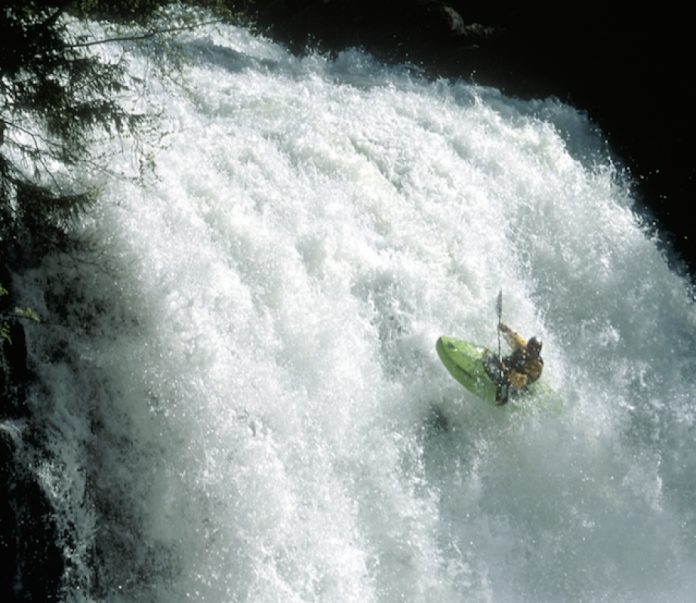
Do paddlers have a death wish? Take a survey of non-paddlers on any city street and you’ll hear how paddlers are thrill-seekers who have a reckless need to be on—and often over— the edge. paddling may be more death-defying than golf, but a sociologist from the University of Calgary has just completed a research study which suggests that whitewater kayaking is less about cheating death and more about the controlled pursuit of a state of mind he calls “psychological flow.”

In his book Challenging Mountain Nature, Dr. Robert Stebbins takes an academic look at the motivation people have for pursuing leisure activities widely considered to be dangerous.

He interviewed kayakers, mountain climbers and snowboarders from Alberta’s Banff and Canmore areas about their level of commitment to their sports and how important their pursuits were to their lifestyles.

Stebbins argues that, instead of getting a buzz from flirting with death, kayakers are drawn to increasingly more difficult rapids to achieve a state of fulfillment called psychological flow, a stimulated state of mind enjoyed by people who have put themselves in situations that test their skills enough to inspire feelings that are in the healthy middle ground that exists between boredom and fear.

“We know we’ve achieved psychological flow when we don’t think of other things,” says Stebbins. “The feeling kayakers are after is one of being absorbed in the action of the moment.”

It is the rush of this state of absorption that drives kayakers to push their own limits to keep from being bored. According to Stebbins, this is a controlled progression and shouldn’t be seen as daredevil behaviour.

of course, there are exceptions. Unless you’re one of a handful of competent class V+ paddlers, dropping a 50-foot waterfall for the cameras would be paddling beyond your abilities—not an attempt to achieve psychological flow. Stebbins’ name for such Kodak courage is “social high risk behaviour,” and that, he says, is dangerous.

Screen_Shot_2016-01-13_at_3.30.17_PM.pngThis article first appeared in the Early Summer 2006 issue of Rapid Magazine. For more great content, subscribe to Rapid’s print and digital editions here
Under an Arctic Moon

Photo: Suzanna Linegman
Under an Arctic Moon

I first learned of the writer, poet and filmmaker Robert Perkins when I saw his classic film Into the Great Solitude, a startling chronicle of his 1987 solo paddle down Nunavut’s Back River during which he comes unwound, seemingly losing grip with reality as he travels further and further north. It was as disturbing as it was magical. Perkins’ film made me renew my vow to paddle an Arctic river, but it also convinced me I wouldn’t try it alone.

I met Perkins a year or two later at a film festival reception where champagne bubbled in fluted glasses, waiters bustled in their tuxedoes and canoeists fidgeted in their suits and ties. he was a gracious guest of honour, introducing himself to everyone as he circulated around the room. I hoped my three minutes of small talk would revolve around writing, the Arctic and paddling. I wanted him to know we had much in common.

Instead, we talked about splitting firewood. More deserving guests threw daggers at my back as the party wound down and we continued to talk about axes, wood and swing techniques. he seemed genuinely intrigued by my winter business of selling firewood and we dissected the visceral appeal of frosty mornings and working hard. I left pleased we had made a connection, but it was years before I understood why we spoke so long about swinging axes, and not paddles. 

Perkin’s 1996 book Talking to Angels is comprised of three autobiographical stories. the middle one is about his summer of self-imposed Arctic exile on the Northwest Territories’ Baillie River. He lived in a converted meat locker with a weather radio, roaming wildlife and breathlessly spacious beauty as his only distractions. His lyrical writing penetrates the sublime violence of a northern spring break-up and the life and death truths apparent in the carcass of a scavenged musk ox.

This middle section is most popular with canoeists, but the first third of the book prefaces his time in the Arctic. It documents his decline into mental illness as a young man. Written against a backdrop of the wider insanity of 1968—an escalating Vietnam war and the assassinations of Martin luther King Jr. and Robert Kennedy—Perkins writes of living in an Alice in Wonderland world where nothing makes sense but the feeling that he has “lost his keys,” and can’t find them no matter how hard he looks. He portrays himself as the only sane observer in a maximum security ward and writes, in dripping metaphors, that he’s floating adrift, swimming in darkness, sinking, drowning… his escape attempt ends with him knocking on the hospital’s back door, too tired and drugged to get away.

When Perkins was released, he knew where he had to go:

“I went north, to the tundra. whenever I could, I traveled into wilderness… I preferred the straight- forward fear I felt and the physical dangers I faced to dealing with family and other people. slowly I stopped leaning on nature and began to just look, to see. she was all I could trust.”

The haze of confusion and madness of the first story is set in clear contrast to the clarity of the Arctic air and stillness of the tundra. Perkins found sanity by paddling northern rivers, by being alone and facing his fears. out there he connected different parts of his life—he found his keys—and he prepared to re-enter life at home.

It only takes a glimpse of daily headlines to see that there is as much insanity and confusion in our world today as in the one Perkins peeked out at from his hospital window in 1968. Geopolitical paranoia and manipulation, routine road rage and the vacuous Canadian Idol seem to be disparate things, but together they are enough to make us want to take our paddles to the wilderness and seek the same clarity Perkins found on the tundra.

Re-reading his book now I realize why we hit it off so well at the film festival. I found the answer in an incidental detail that most would have passed right over. Patients in the hospital were rewarded for good behaviour by being allowed to choose a special activity to pass the time. Many chose cooking or extra television time. Perkins chose to chop firewood.

Jeff Jackson gave up his firewood business to become a professor of outdoor adventure at Algonquin College in Pembroke, Ontario.

Screen_Shot_2016-01-13_at_3.30.17_PM.pngThis article first appeared in the Early Summer 2006 issue of Rapid Magazine. For more great content, subscribe to Rapid’s print and digital editions here