

There’s a new trend spreading in the canoe camping community. More trippers are choosing to go campfire-free.
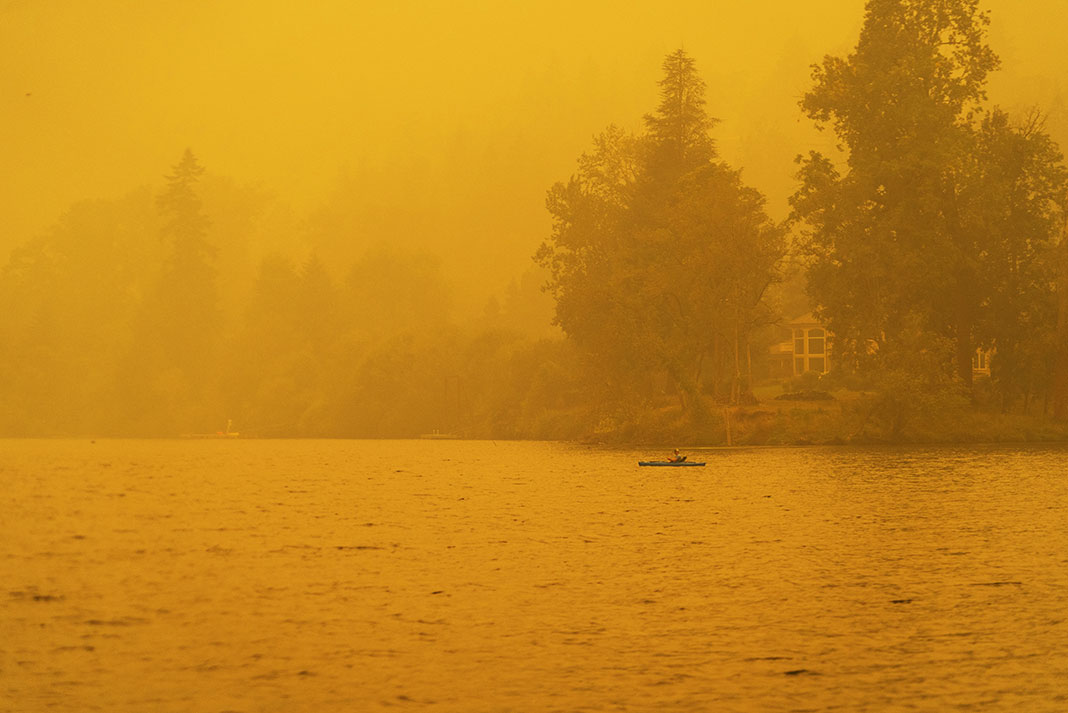
If that surprises you, let me offer a brief recap of the 2023 fire season in Canada. It was the worst wildfire season in the country’s recorded history. Over 18 million hectares of forest burned, roughly equivalent to the size of the state of North Dakota. Before 2023, the record was eight million hectares in 1989. The 10-year average before 2023 was a mere 2,751,161 hectares. That year, more than 232,000 people were evacuated from towns and cities, equivalent to the combined total between 2011 and 2018. Smoke drifted as far as Europe and caused some Canadian regions to suffer the worst air quality in the world.
Drought and early snow melt significantly contributed to the conditions for wildfires. So, the fires—and their effect on the enjoyment of being outside—stay top of mind come summer.
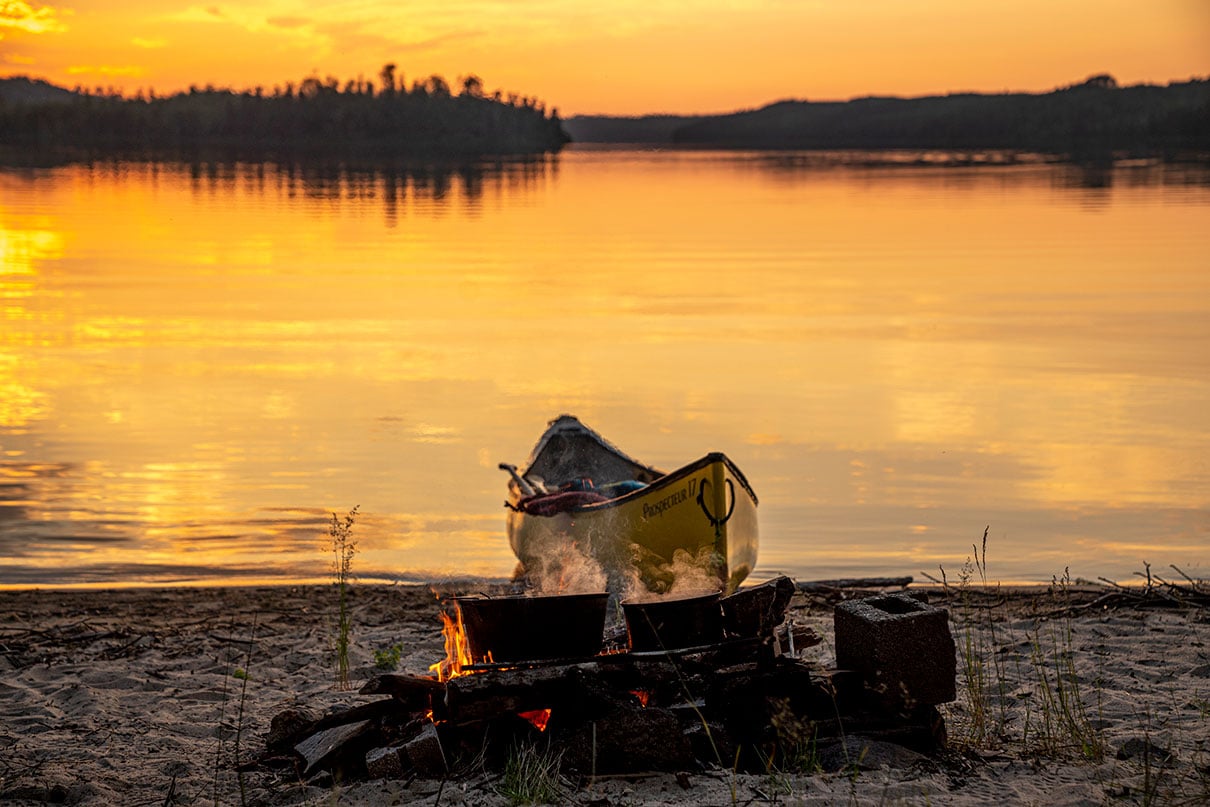
Death of the campfire
According to the National Interagency Fire Center, wildfires are primarily caused by two things: lightning and people. In Canada, roughly half of wildfires are caused by human activity, while in the United States, the U.S. Forest Service estimates an astounding 85 percent are from human activity—from cigarette butts, escaped prescribed burns, malfunctioning equipment, fireworks, trash burning, arson, gender reveals gone wrong, and, yes, even campfires.
In my region, the default is to allow campfires until things get too dry, and then the local government institutes a fire ban on private property, campgrounds and in the backcountry. However, I’ve been hearing more campers suggest a summer ban on campfires on public lands.
Wildfires aren’t the only issue torching the campfire’s reputation. The fact is campfires don’t quite square with leave-no-trace principles—fires leave scorch marks and gathering and processing wood leaves visible impact too. As more people enjoy the backcountry and campsites experience higher use, it’s increasingly common to come across campsites with barely a twig of deadfall. Don’t even get me started on the campers who fail to extinguish their fires fully.
Pushback from the backcountry
The idea of a blanket campfire ban is tough to swallow for those who argue fire is synonymous with camping. Flickering light, sparks spiraling into the night sky, and warmth radiating from the inner circle—the appeal of a campfire stretches across the millennia to when fire meant safety and our ancestors depended upon its heat and light for survival.
Campfires offer many pleasures. Sitting around a campfire, whether in a group or alone, signifies you’ve begun to slow down. For me, the biggest benefit of the campfire is the feeling of calm it creates. My senses open up. I can hear the snap of exploding resin, watch the flames change color and smell the woodsmoke. Gathering around a flickering LED lantern and singing “Sweet Caroline” just wouldn’t be the same.
I still have the occasional campfire, but these days, I’m more mindful about when, where and why. However, with hotter, smokier summers on the horizon, maybe it’s inevitable we’ll decouple the campfire from camping. We’ll leave the axe and saw at home and watch a vibrant red sun descend instead.
Kevin Callan is the author of 19 canoeing books and a regular speaker at North America’s major canoe events. His Butt End column appears in every issue of Paddling Magazine.
 This article was first published in Issue 72 of Paddling Magazine.
 From embers to ashes and dust to dust. | Feature photo: David Jackson
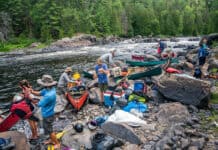
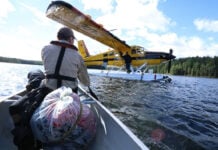






River paddlers are almost always required to carry a firepan. that and a strainer are all we need to leave no trace. pour water into the pan, strain out the floaters and carry them out. Why not do that on flat water too?
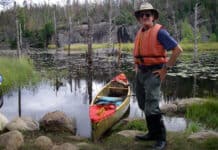
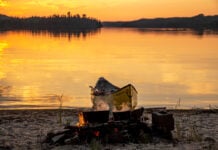
I use a collapsible fire box on my canoe trips. They concentrate the heat from a small fire which means I use less firewood built with small pieces and there is no fire scar.
Now, I in my adult life, have been able to have little to almost zero campfires in all my days by the traditional sense of a camp fire. You know where I had a camp fire and fond memories of it, at summer camp, that is the place for the camp fire. In the wilderness of the country of Northern California I am in with our just coming out of a summer with record 119 tempatures and having the most consecutive days over 100 degrees at I think somewhere over a hundred days, we have no windows for camp fires. Sure there is the winter setting but you are already set and prepped and geared and positioned that their will be no open flames of none permissable types of such. That said, I want to pause here and make the much needed remark, whom the hell calls themselves a natural or naturist and is burning trash? There is only the permissable burning of garbage in my entire country in certified incinerator industrial furnaces that reach the proper tempatures to safely and properly burn any or all garbage. There is no other legally burning any trash of any kind withon the entire country. This must be a Canada practice because obviously you don’t live with protection of the environment as a priority. Now, the other issues with camp fires is in many places I can’t really get them to burn. When you’re at elevations above well when you cross the famous 7,777 elevation you typically don’t have the oxygen to get a camp fire going. That would be my Utah high mountain trips and training for breath and capacities typically reaching around the 9,000 to 11,000 elevation for training where I try to put miles in on a bike if I can. Then if your going into our apps you will find yourself going above the tree line eventually and you are not going to have fuels to have a camp fire. Then when you try to do our glaciers for hikes or climbs, your not allowed campfires and I think they just publicly hold exicution if you burn garbage at all like that might be the crime of no trial, judge or jury just instant and public death sentence immediately assigned or almost should be if you conduct in this behavior in a trying to be one with the land operation. Then what this means is you have gear for high altitude or the reality quick boiling of water. There are a few other tricks to get some hot water and meals going but you know what you fall onto, jerky or such simple easy ready eat and nuts and such items and you make it work. You know what the thing you do is, you get out of the valley where the tempatures is running hundred teens and you with start paddling the rivers and pack camp trips, but if you have a fire you’re not coming home as our rangers are federal agents and in our season of fire restriction you will be federally detained and taken on charges of federal authority should they catch you with any sort of camp fire. I mean or your other option is hot the high elevations of wooded lands where should you be on the wave length of even attempting to have a camp fire again federal crimes. You adapt. I think there have been a few camp trips we have had fires on but essentially I don’t remember a camp fire on any of my trips through out Utah and California, Washington and Oregon, as well as Montana and Idaho in any of my years past I don’t know 12 maybe so over about 30 years of my life I have not had a camp fire. Now, we do have residential burning and my family has agriculture land that we do controlled clearing burns and management of forest health burns and our reactions and forest are filled with prescribed burning for health and fire wise fuel reductions as much as able but no where near enough. So, I say, when were you in the North every under the impression the camp fire is a thing any more? It has been entirely dead for 30 years in the essentially grounds of the Western 13 of the United States (that’s every state West of the Rockies Continental if you’re unaware) by anyone with conscious awareness of good responsible stewardship.
Yes to camp fires when conditions are ok, when it’s dry I support bans.
A blanket no campfire rule is government laziness and over reach.
The National parks I’ve been to in the Nova Scotia backcountry have this blanket rule and it’s ridiculous when conditions are ok for a fire.
Sorry but I will be using a fire till I die same as my children. We are old school that also applies to knowing when a fire is safe. We also are not out in the summer. Our trips are ice out and late fall till ice up.
Solo trips I skip the campfire apart from a perhaps a small one to dispose of smelly garbage. I can’t say I miss it.
A fire does provide a central element to sit around and enjoy conversations at on group trips. I am not sure what the alternative is but finding it is perhaps a worthwhile goal. We have come up with solutions to many of the world’s other problems sitting around around a campfire. Maybe this is a good one to solve around the next.
1. Leave no trace does NOT say no to campfires. Just keep them as small as needed.
2. Most of the reasons for man-caused fires are NOT campfires. Campfires are just a small fraction of the wildfires.