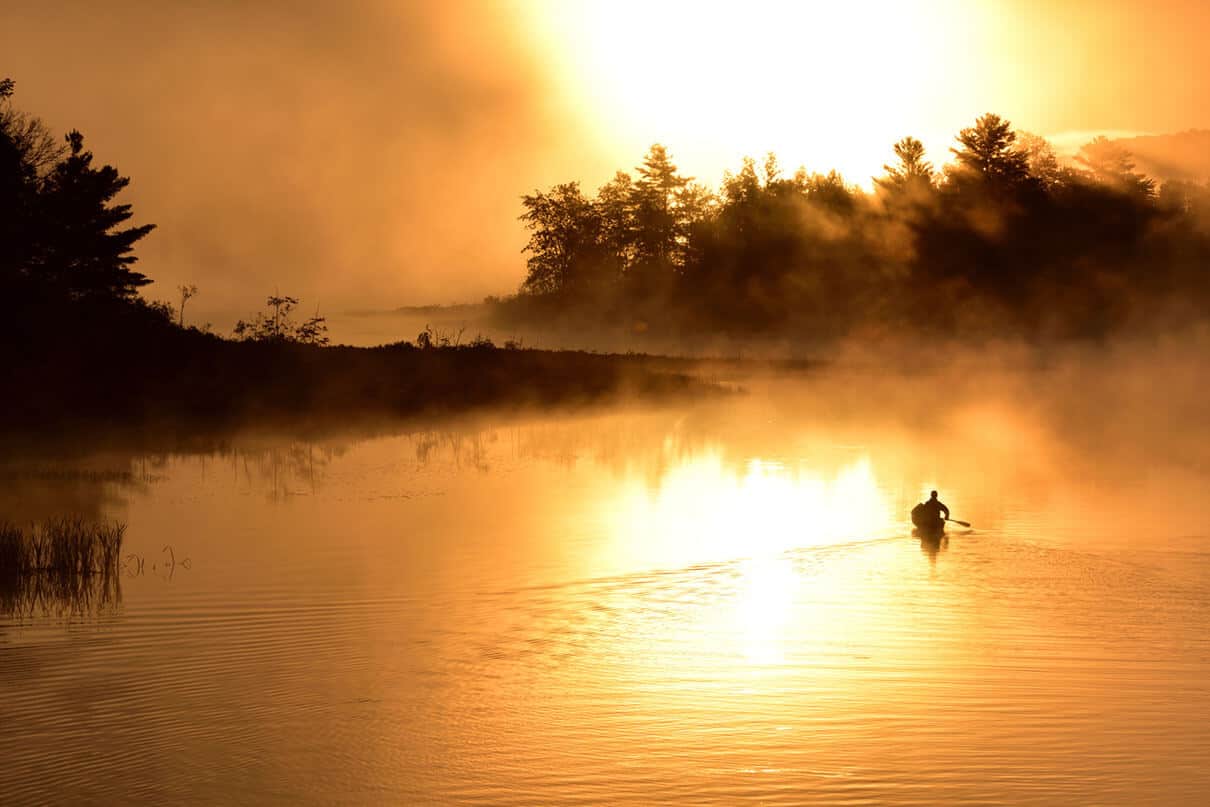
It doesn’t seem to matter where you choose to wet a blade throughout North America—on rivers, lakes, urban canals, backcountry streams, tidal routes or in yawning wilderness preserves—paddling brings with it a certain semi-delicious form of sanity that comes from no other pursuit. With the geopolitical crackling going on around the world, and so much of life lived online, I’ve found myself increasingly hungry for the peace of the paddle.
Peace of the paddle
There are places where, balancing between earth and sky, the energy of the land finds its way into the rhythm of paddling. The yin of exertion and yang of release with each stroke. Be it water flowing through desert, mountain, lush forest or tundra, once you’re settled into a canoe, sensing the non-human might take a minute, but eventually everything the river nourishes is there.
The call of an eagle soaring high against the sun, the splash of a rising fish, the shadow of bats across a gibbous moon, and maybe even, yes, the gloriously annoying whine of hungry insects. These sounds, subtle though they often are, infuse the spaces in our lives too often filled with screens, and remind us that the world is something to inhabit rather than merely observe.
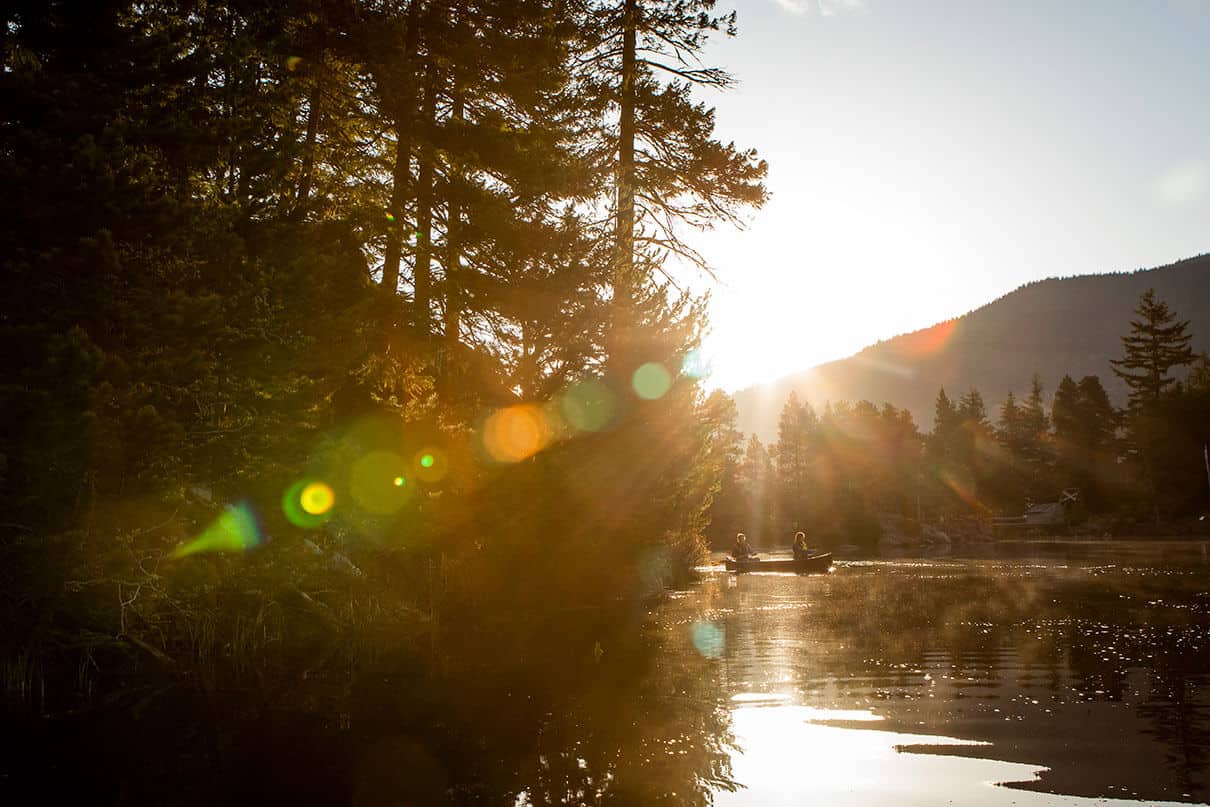
Canoe country has always been written into being by those who traveled it. Long before satellites and digital mapping rendered the land onscreen, knowledge moved by canoe and sled, memory and story. It was knowledge learned in motion, on the land rather than at a distance from it.
For six decades, Craig Macdonald has been listening to the elders who carried that knowledge. Macdonald’s work talking to elders about summer canoe routes and winter snowshoe trails—with all kinds of detail about how they traveled and traditional techniques—illuminates how building relationships with landscape can ground a person or a people in a place.
To travel with Macdonald is to experience his unhurried and steadfast commitment to Egyptian cotton tents, tin stoves, babiche webbing, natural cordage and the old ways. For the longest time, Macdonald carried most of this knowledge in his head, like the elders who were his teachers.
Happily, there are three ways to appreciate Macdonald’s unique and informed approach to canoe country. One product of his labors, The Historical Map of Temagami, is specific to an area of northern Ontario, but two others—Traditional Sledding in North America and a new biography, Echo Maker (full disclosure, I am the editor of the first and author of the second)—speak to his enduring relationship with the land. There is much to be gained in a frenetic new world from the timeless ways in which canoes (and snowshoes) have connected people to the peace of the land.
In his introduction to Traditional Sledding in North America, Macdonald writes:
“The technologies and techniques of non-mechanized travel have been honed to a high degree of perfection by thousands of years of accumulated Indigenous experience. These skills have been passed down from generation to generation by example and word of mouth. All that has happened within the past century is the refinement of equipment by the introduction of new materials and manufacturing methods.”
He continues: “Unfortunately, the price of improved performance has been a greater reliance on the modern, industrialized world. The sleds and toboggans of today are adaptations of the original designs. However, unlike traditional designs, modern versions can’t be built in the woods just with an axe and crooked knife.”
Macdonald is writing about sleds, but he might as well be talking about how we know the world. Now we map the world from above. We scroll it, model it and rarely move through it at three miles an hour. In our rush to welcome the tentacles of technology into our lives, we have lost sight of older ways of knowing a place. To paddle is to move at a speed that allows relationships to take root.
This is where remembering the peace of the paddle becomes a lifesaver.
To travel by canoe is to ponder where we came from, where we are, where we’re going, who we were, who we are and who we can be. Suspended between the world above and the world below, stillness in harmonic motion, these are the paddle’s promises.
May you continue to find peace in your paddling.
James Raffan is an explorer and recovering academic, as well as the first curator and past executive director of the Canadian Canoe Museum. His column Tumblehome—now in its 21st year—celebrates the single blade’s rich heritage.
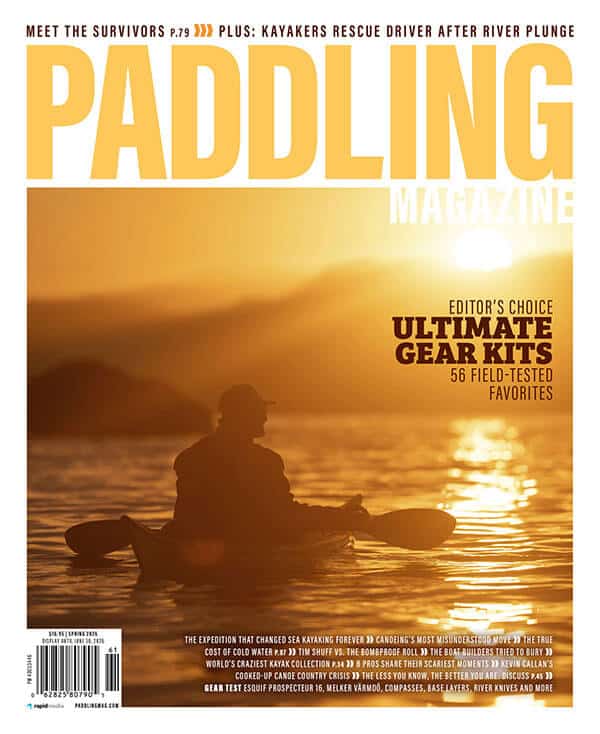 This article was published in Issue 75 of Paddling Magazine.
 Best accessed offline. | Feature photo: Justa Jeskova