The U.S. Forest Service closed the Boundary Waters Canoe Area (BWCA) on Tuesday as wildfires surge across northern Minnesota and dry, windy weather persists. The wilderness area has only been closed completely twice before in its history.
“This closure is about keeping people safe,” the Forest Service shared in a press release on Monday. “Wildfires don’t just threaten trees and campsites—they create dangerous smoke, unstable conditions and rapidly shifting fire behavior that can trap visitors with little warning.”
Fires spread
As of Tuesday, the Forest Service reported 17 active wildfires within the Superior National Forest, with three burning inside the BWCA. Many of the fires were started by lightning from a storm that moved through the area on the evening of July 6. More storms with lightning and little rain are in the forecast.
Together, the three fires inside the BWCA have burned over 27,000 acres so far. On Monday, the Bear Trap Fire, which is burning south of Lac La Croix, crossed the border into Canada. Quetico Provincial Park and northern Ontario are also experiencing numerous wildfires.
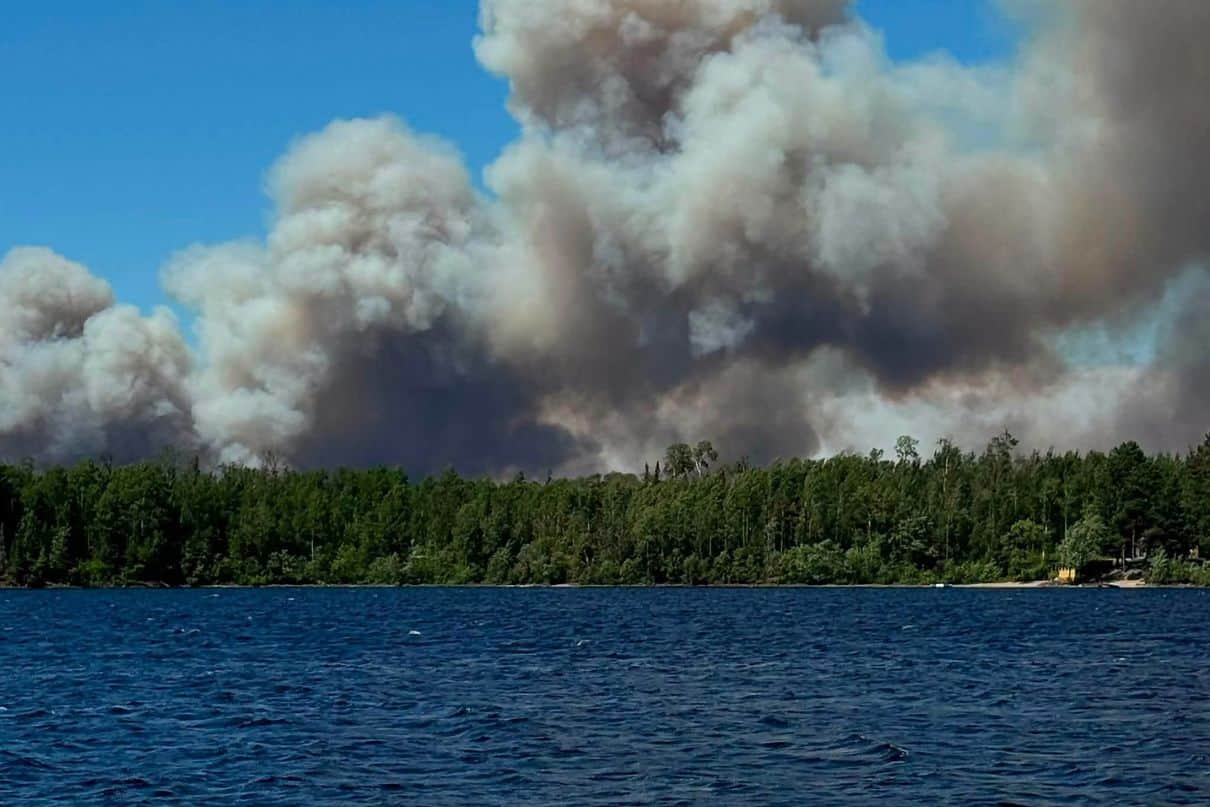
“[On Monday,] extreme fire conditions occurred widespread across the entire forest. Most fires had wind-driven size growth and some spotting,” the Forest Service wrote in a statement.
Crews worked under hot, dry and windy conditions on Tuesday, using a full suppression strategy when possible. Given the dangerous conditions and the highly active fires, the Forest Service says firefighters and public safety are their highest priorities.
“Even healthy adults can experience breathing problems when smoke levels rise, and people with heart or lung conditions can be especially vulnerable,” the Forest Service wrote. “In a wilderness as large and remote as the Boundary Waters, emergency response is challenging even on a normal day; during potential widespread wildfires, those risks increase significantly.”
Campers impacted
While no new visitors are allowed to enter the BWCA, the Forest Service is working to evacuate many who entered before the closure.
“Under these conditions, it isn’t safe for people to travel, camp or paddle in the wilderness. Rapid fire growth and thick smoke can make it hard to breathe, hard to see and difficult for firefighters to reach anyone who needs help,” the Forest Service wrote.
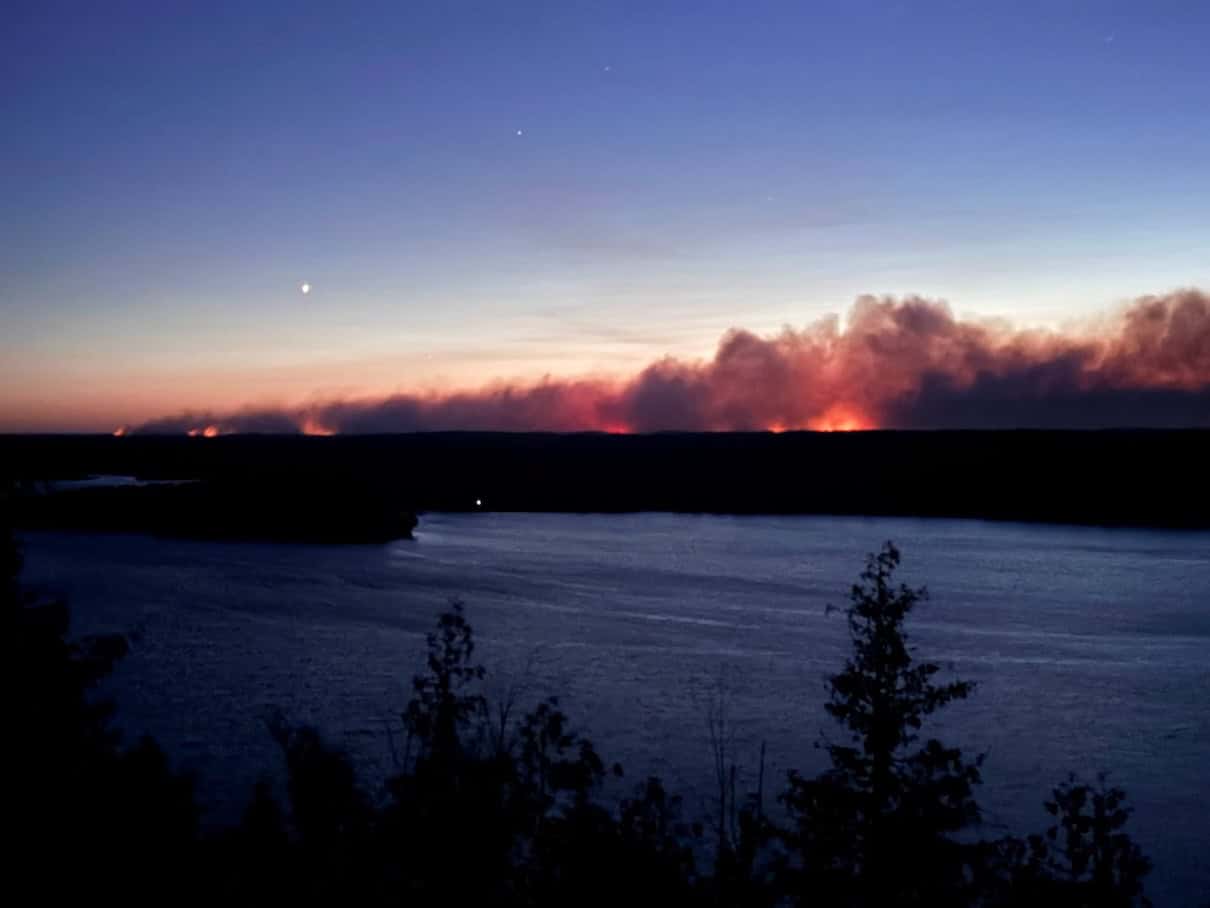
In a video shared on Facebook, Superior National Forest wilderness manager Carl Skustad detailed efforts to evacuate BWCA visitors on Monday after strong winds caused fires to spread aggressively. A Forest Service plane spotted multiple groups but was unable to land due to large waves. Rangers then went in on a motorboat to rescue the paddlers.
“The rangers on the water were able to sweep the area in the smoke and ash and get those public out, and then we transferred them to our amazing cooperators—outfitters, guides—and they were able to transport them back,” said Skustad.
The Forest Service issued a refund to all permit holders through July 17, but more permits could be canceled as the closure extends. Roughly 1,900 campsites are impacted by the closure. Officials say it will remain in effect until the fires are contained and the risk to the public has decreased.
“We know how important the Boundary Waters is to local communities and the more than 150,000 people who visit each year, and we appreciate your patience as we work to restore safe conditions,” the Forest Service shared.