

It was the sound of two boats bumping together that made me sit bolt upright in my tent. Kayaks, as a rule, are supposed to be high and dry at night, and the only reason they make that sound is if they aren’t.
Headlamp on and Crocs hastily donned, I waded across the isthmus from my tent toward where the boats had been tied to a tree at the forest edge. I was deep in an inlet in eastern Clayoquot Sound, and losing a boat would qualify, by industry standards, as a capital “P” problem.
The kayaks themselves were fine, bobbing gently where they’d been secured. What wasn’t fine was the water, now up to my thighs. The fly of the closest tent was sitting in four inches of water, and the tide was still rising.
I woke Bill, who was still fast asleep, saying, “Your tent is underwater, and I need you to wake up without moving.” We managed to float him on his inflatable sleeping pad (now more of a pool toy), extract him from his sleeping bag, and relocate both him and the tent to higher ground. The rest of the group followed suit.
It wasn’t until much later I sat down and traced the chain of decisions that led us there. A handful of small errors—in math, lunar cycle awareness and ocean physics—had aligned perfectly. The lesson stuck, and I’ve since shared it with countless students.
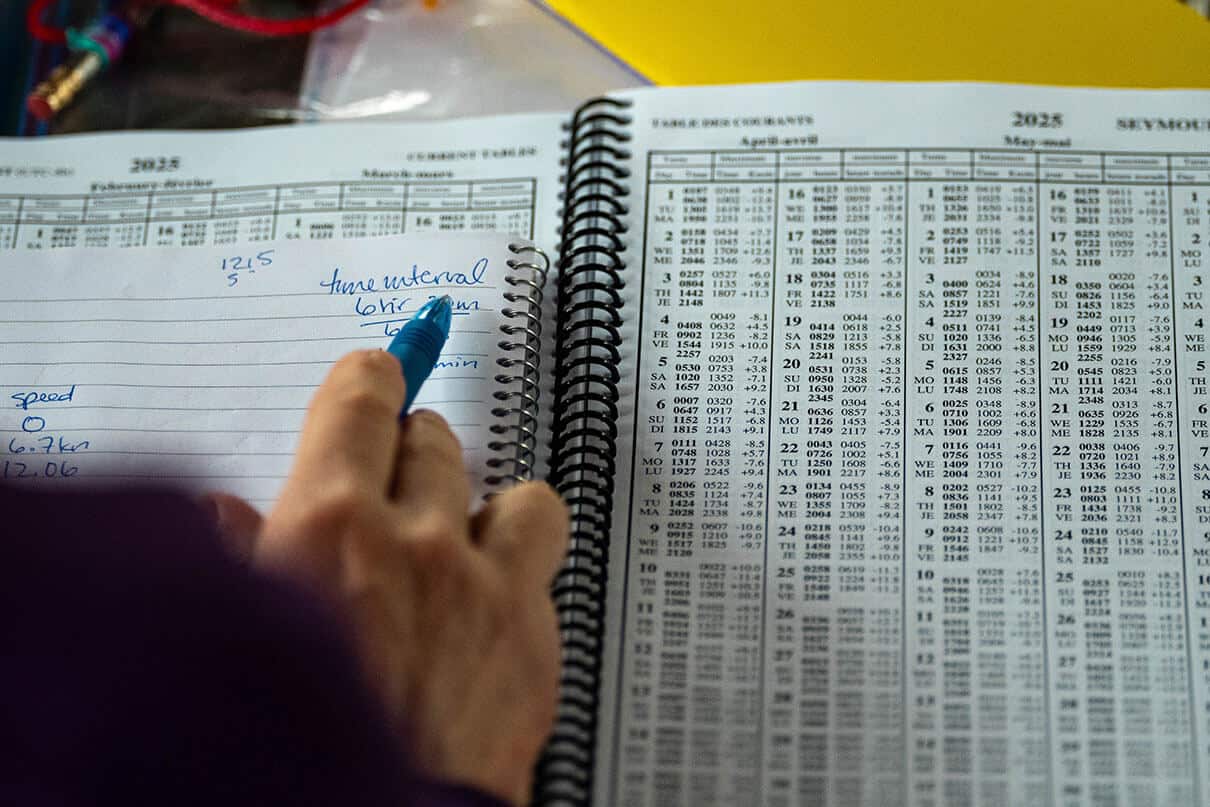
What are tides?
The oceans are governed by powerful forces. Once or twice each day, water rises and falls in response to the gravitational pull of the moon and sun, combined with the rotation of the Earth. This interaction creates a slow, rotating tidal wave that moves through ocean basins. Thinking of tides as a wave helps clarify the basics: high tide is the crest, low tide the trough. This vertical movement of water is what we call tide.
The horizontal movement of that water, how fast and in what direction it flows, is what we call current. When movement is driven by tides, we call it tidal current. Currents affect how fast we travel, whether features feel fun or scary, and where rips and overfalls form.
Tides, on the other hand, tend to influence paddlers more subtly: long intertidal boat carries, nonexistent beaches, flooded camps and impossible landings. As I learned that night in Clayoquot Sound, tides don’t need speed or turbulence to cause problems.
Why tides matter
Landings
A cobble beach that’s friendly at 6.5 feet (2 meters) may vanish entirely at 16 feet (5 meters), replaced by steep rock and breaking waves.
Campsites
Many good campsites are low. Driftwood lines, salt-tolerant grasses and bleached kelp caught in vegetation are all cues. Match those signs to your predicted high tide, not the current one.
Rock gardens, surf and tide races
Mid-tide rising often feels smoother and more forgiving as features fill in. Mid-tide falling tends to sharpen edges and expose hazards. Same place, very different experience.
Trip timing
Distance matters, but tide windows matter more. Planning arrivals around favorable heights often turns stressful ends to days into calm ones and can save you an hour or more of carrying gear up and down the beach.
What is tidal range?
You’ll often hear people talk about tidal range. Simply put, range is the difference in height between high and low tide. That difference varies dramatically depending on the alignment of the sun and moon, their distance from Earth, and the Earth’s axial tilt. When forces align, tides are large; when they oppose each other, tides are small.
In Ucluelet, British Columbia, where I live, the largest theoretical tidal range is about 13.5 feet (4.1 meters), but most days are nothing close to that. Tides here can range from as little as one foot (30 centimeters) to the maximum. On the biggest days, saltwater pushes right up into the roots of dense coastal forest. This variability is why tide tables matter.
How to read a tide table
A tide table predicts the expected tide height at a specific location on a specific day and time. Each table is tied to a reference station, and conditions can vary significantly even over a short distance.
A typical entry might look like this:
Tofino, British Columbia – July 15, 2026
| Time | Height |
|---|---|
| 0800 | 6.6 ft / 2.0 m |
| 1335 | 10 ft / 3.1 m |
| 1821 | 1.6 ft / 0.5 m |
The larger heights represent high tides; the smaller, low tides. The difference between them is the tidal range. Between 08:00 and 13:35, the tide rises 3.5 feet (1.1 meters). Between 13:35 and 18:21, it falls 8.5 feet (2.6 meters)—a much larger movement over a similar time span. More water moving faster generally means stronger currents. It’s also worth remembering tide tables are predictions. Low barometric pressure and strong winds can elevate water levels beyond what’s forecast.
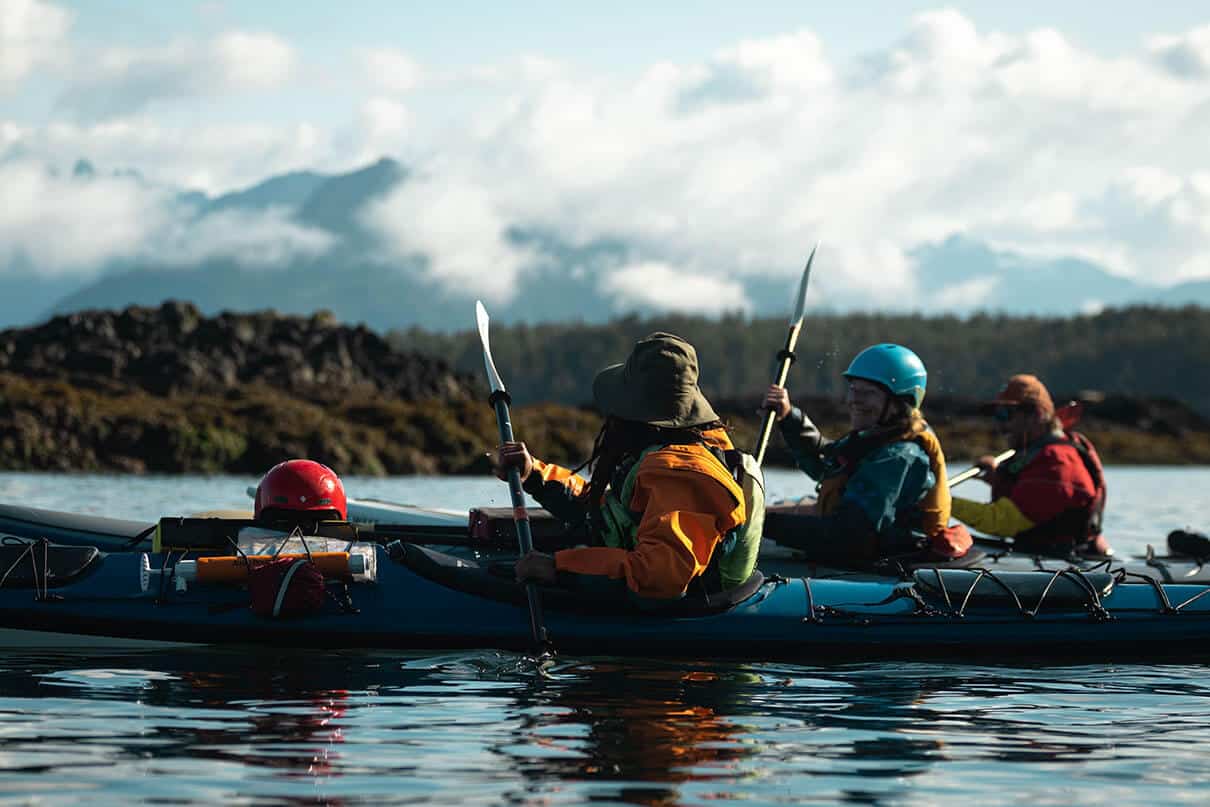
Follow these steps
1
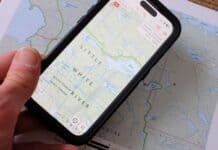
Find the tide information relevant to your location. Use NOAA’s Tide Predictions website, a tide app like Tide Guide, or printed tide booklets, like the Canadian Tide and Currents Tables. Choose the tide station closest to where you’ll be paddling.
2
Look up the tide table for the dates you plan to be on the water. Tides change daily, so using the correct dates is essential.
3
For each day, note the listed times and heights of high and low tides. Many coastal areas experience two high tides and two low tides within a 24-hour period. Remember: a seemingly small change in height can translate into a large change in horizontal distance, especially on gently sloping beaches.
4
Use tide information to plan your route, launch times, rest stops and campsites. Choose overnight sites above the highest predicted tide. Consider whether low tide will leave you stranded far from the water, or if high tide will eliminate landing options.
5
Before landing or camping, look for natural indicators such as driftwood lines, wet sand, and debris to identify previous high-water marks and confirm predictions from the water.
Reading tides well is less about memorizing numbers and more about pattern recognition. Strong paddlers cross-reference constantly, then look up from the page to see what the water is doing. Over time, prediction and observation will align.
Finn Steiner is a West Coast sea kayak guide, educator and co-owner of SKILS (skils.ca), focused on leadership, risk and coastal learning.
 This article was published in Issue 75 of Paddling Magazine.
 Time and tide wait for no one. | Feature photo: Finn Steiner






I felt the article was informative and provided sufficient information to accurately understand a tide chart and applying the information to a paddling situation. Not sure how much more “how to “ was needed here.
Article title is misleading (again). Finn doesn’t actually show us how to read a ride chart, he just talks about the importance of knowing how. Let’s get less story telling and more “how-to” articles and videos. Just my two cents worth.