When I first heard of the BoréalDesign Storm 17, I assumed it was a direct descendant of the venerable Current Designs Storm, a kayak first produced in 1994 by the then-Vancouver-Island-based company as its first rotomolded polyethylene kayak. That Storm was based on designer Brian Henry’s bestselling composite design, the Solstice GT. It was subsequently manufactured for decades, achieving wide popular appeal due to its combination of user-friendliness and expedition-ready seaworthiness.
The BoréalDesign Storm 17 is not directly related to that Storm. But one could be excused for confusing the two, and not just because of their similar lines and dimensions. Let me explain.
Kayak Review: BorealDesign’s Storm 17
BoréalDesign Storm 17 Specs
Length: 17’0”
Width: 24”
Weight: 59 lbs
Capacity: 348 lbs
MSRP: $2,679 CAD
borealdesign.ca
Many years ago, a different Vancouver Island-based sea kayak company, Seaward Kayaks, wanted to round out its line of ABS thermoformed kayaks with a full-sized touring model. Two industry veterans, Mark Hall and Steve Hovarth, designed a 16-footer and named it the Storm—an admitted nod to Current Designs’ old plastic stalwart. Fifteen- and 17-foot versions were later added. But the Storm series never went into full production under Seaward.
Kayak Distribution (KD), the Quebec company that owns Riot Kayaks and BoréalDesign, eventually acquired Seaward’s thermoform division. KD began producing the Storm 15, 16 and 17 Ultralight touring kayaks under BoréalDesign in 2017. Coincidentally, in 2023, KD acquired Current Designs’ rotomolding division from Wenonah Canoe (which had taken over Current Designs in 1999).
History aside, I can’t help feeling like the BoréalDesign Storm 17 Ultralight is perfectly named, because it has the same approachability as the old Storm, which I reviewed in this magazine in 2004, but with the lighter weight and glossier sheen of a more premium material—thermoformed ABS.
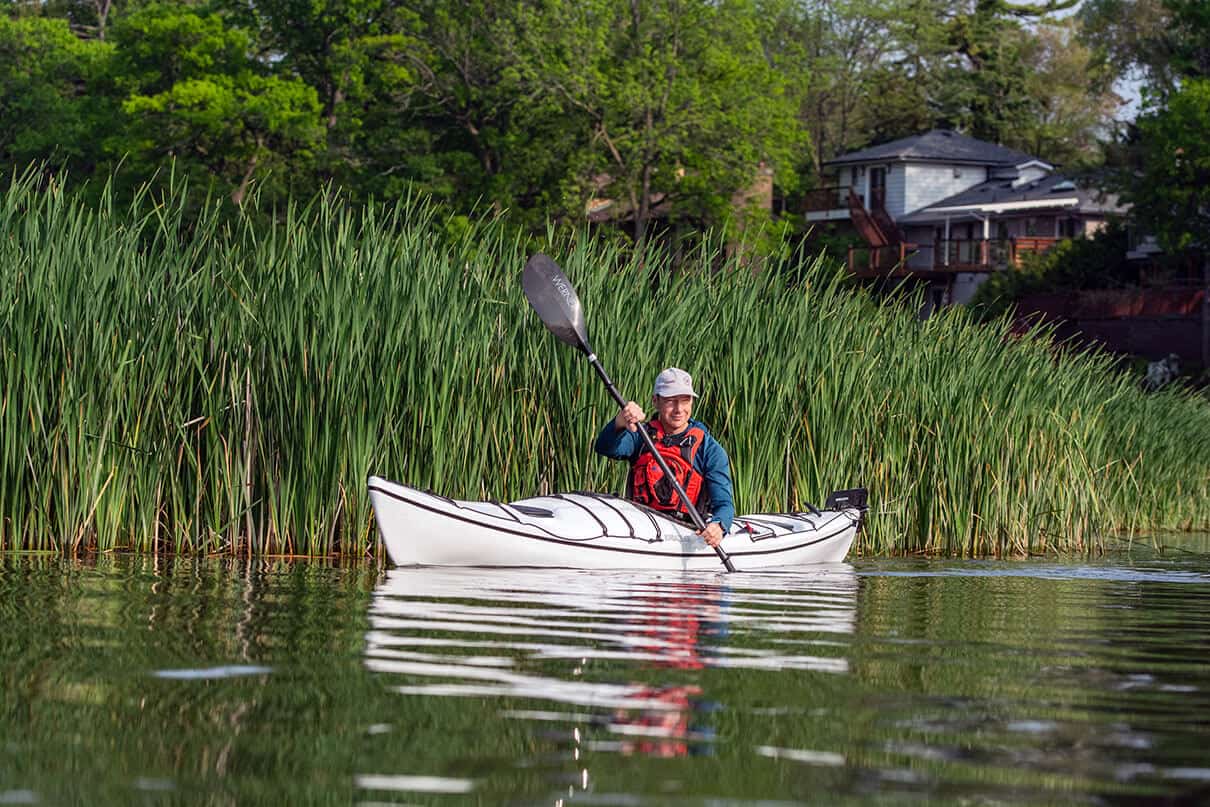
BoréalDesign intends their entire Storm series to be easy to paddle, load and tour. The three sizes all share a similar soft-chined, shallow-V hull, which produces stable and predictable performance. KD’s marketing manager, Graham Ketcheson, explains that people tend to choose the one that fits their body size the best, with the middle-of-the-road 16 being the bestseller and the 17 attracting the largest paddlers or those who simply need the expedition capacity.
It’s safe to say the Storm 17 is among the roomiest touring kayaks on the market. There’s a day hatch above the cockpit for small items, a round bow hatch with an opening large enough for a small propane tank or 20-liter dry bag, and an oval rear hatch for large items. The Storm 17 is fully appointed for touring in every other way, too, from the reflective deck lines to the straps behind the seat for a paddle float self-rescue.
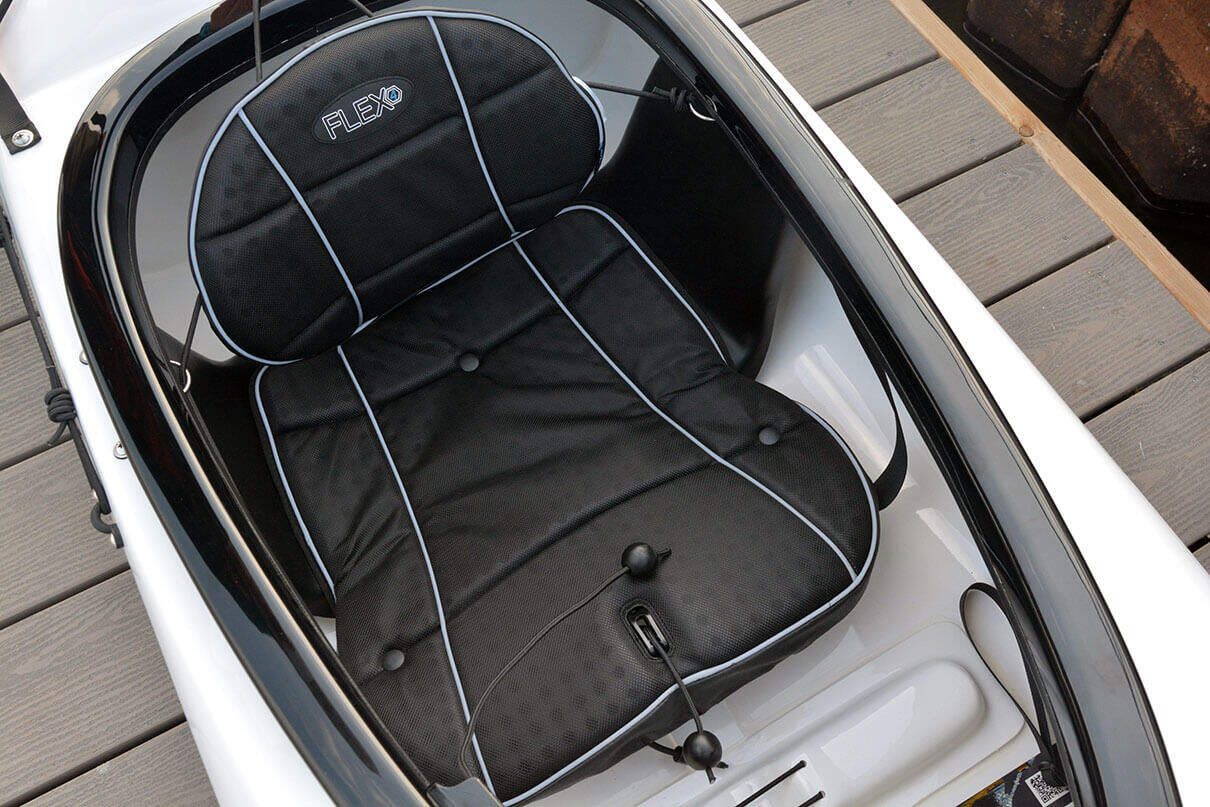
Inside the cockpit, BoréalDesign’s Flex 4 Seat with Drytech fabric provides a multi-way adjustable, crowd-pleasing padded throne that enhances efficiency and comfort by flexing slightly from side to side in synchronicity with the paddle stroke. I found it instantly comfortable and intuitive.
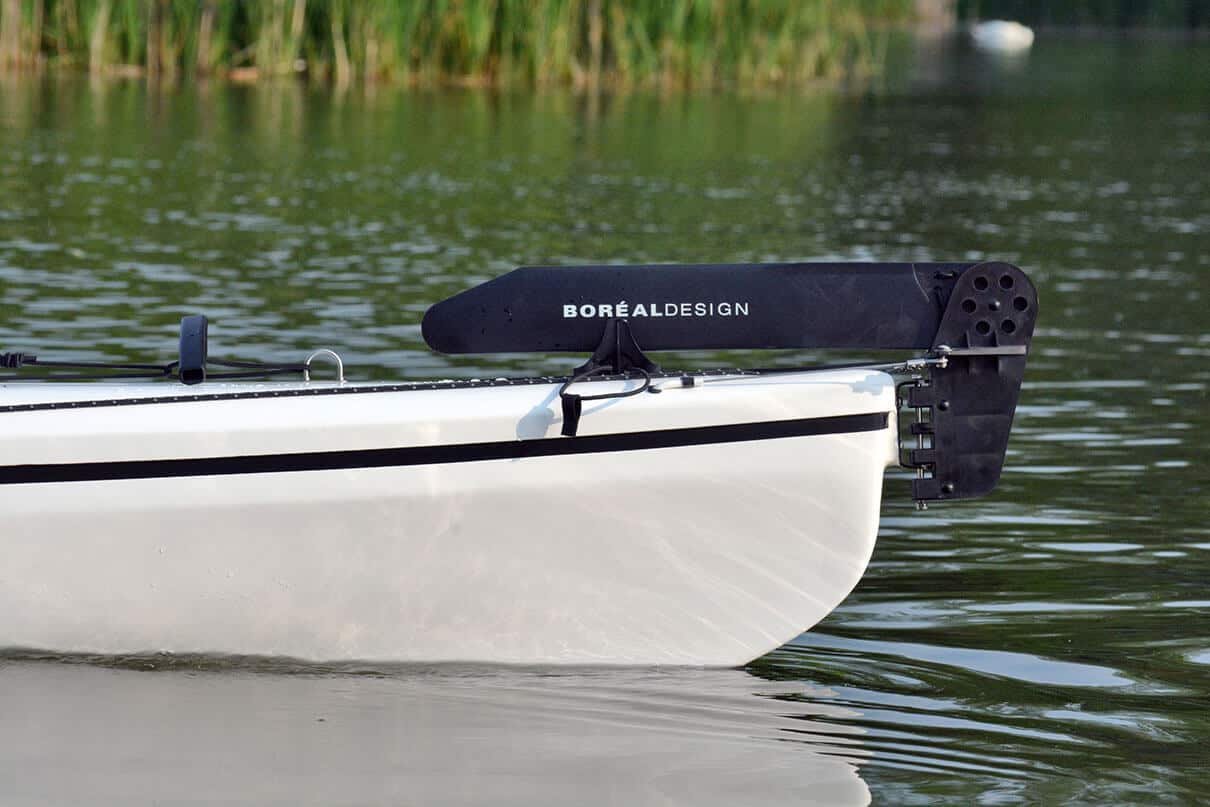
I can’t shake the old Current Designs comparison because paddling this Storm reminds me so much of how I remember that company’s Solstice series, which has always been my reference for an approachable, versatile West Coast-style ruddered touring kayak. A beginner could climb in and be immediately comfortable, but then load up and paddle from Seattle to Juneau.
However, this kayak reminds me more of the Solstice GT Titan, the highest-volume edition advertised for those who are “big and tall.” There’s a pic somewhere of my six-foot frame curled up inside the Titan cockpit with only my head poking out.
Ketcheson referenced 225 pounds as being a typical paddler size for the Storm 17 and recounts a strapping lumberjack of a fellow buying the floor model at an Outdoor Retailer show to ship home to Alaska, saying, “I’ve finally found a sea kayak that fits me!”
That said, at 14 inches, the depth of the Storm 17 is roomy but not extreme (the GT Titan is 15). It’s bigger than what I’d want in an ocean playboat, but would be comfortable for a long tour, which is this kayak’s main purpose. It tracks very straight, even without the rudder, and responds slightly to edging.
For a more rockered, maneuverable hull, you’d opt for BoréalDesign’s Epsilon or Baffin series kayaks. Those two kayaks each come in three sizes, too. Tellingly, they were once also available in thermoform but now only come in composite or polyethylene.
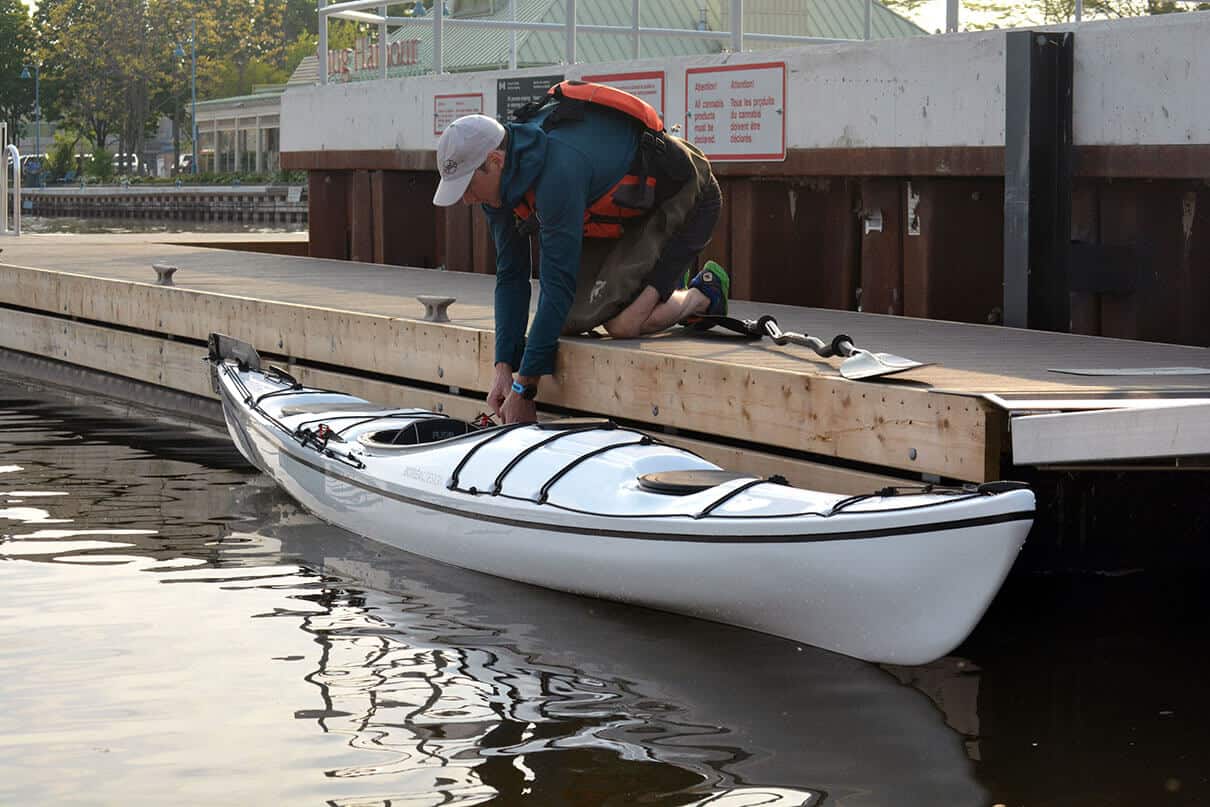
This is indicative of both where the Storm series and ABS thermoform fit—straight up the middle. Kayakers buying those more specialized designs weren’t interested in compromise, opting for either the cheaper and worry-free roto that they could virtually drop out of a helicopter or drag fully loaded across rocky tidal flats, or the price-is-no-object composite. Thermoform is the ultimate compromise—in a good way. It’s lighter than rotomolded poly and less expensive but just as shiny-slick as composite, and somewhere between the two in terms of weight, durability and repairability.
“ABS can be repaired fairly easily with a special type of epoxy and a fiberglass or Kevlar patch on the inside,” says Ketcheson. And if you take it to an expert, “like composite you can get it looking pretty new again. You can plastic-weld polyethylene boats but they’re always going to look terrible.” He also points out that a scratched thermoformed hull can be restored with special acrylic spray paint, similar to a gelcoat repair on a fiberglass kayak.
So it makes sense that BoréalDesign has dedicated its thermoform production, in the touring realm, to this most all-encompassing and accessible design. One that would likely most appeal to outfitters or to dedicated intermediate kayakers who want a serious sea kayak that will take them anywhere they want to go, with many of the attributes of composite, at a more moderate price.
For that niche, the Storm series is perfectly dialled in. No need to overthink it. Pick your size, load ‘er up, and set off wherever your heart desires.
 This article was published in Issue 74 of Paddling Magazine.
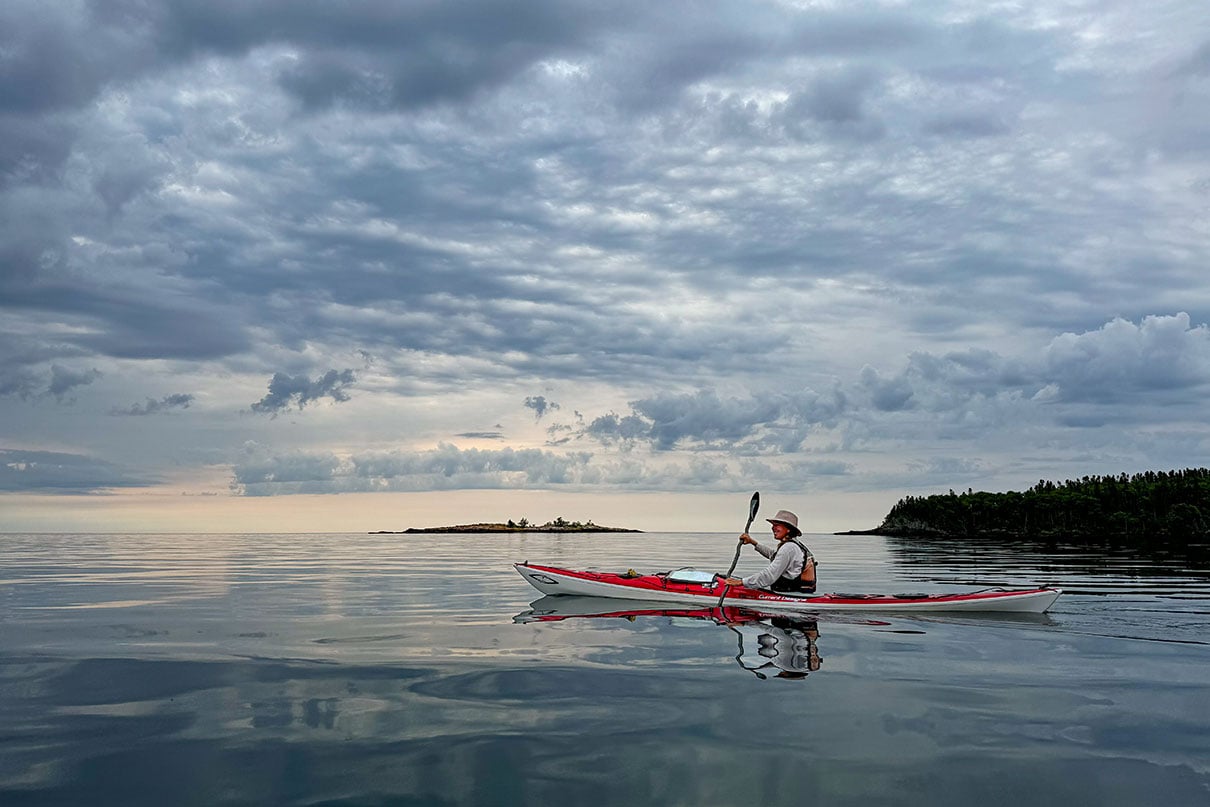
 Beginner-friendly stability. Check. Easy packability. Check. Expedition-worthy performance. Check. The whole package in one touring kayak. | Feature photo: Kaydi Pyette