In May 2024, just a month after Pyranha dropped the much-hyped ReactR kayak, I found myself at an industry event chatting with Dave Fusilli, longtime Team Pyranha paddler and Western Canada sales rep. As Dave walked me through the standout features of this new river weapon, my marketing brain kicked into gear: was Pyranha sneakily inventing a new category of kayak? A classic marketing move—create a new problem, then solve it with your product.
“Ah, the quarter-slice,” I joked. Three-quarters creeker, one-quarter slice—just enough to stay fast, agile and pivotable, without sacrificing the confidence-inspiring volume of a creeker.
Genius.
Before our chat, I was certain my kayak quiver was complete. I had a playboat, a half-slice and a trusty creek boat. But as Dave highlighted the ReactR’s comfy new outfitting, cushy shoulder pads for hauling and exaggerated rocker made for dry boofing, I realized I was facing a new problem.
Maybe I needed a fourth kayak.
Whitewater Kayak Review: Pyranha ReactR
Pyranha ReactR (Medium) Specs
Length: 8’11”
Width: 27.5”
Weight: 51 lbs
Volume: 86 gal
MSRP: $1,899 USD | $2,589 CAD
Pyranha Kayaks has been shaping the whitewater world since 1971, when British paddler Graham Mackereth started building fiberglass boats for slalom, flatwater and whitewater. A former U.K. Olympic team member in K1 Sprint, Mackereth used his racing background to build high-performance designs and eventually pioneered the first market-ready rotomolded kayaks in Europe by the late 70s.
Growing up paddling in Britain, I associate its rivers with being shallow, rocky and a little dirty. Back then, when I shopped for a creek boat, my criteria were simple: would it keep me upright and take care of me? Popular models of the time, like the Dagger Mamba or Liquidlogic Jefe, suggest the sentiment was widely shared.
In recent years, however, there has been a shift toward a different core need: speed, skips and agility. It’s a style Mackereth probably would’ve appreciated in his early racing days. This is where the ReactR enters the chat. It is one of the first boats to blend the playful and popular slice-boat energy with creek boat confidence. Think Ripper 2 meets Scorch. No surprise it took home the 2025 Paddling Magazine Industry Award for best whitewater boat.
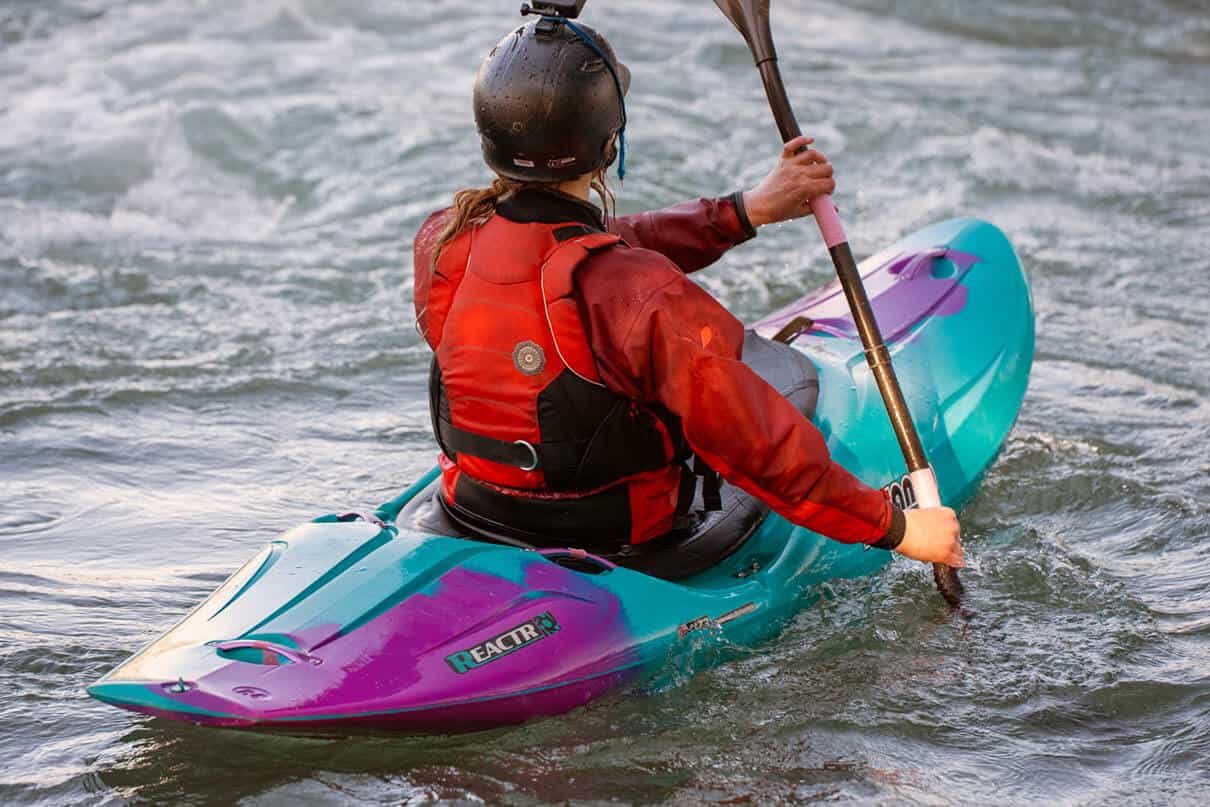
When I got it on the water this spring, I quickly realized what draws comparisons is the ReactR’s pivot hull. By shifting back the pivot point—where bow and stern rocker meet—Pyranha has created an impressively nimble boat that facilitates the drive-from-the-backseat technique. With your weight back, you can lift and swing the bow around or over features. Put your weight forward, and it glides with control. Compared to older creekers, or even its Scorch predecessor, the ReactR’s rocker profile is more banana-like, and that’s one of the first things I noticed when testing it out.
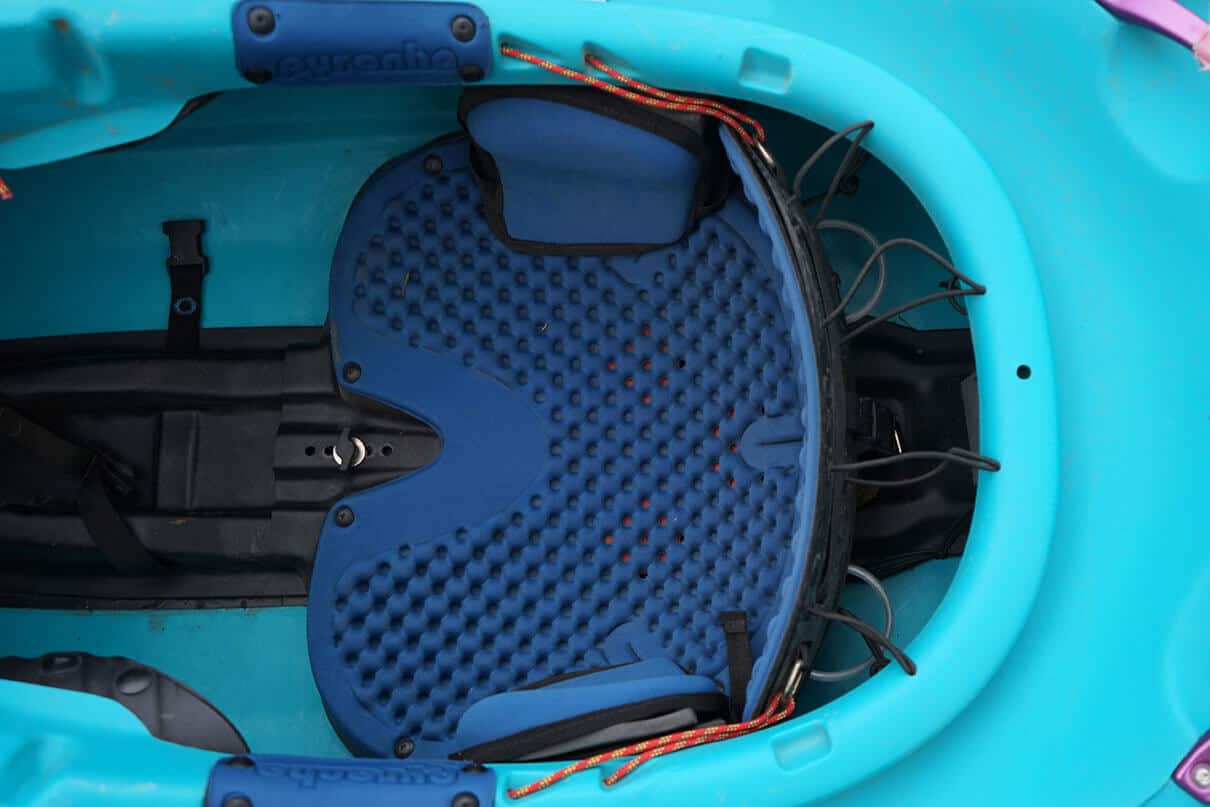
As a woman with wide hips and long legs, I often get cramped in boats. That’s why the new Elite outfitting on the ReactR really spoke to me. The extra foam padding in the backrest and seat base adds noticeable comfort, and the wider backband offers better support. Even better, the adjustable thigh grips provide two-way adjustment, making it easy to find the perfect angle for my legs and hips. The comfort carry pads on the shoulders are such a simple but brilliant touch, I can’t believe it took this long to become standard.
The Elite outfitting ditches the traditional ratchet system in favor of a pulley setup, similar to the system Jackson Kayak uses, but with its own twist. Thick Dyneema cord runs through aluminum racing cleats, and an internal pulley redirects tension toward the paddler. The result is a secure fit that encourages your back to form a natural concave arch, not a hunched one. Bonus: the cleats are also easier to lock off than Jackson’s.
Pyranha seems confident about the new outfitting, too—they’ve now rolled it out in the 2025 Firecracker and Ripper 2 models, replacing the older Stout 2 system. After spending a week in the medium ReactR, getting back into my medium Scorch felt like a downgrade; I missed those comfort features.
Sitting in the ReactR, both on dry land and in the water, the first thing I noticed was how big it felt. And that’s because it is: the medium comes in at 27.5 inches wide and 86 gallons (325 liters) of volume, compared to the medium Scorch’s 25 inches and 82 gallons (310 liters). If you’re near the top of the Scorch’s weight range, the ReactR medium might be your Goldilocks fit.
So far, I’ve paddled the ReactR on mostly class II–III rivers, and that gave me a solid feel for how it handles in different scenarios. The wider profile did make it less snappy to roll than the Scorch.
That said, boofing was an absolute dream thanks to the elevated rocker. It was actually hard to get the nose wet at all. I found myself unintentionally boofing through small waves, purely due to the hull shape.
One downside I noticed was the tracking. The ReactR’s width, planing hull, softer edges and shorter waterline made it a little harder to hold angles or generate and maintain speed compared to the Scorch. It felt more like a slow plod at times, especially when trying to drive above a feature. This might not be an issue for a heavier paddler who can power it around more easily, but it stood out to me.
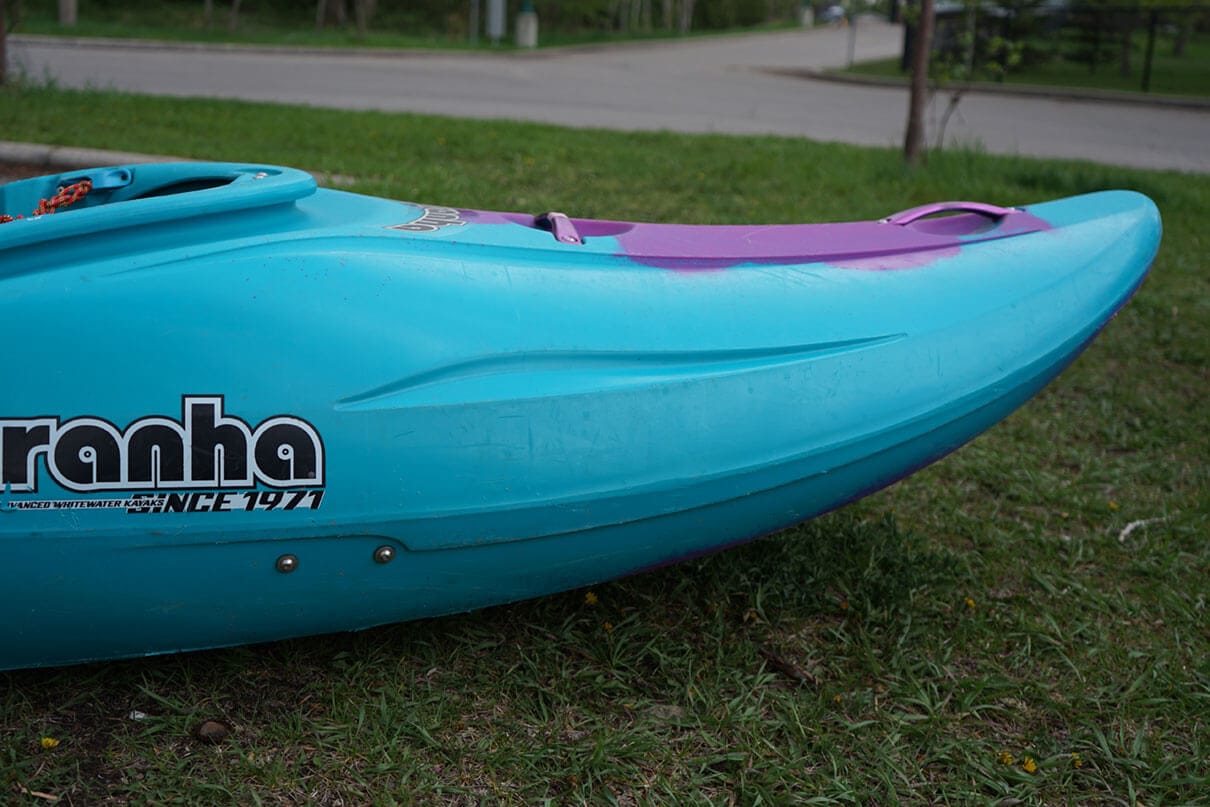
Once on the water, the quarter-slice stern really showed its design strengths. I was initially concerned about catching the tail unexpectedly, but my fear vanished quickly. The low-volume stern just gives you more room to lean back and pivot—it’s not slicey enough to surprise you. In fact, stern squirting the ReactR is nearly impossible. Only a select few have managed it, and I’m not one of them.
One of ReactR’s standout traits is how well it surfs for its size. The planing hull and shorter waterline make it easy to catch waves of any variety. Where some creek boats wash out on a feature, or become locked in at an angle, and some playboats feel too squirrelly to track, the ReactR found a sweet middle ground. I found myself catching waves I’d normally skip in a creeker and hanging on longer than expected. I haven’t quite dialed in flatspins in a ReactR yet, but paired with the agility of the pivot stern, the movement feels inviting for a creek boat.
If you’re coming from a racing background, want to play more aggressively in dynamic water, enjoy surfing waves in a full-volume boat, or want something to launch you off drops with a clean, satisfying skip, the Pyranha ReactR could be your Cinderella slipper.
 This article was published in Issue 74 of Paddling Magazine.
 Rip higher and drier in the Pyranha ReactR. | Feature photo: Matt Allen