It’s hard to say what the best kayaks for recreational paddlers are: sit-on-top or sit-inside. With more than 30 years of experience working in the paddling industry, I know each has its strengths and weaknesses. To decide, it is important to consider where, when and how you plan to use your kayak. This will help you focus on the category best for you.
Pros and cons of sit-in vs sit-on kayaks
Sit-inside kayak pros
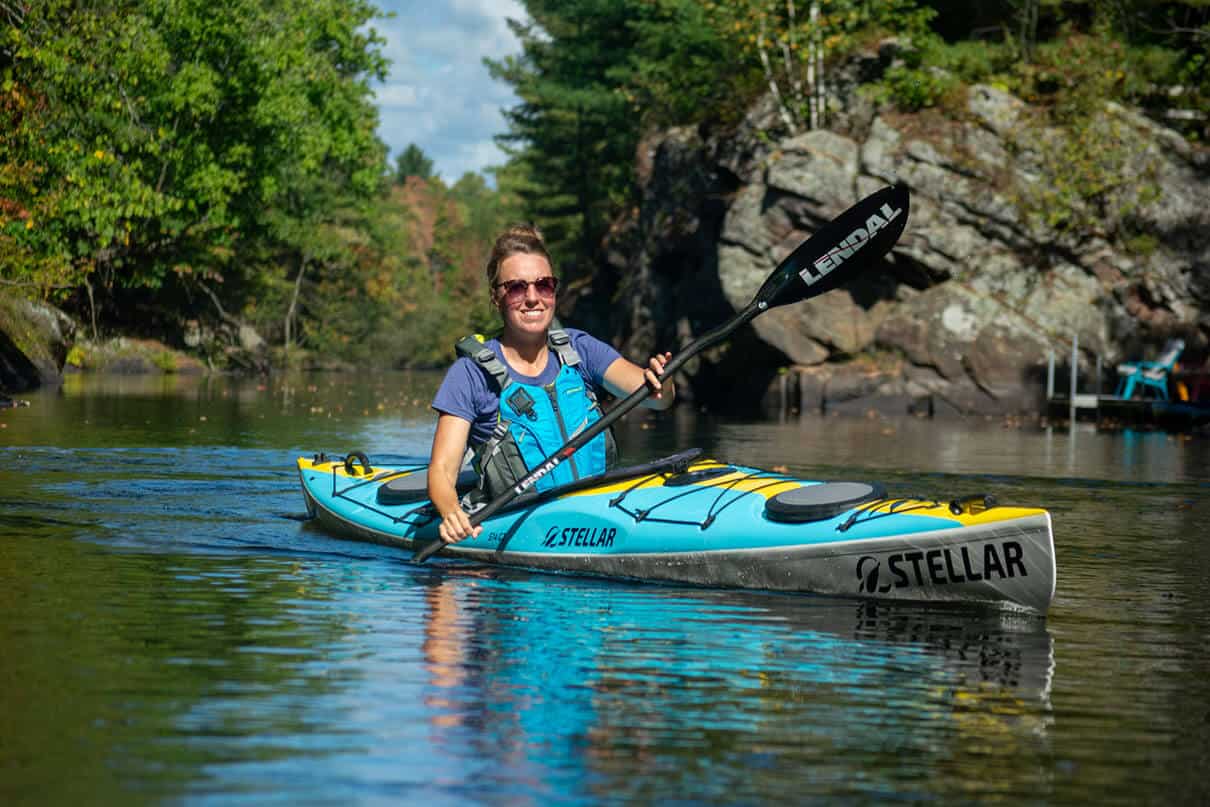
The most significant advantage of a sit-inside kayak is protection from the elements. It can be fitted with a sprayskirt to keep drips and cold breezes out of the boat. The design of sit-in kayaks also ensures water is kept out of the hull unless you tip over or are caught in a downpour. This makes them a better choice for comfort in cold weather and cold water, particularly when paddling close to shore.
Sit-inside kayak cons
The biggest downside of sit-inside recreational kayaks has to do with flotation and ease of rescue.
Most sit-in recreational kayaks feature large cockpits for comfort and ease of entry. These large cockpits can take in a lot of water should you flip your kayak. Touring kayaks have bulkheads to limit the amount of water getting into the boat. Most recreational kayaks don’t have bulkheads, or may have a single bulkhead behind the seat. This means if you do swamp, you’ll have a lot of water to deal with.
It can be difficult to climb back into a swamped recreational kayak and tough to get the water out if you do. Paddling a swamped boat without a front bulkhead can be next to impossible. For these reasons, sit-inside recreational kayaks are best paddled close to shore, where a quick swim to the beach can get you safely emptied out and back on the water.
Touring kayaks with two bulkheads and hatches are easier to rescue than recreational kayaks with a single bulkhead or none at all. This makes them safer to paddle far from shore. If you paddle a touring kayak in open water, you’ll need to learn some specialized rescue skills to ensure you can get back into the boat safely should you capsize, but it’s well worth the effort if you plan to use your kayak for coastal paddling and camping.
Sit-on-top kayak pros
The biggest advantages of a sit-on-top kayak have to do with self-rescue and ease of entry into—or onto—the boat.
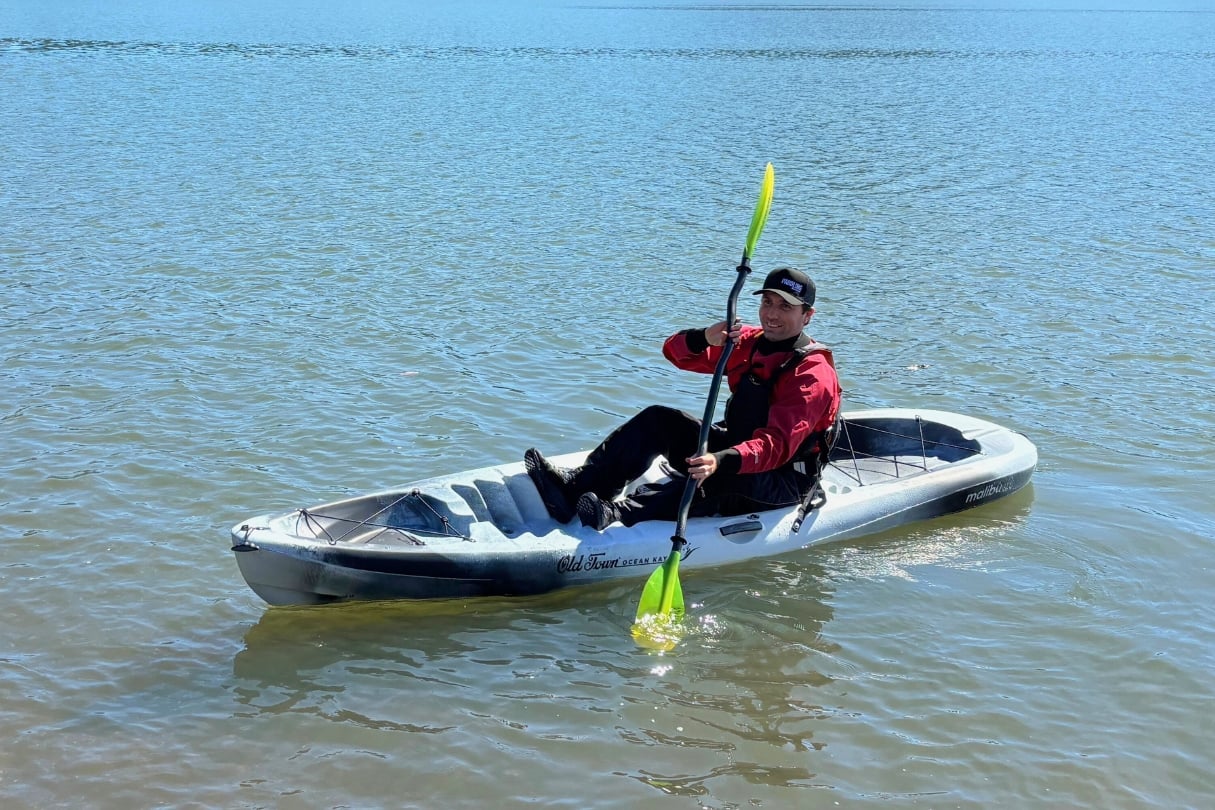
Sit-on-top kayaks are completely sealed top and bottom. This means if you flip your kayak, all you need to do to get back in action is flip it back upright and climb back on. You don’t need any special self-rescue skills to get safely back onto the kayak and most folks can master a quick self-rescue with a little practice.
Unless something goes wrong with a hatch, sit-on-top kayaks won’t fill with water. This means they can be paddled again right away in the event of capsizing. You don’t need to swim to the shore and empty them or perform a rescue to get the water out of the cockpit.
Most sit-on-top kayaks feature drain holes called scuppers, which allows water washing over the top of the boat to drain back out through the bottom of the hull. The combination of easy self-rescue and self-draining design makes sit-on-top kayaks a better choice if you’re looking for a recreational kayak to paddle a little farther from shore.
The low, flat design of many sit-on-top kayaks is also helpful when launching and landing. If you walk your sit-on-top out into the water until you are standing knee-deep, it’s easy to lower yourself onto the seat and swing your legs on board. This makes sit-on-top designs a great choice for paddlers who have limited mobility.
Sit-on-top kayak cons
The biggest downside of a sit-on-top kayak is the open design leaves the paddler more exposed to the elements. There is no cockpit to seal off from rain, wind or cold weather. The scupper holes that make them so quick to drain and easy to rescue may also allow water back up into the boat from beneath. Waves can wash over the deck and end up on your lap. This means paddlers who choose sit-on-top kayaks need to wear the right kind of clothing to stay warm if it’s cold, wet and rainy out.
For safety’s sake, all paddlers should take the water temperature into consideration when choosing what to wear kayaking so they don’t develop hypothermia if they go for a swim. The exposed seating position of sit-on-top kayaks makes this doubly important.
Sit-on-top vs sit-in kayak comparison
Sit-on-top vs sit-in kayak stability
Both sit-inside kayaks and sit-on-top kayaks are stable. Stability is largely a function of the width of the kayak, so you can expect two kayaks with similar widths to have similar stability. Of course, there are other factors in play.
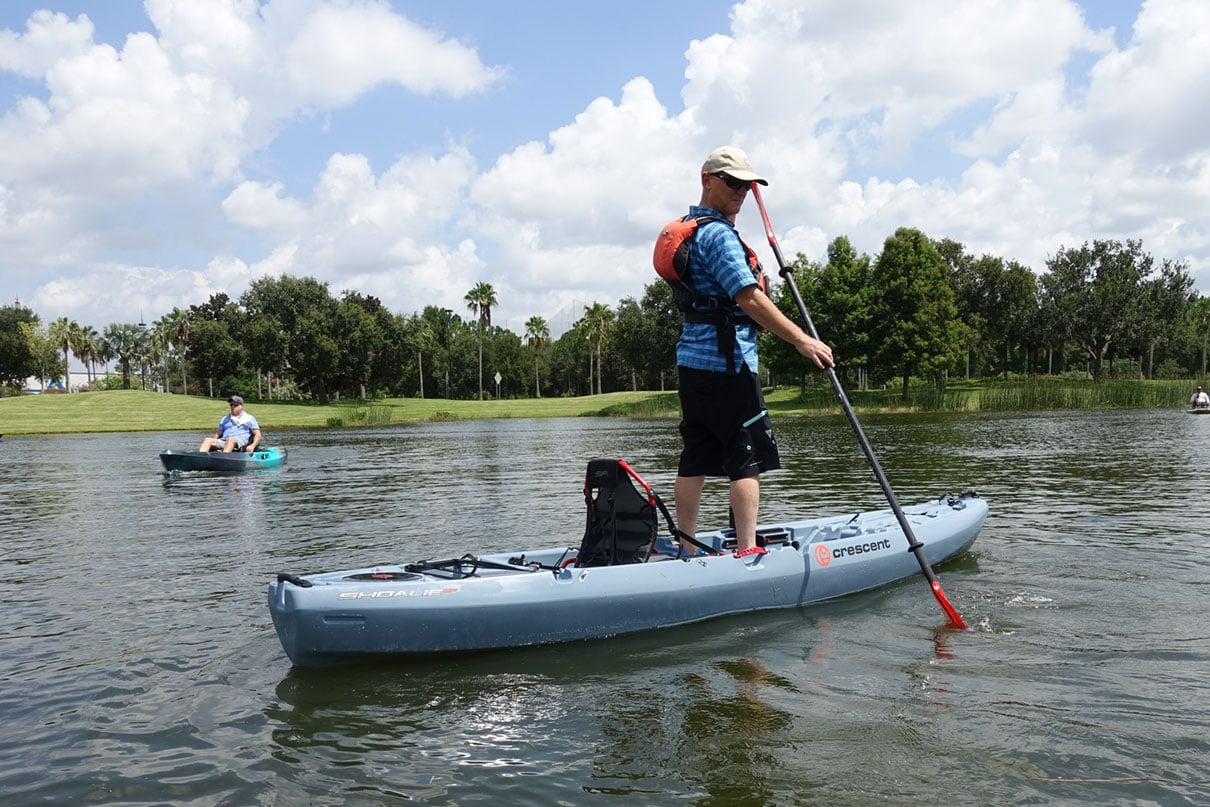
The seat height in a kayak has a big impact on stability, with seats mounted high above the waterline decreasing stability and lower seats increasing it. Fishing kayaks frequently have seats mounted higher off the water to allow for better casting. This means they must be wider or fuller in the ends to have the same stability.
Fullness in the ends is a fancy way of describing how far the width of the boat is carried toward the bow and stern. A kayak with a boxy shape, when viewed from above, is said to have fuller ends than one that’s more diamond-shaped. The boxier the boat looks from above, the more stable it will be at a given width.
Sit-inside touring kayaks are narrower than recreational kayaks, so they are less stable on average. However, with so many designs available on the market, it isn’t difficult to find a touring kayak with enough stability to make any paddler comfortable on the water.
Design
The basics of boat design are the same for both sit-on-top and sit-inside kayaks, and you can gain a decent understanding of how a boat will perform by focusing on three main factors: length, width and rocker.
All things being equal, a boat that is longer will be faster than a shorter boat. A short kayak will be slow. A long kayak will be faster. Most people can quickly notice the increase in speed when they switch from a 10-foot kayak to a 12-foot kayak, or a 12-foot kayak to a 14-foot kayak.
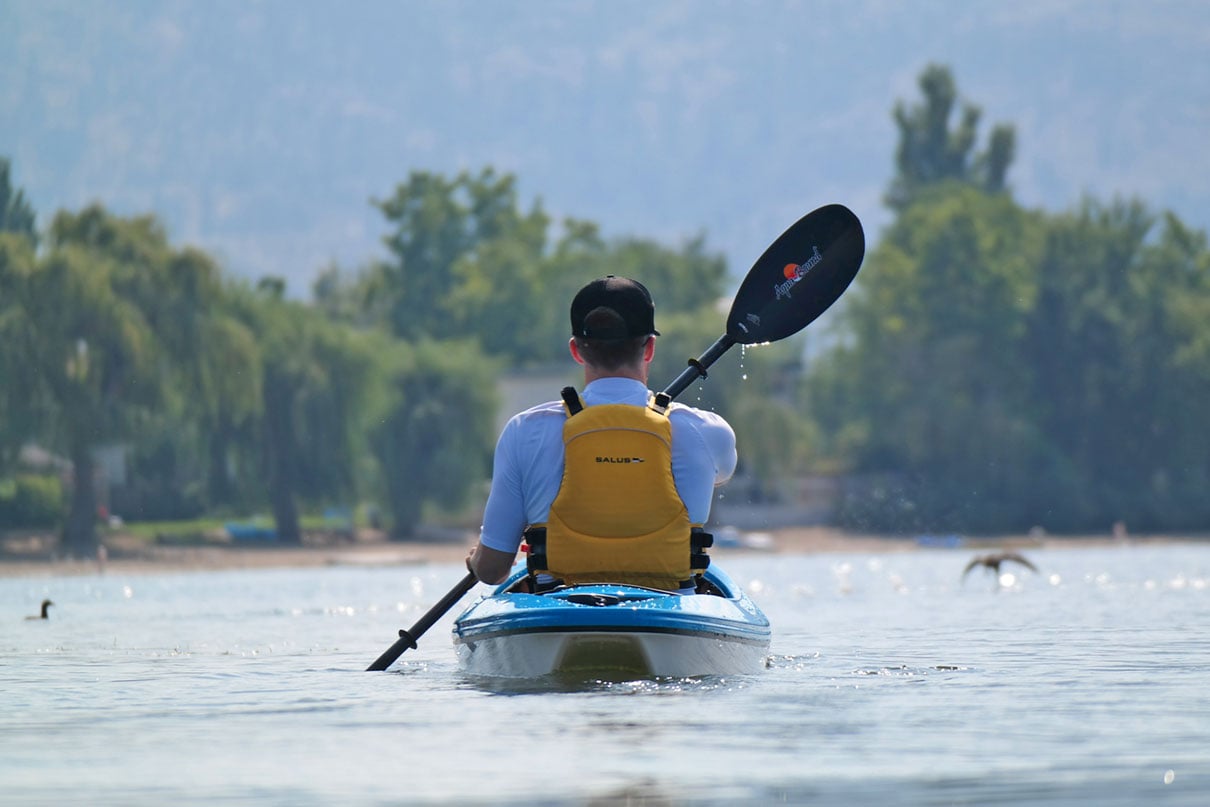
All things being equal, a shorter boat will be easier to turn than a longer boat. Small, recreational kayaks turn very quickly. Longer kayaks are faster, but slower to turn.
Increasing the rocker of a kayak will make it easier to turn. Rocker is the curve of the kayak hull as it runs from the bow to the stern of the boat. If you set a kayak on the ground, you can easily see the rocker—the bow and stern of highly rockered boats won’t touch the ground. A boat without rocker will touch the ground from the bow to the stern.
More rocker makes a boat easier to turn but also makes it slower. Designers have to balance the right amount of rocker for each design, depending on what it will be used for.
Here’s the bottom line: Wider boats are more stable, and narrower boats move through the water with less effort. Designs fuller toward the ends have more stability but are slower than those that have sharper ends. As mentioned above, width and fullness need to be balanced against the seat’s height to ensure good stability. Fishing sit-on-top designs with high seats are typically wider and have fuller ends than sit-inside recreational kayaks with seats mounted closer to the waterline.
Performance
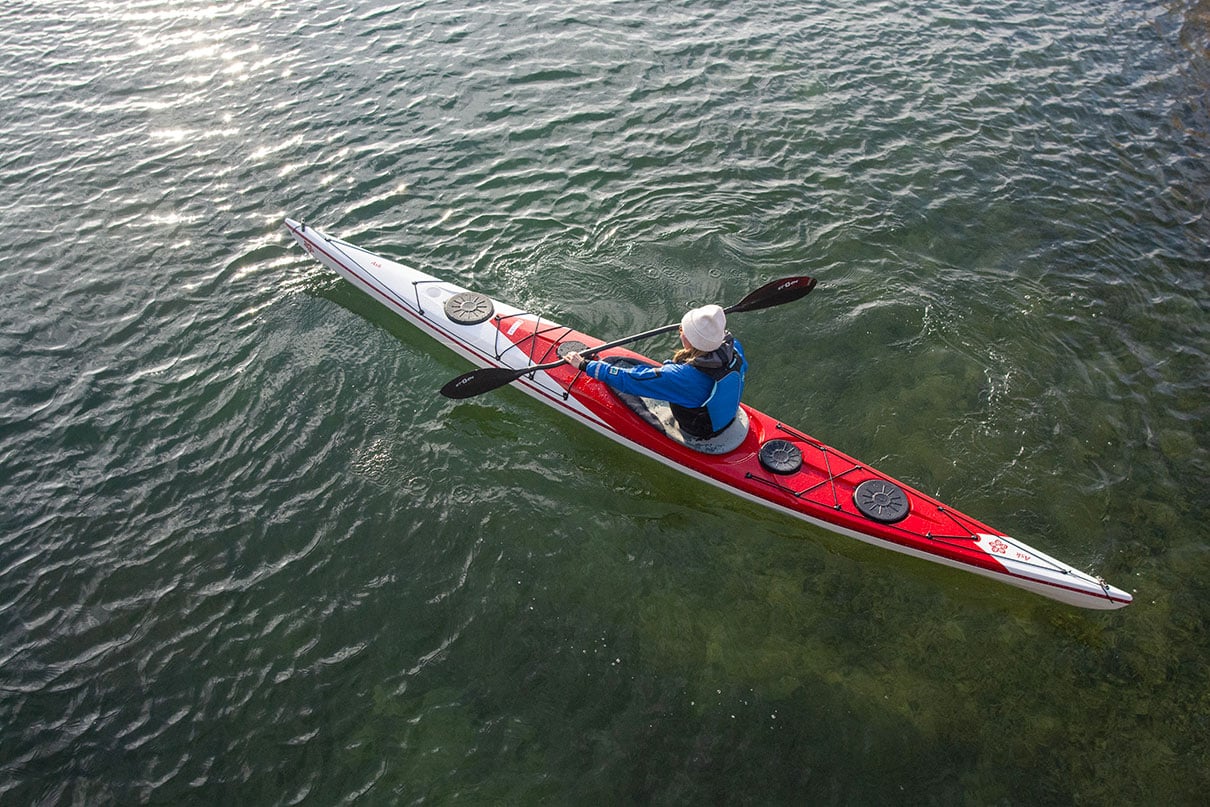
When people talk about performance, they usually mean speed. As we discussed above, speed is mostly related to how long and narrow a kayak is. A long, narrow kayak will be faster than a short, wide kayak, regardless of whether it is a sit-on-top or sit-inside design.
Very short recreational kayaks are noticeably slow. Boats under about 10 feet often feel like they’re plowing through the water. A kayak even a couple of feet longer will move with much less effort, so it makes sense to start at about 12 feet if you’re looking for a versatile recreational kayak.
Because of how the physics of watercraft work, there is an upper limit to how speed increases with length. If a design gets too long, the drag on the hull starts to offset the gain in speed that the longer hull provides. Narrow racing or touring designs might be quite long—18 or 19 feet—but that’s about the limit in most cases. A kayak much longer than this wouldn’t have much of a speed advantage and would be more difficult to maneuver.
Storage
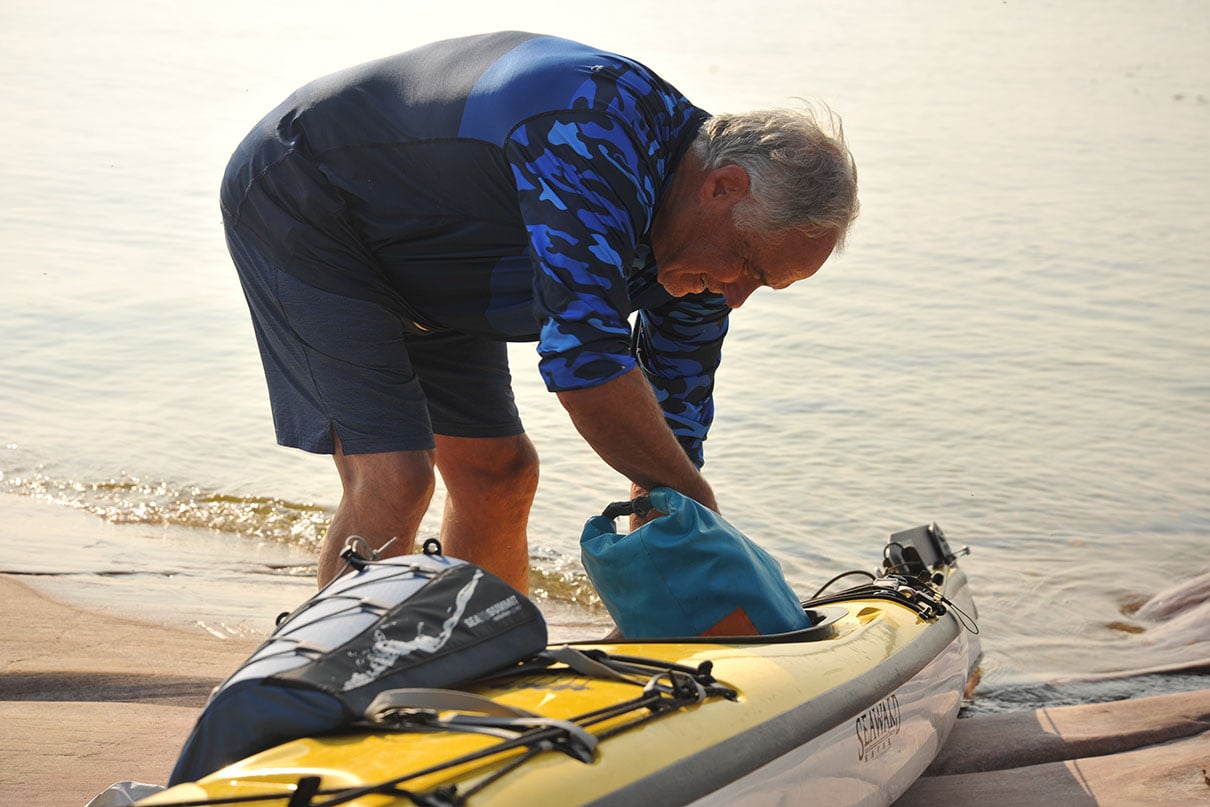
If you’re going on an overnight camping trip or even a full-day paddle, you’ll need some storage room in your kayak for equipment. The larger the kayak, the more space you’ll have for gear. Sit-on-top designs often have an open space at the rear of the kayak where you can strap on a large dry bag. Many designs have a front hatch allowing for the internal storage of drybags near the bow.
Sit-inside designs allow for storage under the decks. Many recreational boats have a rear bulkhead that creates a storage compartment that can be accessed through a hatch in the back deck. The most basic designs skip this hatch and bulkhead, so you have to pack your drybags into the hull from the cockpit. In many designs, there is room for a small drybag at the bow of the boat beyond the footrests.
Sit-inside touring kayaks or sea kayaks have bulkheads and hatches at the bow and stern. These bulkheads create storage compartments that can be packed full of camping gear. If camping is a big part of your kayaking plans, these touring kayaks are the best option, even though they typically feel less stable than recreational sit-inside designs.

Sit-in vs sit-on kayaks for tandem paddling
When it comes to tandem paddling, there’s no clear advantage to one design versus the other. Instead, it’s best to choose the tandem kayak that is most appropriate for the paddling that you plan to do. If you want a tandem recreational kayak that can be paddled some distance from shore, a sit-on-top design will be best. If you know you’ll stick to shallow water and want a dryer ride, choose a sit-inside recreational design. If you’re looking to camp out of your tandem, consider a tandem touring kayak instead of a recreational design.
One design element that does improve tandem performance is the position of the paddlers. If the paddlers are seated close together, they must synchronize their paddle strokes to avoid clashing paddles in the air. Some larger tandem touring kayaks have a hatch between the two cockpits, so the paddlers don’t need to paddle in sync.
Should I buy a sit-in or sit-on kayak?
I always recommend choosing the kayak that best fits your goals and aspirations as a paddler. If you want to take to the open water for multi-day trips, look hard at touring or sea kayak designs with storage and floatation. If you’re into fishing, you’ll probably want to consider a sit-on-top fishing design. Recreational paddlers who stick close to shore and want to keep dry will prefer a sit-inside recreational kayak. Those who wish to venture farther from shore but don’t need the specialized performance of a touring kayak should select a recreational sit-on-top.
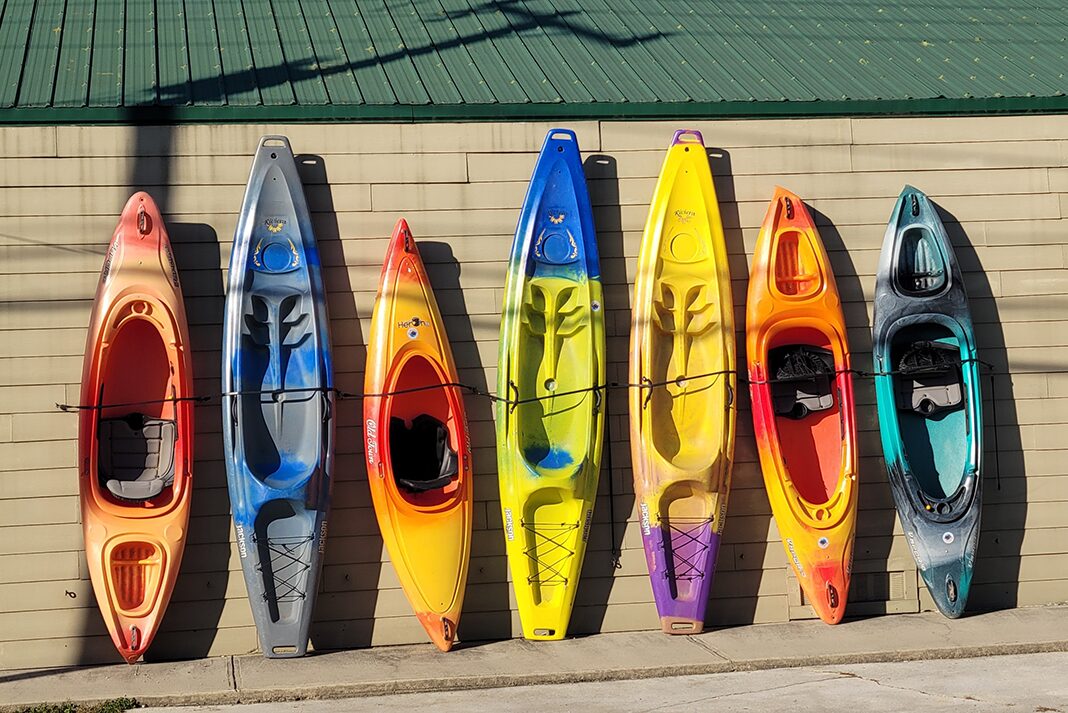
Pick the boat that’s right for the conditions you plan to encounter most of the time, with a little bit of thought toward that ultimate trip you hope to take in the future. Head to your local kayak shop to check out the options. Arrange for a test paddle when your choices are narrowed down to a couple of boats. There’s a kayak out there for every aspiring paddler, and with a little homework and some advice from paddling friends and professionals, you’ll be able to find the right boat to get you on the water.
Feature photo: Virginia Marshall & Courtesy Eddyline Kayaks