The closure of the Strait of Hormuz due to the U.S. and Israeli war with Iran is causing effects far beyond the fuel pump. For the paddlesports industry, the disruption of the strategic waterway has triggered a sharp spike in the cost of the plastics vital to modern kayak manufacturing.
From rotomolded polyethylene and thermoformed ABS hulls to composite sea kayaks, drop-stitch SUPs and inflatable rafts, nearly every component in a modern paddlecraft starts with petrochemicals. Even the deck bungies are made from oil. More than 40 percent of global polyethylene exports originate in the Middle East, and Reuters reports that 84 percent of that capacity is currently bottlenecked behind the Strait of Hormuz, the narrow seaway linking the Persian Gulf to the rest of the world.
On Friday, U.S. President Donald Trump teased on social media a “final determination” about a proposed cease-fire extension that he said would reopen the strait. After meeting with advisors for two hours on Friday afternoon however, the President emerged without making a decision. Trump has repeatedly promised that a deal to open the strait is near, only for talks with the Iranians to fall through. Efforts at diplomacy came under new strain Monday, as Israel and Iran threatened to escalate military action in Iran and Lebanon.
Listen to Jeff Moag’s interview with Rob Handfield, Professor of Supply Chain Management at North Carolina State University
Materials costs for U.S.-based kayak manufacturers have surged as much as 35 percent as a result of the blockade, while European and Asian producers have in many cases been hit even harder. Most of the plastics precursors that exit the Strait are bound for Asia and Europe. China and other Asian industrial juggernauts rely heavily on oil and chemical shipments flowing through the narrow waterway, in stark contrast to U.S. producers who source most of their ethylene feedstock domestically.
Still, that hasn’t stopped U.S. producers from raising prices.
From a baseline of about 60 cents per pound when the Iran conflict began on February 28, 2026, North American polyethylene contracts increased by about 10 cents a pound in March, then shot up another 30 cents in April. These increases were mostly the result of producers using the Hormuz crisis to grow their margins, said Michael Workman, executive director at ResinSmart, a buyer-side resin market intelligence platform.
Producers planned another 20-cent increase for May, but buyers pushed back. “The cost justification for further increases isn’t there,” Workman said on May 28. “This market is starting to turn.”
The Rising Cost Of Uncertainty
Most U.S. kayak manufacturers source their polyethylene from the same two companies. Even though some paddlesports companies have developed proprietary formulas the underlying chemicals—and thus the cost—are similar for everyone in the domestic market. Since Iran first closed the Strait in early March, U.S. companies are paying higher prices across the board, although companies that produce large volumes of entry-level kayaks in addition to higher-end boats can leverage slightly better prices.
“Plastic weight is in the mid-30-pound range for a whitewater boat to 90 pounds for a fishing kayak. We’re spending up to $68 per boat just on powder,” said an executive at a leading U.S. kayak manufacturer who asked for anonymity to discuss pricing.
The problem extends far beyond kayak hulls themselves. Virtually every material in the paddlesports industry is touched by petroleum markets.
“The interconnected nature of energy and manufacturing is becoming increasingly visible,” said David Blue of NRS. “Plastics such as nylon, polyester, PVC and TPU are all made using petroleum. Rubber compounds used in our raft materials also use petroleum.” Even products not directly derived from oil remain vulnerable because of rising energy costs throughout global manufacturing.
“The rising cost of heat and energy production creates a significant trickle-down effect, even for our non-petroleum materials like neoprene,” Blue said.
The impact has been especially severe for European manufacturers that have faced elevated energy costs since Russia invaded Ukraine four years ago. Rotomolded kayak production depends heavily on gas-fired molds, and natural gas from Russia has been under sanction for four years. Middle Eastern suppliers were filling that gap, until the Iran closed the Strait in March, causing U.K. natural gas prices to surge 93 percent.
In addition to energy, transport and materials cost increases, European exporters also must contend with volatile U.S. tariff policy. That adds another layer of cost and uncertainty.
“The first tariffs were ruled illegal,” said Chris Hipgrave, U.S. Sales Director for Pyranha, which makes whitewater and sea kayaks in the United Kingdom. “We’re still waiting for our refund check, and the second set of tariffs has already come in.”
Currency vs. Costs
Asian polyethylene costs shot up 30 to 40 percent after the strait closed in early March, but those increases have not impacted North American importers to nearly the same degree. One U.S.-based kayak importer told Paddling Business that his suppliers have increased prices only 8 to 10 percent, and they tell him the increase has more to do with the Chinese yuan’s rising value relative to the U.S. dollar than the cost of inputs.
“They all want orders,” explained the U.S. importer, who asked not to be identified when discussing pricing. “Chinese factories are well under capacity now. I would imagine the pressures in the U.S. are different. I don’t think anyone can build a polyethylene pellet factory in under a decade, so the American suppliers don’t fear upstart competition.”
Workman, the plastics pricing expert, breaks down the currency dynamic in more detail.
“The 8-10 percent price increase framing is almost entirely a currency story, not a cost story,” he said. “A U.S. buyer paying in dollars is absorbing a foreign exchange surcharge dressed up as a resin price increase.” In other words, Chinese polyethylene producers aren’t raising prices in yuan terms; they’re passing through U.S. dollar depreciation to keep their own margins intact when they’re invoiced in dollars.
Because U.S. plastics producers are getting most of their feedstock from West Texas, and their counterparts in Asia get theirs from the Persian Gulf, American producers have a structural cost advantage of 10 to 20 cents per pound in normal conditions. That gap widens when crude oil and naphtha prices are elevated as they are now. The Strait disruption adds a layer of logistical costs and uncertainty to that mix.
Based on those fundamentals, American kayak manufacturers should gain a cost advantage due to the Strait closure. But as U.S. war planners have learned in the last 90 days, cause and effect are not always as simple as they appear. Chinese plastics suppliers are willing to endure short-term losses for market share, while their American and European counterparts have chosen to take profits when they can.
Holding The Line
Kayak manufacturers are absorbing as much pain as possible while hoping global shipping routes stabilize before preseason ordering begins this fall. Whether brands can continue shielding consumers from rising raw material costs remains an open question. Some are already losing money on every boat that leaves the factory.
The longer the Strait crisis continues, the more pressure North American paddlesports manufacturers will face to raise costs. Even if the Strait opens today, the hangover will last for months. Even then, there’s no guarantee prices will return to pre-war levels. “Plastic companies tell us they expect prices to go down in six to eight months,” said an executive at a leading U.S. kayak molder, who requested anonymity to discuss business fundamentals. “I don’t believe that for a second. After Covid, prices never reset.”
Producers have always been skilled at using geopolitical headlines to build pricing momentum even when supply-demand data doesn’t fully support it, Workman said. His advice: “Ask for the data behind every increase request.”
For kayak manufacturers, uncertainty itself may be the most difficult challenge. Like whitewater boaters pushed off their line, brands can only react and hope for the best. “Rather than planning a season out, we’re planning a month out,” Hipgrave said. “You just don’t know what the news headlines are going to do.”
Indeed, the closure of the Strait of Hormuz is only the latest dip on a rollercoaster ride that in the last six years has included increased tariffs, a Covid bust and boom, the Ukraine war, more tariffs and now the Iran conflict.
“Everyone I talk to is on the same page,” Hipgrave said. “We’re like, good Lord, when is this going to end? And what the hell is 2027 going to look like?”
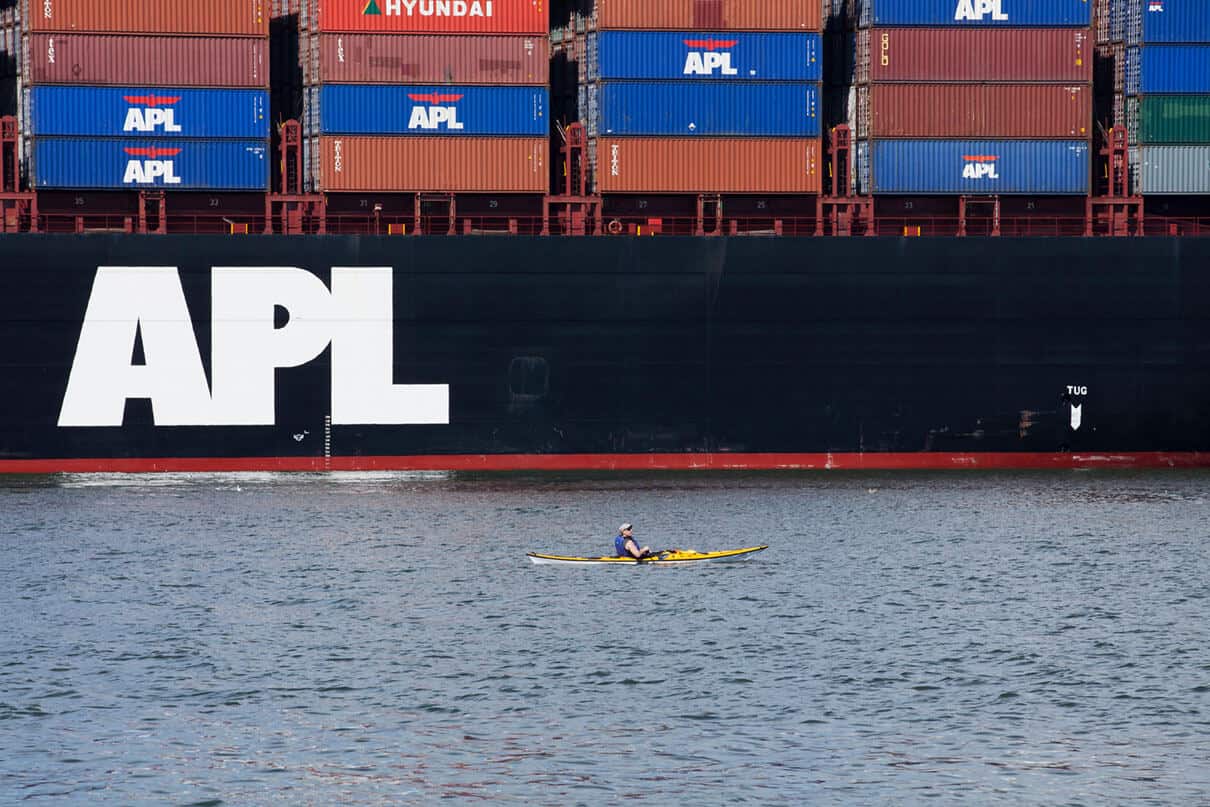
Iranian coastline near the Strait of Hormuz. | Feature photo: Alamy