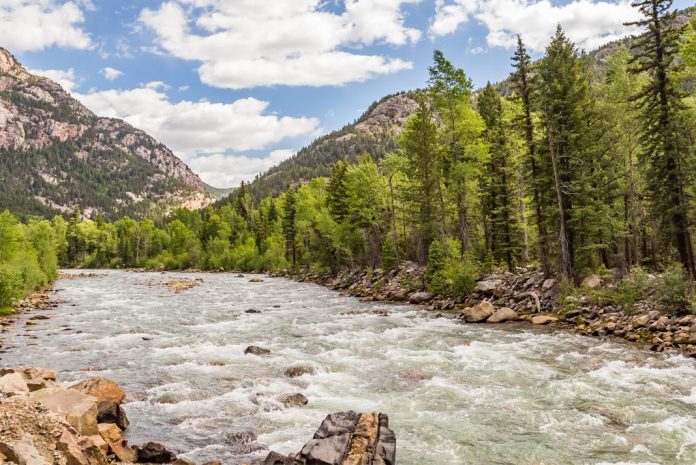
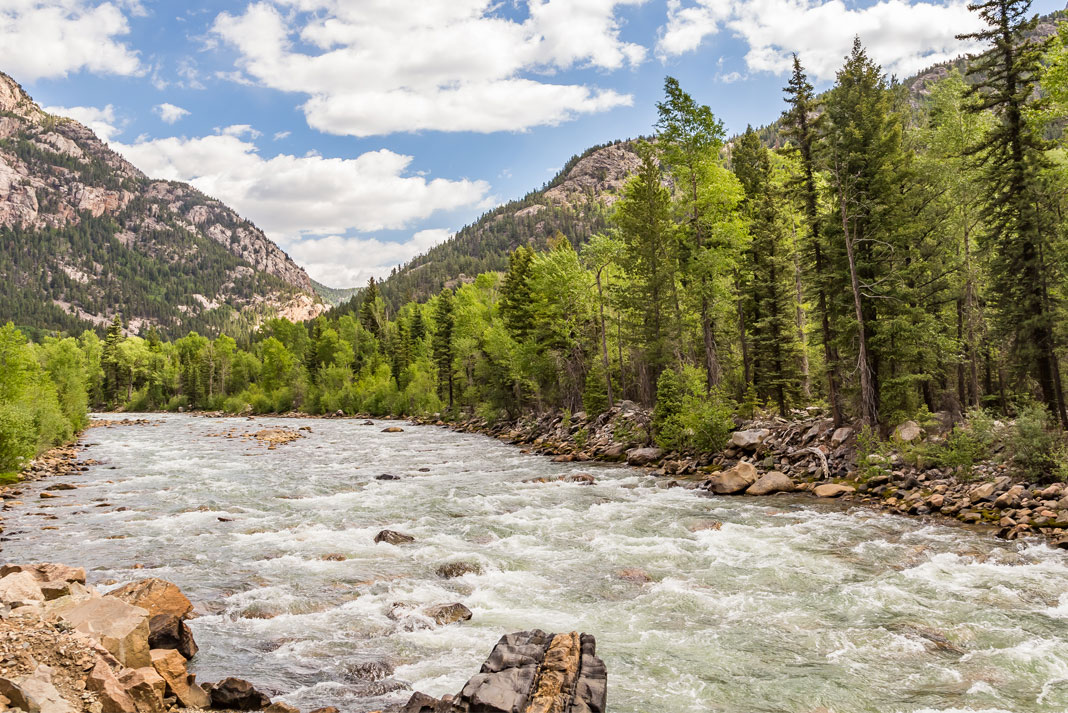
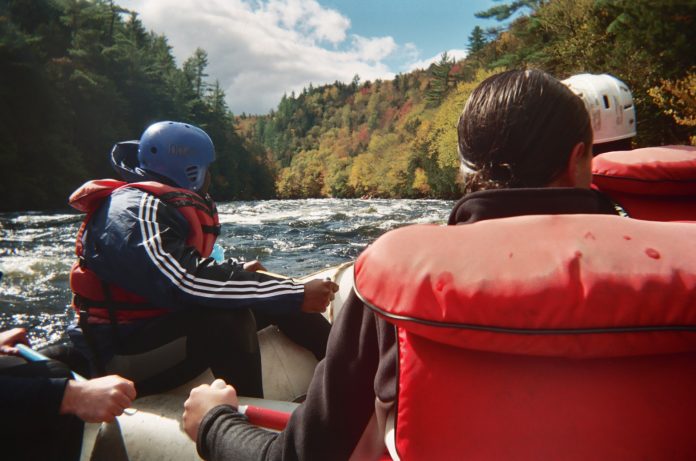
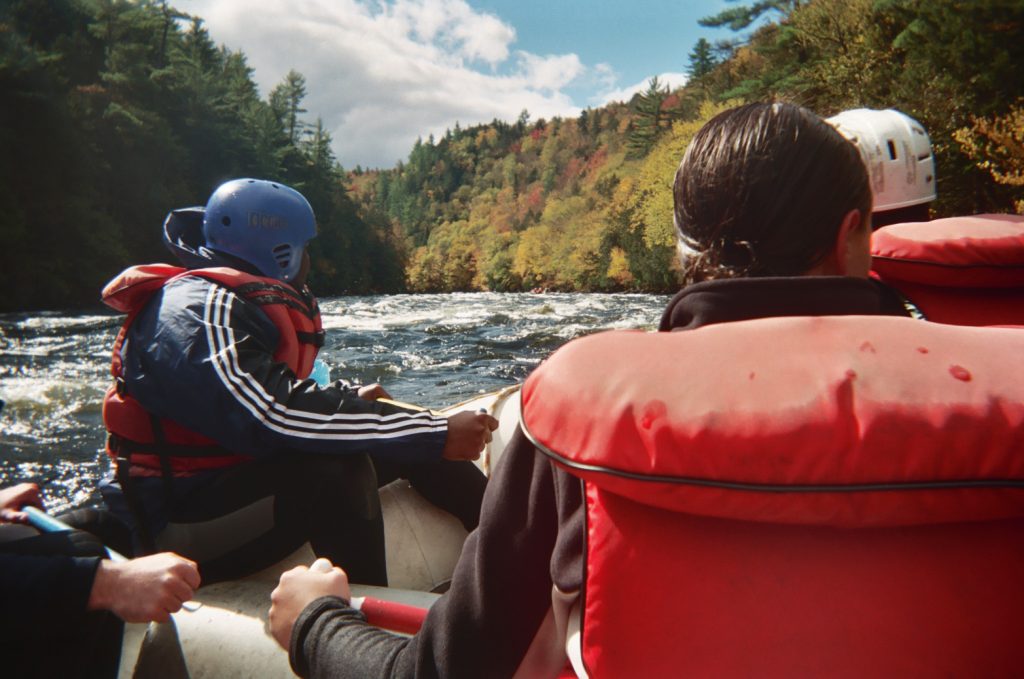
Head to the Animas River to experience some whitewater kayaking in Colorado. | Photo: adifferentbrian
Did you know there are eight major river basins whose headwaters are in Colorado? The state is rich in natural gifts, from dense forests to rushing whitewater to towering cliff faces. Colorado is an outdoor playground. If you’re looking for the best kayaking in Colorado, you don’t have to look far.
Best kayaking in Colorado
Colorado Springs
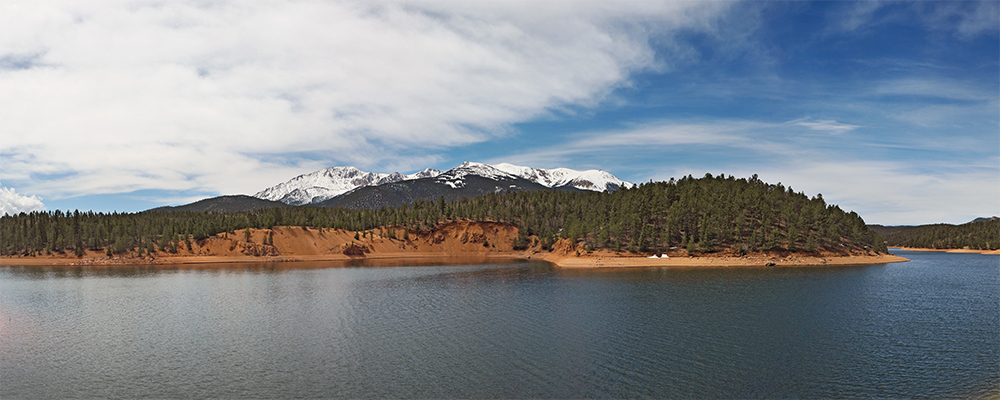
Colorado Springs is about a one-hour and 45-minute drive from Central Denver. If you’re planning a few days in the area and want to rent a kayak from the Denver metro area, there are lots of companies to choose from. Find some adventure on the North or South Catamount Reservoirs, or Eleven Mile Reservoir near Colorado Springs.
Peaks over the South Catamount Reservoir. | Photo: Ethan Beute
About two hours southwest of Colorado Springs by car, you’ll find the Arkansas Headwaters Recreation Area. This is one of the most exciting and popular whitewater areas in Colorado, with rapids that are accessible for beginner to expert paddlers in most conditions. This is a popular spot, especially on summer weekends, so plan accordingly if you can.
Denver has a great selection of paddlesports outfitters in the city, so you can gear up and hit the road to one of Colorado’s many great kayaking destinations.
Just outside of Denver you’ll find the South Platte River—this is a very urban section of whitewater, making it as accessible as it is beautiful. With Confluence Kayaks close by to get all your rental gear from, you can’t go wrong with a day trip here.
Just over two and a half hours’ driving time out of Denver is Granite. Granite has some excellent whitewater kayaking on the Arkansas River, ranging from class I to IV rapids. American Whitewater says this stretch of the Arkansas is “widely considered the best class IV run in the state of Colorado.”
[ Paddling Trip Guide: View all kayaking trips in the United States ]
Aspen
Options are the name of the game if you’re looking for kayaking in Aspen. You have the mighty Colorado River, Roaring Fork River and the Arkansas River to choose from.
There are lots of options for differing skill levels here. If you are an adventurous beginner, consider a guided inflatable kayak trip on Roaring Forks. Inflatable kayaks, or “duckies,” are a great option for beginners and paddlers looking to build confidence.
Inflatable kayaks are popular in this area, and you’ll find most rental companies offer both tours and day rentals for inflatable kayaks.
Head out on the Animas River in Durango for some unforgettable kayaking in Colorado. Rentals in this area are more likely to be inflatable kayaks, as are the boats used by guide companies. If you’re looking for a whitewater kayak, you’ll have to rent outside of Durango.
The Animas River outside of Durango, Colorado. | Photo: adifferentbrian
Several tour companies in Durango offer the option of taking an inflatable kayak alongside the full size rafts, so you can get a whitewater kayaking experience while others in your group ride the rapids in a raft.
If you’re more in the intermediate class of paddler, check out Boulder Creek in the late spring. When runoff is high, this isn’t a beginner-friendly time, but if you’re a more seasoned whitewater paddler, hit the river here. Eben G. Fine Park in Boulder also boasts a 20-slalom-gate course where you can work on technique and get some river time in.
There are several rivers to choose from for a whitewater kayaking day near Boulder. Clear Creek, Cache La Poudre and Boulder Creek will set you up for some of the best kayaking in Colorado.
There are several tour companies in the area that specialize in package tours, canoeing and rafting experiences.
Near Denver and looking for a pristine Colorado lake kayaking experience? Evergreen Lake won’t disappoint. With a gorgeous log lakehouse, boat rentals, golfing, restaurants and endless scenery to relax your senses, this is an ideal spot for a getaway that isn’t a long drive from Denver.
Navajo Reservoir spans the Colorado-New Mexico border and is an incredibly beautiful place to kayak in Colorado. Calm, blue water meets land that leans toward desert but hasn’t yet lost the evergreen trees of the mountains to the north. The reservoir is 35 miles long and offers kayakers plenty of room to play.
This is a great spot to set up a base camp for adventures in Southern Colorado. Slightly less than an hour’s drive from Durango, Navajo State Park offers campgrounds that are open year-round. If you’re an angler, you can expect to catch crappie, largemouth and smallmouth bass, northern pike, trout, bluegill and catfish in the reservoir.
Colorado kayak camping trips
Colorado has great kayak camping opportunities, and you should absolutely consider this option if your timeline allows. A few routes to consider would be:
Arkansas River
Take a trip down the Arkansas River and stay at one of the many campgrounds operated by the Arkansas Headwaters Recreation Area. Don’t want to book at an established campground? Dispersed camping is also an option. You can read more about how to find a place to camp and the rules to follow here.
In Colorado, manually propelled boats do not need to be registered with Colorado Parks and Wildlife. That said, all canoes, kayaks, paddleboards and non-motorized rafts must be marked with the owner’s name and current address.
You also need to make sure to have one Coast Guard-approved PFD for each person on board at all times. If your canoe, kayak or paddleboard is 16 feet long or more, you must also carry one Type IV throwable flotation device.
All vessels are required to display navigation lights between sunset and sunrise, as well as during times of restricted visibility.
All vessels less than 40 feet in length, except hand-propelled vessels when on whitewater, must have on board a sound-producing device for signaling.
Humans don’t actually need that much to survive: food, water and shelter. You can even skip food and shelter for a few days—but you can’t live long without water. So when you’re out in the backcountry, having a reliable water source is essential. Yes, I suppose you could drink water straight from a stream, but I tried that once—the next two days I suffered the worst stomach cramps and stinkiest gas of my life. Never again. Ever since then, I’ve made sure to filter my water, and I’ve had a lot more fun in the woods!
Why it’s a good idea to treat your drinking water
Drinking water from a stream is an unnecessary risk. Want to know why? There’s really only one reason: it could make you sick. Who knows what’s upstream? There could be a beaver living up there and that clear water you’re looking at could be full of its fecal matter. There could be a dead deer. You simply don’t know what’s in there.
This risk goes beyond avoiding drinking from water sources close to farms where runoff could occur, or from obviously polluted lakes. Almost every body of water is full of contaminants. Protozoa, bacteria and viruses are all the things you want to avoid putting into your body.
So what do those nasty little things do?
Protozoa
Protozoa are the largest pathogenic microorganisms, measuring in at one micron (one-thousandth of a millimeter) or more. Ingesting them causes things like giardiasis. Commonly known as beaver fever, the Coles Notes go like this: you don’t want it. Ingesting the giardia parasite can cause diarrhea, abdominal pain, nausea, etc. The complications from something like beaver fever can go on for months or even years if it becomes a chronic infection.
Bacteria
Bacteria are ubiquitous in most bodies of water and can generally be consumed without harm. The odd few, however, trigger diarrhea and dysentery. Most measure about one micron in size, though some particularly dangerous ones, like E. coli, are smaller.
Viruses
Viruses—which can be smaller than 0.1 microns in size—are less of a concern in North America. Polio is an example of a virus that can come from untreated water. They’re more of a concern in developing countries, but certainly nothing you want to mess with.
In conclusion? You don’t want any of these things in your body. Best to clean your water.
Making water potable in the backcountry is an essential skill, but there are many ways to do it. Things to take into account are cost of the equipment, speed at which water can be cleaned, the resulting flavor of the water, maintenance of the device, and what the treatment method is effective against.
Boiling
Tried and true, boiling water is a guaranteed way to kill any “bugs” in your water—meaning, it is effective against protozoa, bacteria and viruses. In my mind this is a last resort—it’s time consuming, fuel consuming and it still may taste awful. The guidelines have changed over the years, but these days they suggest boiling for at least one minute (three minutes above 6,500 feet altitude). It’s a solid backup plan if your filter quits working or you run out of chemicals. There is no gear required to do this other than a fire and a pot, so it’s easy on the wallet.
Chemicals
Aquamira – Chlorine Dioxide Water Treatment Two Part Liquid (1 oz Droppers Bottles)
Adding chemicals to your water is another classic way of treating water in the backcountry. Common chemicals include bleach, chlorine, iodine and chlorine dioxide. All of these are highly effective in killing viruses and bacteria, but there are varying claims about their effectiveness on protozoa.
The official position of the Centers for Disease Control and Prevention (CDC) is that iodine, chlorine and bleach are not effective against protozoa such as cryptosporidium and have a low to moderate effectiveness against giardia.
Chlorine dioxide is unstable and is prepared by mixing two chemicals when needed. Some claim it is effective against protozoa, including giardia and cryptosporidium. However, the CDC maintains that it has a low to moderate effectiveness against cryptosporidium and a high effectiveness against giardia.
It should be noted that bleach and chlorine destroy intestinal microorganisms known to aid in digestion, so they aren’t a great long-term solution. As well, iodine in particular (but possibly all chemical treatments) should not be ingested by pregnant women. Pregnant women, (parents on behalf of) young children and those with preexisting health conditions should consult a doctor before using chemicals to treat their water.
The effectiveness of chemical treatments is dependent on many factors, including the temperature of the water, the concentration of the chemical, the cloudiness of the water, the pH level of the water, and how long the chemical is given to treat the water before being ingested. For these reasons, the CDC recommends coupling any chemical treatment with water filtration to ensure full protection from viruses, bacteria and protozoa.
Chemicals do provide a cheap, simple and lightweight solution to water treatment. Make sure to closely follow the manufacturer’s instructions on how much to use and how long to wait before drinking the treated water. Another downside to using chemicals is that they can sometimes make the water taste undesirable. This can often be remedied by adding flavored powder to mask the taste. However, on a hot day you might not care very much about how the water tastes!
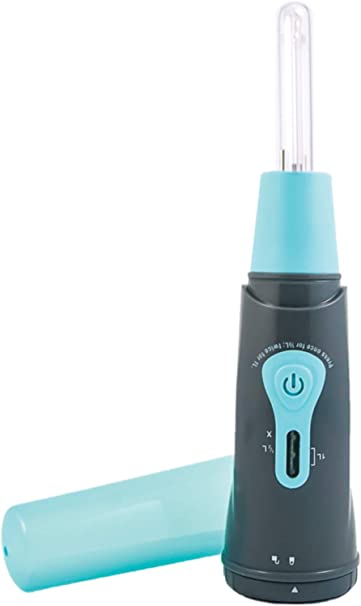
SteriPen Aqua UV Water Purifier
UV light
New to the world of backcountry travel is the UV light filter. Much like UV filters used in homes with wells and septic systems, UV light disrupts the DNA of bacteria, viruses and protozoa making them harmless. Generally, you dunk the light in your cup or bottle of water, turn on the light and let it run for the suggested amount of time (generally about 90 seconds).
Of course, the downside to UV light systems is they need batteries and they don’t remove particles from turbid water. As well, they will not be as effective in water that is very cloudy, which means it’s important to couple UV treatment with water filtration.
There are a number of options available and they seem to run anywhere from about $75 to $200.
LifeStraw Go Water Filter Bottle with 2-Stage Integrated Filter Straw for Hiking, Backpacking, and Travel
Filters are generally the most popular way of cleaning water in North America. Water filters force water (by way of pumping or gravity) through microscopic pores.
According to the CDC, filters are highly effective at removing protozoa, including giardia and cryptosporidium, from water. When using a 0.3 micron (or smaller) filter, they are moderately effective at removing bacteria. However, they are not effective at all against viruses. Once again, this makes it necessary to pair filters with either UV light or chemical treatment.
Gravity filters involve very little work on your part, but some wait time. You simply fill the provided bag with water, hang it in a tree, and let the water filter down through a tube and into your water container. These types of filters generally cost $100 to $150. A hand pump filter will take less time, but requires more work as you’ll need to manually pump to run water through the intake tube, into the filter, and through the output tube into your water container (generally speaking). These filters can cost anywhere from $100 to $400.
There are variations on filters, such as straws that allow you to drink directly from a water source or squeeze filters.
Filters do require some maintenance. They will need to be cleaned after a given number of liters of water.
[ Paddling Buyer’s Guide: View all camp kitchen accessories ]
Photo by Jens Johnsson from Pexels
How to collect water
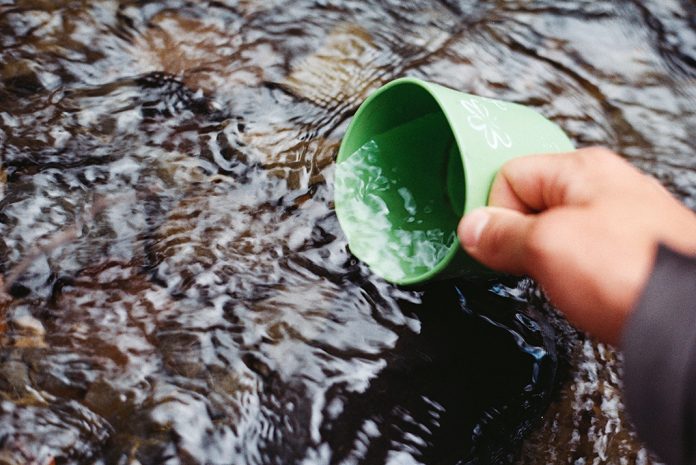
Once you know how you’re going to treat your water, there are some guidelines on where to collect that water from. Obviously standing pools of water are a no-no. Stagnant water is a breeding ground for all the things you don’t want to put in your body. You also want to avoid bodies of water that are close to grazing animals or other campsites.
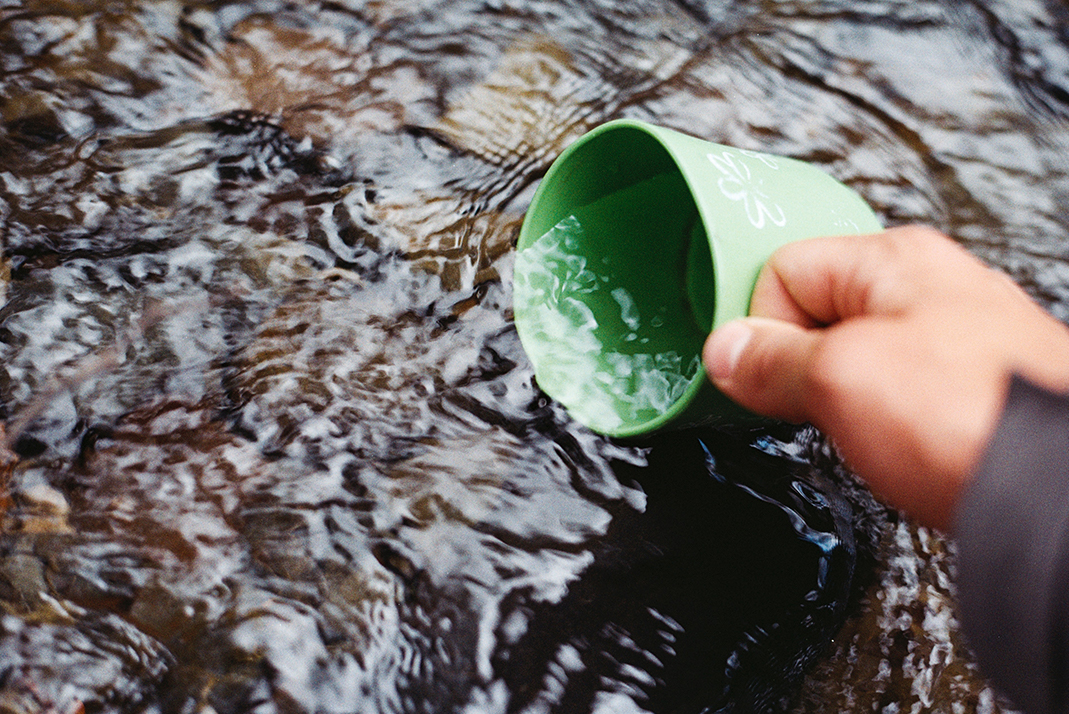
Flowing water is the ideal situation. Try to get it from a higher elevation, or closer to the water’s source. Be sure to use a clean container and remember to wash your hands before collecting water. If you have to collect water from a lake, try to do so away from shore and collect from the top couple of inches of the water body.
Best practices
When it comes to cleaning your water in the backcountry, common sense prevails. If you’re worried about your water source, try to find another one. If that isn’t possible, you can always combine a couple of the above techniques to ensure your water is safe. It’s always best to start with the cleanest water possible; allow silty water to settle in a pot before pumping or treating.
Paddle out from Gallup Park on the Huron River. | Photo: Barbara Eckstein
Michigan State is known for its beautiful natural landscape and healthy, active way of life. Kayaking in Ann Arbor is a perfect example of just how serene and relaxing the paddling scene here can be. Ann Arbor is part of a group of towns that create a network of culture, activities and adventures to be had in this area.
The Huron River connects Ann Arbor with neighboring Ypsilanti and Dexter, giving kayakers plenty to see along the river, and many options for stops along the way. The Huron River was named the 18th National Water Trail, which is a U.S. National Park Service initiative to create a network of accessible waterways across the nation—think hiking trails, except on rivers, lakes, canals and coastline. The Huron River meanders 104 miles from Springfield Township to Lake Erie.
Paddle out from Gallup Park on the Huron River. | Photo: Barbara Eckstein
Where to kayak in Ann Arbor
Located in the lower half of the Lower Peninsula, Ann Arbor is expectedly quite urban. Perhaps unexpectedly, though, when visiting here you’ll feel as if nature is right at your doorstep. The streets are lined with trees and there are an abundance of recreation areas full of established trails and tiny lakes a short drive away.
While there is always a certain kind of peace that comes with being on the water, you should know that you likely won’t forget how close you are to urban life when paddling in the Ann Arbor area. The upside of this is how accessible the paddling opportunities are. You’ll also see a new side of the cities and towns you’ve explored by foot or car, and be able to ease into kayaking and other outdoor activities.
Huron River
The Huron River is one of Michigan’s gems and provides paddlers a perfect stretch of river for a relaxing paddle on a spring or summer day. There are two boat liveries operated by Parks and Recreation: the Gallup Park Livery and the Argo Park Livery.
Both locations can get you kitted up and paddling on different stretches of the Huron River as well as on the still waters of Gallup Pond.
If you venture farther northwest, you’ll find Skip’s Huron River Canoe Livery & Outfitters. This company rents boats for two trips on the Huron River—a shorter route from Dexter to Delhi Metropark and a longer route starting at Hudson Mills.
Waterloo Recreation Area
Located a short half-hour drive west of Ann Arbor, Waterloo Recreation Area is the largest park on the Lower Peninsula. Here you can rent campsites and cabins, go hiking and mountain biking—and, paddle on the park’s 11 inland lakes.
Pinckney Recreation Area
Encompassing 11,000 acres, Pinckney Recreation Area is another great spot to get back to nature close to Ann Arbor. The paddling here can be a full day adventure as the park’s many interconnected lakes make it easy to cover a large distance.
Try launching at Halfmoon Lake and exploring Bruin, Woodburn, Patterson and Blind lakes. Keep in mind that all these lakes allow motorboats—for a more peaceful experience, go early in the morning or in the offseason.
Ann Arbor is located in a relatively humid area being so close to the Great Lakes and the Huron River. When kayaking season in Ann Arbor opens for the year in late April, temperatures will normally be between 37 and 48 degrees Fahrenheit overnight, and 59 to 71 degrees Fahrenheit during the day. Summer temperatures are hot and humid, with an average of 84 degrees Fahrenheit during the day.
When you’re planning what to wear on your kayaking trip in Ann Arbor, think breathable gym clothes. Layers are a great idea for the mornings and evenings on the water if you’re visiting in the early fall or late spring. For true shoulder season paddling, be sure to wear the proper cold-water immersion gear, including a drysuit, pogies and neoprene booties.
In the summer, keep in mind that the sun gets extra hot on the water. While you won’t want long sleeves for warmth in the summer, you might want to consider UV-protective clothing, especially for little ones. Always wear closed-toed shoes, made of neoprene or hydrophobic material if you have them—if not, runners will do fine as long as you’re okay with them getting wet.
When to go
Paddling season in the Ann Arbor area can vary year to year based on the current season’s conditions; however, most tour companies will open late April or early May and wrap up their season in late October.
Paddling season in Michigan is fairly long, so plan your trip to Ann Arbor for your favorite time of year, and enjoy the beautiful Huron River and surrounding lakes.
The U.S. National Whitewater Center is an adventurer's wonderland.
Paddling enthusiasts, ornithologists and those in search of reflective and serene landscapes—welcome to North Carolina. From rapids to floodplains, North Carolina has some incredible views to be seen from the water. We’ll go over some of the top kayaking spots—whether you’re looking to paddle river, lake or sea—as well as some general information about kayaking in the state to help you craft the perfect trip.
River kayaking in North Carolina
Asheville
If you’re heading to Asheville, North Carolina, consider a day trip through the majestic Biltmore Estate on the French Broad River. There are a few outfitters in the area that rent out canoes or kayaks for self-guided excursions down this stretch of river, which is all flatwater.
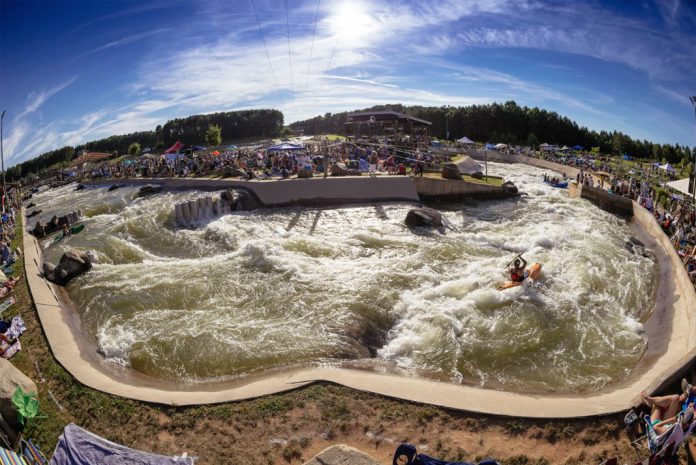
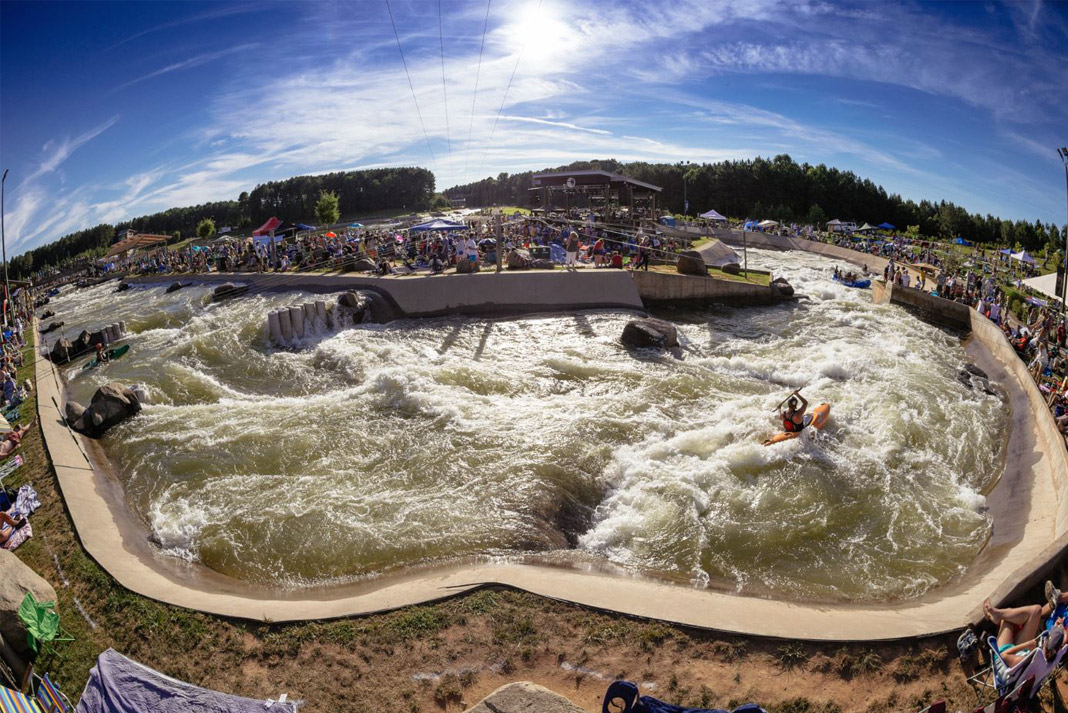
In the Charlotte area, make your way to the U.S. National Whitewater Center. This spot is an outdoor adventurer’s wonderland, with 1,300 acres of land adjacent to the Catawba River, where you can kayak, canoe, whitewater raft, deep water solo rock climb, bike and more. There is definitely something here for the whole family!
The U.S. National Whitewater Center is an adventurer’s wonderland. | Photo: Fritz at USNWC
For self-guided adventures, there are plenty of places to put on and take off the Catawba River. Try the boat ramp just south of Lake Norman, off Hwy 73, the Lucia Access Area, Mountain Island Kayak Access, the Riverbend Boat Ramp, or the Mt Holly Boat Landing. The section of river downstream of Normal Lake offers miles and miles of flatwater, flowing through various wide “lakes” as the rivers snakes over the border and into South Carolina.
About 50 minutes southwest of Raleigh is a popular spot to kayak in North Carolina: Cape Fear River. Despite its ominous name (and cinematic namesake), Cape Fear River is home to beautiful and exciting paddling. Choose from sections of flatwater to stretches of class I and II rapids. Cape Fear Adventures offers rentals, lessons and tours.
Slightly farther west of Raleigh, about a 1.5-hour drive away, you’ll find Greenville, North Carolina and canoe and kayaking opportunities on the Tar River. The Tar-Pamlico River System has some truly unique scenery—paddling forested areas into serene swampland and down the wide Pamlico River to the coast is some of the best canoeing and kayaking in North Carolina. Knee Deep Adventures and Riverside Recreation are great options for local kayak rentals.
[ Paddling Trip Guide: View all paddling trips in the Southern U.S. ]
Northern NC
Farther north, close to the Virginia border, you’ll find Danbury, North Carolina. Danbury has a number of paddling trip options on the Dan River, including in Hanging Rock State Park. You are only allowed to paddle on the lake that’s located in the park using boats rented from the park; however, private boats are allowed on the river. Look to Dan River Company for rentals down the river.
Lake kayaking North Carolina
Asheville
If you’re looking for a lake kayaking spot within a short drive from Asheville, check out Lake Lure. A 45-minute drive from downtown Asheville, The Town of Lake Lure has plenty of options for a full day of paddling, sightseeing and great food. Kayak rentals are available from Lake Lure Adventures.
Charlotte
Charlotte has an abundance of flatwater paddling opportunities. There are several lakes along the Catawba River that offer miles and miles of beautiful scenery, including Mountain Island Lake, Lake Wylie and Lake Norman.
Head to nearby Crowders Mountain State Park and paddle the serene Lake, accessibly at Sparrow Springs near the visitor center. There are no boat rentals at the park and swimming is prohibited.
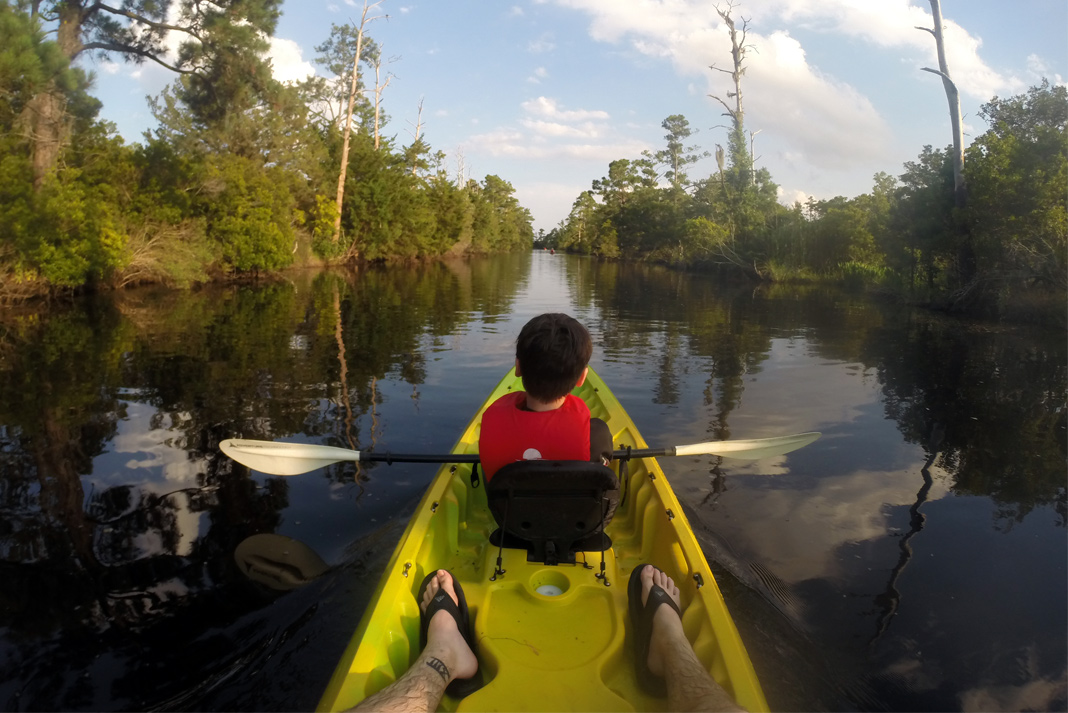
Take a leisurely paddle in Kitty Hawk Maritime Forest. | Photo: Will Fisher
Sea kayaking North Carolina
Sea kayaking in North Carolina is plentiful all the way along the coast from Virginia to South Carolina.
In the north, check out the town of Kitty Hawk—there are some beautiful areas there with calm, reflective water.
Nags Head is home to an incredible natural ecosystem. Check out bioluminescent kayaking, alligator kayaking trips and Roanoke Island tours.
Beaufort, North Carolina offers an array of scenery and wildlife to see while kayaking. Find out why they call this area of North Carolina the Crystal Coast!
If you’re farther south, kayak fishing in Wilmington, North Carolina provides anglers with an array of options. Check out the North Carolina Kayak Fishing Association—a community run forum that has plenty of firsthand information on kayak fishing in North Carolina.
See some of the best scenery kayaking in North Carolina has to offer on the French Broad Camping Trail. 140 miles of breathtaking natural beauty beginning in Rosman, North Carolina. The river connects many campsites and has a variety of flatwater and rapids. Check out the FAQ page French Broad Paddling for some great trip planning information.
Merchants Millpond State Park
Merchants Millpond State Park has a 760-acre millpond with surrounding trails and paddle-in campsites. Enjoy a relaxing base camping experience that will allow you to explore the lake and the park’s other fun activities and sights.
North Carolina does not require a boat licence or registration for non-motorized vessels. PFDs are a requirement to have on board and children younger than 13 must be wearing them. “Vessels under oars” should carry an electric torch or lighted lantern with a white light that must be shone “in sufficient time to prevent collision.”
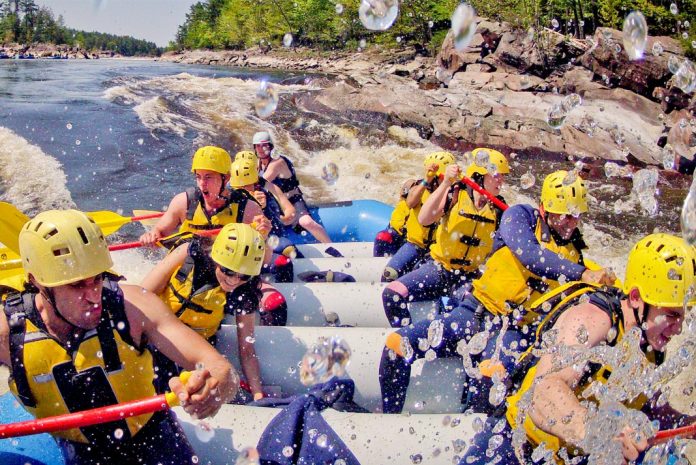
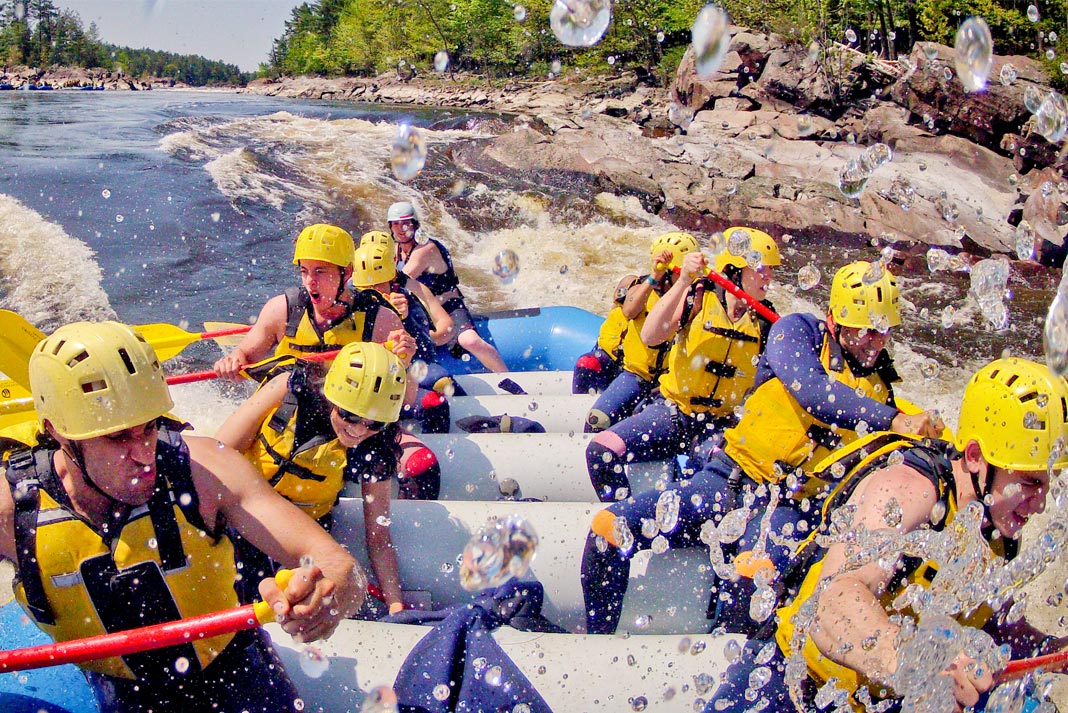
Wilderness Tours is one of several outfitters that'll provide you with a wild ride down the Ottawa. | Photo by: Destination Ontario
The Ottawa region is one of the top whitewater destinations in the world. Known for world-class adventure companies, epic whitewater, and a variety of river trips for all experience levels, whitewater rafting in Ottawa is the adventure you’ve been looking for.
Your rafting trip will take place on the Ottawa River, a mighty waterway offering thrilling rapids, pristine scenery and warm water. While some people choose to paddle the rapids themselves, we recommend going with an experienced rafting company to make sure you get the right level of excitement, adrenaline, safety and success.
No whitewater experience is necessary; you’ll learn everything you need to know before hitting the first set of rapids. In fact, more people raft the Ottawa River than any other river in Canada every year.
[This article is part of the Ultimate Ottawa Valley Adventure Guide. Find all the resources you need to plan an adventure-filled trip to the Ottawa Valley.]
What to expect
Your rafting trip can be tailored to what you are looking to experience. It might be a family-friendly roll down the river, or a high-adrenaline descent. It’s based on the tour you choose, the section of the river and the time of year you choose to go whitewater rafting in Ottawa.
Your standard whitewater rafting tour starts with a drive 90 minutes northwest of Ottawa along the Ottawa River (only the urban rafting experience, which we’ll get into later, doesn’t have this requirement).
Wilderness Tours is one of several outfitters that’ll provide you with a wild ride down the Ottawa. | Photo by: Destination Ontario
Once onsite, you’ll fill out the required paperwork, and then do an orientation, during which you’ll get a safety demonstration, don your personal safety devices (helmets and life jackets), and get the rundown about the day’s events on the water. You’ll be briefed on the parts of the trip that require your crew’s teamwork and attention, and when you can relax and enjoy the views.
After you take to the water, you’ll get into the groove of paddling to your guide’s rhythm (or them with yours). With the sun warming your face, don’t worry, you can expect to get wet, especially if you are at the front of the boat. If you don’t want to be splashed, you may want to tell your guide this in advance.
The action centers on a 10-km-long stretch of river known as Rocher Fendu (Split Rock). Here, the river forms two distinct channels, careening through a maze of 175 wild islands and rollicking Class III–V rapids—including a 5-meter-high waterfall—with something for every adventure appetite. Depending on which trip you chose, you’ll plunge down the rollercoaster rapids of the Middle Channel, or dig deep in the challenging Main Channel—home to some of the largest commercially run, white-knuckle whitewater in North America!
Most trips include a lunch, or a cool drink as you float down a flat part of the river. You may even have the opportunity to try cliff jumping.
Best whitewater rafting in Ottawa
The acclaimed whitewater resorts of the Ottawa Valley make it easy for first-time river rafters to experience everything this outstanding river has to offer. In addition to Ottawa River rafting day trips, most companies offer riverside accommodations, meal plans, multi-day packages and other adventure activities.
OWL Rafting
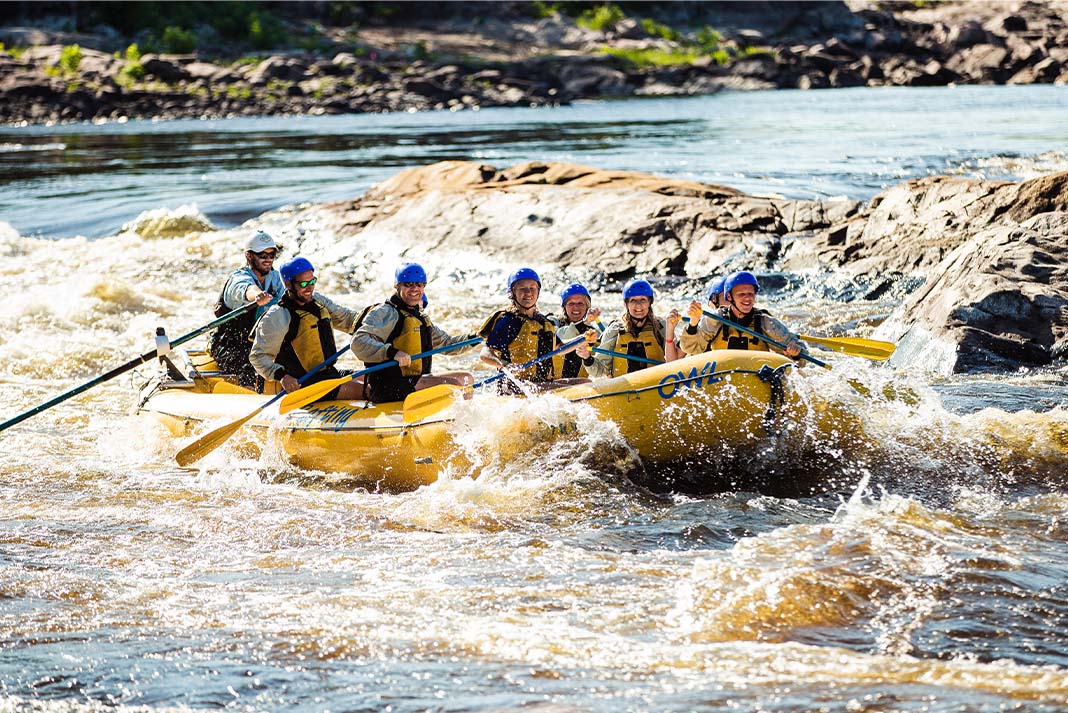
Adventure Rafting the Main Channel of the Ottawa River | Photo: OWL Rafting
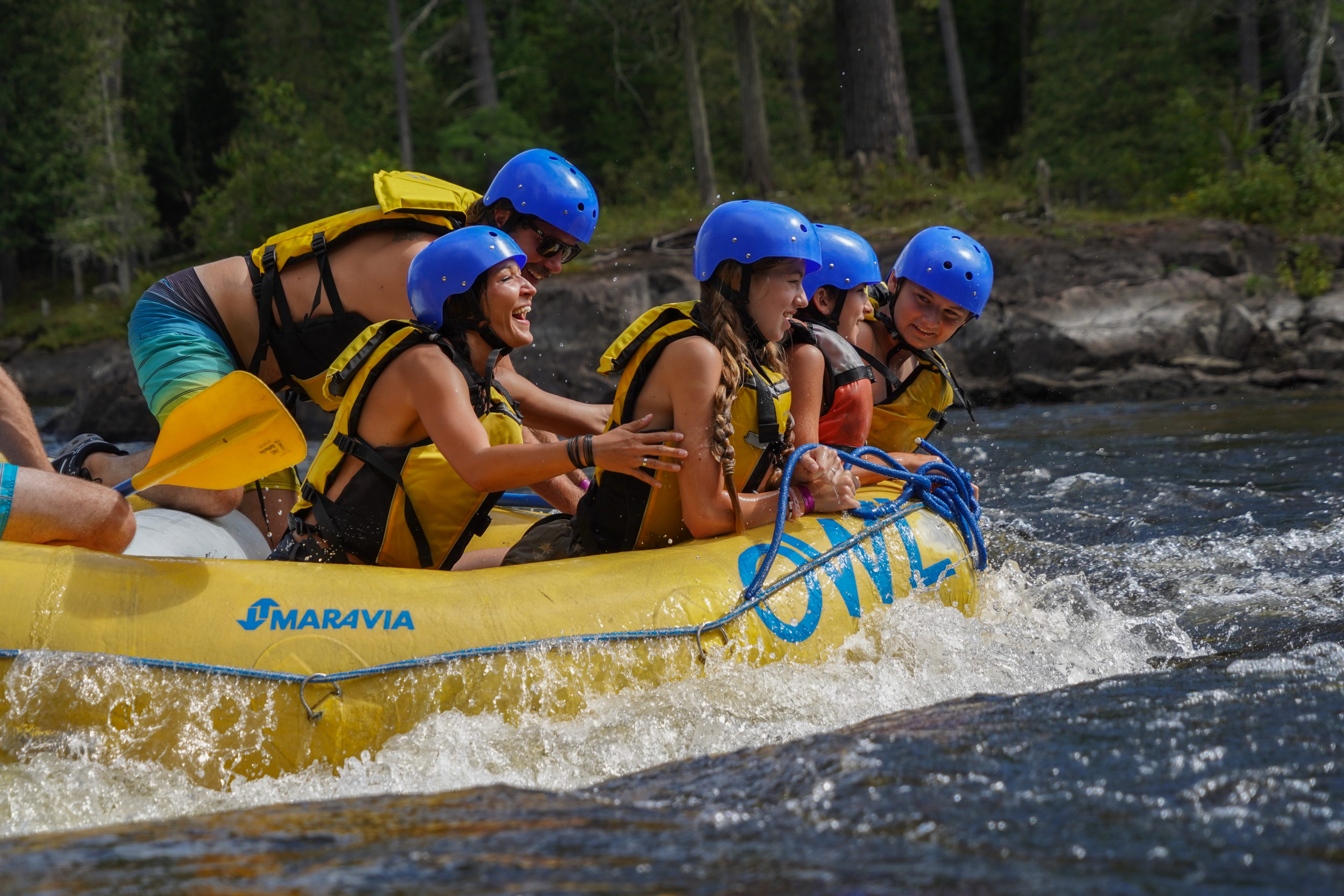
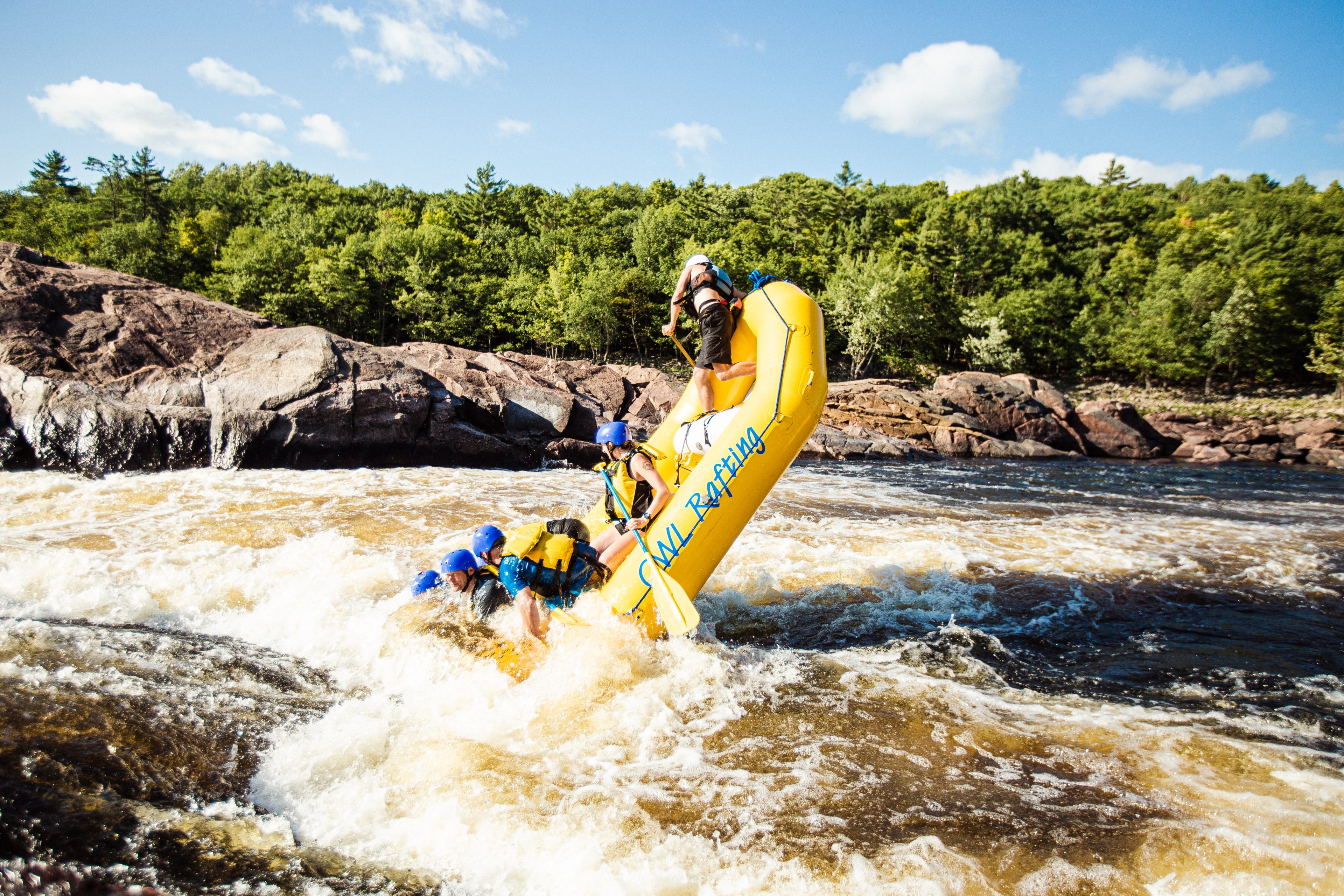
Family-owned and operated since 1981, OWL Rafting is one of the oldest and best-known Ottawa River rafting companies. Friendly and experienced guides, delicious food, a peaceful waterfront location and a terrific variety of one- and two-day rafting packages make this whitewater resort a top choice for families. Trips are rated low-, medium- or high-intensity, so it’s easy to choose a just-right experience.
Surfing a stationary river wave| Photo: OWL Rafting
Sport Rafting| Photo: OWL Rafting
OWL Rafting is also the only Ottawa River rafting resort that ends each day of whitewater rafting with a scenic pontoon boat cruise down the lovely Lower Channel. Enjoy a barbecue dinner aboard as you return to OWL’s beachfront resort on Voyageur Bay. Still have energy to spare? The resort offers a choice of additional activities from their beach, including kayaks, canoes, standup paddleboards, beach volleyball, disk-golf and a bike pump track. Accommodation options include riverside camping, rustic cabins, new cabanas and an RV park.
Founded in 1975 by Ottawa River rafting pioneer Joe Kowalski, Wilderness Tours is the original whitewater rafting company on the Ottawa River. Nearly five decades later, Kowalski and his team of passionate river guides and resort staff have made Wilderness Tours the top raft and kayak resort in Canada, introducing some 2.5 million guests from around the world to the magic of the Ottawa Valley. Being first on the river enabled Wilderness Tours to help establish the environmental movement that has kept this section of the Ottawa River wild and pristine for future generations. To date, the Wilderness Tours Land Trust has protected over 5,000 acres of the river corridor from development, with the goal that someday it will be designated a national park.
Their programming runs “mild to wild” with one- to five-day programs. With the largest adventure resort in the business, which can accommodate up to a group of 500, their “après rafting” experience can include lounging by the pool or fireside, bungee jumping, rock climbing, mountain biking and more. The adventure at Wilderness Tours can begin as young as 7 years old with family programs “that have been kid-tested for over 20 years.” You must be a minimum of 50 pounds to enjoy the river portion of the resort. Wilderness Tours has cabins, lake houses and beach houses to accommodate up to 12 people per space.
If you don’t have a day to drive and paddle, but want to get on the river, Wilderness Tours’ new family-friendly urban whitewater rafting venture, Ottawa City Rafting, is a novel way to see the sites in Ottawa. Paddlers aged 5 and up can experience a three-hour whitewater rafting tour in Ottawa starting just 10 minutes’ drive west of downtown Ottawa at Britannia Beach. The interpretive trip of the river’s living history from First Nations to loggers and up to today, is an added bonus to the river rafting. The optional river float and optional cliff jump are also a bonus. One trip highlight is seeing Parliament Hill from this totally unique vantage point.
The company also runs scenic, two-hour float trips from their Britannia Beach location to downtown Ottawa. This trip involves paddling inflatable tubes through smaller rapids and relaxing lazy river sections. The minimum age for this trip is 12.
RiverRun Rafting occupies the same superb 165-acre, riverfront location—right at the take-out for Ottawa River rafting day trips—as Wilderness Tours, which relocated to the shared site in 2020 after acquiring RiverRun. Offering the same amenities as its parent resort, RiverRun Rafting experiences include high-intensity, six-passenger sport raft day trips, medium-intensity day trips aboard bigger 12-passenger rafts, and low-intensity family rafting day trips in eight-passenger rafts. After a day on the water, guests can explore the resort property’s 4,000 feet of beautiful shoreline and hike to old-growth forest and spectacular river views in the adjacent Ottawa River Provincial Park.
Looking for double the rapids and excitement in a single day of Ottawa River whitewater rafting? Esprit Whitewater is the only river outfitter that offers rafting on both the Main and Middle channels of the Ottawa in one epic day. Ranked by National Geographic as one of the Best Adventure Travel Companies on Earth, Esprit’s guests applaud the outfitter’s small-group Ottawa River rafting trips, which use only 14-foot sport rafts for the best whitewater thrills. Founded in 1992 by award-winning whitewater leader and eco-advocate Jim Coffey, Esprit remains committed to river conservation.
From their riverside basecamp location on the Quebec side of the Ottawa River, Esprit offers both day trips and an outstanding variety of multi-day packages, including combinations of rafting and zip-lining, bungee jumping, horseback riding, cycling, canoeing, SUP and kayaking. For the ultimate adrenaline rush, combine rafting with a day of riverboarding. Pioneered by Esprit, riverboarding is an “in-your-face” whitewater experience—armed with a rigid foam board, flippers, helmet and lifejacket, you’ll follow your guide down the river, kicking your way though towering waves and foaming holes. Overnight guests can choose from riverside camping, hostel accommodation or comfortable rooms, suites and self-contained cottage options.
A relative newcomer to the Ottawa River rafting scene, Quebec-based Rafting Momentum boasts a variety of accessible day trip and overnight rafting packages for families and adrenaline junkies, with some of the most competitive prices on the river. Enjoy a full day on the water, and then relax and relive the excitement with a video screening of your trip and a delicious barbecue meal at Rafting Momentum’s welcoming basecamp, housed in a beautifully crafted barn. Overnight guests can choose from camping, rustic cabins or off-grid, self-contained cottages.
HorizonX is a Quebec-based rafting outfitter that’s known for their unique rafting style and trip options. For starters, HorizonX runs the smallest rafts on the Ottawa River—paddling these sporty, six-person rafts guarantees a wet and wild ride. HorizonX also boasts the only after-dark whitewater rafting trips on the Ottawa! Choose from Happy Hour rafting (weekday evenings from 5–9 p.m.)—four hours of action-packed adrenaline with no other rafting groups in sight, plus viewing the sunset on the river. Or, if you dare, try Full Moon Rafting through Class II rapids—the only experience of its kind in Canada. Overnight guests enjoy HorizonX’s riverside basecamp, meal plan and relaxation zone with hot tub. Choose from camping sites or rustic river-view cabins.
A whitewater rafting getaway on the Ottawa River is perfect for adventurous families. Everyone gets a paddle, so everyone gets to participate. Gentle rafting trips rated low-intensity are suitable for children as young as 5 (must weigh at least 50 pounds/23 kilograms). Higher intensity rafting trips, including most trips using six-person sport rafts, are suitable for children ages 13 and up (minimum weight is 90 pounds/40 kilograms).
Families looking for a small-boat Ottawa whitewater rafting experience will find Esprit Whitewater offers the greatest flexibility—their Two-Channel Day Trip permits youths ages 12 and up to paddle sport rafts on both the Main and Middle channels, while children ages 7–11 can enjoy a morning of rafting the Middle Channel followed by an afternoon of adventure activities at Esprit’s basecamp.
Consider a resort-based family package if you are looking to spend a couple days river rafting while enjoying tasty meal plans, cozy accommodations or camping, and the multitude of other outdoor activities these riverfront rafting resorts have to offer.
Is whitewater rafting safe?
Safety is always a concern when embarking on any extreme sport, and that is one reason it’s recommended to go with a reputable company that has decades of experience. Yes, there have been worldwide whitewater rafting deaths, but these are most often when people use their own boats and are not on guided tours. In one 1998 study, whitewater rafting was found to be safer than recreational biking, swimming, whitewater kayaking and scuba diving.
In actuality, some whitewater rafting trips in Ottawa will seem fun but dull (read: very safe) for the adrenaline junkies, but for them there are more extreme adventures available (which are also safe, but may involve accelerated heart rates, and some good stories to tell). Just don’t lie to yourself about what type of experience you’ll be comfortable with. Peer pressure sucks, but you might be happier on an easier experience on the river while your friends choose the Full Monty.
To be safe on the water, it’s important to follow the guide’s instructions. They’ve been doing this for a long time and are there to make your trip as enjoyable as possible. Injuries while whitewater rafting are few and far between. The most common injuries are bumps, bruises and scrapes. Each raft carries a first aid kit, and all guides are certified in First Aid and CPR.
For safety reasons, people under 50 pounds cannot raft, and people under 90 pounds are typically not recommended if you are taking a walk on the wild and wet side. That doesn’t have to end your adventure though, as some sites offer daycare.
When is Ottawa’s whitewater rafting season?
The Ottawa River boasts the longest, warmest whitewater rafting season in Canada. Hydroelectric dams above and below the whitewater section of the river ensure there is plenty of water volume to create the Ottawa’s famous rapids, even in late summer when other rivers are unrunnable. Ottawa River rafting trips run from May to October, with each season offering something unique. Visit in the summer (July to early September) for the warmest water and best swimming, body surfing and cliff jumping opportunities. Summer water levels average about 250 CMS (cubic meters/second) or 8,800 CFS (cubic feet/second), with water temperature reaching a pleasant 22°C (71°F).
For warm-blooded thrill-seekers, spring (May to June) on the Ottawa River offers the biggest waves, gnarliest rapids and Greyhound bus-sized hydraulics that can swallow an entire 12-person raft. Peak spring flow can be in excess of 4,500 CMS or 176,500 CFS, with water temperature hovering around a bone-chilling 4–6°C (39–42°F).
Fall (September to early October) can be a beautiful season for Ottawa River rafting, with the changing leaf colors of the surrounding forests. It’s also a quieter time on the river, which means less time waiting for your raft’s turn to run the rapid and more time to surf each wave. Expect heavier flows than summer, and warmer temperatures than spring.
What to bring and wear for Ottawa River rafting
Ottawa River rafting outfitters provide all mandatory safety equipment—including helmet, life jacket and optional wetsuit for early/late season trips.
Aside from the basics including a bathing suit and/or swim shorts, it is also recommended that you have a rashguard or sun-protection shirt, waterproof sunscreen, a towel and dry change of clothing. You’re also going to need shoes that will stay securely on your feet (this means leave your flip flops and Crocs at the campsite). Bring water shoes, or sport sandals with a secure adjustable back strap. Also make sure eye glasses/sunglasses are secured. Check with the company about having your cellphone with you, whether it has to be in a gearbox, or if you can keep it on your person.
OWL Rafting also has a list of what to bring for colder days, including wool socks, a wool hat, a light wool or synthetic sweater, a paddling jacket (and or light windbreaker), and synthetic or wool bottoms (no cotton—it stays wet and can make you cold). On windy days it can be helpful to bring a pair of synthetic gloves with grips on the palms. Some companies rent/provide water shoes or wetsuits.
Finally, it’s a good habit to bring tip money for the guides. It is not mandatory, but if they’ve done a great job, tipping is a great way to thank them for providing you with a fun and safe trip.
How to get to Ottawa River rafting
The whitewater rafting resorts on the Ontario side of the Ottawa River are clustered around the rural hamlet of Foresters Falls, a 90-minute drive from the city of Ottawa. Travelers with their own vehicles can take the Trans-Canada Highway west to Renfrew and then follow signs indicating the rafting resort of their choice.
If you are traveling by bus from Ottawa, Ontario Northland can bring you as far as Cobden (1 hour, 40 minutes). From here to the rafting resorts, you’ll need to book a ride with Whitewater Bus Lines (613-646-7257).
On the Quebec side of the Ottawa River, Esprit Whitewater offers convenient, same-day return shuttles from Ottawa/Gatineau to their rafting basecamp near Davidson, Quebec. Esprit also offers an affordable, one-way shuttle service from Pembroke for travelers arriving from the north.
From Toronto, Ottawa’s river rafting resorts are a five-hour drive east.
Ice Bus offers an express bus service from locations in Toronto to central Ottawa (4 hours, 15 minutes).
Train service from Toronto to Ottawa with VIA Rail takes around 4.5 hours.
Flights from Toronto to Ottawa (1 hour each way) are offered by Air Canada and WestJet.
For the easiest, no-hassle Ottawa River rafting experience, stay at the whitewater rafting resort of your choice—all of the outfitters listed above offer a range of camping, rustic cabin and cottage accommodation.
If you’re looking for an off-site option with more amenities or luxuries, yet still close to the action, check out these Top Cottage Rentals Near Ottawa.
Located right on the Ottawa River near Foresters Falls, just a 10-minute drive from Ontario’s rafting resorts, the Whitewater Cottage Resort offers a wide range of accommodation options for all types of budgets and groups. Choose from rustic or deluxe cabins, waterfront chalets or a luxury log lake house.
Nearby camping options include Bona Vista Campground on Muskrat Lake in Cobden, and Logos Land Resort, also in Cobden. Along with cabins, camping and RV sites, this family resort features a motel, self-contained villas, a water park, zip-lines and golf course.
Try “glamping”—or glamorous camping—in the beautiful Ottawa Valley forest at Elements Luxury Tented Camp, just minutes from the river and the rapids.
Wilderness Tours is one of several outfitters that’ll provide you with a wild ride down the Ottawa. | Feature photo: Destination Ontario
Choose your desired level of excitement on the Kennebec River. | Photo: Flickr // Rich Moffitt
With three main rivers, each winding for over 100 miles and one boasting the longest course of continuous whitewater in the Eastern U.S., it comes as no surprise that Maine offers some of the best whitewater rafting opportunities in the Northeast. With rapids ranging from beginner-friendly class II to thrill-seeker class V, you’re sure to have an exciting time whitewater rafting in Maine.
Best rafting in Maine
Kennebec River
Running for 170 miles north to south through the middle of the state, the Kennebec River offers everything from mild class II rapids for beginners and families to thrilling class IV for adventure enthusiasts.
Crab Apple Whitewater, based in West Forks and within driving distance of Caratunk, offers several Kennebec whitewater trips, including a family-friendly option you can read about in the “Family Rafting” section below. Their regular 12-mile trip tackles class III and IV rapids, is suitable for ages 10+, and costs $81 to $122 per person.
Choose your desired level of excitement on the Kennebec River. | Photo: Flickr // Rich Moffitt
Dead River
Don’t let the shortness of this river fool you. At only 43 miles in length, the Dead River holds the longest continuous track of whitewater on the east coast. It’s not “tame” whitewater either. The Dead River traverses class II to V rapids (more on the end of IV and V), making it an adrenaline junkie’s dream.
If shuttle rides to and from launch sites bum you out, take a trip with Magic Falls Rafting Company, also based out of West Forks. They are the only outfitter with a base camp and takeout on the river. For an extra exciting tour in one of their small 13-foot rafts, take a trip down the river on the same day as a scheduled big water release from the hydroelectric dam. The minimum age is 12 and the cost is $90 per person.
The Forks
Although not technically a river, this area where the Kennebec and Dead River intersect is worthy of its own category. Within driving distance of Caratunk and Jackson, The Forks is arguably one of the best (and most popular) places for whitewater rafting in Maine. The two swift, powerful rivers converging makes for incredible rafting!
Three Rivers is another great outfitter in the area that offers one- and two-day trips, as well as high-water day trips like the ones mentioned above. You can find more information on all of their trips on their website.
Penobscot River
Beginning in North-Central Maine, the 109-mile Penobscot River is another popular whitewater destination in New England. You can expect to battle class III to V rapids, including the infamous class V rapid “Exterminator” and “Lose Your Lunch Falls,” the steepest drop on the river. When you’re not paddling like crazy, enjoy the stunning views of Maine’s highest peak, Mount Katahdin, as you skirt by its base as well.
Millinocket is a popular base among local outfitters due to its proximity to the Penobscot. Check out these two below to get you started.
Join Northern Outdoors for a 14-mile, all-day run of the Penobscot. Prices start at $69, a grilled lunch is included, and you must be at least 14 years old due to the strenuous nature of the rapids.
Maine Rafting Expeditions is another local outfitter offering extreme, mild and overnight rafting trips on the Penobscot. Prices start at $79 for the main river run where you’ll tackle a class V section of the river, and participants must be 14 or older.
Androscoggin River
Somewhat overlooked due to the popularity of the main three rivers already mentioned, the Androscoggin offers some tamer river rafting in Maine with its class II and III rapids. The 164-mile-long waterway begins in New Hampshire and eventually meets up with the Kennebec near Brunswick, ME. There are several outfitters just on the other side of the state line in New Hampshire, a short half-hour drive from Bethel and one hour and 50 minutes from Rangeley, ME.
Head out with North Woods Rafting for a half-day trip in the morning or afternoon for some fun on the splashy rapids with the whole family. Children 6 to 9 are $45, while adults (10+) begin at $79. Both prices include a barbecue lunch.
Rafting near major cities
Unfortunately, most of the major cities—such as Augusta, Bangor and Bar Harbor—are a bit of a drive from the nearest opportunities to go river rafting in Maine. Many of them are closer to the Atlantic coast where sea kayaking dominates the water scene.
For the Bangor and Bar Harbor area, check out North Country Rivers and Northeast Whitewater. Both outfitters are located about an 1.5-hour drive northwest from Bangor. Both offer trips on the Kennebec, Dead and Penobscot Rivers. Northeast Whitewater also offers overnight excursions on the Kennebec and Penobscot, as well as the option to raft on high-water release days (only four times per year) on the Kennebec if you’re looking for some extra thrills.
Located along the southwest coast and within a 40-minute drive or less of one another, Kennebunk, Saco and Portland also all require a bit of a drive to get to whitewater. Your best bet is to head northwest to the previously mentioned Androscoggin River near Bethel and Rangeley. Raft NH and ELC Outdoors take about two hours to reach from Portland.
Family rafting
By now you have probably figured out which rivers in the area are more family-friendly than others. In general, parts of the Kennebec and Androscoggin rivers are going to be your best bets if younger children will be joining you. Here are several outfitters and trips to peruse to find your perfect family whitewater rafting trip in the Pine Tree State.
Three Rivers’ full-day rafting trips on the Kennebec River are suitable for ages 10+. Prices start at $94 and include 12 miles on the river, swimming and sightseeing stops, and a snack and drink on one of your breaks.
For ages 8+, enjoy class III and IV rapids along a 14-mile stretch of the Kennebec with Northeast Whitewater. Prices begin at $84. You can find more details and a map of the river on their website.
For a nice mix of whitewater excitement and calm afternoon paddling, check out the day trip from Northern Outdoors. After tackling class III and IV rapids leading up to the famous Magic Falls, enjoy some lunch on the bank. Then head back out on the less wild, lower section of the river for some relaxed paddling in inflatable kayaks that even the kids can participate in! Prices start at $69 per person.
For a calmer trip that younger kids can enjoy, splash through the Errol Rapid section of the Androscoggin River in nearby New Hampshire. It’s a great introduction to whitewater rafting for ages 5+ and beginners alike on class II and III rapids. Prices begin at $55 from ELC Outdoors.
What to wear whitewater rafting in Maine
Here are some suggestions for what to wear on your whitewater rafting trip in Maine.
Swimsuit
Quick-drying clothing made of synthetic material (no cotton as it holds onto water, causing your core body temperature to drop from prolonged exposure)
Sunscreen and sunglasses (with strap)
Fleece jacket, raincoat, or other jacket made of synthetic material if you are a naturally “cold” person or the weather warrants it
Water shoes or sandals with straps (no loose flip-flops)
Towel and change of clothes
Many outfitters will offer wetsuits, dive booties and splash jackets for rent (in some cases, the jackets may be included in the cost of your trip)
As with any rafting trip, the cost is largely dependent on location, length and difficulty. At the lower end, expect to pay $79 to $89 per adult during the week and for tamer trips along the Kennebec and Androscoggin rivers. Prices will be around $100 for weekends and Dead River high-water trips. During peak times, expect to pay $100 to $120 per person.
When to go
Rafting season starts in May and runs through mid-October, at the latest. Based on Millinocket’s annual average highs, temperatures start at 64°F in May, rising to 79°F in July, and slide back down to 55°F by October. Luckily, tourism also peaks in the hotter months of July and August, so any time in May, June, September or October should be good (especially in the fall when you can view the wonderful fall foliage as well!).
It is also worth noting that Maine’s rivers are dam-controlled, giving whitewater guides and rafters alike predictable water conditions any month throughout the rafting season. Unlike other Northeast states, Maine’s water levels stay high enough for rafting in even the driest summers.
How safe is whitewater rafting in Maine?
Safety is always a concern when it comes to whitewater rafting. There is an inherent risk involved, which is why you are required to sign a waiver before heading out on the water with any outfitter. Compared to, say, Colorado, another popular rafting state in the U.S., Maine sees far fewer whitewater rafting deaths. Between 2007 and 2017, there were only four fatalities.
Many, if not all, popular and top-rated outfitters across the state have been in business for decades and their guides are well-trained with the proper certifications, including swiftwater rescue and first aid. Again, accidents are always possible no matter how experienced a guide you have. Here are some good safety tips for planning your whitewater rafting trip from the New England Outdoor Center.
Whether you’re looking for some extra excitement on a family vacation or looking to tackle some of the hardest rapids in the Northeast, you’re sure to have a great time whitewater rafting in Maine.
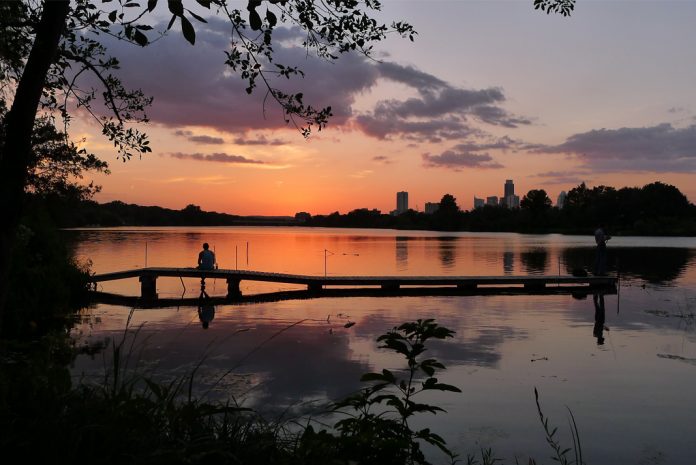
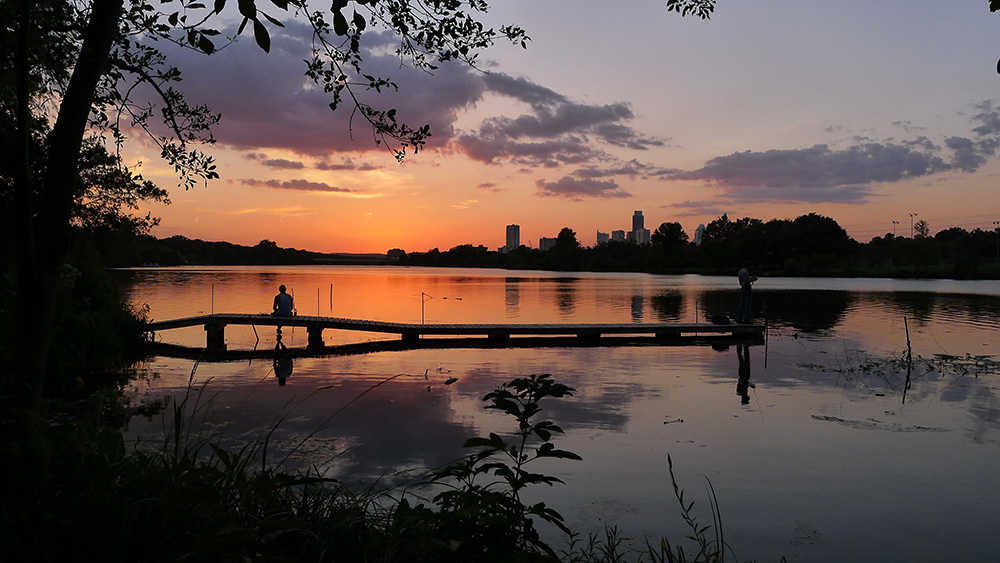
Take in the city skyline or immerse yourself in nature. | Photo: Flickr // notevenathing
Austin is a place that inspires enthusiasm and excitement in visitors and locals alike. Full of character, personality and plenty of local experiences, the capital of Texas has a lot to offer. On the natural end of the spectrum, it’s home to interesting wildlife like snapping turtles, armadillos and rattlesnakes. On the entertainment side, it boasts the title of Live Music Capital of the World.
Paddling in Austin lives up to the legendary vibrancy and liveliness of the city. With urban paddling options and more natural settings, there are plenty of kayaking and paddleboarding opportunities in Austin to keep anyone intrigued and satisfied.
[ Paddling Trip Guide: View all kayaking and paddleboarding trips in the United States ]
Where can I kayak and paddleboard in Austin?
Among its other desirable qualities, Austin boasts the reputation for being one of the most pristine cities in America for both water and air quality. If you’re keen to see the native creatures of Austin, keep an eye out for armadillos, opossum, raccoons, warblers and a variety of reptiles that call this area of Texas home. While you’re taking in the sights and sounds of Austin, dip your paddle into one of these beautiful waterways:
Lake Austin
American Paddler is a well-informed and useful resource for areas to paddle in Austin. If you want to get away from the crowds on Lady Bird Lake (which we’ll touch on later), one of their recommendations is to head to Lake Austin. The two are only about a 30-minute drive apart, and both are on the Colorado River. Take note that Lake Austin is a man-made reservoir, and small motorized craft are allowed. Not to worry though, there’s still plenty of serene paddling here!
Colorado River
South of Austin you’ll find a perfect stretch of wide, slow-moving river, complete with sandy islands to explore. This section of the Colorado River in Texas makes for a wonderful day trip for families. Bring a picnic and get ready for a relaxing day in the Austin sun!
San Marcos River
The San Marcos River is only a 30-minute drive from Austin and is a great spot to escape for a lazy float down a sparkling Texas river. Rent a kayak from Texas Canoe and Kayak for four or six hours. Prices range from $45 to $75 depending on the size of boat you’re looking for.
Walter E. Long Lake
Also known as Decker Lake, this lake is tucked away and a bit more secluded than some of the more popular spots to paddle in Austin. Well-known for its excellent fishing, head out on the water to find largemouth bass, catfish, sunfish and hybrid striped bass. There are an array of other activities in the surrounding Walter E. Long Park such as sandy volleyball courts, barbecue pits and jogging paths. For a nearby rental, book with Epic SUP.
Downtown
Lady Bird Lake is a central focus for kayaking and paddleboarding in Austin, but if you’re looking to branch out, Congress Kayaks offers tours through Lady Bird to the clear and lovely Barton Springs for $30 per person, along with individual rental options. There’s so much to see in Austin from the water, and downtown is the perfect spot to take it all in!
Lake Travis
Are you an angler looking to head out for a day of fishing in Austin? Check out Lake Travis! This sunny Austin-area paddling location is perfect for kayaking, paddleboarding and kayak fishing. Viking Ship Kayak Rentals rents all of the above so you can cast a line in Texas any time of year.
Lady Bird Lake
This dazzling spot is one of Austinites’ favorite places to enjoy the sunshine. Paddleboarding in Austin wouldn’t be complete without a trip around Lady Bird. Formerly called Town Lake and located on the Colorado River, Lady Bird is a man-made lake with 416 acres of paddling to enjoy. If you’re planning to spend some time kayaking here, Austin Paddle Shack or Live Love Paddle are great rental options.
Take in the city skyline or immerse yourself in nature. | Photo: Flickr // notevenathing
It’s tough to find a bad time to visit Austin. Paddleboarding and kayaking in Austin happens year-round, as the winters are easily temperate enough for watersports. If you’re visiting Austin mid-summer, be prepared for some outdoor temperatures that are spicier than some of the citys’ legendary food. July and August are very hot in Austin, but you can still get out on the water. If you’re with little ones, or are more sensitive to hot weather, stick to early mornings and evenings when the sun is less intense. Otherwise, bring your sunscreen, lots of water and enjoy paddling in beautiful Austin!
What to wear
Bathing suits are an informal uniform while kayaking or paddleboarding in Austin during the summers–you’ll want to be as cool as possible, and also be able to take a convenient dip in the local waters while you’re out.
While days in the winter are mostly very comfortable–think no jacket, maybe long pants and a light shirt if it’s “chilly” for Austin–the mornings can require a jacket. Austin has a gorgeous climate; no need to pack classic winter clothing for this charming city.
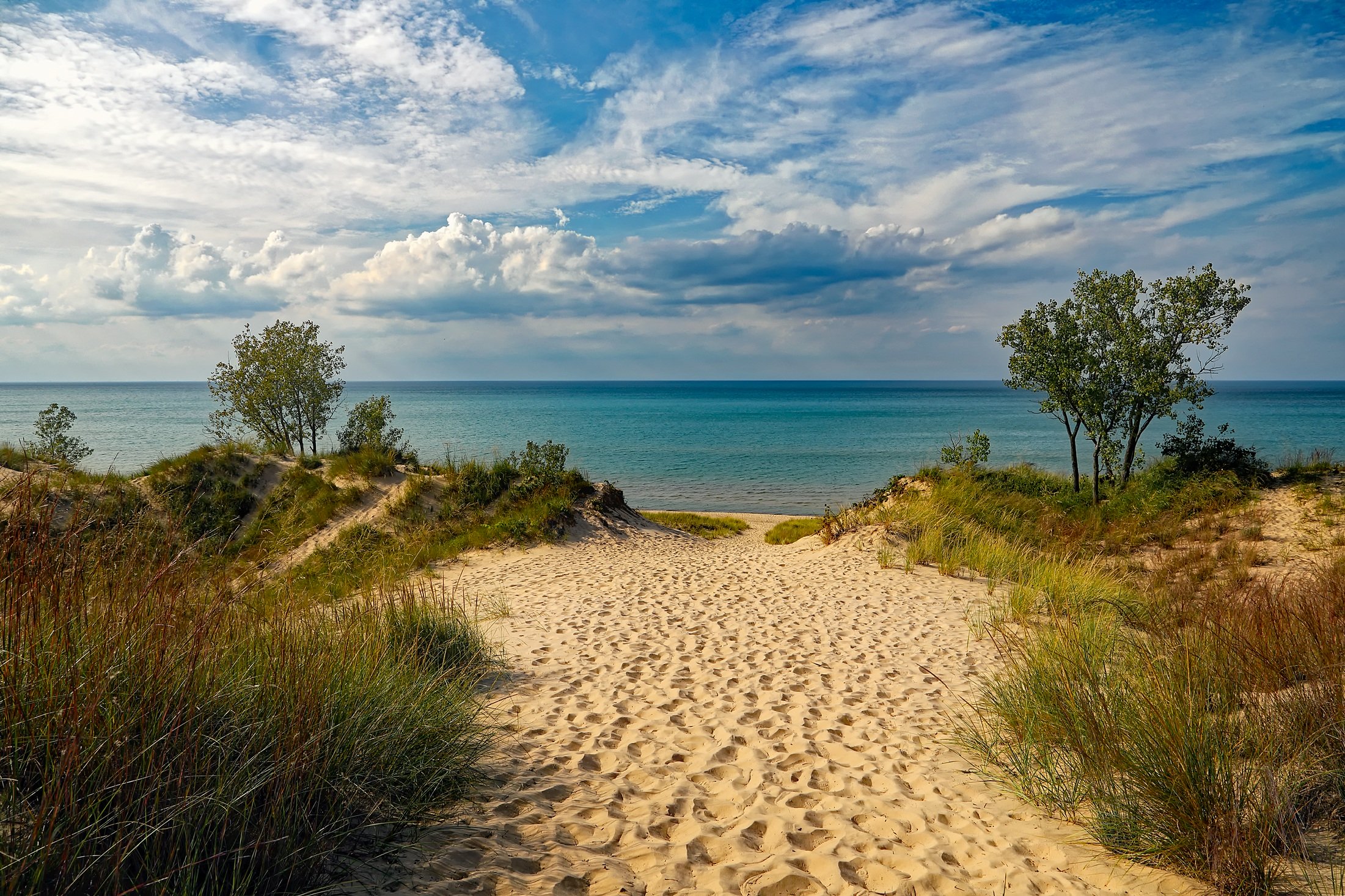
Visit Indiana Dunes State Park and paddle out onto beautiful Lake Michigan. | Photo: David Mark, Pixabay
The state of Indiana is home to charming sights, warm people and plenty of things to keep you busy! One of the unique and endearing things about Indiana is that it boasts the title of the Covered Bridge Capital of the World. With its lush greenery that overhangs the waterways, and lazy, winding rivers, adding the sight of beautiful covered bridges along your river tour makes kayaking in Indiana feel like a fairy tale! The canoe and kayaking season in Indiana generally runs April to October, so you have three seasons to plan your adventure here.
Did you know that a tiny little section of Indiana is on Lake Michigan? Part of the state’s northernmost border includes the gorgeous Indiana Dunes Park. If you’re in this area, make sure you stop by this little gem—it’s well worth a trip to kayak out onto Lake Michigan at sunset and have the whole expanse of the Great Lake to the north of you.
Visit Indiana Dunes State Park and paddle out onto beautiful Lake Michigan. | Photo: David Mark, Pixabay
If your timing allows, the fall foliage in Indiana is stunning, especially when it’s viewed from the water. Within an hours’ drive of the state capital, Indianapolis, is Cataract Falls. You can’t paddle through this series of cascades, but they are a stunning sight, particularly in the fall. Take in the falls, and then head to nearby Mill Creek for a day on the river. Float down the calm rivers and streams, take in the surreal colors around you, and experience a moment that feels like you’re living inside a watercolor painting.
[ Paddling Trip Guide: View all canoeing and kayaking trips in the United States ]
Best canoeing and kayaking in Indiana
Brookville
This is a spot you’ll want to visit and spend some time relaxing! Brookville is a close drive to both Cincinnati and Indianapolis, but feels worlds away from the bustling and lively cities. Paddle out on the Whitewater River, but don’t let the name fool you! There are some gentle rapids in this area and faster moving water, but nothing too intense. Picture an idyllic riverside setting, with plenty of paddling access, and a homey but thriving local resort/campground/outfitter run by a family that’s been in Brookville for 50 years. Take your time in this gem of a spot if you can, and get a true feel for what canoeing in Indiana has to offer.
Canoes: $21.50 per person (for two people in a canoe)
Kayaks: $23.50 per person
Blue River
The Blue River is a haven for paddlers, campers and anglers alike. Wind your way through the abundant smallmouth bass habitats as you enjoy the gentle blue-green water rippling by. The Blue is very beginner- and family-friendly, with only class I rapids. If you’re in South-central Indiana, enjoy a half- or full-day float on the Blue River with Cave Country Canoes. This local tour company also runs overnight camping tours if you happen to find yourself in this little spot, tucked away in the Hoosier National Forest.
Indiana Outfitters has a great list of the launch spots for kayaking and canoeing on the Blue River.
Cave Country has a calendar on their site with a comprehensive view of the days they run deals, and what the pricing is for the time you’re planning your excursion here.
Noblesville
Make your way to Noblesville to dip your paddle in the west fork of the White River. With winding curves, lush greenery and sloping, gentle banks, this stretch of river is perfect for a family day out, or a more laid-back day on the river. Enjoy the bright-blue Indiana skies as you paddle the White River. With names like Rusty Oar and Wapahani Landing, you know you’re in for a day full of character!
Prices vary based on season and boat type, but there are lots of options to choose from! Visit White River’s website for all the details.
Mongo
Mongo boasts a bustling population of 105, but this tiny town is full of paddling opportunities! Located on the Pigeon River, Mongo is home to a local outfitter and tour company that runs a variety of trips on the East and West Pigeon. Get ready for some sun and wide open skies as you drift down this picturesque river.
Located on Lake Michigan in Northern Indiana, Indiana Dunes offers a refreshing and unique change of scenery. There is a diversity of kayaking and canoeing options for paddlers to choose from. Take in the dunes and majestic views from Lake Michigan (but be prepared for a bit of a workout as you navigate the current and potential wind), or head upstream on the Kankakee River. Whichever route you choose for your sojourn in Indiana Dunes, you’ll be happy you chose to explore such a beautiful place. Outpost Sports is a monster of an outfitter, in the best way! They have a huge selection of boats and paddling gear to get you out for the day, or on a longer trip in Indiana Dunes.
Sit-on-top kayaks and paddleboards: $35 per two hours; $250 per week (options in between as well)
Bristol
Bristol is a truly quaint area for kayaking and canoeing. Spend a day on the St. Joseph River and paddle Long Lake to Bristol, or Mottville to Bristol, among other day trips. Take in diverse sights as you float through the towns and quiet wilderness along more secluded stretches. Located close to the state’s northern border, and just east of Lake Michigan, Bristol is a great spot to kayak or canoe in Indiana.
Kayaking in Indiana’s capital city of Indianapolis is a unique and dynamic way to see the city. Affectionately referred to as “Indy” by locals, this spot has plenty of options for kayaking and canoeing. If you’re looking for an evening activity in Indy, head out on an LED-lit pedal boat for a sparkling nighttime adventure that’s suitable for everyone!
Kayak and canoe rentals are available so you can tour the canal by boat. At 6 feet deep and 60 feet across, the Indy Canal is a very friendly spot for paddlers of all ages and skill levels.
If you’re visiting with enough time for more than just a single day of canoeing in Indiana, you’re in luck! The state has some great options for multi-day canoe routes that will truly showcase the serene landscape and natural life in Indiana. Water trails in Indiana often have access to campgrounds (mainly for a small fee), and the Department of Natural Resources has a great list of campground options that are accessible by canoe.
You might not expect Indiana to be a hotspot for underground cave kayaking, but you’re in for a pleasant surprise! There are seven caves that can be explored in Indiana: Blue Spring Caverns, Indiana Caverns, Marengo Cave, Sullivan Cave, Squire Boone Caverns, Wyandotte Caverns, and Wolf Cave. Not all of these have enough access for kayaks, but all are worth a look if you’re in the area.
The best place to cave kayak in Indiana is Indiana Caverns. The caverns are part of the Binkley Cave system, and feature Ice Age bones that can be seen while you enjoy the four-hour tour available from Indiana Caverns guiding company. Get ready for some tight squeezes, dark spaces, and a thorough shower after your trip—this one isn’t for the faint of heart!
Indiana’s water trails are well loved for canoeing, kayaking, paddleboarding and fishing. To be classified as a water trail, these stretches must have at least two public access points for non-motorized vessels. Indiana has water trails throughout the state; for a full list check out the Department of Natural Resources site. These are great access points for day use, or overnight camping adventures in the Indiana forests.
Indiana kayak and canoe laws
Rules governing canoeing and kayaking in Indiana are standard—you must have a PFD in your boat for everyone onboard, children under the age of 13 must wear those PFDs at all times, and your boat must show a valid registration number. Follow these basic guidelines, and relax as you take in the unique sights of Indiana from the water.
Is the future of the Arctic National Wildlife Refuge the future of Alaskan oil? | Photo: Peter Mather
In September 2019, the United States government finalized plans to allow oil and gas drilling in the heart of Alaska’s Arctic National Wildlife Refuge. The Refuge is a 16-million-acre mountain and coastal wilderness tucked in the northeastern corner of the state, nestled between the peaks of the Brooks Mountains and the icy Arctic Ocean.
Dozens of rivers flow north from the mountains, through coastal plains and empty into the Arctic Ocean. It’s a paddler’s dream. It’s also home to an estimated 7.7 billion barrels of oil, which has made it a hotly contested area since first receiving protection in 1980.
Is the future of the Arctic National Wildlife Refuge the future of Alaskan oil? | Photo: Peter Mather
I’ve been lucky to paddle the coastline of the Refuge during two month-long trips in short Arctic summers. Once in a folding sea kayak and once in a folding canoe. In between dodging shifting ice flows and grizzly bears, I saw an abundance of wildlife like I’d never seen—and I’ve been paddling in the Arctic for more than 25 years. Caribou herds span the horizon, migratory birds gather from six continents, and I’ve even caught a glimpse of elusive wolves and lynx.
[ Plan your next paddling adventure with the Paddling Trip Guide ]
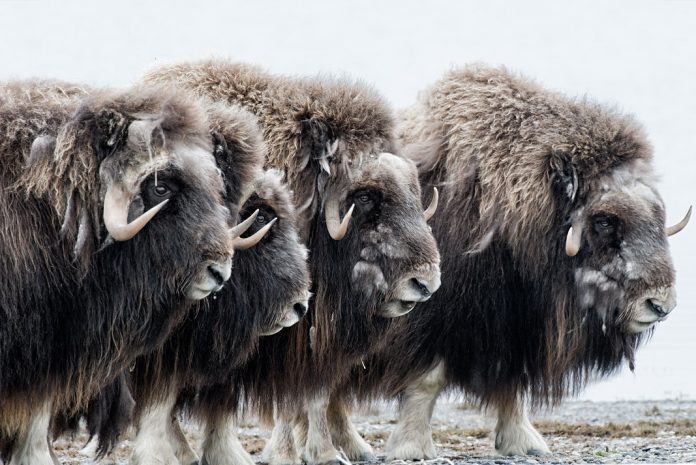
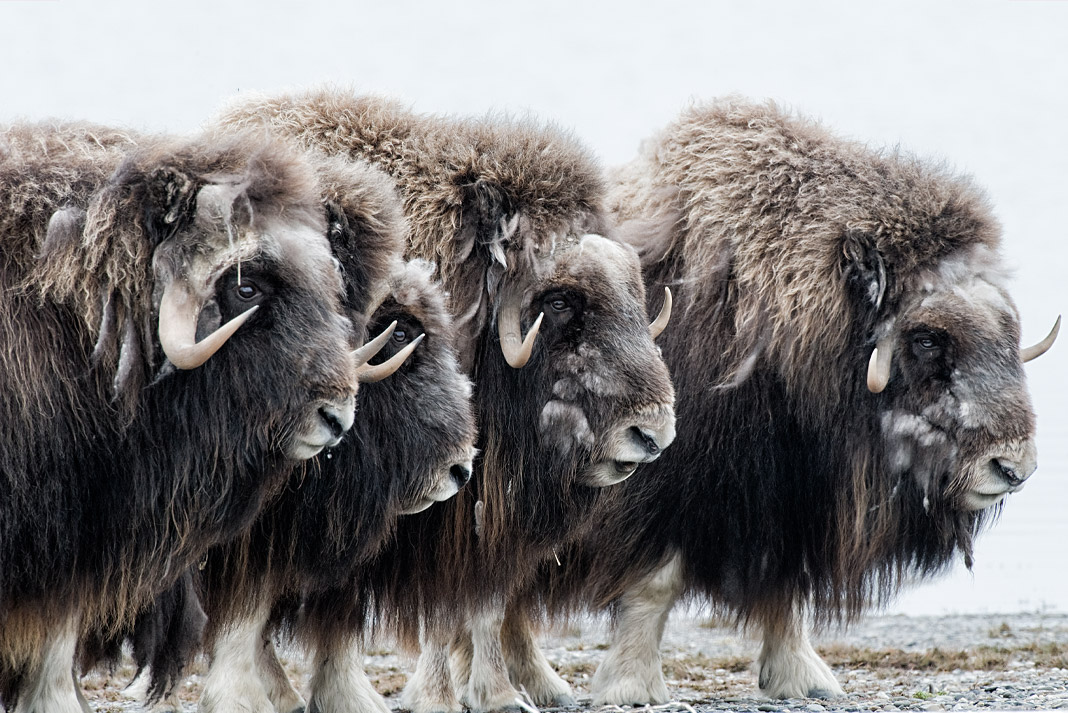
While paddling in a haze of white fog, which is so defining of this Arctic Ocean landscape, we spotted seven small black dots on a spit in the distance. This kicked off a heated debate as to whether the black dots were a herd of musk oxen or eider ducks. Without trees or structures, we lacked reference to give perspective to their size. If they were ducks, it would take us 20 minutes to paddle to the spit. If they were musk oxen, we would be paddling for an hour and a half.
I’m glad it was a long paddle.
There are less than 300 of the shaggy creatures calling the coastal plain of the Refuge home. This prairie landscape interspersed with thousands of small ponds also serves as the calving and nursing grounds of the 200,000-strong Porcupine Caribou herd. The herd’s range extends into Canada’s Yukon and Northwest Territories (NWT), and twice a year the herd journeys 1,500 miles on the world’s longest on-land migration. It’s the only Canadian barren-ground caribou group not in a drastic decline but is at risk of disturbance from oil and gas development.
The Gwich’in First Nations people of the Yukon, Alaska and NWT have depended on the caribou for their physical and cultural sustenance for thousands of years. They are caribou people and have spent the past 40 years fighting for the protection of these calving grounds. Gwich’in elders and caribou biologists believe development in this sensitive area is a threat to the survival of the caribou. For the Gwich’in, this is more than an environmental issue—it is also a human rights issue with their way of life at stake. The Gwich’in and conservation groups continue to fight for the Refuge’s protection, lobbying oil companies to withdraw interest from the area and hoping for a new president in 2020, who may revert the Arctic National Wildlife Refuge into a refuge for wildlife once more.
Peter Mather is a fellow in the International League of Conservation Photographers and a long-time contributor to Paddling Magazine.
Is the future of the Arctic National Wildlife Refuge the future of Alaskan oil? | Featured photo: Peter Mather
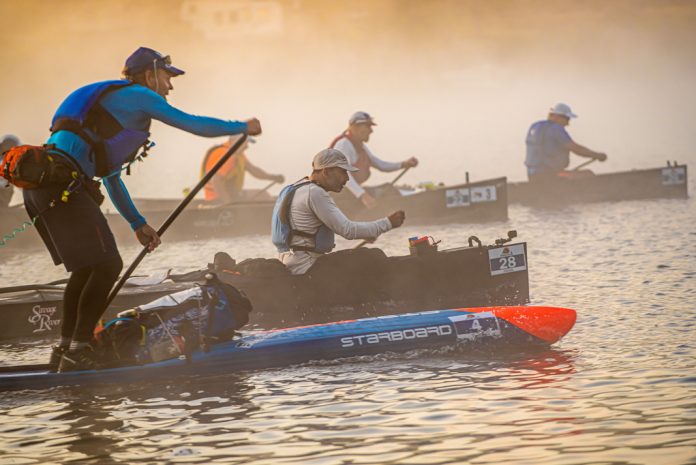
The competitive spirit of SUP is alive and well, with new races starting up and multi-disciplinary races more popular than ever. | Photo: Limelight Muskoka
Recent SUP racing headlines suggest a sport in crisis. In June, Detroit-area racers were crushed when their beloved OABI race—named after the 6.5-mile, Once-Around-Belle-Isle circuit—was called off with less than two months notice. The six-year-old summer beach party with live music drew about 200 racers a year and was the picture of a regional race done right. But the businesses behind it wanted to pull out and find a buyer, according to Harrison Withers, one of the local paddlers who tried unsuccessfully to take over the event.
In March, the venerable Pacific Paddle Games (PPG) in Dana Point, California, one of the top three races on the pro circuit, was abruptly canceled—well, officially postponed—until at least 2020. This was SUP racing’s flagship, whose predecessor, the Battle of the Paddle, fostered the sport from 2008 to 2014. The PPG had seen declining participation, and last spring American Media Inc. bought the PPG’s organizer, SUP The Mag, along with several sister publications. The new ownership swiftly axed the event, with rumors attributing the decision to lackluster profits.
Meanwhile, on the international stage, SUP has a shot at inclusion in the 2024 or 2028 Olympics. This breakout is overshadowed by an ongoing feud over whether the governing body of canoeing or surfing should represent the sport.
Fortunately, these bleak stories say more about what happens when profit and politics mix than anything about SUP racing overall. The competitive spirit of SUP is alive and well, with new races starting up and standout events selling out faster than ever. Plus, a change to the worldwide racer rankings could provide new recognition and motivation for amateur racers.
SUP Racer, the online publication launching the Paddle League World Rankings back in 2013, announced a major revamp last summer. Starting in 2020, it will amend the ranking system to include hundreds of smaller races and more than 3,000 paddlers—encompassing most of the world’s enthusiasts.
“It’ll include all tours, leagues, series and federations that meet a minimum threshold,” says publisher Christopher Parker.
Amateurs can expect to see their names listed alongside the pros, a potential motivator for the masses, according to Parker, who says the fact amateurs and pros compete side-by-side makes SUP, “like the Boston Marathon of the ocean.”
Of course, SUP has a long way to go to match marathon running’s popularity. The Outdoor Industry Association recently reported 3.5 million people paddleboarding in the U.S.—a country with 60 million runners. Fewer than half of those paddlers own a board, and they average 6.3 paddling days a year. The subset training regularly and racing is a tiny percentage.
[ See the largest selection of paddleboards in the Paddling Buyer’s Guide ]
Organizing SUP races drawing only tens or hundreds of entrants is a labor of love by volunteers and organizers with day jobs, clearly not for businesses looking to make a tidy profit. But the grassroots still rocks. Plenty of dedicated individuals run local races just because they are racers themselves who want to give something back, or create more of what they love in the world. Athletes like John Batson, a medical doctor who started the Low Country Boil Paddle Battle this year in his home of Hilton Head Island, South Carolina. There were some hiccups, including Hurricane Dorian causing the race to be postponed by a week.
SUP is an artificial distinction; it’s just a family of paddlers. “Still, everything went great and we had 70 competitors,” said Batson. “Not bad for a first go-round.” His recipe for success combined, “Low entry fee, good race shirts, and meaningful trophies,”—like Olukai sandals and local art. “There is no reason a place like this should not have a world-class paddle race.” Olukai is now signed on as a title sponsor for 2020.
Referencing OABI’s demise, “I think we are seeing a shift towards more events on the calendar as communities try to cater to their local markets,” says Derek Schrotter, organizer of the Eastern Canadian SUP Championships as well as a weekly race series in southern Ontario. “These mid- to large-size events seem to be in contraction while smaller grassroots programs are growing.”
If numbers at races like the PPG are declining, participants may not be dropping out of the sport, just moving on to fresh events like Batson’s, or ticking off bucket-list races like the 444-mile Yukon River Quest—which sold out in a record 12 hours this year—or the 31-mile Chattajack race down the Tennessee River in Chattanooga. All of these are multi-class paddle races, open to everything from recreational canoes to surf skis. No matter what you paddle, you’re embraced by the community. SUP is an artificial distinction; it’s just a family of paddlers. Racers come back year after year and shift between boat classes, says Batson.
Race director Ben Friberg has seen Chattajack grow from 30 racers in 2012—mostly friends and friends of friends—to 650 today, and the sell-out time roughly halves each year. Last May, despite opening online at midnight, Chattajack filled up in six hours and amassed a waitlist of 200. People come for the spectacular Tennessee River Gorge location and a vibe catering to the experience of what Friberg calls “the blue-collar paddler,” someone with a day job and who trains five days a week to compete with their friends.
“We focus on creating a fun race experience for people. I want it to be a family reunion, but at the same time, I want it to be where people are going to push themselves,” says Friberg. “We drive one another to be healthier, eat cleaner, train smarter… All this equates to creating stoke.”
[ Plan your next SUP adventure with the Paddling Trip Guide ]
If stoke came in a bottle, its eternal source would be the weekly race series in towns and cities like Oakville, Ontario, where Schrotter’s Tuesday Night Race League draws 30 or 40 paddlers a week. Like Friberg, Schrotter sums up success in one word, an intangible spirit that fades away when an event becomes a commercial endeavor: fun.
Maybe SUP Racer’s online World Rankings will propel even more interest in the sport, when everyday paddlers can battle their way up the global leaderboard, but “personally as a racer, I do not care about World Rankings or things like that,” says Schrotter. “The 30-40 minutes of a race is the least important part. The sense of community is what makes the events memorable.”
Back in Detroit last August, the community lived on. Harrison Withers was one of 20 paddlers to line up on the old OABI start line on the appointed date. They’d unofficially gathered through word of mouth and Facebook posts, careful not to speak the defunct event’s trademarked name or incur any liability by raising the attention of authorities. But they still raced. Somebody finished first, but it didn’t really matter who. Then they gathered at a local establishment to share stories and laugh, just like they always had and maybe always will.
Tim Shuff is a firefighter by day and a freelance writer by night. He’s a former editor of Adventure Kayak magazine and based in Toronto, Ontario.
The competitive spirit of SUP is alive and well, with new races starting up and multi-disciplinary races more popular than ever. | Featured photo: Limelight Muskoka