Home Blog Page 191

6th Annual Chippewa Bay Poker Run “Paddle for a Purpose” Scheduled

6th Annual Chippewa Bay Poker Run scheduled

Have Fun, Give Back and Make Memories in the 1000 Islands this Summer!

1000 Islands—Hammond, NY (July 11, 2019) —If you love adventures in the great outdoors, enjoy giving back to the community, desire to create and nurture great friendships and dream of living the best life possible along the St. Lawrence River, then join the fun in “Paddlers Paradise” this summer!

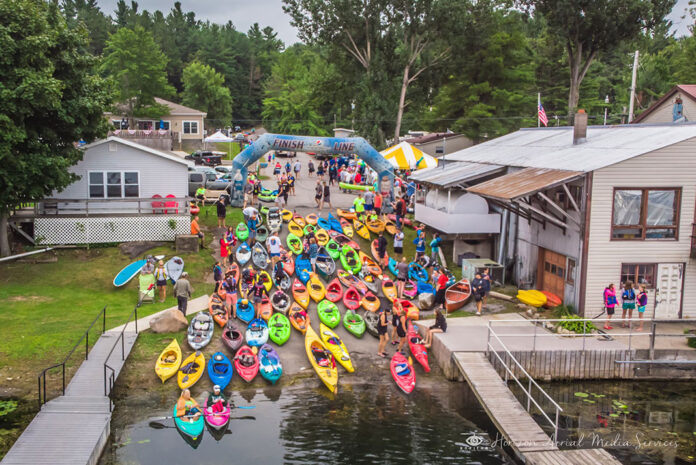
On Saturday, August 17th participants of all ages and skill levels are invited to experience the “Beauty of Betterment” in the Sanctuary of the 1000 Islands and Black Lake regions at the 6th Annual Paddle for a Purpose. People will do this for two reasons: 1) as an opportunity to have a great time in the outdoors with like-minded, fun and amazing people, and 2) to be part of a solution: to create an immediate, positive impact in the community.   Hosted by The Foundation for Community Betterment all proceeds benefit organizations, community projects and individuals in need.

 Erica Garlock, member of the organizing team said, “There is a serenity and camaraderie that exists when you’re with a group of people out on the water. It is beautiful to see and very special to be a part of. Our community is extremely proud to host this exciting event, which allows residents and visitors from around the world to experience the natural beauty of our region. All while creating a ripple effect of kindness that allows us all to have a direct and meaningful impact in the lives of others.”

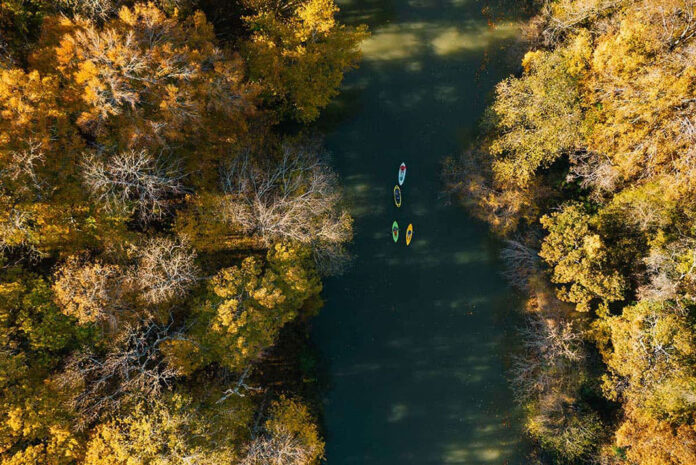
Beginning promptly at 9 a.m. (rain or shine at Schermerhorn Harbor) hundreds of paddlers from near and far will climb into beautiful wooden and plastic vessels to venture out into Chippewa Bay. Participants will enjoy a short voyage through a picturesque riverside course in “paddlers’ paradise.” Paddlers travel from island to island in kayaks, canoes, skiffs or stand-up paddle boards to collect cards to be played in their poker hand. Incredible grand prizes are awarded to adults and youth with the best hands for 1st, 2nd and 3rd Place—including an overnight stay at world-famous

All paddlers are eligible to win amazing door prizes from local businesses! An awards ceremony complete with recipient acknowledgements, music and food immediately follows at Foster’s Harbor Inn.

Rebecca Hertzig, paddler from Baldwinsville, NY said, “This event is A MUST DO!! We had a blast! Such fun with so many friendly people. River life is the best!”

 Online Pre-registration is highly encouraged by AUGUST 2nd at www.VisitHammondNY.com. By pre-registering, paddlers receive $5 off registration PLUS a FREE fitted t-shirt worth $15! Registration is open after the cut-off date and on event day for $35 (Adults) and $25 (Youth), but a free shirt is not included. Single and double seated kayak rentals are available online. This year’s exciting raffle item is a CRYSTAL CLEAR BOTTOM KAYAK worth over $2,500! Tickets are only $5 each or 3 for $10. Spectators welcome! Follow the event on facebook @ChippewaBayPokerRun.

ABOUT THE PADDLE & HOSTS:

 The Chippewa Bay Poker Run—“Paddle For a Purpose”—is hosted by the Foundation for Community Betterment and volunteers in Hammond who wish to celebrate and promote business and tourism in their community (www.VisitHammondNY.com). Travelers and outdoor enthusiasts from near and far are invited to experience the beauty of Chippewa Bay’s islands and scenic vistas—while at the same time give back to “Community Betterment” initiatives.   The Foundation for Community Betterment is a national and local network of generous individuals who believe a simple gesture that touches just one life can positively impact an entire community. As their logo symbolizes, it is our hope that simple actions can create a “Ripple Effect” of goodness in our community through the actions of the recipients we support. Since 2014, the event has contributed over $25,000 to the area community through generosity of its supporters.

EVENT DAY SCHEDULE:

  • 8 AM: Check-In // Day-of Registration Opens at Schermerhorn Harbor Marin
  • 9 AM: Poker Run Starts Promptly!
  • 10:30 AM-Noon: Awards Ceremony & After Party
  • NOON: Get on your Way! Enjoy area activities, like Pirate’s Days in AlexBay
Perception Collaborates with Clemson for a Limited-Edition Clemson Tigers Kayak

Clemson Perception special edition kayak

Greenville, SC (July 10, 2019) – Perception Kayaks, a global leader in kayak innovation and design, is proud to announce the first collaboration with higher learning institution Clemson University. The Greenville based company has received the exclusive rights to manufacture and sell the first and only Clemson University National Championship Tribe.

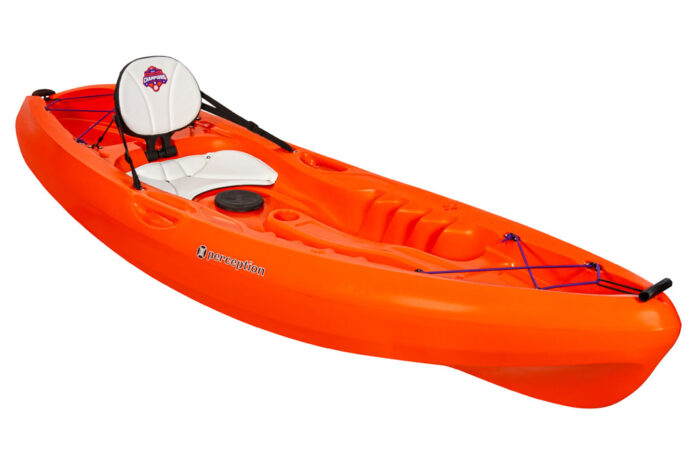
The University will be sending representatives from Clemson, the Clemson Tiger Mascot and the National Championship trophy to the Confluence Headquarters to kickoff production of the first Clemson University National Championship Tribe. Sporting the university’s iconic orange colors, Tiger paw logo and purple accents, this kayak is one for the true fans. Honoring the team’s historic two title victories in the past three years, with the Clemson National Championship logo highlighted squarely on the seat back.

The Perception Tribe 9.5’ was chosen for the Clemson National Championship collaboration because the series of sit-on-top kayaks is defined by their ultra-stable, yet quick and playful performance. The entire family will appreciate how easy it is to get on and off this stable sit-on-top. Featuring an extra-padded and National Championship branded adjustable seat, the Clemson Tribe is ready for full days exploring flat-water rivers, lakes, ponds, and coastal waters with light waves.

Perception Kayaks’ Clemson Tigers model is available in a limited quantity to Clemson fans nationwide at PerceptionKayaks.com, along with specialty retail locations. For more information, visit the site or follow the brand on Instagram at @perceptionkayak and Facebook at @PerceptionKayaks. 

 About Perception Kayaks®

As the world leader for kayak innovation, Perception® Kayaks has introduced more people to paddling than any other brand and pioneered the modern kayak design and construction over 40 years ago. Perception Kayaks is a company of passionate paddlers who design kayaks for comfort, stability, durability, safety, and performance. The proprietary resin and innovative rotational molding process used provides superior strength and light weight in a leak-proof one-piece construction. The result is a lineup of the most comfortable, versatile, and easy-paddling kayaks with unmatched UV, impact, and abrasion-resistant. Best of all, every Perception kayak is proudly designed, molded, and hand assembled in Greenville, South Carolina, USA.

New Zealand Team To Document 50 Northern Japan Canoe And Packrafting Routes

New Zealand expedition to document 50 Japan canoe routes

Sapporo City, Japan: New Zealand couple Rob and Haidee Thomson have announced a three-year ‘expedition’ to document over 50 canoe and packrafting routes in Hokkaido, Japan’s northern-most island. Along with former New Zealand whitewater kayak representative Chris Auld, the team will produce detailed route guides for the established lake and river touring routes to be posted on their popular Hokkaido outdoor website, HokkaidoWilds.org. These routes guides, produced during weekend and vacation trips across the island, will be the first of their kind to be produced in English in Japan.

Hokkaido is Japan’s most wild and rugged island, with a number of pristine rivers and lakes, many perfect for overnight and multi-day canoeing trips,” explains HokkaidoWilds.org founder Rob Thomson. “These are no secret to local canoeists, with a number of Japanese guidebooks published in the 1990’s. We’re calling this project an expedition, but we have day jobs. So really, it’ll be three years of weekend and vacation micro-adventuring, making the most of the time we have off. We’ve already published over 100 ski, cycle, and hike routes, so we’re excited to add canoeing and packrafting routes to the site.”

Hokkaido Wilds canoe touring database features

  • GPX and KML route files for GPS navigation.
  • Printable PDF topographical maps and official topo map references.
  • Live river water level information including webcams.
  • Put in locations and public transport information.
  • Location-based search (find routes near you).
  • Route guide plus photos.
  • Onsen hotsprings nearby each route.
  • Safety tips and frequently asked questions.

Ainu place names

 Along with canoe touring routes, new to HokkaidoWilds.org is the inclusion of Ainu river, lake, and mountain names on route guide posts. HokkaidoWilds.org is committed to acknowledging historical and contemporary Ainu heritage of Hokkaido.

Sponsors

The Hokkaido Wilds canoe route documentation project is supported by the following companies.

  • Guide House Canoa – Based in Lake Shikotsu Village in Hokkaido, Canadian canoe guiding company Canoa provided two Nova Craft Prospector 16’ canoes for the project.
  • MRS Packrafts – As one of the world’s leading packraft manufacturers, MRS provided Hokkaido Wilds with their two-person Barracuda R2 Pro packraft.
  • Day Two NZ – Based in Rotorua, New Zealand, Day Two has provided discounted gear.

About Hokkaido Wilds

The Hokkaido Wilds is a non-profit website that exists to inspire people to explore and enjoy Hokkaido’s extraordinary outdoors by ski, bicycle, foot, and canoe in an informed and responsible way. The site currently boasts over 100 ski touring, cycle touring, hiking routes, all accessible for free.

100% of revenue earned on the site through guide referrals and links goes to a fund to support local Hokkaido volunteer groups committed to sustainable access to the Hokkaido outdoors (incorporated non-profit status planned for early 2020).

Hokkaido Wilds founder Rob Thomson is no stranger to adventure travel and expeditions. He previously cycled from Japan to Switzerland, and still holds the Guinness World Record for the Longest Journey by Skateboard (12,159km). He has lived in Japan for 12 years (8 in Hokkaido), and works as an assistant professor of media and communications at Hokusei Gakuen University in Sapporo City. Chris Auld has completed a number of multi-day whitewater expeditions in North America and New Zealand. HokkaidoWilds.org visuals were designed by award-winning Polish graphic designer Dominika Gan.

URL: https://hokkaidowilds.org/paddling

Help Wanted: How Paddlesports Retailers Hire In A Tough Labor Market

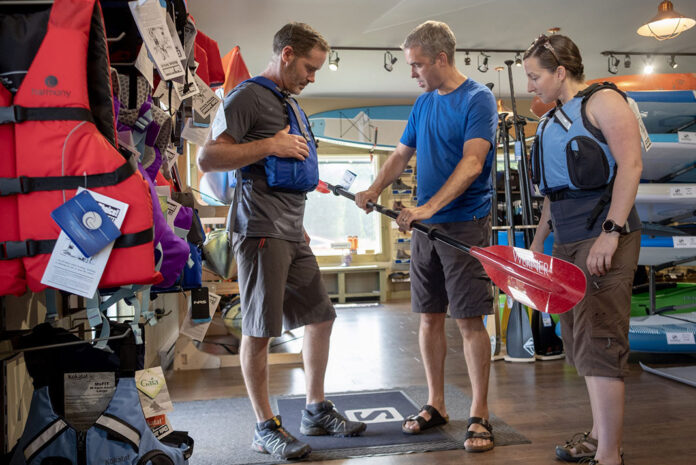
paddlesports shop employee demonstrates paddle and PFDs to customers while surrounded by other products
Feature photo: Mark Hemmings

The U.S. unemployment rate fell to 3.6 percent in April, a 50-year low. The figure in Canada is 3.8 percent, and young people throughout North America are spending less time than ever outdoors. It’s no wonder paddling shops are having a tough time finding qualified employees these days.

“I’ll tell you something everybody will agree with: It’s getting harder and harder to hire great employees,” says Darren Bush, owner of Rutabaga Paddlesports in Madison, Wisconsin, where unemployment is hovering at about 2.5 percent and McDonalds is paying $14 an hour. We asked retailers across North America how they manage to find and keep good staff in such a competitive environment. Their verdict: You can’t afford to be cheap.

“Rule number one is find out what the prevailing wage is in your town and pay it,” Bush advises. Good employees command higher wages, but they’re often worth the extra cost. “It’s better to have 10 people making $15 an hour than 15 people making $10 an hour,” he says. “We’re short-staffed right now, down maybe three people from where I’d like to be. But the people I have are great.”

Bush pays competitive wages and provides matching 401K and health benefits (he’s on the same insurance plan as his employees). It’s a big expense, but not as costly as staff turnover. “I don’t know why this is a secret,” he says. “At the end of the day it comes down to treating people like human beings. The owners I know who do that have very successful businesses and do very well.”

You don’t have to hire paddlers

“We try to hire paddling enthusiasts, but nowadays we don’t need enthusiasts. What we need is somebody with good communications skills and customer service experience,” says Mike Ong, owner of Southwind Kayaks in Irvine, Ca. The ideal shop employee is an avid paddler who is great with people, but the 14-year industry veteran says people who fit that description are harder than ever to find and keep. “If that’s what you’re looking for, good luck,” he says.

Know your customers’ needs

Knowledge helps sell, but it’s important to hire employees who have the right kind of knowledge, says Steve Marshall, owner of Paddleyax in Independence, Virginia. The bulk of Marshall’s business is in fishing kayaks, and his customers are moved more by fishing tips than kayaking jargon. “Given a choice between someone who worked in a big-city kayak store or someone who’s new to kayaking but familiar with the fishing here, I’d go with the local guy,” he says.

Good staff come in all ages

“I’ve had a couple really good young employees come through. Their communication skills and outdoor experience were fantastic, but after a year or so they move on with their lives,” says Sean Creary, owner of River and Trail Outdoor Company in Rothesay, New Brunswick. Creary was happy to have those flashy young stars, but his bedrock employees are older. “They’ve got kids and are at a point in their life where they’re happy working at the shop. I give them lots of flexibility and I pay them well.”

Resist the rush

Chances are, the perfect candidate won’t walk through your door as soon as you post a help-wanted ad. Creary prefers to hold out for the right candidate, even if that means picking up extra hours himself. “It’s more important to have the right person in the store, even if that means it’s going to be me for the next little while,” he says.

Know your weaknesses

Too many retailers look to hire a younger version of themselves, but the goal of hiring shouldn’t be to duplicate your own strengths. It should be to complement your team. Simon Coward, owner of Aquabatics in Calgary and Edmonton, Alberta, puts it more bluntly: “Realize what you suck at and pay people to do it for you.”

Photo: Mark Hemmings

Why Two Brothers Portaged Canoes To Mount Everest

Photo: Seton Roberts
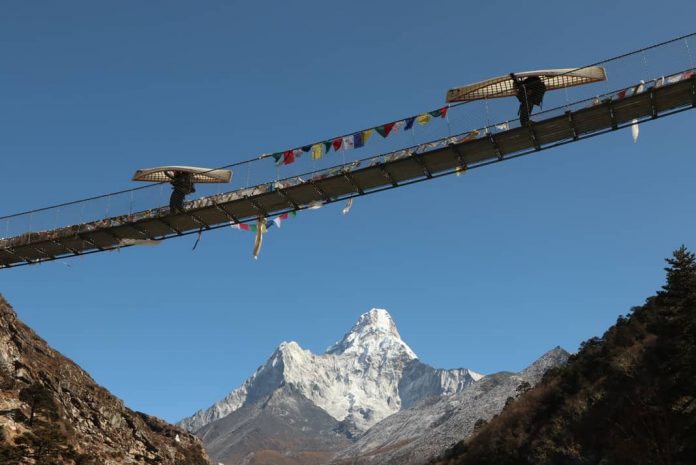
The brothers hiked from the city of Lukla at 8,383 feet above sea level to Everest Base Camp at 17,600 feet over 18 days. Gnarliest portage ever. Photo: Seton Roberts

Think back to the most difficult portage you’ve ever experienced. Maybe there was miserable weather, rugged terrain, unbearable distances or injuries along the way. You felt tired, overwhelmed and focused on just putting one foot in front of the other. Now, imagine that for 18 days. And, when the portage comes to an end, there isn’t any water in sight.

That was the reality for two brothers, Kyle Roberts and Tom Schellenberg, who took portaging to new heights on January 18 when they reached Mount Everest Base Camp in Nepal after a grueling 58-mile portage.

Why did the brothers portage canoes through Mount Everest?

The mission of The Weight We Carry, a non-profit organization founded by the brothers, is to carry canoes to the most unlikely places on earth in support of mental health.

Roberts and Schellenberg have friends and family who have suffered mental health illnesses, and the two 30-pound Cape Falcon Kayak skin-on-frame canoes they carried represented the extra burden people living with mental health issues face.

As a tribute to growing up camping and canoeing in Algonquin Park, they both have a map of Algonquin Park tattooed on their shoulders. Their love for camping in combination with their determination to help others is what drove them to start this unique non-profit.

Planning for a good cause

This expedition was two years in the making. The brothers took a hiking trip to Everest Base Camp in 2016, where they witnessed the devastation of the 2015 earthquake. This inspired the pair to raise money to support the local community.

Speaking with the brothers via satellite phone while they were in a tea house just below Base Camp, they agreed the most challenging parts of the climb came from high winds, cold temperatures and the rough terrain they were trekking on.

“Keeping our hands on the gunwales of the canoe was very difficult. Our hands were freezing but the winds were so strong we weren’t able to let go of the canoe,” said Schellenberg.

“It was a challenge to find a comfortable position to rest the canoe after carrying them for such a long period. We were constantly making adjustments to relieve pain where we could,” said Roberts.

In addition to carrying 60 pounds of gear and 30-pound canoes, Tom was fighting a pain on the big toe of his left foot.

“My toenail was being driven into my foot causing an infection with a lot of discomfort. It was likely from climbing all the elevation. I was soaking it in salt water in the evenings and had a few doctors evaluate it on the way up and decided I wanted to keep climbing,” said Schellenberg.

What is their goal?

The pair raised $75,000 and is continuing to fundraise back home with hopes of hitting their goal of $150,000. The money will fund the construction of The Women’s Mental Health Centre facility for Koshish, a Nepalese organization providing short-term care for women with mental health illness.

“The canoes grabbed a lot of attention. We found it difficult in some circumstances to communicate what it was we were trying to do. For those who did understand, everyone was very appreciative of us giving back to their communities” said Roberts.

After reaching Everest Base Camp, the pair turned around to begin a weeklong trek back down the mountain. In total, they hiked 115 miles with almost 70,000 feet of vertical altitude gain on the long portage to and from Base Camp.

Donations are still being accepted at www.theweightwecarry.com.

Watch the trailer for the new documentary

Explore Utah’s Green River Canyonlands By Kayak

man walking the Wind River Range in Wyoming
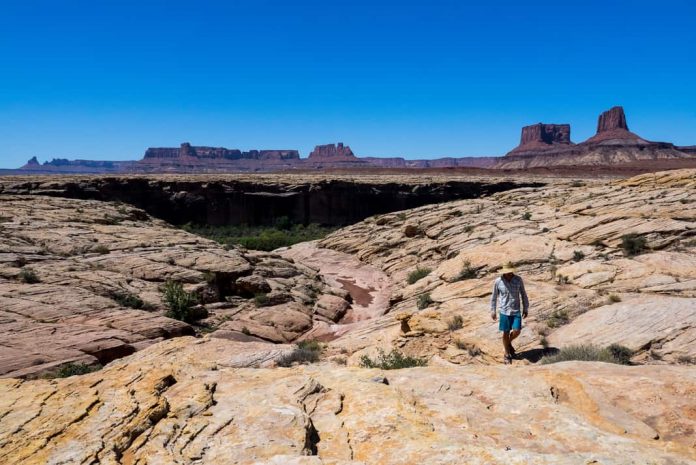
At 730 miles long, the Green River is the largest tributary of the Colorado River. Its headwaters are in the Wind River Range in Wyoming. | Photo: Mike Bezemek

In mid-July of 1869, John Wesley Powell and crew, in three wooden rowboats, spilled haphazardly out of Gray Canyon into a sandy basin near present-day Green River, Utah. They were down a man who had left the expedition after a boat was wrecked in the rapids of Lodore Canyon the month before.

Already they’d come about 400 miles—running, lining, and portaging hundreds of rapids. After 20 miles of easy floating, a new canyon appeared. Rising bluffs typically foretold trouble, but this canyon was different.

The river was calm as a lake, sweeping through great meanders between cliffs of orange sandstone. The circuitous route through colorfully changing rock formations became so tortuous, Powell named it Labyrinth Canyon. When spires and buttes rose overhead, this became Tower Park. And when the walls deepened into a more coherent gorge above the confluence, Powell reminded mapmakers about the slow current: Stillwater Canyon.

Today, these sections along 140 miles of the Green River offer some of the finest flatwater paddling in the desert Southwest. Given the remote region the river travels through, access points are few and distances between far. But if you’re in good paddling shape, comfortable with remote runs and interested in unreal scenery, this is for you. Mid-to late-spring and early-to mid-fall are preferred, while mid-summer is a real scorcher. Side hikes, ruins and rock art are just as good as the paddling.


Weather: Sunny with a slight chance of shade, if you have an umbrella. Be prepared for big temp swings, powerful winds and sudden thunderstorms. This is high desert.
Shuttle: Coyote Shuttle offers vehicle transfers and full-service shuttles for trips down Labyrinth and Stillwater. coyoteshuttle.com
Don’t Miss: Nearby Moab, Utah, is one of the top adventure towns in the U.S., with enough world-class mountain biking trails to make the most dedicated paddler consider (temporarily) switching sports.
Diversions: Winding above the river through Tower Park is the White Rim Road, a 100-mile unpaved loop through the Island in the Sky district of Canyonlands National Park. A National Parks Service permit is required.
Learn More: For a guide to 1,600 miles on the Green and Colorado Rivers, plus the dramatic story of the 1869 expedition, see Paddling the John Wesley Powell Route by Mike Bezemek.

If you have a half day

Upstream from Green River, Utah, the Daily is eight miles of easy, pool-drop class II-II+ through the stark but scenic Gray Canyon. It’s a somewhat popular stretch for beginner whitewater kayaking and warm-weather floats. Put-in is at the primitive Nefertiti Access. Take-out is at Swaseys Beach boat ramp. Self shuttle using the unpaved, riverside Beach Road.


If you have a full day

The shorter option is 12.5 miles, through irrigated farm fields, from Swaseys to Green River State Park. But the more ambitious and interesting option is 23 miles from the state park to Ruby Ranch, past the curious manmade Crystal Geyser, gypsum buttes, and the scenic beginnings of Labyrinth Canyon. The shuttle on I-70 and unpaved Ruby Ranch Road takes one hour each way.


If you have a weekend

Make it a long weekend, and paddle 45 miles from Ruby Ranch to Mineral Bottom through a landscape that will change your life—and possibly take years off your vehicle’s suspension. Highlights include Trin Alcove, Navajo Sandstone, Bowknot Bend, and much more. A self-issue permit is required for Labyrinth Canyon, available online from BLM.


If you have a week

Then, boy, you’re going to need it. Combine the Lab trip above with 52 miles through Tower Park and Stillwater Canyon in the otherworldly Canyonlands National Park—advance permit required, but no lottery or quotas. There’s no take-out, so arrange a jet boat extraction from Spanish Bottom just below the confluence of the Colorado River upstream to Moab. What else? Fort Bottom. White Rim. Upheaval Dome. Butte of the Cross. Dollhouse. Yeah, I’m just listing cool stuff—are you Googling yet? You should be sitting down when you do.

At 730 miles long, the Green River is the largest tributary of the Colorado River. Its headwaters are in the Wind River Range in Wyoming. Feature Photo: Mike Bezemek

Eight reasons to paddle the longest single-state river trail system in the U.S. 

Alabama Scenic River Trail

The Alabama Scenic River Trail offers more than 5,000 miles of waterways, world-class rapids,  free-flowing streams and large lakes, but it remains little known but to a small group of paddlers in the Southeastern United States.

Now river trail organizers there are trying to change that, pointing to water-front campsites, dozens of independent outfitters and a new website with interactive trip-planning tools as reasons paddlers from outside Alabama’s borders should check it out. Paddlers may also be drawn to this fact: The 11-year-old Alabama Scenic River Trail is the longest single-state river trail in the U.S. and it is located in one of the most biologically diverse regions of the country.

Here are eight reasons why you should paddle the Alabama Scenic River Trail.

The challenge

At more than 5,000 miles, the Alabama Scenic River Trail is the longest single state river trail in the U.S. It includes non-contiguous sections, appropriate for short day trips or long-distance runs. The system also includes the original 650-mile, core section of the river trail, which stretches across the state from the foothills of the Appalachian Mountains to the Gulf of Mexico.

Wildlife views

The river trail brings paddlers through the foothills of the Appalachian Mountains, around pitcher plant bogs, into alligator country and finally to the mouth of the Gulf of Mexico. It offers views of towering waterfalls, waterscapes accented with plush, green foliage and encounters with otters, bald eagles, giant turtles and more.

Great Alabama 650

The core section of the trail doubles as a racecourse for paddlers who take on the Great Alabama 650, an adventure-packed, long-distance paddle race in its inaugural year. The Great Alabama 650 stands apart from other races and is recognized as the longest paddle-only race in the United States and the longest annual paddle race in the word.

Hospitality

About a dozen designated trail angels support the Alabama Scenic River Trail. They are  available to offer advice, hands-on assistance, and in some instances, even an overnight stay to trail-goers.

[ Paddling Trip Guide: See all Alabama Trips ]

Accommodations

River trail organizers have established more than 100 campsites along the system, offering long-distance travellers overnight accommodations at the water’s edge. These sites are listed on the river trail website and are marked by blue signs on the waterfront to make them easier for paddlers to find.

Trip planning

At www.AlabamaScenicRiverTrail.com is a mobile-friendly, interactive map of the river trail. Divided into ten districts, paddlers can scroll over or tap any section of the map for detailed information about each section of the river trail. The website also allows users to develop their own account and add content to the site.

Variety

The Alabama Scenic River Trail includes a wide-range of water types. Paddlers can tackle class-five rapids on frothy rivers, schedule tranquil paddle boarding sessions on flat water, or float down narrow streams near city centres.

Access

More than 50 outfitters line the banks of the Alabama Scenic River Trail and are listed on the website. These small, independent shops offer a range of services to include rentals, guided trips, shuttling and boat sales.

You can connect with the Alabama Scenic River Trail on Instagram, Facebook or Twitter and it is supported by a team of creative, adventurous ambassadors. You can find more on social media about the river trail by following the hashtag #OnTheASRT.

Text by Laura Gaddy


International Paddle Athletes Buzz About New Alabama Race

Alabama Scenic River Trail

Four decades ago on a rural Alabama creek, a 10-year-old boy launched a canoe and began a journey that would one day lead him to a serendipitous experience in Canada’s Yukon Territory. 

Now a 50-year-old river trail promoter, that boy, Jay Grantland, is a canoe guide so experienced he can use the gauges on his 20-year old Wenger watch to clock the speed of paddlers to determine how long it will take to reach their destination. He has paddled thousands of miles on Alabama’s waterways over rapids, on flat water, on slow-moving streams and to destinations with ecological and historical gems like Native American rock paintings and rare flowers and birds. As the Executive Director of the Alabama Scenic River Trail, a 5,000-mile river trail system, Grantland’s latest challenge involves promoting the Great Alabama 650, an adventure-packed, cash-rewarded paddle race that he hopes will launch international interest in paddle sport opportunities in Alabama.

In late June, Grantland and Race Director Greg Wingo, a 40-something ultra-marathon runner and endurance sports aficionado, made a 6,000-mile trek to Whitehorse, Canada to promote the Great Alabama 650. Grantland and Wingo had been in town for less than 12 hours when they were seated across from each other at a tiny wooden table outside Baked, local coffee house, when they learned that word of the Alabama race had already reached Whitehorse.

“We were there having a conversation with a gentleman about trail running and being from Alabama,” Wingo said, recalling the moment. “Another man sitting nearby, named Walter, turned to us and said,

“Have you heard of the Great Alabama 650?” To which we said, “Yes we’re the ones putting on that race.”

The Great Alabama 650 will be the longest paddle-only race in the United States and the longest annual paddle-only race in the world, second in total distance only to the Yukon 1000, which takes place every other year. The Great Alabama 650 will take place on the core section of the Alabama Scenic River Trail and will take paddlers from the foothills of the Appalachian Mountains to the Gulf of Mexico. 

“This is a no-frills race,” Wingo said. “It’s more closely aligned with an adventure race than the typical paddle race.“

Participants in the Great Alabama 650 will paddle through long stretches of wilderness as well as some of Alabama’s towns and cities, including Montgomery, the state’s capital. They will portage around 11 dams, encounter a bout of whitewater and face-off with the headwinds from the Gulf of Mexico on the glassy, flat waters of the Mobile Bay. Along the way they will encounter a range of wildlife, to include everything from alligators to otters. 

“Our race is going to continually test every one of our competitors right to the very end,” Wingo said. “Racers will be battling the course as much as they will be battling other racers, if not more.” 

[ Paddling Trip Guide: See all Alabama Trips ]

Walter, the man from the coffee shop, was one of the racers in Whitehorse to compete in the Yukon River Quest, a long-distance paddle race that takes place on the off-years between Yukon 1000 races. The Great Alabama 650 promoters had timed their trip to coincide with the Yukon River Quest so they’d have a chance to meet paddle athletes and race organizers.

More racers in Whitehorse discovered that Grantland and Wingo were representing the Great Alabama 650 and affirmed what Walter, the paddler at the coffee shop, had already indicated: news of the race in Alabama had already spread to the paddle community in the Pacific Northwest.  

“I was pleasantly surprised at how many people were not only aware of the race, but really excited about it,” Wingo said. “Many of the world’s toughest paddlers will get a chance to experience the beauty and challenge of our Alabama waterways during the Great Alabama 650. We are excited to put on the longest paddle race in the country.”

To learn more about the Great Alabama 650, visit www.AL650.com, or use the hashtag #AL650 to find the race on Facebook, Instagram or Twitter. Interested paddlers can also find out more about the Alabama Scenic River Trail at www.AlabamaScenicRiverTrail.com, or by using the hashtag #OnTheASRT on social media channels. 

Text by Laura Gaddy

The Ultimate Kayak Camping Packing List

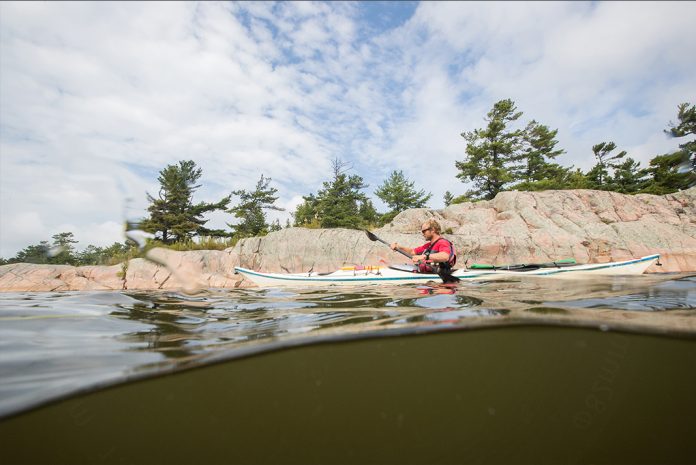
Person kayaking along a rocky shoreline
Keep this list handy for quick-packing when an impromptu trip arises.

There’s nothing better than paddling with pals on your way to an epic spot for an overnight. But what do you bring for your kayak camping trip? Paddling Magazine has created the ultimate kayak camping packing list so you can be prepared and comfortable on your adventure.

Don’t forget to check your list twice.

Kayak accessory essentials

● Kayak
● Sprayskirt
● PFD for everyone
● Paddle, plus a spare
● Paddle float
● Drybags

[ Paddling Buyer’s Guide: View all kayak accessories]

Kayak camping gear

● Tent or hammock
● Sleeping bag
● Sleeping pad

What to wear kayaking

● Paddling top
● Warm baselayer
● Quick-dry pants and shirt
● Rain gear
● Extra socks
● Hat and sunglasses
● Immersion protection

[ Paddling Buyer’s Guide: View our selection of kayaking apparel ]

Camp kitchen equipment

● Water treatment and bottles
● Stove, fuel and cookset
● Food and snacks
● Mess kit
● Rope to hang bear bag overnight

Kayak safety gear

● Compass and map
● Bailer or bilge pump
● First aid kit
● Lighter/matches
● Sunscreen
● Communications/signalling device
● Weather/VHF Radio

[ Paddling Buyer’s Guide: View our selection of safety & rescue items ]

Camp supplies you don’t want to forget

● Headlamp
● Multi-tool
● Toilet paper
● Bug spray
● Emergency cash

Travel Photographer Paddles And Explores Sri Lanka

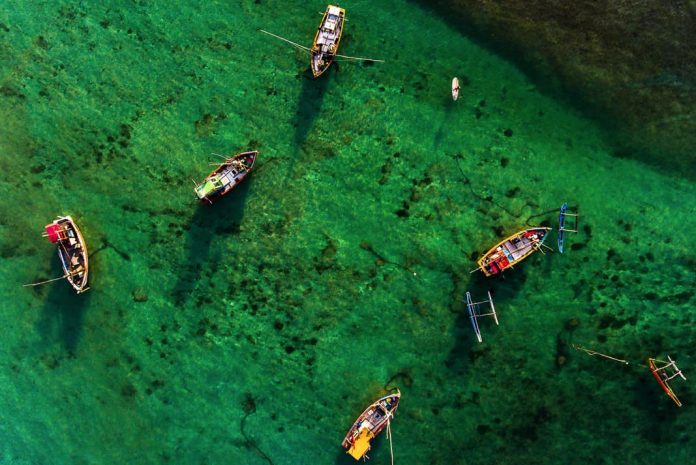
an aerial shot of several fishing boats paddling in Sri Lanka
Cory Leis is an adventure and travel photographer based in Whistler, British Columbia. | Photo: Cory Leis

Wonder and curiosity struck me the first time I set my eyes on photographer Steve McCurry’s image of four stilt Sri Lankan fishermen back in 1995.

The very act of fishing while perched atop a single pole was so foreign to me. It’s one of many travel photographs that remains with me and fuels my inner wanderlust.

For years, intrepid travelers skipped over the small island of Sri Lanka in favor of bustling India or the jaw-dropping atolls of the Maldives.

Following a 30-year civil war, it’s only the last 10 years tourists have landed in the busy hub of Colombo and trekked deeper into the rolling hillsides, exploring centuries-old Buddhist temples, tea plantations and wildlife sanctuaries.

Now it’s one of the top emerging travel destinations. As a photographer, I do oodles of research into a destination before my bags are packed.

As I dug deeper, I realized for an area the size of Ireland, Sri Lanka seemed to offer more outdoor and cultural experiences than many other places I’ve visited.

[ Paddling Trip Guide: Explore more adventures ]

Most of the decades-long civil war concentrated in the north and interior of the island, but the 2004 Indian Ocean earthquake and resulting tsunami decimated the southern coast.

Livelihoods tightly woven into the tides were torn apart, buildings and boats close to the ocean were destroyed, people lost their loved ones, and the rest of the world scrambled to provide aid to the beach communities in the south.

One of the many acts of kindness came from small fishing towns throughout the Netherlands, like the famous herring city of Vlaardingen, which donated fishing boats to coastal fishing families so they could sustain themselves.

These colorful boats sparked my curiosity—on closer look they are adorned with the names and locations of the donors.

As the morning sun rises over the horizon, this particular little spot on the south coast lights up as the fishermen’s boats full of color and texture contrast the clear Indian Ocean.

The bay is shallow, fringed by a massive reef protecting the boats during large swells, and also funneling a right-handed wave perfect for long boarding and SUP surfing. Photographing the ocean, and particularly a coastline with a shallow reef, provides the opportunity to fly a drone and offer a unique perspective.

Though the drone is cumbersome when traveling and I only pull it out occasionally, all the hassle is worthwhile when I get back and see the images.

Travel adventure photography is more than just the photo. It’s the people, sounds, smells and culture, all wrapped up in a digital capture. One of the first days we surfed this wave, we exited to the beach as the fishermen were returning from a night’s outing.

Rama, who seemed to captain a vessel, came over with his big welcoming smile and introduced himself. He offered us some fresh catch and we sat and spoke with him for the better part of an hour.

He explained what had happened to the families after the tsunami, answered our queries about the unique names of the local fishing boats, and became a friendly face on our surf sessions down at what we took to calling Fishermans.

With my own photography, I hope to strike a little wonder in the viewer’s eyes, inspiring someone else to book a ticket, travel a little deeper and snap an image you’ll never forget.

Cory Leis is an adventure and travel photographer based in Whistler, British Columbia. | Feature Photo: Cory Leis