Home Blog Page 2

The Less You Know, The Better You Decide

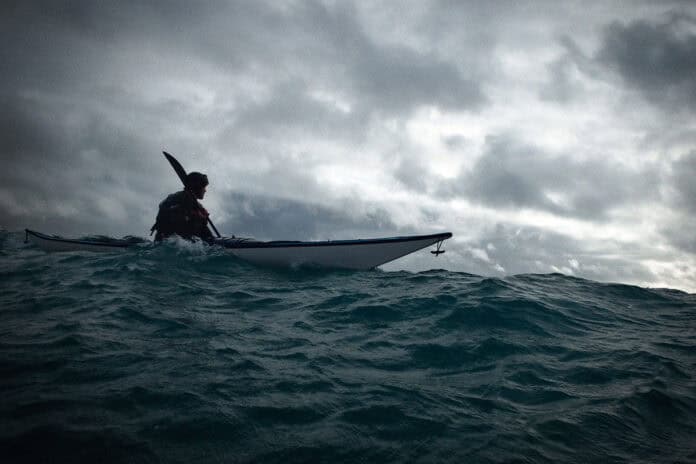
person sea kayaks on swell under dark, cloudy skies
Stop refreshing the forecast. | Feature photo: Mike Hayes

You’re standing on the beach, eyeing the swell. It’s sunny, with shrinking patches of fog. A trip around a prominent headland is in your plans. Pick one: the Brooks, Cape Caution, Cascade Head.

Or maybe you’re in a protected cove, bracing for a long crossing. Maybe God’s Pocket to Shelter Bay via Queen Charlotte Strait, Astoria to Chinook at the mouth of the Columbia River, or Isla Carmen back to Loreto, Mexico.

You’ve listened to the forecast, reviewed the charts, current tables and tide heights. You’ve checked four different sites: Windy for the wind forecast, Surf-Forecast for swell direction and wave energy, DeepZoom for currents, and Weather Underground for the hourly forecast. And you’re still wondering: is the plan solid? Will the fog move in mid-crossing? Will the wind jack up more than forecast? Are there too many shallow rocks for that swell and tide height?

The less you know, the better you decide

If you’d listened to Samantha Kleinberg, instead of triple-checking all those forecast sites, you might have realized you were better off with less information.

Kleinberg, a professor of psychology and computer science at Stevens Institute of Technology, studies how information shapes decision-making. In Less Is More, co-written with psychologist Jessecae Marsh, she found that simple, targeted information leads to the best decision-making. Add any extraneous information and decision quality drops. The worst decisions were made by those who either sought the most complex information or didn’t believe they needed any information at all.
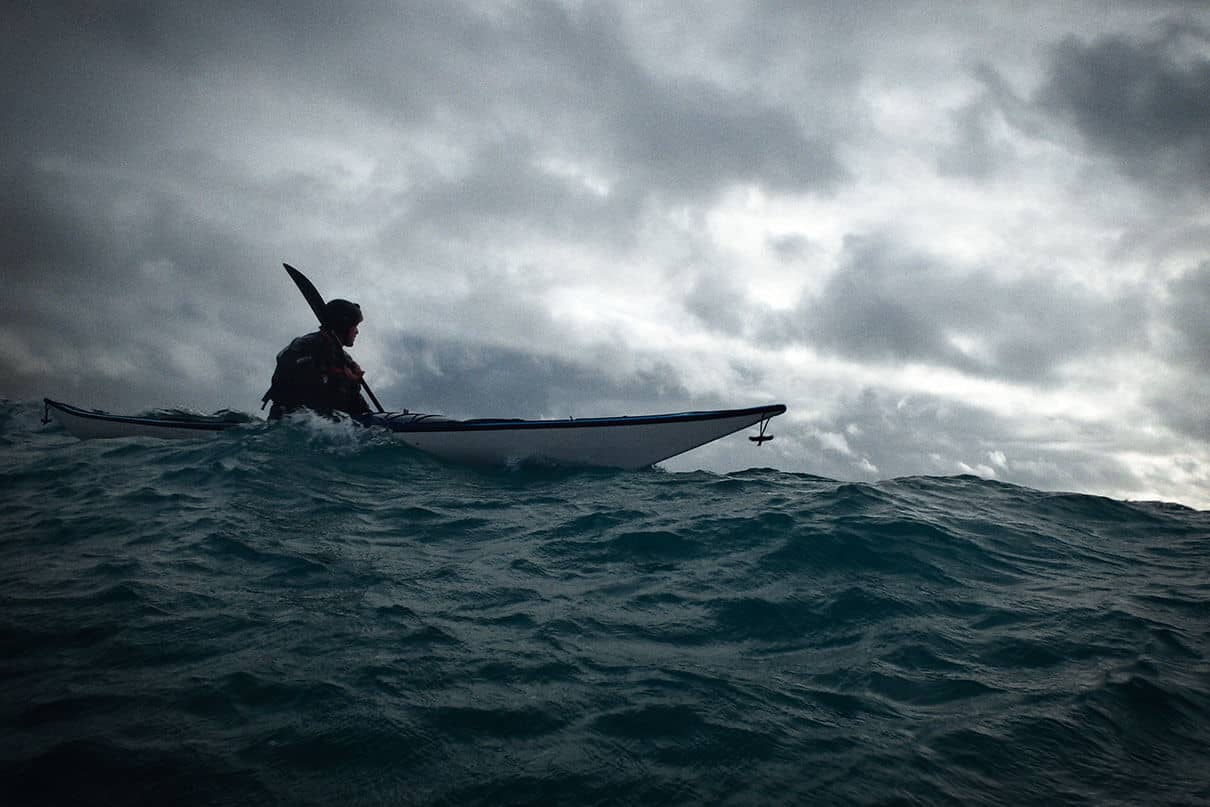
person sea kayaks on swell under dark, cloudy skies
Stop refreshing the forecast. | Feature photo: Mike Hayes

The last part makes sense. But the idea that getting our neoprene-gloved hands on as much information as possible about sea conditions is a bad move might surprise you. Here’s why.

Anyone who’s taken an outdoor leadership class knows these steps when faced with a consequential decision. Assess the situation: the weather, the group, the route, the subjective and objective risks. Make a plan. Check in.

This methodology is designed to slow us down. To resist the urge to charge ahead to get a crossing over with because that’s the plan we made. Mountaineers call it summit fever. Skiers follow the lure of untracked fresh powder into avalanche zones. Slowing down shifts us out of what Nobel Prize-winning psychologist Daniel Kahneman described as System 1—fast, automatic, instinctive, emotional and often error-prone decision-making—and into System 2—rational, slow, careful, effortful analysis.

System 2 requires time, dispassionate analysis and enough information. It’s done in your tent on the beach, not rafted up on the open coast when the barometer suddenly plunges.

“If you get too much information, your decision-making quickly becomes as bad as if you’d gotten no information at all.”

There are two big problems in wild places. The first is that you quickly run out of information. Forecasts are broad. Will the window between fog burning off and the wind whipping into whitecaps be long enough to make the crossing? We can look at whatever weather sites we want, but we won’t find an answer. System 2 is hard when there’s not much to go on.

The second problem, and one that Kleinberg hones in on, is that we’re very easily bamboozled by one or two tidbits that aren’t relevant.

“What’s really remarkable is that even a tiny amount of surplus information has a big negative effect on our decision-making,” wrote Kleinberg. “If you get too much information, your decision-making quickly becomes as bad as if you’d gotten no information at all.”

In her field of medicine, when she told patients that eating too much salty food is bad for blood pressure, she also added extraneous information that drinking water reduces thirst, leading people to lose the ability to choose healthy diets.

“The problem isn’t just that people are overwhelmed by the sheer quantity of information—it’s more that they’re struggling to figure out which parts of the model they should be paying attention to,” Kleinberg wrote.

It’s easy to apply that problem to our headland paddle or long crossing. These are common reasons we articulate for pushing on or staying put: I need to be back at work on Monday; that campsite we’re heading to is really pretty; our original plan was to get to X. Those have no bearing on whether crossing conditions will be within the group’s ability. But because they are part of our overall trip plan, we often don’t realize they’re extraneous to the decision we’re making.

The trick, Kleinberg argues, is to boil down the information to what’s relevant. But that’s easier when a dispassionate doctor is advising a patient. It’s harder when the trip leader is as eager as anyone else to get to that fantastic island.

So, what are we fallible paddlers to do?

One strategy is to keep simple checklists—wind, currents, fog, swell, strength of group, are conditions improving or worsening? A friend of mine keeps his checklist on a laminated card in his day hatch. Assess, decide and move on.

“If you give people the opportunity to overthink, even when they ask for additional information,” said Kleinberg, “things go poorly.”

Another method is very powerful but elusive.

Psychologists call it Recognition-Primed Decision-Making. National Outdoor Leadership School instructor Ian McCammon calls it pattern recognition. People with extensive experience in a field—wilderness leaders, firefighters, high-risk investors—can often intuitively recognize a pattern emerging and know what to do.

“Typically, the expert is unaware of the exact pattern that triggers their response; they just know it when they see it,” McCammon wrote in an outdoor risk management journal. The expert’s unconscious mind is flagging subtle patterns, sorting through a very large database of experience, and extrapolating what will happen and what to do.

But pattern recognition has limits, too. You must be an expert. And expertise doesn’t often cross disciplines. An expert at mountaineering won’t know how to manage a group at sea. And there are enough differences between the ocean and whitewater that pattern recognition doesn’t translate there, either.

And now, back to our beach, where we’re eyeing the swell.

Keep it simple. Are you an expert? Then it’s time to trust your gut. If you’re not? Then keep the information quick, absolutely relevant, and think, but don’t overthink. Strip the decision down to the essentials. A team of psychologists will applaud you when you get back to civilization. Just because you want more information doesn’t mean it’s good for you. Just like ice cream.

Neil Schulman paddles and writes from Portland, Oregon. The location of the next cup of coffee, while interesting, is not directly relevant to his paddling decisions.
Cover of Issue 75 of Paddling MagazineThis article was published in Issue 75 of Paddling Magazine. Subscribe to Paddling Magazine’s print and digital editions, or browse the archives.

Stop refreshing the forecast. | Feature photo: Mike Hayes
 

The Guides Who Make Rafting Tennessee Whitewater Unforgettable
In the northeast corner of Tennessee, the dramatic relief of the Appalachian Mountains cuts impressive river gorges tumbling with whitewater. And while the experience and scenery are spectacular, it’s the guides who welcome paddlers to places like the Nolichucky and Pigeon rivers that make them unforgettable.
“It’s a bonding experience,” says Slayton Johnson the owner of Wahoos Adventures in Erwin, Tennessee. “You’re going to conquer some things. You’re going to conquer some fears…some rapids…and a few bad jokes.”

As the owner of a rafting outfitter in Tennessee, Johnson is well-versed in the traits that make for a good river guide. The ability to navigate these wild rivers with skill, to empathize with the emotions a first-time rafter is facing and being able to lead them through it, and lastly, perhaps the most notorious of raft guide traits—a knack for corny humor.

“We’re a special breed, us river people, with our stupid raft guide jokes,” shares Matt Moses of USA Raft. “We tell the same ones on every river worldwide.”

Moses and others have a few favorites, and the punchline hits best when you’re sharing a raft with them in one of Tennessee’s remarkable gorges.

Learn more about visiting the Nolichucky and Pigeon rivers at tnvaction.com.


Feature image: NOMO Films


Pro Paddlers On The Scariest Thing That Ever Happened To Them

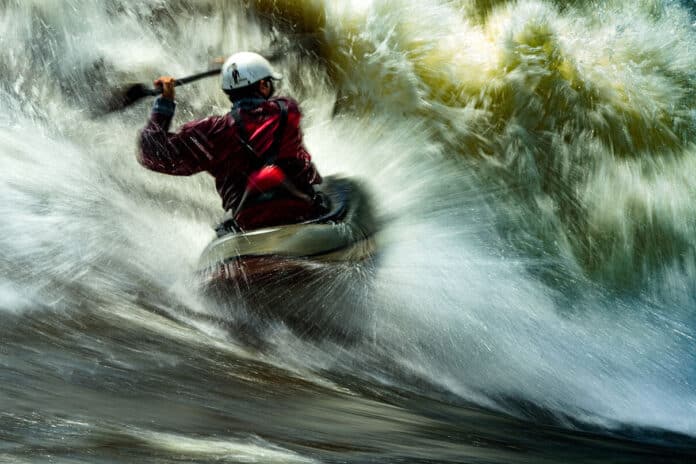
long exposure photo of a man whitewater kayaking in breaking rapids
I will survive. | Feature photo: Daniel Stewart

Spend enough time on the river and, sooner or later, you may collect a story that still gives you the chills. We asked pro boaters to share the scariest moments they’ve experienced. Here’s what some of of them had to say.

Pro paddlers on the scariest thing that ever happened to them

“Oh boy, this is a potentially long and scary list. Chased by crocodiles on the Zambezi, drowning on the Verdun in France, pinned under a steel beam in Italy, rescuing a guy on the Seven Teacups in California, breaking my back in North Carolina.”

—Corran Addison

“Driving through a field in Brazil, when Pedro Olivia stopped and spotlighted an owl. The local who was guiding us to a remote take-out started mumbling something I couldn’t understand before slipping out of the truck. Next thing I know, he is pointing a rifle at the vehicle, saying something about evil spirits and witchcraft. I jumped out into the tall grass and crawled away, but he trained the rifle on the spotlight and Pedro begged him not to shoot. I crawled back toward the standoff in time to see the man back away enough to jump back in and hit the gas. We were lost on the overgrown path to the River of the Dead (Rio das Mortes) for hours, worried the man would reappear.”

—Ben Stookesberry

“Seeing my dad let go of the rope I was holding and go through a sieve.”

—Nouria Newman

“The scariest thing that’s ever happened to me was when I was around nine years old paddling the Ottawa River. I flipped at the very top of a rapid and waited for my dad to roll me up. He slipped trying to roll me up and I ended up getting worked in a hole with no paddle. Once I was out of breath, I went to get my skirt off and couldn’t. I was under a long time. Since then, I am a huge advocate for bungee skirts for kids, no rand, and testing and trying them out in every which way—and not waiting for someone to roll you up.”

—Emily Jackson

“Giving birth. Twice!”

—Mariann Saether

“Benny Marr and I almost getting eaten by a crocodile on the White Nile is right up there.”

—Adriene Levknecht

“Needing to surf across a big wave in front of massive stone ruins in Ottawa that had massive whirlpool siphons that I would definitely not survive if I went into, simply because I put in too low for the ferry. Not my best move.”

—Dane Jackson

“The scariest thing that ever happened to me was not something I think we should glorify as a paddling community. I find myself telling my most exciting stories about dangerous times too often, and I’m trying to shift to happier stories about caution and preparation.”

—Leif Anderson

Cover of Issue 75 of Paddling MagazineThis article was published in Issue 75 of Paddling Magazine. Subscribe to Paddling Magazine’s print and digital editions, or browse the archives.

I will survive. | Feature photo: Daniel Stewart


Paddleboarder Saves Woman Critically Injured In Shark Attack

Competitive paddleboarder Charlie Verco was paddling past a popular beach in Sydney, Australia, on June 13 when he heard swimmers yell “shark.” Instead of fleeing to safety, Verco paddled toward the danger, hoping to help those in the water. As frantic swimmers attempted to climb onto his board, the shark attacked.

“But then another woman started screaming, and I could see she was being dragged around by something…there was a lot of blood in the water. It was quite shocking,” Verco shared in an interview after the incident.

Verco jumped into action to help rescue the woman and paddle her to the shore where she was transported to a hospital in critical condition.

“The size of it shocked me”

On the day of the attack, 25-year-old Verco was on a three-hour paddle, training for the Molokaʻi 2 Oʻahu Paddleboard World Championship. He says he normally feels safe in the Coogee Beach area because of the many people out in the water.

When Vecro heard the “shark” yell at the beach on June 13 and saw the animal in the water, he initially thought it was not moving aggressively.

“I thought that I was going to go over there, the shark was going to realize they’re not food, I would get them on my board, there’d be a little bit of panic and everyone would get to the beach just fine,” Verco shared in a podcast.

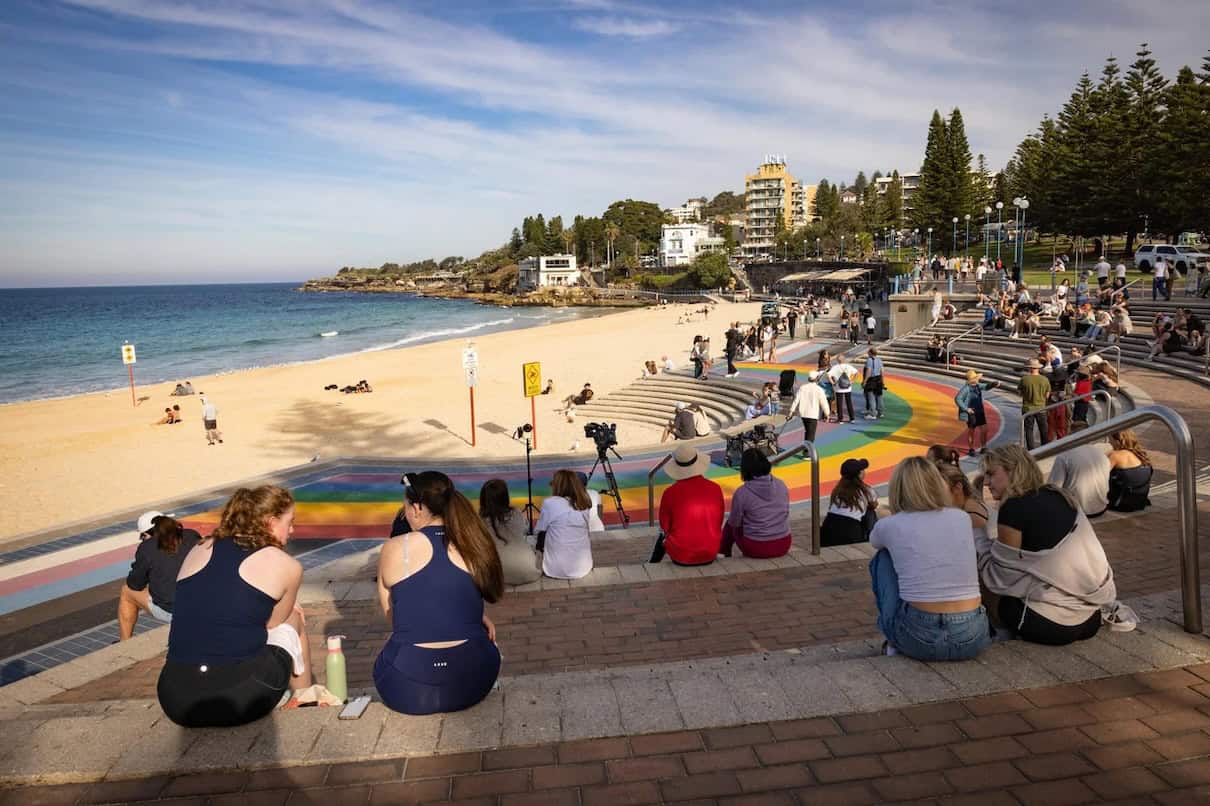
people sitting at beach
Coogee Beach following the shark attack. | Photo: CBS News

Verco, a trained lifeguard who spends much of his time out in the ocean, says he has always thought his 18-foot (5.5-meter) paddleboard would scare a shark away. However, as he neared the woman being circled by the shark, he began to feel more hesitant and helpless.

Speaking to CBS News after the incident, a Coogee Beach lifeguard said the white shark was roughly 11 feet (3.35 meters) long.

“I saw the shark come out of the water, and just the size of it shocked me,” Verco shared in the interview with CBS. “I kept paddling towards her, and the shark took her underwater, and I was going, ‘What do I do now?’”

The rescue

Verco attempted to signal the lifeguards on shore, hoping they would clear swimmers from the water and come to his aid. He watched from his board as the water filled with blood, feeling powerless.

“Hovering between that area of like, all I want to do is go to the beach, but I felt compelled and felt like I had a bit of responsibility. If I go into the beach, the only person on a board out here, she’s on her own. There’s nothing anyone can do,” Verco said in an interview.

Finally, Verco saw the woman resurface as the shark let her go. He paddled to her and told her to grab his board, but she soon lost consciousness. Verco struggled to tow her to the beach while keeping her head above water.

“I had to try and keep hold of her with one hand and keep paddling towards shore with the other,” he told The Guardian.

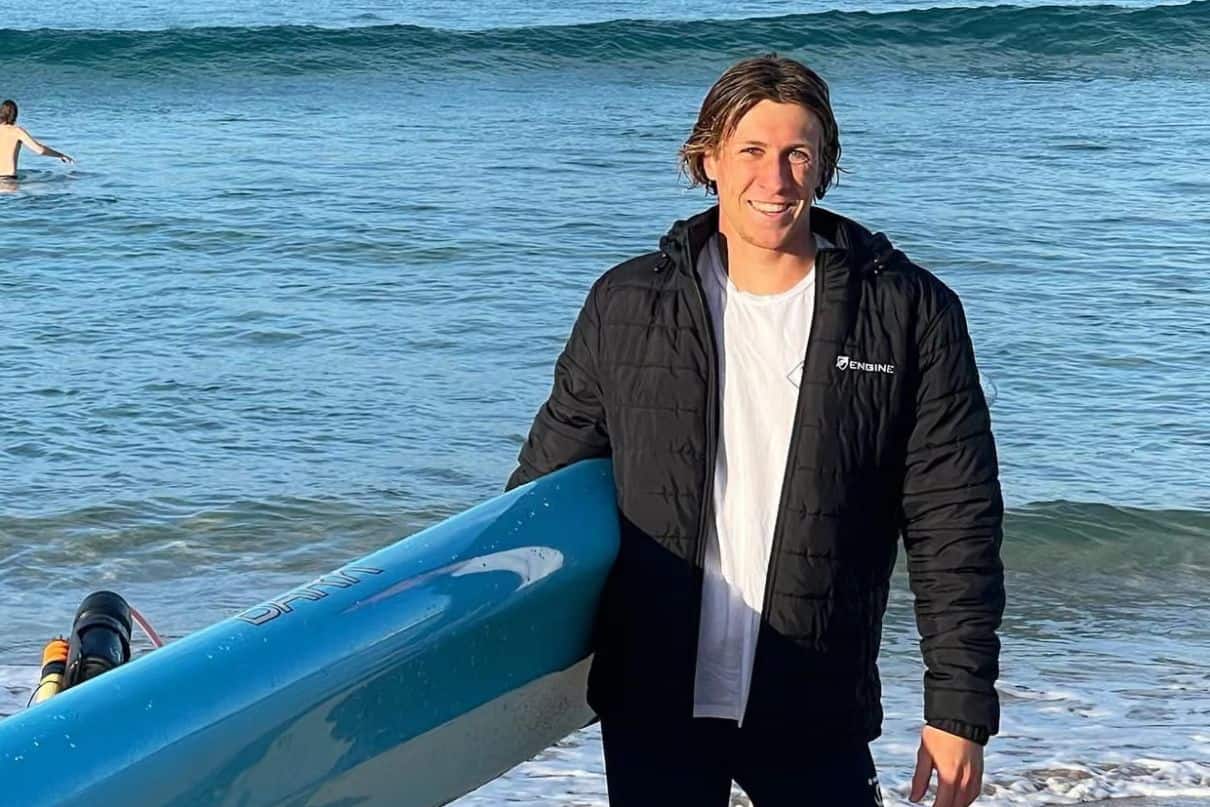
man with paddleboard
Twenty-five-year-old Charlie Vecro spends much of his time in the ocean paddling and surfing. | Photo: The Guardian

Once near the shore, bystanders helped pull the woman from the water. They applied tourniquets to the bites on her thigh and her arm, and she was transported to a hospital.

The woman, who has since been identified as 35-year-old Leah Stewart, is still recovering from multiple surgeries, including the amputation of her arm. Her family has set up a GoFundMe to support her recovery.

Balancing risk

Reflecting on the incident, Verco says he was balancing his own safety and his urge to help. He credits his surfing and lifeguard background for preparing him for the incident. Speaking about the Australian junior surf program Nippers, Verco shared he has never been more grateful to be a part of the surf lifesaving community.

“The first goal of that program is to teach you to have safety for yourself in the water so you can navigate surf, identify risks…and you also can’t help anyone else until you are confident enough in the water to look after yourself,” shared Verco.

The incident follows a handful of other shark attacks in Australia in recent months. However, data analyzed by the University of Florida’s International Shark Attack File shows that the number of shark attacks in any given year or region is highly influenced by the number of people entering the water. In other words, it is unlikely sharks are becoming more aggressive. Rather, people and sharks are likely simply interacting more often.

Instances of sharks attacking kayakers and paddlers are incredibly uncommon but not unheard of. Both paddlers and swimmers can practice these precautions to stay shark-safe: avoid blood in the water and areas being used by commercial fishers, swim or paddle with a buddy, stay away from large schools of fish and avoid excessive splashing.

Eight-Year-Old Helps Save Grandfather After Kayak Capsizes 

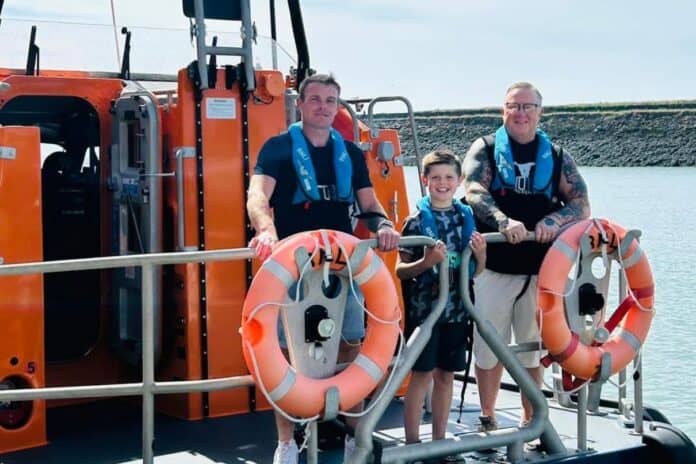
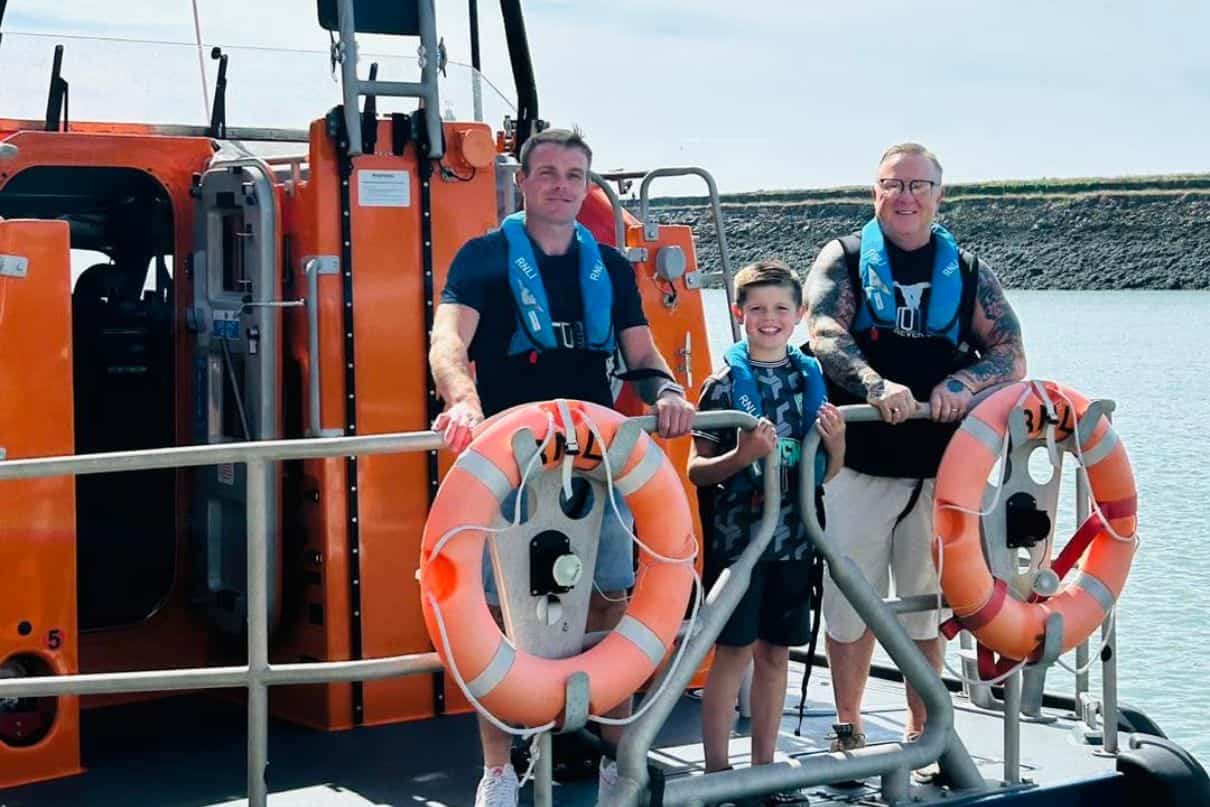
boy stands on boat with father and grandfather
Marley, his father and Dai visting the Barry Dock RNLI Lifeboat Station days after the rescue. | Feature photo: Barry Dock RNLI | Facebook

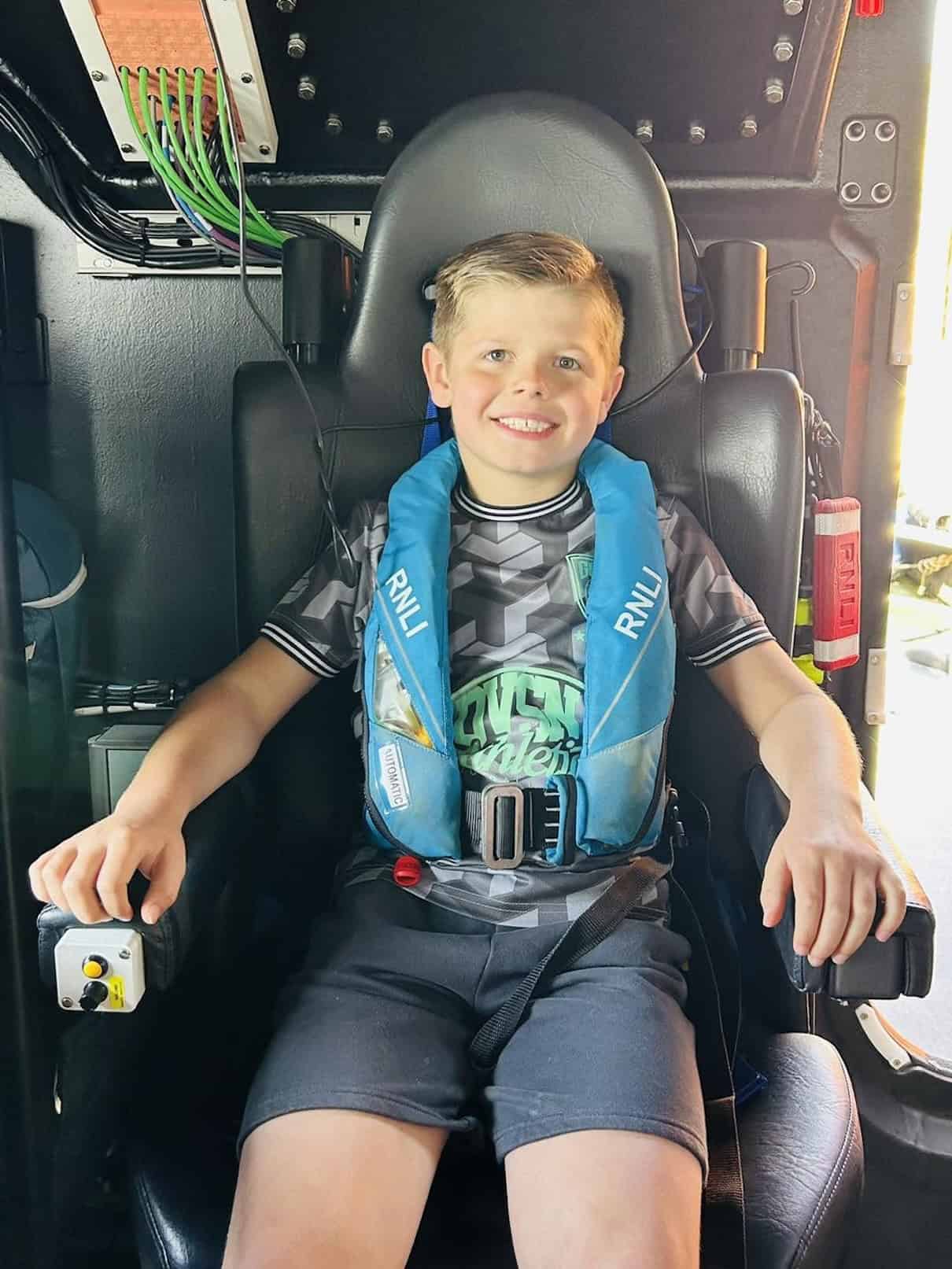
An eight-year-old helped save his grandfather after the pair capsized while kayaking on the Vale coastline in South Wales. As strong currents swept Marley Jones and his grandfather David ‘Dai’ Jones away from shore, Marley remained calm and called for help. 

“When I called my Nan, I told her I was okay, but Granscha looked like he was drowning and we needed help,” Marley told rescuers after the incident. 

Dangerous conditions

Marley and his grandfather were kayaking on a vacation in May when they capsized. While the weather was warm and sunny, the outing quickly turned into an emergency when the pair found themselves in the freezing sea, unable to get back on board. 

“I was getting tired and cold, and there was a point where I wasn’t sure I’d make it. But I was trying to stay positive and keep calm for Marley because I didn’t want him to be frightened,” Dai told the Barry Dock Lifeboat Station after the incident

Dai helped Marley climb back onto the kayak but was still unable to do so himself. He held onto the boat as they were swept further away by the powerful Bristol Channel currents. 

boy in a rescue boat
Marley during a visit to the Barry Dock RNLI days after the rescue. | Photo: Barry Dock RNLI | Facebook

Despite the terrifying situation, Marley remained calm and used a phone the pair had stored in a waterproof pouch to call his grandmother who was back on shore. She then called the coast guard, and a lifeboat was launched.

When a crew from the Barry Dock RNLI arrived to rescue the pair, Dai had spent about 25 minutes in the water, which was hovering around 11°C/52°F. 

“The crew were absolutely brilliant and looked after both of us from start to finish. To be honest, I genuinely don’t think I’d be here today without them,” Dai shared in an interview. 

In the 25 minutes Dai spent in the water, he and Marley drifted roughly 4 km (2.5 miles) from where they’d entered. Rescuers say the incident highlights both the risks of powerful tides and currents and how quickly cold water can affect even experienced paddlers. 

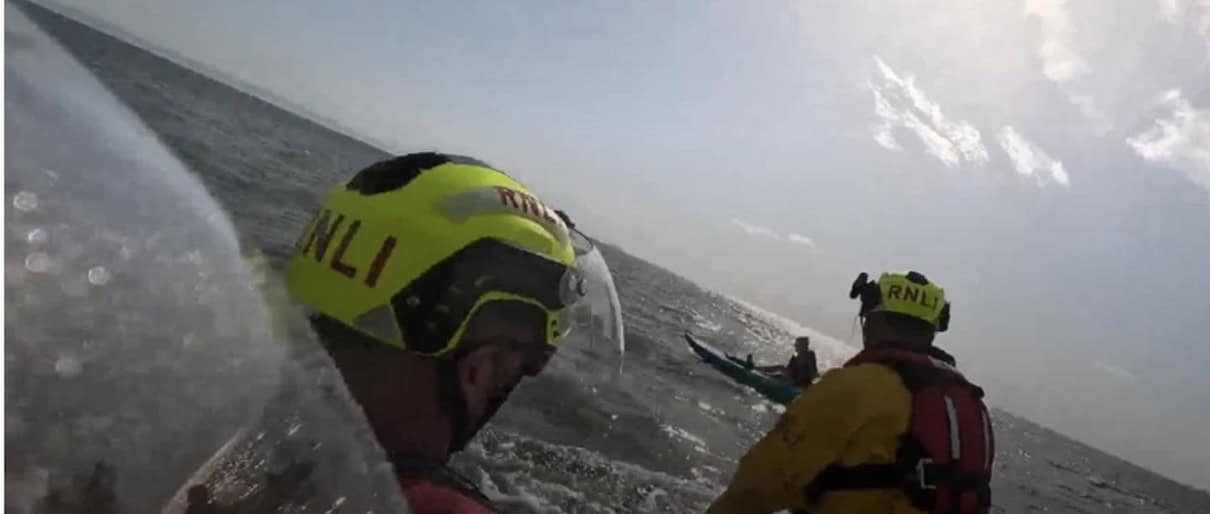
Rescuers approach kayak
Rescuers with Barry Dock RNLI approach Marley and Dai. | Photo: Barry Dock RNLI | Facebook

“Even when people are experienced and prepared, things can go wrong very quickly at sea, particularly in the Bristol Channel where the tides and currents are extremely powerful,” rescuer Andy Gavan shared in a Barry Dock RNLI Facebook post

Paddlers praised for doing ‘exactly the right thing’

A few days after the incident, Marley and Dai were invited to visit the Barry Dock RNLI Lifeboat Station where the rescue crew presented Marley with a special medal to recognize his calmness and courage. 

“I’d particularly like to praise Marley. He remained incredibly calm throughout the incident, contacted his Nan, shared his location and helped raise the alarm while keeping an eye on his Granscha in what must have been a frightening situation. He showed real maturity and stayed level-headed throughout,” Gavan told Barry Dock RNLI.

Beyond Marley’s courageous actions, the crew also praised Dai for helping Marley back onto the kayak and for remaining with the boat, which helped the rescue crew to find the two. 

“Marley and Dai did exactly the right things when they found themselves in difficulty,” Gavan said. “They were both wearing life jackets, they had a mobile phone in a waterproof pouch, they called for help when they realized they were unable to get safely back to shore and they stayed with the kayak.”

boy stands on boat with father and grandfather
Marley, his father and Dai visting the Barry Dock RNLI Lifeboat Station days after the rescue. | Feature photo: Barry Dock RNLI | Facebook

The incident also highlights the importance of always being prepared for immersion. Bodies lose heat quickly in cold water, so even on warm days, paddlers should dress for immersion. That means choosing synthetic fabrics or wool and avoiding cotton clothing, which retains water and speeds up cooling when wet. If the water is less than 21°C/70°F, it’s a good idea to wear thermal protection, like a wetsuit or drysuit.

While Marley and Dai were able to call for help using their phone, phones might not always work in an emergency situation. A waterproof VHF radio is a more reliable means of communicating with the Coast Guard and other boat traffic. Cell phones are a great backup. 

Have Kids, Will Paddle: Nikki Bettis Is Rebuilding Her Family One Expedition At A Time

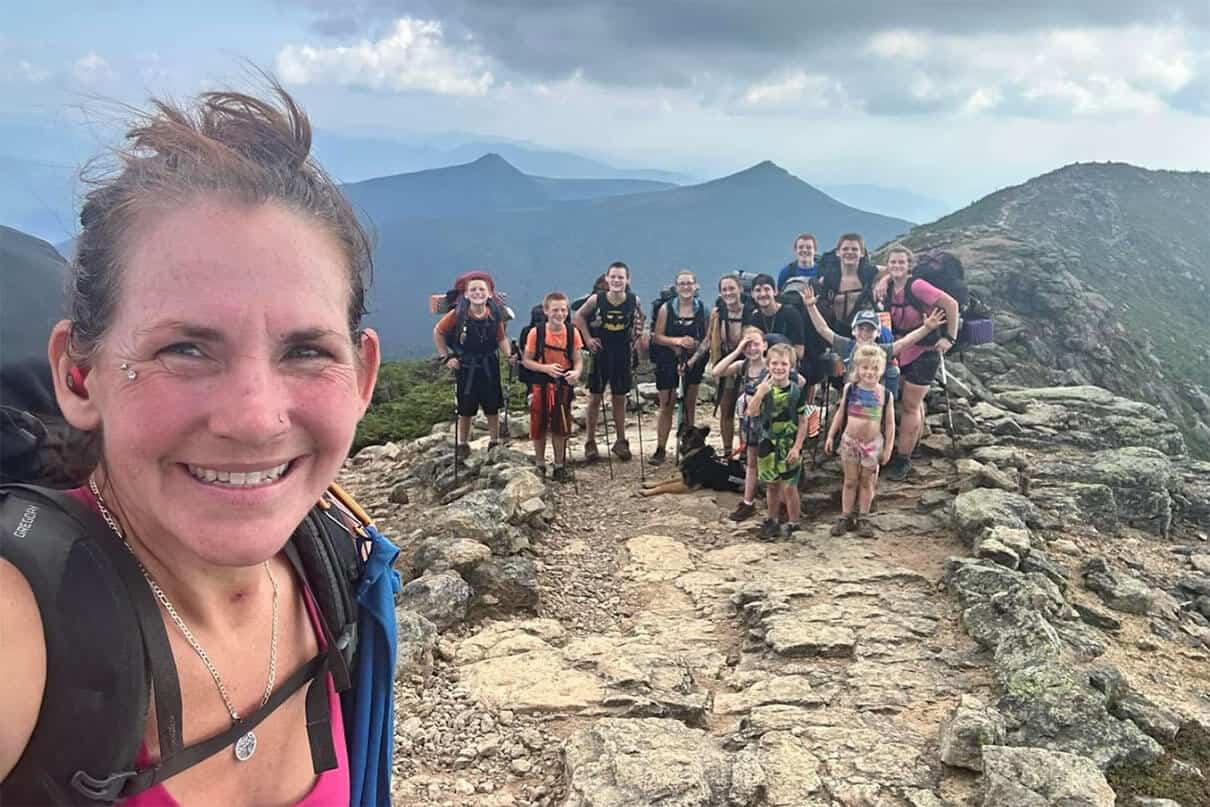
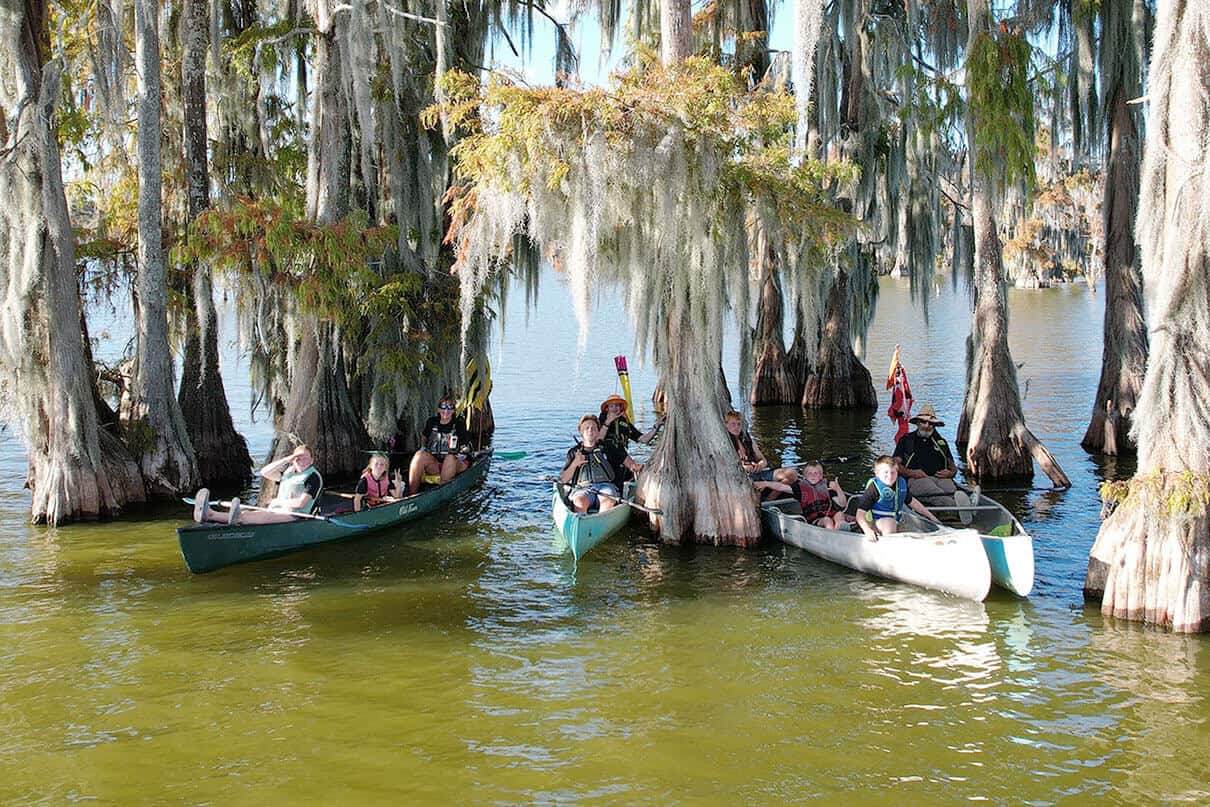
Nikki Bettis (back left) with her flotilla during the Mississippi River expedition
Nikki Bettis (back left) with her flotilla during the Mississippi River expedition. | Feature photo: 32feetup.com

Nikki Bettis, a single mom of 15 biological children, laughs now about the detour. Three days into her family’s 1,175-mile trek across North Carolina’s Mountains-to-Sea Trail, a game warden directed their flotilla of canoes and kayaks off the Neuse River ahead of a fishing tournament packed with fast boats and beer.

The Virginia family—including a 7- and 9-year-old—had just finished 30 rugged miles of remote river, weaving through logjams and bushwhacking around fallen trees. It was one of countless unexpected turns on a 70-day paddling, biking and hiking expedition. For Bettis, detours have become part of the journey. Rebuilding a life rarely follows a straight line.

Have kids, will paddle: Nikki Bettis is rebuilding her family one expedition at a time

“Sometimes things just get messy, plans change, so you just gotta go with the flow,” says Bettis, 50, a domestic abuse survivor turned wilderness traveler. “Whether you’re paddling or hiking, if you don’t remain flexible, you will never finish a trail, especially with kids.”

The messiness included weather changes, a route flip from mountains-to-sea to sea-to-mountains, gear delays, packing chaos, a lost tooth, the support van getting stuck in the mud, and the angling competition.

“It’s been daunting to say the least,” laughs Bettis, “but there’s just no mapping it all out. It’s like assembling puzzle pieces as you’re moving forward, one mile at a time.”

Nikki Bettis and kids pose on the Appalachian Trail
On the Appalachian Trail. | Photo: 32feetup.com

Bettis’ ability to pivot has made for extraordinary expeditions. On November 22, 2025, Bettis and seven of her youngest children, ages 7 to 15, finished paddling the 2,350-mile-long Mississippi River, reaching the Gulf of Mexico in 96 days. In 2023, Bettis and 13 of her children, then ages 4 to 19, thru-hiked the Appalachian Trail’s 2,198 miles in seven-and-a-half months—two more months than originally planned.

Taking on long trails started out as a way to cope after domestic violence, divorce and two failed businesses. There were times they had no power, no water and no phone because bills went unpaid. “We had no income, no vehicle, no credit. We couldn’t go any lower.”

To pull herself up, Bettis started walking toward freedom, reconnection and healing broken hearts. There she also found a new calling in documenting her family’s trailblazing journeys at 32 Feet Up and inspiring other women in distress to find a path forward.

“Fear kept me from freeing myself sooner. Don’t listen to the voices that say you can’t because you can. Don’t be afraid.” 

Skepticism abounded around the Mississippi River expedition, and disaster was predicted. “Everyone said you’ll die—from the alligators, the whirlpools, the eddies, the dams, the barges.” Nature wasn’t the hazard though, it was the reckless speedboats in the reservoirs above the locks and dams.

And the heaviest load wasn’t on the river itself, where each kid carried their own pack and averaged 20 miles of paddling a day. It was missing the older kids: “Keeping morale up was tough; we had to dig deep for the fortitude and endurance needed to stay out there to be successful thru-paddlers.”

Nikki Bettis (back left) with her flotilla during the Mississippi River expedition
Nikki Bettis (back left) with her flotilla during the Mississippi River expedition. | Feature photo: 32feetup.com

There were so many days she wanted to pack up and go home. “We paddled in the brutal cold, pushed forward in the wind and rain—there were miserable times. We got homesick.” But doing hard things leads to good things and learning along the way.

Bettis says the wilderness continues to teach her how to be a better mom and how to forgive herself. “Some people on social media said I’m a terrible mom for taking them out in the wilderness, and shamed me for staying in an abusive relationship.”

She’s moved past the haters and is embracing the love from followers, her family’s closeness and the shared memories. Bettis has no plans to stop chasing freedom with more rivers, trails and wild ideas, including cycling the 2,700-mile Great Divide Trail.

“My story is all about resilience and getting back up again because if you stay down, you are done,” says Bettis. “The future is filled with hope and adventures—so get up and get outside. We can absolutely all do this.”

Cover of Issue 75 of Paddling MagazineThis article was published in Issue 75 of Paddling Magazine. Subscribe to Paddling Magazine’s print and digital editions, or browse the archives.

Nikki Bettis (back left) with her flotilla during the Mississippi River expedition. | Feature photo: 32feetup.com


Best Camp Chairs For 2026

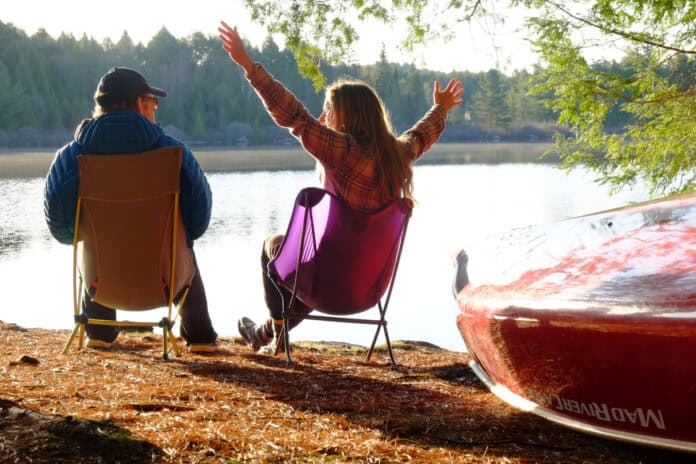
Two people sitting in camp chairs near a lake with canoe in foreground.
Image: Virginia Marshall

When it comes to packing for a camping trip, I’m of the belief that less is more. I go into wild places to escape the clutter and choices of daily life, not haul them into the woods with me. So when I’m playing Tetris with my kayak hatches or canoe pack, the non-essentials get left at home. More often than not, that has included my camp chair.

But here’s the catch—anytime a fellow camper leaves their chair unattended, I find myself settling into its embrace. Paddling is an intense core workout, and a little lumbar support goes a long way. Most of the older paddlers I trip with tell me their trusty chair is their favorite piece of camping kit, and I’m growing to embrace their wisdom. Packable, durable and with a seat to suit every paddler, camp chairs bring instant comfort to any campsite. This paddling season, you don’t have to worry about me stealing your seat—I’ll be bringing my own.


Best Camp Chairs: Top Picks

Best Ultralight Camp Chair

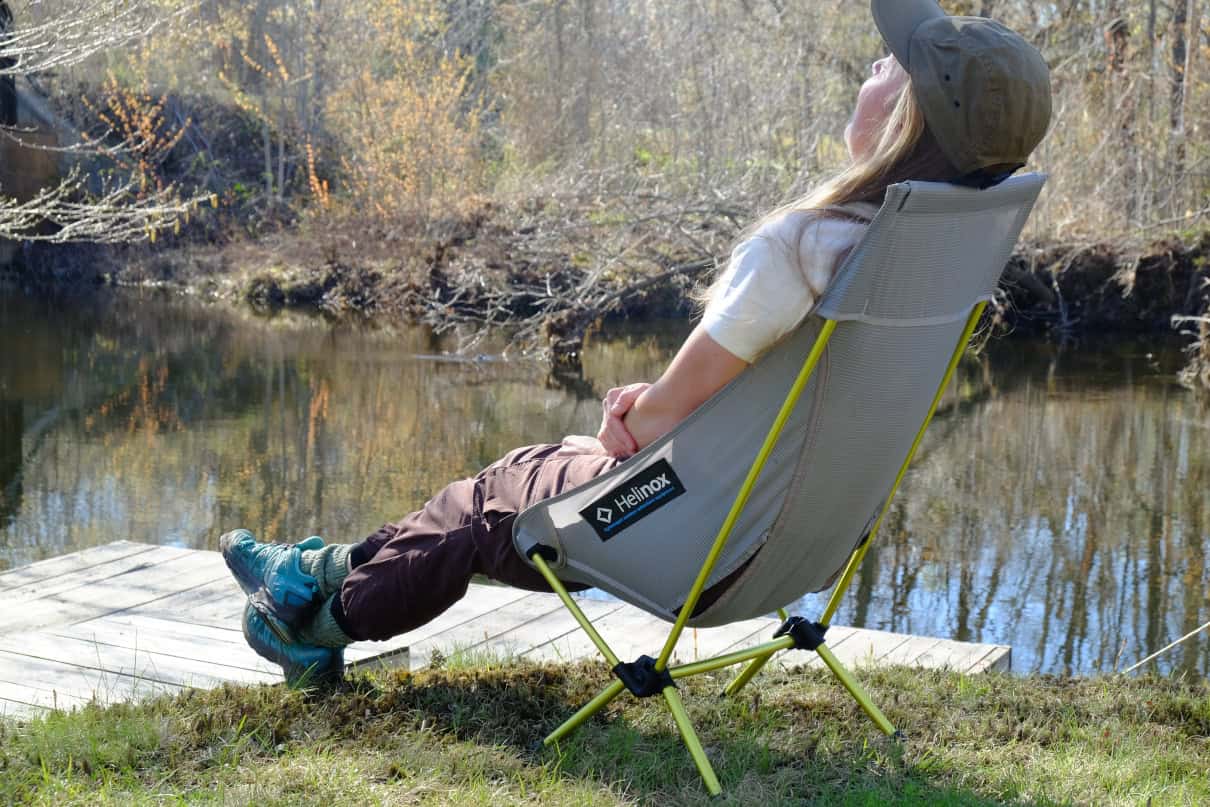
Helinox Chair Zero High-Back

Helinox Chair Zero High-Back camp chair.
Image: Virginia Marshall
Helinox specs
Weight: 1.4 lbs
Packed size: 16″ x 5″ x 5″
Max. weight capacity: 265 lbs
Price: $189.95 USD

Buy from:

DICK’S REI HELINOX

Why I love it

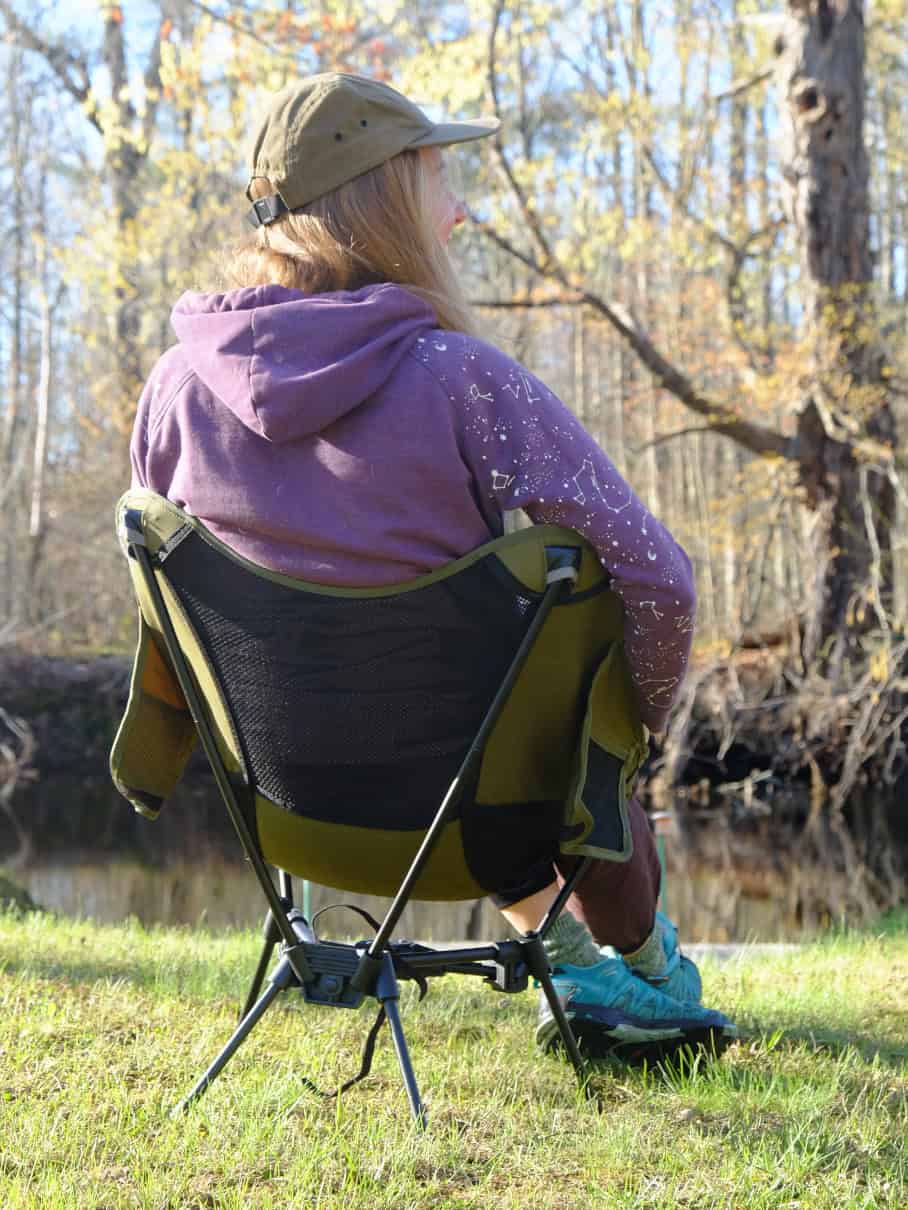
For a minimalist like me, it takes more than a comfortable seat to transform a camp chair from luxury item to everyday carry. Out of all the chairs we tested, it was the Chair Zero High-Back from Helinox that made me a convert. The lightest and tiniest-packing elevated chair in our lineup, the Chair Zero is a true unicorn: ultralight, easy to set-up and astonishingly comfortable.

Impressive upright support keeps my lumbar spine happy and promotes good posture off the water. As its name suggests, the backrest is 7.5 inches taller than the classic Chair Zero, providing unrivaled upper back and neck support. At 5’6″, I can comfortably rest my head on the padded top bar, which is perfect for reading or micro-dozing on a warm afternoon. Two ventilation openings provide airflow to the bum-pocket. The lower seat profile may not be to everyone’s taste, but I really like being a bit closer to ground so I can stretch my legs out or even sit forward to tend a camp stove without leaving my seat.

Reasons to buy
  • Outstanding neck and back support
  • Ultra-lightweight and packable
  • Comfortable
  • Fast, easy set-up
  • Durable materials and design
Consider another if
  • You’re on a budget
  • Taller campers may prefer a chair that sits higher off the ground

Bottom Line

Superb lumbar and upper back support in a comfy, lightweight and packable design.


Best for Tall Campers

Big Agnes Skyline UL

Big Agnes Skyline UL.
Image: Virginia Marshall
Big Agnes specs
Weight: 1.8 lbs
Packed size: 17″ x 4″ x 3.5″
Max. weight capacity: 275 lbs
Price: $199.95 USD

Buy from:

BACKCOUNTRY AMAZON

Why I love it

The Skyline UL chair packs small while delivering stability and comfort for taller and larger-framed campers. The deep bum-pocket means you can sit with your legs in a variety of positions, and it sits higher off the ground than others we tested, making it easy to get in and out if you have knee or hip issues. Add to this a supportive, upright seat back, and this chair keeps your back straighter for hours of ergonomically correct lounging. Big Agnes’ unique bent leg design creates a wider footprint for better stability and the space-saving hubless pole frame keeps the packed profile slim for easy stashing in the side pocket of your canoe pack or along the keel of your kayak.

My only wish for this chair would be easier assembly; it’s a struggle to tension the last seat corner onto the frame, and the indexed poles are a bit fiddlier than a hubbed pole design. These are by no means deal-breakers, but when my hands are cold and the light is fading, it’s just enough of a barrier that the Skyline stayed in my pack.

Reasons to buy
  • Deep, comfortable seat
  • Good stability
  • Elevated seat position
  • Lightweight and packable
Consider another if
  • You prefer an easier, less complicated set-up
  • You’re on a budget—similar, heavier models are available at a fraction of the price

Bottom Line

Excellent stability and a lofty perch in a lightweight package.


Best Heavy-Duty

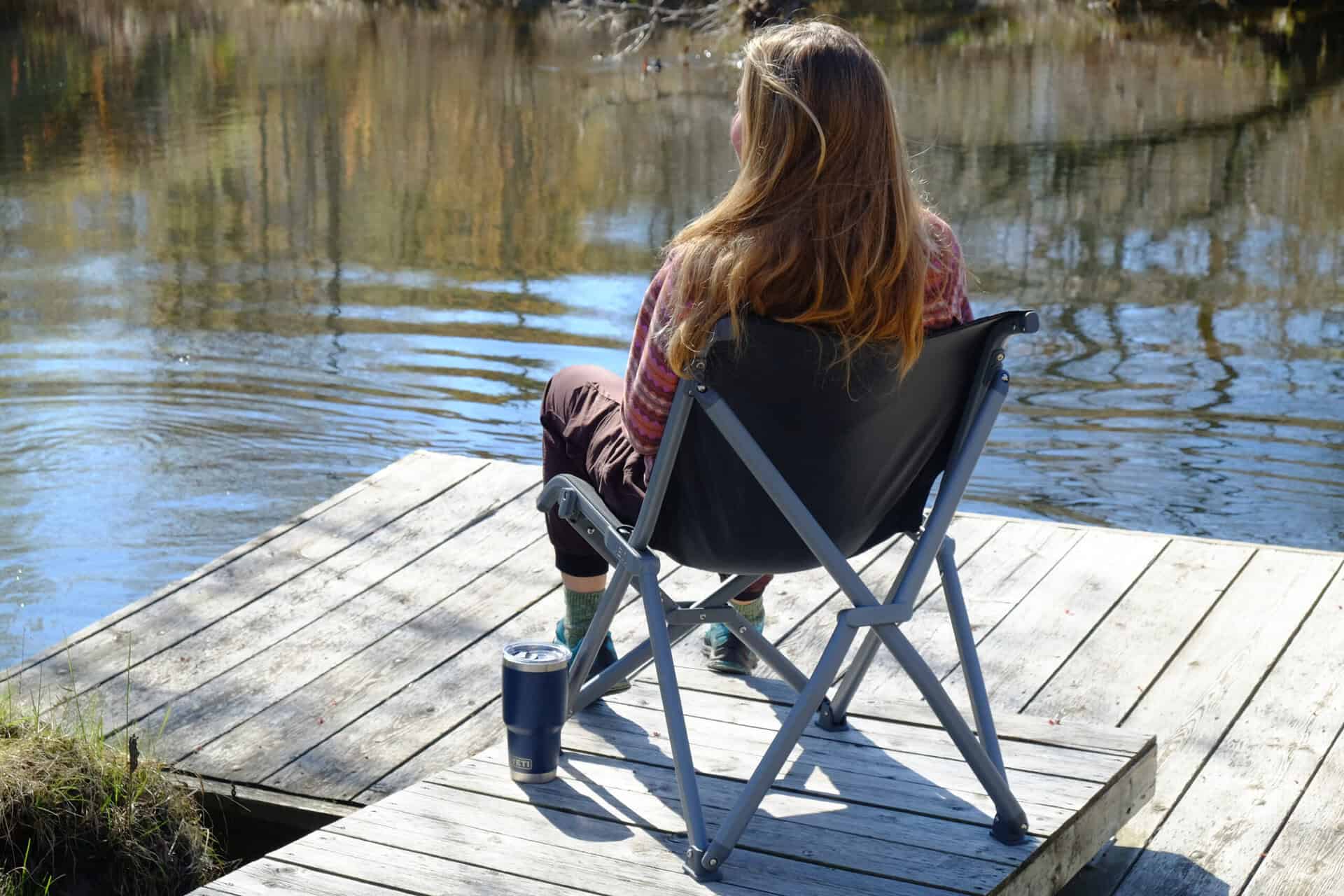
Yeti Trailhead Field Chair

Yeti Trailhead Field Chair.
Image: Virginia Marshall
Yeti specs
Weight: 9.3 lbs
Packed size: 37″ x 7″ x 3.6″
Max. weight capacity: 350 lbs
Price: $225 USD

Buy from:

DICK’S AMAZON REI YETI

Why I love it

If you are familiar with Yeti’s rugged, ultra-durable coolers, cases and insulated drinkware, you’ll know what to expect from this sturdy camp chair. The new Trailhead Field Chair boasts a 350-pound capacity and the spacious seat perches 17.5 inches above the ground—a proper throne for car camping and backyard gatherings. The wide stance and solid build mean you can plop down without a second thought to stability. I especially appreciate how effortless it is to deploy the chair or fold it back into its robust shoulder-style carry bag. The Field Chair is Yeti’s lightest and most portable camping chair to date, but at closing in on 10 pounds, it’s still best suited to front-country hangouts.

Reasons to buy
  • Highly supportive
  • Ultra-durable build quality
  • Super easy to use
  • Carry bag with comfortable shoulder strap
  • Five-year warranty
Consider another if
  • You need a lightweight camp chair to use in the backcountry
  • A more budget-friendly model will suit your purposes

Bottom Line

If you’re ready to invest in a quality car camping chair for the long haul, Yeti doesn’t disappoint.


Best Soft Lightweight Camp Chair

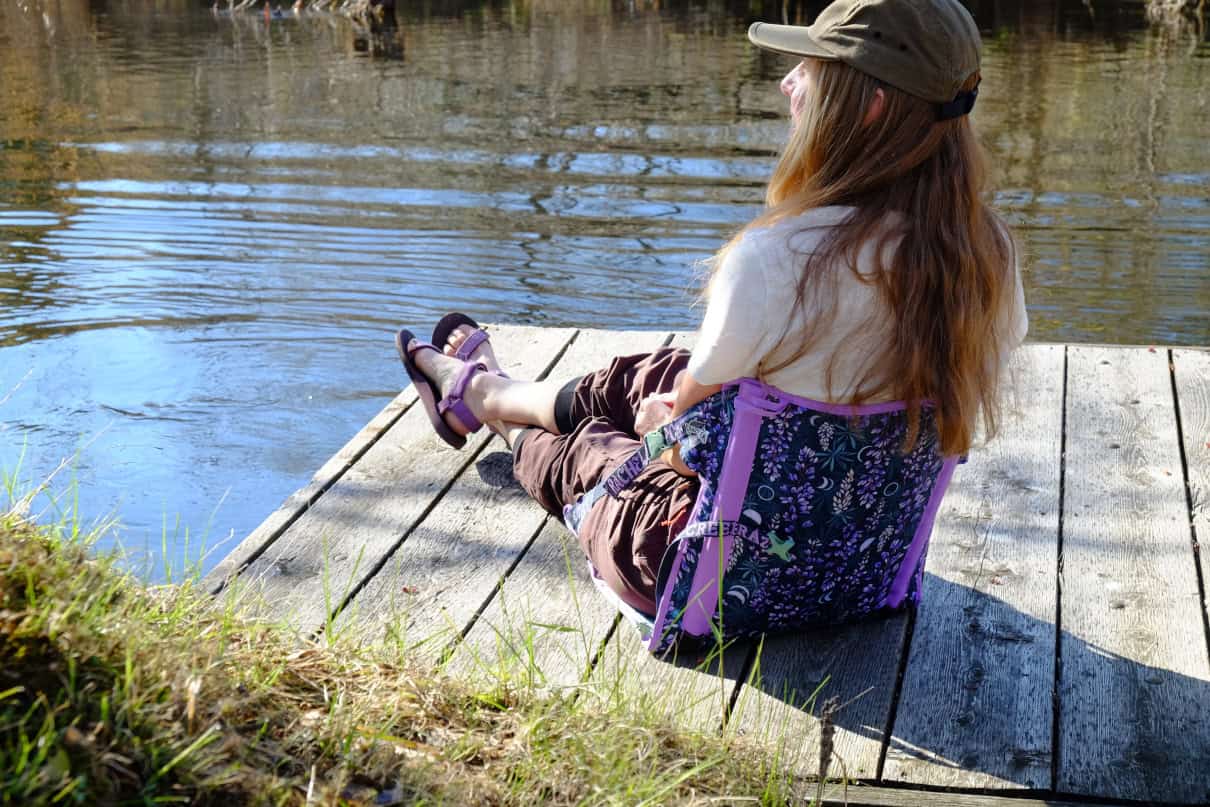
Crazy Creek Hex 2.0 Original

Crazy Creek Hex 2.0 Original.
Image: Virginia Marshall
Crazy Creek specs
Weight: 1.2 lbs
Packed size: 16″ x 4″ x 4″
Max. weight capacity: 250 lbs
Price: $69.95 USD

Buy from:

REI AMAZON CRAZY CREEK

Why I love it

The original Crazy Creek was the only camp chair I owned for years, and it’s still my go-to when weight and space are at a premium—think portage pain caves and hatches crammed with dehydrated meals. I’ll admit, I enjoy sitting up off the ground in an elevated chair, but so-called “taco-style” camp chairs have some unique advantages besides packability.

For starters, they’re versatile. If you subscribe to the idea that everything you bring into the backcountry should serve more than one use, the Crazy Creek Hex 2.0 is effectively a multi-tool: it’s a chair, kneeling pad, fire-starting aid (fan those embers!), and can be used to splint an injured limb or add insulation under your sleeping pad. Oh yeah, it’s also virtually unbreakable, requires zero set-up and keeps your butt toasty on any surface. The snug fit makes it best suited to small- to medium-build campers.

Reasons to buy
  • Versatile for kneeling or sitting
  • Ultralight and packable
  • Stable on any surface
  • Can improvise a sleeping pad or splint
  • Budget-friendly
Consider another if
  • You want a cushier or more spacious taco-style chair, in which case check out the Crazy Creek AirLounger or Hex 2.0 PowerLounger
  • You prefer the higher seating position of an elevated chair

Bottom Line

Swiss Army knife versatility in an ultralight, fuss-free package.


Best Budget Camp Chair

Moon Lence 4th Gen.

Moon Lence budget-friendly camp chair.
Image: Virginia Marshall
Moon Lence specs
Weight: 2.7 lbs
Packed size: 14.5″ x 5″ x 5″
Max. weight capacity: 400 lbs
Price: $39.99 USD

Buy from:

AMAZON

Why I love it

Most of the camping chairs in this line-up cost two or three times more than the chair I use every day at my desk. It can be hard to justify such an expense on an item that may only get used a few times each season. Enter this pocketbook-friendly portable chair from top-rated Amazon brand, Moon Lence. At just under forty bucks, it’s a reasonable dupe of premium camping chairs like the classic Helinox Chair One—if somewhat heavier and less elegantly engineered.

The chair offers a comfortable 17-inch seat height and plenty of breathable mesh for warm days, but the reclined seatback angle promotes slouching; I found my lumbar area complaining after just 30 minutes. It also takes some muscle to affix fabric to frame. Still, if you’re looking for an inexpensive seat for occasional campfire hangs, this is a sturdy option at an attractive price.

Reasons to buy
  • Affordable price
  • Sturdy construction
  • Reasonably lightweight and packable
Consider another if
  • You prefer purchasing from a dedicated outdoor brand
  • You’re ready to invest in a camping chair with more premium features and materials

Bottom Line

Inexpensive backcountry seating for occasional campers on a budget.


Best for Luxurious Car Camping

Snow Peak Low Beach Chair

The Snow Peak chair is great for car camping.
Image: Virginia Marshall
Snow Peak specs
Weight: 8 lbs
Packed size: 40″ x 7″ x 6.3″
Price: $169.95 USD

Buy from:

BACKCOUNTRY AMAZON REI

Why I love it

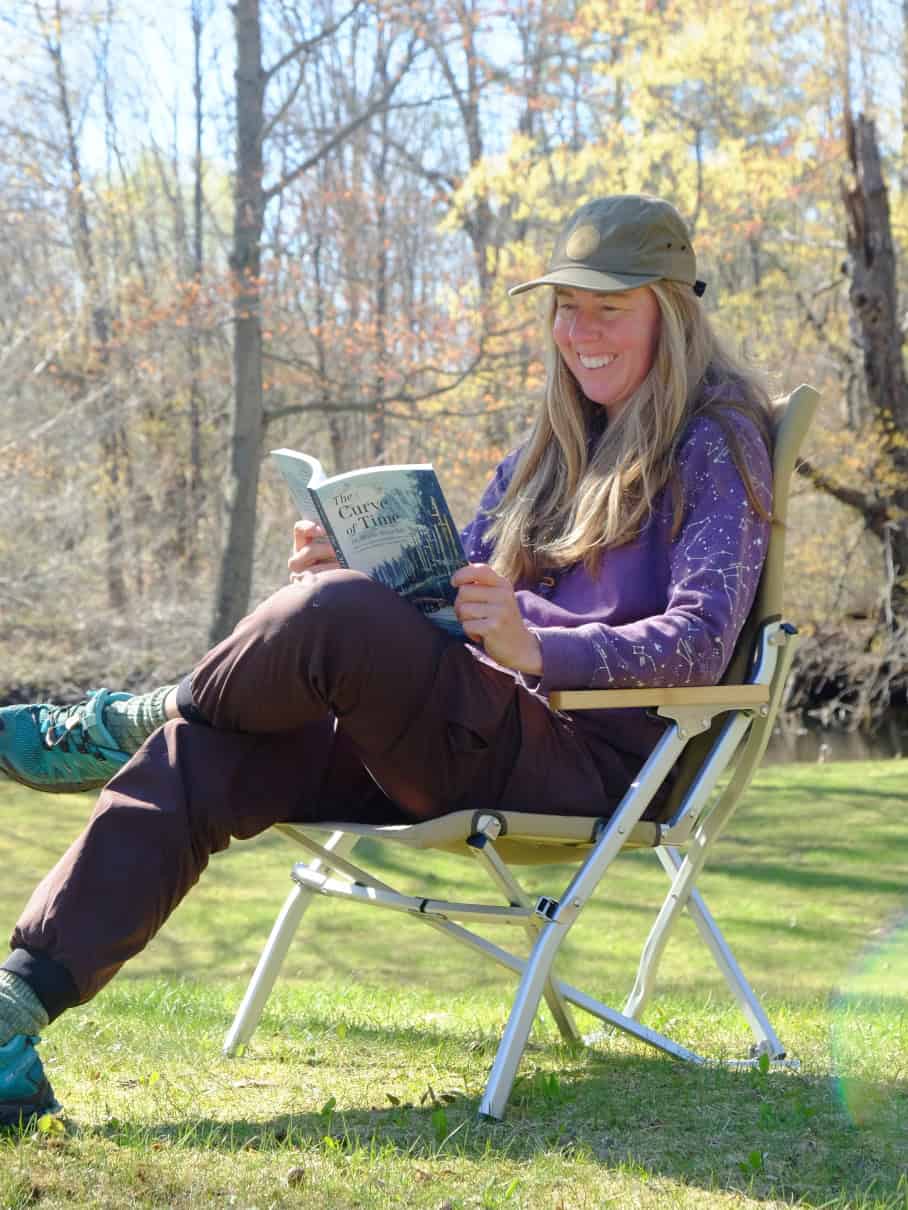
I wasn’t expecting an eight-pound luxury lounger to be one of my favorites from this round-up, but here we are. Designed in Japan, Snow Peak’s Low Beach Chair features unexpectedly elegant materials—like bamboo laminate arms and a canvas cloth seat—for an elevated glamping experience. Even better, this chair is as comfortable as it looks. Just like a wooden paddle or canvas anorak, the use of natural materials is both fetching and functional. The canvas seatback is breathable, spark-resistant and high enough to support my shoulders and upper back. At 12 inches off the ground, the seat height is perfect for my frame and offers generous width and depth for a larger camper. I especially love the slim wood armrests for an extra level of comfort and support when I’m reading or relaxing by the campfire. The Low Beach Chair feels built to last and is backed by Snow Peak’s lifetime guarantee.

Reasons to buy
  • Supportive, ergonomic and super comfortable
  • Includes carry bag for portability
  • Made from renewable natural materials
  • Stylish enough for home and patio use
  • Great value with a lifetime guarantee
Consider another if
  • You need a packable, lightweight camp chair to use in the backcountry

Bottom Line

A supremely comfortable camp chair for glamping and lazy days at the beach.


Best Inflatable Camp Chair

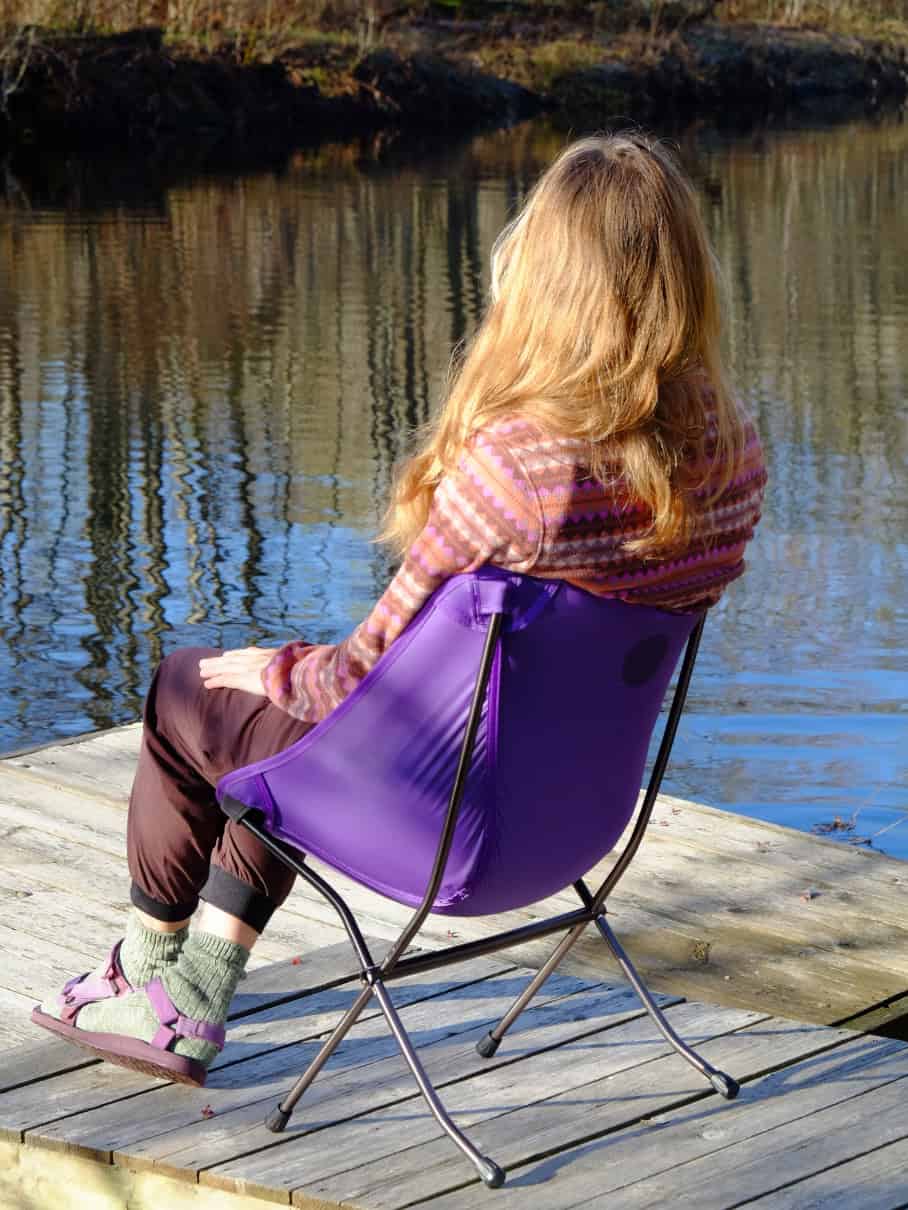
Crazy Creek AirLounger

Woman sitting in an Inflatable camp chair on dock.
Image: Virginia Marshall
Crazy Creek specs
Weight: 2.3 lbs
Packed size: 20″ x 3″ x 2.5″
Max. weight capacity: 250 lbs
Price: $139.95 USD

Buy from:

CRAZY CREEK AMAZON REI

Why I love it

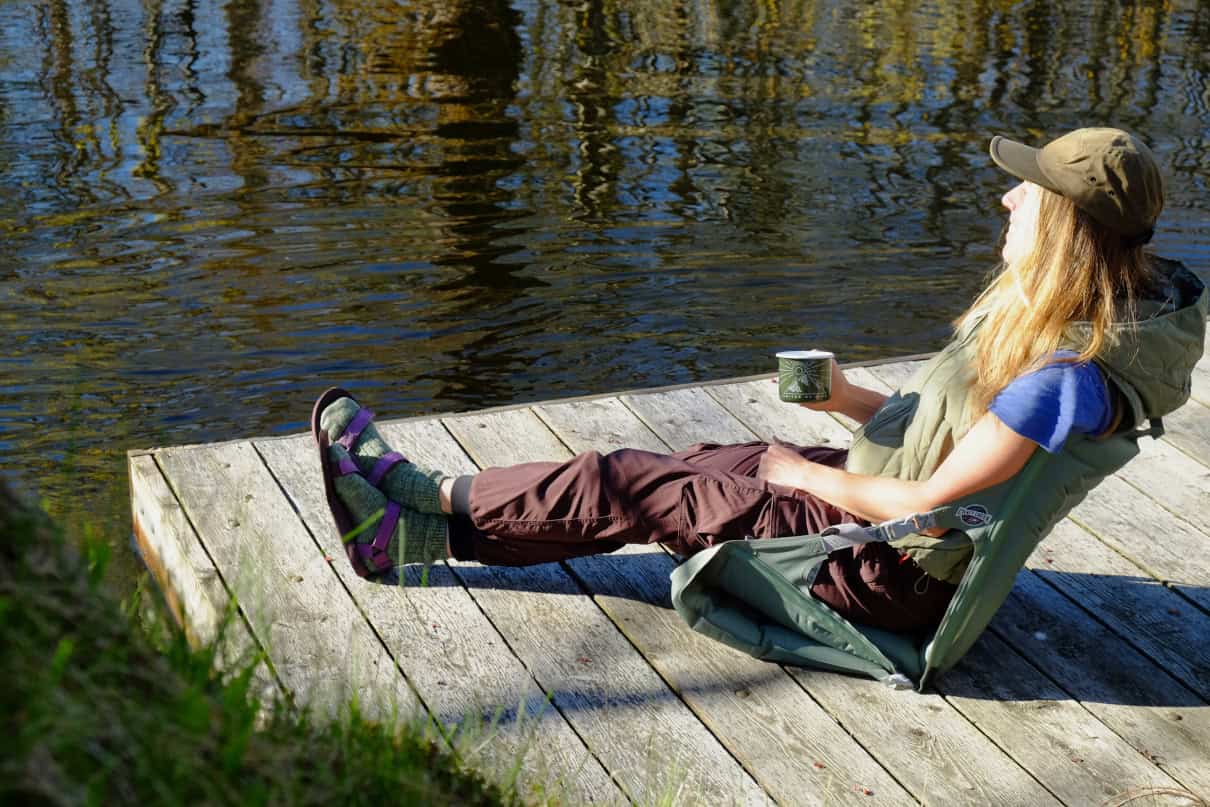
For the ultimate on-the-ground comfort, our larger testers couldn’t get enough of the Crazy Creek AirLounger. Using a rugged inflatable design made from extra-tough ripstop nylon, the AirLounger offers a cushy sit on rocky terrain without the worry of sleeping pad conversion kits like the Sea To Summit Air Chair. Its clever two-in-one design means you can also unfold the AirLounger to serve as a functional ¾-length sleeping mattress. This feature is aimed at the ultralight backpacking crowd, but it’s a nice backup regardless and means you can go from sitting to stretching (or snoozing) on a whim. Carbon-reinforced seat stays and adjustable straps offer solid back support in chair mode. Two high-flow air valves inflate both chambers in just six breaths, and the deflated chair rolls into a slim cylinder for easy packing.

Reasons to buy
  • Ultra-cushy comfort
  • Stable on any surface
  • Doubles as a sleeping pad
  • Packable and lightweight
  • Floating design works great as a SUP seat
Consider another if
  • You want Crazy Creek versatility in an ultralight chair—check out the Hex 2.0 Original or Longback
  • You prefer the higher seating position of an elevated chair

Bottom Line

Extra cushion and comfort for larger campers and avid nappers.


What to consider when buying a camp chair

The biggest consideration when shopping for a camp chair is to decide where you’ll be using it. Do you need a lightweight, collapsible camp chair that packs small for easy transport in your canoe pack or kayak? Or are you looking for a chair that you’ll only have to carry a short distance? For car camping, picnicking, or canoe trips that don’t require extensive portaging, you may prefer the stability and support of a sturdier (but heavier) folding frame camp chair.

Once you have decided whether you need a backpacking-style chair or a folding chair for more casual use, the most important factor is comfort. What size and style of camp chair do you need to feel comfortable? Some of the lightest and most packable camp chairs feature snug seats that are best suited to smaller or mid-sized campers; if you’re taller or have a larger build, you may need a different style for optimal comfort.

One of the major features of comfort is height. Getting in and out of chairs that are on or close to the ground can be a pain, especially for those with hip and knee issues. When your knees are level with your hips, as opposed to higher than them, it’s also easier to be comfortable for longer.

Ideally, go to your local outdoor store to test out a variety of camp chair styles and models. This will help you hone in on the features that you like and assess the comfort level. Think about how you’ll use the chair as well; do you like to kick back and recline in your chair, or do you prefer the lumbar support of a more upright seating position? For casual use when weight isn’t a concern, do you want added comforts like head- and armrests?

Many camp chairs offer versatility and comfort, so the best chair for you depends on personal preference, budget and how you plan to use it.

Best Camp Chair Brands

How we tested

We tested the camp chairs on this list in the backcountry, on day trips and car campouts with friends, and in the backyard. Each chair was selected for its comfort, features and value. These picks reflect not only hands-on testing for this review, but also years of accumulated experience and the expertise of our seasoned editors through extensive camping and product testing.


Feature photo: Virginia Marshall

Best Waterproof Phone Pouches For 2026

Holding phone up with raft and river gorge in the background.
Image: K.M. Collins

Nothing brings the outdoor vibes to a screeching halt like an unforeseeable phone malfunction due to too much adventure. Hard-hitting splashes, dropping in deep water, infiltration of dirt, droplets in the charge port, and cracking a screen are just some of the scenarios you want to avoid while having your phone on a paddling trip.

Although we all like to unplug outdoors, the truth is a phone is not only a valuable multi-tool with a superb camera, guidebook, and access to weather info, but it has also become an integral part of our safety gear by providing the ability to check in with family or call for a rescue. With all the scenarios mentioned earlier though it is far too easy for our phones to get damaged or sink to the bottom of the drink. This makes a waterproof phone pouch a cheap and incredibly useful piece of gear for all paddlers.

To find out which phone pouches work best for kayaking, paddleboarding, rafting, and even river tubing I took a collection of them on a recent volunteer ranger trip down the Wild and Scenic Rogue River to use while running whitewater, fishing, swimming and incidentally, when it rained for 24 hours straight.

In this article, we’ve compiled a list of the top waterproof phone pouches and cases in the industry, and crash-tested them in the gnarliest, wettest watersport of all.

Best waterproof phone pouches: Our top picks

Wear A Life Jacket
  • Everyone, even strong swimmers, needs to wear a life jacket at all times when on the water. It is extremely difficult to put a life jacket on once you fall into the water. Even a light wind can blow any paddlecraft away from you, faster than you can swim.
  • Always wear a USCG-approved Level 70 or Type III life jacket designed for paddling.

Best waterproof phone pouches overall

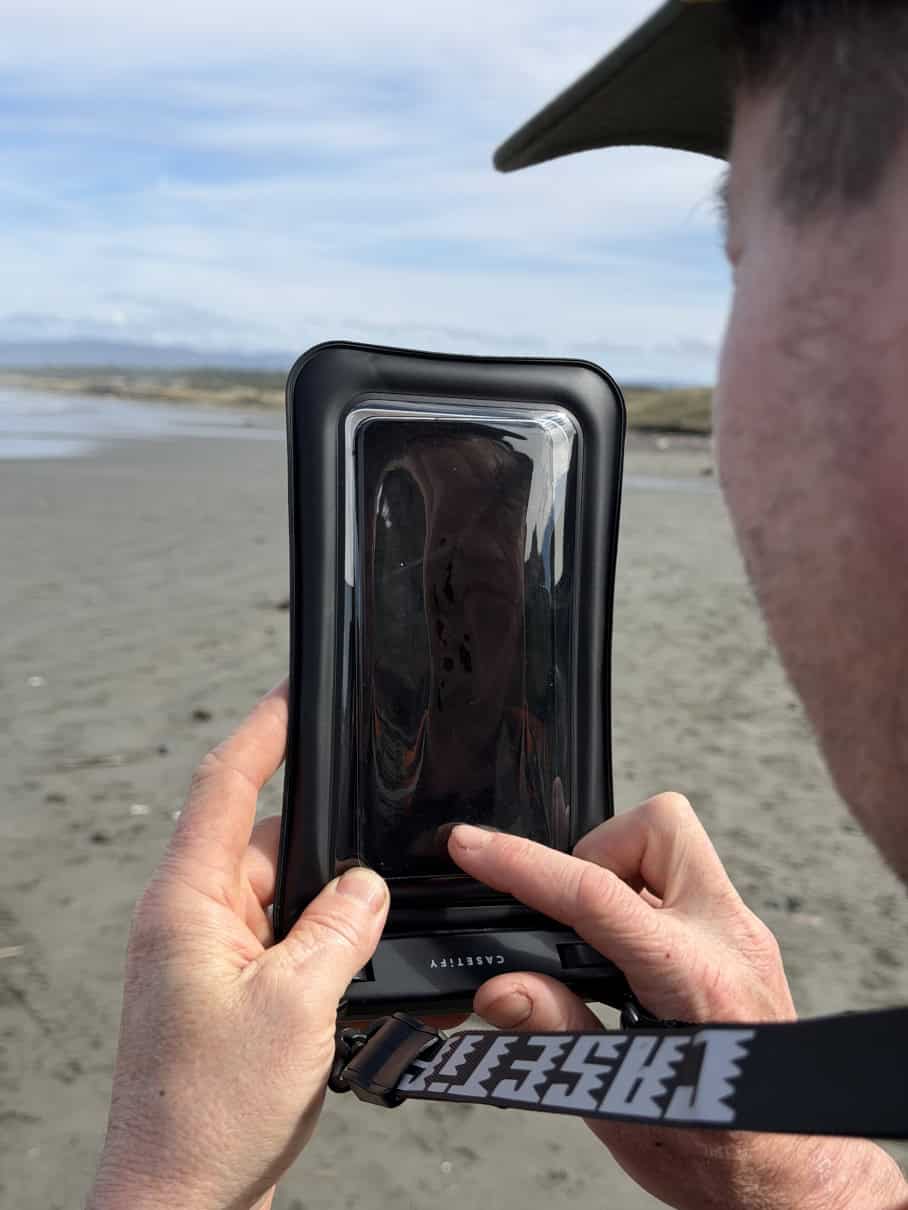
CASETiFY Bounce Extreme Pouch

CASETiFY waterproof phone pouch.
Image: K.M. Collins
CASETiFY Bounce Extreme Pouch Specs
Compatibility: most phones
Waterproof rating: Fully submersible up to 2 meters for 1 hour (IP68)
Price: $42
casetify.com

Buy from:

CASETIFY AMAZON

Why I love it

CASETiFY is one of the most popular phone case brands, and their Bounce Extreme Pouch is compatible to fit most of the cases they sell and phone sizes in general. The pouch has built in floatation to keep it on the surface should you lose grip of it, and the Bounce Extreme is submersible down to two meters for up to an hour, meaning you can pretty much rely on your phone staying dry as long as you close the locking seal correctly. The pouch also maintains use of your touchscreen, even while underwater.

Reasons to buy
  • Compatible with most phones and the brand’s cases
  • IP68 rating submersible to two meters up to an hour
  • Maintains use of your touchscreen in the water
Consider another if
  • You prefer another style seal closure
  • Want extra space for storing more items

Bottom Line

CASETiFY offers a reliable and compatible waterproof phone pouch at a reasonable price.


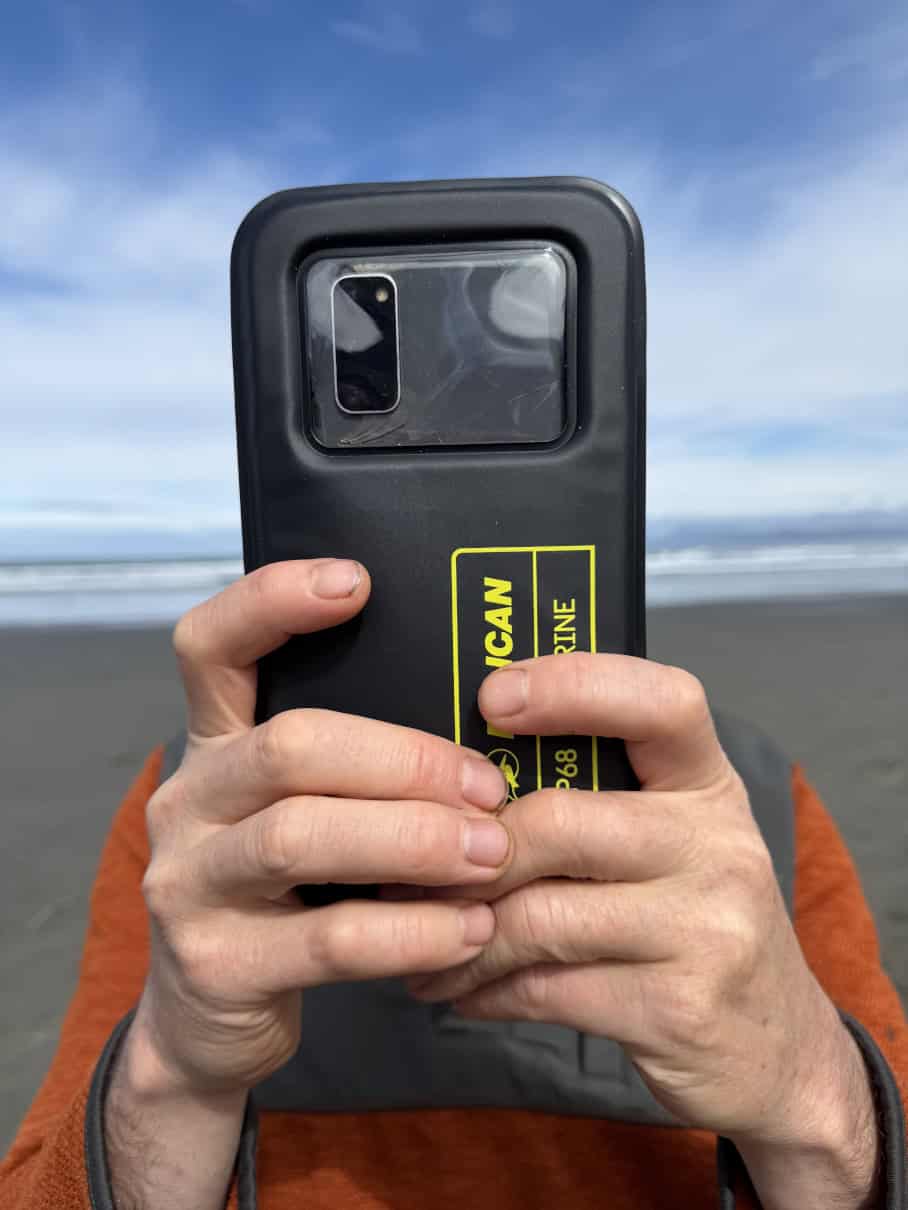
Pelican Marine Waterproof Floating Pouch XL

Pelican waterproof phone case.
Image: K.M. Collins
Pelican Marine Waterproof Floating Pouch XL Specs
Compatibility: Most smartphones
Waterproof rating: Submersion up to 1 meter (IP68)
Price: $25
pelican.com

Buy from:

PELICAN AMAZON

Why I love it

Pelican is a brand that has been trusted for decades in paddlesports, not to mention by the photography industry and military. They’ve made a waterproof phone pouch with the quality you’d expect.

One common scenario on marine excursions is the unintentional phone overboard move. I like Pelican’s take on a waterproof protector because it includes float bags in the product. Essentially, the Pelican waterproof pouch is also its own life preserver.

While in use as a volunteer river ranger, this case slid off my dry box and into the river. Because it floats and is brightly colored, it was easy to identify and retrieve at the bottom of a rapid. I like this feature because there isn’t always time to safely stow every item before things get exciting. In addition, the clear windows allowed me to take pictures while rowing, and scroll around to accomplish some tasks while floating in the boat.

The phone case is also cost-effective, especially because it is compatible with a range of phone sizes.

Reasons to buy
  • Pouch floats
  • Space for extra items
  • Rollers and integrated straps are about as easy as loading a board gets
Consider another if
  • You want a tighter fit
  • Better protection deeper in the water column

Bottom Line

Pelican is a trusted brand in the industry, and this case is a no-brainer for those wanting a soft-shell phone protector.

Carry A Waterproof VHF Radio, Use Your Phone Only As A Backup
  • A handheld VHF marine band radio allows you to communicate with the Coast Guard and other boat traffic. Use Channel 16 only for hailing and emergencies. The radio should be waterproof, because it is virtually certain to get wet.
  • A cell phone, even if in a waterproof case or sealable bag, might not work, so don’t rely on it as the primary means of emergency communication.

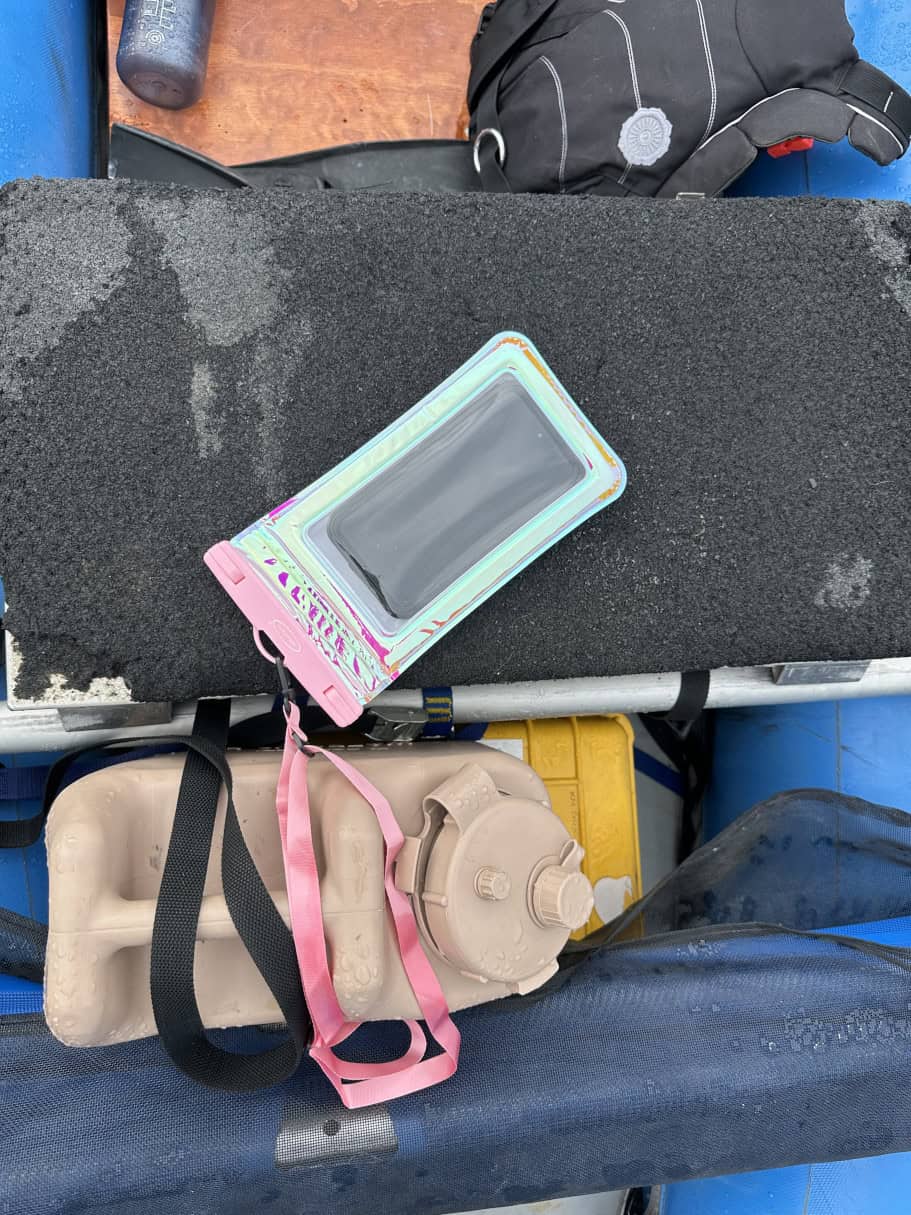
Stash 7 Waterpocket

Paddler taking photo with protected phone.
Image: K.M. Collins
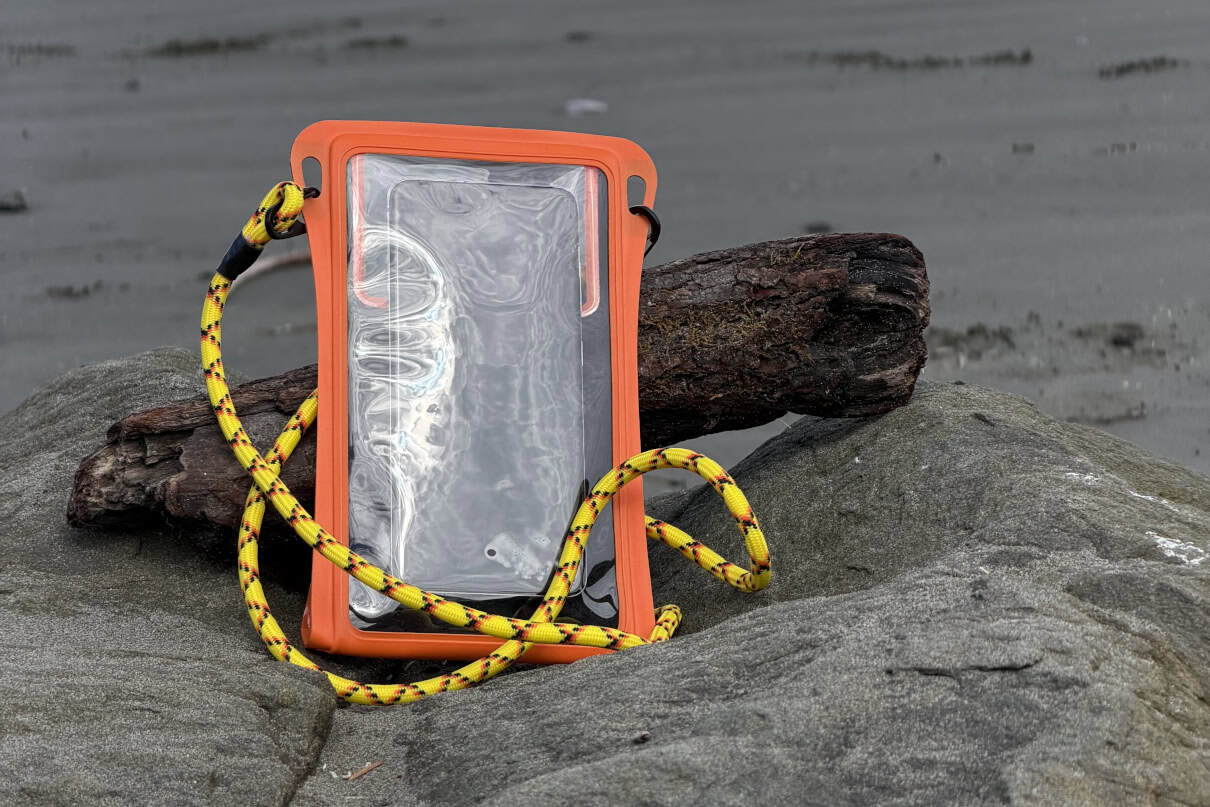
Stash 7 Waterproof Phone Case Specs
Compatibility: Most smart phones
Waterproof rating: tested to 2 meters up to 2 hours (IPX8)
Price: $39.95
stash7.com

Buy from:

STASH 7 AMAZON

Why I love it

You may initially think, “What’s the difference between this pouch and the others,” but don’t be fooled, the Stash has a handful of standout design extras for its price point. Among them, an extra-long marine-grade leash and bright colors to make it easy to find. The long, strong leash allows you to feel at ease when the moment arises to stretch out and snag a photo. The lanyard also has reinforced eyelets attaching it to the case. This is a common failure point with PVC products. Gold star to Stash for extending the product’s lifetime as well as decreasing the chances you could be separated from your beloved smartphone due to a torn plastic loop.

Another plush extra is the felt interior. This helps prevent condensation in the plastic interior, greatly enhancing your phone’s touchscreen usability while it’s in the case.

Reasons to buy
  • Felt interior
  • Reinforced eyelets
  • Long lanyard
  • Bright colors
Consider another if
  • Looking for a different style closure

Bottom Line

The Stash Waterpocket has a stylish name and an affordable price point. The color combos meet with functionality to keep your phone safe, and look pretty rad.


Best for performance on a budget

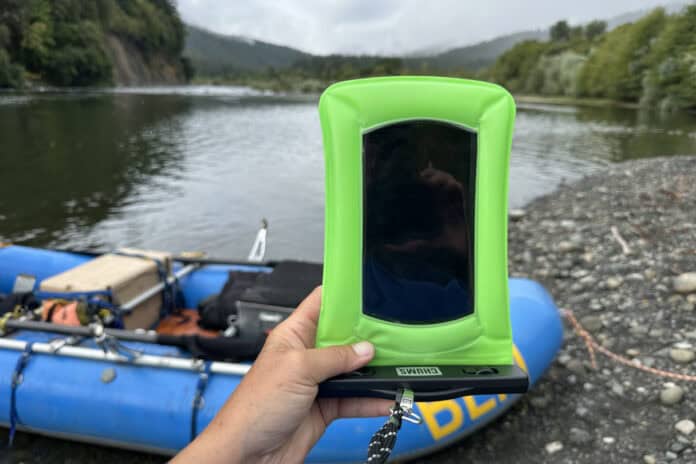
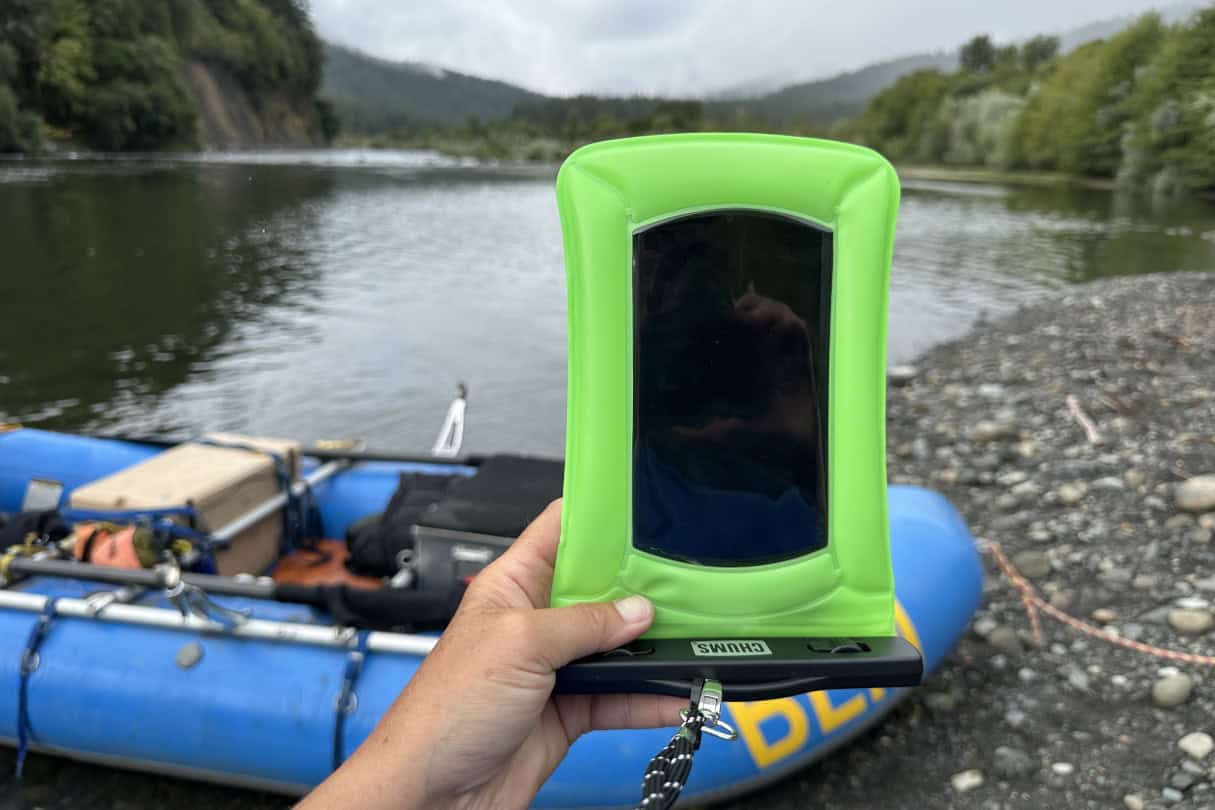
Chums Floating Phone Protector

Holding phone up with raft and river gorge in the background.
Image: K.M. Collins
Chums Floating Phone Protector Specs
Compatibility: Most smartphones
Waterproof rating: Not available
Price: $20
chums.com

Buy from:

CHUMS AMAZON

Why I love it

If Chums can protect my expensive prescription sunglasses, they can protect my smartphone too—right? This waterproof pouch straddles the summit of several product features. With incorporated float bags and top-grade waterproof materials, this floating dry bag functions at the highest level a pouch can function at. It is available in great patterns and colors, serving a variety of personal fashions.

This is the only product that clearly details the level of welding on its seams, which says a lot about the brand and the expected performance of the product.

Reasons to buy
  • Welded seams
  • Floating phone dry bag
  • Rollers and integrated straps are about as easy as loading a board gets
Consider another if
  • Your phone doesn’t fit
  • You’re looking for a pouch with a smaller footprint

Bottom Line

Chums is the only brand marketing their product as a dry bag. This statement says a lot to a core user, especially with a low price tag.


Simplest and cheapest waterproof phone pouch

AiRun Tech Waterproof Case

Phone and raft equipment.
Image: K.M. Collins
AiRun Tech Waterproof Case Specs
Compatibility: Most smartphones up to 6” long
Waterproof rating: Not available
Price: $15.99 for three cases
airuntech-products.com

Buy from:

AIRUNTECH AMAZON

Why I love it

AiRun Tech was founded by three fellows who love the outdoors. Their products are simple and to the point, which is beautiful in it of itself. This simplicity translates into very affordable price points for the end user.

Despite a low sticker price, the AiRun Tech waterproof case has the features you need for a pouch. The AiRun Tech is designed with an ultra-tough non-rip plastic material with double-stitched, sealed seams and scrim-reinforced vinyl bottom. A roll-top plastic closure tab system provides a secure and watertight seal.

Although the snap closure, which seals the phone case shut, does its job well, it’s a step that takes a little extra time, making it trickier to gain access to your phone, so it isn’t my favorite.

Many users feel this item is a crucial part of any outdoor kit, and we agree. If you just need a phone case, you can’t beat the AiRun for the price point.

Reasons to buy
  • Affordable
Consider another if
  • You want to invest in a phone case that you know will last multiple seasons
  • You are looking for an easy to open and close top seal

Bottom Line

An AiRun Tech waterproof phone case will get the job done and get three for less than the cost of a lunch special.

Waterproof phone pouch buying advice

If you have an everyday case on your phone already, like an Otterbox or wallet, consider whether you want the out case to fit in the waterproof pouch, and also if you’d like to have an extra space inside the pouch beyond the phone itself. A case with built-in floaties will keep your phone on the surface of the water best, while one without will rely on any air inside the case to rise to the surface. The pouch is often accompanied by a lanyard which the phone hangs upside down from. Considering how integral our phones have become as cameras it’s worth having a pouch with a small clear window for the camera side of the phone. Phone photographers will also want to be sure there is enough play in the lanyard to hold your phone right-side up and take a picture.

How we tested

The waterproof phone cases and pouches in this article were first selected through carefully researching what products were widely available on the market. Next, the products selected were tested, on-the-job, by the author, a professional expedition gear boater/raft guide, while assisting a river ranger as a volunteer. Pouches were used for various daily tasks. All cases kept these items dry for up to three hours of intermittent submersion in the chaotic current and sediment of the Rogue River. The author found that because all waterproof phone cases were indeed waterproof (as advertised), the evaluation came down to individual, unique product features and versatility in multiple sports and leisure activities.


What’s In Editor Joe Potoczak’s Class Fun River Running Kit

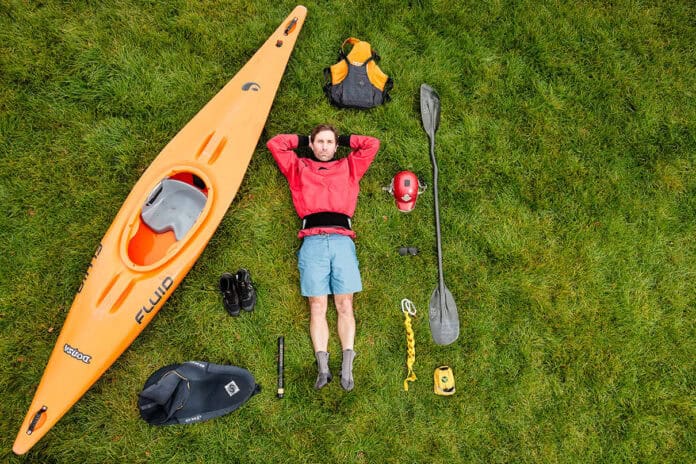
Paddling Magazine Editor Joe Potoczak lays on grass surrounded by his river running gear selections
Be like a fish. | Feature photo: Owen Roth

When I want to laugh, truly laugh, I go to rapids well within my comfort zone—the ones I’ve started to lazily drift through—and hunt out the potential within them. Now, I’m no longer a vector floating A to B, and instead drawing across boulder gardens in cursive calligraphy. I experiment with the currents, mazing through slots, across reactionaries and off tucked-away boofs, building momentum as the moves interconnect one to the next. Once I’m moving through a rapid like this, I can’t help but grin and bellow. It feels like I’ve tapped into a secret network and synchronized with the river’s rhythm.

What’s in Editor Joe Potoczak’s Class Fun river running kit

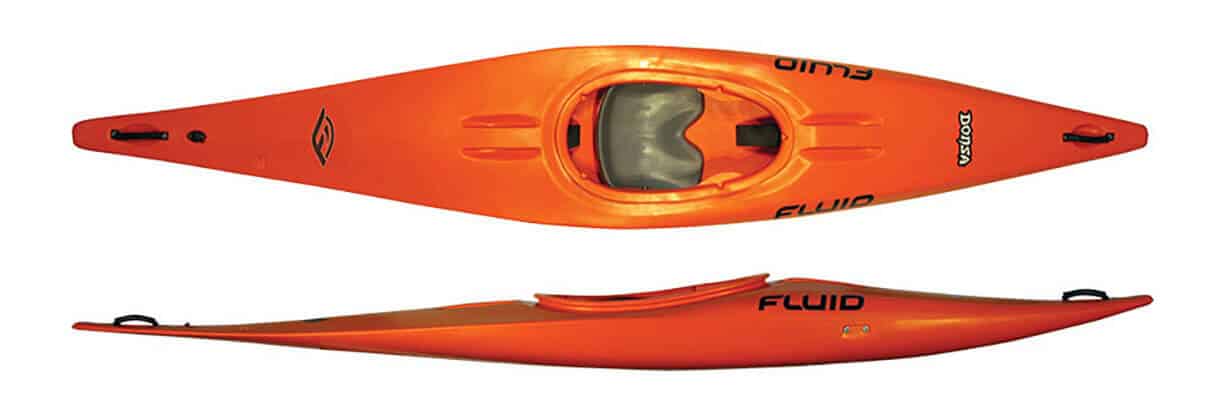
Fluid Kayaks Donsa

Fluid Donsa

MSRP: $715

A long half-slice opens a new universe. You can surf green waves no nine-footer can catch, launch into pirouettes, scream over drops and blast upstream to do it all again. The Donsa is an indestructible version of a slalom boat, and the consequence is one of the most fun and overlooked kayaks of all time.

Buy from:

FLUID KAYAKS

Werner Double Diamond

Werner Double Diamond

MSRP: $449

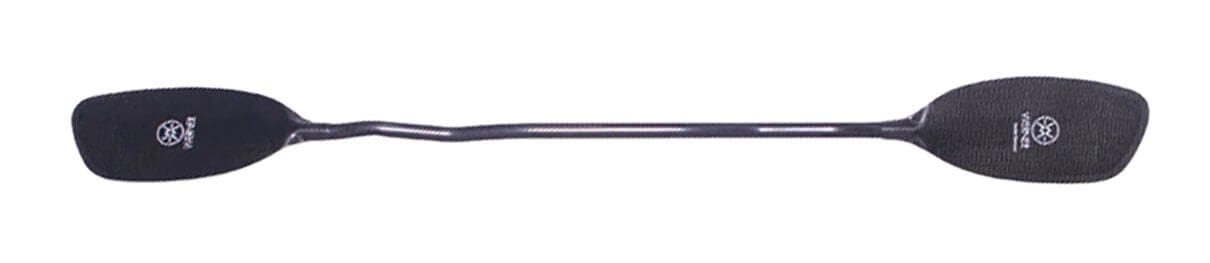
Whitewater kayaking at its finest is a ballet amidst a maelstrom, especially with the Double Diamond in hand as it slips with grace through the water. The blade size is just right, and the foam core provides a smooth, curving profile. When the tips of my beloved Werner delaminated, I glassed new carbon onto its foam and Dynel bones to dance again.

Buy from:

WERNER

Sweet Protection Strutter

Sweet Protection Strutter

MSRP: $200

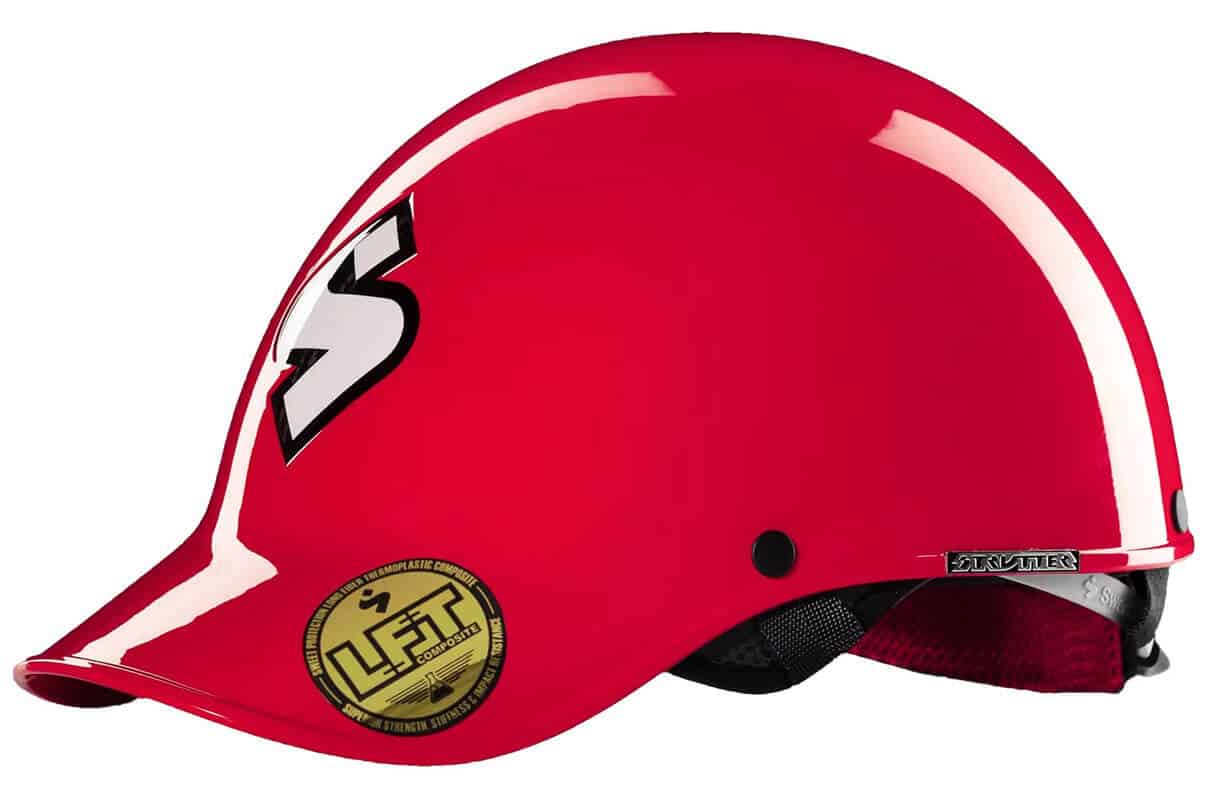
Sweet has been pulling off the baseball cap-style helmet better than anyone for 30 years. Beyond looking cool, it’s the brand I’ve trusted with my cognitive abilities for as long as I’ve been running whitewater. Their Rocker and Wanderer are also fantastic options with safety in mind.

Buy from:

BACKCOUNTRY AMAZON SWEET PROTECTION

Astral YTV 2

Astral YTV

MSRP: $165

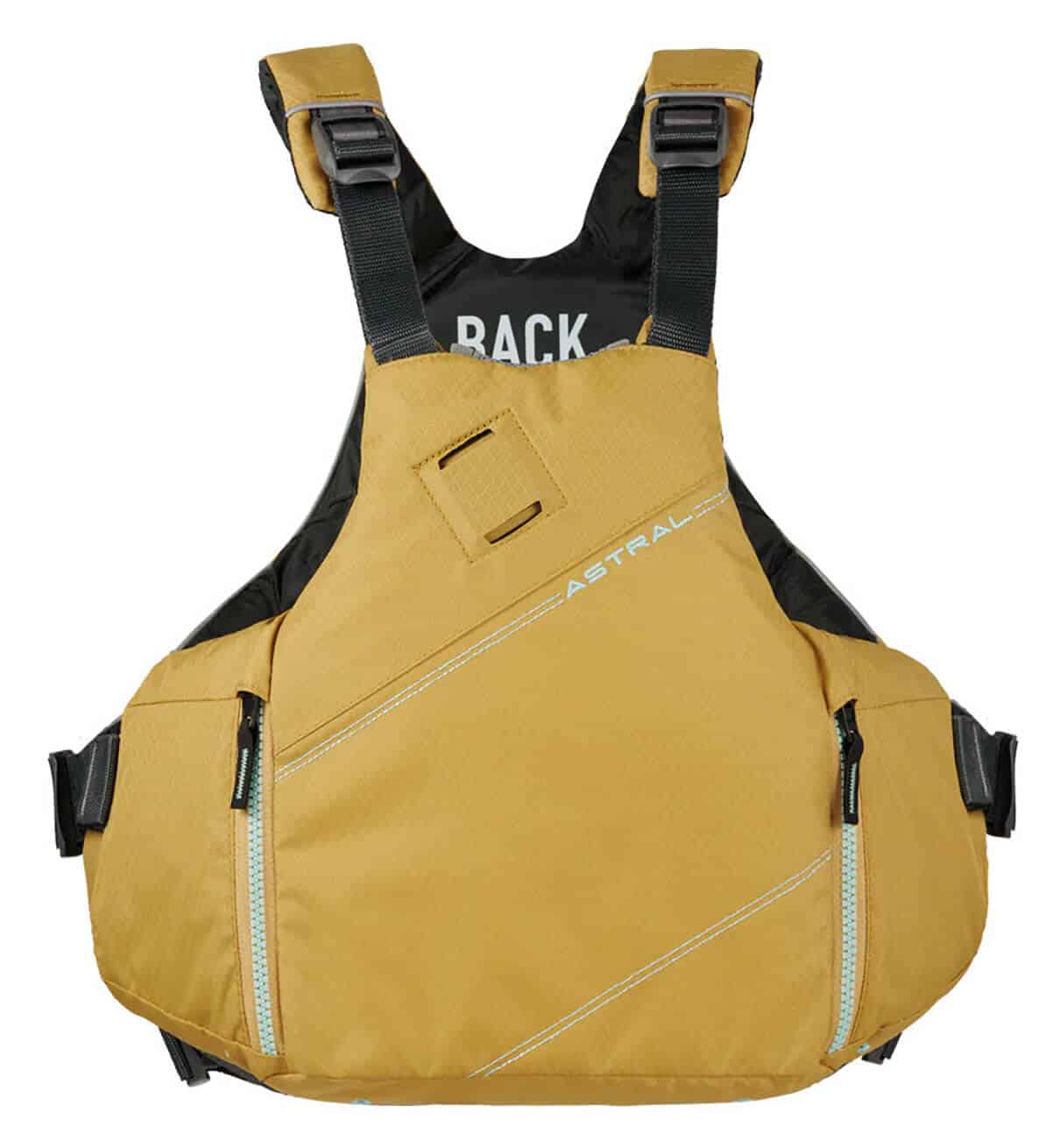
The YTV is about as close as it gets to finding a PFD that feels like you’re wearing nothing at all.

Buy from:

ASTRAL REI AMAZON

Snap Dragon Armortex Sprayskirt

Snap Dragon Armortex Sprayskirt

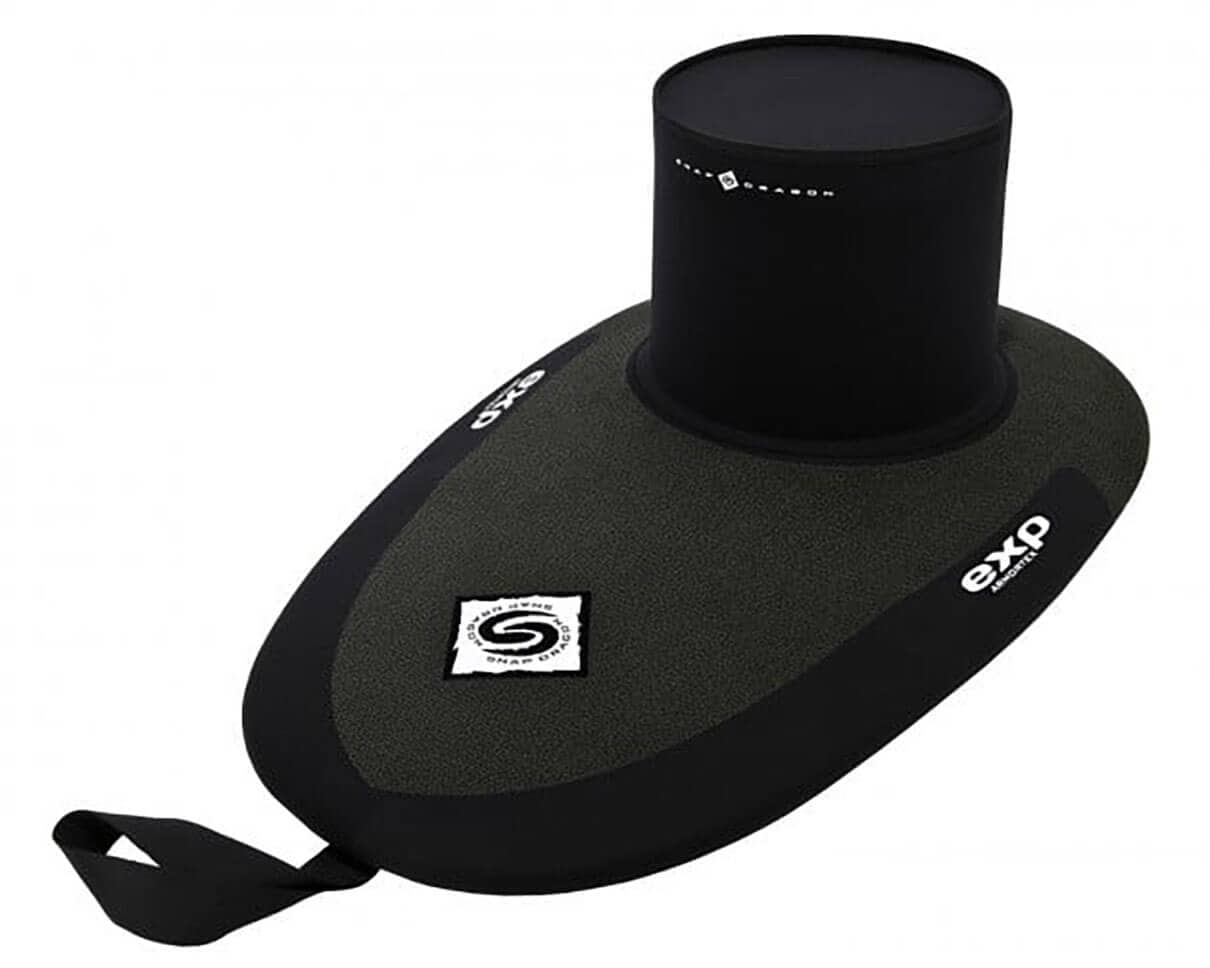
R.I.P. I would have bought three more if I knew I’d never buy another.

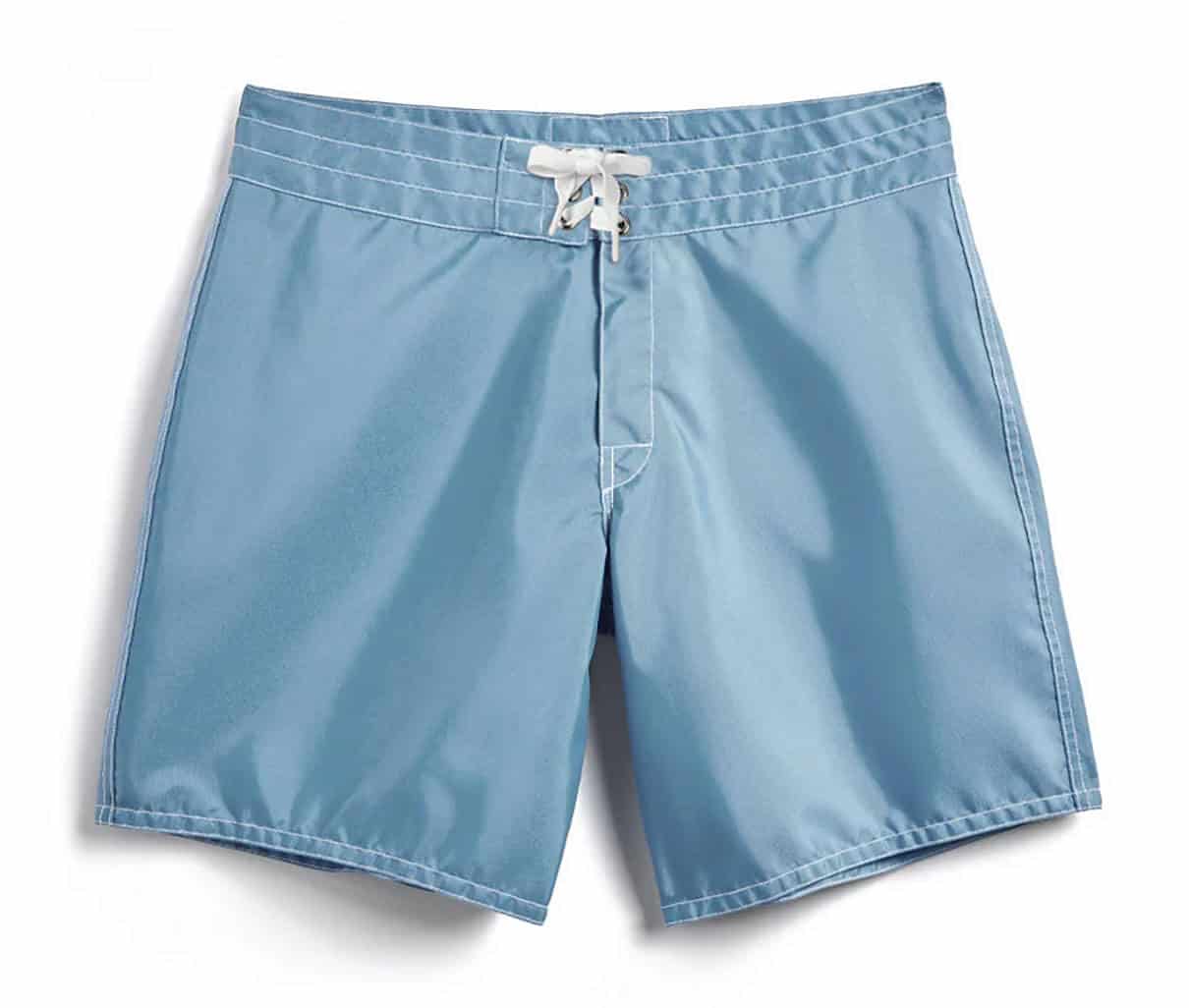
Birdwell 300 Boardshorts

Birdwell Beach Britches

MSRP: $125

Faced with the dilemma of continually wearing out the seat of the average boardshort, I looked to the surf scene. Birdwells are heavily constructed and fashionable. Haven’t busted them yet.

Buy from:

BIRDWELL

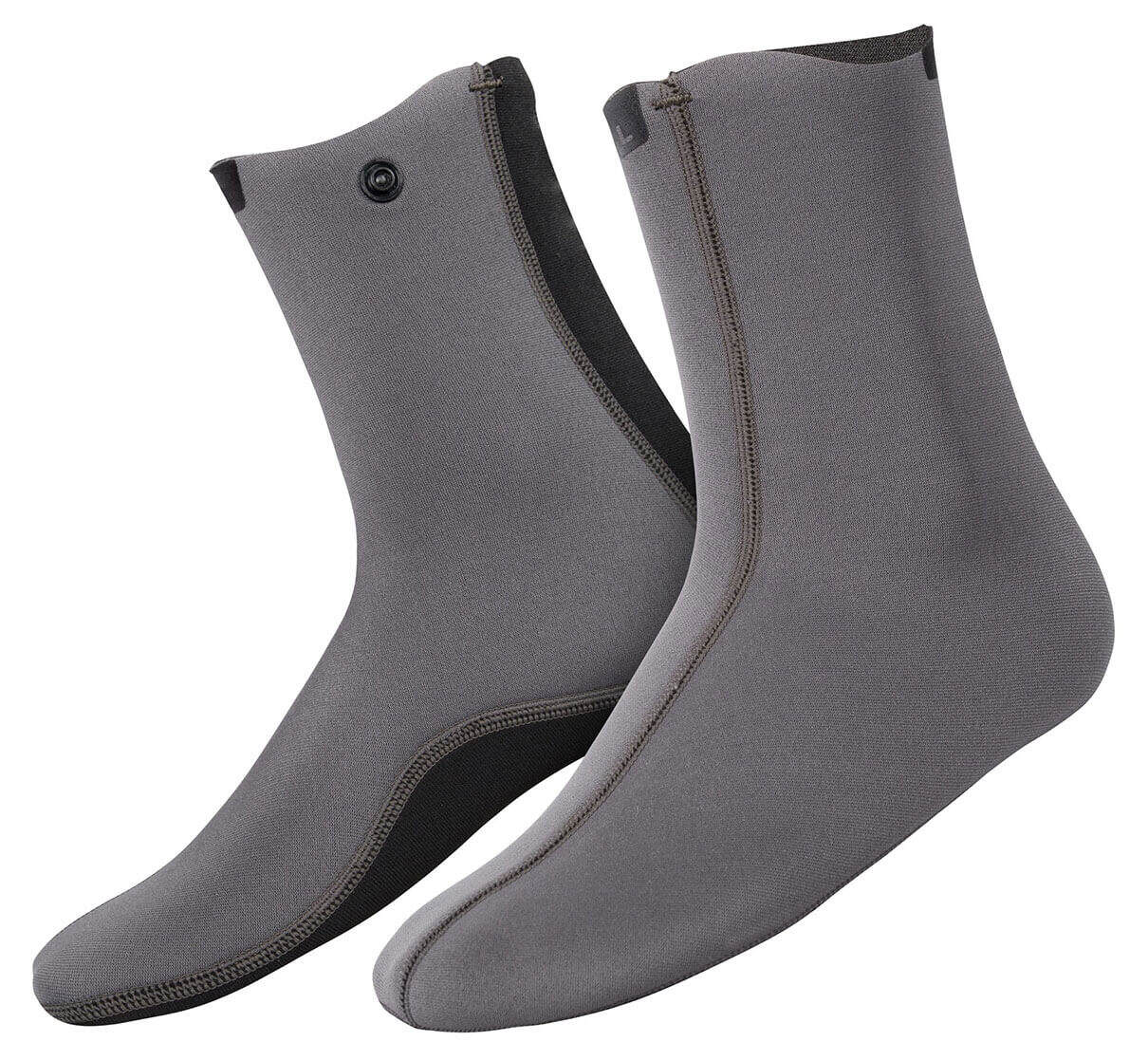
NRS Wetsocks

NRS Wetsocks

MSRP: $29.95

Going barefoot is a leading cause of gnarly toes. NRS’s Wetsocks are inexpensive padding between your feet and the boat. They also provide insulation and will last for multiple seasons.

Buy from:

AL’S SPORTING GOODS AMAZON NRS

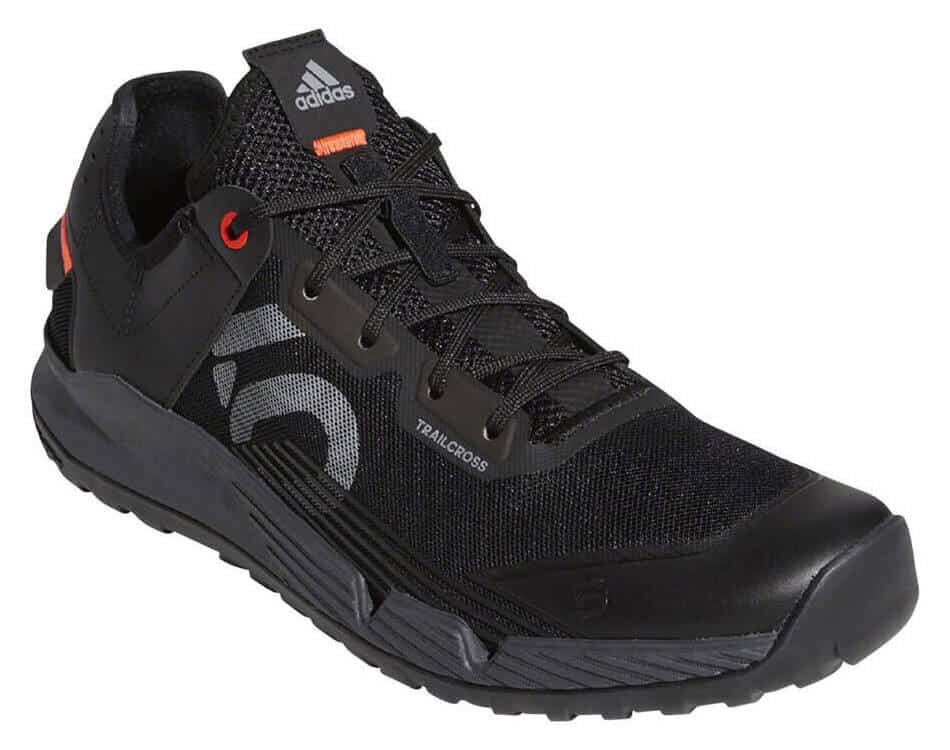
Adidas Five Ten Trailcross MTB shoes

Adidas 5.10 Trailcross Shoes

MSRP: $120

I kept water and trail gear separate as long as I could, but there was no more denying the Trailcross is a superior water shoe. With the Stealth rubber and dotted tread pattern, I don’t have to think twice about my footing once I slip them on and step out of the boat.

Buy from:

AMAZON SCHEELS ADIDAS

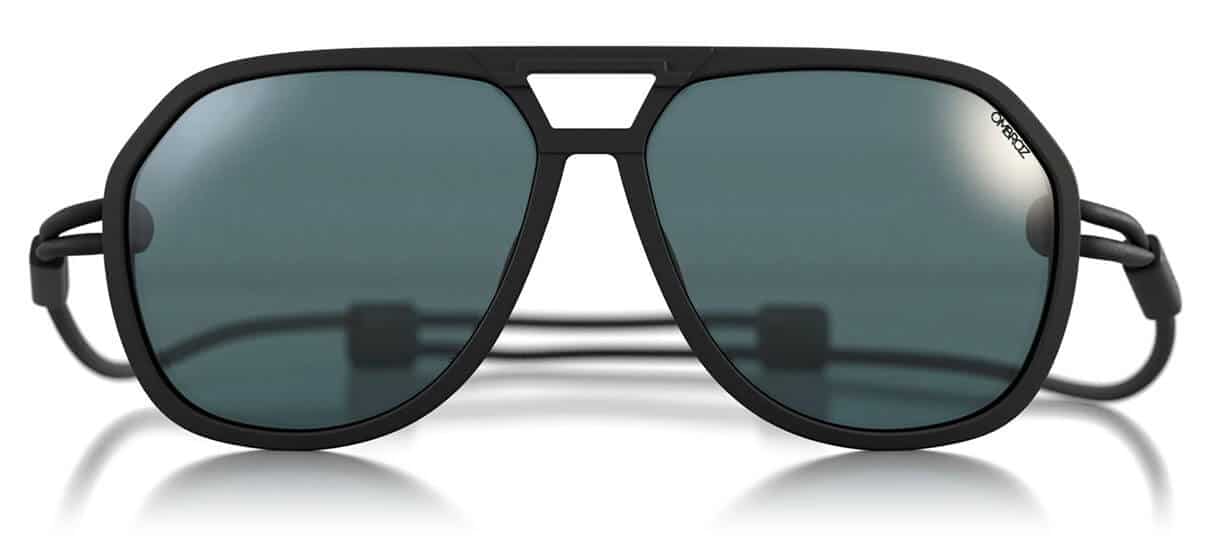
Ombraz Classic

Ombraz Classic

MSRP: $160

Ombraz armless sunglasses are a revelation. Adjustable accessory cord attached straight to the frame of polarized lenses—how did it take so long? The weight of the cord is even enough to rest over the ears when not cinched into action mode. I’ll never go back.

Buy from:

SCHEELS AMAZON OMBRAZ


3-Piece Rescue Kit

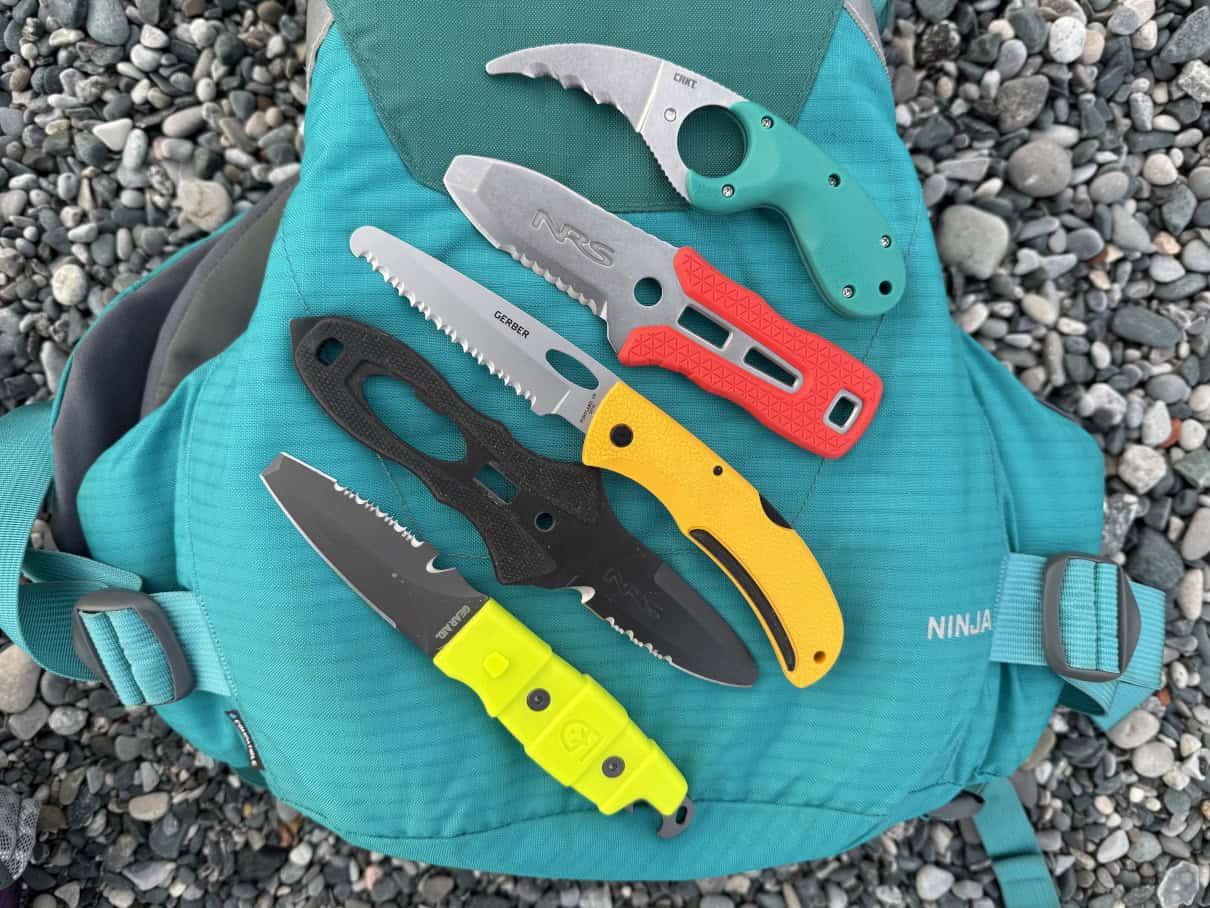
Swims and pins know no class. If you are carrying (at the very least) a throw rope, a length of webbing, and two climbing-grade locking-gate carabiners, you can accomplish a lot. When it comes to lines, always have a quick-release mechanism, a.k.a. a river knife on hand (see our review of the Best Rescue Knives).

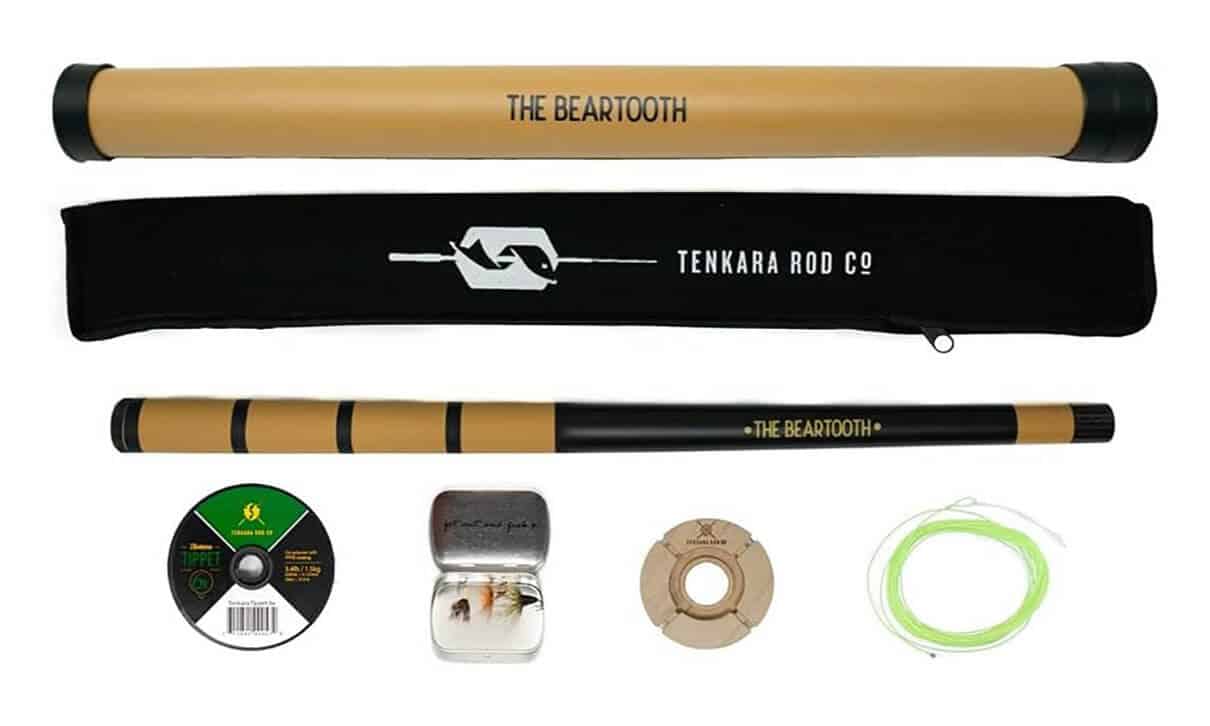
Tenkara Rod Co Beartooth

Tenkara Rod Co. Beartooth

MSRP: $175–$295

Fly fishing and reading whitewater have a lot in common, and as you figure out all the ways you use features on a river, you start to realize how the trout do too. Or vice versa. When I see a pretty stretch, I like to pull over, grab a packable rod from the stern, and spend time soaking it in.

Buy from:

TENKARA ROD CO

Cover of Issue 75 of Paddling MagazineThis article was published in Issue 75 of Paddling Magazine. Subscribe to Paddling Magazine’s print and digital editions, or browse the archives.

Be like a fish. | Feature photo: Owen Roth