Home Blog Page 225

Inflated Adventures

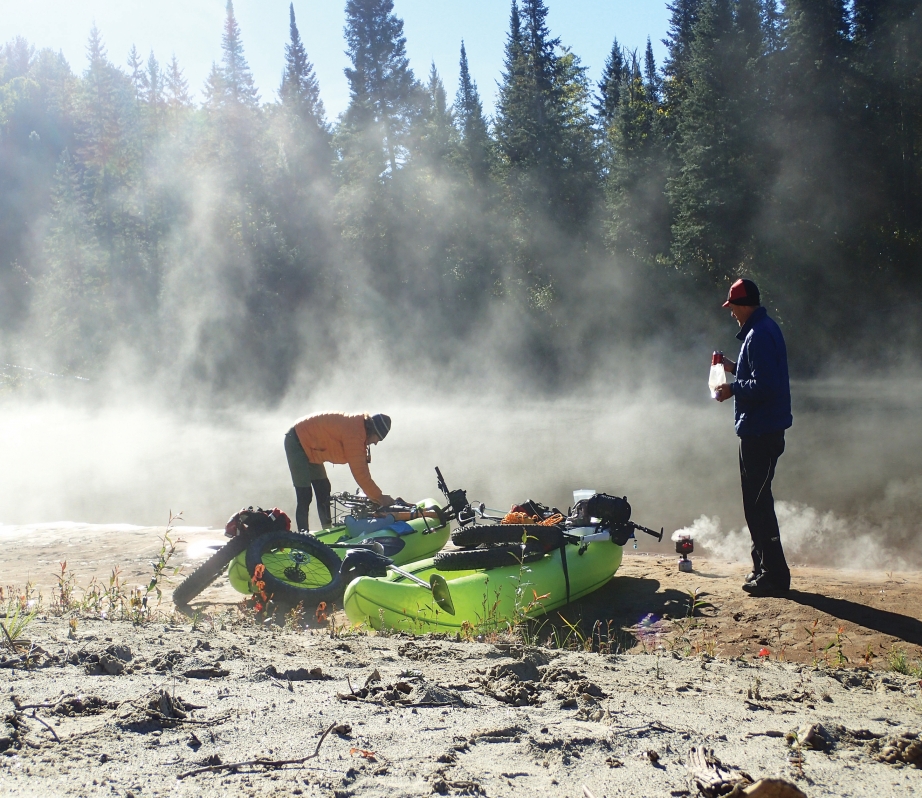
IMMERSIVE, PERSPECTIVE-SHIFTING EXPERIENCES INSPIRE SOPHISTICATED TRAVELERS ON DEEPER LEVELS. OATMEAL WILL DO THAT TO YOU.| PHOTO: SCOTT MACGREGOR

By comparison, my weekend fat bike packrafting adventure seems kind of rinky-dink.

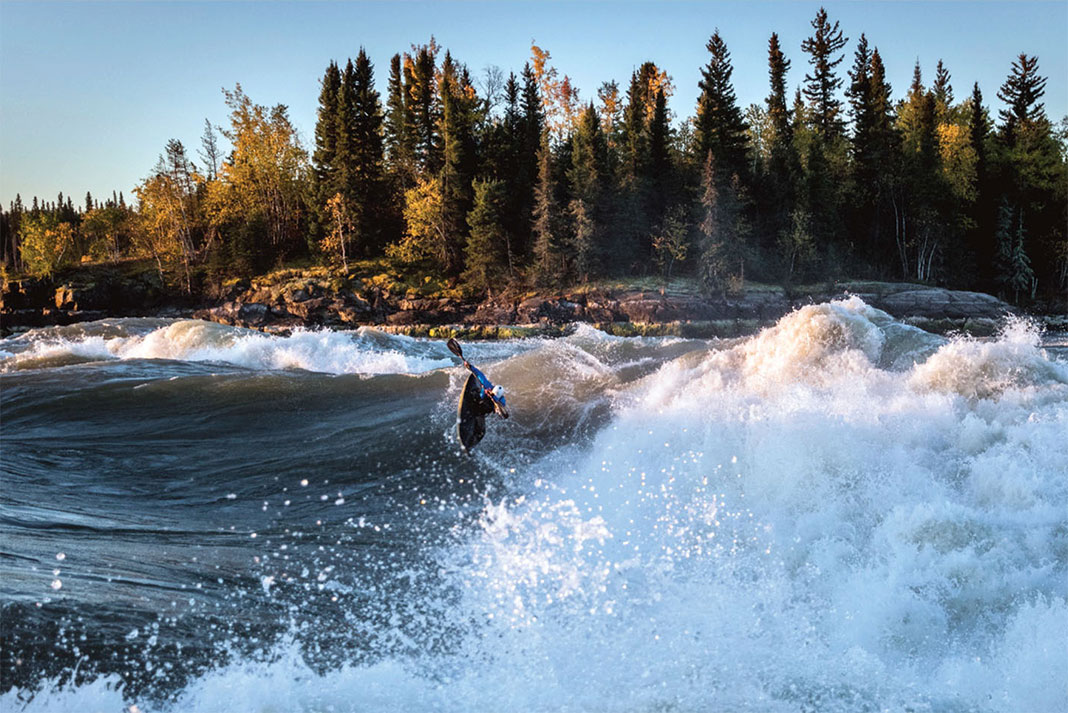
Stop reading this now and flip to page 40. There you’ll find David Jackson’s account of the who’s who of whitewater kayaking scouting from a de Havilland Beaver floatplane an undiscovered wave in a remote northern location. Then, after a traditional First Nation ceremony in their honor, departing in motorized rafts to spend a week living like kings eating and drinking beside 83,695 cfs of never-before paddled whitewater nirvana.

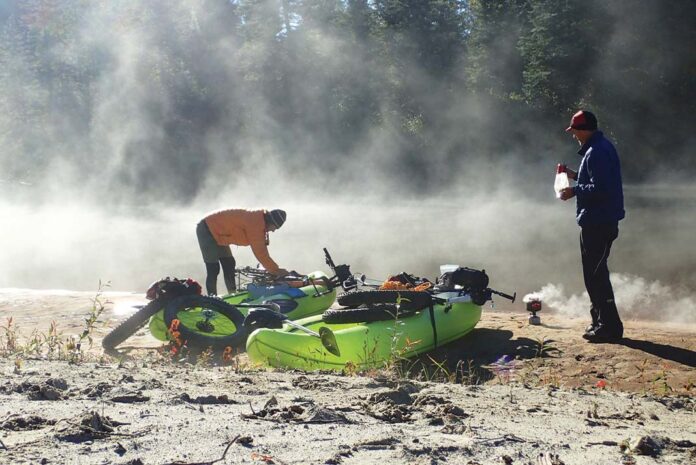
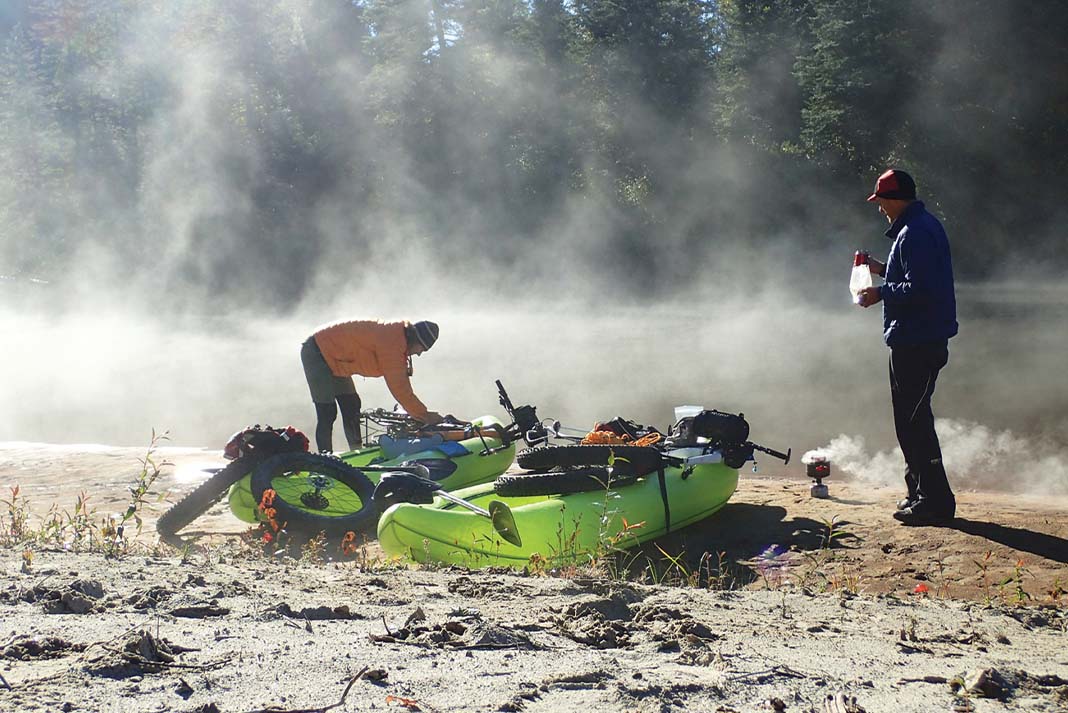
Okay, now turn to page 32 and read my feature story. Cam and I drive west an hour from his house. We cycle 35 kilometers up abandoned logging roads carrying all our own river gear. We eat oatmeal and bags of Uncle Ben’s converted rice. We inflate rubber dinghies and, by comparison to the Dream Wave, we float a lazy class II canoe-tripping river. We spend one whole whoop-dee-do freezing cold night away from home. We take out in the dark four hours later than expected, hungry, wet and shivering. Rinky-dink maybe, but exactly what I needed.

The transformative power of travel

According to Vogue, the hot new trend for 2017 is transformative travel. So like, this is when travelers venture out of Starbucks into jungles to learn ancient wisdoms of tribal cultures, return home to implement their new-found knowledge and brag about it at cocktail parties.

Whatever the length or difficulty level, transformative travel experiences inspire us on deeper levels. Oatmeal will do that to you. | Feature photo: Scott MacGregor

Chic travelers today are seeking life-altering experiences. Transformational travelers are motivated by a shift in perspective, self-reflection and development.

When I left my office, my brain was still closing annual advertising contracts and negotiating to waive a three-percent increase in paper costs. I’d forgotten to attend my daughter’s art gallery induction and I let a telephone call from my mother go to voicemail. I found myself packing late on Friday night, last minute as usual, because I’d taken one more call from a client before leaving the office. I wasn’t thinking about finding a deeper communion with nature and culture. I was going paddling to forget about life for a while.

We don’t have transformative, life-changing experiences on everyday river runs or at urban play parks. For real transformation to occur experts say the outcome of an experience must be unknown and the experience must include four necessary elements. Genuine challenge, check. Natural environment, check. Matching of experience and competencies, close enough. Heightened connection to the universe, okay, sure.

I’m not at a stage of life where I can drop everything and Cannonball Run to the Nelson River with a van full of buddies. Turns out, I don’t need to.

Two days of something completely different is good enough. I stopped telling myself what I should be doing and started asking what I really want to be doing. Transformation happens when travel shows you things that you never considered or have long since forgotten.

Upon my return, I bought my own fat bike, packraft, single burner micro stove and a spork. With my rekindled sense of adventure I’ve spent the winter scouting maps for new wilderness rivers I can ride up and paddle down. I’m no longer dreaming about the trips I think I should be taking, but probably won’t. I’m now planning adventures I know I can make happen. Heck, I don’t even need a shuttle.

Not exactly the life-changing transformative stuff one might brag about over a Smoked Butterscotch Latte Frappuccino but for the price of one and how long it takes them to make it, I can pack four days worth of food.

Scott MacGregor is the founder and publisher of Rapid.

Cover of Rapid Magazine Spring 2017 issueThis article was first published in the Spring 2017 issue of Rapid Magazine. Subscribe to Paddling Magazine’s print and digital editions, or browse the archives.


Whatever the length or difficulty level, transformative travel experiences inspire us on deeper levels. Oatmeal will do that to you. | Feature photo: Scott MacGregor


Video Review: Point 65 Kayaks Whisky 16 3L

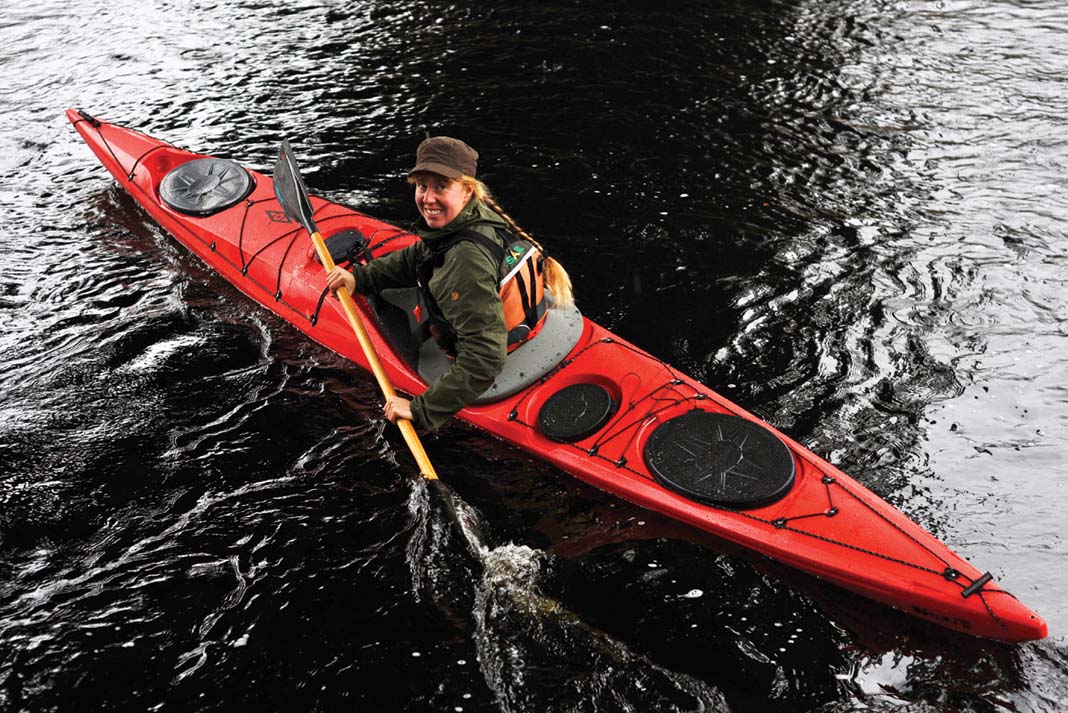
Eight years ago, when we first reviewed the composite Whisky 16 from Sweden’s Point 65 Kayaks, we applauded its designer, famed English sea kayaker Nigel Foster, for “boldly pushing deeper into the playboat niche than most would be willing to go.”

WHISKY 16 3L
Length: 16 ft
Width: 22 in
Weight: 55 lbs
Price: $1,699 USD / $1,999 CAD
point65.com

Today, nearly every major touring kayak manufacturer has a play-specific offering. Even the terminology has become mainstream: ocean play. At the time, however, the Whisky’s distinctive features—plentiful rocker, hard chines, flat hull, stern-weighted cockpit position and high-volume ends—constituted a weird and wonderful departure from sea kayak design tradition. “The Whisky is a different and very fun kayak,” summarized our review.

SIP AND STOW

The Whisky hatch is a small, bottle-shaped cubby molded into the front deck for easy access. Two oval hatches and a day hatch round out the ample storage options.

PUMP AND GO

Squeeze the small pump beside the seat to inflate the backband and pamper your lower back. The keyhole cockpit’s wide rim enhances spray deck fit and dryness.

WATCH OUT BELOW

The flat hull works together with the hard chines to create a platform that surfs like a dream and is super stable for paddlers just beginning to explore their edges.


“TOO MUCH OF ANYTHING IS BAD, BUT TOO MUCH GOOD WHISKY IS BARELY ENOUGH.”—MARK TWAIN | PHOTO: VINCE PAQUOT

Now, to celebrate his 10-year collaboration with Point 65, Foster has developed the Whisky 16 3L, a new plastic version of the pioneering kayak. Rugged, three-layer polyethylene construction makes perfect sense for a boat that excels in rock gardens, surf breaks and tidal races. It also reduces the cost, making this new Whisky an attractive entry-level contender for aspiring paddlers.

Durability was a paramount goal for Foster, who describes jumping on the boat’s deck to check stiffness. “It’s reassuringly solid,” he confirms, “just what I need for rough water and awkward landings.”

Foster shaped the hull for agile control while surfing and carving, and indeed, the Whisky’s crisp, full-length chines—which meet at almost right angles to the nearly flat bottom—bear striking resemblance to the rails and hull of a whitewater playboat. And, like my river runner, the Whisky is a champ at ripping across currents and riding waves.

The boxy hull shape also makes for novice-friendly primary stability and rock-solid edging. Beginners will feel very secure in the Whisky’s deep cockpit, which fits a wide range of paddlers. On my smallish frame, however, the coaming sits slightly high, making it a bit awkward to get “outside” the boat for bracing and rolling.

The Whisky’s bucket seat is comfortable and supportive. It’s paired with Point 65’s slick AIR-Backrest, which can be inflated on the go for a custom fit and superb lumbar support.

Touring speed is comparable to other 16-footers and tracking is surprisingly well behaved for a boat with so much agility. The Whisky loves narrow passages, inviting anyone to become an expert gunkholer.

In designing a boat for dedicated play paddlers, Foster has created much more than a dedicated playboat. The Whisky 16 3L is a capable do-everything kayak for paddlers of all abilities and inclinations. A decade later, it’s still a very fun kayak.

One Question: What’s The Most Trouble You’ve Ever Been In?

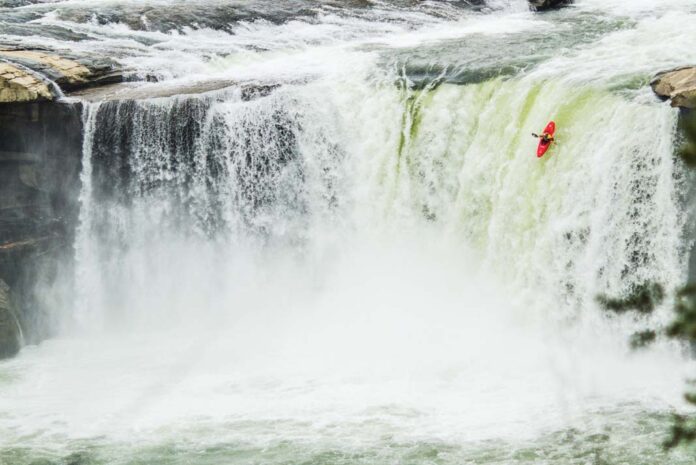
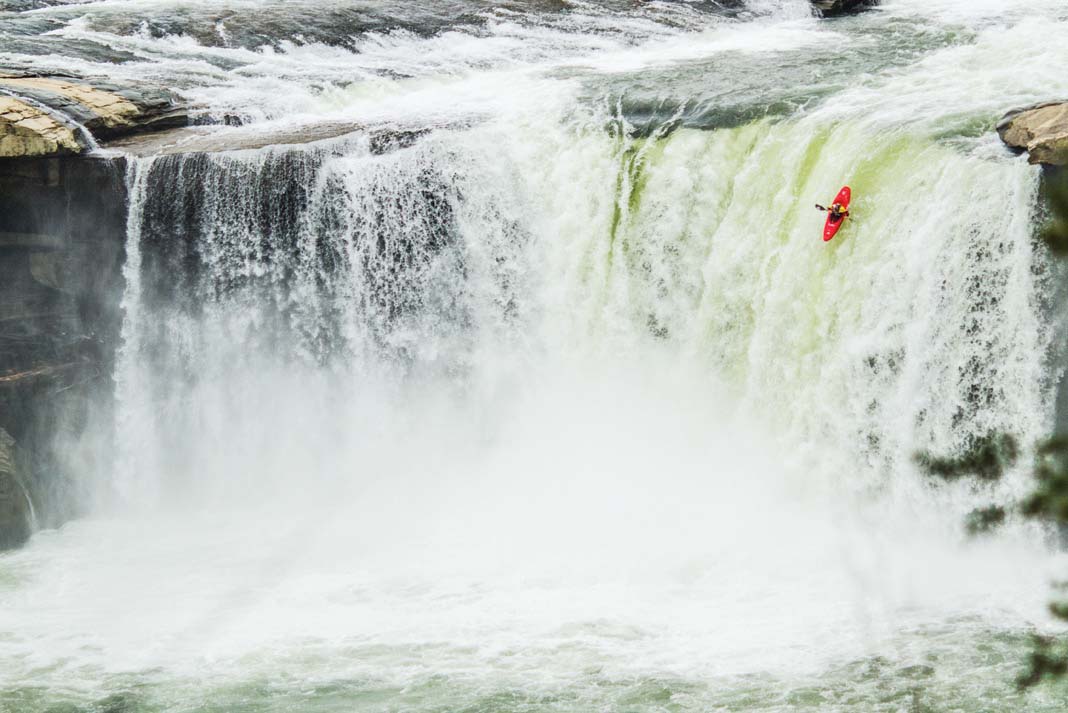
Whitewater kayaker Nick Troutman goes over the Cumberland Falls in southern Kentucky and ends up in legal trouble
Troutman on Cumberland Falls in southern Kentucky. Worth it. | Feature photo: Dane Jackson

Everyone experiences a dicey moment or two in their life, and that’s especially true if you make a living out of chasing the wildest rapids to run. Whether it was impetuous youth or just moments of misjudgment, these whitewater pros prove that trouble can find you on and off the river—and just about anywhere in the world.

What’s the most trouble you’ve ever been in?

“I got kicked out of World Class Kayak Academy in the first program they ever ran. That didn’t go over too well with the parents.”

— Tyler Bradt

“Almost spent six months in a Mexican prison for climbing the wall into a friend’s house. Neighbors thought something else was going on.”

— Dane Jackson

“I once tried to get my friend out of a police car after the bar in Canmore, ended up in the car with him and spent the night in the drunk tank.”

— Ben Marr

“Kicked out of World Class Kayak Academy. I got caught drinking and was legitimately kicked out of Uganda. My parents gave me five connection flights on the way home, probably hoping I got lost somewhere.”

— Adriene Levknecht

“I almost drowned at the base of Silver Falls in Washington. Fortunately I did not stop kayaking after my close call or after losing a close friend to the river in 2003. The life of a kayaker is strange that way: we intentionally take a risk that cannot be completely mitigated. Legally speaking, it was a DUI when I was 19. I decided not to drive drunk again.”

— Ben Stookesberry

“I’m a straight-laced dude, but when I put my beloved new Subaru WRX into the ditch at high speeds a week after buying it…that was a low point.”

— Chris Gragtmans

Troutman on Cumberland Falls in southern Kentucky. Worth it. | Feature photo: Dane Jackson
“Well, I am still finishing up the legal battle resulting from running Cumberland Falls last year. See above.”

— Nick Troutman

“Depending on the definition of trouble: I crashed my dad’s car on the way to an exam when I was 20. I almost drowned on Rio Pascua in 2005. And I spent my fair share of nights sleeping in ditches, but so far I have never been arrested.”

— Mariann Saether

“Arrested for stealing a car in Brussels. Luckily, I got off scot-free. Or, being arrested at the Ocoee at the 1993 Worlds for getting changed. Ranger didn’t appreciate my nudity and when I asked him if it was because he saw something he liked I was arrested on the spot.”

— Corran Addison

“Me, trouble? Never. I’m perfect in every way.”

— Bren Orton

“Back in 2007 at the Freestyle World Championships on the Ottawa River, I ran away to paddle with some French Canadian friends. The wave was so good we decided to stay two days. We were out of reception and although I left a note no one really knew where I had gone. It was a really great trip but I got in a lot of trouble with the team manager and the Federation. They wanted to ban me from competing at Worlds, I got kicked out of the team and everyone back home thought I was a rebel.”

— Nouria Newman

“When I was in middle school my friends and I decided to start mooning cars from the school bus. As it turns out, we mooned the school superintendent. I was suspended for a week.”

— Erik Boomer

cover of Rapid Mgaazine, Spring 2017 issueThis article was first published in the Spring 2017 issue of Rapid Magazine. Subscribe to Paddling Magazine’s print and digital editions, or browse the archives.


Troutman on Cumberland Falls in southern Kentucky. Worth it. | Feature photo: Dane Jackson


Six Rad Women Boofing In Mexico

A whitewater kayaking video of six women paddling in Mexico.
Lena Grüb

We love this edit of six European paddlers taking on the creeks, boofs and off-river-activities of Mexico.

Emerging Trends In Sea Kayaking

Photo Credit: Virginia Marshall
A sea kayaker paddles into a small cove on Georgian Bay.

FIONA HOUGH

INSTRUCTOR TRAINER & GUIDE, BRITISH COLUMBIA

“I think we’ll continue to see a movement towards more technical paddling skill development versus traditional journeying skill sets. More people are seeking out certification as a way to hone skills for rock gardening, paddling in current and surf, or just for a fun day out, rather than looking to develop skills for longer trips. I also see more paddlers who never plan to instruct, taking instructor or guide training courses as a way of gaining expertise in their recreational pursuits. People who are nearing or past retirement age make up the largest numbers on the water. This also applies to the more technical disciplines, where you might expect to find a younger demographic.”

DARREN BUSH

OWNER AT RUTABEGA PADDLESPORTS, WISCONSIN

“I’m seeing shorter, more compact designs as folks are taking more short trips and they want to keep the weight down. I am also seeing a lot more interest in thermoformed ABS construction because of both price and weight. I’d say the most popular sea kayaks will be 14- to 15-foot thermoformed boats, followed by lighter composites of similar length. The hope is some of these folks get the bug and upgrade to longer boats. The problem is that boats last a long, long time. I have kayaks that are 20 years old that are still perfectly serviceable. We need to start using water-soluble resins (laughs).”

NEIL SCHULMAN

CONSERVATIONIST & KAYAKING PUNDIT, OREGON

“I think the growing popularity of recreational kayaking is tied with our increased awareness of the health benefits of nature contact. It’s part of a return to green exercise that’s translating in the kayaking world into light, fast boats. There’s greater interest now in day and half-day touring without having to make the long drive out to the wilderness. People are also moving back from suburbs into city centers, where storage space is tight. Going hand-in-hand with this is the sharing economy’s growing inroads into the outdoor world. I think in the next year or two these start-ups will succeed and we’ll see how it evolves and affects paddle and rental shops as well as instruction and general safety.”

CLAY HALLER

PRESIDENT AT ADVANCED ELEMENTS, CALIFORNIA

“The market for portable kayaks continues to grow. Paddling in urban areas has become more popular and the ability to store your kayak in the closet of your apartment is a real benefit. They also have a huge appeal to the growing number of air travelers, which already amounts to nine million every day and is expected to double in the next 15 years. Like hard-shell kayaks, portables will continue to filter into very specific paddling segments such as fishing, touring, whitewater and ultralight packables, offering performance tailored to the activity. A continued trend will be the use of high-pressure, drop-stitch material like that used in inflatable SUPs to add rigidity and performance.”

6 Accessories Every Standup Paddleboarder Needs

A place for everything, everything in its place. | PHOTO: RYAN SALM

Once you’ve got your board, paddle, PFD and leash, it’s time to explore additional gear to make your next adventure on the water even better. Whether you cruise beautiful lakes, lagoons or intricate waterways, accessorizing will help you get more out of your paddling experience.

GPS device

Have you ever been curious how far you’ve gone, how fast your average or top speed was and how long you’ve paddled? Stop guesstimating. Onboard GPS—whether on a smartphone, watch or other device—tracks your every move, provides feedback and can even help navigate. You can view your progress in real time, or analyze your session post-paddle to improve next time.

Tunes

Bring ‘em and stroke to the beat. Rocking out during fitness training is known to increase concentration, lower perception of effort and leave athletes feeling more positive. Performance benefits of up to 15 percent have been recorded by the United Kingdom’s Brunel University. There are many waterproof devices that allow you groove and glide, from tiny players that clip on your rash guard and pair with headphones to waterproof speakers.

Carrier straps

Some of the best places to paddle require a long walk to the water’s edge with all of your gear. No one wants to be exhausted from a long hike before hitting the water. Look for a comfortable set of straps that create a sling around your board, allowing you to efficiently shoulder carry your board to the water’s edge hands-free. Many can be adjusted to fit boards of different sizes, and some will carry your paddle too.

A place for everything,
everything in its place.
| PHOTO: RYAN SALM

Dry bag

Carry your iPhone and electronic car keys without getting them wet. There are so many affordable styles and sizes to choose from, there’s no excuse not to have a couple. Smaller bags often have a cord so paddlers can loop them over their neck and store the package safely under a paddling top.

Others can be strapped around a bicep for easy access to changing the station on Spotify or accepting a call during a “board meeting.”

Cooler

How many times have you paddled to a spot that you thought would be a great place to throw a line in and catch your dinner? Strap a cooler aboard. You can use an ice chest as a seat while you fish and keep your catch cold. With the explosion of paddleboard fishing, many coolers are made specifically for boards, even including helpful features like rod holders. If fishing isn’t your thing, an ice chest allows for cold drinks and gourmet picnics even on the hottest days.

Balance trainer

Not everyone lives near open water year-round. Whether you love getting out on calm ponds or intense surf waves, you can keep your body primed with a balance trainer. Popularized by skiers and surfers, a balance trainer is a modified seesaw. A user stands with feet at opposite ends of a board with a fulcrum underneath and tries to keep the edges of the deck from touching the ground. It develops balance, coordination and core strength. There are many trainers on the market—from easy designs used in rehabilitation for the elderly to steeper and speedier models used by professional athletes.

Author of How To Increase Your Stand Up Paddling Performance, elite coach Suzie Cooney keeps a trunk full of these paddleboard accessories (plus many more) on Maui where she trains. www.suzietrainsmaui.com

Whitewater Kayak Gear For The Ultimate Road Trip

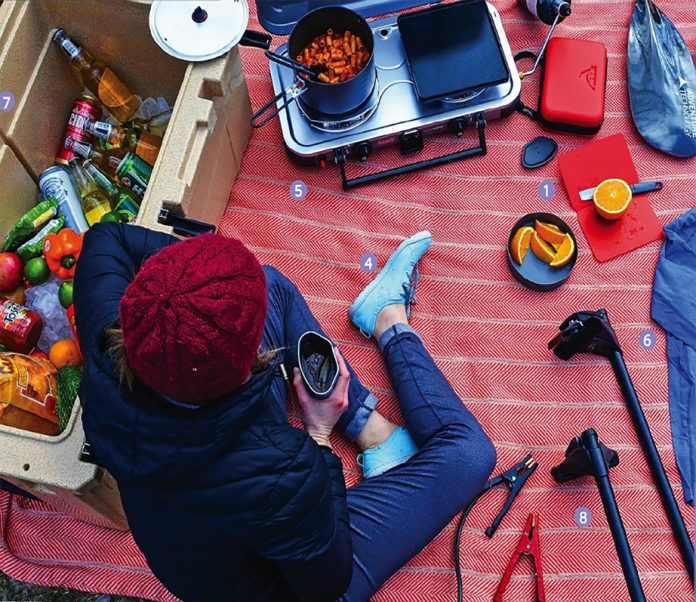
A woman on a whitewater paddling road trip sitting on a blanket with a paddle, camping stove, paddle and river shoes.
What more could you possibly ask for? (Maybe less mosquitos). | Photo: Dawn Mossop

A road trip with your pals in search of whitewater is certainly a summer highlight. You’ll need the essentials though, snacks included. Deciding what whitewater kayak gear to bring can be difficult if you don’t know what to bring, and what kind of trip you’re going on. Have no fear, Paddling Magazine staff has created the ultimate road trip checklist with all the proper whitewater kayak gear. Don’t go hungry, don’t get cold, but get cozy and excited with this checklist. Happy paddling!

Whitewater kayak gear checklist

1. MSR Alpine Deluxe Kitchen Set & Flex 3 System
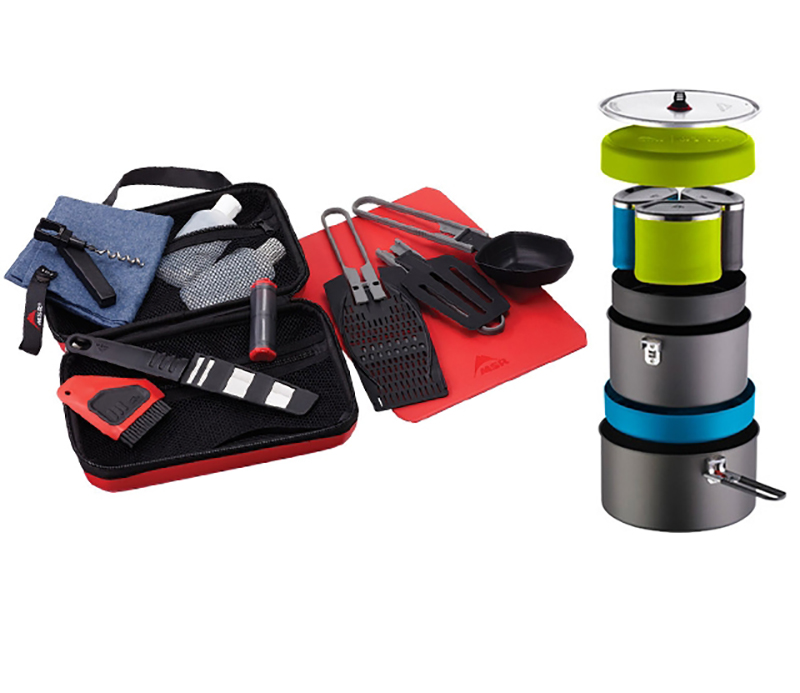
The MSR Alpine Deluxe Kitchen set and flex 3 system used for whitewater road trips.

This is what I love about MSR: they don’t do anything half-assed. When they decided to put a knife in their Alpine Deluxe Kitchen Set, they made it a super sharp mini chef’s knife that’s better than most in my kitchen drawer. When it comes to whitewater kayak gear, quality is on point for all items: fold-up cutting board, quick-dry PackTowl, two mini squeeze bottles, a fold-up spoon and spatula, dish scraper and brush, teeny salt and pepper shaker, corkscrew and a small plastic cheese grater that doubles as a strainer (hey, what’s the point of car camping if I can’t have freshly shredded cheese on my chili?). Zip up its handy carry case and pair it with the Flex 3 cooking set and you’re well prepared for gourmet meals on the go. Three insulated mugs with lids, three bowls and a 2.3-liter non-stick pot all nest into a larger 3.3-liter pot and are held in place by a strainer lid and click-in place folding handle.

Flex 3 system: $129.95 | Alpine Deluxe Kitchen Set: $54.95 www.cascadedesigns.com

2. Adventure Technology AT2 Standard
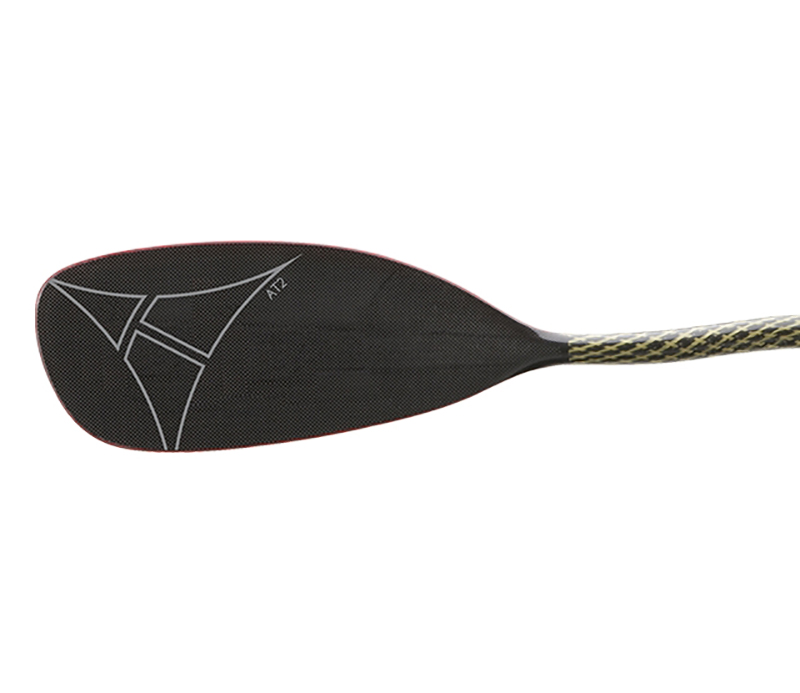
AT2 standard paddle from Adventure Technology in black

As our gear gets more and more specialized (page 49), our quivers of paddles are growing. We have paddles just for racing, paddles just for creeks and paddles just for freestyle. If you have to choose just one to take along on a whitewater road trip, it’ll be hard to beat the AT2 from Adventure Technology’s Elite Series. The key here is versatility. It is lightweight, very stiff and integrates both freestyle and river running paddle features to make it as close as you can get to one stick that does it all. The combo of carbon, aramid and fiberglass in the shaft makes the AT2 durable, so you can count on it when you only have space for one blade on board.

$440 | www.atpaddles.com

3. Immersion Research Devil’s Club Dry Top & Shawty Dry Suit
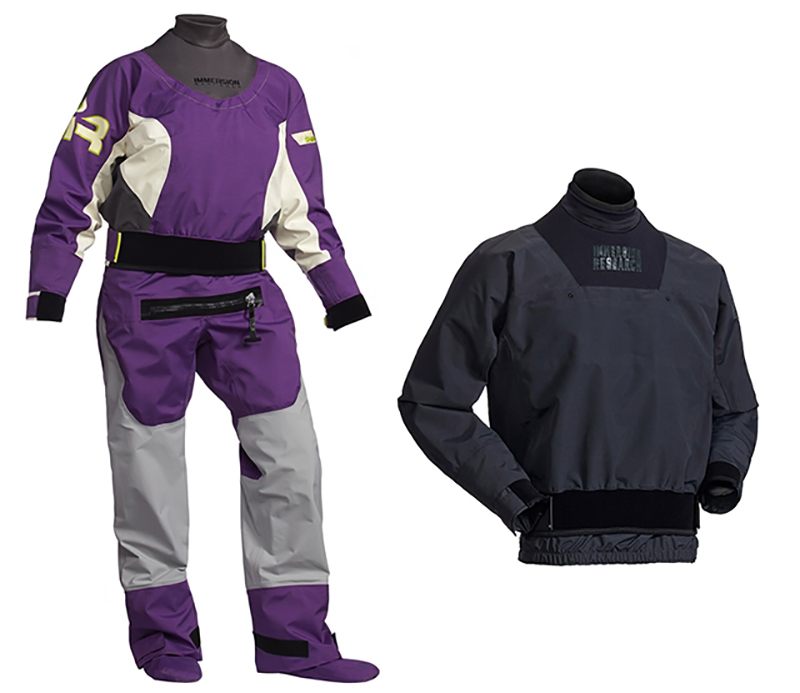
Immersion research devil's club dry top and purple and white Shawty Dry suit

IR got serious about new outerwear this year. The Devil’s Club series takes its name from the nasty, spiny Pacific Northwest plant that’ll tear your gear on hikes to and from the river. Now you can go ahead and bush crash. The dry top’s outer shell uses heavyweight fabric that puts durability first. Of course, this means the top is heavier than most—maybe not the best choice for soul surfing on a sunny summer day—but if you’re venturing off the trail, the Devil’s Club is a bomber choice for durable protection and waterproofness.

On the women’s side, I couldn’t wait to try IR’s new Shawty drysuit. Once I got over the name (Urban Dictionary: “Fine ass woman. Sup shawty, how you doin?”), I was nothing but stoked about this whitewater kayak gear piece. Across-the-shoulder zippers are my new favorite entry method thanks to the ease of movement they allow, and the Shawty has a hard T-shaped pull that makes it easy to do up myself when I don’t have a friend to help me out. The adjustable buckle at the waist is a simple sizing solution that lets me dial in the fit, and the fabric is supple enough that it moves smoothly with my body so I don’t feel like I’m in a spacesuit. It’s clear that IR put time into tailoring the fit—the Shawty works with my curves without being awkwardly wide in the hips. The waterproofness is bomber and the fabric feet are reinforced for added durability. The front relief zipper means you should bring backup base layers if you’re accustomed to a drop seat, but I promise your stand-and-pee skills will come with time.

Devil’s Club Dry Top: $398 | www.immersionresearch.com

4. Coleman FyreChampion HyperFlame
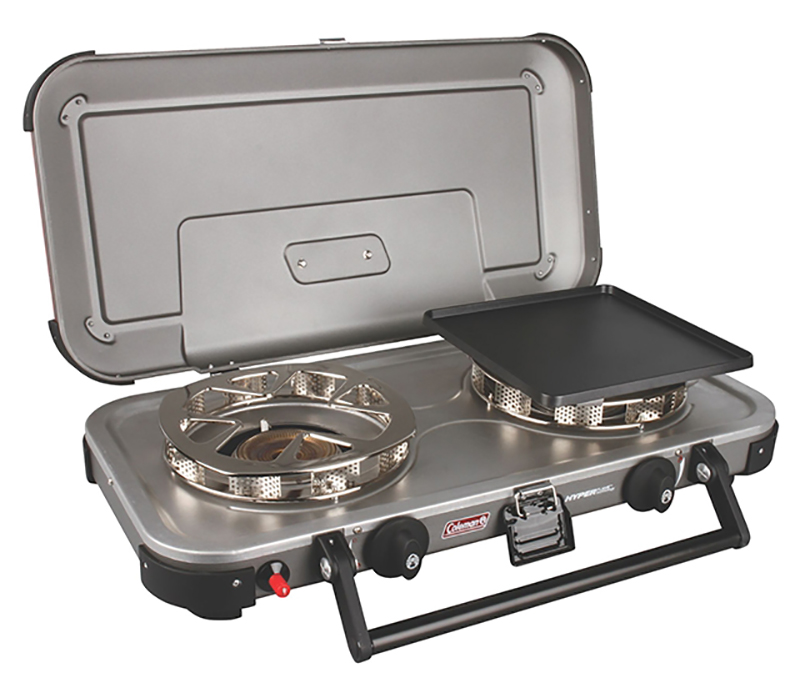
Coleman Fryechampion Hyperflame, a great cooking stove for whitewater kayaking road trips

An amazing on-the-go stove. Powered by a 16.4oz propane cylinder, the FyreChampion’s two burners roar to life with a flick of the easy ignite button. Each burner has a small, removable no-stick griddlekayak padfor perfect pancakes, and the control knobs let me regulate temperature with precision. I can boil water with unprecedented speed. The open lid is an effective windshield with an arm to hold it in place. The whole unit closes up to contain the burners, griddles, and screw-apart propane regulator for a slim suitcase-style kit with a carry handle that’ll easily slip under a seat in the car or between bigger storage bins.

$179.99 | www.coleman.com

5. Astral Loyaks
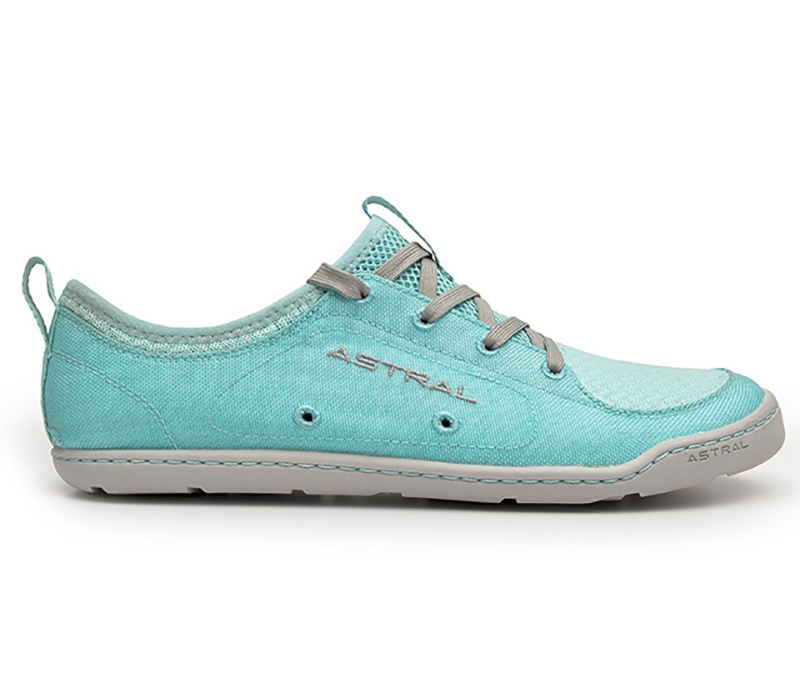
Astral Loyaks, a great shoe to take on whitewater paddling road trips

Other than the fact that they come in my favorite shade of turquoise, comfort is the best thing about the Loyaks. They’re incredibly light, flexible and low profile, and I can wear them for an après paddle beer without feeling like I’m in clunky river clogs. Their flexible sole minimized the foot cramps I get with stiffer shoes against my open canoe foot pegs. Astral’s proprietary rubber means they handle well on rocks in and around the water and drain well so I don’t end up with sloshy puddle shoes. Don’t plan to wear these just anywhere—slim design means limited support so they’re not suited to treacherous portage trails, but they’re my new top pick for a grab-and-go kayak shoe.

$79.95 | www.astraldesigns.com

6. NRS H2Core Lightweight Hoodie & Pants
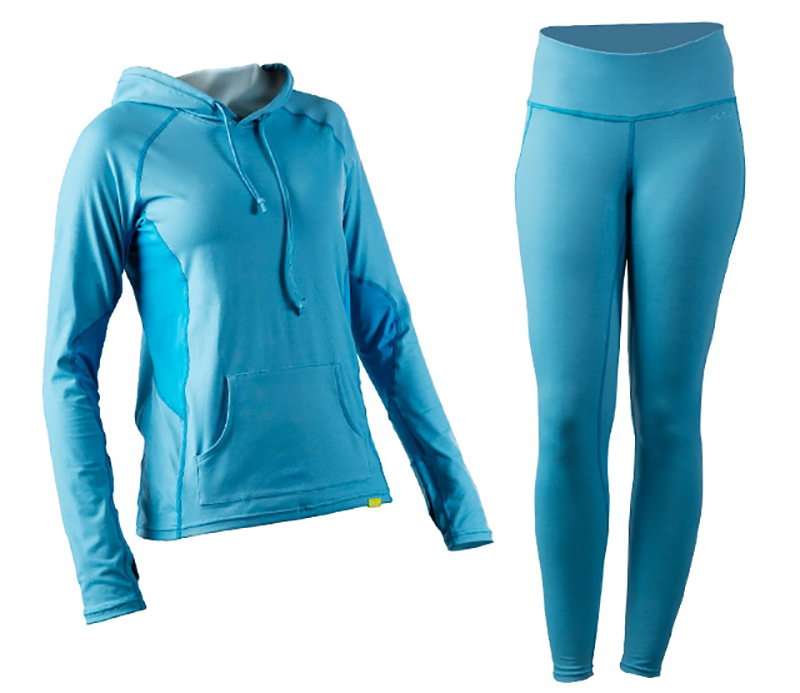
NRS H2core insulating layers perfect for a paddling road trip

Snuggly soft on the inside with a smooth brushed exterior, these insulating layers are warm and versatile. They’re surprisingly cozy for how light they are, which is a bonus for wearing under dry gear—none of the annoying restriction that sometimes comes with warmer base layers. I’m happily wearing them under my suit for spring paddling or in my sleeping bag on a cold night (not on the same day—gross). The top has a panel of lighter fabric under the arm and partway down the torso to combat underarm chafe and keep things breezy for the seriously sweaty among us.

Hoodie: $64.95 | Pants: $49.95 | www.nrs.com

7. Canyon Cooler Prospector 103
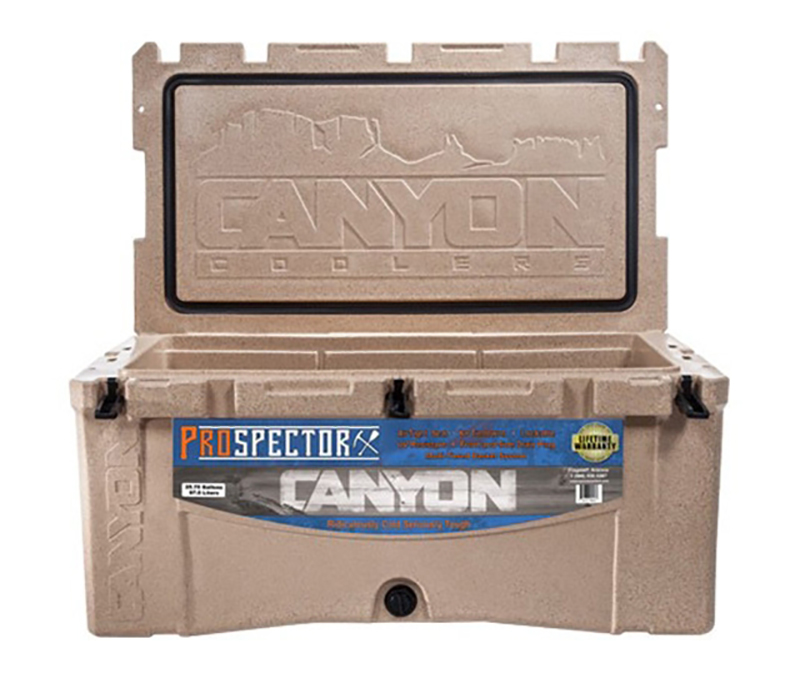
Canyon cooler prospector 103, a great choice for whitewater road trips

Gigantic and seemingly indestructible, this is the cooler for serious rafting adventures and tailgate parties. For on-the-water adventures, it has six tie-down points to thread cam straps through and fits perfectly into our AIRE 156R and 143D rafts. It has two drains, one on the front and one on the end, so I can access one of them no matter how the cooler is tied in. Both the drains and the three rubbery latches that hold the lid closed are recessed into the cooler’s rectangular shape so they don’t get damaged or cause a snag. At 37.5 by 21.25 by 18.5 inches, this cooler will take up some serious trunk space, but it stores enough food and beer for a long trip or big bash and keeps everything perfectly cool.

$410 | www.canyoncoolers.com

8. Yakima Round Bars & Q Towers
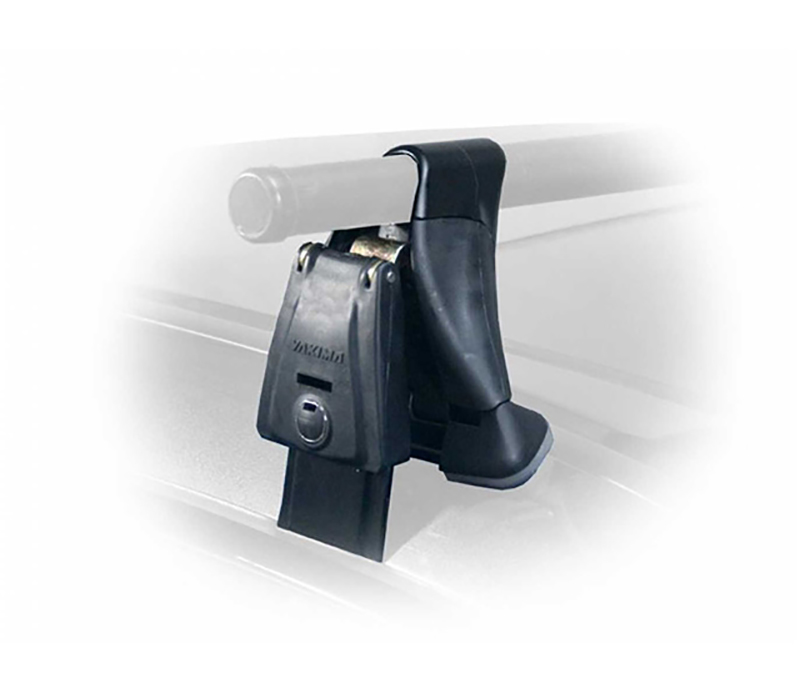
Yakima round bars and Q towers, a great option for whitewater paddling road trips

These tried and true roof racks have taken my boat and me all over the map. I’ll admit that the initial set up was a little intimidating—I opened the box to find several smaller boxes inside, and in them, what felt like a million tiny pieces. Luckily, Yakima made it absolutely idiot proof. Their step-by-step instructions guided me through the assembly, and the best part is, it was a one-time job. Since then, I’ve popped them on and off my car a hundred times with ease. The Q Towers have a simple knob in them to adjust on either side for a perfectly balanced clamp on my naked-roof car—no need for factory bars. The instructions also walked me through finding exact placement on the top of my weirdly curved hatchback to make sure they were the right distance apart and positioned with perfect symmetry. I was nervous about the home installation, but once they were on my car it felt like they had been there all along. Solid and reliable. Little locks on each clamp mean that only I can undo them. Yakima makes newer, more aerodynamic crossbars, but the RoundBars are a proven choice and better on the budget. Use Yakima’s website to search the make, model and year of your vehicle, and it’ll spit out all the roof rack options for your ride.

Round Bars: $135 | Q Towers: $555 | www.yakima.com

What more could you possibly ask for? (Maybe fewer mosquitos). Feature Photo: Dawn Mossop

Bench vs. Bucket Seats: Which Is Better On A Canoe?

The great debate. PHOTO: HANNAH GRIFFIN
The great debate.| PHOTO: HANNAH GRIFFIN

At the 1981 Whitewater Nationals in upstate New York, canoe racer Tom Staz arrived to the event with a boat that caused a stir among competitors. He had modified his Wenonah race canoe with a low-set bucket seat and foot braces. If the conventional wisdom for paddler positioning were an indicator for how the race should have played out, Tom Staz would have finished dead last. Instead, he surprised everyone by finishing minutes ahead of the next competitor.

While materials, weight, length and trim are all aspects most paddlers consider when they are in the market for a canoe, rarely do we reconsider how we sit in our boats. And where we live determines how we sit.

[ Paddling Buyer’s Guide: View all canoes ]

“The Lower 48 is a sitting market, whereas Australia, Germany, the United Kingdom and Canada prefer to kneel,” says Bill Kueper, vice-president of Wenonah Canoe, which manufactures canoes with both seat styles. “There are cultures of sitting and kneeling, and you are more likely to sit or kneel depending on where you learn and what water you paddle.”

Kueper jokingly likens the two seating styles to the Reformation between the Catholic Church and Martin Luther. Some people swear by their seating position, and others just don’t know any different.

“The height of bench seats is the real reason kneeling became the staple of canoeing tradition,” says veteran marathon racer and coach Peter Heed. Kneeling lowers a paddler’s center of gravity, especially important for rough conditions and river running.

While kneeling was commonplace in the early days of recreational and sport canoeing, bucket seats were quickly adopted by marathon paddlers following Staz’s 1981 debut. Buckets were mainstream in the race scene and recreational market by 1983, according to Heed.

The great debate. PHOTO: HANNAH GRIFFIN
The great debate.| PHOTO: HANNAH GRIFFIN

“Sitting is preferred as a more comfortable position over long distances, and for more powerful sprints,” says Heed. However, for lovers of traditional aesthetics, departure from the seating style of Bill Mason and the voyageurs before him may feel akin to blasphemy.

While the bench seat is simple, adaptable and easier to alter trim from, when considered from an ergonomics perspective, “the bucket seat is preferred,” asserts Greg Redman, lead physiotherapist for Canoe & Kayak Canada.

“Sitting places the pelvis in a better ergonomic position under the spine. The paddler’s back muscles are not in a stretched position and therefore allow easier trunk rotation to place the blade further forward,” says Redman. “Bucket seats are also more comfortable as they wrap around the glutes, providing better stability.”

Bucket seat design has come a long way since the refabbed tractor seats of the ’80s. Some manufacturers offer multi-point contact seat outfitting systems—keeping butt, knees and feet in contact with the boat—which increases control in rough water. For the pros, bucket seats are meticulously customized to ensure fit, offering greater side and lateral support for additional power.

Despite expert opinion that bucket seats promise to make us stronger and faster paddlers, there’s not a clear winner in this debate for average canoeists. Both seat styles offer their advantages.

Kueper notes that for the regular consumer, bucket seats aren’t custom-made and are shaped to fit the average butt. Bucket seats may also limit onboard maneuverability—the bow paddler can’t turn 180 degrees to face the stern for an on-water lunch or sit askew comfortably to fish, and there are no seating options for soloing a tandem design.

“Bench seats are simply more versatile for accommodating a variety of activities,” summarizes Kueper. —Gabriel Rivett-Carnac

Quiz: Which Pro Whitewater Kayaker Are You?

iStock
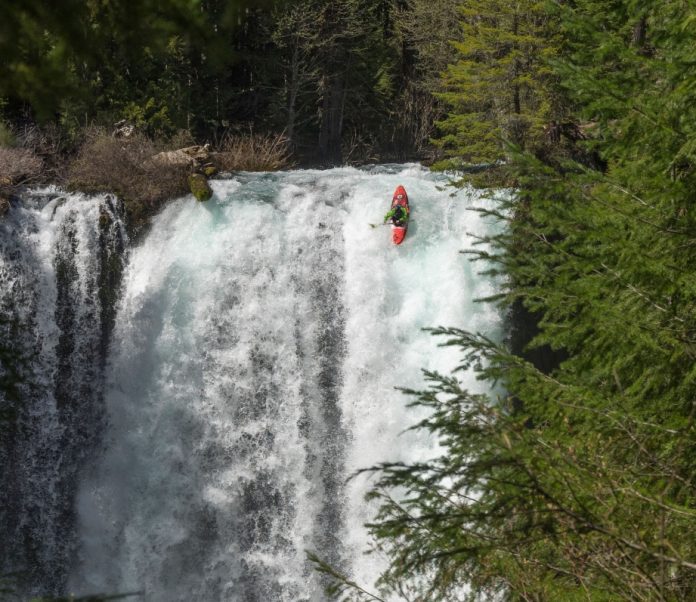
A kayaker descends a waterfall in a red kayak.
Ever wondered if you’re more of a Nouria or a Dane? Rest easy, our quiz will sort you out. Answer eight easy questions and see which professional whitewater paddler best fits your personality.

Why Mountains Are The Future Of Sea Kayaking

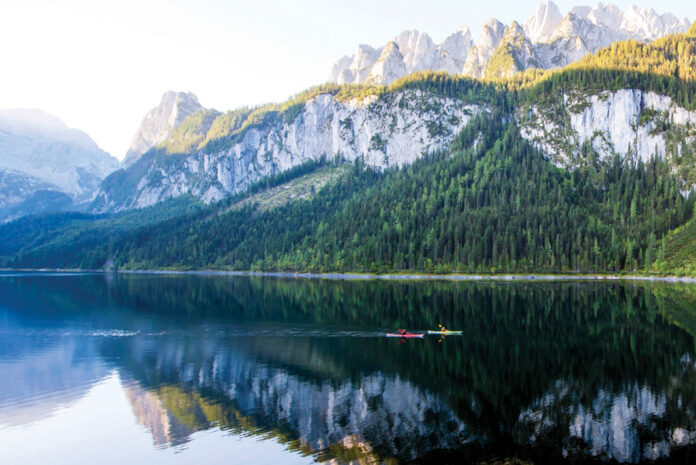
Asking big questions in Gosauseen, Austria. PHOTO: MICHAEL NEUMANN

Whenever I stop for gas with a sea kayak on my car, I get the same questions. “Is sea kayaking relaxing? Is it scary? Can you camp out of that thing?” The answer, of course, is yes, yes, and yes. All in a single trip. The sea kayak is the most versatile of human-powered vessels. A single craft that can handle glassy mirrors, the churn of rock gardens and long expeditions on exposed coasts. I’ve even taken my fiberglass sea kayak down class II rivers. However, that same flexibility has made sea kayaking hard to define. It’s impossible to convey the joys and challenges of a sport so complex and diverse. Usually I babble up a bunch of stories until the gas station attendant’s eyes glaze over. Then I pay, get back in my car and leave.

Not exactly attracting new blood to the fold.

Even the term sea kayaking confuses people. Salt isn’t the determining factor of our sport: we take our sea kayaks many places that aren’t the sea. Is kayak touring a better term for what we do? Perhaps, but that always implies place- to-place movement, a kind of backpacking on the sea. That’s not always true, and doesn’t begin to hint at the dynamisms of the environment. Backpacking trails don’t build into steep cresting waves when the wind rises or the tide turns. Meadows don’t harbor invisible currents, which can deflect course by a mile. When weather turns for the worse on a backpacking trip it adds discomfort but seldom poses danger.

Does sea kayaking have an identity crisis? Only if its greatest advocates can’t even properly describe what it is.

To explain what is at the heart of the sport I turn to the legendary dirtbag Fred Beckey. As Beckey explained to the New York Times back when he was a young chap of 85: “You’ve got to be physically pretty strong to be any good at it at all. You’ve got to have a hard-core mental attitude. You’ve got to have the right mantra. You’ve got to have dedication, a sense of security, safety and sensitivity with your partners, and a good sense of balance. It’s a combination of many, many things. You need to have the capability or desire to accept a certain amount of risk. A lot of it is maybe spiritual, not a religious type, but you have to have an affinity with the outdoors.” Sounds like a good explanation of the varied world of sea kayaking to me. But Beckey wasn’t describing sea kayaking. In fact, I don’t know if he’s ever been in a kayak at all.

Beckey’s a legend of old school alpinism. As I write these words, he’s still climbing at 93. Old school alpinism involves backpacking to scale remote mountains using a variety of techniques. There’s a lot of simply walking with a pack for a long ways. Once at the mountain, alpinists are faced with mixed terrain: rock, ice, cracks, ridges and glacier travel. Alpinism is a mix of steady-burn endorphins, flashes of adrenaline, continually watching the weather and route conditions, all the while reveling in wild remoteness. It’s equal parts endurance, technical skill, judgment, love of wilderness and raw desire to do strange and challenging things in remote places. Sound familiar?

Sea kayaking is traditional alpinism on the sea. In a week of paddling, there will be a lot of simple repetitive forward strokes to get from point A to point B, infused with a perpetual awareness of weather and currents and changing conditions that an alpinist would be proud of. Exposed crossings, tide races, surf zones and boomer fields are our headwalls, crevasses, and knife-edged ridges. Our base camps are storm-wracked beaches at Cape Scott instead of alpine cols. Crux moves are similar: a stretch of exposed sea cliffs can be a lot like one of Beckey’s high alpine traverses in commitment, required skill and raw wildness.

Subtract any one of these four elements—endurance, wilderness, technical skill or judgment— and we lose something. No endurance and we’ll lose access to remoteness. We’ll share beaches with surfers, kite-fliers and golden retrievers instead of whales and wolves. Subtract the wilderness and we’ll have the sea kayaking equivalent of whitewater park-and-play: exercise and skill but not the soul-deep connection to nature. Subtract the technical skill and we’ll be avoiding conditions, limiting our destinations and the margin of error. Lose the judgment and we’ll become fools who rush in where angels—and Coast Guard helicopters—may fear to tread.

In the years since Beckey’s climbing heyday, traditional alpinism has mostly given way to sport climbing, which removes the long slogs up ridges with a heavy pack but subtracts the wilderness. And in climbing’s indoor stepchild, the rock gym, the weather is controlled by the HVAC system and the condition of the route is managed by gym staff. With shorter vacations and busy lives giving way to more day trips and park-and-play surf breaks, kayaking is going through a similar transition.

Sea kayaking, like Beckey’s alpinism, includes all of it. When sport climbing hit the climbing world, the remaining alpinists quickly found they had the remote mountains to themselves again. If you can keep your chart-reading, route planning and boat handling skills up to snuff, so too can you.