Home Blog Page 226

Mariann Saether’s Firsthand Advice For Kayaking While Pregnant

Silhouette of pregnant woman with sunset in background.
Do what makes you happy. | Photo: courtesy of Mariann Saether

On September 4, 2016, I gave birth to my son Benjamin, my first child. The nine months of pregnancy were surprisingly easy and allowed me to kayak up until 10 days before birth. More of a surprise was the fact that I felt comfortable with trail biking and paragliding up until month seven. Furthermore, in the eighth month I went hiking for seven hours in the vicinity of Svartisen glacier, and in general was feeling very good as the little man grew happily inside.

I felt blessed and stoked that I could keep up my activity level, and the future seemed bright. But as I was soon to find out, not everybody liked the fact that a woman still goes down a hill on a bike or jumps in the kayak to paddle Class IV as soon as the belly can be seen.

Before pregnancy I repeatedly heard comments such as, “Women have to decide for themselves when to slow down and put on the brakes,” and “Pregnancy is not an illness—it is really good to keep staying active.” “Your body will tell you when to slow down,” was also one I heard a lot.
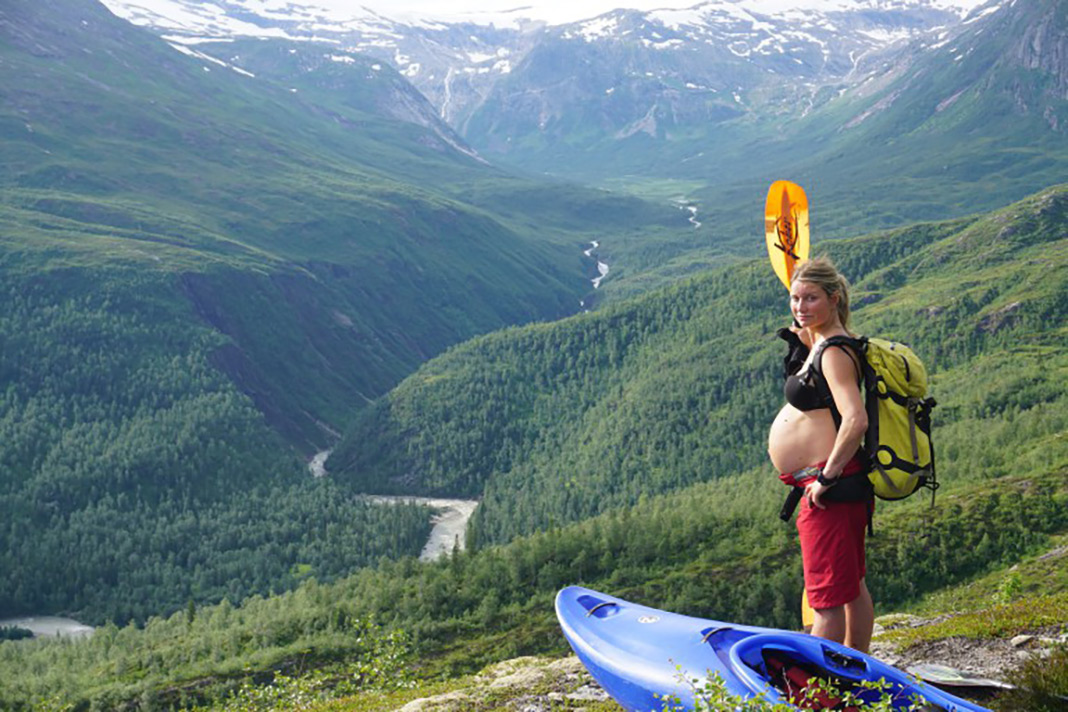
Pregnant woman looking out over valley with whitewater kayak next to her
Eight months pregnant. | Photo: courtesy of Mariann Saether

So what happened when my body and mind actually did not tell me to stop until 10 days before birth? People got angry. Annoyed. Negative.

I guess I should not have been so surprised to realize that whitewater kayaking and trail biking is not really looked upon as “normal activity” for pregnant women. However, to be able to stay so active made the mental aspect of my pregnancy extremely easy—I was happy and active, which I think made my baby boy happy.

One of the main points here is that I am not pointing my finger at other women that find it hard to be active while being pregnant—it is truly their body and mind—and I trust everybody to do whatever is best for them. Here are some facts to consider before you start judging:

When I got pregnant I was not just normally fit

I was as fit as I have ever been in my entire life—coming straight from high-end athlete performances at World Cups and World Championships the months before, and a hard training regime leading up to those competitions.

My mind did not play tricks on me

I still trusted myself to make the smart decisions on the water and on the biking trails. Why would I suddenly start screwing up just because I was pregnant?

Kayaking is like walking

I have close to 15,000 hours on the water. That is 625 days (24/7) or 1.71 years.
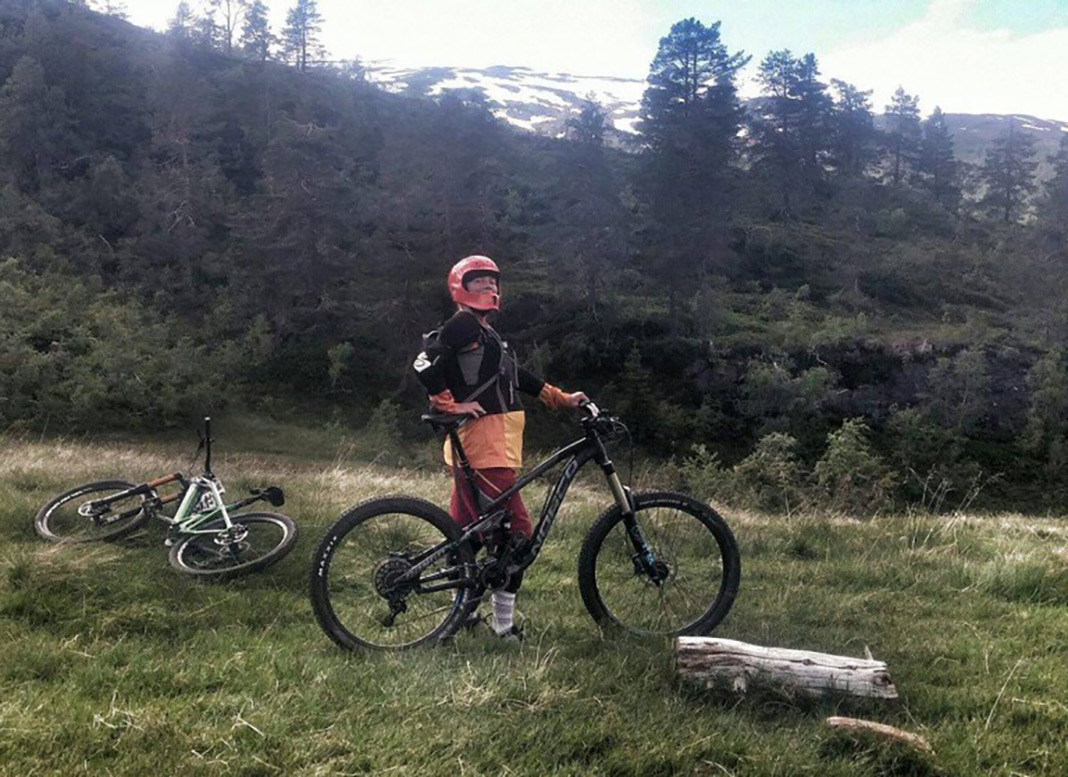
Pregnant woman riding mountain bike
Seven months pregnant. | Photo: courtesy of Mariann Saether

But what really has surprised me is that it is not just strangers remarking on my activity level during pregnancy months. Some of my closer friends have also found it appropriate to point the finger at times. It seems like the tolerance for so called “extreme sports” while being pregnant is quite low—and lower than I actually thought up front.

That brings me to the key topic of this text: TOLERANCE.

Perception is the key to it all. I do believe that many of the negative remarks come from not truly understanding the world an extreme sport athlete walks in. One of my friends commented “But what if you get the paddle in the stomach when you run this?” The section in question is one I consider very easy, and one I have done hundreds of times without anything happening. Ever.

I just replied: “Why would something happen now?” It is all in the mind. And to be able to control your mind, trust yourself and your abilities. In a way, pregnancy is not unlike running Class V rapids. Go figure.
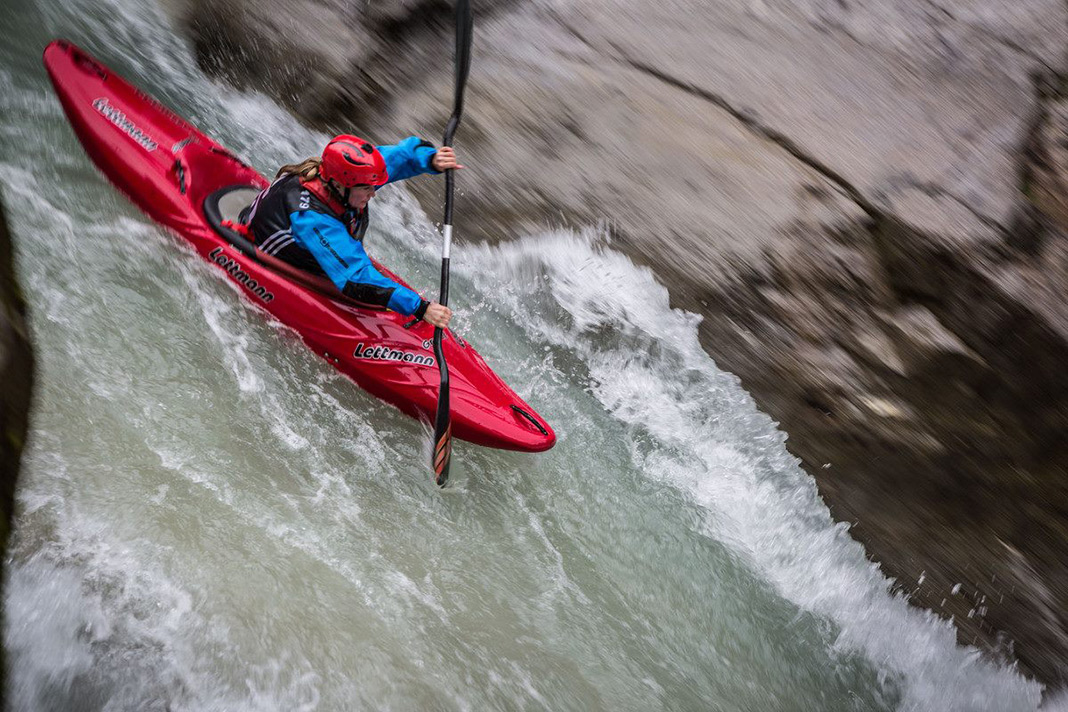
Woman paddling red whitewater kayak
Competing at the Sickline World Championships 4.5 weeks after giving birth. | Photo: courtesy of Mariann Saether

I furthermore have been blessed with a man who trusted me 100 percent while carrying his child. He never once told me to not get on the river, to not run a rapid or to not go biking. He even once or twice suggested I should rather run a rapid than walking around with my big belly! He did however tell me that I might be wise to not paraglide during the last two months—something I agreed with as soon as I gave it a second thought. His trust in me has been the biggest sign of love ever, and I am forever grateful for his support.

Being pregnant has been a wonderful journey. As I have explored new depths of my own being and ability to love, I have also learned more about the people around me and the world I live in. It only encourages me to walk my own steps, making myself and thus my little family happy.

Here is some advice for the pregnant extreme sport athlete:

Try to follow your gut instinct—not just your brain

The brain will tell you to slow down or to keep going—but it is really the body that will tell you how active you should be while being pregnant. I stopped kayaking when I was too uncomfortable in the kayak—easy as that.

Try your best to not listen to anybody telling you what to do or not—be your own being

This is truly difficult, but very empowering when you manage to.

If you are happy, the child will also be happy

You will never cause him or her any harm or risk—it is your child after all, and you should trust yourself and the power of your love.

Kayaking safely while becoming heavily pregnant really comes down to having good balance, good edge control in the boat and a good back-deck roll

I had all three and thus enjoyed endless trips on easy whitewater the last month of waiting.

I thought being fit would help me in delivering the child—but I was partially wrong

(Thank God I did not know up front!) Strong core muscles sometimes can cause a hard delivery because the muscles tend to cramp and hinder the cervix getting dilated enough to start pushing. I spent 30-plus hours of labor before the mid-wife told me I could push. Then it only took 20 minutes, and the mid-wife said she had never seen a firstborn being pushed out that fast or so determinedly before. Especially not after 30 hours of labour.

So in the end my strength was helping me. Also, the fitness level put me back on the bike four days after birth, and in my kayak seven days after birth, so I daresay the benefit of being active is huge after all.


Mariann Saether is a whitewater kayaker from Norway and the 2015 World Champion in extreme kayaking. Learn more about her here.
The Beauty Of Idaho’s Main Salmon River

“How do we save more rivers? I honestly think it starts with love.” That’s the first line we hear in this beautiful short film from O.A.R.S. The words are spoken by Amy Kober of American Rivers, who narrates the film and shares her thoughts on the need for young people to love rivers in order for conservation of them to continue. Kober has dedicated her 18-year career to saving waterways and is passionate about Americans being able to enjoy and build relationships with public land.


Level Six’s Stig Larsson On Turning Passion Into Profit

RBC
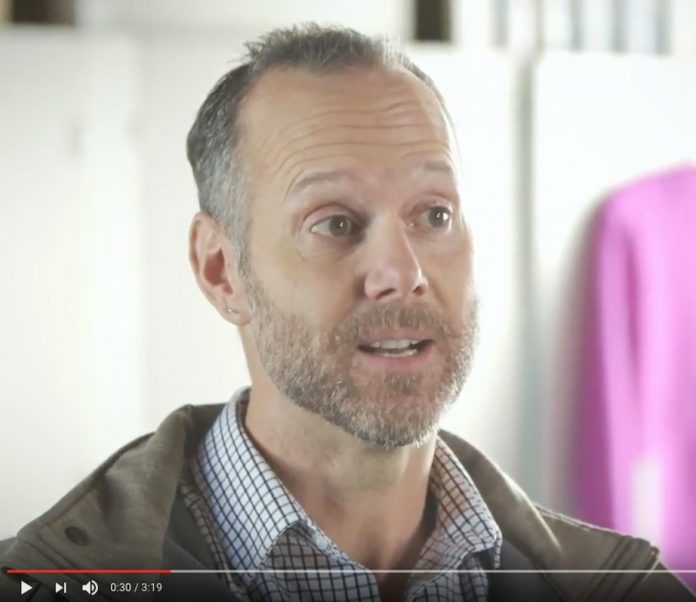
Stig Larsson of Level Six in a video speaking to RBC about his company's path to success.
Stig Larsson of Level Six in a video speaking to RBC about his company’s path to success.

http://www.youtube.com/watch?v=X5XrQ_CWvVk

RBC

Level Six’s Stig Larsson sits down with RBC to explain how his company was born. Larsson explains that in the summer of 1997, while in Costa Rica training with the World Cup Kayaking Team and going on surf trips, he realized there was a lack of a lifestyle brand for paddlesports. 

He began Level Six and travelled around on the world selling his shorts and t-shirts on the World Cup circuit. He say it was six or seven years before he was able to draw a salary from the business, but he persevered. Today Level Six products are sold in 428 stores worldwide. Larrson’s advice for young entrepreneurs? “Have a passion for what you do and be all in.”

Princess and the Portage

Like father, like daughter.| PHOTO: ONTARIO TOURISM

It was going to take us a good hour to make the big water crossing. The wind was blowing straight into our bow and every third or fourth wave capped before rolling. My daughter, Kyla, helped prepare for the rough paddle by shifting the packs and the dog to better trim the canoe. She tightened her chin strap on her rain hat, braced her knees to the sides of the boat, and begged me to tell her one of my silly stories to make the time go by more quickly—and ease our anxiety.

“Once upon a time, in a place far, far away there lived an evil toad and a princess with very hairy armpits,” I began.

It was a proud moment for me. Even though my daughter recently mutated into a pre-teen, she still thinks it’s cool to listen to one of my farfetched yarns—for now, anyways.

A lot has changed over the first 10 years of tripping together. Now Kyla carries her own pack, paddles even when no one tells her, sleeps with only one stuffy, does at least half her camp chores and whittles her own marshmallow sticks.

There are some downfalls, of course. She leaves her bras hanging from the clothesline, gets dramatic over the slightest things, continues to tell me I don’t understand, shaves her legs in my cooking pots and wants to sleep in every morning.

I’ll take a few negatives, however. Kyla is great company. We tripped more days together this past summer than her friends spent at the beach—and she’s proud of it.

I know I’m a lucky single dad.

Like father, like daughter.| PHOTO: ONTARIO TOURISM

Enjoying wilderness canoe trips together means juggling the roles of protective father, knowledgeable wilderness guide and goofy camp counsellor. We sing songs, play games, and bake birthday cakes for no reason. We get down on our hands and knees to look at tiny seedlings and insects on the forest floor, sometimes referencing our field guide if we don’t recognize them. And I try to swallow my parental instincts and let her make her own mistakes.

I do all this because Kyla has grown up loving the wilderness and canoe tripping, and I want to keep it that way. The joys and miseries of backbreaking portages and 50-kilometer days can wait until she’s older. I want canoe tripping to be fun so she keeps wanting more. And, so far, it’s working.

Most importantly, Kyla is part of each trip we go on from planning to completion. She’s not just tagging along. She’s invested in the adventure. I think it’s this small bit of ownership in her world, which is otherwise largely dictated by adult-enforced rules, that keeps her so in love with it.

On that big open water crossing my tale grew until our anxieties were forgotten. I told her of a stone castle guarded by a giant, venomous toad and a clever princess who braided her hairy armpits into lengths of rope to escape the tower. When we reached the far shore I paused the story until we had carried over to the next lake. Then I continued the tale, adding a caramel lake surrounded by a wild forest populated with emus and a wizard with a candy cane wand.

“And the princess and the wizard went on to have many more adventures together. And they all lived happily ever after,” I finished as we arrived at the take-out. “Except for the toad—he died.”

Stepping on land, I was rewarded with a big hug.

“I love you, Dad,” Kyla whispered to me. “I can’t wait for our next trip.”

Kevin Callan is a wilderness guide and author, and considers himself the luckiest dad in the world. Butt End is a regular column in Canoeroots.


CCC PartnerBadge WebWatch THE CANOE an award-winning film that tells the story of Canada’s connection to water and how paddling in Ontario is enriching the lives of those who paddle there. #PaddleON.


The Happy Camper at the Outdoor Adventure Show in Toronto

Kevin Callan
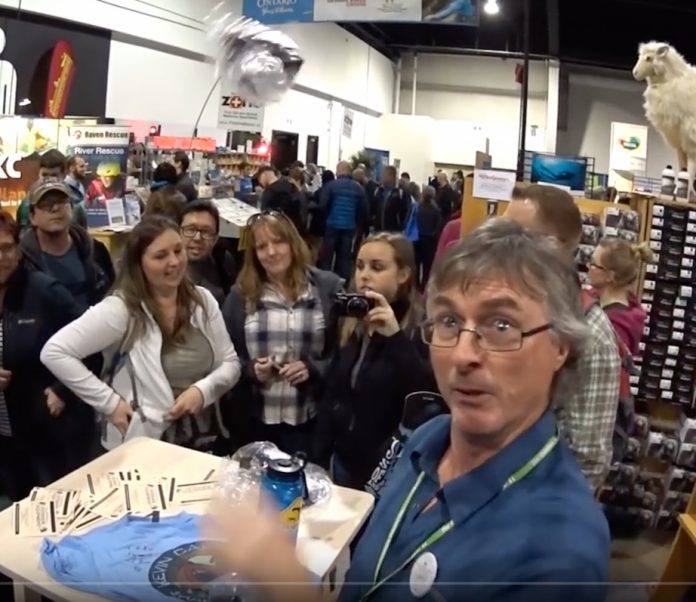
Kevin Callan throws hats at the Outdoor adventure show in Toronto Ontario for happy camper promotions

We could do a long, drawn out wrap up of our time at the Outdoor Adventure Show in Toronto last weekend, or we could let a wild Kevin Callan who parades around throwing hats sum it up for us. 

In this light hearted video, (we expect nothing less from the Happy Camper), Kevin Callan, visits vendors, spectators, fellow outdoorsmen and women to discuss some the latest happenings in the outdoors world. 

Expect to see representatives from Ontario Travel, Wild Rock Outfitters, KIHD Stoves, and some very happy representatives of winter camping.

Kevin’s seminars at the Adventure in Paddling Stage drew large crowds of engaging fans. We should know, we were there too. 


CCC PartnerBadge WebKevin Callan is a seasoned columnist here at Canoeroots Magazine, he is however, not a seasoned stove etcher. 

Watch THE CANOE, an award-winning film that tells the story of Canada’s connection to water and how paddling in Ontario is enriching the lives of those who paddle there. #PaddleON

Why Slow Change Is Good For Sea Kayaking

Same as it ever was. | PHOTO: ERIK BOOMER

Rene beams at his new kayak like a proud parent. We take turns hopping between his ride—this year’s hot new ocean play kayak—and my 18-year-old Nigel Dennis Kayak Explorer, which is older than one of the paddlers on our trip. Rene asks the predictable question: “So, when are you going to replace that thing?” No time soon, I tell him.

While whitewater kayaks undergo almost annual redesigns, careening into outlandish shapes—anyone remember the Perception Mr. Clean?—sea kayak hulls by comparison have evolved at a snail’s pace. A new Explorer’s hull is the same as my old one. Rene’s hot new ride isn’t that different from my Valley Avocet. The Avocet was released in 2000.

It’s tempting to chalk up the slow pace of change to the sport’s love of heritage, but I beg to differ. Design consistency is about the perfection of what sea kayaks do: navigate mixed conditions in a single voyage. They must do a decent job at everything: speeding over flats, managing wind, gear-hauling, rough-water stability and playfulness. This restricts how far design can go in any one direction. After all, just an 11-percent difference in waterline turns an 18-foot expedition boat into a 16-foot day-tourer. Designers have only tiny margins to play with: a little more rocker here, a tad less volume there.

This demand for versatility imposes what evolutionary biologist Stephen Jay Gould called the “right wall of evolution.” In stable parameters, the first set of big innovations provides major advantages. For sea kayaking, I’d say that was back in the ‘80s and ‘90s. After that, innovation comes in tiny increments with high costs in other functionality. Build up any one factor and you’ll have boats like the Valley Rapier or P&H Hammer: great at one thing—racing and surfing, respectively—but not so great in other waters. In competition, where a tiny advantage shaves off a fraction of a second, these advantages matter. However, for mixed conditions, design can only push the right wall so far.

Same as it ever was. | PHOTO: ERIK BOOMER

It’s actually a huge benefit to paddlers that kayak hulls remain so similar. We can’t help but become better.

Elena Moon, a professional user-experience designer, and expert fly fisher Amy Hazel nailed this in a recent TED Radio Hour talk. Fishing rods, like sea kayaks, have been unchanged for years—which Hazel loves. “When your tools don’t change, you have time to learn the soft stuff,” she says. “In fly-fishing it’s the study of insects, and the habitat of the fish. You don’t worry, ‘I can’t cast on this rod because it’s so different from the rod last year.’”

Moon chimed in: “You learn your craft at a higher level when you’re not spending a good portion of your energy re-learning your tools.” The same is true of kayaks. The infinite varieties of water, current, swell and wind are plenty to keep us occupied. We don’t need a new boat to figure out, too. Like sharks that evolved millions of years before dinosaurs, sea kayak designers figured out the steep part of the innovation curve long ago. Play around with a quarter inch of stern rocker if you want. I’m going paddling.

A regular contributor to Adventure Kayak, Neil Schulman writes, photographs and does conservation work in Portland, Oregon. 

Shit Kayakers Never Say

iStock
A kayaker sits in an eddy in an orange creek boat.

“I can’t wait to get a boyfriend/girlfriend/husband/wife who doesn’t understand my kayaking obsession.”

“I have so much money these days.”

“I’ll go with the small poutine instead of the large.”

“Duct tape can’t fix that.”

“Station wagons are so lame.”

“I never bother to boof.”

“I never get scared anymore on the river.”

“I’m so tired of having a mullet.”

“I can’t wait to get an office job.”

“These gaskets are just too flush.”

“There were so many girls at that kayaking party.”

“I never mess up the shuttle.”

“Gas prices are awesome right now!”

“I’m super organized and never leave my gear strewn on the ground like an explosion went off in my van.”

“Beer tastes so good from my booties.”

“I wish I could trade these Chacos for some sharp-looking penny loafers.”

“I’ve never struggled once putting on my skirt.”

“I’m not really into stouts.”

Shit Kayakers Say

iStock
Two whitewater kayakers at the base of a small waterfall.

“Is this thing on?”

“Who’s driving shuttle?”

“My skirt is at the take-out”—said at the put-in

“Who has the car keys?”—said at the take out

“I’m just going kayaking for a few hours”—returns 24 hours later

“Let’s go hunt some stouts.”

“I don’t get why my boyfriend/girlfriend/husband/wife gets so mad that I go kayaking all the time.”

“Boofed it!”

“Nice Chacos!”

“Going to church.”

“Chaka chaka”

“Dude, I really love your Subaru.”

“I need to get sponsored.”

“My roll is so bomber this year.”

“What’s the level?”

“Can you zip me up?”

“Can I sleep in your car?”

“Do you think we can shower at the public pool?”

“My booties are so grimy.”

“I’ll pitch for gas next time we go kayaking.”

Backcountry Brushwork Part I: Lisa Dianne Martin

Lisa Dianne Martin
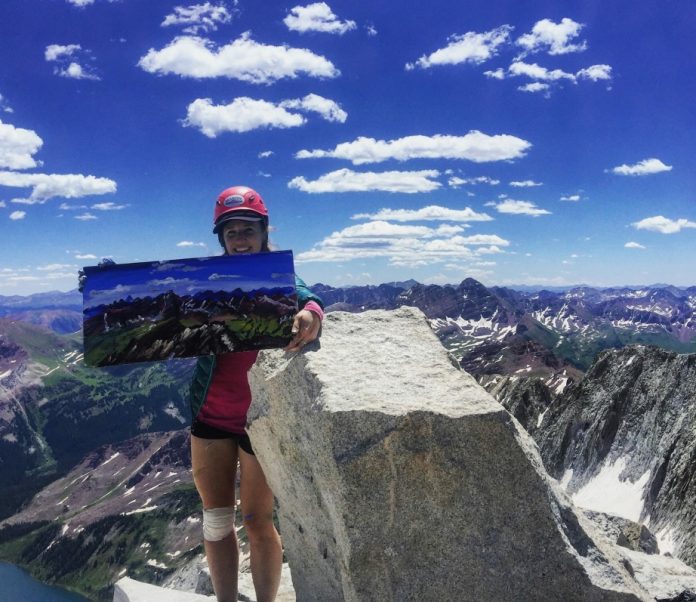
Lisa Dianne Martin paints colorado 14ers mountains

The water mimics another dimension with its statue stillness beaming trees downwards.

It’s golden hour, and as the sun rises, the steam off the water stays paralell to that of its reflection. Suddenly the rays burst through with a sense of purpose we can only dream of having.

We’ve all been here, without a paint brush, pastels, watercolors or sketch pad and quite possibly without a clue on how to approach plein air. Or maybe not, but nothing sparks a desire of creative gain quite like surreal moments in the backcountry.

Most artists already know what they need, but here is a list of essentials and tips for all of us, who may not know what to bring, or how to transport it safely. This is for those who can create beautiful works of art, and those of us who use ‘abstract’ as an easy out.

Reaching out to three artists, I asked them to share their art-hacks, and valuable lessons they’ve learnt while creating works in demanding, remote locations. Part One begins with avid hiker, and most importantly, apexer, Lisa Dianne Martin.

IMG 4523 1

She may not be a backcountry paddler but conquering all 58 of Colorado’s mountains over 14,000 ft tall, and then painting on their summits, likely qualifies Lisa’s expertise in the matter.

I spoke with Lisa about her choice of tools, how she transports everything, and tricks to painting in one of the most elementally demanding environments in the world, mountain ranges.

“If it’s cold, especially below 20 degrees Fahrenheit, don’t add water to your acrylic paints. That will cause them to freeze, and when they thaw they will melt and run all over the place.” Lisa explains.

Lisa

“A snowboard makes such a perfect easel.” Lisa Dianne Martin

Keeping things light is essential for every day trips and backcountry excursions. Lisa has mastered dual purposing on all of her tools, from the canvas itself to water bottles.

I am very minimalistic so I paint on my lap using no easel. I use the back of the canvas or board as a mixing pallet and keep my paints in a plastic bag so if [when] they explode they don’t go all over. “

“I also like to keep things as light as possible. I bring about 4oz of water for my paint and leave my brushes in the bottle after I finish.”

My biggest question for every artist was, how they safely get their works of art back out to civilization. After painting on the summit of at least 58 mountains, Lisa has gained a lot of perspective when it comes to protecting artwork from the elements, and ourselves.

“If using acrylic the paint can normally dry fast to transport it safely, but if using oil, there needs to be something to separate the surface from touching it’s surroundings.”

IMG 4469 Judson Art Carrying Boxes Allow Paint to Dry While Keeping Them Safe From Elements

“I had Judson Art create a custom one [box] for the size of paintings that I bring. This allows me to do two paintings in one day, and I can face the paintings in toward one another. The gap still allows for the paintings to dry.”

“Often times when I have a wet acrylic painting I will carefully put a very thin piece of plastic over the top of it and won’t use a carrier. It continues drying while I hike and then I peal off the plastic when I get to my car. Normally smears are very minimally.”

More tips from Lisa:

“I also like using birch plywood primed with house paint because it is cheap, lightweight and thin compared to a canvas.”

I’ve found backpacks designed to carry snowboards are great for carrying paintings- you can wrap the painting in a plastic bag and attach it to the outside of your pack.”

“I tend to sleep through my alarm clocks and use my clothes or hands as paint brushes when I’m in a hurry.” Lisa may be our newest hero here at Canoeroots.

Lisa3

You can see Lisa’s work here and learn more about her goal of ascending and painting from every summit over 14,000ft in the United States.

You can also follow Lisa on Instagram @paintthemountain and Facebook Paint The Mountain

READ MORE: Artists Gone Wild: Nan Sidler

Overview

Supplies of Choice

Acrylic and oil paints depending on temperature and time allowed. Typical paint brushes for either paints, with short stems. Uses lap, ground, or snowboard as easel.

Packing In

Uses water bottle with 4oz of water to mix paints, paint tubes and brushes go in plastic bag in case they burst.

Packing Out

Use same water bottle to transport wet paint brushes. Paintings either get carried in plein air specialized box that allows them to dry, or a plastic bag, minimal smudging may occur.

Transporting tips

Backpacks designed for snowboards work great for hiking out with finished works.

Remembering The Toughest Canoeist Of All Time

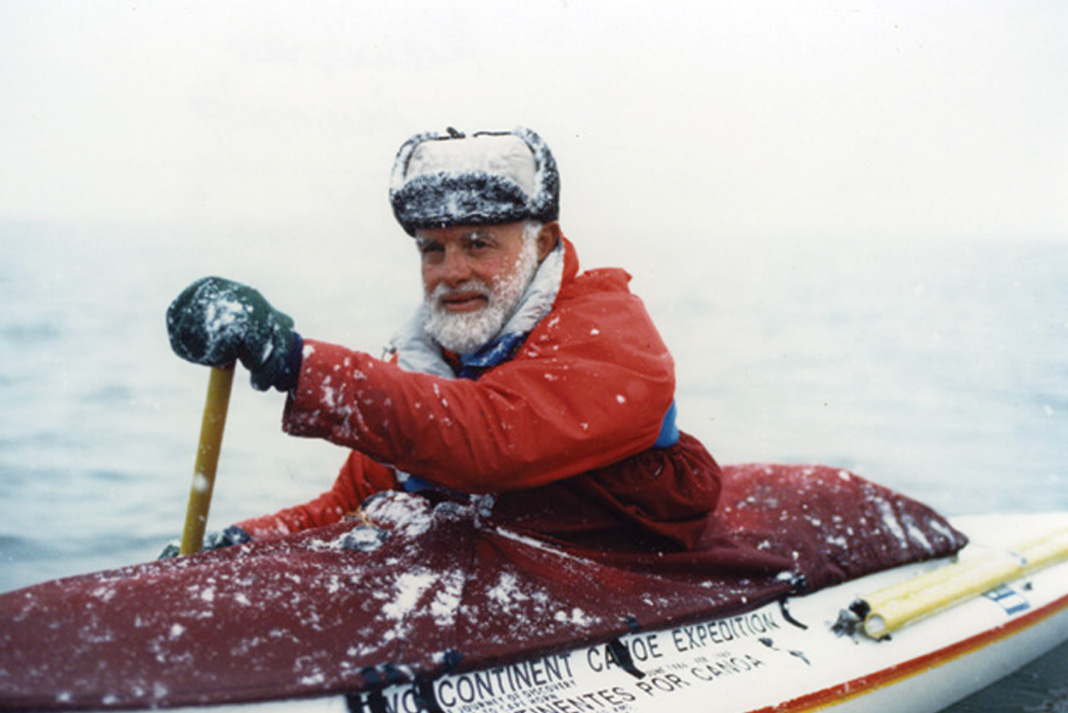
Close to home on Lake Michigan after paddling 28,000 miles | PHOTOS: ARCHIVES OF PHIL PETERSON

Verlen Kruger canoed the full length of the Mississippi River several times over his 82 years. For most people, just one trip would provide bragging rights to last a lifetime. Kruger wasn’t most people.

It’s not just that boasting wasn’t part of his repertoire, it’s that he logged an insane amount of miles in his canoe. With expeditions crisscrossing the entire Western Hemisphere, Kruger paddled more than 100,000 miles. That’s more than 42 runs of the Mississippi River, or four trips around the equator. Take your pick.

Born in 1922, Kruger grew into a charismatic and confident man. His friends would recall how he seemed fearless, excepting of course, his phobias of bears and armadillos, which he’d only cop to when talking in his sleep. At 41 years old, he started canoeing. He spent the next 41 years making up for lost time.

Driven by an obsessive devotion to his new sport, he redefined expedition canoeing. Measured by mileage or by ambition, his adventures were nothing short of colossal.

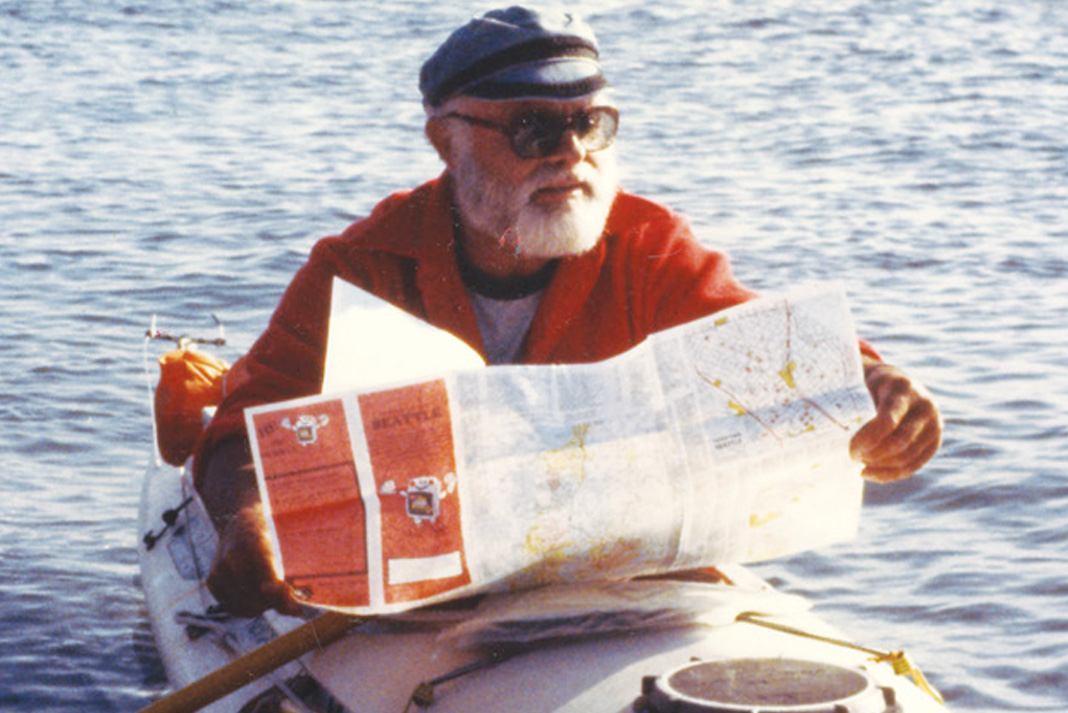
Kruger consulting a map near Seattle | PHOTO: ARCHIVES OF PHIL PETERSON

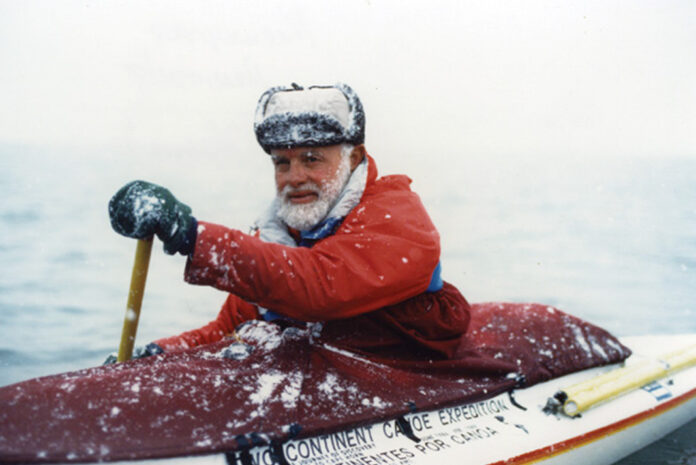
In 1971, at 49 years old, he and partner, Clint Waddell, followed old fur trading routes from Montreal, Canada, to the Bering Sea in Alaska. Dubbed the Cross Continent Canoe Safari, they covered approximately 7,000 miles in 176 days. It’s presumed to be the fastest time ever for that route.

Speed wasn’t always the primary goal. In 1980, Kruger and partner, Steve Landick, put in on the Red Rock River, in Red Rock, Montana, and didn’t stop until they’d covered 28,040 miles of North American rivers, lakes and coastal waters. The duo paddled from the Beaufort Sea to Cabo San Lucas and ran the lengths of the Pacific and Atlantic coastlines of the United States. For the inland segments, this audacious trip included upstream runs of the Mississippi and Colorado Rivers, including eddy-hopping up through the Grand Canyon. They finished in Lansing, Michigan, in December 1983.

Eager for more, Kruger expanded the latitudes for his next major expedition. From 1986 to 1989, he and Valerie Fons canoed 21,000 miles from the Northwest Territories, Canada, to Cape Horn, Tierra del Fuego, Chile. This expedition ramped up the danger. There were overnight open-water crossings on the Caribbean, flooded rivers, and navigational morasses through the maze of the South American river system.

In and around these big trips, Kruger tackled smaller events. In 2001, at age 79, he raced with Bob Bradford in the Mississippi River Challenge. They finished in 24 days and placed first. The next year, he celebrated his 80th birthday by running 2,040 miles of the Yukon River.

Close to home on Lake Michigan after paddling 28,000 miles | PHOTOS: ARCHIVES OF PHIL PETERSON

If it was his obsessive nature that drove him to take on expeditions of such massive scale, it also proved to be the spark that inspired nearly everyone he met. In finding his life’s passion at 41 years old, Kruger was an open book of encouragement for others to do the same.

“I believe that most people have such dreams. We need to reach out. And in reaching out, you grow, you learn, and you find out you can do things that you’re not sure you can do,” he said.

Kruger died in 2004. He’s been honored with statues, memorials and posthumous awards. His legacy survives in the more than 40 prototypes of expedition canoes he designed, three of which are still in production under the name Kruger Canoes (www.krugercanoes.com). His spirit lives on in everyone who follows their dreams with abandon. —Brook Sutton


Note: All mileages are approximate, due to differences in measuring techniques and

lack of precise location estimates. Despite these inconsistencies, Kruger’s achievement

of paddling more than 100,000 miles is not in dispute.