Home Blog Page 229

Manky PFD? How To Know When It’s Time To Replace

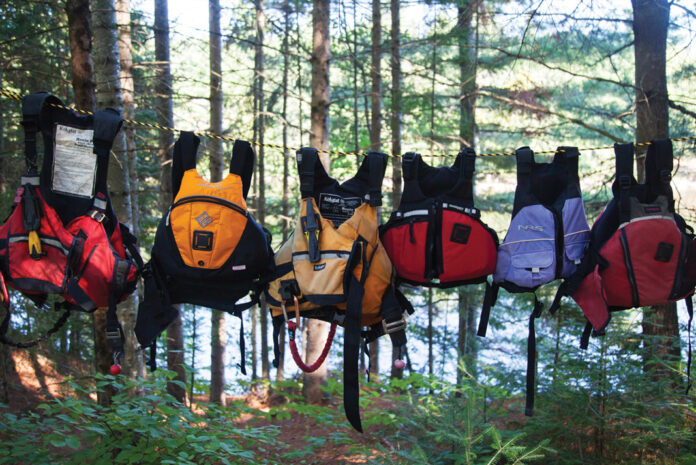
Fail, pass, fail, pass, pass, questionable. | PHOTO: HANNAH GRIFFIN

paddling Magazine staff spend a lot of time wearing and testing the best PFDs. Some of us are guilty of using the same manky PFDs on every single river outing for years on end. Some of us get sentimentally attached to our PFDs, holding onto them much longer than we should. We found ourselves debating when exactly we should be replacing them. Do PFDs have a best-before date? What are the red flags that warrant a replacement? We spoke with experts in the PFD industry to find the answers.

Loss of Buoyancy

Loss of buoyancy is the major concern for well-loved PFDs. Though the average person needs just seven to 12 pounds of buoyancy to stay afloat, most whitewater and sea kayaking vests offer a range from 15.5 to 22 pounds. At the beginning of each season get in the water while wearing your PFD to assess buoyancy. Tilt your head back while floating and pay attention to whether your chin stays above the water. If your mouth is underwater, your buoyancy is insufficient. Pretty simple.

Lauren McFarlane, customer service rep from Salus Marine Wear, explains that a PFD that has lost buoyancy will feel heavy in the water, almost like it’s full of rocks, while a buoyant one should make you feel like you are effortlessly floating. Once on land, a buoyant PFD should drain and dry quickly. Tired PFDs that should be retired may be heavy and retain water.

A key factor to watch out for on your PFD is the degradation of the foam. Kevin Mulligan from Astral Designs explains that foam is firm and stiff in a new PFD. Over time the foam breaks down, becoming softer and more pliable. You can feel the foam with your fingers and check for folds, lumpiness and malleability.

Kokatat’s product manager Matt Porter says that he often hears people who are trying on new PFDs mention that their current one is way more comfortable, as if they are barely wearing anything. He says that can be a sign the foam has shrunk and is potentially lacking adequate buoyancy.
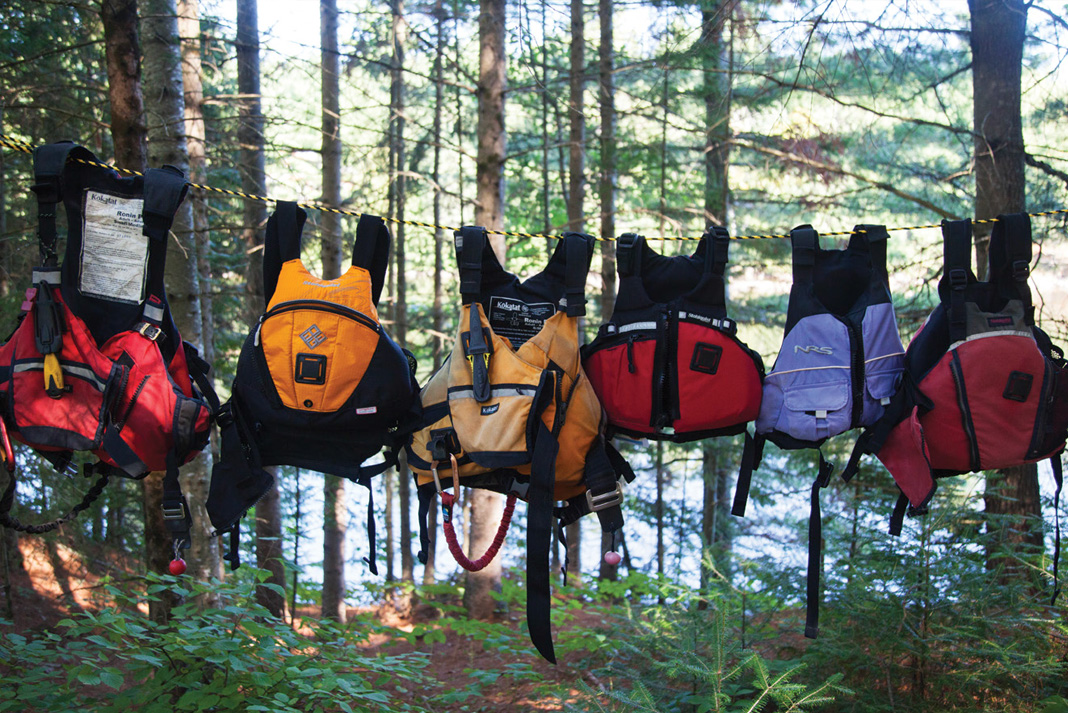
Fail, pass, fail, pass, pass, questionable. | PHOTO: HANNAH GRIFFIN
Fail, pass, fail, pass,
pass, questionable. | PHOTO: HANNAH GRIFFIN

Exposure to the Elements

Lili Colby, co-owner from MTI Adventurewear, explains that sun exposure can severely shorten the life of your PFD. UV exposure decreases structural strength and breaks down the fibers in the fabric. If your PFD shell fabric is significantly lighter in color than when you purchased it, it may not be as strong as it once was. Peak inside a pocket to compare against exposed, faded areas.

If you have been using your PFD in saltwater or sweating excessively without rinsing it after, corrosion of zippers and other metals will also likely occur. Porter adds that using PFDs as a changing mat or kneeling pad can ramp up abrasion and wear out the fabric more quickly. Overall, this is a bad idea.

Jim Stohlquist, founder of Stohlquist WaterWare, advises paddlers to replace their PFD if there is bagginess inside the foam envelope where the foam used to be, and if there are any rips, tears or holes that expose the underlying foam. Malfunctioning adjustment buckles and torn or frayed webbing attachment points are another obvious sign it’s time to look for a new vest.

The bottom line is that there isn’t a set expiry date for PFDs. Mulligan says the rule of thumb used at Astral is that a PFD should be replaced every five years or after 300 days of use.That guiding principle is “not set in stone,” he explains, and varies based on the user and care. A raft guide who spends all day, every day from May to September on the river will have significantly more wear and tear on her PFD than a weekend warrior over a comparative period of time.
7 River Safety Essentials To Take On The River

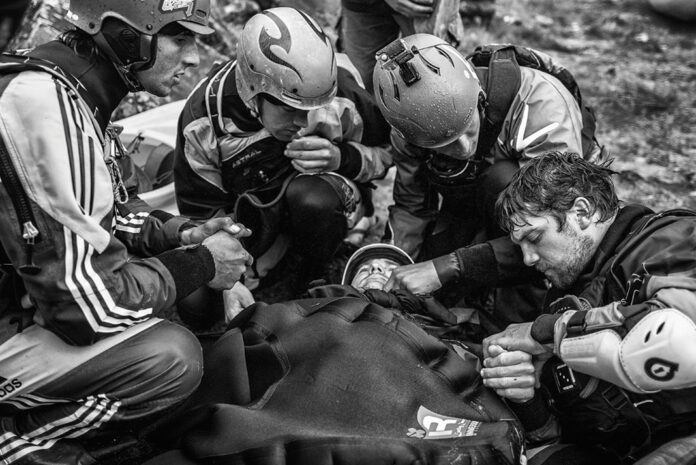
Safety essential #8: good friends. PHOTO: DEAN TREML
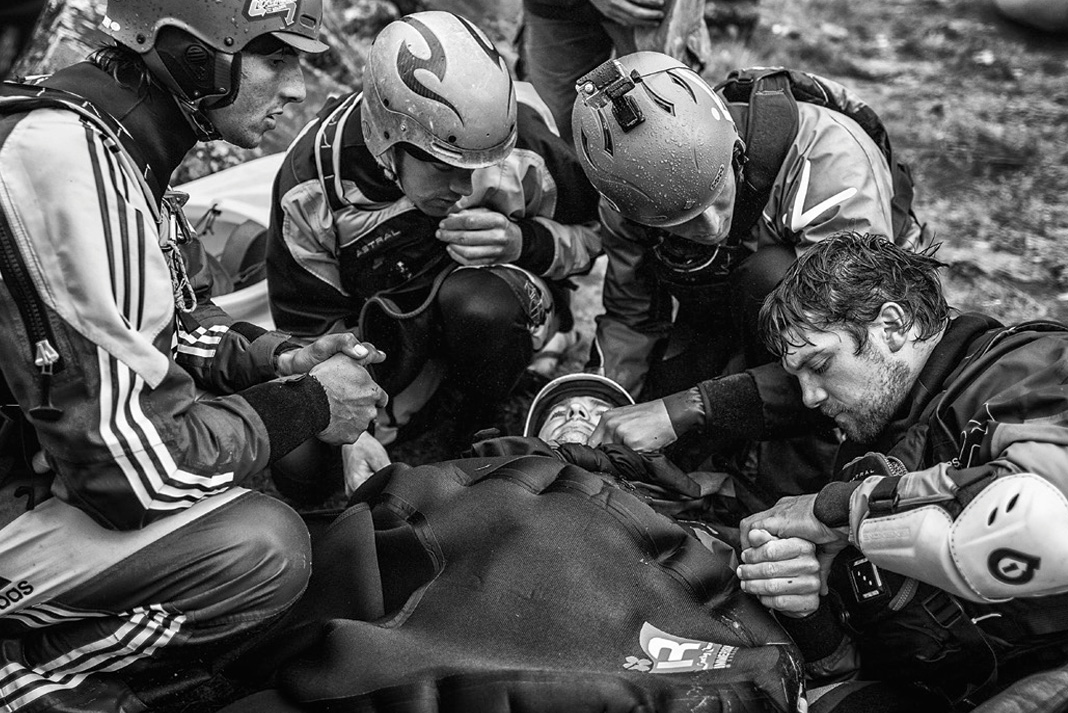
Safety essential #8: good friends.| PHOTO: DEAN TREML

Responsible river runners usually take some formal swiftwater rescue training. At the end of the course they then purchase rescue gear to carry on the river. Most commonly, I see paddlers carrying around a pin kit for rescuing wrapped boats.

While this kit is valuable, it shouldn’t be the only emergency gear paddlers carry on the river. In addition to essentials like a PFD and spare paddle, there are a few other basic and often forgotten items every whitewater paddler should carry for safer boating.

1. Gloves and mask

In addition to a small first aid kit that may be carried in your dry bag, carrying barrier protection helps protect the rescuer if someone else gets hurt. Dealing with severe bleeding can quickly and safely be rectified with well-aimed direct pressure from a gloved hand.

2. Food

Having a snack to give you or your friends some extra energy may be just what you need to go the distance in your rescue efforts. It is particularly invaluable if you have a long walk out or get stuck overnight.

3. Watch

Paddlers need to be aware of time during a rescue effort. Critical timing includes: How long someone has been underwater, how long the group has been trying to evacuate the river, how long since we last saw them, how long since we called for help, and how long until it’s dark. All are best determined with a watch rather than guesstimating under pressure.

4. Glow stick

A glow stick gives you a better chance at being spotted by separated friends or rescuers.

Safety essential #8: good friends. PHOTO: DEAN TREML
Safety essential #8:
good friends.| PHOTO: DEAN TREML

5. Phone

With the advent of reliable waterproof cases, there are few reasons to leave your phone at home. It may be used as a communication device, GPS, reference manual and camera.

6. Waterproofed lighter

You never know when your trip may be curtailed with a lost boat, a rise in water levels or an injury requiring a long walk or evacuation. If that walk out turns into an overnight mission, the ability to light a fire and keep warm could be the difference between adventure and disaster.

7. Duct tape

It’s often the difference between fixing a cracked boat and paddling out or taking a hike. Dry the surface, tape it and then hold a lighter to the tape while in place. Wrap a bunch of layers of duct tape around your water bottle to always have some with you.

Swiftwater rescue guru Jim Coffey has been guiding rivers for more than 30 years. 


Like A Glove: How To Perfectly Fit A Kayak

PHOTO: JOHN WEBSTER
PHOTO: JOHN WEBSTER

I don’t try clothes on before I buy them. If the waist and length measurements of a pair of jeans is in the ballpark with what I usually wear, I assume things will be fine. While sometimes this strategy works out, it’s also left me with catastrophic seam failure. Much to my wife’s annoyance, I don’t really care about clothes. When it comes to sizing a kayak however, I pay attention. Ensuring a paddler falls inside the manufacturer’s weight recommendations simply isn’t enough. After outfitting hundreds of kayak school students and 10 years of testing boats for Rapid, here is what I’ve learned you really need to know.

Weight

When sizing a new kayak, the manufacturer’s optimal paddler weight ranges are a good place to start, but few paddlers will fall right in the middle of this optimal range. I often have to choose between being on the heavy end of a medium size or the light end of a large size. It comes down to this: a smaller boat will be lighter, have less volume and sit lower in the water. For play this means easier vertical moves like cartwheels and squirts and an overall sense of being easy to throw around. The trade-off is that running rapids and sticking wave moves is trickier because more water grabs your boat. In river runners, a larger boat might give you more confidence by keeping you upright but a lower volume boat is sometimes nice—like when trying to get out of a sticky hole. Keep in mind that your weight will fluctuate based on layers, and the gear carried. Test paddle river running and creek boats with water bottles, throw bags, pin and first aid kits, and your lunch. It makes a difference.

Leg Room

At six feet tall with a 30-inch inseam (yes, I have a long back) I know a few things about issues with leg room. Often, I can’t move the seat far enough forward to trim the boat for best performance. Be sure to loosen and fiddle with thigh brace positions. Moving your knees even a little bit up or out can provide additional room at your feet. If you have really long legs the decision is often made for you—you have to opt for a larger size you can fit in.

PHOTO: JOHN WEBSTER
PHOTO: JOHN WEBSTER

Width

The width of boats between different sizes usually only changes a tiny bit but it could be a factor in the overall fit of a boat. Generally the larger boats are a bit wider, which means you might not reach the water as well or keep that nice vertical paddle shaft when pulling forward strokes. A wider boat will also require a bit more effort to edge. The advantage might be a more stable platform that glides down a green wave better than a narrower twin.

Cockpit Height

This doesn’t seem like such a big deal until you land a nice solid boof that is quickly followed by the pain of your elbow slamming on the cockpit (followed by swearing).While important on playboats too,it’s the creekers and river runners where you want to be especially sure you have lots of room between elbow and deck. If you find the sides of a boat are swallowing you up, try adding foam under your seat to boost you up—although this raises your center of gravity—or try a size down.

Overall Feel

Most modern boats have many options for tweaking the outfitting—hip shims, seats that slide front and back and sliding and rotating thigh braces. With a bit of time you can get any boat to feel pretty good. Something to consider though is your overall position. Do you have room for your feet to sit how you like? Can you bring your knees up in an aggressive position or do you like them straighter out in front? Can the back band go high or low enough for you? Some boats only need a little tweaking to feel just right, while others never seem to be a part of you regardless of how much fiddling you do.Test paddle your new kayak with care before you buy.

Dan Caldwell is a regular contributor to Rapid magazine. After one too many photo shoots during -25°C for spring release kayaks, he now mostly avoids our calls between December and March. 

3 Whitewater Secrets Your Buddies Probably Forgot To Tell You

And don’t forget to... PHOTO: TYLER ROEMER

So many aspects of whitewater kayaking are counter to our natural instincts. Bring your head up last. Lean towards the rock. Don’t get in the back seat. These well-meaning words of advice are recited to nearly every single beginner kayaker; they’re our mantras to conquering our natural reactions. After 20 years of kayaking and 15 years of class V, I have seen a lot of teaching techniques, successes and failures. There is some advice that I have found tremendously helpful and powerful for early paddlers, yet it’s not as often repeated.

Stay positive at all times

Stay positive at all times. Look positive. Point positive. Speak positive. These maxims are not just for self-help gurus. When we are beginners, we are thrown into the new and dynamic world of the river. Our friends say that we will love the sport, but the raw power of nature is intimidating. As we paddle down the river, our first instinct is to stare right at the menacing rocks and hydraulics that we are trying to avoid. And what happens? Our boats go right to them.

Look where you want to go

The golden rule of kayaking—and nearly every sport—is to look where you want to go. This applies to skiing, mountain biking, gymnastics, car racing and everything in between. When we look at something on the river, our shoulders square up with our head, and then our body and boat naturally track toward what we’re looking at. So for beginner kayakers, a huge breakthrough occurs once we learn to look positive and focus on where we want to go. Ignoring the hazards.

And don’t forget to... PHOTO: TYLER ROEMER
And don’t forget to…
PHOTO: TYLER ROEMER

As paddlers develop more skills and move up to reading and running class II and III whitewater, they occasionally find themselves pointing out hazards to their friends as they paddle down the river. They are trying to be helpful, but what does pointing a particular direction mean in river language? “Go there!”

This is a common mistake at this stage in a kayaker’s development and one that is tremendously important to overcome. We carry the ultimate responsibility with us on the river—that of our friends’ safety. Pointing positive and learning how to communicate properly on the water is critical to a paddler’s development into and beyond the intermediate stage.

Once paddlers are comfortable in class III whitewater and are looking and pointing positive, we are ready to take the next step. It’s time to consider how far we want to take our kayaking, and double down on practicing every one of our skills so we can enter the class IV and maybe even class V realm. It is at this point that another mistake tends to rear its ugly head.

We all have that friend who starts directions for a difficult rapid by saying, “This is the one that ripped Bobby’s arm off,” or “Whatever you do, don’t go left!” What does this language create in our minds? Dread. This is absolutely the worst thing that we can tell a nervous paddler on their first time down a challenging river.

Speak positive

Instead of leading with the hazards, it’s far more effective to speak positive and mention only where we want to go as opposed to where we don’t want to go. The time to show the true severity of hazards is either during an on-land scout—that information is necessary to make a decision to run the rapid—or after running the rapid. Any other time is a disservice to the person being guided.

These three rules are so simple, yet so commonly missed by paddlers at a variety of different skill levels. Always look, point and think positive. It will change your game.

Chris Gragtmans is a champion kayak and standup paddleboard athlete, business owner and professional speaker.

Meet Canada’s C1 Slalom Pioneer

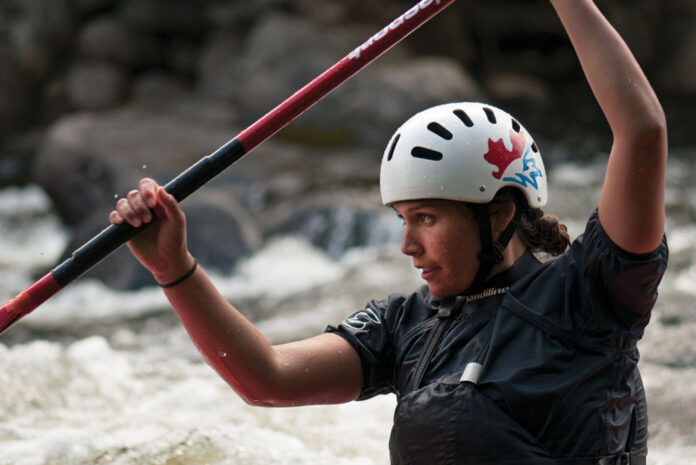
Alexandra Machicado-McGee paddling at the Madawaska Kanu Centre in Barry’s Bay, Ontario
Alexandra Machicado-McGee paddling at the Madawaska Kanu Centre in Barry’s Bay, Ontario. | Feature photo: Gabriel Rivett-Carnac

In 2009, Alexandra Machicado-McGee was the first and only woman who accepted the invitiation to the Canadian national team trials in whitewater C1 slalom racing. There she then completed the required number of gates to qualify for the national team.

The national team trials would not only change McGee’s life but the course of history for female C1 paddlers. At 17 years old, McGee came in third last in that national event. However from the moment she crossed the finish line, she was hooked and would go on to become an accomplished slalom competitor on the world stage.

McGee grew up near the whitewater mecca of the Ottawa River in Ontario, Canada. She began paddling at eight years old. It wasn’t long before she was soloing a hand-me-down Esquif Detonator. As her skills increased, she cut her on teeth at paddling festivals and open canoe slalom events on the Madawaska and Gull rivers.

McGee has represented Canada all over the world for the last six years. Her most memorable moment came at the 2011 International Canoe Federation (ICF) Worlds in Bratislava, where she placed sixth.

McGee took the last year off from the international competition circuit to complete an undergraduate degree in preparation for law school. She says she was ready to hang up her paddle professionally.

“There needs to be a life after you finish living the dream,”she says, adding that she was ready to focus her energies elsewhere.

However, her dream of competing in the Olympics came roaring back to life this past summer. As the 2016 Rio Olympics wrapped up, much of the buzz for the 2020 games in Tokyo centered on the new sports that will be included, such as climbing and surfing. Lost in the mainstream media hype was the news that for the first time ever, female C1 paddlers may get the chance to compete for Olympic gold.

The ICF has approved a new racing program that would bring equality to the men’s and women’s sprint and slalom disciplines, though this has yet to be ratified by the International Olympic Committee (IOC). To go from C1 pioneer to Olympian is a chance McGee dreams about.

“The future is promising with word that national funding could be coming from the federal government for female competitors for the first time,” says McGee. “Without women’s C1 being included in the Olympics, corporations have not been on board to provide funding or sponsorship because there is no media exposure.”

If women’s C1 slalom is included in the Tokyo Olympics, McGee will then be 28 years old—practically an old-timer by Olympic standards—and a 10-year veteran of the sport. Since first competing in 2009, the number of countries that boast female race training development has grown to 40. If women’s C1 slalom is accepted in the 2020 Olympics, McGee expects that number will only grow.

For a girl who chose the canoe because she could see the waterlines clearer, to a woman possibly representing her country in a first-ever Olympic event, the future is bright.

Gabriel Rivett-Carnac is an assistant editor at Rapid Media. Originally from Victoria, BC, Rivett-Carnac now calls the Madawaska Valley home.

CCC PartnerBadge WebWatch The Canoe, an award-winning film that tells the story of Canada’s connection to water and how paddling in Ontario is enriching the lives of those who paddle there. #PaddleON.

Alexandra Machicado-McGee paddling at the Madawaska Kanu Centre in Barry’s Bay, Ontario. | Feature photo: Gabriel Rivett-Carnac


How Krystle Wright Shoots Nighttime Waterfall Descents

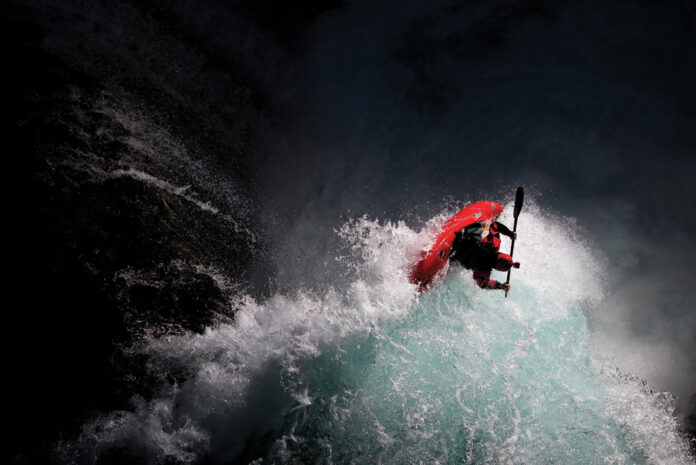
SPIRIT FALLS | PHOTO BY KRYSTLE WRIGHT

Unless they’re living in the wilderness, most people are exposed to almost 300 images a day. As a professional photographer, my challenge is to find a way to make my images stand out from the rest. I’ve always believed that becoming a great photographer requires going out on a limb to create something new. I was recently challenged to create a unique shoot that would test Canon’s newly released 1DX MII camera in difficult conditions. I reached out to Erik Boomer to start brainstorming ideas with whitewater kayaking in the blue hour.

We came up with the idea to rig a flash over a waterfall and shoot down as the paddler descended. Previously this angle has either been incredibly difficult or near impossible. Fortunately, drone technology has come a long way. With the help of drone operator Larkin Carey we were able to rig two 600EX flashes to a drone to light up Spirit Falls at dusk.

Originally the shoot was just with Boomer but by chance David Spiegel, Rafa Ortiz and Rush Sturges were in the area for an upcoming race down the White Salmon.

For the perfect bird’s eye view, I positioned myself in the tree above Spirit Falls and hung by a rope a few meters above the falls. I asked Carey to position the drone directly in front of the falls by about 10 meters and slightly lower so that the light wasn’t too focused on the lip.

SPIRIT FALLS | PHOTO BY KRYSTLE WRIGHT

The group of four paddled the falls twice, but in Sturges’ first run the image came together seamlessly. Each drop, I could only take one shot as I chose to have the flash at full power with a low ISO to keep the highest possible quality. It was nerve-racking to not rely on a high-speed shutter, but it was also an awesome challenge to have only one chance each round. After the second run, the sun had truly disappeared and we hiked out in the darkness.

Why Whitewater Is Life’s Secret Ingredient

John Webster
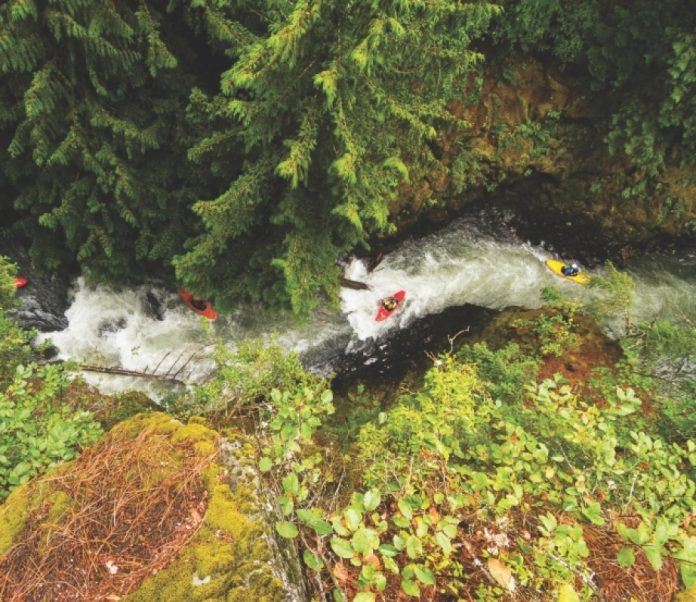
A group of kayakers paddle a skinny blue river, seen from above.

After finishing my master’s degree and a season in the mountains, I accepted my first journalism job.

I was posted to a community newspaper in a once thriving, now faded fishing town at the northern tip of Vancouver Island. I lived where the highway ended, truly the end of the road, in a converted garage apartment a few steps from a rugged, deserted beach. I went on weekend surf trips to the isolated west coast and dined on Dungeness crab I caught in my own crab trap. Romantic yes, but the intensity of the town’s serious and glaring social issues and lonely workdays as the sole reporter in a drafty, once bustling newsroom began to take its toll on me.

“Don’t worry,” a neighbor told me. “It only takes about two years to become part of the community here.” Well shy of that two-year mark, I moved back to the city and into the third floor of my parents’ home. I traded in coastal mountain views for those of the Tetris skyline, all in the hopes of landing a more fulfilling job. I told myself it would only be for a month—two at most.

I met for coffee with old friends and listened as they spoke of their never-ending job hunting sagas. I too spent the better part of the cold grey winter writing cover letters, compulsively refreshing my inbox, and rid- ing home in the dark on the subway after networking meetings. I hadn’t secured a single interview. To get by I was becoming highly skilled at making salt-rimmed beergaritas at a place called El Rincon. The restaurant’s Spanish moniker translates to “the corner” although it was curiously located in the middle of a traffic-snarled city block.

A friend happened to mention in passing a job posting at Rapid. It was journalism and whitewater together; a union I hadn’t known existed. Within weeks I was living and working at the river. I moved into a 100-year- old house between two buzzing and rumbling sawmills. I had a wood stove, a leaky tin roof and the river a throw bag toss off my front porch.

I was excited about this unexpected new chapter, but the lingering effects of a long winter of uncertainty left me with shaky confidence in this sleepy new town with only one general store. After a few weeks I’d met just a handful of the several hundred local residents.

As the last of the snow dripped from the eaves and the river finally broke itself into pieces, my workdays melted into evenings filled with after-work paddling sessions. Rolling, ferrying, eddy turns, surfing till dark. Not a single subways ride. Thursday nights began to mean packing my Subaru for a weekend festival or the now familiar 60 miles through freshly worked farmland to the walloping waves of the Ottawa River.

Spending my time running rivers, organizing shuttles, hanging wet gear and driving to paddle kept me so busy I didn’t realize that I was now part of something. I’d forgotten all about being new and unsure in an unfamiliar small town. Whitewater has given me more than just a job. It has given me focus, community, friends and balance—all the ingredients for a vibrant life.

Boat Review: Oru Kayak The Coast

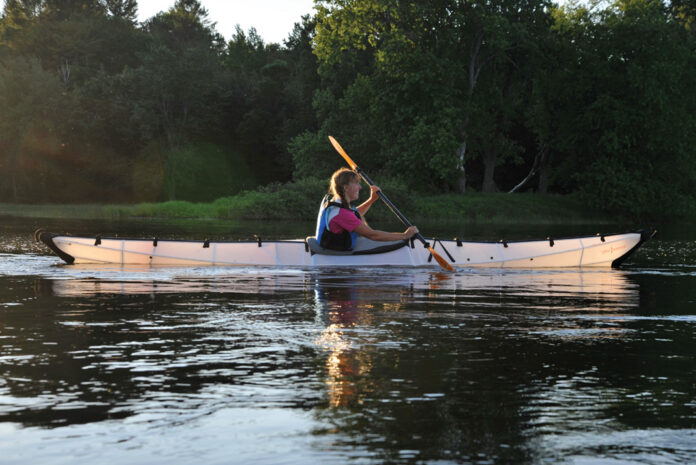
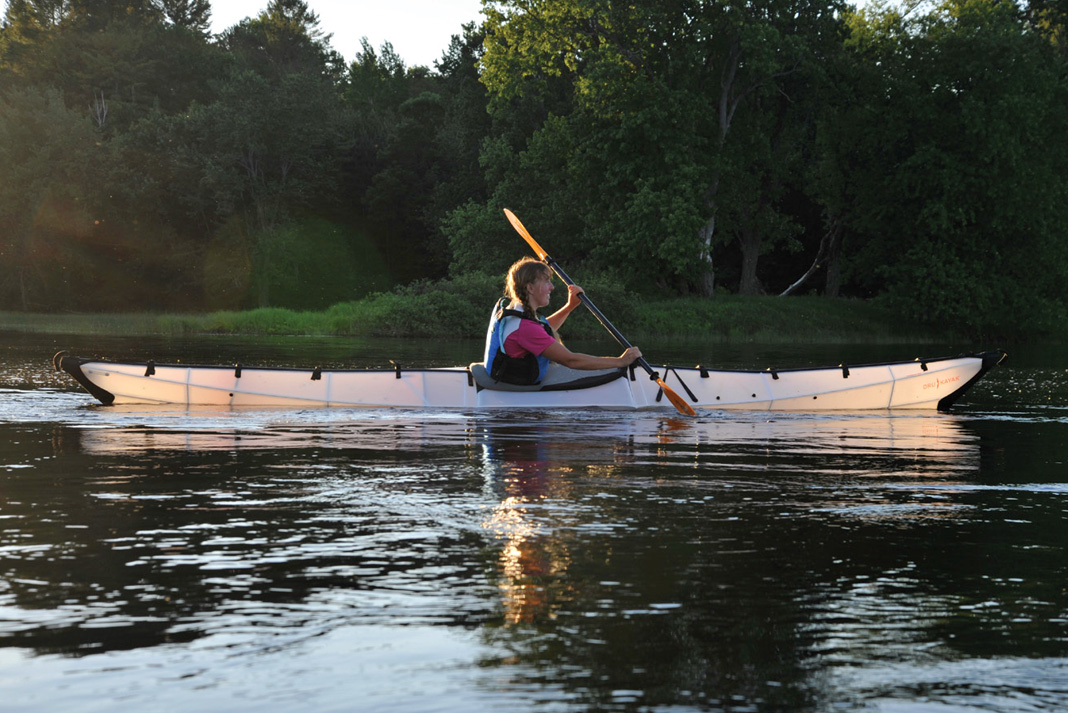
THE COAST By Oru Kayak | Photo: Grace Fisher

Two years ago, we reviewed the original Oru Kayak, an award-winning marvel of engineering from California architect, designer and paddler Anton Willis and partner Ardy Sobhani.

The name Oru comes from origami, the traditional Japanese art form that inspired this novel folding kayak’s design. Launched in 2012 through a wildly successful Kickstarter campaign, the Oru was funded in its first day on the popular crowdfunding site. The pair ultimately went on to pre-sell more than 500 boats, raising $444,000 towards their production facility near San Francisco Bay. Less than three years later, they were at it again with a new Kickstarter sensation: the Coast, a 16-foot model aimed at avid touring kayakers.

Like its predecessor, the Coast exceeded its $40,000 fundraising goal in the first eight hours, and garnered over $356,000 before the campaign closed. The new boat hit the water late last year, with its model upgrade, the Coast+, shipping early 2016. Together with the original, 12-foot Oru—rebranded as the Bay and premium Bay+—and the new Beach, a stable recreational kayak aimed at beginners, the Oru range now includes five distinct models.

The names are more than just savvy marketing; they suggest to users where these boats are best suited—by the beach, in sheltered bay waters, or exploring the open coast. Oru says the Coast is engineered for rough water and multi-day trips with greater speed, stability, storage and tracking than its little sister—a claim we were keen to put to the test.

We requested the premium Coast+ but after waiting impatiently for a hand-off from a Manhattan business magazine, we eagerly unboxed the boat and discovered our demo was a standard Coast model. What’s the difference? For an extra $500, the Coast+ features hardware upgrades including ratcheting buckles rather than webbing clips along the deck closure seams; a small day hatch behind the cockpit for little essentials; and a more deluxe seat and performance outfitting upgrades like perimeter decklines and adjustable thigh braces to assist with rescues, edging and rolling.

Early prototypes of the Coast+ also featured a folding hatch for easier access to gear storage, but after extensive testing and tweaking, Oru’s engineers had to concede defeat. Until an adequately waterproof hatch design emerges, access to the 180 liters of storage space is through unclipping the center deck seams.

THE COAST By Oru Kayak | Photo: Grace Fisher

Performance-wise, the Coast and Coast+ share the same hard-chine hull and straight-tracking rocker profile. They also use the same basic construction: a single 5mm sheet of corrugated, double-walled polypropylene (reminiscent of signboard) that’s cut and creased just like origami to fold from a 30-inch-square suitcase into a full-size, hard-shell kayak. The material is lightweight yet strong, rated to 20,000 fold cycles—that’s a lot of day trips.

Fans of the original Oru will love the Coast. With four additional feet of waterline, it’s about 15 percent faster on the water—perfect for after-work or early morning fitness paddles. The extra length also translates to double the gear storage—impressive considering the Coast packs down to nearly the same size (just two inches wider when folded).

Paddled empty or loaded for a multi-day adventure, handling is predictable and edging feels stable and responsive. We also like the surprisingly stiff feeling of the hull. This makes the Coast an efficient choice for longer tours and reasonably agile for playing among currents and rocks.

There’s no denying the appeal of an expedition-ready kayak that can strap to your back or be checked onto a plane for anywhere-in-the-world adventures. Add to that the Coast’s speedy set-up, and those with limited storage space also have a great grab-and-go option for journeys closer to home. VIRGINIA MARSHALL

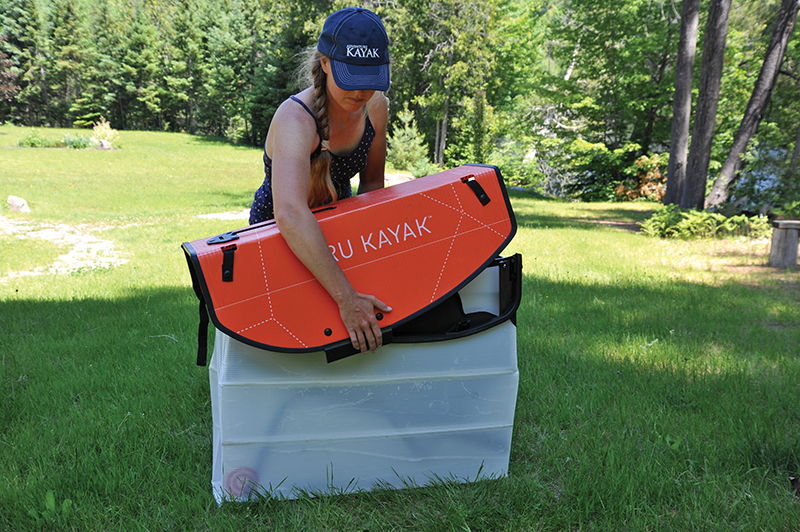
The Oru Kayak in its box.

Step 1

Practice assembly and disassembly at home before hitting the trail. Deciphering the origami can be confusing for first-timers and requires a specific sequence that penalizes missed steps with back-to-the-beginning frustrations.

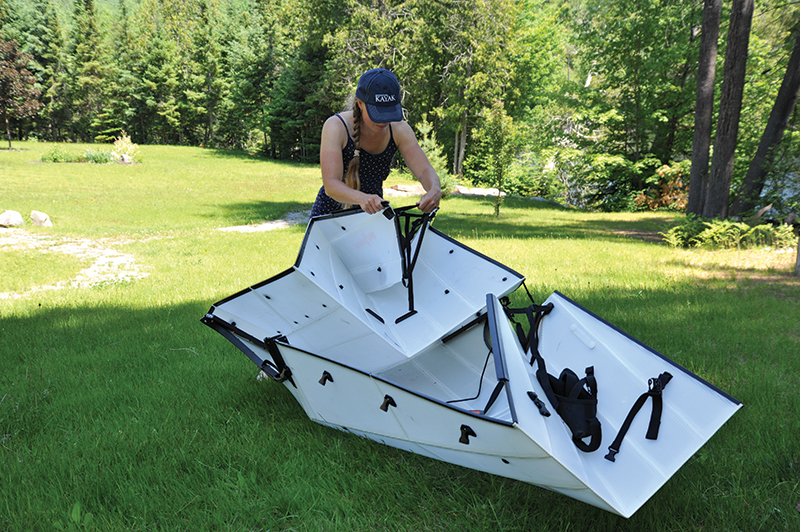
A woman assembles the Oru Kayak.

Step 2

After a few practice runs, we had assembly down to the advertised 10 minutes. This also helps wear in the creases—they develop memory from repeated folding, so set-up and teardown become easier with use.

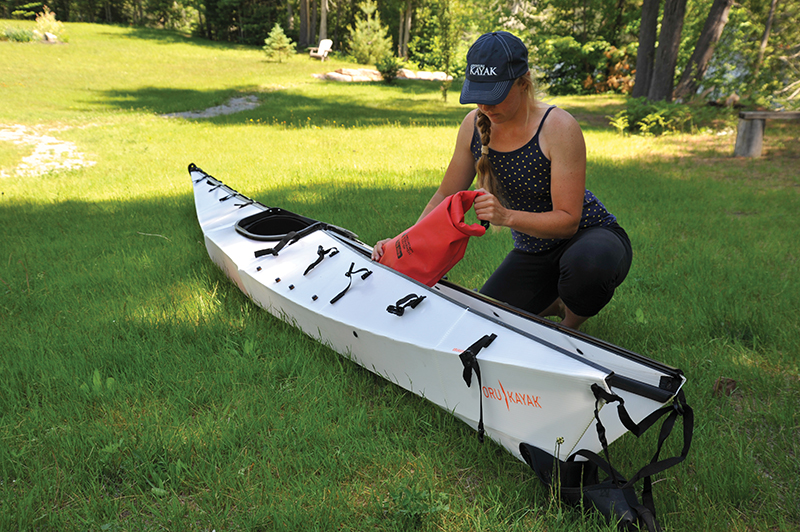
A woman finishes assembling the Oru Kayak.

Step 3

Use bow and stern flotation bags (or pack the ends with dry bags) when heading into open water. Oru’s bulkheads only provide rigidity to the hull, they don’t seal out water.

Coast

Length: 16 ft

Width: 25 in

Weight: 31 lbs

Max. Capacity: 400 lbs

Price: $1,975 www.orukayak.com


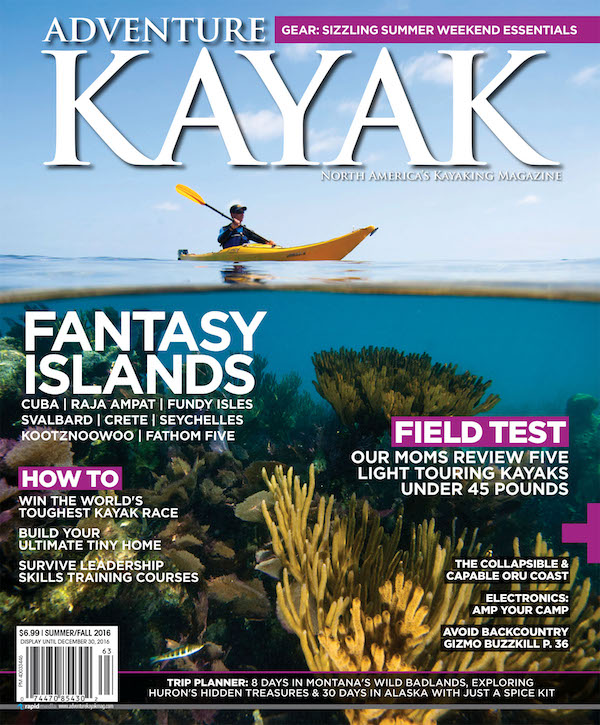
This article originally appeared in the Adventure Kayak
Summer/Fall 2016 issue.
Subscribe to Paddling Magazine and get 25 years of digital magazine archives including our legacy titles: Rapid, Adventure Kayak and Canoeroots.

10 Things To Know Before Paddling The Big Sur Coast

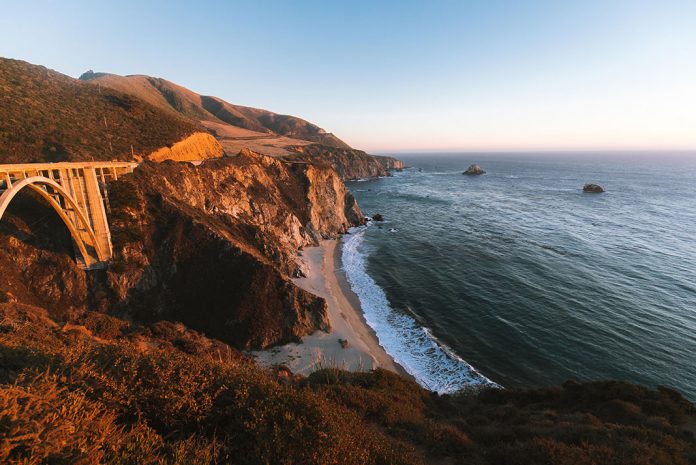
Coastline with bridge
The Big Sur Coastline is incredible, but you'll need to be prepared for all the hazards and difficult conditions you may encounter.

The rain had just started coming down, but fortunately we had just packed away our camping gear in our kayaks or strapped it to our standup paddleboards. The surf though picked up throughout the night and was dumping thick six-foot waves on a steep, gravelly beach along Central California’s Big Sur Coast.

Visibility wasn’t helping. There was a dense, low-hanging ceiling of soupy fog hovering just above the ocean, nullifying any line on the horizon. Mistiming our launch off that deserted beach could’ve been disastrous, possibly ending our trip, but launching successfully guaranteed us at least a chance to land on the next wave-battered beach.

Paddling the roughly 60 miles of Big Sur Coast will require a little planning, some early mornings and most of all some good timing depending on the unruly surf that thunders against those sheer, daunting cliffs the coast is known for. Here are 10 things to consider before doing a Big Sur kayaking trip along the coast.

1. When to go

The best time to paddle Big Sur is late summer into early fall. My friends and I paddled the Big Sur Coast in November and encountered a mixed bag of big, uneven surf, southerly headwinds and poor visibility. On the flip side, we also soaked in some sunshine and glassy, mirror-like paddling conditions. Winter endures more storms with huge surf. You can expect potential landslides and occasional rock fall. Spring is colorful, but northwest winds are at their most volatile. Summer sees south swells, winds and dense fog. Late summer into early fall brings the calmest paddling conditions.

2. Hazards

No matter what the surf reports say, be prepared for the worst. There are many offshore reefs, huge slabs of submerged rocks and craggy sea stacks. Mind tidal fluctuations and study channels between the coast and offshore reefs that might offer safe passage instead of the long paddle out and around.

Mule deer
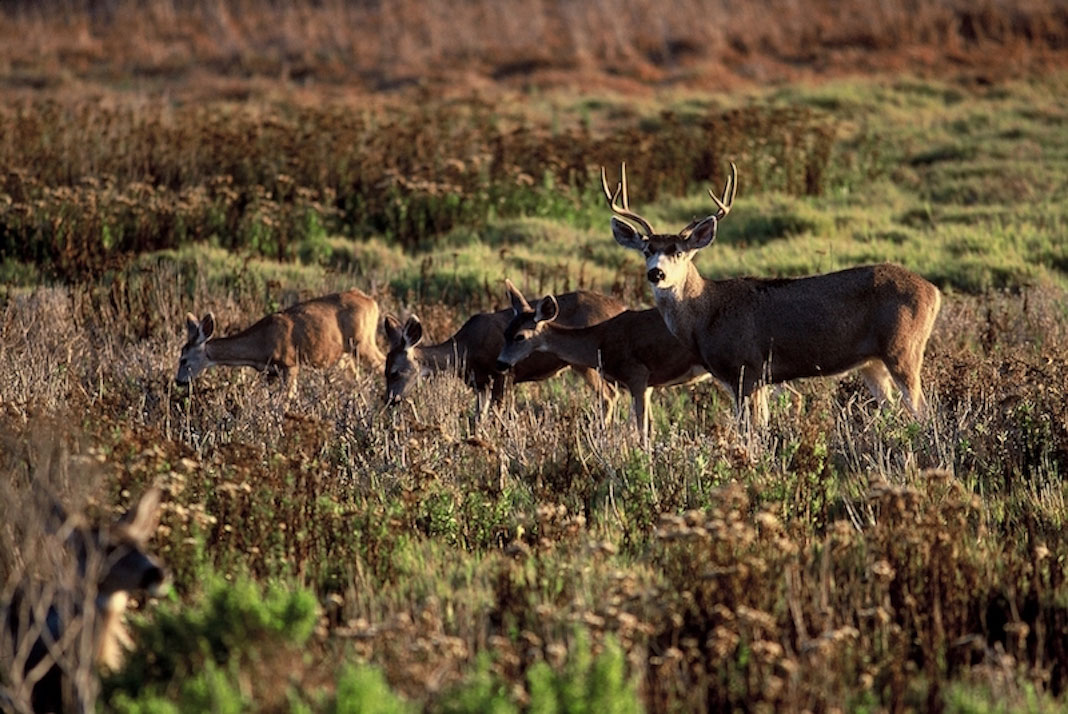
Mule deer along the coast. | Photo by: Chuck Graham

3. Winds

Winds predominantly blow out of the northwest, resulting in a nice tailwind paddle down the Big Sur Coast. However, be prepared for southerly winds blowing up the coast and offshore winds howling out of the canyons. We had southerly headwinds from McWay Falls to Sand Dollar Beach, about a 20-mile stretch.

4. Logistics

If you’re going solo, leave your car at Andrew Molera State Park and hitchhike back after finishing your paddle. It’s $10 per day to park. There are plenty of places to hide your kayak and gear before returning to pick it up. If you have paddling partners, leave one car in San Simeon, just south of Big Sur, or at one of the trailhead pullouts along Highway 1 in Big Sur.

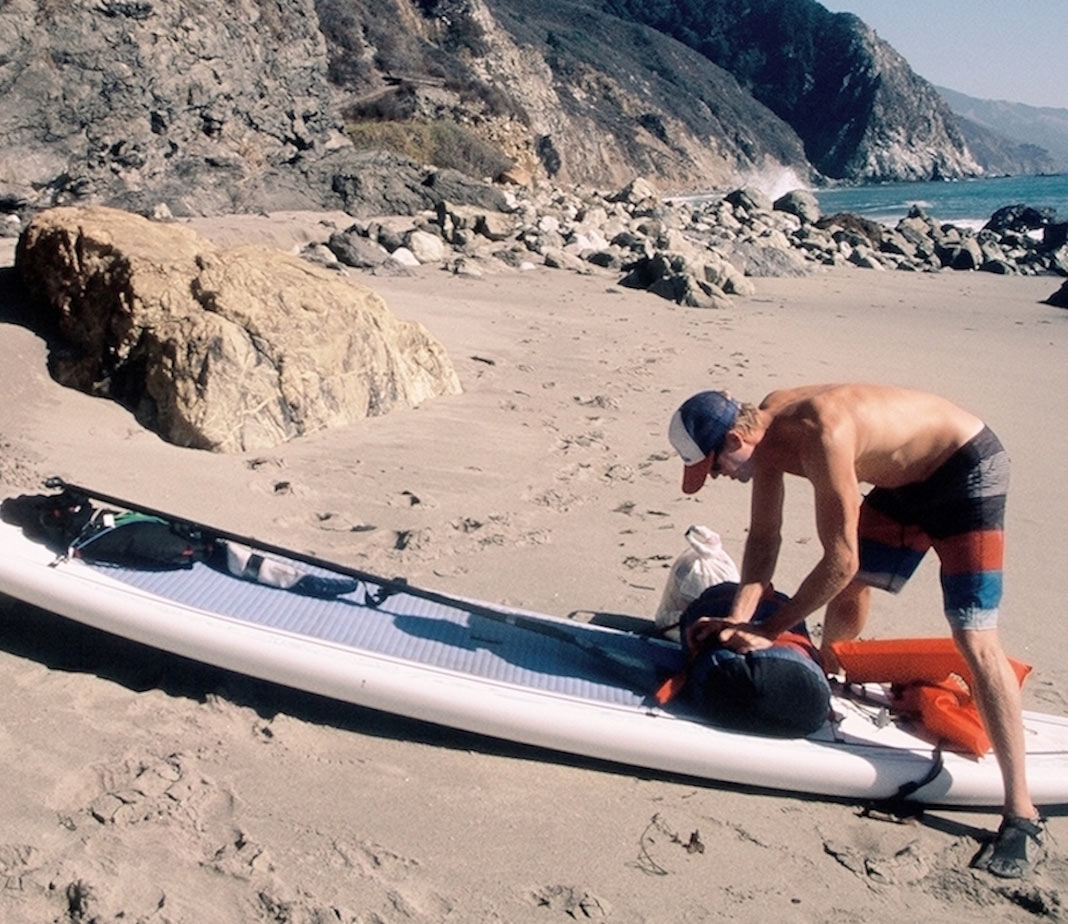
Man strapping things to his paddleboard on the beach
Whether you’re traveling by kayak or paddleboard, make sure you’re prepared. | Photo by: Chuck Graham

5. Where to camp

The best places to beach camp include Andrew Molera State Park, Julia Pfeiffer State Park, Rockland Landing, Limekiln State Park and Kirk Creek. Keep in mind that there are lots of hidden coves and beaches to camp on, but they’re tougher to locate when the surf is up and the tides are at their peak.

6. Be intentional about enjoying the paddle

Big Sur is beautiful and breathtaking. There are lots of Mordor-like sea grottos and archways to paddle through. There are waterfalls like McWay Falls that spill off the cliffs and into the ocean.

7. Drinking water

You should bring a gallon or two of water, but there’s lots of fresh drinking water along the Big Sur Coast. Creeks empty onto beaches and into the ocean, so pack a filter into your gear cache.

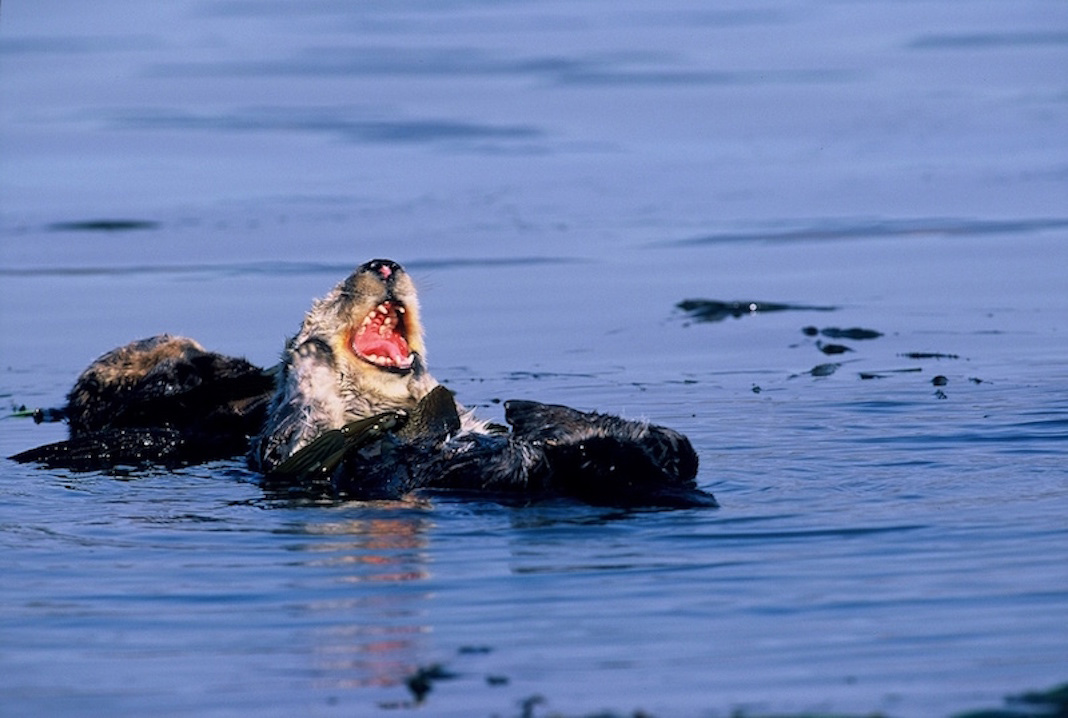
Otter yawning
Keep an eye out for southern sea otters while you’re paddling. | Photo by: Chuck Graham

8. Finding landing sites

Observe potential landing sites from the safety of a channel. Bring a pair of binoculars to scan beaches and coves for the best/safest landings, especially if you’re looking for a beach and dusk is approaching. There are more riptides on the lower tides and more passable channels on the fuller tides.

9. Partington Cove

There are lots of hidden gems along the Big Sur Coast. One of them is Partington Cove, once used as a loading point for tanbark around the turn of the 19th century. Some of the loading apparatus is still embedded in the barnacle-encrusted rocks. It was also rumoured to be a landing point for smuggling alcohol during prohibition. There’s a 60-foot-long tunnel that leads to and from the ocean to a fairy tale-like pygmy redwood forest, and a rushing creek that runs through it to the ocean.

10. Wildlife

Those binoculars will also come in handy for spotting wildlife. Whether on land or in the sea, there is plenty of wildlife in Big Sur. Mule deer are regularly seen along the coast, and endangered California condors are spotted along Highway 1, as they forage for marine mammal carcasses on deserted beaches. The Big Sur Coast lies within the Monterey Bay National Marine Sanctuary, and is part of the California Sea Otter State Game Refuge. Southern sea otters possess the densest fur of any mammal and are regularly seen on the canopy of dense kelp forests. Depending on the time of year, gray and humpback whales are seen off the coast, as well as orcas, dolphins, seals and sea lions.

Open Boat Surfing using the Rudder Stroke

[iframe width=”560″ height=”315″ src=”https://www.youtube.com/embed/OsERuOSpOxc” frameborder=”0″ allowfullscreen ]

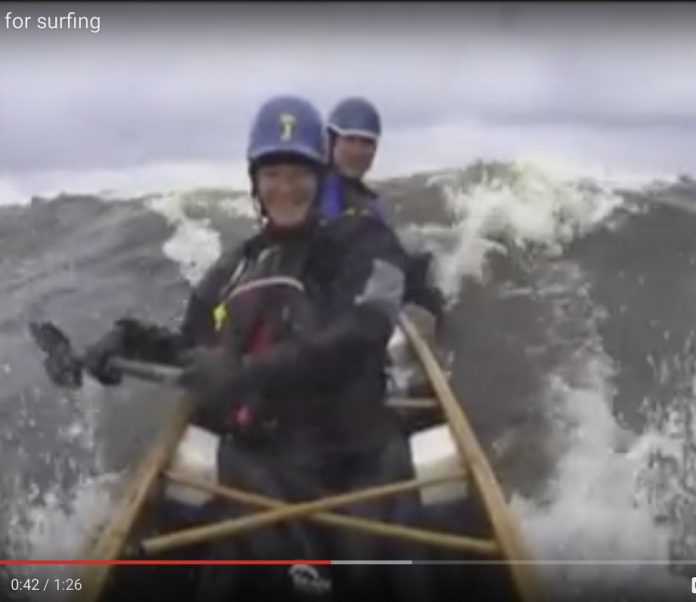
Paddle Pointers’ Paul Mason recently released a great instructional video on the rudder stroke for use while open boat surfing. 

READ MORE: Open Boat Creek Technique 

Don’t let the intro fool you, it’s a perfectly suitable technique for this day and age.