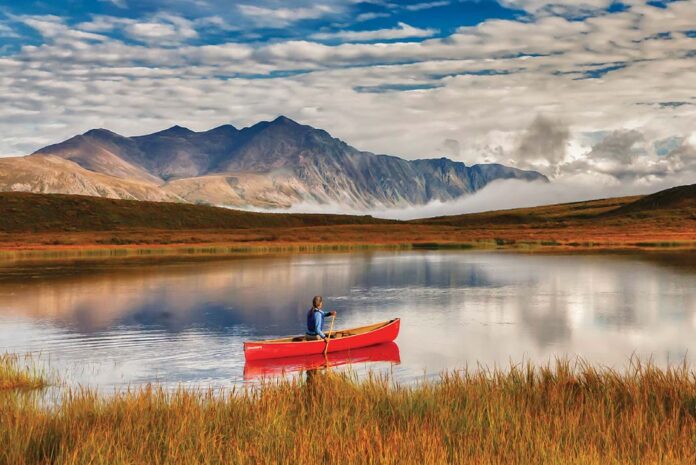
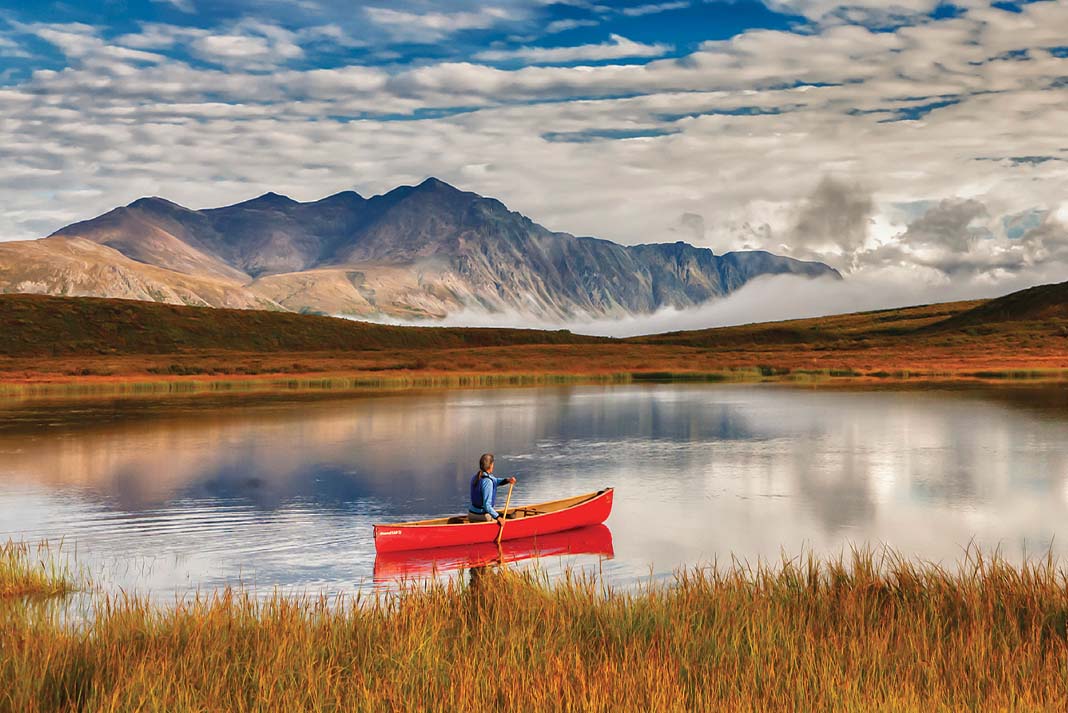
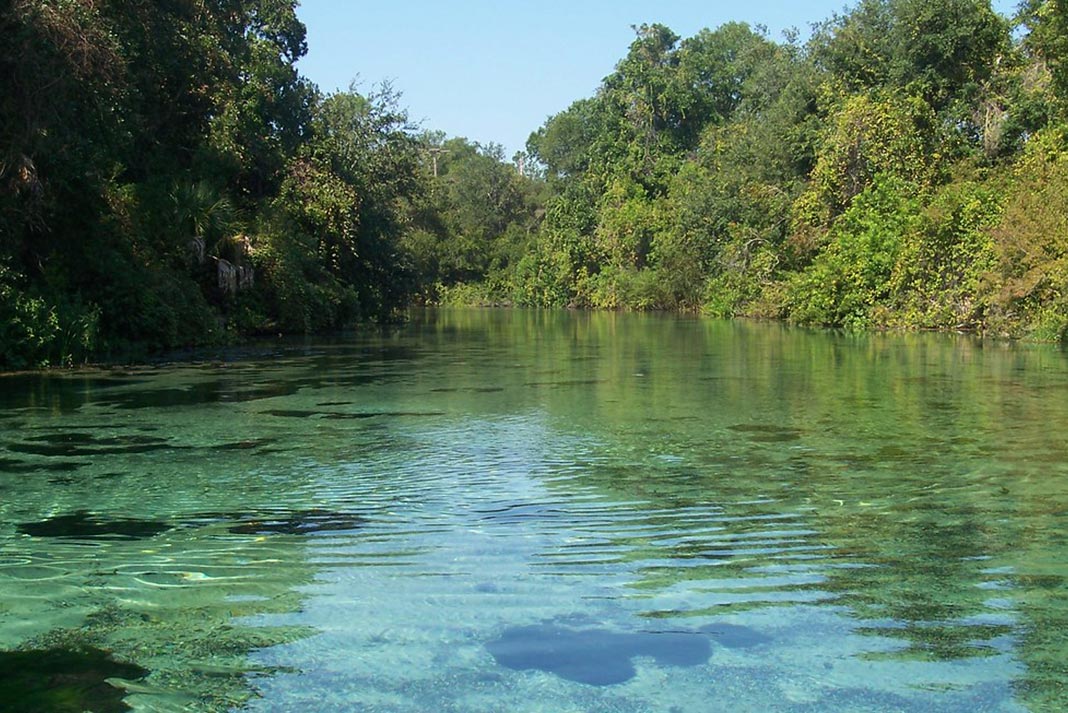
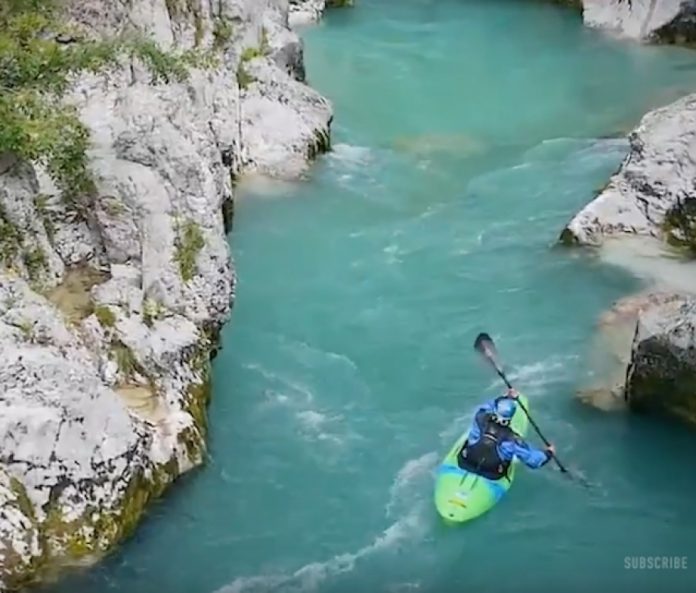
Get excited for weekend paddling with this short, colorful clip from filmmaker Aljaž Čuček shot on the Soča River in Slovenia.
One of the most stunning European rivers
Situated in the fertile western part of the country, the 136-kilometer long Soča River is known for its deep green colour and has a reputation as one of the most stunning rivers in Europe. The Soča flows past many small Slovenian municipalities and is fast becoming a popular destination for rafters, whitewater kayakers, fishers and those looking to explore the area’s canyons.
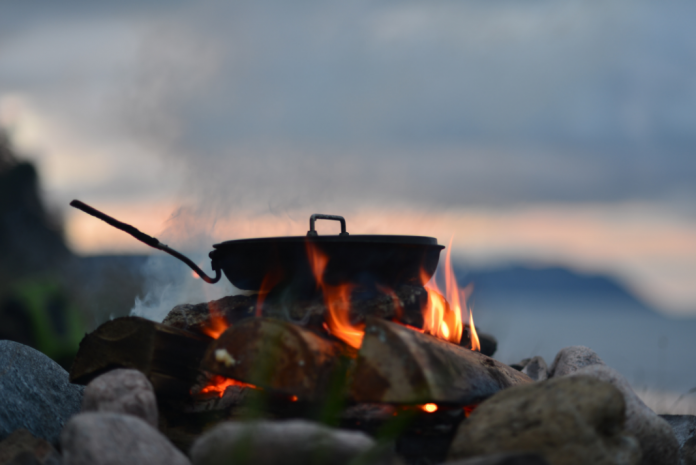
Save yourself from dehydrated dinners with these fun and easy campfire recipes.
When you’re paddling you need to fuel your fun. Campfire dinners don’t need to be an impossibly orange blob of dehydrated mac and cheese or a gloopy “just add water” mystery dinner. Enjoy these delicious campfire meals that make memories and taste so much better when enjoyed with friends.
Set aside about 2 tbsp of the flour. Then mix the remaining flour, baking powder, salt and olive oil with enough water to form a stiff dough.
Sprinkle the remaining 2 tbsp of flour on the outside of the dough and your hands so that you can knead it. After kneading, divide the dough in two and flatten it onto the foil.
[ Paddling Buyer’s Guide: Browse all camp kitchen accessories ]
Spread the pasta sauce over the dough. Add chopped onion and sliced pepperoni and top with grated cheese and oregano. Fold the foil up and tent it over the pizza so that the cheese doesn’t stick to it.
Bake on the coals for 15–20 minutes or until cheese is melted.
Campfire pizza is a welcome treat for dinners in the bush. | Photo: Nikki Fotheringham
Easy Peasy Pizza Tips
Omit the pepperoni for a vegetarian option and add mushrooms, peppers, capers or any other vegetable you like on pizza.
You can substitute the tomato pasta sauce for sliced tomatoes or a pesto sauce.
If you are making pizza after day two on your trip, omit the cheese.
Don’t feel like making dough? Use flatbreads instead.
I put the pizza on a grill if I have it and put a pot over the top to get a crispy crust and melted cheese.
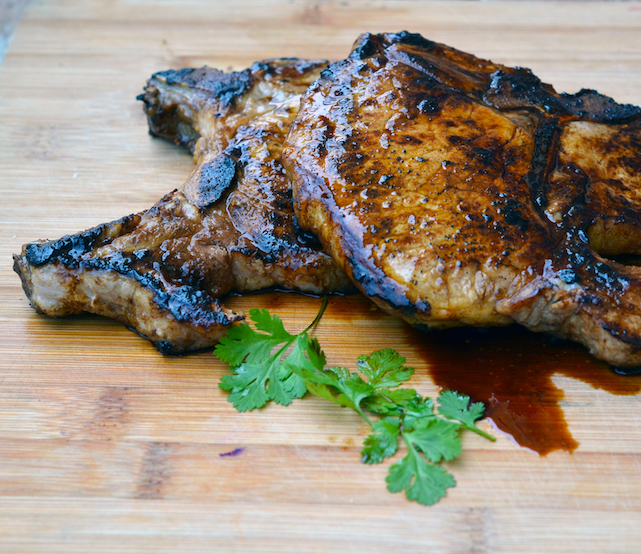
Sticky Pork Chops
6 pork chops
½ cup balsamic vinegar
½ cup olive oil
2 tsp chopped rosemary
3 tsp honey
3 tsp soya sauce
2 tsp chutney
Combine ingredients in a sealable plastic bag and leave for a couple of hours. Place chops on the grill and cook over hot coals. Leave the marinade in the bag and drizzle it over the meat while it cooks.
Pork chops will stick with you after a long day of paddling. | Photo: Nikki Fotheringham
Sticky Pork Chop Tips
Use dried rosemary if you don’t have fresh.
Substitute apricot jam or maple syrup for the chutney.
Navajo Fry Bread
Fry bread is a different way to cook bannock that gives you, our intrepid happy camper, the perfect vehicle for just about anything. Fill them with leftovers or use them to make tacos, breakfast burritos, burgers or hot dogs. You can even eat them as dessert with a little cinnamon and sugar.
Mix the dry ingredients and keep it in a sealable bag. Just add the oil and water when you are ready for a campfire dinner feast.
Fry bread is a fun and versatile vehicle for all sorts of toppings. | Photo: Nikki Fotheringham
4 cups flour
2 tsp baking powder
2 tsp salt
3 tbsp oil
1 cup warm water
Oil for frying
Mix dry ingredients. Add oil and enough water to form a firm dough that doesn’t stick to the hands. Leave to rest for 30 minutes.
Divide into six portions and flatten with the palm of your hand to form discs. Poke a hole in the center to allow the oil to bubble through.
Heat the oil in a frying pan over a medium fire. Drop the fry bread in and cook for 2 minutes or until the edges turn brown. Turn over and fry for another two minutes.
Save yourself from dehydrated dinners with these fun and easy campfire recipes. | Feature photo: Nikki Fotheringham
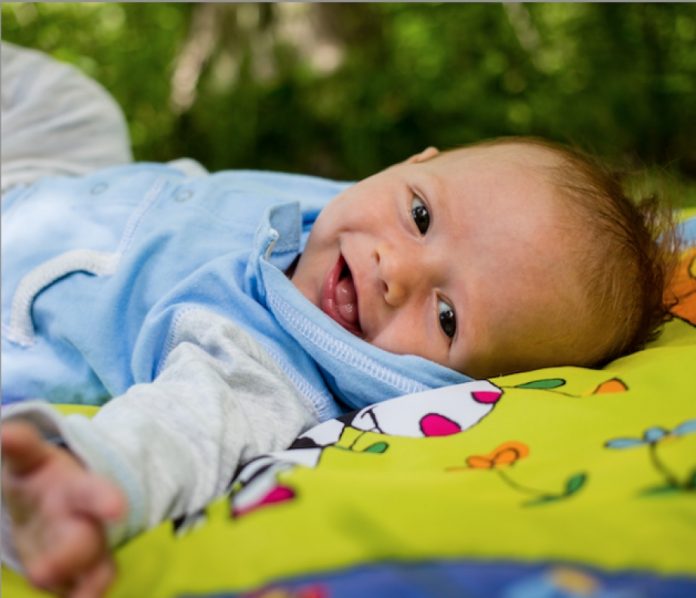
Want to take your infant camping? How about your toddler? There’s no best age to start taking your baby camping—you can start at any time. The younger the better. Use these tips below to discover the essential gear you need to take young kids camping, and how to modify your camp kit to keep the whole family happy and safe in the wilderness.
Camping Baby Carrier
A good quality baby carrier. Whether you are getting to your campsite on a raft, a kayak, a bike, on your back, or even your car, you’ll need a good quality baby carrier. Ergo makes a Performance model designed specifically for adventuring.
Kid-Friendly Tent
A three or four season tent. If you are going to spend money on one piece of gear, make it a good tent. It will keep you dry, warm and sheltered in any weather. High quality tents run about $400, and are worth every penny. Nothing is worse than waking up in a puddle in your tent.
Outdoor Snacks For Your Baby
Yummy food that kids will actually eat. Never skimp on food. Pack out meals that will power everyone on the trail and at the campsite. Plan to bring more food than you think you’ll need. Snacks are essential too.
Water Treatment for Kids
Safe water. You can’t take a chance on babies and toddlers getting waterborne illnesses. For a short one to two-night trip, consider bringing water from home. For longer trips, or when this isn’t practical, make sure you use a good water filter and take good care of it. Clean it thoroughly after each trip and regularly replace the filter.
Kids’ Camping Layers
Layered clothing. Just like adults, a layered approach to clothing works best to keep little ones warm even when they are wet. Avoid cotton—when wet it will lose any insulating properties. Start with a thin base layer of polypro, add an insulating layer of wool or fleece and top it off with a shell like a rain suit. You may not need all three layers all the time, but you’ll be glad you have them in case the weather turns wet or cold. And don’t forget a hat for chilly mornings.
Bring An Umbrella
This may seem silly, but it’s actually super practical and takes up little room or weight. It can make a nice shady spot for a sleepy babe on a hot day or keep you dry when the rains come.
What About Bugs and Kids?
Bug netting. Never leave for the backcountry without some. Unlike chemical insect repellants, bug netting has no risks and blocks all flying bugs including bees—not just mosquitoes. Buy the largest bug net you can—you can usually find it at any large baby store. Look in the stroller section or have someone sew some elastic along the edge of netting you purchased at a fabric store. Bug netting can be used over strollers, baby backpacks, camping chairs and cockpits of kayaks. For toddlers who like to run around, buy a bug shirt. Don’t worry if it is too big, it will still work. If you must use chemical repellants, be sure to wash them off nightly.
Extras
Bandanas. Simple and super functional, bandanas pull double and even triple duty while camping. They can be used at bath time as a washcloth or dipped in cool water and placed on your forehead on a hot afternoon. They love to do dishes and keep the dust off your face later on. Bring a few of these handy strips of fabric.
Most Important Piece of Gear For Parents
A positive, adventurous attitude. Backcountry travel with very young children is not without a few headaches. But let’s face it—parenting at home isn’t always easy either. With a smile and an occasional shrug you’ll have a fabulous time. So give your babies the best start—outside. Get out everyday.
Jennifer Aist is founder and director of Providence Alaska Medical Center’s parenting and childbirth education program. She teaches classes on everything from breastfeeding to backpacking and conducts her signature “Babes in the Woods,” “Babes in the Snow,” and “Babes on the Water” classes every year.
Research from the National Center for Physical Development and Outdoor Play has shown that children who play outdoors regularly are happier, healthier and stronger. I’ve read Richard Louv’s much-praised book, Last Child in the Woods. I get it. In fact, we set a section of Canoeroots aside to inspire families to get outside.
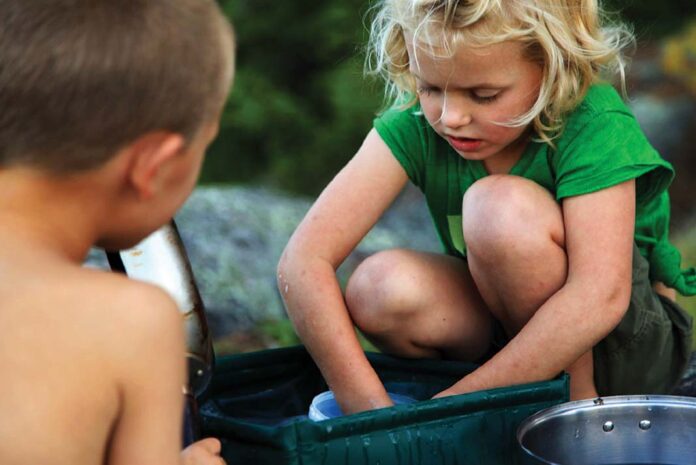
I believe, however, that there has been too much emphasis on play and not as much on development. You know what else kids are not doing as much of outside? Working. Chores like mowing the lawn, chopping wood, raking leaves and setting up their own tents. And as it turns out, it’s not just in the outdoors where kids today are slacking when compared to their parents.
According to a 2014 survey by Braun Research, 82 percent of grown-ups polled said they had regular chores when they were growing up, but only 28 percent of us reported asking our children to do any.
Marty Rossmann of the University of Mississippi used data collected over 25 years to discern whether asking children to help with household chores starting at three or four years old was instrumental in predicting the children’s success as young adults. Turns out, those who had done chores as young children were more likely to be well-adjusted, have better relationships with friends and family and be more successful in their careers.
Why?
Because they are less likely to run off and play when it comes time to set up tents, cook dinner or complete the important client presentation that’s due on Tuesday—don’t think we don’t know who you are.
IF WE COOK, THEY CLEAN.| PHOTO: SCOTT MACGREGOR
It’s challenging for kids to understand all the work involved in running a household. Our lives are busy and we often find ourselves driving off in different directions. On the other hand, camping trips offer fewer distractions. We eat and we sleep. If we’re hiking or canoe tripping there is packing, unpacking and traveling to be done.
Compared to everyday life, camping offers a much simpler routine with a more immediate and obvious list of what needs to be done. Too often parents are doing the camp chores while kids, thanks in part to Louv, have been released to go play.
When it came time to send our kids to summer camp they’d been helping with camp chores since they were old enough to gather sticks for a fire—they may still have been in diapers. Even though holding the canoe didn’t really make it more stable for me to step out, I still asked them to do it. Even though the tent pegs were hardly more than an inch in the ground, I asked the kids to hammer them in with rocks. Even if my wife and I had to sometimes rewash an evening worth of dishes, we had the kids do them when it was their turn.
On my son Doug’s first overnight with his camp cabin group, he was allowed to build the fire after three failed attempts by his counselors. Guess what? While the other kids were off whipping each other with wet towels instead of gathering wood, his teepee fire sparked into flames. That night the group roasted hot dogs on sticks instead of eating raw wieners out of the package. Doug didn’t exactly thank me, but the research suggests that someday he will.
Scott MacGregor is the founder and publisher of Canoeroots.
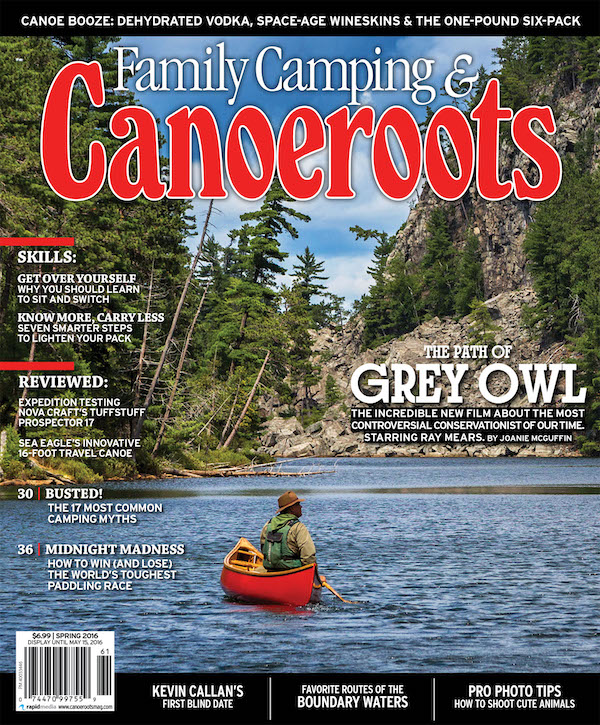
This article originally appeared in Canoeroots Spring 2016 issue.
Subscribe to Paddling Magazine and get 25 years of digital magazine archives including our legacy titles: Rapid, Adventure Kayak and Canoeroots.
A cancer survivor himself, founder of Survive and Thrive, Mike Lang, knows the importance of community. | Photo: Survive and Thrive
Every boater knows that time on the river is the best cure for everything from a hangover to a messy breakup to the loss of a loved one. It makes sense that paddling can also help treat cancer, recover from war wounds, and manage autism spectrum disorder.
Across North America, these four non-profits are using paddling in transformative ways, and proving whitewater’s ability to form powerful friendships.
Cancer survivors find context and community in the canyons of Oregon’s Owyhee River. | Photo: courtesy of Survive and Thrive
Whitewater Healing
Look up the definition for “ideas guy” and you might see a picture of indefatigable whitewater canoeist and entrepreneur Jim Coffey. So when Coffey’s family was touched by autism spectrum disorder (ASD), Ottawa-based videographer and open boater Mike McKay knew his friend would see the challenge as an opportunity to change lives. Still, McKay didn’t know what to expect last August when Coffey invited him to serve as a photographer at the first-ever Whitewater Healing program on the Ottawa River.
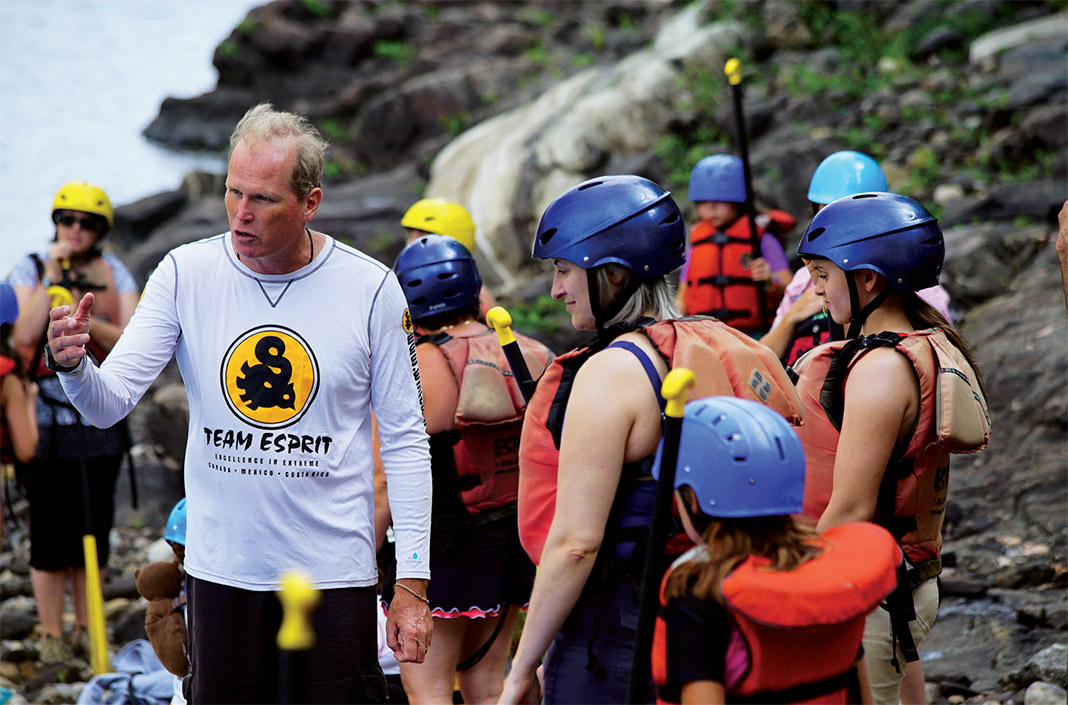
Coffey modeled his brainchild after Surfer’s Healing, an American program that introduces over 4,000 people with autism to surfing annually. Whitewater Healing creates a relationship between people with ASD, their parents or friends, and a professional whitewater paddler, known as an ambassador. Ambassadors connect with their pairings at least a month before the event to develop a friendship. On river day, activities include canoeing, kayaking, rafting and standup paddleboarding. Some people living with ASD are drawn to water, and Coffey predicted that whitewater would have profound therapeutic effects.
Founder Jim Coffey at the first Whitewater Healing event on the Ottawa River. | Photo: Mike McKay
“The river is a great equalizer,” he says. “On the water, the challenges that the ASD participants face are the same that everyone faces when they try a new and exciting activity.”
Forty people gathered on the Ottawa River for Coffey’s inaugural event, and the day unfolded flawlessly, just as McKay envisioned. “In the moment, Jim has this crazy ability to pull it together better than anyone could,” says McKay. “In the end you realize his master vision; he really knew what he was doing.”
Behind the lens, McKay was struck by how rewarding the day was for parents. “There’s so much mystery involved [in ASD],” he says. “Here was a great opportunity for people to get together and share their experiences.”
Will Brittian and ambassador Shawn Malone on the Nantahala River. | Photo: courtesy of Whitewater Healing
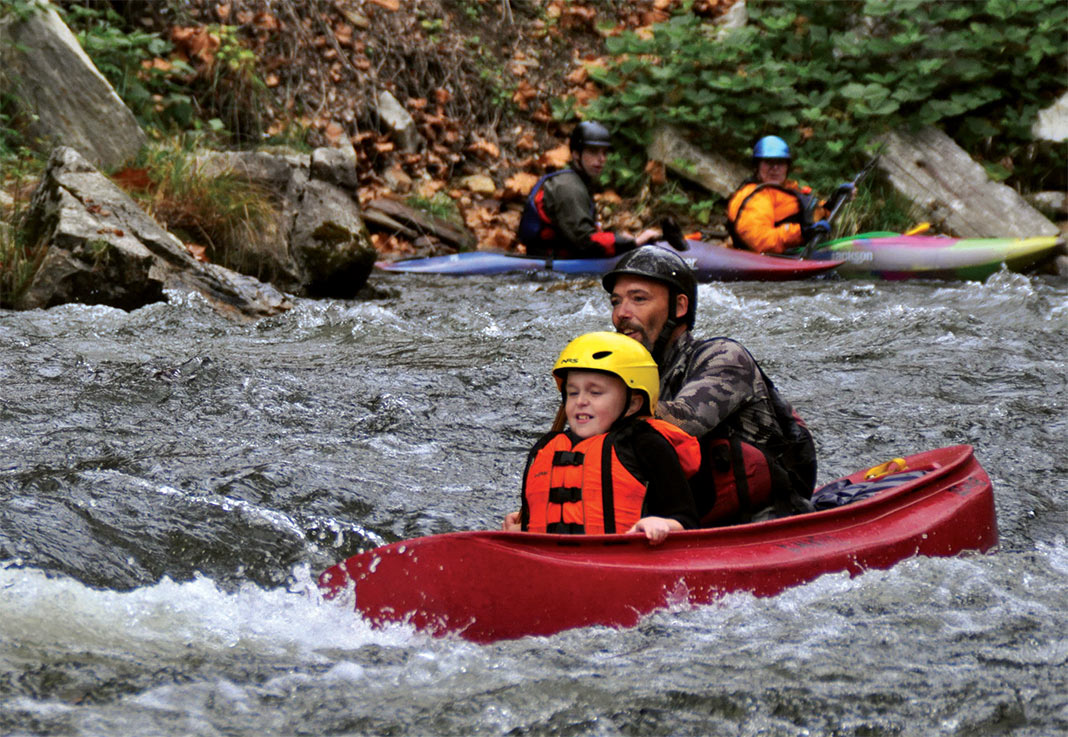
In October, Coffey hosted a second event on the Nantahala River in North Carolina. William Brittain learned about Whitewater Healing on Facebook and registered his son for the event. Paired with open boater Shawn Malone, Brittain says his son, Will, had the time of his life. “I sat behind Will in the raft and I actually felt his smile without being able to see it,” notes Brittain. “The trust we had developed for the Whitewater Healing team in such a short time was amazing.”
After the third program in Mexico in December, Coffey says Whitewater Healing touched nearly 150 people in 2015. This year, he hopes to deliver 10 non-profit programs on rivers in four countries. “It has been said, ‘The meaning of life is to find your passion. The purpose of life is to give it away,’” says Coffey. “This statement truly embodies what we’re all about.”
First Descents
When Brad Ludden decided to become a professional kayaker instead of going to college, he made a pledge that belied his youthful 18 years of age. Ludden, who became the first-ever Nike-sponsored kayaker, graced the cover of Outside magazine and won Cosmopolitan magazine’s “hottest bachelor in America” title, vowed he would give something back to the sport and to society. He discovered his true reason for paddling when he volunteered at a camp for children with cancer in Montana. “It was such a stark contrast for me,” recalls Ludden. “At the time, I was always focused on the extreme. Yet there I was, having fun with kids on a flatwater pond.”
First Descents founder Brad Ludden was only 20 years old when he organized his first camp for cancer patients. | Photo courtesy of First Descents
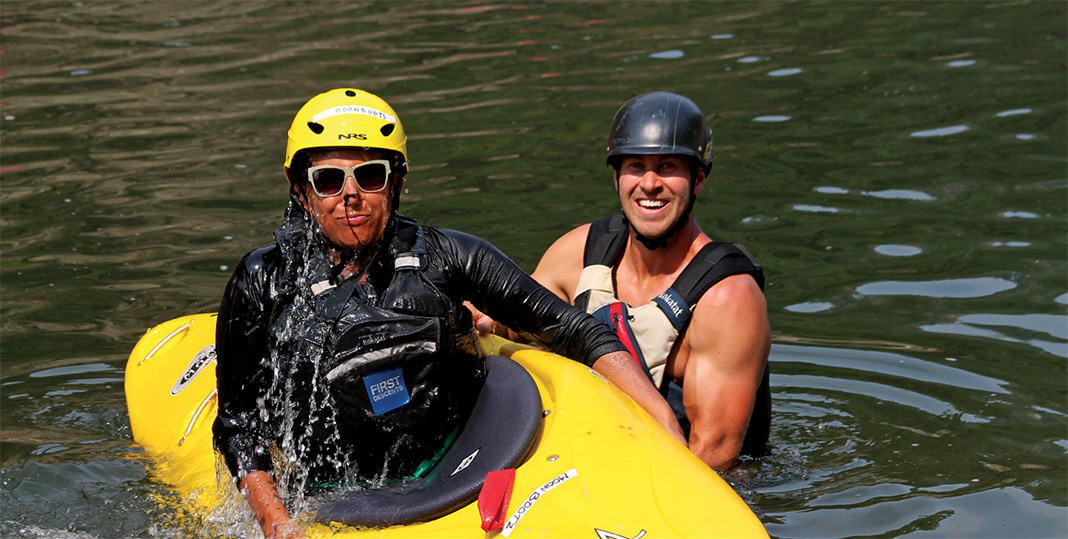
This experience, combined with watching his aunt struggle with cancer, sparked a desire to introduce patients to paddling. Ludden was only 20 years old in 2001 when he organized his first kayak camp for 19- to 39-year-old cancer patients on the Colorado River. “My biggest takeaway was how impactful and transformative it was,” says Ludden. “I knew it would be fun and people would enjoy it, but I didn’t realize just how much of a psychological impact it would have on young people.”
Ludden discovered he was supporting a unique demographic. With the shock of being diagnosed, young cancer patients are more likely to feel isolated by the physical and psychological turmoil of the disease. First Descents alleviates this stress by creating community, says Ludden. “They’re together with people of the same age who are facing the same challenges. That in and of itself is extremely healing.”
The free weeklong whitewater camps introduce basic safety and paddling skills and progress to a “pinnacle challenge,” says Ludden. First Descents also offers programs in other outdoor sports like climbing and surfing. Participants include people like Caryn Roach, who was 32 years old when she was diagnosed with Hodgkin’s lymphoma. Chemotherapy caused her to lose her hair and sapped her energy. She signed up for a First Descents camp, marked the dates on a calendar and made it an incentive to persevere.
Initially, Roach was afraid to try kayaking on the Clark Fork of the Columbia River in Montana. “When I went through my first rapid and felt the cool water splash around me and the rush of adrenaline, I knew I was hooked,” she says.“The experience also showed me that I am much braver than I ever imagined. Since First Descents, I have gone on three more whitewater kayaking trips. Each time I go kayaking I wonder if I am crazy. Then I find myself grinning ear to ear as I paddle down the river. It is like I am a different person when I am on the river—and I really love who that person is.”
Starting up, Ludden’s notoriety helped him leverage sponsorship dollars from Nike, Dagger and Kokatat. Being recognized as a professional kayaker lent authority to First Descents. “We broke the mold on cancer therapy,” notes Ludden. “I was able to reassure the medical community that this was a safe experience.”
In 2015, First Descents delivered 50 weeklong camps around the world, sharing the therapeutic benefits of adventure sports with over 1,000 cancer patients. “I really believe in the change in perspective of facing a challenge in the outdoors,” says Ludden. “All of those lessons and rewards translate very clearly to people with cancer. They restore self-confidence, destroy feelings of fragility and give an identity to these people other than being a cancer patient.”
Team River Runner sponsors more than 2,000 paddling events across America each year. | Photo: courtesy of Team River Runner
Team River Runner
For as long as he can remember, special education teacher Joe Mornini’s favorite way to battle stress has been an evening whitewater session on the Potomac River. In 2004, with the United States military engaged in missions in Afghanistan and the Middle East and the nation still feeling the impact of 9/11, Mornini and his paddling buddy, Mike McCormick, brainstormed ways to support the recovery of wounded and disabled soldiers. Their solution: Get as many as possible into kayaks.
After a chance encounter with a doctor at the Walter Reed Military Hospital in Washington, D.C., Mornini and McCormick made contact with the amputee ward. Soon, the friends assembled a few boats for a pilot program on Tuesday evenings. “It turned out every soldier wanted to participate,” says Mornini. “We just blew up from there.”
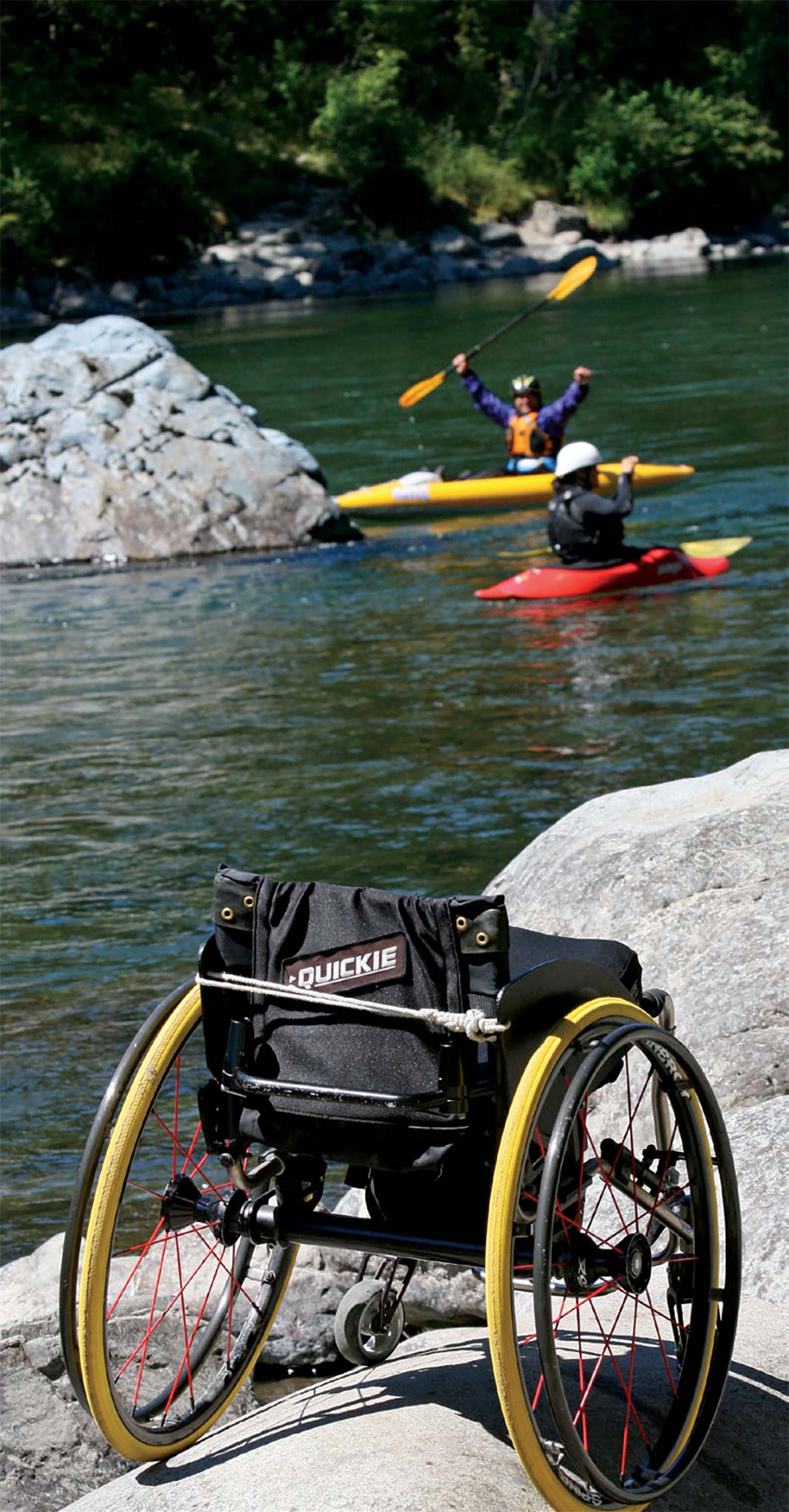
Mornini and McCormick’s first goal was to be inclusive to all veterans. Their “get butts into boats” crusade was the beginning of Team River Runner, a non-profit that now consists of 51 volunteer, veteran-coordinated chapters across the United States. Each year, the program sponsors more than 2,000 paddling days across the country. Perhaps the most accomplished Team River Runner alumnus is disabled Navy veteran Lonnie Bedwell, who in 2013 became the first blind paddler to kayak the entire Grand Canyon.
Mornini first met Bedwell at a Team River Runner-organized “Out of Sight” clinic for blind veterans. He says Bedwell’s sense of adventure is indicative of most veterans—and a big reason why paddling is such effective therapy. “No matter what era, no matter what conflict, veterans understand what their peers are going through,” says Mornini. “We’re paddling, but we’re also connecting people and forming a community.”
As a non-profit, Team River Runner’s funding strategy is to attract many small donations from individuals and corporations. Instruction is based on the American Canoe Association’s adaptive paddling training stream; Mornini insists he can accommodate all levels of disabilities, with the exception of people with severe neurological impairments and tracheostomies.
Despite Team River Runner’s overwhelming success, Mornini wants more. Florida has over 10,000 visually impaired veterans, he notes, and conflicts in Afghanistan and Iraq wounded over 3,000 members of the armed forces. “We’ve only skimmed the surface,” he says. “The disabled are the largest minority in America. We have to get them out of the shadows. Today, it’s not abnormal to see a wheelchair at a ski resort. But how many blind paddlers do you see? I had no idea what I was getting into, but I’m still learning and still seeing the rewards. My feeling is, how can I not work my ass off for this?”
Survive and Thrive keeps their programs small and intimate, serving around 50 clients each year. | Photo: Survive and Thrive
Survive and Thrive
Eight years ago, cancer was the last thing on Mike Lang’s mind. At 25, Lang was the archetypical dirtbag, alternating seasons as a ski patroller and raft guide in western Canada and the Pacific Northwest. Then he discovered a conspicuous grapefruit-sized lump on his chest. Soon after, Lang was diagnosed with Hodgkin’s lymphoma, a form of cancer. Suddenly his life was turned upside down.
In the rigors of his treatment, Lang was stricken by intense apathy. Before cancer, “I was healthy,” he says. “I didn’t drink too much or do drugs. Nothing I did brought this upon me.” What’s more, he felt utterly alone. None of his friends knew what it was like to have cancer, and the health care system seemed focused on supporting the psychological needs of juvenile and older patients.
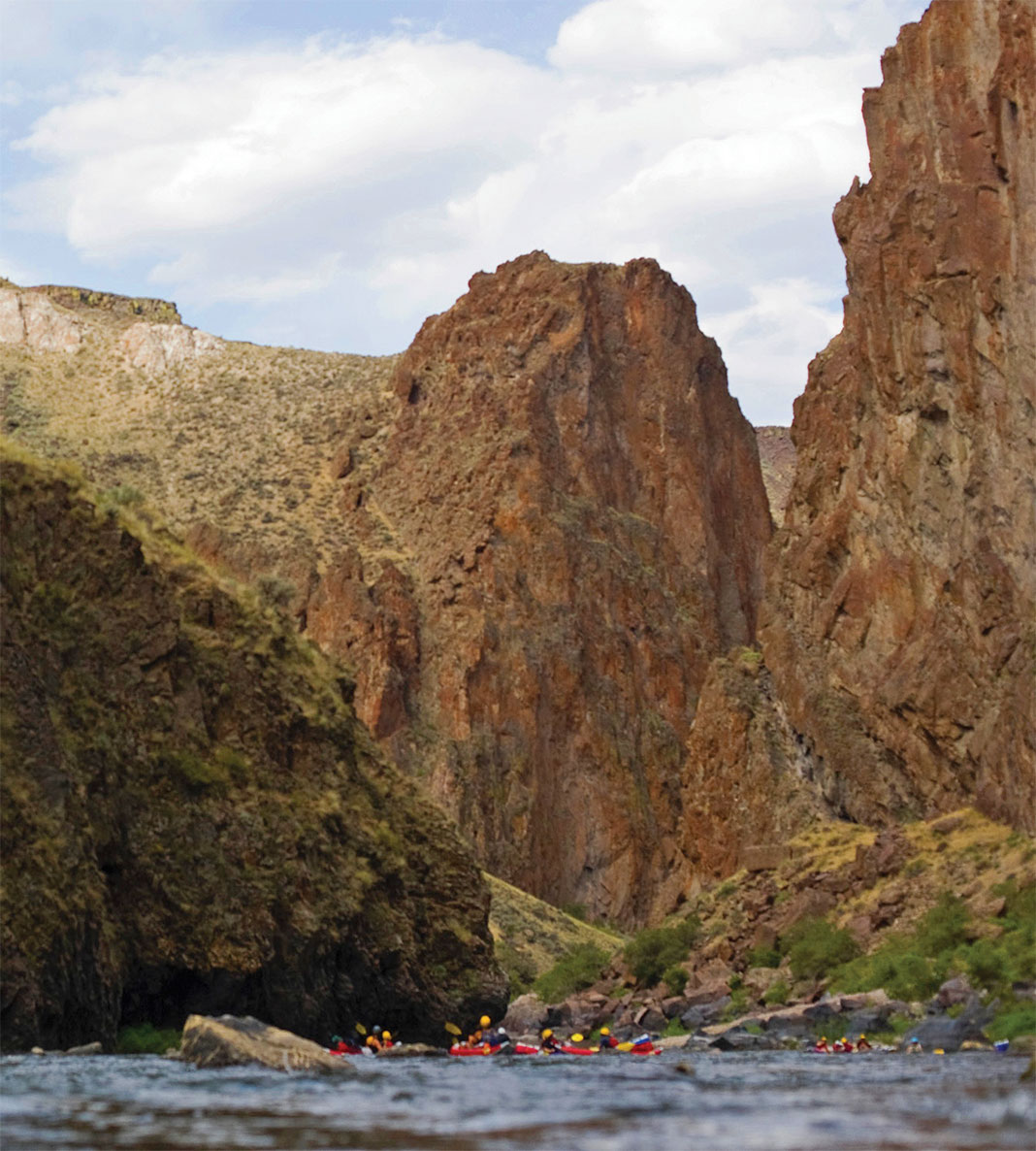
By chance, Lang’s oncologist put him in touch with seven other young adults with similar health issues and common interests. Lang was itching to get back on the water, and he petitioned his peers with an audacious plan. “It was like, ‘I have cancer, you have cancer, let’s go kayaking,’” he recalls. Lang was six months out of treatment when the group floated inflatable kayaks through the stunning canyons of Oregon’s Owyhee River. “It helped me process what I’d been through,”notes Lang. “There was no need to censor conversations. That trip helped me place my cancer experience in the context of my life.”
The Owyhee float left Lang convinced “there’s nothing as effective as a wilderness trip—in particular a river trip—to draw people together and build community.” The experience inspired Survive and Thrive, Lang’s Calgary-based non-profit that brings young cancer survivors together on the water.
Photo: Survive and Thrive
Lang and his wife, Bonnie, take part in each Survive and Thrive trip, which range from whitewater adventures to canoeing and sailing. In between adventures, the couple works tirelessly to promote their adventures to the medical community. Participants are recruited through word of mouth, with 90 percent referred by oncologists and nurses.
Matt Frank signed up for a Survive and Thrive rafting trip on the Colorado River’s Grand Canyon after treatment for brain cancer interrupted his university studies. “As survivors, we all come back from a diagnosis of cancer fundamentally changed,” says Frank, who went on to complete a nursing degree, encouraged by his experience as a patient and conversations with his tripmates on the Colorado. “Survive and Thrive opened a door for me. It helped me find direction in my new life.”
[ Paddling Trip Guide: View all paddling skills and instructional clinics ]
Lang says he wants his programs to stay small and intimate, so Survive and Thrive caters to around 50 participants annually. Meanwhile, Lang’s experience convinced him to pursue graduate studies at the University of Calgary in community health sciences, investigating the life changes cancer imposes on people. “After cancer, it’s easy to feel like you’ve missed out on a year of life,” says Lang. “On a wilderness trip, you start to realize that the things that were important to you before cancer aren’t necessarily important anymore.
“People tend to change their lives to reflect what’s important to them. For me, seeing that change is the most rewarding part.”
This article originally appeared in Rapid Spring 2016 issue.
Subscribe to Paddling Magazine and get 25 years of digital magazine archives including our legacy titles: Rapid, Adventure Kayak and Canoeroots.
The Lake Superior landscape at Jackfish inspires assistant guide, Otto Bedard, nearly a century after these same silent hills and moody waters captivated the Group of Seven. | Feature photo: James Smedley
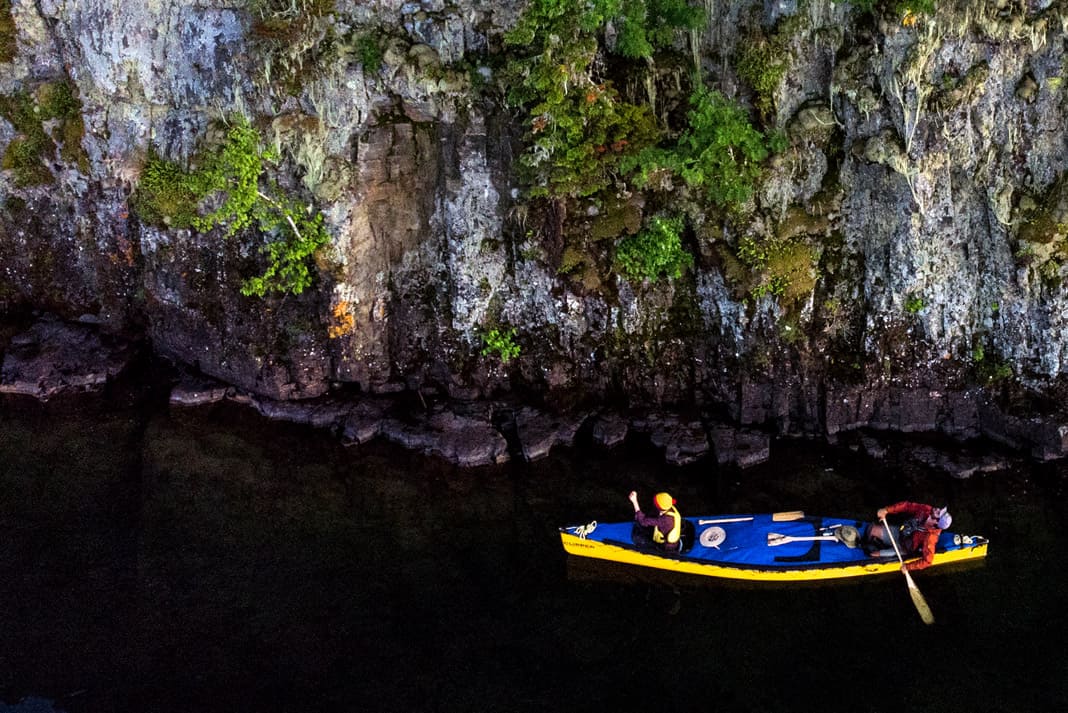
The bows of our sea kayaks part clear waters. A jumble of boulders lurks beneath, descending from the cobble beach ahead. To our left a rock face plunges into the depths, gripped by tenacious old cedars and gnarled pine, permanently bent against the prevailing wind. Behind is open water, wearing shadows cast from scattered clouds. With distance they blend with the blue sky and fade into the horizon. It feels like we’re paddling into a Group of Seven painting. And maybe we are.
The Group of Seven made eight trips to Lake Superior’s North Shore between 1921 and 1928, producing hundreds of paintings. This affiliation of pioneering and adventuresome artists are famous for the unconventional ways in which they traveled—scrambling untracked summits, portaging sketch boxes over forgotten canoe trails, boarding in railway boxcars-cum-studios— and for the way they rendered the Canadian landscape. The Group’s work during this period resulted in renowned pieces like Lawren Harris’ North Shore, and Arthur Lismer’s Sombre Isle of Pic. By capturing the wild spirit of these distinctive yet little-known landscapes, they did more than simply create art, they helped develop an appreciation for wilderness in the national psyche.
While I am contemplating the role played by the Group of Seven in charting the course of Canadian art, I have to admit that, at the moment, I’m more concerned with my growling stomach.
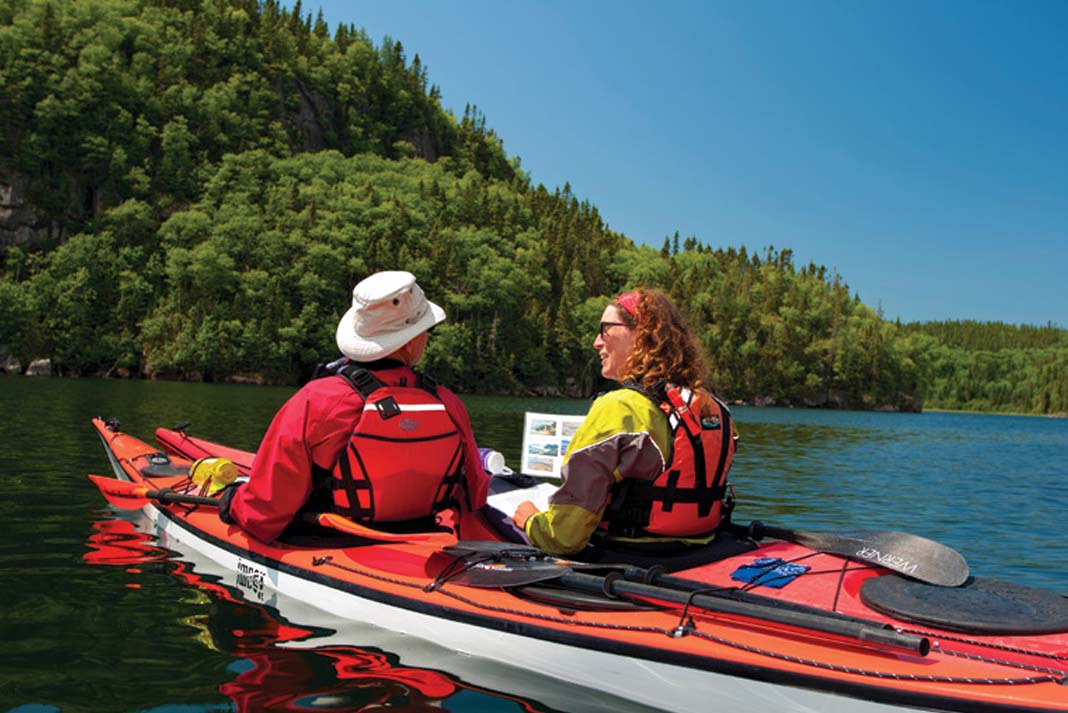
I’m traveling with Naturally Superior Adventures on a guided sea kayak trip billed as Group of Seven Landscapes. I joined our group of paddlers at the mouth of the Auguasabon River near Terrace Bay, jumping into a double kayak with Otto Bedard, assistant to lead guide, Jen Upton. Otto is in the stern seat, cheerfully doing the bulk of the paddling while I wield my camera, documenting the kayaking voyage that will take us about 140 kilometers down the coast. We’ve been working our way between the Slate Islands and the mainland coast, taking advantage of the calm and sunny weather that has been a rarity on Superior this summer. With the cobble beach in our sights, I’m sensing a lunch stop.
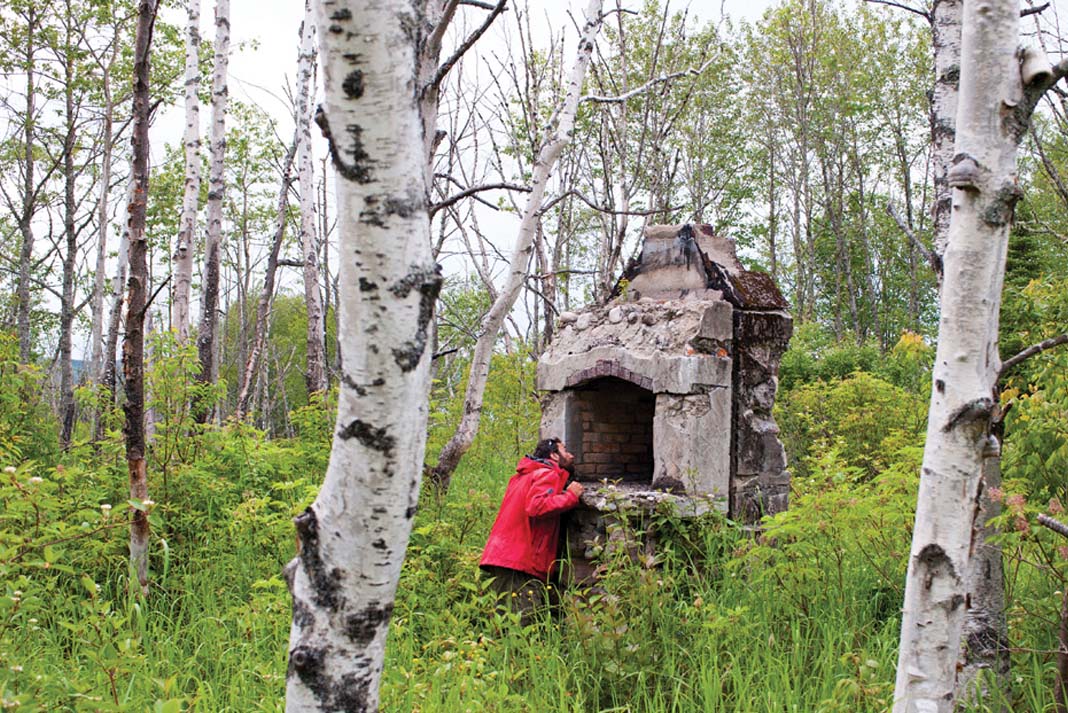
Peering into the past: A forest of second-growth birch reclaims the remains of some 30 homes that once stood at the former townsite of Jackfish. | Photo: James Smedley
A love of the land
Paddling into Group of Seven landscapes is not our primary motivation. It’s a love of skirting along Superior’s sometimes turbulent, sometimes calm, union of land and water in tiny boats that is the common denominator among our group.
Fellow guests Harald and Carol first met on a trip with Naturally Superior Adventures around Michipicoten Island in 2013, and the sixty-somethings have met annually for a Superior kayak adventure ever since. Harald is a laid-back and confident paddler who shows his respect for Superior through a traditional offering of tobacco. Carol works out regularly at the gym to maintain her remarkable paddling stamina for the express purpose of paddling the big lake. Guides Jen and Otto embrace the sun, rain, wind and fog with grace and acceptance while keeping us fed, warm and safe.
Whether we realize it or not, we share a connection with Canada’s premier landscape painters. In the words of the Group’s spokesman, Lawren Harris, “The work of the Group of Seven grew from a love of the land.”
Our trip corresponds with a resurgence of interest in the Group and their time in Algoma and the North Shore of Superior. Jen’s laminated reference materials on the artists and their works add a whole new dimension to our journey as we paddle through known painting sites like Jackfish, Port Coldwell and Pic Island.
Perhaps the most accessible vehicle of rediscovery is a new film by White Pine productions, Painted Land: In Search of the Group Of Seven. Co-producer Michael Burtch says art historians have always acknowledged the role that this landscape played in the formation of the Group.
“They looked at Algoma and the North Shore as the catalyst for their idea of North. It represented what Canadian art should be and they painted in a style that honors the primal forces of nature, rather than in some formula derived from Europe,” Burtch explains. “And it changed the course of Canadian art.”
Burtch can trace the film’s beginnings back to 1982 when he became curator of the Art Gallery of Algoma in Sault Ste. Marie and took a ride up the Algoma Central Railway (ACR) with Dennis Reid, chief curator of the Art Gallery of Ontario. The ACR tour train follows the same rails ridden by Group of Seven members and passes obvious painting sites like J.E.H. MacDonald’s Solemn Land near the Montréal River trestle and Harris’ Waterfall at Agawa Canyon. “We thought, wow, if someone could get out there and have a look around, they could start pinning these down fairly easily,” recalls Burtch.
Burtch began dabbling in identifying painting sites, a process that intensified when he became involved in the Coalition for Algoma Passenger Train’s first Group of Seven Train Event in 2007, celebrating the Group’s work along the ACR. When Burtch retired in 2008, he had time to search for less obvious painting sites, but his wife Linda pointed out that he ought to partner with someone who could keep him from getting lost in the woods. Enter adventurers Gary and Joanie McGuffin.
In addition to knowing their way around woods and waters—intimacy they share through their exquisite coffee table books on Lake Superior and Northern Ontario and pictorial paddling manuals—author and wilderness photographer Joanie and Gary McGuffin have become champions of conservation. The trio set out to find the actual Northern Ontario locations that inspired the Group Of Seven and some of their most iconic works, for what they envisioned as a book project.
“Our goal was 100 paintings and we are so far in excess of that…we have an embarrassment of riches,” says Burtch of the Algoma and North Shore painting sites, from which more than 400 paintings have been identified.
The book is still in the works but the endeavour also expanded in 2013 into a film project. After 20 days of filming over two seasons, Painted Land was released October 2015. Burtch says the most significant discovery of this whole project is that the iconic Canadian scenes painted back in the 1920s are still very much intact.
“It’s so rare to be able to go to any part of the world and see where painters were painting almost 100 years ago,” he says, “where it’s still relatively pristine.”
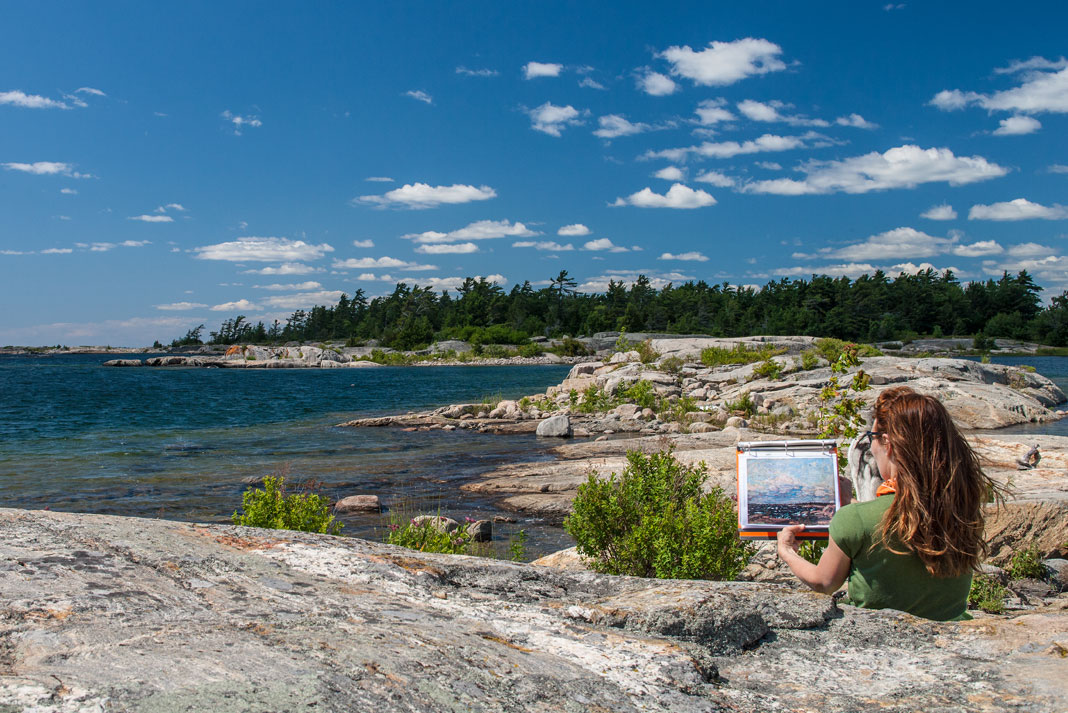
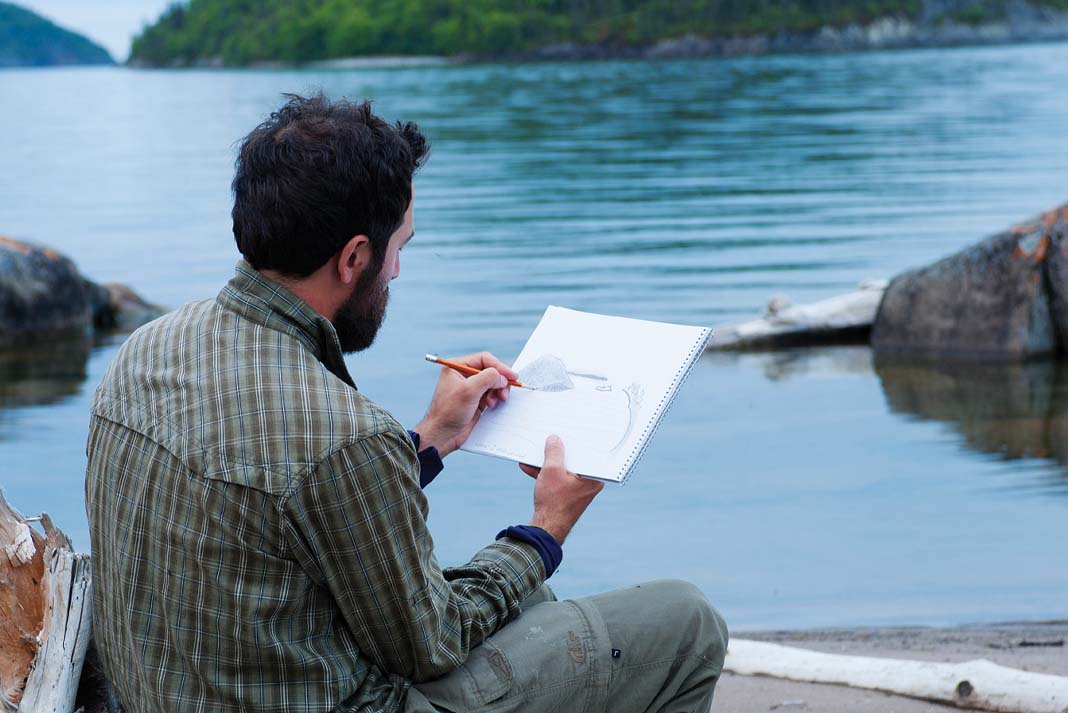
Art education on the North Shore. | Photo: James Smedley
The disappearance of Pic Island
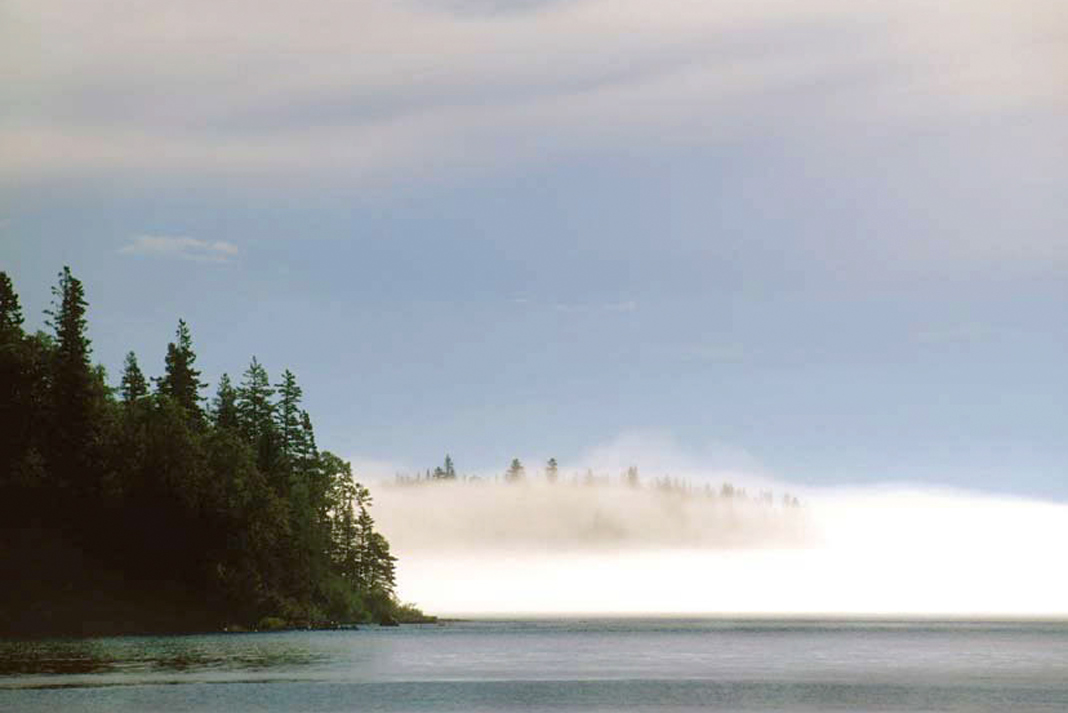
The chance to see the landscape as the artists did a century ago is not always as first imagined, especially when dealing with Lake Superior. Although sunny and warm early in our voyage, a prowling fog dogs our armada of kayaks as we hug the shoreline of the Coldwell Peninsula.
“It’s right over there,” says Jen, pointing towards an impenetrable union of water and fog. We’d seen the lofty contours of Pic Island from a distance, but now that we are within a kilometer it remains enshrouded, save for a brief moment when the fog thins high overhead to reveal the faint outline of a precipitous shoreline towering 650 feet above lake level.
Our hope was to circumnavigate the charismatic landmass that inspired iconic paintings by Harris, Lismer, A.Y. Jackson and Franklin Carmichael, but the fog and forecast for strong west winds means we’ll have to stick close to the mainland instead.
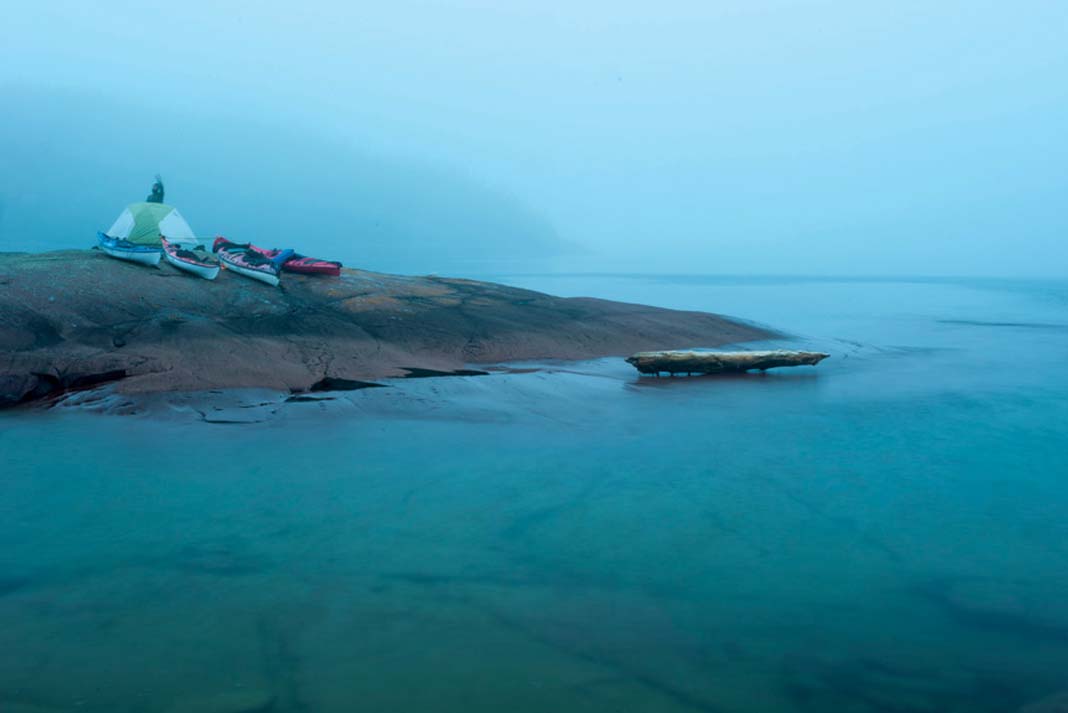
On a sand beach near Foster Island, tents are pitched and we optimistically hang wet clothing on tree branches to dry. Jen and Otto exercise their culinary skills and Carol maintains a driftwood fire. Tetra packs of wine emerge from the recesses of kayaks and the fire, food and fog deliver a comfortable weariness that only comes after a long day on the water. We’re envisioning waking up to a clear dawn and a vision of Pic, but in the morning we launch into fog and paddle on without ever seeing the Island.
When I relate this story to Gary McGuffin, he laughs. “I can show you other paintings that Lawren Harris did from the exact same vantage point as where he painted Pic Island,” says McGuffin. “But he painted all the other islands surrounding it, because he couldn’t see it.”
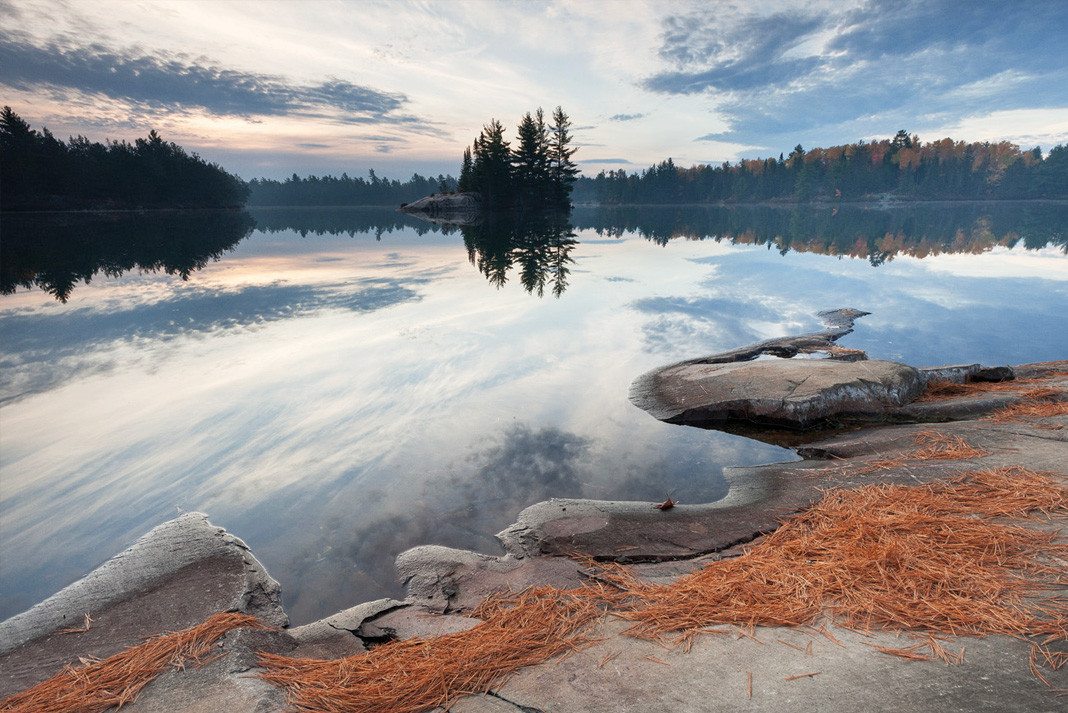
How we see the Superior coast depends on the season, the light and the abrupt and dramatic shifts in weather. This is confirmed by our experience at Pic Island and the fact that it was painted by no fewer than four members of the Group of Seven, resulting in a dozen unique renderings.
From a busy place to a lonely place
It’s not only the weather that is constantly changing on Superior. Despite its timeless quality, the coast we’re traveling was once a much busier place. As the nose of our kayaks hit the sand beach at the old town site of Jackfish, a deeply rusted bicycle frame resting on the rocky bluff above hints at an active past.
What began as an isolated fishing village in the 1870s would change abruptly in 1884 when the Canadian Pacific Railway (CPR) pierced the wilderness. A hike along the beach reveals what’s left of a coal tower where more than 300 men once worked loading coal cars bound for points along the CPR line. Just down the rails are the remains of a 30-foot-high water tower, and farther along a cluster of small houses nestles at the base of a granite bluff. Roofs are caving in and empty window frames look out across the track at a wide peninsula jutting into Lake Superior.
Otto and I continue to climb up a road and out onto a rocky bluff. Old chimneys and foundations betray the location of the main town site that included a general store, two churches, a school and about 30 homes.
The town’s fate was sealed in the 1940s when the CPR began switching from coal-fired steam engines to diesel. The last coal steamer left the dock in 1948, and by the mid-1960s the devastating effect of invasive sea lamprey on the fishery meant nets were hung up for good. While the buildings are gone, the distinctive landscape as painted by Carmichael, Jackson and others, remains.
Echoes of the past also resonate within the fiord-like confines of Port Coldwell. Like Jackfish, Coldwell began as a fishing port and serviced the CPR line in the days of coal before being abandoned with the decline of the fishery.
A.Y. Jackson, in particular, was captivated by the Coldwell Peninsula. It had “a feeling of space, dramatic lighting, the stark forms of rocky hills and dead trees,” he noted, and beyond, “Lake Superior, shining like burnished silver.”
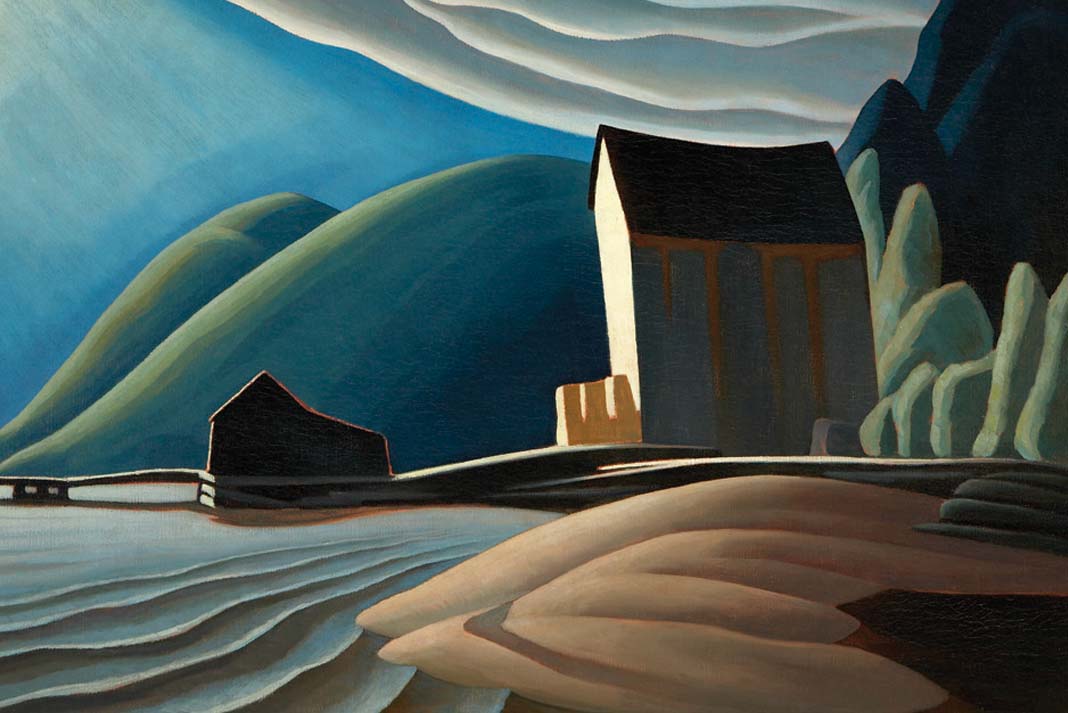
Our arrival in Coldwell coincides with the return of the sun, beaming down on the twisted remains of an ancient boiler and crane once used for loading vessels. Although the carcass of a long-retired fishing boat rests along the shoreline, there is no obvious evidence of the tall icehouse that figures so prominently in Lawren Harris’ Icehouse, Coldwell.
The story of Jackfish and Port Coldwell is the same one highlighted by Joanie McGuffin in Painted Land, “The story of the passage of time, from a busy place to a lonely place.”
Misty morning at the group’s campsite west of Marathon. | Photo: James Smedley
Conserving what we have
With Painted Land well received and the book project underway, Burtch and the McGuffins continue to discover new painting sites. Gary McGuffin sees it as a way to add value to the region and its wilderness. Their work on the Group of Seven project is part of a broader goal for Algoma and the North Shore.
“It’s a conservation message, that’s really what it’s always been for us,” he says. “In a sense we’ve used the Group of Seven to fulfill our commitment to conservation and wilderness preservation.”
The McGuffins are also working with First Nations and North Shore communities on hiking trail and water trail development. “We are blending the artistic experience of the Group of Seven with the cultural interpretation of the landscape of the Pic River First Nation who’ve been here for 12,000 years,” says Gary.
The idea is to create an economic shift that will replace industrial development like mines and mills with eco and cultural tourism. As Joanie sums it up, “To get people back out on the land.” The McGuffins envision people working in an experiential tourism industry so strong that they will turn their noses up at any industrial development that might threaten it.
“It may seem like a lofty goal,” Gary admits, “but that’s where we’re going.”
As we paddle out of Coldwell, the sun pokes holes in an encroaching cloudbank, throwing shafts of slanted light onto wave-worn granite. The mercurial nature of the big lake presents an infinite well of discovery. Add the history of its past communities and the role Superior played in articulating the voice of Canadian art, and more fathoms are added to the well. As we paddle on to our next campsite, my thoughts mirror Gary’s closing words in Painted Land, “It’s worth honoring, worth protecting, worth letting the world know what a special place this is.”
The Lake Superior landscape at Jackfish inspires assistant guide, Otto Bedard, nearly a century after these same silent hills and moody waters captivated the Group of Seven. | Feature photo: James Smedley
If you go…
When: July–August offer the best chance of fair weather and moderate winds.
Where: Launch at Rainbow Falls Provincial Park’s Rossport Campground, or at the Auguasabon River boat launch in Terrace Bay, Ontario, and paddle east to take out at the harbor in mining town, Marathon. Or continue south to Hattie Cove in Pukaskwa National Park.
Outfitter: Naturally Superior Adventures offers fully guided and catered sea kayak trips throughout the North Shore, and can also arrange shuttles.
James Smedley is an Algoma-based writer, photographer and avid paddler. Watch THE CANOE an award-winning film that tells the story of Canada’s connection to water and how paddling in Ontario is enriching the lives of those who paddle there. #PaddleON.
This article was first published in the Spring 2016 issue of Adventure Kayak Magazine. Subscribe to Paddling Magazine’s print and digital editions, or browse the archives.
The Lake Superior landscape at Jackfish inspires assistant guide, Otto Bedard, nearly a century after these same silent hills and moody waters captivated the Group of Seven. | Feature photo: James Smedley
Learn to turn your canoe easily and quickly with the cross-bow draw technique. Chad Casey at The Lodge at Pine Cove (frenchriver.com) in French River, Ontario shows off this stroke that can be used by solo paddlers or a tandem team.
EMPTY THE BOAT. FILL THE MIND.| PHOTO: MICHAEL DEYOUNG
It’s true that money can help save weight with the latest and greatest gear, but there are much less expensive ways to do more on your canoe trip with less. Everyone knows that opting for a wafer-thin canoe and dehydrating meals can shave major pounds off your camp kit. So where is a burgeoning ultra-light canoe camper to focus their efforts next? Let the famous words of Canadian bushcraft icon, Mors Kochanski, guide you to enlightenment: “The more you know, the less you carry.” Mastering campcraft skills means carrying fewer things—here’s how.
1) DO YOUR RESEARCH.
The more familiar you are with your environment, the more resources you will have at hand. If there isn’t a fire ban and you know deadfall is accessible, go stoveless (a backpacker’s stove averages 14oz, plus fuel). Familiar with the local flora and fauna? Plan to supplement your diet with berries and other wild edibles, and bring only lures that are attractive to the local fish. Forage for birchbark or old man’s beard, leaving synthetic firestarters at home.
[ Looking for some trip suggestions? Find more adventures in the Paddling Trip Guide ]
2) PLAN FOR MORE TIME EN ROUTE.
Do this so fishing and foraging to supplement your carefully planned meals is enjoyable instead of stressful. With less weight in the boat and fewer items of gear to manage, you’ll make and break camp faster and cover more distance. By stretching your explorations out over the day you’re less likely to notice the camp comforts left behind.
EMPTY THE BOAT. FILL THE MIND.| PHOTO: MICHAEL DEYOUNG
3) SKIP THE TENT.
Even lightweight and high-quality two-man tents typically weigh four pounds. Master your tarpology skills and strategy and you can continue to sleep dry in inclement weather for just over a pound in your pack. Buggy time of year? Take netting, a bivy or an enclosed hammock.
Pre-trip organize the gear you want to bring into two piles; one of equipment that serves double duty and another of single-purpose tools. Now get creative. The carabiners in your pin kit can also be used in the bear hang. A bush knife makes sparks, kindling, fillets fish and preps food. Do you need the whole mess kit, or will a single pot and utensil do? Carefully cull from your pile of single-use items.
5) SPEND MORE—OR NOT.
By purchasing only high-quality, field-tested, lightweight and multi-use clothing and equipment you’ll save ounces upfront. You’ll save money in the long run because there’s no need to replace gear and garments each season. Opt for brands that promise warranties on their products.
[ Browse the widest selection of boats and gear in the Paddling Buyer’s Guide ]
6) MAKE CHOICES.
The easiest way to cut down on pack weight is to leave things behind. If it needs batteries, do you really need it? Ditch the GPS (5oz+) and use a map and compass. The backs of maps are great for journaling. If you’re not guiding, do you really need communication devices (4oz+)? If you’re a skilled navigator sticking to your route, you will be found if anything waylays you, so long as you filed a detailed float plan. Learn how to signal for emergency help with items that don’t need batteries.
7) CHANGE YOUR MINDSET.
Don’t pack for an apocalypse—bring only gear that can assist in emergencies you’re likely to face. Accept that what you might want in the moment is different than what you need. A few days of minimalism is good for the soul.
Laurel Archer is a 25-year canoe guiding veteran and writer of guidebooks for paddlers in Saskatchewan and British Columbia.
This article originally appeared in Canoeroots Spring 2016 issue.
Subscribe to Paddling Magazine and get 25 years of digital magazine archives including our legacy titles: Rapid, Adventure Kayak and Canoeroots.
A WILD RIVER IN A
QUIET MOMENT.| PHOTO: PETER BOWERS
Although Wally Schaber is just 65, his legacy looms large enough to be considered in a column dedicated to canoe heritage. A longtime outfitter, outdoor retailer and founder of Black Feather Wilderness Adventures, he’s seen more of North America’s wild country than most of us ever will. His favorite of all places, however, is the valley of the Dumoine River, the subject of his charming new book.
The wild Rivière du Moine (Dumoine) and Deux Joachims portage have been noted for centuries in the journals of great explorers as they made their way across Canada. Today, the Dumoine is the last of 10 major Quebec fur trade routes and tributaries of the Ottawa River to avoid industry and modern colonization.
Full disclosure: Wally and I have been friends for years. Our initial encounter in the 1970s took place on a riverbank not far from the Canoeroots office, and was described by one wet-suited flibbertigibbet as a “chance meeting between two bears from the Moscow Circus.” We took that as a compliment.
On one level, Wally’s debut, The Last of the Wild Rivers, is a well-researched cultural history of the last undammed river flowing south from the high country of West Quebec. Many locals know the Dumoine as a go-to short-excursion whitewater river. Indeed, it was the canoeing potential of the Dumoine that brought Wally into the watershed for the first time in 1969. Having spent time year-round in the area for nearly half a century, the place has written itself into this paddler’s soul. The book is much more than a river biograpy, it’s a river elegy and love story between a man and a very special place.
A WILD RIVER IN A QUIET MOMENT.| PHOTO: PETER BOWERS
As powerful and personal as his story is, at its core the book is a plea for paddlers and anyone who cares about wildness in any form to recognize the rarity of the Dumoine River and what it represents. This watershed remains in more or less the same state as experienced by the entire march of human history. Set in a continental, or even global framework, the Dumoine holds values and virtues that are all but gone elsewhere—free flowing, clean, unfettered, undeveloped land and water.
Having considered all of the options, and recognizing that instruments for river and watershed protection vary from jurisdiction to jurisdiction, Wally is recommending protection in the form of Du Moine Aquatic Reserve. With threats from every possible source still looming—threats that have compromised just about every other significant watershed in the world—he knows that without substantial public support from all types of valuers of rare and wild places, other interests may well prevail in the Dumoine watershed too.
“The raw wilderness must not change,” he writes. “[To survive, humanity needs] clean water, plentiful wildlife, mature uninterrupted forests, peace and tranquility, and a beautiful, wild, free-flowing river.” Amen.
Like a splash of fresh, cold water, The Last of the Wild Rivers is a call for us to imagine the river, indeed all remaining undammed, undeveloped rivers, and their futures—to imagine them whole—and to take action on their behalf, to take action now.
James Raffan is the former executive director of the Canadian Canoe Museum. Get your copy of The Last of The Wild Rivers at burnstownpublishing.com.
This article originally appeared in Canoeroots Spring 2016 issue.
Subscribe to Paddling Magazine and get 25 years of digital magazine archives including our legacy titles: Rapid, Adventure Kayak and Canoeroots.
No artificial ingredients in this Florida state park. | Feature photo: Virginia Marshall
As I paddled up the beach I was greeted by a sign that read, “State park boundary—welcome to… the Real Florida.”
In a hyper-politicized world where some people get piqued by things as insignificant as a not-festive-enough holiday red Starbucks coffee cup, I’m surprised that a government sign would be allowed to suggest something as controversial as the idea that this natural area is somehow any more real than the heavily built-up tourist zone down the beach, especially here in this most fantastical of states.
I was in Florida for a family vacation, and after a few days in the super-artificial Disney World Magic Kingdom, we’d come to this beach to wind down and relax before jetting back north to the winter cold.
For me it was also a last chance to dip my paddle in some unfrozen water. There was a laid-back, long-haired, middle-aged dude with a Florida perma-tan at a shop on the strip who rented me a boat and delivered it to my beach house in his cargo van. I saw the state park on a map and knew that’s where I had to go—always pointing the bow towards nature, like a compass needle seeking what I’d always thought of as the real world. But this was the first time I’d seen it labeled that way on a sign.
No artificial ingredients in this Florida state park. | Feature photo: Virginia Marshall
As I paddled north from the congested commercial strip of tacky surfwear shops and coral-colored stucco high-rises, where the beach had been literally bulldozed of all signs of vegetation, I noticed the dune grasses, palm trees and mangroves growing thicker and closer to the water. The houses got lower and squatted further back from the beach. Everywhere evidence appeared, suggesting how the beach had looked for thousands of years before the recent history of human intrusion: fewer footprints and tractor tracks and more shells, more slender silver fish darting below the surface and stingrays skimming away from my shadow.
The artificial can be enjoyable for sure. At Disney World, my family stayed in the Animal Kingdom Lodge where, from our balcony, we could watch zebras, wildebeest and giraffes roaming a “savannah”—with a chain-link fence unsubtly keeping Africa in, and the forest and fauna of inland Florida out. The setting of the lodge was lovely, but it occurred to me that seeing tortoises and armadillos roaming a native forest of palms and pines outside my window would have been no less appealing (and that had we wanted to see “the Real Africa” we probably could have flown to Kenya for about the same price).
The artfully crafted world inside the Magic Kingdom was certainly an escape, right down to the steel-and-composite Swiss Family Robinson “tree.” The substrate of nature upon which this vacation paradise was built was buried under so many layers of artifice that I couldn’t even begin to guess what reality might have been left. On the other hand, the Disney experience was so much like life in the big city—complete with strictly regimented schedules, bus commutes, long lineups, crowds, stress and its own rush hours—that I’m surprised it felt like a vacation at all.
Having gone to such effort and expense to experience artificial entertainment, the slower speed and perspective of paddling reminded me how much beauty and serenity and wonder and excitement there is all around us, for free.
After Disney’s high-octane thrills, all-you-can eat buffets and high-tech entertainment, the quiet beach was surprisingly compelling. I marveled more at a tiny shriveled sea horse the size of my thumbnail than at the Day-Glo animatronic animals of Under the Sea—Journey of the Little Mermaid.
I’m pretty sure that when my six-year-old daughter sighs, “I miss Florida,” she is thinking of sitting in my lap on the sand watching a pair of osprey diving for their breakfast at sunrise, not sprinting to be the first in line for selfies with Ariel the mermaid in her grotto of painted concrete.
[ Plan your next Florida paddling trip with the Paddling Trip Guide ]
A pragmatist might argue that our so-called natural world is now so influenced by human activity—right down to the species in the ocean and the temperature of the air that has been altered by human climate change—that there is no valuable distinction to be made between what I find here on the beach and the engineered kingdom that is Disney World. It’s all artificial now.
Still, I think we need to remember and live as if there is something that came before us, a world shaped by forces much larger, the one kayaking puts us in touch with. That to me is the real Magic Kingdom. But don’t take my word for it. It says so right there on the sign.
Waterlines columnist Tim Shuff is a firefighter, freelance writer and former editor of Adventure Kayak. He doesn’t care what color cup his coffee comes in.
This article was first published in the Spring 2016 issue of Adventure Kayak Magazine. Subscribe to Paddling Magazine’s print and digital editions, or browse the archives.
No artificial ingredients in this Florida state park. | Feature photo: Virginia Marshall





 This article originally appeared in Canoeroots Spring 2016 issue.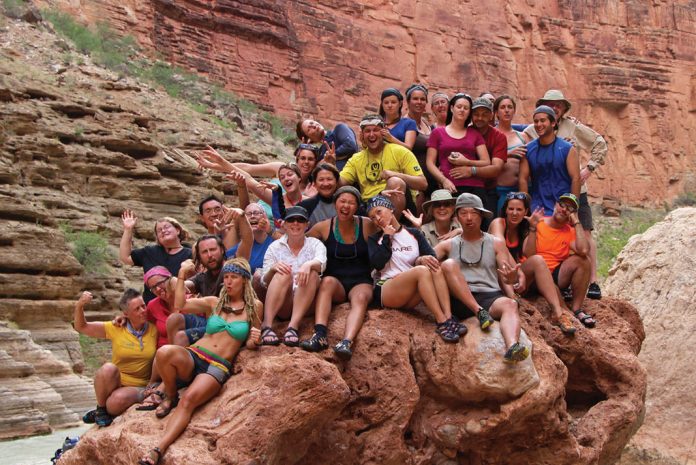
 This article originally appeared in Rapid Spring 2016 issue.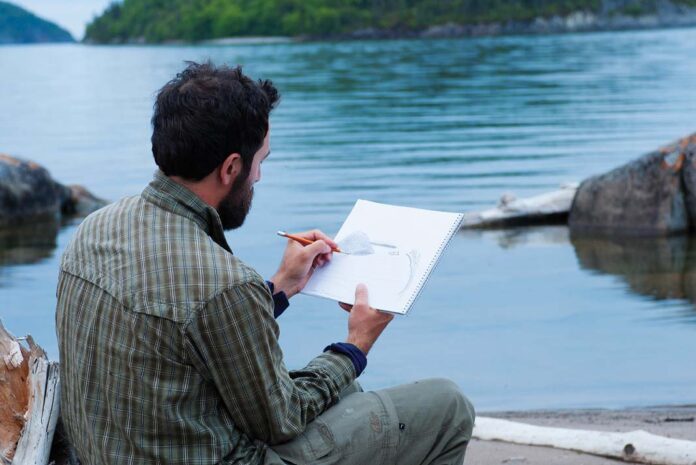
 James Smedley is an Algoma-based writer, photographer and avid paddler. Watch
  This article was first published in the Spring 2016 issue of Adventure Kayak Magazine.