Home Blog Page 281

Mapping Memories

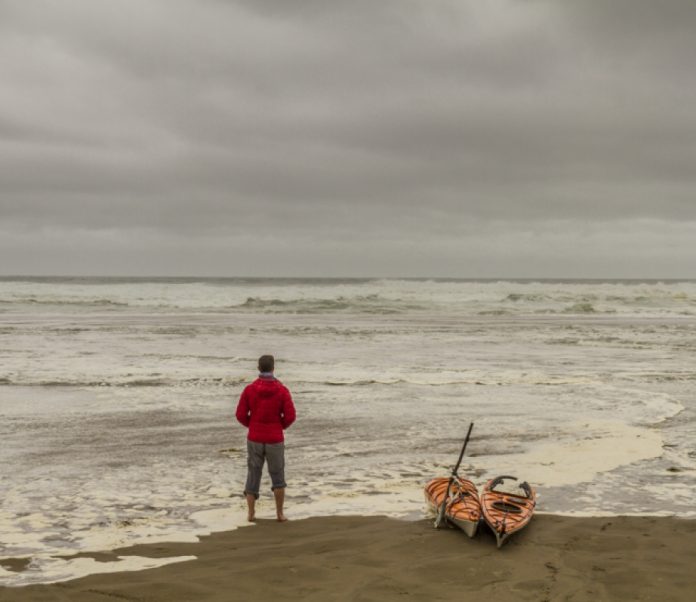
Photo: Ryan Creary
“IT IS NOT DOWN ON ANY MAP; TRUE PLACES NEVER ARE.” —Herman Melville, Moby-Dick | PHOTO: RYAN CREARY

Without a paper map to guide me, my interpretation of a wilderness area looks more like a map from the 16th century. Without satellite precision it’s rough and hypothetical, with notched portages marked Here Be Blackflies and picturesque campsites denoted by smiling suns.

The lakes, river and creeks form the skeleton of the map and land out of sight beyond hilltops fades into obscurity. It’s not quite to scale—landmarks loom larger than life, proud and prominent, and hazards are rendered with a giant’s bold hand. Thankfully, this mental map is underlaid by an accurate paper one.

I’ve always been entranced by maps. They share more than simple topography and route finding. Through the winter I paper my floor, not just to allay cabin fever, but also to wonder what’s over that next rise, beyond that next portage, always looking for rivers and lakes previously unseen. On a trip, I love to curl up around the fire and familiarize myself with what lies a mile distant in the west or five miles off in the east.

Not everyone shares this level of enthusiasm for placing their route within the context of a 50-square-mile area. Instead, some use their map only as a navigational aid to get from A to B. While I’m feeling blissfully small in an interconnected and unfurling wilderness, I sometimes wonder if my map-ambivalent counterparts are enjoying just a series of beautiful lakes and rugged trails occurring in an arbitrary order.

Set up at camp, we tell tales about past trips. A never-ending portage, a vicious storm, waking up to a bear peering into the tent—but I’m surprised when reminiscing is followed by, “Hey, where were we when that happened?”

While mapping wild land has grown sophisticated as a science, our own familiarity with wild places has become fragmented. Paradoxically, we live in a world where we can peer down from space into distant forests to trace a wilderness route, yet the true knowing of wilderness places is in short supply.

Photo: Ryan Creary
“IT IS NOT DOWN ON ANY MAP; TRUE PLACES NEVER ARE.” —Herman Melville, Moby-Dick | PHOTO: RYAN CREARY

Less common today is the intimate knowledge of place. Indigenous communities built this knowledge over the generations and it allowed them to travel over the land using stars, landmarks and oral stories as guides.

While I can’t lay claim to the gift of rooted generations, there are a handful of wilderness areas where I’ve felt a sense of place, where even with eyes closed the landscape unrolls in all directions and I could paddle and portage for days without needing reference. It’s a surreal and wonderful feeling when the map becomes drawn inside.

Whether it’s a paper map or a map of the mind, when paid attention to, the blue lines and green swatches become a treasure trove of personal history. It’s a storyteller of geography, yes, but if we listen, it’ll also recount our own stories back to us. —Kaydi Pyette


Get the full article in the digital edition of Canoeroots and Family Camping, Summer/Fall 2014.Subscribe to Paddling Magazine’s print and digital editions, or browse the archives.

Kevin Callan Ice Bucket Challenge

Photo: Courtesy Kevin Callan
Kevin Callan Ice Bucket Challenge
[iframe width=”560″ height=”315″ src=”//www.youtube.com/embed/paadDgSgTUs” frameborder=”0″ allowfullscreen ]

The Happy Camper was challenged by Chris Johnson and Alan Drummond for the ALS Ice Bucket Challenge. He took the challenge – and wish he didn’t.

How To Pack For Self-Support Kayak Trips

Photo: Flickr user Zachary Collier , licensed through Creative Commons
How To Pack For Self-Support Kayak Trips

Multi–day whitewater kayaking trips are a rewarding way to experience a new river or a remote area of your local watershed. Packing for an expedition is important for both safety and comfort. Knowing what to pack is crucial. But less commonly discussed is how to pack all your gear inside your boat.

Aniol Serrasolses has spent a lot of time on remote rivers, living out of his kayak. His packing philosophy will help you paddle confidently and camp comfortably in the backcountry.

BE ORGANIZED

Pack your kayak in your backyard, prior to arrival at the put-in. Serrasolses suggests laying all your gear out, and organizing it with weight in mind—divide the gear into a couple dry bags that each weigh approximately the same amount once packed; this will be helpful when it comes time to pack the bags into your boat.

Another option is to use multiple smaller dry bags that can be easily rearranged.

Using differently colored bags can help distinguish which items are packed where.

Specialty dry bags are tapered to fit in the bow or stern of a kayak to make the best use of your limited space.

STAY BALANCED

“Weight distribution is key when packing a boat for a multi-day,” says Serrasolses. Having a fully loaded boat changes the way it handles, tracks and sits on the water.

There are three spots in your boat to store gear: the bow, the stern and in the cockpit (on your lap or between your legs). Where you put gear will depend a lot on personal preference. Serrasolses prefers to avoid gear in the bow of the boat. “I will only put weight in the front when packing up for really long expeditions.”

A good rule of thumb is to keep weight low and centered—too much weight in the stern encourages enders and too much weight in the bow makes it hard to boof.

Serrasolses uses a simple three-bag system to stay balanced. Items he needs easy access to are stored in one dry bag between his legs. This includes camera, batteries, snack bars, safety kit and spot device. He likes having these heavy items centered on his legs to stay balanced. “The other two dry bags go in the back of my boat. One has all the food I need and the other has a sleeping bag and dry clothes.” A breakdown paddle can also be stored in the stern.

PLAN FOR SWIMS

Properly packing your gear can mean a more comfortable day on the river, but it’s also important to ensure you don’t lose crucial expedition gear. Pack essential items, like a cell phone, in a waterproof pouch.

Serrasolses recounts a swim he had on expedition in Peru. They were fortunate to find his boat and most of his equipment a few kilometers downstream, but he lost one dry bag because it wasn’t well attached to the boat. “Always safely attach the dry bags to a solid place in the boat.”

THINK ABOUT SAFETY

Safety should always be on your mind when loading your boat. Ensuring you have a quick and clear way out of your boat should never be compromised, so don’t overload the cockpit with gear. “You don’t want to have more than one bag on your legs,” Serrasolses warns. If you know you are slow getting in and out of your kayak you should avoid having any gear on or near your legs.

Always make sure your safety equipment is easily accessible.

By properly and safely packing your kayak, you can make the most of days and nights on remote rivers. After a few days of packing and unpacking, you will develop your own system. “It took me a while to figure out what works best,” says Serrasolses. “Try out a few options and see what is the best for you!”

BONUS TIP: FREESTYLE, FULLY LOADED

Known for his smooth downriver freestyle, it’s not surprising Serrasolses throws tricks while on multi-day trips. His tip for fully loaded kickflips? “Get more speed, and try to get as much air as possible so you don’t have to force the move.”


This photo was taken by Flickr user Zachary Collier and licensed through Creative Commons

Learn How To Sharpen Your Camp Knife Blades

Photo: Kaydi Pyette
Sharpen camp blades

No matter what type of knives you use for your adventures, it’s important to keep your blades well-honed. A sharp edge reduces the possibility of injury by reducing the amount of force required to cut. Less force means more accuracy.

The traditional way to sharpen a knife is to use a sharpening stone. Stones come in a variety of styles, sizes and materials, but each promises a good finish by removing minute quantities of metal from the blade.

Like sandpaper, stones also come in a variety of grits. If your blade is dull and heavily used, you may want to begin with a coarse grit stone, however, many people choose medium grit and use it exclusively.

The two most popular types of stones are whetstones and oilstones. If using a whetstone, soak it in clean water before use. If using an oilstone, spread a few drops of honing oil on it. In both cases, make sure the stone is wet at all times when in use.

Large stones should be placed on a solid surface. If sharpening a blade at home, a vice can be a handy tool to hold the stone in place, but in camp, the ground or a picnic table will be suitable. Small stones can be handheld for sharpening, but should still remain motionless—the best technique is to move your blade across the stone, not the other way around.

To find the correct angle to sharpen your blade, lay the flat side of the knife against the stone and tilt the blade until the cutting edge comes into contact with the stone. This is the angle you’ll sharpen at, also known as the bevel.

Use your free hand to gently guide the knife away from you and down the length of the stone. Imagine that you are slicing off a very thin sliver of the stone. You should hear a distinct sweeping sound.

If the knife blade is curved or if it’s longer than the stone is wide, you’ll also need to sweep the blade sideways, so the entire edge is sharpened evenly. Maintain the bevel by listening carefully to the sound—if you change the angle of the blade, the sound and resistance will change.

PROS AT THE GRINDSTONE. | PHOTO: KAYDI PYETTE

Repeat the motion 10 times on the same side. Then repeat 10 strokes on the other side. Depending on how dull your blade is, you may need to repeat this pattern several times.

A medium grit stone will leave micro-serrations in the steel that give it more edge surface and bite, perfect for performing general camp chores.

For whittling, skinning or shaving a beard, you’ll need to progress to a finer stone. Repeating the procedure with a fine stone will remove the micro-serrations left by the medium grit stone.

Finally, to polish the new edge of your blade, stroke the edge down a piece of scrap leather a dozen times.

The best way to test your handiwork is to hold up a sheet of paper and drag the knife across its edge. A sharp knife will slice the paper effortlessly. —Wolf Starchild


Get the full article in the digital edition of Canoeroots and Family Camping, Summer/Fall 2014.Subscribe to Paddling Magazine’s print and digital editions, or browse the archives.

Paddling To Help Kids Go WILD

"STOP . BREATHE . RELAX . LISTEN - The Power of Nature to Restore the Human Spirit." Photos: Courtesy Daniel Fox
"STOP . BREATHE . RELAX . LISTEN - The Power of Nature to Restore the Human Spirit."

“Knowing the importance of today’s youth in shaping the future, I am proud to announce the beginning of W.I.L.D. – Wilderness Immersion for Leadership and Discoveries,” said photographer Daniel Fox. “Its aim is to give youth, especially under-privileged teens, the opportunity to experience first-hand the positive impact nature can have on their lives. The goal is to motivate them to explore and discover the natural world and understand how experiencing the beauty and challenges inherent in nature can lead to enhancing their self-confidence and developing valuable leadership skills

Our wish is to have their testimonials and experiences reach ​ ​and positively impact other teens and their families and inspire them to Experience the W.I.L.D.

Daniel Fox body 2

For my first W.I.L.D. campaign, I will raise the necessary funds to send a small group of under privileged teens to a 30-day Sea Kayaking camp in Alaska in the summer of 2015. The wilderness immersion camp will be given by the internationally known and extremely well reputed National Outdoors Leadership School (N.O.L.S.).

Launching in the third week of August, I will paddle from Victoria on Vancouver Island to San Francisco, a journey of 1,000 miles. The 2 1/2 month paddle will be at the core of a Indiegogo campaign. Click here – INREACH tracking & FACEBOOK, to follow this amazing journey!

Find out more about how you can contribute and the wonderful rewards you can get. These teens will be changed forever, transformed and more deeply connected with the planet. Lets make this happen!

“The most rewarding part of this course was getting out of my element, and experiencing nature at its fullest.” Thomas W. Southeast Alaska NOLS Sea Kayaking Grad

STOP . BREATHE . RELAX . LISTEN – The Power of Nature to Restore the Human Spirit is the foundation of my narrative and the message behind my work.”

Daniel Fox body 1

In the Hatch: ALL-Terrain Portable Speaker

Waterproof, shockproof and ready for adventure. Photos: Courtesy ALL-Terrain
Waterproof, shockproof and ready for adventure.

The ALL-Terrain, $79.99, from FresheTech, is a Bluetooth-enabled, portable speaker that is waterproof and shockproof. It has a sturdy polycarbonate clip at the top which allows you to attach it to backpacks, PFDs, or a hook on a boat/kayak. It’s perfect for crakning out the tunes on paddles, because even if it comes loose, it will float!

All Terrain body 1

It’s about three inches tall without the clip. With the clip, it’s about 4.5. It’s also roughly 3 inches wide. Another great feature of the speaker, is with the push of a button, you can answer calls and talk on your phone through the speaker. Perfect if you don’t want to risk getting your phone dirty or wet, or just handsfree talking while paddling.

All Terrain body 2

The Canvas-Covered Mystery Of Tom Thomson’s Empty Canoe

Tom Thomson, whose death is subject of much mystery, stands in a canoe along a shore holding a fishing lure
Feature photo: Franklin Carmichael / Library and Archives Canada / E007914169

Everyone knows the two questions at the heart of the mystery surrounding famous artist Tom Thomson’s death: Who did him in and where is he buried? But there are eerie stories within those mysteries, and none so spine tingling as what became of Winifred Trainor’s old home.

Tom Thomson, whose death is subject of much mystery, stands in a canoe along a shore holding a fishing lure
Feature photo: Franklin Carmichael / Library and Archives Canada / E007914169

Tom Thomson’s canvas-covered mystery

Winnie Trainor, a Canoe Lake cottager, had been one of Tom’s many girlfriends, but one so special he was said to have arranged a honeymoon cabin at Billy Bear Lodge just before he went missing on July 8, 1917.

Thomson had often stayed with the Trainors in the nearby town of Huntsville, and the day-by-day paintings he created that spring had been left to dry in the Trainors’ cabin on the northeast shore of the Algonquin Park lake where he drowned—or more likely was murdered.

What was behind Winifred’s message?

Winnie never recovered from the shock of his death. She and her mother spent the winter and spring staying with relatives in Philadelphia, raising local suspicions that she had really gone there to give birth to Tom’s child.

She tried desperately to see the Thomson family to tell them things she felt uncomfortable putting down on paper, but they refused to see her, claiming she was unstable.

In perhaps the only thing she ever wrote of her time with Tom, she told the head of Canada’s National Gallery in 1954 that, “Tom Thomson was the man that made me happy, then vanished. If I saw you I could say things that I will never write.”

Tom Thomson painting, The Canoe, 1912, oil on canvas on wood
Tom Thomson, The Canoe, 1912, oil on canvas on wood, 17.3 x 25.3 cm, Art Gallery of Ontario, Toronto.

She lived out her life in her parents’ ramshackle wood-frame house on Huntsville’s Minerva Street. She had no running hot water and no central heating, yet kept a dozen or more Tom Thomson originals wrapped in newspaper and stuffed in a six-quart basket. She never married. Eight years after she wrote that mysterious note she died at age 77.

A mural appears on Minerva

Forty years after her death the town of Huntsville launched a beautification project, painting Tom Thomson and Group of Seven murals on the walls of several downtown buildings.

By happenstance, a mural was painted on the wall of a red brick building that stands in the same place where Winnie lived out her long and lonely years. The painting chosen was a Tom Thomson—his empty canoe.

Roy MacGregor is a columnist with The Globe and Mail and author of Northern Light: The Enduring Mystery of Tom Thomson and the Woman Who Loved Him.

Canoeroots Summer/Fall 2014 issue coverThis article originally appeared in the Summer/Fall 2014 issue of Canoeroots. Subscribe to Paddling Magazine and get 25 years of digital magazine archives including our legacy titles: Rapid, Adventure Kayak and Canoeroots.


Feature photo: Franklin Carmichael / Library and Archives Canada / E007914169


Confluence Park In Denver Colorado Gives A New Meaning To A ‘Quick And Dirty’ Session

CAUTION: DO NOT DRINK THE WATER. | PHOTO: PETER HOLCOMBE

For the urban wave hunters of Colorado, there is no such thing as an off-season.

Any time of year they can be found squeezing a session between work shifts, home life and the daily grind.

You can pick them out a mile away. They’re the only people wandering the streets of downtown Denver with wet hair, and wearing board shorts under their parkas in February. You’ll spot them changing into dress pants and blazers in the parking lot next to the South Platte River, which drains snowmelt from the Rocky Mountains and flows through the capital, heading north towards Nebraska.

Confluence Park, a 100-yard whitewater run in the core of downtown Denver, offers a dam-controlled course with decent drops and eddies for squirt practice and play boating—a prime play spot in the cold season and the perfect location for a pre-work session.

The run begins under the swooping roller coasters of the Elitch Gardens Theme Park and travels under the ornate Speer Boulevard Bridge into the park basin.

For regular Confluence kayaker and pro photographer Peter Holcombe, it’s all about the scenery. Bikers, skateboarders, runners, hula-hoopers and hand-holding couples on park benches wallpaper the unique river run.

“While you’re sitting in the eddy trying to catch your breath there’s always something to look at,” he says. “I’ve had old retired couples out on a walk start cheering for me.”

Holcombe says the park gives a new meaning to a ‘quick and dirty’ session.

“It’s never like a beautiful mountain stream,” he says. The run has been nicknamed Confluenza Park for the gutter runoff that makes it into the river—piles of dog poop from city gutters flow downstream and mountains of sudsy foam collect in the eddies. It doesn’t stop Holcombe from getting out on the water.

CAUTION: DO NOT DRINK THE WATER. | PHOTO: PETER HOLCOMBE

“It’s urban boating so that’s just how it is,” he says, joking that if anything his time at Confluence has made his immune system stronger.

Holcombe gladly puts up with the city runoff for the benefits of boating year-round. 

Just 15 miles west of Confluence, the Clear Creek White Water Park in Golden boasts the crème de la crème of the state’s whitewater offerings. But when those runs freeze in December, Confluence, however cold, remains unfrozen thanks to Denver’s city drainage. 

The park has no regular maintenance crew but volunteers recruited by Colorado Parks and Recreation organize a cleanup once a year. 

Mick Ralph calls himself the King of Confluence since he’s paddled there for 15 years. He says one time authorities were called in when a slew of kayakers were spotted “struggling” in the water on a particularly snowy day in early spring. 

“Someone must have seen us and thought we were in danger,” he says. 

An ambulance, fire truck and the police arrived on scene to find a crew of happy paddlers throwing ends in a hydraulic.


This article on introducing friends to whitewater was published in the Summer/Fall 2014 issue of Rapid magazine.This article first appeared in the Summer/Fall 2014 issue of Rapid Magazine. Subscribe to Paddling Magazine’s print and digital editions, or browse the archives.
Extreme Family Vacations

“CAN WE GO NOW? “ | PHOTO: DAVE QUINN

Forget Disney—how about llama trekking instead?

Adventure tourism isn’t just the domain of wilderness travelers and backpacking vagabonds anymore. Today’s parents are taking their children on adventurous trips all over the world in greater numbers than ever before. The children of Generation Y will be the best-traveled youngsters in history.

Whether it’s a week kayaking the coast, a month canoeing the backcountry or a season spent cycling across Patagonia, the trend is the same—today’s parents are unwilling to put their passions on hold until their kids grow up.

“The family outdoor industry is booming because the people who grew up in the ‘70s and ‘80s with the advent of backpacking, mountain biking, rock climbing and other adventure sports now have kids they want to bring along on their outdoor pursuits,” says Scott Graham, author of Extreme Kids: How To Connect With Your Children Through Today’s Extreme (and Not So Extreme) Sports. His family floated their first multi-day rafting trip when the kids were just toddlers and by age six the kids were paddling their own kayaks on multi-day trips.

The rewards are worth the extra work it takes to plan a trip that includes little ones. “Family closeness and a shared appreciation for the natural world are the benefits of family adventure travel—it’s especially important when so many electronic-gadget-addicted children and parents are losing touch,” Graham adds.

Traveling with kids brings great rewards

“Traveling with kids brings great rewards,” agrees Dan Clark, a father at the leading edge of this trend. Creators of award-winning flick Have Kids, Will Paddle, the Clark family canoed 2,000 miles to reach the Arctic Ocean in 2012. The film inspired many families to get outside on trips of their own, albeit usually shorter ones.

This summer, Clark, wife Alice, Kobi, 6, and Ava Fei, 4, are cycling 3,000 miles from southern Chile to northern Argentina, crossing windswept pampas and the jagged Andes mountain range.

“One thing I really enjoy about the pace of self-propelled travel is the opportunity to see something on the horizon, chat about it, look at it and then talk about it after,” explains Clark.

“Kids can be part of that in a canoe or on a bike, but it goes by too fast in a car. We notice so many things in our travels that we would miss in a car. We met one car-bound family in southern Chile who had yet to see a condor. Kobi heard this and was surprised because we had seen at least one every day that week.”

Along the way the Clarks have met like-minded families, including a German family who started their cycling journey in Alaska, about 17,000 road miles away. Clark hopes their family adventures help his kids develop goal setting skills, tolerance for adversity and an interest in exploring the world.

Some may consider an international journey with kids risky, “but most of those risks can be minimized with planning, a conservative approach and listening to the kids along the way,” Clark adds.

Graham agrees: “There’s growing recognition that the most dangerous thing we can do to our kids is allow them to become couch potatoes. The current generation of American children is the first ever that may have a shorter life expectancy than their parents. That’s alarming, and something a growing cadre of parents are recognizing and working to forestall by making sure their children are active.”

“There’s growing recognition that the most dangerous thing we can do to our kids is allow them to become couch potatoes.”

Author, TV personality and veteran traveler Bruce Kirkby spent this summer on a three-and-a-half month journey to Ladakh, India, with his wife Christine, and children, Bodie, 6, and Taj, 4. To get there they traveled from British Columbia by canoe, container ship, train, jeep and by foot—no planes allowed.

“For us, these trips are all about exposing our kids to the beauty and diversity of the planet,” explains Kirkby.

“Traveling is what Christine and I truly value—open-minded exploration of the world’s wildest places and cultures. It is what we live to do, so it would make no sense not to involve our kids,” he adds.

Brian McCutcheon, founder of ROAM Adventures Inc., runs adventure travel trips all over the planet, from week-long, laid-back paddling trips in the Great Bear Rainforest and Galapagos Islands, to multi-week treks in the Himalayas. He notes that kids are much more a part of the adventure travel scene than they were just a decade ago—40 percent of his return clients are families.

Family adventure travel doesn’t have to include far-off international destinations

Family adventure travel doesn’t have to include far-off international destinations or high-adrenaline activities to be beneficial. According to McCutcheon, what parents are craving are real experiences with their kids.

“People seem to be more busy than ever, so spending quality, meaningful time with their kids has never been more important,” he says. “A wilderness experience is so much more authentic than a contrived resort vacation—no matter how fancy the pool.”

Dave Quinn recently returned from a family surf trip in Nicaragua with his wife and two kids, Tumelo, 5, and Mariha, 1. They went for the sun, but savored the slow pace of beach life and cultural immersion.

“CAN WE GO NOW? “ |
PHOTO: DAVE QUINN

Generation Fly

If you are just dipping into the family adventure travel scene, a few simple tricks can make sure you cruise through your trip.

• Get buy in » Ask your kids where they want to go, what they want to see and what they want to do. Feeling like they’re a part of the decision-making process will help keep them invested in the activities on trip.

• Travel less » Transitions are tough for all of us. The less packing and unpacking, buses, planes, trains and hotels, the easier it is on many kids. Staying in one spot can also immerse your family in the local community, which adds a whole new dimension to the travel experience.

• Avoid restaurants » What used to be a romantic evening out for two can easily become a fork-flinging, tantrum-filled nightmare. Cooking for your family is cheaper than eating out, creates a normalized sense of home and minimizes the risks of food-borne illness.

• Call the doctor » Health concerns can be a major stress when traveling with kids. Visit a pediatrician for advice on recommended medications and how to stock your first aid kit. Even where there is no risk of malaria, bring a small mosquito net to avoid sleepless, itchy kids covered in bug bites.

• Kid-friendly destinations » Everyone will have more fun if you are confident that your kids are safe, happy and healthy. Do research before you go to identify red flags—big riptides, stinging jellyfish and hordes of biting sandflies are red flags for me, but each family will have their own.


Get the full article in the digital edition of Canoeroots and Family Camping, Summer/Fall 2014.Subscribe to Paddling Magazine’s print and digital editions, or browse the archives.
Canoe Review: Swift Keewaydin

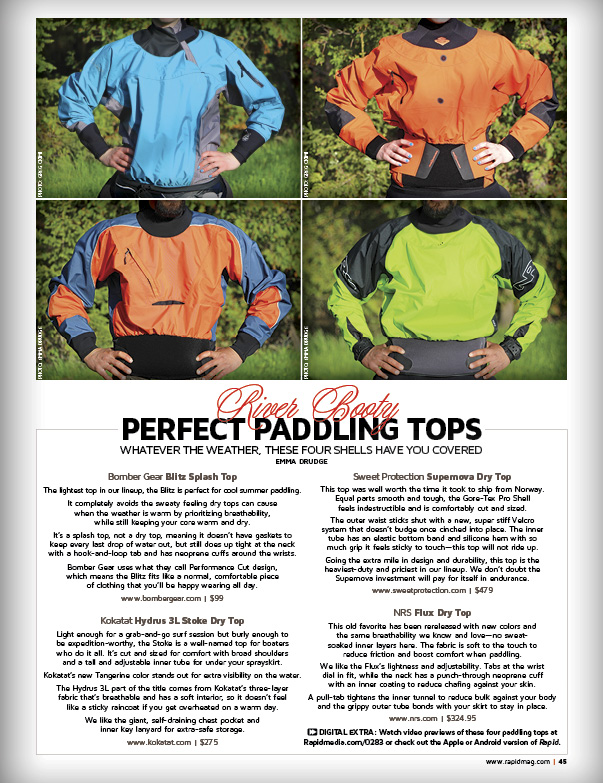
Swift Keewaydin 16 | Photo: Geoff Whitlock

Even before I paddled Swift’s Keewaydin, I heard what a lovely ride it is. Organizing a pickup date by phone, longtime Swift enthusiast-turned-employee Brian Duplante confided, “That’s my favorite canoe to paddle.” It wasn’t a hard sell, but genuine passion for the design.

Swift Keewaydin 16 Specs
Length: 16’
Material: Kevlar Fusion
Weight: 36 lbs
Width at gunwales: 32”
Optimum load: 300–575 lbs
Capacity: 950 lbs
MSRP: $3,095 base model / $3,180 with kneeling thwart
www.swiftcanoe.com

A few days later, tying down the canoe on site at Swift’s Oxtongue Lake location on the edge of Algonquin Provincial Park, owner Bill Swift Jr. added wistfully, “It’s a honey of a canoe.”

Complete in Swift’s two-tone white and silver Barracuda finish, I couldn’t help but agree—the Keewaydin is a thing of beauty. At 16 feet and just 36 pounds with dynamic lines, the Keewaydin looks as energetic as the north wind it takes its name from. I couldn’t wait to get it on the water.

First, however, I peeked into what was formerly Swift’s manufacturing facility, now their repair shop. Just big enough to work on a few canoes at a time, the simple space highlights the humble beginnings of this family-owned business.

Now surrounded by a rental fleet a thousand Swift boats strong, the buildings erected by Bill Swift Sr. in 1961—the original Algonquin Outfitters location—look like they haven’t changed much. In 1984, boat manufacturing began onsite to meet AO’s rental demands. Back then it was a franchise, making Sawyer designs.

By 1989, the Swift family was looking to branch out. To design lighter and more efficient canoes for their own operation they called in prolific designer John Winters, who dreamed up the Kipawa model and the Swift brand was born.

In the 20,000-square-foot South River factory where Swift now manufactures, they make 29 canoe, kayak and pack boat models and take pride in melding traditional design with high tech processes.

Unique to Swift canoes is its Carbon Kevlar Trim (CKT), where gunwales and hull are fused together as a single piece, adding stiffness and structural integrity, as well as a pretty finish.

“By volume, canoe gunwales are the heaviest part of the canoe. By using CKT we can reduce the weight by four to six pounds,” explains Swift Jr.

Released in 2012 and designed by David Yost, the Keewaydin 16 is now Swift’s most popular retail model. Swift Jr. attributes this to its versatility—great for daytrips as well as lightweight tripping.

On the water, the keyword for the Keewaydin is efficiency. The Keewaydin cuts through the water and chop rolls underneath the hull with little effect.

Swift Keewaydin 16 | Photo: Geoff Whitlock

Its asymmetrical hull tracks nicely in open water, yet our bow paddler was able to pull the boat around tight corners, ideal in winding and twisting streams. Swift Jr. says this is thanks to its differential rocker—two inches in the bow and half that in the stern.

On an evening solo paddle on Lake Ontario, I found it responsive and more manageable than many other boats of its length in wind and waves.

A kneeling thwart and significant tumblehome allows for comfortable cruising, without needing to reach out far over the gunwales.

Thanks to Swift’s distinctive curved and angled cherry seats, “You should feel as comfortable a few hours into the paddle as you did when you first got in,” says Swift Jr. The bow’s sliding seat also allows for on-the-fly trim adjustments.

While the Kevlar Fusion lay-up we borrowed offers the highest strength-to-weight ratio of Swift’s materials, the Keewaydin comes in a variety of lay-ups, ranging from 33 pounds in Carbon Fusion to 58 pounds in Gold Fusion with aluminum trim. Swift also manufactures 14- and 15-foot solo versions, as well as the Keewaydin 17, which Swift Jr. confesses is his personal favorite.


Get the full article in the digital edition of Canoeroots and Family Camping, Summer/Fall 2014.Subscribe to Paddling Magazine’s print and digital editions, or browse the archives.