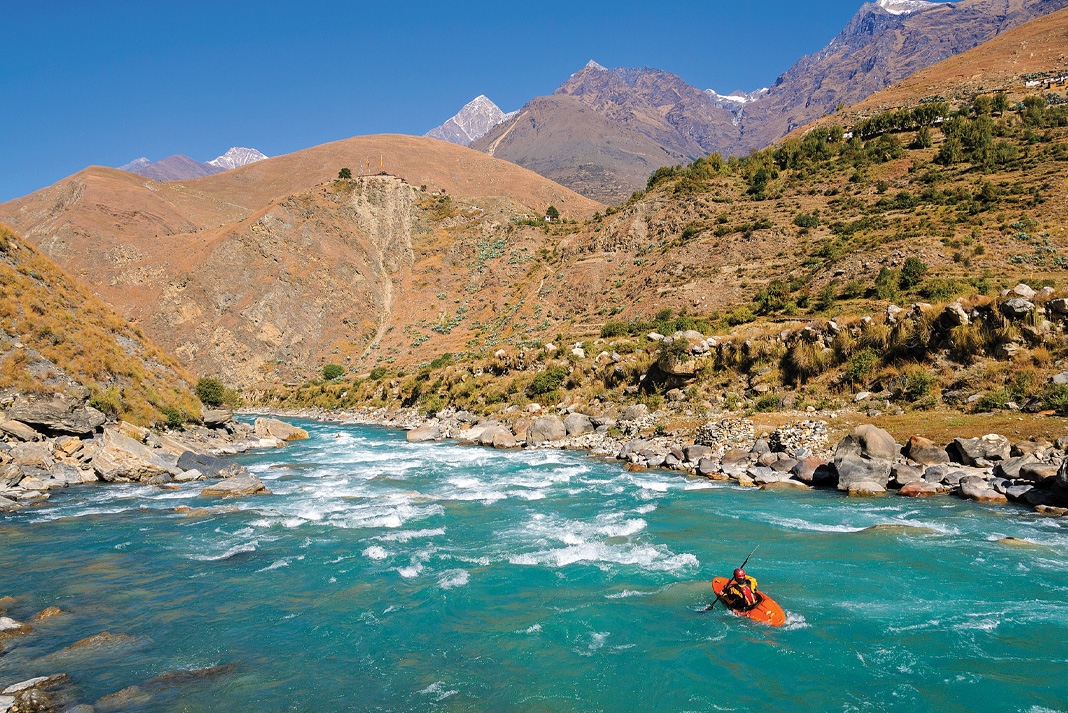
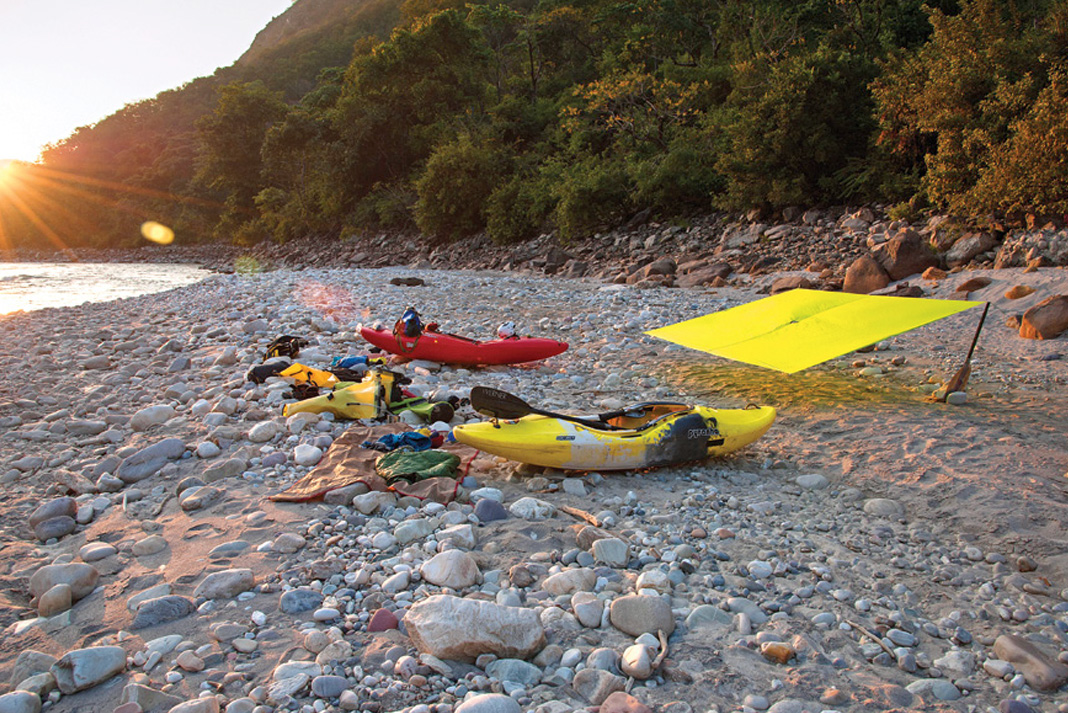
I was chanting the serenity prayer before I’d even gotten off the train.
“Grant me the serenity to accept the things I cannot change, The courage to change the things I can, And wisdom to know the difference.”
I’d left my New Hampshire home behind and was headed north to paddle 250 miles of the Moisie River. Solo.
As the train approached my stop—a debris-filled dirt lot beside a pothole-ridden, one-and-one-half lane dirt road—the conductor explained that the road was engulfed by forest fire and I could not disembark.
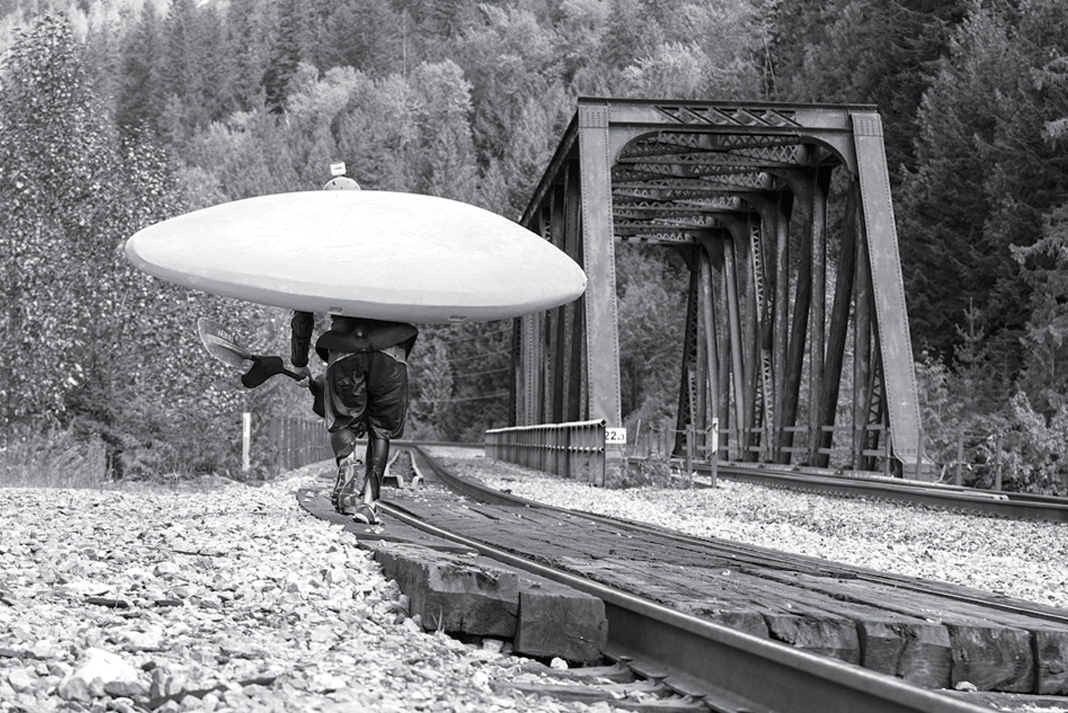
Learning from an elderly passenger that I could access an easily navigable tributary and cut my expedition down to a four-day paddle back to my car, I hopped off the train and settled into a six-by-12-foot shack next to the all-but-abandoned tracks.
To get to the river the next morning, I trekked through a hellacious forest packed with downed conifers and foot-entrapping marshland with rapacious mosquitos easily infiltrating my head net.
As I approached, the horizon line that came into focus caused a sinking feeling of fuck-my-life.
The 100-foot cascading waterfall landed on rocks before descending into a continuous section of gorged-in whitewater. There was no way I could paddle out from here.
It took three hours to trudge back to the shack.
Since the next train wouldn’t pass for days, I turned to my satellite communicator—this was still a situation I could control. A quick message would tell my mother and two kayaking friends I was in need of non-urgent help to get out.
“ERROR,” was the device’s only response, until six hours later when I heard an unmistakable sound.
Shooting up over the horizon, the helicopter hovered over my head before landing softly by the tracks.
Shit.
My message had sent, and while my buddies were working on a plan, my mom had called the police.
The pilot explained that I already owed a substantial fee and, though he wouldn’t elaborate on the amount, if I got on the helicopter the price would go up. And he couldn’t carry my boat.
Declining the ride, I begged him to ensure the next train would stop for me.
PRAYER #3946, #3947. | PHOTO: DAVE BEST
UTTERLY POWERLESS
For three days I rotated between chanting the serenity prayer and cursing the mountains, skies and blackflies.
Had my text cost me $10,000 or $50,000? The realization that I was utterly powerless did little to quell my rage.
On the day the train would come, I prepared for its 4 p.m. arrival, awaiting the steel stallion that would save me from myself.
I paced the tracks—100 yards south of my gear, then 100 yards north, back to check the time, then another lap. Then another and another. As the sun set after 8 p.m., I threw my head back and screamed.
Grant me the serenity to accept the things I cannot change.
Returning to my shack, I started reading my only book, Paulo Coelho’s The Alchemist, for the third time.
Then I saw the light. About a mile up the rails and heading towards me.
Scrambling onto the tracks, I flashed my dying headlamp and yelled to the conductor as if he’d hear me. Screeching, it slowed and a cargo door opened.
Perpetually failing, stranded, in debt and scaring my friends and family, I had been forced to accept my reality and adjust my mind to each change in circumstance. Tensing up and fighting a situation only makes it worse. Through the uncertainty, monotony and solitude, the same lessons I’d learned many years prior as a beginner paddler had been tested outside my boat.
In the year since his Moisie misadventure, Nathan Warren has mastered the art of serenity under stress. Now he’s just trying to hold on to it for more than five seconds. He was billed $2,000 for the visit.
This article first appeared in the Summer/Fall 2014 issue of Rapid Magazine. Subscribe to Paddling Magazine’s print and digital editions, or browse the archives.
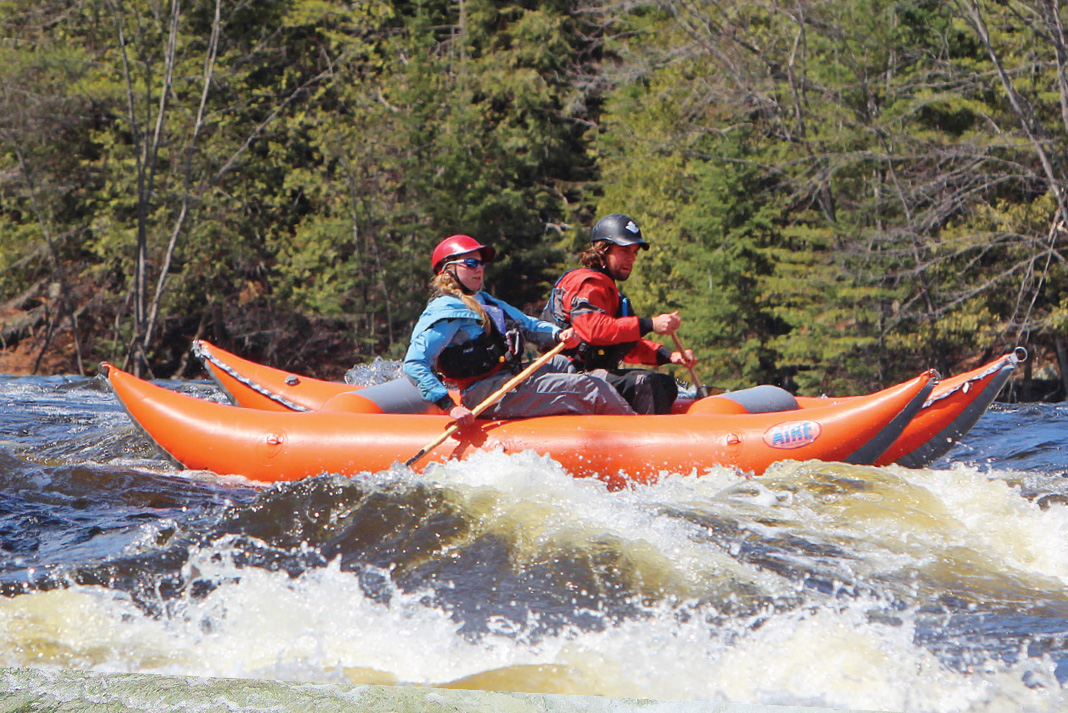
The Sabertooth 12 is AIRE’s new inflatable frameless go-anywhere river animal. We’d never have guessed that a raft 12.5 feet long and five and a half feet wide, with 20.5-inch diameter tubes could arrive in a FedEx box not much bigger than a tailgate cooler.
Rolled out by the river we went to work blowing the four chambers—two on each side. The welded-in cross tubes fill with the side compartments as we watch the Sabertooth take shape. AIRE’s two-layer AIREcell system boosts durability by protecting the inner air chambers with an outer orange or white PVC fabric.
The Sabertooth floor comes pre-laced and is raised above the waterline. It drains instantly, doesn’t stretch and won’t catch in the water to slow you down. At one end of the floor there are foot cups serving as a firm anchor point.
The Sabertooth can be ordered with or without a removable thwart that’s positioned using a simple pin and clip system—no lacing or finicky cam straps. For $250 extra it offers more options for seating, paddling and packing.
Everyone in the Rapid office has has different rivers in mind for the Sabertooth. Our publisher, Scott MacGregor, has had it pegged as the perfect mid-summer float tripper. Others are talking creeky big water runs like the Upper Petawawa (“Finding Flow,” Rapid, Summer 2002).
“We designed it for the people really wanting to get after it in whitewater,” says Sheena Coles, marketing manager at AIRE. “It’ll go big. Class IV and V for the experienced paddlers. It’s meant for big water but it’s also great for families.”
The Sabertooth has a 7.75- foot waterline that responds to every stroke. As soon as we launched from shore, we noticed this raft’s speed and agility.
The tubes have continuous curve, meaning their round bottoms have little surface area, which increases the hull speed by minimizing drag. Compared to a traditional raft, the Sabertooth feels like it moves over the water, instead of pushing through it, which also means less scraping on shallow river bottoms and slides.
AIRE Sabertooth Raft Review | PHOTO: KAYDI PYETTE
Sitting side by side, we each jammed a river shoe into the foot cups. This allowed me to push myself back towards the center thwart into a solid paddling position, far enough out on the tube to take aggressive strokes but wedged-in enough to feel stable and confident.
After a few minutes of forward paddling above our first set, we balanced our strokes and found our rhythm. The Sabertooth made short work of our early spring runs, pouncing over holes and leaping from eddy to eddy.
We were on the river during a guiding company’s staff training. When we were inflating the Sabertooth, a few older guides wandered over; they said it looked sort of like an old Shredder. Some of the younger guides were snickering, but only until they gave it a go. The Sabertooth is serious fun.
At just 80 pounds, the Sabertooth is an easy carry. Between the tubes at the bow and stern, two D-ring handles are perfectly spaced and comfortably shaped to grab and go for run after run, or for the long walk out of the Gauley.
We don’t do a lot of rafting here at the Rapid office and we don’t get to keep every boat we review, but we’re not going to let the FedEx driver anywhere near this one. EMMA DRUDGE
This article first appeared in the Early Summer 2014 issue of Rapid Magazine. Subscribe to Paddling Magazine’s print and digital editions, or browse the archives.
Andrew Westwood looks at the 3 Golden Rules of Canoeing, which are a set of rules that define how to make all your canoeing strokes as effective and efficient as possible.
Time may change me; But I can’t trace time. —David Bowie | Feature photo: Rick Matthews
Building a river used to be a simple process. All it took to create the world’s best whitewater freestyle river was the weight of a slowly receding glacier compressing the Ottawa Valley to below sea level.
When the ice sheet slowly left town the area filled with seawater. As the land eventually bounced back the salt water accumulated in the oceans where it belongs. Fresh water began falling through the deepest of the remaining ditches, forming the Ottawa River and its tributaries we paddle today. There was nobody proposing these changes and nobody fighting to preserve the ice age as it was.
Rivers of change: Roger Parsons and the Minden Wildwater Preserve
About 175 million years later in May of 1977, Roger Parsons discovered a for sale sign on the land alongside the unpaddleable upper rapids of the Gull River. Money was raised, wheels where greased and permits obtained. A large bulldozer and giant backhoe descended into the river.
“Major renovations were made to the stream bed to make it like an alpine river and allow it to be navigable throughout its length,” wrote Parsons. They created a levee, eddies, chutes and pools.
Time may change me; But I can’t trace time. —David Bowie | Feature photo: Rick Matthews
Above all, Roger Parsons created a level of trust with the various levels of government, convincing them that his dream of a whitewater training base would provide tourism and local economic benefits.
Reeve Sinc Nesbitt officially opened the Minden Wildwater Preserve on September 13, 1980. I was only nine years old.
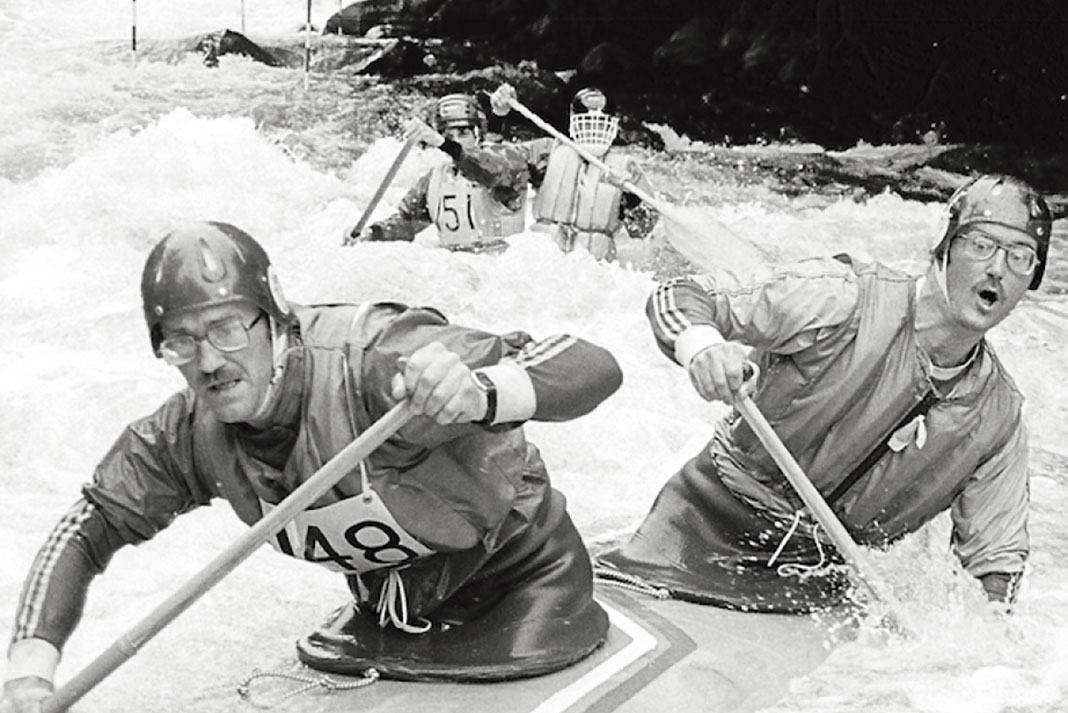
Thousands of adults and camp kids have learned to paddle whitewater at the Gull. In addition, the Preserve has hosted the Pan American Championships, three World Cups, dozens of national slalom championships, two national freestyle championships, hundreds of regional slalom races, 34 Gull River Open Canoe Slalom races and one ACA National Open Canoe Slalom race. When Toronto won the bid to host the 2015 Pan Am Games the Gull River was the obvious venue.
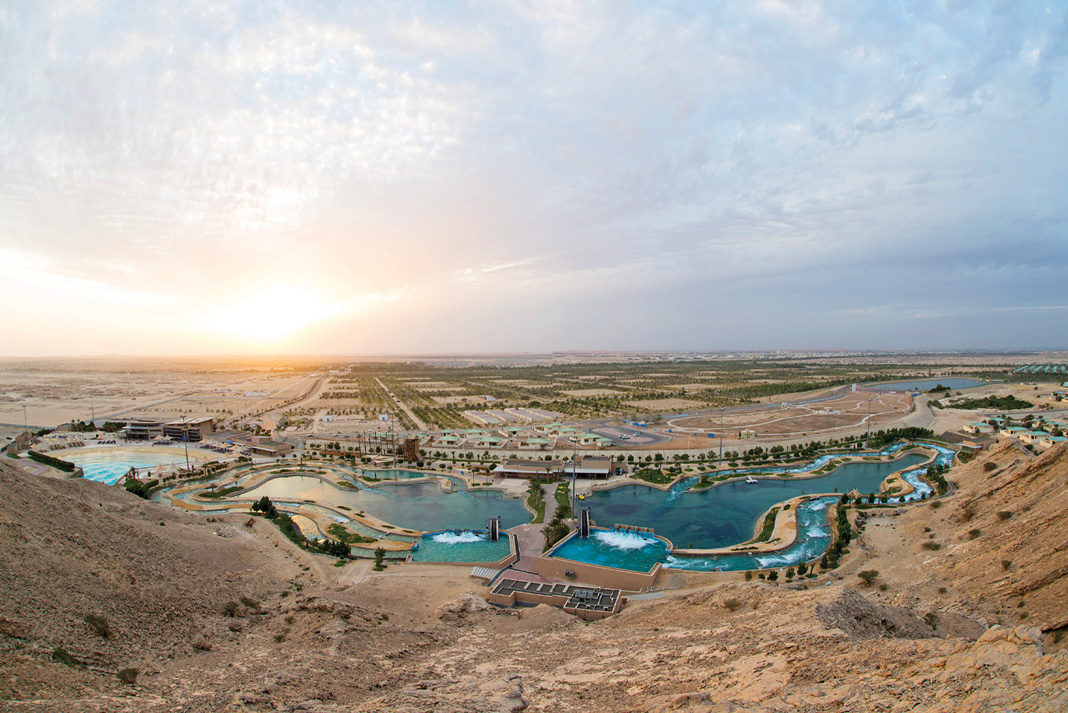
The last World Cup slalom event at the Gull was in 1993. Compared to the ASCI whitewater center and Wadi Adventure the Gull River feels quaint, wild and natural. Many of us who regularly paddle the Gull like it that way. Others dream of a better racecourse and a better training facility and the Pan Am Games is their goose that laid the golden egg.
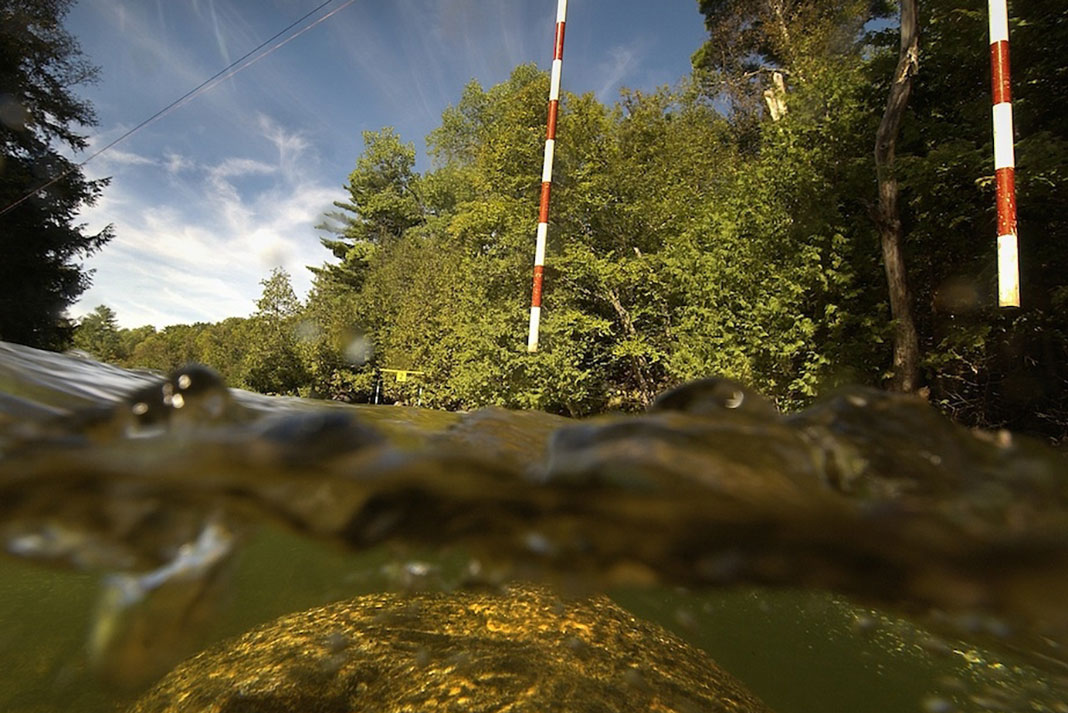
When the local municipality and Pan Am committee proposed walkways, improved channeling and permanent slalom gate structures my kneejerk reaction was to resist change.
I’m young and naive enough to have believed that it’s always been this way.
Until I read the book Building a River…Following a Dream: The Roger Parsons Story I had no idea how dramatically the Gull River was changed from its truly natural state. I’m young and naive enough to have believed that it’s always been the way I’ve always known it to be. Reading the story, I learned how a river changes over time, sometimes naturally and sometimes with a little help from a couple guys in Caterpillars.
The thousands who learn to paddle at the Gull after the Pan Am Games won’t remember the river any other way. They will only remember learning, training, racing and playing. They will remember snuggling into the riverside campground Roger and his friends carved out of the woods for us. They will remember falling asleep to the sound of water falling from higher ground, just like it has for millions of years.
[ Paddling Buyer’s Guide: View all freestyle kayaks ]
Scott MacGregor is the founder and publisher of Rapid. In 2008, the Preserve’s training center building was renamed the Roger Parsons Centre. Parsons was presented with his own set of keys.
This article was first published in the Early Summer 2014 issue of Rapid Magazine. Subscribe to Paddling Magazine’s print and digital editions, or browse the archives.
Time may change me; But I can’t trace time. —David Bowie | Feature photo: Rick Matthews
This article was first published in the Spring 2008 issue of Canoeroots magazine—get it at the links below.
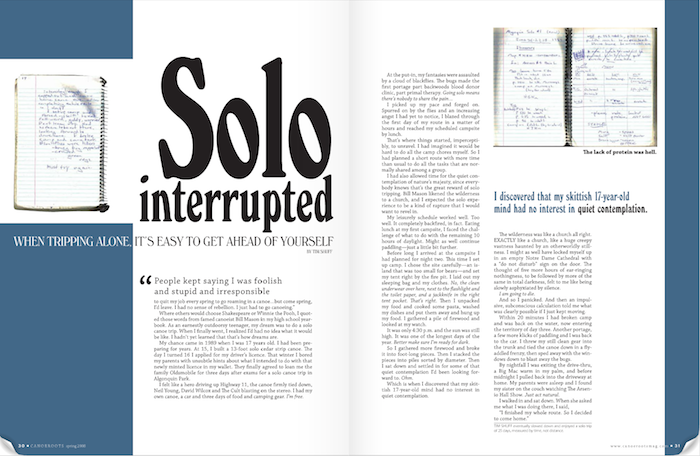
“… The wilderness was like a church alright. EXACTLY like a church, like a huge creepy vastness haunted by an otherworldly stillness. I might as well have locked myself up in an empty Notre Dame Cathedral with a “do not disturb” sign on the door. The thought of five more hours of ear-ringing nothingness, to be followed by more of the same in total darkness, felt to me like being slowly asphyxiated by silence.
I am going to die.
And so I panicked…”
Get the full article in the digital edition of Canoeroots and Family Camping, Spring 2008, on our free iPad/iPhone/iPod Touch App or Android App or read it on your desktop here.
These days there are hundreds of life jackets to choose from. They’re extensively tested to earn Coast Guard approval and designed to be perfectly comfortable, whatever your water sport.
It wasn’t always this way.
I started boating in the mid-70s when a coworker invited me on a day float on Idaho’s North Fork of the Clearwater River. I was hooked from that first trip and had my own raft by the following year. Even the best life jackets of that era were crappy—ill fitting, flimsy or bulky. And not much of a swimmer.
After seeing a horse collar vest rip off a friend getting maytagged in a hydraulic and a big “Mae West” jacket come untied, I went looking for alternatives. My criteria: a secure fit, durability and lots of flotation. I looked in local stores but didn’t find it.
Boating magazines of the day carried ads for Wildwater Designs, a company owned by Charlie Walbridge. Charlie is a whitewater safety expert, coauthor of the pioneering Whitewater Rescue Manual and one of the original inductees in the Whitewater Hall of Fame.
One of the products he carried was the Hi-Float Life Vest Kit. That’s right, I said kit—a sew-it-yourself life jacket package.
I ordered my kit by mail in early 1980 for $24.50. I still have the receipt. It contained precut panels of burly nylon fabric, strips of soft buoyant foam, a heavy-duty zipper, nylon thread and complete instructions containing this troubling note:
Some people have complained that these life vests trap water. If yours does you can allow for drainage in this way. Get a nail, a candle, and a pair of pliers. Light the candle, grasp the nail with the pliers, and heat it until it is quite hot. Use the nail to punch holes in the bottom of each foam compartment. The heat will seal the edges of the hole.
I didn’t know how to run a sewing machine, but wanted to put it together myself. My wife, an excellent seamstress, coached me through the process. The result was a tough, snug-fitting, high-flotation jacket. The pounds of buoyancy it advertised were well up in the twenties. You could fold up the portion below the waist tie to make it more compact, or wear it down full length. At some point, I added a between-the-legs strap to make it even more secure.
That jacket saved my bacon many times, down hundreds of river miles, including all of Idaho’s crown jewel rivers and on far-away floats like the Grand Canyon. I had some classic swims but it always bobbed me to the surface.
I wore my Hi-Float for almost 20 years, until the zipper finally failed.
When I saw Charlie at a swiftwater rescue clinic in 2004, I brought out the old jacket to show him and he thought I was trying to get it warranted!
Charlie eventually sold the design to Extrasport, whose current Swiftwater Ranger Rescue Jacket is a child of the Hi-Float.
It could get hot, it wasn’t adjustable and it didn’t carry any certification, but I made it myself, it was custom-sized, I trusted it with my life.
Clyde Nicely’s chief passion is multi-day rafting. He strings words together for a living as the e-News editor at NRS.
This article was first published in Issue 16, Volume 2 of Rapid Magazine. Subscribe to Paddling Magazine’s print and digital editions, or browse the archives.
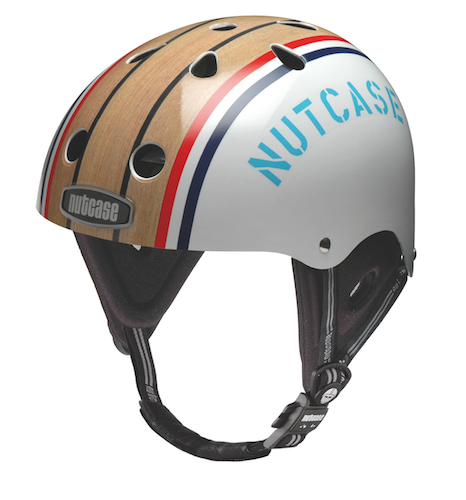
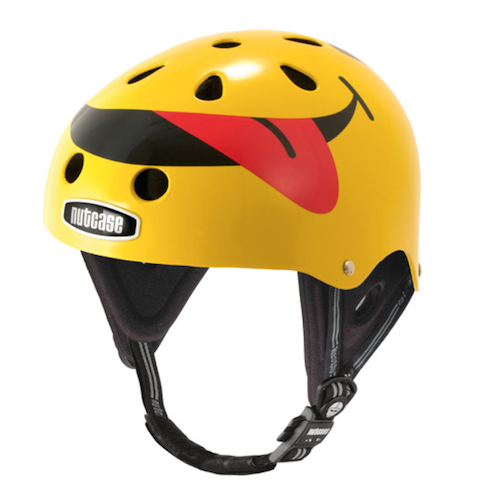
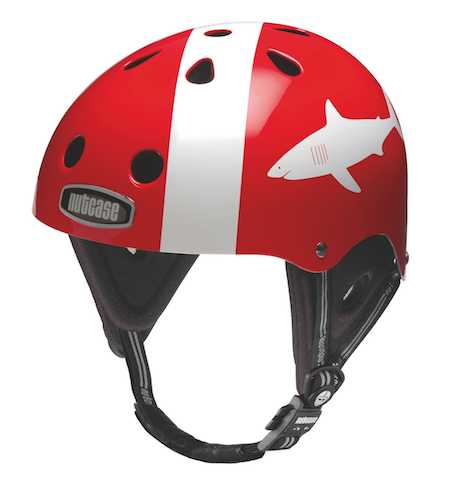
Stay cool and safe in the summer heat with Nutcase water helmets. “Whether paddling on a clear open lake or down a rocky river, trust Nutcase to protect your nugget while making a statement with fun designs, patterns and colors.”
All water helmets comply with the CE EN-1385 Water Sport Safety Standard for water sports. All helmets come with removable neoprene ear pads, 360 degree reflectivity and the revolutionary magnetic buckle, allowing you one-handed operation and NO PINCHING!
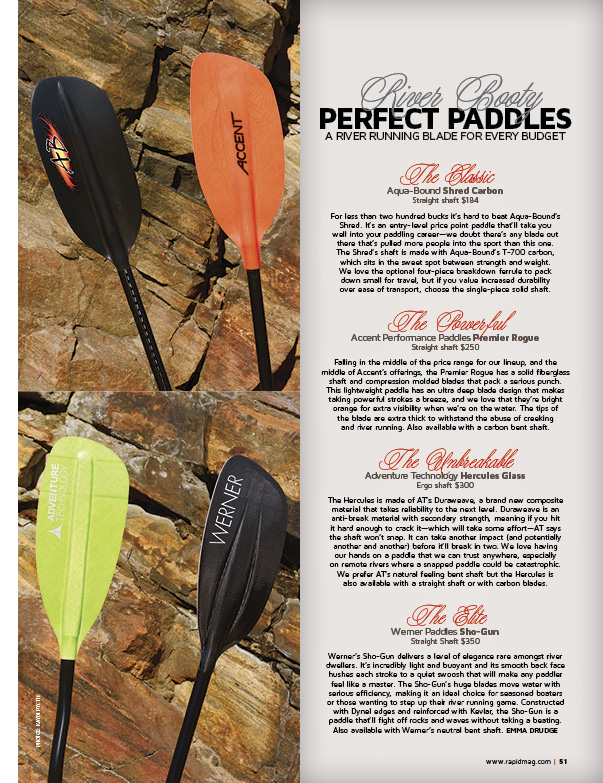
Falling in the middle of the price range for our lineup, and the middle of Accent’s offerings, the Premier Rogue has a solid fiberglass shaft and compression molded blades that pack a serious punch. This lightweight paddle has an ultra deep blade design that makes taking powerful strokes a breeze and we love that they’re bright orange for extra visibility when we’re on the water. The tips of the blade are extra thick to withstand the abuse of creeking and river running.
Click here to find a river running blade for every budget in the free online edition of Rapid, Early Summer 2014 or download our free app for Apple or Android.
You don’t need be a class V hero to bucket list this Himalayan heaven—explore the continuous class IV canyons of Nepal’s Dolpa District.
“Where in God’s name is the river?”
“I’m pretty sure it’s just over there,” Ric spit, pointing aimlessly down the valley in response to Steve’s question. Their exchange was flavoured with a hint of the tension we were all feeling.
“Just get organized. Simon and I’ll go and find some porters,” I tried to assure the boys.
We mimed the profession to an elderly village woman, asking where we could hire someone to carry our gear. Quickly understanding us, she pointed to the hills. November is harvest season in the Dolpa region of Nepal, we learned. Any would-be porters were busy gathering food for their families for the upcoming winter, but the thought of shouldering our beastly boats, laden with camping gear and food for seven days, kept us searching.
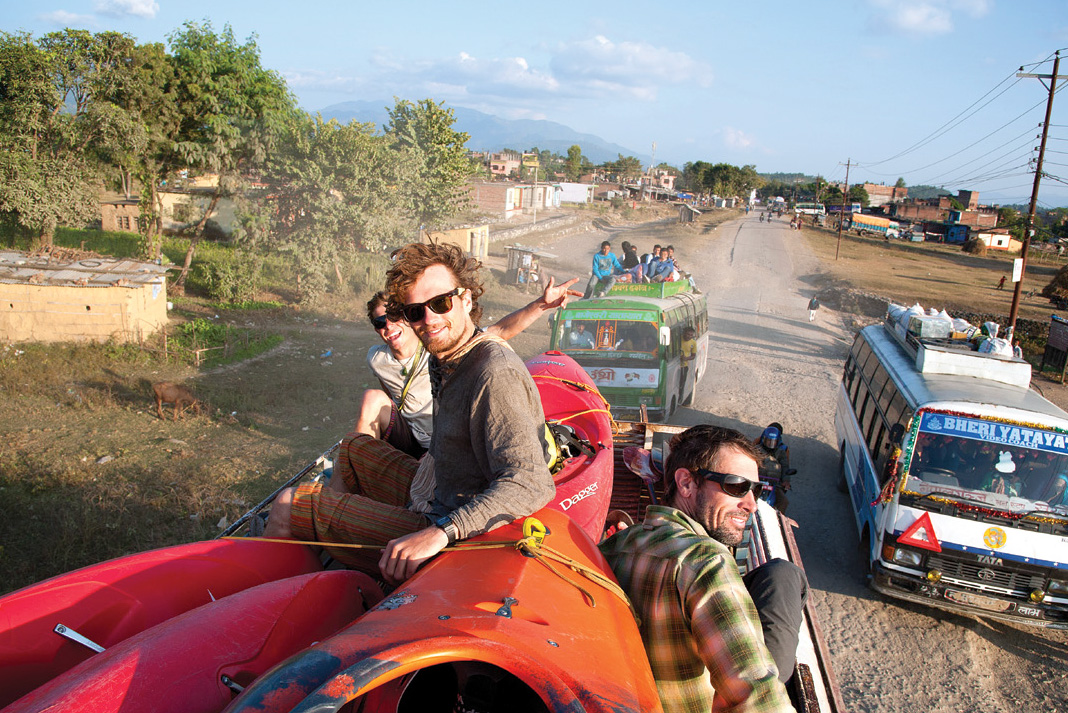
It all started when we veered off plan the day before. Steve Arns, Simon Rutherford, Ric Moxon, Brian Fletcher and I had just arrived at Birendranagar, a small town in mid-western Nepal. From there we hoped to fly to Juphal, a remote village deep in the Himalaya with a dirt landing strip and access point to the Thule Behri River.
The Thule Behri | PHOTO: MAXI KNIEWASSER
“Juphal not possible,” a smiley Nepali fellow had informed us at the airport. My stomach instantly dropped. We’d traveled halfway around the world to get to the Thule.
After arguing back and forth, the man offered another option: “We can fly to Masinechaur.”
There weren’t any maps in this airport, but Masinechaur, the locals assured us, was no more than a four-hour walk from Juphal. Since it was river right, and Juphal on river left, I figured it couldn’t be more than two hours from the river. The new put-in would start us a day or two downstream of the easier section of the Thule, whitewater we’d planned to warm up on, but lacking alternatives and confident we’d find porters to help us make the trek down to the river, we stuffed our boats into a seven-seat Cessna Caravan and got ready for the flight.
A pilot’s son, I immediately noticed the plane’s non-retractable landing gear. “Makes it stronger for high-impact landings,” I explained to the boys. Before anyone could change their mind, the pilot pushed down the throttle and we took off.
Twenty minutes later we were flying through the mountains—in the Himalaya you fly through, not over, the peaks—and got our first views of the river. After 45 minutes the landing strip came in sight and I held my breath. The airstrip looked like nothing more than a short steep gravel path cut into the side of the mountain, and at over 10,000 feet planes have to land fast. In an explosion of dust, our boating gear lurched forward as the plane screeched to a halt just in front of a stone wall. “I hope the river won’t be this exciting,” Simon joked nervously.
The Thule Behri is to the ambitious weekend warrior what the Stikine is to the hardcore class V+ boater. From mid-November to late April, when the Thule’s waters flow at a moderate level, the river is continuous class IV to IV+ whitewater that cascades through the land of Dolpa, a remote western region of Nepal that was closed to foreigners until the early ‘90s.
A page from The Book of Awesome. | PHOTO: MAXI KNIEWASSER
It wasn’t until 1995 that an international team, including Charlie Munsey, Doug Ammons and Scott Lindgren, realized the Thule’s first descent, ticking off one of the last major un-run rivers in the Himalayas. Surrounded by some of the world’s largest mountains, the Thule Behri has its source in the deep blue waters of Phoksundo Lake. The lake is sacred and home to a historic monastery of the mysterious Bonpo, followers of Tibet’s ancient spiritual tradition, a religion that predates Buddhism.
The Dolpa region has steep terrain and a ruthless climate. The winter is brutally cold, the summer monsoon unleashes floods and the rest of the year a cold arid wind blows powerfully from Tibet. Life in Dolpa is not easy. There’s no doubt the cruel conditions influence the high spirituality of the region.
Polished bedrock canyons border the Thule for dozens of miles at a time and some of the world’s highest peaks drain into the valley. This river is not just hero territory. Its continuous class IV is surprisingly attainable for experienced boaters and lasts for days on end—it is no stretch to say that paddling the Thule could be the highlight in any enthusiast boater’s paddling career.
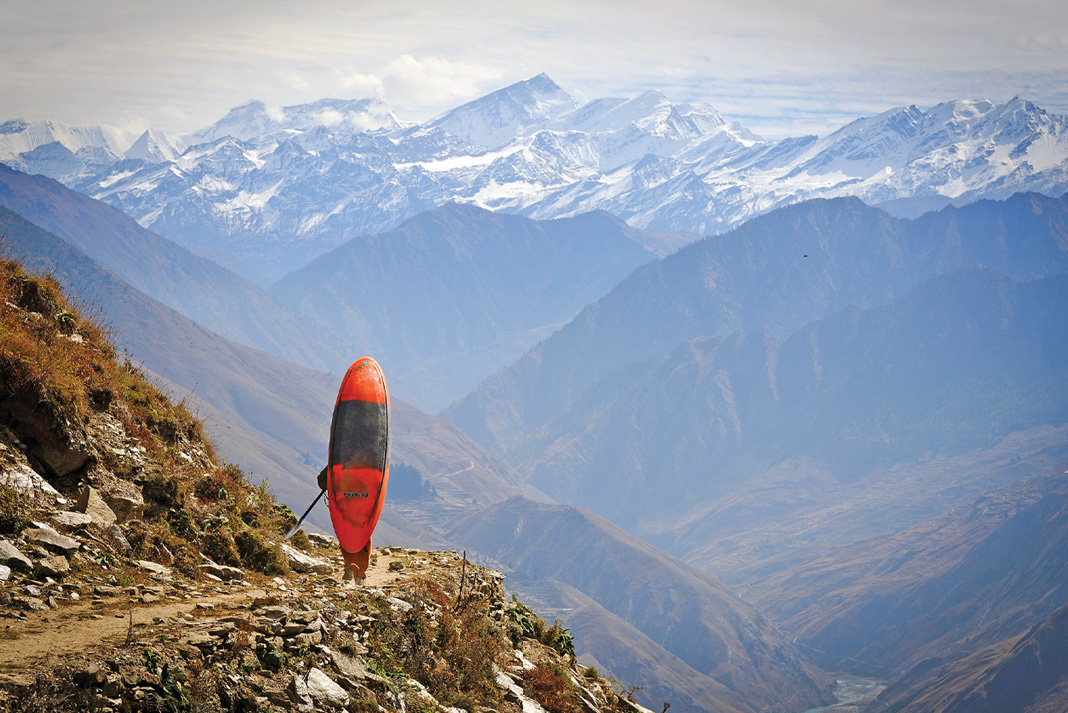
Eluded by any potential porters, we had no choice but to shoulder our boats and start moving. The path was steep, rocky and exposed, the gear heavier than we feared. However, the stunning scenery did much to alleviate the suffering on our search for the river. The Dhaulagiri Himal range—including its namesake 26,795-foot peak, Mount Dhaulagiri—towered above the river in a manner only seen in the Himalaya. “We wouldn’t have seen this if we had landed in Juphal,” I remarked. After six hours of trudging under the weight of our boats, we arrived at the river just as night fell.
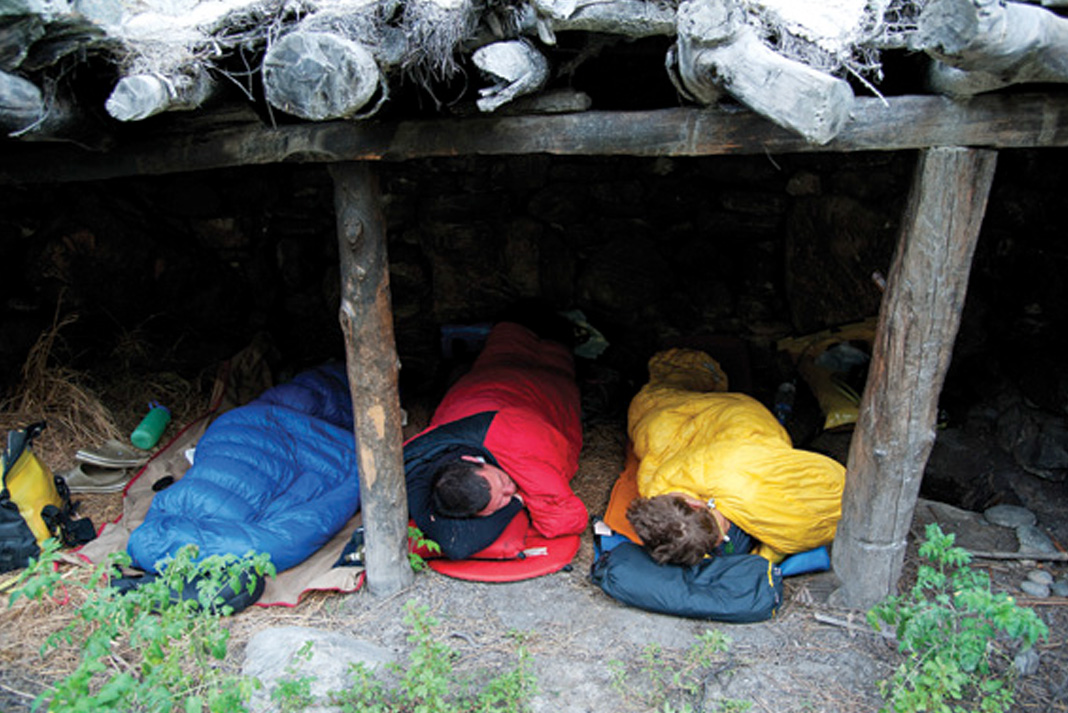
We spent a cold night just upstream of a Buddhist monastery at Tibrikot. It was a fitting place to put in the Thule’s emerald water as when we awoke, we could all sense the spirituality of the place—a feeling we couldn’t quite pin down, but something special was in the air.
Clowns to the left of me, jokers to the right. |
PHOTO: MAXI KNIEWASSER
After just moments on the water we were into the entrance rapids of the Golden Canyon, a 10-mile-long section with walls rising thousands of feet on either side. “Man, this is spicy,” Ric puffed as he pulled into a small eddy. Starting below our planned put-in launched us into the first rapids below Tibrikot, some of the trip’s most challenging continuous flow. “Not much of a warm up, eh?” Brian said as he peeled out to continue the eddy-hopping madness. Brian seems to get more comfortable the harder the whitewater gets but if the rapids had been any steeper, we would have had to scout everything in this first section.
A couple miles downstream the water began to calm as the canyon walls grew tighter. For the rest of the day we eddy-hopped our way down playful class IV, leapfrogging one another so that everyone could get a chance to lead through the boulder maze, and hooting and hollering if anyone chose a less than graceful line. “Check out the wild patterns in these boulders,” Simon managed to yell at me over the river’s roar. A yearly monsoon carves and polishes the canyon’s boulders into colorful sculptures—paddling through these rock gardens is a highlight of the Thule.
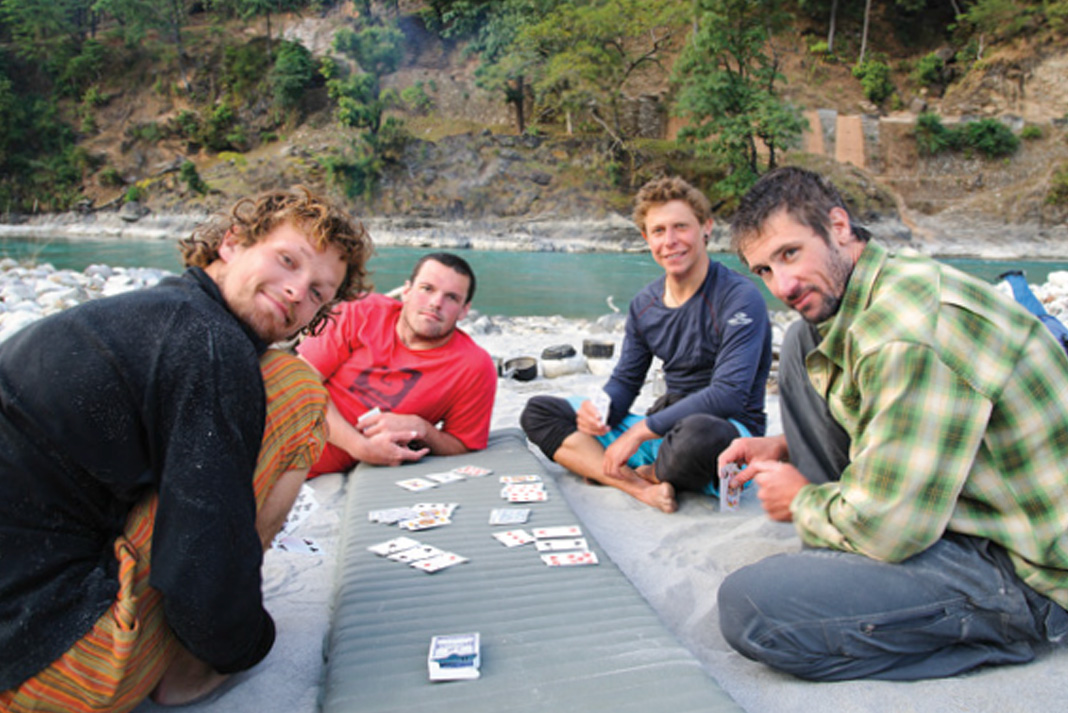
As the warm afternoon light lit up the Golden Canyon in all its glory, we pulled over and made camp among ancient ponderosa pines. Astounded by the scenery and awestruck by the river, we concluded by a crackling fire that the Thule had some of the best whitewater we’d ever paddled.
This was my second trip on the Thule; after a run in 2008 I dreamt of coming back. As the veteran of the river, I organized a lot of the logistics, but once there I wasn’t much of a guide. The sheer quantity of whitewater was too much to remember and we treated this as our first time down the river.
The Tibrikot Monastery rises from the hills above the Thule, an auspicious site to start our descent. | PHOTO: MAXI KNIEWASSER
The fourth day brought us to the Awalgurta Gorge, the hardest part of the river by far. Already in the entrance rapids, we were surprised by how pushy the water had become. The river had grown markedly in volume. Knowing that two miles of dangerous class V+ lay downstream we evaluated our options. “I’m out,” I said.
In 2008, my friend Danny had a terrible swim out of a sticky hole right above some horrible sieves. He had to swim back into the hole time and again to avoid getting flushed downstream and into the sieves till the team could get a rope to him. The memory was still vivid.
Waking at dawn the next morning, we cooked breakfast and packed up camp with unusual efficiency. With ever more tributaries joining, the Thule becomes big water. We were ready. After several days of continuous boating we felt strong, further aided by the lighter boats as the trip neared its end.
Just before lunch we came upon a horizon line big enough that it was at the edge of what we could safely read and run. Brian saw a line center right, boofing a ledge over a giant hole. Ric and I followed him while Simon and Steve eddied out on river left to have a better look. At the bottom, Ric and I were high fiving each other when we heard frantic whistle blasting. “GO! GO! GO! GO!” Brian yelled. We rushed to shore and ran upstream as fast as our legs and lungs allowed us. My mind was racing. Are my friends okay? What happened? What can we do?
The last beams of light in the lush lower section of the Thule. | PHOTO: MAXI KNIEWASSER
Simon, still in his boat, was getting sucked under a huge boulder. The eddy he had caught was a deadly siphon. Simon had pulled into the eddy, looking towards the middle of the river to scout the rapid. When he noticed the pull on his boat it was already too late—he was getting pulled under the boulders. In the last moment he managed to turn his boat around so he went bow first into the trap. Going in backwards would have likely been the end. As he was getting sucked into the siphon, easily big enough to swallow him and his boat, he jammed his arm in a crack in a last effort to keep himself from disappearing into the void. This stabilized him long enough for Steve to grab him and buy time for the rest of us to figure out the safest way to get him back to shore.
Himalayan rivers pose a higher than normal risk for this kind of accident. Shaped by the huge monsoon floods and the soft rock of the mountain range, the riverbeds are often comprised of massive boulders that seem delicately stacked on top of each other, especially where the river gets steeper. During paddling season when the water is much lower, the water flows through the boulder maze, rather than over it, creating many siphons—it’s the reason class IV in Nepal is so excellent, but the class V is unusually dangerous.
We always try and learn from such events, but what was there to take from this one? “I’m not gonna stop catching eddies,” Simon remarked somberly as we drifted along. He had made this move to be cautious and have a closer look at the rapid, but it had proven a near-deadly trap and a scary reminder that paddling, especially on expeditions, is a team sport.
Simon was determined to get back in his boat as quickly as possible. Less than an hour after the incident, we were traveling downstream. After another 25 miles of playful big water, class III+ and IV, we finished the Thule’s whitewater just as the sun set over the forest of Nepal’s foothills—we had paddled from the high and arid Himalaya right down into the jungle.
Sixty miles of flatwater and mellow whitewater took us toward the road bridge that would mark the end of our trip. After uncountable hours of slogging along, Steve asked, “Where in God’s name is the take-out?”
This article first appeared in the Early Summer 2014 issue of Rapid Magazine. Subscribe to Paddling Magazine’s print and digital editions, or browse the archives.



 This article first appeared in the Summer/Fall 2014 issue of Rapid Magazine. Subscribe to Paddling Magazine’s print and digital editions, or browse the archives.
 This article first appeared in the Early Summer 2014 issue of Rapid Magazine.



 Get the full article in the digital edition of Canoeroots and Family Camping, Spring 2008, on our free