Home Blog Page 301

Editorial: Right of Passage

Photo: Virginia Marshall
Editorial: Right of Passage

“You’re supposed to keep emergency stuff on you, right?” Po asks as we finish packing the kayaks. Pressing a hatch cover into place, I smile, pleased that she has remembered our discussion on ditch kits and survival principles. “Yeah, always…” I glance up and trail off as I watch her carefully stashing a wad of toilet paper in her PFD pocket.

I was once a beginner, too. New to paddling and out of my depth, I had plenty of clumsy, awkward and embarrassing moments. Some I look back on and chuckle. Others I just shake my head—what was I thinking?

Most experts agree: I wasn’t. There’s a tremendous amount of information to absorb even in an entry-level kayaking class. Pedagogical theory recognizes that most new paddlers are struggling to simply remember and imitate. Critical thinking and problem solving come much, much later, when the miles and hours have accumulated into that ultimate mentor: experience.

Silly mistakes are bound to occur when we’re learning. Most will be harmless—like the November camping trip where I packed juicy, softball-sized navel oranges for breakfast and awoke in the morning to find my hatch filled with frozen citrus kettlebells. At least we had ballast for the rest of the trip, should we have needed it. 

Or the unfortunate skills certification course where I kept blowing my roll because I’d forgotten to relieve myself before we left the beach and could think of nothing but this now incredibly urgent need. Still, despite the occasional forehead-slapping faux pas, new pad- dlers are both the future of our sport and, often, among its most active and ardent supporters. You don’t need to be an old salt to start a club, organize a shoreline cleanup or advocate for water trails.

First-time sea kayakers Paul Manning-Hunter, Spencer Taft and Daniel Robb had never paddled tidal waters or performed a surf land- ing before their eight-day expedition to British Columbia’s remote Great Bear Rainforest (“A Better Adventure,” page 48). Their inexpe- rience may have cost them a ruined satellite phone and soggy charts. But the three friends not only found their stride in their unfamiliar craft, they returned with stories, images and the makings of a film so they could share their discoveries and encourage celebration and conservation of this threatened wilderness.

Paddling back to the put-in after a thoroughly successful day on the water, Po tells me she’d like to buy her own kayak and explore her local lake. I’m thrilled. The instructor/guide in me rattles off a list of things she’ll need to go along with her new boat.“And you should get a paddle float for solo paddling,” I finish.

She looks perplexed,“Don’t all paddles float?”

Editor Virginia Marshall has many more stories of awkward paddling moments. Buy her a chocolate milk sometime and she’ll tell you a few. 
 AKv13i301.jpg


This article originally appeared in Adventure Kayak, Early Summer 2013. Download our free iPad/iPhone/iPod Touch App or Android App or read here for free.


The Dirt on Crowdfunding

Photo: Fredrik Marmsater
The Dirt on Crowdfunding

It used to be when someone wanted to film an expedition or design a kayak, their avenue to success involved only sacrifice and determination. They might’ve saved money, quit their job and reached out to friends, family, sponsors or even the bank for financial support. Then they’d go out and humbly attempt to fulfill their dream. Except in the most audacious cases, the public was never privy to their project until after the fact.

People still do this today, but like most everything else in our ultra-connected, social networked world, the Internet is rapidly changing things. Take San Francisco-based paddler Anton Willis, who was inspired by origami as a way to make a folding kayak for storage in his apartment. He started with paper models and progressed to corrugated plastic signboard. After making more than 20 full-size prototypes he came up with a 12-foot light-tourer that folds up to the size of a sofa cushion.

Sensing his design had broader appeal, Willis made a pitch to the world on Kickstarter, a crowdfunding website, last November. Within weeks he raised over $440,000 in seed money from 730 backers, and his ORU Kayak was featured in Fast Company magazine and on CNN.

Willis is a poster child for the massive potential of Kickstarter, which launched to support independent “creative work” in 2009 and has generated over half a billion dollars in pledges to date. Aspiring entrepreneurs, inventors and creative-minded adventurers set a fundraising goal and deadline, pitch their idea in words and video, promote it on social media and hope for donations. The project is funded only if the entire goal is met. Backers act on faith and get nothing in return for their donation except for feel-good karma and perhaps a piece of memorabilia—or in the case of ORU Kayaks, discounted prices and first-run shipping for those willing to ante up the full cost of a new boat.

“We had initially looked for an angel investment but it seemed like people were put off by the [small] size of the market,” says Willis. “Kickstarter was a fantastic tool for us. It lets you tout a product and establish a niche market.”

Even with funding in place, Willis had only a moral obligation to deliver—such is the risk backers assume in supporting a crowdfunded project. Inevitably, this has led to several colossal flops, including a failed solo bike expedition in 2012 that wasted over $10,000 in sup- port. However, Alaska-based kayak-building enthusiast David Mi- chael Karabelnikoff says selling a dream to the world puts that much more emphasis on following through.

“It’s definitely taking a leap into the unknown in a public way,” says Karabelnikoff, whose Kickstarter campaign to develop a 3D printing process to rebuild traditional Arctic kayaks and inspire Native youth failed to reach its $25,000 goal in May. “As one of our early backers said, we threw everything we had into it and therefore no matter what the outcome we were committed, and will learn as a result.”

Of course, relying on Kickstarter isn’t an excuse for lazy planning and execution. Portland, Oregon-based sea kayakers Jason Self, Chris Bensch and Shay Bickley raised nearly $11,000 through Kickstarter to fund The Search for the Perfect Day, a series of paddling and filming expeditions to California, Florida and Hawaii that will evolve into a video series. “ The 30-day Kickstarter campaign took several years of strategic planning to execute properly,” says Self. “We had thousands of contacts and several sponsors at the ready with thousands of their own followers to receive our requests. Without this in place we never would have met our goal.

“I can’t say that the Kickstarter process was enjoyable…raising money is hard, hard work. As my boss said after he saw the bags under our eyes, it would have been easier to get another real job.”

 AKv13i301.jpg

This article first appeared in Adventure Kayak, Early Summer 2013. Download our free iPad/iPhone/iPod Touch App or Android App or read here for free.


Visionary Missionaries

Photo: Dave Quinn
Visionary Missionaries

Recently, international development workers have identified a new and surprisingly effective tool: the kayak.

As a sea kayak guide who spends much of my time working in the Arctic or overseas, I am well acquainted with the remarkable way in which our crafts glide smoothly through linguistic, social, physical and economic barriers. But in early 2012, my jaw hit the deck when I saw a volunteer posting for kayak instructors to work on a development project in Tanzania.

I applied for and got the posting, and in May headed to East Africa to share my kayaking skills with instructors at the National College of Tourism (NCT) in the bustling coastal city and commercial capital of Dar es Salaam.

For this final stage of a three-year, Canadian International Development Agency (CIDA)-funded partnership with the College of the Rockies in British Columbia, NCT had requested help developing marine tourism modules for their Tourism Diploma program, including kayak training for their instructors.

The request fit in neatly with the partnership’s aim to help Tanzania diversify their tourism products. Home to half of the world’s remaining wild lions and the two largest protected areas in Africa, Tanzania is well known amongst ecotourists for inland attractions like Serengeti National Park, Ngorongoro Crater, Gombe Chimp Park and Mount Kilimanjaro. But other than the history-rich Spice Island of Zanzibar, there is little in the way of developed tourism along the endless white sand beaches and crystal clear waters of the country’s Swahili Coast. Dynamite fishing threatens Tanzania’s world-class reefs and marine life, and tourism is seen as a way for locals to put a different value on marine resources.

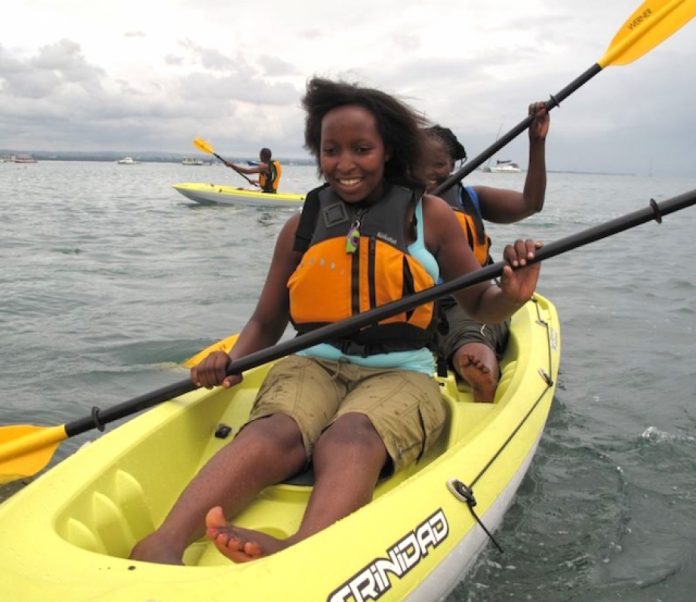
Aside from the challenges of shifting a resource harvesting-based economy to one built on conservation and tourism, we faced another daunting hurdle. Tanzanians are terrified of water. In a country where hippos, crocodiles and tropical parasites plague inland waters, young children are taught that entering the water equals certain death. Few people swim, including our would-be kayak instructor counterparts. Our kayak and snorkel program evolved on the spot into a just-get- wet and learn to swim program.

Easing the instructors into a hotel pool made us doubt whether we’d ever actually get anyone seated in CIDA’s secret weapons. At pool’s edge, 12 pairs of eyes, wide with terror, looked dubiously at the tranquil water. Finally, one brave soul stepped in, and soon it was like summer camp.

We graduated to a safe beach for more swim practice and, finally, paddling. The program supplied NCT with sit-on-top kayaks, pad- dles and all necessary safety gear. We spent eight days practicing basic strokes and rescues and enjoying the stellar paddling and marine life of the Indian Ocean.

Nine months later, I was back in Tanzania to conduct follow-up training, introducing basic instruction skills. The same men and women who had trembled at the sight of a swimming pool less than a year before now led me eagerly to favorite paddling sites they had discovered along the coast.

With a little help, Tanzanians are embracing a bright future, one built not on the old adage “ Teach a man to fish…” but on a new, inspired wisdom that begins with,“Teach a person to kayak…” 

 AKv13i301.jpg

This article first appeared in Adventure Kayak, Early Summer 2013. Download our free iPad/iPhone/iPod Touch App or Android App or read here for free.
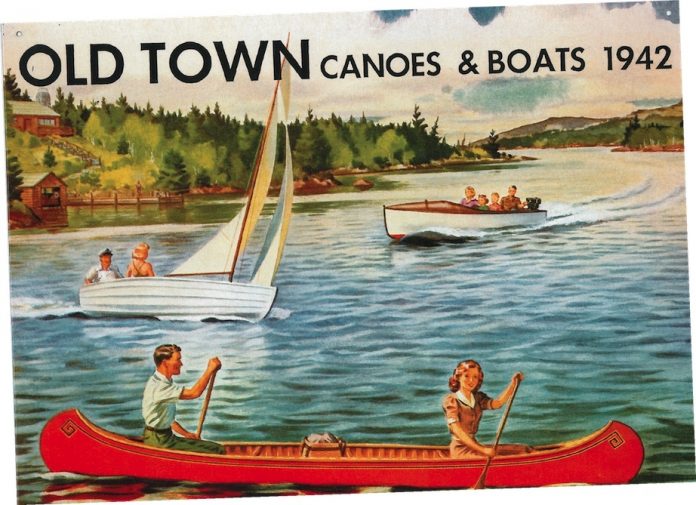


100 Years on the Water

Courtesy: Old Town Canoes and Kayaks
Old Ad from Old Town

In Rapid Media’s 2014 Paddling Buyer’s Guide, there’s no shortage of choice. Short boats, long boats, folding and inflatable boats, standup boards for idling, surfing, racing and rapid shooting—and all made from a cornucopia of space-age materials and presented in every shape and color imaginable.

What’s nothing short of amazing is that with the wide-ranging preferences and predilections of the current paddlesports marketplace, you can still buy a canvas-covered wooden canoe essentially unchanged in more than a century of service. Yes, you too can have a premium-grade, 16-foot Old Town OTCA for $7,599.99. Fiberglass skin is $200 extra, plus tax and shipping.

Back in 1925, an OTCA sold for about $50. The exact price depended on a variety of options, including length, color, finish, sponsons, outside stems, floor racks, canoe seats, middle thwart, long decks, half ribs and sailing accouterments.

Adjusting the 88-year-old price tag in today’s dollars using the consumer price index, that boat would be $663.50. A tremendous deal and a far cry from what is now demanded for a fancy throwback double-ender. In today’s market, it’s the labor costs that push the price through the roof. Nevertheless, the OTCA and others of its ilk have survived.

And while I find it harder to imagine a buyer in the year 2100 flipping through some e-catalogue, telepathically delivered of course, and picking out a standup paddleboard that’s essentially unchanged since 2014, I can envision the venerable wood and canvas canoe still quietly plying the waters.

Regardless of manufacturer, length, material, weight, style, history or price, the essence of self-propelled recreation persists and is as relevant today as it was when the whole concept of leisure came along as a happy consequence of the industrial revolution. Canoes, kayaks, boards—hell, even improvised craft like Huck Finn’s raft—still offer their paddlers and polers a chance to get on the water, to connect to a river or shoreline and to participate in an activity that is as old as North America itself.

In 1925, the average life expectancy for men was 57.6 years and for women 60.6 years. Today, we can expect to live 20 years longer and many of us choose to spend it immersed in the happiness found in the rhythm and camaraderie of silent craft.

Looking back at some of the old canoe manufacturers’ catalogues, the range of products on offer is much narrower and the options seem a bit antiquated, however some of the slogans are as apt now as they were back then. In 1919, for example, the Old Town Canoe Company catalogue reflected on the post-WWI era, showing an image of a soldier advancing with bayonet mounted against a montage of paddle, pack, canoe and blanket. The slogan, referring to the Allies victory in WWI, says, “Outdoor life did it,” meaning that the strength of mind, body and spirit of a young person heading into conflict was shaped by the paddling experience.

In 1920 and 1921, the bristle of that sentiment was softened to “Old Town Canoes for outdoor vigor.” And, in 1922, my favorite, beneath a happy couple on the water in a handsome canvas-covered canoe, the slogan reads, “Waterways for pleasure days.”

More than ninety years later and the sentiment is equally as true. Happy shopping.


This article first appeared in Rapid Media’s 2014 Paddling Buyer’s Guide. Download our free iPad/iPhone/iPod Touch App or Android App or read it on your desktop here.


Adventure Boom

Photo: Peter Mather
Nahanni River


To the uninitiated, paddling seems like a young person’s sport. Adventures by canoe and kayak, complete with portages, open water crossings and especially whitewater, can seem best enjoyed by young bucks. I recently read an article in Rapid titled, “Paddle Til You’re Fifty”. While the mate­rial of the piece actually encouraged paddlers to continue well into their golden years, the title stuck in my craw. Not only did it imply I was past my best-before date, but most of the paddlers I know are exceptions to that watery ceiling. Am I part of a deluded co­hort, paddling my way over the edge of mortality?

I have the great fortune to offer paddling expeditions on twenty rivers across the north, from Alaska to Nunavut, all of which are life list-worthy destinations. Most people are surprised to learn the average age of our guests is 57. Of course, this means many of the clients are older than 57—the oldest was 84. In fact, Genera­tion X and Y are noticeably absent from northern waterways, on both guided and self-guided expeditions.

Even while our own stats show that more paddlers take on big trips after they hit the 50-year milestone, these demographics fly in the face of research by the Outdoor Industry Association. The OIA’s 2013 Outdoor Participation Report shows that outdoor recreation for the average American begins a slow and steady decline starting at the age of 40. The population segment where outdoor activity is growing the fastest is in males between the ages of 13 to 17—unfor­tunately, they can’t afford northern river trips, nor the sleek refine­ments that increase the longevity of the sport for Boomers.

Indeed, Boomers and Zoomers are fully capable of enjoying the paddling world, whether in canoes, rafts or kayaks. For some, it’s not until they’re older that they feel confident in the skills required to embark on their dream destinations. Their outdoor experience, techniques and risk management abilities acquired over 50 years far make up for the bull-headed power of a 20-something.

Ultimately, economics play a big part in why there’s more grey hair on northern rivers. Being over the hill often means more disposable income, which comes with increased opportunity to travel and access to better equipment. When you factor in the skilled guides, great food and even better wine that paddling tourism offers, what’s not attractive to a golden-aged adventurous spirit.


Neil Hartling is owner of Nahanni River Adventures and Cana­dian River Expeditions, an author and Fellow of the Royal Canadian Geographical Society. He’s 52 and sees no end in sight to his paddling career. www.nahanni.com.

This editorial originally appeared in the 2014 Paddling Buyer’s Guide. Download our free iPad/iPhone/iPod Touch App or Android App or read it on your desktop here. 


Grab-and-Go Paddling. Now.

Photo: Emma Drudge
Canoeing


The most recent outdoor activity participation study results are in. Cycling is huge. Trail running is still growing. On the water, standup paddleboarding is way up. Kayak fishing is really catch­ing on. Why?

These grab-and-go activities fit conveniently into busy lives. It’s easy to grab a road bike or lace up runners and be back before din­ner. Paddleboards require only a paddle and PFD. Fishing kayaks launch just about anywhere. But adventures like whitewater, ca­noeing and kayaking that have traditionally required more than a couple hours of commitment are sliding down our to-do lists.

I’ve written over the years in Rapid about the pros and cons of urban whitewater parks. I’ve compared them to climbing walls and foretold the slow death of real adventure. Now, I see that climbing walls and whitewater parks aren’t killing us. We are killing ourselves.

Our leisure habits are changing and the smaller windows of time we have to play outside must fit between school, overtime, traffic and daycare drops. Urban whitewater parks remove barri­ers, making a surf session as easy as a game of squash.

Access however isn’t a barrier for canoeing and kayaking. There is flatwater almost everywhere. The problem is that our dearly beloved tripping canoes and expedition sea kayaks aren’t exactly grab-and-go in today’s world.

Bill Kueper of Wenonah Canoe first tipped me off to this new way of thinking during a round table discussion about the state of canoeing in America.

“For years we’ve been selling people their once-a-year canoes and kayaks, the ones they take on annual trips to the Boundary Waters or the San Juan Islands,” he said. “Instead, we should be selling them boats that perform best for the water they can paddle most often.”

Bill calls these Tuesday night boats—the ones we can most easily enjoy every Tuesday, Wednesday, Thursday, or whenever there’s a few hours to escape.

“But my husband and I already have our canoe,” protested one instructor. Why, I asked her, should paddling be any different from other outdoor activities? Why shouldn’t we have more than one canoe or kayak?

Last fall, my wife and I got back into mountain biking. To enjoy our precious time together, I bought a new mountain bike. Now, on Wednesday nights we book a babysitter and join a community ride. We’ve made new friends and tailgate in the parking lot after­ward. It’s fun, social and it’s easy.

In only 13 months, I’ve purchased three new bikes—all of which, for the record, cost more than any of my canoes or kayaks. I evolved from a born-again mountain biker to a guy who rides bikes—all kinds of bikes. Different bikes allow me to ride more often. Yes, I could have ridden my trail bike on the road and off big jumps, but it would have sucked.

I believe the same is true for paddling. If I’m going to get out more, it has to be easy. Otherwise I’ll spend my leisure time doing other things, or worse, nothing at all.

The river is a short walk from my office. For years I stood at my desk talking on the phone and looking out the window, dreaming about paddling at lunchtime. Why hadn’t I gone? Bill nailed it. I didn’t have my Tuesday night boat. Nothing says miserable lunch break fitness paddle more than a 70-pound Royalex Prospector. I needed my grab-and-go boat.

Increasing participation in paddling is simple. Here, in our 2014 Paddling Buyer’s Guide, you’ll find 369 canoes, kayaks and paddleboards. Buy the one, or ones, that best suit your local rock garden, lake, river, park, pond or swimming pool. Then paddle the hell out of them. No excuses.


Scott MacGregor is the founder and publisher of Rapid Media. He is the proud owner of a new 32-pound Wenonah Advantage solo racing canoe and a bent shaft carbon paddle. He won’t be taking any more calls between noon and one.


This editorial originally appeared in the 2014 Paddling Buyer’s Guide. Download our free iPad/iPhone/iPod Touch App or Android App or read it on your desktop here. 


Fundy Fun

Justine Curgenven/CackleTV

In September 2013, Adventure Kayak joined Christopher Lockyer, Justine Curgenven and a crew of international sea kayaking talent in the Bay of Fundy for a whirlwind introduction to this paddlers’ playground. From the excitement of humpback whales inches from her kayak, to the adrenaline of a bronco surf in the (now) notorious “Walton Whopper,” Justine captures Fundy’s best in her new film, Fundy Fun.

Download the full, 20-minute Fundy Fun film at CackleTV.com.


Watch for a feature story on the Bay of Fundy and Adventure Kayak’s experiences at the first annual Bay of Fundy Sea Kayak Symposium in the Spring 2014 edition of Adventure Kayak.


Tips for Surviving a Forest Fire

Photo: Hap Wilson
Surviving a forest fire

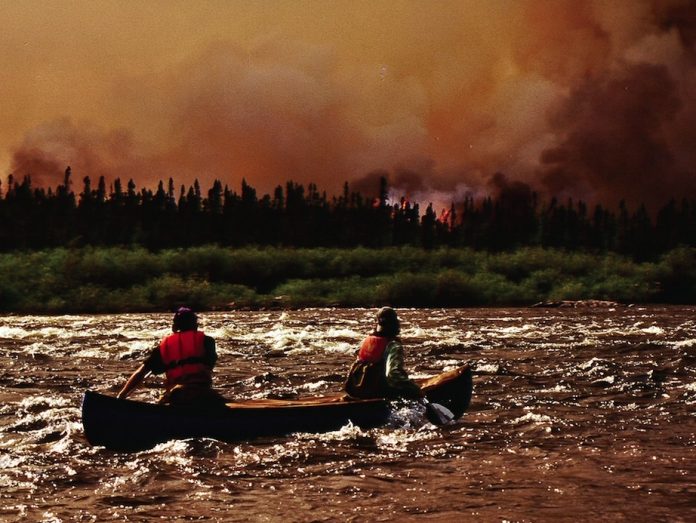
Forest fires spread quickly—up to eight kilometres per hour—much faster than we can run or paddle. The smell of smoke, a light dusting of ash on canoes or tents and unusual behaviour from birds and mammals are usually the first signs of an encroaching fire.

The SAS Survival Guide recommends staying calm, upwind of the fire (if possible) and moving to the closest body of water such as a lake or river. If you become trapped in the fire, do the following:

  • Keep your clothes on, as they protect you from the intense heat of a fire. Cover any exposed skin.
  • Semi-immerse yourself in the water. Care should be taken to avoid hypothermia.
  • Cup your hands around your nose and mouth or breath through a bandana.


Discover 21 more lifesaving tips for wilderness travelers in the Canoeroots and Family Camping’s Late Summer 2009 issue. For more expert tips, download our free iPad/iPhone/iPod Touch App or Android App or read it here.


Shoot the Ultimate Kayak Film

Photo: Virginia Marshall
Shoot the Ultimate Kayak Film

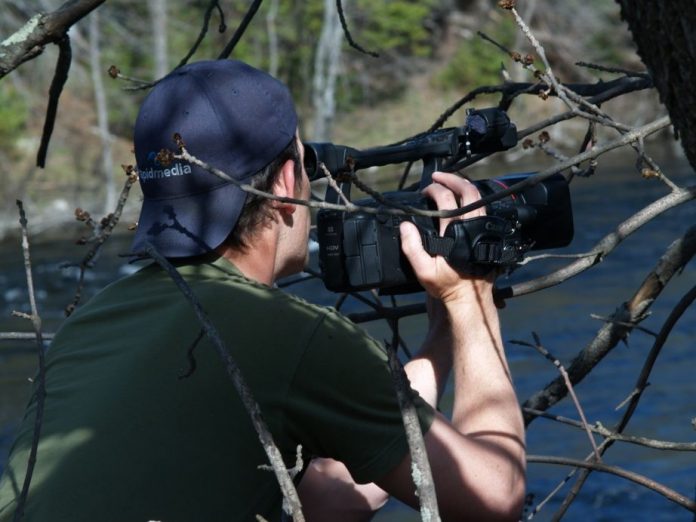
You just watched the Reel Paddling Film Festival and you’re inspired. It’s time to share with the world your passion for paddling. You have a camera, eager paddling buddies and a favorite kayaking spot—now what? Focus your efforts with these pro pointers.

Know before you go Just like you’d scout a slot before running it, storyboard your film before shooting it. That way you know who, what, when, where, why and how to shoot.

If you bring it, use it It’s easy to get lazy and leave the camera in your boat—that’s when you miss some of the best shots.

Tell a story Filming your buddy surfing a wave is lame. Filming your buddy—who escaped a life of crime through kayaking—surfing a wave is better.

Mix it up Wide angle, close up, static shots, dynamic shots, shoot up, shoot down…If there is a spot that will take lots of time and effort to reach and looks like a perch no human would ever want to be, odds are it’s the money shot. 

Think outside the helmet POV (point of view) cameras like the GoPro are great, but don’t overdo it. Use them for interesting angles and slow motion footage, not primary shots.

Clean your lens Water droplets on your filter (which I know you bought for a few extra bucks to protect your several-hundred-dollar investment) can ruin a shot. Keep an old t-shirt in your camera bag to wipe them off.

Keep it steady Use a tripod, monopod, tree, PFD or alpaca…whatever it takes to keep the camera steady.

Audio please People will forgive bad video but not bad sound. Spend the money on a good mic setup for interviews and lifestyle shots.

Don’t encourage stupidity Kodak courage is a real danger. If you think someone is doing something dangerous because a camera is pointed at him, turn it off and see if he changes his mind.


This Skills article originally appeared in Rapid, Summer/Fall 2011. Download our free iPad/iPhone/iPod Touch App or Android App or read more advice for paddlers here for free.

Portaging Niagara Falls

Photo: Stephanie Park
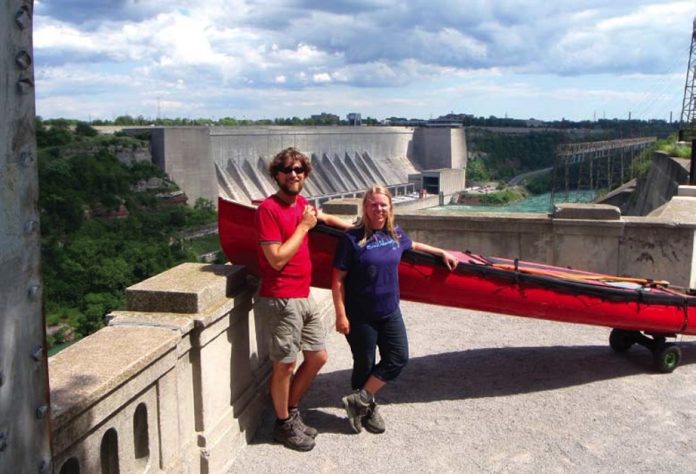
Portage at Niagara Falls.

Portage.

That’s what lakewater trippers do—we portage. From lake to lake, into remote wilderness, we heft mounds of stuff, all intri- cately organized into wannigans, canvas packs and polyethylene barrels. Yokes dig into our tired muscles as 60-pound canoes balance precariously on our shoulders. We are like oxen plowing the last furrow of the day, ready to unburden our load.

Many sport enthusiasts willingly subject themselves to torturous masochistic prac- tices—boxers accept head punches, cyclists wear tight spandex and canoeists…well, we portage.

It’s no wonder the word portage is often synonymous with gruelling pain and agony. As renowned canoeist Bill Mason once reminded us, “…portaging is like hitting your- self on the head with a hammer: it feels so good when you stop.”

So, when it came to planning a 200-day ca- noeing expedition, my husband and I found a way to paddle days on end, enjoying wide-open views, endless scenery, crystal clear wa- ter and the full gamut of weather conditions with no portages. Well…except for one. I will get to that later.

If you are a serious lakewater tripper, you must travel some of the coastline of the five immense lakes that shape the heart of North America—the Great Lakes. Vast and diverse, they are the largest chain of freshwater lakes on the planet, holding 20 per cent of the world’s freshwater.

Over the last three summers, we paddled this ancient waterway, travelling the entire 4,000-kilometre coastline of the Canadian Great Lakes from the Pigeon River, west of Thunder Bay, to Kingston on Lake Ontario, where the Great Lakes flow out the St. Lawrence River.

Along the way, we paddled the shores of Lake Superior, Lake Huron, Lake St. Clair, Lake Erie and Lake Ontario.

Each lake lives up to its great reputation. Lake Superior is the deepest, its greatest depth at 406 metres. Lake Huron is home to Manitoulin, the largest freshwater island in the world. Lake Erie boasts endless sand beaches around Long Point, Rondeau and Point Pelee and supports the richest aquatic life of all the lakes, a total of 46 million fish. And Lake Ontario offers its own challenges when your route takes you right through the busy city waterway of Toronto harbour. Oh, and there is only one portage. It happens to be 25 kilometres long, around a pretty major waterfall—Niagara.

After two blissfully portage-free summers, preparations for our third summer had be- gun and we were inadequately prepared for the 25-kilometre hike ahead. The longest portage in our combined portfolios was a mere three kilometres, but we felt confident in the helping hands of friends and family eager to lend their support in what was soon coined, P-Day.

As P-Day drew closer, however, our helpers dropped faster than the 100,000 cubic feet of 

water that flows over Niagara’s brink every second. We heard the full range of excuses, from dentist appointments to busy work schedules. Instead of a brigade, we were re- duced to three helpful saints, who made the one-day carry possible. Portage technology had also advanced since the fur trade and we were well equipped with a modern canoe trol- ley that proved invaluable. Some call it cheat- ing, but after a few kilometres, I call it smart. I’ll bet not one voyageur would rather carry a barrel of whiskey than roll it.

The Niagara Falls Review, the oldest news- paper in Ontario, reported that no one had portaged the route in recent history. It’s estimated that the last portage taken was over a hundred years ago. The ancient trail, however, is still intact—now paved and suitably bearing the name Portage Road.

As we approached the brink of Niagara Falls on foot, with our canoe in tow, citizens and vacationers sent worried glances in our direction. It was understandable consider- ing that, in their lifetimes, more people have paddled over the falls than portaged around them. Within minutes a police cruiser pulled up and out stepped two straight-faced uni- forms.

“I hope there’s no law against portaging, officer,” my husband said with a smirk. After telling our story, the police were delighted to help us out, making routine visits through- out the day. “I’m happy we weren’t the first portagers to be arrested,” I said as they sped away to another call.

The busloads of tourists filling the sidewalks proved no more difficult to navigate than overgrown balsam on a seldom-used trail. The crowds also made for an interesting portage, as we were an attraction ourselves, posing next to our canoe for hundreds of snapshots.

Stops at places like the Hershey’s Chocolate Factory and Candy Planet fuelled the journey. The 25 kilometres rolled on and by the end of the day we rested and dined lavishly at Peller Estates Winery. With a fine glass of private reserve, barrel-aged golden Chardonnay, we toasted our fun-filled day, a bit sad that it was all over. Because as Bill Mason also wrote, “It’s the portage that makes travelling by canoe unique.”