Home Blog Page 316

6 Simple Steps For Properly Installing A Canoe Yoke

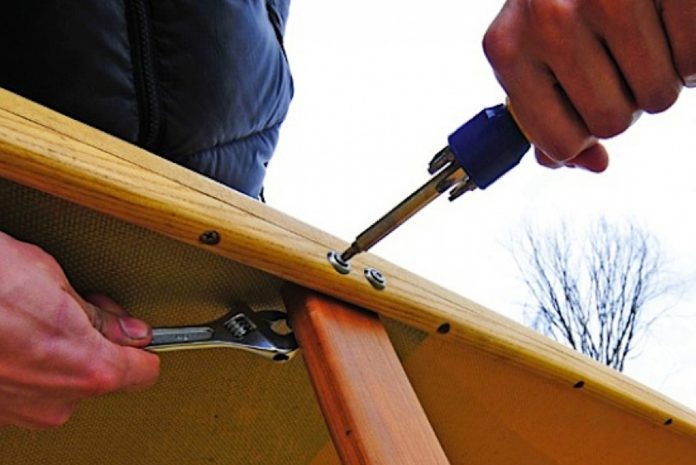
Two hands screwing in a yoke on a canoe
Six steps to a more comfortable portage. | Photo: Virginia Marshall

Maybe your canoe has seen one too many portages and the yoke has finally given out. Or maybe your shoulders have seen one too many bruises and it’s time to try a different yoke design. Either way, installing a new yoke on your canoe is simple business.

First, of course, you’ll need to pick out a canoe yoke. There is ongoing debate whether contoured and carved-out or padded yokes are most comfortable—choose the style that works for you. Ash is strongest, poplar is lightest, and walnut or cherry offers a unique look.

Once you have your choice in hand, it’s time to learn how to install a canoe yoke.

Step 1: Remove the old yoke

If the old hardware is corroded, bent or stripped, replace it with stainless steel or brass #10-24 machine bolts, cup washers, flat washers and lock nuts.

Step 2: Size the new yoke

New yokes come longer than you will need. Simply lay the old yoke over the new one with the centre points aligned. If you don’t have the old yoke, you’ll need to measure the distance between the gunwales at the canoe’s midpoint.

Keep in mind that the yoke’s length can spread or narrow the canoe’s beam. Pulling the gunwales together makes the hull rounder and increases tumblehome while spreading the gunwales increases flair and flattens the boat’s bottom.

Step 3: Balance the canoe

Don’t just screw the new yoke into the old holes—now is your opportunity to ensure your canoe is perfectly balanced on the yoke. To do so, take a tape measure and find the middle of the canoe from end to end and mark it on both gunwales using a wax pencil.

Next, place the yoke across the canoe at your markings, under both gunwales and then rotate it so its narrow edge is facing upwards. With one person on either side of the canoe, lift up on the yoke. The canoe may tip to one direction. Adjust the yoke until the canoe is balanced and mark its position.

Step 4: Decide which way to face the yoke

By installing the yoke’s opening facing the bow, you can just flip the canoe onto your shoulders and go when you land at a portage.

Alternatively, if you have a stern thwart within arm’s reach of the yoke, you can install the yoke facing the stern, allowing you to hold onto the thwart while portaging.

Step 5: Drill the holes

With the yoke across the canoe at your markings, hold it flat under the gunwales, and then pull the gunwales together so there’s no space between the yoke and the hull. Next, drill holes through both the gunwale and the yoke. Drill in the middle of the gunwale for optimum strength and ease of hardware installation.

[ Find all the parts and accessories for your DIY projects in the Paddling Buyer’s Guide ]

Step 6: Install the bolts

Install the bolts with the cup washer on top of the gunwale and the flat washer underneath and you’re ready to portage.

Johno Foster installed countless yokes as a canoe builder in a past life. He is now a northern river wilderness canoe guide and paddling instructor.
Best Camp Cookfire Technique

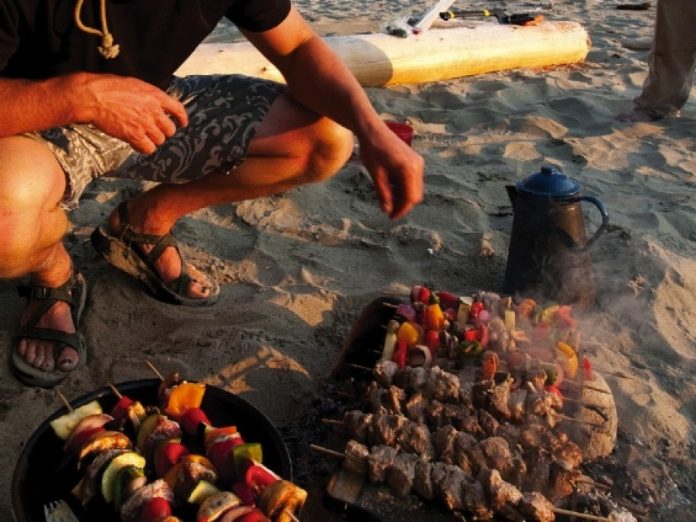
Photo: Dave Quinn
A large grill of kebabs cook over a bed of coals on a sandy beach.

Camp cooking is as simple or ornate as you make it out to be; it doesn’t take much more than an open flame or heap of glowing embers to put a crispy coat on a marshmallow or split open a hotdog, but more elaborate meals can be prepared over a campfire with the proper structure and a continuous source of hot coals. Most backcountry campsites offer fire rings to promote Leave No Trace camping. Building the right type of fire inside the ring should also assure you more sustainable cooking temperatures.

The most basic fire structure is the tipi. Its conical shape drives fire upwards for a fast and efficient way to quickly boil water or heat something small.

A platform fire is a variation on the log cabin fire. It is created by criss-crossing layers of kindling starting with a base of larger firewood and then working upward with increasingly smaller pieces, creating the shape of an Aztec pyramid. When ignited from the top, this mass of firewood burns downwards, creating layers of hot embers that eventually form a deep bed of cooking coals. Feeding the bed of embers with wood provides a sustained supply of hot cooking coals great for grilling steaks, baking with a Dutch oven or directing heat to a planked fish fillet alongside the fire.

A good cook knows that you need the right amount of heat to control the texture and taste of your meal. When maintaining a cooking fire, it’s important to have two or more areas of heat. A good bed of coals can be dragged or scooped from the main fire into a separate cooking area where less heat and more control are needed.

For an easy way to calculate approximately how hot your cooking fire is, hold your open palm about five inches over the fire. Count the seconds before you have to pull your hand away to get a general range of temperatures:

2–3 seconds: 450°–650°F

4–5 seconds: 375°–450°F

6–7 seconds: 325°–375°F

8–10 seconds: 250°–325°F

Not all types of wood produce a long-lasting, adequate heat. Hardwoods generally make the best firewood. Ash offers both a good flame and heat, while oak burns well but emits an acrid smoke. Yew, maple and hazelwood are other good options.

When burned, apple, cherry, hickory and alder expose foods to flavorful smoke, wonderful tastes for fire-grilled foods. Baking salmon or trout fillets that are staked to a moist cedar plank and propped up facing the heat combines the flavors of the fish with the essence of cedar for a mouth-watering delicacy.

Choose the right structure, the right type of wood and maintain good oxygen circulation and your options for frying, grilling, baking or planking are only restricted by your creativity.

A veteran paddler and freelance writer, Tom Watson has authored several books on the outdoors and is the camping editor for Sportsmansguide.com.


This article originally appeared in Canoeroots & Family Camping, Fall 2012. Download our freeiPad/iPhone/iPod Touch App or Android App or read it here.

Sea Kayak Review: Tiderace Xplore-S

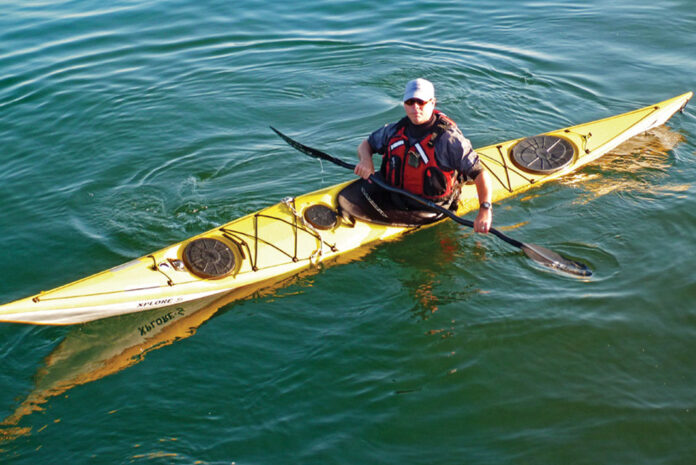
Man paddling yellow sea kayak
Go xploring. | Photo: Keith Wilke

Based in Penrith, England, Tiderace Sea Kayaks have rightfully become synonymous with performance planing-hulled, rough water play designs through their Xcite, Xtra and Xtreme lines.

Introduced in 2009, the Xplore series fills the needs of expedition-minded paddlers with four meticulously scaled sizes. They’re already gaining a reputation of their own, making some significant journeys like James Baxter’s 3,100-km trip down the coast of Norway.

[ Paddling Buyer’s Guide: View all Tiderace kayaks ]
Tiderace Xplore-S Specs
Length:17′ 5″
Width: 20″
Weight: 53 lbs
Paddler: 150–200 lbs
Dry storage volume: 194 L
MSRP: $4,449 Hardcore Layup / $5,049 Hardcore G Pro Layup

tideraceseakayaks.co.uk

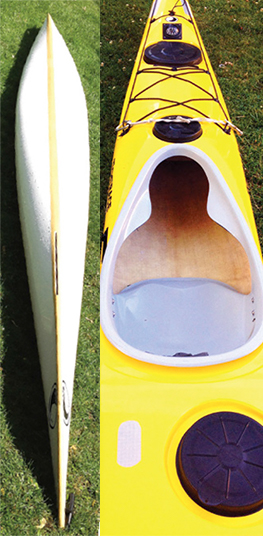
With a narrow, 20-inch beam, low foredeck and very low profile aft deck, the Xplore-S is the smallest size in the Xplore range. The lines have a refined quality that showcases the CAD (computer aided design) expertise of Tiderace designer and founder, Aled Williams. If Williams’ name sounds familiar, it should—he’s made memorable appearances cartwheeling a sea kayak and surfing the Falls of Lora in the This is the Sea DVD series.

The Xplore-S offers great speed with few sacrifices in mobility. Downwind, it is able to catch fast-moving wind waves without hitting the dreaded bow-wake—a common companion to the upswept prows of British kayaks— that signifies the final threshold of speed. This puts the limits of speed on the paddler where it belongs, rather than on the kayak.

Putting the Xplore-S on edge offers significantly increased mobility with solid and predictable results. With a shallow V hull and moderate chines, it hangs on edge very comfortably even in lumpy conditions. Pivoting 360 degrees on flat water requires little edge, and the kayak comes about quickly. Playing in short-period surf on the Great Lakes, there was no wobble when we heeled it over to the chine and spun around on the backs of the waves to get in position for the next ride.

Surfing any sea kayak on waves taller than three feet will inevitably result in pearling or broaching, but the Xplore-S gives plenty of warning prior to the event. With subtle shifts in weight, edging and rigorous application of directional rudder strokes, we could control broaching and fun nose-diving, or back off from a terminating ride.

The Xplore-S features Tiderace’s signature sloping deck at the cockpit, offering ample legroom for a more upright leg position when dynamic forward paddling, and the ability to grab with your knees when needed for edging and rolling.

Hull and top of yellow sea kayak
Photos: Keith Wikle

Tiderace has made a new industry standard with its composite construction technique of using biscuit-tin hull-to-deck seams that are then glassed inside and out. Williams has also pioneered the use of a resin-filled core between multiple layers of fiber material.

This creates boats that are stiff without being brittle—as I can attest after surfing bow-first into a pier and emerging unscathed—and sturdy without being excessively heavy. Consistency is Williams’ other great asset—we’ve never seen a Tiderace that didn’t display superlative construction.

Most expedition kayaks pay lip service to the LV market while intending to appeal to a much wider range of paddler weights and sizes. Tiderace has offered a rare thing, a truly scaled-down version of a fast and mobile expedition kayak that is at home on the open water, surfing the beach or ducking behind rocks and through arches.

Clever curves

Subtle changes in volume through the bow and stern give the Xplore-S both speed and maneuverability when edged.

All-day play

The molded seat pan and separate adjustable backband of the Xplore-S offer great comfort off the shelf, but both can be repositioned further forward or back to suit.

This article was first published in Adventure Kayak‘s Summer/Fall 2012 issue. Subscribe to Paddling Magazine’s print and digital editions here , or browse the archives here.


When it comes to sea kayaks, Kalamazoo, Michigan-based Keith Wikle is pretty fussy. It took an Xplore-S to pry him out of his vintage Nigel Foster Silhouette.

Tech: Messages from Space

Tech: Messages from Space

This article on adventure tech was originally published in Adventure Kayak magazine.

When Adrian Meissner, the operations manager at Boundless Adventures, an outdoor adventure center located across the river from the Adventure Kayak magazine office, sends a group into the backcountry, he does so with both a GPS satellite communicator and a satellite phone.

“For one season a few years ago while we were waiting for sketchy Globalstar satellite phone service to improve, we purchased a couple SPOT satellite messengers for back up,” Meissner says. “Even after we switched to Iridium phones with a stable voice connection, we still use both technologies together.”

The four-button simplicity of the early satellite message devices turns out to be their most limiting factor. Users are given only three options, two of which you pre-program in advance and one is a direct line to the cavalry via the GEOS international search and rescue center.

The challenge is the one-way nature of these devices. You must think of all possible situations in advance and create a plan for what each predetermined message might mean in order to use them effectively.

Meissner’s staff team have agreed that the OK button and its mes- sage means the group needs logistical help. “If we get this message and we see the location of the group is on a shuttle road, we know the situation is not personal injury or illness and we’d suspect van trouble and begin to react accordingly.”

Meissner uses the Help button for personal injury or illness situations, setting into action a different response protocol. In either case, Meissner’s staff then turn to their satellite phones to further troubleshoot the problem and formulate a plan.

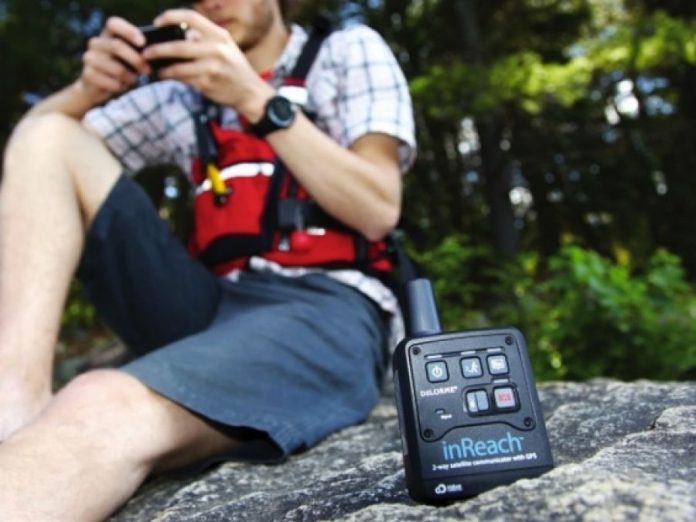
Global two-way satellite communicators, like the DeLorme inReach, do on their own what the magic orange boxes have always done—send preplanned messages, coordinates and tracking. However, when you sync the inReach via Bluetooth to either an Android or Apple mobile device running DeLorme’s free Earthmate App you have so much more. You can write 160-character messages and send them to anyone in your phone’s contact list and receive their replies just like regular texting, except via satellite rather than a cellular network. The app also allows you to post to Facebook and Twitter and you can install DeLorme’s terrain maps and downloadable NOAA nautical charts.

For Meissner, two-way messaging is a game-changer. “This may prove even better than our satellite phones. With texts you have a record of the conversation, you’re not scribbling things down and you have time to think and plan your response, rather than rushing to reply because you’re worried that your call may be dropped.”

This article originally appeared in Adventure Kayak, Fall 2012. Download our free iPad/iPhone/iPod Touch App or Android App or read it here.

Safety: Don’t get hit by a ship

Safety: Don't get hit by a ship

This article on safety was originally published in Adventure Kayak magazine.

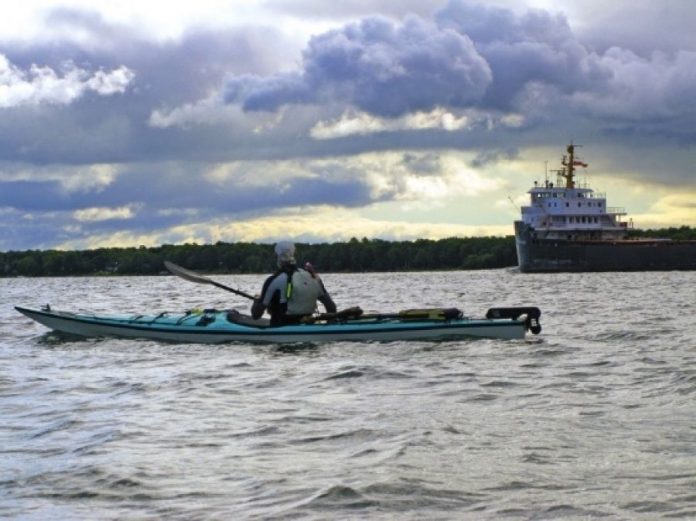
Few paddlers have shared the water with container ships, ferries and tugs and never pondered the frightening, one-sided consequences of a collision. The watery rules of the road enforced by the Coast Guard—bluntly known to lawmakers as Collision Regulations—require that large, motorized vessels yield the right of way to human-powered craft like sea kayaks. But in reality, “might has right” is a more appropriate adage.

The cardinal rule for kayakers is to minimize time in busy shipping channels. If you must venture into busy waters, be aware of ships’ locations and directions of travel, as well as their inherent limitations to visibility and maneuverability. Never take for granted the speed at which large freighters can travel—in excess of 20 knots in open water.

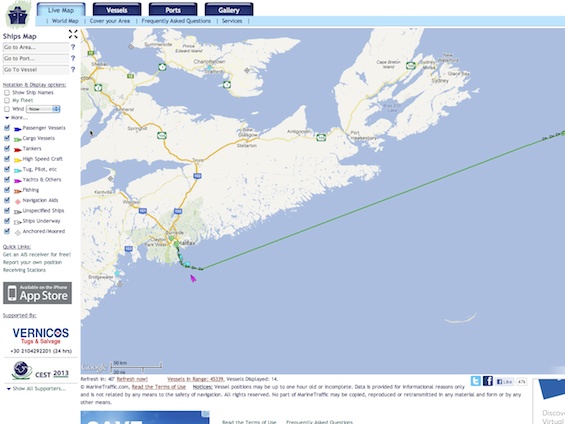
Now, however, sea kayakers have a secret weapon for negotiating shipping lanes. The University of the Aegean in Greece maintains a website that monitors large vessel traffic worldwide, including all coastal areas and major inland waterways like the Great Lakes. Marinetraffic.com provides the real-time position and projected course of cargo ships, tankers, ferries, high-speed craft, tugs, yachts and fishing vessels on Google Maps, including vessel speed and heading, and the ability to track a ship’s progress for up to 48 hours. It also provides wind speed and direction, gleaned from federal sources like the National Oceanic and Atmospheric Administration (NOAA).

The website gathers information from vessels’ automatic identification system (AIS). The International Maritime Organization requires all vessels over 299 gross tons to carry an AIS transponder on board, which includes the boat’s name, dimensions, home port, operator and voyage details, and constantly relays position, speed and course to satellites. Besides improving boater safety, University of the Aegean engineers designed the website to develop navigational algorithms to improve shipping efficiency and correlate ship traffic with pollution patterns.

MarineTraffic.com

Of course, web-based, electronic technology has limitations for paddlers. Marine Traffic offers an application for iPhone users, but unless you’re willing to dig out your phone while you’re on the water, you’ll be guessing the location of ships. Still, since the majority of traffic concerns occur near urban areas, Toronto-based sea kayak instructor David Johnston says the ability to live-track vessels is a huge safety advantage.

“We get international ships in the harbor here all the time,” he says,“so this could be fun to play with from a tourist on the water perspective. The other angle would be if you were planning a crossing through shipping lanes. You could check the app to see if any big stuff was creeping up around the corner.”

Visit www.marinetraffic.com to plan your next trip through a shipping lane.

This article originally appeared in Adventure Kayak, Fall 2012. Download our free iPad/iPhone/iPod Touch App or Android App or read it here.

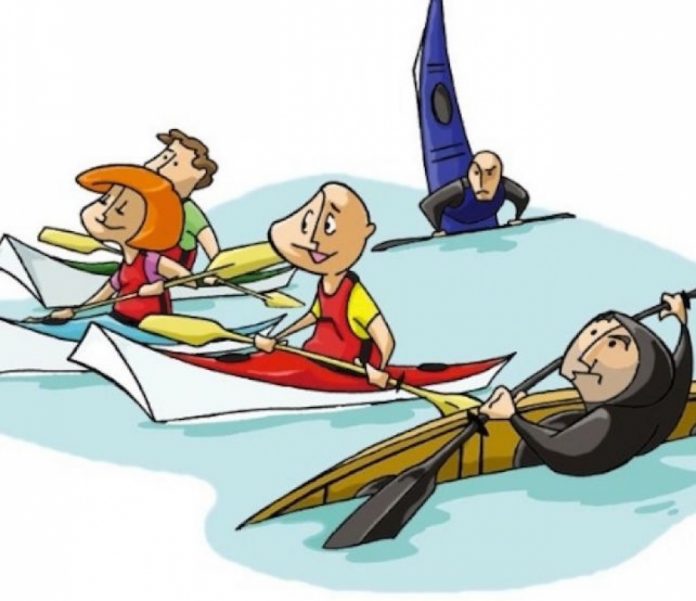
Rock the Boat: Why is John Dowd Lonely?

Illustration: Lorenzo Del Bianco
Rock the Boat: Why is John Dowd Lonely?

There was a time in the early ‘90s that the Clayoquot Sound beach on which I live was host to half a dozen private groups of kayakers on any one evening. Sometimes, as many as 50 campers vied for a spot to put their tents during the summer months.

During the summer of 2011, it was a very different scene. Calm seas and mild weather did not entice the numbers of previous years. Labor Day brought silky seas and warm, sunny days but the only campers on our beach were hikers dropped there by water taxi.

From April to September, the groups that did arrive were mostly instructor training or outdoor programs run by colleges and high schools. The rest were a smattering of commercial tours with their distinctive green and white tarps and customers who always look just a little out of place.

What’s going on?

To answer that question, I have to go back 10 years to a consulting job I did for a retail store that sold dive gear in one half of the shop and sea kayaks in the other. I asked the staff what they were really selling on the dive side of the shop. After much discussion they agreed they were selling a sense of belonging. Belonging to a society whose members had undergone a rite of passage. They had completed the courses and received the blessing of their peers. They were certified divers.

So what about the sea kayaking side of the shop? There they agreed that they were selling free- dom. It was noted to the surprise of the shop’s owners that the crossover was barely 15 percent. This difference isn’t one of chance. When sea kayaking began to take off in North America

in the 1980s, I was in the midst of it as a publisher, retailer and manufacturer. The sport’s popularity at that time was due in large part to a conscious focus upon accessibility to ordi- nary folk, especially women and families.

We realized that we had to avoid the macho whitewater attitude with its over-emphasis on technique. Rolling, surveys told us, was a turn-off for most of our customers, and not much use for the most common emergency situation in which a paddler becomes gradually overwhelmed by conditions.

We had the British as an example of what not to do. Across the pond, a thriving post-war kayak industry had been reduced to a tenth of its glory of the ‘50s and ‘60s. Instructors bent on right and wrong had scorned and certified the kit-built boat people and their simple craft out of the market, replacing them with heavy West Greenland-style boats that appealed to a very different crowd. From family activity, “sea canoeing” became 90 percent young males.

I am convinced that the reduced number of serious sea kayakers who appear on our beach each year has to do with the shift of sea kayaking from a freedom-centered activity to a belonging or following activity. The first question a new member to a local sea kayak club was recently asked by other members was,“What level (of certification) are you?”

New books on sea kayaking do not emphasize seamanship, which is at the heart of the activity, but focus in excruciating detail on an array of marginally relevant whitewater strokes and a forward stroke taken straight from flatwater racing. The distinction between surf kaya- king and sea kayaking has become blurred. The mood has changed.

I predict that those who have brought about these changes will find themselves regulating a smaller and less freedom-loving group. Such few kayakers who make it out to our beach under their own power will be the remnants of an old guard I’ve come to know and like so well.

We can talk about life, not just levels.

John Dowd is the author of the classic text, Sea Kayaking: A Manual for Long-Distance Touring, and paddled from Venezuela to Florida in 1977, long before kayakers carded each other.

This article originally appeared in Adventure Kayak, Fall 2012. Download our free iPad/iPhone/iPod Touch App or Android App or read it here.

Paddling at Frontenac Provincial Park

Watch this episode of Rapid Media TV to learn about Ontario’s most southern wilderness park, Frontenac Provincial Park. We learn from Mark Hall how his short boat designs with Delta Kayaks are making waves in the industry and Scott MacGregor show you how to make sure your boat makes it to the water and back.


French River Canoe Trip

This is a Canoeroots Digital Extra Feature from the French River in Ontario, Canada. We spent 4 days with Black Feather enjoying this historic river, meeting families from all over the world and find out why they chose this river trip (and why you should too!).


Read more about family friendly river trips by clicking here

Deliver Me From Ego

Photo: Larry Rice
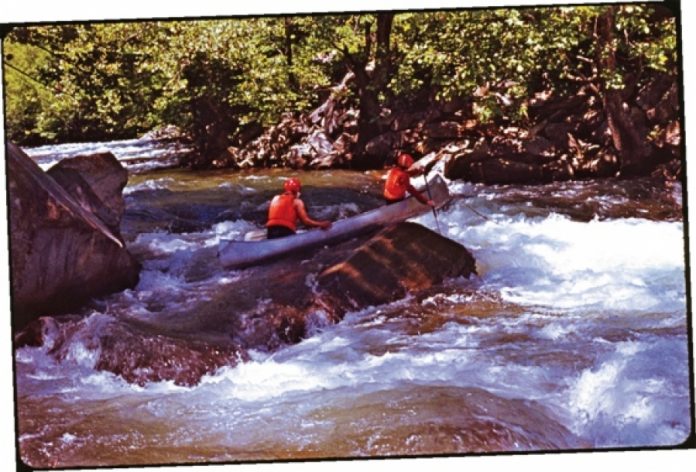
Canoeing the Chattooga in 1975. Photo: Larry Rice

It was spring, 1975. I drove south with a handful of friends from Chicago to tackle the raging river that author and poet James Dickey had mythologized a few years earlier. We were among a huge wave of city slickers making a pilgrimage to north Georgia’s Chattooga River after seeing the disturbing and powerful movie, Deliverance.

Like many of our fellow adventureseekers, we had no idea what we were getting into.

Before the 1972 release of this AcademyAward-nominated film, only a small number of paddlers had explored the Chattooga’s remote, thickly wooded gorges. However, in 1974, due in large measure to its abrupt and unexpected fame, the Chattooga was designated a National Wild and Scenic River and boating use skyrocketed to roughly 21,000 float trips per year. Not surprisingly, a fair share of these giddy rivergoers were ill-informed and ill-prepared. During the year after Deliverance appeared in theaters, 31 people drowned while attempting to paddle the same stretch of river featured in the film.

Photo: Larry Rice

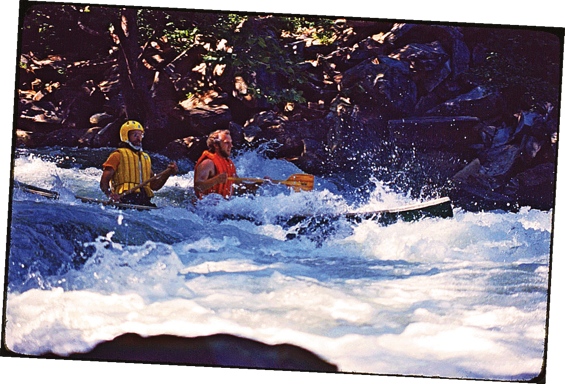
“Hey, what happens if we flip this thing over?” —Bobby, Deliverance. Photo: Larry Rice.

We knew none of this as we camped peacefully along a manageable upper stretch of the Chattooga. The following morning we entered Section III—a 13‑mile run of class II–IV drops and ledges. We endured several capsizes and bruising swims, loaned wetsuit jackets to two other canoeists we found on the verge of hypothermia and helped evacuate a kayak party that had suffered a near drowning.

One of our canoes, my buddy’s prized 17-foot aluminum Grumman, never left the river. It remained wrapped like a shiny pretzel around a mid‑stream boulder between the vertical rock walls of the Narrows, a sobering reminder of our arrogance and ignorance.

Not even knowing it was there, we miraculously stayed upright through notorious Bull Sluice, a killer class IV, before reaching the take-out in the dark. Humbled, bloodied and chastised, our only consolation was that we had finished the trip in better shape than Burt and Jon.

Now, decades later, I hope I’ve learned at least a few things to help smooth those choppy waters. But this I confess: when I think of returning to the Chattooga, I can’t shake a little lingering dread.
Still, the remarkable thing about river tripping is also my inspiration for a sequel: no two runs are ever alike. Which means that one day I might be delivered down the Chattooga with a smile on my face instead of an arrow in my ego.


Buena Vista, Colorado-based Larry Rice runs rivers about 100 days each year. The next time he tackles Bull Sluice, he’ll be counting on skill, not luck.


This story originally appeared on page 8 of the Early Summer 2012 issue of Canoeroots & Family Camping Magazine. Read the entire issue here.

True Story

Photo: Ryan Creary
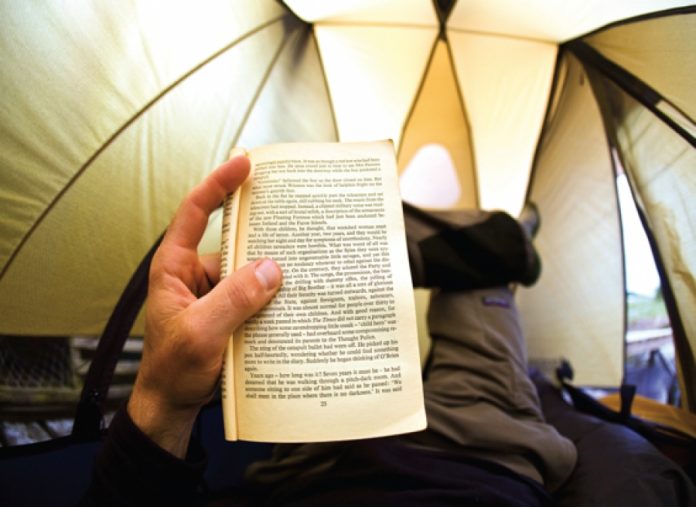
Going By The Book. Photo: Ryan Creary

After dinner one particularly harsh evening early this spring, a group of friends and I were sitting around my kitchen table, pining for warm weather, ice out and the freedom to enjoy being outside again without having to think about the cold. Surrounded by half-empty bottles of wine and dirty dishes, we started talking about what gets us through unforgiving winters. Cross training. Skiing. Climbing. I usually advocate for getting outdoors but this time I moved the conversation inside. My go-to has always been to turn to a well-written adventure story.

Authors like Jon Krakauer, Jon Muir, Bill Bryson and Henry David Thoreau were discussed around the table. Something lit up inside each of us as we shared vivid memories of devouring the tales, many of our own misadventures inspired by the fantastic chronicles we’d read. The mark of a good book is a memorable storyline. The best book, it turns out, awakens memories of exactly where you were and what you felt while you read it. My earliest recollection of just such a true-to-life adventure was the story of Don and Dana Starkell.

I remember sitting cross-legged on the carpet of my fourth-grade classroom like it was yesterday. My teacher, Mrs. Hawes, read us the harrowing story of the father and son who paddled their canoe from Winnipeg, Manitoba, to Belem, Brazil.

I can’t remember whether the other kids in my class were as captivated as I was, but I do recall my own wonder at Paddle to the Amazon. I knew that this adventure story was diff erent from The Rescuers Down Under, The Never Ending Story or The Goonies. It wasn’t that the story is about canoeing, though I’m sure the book did contribute to my love of paddling. My nine-year-old mind was rapt by the fact that the book is about actual people and places.

The notion that real people could accomplish such a feat amazed me. These weren’t cartoon characters taking on bandits, jungles, sickness and outlaws; just a blue-collar father and son from the prairies. That’s why books like Paddle to the Amazon are so important. They plant seeds in young minds, teaching them that anything is possible and, perhaps more importantly, they remind adults that beyond ambition, you don’t need to be particularly extraordinary to take on a great challenge.

This year marks the 30th anniversary of the completion of the Starkell’s two-year, 12,810-mile trip. I picked up a second-hand copy of the book a couple of months ago and dove in. Twenty years after it was first read to me, it still conjures up a mix of giddiness and awe.

Don Starkell lost his battle with cancer in January, but his stories continue to stir reader emotions. And while few will fill his shoes in the paddling community, we are fortunate that there are intrepid adventurers out there who strive to share their stories with us, seeing us through long off-seasons and captivating the imaginations of impressionable fourth graders.


Michael Mechan is always looking for books that inspire, new and old alike. Send your adventure reading list to editor@canoerootsmag.com.


This story originally appeared on page 6 of the Early Summer 2012 issue of Canoeroots & Family Camping magazine. Read the entire issue here.