Home Blog Page 323

Skills: Shoot the River Like the Pros

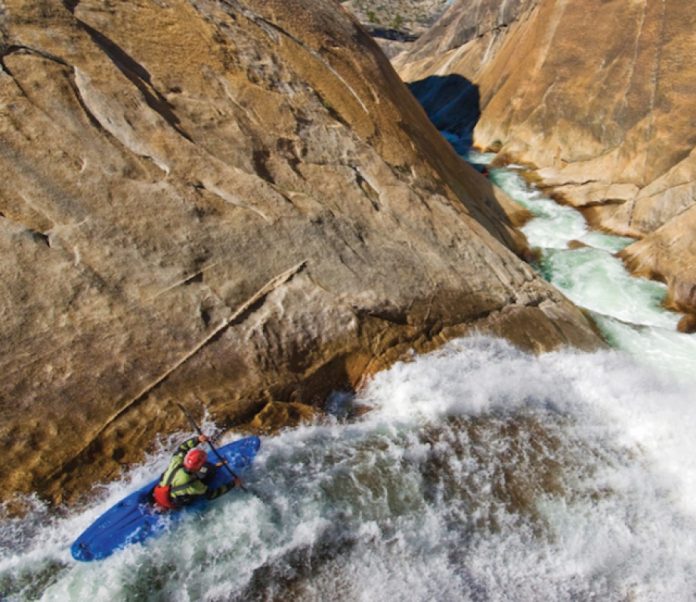
Photo: Darin McQuoid
Skills: Shoot the River Like the Pros

If you’ve never wished you could capture the pulse- quickening feeling of a rapid or the expression on a friend’s face just above a drop to share and enjoy later, then might we suggest skipping this article. But if, like most paddlers, you recognize the power of an evocative photograph, there are no better teachers than the talent we’ve tapped for the very first Rapid Photo Issue. 

COMPOSITION IS KEY

Spend time achieving a deliberte composition. To do this, I frame the scene and let the paddler move through. With experience you’ll know where the paddler is trying to go and anticipate the crux moment. 

The only time you may want to follow a paddler through a rapid is in big water or for a generic, up-close paddling shot.

FOR STRIKING IMAGES, REMEMBER THESE RULES:

  • The best shot is never from your boat and rarely from river level. Getting a good angle requires hiking.
  • Put the paddler at the edge of the frame, not the center.
  • Leave space for the paddler to move into—this builds suspense. Shoot for the moment of anticipation and create drama with the unknown.
  • Don’t tilt the lens to make a drop look steeper than it is—this is always obvious and looks tacky.
  • Shoot more than just the rapid—river canyons are beautiful!

If you have the time, shoot a lot. Try a different angle or zoom setting for every person that runs the rapid. You’ll learn a lot about what works, and what doesn’t. 

METHODS OF ADJUSTMENT

STOP: A stop is a measured amount of light that is consistent across all methods of adjust- ment. For example, you can correct an underexposed image in one or a combination of three ways: slow down your shutter speed, open your aperture, or speed up your ISO by the required number of stops. On a bright sunny day, I’ll generally start off with a shutter speed of 1/800, ap- erture F/8, ISO 100. Then I’ll check the histogram and adjust as necessary, starting with aperture.

APERTURE: Along with shutter speed, aper- ture—or F-stop—controls the amount of light reaching the sensor. The numbering seems backwards—the smaller the number, the larger the aperture. Larger apertures permit low light shooting without sacrificing action-freezing shutter speed, but reduce the depth of field—the amount of fore-, mid- and background that is in focus.

SHUTTER SPEED: Faster shutter speeds stop action but don’t let in much light so they are challenging to use in deep, dark river canyons. Slower shutter speeds expose the sensor to more light, but moving objects like water, kayakers and paddles will blur. I consider 1/500 the absolute minimum when trying to freeze action. A better range is 1/800 to 1/1250. Shutter speed is the weakest of the three methods for adjust- ing exposure, because you only gain one stop of light going from 1/1000 to 1/500.

ISO: The digital equivalent to film speed. Lower ISO speeds absorb less light than higher ISO but retain better detail and color and less noise (digi- speak for grainy looking photos). As a rule, keep your ISO as low as possible for the situation. 

SHOOT FOR THE LIGHT

Understanding light consists of a few basic rules mixed with experience. The most common mistake is to choose your angle for the rapid, not the light.

Early on, I thought sunny days were best for shooting action, since they allow medium apertures, fast shutters and low ISO speeds. Unfortunately they also limit your ability to shoot the angle you want.

Sometimes it can take years to get a shot because you have to camp at a certain location to shoot in the morning, on a run that flows only once a year. As you repeat rivers, remember key locations to shoot from, and what time of day will give you good light from that angle.

The most basic rule for whitewater lighting is to shoot with the sun behind you. It’s as simple as checking your shadow. This reduces glare, improves color saturation and, if the sun is low enough, lights up the paddler’s face. On the West Coast, this means shooting downstream in the morning and upstream in the afternoon. Vice versa on the right coast. At mid-day you are more or less limited to an overhead shot. If you have no option to get the sun behind you, use a good polarizer.

Although it is tricky since we can’t paddle in the dark, try to shoot near dusk and dawn for the most dramatic soft lighting.

If you’re shooting in the shade, try to exclude any direct sunlight from the frame, unless you see a specific bright spot that will highlight your subject. Don’t be afraid of mixed lighting when it can work to your advantage.

My favorite condition is when high cloud cover causes the light to naturally “lightbox.” Lightboxes are used for studio shoots and disperse the light so it’s even from all angles. You will need fast lenses or a camera with good high-ISO performance to maximize the light on these days, but you can shoot from your angle of choice with nice, even lighting. 

GETTING THE RIGHT EXPOSURE

Any bright day on the river has a large dynamic range. This means that there is a vast difference from light to dark. Our eyes are amazing at taking in large dynamic ranges, while cameras are quite limited. Left to their own de- vices, cameras overexpose whitewater making it pure white and losing texture.

Welcome to the world of the histogram.

I shoot with my camera set to manual mode and adjust the exposure myself, using the histogram to achieve the right exposure. The histogram is a graph of the light captured by the camera sensor. It is the perfect tool for getting the correct exposure.

The most natural look for a scene where the dynamic range is too great is to adjust the exposure so detail is lost in the shadows (the left side of the histogram) but not the highlights—otherwise the image will appear washed out.

Ninety-nine percent of the time, the correct exposure for whitewater should look like the images at left. The graph needs to drop down before the right edge of the histogram to preserve highlight (whitewater) detail. 

FINDING FOCUS

Another make or break component to any action shot is sharp focus. Digital cameras focus best on areas with straight lines and high contrast, not exactly the prime features of whitewater.

Switch your auto-focus from the shutter release to the AF-ON or AE-L/ AF-L button. Also put your camera in continuous AF mode for greater accuracy. You can find out how to do this in the manual of any DSLR.

I use the central AF point on my camera and focus using AF-ON to the anticipated crux and paddler visibility. Then I reframe my shot to the original composition and wait for the paddler to move through.

If the camera struggles to lock focus where you want, look for an outstanding object like a rock the same distance away and use that as your focus point.

When following a paddler through a big water or up-close shot, choose the furthest outside AF sensor that will put the paddler moving into the frame, and then hold down the AF-ON button and keep the sensor over the paddler as they move past. Use this same strategy for panning (see below).

If your camera has focus tracking with lock-on, set the delay to normal or longer so waves or objects passing by in the foreground don’t distract the AF. 
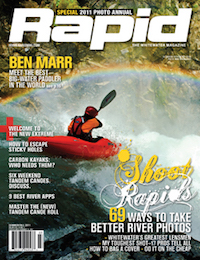
This article on photography tips was published in the Summer/Fall 2011 issue of Rapid magazine.This article first appeared in the Summer/Fall 2011 issue of Rapid Magazine. For more great content, subscribe to Rapid’s print and digital editions here.
Gull Race: A Race for Everyone

Photo: Marilyn Scriver
Gull Race: A Race for Everyone

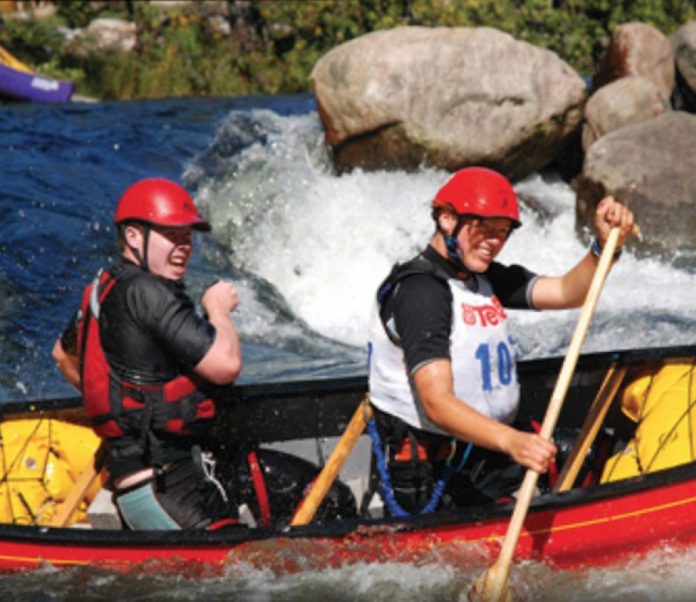
Thirty-one years ago, the first Gull River Open Canoe Slalom Race took place at the Minden Whitewater Preserve in Ontario. Since then, the event has become a classic, serving as a model for engaging new paddlers and growing grassroots participation, all while retaining top-level competitors.

Whitewater canoeing groundbreakers Wendy Grater, Fred Loosemore, George Drought, Jim MacLachlan and Maureen Bretz founded the event. “At the time, you could only race on a gated course at decked-boat slalom events,” says Bretz. “We felt there was a need for a slalom event just for open canoes.” During the first few years, 17-foot tandem tripping boats with truck in- ner tubes for flotation dominated the river. “There were almost no dedicated solo boats,” recalls Bretz.

Slalom canoeing rewards both strength and experience. This led to the addition of a Master’s class during the race’s second decade, for the growing set of men over 40, tired of being outdone by the young summer camp guides, home after a season on the river.

In 2003, the category was expanded further. “The first year I was coordinating the event, we introduced a solo class for Women’s Masters,” says then race director and medalist, Beth Kennedy. “There were only a handful of paddlers that first year but the class has since grown to the same size as the Women’s Solo category.”

Last year—the event’s 30th anniversary—a new category was added once again, as aging race organizers vied for glory and hardware. The Legend’s class gives men and women over 55 a break from the now crowded Master’s class. Before the introduc- tion of the Legend’s category, the same boaters consistently won the Master’s. “The over 40 class was starting to get crowded, with most of the best paddlers now qualifying for that category,” says longtime competitor, Peter Farr. “It’s great to be able to race in the Legend’s class where there’s room to move up the standings.”

CREATING A FAMILY-ORIENTED RACE

The Gull Race has also evolved into a family gathering. The Solo Men’s, Women’s and Junior’s classes consist of a range of paddlers from North American champions to those who dust off their canoes for their third or fourth run of the season. The Junior–Senior Tandem class usually consists of proudly grinning parents paddling with their children, like Rapid publisher Scott MacGregor and his son, Doug. “Racing with Dougie is the most fun I’ve had at the Gull,” says MacGregor. “We started racing together when he was four.” Doug’s medals hang on his bedpost all year long.

As modern whitewater open boating matures, so do pioneers like Bretz who continues to compete every year. “Where else can you see a competitive, challenging slalom race where the youngest competitor is three and the oldest is in their 70s?” says Bretz. “It serves as a breeding ground for new paddlers, having junior boaters mentored by others.”

With a record number of race starts there is clearly a demand for competitive, family-oriented events like the Gull Race where world-class open boaters race alongside legends in the making.

Mark Scriver enters the Gull Race yearly. While he’s creeping up on Legend status, he also keeps up with his sons. For more info on the event, visit www.whitewaterontario.ca.

1RPv13i3.jpgThis article first appeared in the Summer/Fall 2011 issue of Rapid Magazine. For more great content, subscribe to Rapid’s print and digital editions here.
 

Carbon Boats: Who Needs Them?

Photo: Patrick Camblin
Carbon Boats: Who Needs Them?

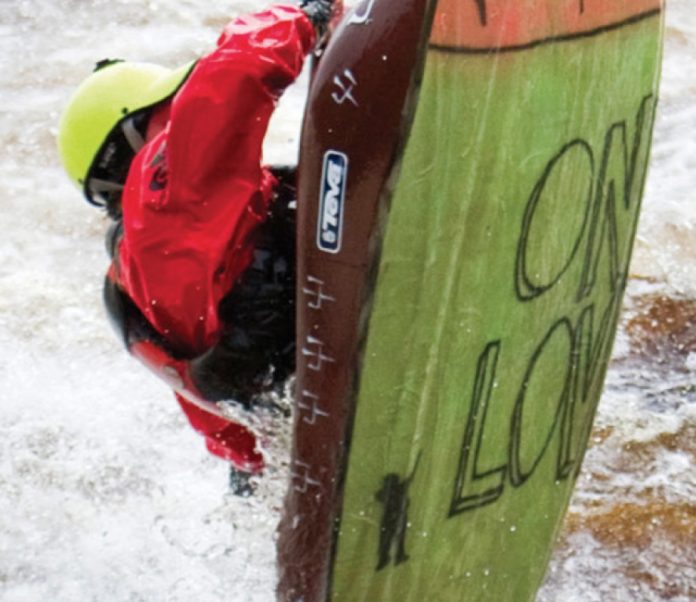
The recent rash of carbon fiber playboats from mainstream kayak companies —think Wave Sport, Jackson and Fluid with Pyranha poised to follow—and specialized manufacturers like freestyle sector upstarts Black Sheep, Titan, ZET and Vajda, has some kayakers wondering: who needs carbon, anyway? Can it really make the average playboater that much better or is this just a new toy to keep the pro paddlers happy?

Black Sheep Kayaks designer and builder Dave Nieuwenhuis says, “The upper echelon of freestyle paddlers are the ones buying or ex- pressing interest in carbon boats. The majority of kayakers couldn’t justify owning a carbon boat simply because of where they paddle.”

Why does it matter where you paddle? Rocks.

Nieuwenhuis compares a carbon boat to a high-end sports car, “Your Ferrari might soak up a few bumps and your carbon boat should handle a few rocks, but do you really want to test that out?”

This means you need to avoid shallow features, sliding down the banks into the water and throwing it in the back of your truck to rattle around. And you really ought to tuck it into a soft, cozy boat bag to prevent scratches and sun damage.

The other disadvantage for the average boater is the hefty price tag— about two grand more than a plastic counterpart. For some serious riders, however, the siren song of carbon is simply irresistible. Canadian Freestyle Team member Keegan Grady worked all winter to save up enough money to buy a carbon boat, “It’s the best investment I’ve made in my riding to date.”

REACTIONARY AND SUPER LIGHTWEIGHT

So what makes carbon such a good investment? More stiffness and less weight. Nieuwenhuis explains, “Although a plastic boat may appear to be stiff on the water, the upward deflection of the plastic hull is unavoidable. It’s simply the nature of the material. Carbon boats with foam cores have zero hull deformation and the result is an incredibly stiff surf that gives the truest sensation of floating. They surf like nothing else.”

The feathery weight of carbon is equally important. “Carbon boats are extremely responsive and seemingly effortless in comparison to similar plastic boats,” Nieuwenhuis continues. Which is why more and more pro freestyle paddlers are converting to composite.

Level Six Capital Cup 2011 champion and carbon advocate Adam Chappell says, “It took awhile to dial in tricks because the boat was so reactive on a wave. Now I don’t think I could ever go back to paddling plastic.”

At the 2009 Freestyle World Championships in Thun, Switzerland, plastic boats dominated a smattering of then just-emerging composite rides. Still, when this magazine went to press, carbon ruled the quivers of top paddlers competing at this summer’s Worlds.

So, despite their disadvantages for the average paddler, carbon boats clearly have their place on the water. But do they make you a better boater? Not according to Grady, “Carbon boats are an undeniable advantage, but I think the best rider will win regardless. The 2009 Worlds were a testament to that.” 

This article on carbon playboats was published in the Summer/Fall 2011 issue of Rapid magazine.This article first appeared in the Summer/Fall 2011 issue of Rapid Magazine. For more great content, subscribe to Rapid’s print and digital editions here.
Games: Always Leave ‘Em Laughing

Photo: Katie Vegvary
Games: Always Leave 'Em Laughing

Kayaking was once about survival. Hunting. Transportation. Now we mostly kayak for recreation. Yet how vital that recreation can feel to our structured modern lives. Games, competitive and cooperative, can enhance that sense of satisfaction.

Traditional paddlers have long competed in various events that kept them fit and honed their skills. Play does that—makes you practice often overlooked skills without realizing you’re doing your homework. In addition to developing physical skill and mental sharpness, it also provides social interaction and exercises the laugh muscles.

The games listed below are infinitely adaptable to fit the venue and the paddlers. 

SUBMARINE

IDEA: See how many people can sit on one kayak
PLAYERS: Best with five to 10 per kayak
PROPS: One sturdy kayak
REQUIRED SKILLS: Swimming
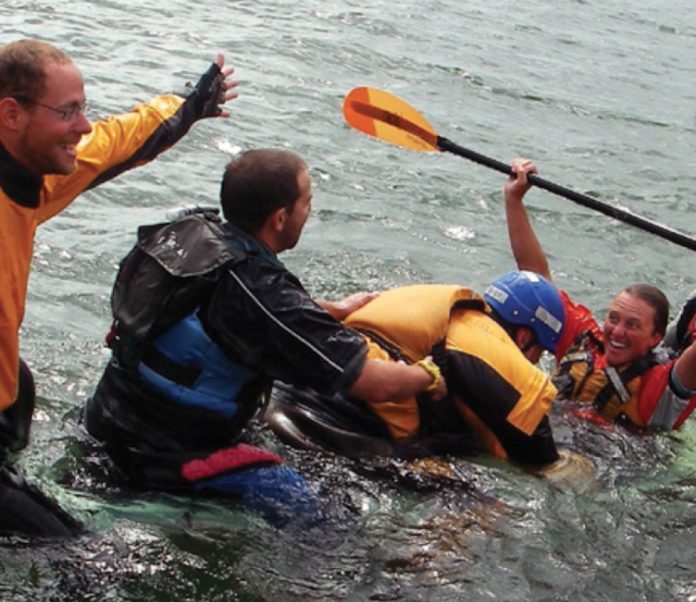
HOW TO: Add swampers (players) to the kayak until it submerges. Alternate option—flip the kayak over and try it on the hull.
VALUE: It’s all about balance and teamwork. This is a favorite game at kids’ summer camps.
BONUS: Bracing practice for the player seated in the kayak 

PREPOSTEROUS PROPULSION

IDEA: Move the kayak with a variety of unconventional tools
PLAYERS: Minimum four, six to 18 is ideal, in two or three teams
PROPS: One or two buoys, one kayak per team (or each player in his/her own kayak), one to four preposterous items per person, such as: a stick, football, beach ball, inflatable shark, broom, trowel, lawn chair, pool noodle, Frisbee, cup, kayak pump, helmet, bootie, PFD… 
REQUIRED SKILLS: Moving forward, turning
HOW TO: First person from each team grabs a preposterous item from the pile. Team members help him into the kayak and push. Paddler rounds buoy and returns, tags hand of next team member who grabs another item and takes her turn in the kayak. Discard each item after use. Competitive version counts the winning team as the first one that cycles through all its members once, twice or three times. Cooperative version sees how fast the teams can go through all the items.
CAUTIONARY NOTE: If Leon Sommé shows up to your Preposterous Propulsion game wearing helmet and body armor, brace yourself for a full-contact version, including flying kayak tackles off the dock!
VALUE: It’s cool to see which items work well and which are surprisingly lame. It’s not always what you expect. 

NOODLE JOUSTING

IDEA: Stand in or on your kayak while knocking your opponent off hers
PLAYERS: Two and up; make tournaments with more players
PROPS: Two foam pool noodles
REQUIRED SKILLS: Willingness to try standing in or on a kayak
HOW TO: Position two kayaks near each other but away from docks or other kayaks. Have both opponents stand and wallop each other with foam noodles until one or both fall in. Pick up the pieces.
VALUE: Just standing on the deck (or seat) of a kayak opens new horizons. It’s the epitome of balance. If you have the inner focus to stand up and wave a pool noodle about, then sitting in waves will be a piece of cake.
BONUS: Reentry practice.

This article on games to play with your sea kayak was published in the Summer/Fall 2011 issue of Adventure Kayak magazine.This article first appeared in the Summer/Fall 2011 issue of Adventure Kayak Magazine. For more great content, subscribe to Adventure Kayak’s print and digital editions here.
Rock the Boat: Kayaker, Interrupted

Illustration: Lorenzo Del Bianco
Rock the Boat: Kayaker, Interrupted

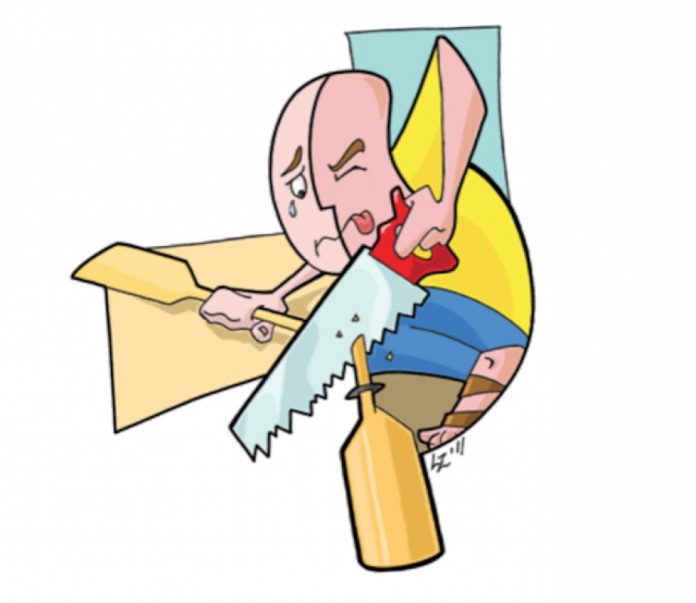
I rarely see my friend Jon any more. We’ve sea kayaked together for years, and he’s been a fixture in the open-ocean paddling community. But he’s disappeared. Disappeared into a canoe, and it’s all the fault of the Brits.

The new requirements of the British Canoe Union—in which Jon and many of my other sea kayaking buddies are coaches—require competency in multiple paddling craft and environments. Longtime sea kayakers had to cut their paddles in half and start kneeling in open boats on rivers.

Jon loves it, he’s addicted to half a paddle and boats that fill up with water when you crash through waves. He now has six canoes outnum- bering his kayak fleet.

So I did what anyone would in my situation—complain. Why does coaching sea kayaking require knowing how to canoe?

Of course, there are plenty of good reasons. Coaching means working with other sports in a student’s history, and canoeing is a common one. Coaches employ a variety of techniques to provide feedback to learners: using half a paddle is very effective. I’ve been in tight rock gardens where

I could only paddle on one side of my kayak anyway.

I stopped whining about my lack of partners for sea kayak adventures, dusted off my ancient whitewater kayak (two knee surgeries make kneeling in a canoe impossible), and joined them on the river.

“For every kayaker who starts canoeing, a canoeist must start kayaking.”

Soon I was hooked. Half an hour from home, the water was clear and clean, and the current pushed us along from one play spot to another. I upgraded my whitewater kayak and went on a seven-day river trip with my now kayaker-canoeist buddies. We didn’t once have to wake up at 5 a.m. to catch an inconveniently scheduled tidal current.

Then something even cooler happened. Suddenly, new river-rat friends wanted to go sea kayaking. Diehards from the single blade scene bought NDK Explorers and asked me about trips in British Columbia and Alaska. It was as if there was some Newtonian Law of Conservation of Paddlesports Disciplines I’d missed in high school physics, where for every kayaker who starts canoeing, a canoeist must start kayaking.

That also makes sense. When sea kayak coaches started canoeing, whitewater open boaters suddenly found themselves sharing eddies and shuttles with sponsored, 5-star kayakers with some hefty trips under their belts. The allure was irresistible. The sea kayaking industry couldn’t have come up with a better way to expand their sport.

Now I sea kayak with people who tell stories about open boating down the Grand Canyon. I recently watched a canoeist-turned-sea kayaker pull off a back ferry across Canoe Pass that his instructor couldn’t mimic. As the saying goes, “Advanced sea kayak strokes (like cross-bow jams) are basic canoe strokes.”

I see my old sea kayaking friends again. It’s anyone’s guess what kind of boats we’ll be paddling.

But these days Jon is really into poling—pushing his way upstream in a canoe with a 12-foot-long stick. I doubt that will catch on. It sounds kind of silly. 

Neil Schulman lives, writes, paddles, photographs and works in environmental conservation in Portland, Oregon. He owns four kayaks and no canoes…yet. 

This article on kayakers turning into canoeists was published in the Summer/Fall 2011 issue of Adventure Kayak magazine.This article first appeared in the Summer/Fall 2011 issue of Adventure Kayak Magazine. For more great content, subscribe to Adventure Kayak’s print and digital editions here.
Manhattan: Gaining Perspective in NYC

Photo: Dave Caldwell
Manhattan: Gaining Perspective in NYC

Sometimes, you need to step back from the battlefield to get perspective on the bigger picture. The picture I’m looking at encompasses an overflowing island metropolis in the foreground and, in the background, a river. It’s framed in red tape and hangs wearily. Should it fall, it will shatter into a million pieces, lost forever. That picture came to me last October as I headed to the Big Apple to paddle and ride around Manhattan Island.

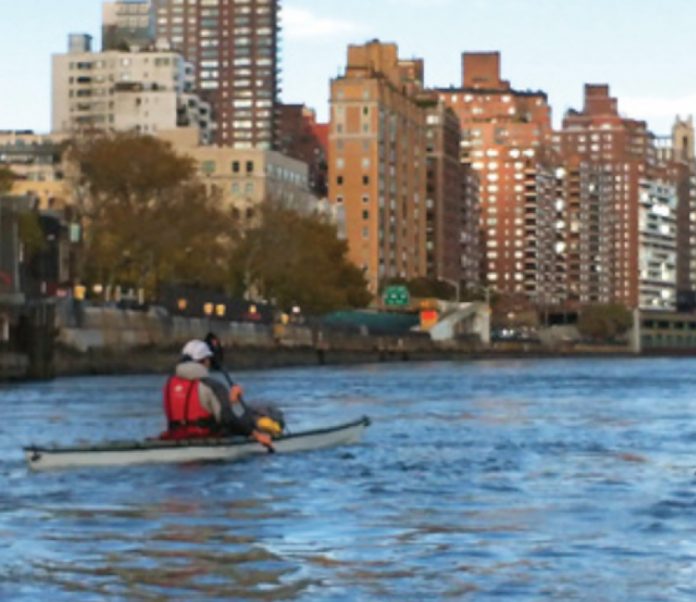
With three folding kayaks and three folding bikes, we were well equipped for our two-day venture. The goal of the trip was simple; to see Manhattan, its denseness and its grandeur, the clash of old industry and modern metropolitan life. None of us had been to New York City before.

Amidst the fury of downtown Manhattan, we anxiously unloaded our rides—three guys unfolding extra-small bikes with chrome fenders and oversized springy seats.

From Pier 66 we toured southwest to Ground Zero, grabbed a coffee, rambled through the maze of skyscrapers on Broadway Avenue amidst a rush of yellow cabs and pigeons, grabbed another coffee, continued to Times Square, grabbed a third coffee, and then ripped around Central Park. We finished our ride along the shore of the Hudson River, pedaling in darkness, the odd streetlight casting an amber glow on the endless backdrop of cityscape.

Viewing the chaos from its periphery

As our day came to an end, we felt a need to step back from the flashy lights, car fumes and crowds. To truly see the big picture that was Manhattan Island, it was necessary to view the chaos from its periphery.

The Manhattan Kayak Company, located at Pier 66, is well suited as a starting point for island paddlers. Even though the center was closed for the season, the staff was happy to provide local beta, such as this pearl: “Staten Island Ferries—the big orange ones—do not stop for anything.”

For paddlers, the relationship between a community and its natural environment is a no-brainer. Yes, I’m talking about river conservancy and the fact that the lives of not only river dwellers, but also entire communities, suffer from the ongoing degradation of their natural resources. Our eight-hour circumnavigation put the island into focus as a community, like so many other communities, which has overlooked its long-term dependence on the health of its ecosystems.

We paddlers slip neatly, and sometimes blindly, into our own communities of paddlers who understand this notion of preserving what we use to play and relax for the greater good. The picture painted by our paddle reflects the urgency that now, more than ever, is the time to help other communities understand.

Even urban islands of 1.6 million people, even centers of culture and finance, even Manhattan.

Cameron Dube is an outdoor educator and avid paddler based near the Ottawa River. He loves Starbucks. 

This article on big city perspective was published in the Summer/Fall 2011 issue of Adventure Kayak magazine.This article first appeared in the Summer/Fall 2011 issue of Adventure Kayak Magazine. For more great content, subscribe to Adventure Kayak’s print and digital editions here.
Editorial: Dating Secrets for Sea Kayakers

Photo: Vince Paquot
Editorial: Dating Secrets for Sea Kayakers

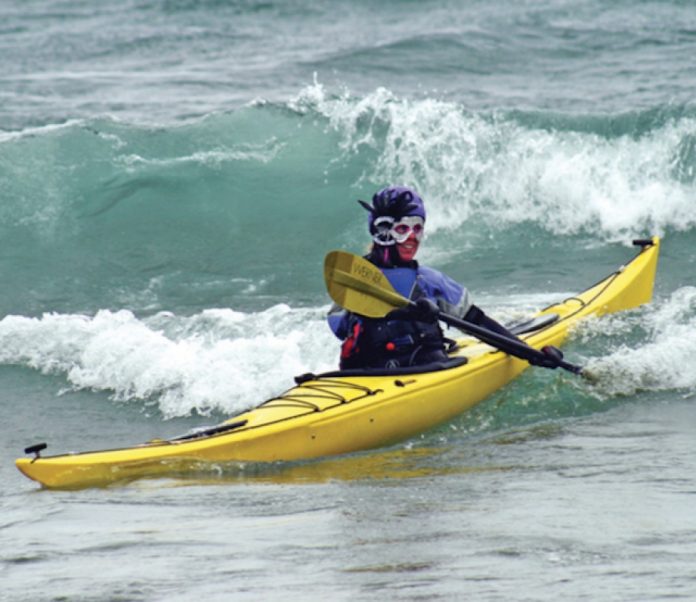
My first kayaking mentor called them Dates from the Dock.

Paddling moves so eye-catching, so linger-and-watch-awhile eccentric that some didn’t even involve paddling. Skills that were strange, but in a good way, like Ellen Page’s deadpan quips in Juno or Reese Witherspoon’s legal methodology in Legally Blonde.

Preoccupied with the only relationship that mattered just then—between the kayak and myself—waterfront seduction was furthest from my mind. Still, I practiced diligently.

Awkward, one-armed high brace turns eventually transformed into gracefully edged parabolas while I waved coquettishly to imaginary suitors. I sculled ever closer to the water until I could dip all the way down for a drink and then, lips pursed and cheeks puffed, squirt it skyward like a Roman fountain. My angel roll approached something almost angelic. Venus de Milo riding a kayak instead of a seashell.

Since those early revelations, I’ve heard messing around like this in your kayak called many different things, and seen it taught and practiced by some of the best instructors and paddlers.

{loadposition PTG_AK_Midcontent}

“I realize now that Dates from the Dock was just a ploy to divert my attention.”

BCU Senior Coach Derek Hutchinson is a proponent of moves like the aforementioned, one-armed high brace turn (a.k.a. Hutchinson Turn) because, he says, they get paddlers “beyond the cockpit” and experimenting with greater boat lean and edging. The legendarily dogmatic Hutchinson should know—he penned the first book on sea kayak education (The Complete Book of Sea Kayaking, now in its 5th edition), has designed over a dozen kayaks (maybe even yours—paddle a Current Designs Gulfstream, Sirocco or Andromeda?) and is regarded by many as the Father of Modern Sea Kayaking.

Sea Kayak Baja Mexico and Columbia River Kayaking owner/operator Ginni Callahan advocates jousting with pool noodles whilst standing in cockpits.“Games are a great way to practice skills and get more comfortable with the water,” she says, “as well as good exercise for the paddling and laugh muscles.”

Case in point: For the better part of a decade, Michigan-based instructor, kayak impresario and occasional stand-up comedian Kelly Blades’ kayak play workshops have drawn euphoric crowds at symposiums across the country. Participants take a break from bracing drills, video analyses and stroke improvement clinics to clamber around on the decks of their kayaks, spin around in their cockpits and—a move too often shunned by serious sea kayakers—splash frequently and spectacularly into the water.

I realize now that Dates from the Dock was just a ploy to divert my attention while the practical skills underlying each party trick developed unbidden.

Perhaps the only thing such shows of panache haven’t succeeded at (in my experience, at least) is seducing an actual date off the dock.

Virginia Marshall is Adventure Kayak’s senior editor. 

This article on learning skills in unique ways was published in the Summer/Fall 2011 issue of Adventure Kayak magazine.This article first appeared in the Summer/Fall 2011 issue of Adventure Kayak Magazine. For more great content, subscribe to Adventure Kayak’s print and digital editions here.


Sculling Brace Kayak Technique

Photo: Virginia Marshall
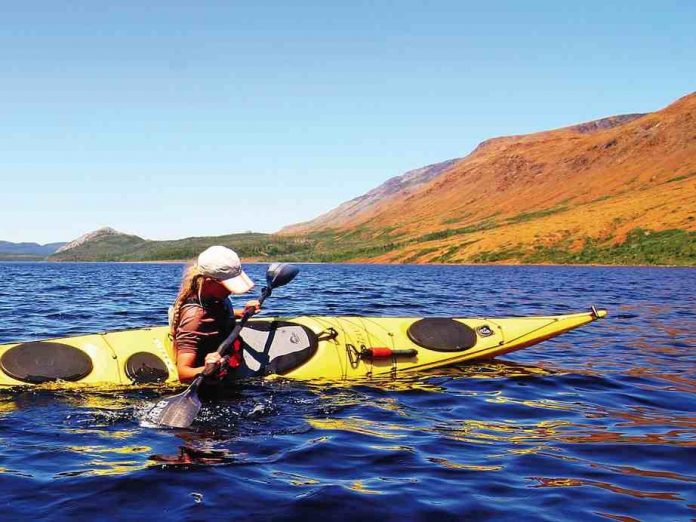
Practising the sculling brace.

This article offers tips and techniques for performing a high sculling brace from a kayak and was originally published in Adventure Kayak magazine.

Two points of stability allow you to balance more effectively than one. Sculling braces help you stay upright in tippy situations by acting as a second point of stability to your kayak. Practice the sculling brace by breaking it down into these three elements: body, boat and paddle.


Peer review

The scull should be about as long as
your cockpit with the blade just under the surface. Done properly, there should be very little aeration of the water. Your inward hand is just an anchor; it is your outward hand that does all the work changing the angle of the blade. » Michael Pardy, Paddle Canada level 3 instructor trainer, Victoria, BC

The angle of the blade will give more turn propulsion if it is closer to vertical, like a sweep, and more support if it is flatter to the water. This is useful for learning how flat an angle you want for a graceful sculling brace, and also how to put some support in your sweep stroke for confident edged turns in lumpy water. Blade angle is controlled by raising or lowering the elbow relative to the wrist, keeping the wrist neutral to prevent injury. » Ginni Callahan, ACA level 5 instructor and BCU level 4 coach, Cathlamet, WA

To be biomechanically friendlier as you edge further into the water, rotate your chest to the sky and roll the boat off your body, lessening the load on the paddle. This is similar to a Greenland static brace position. » Shawna Franklin & Leon Sommé, BCU level 4 coaches, Orcas Island, WA

I tend not to look at sculling for support as a stand-alone skill, instead it is a way to en- hance or add confidence to other skills and maneuvers. For example, when performing sweep strokes on the move, finishing a roll, or to perform braces on the move and prevent the blade diving. » Doug Cooper, BCU level 5 coach, Aviemore, Scotland


Body

For a high sculling brace, your elbows should be low with the paddle held horizontally near your shoulders. For a low sculling brace, your elbows should be high, directly over the paddle shaft, which is held horizontal above the cock- pit of your kayak. Use torso rotation to move your blade through the stroke.

Your lower body controls the position of your kayak. use your hips and knees to either hold your boat on edge, or to right the boat as with other bracing strokes.


Boat

Transferring some of your weight onto your sculling paddle will allow you to hold your boat on edge or recover from a near capsize on the sculling side. With a high sculling brace, your kayak can be held on almost any degree of edge, including nearly upside down.


Paddle

Skim your paddle back and forth across the water beside your kayak, maintaining pressure on the power face (high sculling brace), or the non-power face (low sculling brace). Keep the paddle on the surface by slightly lifting the leading edge of your blade.

To get a feel for this, swish your hand back and forth across the water, feeling the water pressure on your palm. As your thumb leads the way through the water, angle it slightly towards the sky. As your pinky leads, angle it towards the sky.

The transition points of the stroke—the points where you change your paddle’s direction of movement—offer little stability. There- fore, move the paddle at a slow to moderate pace and use longer strokes to reduce the number of transitions.


Sculling for Support

Use a high or low sculling brace to salvage a sloppy roll, to stabilize yourself when working your legs back into your kayak during a rodeo re-entry, or in any other situation where you need consistent extra stability.

Practice your sculling technique by moving your kayak in multiple directions using a sculling draw (sculling with a vertical paddle). Then bring the paddle back to horizontal and begin adding a little weight to the paddle as you scull back and forth. Finally, work on holding your boat further and further on edge while sculling for support. This gradual progression will help develop both your muscle memory and your confidence.

Meaghan Hennessy is a Paddle Canada Level 2 instructor trainer and BCU Level 3 sea coach based in Vancouver, British Columbia. She currently teaches for SKILS.


This article originally appeared in Adventure Kayak, Summer/Fall 2011. Download our freeiPad/iPhone/iPod Touch App or Android App or read it here.

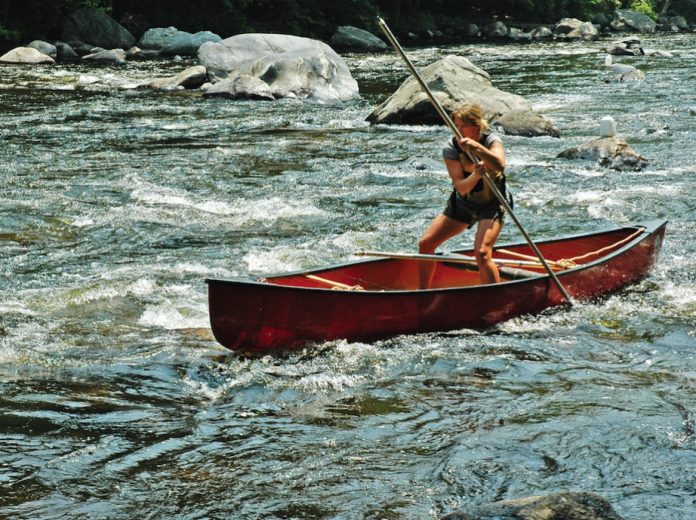
Canoe Poling Tips and Technique

Different sort of pole dancing. Photo: Sean Carapella
Canoe poling technique.

If you have discovered the power of canoe poling, you know that streams can be two-way streets and a canoe can be pushed upstream far beyond what is possible with a paddle. Rivers can be enjoyed in a simple up-and-back trip from the put-in, eliminating the need for a car shuttle.

Poking upstream in calm water is a great place to start, but as you progress, you may wish to confront stronger current. This is where poling gets technical.


Get in Position

Facing upstream in the eddy, stand with your feet square, one or two feet behind the center thwart to lighten the bow. A good rule of thumb for all upstream work is to keep the bow sitting higher in the water than the stern. Position the canoe very close to the eddyline and almost parallel to it, with the bow pointed slightly into the current.


Plant the Pole

Plant the pole on the eddy side of the boat. That is, the side away from the current you’re entering.


Push and Tilt

As you push across the eddyline and enter the current, tilt the boat away from the side where your pole is planted. This will carve a turn and counteract the tendency to get flushed down- stream. Tilt the boat, don’t lean your body— stand up straight and tilt the hull by weighting one foot.


Recover and Plant the Pole
 behind you

As you muscle your way into the current, be sure to plant the pole well behind your body. In fast water, by the time you recover and plant again, your boat may have lost its forward momentum and begun drifting backward.

It’s typical to find that by the time you start pushing, the pole is now planted right beside your body and you’re just pushing yourself sideways. The common beginner scenario is a series of these sideways pushes on alternate sides of the boat, resulting in some flailing around and finally washing out the bottom of the rapid. Get in the habit of planting the pole well behind you to set up the proper angle, even if it means drifting back a little in order to find good purchase on the bottom.

These four basic tips apply in virtually all situations. Start poling in gentle current and work towards more advanced techniques for steeper drops.

Matt Swift is an American Canoe Association poling champion living in Blacksburg, VA. He discovered canoe poling in 1988 as a way to explore the shallow streams of Southwest Virginia without having to set up car shuttles.


This article originally appeared in Canoeroots & Family Camping, Fall 2011. Download our freeiPad/iPhone/iPod Touch App or Android App or read it here.

Emergency Communication Tips

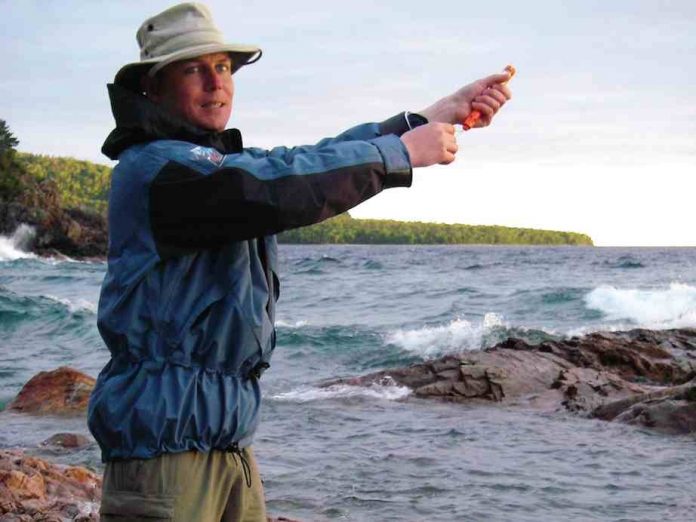
Flares are an option for wilderness communication. Photo: Virginia Marshall
Staying safe in the woods.

This article about emergency communication tips in the wilderness was originally published in Canoeroots and Family Camping magazine.

On a remote portage you come upon a group carrying a teenage girl on a stretcher. She has appendicitis and needs immediate evacuation. You spot a Forest Service floatplane overhead, whip out your Silva compass and aim the mirror at the airplane. Miraculously, the glint of reflected sunlight catches the pilot’s eye. He flies the girl to Grand Marais, Minnesota, where her appendix is removed.

You’re probably thinking, “Good story, Cliff,” but this actually happened to me in 1967 on my first trip to the Boundary Waters.

It’s smart to carry signal gear on any canoe trip, even one close to home. Here are some options.


Heliograph Mirror

The chance of reflecting sunlight onto a moving airplane with a standard mirror is almost zero. Much better is a genuine military heliograph mirror with a sighting hole in the center. With practice, a CD will also work.


Smoke

Floatplane pick-ups and search and rescue operations are usually daytime affairs so smoke creates better visible contrast than flares. Best bang is the Orion handheld orange smoke signal, available at any marina. It ignites like a rail- road flare and pours out thick orange smoke for 50 seconds.


VHF Aircraft radio

An airplane you can see is probably close enough to be reached on a handheld VHF air- craft transceiver. A VHF radio with a 15-mile range allows about five minutes of talk time at typical floatplane speeds. As a courtesy, most bush pilots will circle to keep you in range. But high-flying jets won’t change course, so you better talk fast.

In a life-threatening situation, you may broadcast on the restricted emergency frequency (121.5 megahertz) monitored by all pilots. For other concerns, you must stick with the frequencies that are assigned to the charter companies—ask your pilot and program it into your radio. Transmitting without an FCC license is technically illegal, but in the bush— and given the short range of handheld transceivers—everyone looks the other way. Note that a VHF marine-band radio cannot be used to contact airplanes.


Spot

SPOT Communicator is a palm-sized, one-way satellite communication device. Push a button to activate a global 911 network and initiate search and rescue. You can also send two pre- written messages to your contacts via email. Recently, the unit has been paired with the Delorme Earthmate PN-60 GPS, which provides a type-and-send keyboard and GPS fix. SPOT is sure to evolve considerably by the time you read this.


Satellite Phone

Globalstar and Iridium are the most popular brands. Iridium has worldwide coverage; Globalstar has some blackout areas. Be advised that rental units see considerable use and batteries may be old and not hold a full charge. It’s wise to bring a solar charger if you rent a satellite phone.


Whistle

You may not hear a whistle above the roar of rapids—that’s why you should know the inter- national safety hand/paddle signals. Whistles work well on land, if you wander off a bushwhacked portage trail and become con- fused, for example. Best are pea-less designs like the Fox 40 that still sound when flooded.


Color Counts

Brightly colored canoes, packs, tents and clothing make you easier to spot and can be arranged in threes to create the international signal for distress.


This article originally appeared in Canoeroots & Family Camping, Spring 2012. Download our freeiPad/iPhone/iPod Touch App or Android App or read it here.