Home Blog Page 329

Editorial: Born Again

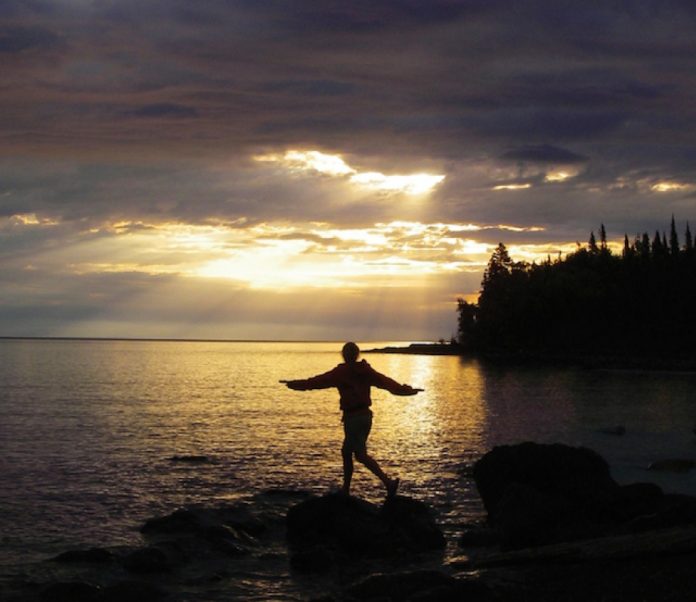
Photo: Virginia Marshall
Editorial: Born Again

I was conceived in a tarpaper shack. It had a door handle of silver-polished driftwood scavenged from the neighboring beach, and a chicken wire window through which carried the sound of waves gently lapping or violently thrashing three-billion-year-old volcanic greenstone.

My parents never set foot in this rustic hut. I’m not referring to the conception of the large-lunged, platinum-haired infant they named Virginia and raised in a semi-rural colonial. Rather, it is my adult identity—a sea kayaker by passion and trade—that was born here.

Few people can pinpoint the protozoan moment they became the essence of who they really are. Identify the choices that defined the course the rest of their lives would take. I can.

For me, it was during one of those golden, bewitchingly long summer days just after solstice on Lake Superior, when shadows seem to stretch to the horizon and the lumpy hills turn softly purple.

I arrived on the lake eager and impressionable, a week out of college and sopping-wet-behind-the-ears—even more so after a first day initiation in the surf.

I had an extra large mesh duffle containing my worldly possessions, a Rubbermaid full of books and an invitation to work as an assistant kayak guide.

My Evolving Kayak Identity

For the next four months, I divided my time between the shack known to my co-workers as the Taudis des Souris (not without good reason, I soon discovered), my no-longer-new-smelling tent and the cockpit of a kayak. At season’s end, I was a sea kayaker.

Even more than the incredible tripping and surfing or adjective defying landscape, the other kayakers with whom I shared those blissfully isolated, uncomplicated months defined me. From them, I learned to be master of my craft, confident on open water and in avalanching waves. I discovered how to live simply and comfortably out of 130 liters of plastic for weeks at a stretch. I listened to remarkable stories that would eventually lead me to my own thrilling adventures. I fell in love and shared the shack with more than just mice.

Every raw experience further glazed the patina of my evolving identity. I couldn’t know the places kayaking would take me, but I was eager to discover. I’m still discovering. Settling in to helm this issue of Adventure Kayak, I’ve added another layer of identity: Sea kayak magazine editor.

Driftwood and paddles still decorate my home, but I’ve traded chicken wire acoustics and isolation for high-speed and a broad- reaching industry and community network. I look forward to the inspiring stories and people to which this job is an unrivalled portal. I’ve no doubt your tales will lead some fascinating places.  
This editorial on discovering your adult identity was published in the Spring 2011 issue of Adventure Kayak magazine.This article first appeared in the Spring 2011 issue of Adventure Kayak Magazine. For more great content, subscribe to Adventure Kayak’s print and digital editions here.
Boat Review: The Essence 17.0 by Airealite

Photo: Tory Bowman
Boat Review: The Essence 17.0 by Airealite

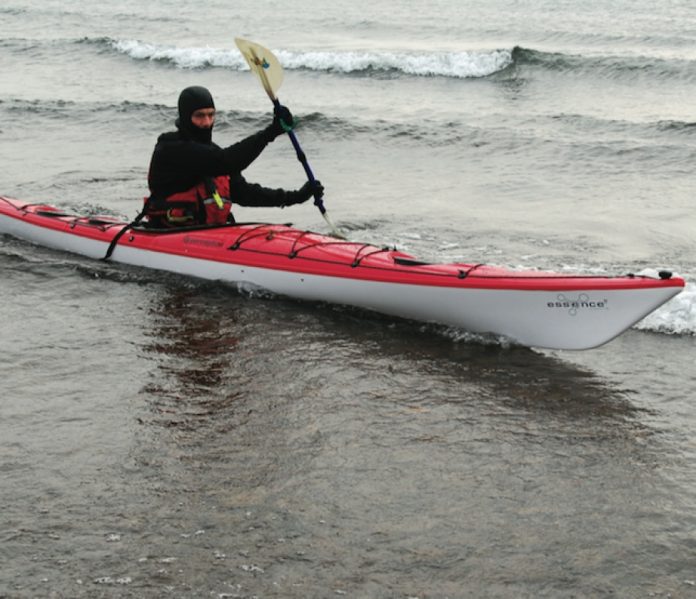
When people say the Perception Essence 17.0 Airalite is a “good looking boat”—as they inevitably do—they’re likely referring to the sexy lines of the long, slender bow. For it’s here that the Essence reveals its designers’ intentions to prolong the transition from bow to midsection to make for the finest possible entry lines.

The Essence is a sharp contrast to rough water designs that carry more volume in the ends for buoyancy in waves. Crafted by longtime Confluence Watersports boat designer Bob McDonough to be a friendly, high-performance tourer, it has a sporty feel and excellent capacity and speed for its length. This is achieved by the tapered bow and the Swede form shape, with the widest point rear of the midsection like a racing kayak.

The stern is stockier than the bow—a nod to packability. In McDonough’s words, “You’ve got to carry the volume somewhere.”

The result is capacity for long trips combined with excellent efficiency that is refreshing to find in a plastic boat. The Airalite we tested is the lighter, thermoformed version but the Essence also comes in more affordable poly, and both options are available in a 16.5 length for smaller paddlers.

A limited rocker plus the tapered bow’s emphasis on knifing the water equals strong tracking and minimal weathercocking. There’s perhaps less need for the skeg than for the optional rudder, which novices might appreciate for easier turning.

The hull under the cockpit is a shallower V than other popular British-style 17-footers like Confluence’s Wilderness Systems Tempest 170 and the NDK Explorer. It’s also about an inch wider and the chine is slightly softer, resulting in greater initial stability and more smooth, predictable edging.

For this new top-end touring boat, Perception has taken a winning British formula and expertly honed it to be a tad more welcoming to a wide range of paddlers and uses. And, dare we say, a little faster and more spacious.

With a distance swimmer’s heart for the straight and narrow, the Essence is perhaps not your first choice for a day in the surf. However, like the touring edition of a high-end sports sedan, this kayak is perfectly capable of dialing up the adrenaline and having some fun if opportunity booms. Which, in our books, is the definition of the perfect tripping kayak.

Screen_Shot_2015-06-26_at_1.26.39_PM.pngRudder ready

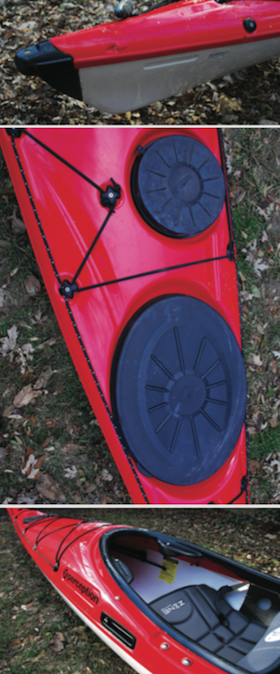
In addition to the standard hydrofoil- shaped skeg and easy adjusting SlideLock foot braces, the essence comes rudder-ready with a mounting bracket on the stern and routings for cables.

Handy hatches

The Essence includes a 10-inch bow hatch, 8-inch day hatch and an oversized stern hatch, all with tight- fitting kajak-Sport rubber lids.

Comfort outfitting

Perception touts its Zone eXp Seating System as “expedition grade.” It includes a long, padded seat bottom with adjustable height to promote circulation on extended outings, and adjustable padded thigh braces. a long, spacious cockpit accommodates tall paddlers.

Specs

  • Length: 17 ft
  • Width: 23 in
  • Weight: 50 lbs
  • Max. load rating: 350 lbs
  • Price: $2,299 USD / $2,409 CAD

1AKv11i1.jpgThis article first appeared in the Spring 2011 issue of Adventure Kayak magazine. For more boat reviews, subscribe to Adventure Kayak’s print and digital editions here.
 

Leg Drop Roll Kayak Technique

Photo: Shawna Franklin
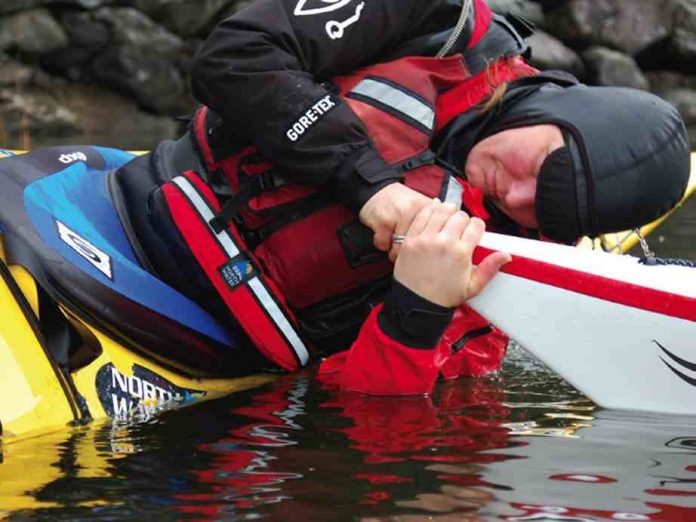
A sea kayaker uses the bow of another sea kayak to practice a kayak roll.

Add reliability and ease to your roll by incorporating an active leg drop. The active leg drop better uses your body to roll the kayak and moves you away from relying too heavily on your paddle.

The quick, powerful action of rolling a kayak with the hips—a hip snap/flick—is widely described as getting the upper body near the surface and supported by the water, while righting the boat with a rolling action of the hips. Most people are told to lock their knees under the deck and concentrate on the upward action of one knee.

Both legs pushing up against the deck creates resistance to the rolling action. A paddler will often compensate by pulling harder on his paddle. He is essentially trying to lift his body up underneath the still overturned kayak, resulting in a cumbersome or failed roll and additional stress on the upper body. Avoid these problems with an active leg drop.

Start your roll by actively driving your leg closest to the paddle down, transferring con- tact from the thigh brace to the hull. Roll that hip and sit bone down while lifting with your opposite knee, bringing the kayak underneath your body.

This opposition of forces results in the kayak rolling almost upright before your body lifts out of the water, which reduces the need to pull on the paddle. As the kayak rolls up, your lowered leg and hip create a solid platform to help prevent it from tipping back over.

Watch another roller who is incorporating an active leg drop and you will notice that the boat moves before she starts to move her paddle.

Practice the action with this exercise. Hold onto a fixed object—a pool side or a friend’s bow or hand—and lower yourself into the water by rotating onto your back and bringing your shoulders parallel to the side of your kayak. Keep your arms bent in a strong position. Roll the boat over on top of your body while keeping your head on the surface.

Drive the leg closest to your hands to the bottom of the kayak while increasing pressure against the thigh brace on the opposite leg. Arc your spine and leave your head on the water. You will feel the kayak roll easily into a more upright position. This is similar to what Greenland paddlers refer to as a static brace position.

Repeat until you start to feel the coordination of your opposing leg actions, and then incorporate it into your roll.

In addition to rolling your kayak more efficiently, the active leg drop can also be incorporated into edging and bracing to the same advantage.

Shawna Franklin is the co-founder of Body Boat Blade International, an award-winning kayak school located on Orcas Island, Wa. A BCU coach Level 5 aspirant, Shawna was the first woman in North America to achieve the BCU 5 Star Sea award.


Peer review

“Shawna’s article is a great isolation and description of an important component to the roll. The connection to using downward pressure is key.
” » Ginni Callahan, ACA level 5 instructor and BCU level 4 coach, Cathlamet, WA

“It is great to see a coach moving paddlers away from the hip flick technique. Instead, think of your hips as a relaxed and flexible joint separating upper and lower body. Remember the mantra “Boat first, body second, head last” for the timing of a successful roll.” » Doug Cooper, BCU level 5 coach, Aviemore, Scotland

“Try backward learning to reinforce the leg drop. Holding onto a solid object, use one leg to actively pull the kayak upside down. Use the other leg to right the kayak. As you build confidence and skill, try Shawna’s drill holding onto a paddle float or flutter board. This will force you to drive the roll with your legs. If you use your arms, you will sink.” » Michael Pardy, Paddle Canada level 3 instructor trainer, Victoria, BC

“Many Greenland kayak designs [have] a wooden bar that holds both legs flat. [In] whitewater kayak designs, the limited space forces knees up and out- ward. So there’s a group of paddlers rolling with both legs straight and another rolling with both legs bent. Conceptually, I welcome Shawna’s instruction to prevent adverse pressure against the deck, although it’s not always possible.
” » Nigel Foster, BCU level 5 coach, St. Petersburg, FL

“Make sure your boat fits you correctly so you don’t fall out when using this technique. A keyhole cockpit offers a much better fit than a more open style.
” » Christopher Lockyer, BCU level 4 coach and Paddle Canada level 3 instructor, Halifax, NS

This article originally appeared in Adventure Kayak, Spring 2011. Download our freeiPad/iPhone/iPod Touch App or Android App or read it here.

Open Crossing Kayak Technique

Photo: Virginia Marshall
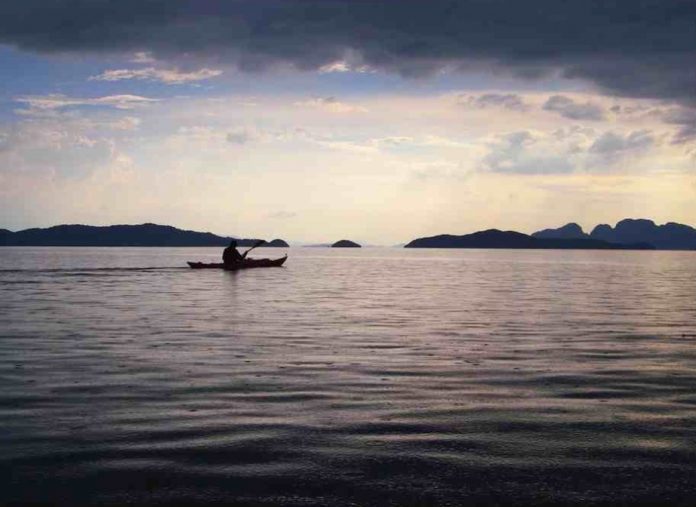
Open water crossing by kayak.

Put simply, a crossing occurs anytime you cannot safely return to land virtually instantaneously. This includes shortcutting across the mouths of bays or fiords, island hopping and paddling around cliffs or rocky capes where you may be close to shore but still vulnerable with no safe exit.

There are three dangers inherent in any crossing: general fatigue, capsizing and drifting off course.

When Dr. Hannes Lindemann prepared for his solo kayak crossing of the Atlantic in 1957, he trained to stay awake and alert for long periods of time. Fatigue can affect judgment and decision-making ability as well as paddling ability.

To gauge your personal limits, start with short crossings and gradually work your way towards covering longer distances. You’ll find strength and joy as you tickle the borders of exhaustion, but don’t get halfway out on a 20-mile crossing and realize that it’s too much.

Kayaking books teach techniques for getting back in your boat after you’ve capsized. The best advice: Don’t tip over in the first place. Practice bracing and righting skills in rivers or surf—any place with complex hydraulics. If you don’t enjoy the chaos of rough water, limit your exposure to crossings. As with training for fatigue, match your risk to your skill level and personality, leaving leeway for the situation to become more intense than you initially envisioned.

In order to avoid drifting off course, careful calculation and planning for a number of scenarios are necessary.

Catabatic winds can occur any time high, cold peaks border warmer shorelines. Cool air may spill down the mountains, creating intense offshore winds that can push you off course.

They usually intensify in the afternoons, so plan accordingly.

Tidal currents are most intense where there is a large tidal range and where narrow straits connect two bodies of water of different sizes and depths. For example, tides would race through a channel connecting a shallow bay and the ocean, creating shears and eddies where speeding water interacts with calmer water. To avoid the impacts of tidal currents, travel at slack tide or take potential drift into consideration.

The most exciting crossings involve passages to small islands where, if you miscalculate, you may find yourself adrift on the open sea. Deepsea waves, winds and currents require that you study pilot charts, talk to local sailors and fishermen, and always err on the upwind side. It’s much easier to drift downwind at the end of a long day than to battle against wind or current in the fading light.

When taking on a crossing, be sure to bring lots of food and water, and have your navigation gear and extra clothes in an easily accessible, waterproof deck bag.

Jon Turk’s book, In the Wake of the Jomon, chronicles his two-year crossing from Japan to Alaska.

This article originally appeared in Adventure Kayak, Spring 2011. Download our freeiPad/iPhone/iPod Touch App or Android App or read it here.

Considerate Camping: How To Build A Low-Impact Fire

Photo by Pavel Danilyuk: Pexels.com

Camping is synonymous with campfires. There is some atavistic aspect of staring into the dancing flames over a bed of embers that is primitively satisfying and deeply comforting.

Campfires are not, however, without their drawbacks. The scarring of land, harvesting of firewood and the residual trash not consumed by flames are apparent at nearly every campsite that sees even moderate use. So how can campfire impact be reduced?

Here are some tips for building a low-impact fire that will still allow you to partake in this timeless tradition.

Consider your foundation

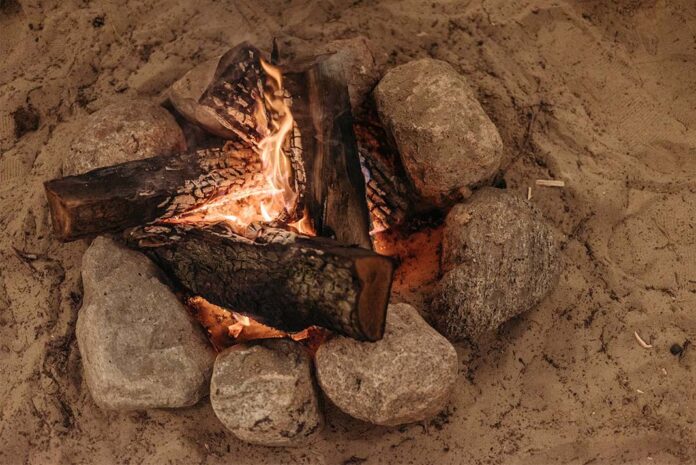
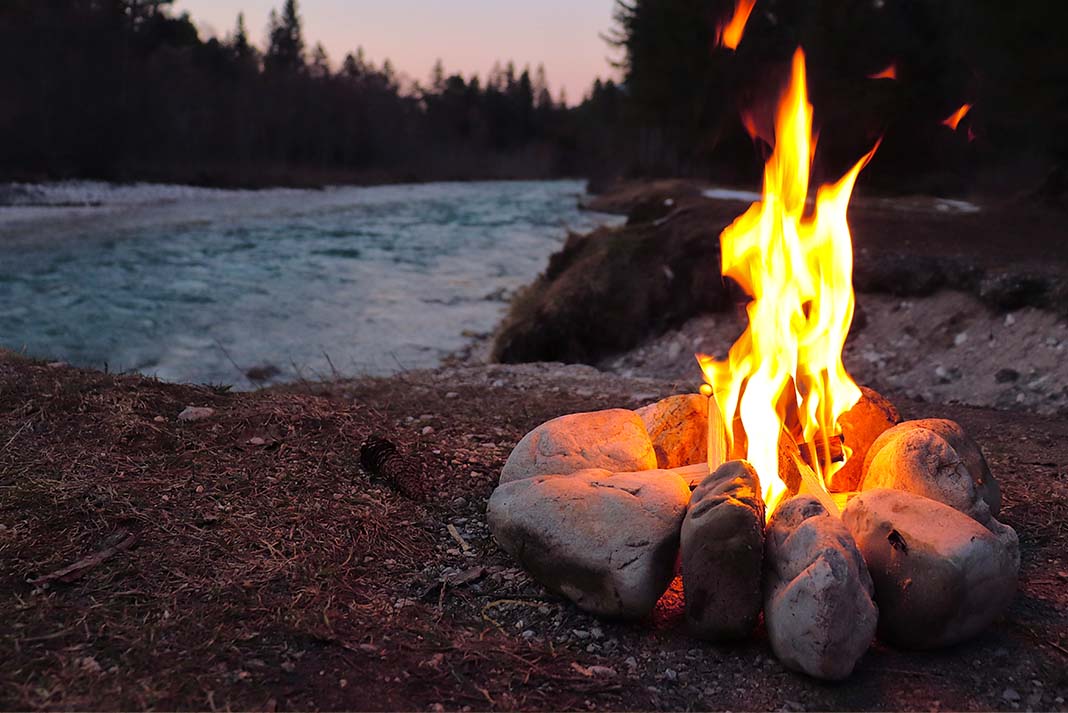
Where is the best place to build a fire? Use an existing pit where available. Make sure the fire is contained in a fire ring, or—even better—carry and use a metal fire pan or fire box to prevent ground scarring. You can also make a fire on a mound of sand or earth, and then scatter the mound and cooled grey ash so that you cannot tell a fire was ever burned there.

Build a small fire using small pieces of wood

Ideally, you should be able to break the wood with your bare hands. For most people, this means using sticks that are wrist-size or smaller. Small pieces of wood burn to grey ash more readily, leaving behind fewer unsightly pieces of charcoal and half-burned wood.

Photo by Florian Hillmann | pexels.com

Collect wood from the ground, not from standing trees

At most campsites there is an abundance of fallen small wood overlooked by campers who scavenge for larger pieces. It is easy to gather and will keep even the most obsessive fire-pokers busy feeding it to the flames.

Keep trash out of your fire

Metal will not be consumed, lumps of uneaten dinner will not burn to ash and no one wants to sit around a campfire smelling the fumes from melting plastic.

Don’t leave your fire unattended

If you are not going to be close enough—or awake enough—to control it, put it out.

 [ Paddling Buyer’s Guide: View all camping gear ]

Don’t have a fire

At least, not every night. Make having a campfire a special treat.

Enjoy your fire, but don’t take it for granted. Keep it clean and small and don’t use all the wood. The next campers will thank you.

This article originally appeared in Canoeroots & Family Camping‘s Spring 2011 issue. Subscribe to Paddling Magazine’s print and digital editions here, or browse the archives here.


No scorched-earth policy. | Photo: Marissa Evans

Esquif L’Edge Canoe Review

Photo: Dan Caldwell
Review of the Esquif L'Edge whitewater canoe.

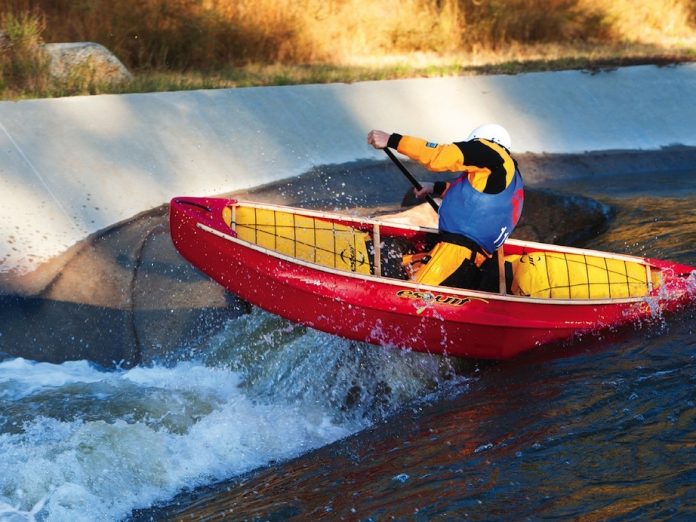
The new Esquif L’Edge was in the concept and development phase for an unbelievable eight years. Designer Craig Smerda was originally inspired by the design innovations of the late Frankie Hubbard’s Spanish Fly—a freestyle boat much loved by southern creekers.

Smerda began building on this benchmark in 2002 and in the years that followed he designed and tested and eventually teamed with Jacques Chasse at Esquif Canoes to produce just two prototypes. One bounced around the 2009 Open Canoe Slalom Nationals and the other was shipped to the Ottawa River for renowned open boaters Paul Mason and Andrew Westwood. The feedback allowed Smerda, design collaborators Mark Scriver and Dave Proulx, and Chasse to dial in final specs for the long-awaited production boat.

The L’Edge is the first canoe available in both open and decked versions. We had the chance to paddle both and preferred the open one. Call us old fashioned, but we like our open boats…well…open. Eight pounds lighter than its decked counterpart and with ash gunwales, the open version feels and looks more like a canoe. The decked model is drier, but both are so much drier than anything we’ve ever paddled that it’s of little advantage.

When OC creeking, the wobbles should be the last thing on your mind. The L’Edge is very, very stable. While faster than the Spanish Fly, the L’Edge is definitely slower than the Prelude and Zoom. With so much stability, we’re inclined to monkey around with the L’Edge’s width to gain a little speed. With the open model, you can chop thwarts and suck it in. Smerda himself recommends cutting off one to one-and-a-half inches if you’re looking to make the boat snappier.

A foam bulkhead is the simplest, most universal outfitting system, though not the most precise. It fits more like athletic support than dentures. In the case of the L’Edge this outfitting is out of sheer necessity. The patch anchors needed for thigh straps don’t stick well to polyethylene. Also, the L’Edge is a creeker at heart. Emptying my boat in a micro eddy with only a few feet of water before the next drop, I’d rather slide quickly back into a bulkhead than wiggle around, cinching thigh straps.

The extreme rocker of the L’Edge allows it to boof anything. It rides high over reactionaries and pops over holes. The boat’s poly construction also makes it super durable if you’re into shallow slides and concrete rivers like the U.S. National Whitewater Center.

Eight years later, Smerda finally pulled it off—he designed a canoe that should swat the Fly. The L’Edge is our new favorite creek boat, but we’re not giving up our Zephyrs, Ocoees and Sparks as longer, lighter, big-river boats. The secret is to match the L’Edge with the two-stroke technical rivers and play spots for which it was designed.

ESQUIF L’EDGE DECKED/OPEN

Material: Polyethylene

Length: 9’2”

Width: 29.8”

Depth: 16”

Weight: 56/64 lbs

MSRP: $1,729 US / $1,900 Cdn

$2,033 US / $2,233 Cdn

www.esquif.com


This article originally appeared in Rapid, Spring 2011. Download our free iPad/iPhone/iPod Touch App or Android App or read it here.

Green River Race Highlights

Highlights, interviews and crashes at the 15th annual Green Race in North Carolina. We talk to competitors and spectators to find out what makes them come back year after year and they tell us why this event keeps growing.

Why Self-Motivation Is Key To Your Canoe Portage

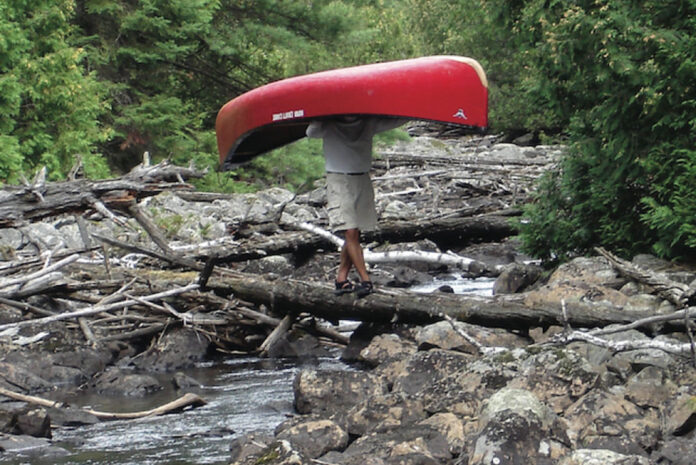
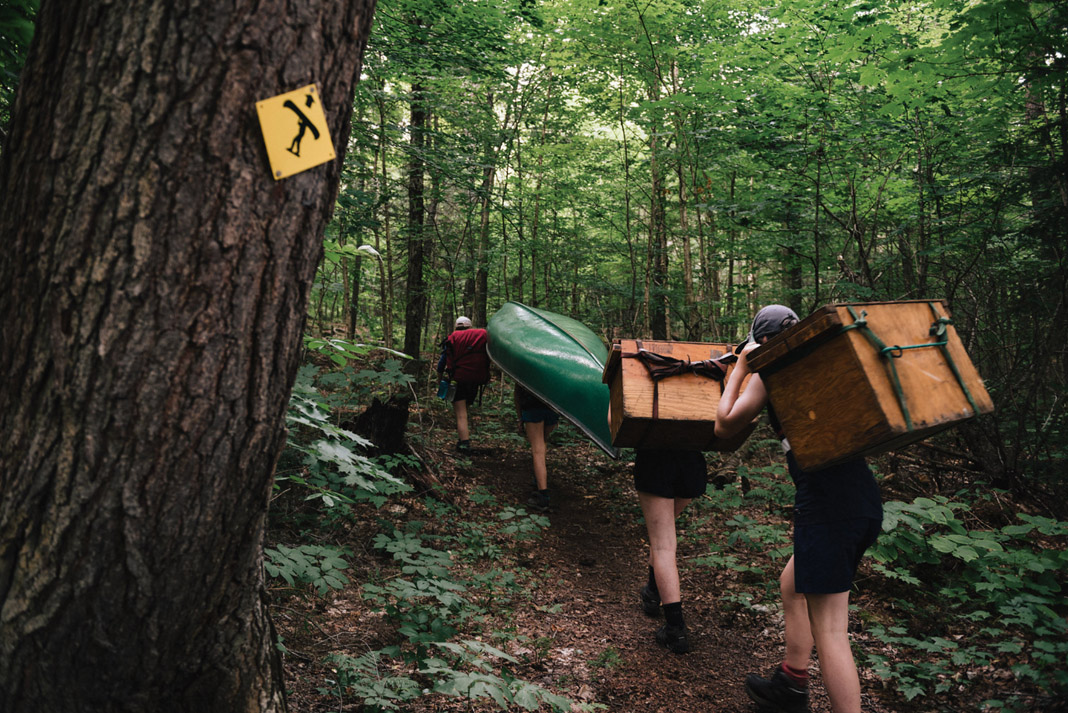
a man crosses a small forest stream on a log while portaging a canoe
Self-motivation is the key to carrying your canoe farther, easier, on a portage. | Feature photo: David Lee

It seemed a moot point to the accused, but I take the act of stealing red Life Savers out of my candy stash very seriously. I toss these sugary rings in my mouth at every 1,000-meter mark along a canoe portage, a personal act of rich reward—and the only thing that seemed to get me to the other side of the particularly grueling, blackfly-infested trails we trudged along on that trip.

My tripmate claimed I was being overly dramatic when I threatened to never travel with him again. He gave me an evil smirk and took my last Life Saver. I haven’t tripped with him since.

Self-motivation is key to your canoe portage

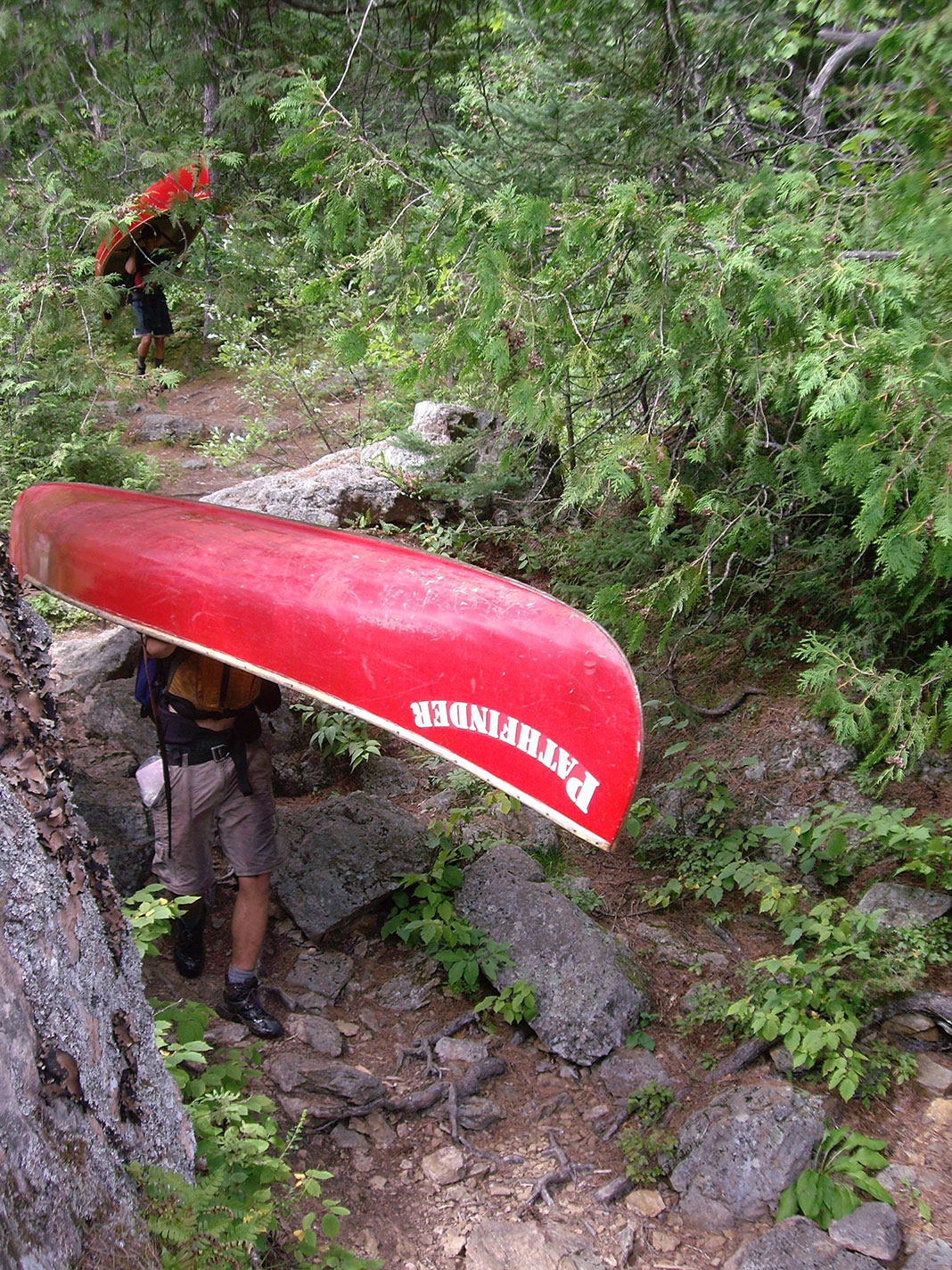
two people portage red canoes through the wilderness near Petawawa, Ontario
Ultimately, the portage is the only thing that protects the places we’re portaging to. | Photo: Magnetawan/Wikimedia Commons

What gets each canoeist to the other side of a portage varies. Some, like me, treat themselves to high-grading their candy bags. Others go into a dreamscape of good first dates, movies worth seeing a second time and dirty tricks to play on their bosses. Some paddlers simply think of things happening back at home—like traffic jams and the Greek economic crisis—to give them reasons why the pain of the portage isn’t so bad.

Many of us hum, or if we know the words, sing monotonous show tunes or the last song we heard on the radio driving to the put-in. The Proclaimers’ I’m Gonna Be (500 Miles) is a favorite. So are Dancing Queen by ABBA, Harry Chapin’s Cat’s in the Cradle and John Denver’s Poems, Prayers and Promises.

I remember a 27-day solo trip when I couldn’t get Aqua’s Barbie Girl out of my head. Imagine “I’m a Barbie girl in a Barbie world / Life in plastic, it’s fantastic / You can brush my hair, undress me everywhere / Imagination, life is your creation” every step of every portage. It was a long month.

With suffering comes the sweetest reward

Where the portage is located on the trip changes the carrot I dangle from my deck plate. In the beginning, I daydream of monster walleye, picturesque campsites and the peaceful solitude I know I’ll find deeper into the interior. Near the end of the trip, it’s the thought of a cold beer and roadside junk food that makes me dance (albeit a slow waltz) my 60-pound canoe barrel across to the other side.

Ultimately, what gets most of us to the other side—no matter when and where—is the fact that the portage, nasty or not, is the only thing that protects the places we’re portaging to.

I almost guarantee that he or she who suffers the most, will be rewarded the most. A two-Life Saver portage with steep inclines and a squishy spruce bog will give you complete solace. There will be no crowds at the end.

If you do stumble across another canoeist—ideally not as you are belting out “Come on, Barbie, let’s go party, ah ah ah, yeah” from beneath your Rob Roy—be assured she’ll be just as in love with the pain and pleasure of portaging as you are.

Kevin Callan eats the red Life Savers last.

Canoeroots Fall 2010 issue coverThis article originally appeared in the Fall 2010 issue of Canoeroots. Subscribe to Paddling Magazine and get 25 years of digital magazine archives including our legacy titles: Rapid, Adventure Kayak and Canoeroots.

Self-motivation is the key to carrying your canoe farther, easier, on a portage. | Feature photo: David Lee


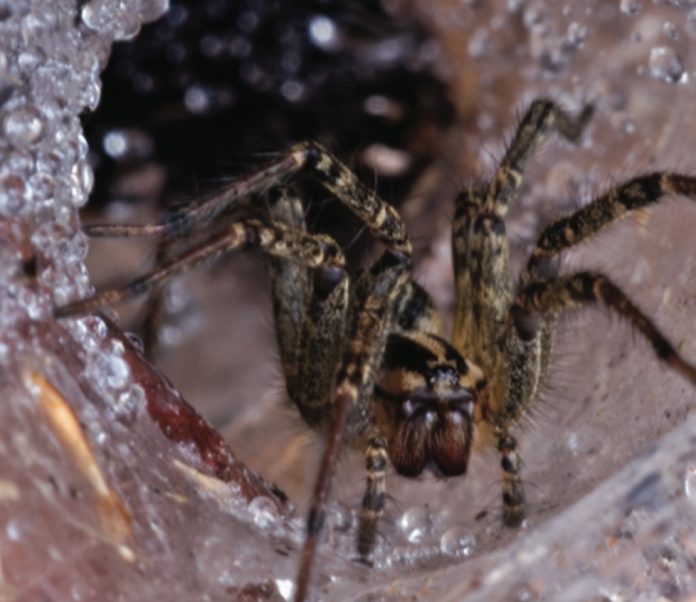
Betcha Didn’t Know About Spiders

Photo: Jonathan Pratt
Betcha Didn't Know About Spiders
  • Ever wonder if this fact is true? In your lifetime, you consume eight spiders while sleeping. According to Discovery Channel’s MythBusters, Adam Savage and Jamie Hyneman, our breathing scares spiders away making this claim a myth. 
  • Fried tarantula is a delicacy in the town of Skuon, Cambodia. The palm-sized spiders are coated in a mixture of MSG, sugar, salt and garlic, fried in oil and eaten as a snack. Tastes like chicken. 
  • With eight legs and six joints per leg, spiders have 48 knees. Go ahead, count them! 
  • A spider the size of an 11-inch dinner plate—the Goliath birdeater tarantula—is found in the rain forests of northeast- ern South America and is the largest spider on Earth. 
  • Approximately 50 per cent of women and 10 per cent of men have some degree of arachnophobia—a fear of spiders. The 1990s, sci-fi horror film Arachnophobia frightens movie watchers with a deadly arachnid invasion of the small California town, Canaima. 
  • Orb weaver spiders produce silk with a tensile strength similar to steel. Researchers hope to someday produce enough of it for use in body armour.
  • In the award-winning children’s novel Charlotte’s Web, Charlotte’s baby spiderlings climb to the top of a fence post at Zuckerman’s farm and demonstrate a technique called ballooning, where spiders release triangular-shaped, silk threads into the air and are carried away by wind currents. Some spiderlings are able to ride air currents for up to 25 days.

This article on spiders was published in the Fall 2010 issue of Canoeroots magazine.This article first appeared in the Fall 2010 issue of Canoeroots Magazine. For more great content, subscribe to Canoeroots’ print and digital editions here.

Full Immersion: The Inside Story on Guided Whitewater Adventure Travel

Photo: Trevor Zaharichuk
Full Immersion: The Inside Story on Guided Whitewater Adventure Travel

The founder of what’s become one of the most successful ecotourism operations in the world admits that he didn’t have an ounce of business sense when he first visited Chile and fell in love with the Futaleufu River in 1985. Chris Spelius, then a Dagger-sponsored rodeo boater who’d just competed in the Los Angeles Summer Olympics, taught kayaking for North Carolina’s Nantahala Outdoor Center and had notched the first descent of the Niagara Gorge, decided that he wanted to spend as much time as possible on the little known rivers of Patagonia. He figured the easiest way to do that was to set up shop as a river guide.

“I started it almost like an experiment,” says Spelius. “I was just curious about whether or not it would work. I would present slide shows on the Fu and it would be the first time people had heard of the place. I was amazed when the phones rang and the next season I was guiding trips.”

The first trips Spelius ran were bro deals in which he charged nominal fees to lead class V American acquaintances on big water runs. After a few years, Spelius realized that if he wanted Expediciones Chile’s books to balance he had to be more inclusive in his programs and exclusive in his prices. Expert-only boating morphed into beginner- and intermediate-friendly river safaris with an emphasis on instruction; whitewater kayaking expanded to rafting, trekking, horseback riding, sea kayaking, climbing, fly-fishing and bird watching; and prices soared.

Without even realizing it, Spelius had cornered the core of the adventure travel and whitewater market: Older, moderately skilled paddlers with more money than time. A market for guided trips to places like Costa Rica, Ecuador and Mexico emerged, appealing to the middle-of- the-curve demographic that’s a far cry from the globetrotting, waterfall-hucking, dirtbag image of paddlesports marketing. Twenty-five years later, Spelius is still living his dream.

GUIDED WHITEWATER AROUND THE WORLD

Today, guided whitewater trips are offered in exotic places like Suriname, Norway, Thailand and Nepal, besides the classic Central and South American destinations that started it all. Prices range from $350 for seven days of class III–IV+ paddling in Ecuador to $11,300 for three months of paddling and cultural immersion in Chile’s Futaleufu River valley.

Trips run the gamut from laid-back programs with the odd day of paddling to intense, every-day-on-the-water tours. For instance, Quebec’s Esprit Rafting, which has organized adventure programs in Mexico since 1995, runs a weeklong whitewater tour of the Sierra Madre for solid class III boaters simultaneously with a primarily land-based adventure tour to appeal to couples. “When each spouse comes back from the day and says, ‘you won’t believe what you missed,’ we know we’re doing our jobs,” says Esprit owner Jim Coffey.

Esprit’s average group size of eight participants is typical for the industry, as is its 30- to 50-year-old demographics. Coffey requires that participants on his whitewater-intensive Mexican Week of Rivers program have intermediate skills, meaning that “they can roll and it’s fairly reliable,” he explains. Esprit also hosts its fair share of expert boaters.

“Often people think that guided trips are about leading a bunch of newbies down the river,” says Coffey. “But that’s not it at all. We give people the basic rundown and then we work our way down a river like any paddling group would. Some of these people wouldn’t necessarily want to be on an organized trip if they had more time to work out the logistics. We often see younger, budget-strapped guys who show up and try to do it on their own, but inevitably they end up just running the popular, local sections of rivers.”

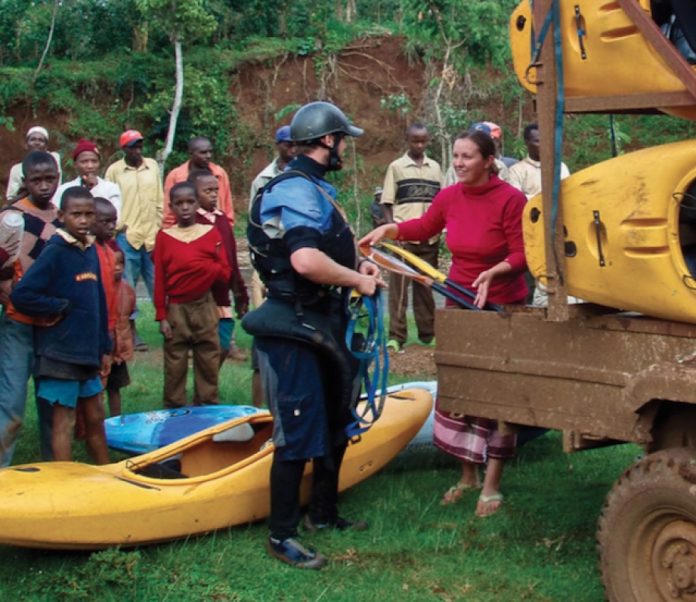
Fifteen members of Calgary’s Paddle Junkies whitewater paddling club were exactly the type of boaters Simon Cow- ard was targeting when he planned a 12-day trip last fall to kenya. Coward, a whitewater instructor and owner of Calgary’s Aquabatics paddle shop and Adventure Trippin’ tour operator, taught many of his kenya expedition mates their first strokes on Alberta rivers. He says travelling abroad was a natural step in their learning progression.“What we’re try- ing to do is improve paddling skills and give people a cool cultural experience as well,” says Coward. “We do trips in countries where I’ve explored in the past. Basically we’re tak- ing the best of what I’ve done over the years and packing it into a two-week trip.”

Coward’s group consisted of paddlers like Barb Cardwell, a regulatory advisor at Esso-Imperial Oil. Cardwell got her start paddling Ontario and Quebec rivers like the Ottawa, Gatineau and Madawaska before she moved west to work in the front offices of the Tar Sands.“I like to have fun but I don’t like to scare the crap out of myself,” she says.“I don’t think the people in our club have the experience to pull off a self-supported trip of that nature at this point, especially on another continent. The most impressive aspect was having every last detail thought of and taken care of for you. The degree of planning put into the trip to make sure we all had an excellent experience was apparent to all of us every day.”

Therein lies the obvious appeal of going guided: Someone else manages the shuttles, language barriers, permits and paperwork—not to mention dealing with com- plex local geographies that may include rain forests, glacier-melt and monsoons. What’s more, guided trips offer boaters some of the best local knowledge around—a real plus when you’re pushing the envelope far from home. When you sign up for a guided trip “you’re hitting the ground running,” says Coward. “you’re getting a lot of instruction and running a bunch of new rivers. Meals are included, accommodations are sorted, and if anything goes awry you’ve got people there who are trained to deal with it.” 

BLENDING PADDLING WITH LOCAL CULTURE

The evolution of guided whitewater trips is also marked by a strong emphasis on blending paddling with culture. It’s the reason veteran guides like Spelius have managed to thrive, and why Coward is in high demand to organize trips to Panama and Tibet in the next two years. “The kenya trip was more then just a whitewater trip for me,” says Trevor Zahari- chuk, an electrical engineer and class III boater from Calgary who joined Coward in Kenya.“It was a place I had always wanted to visit, and the trip was set up to allow us to not only experience some of the great rivers but also enjoy other attractions. It would have been a shame to visit there and not experience those things.”

In the remote Mexican village of Jalcomulco, where Esprit trips are based, Coffey insists that even his most whitewater-crazed clients become engaged with locals. He’s created a “micro-philanthropy” program called Hermanos that encourages trip participants to interact and share with villagers who may not reap the full rewards of the tourism investments. “There’s a lot of great paddling, but there’s also an in- credible connection that we’re able to make for people in this small village,” says Coffey.“When our guests get down here they can’t believe the open door policy. There’s a very genuine hospi- tality that’s a far cry from what people read in the newspapers about Mexico.”

It’s an ironic, happy coincidence that the idealistic lifestyle that Spelius dreamed of creating for himself has become a best-selling ecotourism strategy.“These are the types of experienc- es that are so apart from the ‘steer and herd me down the river’ experience that some people expect,” says Coffey. “We think of ourselves as offering guidance and connection. It’s one thing to go to a country and try to work it out on your own; it’s another to go to a place where you immediately have friends and family.”

Conor Mihell is a writer based on Sault Ste Marie, Ontario.

This article on whitewater ecotourism was published in the Summer/Fall 2010 issue of Rapid magazine.This article first appeared in the Summer/Fall 2010 issue of Rapid Magazine. For more great content, subscribe to Rapid’s print and digital editions here.