Home Blog Page 333

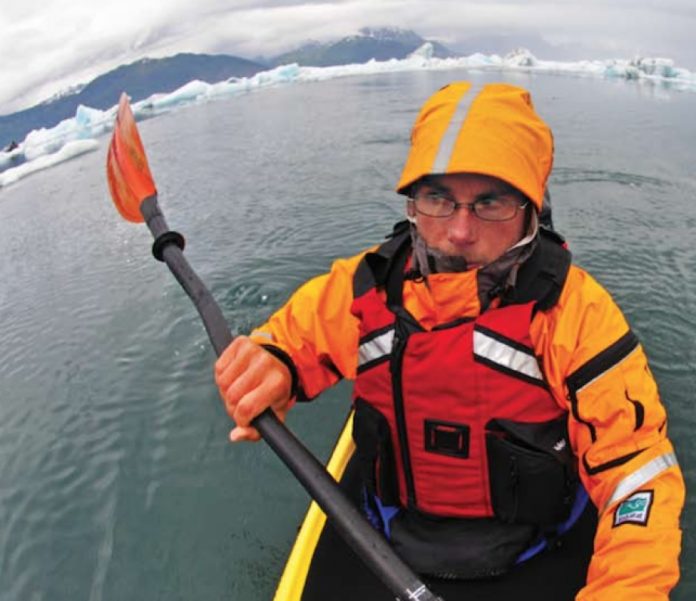
Editorial: The Slow Kayaking Manifesto

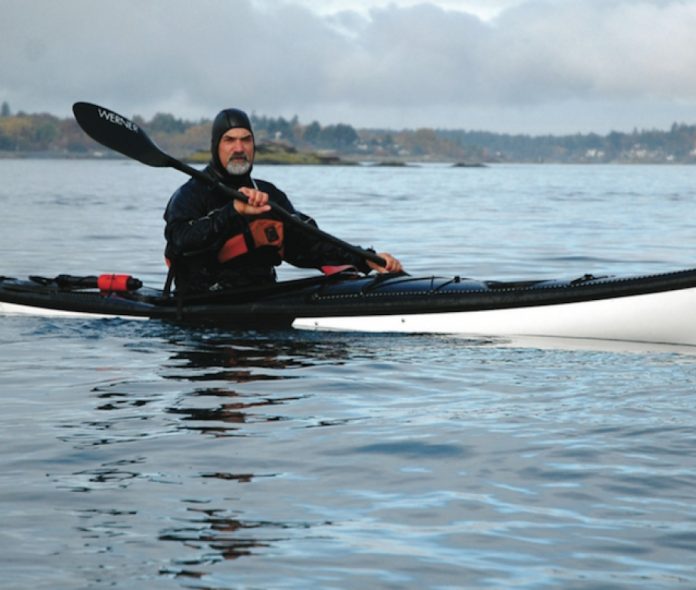
Photo: John Irvine
Editorial: The Slow Kayaking Manifesto

Foodies know that faster is not necessarily better, but do kayakers?

Carlo Petrini founded the Slow Food movement in Italy in 1986 to recapture the pleasure of eating from the incivilities of fast food culture, to “seek a slower and more aware pace of life.”

According to the movement’s founding document, The Slow Food Manifesto: “We are enslaved by speed and have all succumbed to the same insidious virus: Fast Life, which disrupts our habits, pervades the privacy of our homes and forces us to eat fast foods…. Homo Sapiens should rid himself of speed before it reduces him to a species in danger of extinction.”

Maybe it’s time for a Slow Kayaking Manifesto. There’s no better time than now, in this issue where we have a feature focusing entirely on going fast.

Hey, I’m not saying I know how to relax. Just ask my wife. She’d tell you to rip out this page and use it to fertilize your vegetables. I have a long history of speed addiction, on and off the water.

That’s why I know that we need to be extra careful not to always carry the hamster wheel mentality of our work lives into our recreation.

In these days of adventure racing mania and the media obsession with speed expeditions (always easier to report on than just another great trip) I think we need to pause to remem- ber the value of going slow.

This summer we are witnessing yet another record attempt around Vancouver Island, with the indefatigable Joe O’Blenis setting out to beat Brit powerhouse Sean morley’s 17-day circumnavigation.

Then we have Freya Hoffmeister for whom it wasn’t enough to be the second person in his- tory, and first woman, to kayak around Australia. She called her expedition a “race” and set out to beat a time set by only one other kayaker a quarter century ago.

Why should the people who go the fastest get all the attention?

Wouldn’t it be better for our sport to be known for its lifestyle, the way surfing is with its culture of Jack Johnson tunes, board shorts and scruffy kids on skateboards—a culture of leisure?

Leisure is the polar opposite of trying to paddle as fast as possible around a landmass. It’s a near spiritual state of mind—a state of play, a creative and meditative mindset. It’s apart from and opposite to the ultra rational state of mind that dominates our everyday lives—in which time is better spent at a desk earning money than it is walking outside breathing fresh air— and dominates our society that values fast cars more than the clean efficiency of bicycles.

I would rather people look at sea kayakers and say, “I want to live like that” than “those dudes are crazy!”

Yes, partly I’m just jealous. When I read about morley or O’Blenis racing around Van- couver Island, I wish I could be there with them. Taking time away to do nothing but paddle is a dream. I’d love to know how fast I could go. And even at top speed, kayaking is still leisure.

But let’s also celebrate our slow side.

In the words of The Slow Food Manifesto: “may suitable doses of guaranteed sensual pleasure and slow, long-lasting enjoyment pre- serve us from the contagion of the multitude who mistake frenzy for efficiency.”

By all means, perfect your stroke, push yourself to the pleasure of exhaustion, but also take rest days. Kick back and read about somebody else’s epic. The coast will wait for you as it always has.  

Screen_Shot_2015-07-27_at_12.46.47_PM.pngThis article first appeared in the Early Summer 2010 issue of Adventure Kayak Magazine. For more great content, subscribe to Adventure Kayak’s print and digital editions here.
Open Boat Creek Technique

Photo: Megan Richardson
A whitewater open boat canoeist drops into a big rapid.

Open boat canoeing changes from big river boating to creeking styles only in matters of timing. These expert tips are skills that will help you stay sharp no matter where you paddle.

Practice hole escapes

On larger rivers where you are dealing with lines that are five to ten feet wide (go five feet to the left of that hole) it’s fairly easy to avoid getting stuck in a hole. On creeks, the lines can be inches instead of feet (clip the side of that hole on the left). Consequently, getting stuck in holes is part of creek boating and it’s pretty hard to surf your way out of a big hole if you spend the rest of your time avoiding them.


Bombproof your roll

Playing in spots with good recovery areas offers a great way to transition your pool roll to a river roll. You flip so frequently when playboating that you get used to the feeling of being upside down in your canoe, dealing with currents to reach the set-up position and hit your roll.


Run slalom gates

One of the greatest challenges on difficult creeks is catching must-make eddies. Often micro eddies that fit kayaks can be difficult to squeeze into with a longer canoe. Entering local slalom races is an effective way to practice making difficult ferries and catching tricky eddies on the fly.

Most courses are on class II–III water so the consequence of missing an eddy is hitting a pole rather than slipping backwards into a rapid that you were hoping to scout.


Take on water

Prepare for continuous creeks by paddling boogie sections of familiar runs without stopping to empty out. It takes practice, but you can control most shorter whitewater canoes even when they are almost completely full of water. Just keep the boat pointed downstream, start any turns far in advance and maintain momentum since acceleration will be difficult.


Ride the eddy lines

On continuous creeks, the driest canoe lines often hug the eddylines to skirt most holes and pourovers. The challenge with this technique is to avoid eddying out unintentionally mid-rapid.


This article originally appeared in Rapid, Early Summer 2010. Download our free iPad/iPhone/iPod Touch App or Android App or read it here.

Running Waterfalls

Photo: Patrick Camblin
Kayaking waterfalls

Every waterfall is unique. Running falls with consistent success means tweaking your technique to suit the drop. The strategies outlined here have seen me safely through over 15 drops in excess of 70 feet.

The art of running waterfalls lies in an intimate communication between you and your kayak— having a poised sense of boat angle in freefall. Maintaining boat angle at the point where the waterfall’s lip becomes vertical and you enter freefall is crucial to a successful outcome.

I like to enter freefall with a neutral, nearly straight body position. Depending on how I left the lip, I will adapt my body position and the speed or delay of my tuck to maintain the right amount of boat angle. The sensation is of a balancing act. The goal is to make sure you’re tucked safely to your front deck when you land in the pool below, protecting your body against the force of impact.

The most straightforward drops are those with lips that gradually transition to vertical. Oregon’s 70-foot Metlako Falls is a perfect example of an easy, rolling lip. On falls like Metlako it is actually important to not do too much—the waterfall sets your angle perfectly. Ride down the lip with a neutral body position—using a stern rudder to control side-to-side angle as necessary—and slowly begin to tuck as the waterfall becomes vertical to maintain a good entry angle.

It is usually a very bad idea to run a waterfall when your boat might connect with a rock at the lip. My definition of a shallow lip waterfall is when the river goes over a shelf just deep enough for a kayak. Sahale Falls, another 70-footer in Oregon, extends over a 30-degree shelf for 15 feet then immediately drops to vertical. This waterfall is more difficult because you can’t simply tuck at the lip. To avoid boofing as you fly off the shelf, you must delay or slow your tuck and let the bow drop so you are reaching full tuck as the boat becomes vertical. A strong sense of your boat angle and knowing how your body’s position affects this angle is the crux to running waterfalls of this nature.

Waterfalls with tight lines demand more precise placement and concentration to put you on the correct spot at the lip. My descent of Washington’s 186-foot Palouse Falls had a tricky thread-the-needle line between a pitching hump on the left and a kicker into space on the right. The lip at Palouse was one of the most difficult I have ever run—I lined up with a rudder and held a stationary stern draw to stick the right to left orientation of the lip. Lining up the lip is the most intimidating part of running waterfalls—it is very important to have good points of reference at the lip so you know exactly where you are dropping over. I usually spend more time scouting the lead-in to the lip than the actual drop.

Whether the drop is categorized as deep or shallow lip, rolling or abrupt, your reaction as you begin freefall is critical. Visualization plays a very important role at this stage. Visualize sticking the line, then focus on this image until it is embedded in your mind. When you are running the waterfall there is no space for conscious thought about right or wrong reactions—they must simply happen in immediate response to the present situation.

Visualization is also invaluable when deciding which waterfalls to run. If I cannot visualize myself running a waterfall successfully, I won’t attempt it. My best advice is to start small and work up to larger drops—nothing can replace personal experience.

Tyler Bradt hails from Missoula, Montana, and began kayaking at age six. He enjoys long walks on the beach, wine by candlelight and watching sunsets. [He also holds two waterfall world records]. Learn more about his new film at www.dreamresultmovie.com.

This article originally appeared in Rapid, Early Summer 2010. Download our free iPad/iPhone/iPod Touch App or Android App or read it here.

Lake Huron: a Solo Adventure

Photo: Stephen Brede
Lake Huron: a Solo Adventure

The long-time journalist and photographer, 58, quit his job and was the first to accomplish what no other person has done—canoe around Lake Huron. The 1,200-kilometre solo circumnavigation, inspired by the iconic canoeist, Verlen Kruger, is part of dream to canoe all the great lakes.

Talking with the self-assured yet humble Brede, no one would have ever guessed he had reservations about being able to complete the trip. On september 19th, 2009, 12 weeks after waving goodbye from the western tower of the Mackinac Bridge, Brede rounded Lake Huron, conceding that, “instead of washing out, I was sucked in.” 

I spent years dreaming about this trip, ever since I read an interview with Verlen Kruger, late in his life, about a challenge he wished he could have undertaken—to circumnavigate the Great Lakes. Although Kruger likely paddled as many miles of Great Lakes shoreline as anyone, paddling the entire loop remained undone when he died in 2004.

I discovered a Kruger Sea Wind on Craigslist for $3,500. Back in Michigan, my wife, Ruth, and I started taking our solo Krugers on day trips around Little Traverse Bay. The boats handled beautifully, and I began to believe I could make it around at least one of the Great Lakes.

My body needed to go outside and stretch. My ego wanted to do something no one has ever done. I wanted to come to Canada because the canoe is revered for its role in the nation’s history.

You assume all responsibility in a solo boat. River right or river left. Pry or draw. Go for it, or portage. Tandem paddlers engaged in the “blame game” have ruined trips and friendships. If couples paddled solo boats, “Divorce River” would likely disappear from maps.

It was suggested that I look for sponsors, but I felt better going “no logo.” A boatload of gear purchases later, I quit my job, poked a peace pin on my PFD, and stenciled “Around Lake Huron 2009” on the stern.

Mosquitoes were my nemesis. Michigan has about 60 species of mosquitoes. One evening, between the mesh body and the fly of the tent, I counted 200. I squashed them all, and within five minutes another 200 filled the space.

Initially, I stayed close to shore. As I gained confidence in my canoeing ability and the weather forecasts, I began paddling from point to point. My longest open water stretch was about nine kilometres, when island hopping from Tobermory to Manitoulin Island.

I wasn’t afraid, but was very cautious. I always wore my PFD, which had a knife and whistle attached, and signal mirror, SPOT locator and cell phone in its pockets. A couple of times, when the waves were big and I felt there was a chance of swamping or capsize, I clipped on my VHF radio, strobe light, and a 15-metre floating orange banner I could deploy. I would also clip my bow line to my PFD, so I wouldn’t become separated from the canoe if I went over.

Noise pollution was almost everywhere. Cars, trucks, cement plants, mining operations, power plants, lawnmowers, chainsaws, Jet Skis. I could hear power boats 15 kilometres away. The silence on the North Channel, after Labour Day, was bliss.

Her name is Seaweed. Derived from the canoe model name Sea Wind, her colour green, and the old hippy at the helm. I hesitated, however, when the Canadian border officer asked, “What’s your boat’s name?” I figured Seaweed might raise a red flag. Our website, greatlakescanoe.com, is stenciled on the canoe, so I told her Great Lakes Canoe.

I wish I could have brought national health care across the border when I returned to the U.S. I had asked about 15 Canadians what they thought of their health care system. They all said that while it wasn’t perfect, they were glad to have it. I also asked if they would consider trading it for the U.S. system. Everyone answered that with a resounding “No!”

The one camping meal I never tired of was breakfast—a cup of tea and granola from my local food co-op, mixed with fresh fruit and powdered milk. The best fish and chips I had was at Purdy’s Fisheries in Grand Bend, Ontario.

It felt like my days were spent floating in outer space and as the sun set I returned to earth for the night.

My advice to canoeists wishing to take on an expedition is to read all you can by, or about, Verlen Kruger, Valerie Fons, Joanie and Gary McGuffin, Cliff Jacobson, Bill Mason, Becky Mason and Howard Rice. Study wind and waves. Pack light. Leave no trace. Wear your PFD. Have faith in the kindness of strangers. Breathe.

My next canoeing adventure is to paddle around a second great lake. 

This article on canoeing Lake Huron was published in the Spring 2010 issue of Canoeroots magazine.This article first appeared in the Spring 2010 issue of Canoeroots Magazine. For more great content, subscribe to Canoeroots’ print and digital editions here.
My Love-Hate Relationship with Portaging

Photo: Christopher Pratt
My Love-Hate Relationship with Portaging

Portage.

That’s what lakewater trippers do—we portage. From lake to lake, into remote wilderness, we heft mounds of stuff, all intricately organized into wannigans, canvas packs and polyethylene barrels. Yokes dig into our tired muscles as 60-pound canoes balance precariously on our shoulders. We are like oxen plowing the last furrow of the day, ready to unburden our load.

Many sport enthusiasts willingly subject themselves to torturous masochistic prac- tices—boxers accept head punches, cyclists wear tight spandex and canoeists…well, we portage.

It’s no wonder the word portage is often synonymous with gruelling pain and agony. As renowned canoeist Bill Mason once reminded us, “…portaging is like hitting your- self on the head with a hammer: it feels so good when you stop.”

So, when it came to planning a 200-day ca- noeing expedition, my husband and I found a way to paddle days on end, enjoying wide-open views, endless scenery, crystal clear wa- ter and the full gamut of weather conditions with no portages. Well…except for one. I will get to that later.

If you are a serious lakewater tripper, you must travel some of the coastline of the five immense lakes that shape the heart of North America—the Great Lakes. Vast and diverse, they are the largest chain of freshwater lakes on the planet, holding 20 per cent of the world’s freshwater.

Over the last three summers, we paddled this ancient waterway, travelling the entire 4,000-kilometre coastline of the Canadian Great Lakes from the Pigeon River, west of Thunder Bay, to Kingston on Lake Ontario, where the Great Lakes flow out the St. Lawrence River.

Along the way, we paddled the shores of Lake Superior, Lake Huron, Lake St. Clair, Lake Erie and Lake Ontario.

Each lake lives up to its great reputation. Lake Superior is the deepest, its greatest depth at 406 metres. Lake Huron is home to Manitoulin, the largest freshwater island in the world. Lake Erie boasts endless sand beaches around Long Point, Rondeau and Point Pelee and supports the richest aquatic life of all the lakes, a total of 46 million fish. And Lake Ontario offers its own challenges when your route takes you right through the busy city waterway of Toronto harbour. Oh, and there is only one portage. It happens to be 25 kilometres long, around a pretty major waterfall—Niagara.

THE COUNTDOWN TO P-DAY

After two blissfully portage-free summers, preparations for our third summer had begun and we were inadequately prepared for the 25-kilometre hike ahead. The longest portage in our combined portfolios was a mere three kilometres, but we felt confident in the helping hands of friends and family eager to lend their support in what was soon coined, P-Day.

As P-Day drew closer, however, our helpers dropped faster than the 100,000 cubic feet of water that flows over Niagara’s brink every second. We heard the full range of excuses, from dentist appointments to busy work schedules. Instead of a brigade, we were reduced to three helpful saints, who made the one-day carry possible. Portage technology had also advanced since the fur trade and we were well equipped with a modern canoe trolley that proved invaluable. Some call it cheating, but after a few kilometres, I call it smart. I’ll bet not one voyageur would rather carry a barrel of whiskey than roll it.

The Niagara Falls Review, the oldest newspaper in Ontario, reported that no one had portaged the route in recent history. It’s estimated that the last portage taken was over a hundred years ago. The ancient trail, however, is still intact—now paved and suitably bearing the name Portage Road.

As we approached the brink of Niagara Falls on foot, with our canoe in tow, citizens and vacationers sent worried glances in our direction. It was understandable considering that, in their lifetimes, more people have paddled over the falls than portaged around them. Within minutes a police cruiser pulled up and out stepped two straight-faced uniforms.

“I hope there’s no law against portaging, officer,” my husband said with a smirk. After telling our story, the police were delighted to help us out, making routine visits throughout the day. “I’m happy we weren’t the first portagers to be arrested,” I said as they sped away to another call.

The busloads of tourists filling the sidewalks proved no more difficult to navigate than overgrown balsam on a seldom-used trail. The crowds also made for an interesting portage, as we were an attraction ourselves, posing next to our canoe for hundreds of snapshots.

Stops at places like the Hershey’s Chocolate Factory and Candy Planet fuelled the journey. The 25 kilometres rolled on and by the end of the day we rested and dined lavishly at Peller Estates Winery. With a fine glass of private reserve, barrel-aged golden Chardonnay, we toasted our fun-filled day, a bit sad that it was all over. Because as Bill Mason also wrote, “It’s the portage that makes travelling by canoe unique.”

Stephanie Park is the new editor of Canoeroots magazine and has rekindled her love of portaging.

This article on portaging Niagara Falls was published in the Spring 2010 issue of Canoeroots magazine.This article first appeared in the Spring 2010 issue of Canoeroots Magazine. For more great content, subscribe to Canoeroots’ print and digital editions here.

Betcha Didn’t Know About Pitcher Plants

Photo: Virginia Marshall
Betcha Didn't Know About Pitcher Plants
  • Pitcher plants are carnivorous. Although they may not feast on drive-thru Big Macs, they trap insects, spiders, newts and even small frogs for their protein-rich meals.
  • Colourful deep red and purple veined pitchers attract prey and entice them to rest on the slippery leaves at the top of the plant. The prey falls into the pitcher and becomes trapped in the digestive juices below. Escape is futile—little downward-pointing hairs block any retreat.
  • Gigantic man-eating plants exist only in Hollywood thrillers, like Journey to the Center of the Earth—the box office hit in which actress Anita Briem plays a tasty snack.
  • The pitcher plant is the official flower of Newfoundland and Labrador, symbolizing the inner strength and willful determination of Newfoundlanders.
  • The pitcher was historically used as a drinking cup (perhaps another reason why it’s Newfoundland’s official flower).
  • For a one-time, low price of $2,149.95 you can purchase one of the world’s purest 99.999 per cent gold coins from the Royal Canadian Mint. The 12th coin in this series is pressed with the symbol of the pitcher plant.
  • Pitcher plants grow in wet, acidic soils that are deficient in nutrients such as nitrogen and phosphorous. They are found in marshes and bogs throughout Canada and the eastern United States.
  • The largest pitcher plant, Nepenthes attenboroughii, was discovered in the Philippines in 2007. Named after the famous BBC Planet Earth broadcaster, David Attenborough, this plant has large enough traps to consume a rat—hey, a mousetrap that empties itself!  

This article on pitcher plants was published in the Spring 2010 issue of Canoeroots magazine.This article first appeared in the Spring 2010 issue of Canoeroots Magazine. For more great content, subscribe to Canoeroots’ print and digital editions here.

Risk Management: Squeezing the Lemons

Photo: Scott MacGregor
Risk Management: Squeezing the Lemons

As I quickly approached the accident scene, I could see that my paddling partner was in considerable pain. I gathered that the overturned canoe, spilt pot of steaming spaghetti noodles and the string of choice expletives pouring out of his mouth added up to a cooking burn.

“How bad is it?” I asked. “The pot caught me on the back of my leg,” he responded, with a painful twinge in his voice. An examination revealed that the second-degree burn was severe, ending the trip and requiring an evacuation over the next two days.

I frequently use this story as my introduction for risk management seminars. What I’ve found interesting is how the discussions that follow have changed, over the years, from one paradigm to another—from lemons to systems.

In 1987, James Raffan introduced a risk management theory referred to as the Lemon Theory. The Lemon Theory’s premise is that during the course of an outdoor trip a sequence of events occurs, that if left unchecked, can lead to a crisis. Raffan uses the analogy of the slot machine that if too many lemons line up—jackpot, an incident occurs.

Counting Lemons

The genius of lemons is that they serve as an easy symbol to incorporate into day-to-day tripping activities. Canoeists, kayakers, mountaineers and skiers across North America spend their trips counting lemons—literally.

In our scenario above, it was late in the day, lighting was poor, equipment was new and unfamiliar and dehydration put pressure on my partner’s judgment. All these lemons would have been manageable, if the proper routines of setting up camp and creating the conditions to safely operate the stove had been established.

Today’s risk management paradigm recognizes that we no longer have to identify and pre-empt all those lemons and instead, we should work to establish a series of systems.

By focusing on systems, we don’t need to account for every interaction that could lead to a jackpot. Once implemented, these routines create the conditions to have safe and fun adventures.

Matt Cruchet is an educator, consultant and co-author of the new book Managing Risk, which is an exploration of systems planning, applied to outdoor adventure activities. 

Traditional Paddling with a Punch

All photos this page: Reid McLachlan
Traditional Paddling with a Punch

“Keep your stroke short, it’s more efficient and relaxing,” Dad suggested as we paddled the flatwater stretches of the trip. It was 1983, and we were on the Nahanni River preparing me for a summer of guiding. I fondly remember my dad’s voice as I paddled in the stern of the canoe. Being a teenager, I rolled my eyes at his instructions and was determined to prove him wrong. With stubborn resolve, I pulled with both arms and lengthened my stroke. Dad’s stroke was smooth and relaxed even as he took two strokes to one of mine. I watched him more closely just as he had learned by studying a First Nations paddler. This short stroke, which I now call the traditional stroke, has become an important forward stroke in my flatwater repetoire. 

Becky Mason demonstrates the traditional forward strokeMaster the Traditional Stroke

  • Start with the blade in the water at your knee and your grip hand at your chin.
  • Punch your grip hand forward and down towards the onside gunwale creating a lever with your lower shaft hand as a travelling fulcrum. Rotate your torso to put some bodyweight behind the punch. 
  • As your grip hand gets closer to the gunwale start to roll your thumb down setting up the blade for the correction stroke. Having your grip hand over the gunwale ensures that the blade is close and parallel to the hull throughout the stroke.
  • After the grip hand punch is accomplished relax your arms, let your bottom hand trail smoothly behind you and do your correction stroke.
  • Return to an upright position and feather your blade out on the recovery knife the paddle in toward your knee to start the next stroke minding that your grip hand doesn’t creep up over your head. 

To get the feel of the punch with power, try this learning technique. Hook your shaft hand thumb onto the gunnel to force yourself to create a fulcrum, punch your grip hand from your chin all the way to the gunnel until your knuckles touch. Repeat this a few times and you’ll be well on your way to mastering this relaxing traditional stroke.

Becky Mason is a canoeing instructor based in Chelsea, Quebec. She has contributed to several books, produced an award-winning video, Classic Solo Canoeing, and presents workshops throughout North America. Find her at redcanoes.ca

This article on canoe technique was published in the Spring 2010 issue of Canoeroots magazine.This article first appeared in the Spring 2010 issue of Canoeroots Magazine. For more great content, subscribe to Canoeroots’ print and digital editions here.

Red Riding Hood Beware: Keeping Wolves Away from Your Campsite

Photo: Dave Quinn
Red Riding Hood Beware: Keeping Wolves Away from Your Campsite

Few experiences embody the essence of Canadian wilderness like the haunting howl of wolves in the chill air of a backcountry night. Even better is a glimpse of wild wolves prowling a river’s edge or loping along a distant skyline. As paddlers we seek these encounters, like wolves on a scent.

However, our feral romance of wolves quickly fades when a 70-kilogram predator enters our campsite.

In 1996, a biologist was killed at a wildlife preserve in Haliburton, Ontario, while feeding captive wolves. In 2000, a kayaker was attacked on Vargas Island in British Columbia by wolves that had been fed by previous kayakers and most recently, a Canadian folk singer was fatally injured from a coyote attack while hiking Cape Breton Highlands National Park in Nova Scotia.

Once humans are associated with food, it is only a matter of time before curiosity and hunger overcome fear, increasing the chances of close encounters that almost always result in extermination for the wolf, and can result in injuries or death for humans.

Curiosity in wildlife is natural, and it is our responsibility to ensure that any interest in our campsites is never rewarded. The same principles used to protect wild bears from human carelessness should be applied to wolves.

Photo by Caleb Falkenhagen: https://www.pexels.com/photo/wolf-in-grass-27067802/
Photo by Caleb Falkenhagen

Tips for Keeping Your Campsite Wolf-Free

  1. Keep your campsite clean: locate your kitchen at least 100 metres downwind from your tent site. Hang all food and toiletries out of reach, or use animal-proof storage devices provided at some campsites. In treeless areas, stow all food and kitchen equipment in animal-proof containers. Do not burn food scraps in fire pits—pack them out.
  2. Frighten wolves away: if wolves approach your campsite, scare them away with loud noises or by throwing sticks and rocks. While this may appear to cross the lines of wildlife etiquette, you are doing them a favour by convincing them to give humans a wide berth. In most cases, your simple two-legged presence should be enough to frighten them off.
  3. Secure your gear: Wolves are very curious, and any unsecured gear—drybags, shoes, and jackets—is fair game. Clip dry bags to your tent and leave shoes and loose items in your tent. This will alert you if an animal is trying to sneak off with your gear.

The last unprovoked, unfed wolf kill in North America has been traced back to 1922. However, with an estimated 60,000 wolves roaming the untamed regions of North America, and an ever-increasing number of humans searching for solace deep in the heart of their habitat, encounters between our two species are sure to increase. It is up to us to ensure that our dances with wolves remain distanced and friendly.

Dave Quinn is a wildlife biologist and wilderness guide based in Kimberley, British Columbia. He has worked extensively with carnivores and has led many expeditions into the heart of wolf country. 

This article on wolves was published in the Spring 2010 issue of Canoeroots magazine.This article first appeared in the Spring 2010 issue of Canoeroots Magazine. Subscribe to Paddling Magazine’s print and digital editions, or browse the archives.

Canoe Treasure Hunting

Photo: James Raffan
Canoe Treasure Hunting

Afew years back, a friend of mine in Calgary, Alberta, was looking through his weekly tabloid advertising supplement, The Bargain Finder. Beside the advert for Ab Rockets with As Seen On TV guarantees was a lonely ad that read, “For Sale: one good used birchbark canoe.”

My friend called the number. The woman explained that her late husband had purchased the canoe and she was hoping to find it a good home.

In a heartbeat, my friend was there, although sure he would find a beater, something with the aesthetics of a hog trough made by hands part of an offshore assembly line sewing up souvenir canoes to be titivated with dyed chicken feathers for sale in the tourist kiosks of Disney World.

What he found instead was a beautiful handmade 14-foot birchbark canoe. The ribs and planking were made of hand-split eastern white cedar, the shell was one large piece of birchbark and the gores were gummed with the exact mixture of conifer gum and tallow that you would expect on a traditionally handcrafted canoe. The sewing with split spruce root was exquisite, obviously done with great skill and care. Best of all, it was signed by William Commanda, renowned canoe builder and spiritual leader from Kitigan Zibi Reserve, near Maniwaki, Quebec.

HUNTING FOR CANVAS COVERED CLASSICS

If you are looking for a new canoe, by all means use the Canoeroots Buyer’s Guide. However, if you’re looking for canvas-covered classics or birchbark canoes try your local pawnshop—really!

In Edmonton, I was giving a presentation when a chap came up and mentioned that if I was really interested in canoes I’d best get myself to his local pawnshop.

In the Loan Star Exchange, just west of 122nd Street on 118th Avenue NW, hanging above the music section, over the knock-off Gene Simmons autographed guitar and the framed special-issue Jan Arden CD, was an absolutely beautiful bark canoe.

It was dusty, but the lines of this amazing canoe flowed like pure poetry. It was 16 feet long, made from one piece of birchbark. The woodwork was all hand done by a very practiced hand. The thwarts had a gentle curve, as if they’d been steamed and placed under pres- sure between the gunwales to give the boat even more vital life and tension. Lastly, there, on the outside of the hull, was a very familiar carved and painted ornamentation.

The shop owner, Mike Monaghan, was a little nonplussed by my enthusiasm for the item, which for him was just window dressing.

Turns out, the canoe had come with the store when he had purchased it. The bill of sale had included the promise that he never sell the canoe. Beyond that he didn’t know much about it except that along with a huge stuffed buffalo head it gave a kind of frontier atmosphere to his place.

With a stepladder and a dust rag, we found the name. Not William Commanda, this one said, “Henri Vaillancourt, 1989.” That would be the Henri Vaillancourt whose canoes are in the Canadian Canoe Museum and the Smithsonian Institute—the same Henri Vaillancourt whose canoe-building legacy is featured in John McPhee’s classic book, The Survival of the Bark Canoe

James Raffan is the executive director of the Canadian Canoe Museum. 

This article on finding beautiful canoes in odd places was published in the Spring 2010 issue of Canoeroots magazine.This article first appeared in the Spring 2010 issue of Canoeroots Magazine. For more great content, subscribe to Canoeroots’ print and digital editions here.