Home Blog Page 351

Skills: Fast and Fresh Dinner

Photo: Ian Merringer
Skills: Fast and Fresh Dinner

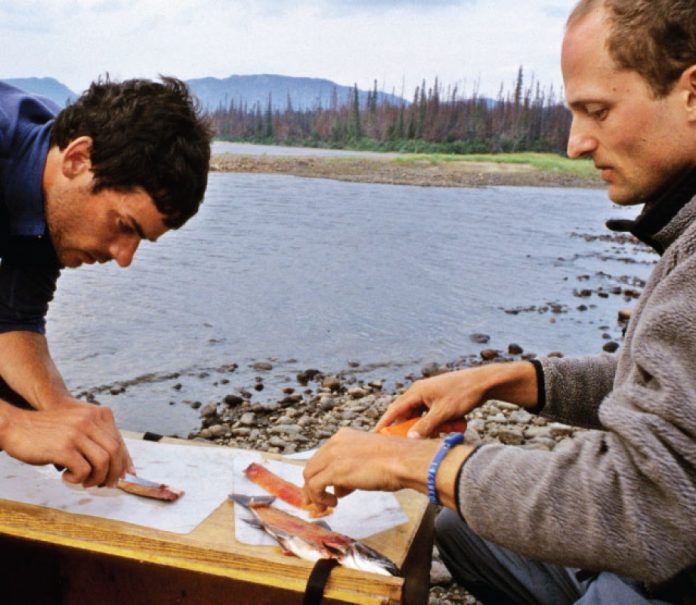
By day 10 on the Coppermine last year, even the non-fishers were angling for pan-fried char. But how exactly does that slippery critter get from your hook to the plate? Filleting a fish removes the flesh from the bones and makes cooking easier.

Fillet your fish on a flat rock or piece of wood away from the campsite and near the water’s edge so you can rinse away the evidence. 

Using a sharp, long, thin blade, slice just behind the gills to the spine as if you were removing the head. Then make an incision along the back of the fish, as close as you can to the dorsal fin. You should be able to feel the dorsal bones, which protrude from the spine, with the tip of your blade. If you can’t feel the dorsal bones, you’re leaving some flesh behind. 

Hold the flesh back as you slice and continue until you’ve cut down to the spine all the way from gills to the anal fin. This is where the ribcage ends and you can begin cutting deeper than the spine. With your blade angled down toward the spine continue with a sawing motion to separate the tail portion of the fillet from the spine.

With the fillet detached—except for where flesh meets ribcage—repeat on the other side, cutting to the spine on the other side of the dorsal fin and bones. 

The hardest part is removing the fillet from the ribcage. While holding the flesh you’ve already separated and with the blade angled down toward the ribs, gradually slice the flesh away from the bones. The flesh is thinnest over the ribcage but with patience you can get most of the meat from these bones. When you get to the end of the ribs slice along the belly and around the anal fin and anus to remove the first fillet. Repeat on the other side and you’ll have two fillets ready for the pan and a very thin fish that can go back to a deep spot in the lake. 

You can cook fillets with the skin on but I prefer to remove the skin from fish with large scales. Hold the fillet near the tail with the skin down and slice between the skin and the flesh. Work the knife back and forth with the blade on a slight angle toward the skin. The skin will neatly part from the flesh, leaving you with nothing but fresh flesh and very few bones.

Mark Scriver is a Black Feather guide and the co-author of Camp Cooking.
This article was originally published in the Spring 2008 issue of CanoerootsThis article first appeared in the Spring 2008 issue of Canoeroots Magazine.
 

Family Pictures

Photo: Scott MacGregor
Family Pictures

I think I was seven when all my parents, uncles, aunts, siblings, cousins and I shuffled into a small main street studio. It was a stuffy low-ceilinged room lined with benches, strobes and an autumn-scene canvas backdrop. 

The family portrait, commissioned by my grandparents, still hangs in their hallway, a reminder to me to never dress up a skinny seven-year-old boy and his extended family and stand them in front of a two-dimensional, neutral-grey-toned wilderness and expect them to look natural. 

Portraiture, in the art world, happens when a painter depicts the visual appearance of his subjects. Just about any photograph does this, but a true portrait is more than that. A true portrait captures the essence or personality of the subject, not just a physical likeness. Think of Leonardo Da Vinci’s Mona Lisa, perhaps the most famous painting of all time. Without that smile she’d just be another Wal-Mart portrait. 

For this issue’s feature I asked our regular Family Camping photographers for tips on taking pictures for family albums. There were a few technical camera tips for making better photographs but most of the suggestions had nothing to do with buttons on the camera. Great outdoor portraits are more about natural environments, props, and simply standing back, and letting inner essences bubble to the surface. 

Some of my favourite family portraits simply capture a moment in time. Like our first cross-country ski trip; skinny dipping in the river; or the smile on my daughter’s face with her first mouthful of roasted marshmallow. Time stops for no man. But I can hang a fraction of a second of it on my wall. 

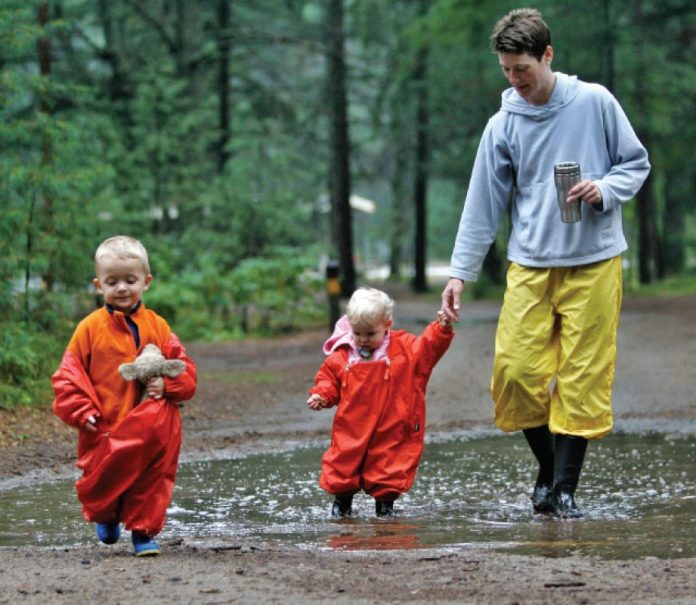
Other pictures I’m excited to show my kids in 10 or 20 years. I want to show them what they were too young or too busy to remember. I want to show them who they were. It’s one thing to tell them they loved jumping in puddles, it is another to show them mid-air and screaming.

And, there’s legacy. My legacy. My vain and backslapping ego wants my kids to know just how cool their good ol’ dad really is (or at least was). I actually grew my hair and beard, so they’d have photos of us together like this. I hope by digging through old shoeboxes of pictures (or scanning through DVDs) they’ll see just how much their parents love them. Never before have parents had the luxury of spending as much time with our kids as this generation. I want them to see the adventures we had while raising them. 

When I was growing up my parents, like most of their generation, were busy. Cameras and film were expensive, and not very handy to use—flash used to come in disposal cubes. Consequently, there are only a few cherished pictures of me, and even fewer of my younger brother. 

After three years of parenthood I have more than 2,400 family photos on my laptop. Only a couple are as good as those taken by our pros. A few more are special enough to hang in our hallway. But I guarantee you this, not a single one has an unnatural smile in front of a fake forest background. 

This article was originally published in the Spring 2008 issue of CanoerootsThis article first appeared in the Spring 2008 issue of Canoeroots Magazine.
Finding Farley

Photo: Karsten Heuer
Finding Farley

Karsten Heuer and Leanne Allison are no strangers to long expeditions. But their last undertaking to cross the country by paddle, sail and train to meet an iconic writer quickly took the form not of an expedition but a pilgrimage.

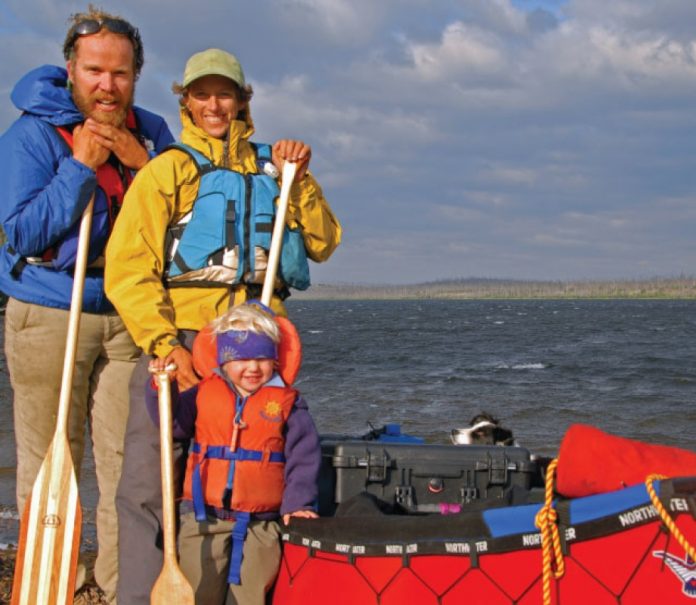
For writer Heuer and filmmaker Allison, the story began in 2005 when Heuer sent an unsolicited draft of his book Being Caribou to Farley Mowat. As childhood devotees of the 86-year-old writer the couple was amazed a few weeks later when Mowat called and invited them to visit his Cape Breton farm. Living in Canmore, Alberta, Heuer and Allison weighed the options for getting there. Then they realized that Mowat had already written a multi-volume guidebook for them: Why not plot a route over land and water, criss-crossing the settings of Mowat’s books? 

And so the Finding Farley project was born. Last May, Allison, Heuer and their two-year-old toddler Zev loaded up their Prospector and dropped it into the Bow River near their home. 

The early stretch of their journey had the family paddling through the setting of Owls in the Family and The Dog Who Wouldn’t Be, two of Mowat’s novels about growing up in the Saskatchewan prairies.

By summer, they were deep into the northern wilds, battling long portages, a thick haze of bugs and a near-miss with a sleeping polar bear. 

They followed the Cochrane and Thlewiaza Rivers through Manitoba into Nunavut, passing the barren settings of several of Mowat’s books, including No Man’s River and Lost in the Barrens. 

“Farley remembers being terrified running these rivers with his life in the trapper’s hands,” says Allison. “He knows how unforgiving the landscape can be.”

From Churchill, Manitoba, they caught a train to Quebec and then sailed across the Gulf of St. Lawrence to Newfoundland. After three days on the choppy seas they pulled into Burgeo, the setting for Mowat’s 1972 novel A Whale for the Killing. 

In early fall, the family sailed to Nova Scotia and anchored in the bay at St. Peters, where Mowat stood waiting on the shore. 

Despite having never met, the group soon fell into easy rapport. “There was already such a shared history,” says Allison. “It felt more like a reunion than an introduction.”

The family spent three days exchanging tales from the Barren Lands with the Mowats. Mowat admitted being worried throughout the family’s pilgrimage, despite—or perhaps because of—his own extensive travels across the same land. 

“He had tried a few times along the way to dissuade us,” says Allison. “So he was very happy to finally have us safely ashore.”—Amy Flynn Stuart

This article was originally published in the Spring 2008 issue of CanoerootsThis article first appeared in the Spring 2008 issue of Canoeroots Magazine.
 

Primal Instinct

Photos: Max Marshak
Primal Instinct

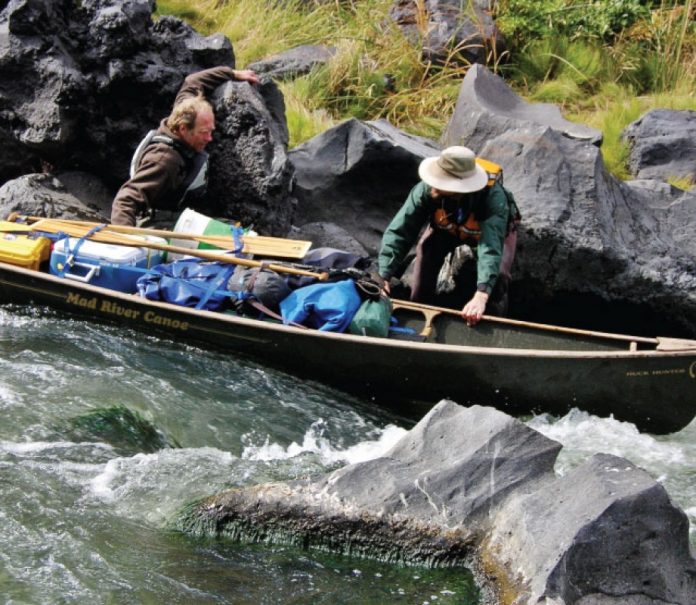
From where I rested in a cliffside coyote den, my shotgun across my knees, I could see out across a yawning Owyhee Canyon. At the bottom, running thin and ragged, was the river itself. A guy could read the river like a book from high up on the canyon wall, but it was just jagged Braille down at water level. We’d spent six autumn days in this canyon in southeastern Oregon, canoeing nearly 100 kilometres of rocky riverbed from Rome to Birch Creek and, frankly, were having a hard time of it.

Running low in its boney bed, the high desert stream rattled through narrow clefts and boulder-studded channels. Each rapid we came across—and there were many—commanded us to pull ashore and scout. We ran a few and played safe with the rest, lining anything that looked dicey or gathering all six of us to hump our bloated hulls over spots where the boulders were just too close together. 

Canoes had turned out to be the right choice of boat—rafts would be difficult to work through the boulder fields and inflatable kayaks don’t slip over rocks as well as hard Royalex—but our two 16-footers were nearly too big for the Owyhee this late in the season. We paid the price in busted thwarts, deep gouges and more grooves than a vinyl 45. Though still stable, the nearly lame Duck Hunter had to have its gunwales lashed together to make the distance. 

After days of paddling, carrying, hiking, hunting and fishing we would huddle in the sand around a crackling fire, turning like flapjacks every few minutes to warm our backs or bellies. Solace seeped from a bottle of Bushmills we passed around while the water in our canteens froze up tight.

Though the river here runs through one of the least-populated regions in the lower 48, we were far from alone. Chukar partridge were thick as fleas on a cat and hanging low to the water. They live in the scree and rimrock on the canyon walls. We would routinely round a corner and find a covey of birds staring us down from the bank. It was an incongruous sight to see our hunters slip onto the earth-tone shore and give chase in their neon dry suits and PFDs. 

Not having packed any dinners, we ate what we could shoot. Abandoned mines upstream had left a leeching legacy of mercury in the fish, so I knew what I wanted on my plate. Hiking out of camp with my shotgun on my back, I was looking for dinner no less earnestly than the eagle hunting his mouse. The alignment of function with purpose, of hunting to eat, was a powerful motivator. Granted, we hadn’t the predatorial focus of true canyon denizens like the coyote and the osprey; ours was a mere patch on the fabric of the primal imperative of hunting to survive. The satisfaction of feeding myself directly from the river canyon I was travelling through, without a thousand middlemen and miles between nature and my plate, brought me closer to a leaner style of life. 

The den I was resting in was littered with small bones, fur and coyote scat. I fingered through the sand thinking I might turn up an arrowhead or chippings. I could imagine a hunter of long ago ducking in to escape the weather.

 To the north I could see a thin plume of smoke rising from camp, which meant Cookie (he’s better at cooking than we are at giving nicknames) was firing up coals for the Dutch oven. Last I had counted we were a few birds short of a meal; it was time to get the two partridge tucked in my game pouch back to camp. I got up stiffly, shut the breech of my gun and looked for the best route to scramble down the ridge. 

I could feel dinner pressing against my lower back as I hiked. In the distance, downriver, an old jeep trail scratched down from the rim, one of only two tracks leading into the canyon sanctum on this stretch. On a flat along the river two trucks were parked at a camp. 

I’ve camped on rivers that way many times, driving in without worrying about tying gear to thwarts, pinning canoes against rocks and sustaining lower back pain. But we were on the Owyhee to feed ourselves from the land, not from a drive-through lane. Better to do that from a canoe than a truck. Headed toward the half-broken canoe on the bank I had a feeling the birds in my pouch would taste better than the ones the guys in the trucks had taken, even if they had bagged a few extra birds while we had our guns tucked away and our paddles out.

Rob Lyon is the author of ‘Water Marked: Journal of a Naked Fly Fisherman’ and lives on a small island off the Washington coast.

This article was originally published in the Spring 2008 issue of CanoerootsThis article first appeared in the Spring 2008 issue of Canoeroots Magazine.
 

Silent Sam: Sam Crowley on His Circumnavigation of Ireland

Photo: Tim Shuff
Silent Sam: Sam Crowley on His Circumnavigation of Ireland

Midway through his solo attempt to circumnavigate Ireland, the scariest thing Sam Crowley had encountered didn’t involve big seas, surf or tidal races. It happened, in Crowley’s words, “on a two-way lane about the width of a bicycle path with a speed limit of 80 kilometres per hour.”

“In many ways it’s safer on the water than on the roads,” says Crowley, a sea kayaker from Marquette, Michigan.

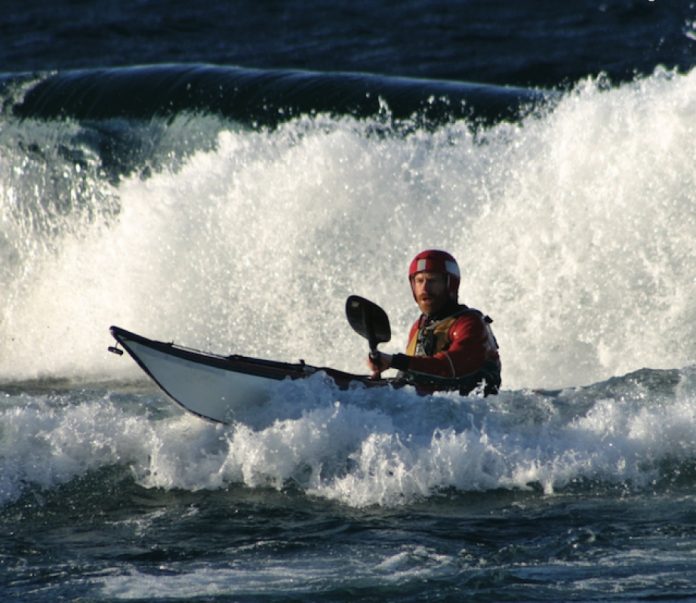
Catching up to Sam by phone in July, it’s not hard to imagine the easygoing, soft-spoken Crowley sipping Guinness in an Irish pub as he talks (with a bit of prodding) about the first quarter of his 2,200-kilometre trip. Despite the fact that he’s been windbound on the southwest corner of the emerald isle for nearly two weeks—all told he’s paddled 18 kilometres in the past 12 days—he’s still optimistic he’ll complete his clockwise circumnavigation before the end of the summer.

If he ever gets back on the water, the next task is an arduous crossing to Skellig Michael, a cliff-bound island with an abandoned 1,200-year-old monastery. Crowley says getting ashore there will involve a “Derek Hutchinson-style seal landing on a concrete pier.” From Skellig Michael, Crowley will continue north up the west coast of Ireland.

If you can convince him to tell you about it, Crowley has an impressive paddling resume including countless British Canoe Union and American Canoe association awards. Crowley and his partner Nancy Uschold run a sea kayak instruction company in Michigan’s upper peninsula. But what really stands out are his many extended trips on lake superior, a crossing of the Baltic sea from Helsinki, Finland, to Stockholm, Sweden, and a circumnavigation of Moresby island in the Queen Charlottes of Canada’s pacific coast.

While Crowley says the Ireland trip was the culmination of five years of planning and “warm-up trips,” the logistics were quite simple: he shut down his sport massage business for the summer, picked up an explorer sea kayak from Nigel Dennis in Wales, took a ferry to Dublin and started paddling.

He says the biggest difference between paddling around Ireland and his previous trips are the people.

“I’m used to places where you don’t see anyone,” says Crowley from a barstool in the town of garnish. “Here you camp on a beach and it’s like a promenade. But the people are so friendly. Earlier tonight a fellow took pity on me and brought me up here for a pint.”

Crowley says the rural Irish people he’s met have taught him the most. “Mostly I’ve learned not to try to keep up with 70- year-old drinking Irishmen, even if they’ve had a head start.” 

This article on kayaking Ireland was published in the Fall 2007 issue of Adventure Kayak magazine.This article first appeared in the Fall 2007 issue of Adventure Kayak Magazine. For more great content, subscribe to Adventure Kayak’s print and digital editions here.
Rock the Boat: The Gods Must Be Seaworthy

Illustration: Lorenzo Del Bianco
Rock the Boat: The Gods Must Be Seaworthy

Recently I found myself wondering if I was leading a spiritually bankrupt existence. Should I have god in my life? And if so what god? Lord knows there’s a baffling selection. How could I possibly choose?

As with most things, I decided to relate my quest directly to kayaking, posing the following spiritual conundrum: which god (or the given religion’s representative) would make the best paddling partner?

Almost immediately, I ticked Buddha off my list. He clearly wasn’t in the best shape and he’d probably rather sit on the beach and chill than go for a paddle, which is cool, but I guess Buddhism isn’t really for me.

Next I considered Zeus. In Greek mythology he’s the god of the sky, and way too into thunder and lightning to be safe out on the water. He also has an incredibly checkered sexual history, having shagged just about everyone in ancient Greece. Renowned for his erotic escapades (including at least one pederastic relationship), he’s the last deity you would ever want to introduce to your partner, sister, grandfather…anyone. If I were looking for a horn-dog with a god complex, I would hire a kayak guide. Scratch Zeus.

Then I thought, what about Jesus? Great guy—the Son of God and an avid fisherman too. But picture it—you’re in big seas, a couple of miles offshore, desperately trying to get around a headland…and He keeps getting out of His kayak to stretch His legs. You’d feel ridiculous sitting there in your boat with Him striding around atop the angry seas in His goofy sandals. And what about all that kneeling to pray? Seems squarely aimed at canoeists, not kayakers. We sit, we don’t kneel. Forget Jesus.

Mohammed is terrific, but these days he always seems to draw an angry crowd of pissed-off Americans with guns, which is a huge drag. And besides, Islam is predominantly aniconistic, meaning that no visual representations of Mohammed are permitted, so holiday snapshots are right out.

EXPLORING THE INDIAN FAITHS

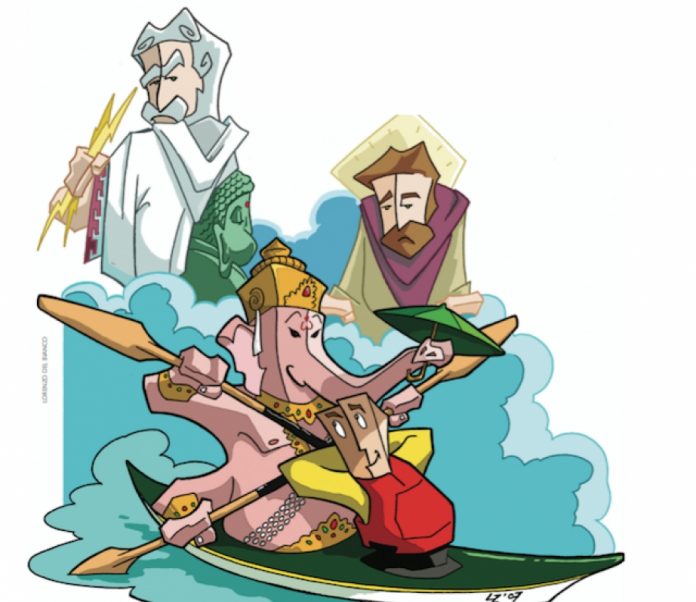
Next I started exploring Indian faiths: Vishnu and Shiva for instance are very groovy gods, but then it hit me—this was my personal epiphany. I know who the greatest paddling god is! It can be none other than Ganesha. In Hinduism, Ganesha is, according to my spiritual resources (i.e. the Internet) “the Lord of success and destroyer of evils and obstacles. He is also worshipped as the god of education, knowledge, wisdom and wealth.” This is one good guy to have on a trip.

Ganesha is described as having “an elephantine countenance with a curved trunk and big ears, and a huge pot-bellied body of a human being.” Okay, so like Buddha, he doesn’t live at the gym, but he’s the Lord of success, so no problem. And Ganesha has four arms, so we’re talking at least twice the power on a forward stroke, and bombproof braces. Imagine a combination of a low and a high brace both executed at the same time!

Even if he did capsize somehow, if he missed his first roll attempt, the second would be started before he even finished the first. Besides, if he wasn’t into rolling right away, he could just stick his trunk out of the water and breathe as long as he wanted. He could probably even reach his front hatch with that thing—definitely handy for getting at snacks.

Just imagine assisted rescues. While one set of arms would stabilize your kayak, the other would be manoeuvring the boats. He could pluck you from the water with his trunk, whip you back into your seat, and vacuum the water out of your cockpit with his trunk’s powerful suction. Ganesha must be the only paddler with his very own built-in snorkel and bilge pump. And remember, if a god rescues you, then brother, you are SAVED!

Not everything about paddling with Ganesha is going to be easy. It will definitely be a challenge to find a sunhat to fit that elephant head, and the four-armed paddling jacket is almost certainly going to be a special order, but for me, my spiritual journey is at an end. My personal paddling god is Ganesha, the “Lord of success and destroyer of evils”—and a wicked kayaker too. Amen!

Alex Matthews is a Canadian sea kayaker who contemplates the pantheon from a secret location where offended readers won’t be able to find him. 

This article on finding a unique paddling partner was published in the Fall 2007 issue of Adventure Kayak magazine.This article first appeared in the Fall 2007 issue of Adventure Kayak Magazine. For more great content, subscribe to Adventure Kayak’s print and digital editions here.
Skills: Making the Bands

Photo: Carole Westwood
Skills: Making the Bands

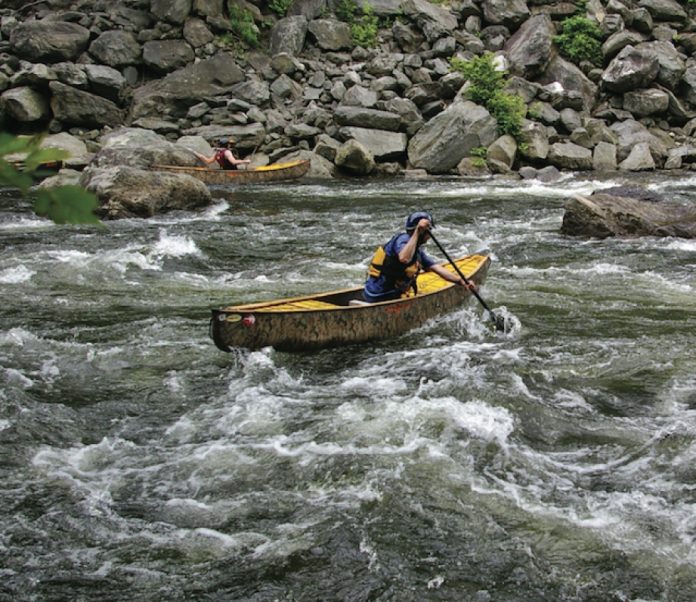
Shallow water ferries can present an interesting water-reading challenge to canoeists. As the current flows over rocks or boulder gardens it is divided into bands of fast-and slow-moving water. Like lanes on the highway, these ribbons of water appear as parallel lines of traffic. Fortunately, these bands of current can be used to your advantage to assist in doing effortless ferries. The key is recognizing the currents and applying varying ferry angles that work with the water to move you quickly and easily across the river.

Identifying the bands of fast- and slow-moving water is actually quite easy. Reading water is simply observing the changes in colour and texture of the water as it flows over and around obstacles in the riverbed. In shallow water, look across the river for alternating bands of colour to show the different speeds of current. For example, colour changes from light–dark–light may indicate currents ranging from fast–slow–fast. Do the same for texture. Wavy–flat–wavy would also indicate current changing from fast–slow–fast.

The fun of shallow water ferries is selecting ferry angles that work with the currents to significantly reduce the number of paddle strokes needed to cross the river.

Why? Because it is always better to use the water to your advantage, and specifically in shallow water ferries, fewer strokes mean you are less likely to trip over your blade.

Here’s how: choose a ferry angle that points across the fast water and enter the current. This strategy helps to pull you quickly into the flow and jets you toward the adjacent band of slow water. Allow your angle to open until you are pointing across the boundary with the neighbouring band of slow water. Next, as you enter the slow current, allow the current to point the canoe upstream, which it will try to do, sort of like coming into an eddy. The momentum you carry from exiting the fast water will assist in your ferry up and across the slow current. As you approach the next band of fast water, open your angle to jet through the rapid flow. The changes in the speed of the current actually assist the changes of angle and direction of your canoe; it just takes some getting used to because we usually open our angle in slow water and close it when we enter fast moving water. On shallow water ferries we are doing the opposite.

This strategy, although untraditional, has a couple of advantages. First, it minimizes your exposure to fast current so you don’t have to waste energy duking it out in a losing battle against the river. Second, each transition between currents allows the boat angle to follow the current, practically eliminating correction strokes. Third, opening your angle promotes efficient glides by capturing momentum from fast water and carrying it into the slow currents. And finally, it gives you the opportunity to attain in the slow current to better position your boat for subsequent manoeuvres.

Shallow water ferries across bands of fast and slow moving water allow paddlers to tap into the power of the river to move across the river with very little effort. Effective water reading, choosing ferry angles that work with the water and, of course, practice make it easy. 

This article on open canoe ferry was published in the Summer 2007 issue of Adventure Kayak magazine.

This article first appeared in the Fall 2007 issue of Rapid Magazine.


River Alchemy: Hockey Night in Utah

Photo: Matt Leidecker
River Alchemy: Hockey Night in Utah

It’s a seemingly simple move when done correctly: launch from behind the oars at a run with your coiled bow line and a sand stake; leap to the beach with your raft still in the current; drive the stake into the ground and tie it off like a rodeo calf roper. When done just right, the rope stretches taut and pendulums the raft up onto the sand bar coming to rest where no eddy exists. Miss the timing of the jump, carry too little bow line, or tangle the calf roper loop and the loaded raft keeps on trucking, dragging the boatman down the sandbar on the end of the bow line, heading into the very rapid he intended to scout.

This time the boatman nailed it. She buried the stake with authority and had the rope wrapped and tied in seconds—long before the line came taut. She watched with quiet satisfaction as her raft swung up on the beach, just like it was supposed to. We were above Triplet Falls on the Green River in the desert southwest, the water running high, with her deftly herding passengers off her rig and onto the scout trail. She wasn’t messing around–I was impressed. There was something familiar about this young dynamo of a trip leader. As the last boat on her trip skidded onto the beach and easily tied to her stake, I asked another guide “Is that a young Brown in your lead boat?” He nodded and smiled admirably.

This sense of home, belonging, and ownership will do more for our rivers than anything else in the world. Take care of our rivers.

It was well over 10 years ago when I first landed in Vernal, Utah, to guide the canyon rivers. Vernal was the birthplace of western river running 75 years earlier, but is now all oil drilling and ranching. I had been in town only a couple of days when a rumbly, full-size Ford F350 pickup truck rolled up in a cloud of dust. Out dropped a small, serious-looking man—worn western boots, Wranglers, handlebar mustache and a cowboy hat as big as the grill of his truck. He’d heard there was a Canadian in town. I ran for cover.

Turns out that Cowboy Al loved hockey. He’d come looking for the Canadian kid to come and watch the playoffs with him. It was 1995, New Jersey was playing Detroit.

Al Brown is a legend. He ran rivers for decades in the early days and ended up a dude rancher. In the wintertime he flooded his horse arena and hosted a kids’ hockey league, turning his tack shed into the dressing room, using equipment donated from his wealthy eastern seaboard clients (at the time you couldn’t buy ice skates in Utah).

Cowboy Al was a serious hockey fan in the middle of a hockey desert. As the puck dropped, we became fast friends, meeting in his living room for the playoffs every second night. On off days we’d take shots in his hay barn, blasting pucks at his plywood goalie, Al in his boots and Wranglers, me in sandals and river shorts. While I was on the river he would tape the games and have an edited highlight reel waiting for me when I got back.

Watching hockey at the Brown’s house was serious business too. No one was allowed to talk during play, his three young kids’ eyes glued to the tube. When the game stopped for commercials chaos would erupt with kids brawling and crawling all over each other, shrieking and laughing. When the puck dropped again… silence.

Something I learned from spending my summers on the rivers and at the Brown ranch was Al’s deep love for where he lived. He’d spent most of his life on the Green River, in the canyon of Lodore and Split Mountain, his ranch now on its banks and within view of the take-out. His family was firmly planted, and it was a joy to be invited in.

Named after the canyon where she now guides boats, young Lodore Brown was the trip leader up the trail scouting with her group—the one who nailed the sand stake and the same kid who years earlier pretended to drop her gloves and pull my jersey over my head during breaks in the hockey game.

As she returned her clients to her boat, I introduced myself in the way river guides do—an old-timer nodding and exchanging first names with the new generation, as she focused on her run and getting her rig in order. I didn’t mention watching hockey at her house or taking shots with her dad.

I had just returned to the Green after a long absence and my brief, chance encounter with Lodore made my summer. The sand anchor she so deftly buried and the skill and authority with which she drove it in were symbols of her family history and connection with the place. It is more than “being at home” on the river, this river is her home. I could see it in the depth and clarity of her eyes as she looked over her shoulder at the rapid’s entry in the midst of our brief introduction.

I wish this for all people who travel rivers; I wish them the true feeling of home and connection with a place. The ability to nail a stake into the river bank and know “this is my river.” This sense of home, belonging, and ownership will do more for our rivers than anything else in the world. Take care of our rivers. 

This article on Cowboy Al was published in the Fall 2007 issue of Rapid magazine.

This article first appeared in the Fall 2007 issue of Rapid Magazine.


Peer Pressure: Kayak Bungee Jumping

Photo: AJ Hacket Bungy
Peer Pressure: Kayak Bungee Jumping

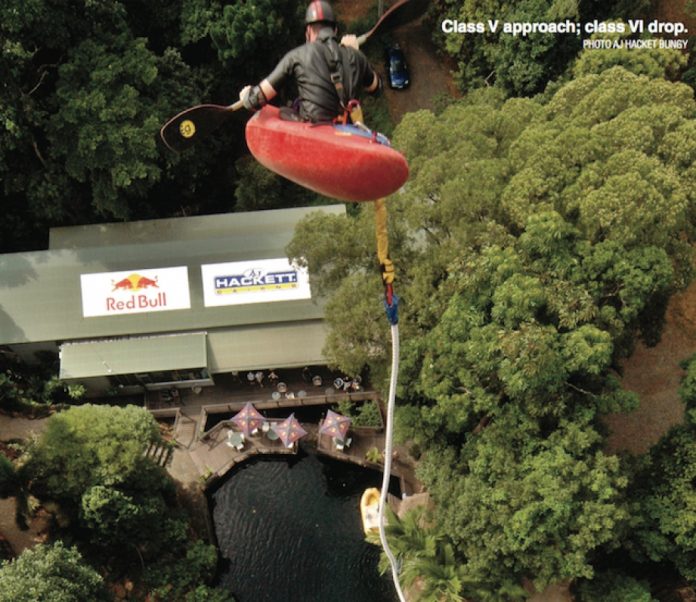
You’d think an Australian cop would be better prepared to deal with peer pressure. However, while on location this spring for their upcoming film We’re Going There Anyway, the Skippy Film crew convinced Jackson kayak’s down-under paddler Jez Blanchard to hurtle himself in his Rocker well more than 50 metres (164 feet) into oblivion for some truly sick bigdrop footage.

Simply known as Jez, the Sydney riot squad officer is a four-time national champion, multi-time OC1 World Cup finalist and creator of the Jackson kayak Camp Instructional Tour. After a quick phone call to the operators of AJ Hacket Bungy, who immediately went about setting up safety and erecting a ramp for a little added vertical spice, he was whisked off to North Queensland.

Rigged into a full-body harness, then strapped into his kayak, Jez was placed several metres higher than the usual 50-metre-high bungee platform. At the very top of the tower the ramp had been added, allowing him to reach 200 kilometres per hour as he launched into rarified air.

“I wasn’t feeling too bad considering I knew what was about to take place,” says Jez.

“A jump like this is fine at the start as all you can see is the horizon line of the roof, however, as soon as I got to the edge I realized how ridiculous this was.

The ground is a very solid thing, and when it comes towards you at terminal velocity you do tend to get a little freaked out.”

He went into an uncontrolled spin, but kept paddling, “partly because it’s a normal reaction to being in a boat and partly because the film crew thought it would look sweet.”

With the recoil at the bottom, Jez scuffed up his shoulders on the harness and says he felt an uncomfortable squeeze in his manhood, but the bow of the boat successfully kissed the surface of the pool below and he even added a little slap of his paddle before bouncing back up.

“It is the ultimate park and huck,” Jez said. “But if you’re ever asked to kayak bungee, it’s like drugs, just say ‘no’.”

This article on kayak bungee jumping was published in the Fall 2007 issue of Rapid magazine.

This article first appeared in the Fall 2007 issue of Rapid Magazine.


Copycat Creeker

Photo: Ryan Creary
Copycat Creeker

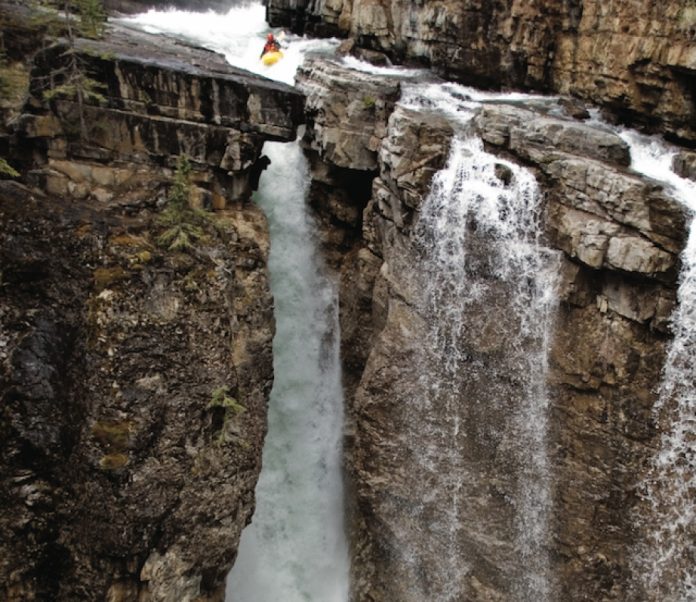
No waterfall drop is more revered than Tao Berman’s 1999 descent of Banff National Park’s Upper Johnston Falls. It was the first to approach the 100-foot mark and undoubtedly the most recognizable event in extreme kayaking, breaking the previous record by 20 feet and still standing as the highest falls run without swimming. The event was witnessed by 100 sightseers and several camera crews and was almost immediately broadcast across the world. Even without most of the fanfare, imitation is still the highest form of flattery, and for Canmore, Alberta’s Logan Grayling, it may also be a 98.4-foot steppingstone to something higher.

Nineteen-year-old Grayling was a Grade 6 student who had never paddled when Berman set the world waterfall record just 25 minutes from his house. John- ston Falls was a common school class trip.

“I didn’t even know what whitewater kayaking was at the time. I had seen the falls dozens of times, but had no idea anyone had gone over it or even what that meant,”

Grayling said. “I do now.”

Since Grayling began paddling the big stuff a little more than two years ago, he’s been hiking into the park, trading in math quizzes for real life calculations. He says as his skills improved, so did his confidence that this tourist attraction could be “knocked off” so that a new, younger generation of paddlers could emerge as leaders.

“Since [Berman’s drop] no one has been able to step up and run it, and let me tell you, it’s huge and f-ing intimidating. But I wanted to do this for myself, to prove to myself I could; to show that people can still push the limits of the sport and see what comes next,” Grayling said.

With only a couple of cameramen and about half the spectators of Berman’s drop, Grayling ran Johnston Falls on June 13. He estimates the flow was about two feet higher at the top and only a foot higher in the basin than in 1999. So technically, this could be some sort of new record, though he admits it is difficult to prove. The only hitch to the descent was that Grayling grazed his cheek on a jutting rock about 75 feet down, the very same rock that broke Berman’s paddle eight years earlier.

Most importantly for Grayling is what’s next.

“Now I know what my body can handle, we’re moving on. I’ve got a couple of spots that I can’t tell you about that are waaaay higher than Ed’s,” he said, referring to Ed Lucero’s 2003, 105.6-foot record drop of Alexandra Falls, NWT, which he swam. “Hopefully this September we’ll have a new record to talk about.”  

This article on Logan Grayling was published in the Fall 2007 issue of Rapid magazine.

This article first appeared in the Fall 2007 issue of Rapid Magazine.