Home Blog Page 352

The Love Boat

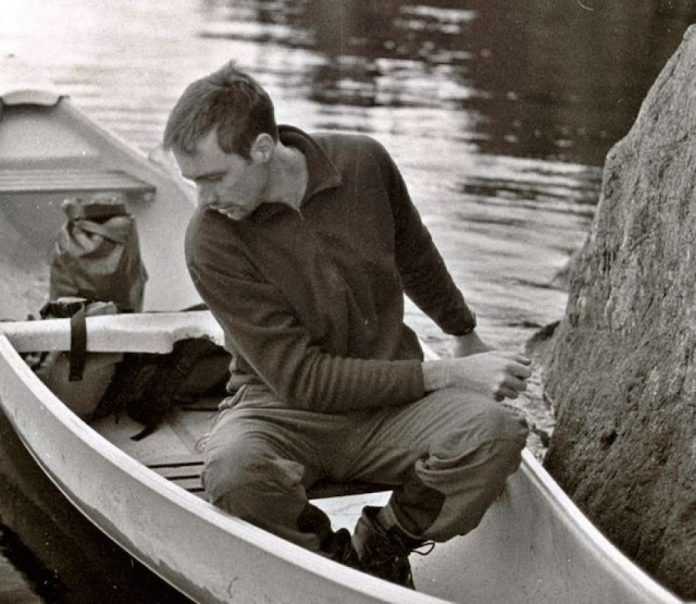
Photo: Tim Shuff
The Love Boat

Six years ago, I met a girl who wanted to go canoeing.

That our first real date was going to be a canoe trip seemed like a very good sign. Being a graduate of many years of summer camp, I thought I was very good at canoeing. It seemed like the best chance I could ever hope for to impress a woman. We had both moved from Ontario to British Columbia for university. The date came about because we had learned that we were both canoeists. She knew someone in Victoria who owned a canoe, so we drove my truck to the house where the canoe was stored, free for the taking, beside the garage.

My heart sank.


Here was a canoe of the type I had always disdained. Underneath a veneer of moss—it had been sitting out in the West Coast rain for that many years—was a disturbing sight to a canoe snob from the land of the silver birch and the cedar canvas Prospector. The keel looked like it had been moulded by laying a broom handle the length of the hull and casting it in a bloated, white, fiberglass ooze. The potbellied hull had the squat lines of a craft I imagined was designed for uncoordinated, pear- shaped people who knew nothing about canoeing.

And then there were the paddles. Ouch. At summer camp I had learned that equipment mattered. Every year, a paddle carver used to visit our camp and lecture us about the importance of carefully chosen wood, a delicately shaped handle that fit the palm of the hand just so, a butt end so gently sanded and oiled and protected from touching the ground that it would always feel like satin in your palm.

These paddles were not like that.

When we got to the lake, the object of my desires asked which of us would stern.

“I will, because I’m the man,” I said. I meant it as a joke.

She had been to summer camp for many years too. Except her summer camp was an all-girl camp. And at girls’ camps they teach young women that they can do anything, including a J-stroke, better than most men. At girls’ camps it’s not funny to joke that women belong in the bow. Nope, not funny at all.

“Before we touched land, we were in love.”

We decided to take turns in the stern in the spirit of equality. She showed me her J-stroke and then I showed her mine. Both were very sexy. I became grinningly pleased that I could put my head down in the bow and trust that she could keep that canoe going straight no matter how hard I paddled. When I was in the stern she said, “With you, I don’t mind paddling in the bow, and I can’t say that to very many people.” Bliss.

We pulled up on the shore for lunch and continued our mutual admiration. She commended me on how organized I was with the food. I observed how impressed I was that she knew not to wash our dishes in the lake. Here, I realized, was a woman who really knows how to trip.

We paddled to the end of the lake and fought a headwind back to the car. Our homely canoe was stable and true in the chop. We kept saying things like, “It sure feels good to be out canoeing again.” The cheap paddles with their frayed and waterlogged ends burned our city-softened palms and made our arms feel like we’d paddled together a hundred miles. Before we touched land, we were in love.

Three years later, we went camping together again and got engaged. In the spirit of equality, it was she who proposed.


What I learned on that first date—besides the fact that sexist jokes aren’t always funny—is that equipment doesn’t matter so much. Now I will say, to anyone who asks, buy the canoe you can afford. Buy a canoe with gunwales that will never rot and a hull that will last forever. Buy a canoe that you can keep by the lake, on the roof of the car, on the dock at the cottage or at the side of the garage—wherever it will be seen and be paddled and inspire, where it will be kept unlocked for friends and acquaintances and would-be lovers to borrow and paddle together. And I would wish for their sakes that its little hull tracks straight enough to make any paddler look good in the stern, that its short length be conducive to easy conversation, and that its initial stability be sufficient for making love.

Tim Shuff and his partner are going on a canoe trip for their honeymoon. They will be taking turns in the stern. 
This article on canoeing was published in the Early Summer 2007 issue of Canoeroots magazine.This article first appeared in the Early Summer 2007 issue of Canoeroots Magazine. For more great content, subscribe to Canoeroots’ print and digital editions here.
Skills: Hang Ten

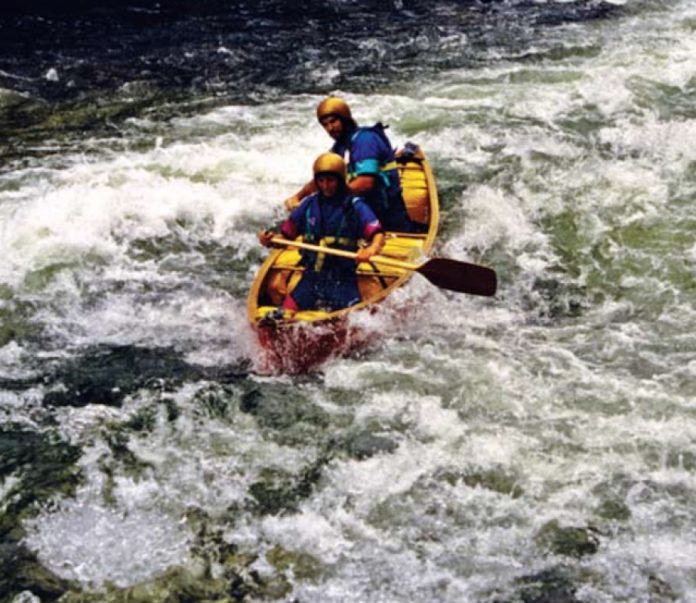
Photo: Gary and Joanie McGuffin
Skills: Hang Ten

If you think you need a floral shirt, bleached hair and Californian accent to surf you are wrong. Surfable standing waves form whenever fast-flowing water meets a slower current on a river. When you position your canoe on the sweet spot of a wave the force of gravity pulling your canoe down the wave and the force of the water pushing your canoe back up the wave balance out. When that happens, all you have left to do is hang ten. 

  1. Set up facing upstream beside the surfing wave and leave the eddy as if you are intending to ferry across the river.
  2. As gravity draws your bow into the trough the stern paddler should rudder to keep the canoe parallel to the current so the bow isn’t swept downstream. The bow paddler should provide power to keep the canoe from being pushed downstream.
  3. If you are in danger of sliding off the back of the wave, lean forward to increase the canoe’s speed down the wave. If the bow is diving too deeply into the trough, back off by weighting the back of the canoe.
  4. The stern paddler rudders to hold the canoe in the parallel surf position. The bow paddler uses forward strokes or draws to maintain position on the wave’s sweet spot and keep the bow upstream.
  5. When all forces acting on your canoe are balanced you can surf the wave effortlessly while the river roars by. 

This article on front surfing was published in the Early Summer 2007 issue of Canoeroots magazine.This article first appeared in the Early Summer 2007 issue of Canoeroots Magazine. For more great content, subscribe to Canoeroots’ print and digital editions here.
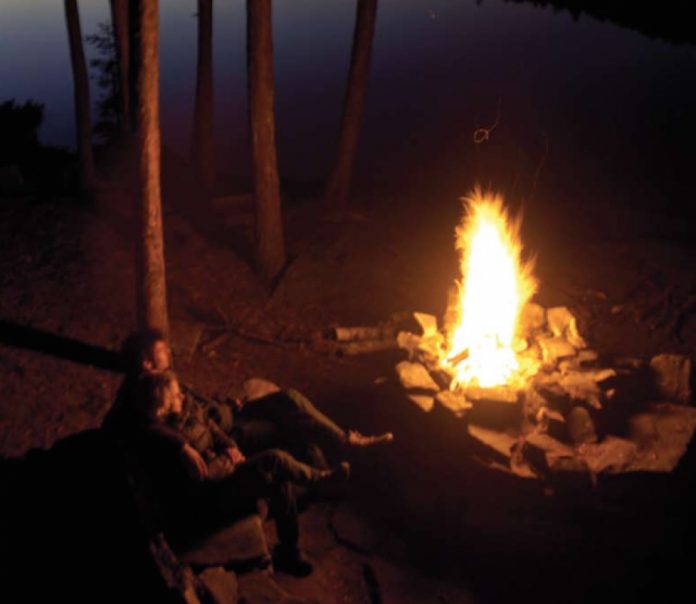
Canoe Trip Diary: Two Solitudes

Photo: Jock Bradley/The Helicona Press
Canoe Trip Diary: Two Solitudes

Tom and I went on our first canoe trip together last summer. We’d been engaged for a while, but we had never pushed off for a long trip. Both of us are paddlers, so we had nothing short of a lifetime of shared happiness—or misery—on the line.

It took us a while to agree on a plan. He wanted to paddle the Nahanni or race in the Yukon River Quest. I wanted to disappear for a few weeks in Temagami, Kipawa, or Quetico. We settled on a two-week lake trip in Quetico Provincial Park so Tom could at least check off an area he hadn’t been to before. I felt a twinge of alarm when I loaded the paddles in the car; his a gleaming bent-shaft racing paddle, mine a battered old Lolk.

As we pulled away it was like paddling with a machine. Tom hauled gallons of water with each fierce paddle stroke. He pad- dled so fast I had to either cut my sterning stroke to a quick draw or pry or ignore his pace completely. I didn’t know any camp songs fast enough to match his rhythm. I tucked my head down, and dreaded the next 14 days.

On day two Tom kept looking down to check on his GPS and heart rate monitor. Apparently this trip was part of his training for the New York marathon and we weren’t covering the kind of ground he thought we should. His day-two journal entry reads, “Today we paddled hard but we also stopped a lot so, although I measured our top cruising speed at seven kilometres per hour, and we covered 3.5 kilometres in our first 31 minutes, we only covered 22.5 kilometres in eight hours.” I read the entry with horror. Later, he slept while I lay awake for hours. Fretting.

WHITEWATER VS FLATWATER

To Tom, lake trips are only a step above car camping. All those flat, featureless kilometres of lakes bore him. Tom trips to conquer the outdoors. In the morning he’s packed and out of the tent while I’m still horizontal and thinking, “shorts or pants?” On portages he isn’t happy until he’s loaded down like a packhorse and running up the hills.

And, of course, Tom loves rivers. He likes how the adrenaline forces him to be in the moment. Tom says rivers are a metaphor for life: they have a destiny, and they flow by like time.

The way I see it, whitewater wrecks an otherwise perfect canoe trip. I like listening to the wind in the trees. I want to look around. I dread the frantic paddling and shouting of rapids. Rivers and I work at cross purposes. They crank a trip into fast forward, while I want to slow things down.

My defence against Tom’s driven approach varied. Some days I tried to keep up, some days I resorted to sabotage. My methods included: picking fights, sex, cooking blueberry pie, swimming, complaining, getting us lost, sleeping in, searching for my camera and (my favourite) repeatedly turning around when in the bow to talk to him.

A tiny island rising out of the southwest corner of Sarah Lake provided some common ground. I heard the Hallelujah chorus when our canoe touched gravel that afternoon. It was the ulti- mate lake campsite. A small fire pit, swimming rocks in clear water, a pile of beaver-prepped firewood. The sun set upwind and we stayed up late drinking Labrador tea and counting stars. 

That night we agreed on a few things. We both like islands with good swimming rocks and we both like to read in the ham- mock. We also sorted out our route. We agreed on fixed goals for him, and included some short days for me. Days four through six were lovely.

Day seven was another matter.

MAKING COMPROMISES

It was late afternoon and we were heading south from Kawnipi into Kahshahpiwi Creek. Tom had the map. I heard a sloshing coming from downstream. We pulled out to take a look. It was a set of rapids about 30 metres long with tall standing waves and a dark tongue of river cutting between sharp black boulders. He said, excitedly, “It’s totally runnable.” I said, “No, it’s dangerous.” He laughed. Then he stopped—quickly. And we walked—quietly.

A few hours later after much crying, shouting, and stubborn defensiveness we agreed to conditions under which I will learn to paddle whitewater. None of them include a loaded, borrowed canoe and the end of the day.

Tom never made an explicit concession to my way of paddling, but after a rest day on day nine I was no longer worried about his appreciation for still water. The island we camped on curved like a horseshoe in the middle Kahshahpiwi Lake. We ate pancakes, wrote letters, fished and dozed in the hammock. Tom wrote seven pages in the journal that night as testimony to his transformation: “I woke up and watched a bald eagle and a heard a loon calling across the lake. I sometimes forget how the routines of trip are charmed by nature: the weather, wildlife, light, fire, stars.”

I never saw his heart rate monitor again. 

Tory Bowman, in the spirit of compromise, has consented to taking a course in whitewater canoeing. 

This article on canoe trips was published in the Early Summer 2007 issue of Canoeroots magazine.This article first appeared in the Early Summer 2007 issue of Canoeroots Magazine. For more great content, subscribe to Canoeroots’ print and digital editions here.
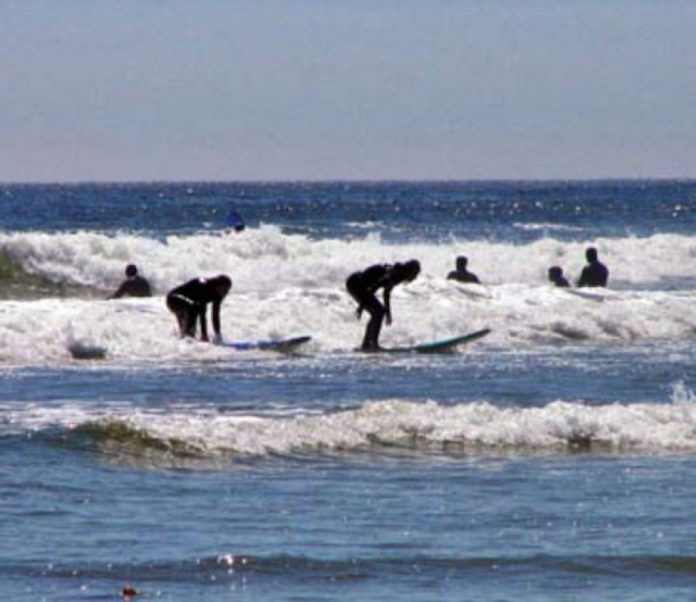
Catching Waves in British Columbia

Photo: Steven Threndyle
Catching Waves in British Columbia

It started to rain the minute we pulled into our campsite at Pacific Rim National Park on Vancouver Island. With nerves frayed from the four-hour drive from the ferry dock in Nanaimo with two kids in tow who needed regular potty breaks, my wife Sheila and I didn’t waste words as we divvied up camp chores.

In fading light and intensifying rain, Sheila unfolded the brand-new canopy that would cover the picnic table so we could start dinner. In seconds, the instruction sheet became a wadded mess as useless as wet toilet paper. The pick-up-sticks cluster of poles lay haphazardly on the ground, while eight-year-old Cameron and six-year-old Maddie came up with novel ways to express their feelings about being hungry and wet.

As any parent in the outdoors should know, you need to pick your battles. Though the plan had been to save money and engage the kids in the rewarding task of preparing campstove meals, Sheila and I tossed in the wet, sand-encrusted towel before we even started.

Off to Tofino we went, about 15 minutes by car. We pulled into Breakers Restaurant and ordered enormous burritos while tourists and locals—you could pick out the surfers because of their sunny complexions and matted hair—came and went.

Tofino has always had a mellow, hippie vibe which has set it apart from the rusty logging towns that dot the Vancouver Island landscape. Nearby Clayoquot Sound was the battleground of one of the fiercest wilderness preservation battles in British Columbia’s recent history of combative environmental activism. A street-grid of art galleries, funky cafés and tourist shops are packed with people from all over the world during July and August, with oceanfront cottages renting well into the four-figures per night. The harbour bustles with charter fishing boats, floatplanes, and whale watching vessels.

The following day, we cruised back into town and stopped at the funky Surf Sisters store where tanned, tattooed and pierced surf divas were booking 90-minute introductory lessons. We decided Cam and Maddie were too young for actual lessons this trip, but they immersed themselves in surf culture all the same by begging us to buy all the coolest surf brands.

My wife and I pulled on clammy wet neoprene suits, hoods, gloves, and booties. Next to us was a family of four from Calgary— two young teenage girls, plus a mom and dad—all with perfect white teeth. You just knew that they’d make it look easy. We convoyed down to Cox Bay under moody, misty morning skies.

From the start, our cheery, dreadlocked instructor was shout- ing orders on how to “pop up” from a prone position in order to stand on the 11-foot longboard and ride the wave.

I was still practicing those pop ups on the imaginary board that we had traced out in the wet sand when the instructor called to us to get our boards and start padding into the surf. Actually, the term “surf” was a misnomer. In summer, the fearsome North Pacific usually slumbers. Indeed, I’d seen bigger boat wake on Lake Okanagan than the swells lapping up on the beach. Would this be a proper test of my surfing soul?

One gentle swell after another—none was greater than two feet high—rolled under me and frothed while I paddled and popped so that I was standing tall—or at least kneeling tall. Getting to my feet proved impossible, but with very little effort I began to enjoy just bobbing up and down on the swells. All that soul stuff about the ocean being like amniotic fluid, well, I was buying into it. It was bliss.

Alas, the peaceful vibe was broken by our kids who started to heckle us from the beach. Cameron yelled, “Get on your feet, Dad, like those girls over there!” On the next wave over, the Calgary teens were, just as I surmised, naturals—riding the tanker boards through the froth like Kelly Slater and shrieking with delight.

IT’S A SOUL THING

We all spent hours on various floating toys—my kids opted for boogie boards on which they surfed without standing up; giggling and screaming on wave after unceasing wave. Though the kids didn’t take lessons on this trip, they showed that their natural agility and sense of balance let them take to surfing—in its various forms—much easier than adults do. Indeed, one of our neighbours at the campsite borrowed our board for his 10-year-old twins, one of whom hopped on board and was instantly getting consistent rides on the shore-break.

It’s important to note, though, that the real surfing takes place well offshore, where much larger waves curl and break. We watched the distant figures slashing their way down the faces of monster waves, but felt no less proud of our own surfing. Though some might call it glorified boogie boarding, real surfers will tell you, it’s a soul thing.

For six straight days after we arrived, the sun shone on our little crescent of the Pacific Rim. The instructions for the picnic table canopy dried, but we never did try to read them. Instead, we’d pilgrimage to nearby Long Beach, where men and women, boys and girls of all ages dragged huge foam-covered behemoth beginner boards across the sand toward the sea with religious determination.

We drove back home with Jack Johnson in the CD player, sand in our hair, sunburnt noses, and the Pacific surf ringing in our ears. Could the North Shore of Hawaii be next?

B.C. adventure writer Steven Threndyle has crossed off “Surfing in North Pacific, with family” from his life list. 

This article on surfing in BC was published in the Early Summer 2007 issue of Canoeroots magazine.This article first appeared in the Early Summer 2007 issue of Canoeroots Magazine. For more great content, subscribe to Canoeroots’ print and digital editions here.
Editorial: It’s Not a Man Van

Photo: iStockPhoto.com/Oksana Perkins
Editorial: It's Not a Man Van

In the 1970s, vans were cool: painted flames, mag wheels, smoked-glass bubble windows, shag carpet and the Doobie Brothers on the eight track. vans were rolling clubhouses for the wild and crazy youth of the ’70s. re-watch Fast Times at Ridgemount High if you don’t know what I’m talking about. You’ve seen the bumper stickers, “If the van’s a rockin’…Don’t come knockin’.”

When minivans rolled onto the scene they changed all that. If a minivan is rockin’ it means the kids are inside beating the crap out of one another and the parents are oblivious to the racket because they are wearing Bluetooth headphones. For nostalgia’s sake I hope they’re listening to Rockin’ Down the Highway.

Women think men hate minivans because of the word mini. They think it’s a Freudian thing stemming from insecurities about size. Not true…I don’t have a problem with the word mini at all. Mini-putt is a challenging and fun short game of golf. The Mini is a sporty and practical city car. And my favourite, miniskirts, are a classy fashion garment freeing women of burdensome knee-length skirts.

And it’s not vans men have a problem with. Take Mr. T’s black and red-striped 1983 GMC in The A-Team for example. “My van’s cool, fool,” B.A. Baracus might say. The Mystery Machine in Scooby-Doo is cool. What guy didn’t want to travel around with Freddi, Daphne, Velma and Shaggy in their 1968 Chevrolet Sportvan eating Scooby snacks and solving mysteries? Without their van (and the scooby snacks, maybe) the show would be just a bunch of meddling kids and their damn dog solving the same dumb crime over and over again.

The minivan is not without its benefits.

Theatre seating, tons of luggage capacity, a smooth ride and reasonable fuel economy are qualities men use to justify their purchase. The same men always provide a qualifier when they praise it. “It handles pretty well…for a minivan.” or, “It’s actually pretty cool…for a minivan.” There is also a standard set of statements they use when being ribbed at the office. “It’s my wife’s.” Or, “It’s what works best for my family right now,” is another good one.

The problem with minivans is the image. If you’re 20 years old and driving a minivan, it’s obviously your dad’s. If you’re over 35 and driving a minivan, you are the dad. Minivans strip men of every ounce of pride and suction cup a diamond-shaped yellow sign to the rear window that reads, “Middle-aged sucker on Board.” And this is pretty rough for me because, as my wife puts it, I still see myself as a 25-year-old, raft-guiding, canoe instructing, camping-in-my-truck university bum, despite a greying goatee and mortgage.

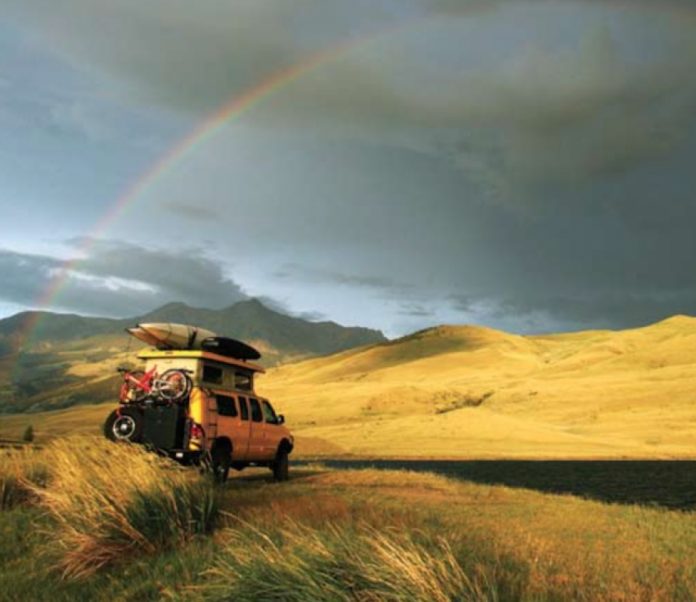
I swear if ever the appeal of two sliding doors of practicality wins out over my dirt-bag sense of self, I will only refer to my reluctantly acquired vehicle as “the van.” And I’ll have it so plastered with stickers, loaded with canoes, kayaks and bikes and packed full of tents, sleeping bags, coolers, fishing rods, my wife and our kids that there will be only just enough room left over for a middle-aged guy and his iPod, holding the complete Doobie Brothers anthology.

This article on vans was published in the Early Summer 2007 issue of Canoeroots magazine.This article first appeared in the Early Summer 2007 issue of Canoeroots Magazine. For more great content, subscribe to Canoeroots’ print and digital editions here.
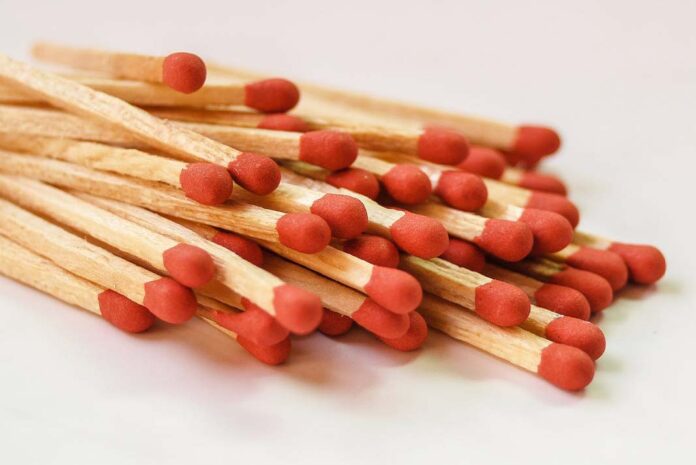
Skills: Light a One Match Fire

Photo by icon0.com: https://www.pexels.com/photo/photography-of-piled-red-matchsticks-1243550/

In Jack London’s short story To Build a Fire a greenhorn gold prospector falls through river ice and realizes he must build a fire or perish. He meticulously coaxes a flame from some kindling, but his fate is sealed when melting snow falling from an overhanging spruce bow smothers the fire.

Starting a campfire on a rainy summer night may not be a matter of life and death, but try telling that to the cold, wet and hungry mob that’s waiting for dinner. Fear not, with a single match and the following tips, you can have a roaring blaze in no time.

Tips to Remember

To avoid a reluctant, smoky fire that needs constant attention, take the extra time to collect good firewood. The biggest mistake is using wood that isn’t dry enough, that is, wood that hasn’t been dead long enough. When wood is dry the bark has already fallen off or can be easily removed. And don’t be fooled by a recent rain. The wet surface of good wood will dry quickly in a fire. Collect dry firewood from beneath the canopies of coniferous trees and piles of driftwood. If you can’t find dry twigs, make your own by whittling off the wet outer wood to expose dry wood underneath.

Timing is everything. If you’re going to get ignition with just one match, have all your wood ready so you don’t have to dash back into the woods as your flame flickers.

Organize your supply into three groups:

  1. A fist-sized bundle of toothpick-sized twigs. The ends of dead spruce boughs are ideal for this but you’ll need to crush them so you can get the bundle compact enough.
  2. A thigh-sized bundle of pencil- to finger-sized sticks that you’ll add to the fire as soon as the twigs ignite.
  3. A torso-sized bundle of larger sticks that are up to the thickness of your wrist. Logs larger than your wrist are less useful for cooking and harder to light.

Rest the twigs on a stick to get the match underneath. You can give the twigs more time to catch by lighting tinder such as birch bark (only from deadfall) or scraps of paper under them, but don’t get distracted by getting a lot of scattered flames from quick-burning materials such as pine needles or leaves. Concentrated heat and flames are what you need.

When the twig bundle is ignited, add the second bundle carefully so you’re not scattering the twigs and dispersing the heat. Once the second bundle is burning well, dump lots of larger pieces on early to get a good bed of coals. Set your remaining wood around the fire or on the grill so it can begin to dry.

Consider using a firebox, a folding metal box that contains and concentrates the fire so you use less wood. It is relatively light- weight, doesn’t leave a fire scar and allows you to move the fire if the wind shifts or it starts to rain.

Nothing compares to a roaring fire to raise morale, provide warmth, dry your clothes and offer entertainment for those who like to poke and prod, or just gaze at the fire’s play of light.

Mark Scriver is a Black Feather Guide, author of Canoe Camping and co-author of Black Feather’s Camp Cooking.

This article on campfires was published in the Early Summer 2007 issue of Canoeroots magazine.This article first appeared in the Early Summer 2007 issue of Canoeroots Magazine. For more great content, subscribe to Canoeroots’ print and digital editions here.
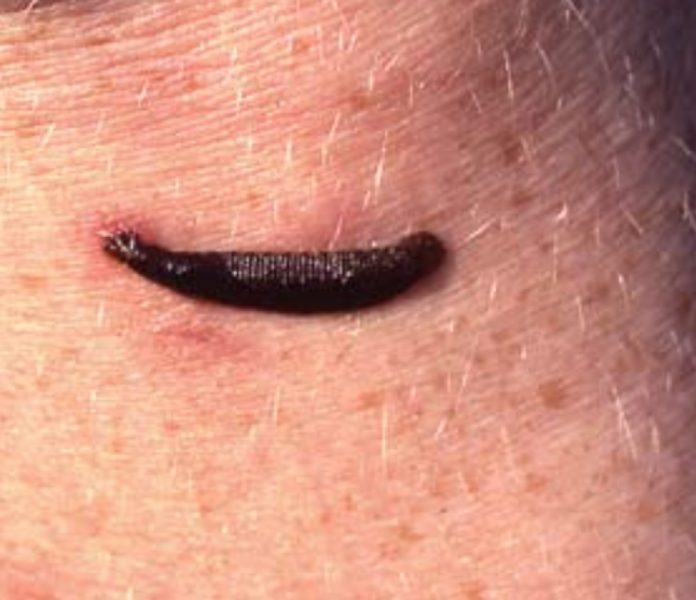
Betcha Didn’t Know About Leeches

Photo: Toni Harting
Betcha Didn't Know About Leeches | Photo: Toni Harting
  • Bloodsucking leeches use microscopic teeth to break the skin of their host and secrete an anti-clotting enzyme into the wound to keep the blood flowing.
  • Healers have used leeches for thousands of years for their ability to keep blood from clotting. The anti-coagulant in leech saliva prevents blood clots better than most pharmaceuticals. Today, leeches are used during some surgical reattachments of amputated limbs.
  • The word leech is thought to be a derivative of laece, the Old English term for physician.
  • Leeches are distinct among invertebrates in that some species of leech will nurture their offspring.
  • When a leech clamps onto a host, it will stay attached until it fills up. A leech can ingest enough blood to expand its body size by a factor of 11.
  • Salting and burning a bloodsucker are effective means of removal, but they may cause the leech to barf up its meal. A leech’s stomach bacteria can infect the wound. Menthol-based heat rubs are the safest way to remove a leech.
  • A separate order of worm-like leeches, common in freshwater, don’t have teeth or a love for blood.
  • In 1851, Dr. George Merryweather introduced the Tempest Prognosticator, a barometer using leeches housed in small bottles. He claimed that when a storm approached, the leeches became agitated and tried to climb out of the bottles, triggering a small hammer to strike a bell. The British Navy bought none.
  • Robin Leach was the host of Lifestyles of the Rich and Famous, a show profiling the lives of rich bankers, lawyers and politicians, a whole different kind of bloodsucker. 

This article on leeches was published in the Early Summer 2007 issue of Canoeroots magazine.This article first appeared in the Early Summer 2007 issue of Canoeroots Magazine. For more great content, subscribe to Canoeroots’ print and digital editions here.
Editorial: Freedom Fighters

Photo: Steve Muntz
Editorial: Freedom Fighters

They didn’t set out to be rebels. They were just four ordinary guys driving station wagons and wearing brown suits while trying to raise young families at the dawn of the 1980s. One was my father and the others—Dobson, Cruickshank and Kinnear— were people I would only hear about as their annual fall canoe trip approached.

One September, they were paddling deep in Ontario’s canoe country north of Elliot Lake when they finished a portage and discovered an aluminum canoe with a faded camp logo on the bow. It had obviously fared poorly in the rapids above and been left on the rocks as a memorial to mark the spot where one camp counsellor had gambled his $300 salary for the sake of a class II thrill.

They rehabilitated it with pine gum and duct tape and carried their new canoe to the top of the set to see what this whitewater thing was all about.

After running it a few times, the canvas canoes they had always rented seemed to be fragile liabilities, and they resolved to buy a second canoe of their own.

The next summer Cruickshank heard about an Indian selling canoes for $60. Perfect, he thought. He and Kinnear collected $15 each from the other two. After work one day they parked their car at the docks and took a ferry to Toronto’s Centre Island where they were told they could find the Indian. He was at the rental kiosk. His name was Gyan Jain, a real Indian who had come to Canada with an engineering degree that wasn’t recognized so began renting canoes by the hour to tourists.

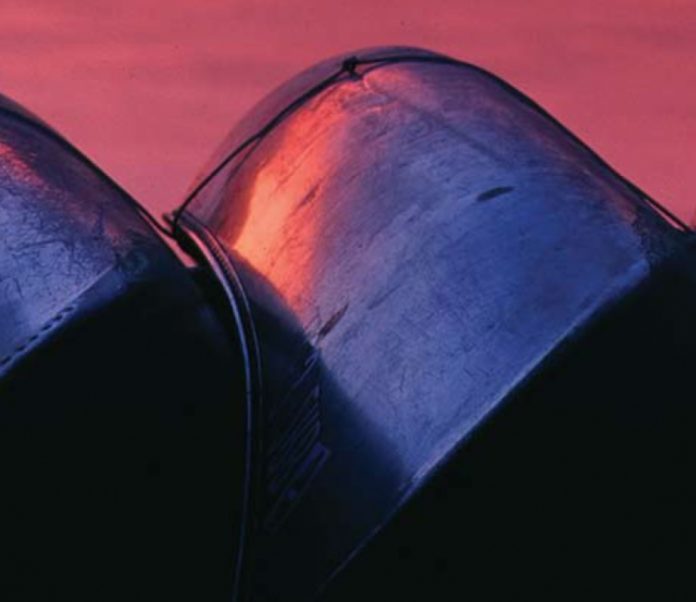
Without negotiating, they picked out the best of the bunch, a flat-bottomed, triple-thwarted, orange-trimmed, aluminum barge of a canoe, rolled up their polyester slacks and pushed off to paddle across the harbour.

It was a sunny day and the ferries and cruisers were staying clear. All was well until Cruickshank looked over his shoulder to see the Harbour Police following slowly in the patrol launch.

“Let’s make a run for it,” suggested Kinnear. With their wide, richly-textured ties swinging from their necks—this was the early 80s remember—they gave it all they had for a few minutes. The cops bore down on them and, no doubt eager for a chance to use the loud hailer, ordered them to put their paddles down.

The police were preparing to confiscate the apparently-stolen rental canoe and take it back to the island when Kinnear pulled the receipt out of his pocket and proudly proclaimed that the canoe belonged to him.

After a curt warning about the dangers of canoeing in open waters, the police motored away.

It would be easy to say the police were just doing their jobs, or were concerned about public safety. But I suspect something more sinister was at work. For the last 27 years that canoe has taken men and women away from their offices and jobs, out of service as productive members of society. Not everyone can be happy about that.

As Kevin Callan notes in this issue’s Butt End column, in this society we are working harder and canoeing less. There must be something driving this unnatural trend, a dark force that would rather have us at our desks boosting the GDP instead of punching new waypoints into our GPS.

We haven’t yet uncovered how shadowy business organizations like the Canadian Council of Chief Executives pull levers of power to enlist the police in their fight against canoe purchases and the leisure time that follows, but we have our best freelancer on the case. That will be an issue you won’t want to miss.

In the meantime, I’d like to dedicate this, our sixth canoe buyer’s guide, to Cruickshank and Kinnear. Two men who faced state-sponsored harassment of canoe buyers and came home with a canoe to call their own.  

This article on canoes was published in the Early Summer 2007 issue of Canoeroots magazine.This article first appeared in the Early Summer 2007 issue of Canoeroots Magazine. For more great content, subscribe to Canoeroots’ print and digital editions here.
How To: The Compleat (Beginner) Angler

Photos: James Smedley
How To: The Compleat (Beginner) Angler

At first it’s a distant whine, but in the time it takes to raise your eyes, it’s upon you. 

Zoom! 

The metallic blue blur of a bass boat blasts by with two guys hunkered down behind the windshield, clutching their fishing hats. 

Then they’re gone.

Television fishing shows would have you believe that fishing requires heavy-duty horsepower and enough equipment to open a tackle shop. Not so. By keeping it simple you can get started on a shoestring (though I still recommend monofilament).

Let’s assume you’ll be fishing for freshwater panfish like bass or crappie. Allowing some room for additions from local experts, the following items make up a basic fishing kit for each fisher in your family:

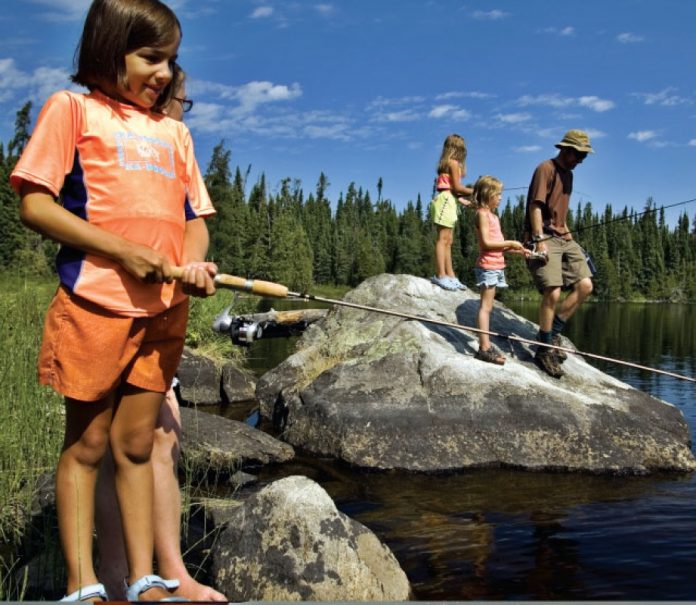
• A spincasting reel and rod combo. This will come with line, usually 10-pound test, which is more than adequate. This type of reel is easy to use and gives little trouble. You can outfit yourself and two kids with rigs like this for under $50, much less if you shop at yard sales.

• A package of plain #6 hooks. Have the staff at a fishing store show you how to tie the hook onto the line. If you don’t want to use live bait you’ll need some lures and swivels or leaders.

• Bait and tackle. These will vary depending on your quarry. Ask some locals. When it comes to lures don’t assume more expensive is better.

• An assortment of split shot weights. Weights get the bait deep or keep the lure down while casting or trolling. 

• A bobber for each line. These let you keep your bait at a constant depth and let you keep your eye on things.

• A licence. Keep it legal by checking the rules for your area.

To rig up your outfits for fishing with bait, which is the simplest way to start with a family, tie a hook to each line using the knot you learned at the tackle store. About 6 to 12 inches above the hook, attach a split shot weight or two. About three feet further up, attach the bobber. 

Now look for someone at the campsite you can quiz. If you find yourself standing on shore without help or a clue where to begin, remember that fish are attracted to spots that are different than the surrounding areas. If most of the shoreline is beach, find a point, pier, boat launch, pile of rocks or a downed tree—anything that looks different. Fish at the edge of features; that is where the fish will be.

All set? Okay, cast out your bait and get comfortable; fishing is a waiting game. Every 15 minutes, slide the bobber one foot up the line until your bait is seven or eight feet deep. You can also have each member of your family start fishing at different depths. 

When a fish bites, raise the top of your rod briskly to set the hook and then keep the line tight. As you reel it in, grin widely, turn your head and yell, “Put the frying pan on, Hon! We’re having fish for supper!”

Fishing can be as simple or as complicated as you want to make it, but one thing’s for sure: it’s contagious. 

Ralph Yates wrote about buying a used camper in the April issue of Family Camping.

This article was originally published in the Summer 2007 issue of CanoerootsThis article first appeared in the Summer 2007 issue of Canoeroots Magazine.

 

Editorial: Catch Fishing

Photo: Virginia MacGregor
Editorial: Catch Fishing

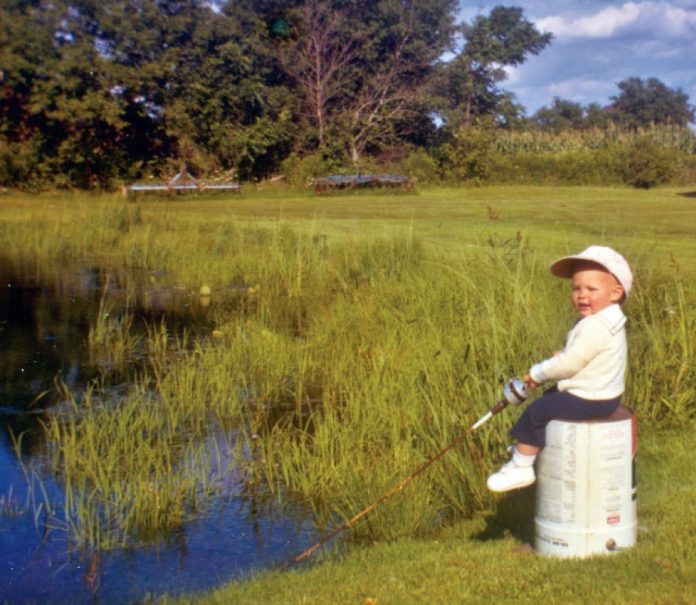
This is me, July, 1974. I’m fishing in the pond on my grandfather’s farm. Cute, isn’t it? My earliest memories are of fishing in this pond, but I can’t remember ever catching anything. After bombarding my parents with questions, they’ve finally admitted there weren’t any fish in the pond.

That didn’t stop me (although it may have, had I known) from sitting there for hours and even making up elaborate fish stories with all the determination and imagination of a three-year-old sitting on a cherry pail, worm on hook.

There is an allure to fishing that kids can’t explain and grownups shouldn’t ignore.

The fishing industry—a massive group of grownups who still pretend to be kids—has figured out that hooking real kids on fishing while they are young is the secret to the industry’s long-term survival and the long-term survival of fish populations as we know them. They know, for instance, that the likelihood of kids fishing, buying rods and giving cash to conservation groups as adults is far more likely if they are exposed to fishing at an early age.

This is why you’ll find Zebco Finding Nemo rod and reel combos at Wal-Mart. It should also be a statistical wake up call for us parents. Analyzing the data another way, if you are looking forward to going fishing with your sons and daughters when you retire, your chances are significantly greater if you take them fishing now.

My son just turned two years old. For his birthday I gave him his own Plano tackle box with a couple of Rapalas, spinners, spoons (all with the hooks removed, of course) and a dozen rubber worms. Instead of cheap, crappy toys from a dollar store that so many parents get sucked into buying, he and I go shopping for tackle. It is something he loves, it isn’t broken by the time we get home and it’s planting the seed for a lifetime of fishing together.

Planting seeds on a larger scale, the Canadian National Sportfishing Foundation’s awareness campaign, Catch Fishing, is all about getting youngsters into fishing. One of their posters hangs in my local general store. Staring at every parent buying 20 bucks’ worth of gas or lottery tickets is a six-year-old with a big toothy grin holding a beautiful walleye.

What’s the message?

Recreational fishing is an excellent outdoor activity that fosters family values and can assist children in their emotional and social development. What that really means is, if you really want to win big this summer take your sons and daughters fishing. Go during the official National Fishing Week, July 1 to 8, or go whenever you can.

And one more bit of advice from a guy who knows: take them somewhere there are fish.

This article was originally published in the Summer 2007 issue of CanoerootsThis article first appeared in the Summer 2007 issue of Canoeroots Magazine.