Home Blog Page 370

Hass Hole: Editors Reveal Their Secret Playspot

Photo: Scott MacGregor
Hass Hole: Editors Reveal Their Secret Playspot

For seven years we’ve been exposing other people’s secret whitewater stashes to the world. We’ve been providing detailed directions to park and play hotspots to the dismay of locals everywhere. Under the protective cloak of servicing the greater good for all paddlers, we’d ferret out a mole and buy their soul for 20 cents a word, sometimes less. Here is mine on a platter.

Hass Hole is our local playspot, one that has, until now, mysteriously escaped editorial coverage. Getting to Hass Hole (sounds like ass hole, not hoss hole) is like trying to find Smurf Village. Take the first left past the pancake house. At the fork in the road, go left. Drive past the dark and evil cedar swamp and over the one-lane wooden bridge crossing Snake Creek. At the mailbox marked Hass turn left down the dusty lane to the farm. Signs on fence posts read, “This is our land. Government BACK OFF.” If your car quits, just leave it.

This has been Hass land since the beginning of time. Dogs are chained to old cars. When the dogs bark at you Clifford or Freida Hass will emerge from the tiny farmhouse surrounded by lawn ornaments and geranium pot planters. A long chat about the weather and $2.50 per paddler later you’re 4x4ing

down the unmarked lane through an automotive graveyard of burned-out pickups and rusty trailers. More than one group of paddlers has made it this far, never to reach the river and Hass Hole.

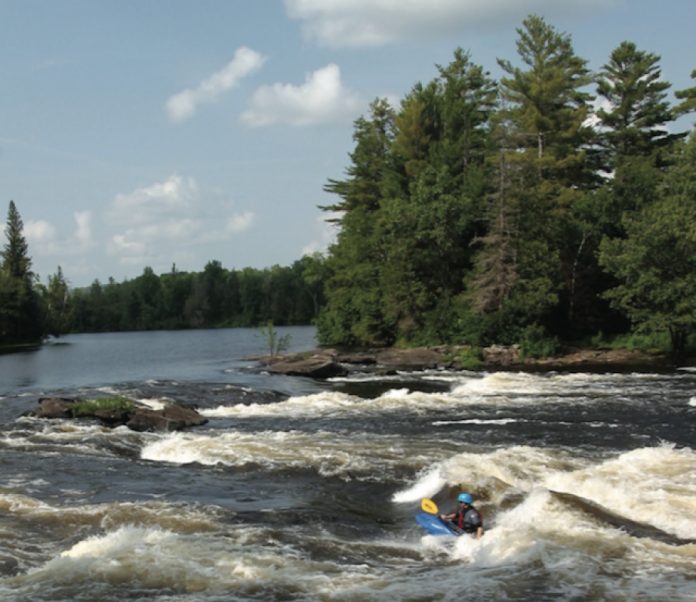
Hass Hole is part of Island Rapids, the first set on the Lower Madawaska River run, a section of river that is without question the most popular whitewater canoe day trip in Canada. The canoe-tripping boy scout’s black hole of death is Hass Hole proper, a six-foot wide cartwheel and loop spot of a pourover. The more-often paddled wave behind Hass Hole is a small breaking wave that anyone can surf. Beginners take bigger and bigger surfs out to the middle where the five-foot-high vertical wave tubes and crashes.

Don’t listen to anyone who says the water is too high to paddle at Hass Hole. Locals know that at high water the lovely Ms. April makes an appearance above Hass Hole. Put even more water in the Madawaska and turn the page to the middle of the river to a feature known as Centrefold. One peek at the walls inside the hunter’s cabin and you’ll know where Ms. April and Centrefold get their names—not to mention that one forms in April and the other is a breaking wave that folds perfectly on itself in the centre of the river—centrefold. Cheeky but clever, wouldn’t you agree?  

Details, details…

WHO SHOULD PADDLE THERE?
Everyone. It is a class III rapid with first-class play. The pool below is an easy swim to shore.

PAY TO PLAY
Stop and pay at the farmhouse. $2.50 is cheap for the convenience. Not to mention that Cheryl Gallant was the only Alliance Party M.P. elected in Ontario, some say on opposition to the gun registry alone.

WHEN TO GO:
From ice-out in March until the middle of June (usually). Come again in wet autumns. Check with Ontario Power Generation www.opg.com for Kaminiskeg Lake (Palmer Rapids) Dam output levels. Anything above 65 cms is enough.

WHEN NOT TO GO
During deer hunting season. It’s their only holiday and they’re using the cabin.

HOW TO GET THERE
The Madawaska River is located three hours northeast of Toronto and two hours west of Ottawa. Buy a map. Nolet’s Pancake House is on Highway 28, east of Hardwood Lake. Turn north onto Bruceton Road just east of Nolet’s. Left at the fork. Cross the bridge. Left at the first driveway on left. Stop at farm. Keep on the main laneway about two kilometres to the river. Good luck.

STUPIDEST QUESTION EVER ASKED TO CLIFFORD HASS.
“Think my car will make it back up the lane?” It didn’t. 
Screen_Shot_2016-01-15_at_1.46.22_PM.pngThis article first appeared in the Early Summer 2005 issue of Rapid Magazine. For more great content, subscribe to Rapid’s print and digital editions here

Women Paddlers Need a Venus

Illustration: Lorenzo Del Bianco
Women Paddlers Need a Venus | Illustration: Lorenzo Del Bianco

In the 1990s women sucked at freestyle kayaking. Why? One theory was that men are taller and stronger. For years men were happy with this state of affairs. We chivalrously loaded our girlfriends’ boats onto our cars and helped portage them past rapids. If our girlfriends were hungry we’d wander off into the bush, snare a rabbit or slay a deer with a river knife to provide for her. It was a primitive existence, and it made men feel good about themselves.

From the woods surrounding the rivers came butchy women with rusty razors. They were carrying placards and whining something about equal rights. They more or less admitted they sucked but they said it was because they didn’t have boats and equipment that fit them properly. This talk spread like Dermatone through the eddies and shuttle roads where women paddlers congregated. Before long, even the splashing of guys launching helixes and landing Roladexes couldn’t drown out the protests:

  • My boobs are scrunched.
  • This shaft is too long and thick (yes, I actually heard this).
  • The hole is too sticky.
  • There’s too much volume in my stern (who owns this problem?).

Nothing was ever just right for the disenfranchised Goldie Locks.

In an attempt to forestall legislative action, manufacturers complied. Women now have boats like the Siren that are designed for them. Seven 2 makes the Daisy paddle just for women. PFD companies make models for women that “wrap rather than crush for a perfect fit that ONLY WOMEN can understand.” Shred Ready makes the Vixen helmet. Hell, for some reason Immersion Research makes spray skirts for women—the ‘J Lo’ no less.

Illustration: Lorenzo Del Bianco
Women Paddlers Need a Venus | Illustration: Lorenzo Del Bianco

Have the pro women caught up to the men? Uh… No. Women haven’t even caught up to where men were in the ’90s. At the last World Freestyle Championships in Australia the men’s scores tripled the women’s.

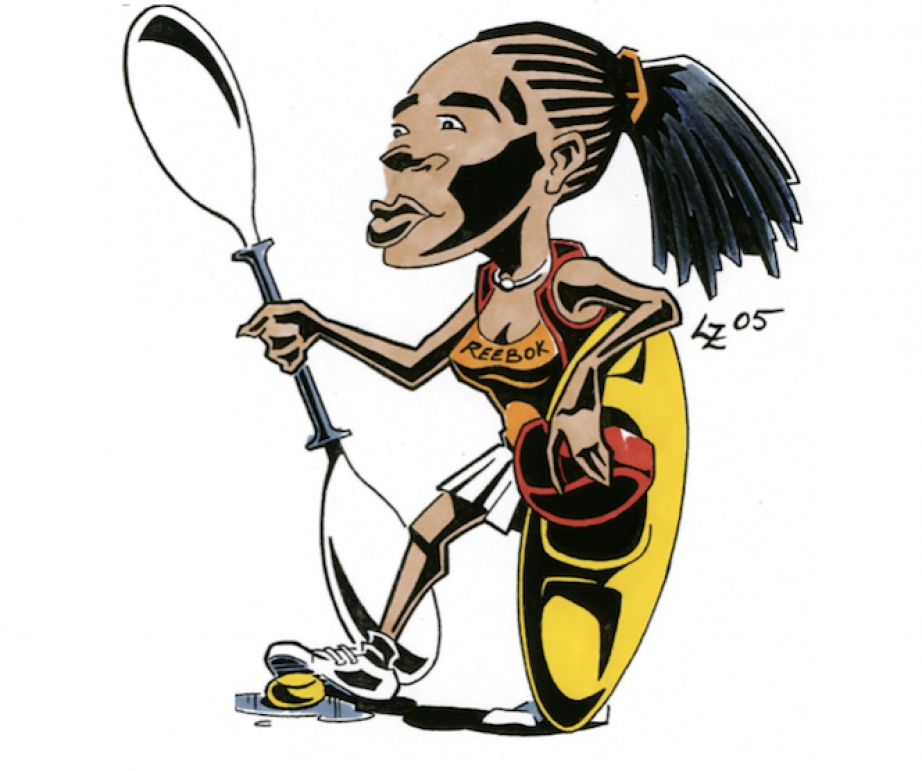
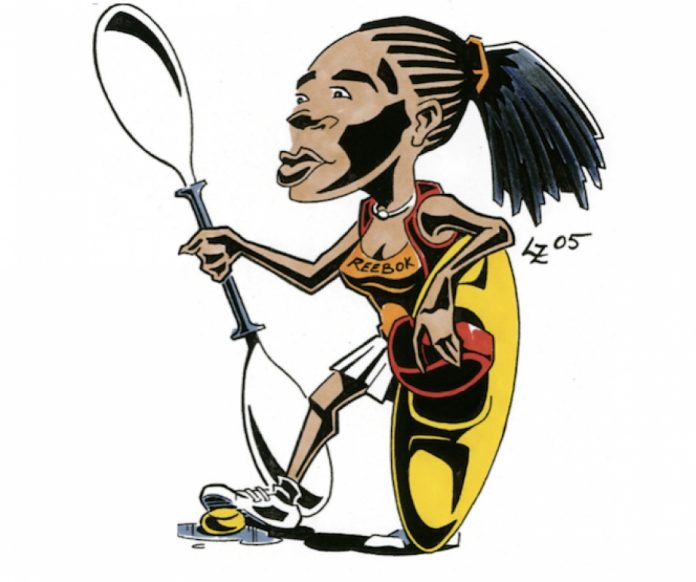
What women really need is a Venus! Relax folks, this is a family show. I said Venus, as in Venus Williams the tennis superstar. The arrival of Venus and Serena Williams silenced the critics of women’s tennis.

Men used to watch tennis for Kournikova and Hingis—the play was slow but the skirts were short. Women tennis players were considered material for Sports Illustrated swimsuit issue pin-ups. People said the women’s game would never match the men’s play of high-powered serves and fast volleys.

Then on to the court stepped Venus and Serena. No longer was women’s tennis boring. It was high-powered fast action. The game lunged from the swimsuit calendars and smashed back onto the court. Today, the Williams are the biggest names in tennis, easily stealing the hype from the men’s game. I’m not suggesting that women’s boating is too sexy for its own good. If that were the case I’d just keep my mouth shut. I’m just saying that the Williams sisters didn’t excuse themselves with complaints about thick shafts and fuzzy balls: they just kicked ass.

If whitewater had a Venus, men would be a little less, shall we say… cocky.

Ben Aylsworth just released his latest video H2Ho, which is not a family show. 

Screen_Shot_2016-01-15_at_1.46.22_PM.pngThis article first appeared in the Early Summer 2005 issue of Rapid Magazine. For more great content, subscribe to Rapid’s print and digital editions here

Celebrating The Gull River’s Strong Undercurrents In Canadian Whitewater

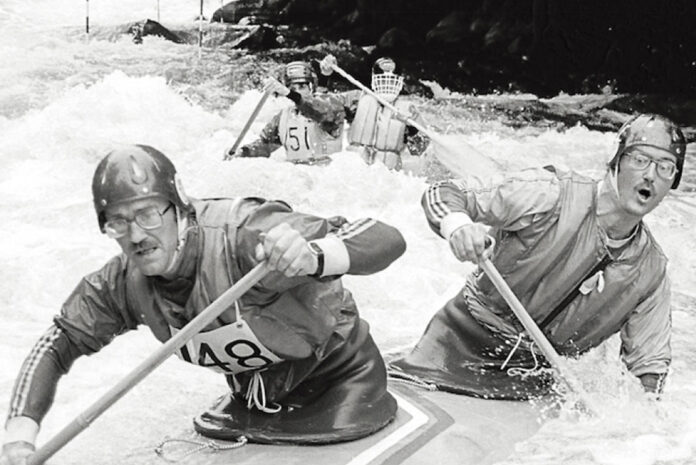
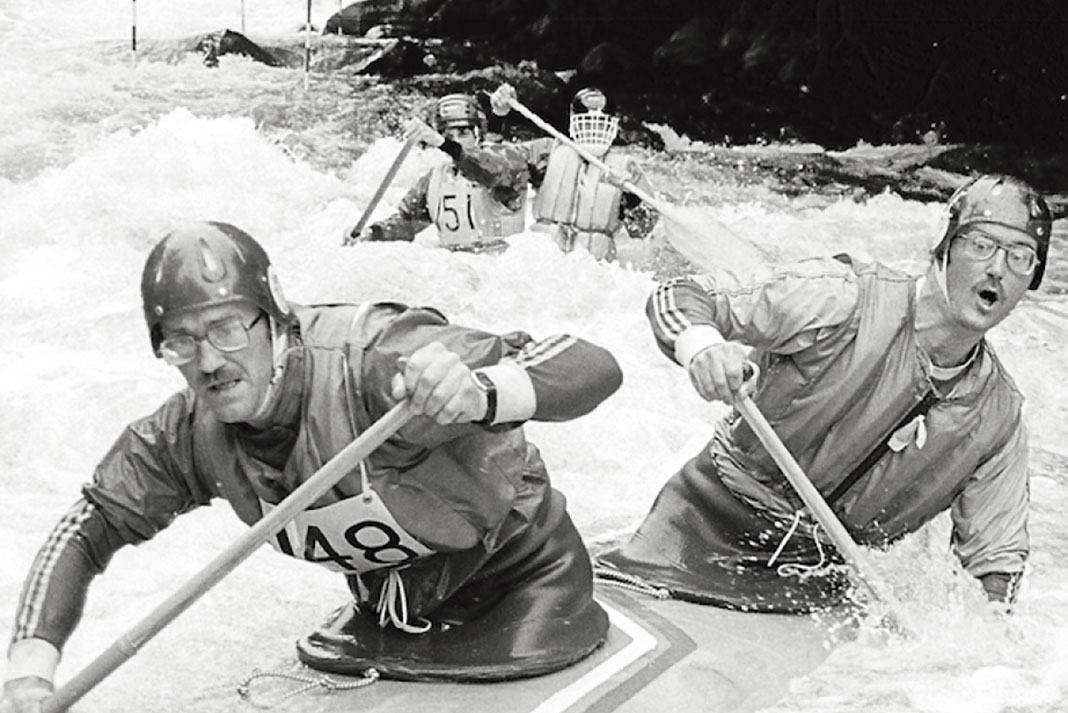
tandem kayakers race through the whitewater course on the Gull River
The Gull River is so deeply ingrained in the thoughts of the paddling community it has helped sustain that it sometimes goes unnoticed. | Feature photo: Toni Harting

As paddlers we are proud of our stories—epic highwater runs, bold moves, long swims. Many of our best stories persist and are retold until they are legends.

Other paddling stories are just the opposite: they are so mundane they do not warrant repeating—at least not at the time—and so the stories and people seem to be forgotten.

Looking closely, however, one can see that the story is not forgotten, but in fact is so deeply ingrained in the fabric of a paddling scene that it goes almost unnoticed. These aren’t climactic legends, but fundamental building blocks, people and places like Roger Parsons, Heinz Poenn and the Minden Wildwater Preserve.

Celebrating the Gull River’s strong undercurrents in Canadian whitewater

A young mountain climber named Heinz Poenn arrived in Canada from Germany in 1956 in search of adventure. After finding no mountains to climb in Ontario, he happened upon a Klepper folding kayak, taught himself to paddle, and found another paddling pioneer named Roger Parsons. The two of them organized a kayak race. The year was 1958, and the Credit River played host to Canada’s second-ever kayak event (the Fraser River in B.C. beat them by one season, a downriver race easily won by a visiting European). The rest is history, albeit an unappreciated and forgotten one.

In 1964 Poenn and Parsons decided they wanted to race slalom at the World Championships—big dreams for self-taught fanatics. At the time, Canada had no standing with the international kayak body so they joined the American team.

tandem kayakers race through the whitewater course on the Gull River
The Gull River is so deeply ingrained in the thoughts of the paddling community it has helped sustain that it sometimes goes unnoticed. | Feature photo: Toni Harting

Poenn gained himself (and Canada) a seat on the International Competition Committee, opening the door for a Canadian team—which included himself—to paddle at the 1972 Olympics in Germany.

“We were way behind!” Poenn laughs. “We had only started into something that had a long competitive history over there.”

Returning from the Olympics, he and Parsons started talking about a training centre. They already paddled at the then-mild rapids on the Gull River in Minden, Ontario, close to Parsons’ cottage, and they saw potential for something greater.

“Being on the technical committee, I had detailed plans from the Augsberg slalom course [built for the Olympics and still in use on the World Cup circuit],” says Poenn. “We asked Ontario’s Ministry of Lands and Forests to change the river. They agreed, so we hired a backhoe and bulldozer and started moving rocks.”

From obscure river to whitewater destination

Originally, only the lower section of the river was paddled, below the falls, because the upper section below the dam was wide and shallow. Poenn and Parsons coordinated pinching the river, deepening the channel, solidifying the eddies and making a world-class slalom river.

“I was the only one to run the falls,” remembers Poenn. “They were considered too steep and shallow to be safe, so we got some locals who knew how to use dynamite, drilled some holes, and blew the edge off it.”

“Eventually land was acquired on the left riverbank for the now-famous campground. “The whole idea was for Minden to be a place for the paddling community to meet,” says Poenn who continued on to coach national teams, teaching a generation of top paddlers which included Gary Barton, David Ford, Claudia Van Wijk and Poenn’s son, Dieter.

“There was no fixed place for paddlers at the time,” Dieter Poenn recalls of his days as a junior racer. “But this developed into a perfect training site. We could build confidence on the lower section and work our way up. The river is still comparable to anything I raced on in Europe.” Dieter Poenn went on to race with Canada’s National Slalom Team, he eventually took on the role of high performance director.

Claudia Van Wijk, a former world cup paddler who now owns Madawaska Kanu Centre, recalls: “I used to live there for weeks on end. It’s one of the few places where you can drop in at anytime and find people to paddle with. It’s dam-controlled so it always has water, it’s close to Toronto and it’s still as technically challenging as any slalom course in Europe. Really, Ontario’s three destination rivers are Minden, the Ottawa and Palmer Rapids.”

[ Plan your next Ontario whitewater adventure with the Paddling Trip Guide ]

The Minden Wildwater Preserve is a story without an end. The river has undergone continuous improvements. People still arrive from all over, make friends and paddle. Beginners tip over in the run out at the bottom, and the top offers snappy moves that approach class IV. Running the dam is enough to scare anyone. The river is so deeply ingrained in the thoughts of the paddling community it has helped sustain that it sometimes goes unnoticed. To many paddlers, Minden is the Ontario paddling scene.

All this, from simple 1960s dreams of having a place to paddle.

Jeff Jackson is a professor of the outdoor program at Algonquin College in Pembroke, Ont. 

Cover of Early Summer 2005 issue of Rapid MagazineThis article was first published in the Early Summer 2005 issue of Rapid Magazine. Subscribe to Paddling Magazine’s print and digital editions, or browse the archives.


The Gull River is so deeply ingrained in the thoughts of the paddling community it has helped sustain that it sometimes goes unnoticed. | Feature photo: Toni Harting


Turn Your Kayak More Effectively With The Duffek Stroke

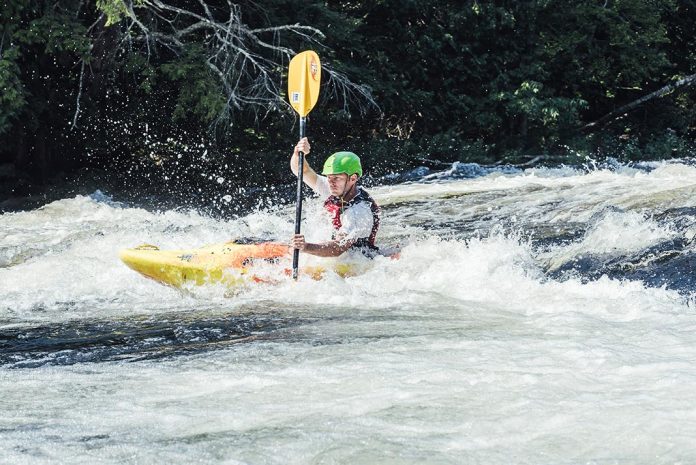
Man whitewater kayaking
Duffek for freedom. | Destination Ontario

In the early 1950s, European slalom paddler Milo Duffek invented the stroke that bears his name and changed slalom racing forever. When it comes to adjusting a boat’s direction, there is no stroke that can compare to the Duffek in efficiency and effectiveness. But it’s not just for slalom paddlers. The same effectiveness that made it revolutionary on the racecourse makes it useful for all paddlers who like to exert influence over which direction their kayaks point.

By mastering the Duffek and working an offside tilt into your turns, you’ll be able to catch narrow micro-eddies and make quick mid-stream changes in direction anywhere on the river. Unlike the reverse sweep, the Duffek allows you to maintain your forward momentum. Compared to the trustworthy low brace, the Duffek offers little stability yet really lets you snap your boat around.

You must Duffek, Duffek good

The Duffek’s different uses involve different set-ups, tilts and stroke combinations, but the essentials are straightforward. Paddle forward in flatwater and plant a vertical paddle away from the front of your boat at about a 45-degree angle. The paddle blade should be open so you feel pressure on the power face of the blade. Keeping your arms solid for support, use your abs to twist your torso and whip the boat around. Think of it as bringing your knees to the paddle. Once the boat reaches the paddle, you’re set to follow-through with a forward stroke.

To help you visualize, think about swinging around a pole. Your paddle should be solidly planted in the water like a pole. You need to swing your body and boat around until you face the direction you want to go. That’s it really; just make sure that for now your top arm doesn’t come above your forehead, leaving your shoulder vulnerable to injuries.

Duffek into the current

When carving out of an eddy, cross the eddyline while tilting downstream and initiate the turn with a sweep. Plant the Duffek. Once the boat has turned and your paddle is next to your knee, pull on the blade with your forward stroke. As you enter into the current, you’ll feel the force of the water on the blade and your boat will turn very quickly.

Duffek into an eddy

When entering an eddy, the Duffek allows you to turn upstream quickly without drifting low or running too deep into the eddy.

Set yourself up to catch an eddy as you normally would. Punch the eddyline and initiate the turn upstream with a sweep. Plant the Duffek. Pull the boat to the paddle and then follow through with a forward stroke. In short boats, you won’t need to initiate with a forward sweep unless it’s a really strong eddyline or you’re approaching without a sharp enough angle. If you engage the outside edge of your boat immediately after your bow crosses the eddyline, the combination of an outside tilt and a Duffek stroke stops the boat from carving or sliding and it sticks your position in the eddy.

Duffek around the river

When we’re paddling around the river we always need to make minor adjustments to boat angle and the Duffek is the perfect stroke for this. Simply plant the Duffek in the direction you want to go, snap the boat to your paddle and paddle forward. The Duffek offers excellent control without compromising your forward momentum. This may sound similar to the draw. To avoid confusion, remember you use the Duffek to turn the boat and you use the draw to change lateral position, without changing direction.

Milo Duffek changed the world by developing a stroke combination with both stability (in the form of a high brace) and power (because it leaves your paddle poised for a forward stroke). Combine the Duffek with an outside edge tilt and you’ll discover that, 50 years later, you’ll enjoy having far more control over where you go on the river.

[ Paddling Trip Guide: View all kayaking instruction and skills clinics ]

This stroke in history

Prior to the Duffek, paddlers turned kayaks by using a reverse sweep. Effective, yes, but reverse sweeps slowed down the boat too much to be useful in racing. Milo Duffek, a native of Czechoslovakia, unveiled his secret weapon—the Duffek—for the first time at the 1953 World Championships in Merino, Italy.

As competitors watched Milo practice, word of the new stroke spread and the question became not if he’d win, but by how much.

This is where the story takes a dramatic turn.

Milo Duffek had come to Italy with plans that were more ambitious than winning hold. Duffek was going to defect. Escaping from his newly communist Czechoslovakia for the freedom of Western Europe was more important to him than a medal. As the story goes, Duffek purposefully hit the outside of gate 14 with his bow. This was a 100-second penalty in those days, and enough to drop him to second place. This second-place finish removed Duffek from the limelight and allowed him enough anonymity to skip town with the Swiss team.

This article originally appeared in Rapid‘s Early Summer 2005 issue. Subscribe to Paddling Magazine’s print and digital editions here, or browse the archives here.


Sarah Boudens is a member of Canada’s Slalom Development Team. 

Duffek for freedom. | Destination Ontario

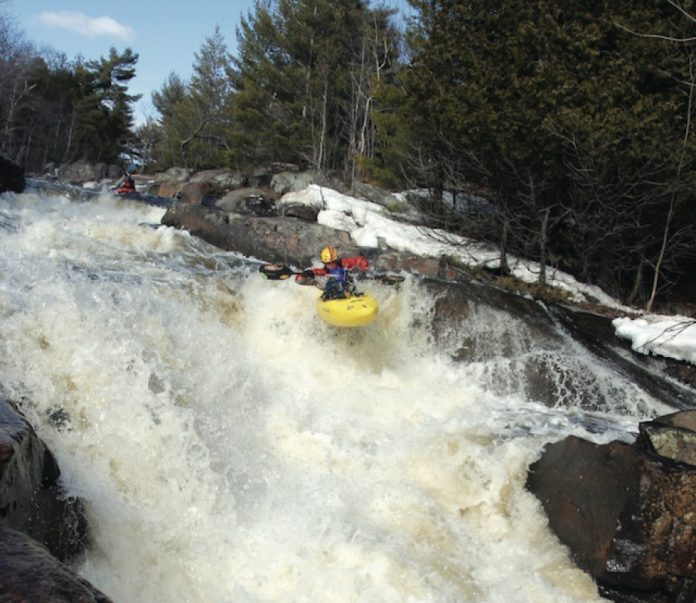
Code Name Rubber Chicken: A Calculated Assault on Cottage Country Creeks

Photo: Scott MacGregor
Code Name Rubber Chicken: a Calculated Assault on Cottage Country Creeks

If I had met Mark Harris at the top of Hatchery Falls, I wouldn’t have been able to resist letting loose with my very best clucking display. I’d give him the whole routine, wings flapping at my sides, head bobbing and feet scratching up the mud on the riverbank.

“Bock, bock, bock… BOCK-UH-OCK! What are you chicken?” I’d cluck at him.

Why would I cluck at a man I had just met? Hatchery Falls is just one of 200 waterfalls Harris has walked into and one of more than 400 he’s researched. And he hasn’t run one of them. Not one.

One thing he has done is compile what he believes to be the most comprehensive list of waterfalls for the province in his book Waterfalls of Ontario. Harris has done more research than anyone for whitewater paddlers looking for new runs on new rivers. He even created a website with the same name dedicated to waterfalls so that other waterfall junkies could compare notes.

Mark Harris did what he did for the love of waterfalls, not for paddling. But early last spring, with his book on the dashboard as our guide, we picked up where he left off.

It was early; too early for a group of paddlers I was sure. I was standing at the pumps talking to a fella with the name Luke embroidered on his shirt. We compared our daily agendas. He was headed north up Highway 35 to fix a freezer and I had to drive another couple of hours west along Highway 118 to Bracebridge, Ontario, one of cottage country’s most picturesque towns.

I was expecting another day of waiting for people to show up, after which a small caravan of egos would arrive and chase each other’s dusty tailgates around looking for spring runs down the wrong gravel roads. Luke nodded like he’d been there, and went inside to pay for his gas. 

As I crossed the iron bridge into the old logging-turned tourist town of Bracebridge, the only vehicles on the downtown street were heaped with creek boats. Everyone was there already, I couldn’t believe it. Muskoka Outfitters owner and local paddler Peter Demos had the coffee on, and the boys were hunched over his sales counter transferring Mark Harris’ directions to a local road map.

Peter had been hounding me to get over his way for years. Cottage country is prime Canadian Shield geology with exposed granite and gneiss, home to classic runs like the Oxtongue River, Sharps Creek and a spring run in every valley—24 waterfalls are listed in the Cottage Country section of Waterfalls of Ontario.

The plan for the day was to truck and huck five waterfall descents in eight hours—Kevin had to be back to his cottage at six o’clock for an anniversary dinner with his wife. Our three 4x4s rolled out of Bracebridge, GPS units tracking and mini-VHFs relaying directions from the copy of Harris’ waterfall book in the lead vehicle.

Our assault on the creeks of cottage country wasn’t the first trip Ben Aylsworth had taken with his copy of Harris’ waterfall book as his guide. He, like most paddlers in Ontario, found waterfalls close to home.

Aylsworth remembers the day he got the book: “The book was a birthday present from my Mom and her fiancée. I hit one drop just a ten-minute drive from my mom’s home near Collingwood the very day I got it. It was a first descent called Hoggs Falls—a 25-footer or so into about a foot and a half of water. I really needed to boof. I penciled that bastard. In fact, I slammed it so hard the feeling in my left knee didn’t return until last month.”

I asked Mark Harris what he thought of his book being used as a paddlers’ guide to waterfalls. “Paddlers have been and continue to be a big source of waterfall information for me,” admits Harris. “Waterfalls provide different kinds of fun for different kinds of people. Although you couldn’t pay me enough to paddle over any but the smallest of these.”

When Firefly Books approached Harris about the project he knew it was perfect medium through which to convey the magic of waterfalls to others. “It was as though my strange hobby was immediately justified,” writes Harris. “I wasn’t crazy after all.” The only reason we’d call Harris crazy is that he doesn’t own a creek boat.

Thanks to Mark Harris, what I thought would surely be a circus, turned out to be the most organized assault on five rivers I’d ever experienced. It was clockwork and we’d timed the spring runoff perfectly.

After a warm-up run down McCutcheons and Peterson Falls near Vankoughnet we slipped into stealth mode for what would be our most covert mission: Tretheway Falls, site of an Ontario Power Generation generating station. Chainlink fences and barbed wire surrounded the access, complementing the warning buoys and menacing signs. The only access to the run was through the control side of the dam, a 12-foot vertical dam drop into a munchy pillow and surging undercut followed by a 300-metre class V run. In Harris’ inventory of waterfalls Tretheway is rated as mediocre, Dale Monkman—the only one of us who ran it—thinks otherwise. Even after his first run, the rest of us remained onshore, clucking like contented chickens.

“Unlike some of the other popular falls nearby,” writes Harris, “Hatchery Falls has not been spoiled by any ugly concrete bridges, steel dams, or channelization schemes.” What Harris doesn’t say is that Hatchery is a vertical staircase drop with no pool at the bottom, and on such a low-volume stream boney is as good as this one gets. Hatchery is a real gem, easily accessed from the parking lot of an old fish hatchery complex by a short float down the Skeleton River and a short walk back up on well-worn walking trails along the river. A classic cottage country truck and huck. 

For seven years I’d crossed the single-lane wooden-top bridge on the way into my in- laws family cottage at the end of Muskoka Road 3. Every August I had walked the entire 150 metres of Lower Rosseau Falls and watched kids race milk carton boats down the ledgy slide.

In April it is a different story. The run is broken into two sections. The main current of the first drop heads full steam into a very long and ugly undercut. Keeping away from that ugliness is key to a successful arrival at the bottom of the first section. A good set-up for the next section is something you’ll appreciate when you see the river channels into a 6-foot-wide chute carved out of bedrock. You can park so close to Rosseau Falls that you could launch the boats straight from the roof of your ride. The falls spill into the stunning Lake Rosseau where cottages start in the seven figures. The portage trail crosses the summer property of Kurt Russell and Goldie Hawn.

Last on the list, in the face of fading light and a looming anniversary dinner for Kevin, was Bala Falls which is not really a creek boat run, but was close enough that we could paddle it before dark. It’s over these falls in down- town touristy Bala that the Muskoka Lakes pour into the Moon River on the way to Georgian Bay.

While we scouted the first drop and raft-sized holes below the wooden dam a couple of locals excitedly shared their plans to tube it.

Ben Aylsworth and I just smiled. “This is one of the deadliest holes I have ever seen,” he said, watching Dale Monkman who was just then running the third chute in the dam. Then the locals saw the scale of a creek boat against the 50-foot-wide hole. They watched as his creek boat tumbled and surfed the hole’s full width and then popped out the far side. They walked away without a word, perhaps to find bigger tubes. 

Screen_Shot_2016-01-15_at_1.46.22_PM.pngThis article first appeared in the Early Summer 2005 issue of Rapid Magazine. For more great content, subscribe to Rapid’s print and digital editions here

Boat Review: Esquif’s Spark

Photo: Ian Merringer
Boat Review: Esquif’s Spark

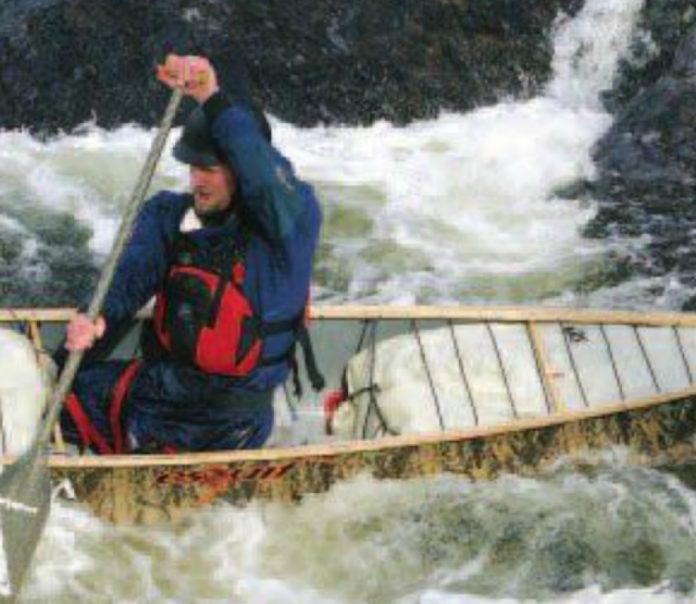
In its debut on the slalom scene, the new Esquif Spark swept the 2004 US National Open Canoeing Championships on Montana’s Blackfoot River. It nabbed first, second, third and fourth places in the men’s solo rec class. With its duck-hunter camouflage Royalite shell, ash gunwales and radical cab-forward shape, the Spark is the fastest oxymoron in whitewater.

With Esquif Canoes sponsoring the last two US Nationals, it’s no surprise Esquif designer Jacques Chasse met John Kazimierczyk.  Kazimierczyk is the designer, builder and coffee maker at Mill Brook Boats, specializing in compostite slalom canoes. The Spark is based on Kazimierczyk’s most successful design, the Ignitor. Chasse explains the minor differences: “The rec open canoe slalom class [for ABS canoes] doesn’t have a minimum length requirement, so we made the Spark 18 inches shorter. To keep the speed up we modified the transition and the rocker to accommodate the shorter length, without affecting the waterline.”

According to Kazimierczyk, the Spark is made for speed: “Paddling a canoe that allows you to move faster than the river, any time you want, is such a thrill.” He admits there are paddlers who say that the Spark is too long. “Too long for what?” Kazimierczyk asks. “It’s a perfect length for what it is meant to do.”

What makes the Spark so different (from a Rival, for example) is what Kazimierczyk calls his cab-forward design. He explains: “The Ignitor, like the Spark, has its widest waterline forward of the centre of the boat. The bow of the Ignitor sort of squashes the water as it moves through it. The narrower stern then follows in relatively undisturbed water. The paddler also sits slightly forward of the centreline, in the widest part of the boat. This makes entering a slalom gate slightly easier. The problem is you now have more stern behind you. It’s a trade off.”

Sitting forward of centre changes how you paddle the Spark. Forget a along forward stroke and stern pry combination; the Spark needs to be driven from the bow. Esquif team paddler Andrew Westwood explains: “The Spark responds so well to forward and cross-forward strokes that you don’t need to waste time with stern pries or even J strokes. It’s like paddling a C1.”

Besides changing stroke combinations, you need to learn how to use Spark’s edges. The hull is narrow with edges that aren’t as sharp as the Ococee and not as soft as the Rival. Engaging the outside edge of the Spark initiates both a change in direction and a transition to its other edge, in about the same amount of time it takes to cross the bow with your paddle – perfect. Using your edges to initiate a change in direction might be a new concept to many intermediate paddlers, but that’s only because they’ve been in boats that do it so poorly.

Is the Spark a winner? Three-time North American open canoe slalom champion Andrew Walker jumped in the Spark at last year’s US Nationals: “It accelerates quickly and carves gracefully through the eddies. It’s time to forget the speed-killing bob and eddying line spinout of my short boat.”

No doubt the Spark will be a popular choice for the fast and furious, but Esquif needs to be careful not to pigeonhole it in the slalom category. It could be just as popular for the bored intermediates in the eddies.

Solo open canoeing has been smoldering away for 10 years. While other manufacturers have tossed their wood in the fire pit, we know for an explosion you need a Spark.

Specs

Construction: Royalite
Length: 11’8”
Width: 25”
Depth: 15”
Shape: Asymmetrical
Rocker: bow 6”, stern 5”
Gunwale: ash
Colours: camo
Weight: 35 lbs
Price: $1325 CAD, $946 USD

Screen_Shot_2015-07-16_at_9.08.10_AM.pngThis article first appeared in the Early Summer 2005 issue of Rapid Magazine. For more great boat reviews, subscribe to Rapid’s print and digital editions here.
True Dirtbags Don’t Burn Out Or Fade Away

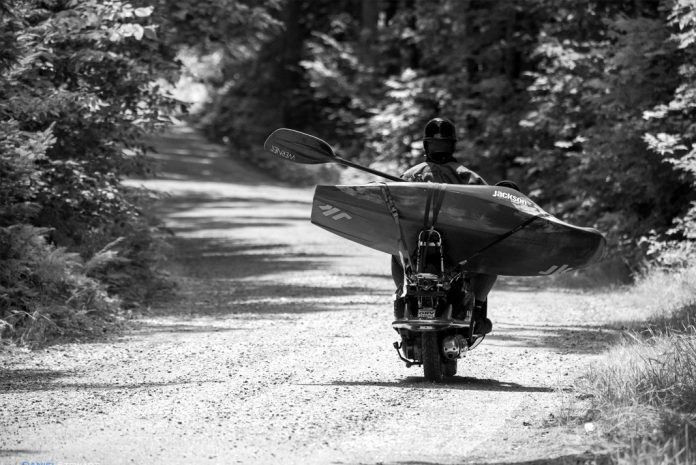
Person on a moped with kayak strapped to the back
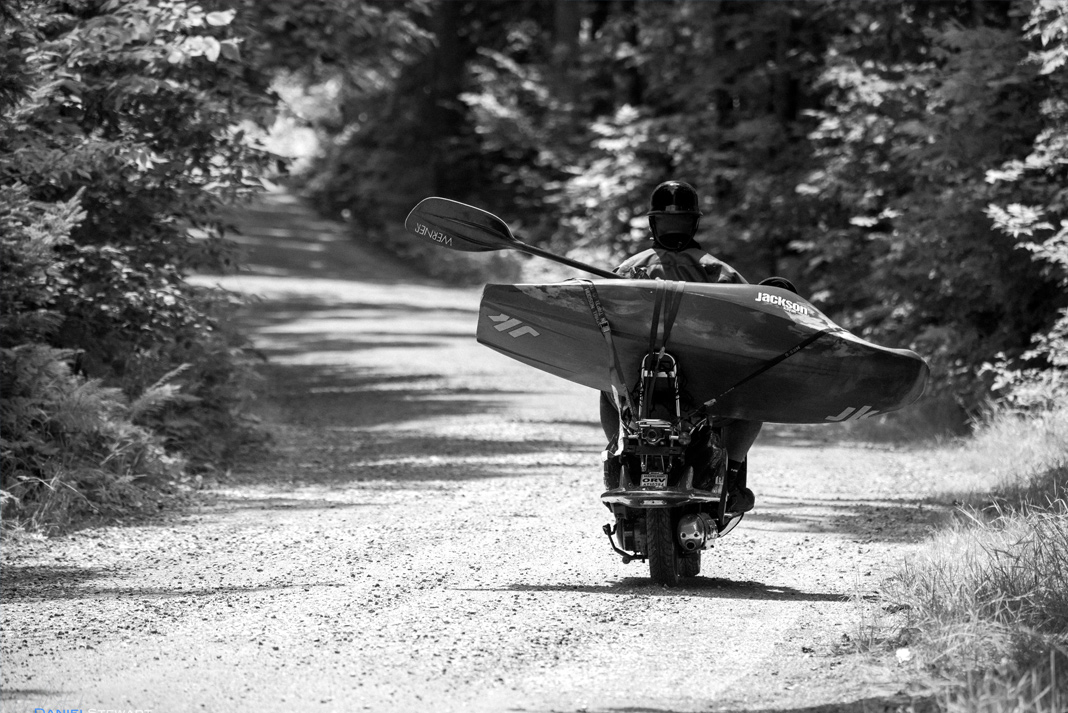
“Lookin’ for adventure, and whatever comes our way.” –Steppenwolf| Photo: Daniel Stewart

Ben Shillington is the mastermind of what he calls skid trips—short, dirtbag adventures that he does at least once a year between real expeditions. Skid trips have rules, Ben tells me over a basket of half-price (of course) wings and a few beers.

“The most limiting or freeing factor is that they must be to a faraway place on the cheapest of budgets—a minimum drive of 65 hours and at a maximum cost of $250.” Ben’s gear must fit in or strap to a 35-liter daypack and skid trip research can only be by word of mouth. Skid trips apparently often involve Greyhound buses, a healthy dose of hitchhiking, sleeping in snow caves on the edge of resort towns and finishing plates of food left on the bar.

Person on moped with kayak strapped to the back.
“Lookin’ for adventure, and whatever comes our way.” –Steppenwolf | Photo: Daniel Stewart

The skid tripper is 22 years old and is living his dreams one crazy expedition at a time. I watched him teach mountain bike maintenance to a group of weekend warriors at a recent trade show. His shaggy hair and hooped earring hung below his wool beanie toque. On one wrist he wore a chunky Suunto mountaineer’s wrist computer and on the other a hemp bracelet he bought from a street vendor in Nepal when he was climbing Mount Everest for a Discovery Channel documentary.

He was on fire when he got to his chat on low cost tire repairs, “Try tying your tube in a knot and putting it back on your rim. It will be a bumpy ride, but you’ll get into town.” Ben knows. When he finished his outdoor adventure diploma at college he hopped on his bike and crossed Canada in 31 days, the hard way, east to west, into the wind and uphill.

I sat and listened to Ben’s plans, smiling, remembering when the passion for dirtbag adventure ran freely (free being the root word) through my own veins.

I told Ben about leaving the university bar one night 10 years ago, packing our aid climbing gear and heading, by headlamp, to the base of a nearby rock wall. The plan was to make the first pitch in the dark, sleep the night and complete the last two pitches at first light so we’d be back on campus for a philosophy exam by noon. No one could afford a proper portaledge to sleep on, so we made do with a borrowed hammock and a bathroom door we hauled up the rock face. Ben thought the door idea was brilliant. I told him he could use it anytime; it was still hanging there.

[ Paddling Buyer’s Guide: Even dirtbags need the basics. Find your gear here. ]

His next real expedition will come this summer when he climbs Mount McKinley, North America’s tallest peak. After that he’s back down to sea level where he’s making plans to be the first to circumnavigate by sea kayak the world’s largest islands—Borneo, Papua New Guinea, and Greenland.

I like the idea of paddling around Borneo, but I know I won’t bother trying it, not for a while anyway. If it were my highest priority, I’d find a way to do it. But, for Ben, paddling the world and eating Mr. Noodle for a week is his highest priority.

Live life large Ben Shillington, you’re on a path traveled by so many adventurers before you, some by foot, bike, canoe, horseback, thumb; others by hot air balloon, ski, camel and kayak. And Ben, don’t worry about growing out of your skid trips; true dirtbags don’t burn out or fade away, we just start to carry credit cards with membership benefits.

Recirc is a column celebrating our favorite stories from 20 years of Adventure Kayak, Rapid and Canoeroots. This article first appeared in the Early Summer 2005 issue of Adventure Kayak Magazine. Since this story was first published, Ben Shillington has fat biked to the South Pole and skied across Greenland.

Skills: Rough Water Sea Kayak Paddling

Photo: Jock Bradley
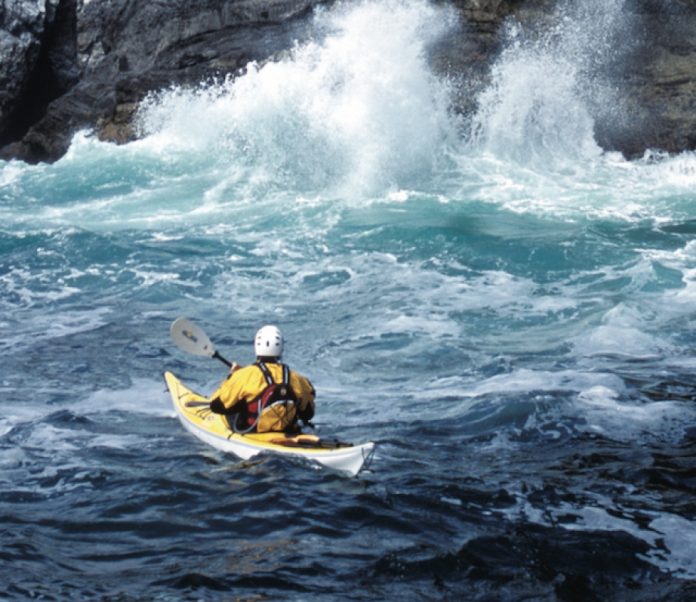
A sea kayaker look on as big waves crash against a rocky shore.

Rough conditions call for advanced sea kayaking paddling techniques such as bracing, surfing and rolling, right? Not so fast. Long before those skills are needed, you need to concentrate on flexing from the waist.

When paddling over an oncoming wave, the bow climbs the wave face, crests it and continues down the far side. Adjusting to the change in your boat’s angle as the bow tilts upward and then downward is very natural. You simply lean forward and backward from the waist, keeping the upper body in a neutral position while the kayak rides over the wave. Your head stays over the centreline of the kayak and stability is maintained.

Leaning forward or backward in a kayak this way comes naturally, but flexing edge to edge is far more counterintuitive—and important. If you stay rigid at the waist when waves hit broadside and the boat tilts on edge, your upper body and head will lean over the centreline, throwing you off balance.

To keep the boat stable, your waist needs to stay supple and operate like a universal joint, allowing the kayak to tilt freely in all directions, keeping the upper body and head centred over the boat. By flexing at the waist, you let the kayak and lower body move as one unit, independent from the upper body. The ability to maintain this co-operative division between upper and lower body is what separates upright paddlers from those with well-practiced self-rescue techniques.

Remaining relaxed in choppy conditions is the key to staying flexible and supple. Breathe deeply and drop those shoul- ders, relieving any built up tension. Focus on a nice comfort- able breathing rhythm and match it to the pace of your strokes.

Paddling in calm water while rolling your hips (and the kayak) from side to side is a good way to warm up and be sure you’ll remember your waist’s full range of motion when you need to call on it for stability.

Think of relaxing your hips and waist as a skill in the same category as bracing, surfing and rolling; they all take time to develop. Whether it takes buying a hula-hoop, taking up belly dancing or simply stretching more often, get those hips loosened up, and remember to use them.

Alex Matthews keeps his hips doing their thing while guiding kayaking trips in B.C. and Baja. 

akv5i2cover.jpgThis article first appeared in the Early Summer 2005 issue of Adventure Kayak Magazine. For more great content, subscribe to Adventure Kayak’s print and digital editions here.
Rock the Boat: Adrift

Illustration: Lorenzo Del Bianco
Rock the Boat: Adrift

Seven years into sea kayaking and I’m wondering, where do I go from here? It was my hope that I’d be able to push my skills ever forward—to move from the intermediate level to expert—along with like-minded club members. But halfway up the learning curve, I find myself alone on the hill.

Last year I attended the West Coast Sea Kayak Symposium in Washington for the third time. If you’re new to the sport the symposium is a wonderful event. There are lots of boats to demo, products to peruse and buy and, of course, fascinating seminars to attend.

During the three-day event I mined through the field of seminars. I found some I hadn’t attended before but, in the end, I left wondering if perhaps I had outgrown the symposium.

Granted, the speakers are world class and intermediate paddlers still have plenty to learn, but how many times can I listen to Reed Waite selling the virtues of the Washington Water Trails Association or Heather Nakamura telling me what I should eat for maximum performance? If I haven’t gotten it by now I never will.

It isn’t surprising that after three visits there would be a sameness to the seminars. What is surprising is how quickly I have begun to feel like I don’t fit an acceptable sea kayaking archetype. It feels like there isn’t a place, in symposiums or clubs, for paddlers of my credentials, or as some might say, lack of.

I didn’t come to this conclusion on my own. Over a beer on the first evening of the symposium an official from my club informed me that there was no support from the club for paddles I had been leading. It was strongly hinted that I should desist until I was “properly trained.”

During the past three years I’ve been organizing paddles for intermediate and advanced club members as well as a few non-members. Once or twice a week we spend the day paddling up to 25 kilometres, often in rough seas, along exposed shores, with few landing places. These paddles have a theme—harder, faster, further.

If we’re not being pushed by the elements, we try to push ourselves. I try to get wet at least once during every paddle. We’ve practiced everything from wrestling with flooded hatches in tidal channels to taking part in rescue operations with the local coast guard auxiliaries.

These paddles weren’t officially sanctioned by the club. I had never thought to ask for them to be included in the club program and now I see that if I had asked, the answer would have been no.

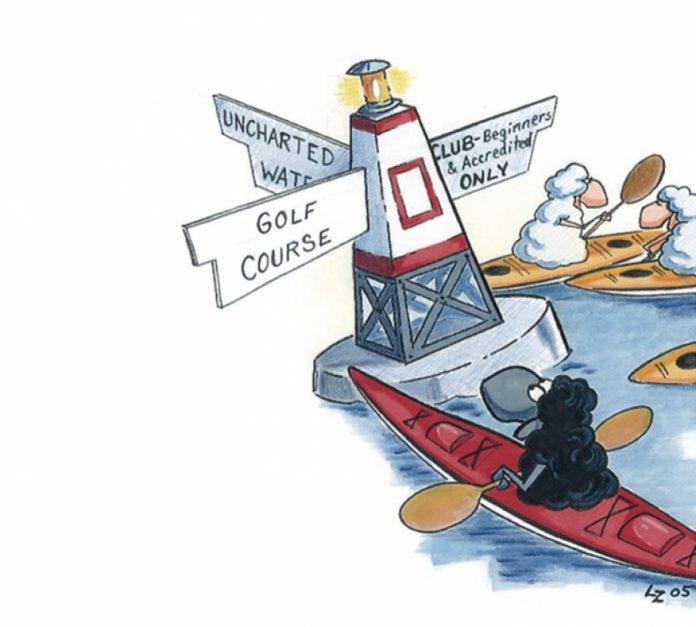
The club official explained that members were not being advised to join me paddling because I have no accredita- tion—and therefore no credibility. You see, I’m a level zero— a zero star—I’m a scout with no badges on my PFD.

This is not to say that I take learning lightly. After all, I had just dropped $400 on the symposium. I’ve also attended lots of seminars, rescue clinics, stroke improvement lessons, towing clinics and so on. I’ve been taught by one of the top instructors on the West Coast. My mentors are some of the most respected members of my club.

I’m going to stop leading the paddles. It had always been my intention and practice to pass on the knowledge and skills I had absorbed from my fellow club members to the next generation of kayakers, but I don’t want to cause any stress for the volunteers who run the club. Perhaps someone in the club with the proper resume will step forward. I’ve asked some to do so, but they seem more concerned with fulfilling the club’s mandate of introducing new paddlers to the sport.

If there is nothing in the club for intermediates, why be a member? Where do those paddlers go? I’m anxious to know because I seem destined to join them. I suspect this malaise affects other clubs. How do they handle the hol- lowing out of intermediates? Maybe that’s just the natural order of things.

That evening at the symposium I was encouraged by club members to take a national certification program, levels I through IV. Presumably these letters and numbers would make me a safer leader.

Seven years into the sport and I’m being prodded toward certification. Going down this channel will set me back about $1,300, more than the price of a breatheable dry suit. Will I take the courses? Maybe. Many of my friends tell me I’ll have no trouble passing them—all I’ll have to do is demonstrate my proficiency. Is the point of education to show off what you know or to learn things you don’t know? Even as an undecorated intermediate, I think I know the answer to that one. 

Gordin Warner is also a zero-star golfer. 

This article first appeared in the Early Summer 2005 issue of Adventure Kayak Magazine. For more great content, subscribe to Adventure Kayak’s print and digital editions here.
Quest for Caribou on the Firth River

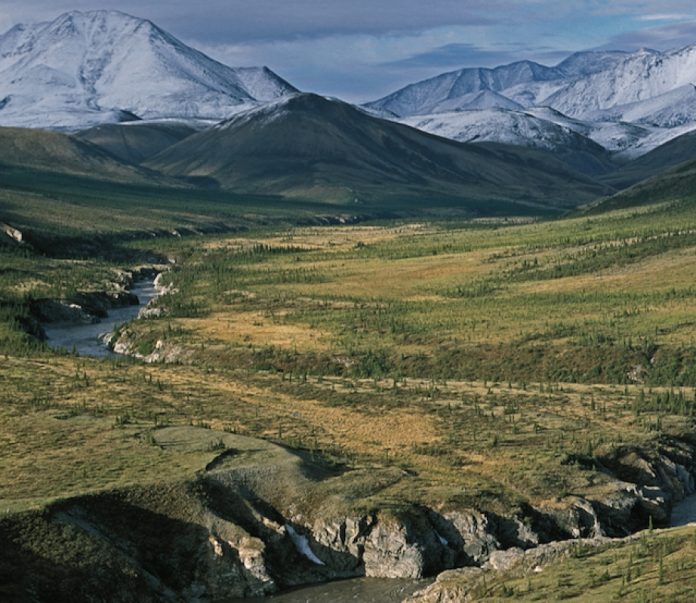
Photo: James McCormick
Quest for Caribou on the Firth River

A splashing noise penetrates the tent wall at 5:00 a.m. I ignore it. I want to keep dreaming. With the sky above the thin nylon walls as bright as midday, I know that sleep is impossible so I unzip the fly and poke my head out.

Fifty caribou are crossing the river, heading toward our campsite. A chorus of agitated snorting begins as the lead caribou start pushing their noses further into the stronger current. After some imperceptible signal the herd turns chaotically and heads back to the far side.

Clicking their hooves like tap dancers, they clamber up the cobbled bank and vanish in a thicket of willows where branches mask their antlers and the mats of heather mute the sound of their hooves.

Most people would think this was a pretty exciting wake-up, but today is our 11th day on the Firth River and it’s going to take more than 50 caribou to satisfy me. We have already seen countless caribou milling around in groups this size, but we are after bigger game. Still, my morning mantra per- sists, “Today’s the day,” I say to myself.

Maybe these caribou are the first wave of the much-anticipated migration.

Fetching water for coffee, I’m disappointed to see that the river is still translucent green. In my morning dream thousands upon thousands of hoofed beasts had passed our tents and plunged into the river, crossing in a steady stream that lasted for days, leaving the Firth a soup of hair and dung.

That the coffee will be better without the hair and dung is anemic consolation as I fill the kettle. Time is running out and I’m becoming distressingly obsessed.

We had spent the last 10 days searching— or was it waiting?—for a herd of caribou, though it seems like an understatement to call 123,000 caribou a herd. Every July, the Porcupine herd leaves their calving grounds in Alaska’s Arctic National Wildlife Refuge and crosses the Firth River on its return to its summer range in northeastern Alaska and the Yukon.

We are four kayakers and two rafters on a mission. Our agenda is to paddle right into the middle of the migration. We want waves of caribou to wash over us, choking us with their collec- tive stench and deafening us with their bleating and snorting.

This sounds like a simple plan. But there is a variable involved, or should I say 123,000 variables. Our research told us the best bet for seeing the herd cross the Firth was during the first week of July—even though there was no way to know exactly when or where this might happen. We had given ourselves 160 kilometres of river and 18 days to work with. So far, our trip has involved more waiting, watching and strategizing about our position than paddling.

The Otter’s tundra tires had touched down at the Margaret Lake put-in on June 28th. While we herded our mound of gear from the plane into raft and kayak-sized piles, a welcoming committee buzzed fiercely around us. After ten minutes the bugs had chased us to a breezy ridge above camp. As irritating as the onslaught was, we couldn’t very well begrudge the bugs their role in the nat- ural cycle. They did, after all, play a lead role in the phenomenon we had come to see.

One reason the caribou travel en masse is to lessen the threat from mosquitoes and warble flies. Warble flies lay their eggs on caribou hair, usually the legs. When the maggots hatch, they burrow under the skin and cut breathing holes. A single caribou can host up to 2,000 maggots, all eating away at the poor weakened beast. These pestilential insect hordes drive the caribou into large herds and chase them from one ridge to another in search of bug-dispelling breezes.

Below us the river, a shiny sliver thread, wove north- ward through the immense open arctic to the Firth Delta. At home in our new surroundings, the rafters, Kevin and Lynn, lounged on the ridge like Zen masters, that is, Zen masters with DEET-soaked veils of netting attached to their hats. Their years of living in Alaska made them comfortable and serene. Being arctic neophytes, Jack and Franz were less serene than excited. Though the grey beards poking through their bug nets suggested rightly that they were both seasoned kayakers, they were awestruck by the vastness of the landscape. Math professor Franz perched on a limestone crag and stared at the panorama in front of us as if he might be able to quantify its vastness. 

We launched into a flood of coffee brown water. A recent blizzard had overtaxed the absorbent ability of the spongy tundra. The higher flow and now murky water made it difficult to see submerged rocks and bars so the kayakers paddled ahead of Kevin’s raft to scout.

Cold weather and heavy kayaks made us less playful than usual, but this didn’t translate into more distance covered. Our eyes were more often on the shoreline than the river. We constantly scanned the shore, frequently pulling ashore on cobbled beaches to sleuth for signs of caribou or promising migration valleys. At most we spent three to four hours on the water at a time. 

Even though we were unified on our quest, our individual strategies bordered on anarchy. Each of us had his or her own theory about where and when to find the caribou. As soon as we had set up camps at likely caribou crossing points everyone followed his or her own instinct.

Kevin and Lynn would find a likely spot and park there for hours, just watching and waiting. They even spent nights peer- ing like sentries from the shelter of a limestone crag. This placid approach contrasted sharply with that of my husband Jon and myself. We roamed for hours, chased by our own invisible bugs: the need to move. Jon usually dreams up point A to B type expeditions and pursues B like a racehorse with blinders on. It’s a way of travelling that serves him well on his expeditions which have included rowing the Northwest Passage and kayaking around Cape Horn. It’s a little less suited to staying still and waiting for a maddeningly elusive group of animals to stumble upon you. Jon and I spent our days always seeking the next ridge or valley to mark off the next expanse of wild space.

By now, the smell of coffee has woken everyone up and I nestle six steaming cups onto the dryad-covered gravel. It is decision time. Our scheduled pick-up at Nunalik Spit on the delta is a week away. Once we enter the canyon section, five kilometres downstream, we’ll have missed our chance to encounter the herd, the canyon’s steep walls and recirculating rapids make it a place they somehow know to avoid.

All our professed mellowness about seeing the migration has long since vanished like the early morning’s caribou. On our daily forays we had all seen wolves, grizzlies, eagles, Dahl sheep, and moose, not to mention caribou in groups up to a few hundred—but not the surging herd we were seeking. Even though just being in this wild place should be enough, we are dissatisfied and cranky. For all we know, the herd might have crossed the Babbage drainage, hundreds of kilometres from here. During a brief and spirited group meeting, it’s clear that none of us can give up on seeing the migration yet. We agree to wait where we are up to five more days before we race downstream to make our flight.

Now with a definite plan in mind, we worry a little less, and notice a little more. Jon and I paddle across the river the next morning to explore the valley where the previous day’s indecisive caribou had disappeared. We follow a sinuous ridge that affords good views of two valleys.

While Jon snaps photos, I wander down the ridge a little and glass the valley below. Something streaks into view and I focus in on a wolf stalking a nearby cow and calf. The binoculars can’t encompass both the wolf and the caribou, so I stay glued on the wolf. I hear the caribou getting closer. My heart pounds in my ears, but I hold the glasses steady; I know that soon all three players will meet. Half of me wants to jump up and scream, “Watch Out!” But the predator in me whispers, “Keep it cool, wolf, they’re almost close enough.” When the cow and calf finally enter into view, the wolf leaps from his crouch and bolts toward the caribou.

The wolf’s burst of speed puts him within a few dozen metres of his prey, but after 30 seconds the caribou widen the gap. The wolf pulls up and slinks downhill while the caribou rush up the ridge. The wolf has played the surprise card as well as possible, but the caribou hold all the speed cards.

There was no gory finale, but every hair on the back of my neck is standing at attention. Witnessing this predator-prey encounter—one that’s incredibly intense but entirely commonplace—brings my perspective down to tundra level and I realize that experiencing the caribou migration is something that is more complex than blocking a few days off on a calendar.

Below me the tundra in either valley is dotted with small groups of caribou milling around like spiral galaxies. Now, instead of looking for a herd that isn’t there, I see individual animals acting out their individual roles in the age-old drama of survival.

Being so focused on one huge herd had blinded me. The small groups we had been watching for days were the migra- tion. The wet and cold weather that had pinned us down the first week had also kept the insect population low enough for the herd to saunter along in small groups instead of one tight wave.

But the realization that I won’t be paddling through a river choked with caribou isn’t disappointing. Instead, it’s accompanied by an appreciation for the way everything in this austere environment is interconnected.

We were wrong to just focus on the caribou; we should have been looking at the entire arctic ecosystem. The caribou were migrating, as they always do, according to a mix of internal and external forces. Caribou spend their lives eating, avoiding predators, and reproducing. After calving, they group together in response to the insects and instinctively head for areas that offer good foraging and cool, humid conditions. Once together, they have to keep moving or they’ll exhaust the food supply.

It all fits neatly into place, with or without an ultimate explanation. Biologists have theories about why caribou migrate when and where they do, but no one really knows how it is that tens of thousands of animals get together and move as one.

Our group, on the other hand, was driven not by instinct but by curiosity. Psychologists also have theories about human behaviour, but no one can really explain why Jon and I are driv- en, intent on always reaching a destination while Kevin and Lynn are content to sit, and watch, and wait.

On this day above the Firth I see that, with or without expla- nations, our group functioned more like the small groups of caribou that we encountered rather than the tight-knit one we sought—and that we too had reached our destination.

Christine Seashore divides her time between British Columbia and Montana. 

akv5i2cover.jpgThis article first appeared in the Early Summer 2005 issue of Adventure Kayak Magazine. For more great content, subscribe to Adventure Kayak’s print and digital editions here.