Home Blog Page 371

Skills: Let There Be Light

Skills: Let There Be Light

One morning high in the Himalayas of Nepal, I climbed for an hour in the predawn darkness and cold to catch the sunrise over the Annapurna Range. I started taking shots just as the brilliant light pierced the prayer flags in the thin mountain air. By about the fifth frame I realized that these images were all about light. The same light that illuminated the prayers on the flags so intensely and gave shape and scale to the peaks in the background also seeped softly into the nooks and cracks of the valley floor.

My mind flashed back to other favourite times and places; places that at first appeared to be very different than this one: sitting on a beach on St. Ignace Island watching a full moon rise over Lake Superior; paddling past the fall colours on Lake Temagami, Ontario; witnessing the blood-red skies long after sunset on Georgian Bay. These places were sacred in their own way. And it was the quality of light that was the common factor that unified them in my memory with the mountaintop in Nepal, which is where I finally understood that light is what I have been photographing all along.

Photography is the art of “making pictures of light.” Great photographers understand that. Indeed, anyone can improve their images simply by being more aware of how light shapes compositions.

To develop a photographer’s awareness of light, you don’t even need a camera. Ansel Adams, the renowned landscape photographer, would sometimes spend a whole day observing how the lighting changed on a scene before he took any photos.

You can start observing light while you walk the dog in the early morning or gaze out your office window daydreaming about your next kayak trip. Evaluate the quality of light, and pay particular attention to these three basics: direction, intensity and colour.

Light has direction. Try to imagine light in a more tactile way, like flowing water that strikes your subject and flows around it. When shooting a boater in sidelight, think less about the boat and more about how the light is striking the boat and giving it shape and depth. Strong backlighting creates dramatic dark forms with almost no detail in the shadows and also creates magical halos of rim light on delicate objects like surf spray. Strong frontal lighting that comes over your shoulder and strikes the subject enhances detail and bold, bright colours.

If the paddlers in the scene are in shadow, you will learn to automatically shoot from a different angle to get some light on their faces. Instead of shooting that waterfall at noon, you might choose to come back in the late afternoon when the spray is backlit against a dark and dramatic background.

Also consider the intensity of the lighting. On an overcast day, light is diffused and less intense, giving earth tones a soft, muted quality and making the brighter colours, such as a boat, really pop in an image. Early morning sunlight, on the other hand, is focused and very intense. At its low angle, it rakes over the water’s surface and highlights every wave and ripple. This focused intensity is really useful for picking up detail on boats and water droplets coming off paddle blades. 

Water intensifies light—an important fact for paddlers to consider. When light is coming at a low angle, the water acts like a huge mirror that reflects and intensifies the power of the light. This additional reflected light will cause your paddler and boat to be brighter than the similarly lit background. You might want to underexpose slightly to counteract the effect of that intensified lighting.

Finally, the colour of the light will affect the mood of the image and your reaction to it. Light can be either warm or cool. Early morning and late afternoon light is warm. It adds life and vitality to pad- dlers’ faces because of its warm tones. Shadow light is made up pre- dominantly of light reflected from the blue sky. It is cool. Faces in shadow tend to look pale and sickly because of the blue, cool cast to the light. However, you can use that cool, blue light to your advantage. 

With a little practice this new awareness of the direction, intensity and colour of light will become an automatic reflex that kicks in when you look through your viewfinder. You will find yourself making conscious choices about how to take advantage of what you know about light. No matter what type of light you like best—the mysterious, silvery white light of mist over the water, the bright overhead light of mid-afternoon under clear blue skies, or the low light of dawn or dusk that blasts every detail with red-hot colour—soon you will begin to understand and look for the type of light that really inspires you; the light that makes you want to grab a camera and get out in your boat.

By paying as much attention to the quality of light that strikes your subjects as you do to their composition, you will start to see dramatic improvements in your images. Possibly, you won’t need a trek into the Himalayas to see that photography is the art of making pictures of light. 
akv4i2cover.jpgThis article first appeared in the Summer 2004 issue of Adventure Kayak Magazine. For more great content, subscribe to Adventure Kayak’s print and digital editions here.
Long Live the Homegrown Boat

Illustration: Lorenzo Del Bianco
Long Live the Homegrown Boat

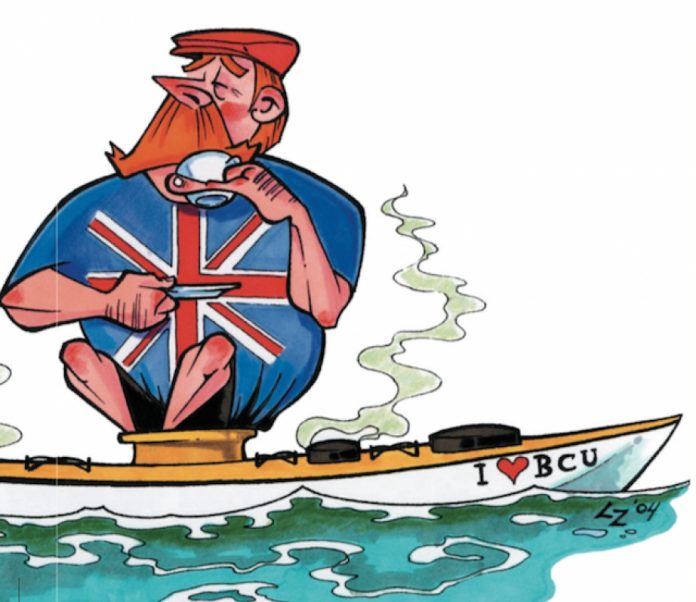
The other day, I went down to my local kayak club and couldn’t help but notice that every last boat on the water was a British-style kayak. All of them, that is, except mine. 

What’s a “Brit style” boat? Think of kayaks with three little rubber hatches, three bulkheads and skegs instead of rudders. Brit boats are generally small, low-volume craft that weigh 60 to 100 pounds, have pointy upswept ends and tiny little fibreglass seats with backbands, designed to torture anyone over five-foot-four.

These are the kayaks that tend to sport Union Jacks, Welsh dragons and “Kiss me, I low-brace for Scotland” decals. They are designed by the British stars like Nigel Dennis and Derek “I crossed the North Sea using only a cricket bat for a paddle” Hutchinson.

My North American boat by contrast was the only kayak at the club with a rudder and enough volume to actually carry a Honda generator and a steamer trunk of gear—provisions needed to explore the coast in style and comfort. My hatches are those nice big leaky kind, the ones with the awkward neoprene gaskets that you can actually fit a generator through. The seat in my kayak is like a mini La-Z-Boy, not some pitiful little fibreglass thimble that might just fit Herve Villachez or one of the smaller Miss Teen Canada contestants. Mine was the only North American “West Coast” style kayak.

Now don’t get me wrong—British boats are totally cool. They are typically lots of fun to paddle, and there are many excellent designs to choose from. But what in hell happened to the West Coast boat?

I remember a time when West Coast manufacturers were setting the pace for kayak design and especially build quality in North America and maybe even the world. There was great momentum in the U.S. market and a prevailing feeling that many new innovations in hatch, seat and rudder design were just around the corner. America was reinventing the sea kayak, and it was going to be great.

But then, Canucks and Yanks became interested in Brit boats. The average paddler’s skill set had improved enormously. It was time
to move up to higher-performance kayaks, and the North American manufacturers didn’t keep up with some of their customers. Designers in the U.K. were truly trying to make the best sea kayaks that they could, while builders in Canada and the U.S. focused on making the boat that everyone could paddle. They wanted the sport to be so inclusive that they forgot about designs that would stretch a paddler’s skills and their comfort zone. Innovation stalled, and flash and gizmos replaced function.

Now, North American companies are responding by rushing to make “British style” sea kayaks of their own. As the British-style kayak becomes the ride of choice for many “serious” sea kayakers, I can’t help but feel that we have thrown the baby out with the bathwater. 

Somewhere along the way, the traditional North American features like rudders came to be seen as “bad.” What jackass was responsible for that whopper of a lie? It is patently absurd to say that one system—skeg or rudder—is “better” than the other. They both have inherent strengths and limitations. Skegs are beautifully simple in operation and far less exposed to damage should a collision occur, and foot pedals in a skegged boat are rock-solid under pressure, but rudders are truly superior in some conditions.

No kidding, paddlers in my neighborhood actually believe that rudders are the work of Beelzebub himself. They know it’s true ‘cause they “heard it from some British kayak guru.” On several occasions, while paddling with kayak-anglophiles I’ve tried to explain the advantages of a rudder in following seas. But generally they fall so far behind that they miss the final, most salient point of the argument, which is that rudders really work a treat in following seas!

Hatches. Why must they be rubber? An interesting and little-known fact about those rubber hatches from the venerable British company Valley Canoe Products is that they were never really designed to be waterproof. No, the key design mandate was that they be airtight to contain the smell of British cooking. Consider boiled fish and mushy peas, pigs in a blanket, haggis, kippers, or cabbage boiled beyond the point of no return. Sitting in a cheap and cheerful London tearoom, it’s enough to make one gag. At sea, it would mean disaster. It was a happy accident that VCP’s smell-proof design proved to be watertight as well.

Hatches should be bone dry and easy to access. End of story.

So why on earth has the otherwise sensible paddling community swallowed every last bite of BS from anyone with an accent posing as a sea kayak guru?

Really, the root of all this is very simple: colonialism. When push comes to shove, and we Canadians and Americans hear a commanding voice ringing out in a beautiful rich and plummy British accent, every syllable lovingly enunciated in the King’s English, we immediately recognize our better. We rush to heel like the bad doggies that we know ourselves to be. We still long for our master’s approval and rethink our ill-gotten independence. This is why one always sees some poor Yank fawning all over one of the British gurus at kayak festivals. The British lord will deign to scratch the colonial cur’s ear as he rolls onto his back exposing his genitals in the full canine submission pose.

Let’s keep Brit boats British and take what we learn from them and others, and put it through our own unique filters in order to make something that is truly ours. Hatches should be dry—but they don’t have to be rubber. Americans put a man on the moon, surely someone has got a flush, low-profile hatch design rattling around in their brain. And how about a really slick and easy-to-use rudder deployment system? What about under-stern rudders and foils? Or maybe a kayak with changeable rocker? British layups are traditionally heavy and low-tech. I want a super-stiff carbon boat that weighs 35 pounds. And where’s the performance-touring sit-on-top, with waterproof hatches that will carry a good load, and still offer a decent turn of speed and good thigh contact with the boat for edging and rolling? 

Let’s get back to performance boats with fresh new approaches to the old problems. That’s when something really exciting will happen—when there is a melding of approaches and ideas that spawn something a little bit different and fresh. As Canadians and Americans, let’s all strive for the day when we get invited to the U.K. as revered guests, hold court at their kayak festivals and tell them that they’re doing it all wrong!

Alex Matthews enjoys both Canadian and British citizenship. He resides on Vancouver Island and paddles both ruddered and skegged boats. He extends his thanks to the British kayak guru (who wishes to remain anonymous) who confirmed the nauseating nature of mushy peas. 

akv4i2cover.jpgThis article first appeared in the Summer 2004 issue of Adventure Kayak Magazine. For more great content, subscribe to Adventure Kayak’s print and digital editions here.
Lake Superior: A 4,000 Kilometre Kayak Trip?

Image: Gary McGuffin
Lake Superior: A 4,000 Kilometre Kayak Trip?

The new 190-kilometre Hiawatha Water Trail will make Lake Superior’s south coast more paddler-friendly and add another piece to what may become the world’s longest paddling trail.

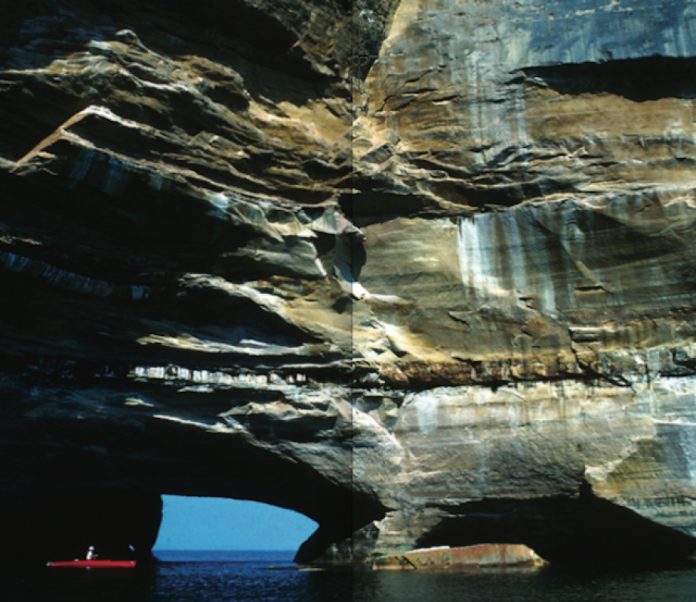
The Hiawatha Water Trail serves one of Superior’s paddling hotspots, the area centred around Marquette, Michigan. It includes the sandstone cliffs, sea caves, waterfalls, and sand dunes of Grand Island National Recreation Area and Pictured Rocks National Lakeshore.

A waterproof map, available this summer, will show access points, campsites, hazards and sensitive areas. And unique to the Hiawatha are kayak lockers at several urban areas along the coast.

“Essentially, these are small sheds with lockable, kayak-sized compartments,” explained Sam Crowley, one of over a dozen trail volunteers. “Paddlers will be able to stow their gear and go into town to resupply, eat a meal, or spend the night.”

The Hiawatha Water Trail, proposed in 1995, is the brainchild of Marquette outfitter Bill Thompson. The idea took off from the outset, and soon a group of like-minded kayakers had gained the support of local government, businesses and private landowners, and began developing brochures and signage. The number of volunteers grew. The group sought state and federal grants to fund the development of campsites, and has taken an active role in the management of Grand Island National Recreation Area and Pictured Rocks National Lakeshore. The Hiawatha organization acts to promote the interests of paddlers in both protected areas.

Crowley feels that by exposing a greater number of people to the coast and increasing public awareness of sensitive shoreline features, the trail will inspire more people to stand up for the coast’s preservation.

For thousands of years prior to urbanization and private land development, there was an informal, paddler-organized water trail of native Ojibwa campsites around the entire shoreline of Lake Superior. Today, people like Sam Crowley are recreating the old trail piece-by-piece, and introducing a new generation of paddlers to the area in the process.

So far, three water trails dot the American side of Superior: Michigan’s Hiawatha and Keweenaw trails, and Minnesota’s Lake Superior Water Trail. The Canadian equivalent is the Great Lakes Heritage Coast, essentially a government-operated water trail following the north shores of Lake Superior and Huron. Add a couple more to the south shore, and increase paddler involvement in the Heritage Coast initiative, and a modern incarnation of the traditional trail will be complete, extending over 4,000 kilometres around Lake Superior. 

akv4i2cover.jpgThis article first appeared in the Summer 2004 issue of Adventure Kayak Magazine. For more great content, subscribe to Adventure Kayak’s print and digital editions here.
Editorial: 1,600 Nautical Miles to Margaritaville

Photo: Malcolm MacGregor
Editorial: 1,600 Nautical Miles to Margaritaville

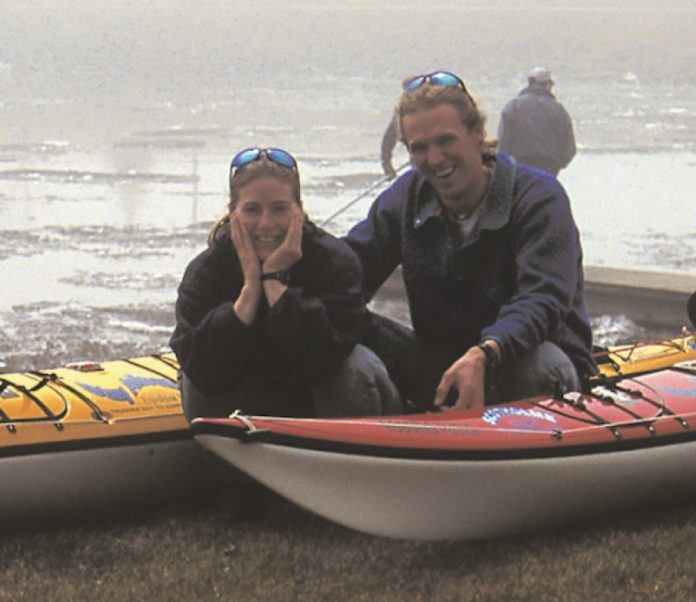
For the first two weeks Tanya and I could only remember the first verse of Jimmy Buffett’s Parrot Head national anthem. We’d left the Port Arthur marina in Thunder Bay the day after the ice broke. It wasn’t until May 26 that spring—an exceptionally cold winter had Superior com- pletely frozen over. Our morning routine was to boil water for hot cereal and thaw our frosty pogies in the steam. The first verse of Jimmy’s “Margaritaville” was enough to warm our spirits and pass the time for the first couple hundred miles of our three-and-half-month expedition.

Music has always been used to pass the time paddling. Canada was opened by the French voyageurs singing of whiskey and women while moving further west away from the comforts of both. While the Inuit kayaked they invented songs of the hunt, songs they’d write while away and then share like stories upon their return.

Like the Inuit and the voyageurs, we shared “Margaritaville,” a song a little about booze and a little about women, and as we did, it slowly became the soundtrack of our trip. Getting all the lyrics written down took on equal importance to reaching our final destination in Hamilton. What began as a way to lift our spirits became a quest, almost greater than the trip itself. Along the journey Jimmy Buffet introduced us to more good people than we ever could have imagined.

Over the course of 1,600 nautical miles we sang and smoked tobacco around campfires on cobble beaches with other kayakers, drank rummy blender drinks aboard the decks of moored sailboats and, thanks to Canadian Coast Guard Radio, had the final verse patched through via VHF radio. With the help of the great people with their own boats and their own destinations we put all the words together and could sing aloud all the way from “Nibblin’ on sponge cake…” to “That frozen concoction that helps me hang on.”

Five years after, “Margaritaville” was our wedding song. It still sparks spontaneous two-stepping around the kitchen floor and, like nothing else, takes us back to campfires on cobble beaches. It is four minutes and ten seconds of freedom and memories of the people you can meet travelling long distances by kayak… 

Wasted away again in Margaritaville,

Searchin’ for my lost shaker of salt. 

akv4i2cover.jpgThis article first appeared in the Summer 2004 issue of Adventure Kayak Magazine. For more great content, subscribe to Adventure Kayak’s print and digital editions here.
Boat Review: Riot’s Turbo

Photo: Rapid Staff
Boat Review: Riot's Turbo

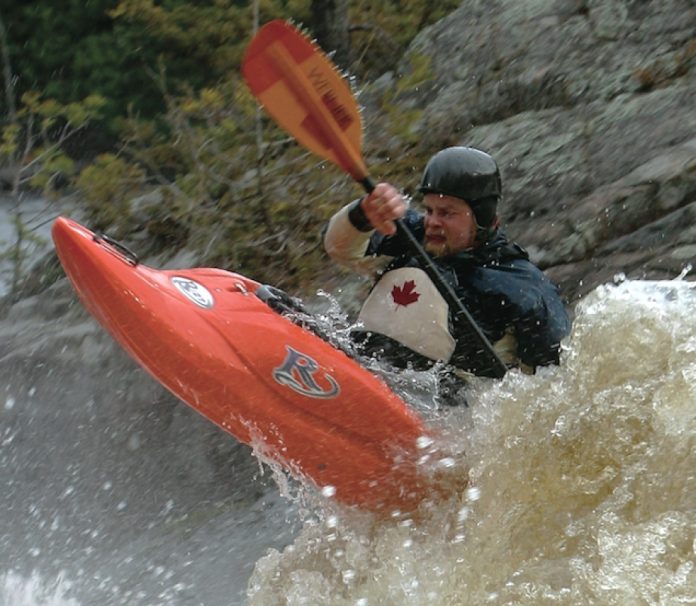
A fast and aggressive play machine ready for tearing apart waves and throwing down in holes. The best all-around playboat Riot has ever produced!

Outfitting

The cockpit of the Turbo is tricked out with Riot’s latest outfitting gizmos for showroom adjustability and on-river tweaking. Riot may have gone too far with buckles, bolts and screws. Most felt they still used the cockpit rather than the ratcheting soft Impulse thigh braces. The Reflex hip pads are something you’d set once and leave alone. The movable seat is great but the ratcheting Force backband, broke in the cold water. The adjustable ratcheting foot braces are the bomb for downriver comfort.

River running

Running downriver, the Turbo is like no other Riot playboat. The bow and stern are close in volume and length and Riot’s made an honest attempt at offering more rocker while still maintaining a long waterline— you’ll love the hull speed for catching waves on the fly. Have a look at Riot’s weight range chart—the Turbo 52 might be your better river runner.

River play

The hull is what we’ve come to expect from Riot, very loose and hard edges. Clean 540 spins are the norm for this machine. Narrow-feeling and fast, it’s very easy to place on edge and carve like mad. The Turbo isn’t a “butt” bouncer; getting air is achieved through speed and quick edge transition to generate the lift—and at 6.5 feet it makes for impressive aerial moves. Looking at it on shore you can almost predict its hole performance—slicey, balanced and stable. The best Riot cartwheel boat to date.

Riot Turbo 47 / 52 specs

  • Length: 6’8” / 6’9”
  • Width: 24” / 26”
  • Volume: 47 US gal / 52 US gal
  • Weight: 33 lbs / 34 lbs
  • Cockpit: 31.5 x 17.5” / 30.5 x 17.5”
  • Weight range: 90-170 lbs / 150-220 lbs
  • MSRP: $1,099 USD / $1,499 CAD

rapidv6i3cover.jpgThis article first appeared in the Summer 2004 issue of Rapid Magazine. For more great boat reviews, subscribe to Rapid’s print and digital editions here.
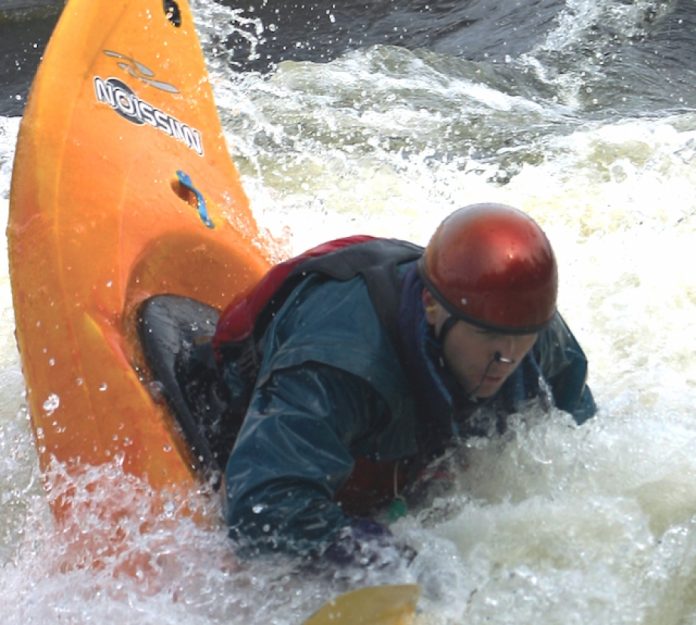
Boat Review: Necky’s Mission

Photo: Rapid Staff
Boat Review: Necky's Mission

Company line: A super fun, river-running playboat with volume for all-day comfort and predictable handling. Winner of the coveted “Gear of the Year 2004” award from Outside magazine.

Outfitting: Necky’s new Recoil system with aluminum backbone provides rigidity to the hull and a mounting point for the seat assembly. The flat seat needs building up under the ham- strings. The self-adhesive foam hip pads didn’t stick, and there’s no water bottle holder. The low-profile aluminum thigh hooks and backband ratchet system are simple and effective. Lots of vertical foot room for your river shoes to press against the pre-shaped cut-it-to-fit foam chunks.

River: River running in the Mission is stable and gentle, rolling smoothly from edge to edge. The incredible amount of rocker eliminates any pearling on ferries and lifts you over reactionary waves. There hasn’t been a boat that backpaddles this easily since the RPM. The Mission brings back home controlled eddyline stern squirts along with crazy stern enders when punching holes and boofing.

Play: Necky bills the Mission a river runner, but it is as much a weekender’s playboat—the return of the long-boat revolution! The super-big rocker keeps the ends clear of upstream green water and there’s no outrageous volume around the knees. Super-fun rails backsurfing. Surfs way faster than small boats. Longer ends grab more water in spins and cartwheels, letting the river do more work and you less “gooning” the boat around. Hole play is refreshingly slow and controlled. Outside might be right. 

Specs: length 7’2” | width 25.5” | volume 57gal | weight 34lb | cockpit 31×16” | price $1399cdn/$999us 

rapidv6i3cover.jpgThis article first appeared in the Summer 2004 issue of Rapid Magazine. For more great boat reviews, subscribe to Rapid’s print and digital editions here.
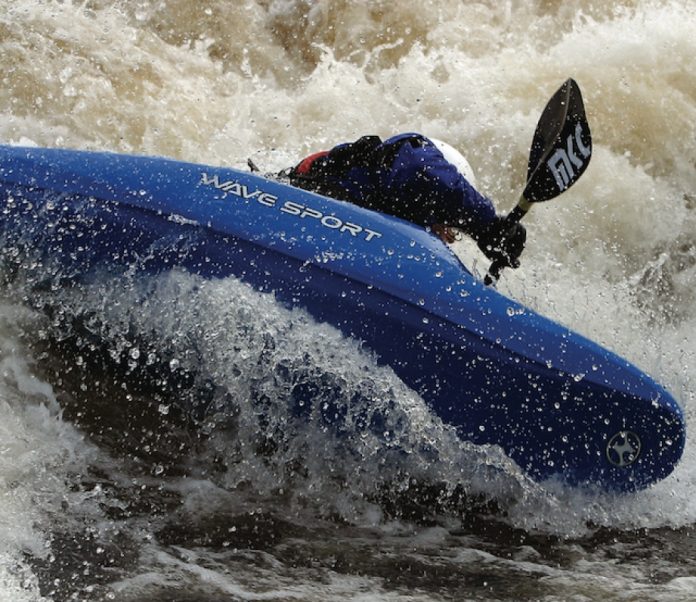
Boat Review: Wave Sport’s Zero Gravity

Photo: Rapid Staff
Boat Review: Wave Sport's Zero Gravity

Company line: Between river running and high-performance play, the ZG is the best of both worlds all combined in a beautifully designed aesthetic package.

First feel: All padders agreed the new Zero Gravity (Zee Gee) feels like a pre-Transformer Wave Sport boat— fast, predictable balanced and smooth. Wave Sport incorporated low rocker to increase speed and carving. Even though the bow rides suspiciously close to the surface it didn’t raise a complaint from even our most newbie test pilot. The clean convex deck sheds any pearling before the bow is pinned and your momentum stalled—ferry on, Wayne; surf on, Garth. The ZG still feels and moves around the river like a real boat, it jumps up on plane quickly on a ferry and glides deep into eddies. Still learning to flatwater stall and cartwheel? The ZG is your boat. Or pick up an Ace, just don’t try to spin it.

Pro-spective: Without question the Zero Gravity is one of the fastest boats in the 2004 lineup and accelerated on edge like a champ. Not only can you launch huge aerial moves, you have the hull speed to maintain the surf when you land them—one of the biggest gripes with the T series. The boat is clean with soft lines and a loose hull, “like a blank skateboard deck with no gimmicks.” Flat spins easily work themselves into smooth and stable vertical ends. Loops? Sure, but don’t look for the pop you’d expect from more bulbous cockpits.

Pro: A favourite of freestyle pros and intermediate river paddlers.

Con: Narrow knee position, and no drain plug. Six inches extra boat to swing through rotational aerial moves. 

Specs

length 6’4”/6’6”
width 24.5”/25”
volume 48gal/54gal
weight 31lbs/32lbs
paddler weight range 100-180lbs/140-220lbs
price $1399cdn/$999us 

rapidv6i3cover.jpgThis article first appeared in the Summer 2004 issue of Rapid magazine. For more great boat reviews, subscribe to Rapid’s print and digital editions here.
Touring Kayak Review: Aquafusion Quest

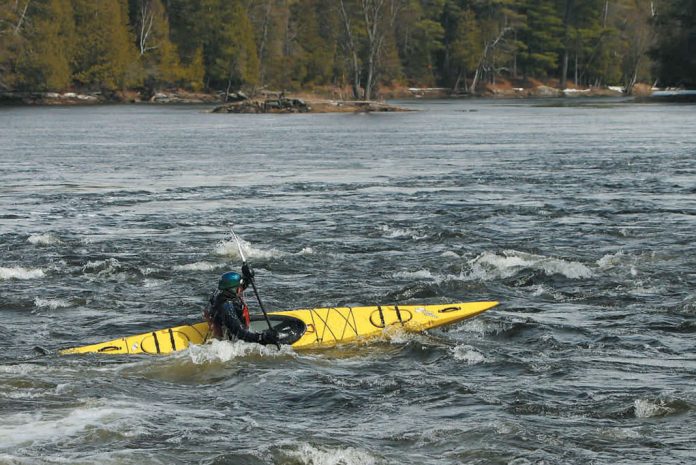
Person paddling yellow sea kayak on a river

The Quest is built by the three-year-old touring kayak division of an Ontario canoe company, Nova Craft, so we thought ours might feel at home in some classic canoe territory. We joined our sister publication, Rapid magazine, on a whitewater kayak test day for an early spring high-water run through Lower Madawaska Provincial Park, not far downstream of where the Madawaska River flows past our offices.

Normally home to Royalex whitewater canoes and stubby freestyle kayaks, the Mad doesn’t see many touring kayaks, but why not? Fourteen and 15-foot touring kayaks overlaps whitewater slalom boats in length, and a few companies sell kayaks of this length as “hybrids” for use on everything from oceans and large lakes to pokey streams and river whitewater up to Class III and IV.

Aquafusion Quest Specs
Length: 14′ 8″
Width: 23.5″
Depth: 11.5″
Cockpit: 31″ x 16.5″
Weight: 57 lbs
MSRP: $1,099 CDN base; $1,299 CDN GT

Not that many among you paddlers of recreational touring kayaks are planning to take your boat downriver in April, but since we wanted to test Aquafusion’s claim that the Quest is “sleek and fast yet highly manoeuvrable and carves turns on the lean effortlessly,” putting it through the whitewater paces seemed like a sure way to find out.

The Lower Mad consists of a series of about a dozen Class II to IV rapids with some long stretches of flatwater, dealing us everything from glassy calm to chop, rock gardens and steep, breaking surf.

Paddlers in the Quest had more fun than the river kayakers. The Quest catches waves and surfs beautifully, dials carving turns with a quick roll of the hips, Eskimo rolls capably despite rudimentary cockpit outfitting and blasts across eddylines with more speed than anything else on the river.

The multi-chine hull sits almost more comfortably in a tilt than it does flat, so beginners may find it a bit wobbly and skittish unloaded in big water. Being easy to tilt, the Quest is a great boat for the keen beginner to learn edging and bracing techniques.

With the hull-design characteristics of a high-end kayak built into a recreationally priced boat, you sacrifice some higher-end comforts like dependably water-tight hatches, a foot-controlled rudder and stock-outfitted thigh and hip braces—but receive performance that lives up to its billing, without the inaccessible bill. A great learning boat suitable for shorter trips.

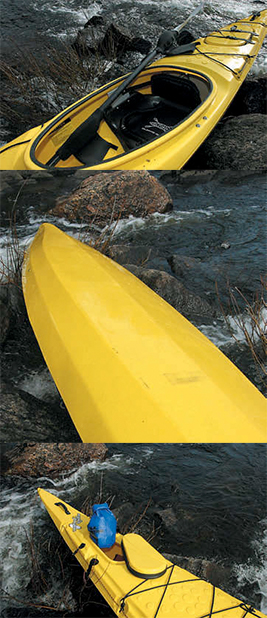
Cockpit and rear deck (top)

For a boat that you’ll be tilting a lot, customizing the interior is a must. The seat comes with a cushy pad underneath and an adjustable North Water backband. The aluminum seat stays are awkwardly placed and require some adjustment and extra padding. The Quest also requires knee/thigh pads—they’d be easy to glue to the flat under-deck.

Top image: cockpit; middle image: hull; bottom image: rear hatch

Classic multi-chine (middle)

The multi-chined hull is a proven performance design that’s remarkably similar to some others. If you’ve seen a 14-foot Necky Looksha, you’ve essentially seen the hull on the Quest. In a strong wind, the Quest is remarkably well balanced, tracking well with no strong tendency to weathercock, making the optional aluminum skeg, well, optional! A nylon cord on a cleat drops the skeg, which protrudes somewhat alarmingly from the stern of the Quest when not in use—don’t forget your red flag when cartopping!

Love handles (bottom)

Our BCU teachers would rap our knuckles, but we couldn’t help loving the padded handles bolted onto the front and rear decks of the Quest: top marks for carrying comfort. For an additional $200 CDN, the GT package comes with the skeg, front bulkhead and storage hatch shown here—useful if you’re planning to do any tripping, but the hatch opening is small and not 100-percent waterproof. Consider stuffing a drybag or flotation into the bow of the standard model. The deck is flat and streamlined, Greenland-style, and surfs and sheds water remarkably well given its knife-like profile.

This article originally appeared in Adventure Kayak‘s Summer 2004 issue. Subscribe to Paddling Magazine’s print and digital editions here, or browse the archives here.


Paddling’s Black Holes

Photo: Ryan Creary

Whirlpools have always held a strange fascination as black-hole vortices into which things disappear and don’t return. Rumors of thirty-metre fishing boats disappearing in seconds, counter-rotation whirlpools in the southern hemisphere, and the elusive “floater” that never flushes down, have all been dispelled as local folklore and myth. Or have they? 

To river-people, whirlpools have always had a mystic aura surrounding them. However, it is possible to understand these behemoths and the forces that influence them. Whirlpools are, believe it or not, consistent river features. Playing in whirlpools adds a new dimension to river running, building your understanding and making you feel more comfortable when acciden- tally dropping into them. Playing in whirlpools increases bracing and rolling abilities, and sometimes, in a really big one, increases your lung capacity.

WHIRLPOOLS: MORE THAN YOU WANTED TO KNOW

Formation

Whirlpools generally occur along strong eddylines where two strong, opposite flowing currents collide. When the two currents converge, the centrifugal force (force away from the centre of the circle) creates a low-pressure area in the centre of the circle. Water wants to move from high-pressure areas to low pressure areas and this is what creates the centripetal force (force towards the centre of the circle) in the whirlpool establishing the spin-momentum of the water. Gravity affects the spin-momentum creating the downwards flowing tendency of the vortex, and accentuating the spin.

Progression

Once a whirlpool forms, its longevity depends on its spin-momentum and interaction of the two opposing currents. Very strong opposing currents form a whirlpool which spins extremely fast, and due to the increased centrifugal and centripetal forces, a very tight, deep whirlpool is the result. Slow moving, opposing currents form a very shallow, wide whirlpool without much downwards-sucking motion.

Whirlpools move downstream along the eddy line. The reason is, downstream flowing current always moves faster than the upstream flowing back eddy. The whirlpool progresses downstream along the eddyline because of the difference in force between the two currents acting on the vortex.

Dissipation

Whirlpool dissipation is a result of a loss of spin-momentum and the two opposing currents no longer being in opposition. The friction of the water on itself causes the spinning forces to stop. Dissipation of the whirlpool occurs as whirlpools move laterally away from the eddyline into the downstream or eddy current, or as they move to the downstream end of the eddy where the eddy current is not strong. 

PADDLING INTO THE VORTEX 

The Slingshot Technique

The first thing to know about kayaking around whirlpools is that a whirlpool on river left will always spin counter-clockwise and a river-right whirlpool will always spin in a clockwise direction—the bottom of the whirpool is flowing into the eddy. This knowledge about whirlpool spin direction, and knowing that whirlpools form and move downstream, enables you to actually use whirlpools to accelerate into, and out of, eddies.

To enter a strong eddy with a large boil-line, paddling into the eddy just downstream of the center of the vortex allows you to use the laterally flowing water as a slingshot to increase speed into an eddy. Paddling out of an eddy and into the current, being just upstream of the whirlpool vortex will increase lateral momentum into the main current. This technique enables you to cross eddylines, which would otherwise be very difficult to cross due to large boils.

Whirlpool Pirouettes

Whirlpool pirouettes are an extremely fun and unique kayaking experience. Pirouettes are very easy to initiate and maintain because of the sucking action of whirlpools. To initiate, simply expose your bow or stern to the centre of the vortex. Using cross-bow pirouette strokes or stern squirt strokes get the boat vertical and spinning. Being able to bow stall or continue your squirt rotation is beneficial, though not necessary.

Mystery Moves

Mystery moves, or disappearing underwater while still in the boat, are easy with whirlpools. To maximize downtime keep the kayak sitting flat, which increases the amount of surface area the river can use to pull the boat under. Important note: once under water, spinning the boat using the paddle, and sitting upright, help you to return to the surface upright.

Getting Worked

Flipping in whirlpools is part of the freestyle experience. Waiting upside down to be released by the whirlpool is not the best option. Although this may work, provided the whirlpool dissipates quickly.

When upside down in the bottom of the vortex, the water around the edges of the whirlpool is spinning faster than the upside down kayaker. Reaching to the surface and changing the blade angle to catch faster-flowing water, the current in the vortex assists your roll by increasing the water-pressure on the paddle blade.

Oh Yeah, Safety for the Black Hole

There are two things necessary before playing in whirlpools to ensure the whirlpools will be a fun experience. The first is to choose a good location. Big whirlpools are fun, provided they form quickly and dissipate quickly. Tight, deep whirlpools will maximize downtime, which can be a good thing or a bad thing, depending on how long the water continues to revolve.

Secondly, remember that a whirlpool is startlingly similar to a black hole—an object whose gravity is so strong that the escape velocity exceeds the speed of light. Some whirlpools can suck a paddler and kayak under for 15 seconds. Large whirlpools like this are incredibly dangerous to paddlers out of their boat. Prepare mentally to stay in your boat and have a good spray deck. Swimming is not an option. 

Screen_Shot_2016-04-22_at_3.53.38_PM.pngThis article first appeared in the Fall 2004 issue of Rapid Magazine.
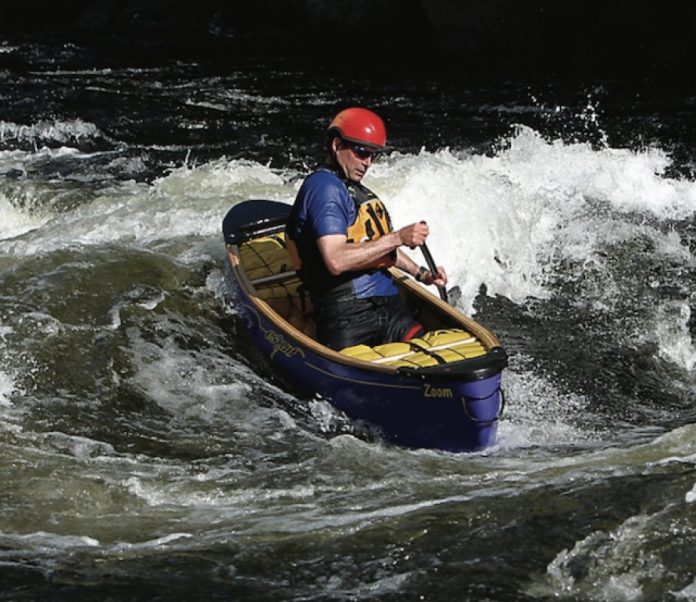

 

Skills: A Bag Full of Tricks

Photo: Scott MacGregor

Front surfing your canoe on a large wave feels as close to flying as you’re going to get with a paddle in your hands. Controlling your surf on small waves may seem as simple as ferrying your boat. However, on large waves you need a full bag of tricks to maintain your surf for extended periods of time. To really fly on a wave you must carefully control your boat speed, your position between crest and trough, and be able to delicately turn left and right without blowing off the wave. Sometimes, even getting on the wave can be a huge challenge! Consider the following essentials for surfing bigger waves. 

THE BOAT

Having the right canoe for the task will be a significant asset. Lengthy boats tend to dive low into the wave trough becoming difficult to control. Once the bows of these canoes plow into the wave upstream of your surf wave it is often ‘game over’. Shorter canoes are much easier to control and fit better on almost any surf wave.

Flatter hulls respond better to rudder strokes used for steering on surf waves. Smaller boats are also much easier to trim front to back on steep waves which helps you control your speed.

THE WAVE

The best surf waves are ones that have a wave face that is equal to, or longer than the length of your canoe. This provides the surface area nec- essary to support the whole boat. A wider and longer wave face gives you room to manoeuvre on the wave—both side to side and up and down. Shorter waves can be surfed provided that they are not too steep. Side to side ‘shredding’ will help prevent the bow from getting stuck in the water upstream of the surf wave.

THE TECHNIQUE

Once on the wave, keep your canoe moving. Ferrying back and forth helps you to stay in control of your speed and your positioning between the wave crest and trough. Gentle side-to-side movement keeps your bow clear of the upstream water while allowing you to stay low, near the trough on the wave. Aggressive left to right play surfs you closer to the crest and helps maintain a free and dry bow on steep waves. Keep your tilts to an absolute minimum. Even without boat tilt, once you turn your canoe, the contour of the water beneath your hull will cause a carve on your downstream edge—very cool!

GETTING ON THE WAVE – WITHOUT STRUGGLING

  • Approach from the eddy pool adjacent to the surf wave.
  • Enter by paddling into the trough that feeds the surf wave.
  • Your speed should match the current so you nei- ther climb upstream past the wave, nor drift down- stream away from the wave.

ACCELERATING – TO HELP STAY ON THE WAVE

  • When near the wave crest, straighten your boat and point the bow down to the trough.
  • Lean forward slightly and use a rudder for directional control.
  • Lower your T-grip hand and place your paddle shaft against the gunwhale.

SLOWING DOWN – TO KEEP THE BOW DRY

  • If you’re heading low into the trough straighten your canoe.
  • Slow the boat by leaning back. This pushes the stern deeper into the wave crest and decreases downward trim of the hull.
  • Push your blade forward using the non-power face as if to do a reverse stroke.

SHREDDING – CONTROL SIDE TO SIDE MOVEMENT

  • Position your canoe between the crest and trough
  • Lift your bow so that it is free to turn.
  • Use a rudder and push or pull the T-grip to turn left or right, much like a stern pry or draw 

Andrew Westwood – instructor at Madawaska Kanu Centre, Esquif team member, Rapid columnist. 

Screen_Shot_2016-04-22_at_3.53.38_PM.pngThis article first appeared in the Fall 2004 issue of Rapid Magazine.